Theory to Praxis: Reimagining Greek Life at Davidson

As a school that was founded by white genteel slave owners and remained segregated until the 60s and all-male until the 70s, Davidson has a long history of elitism. Unfortunately, the college has done a poor job of repealing exclusive traditions and making the school as welcoming and safe as possible to people of all walks of life. One particularly glaring area of inequality is the social structure of Greek life on campus.

There are many things wrong with the status of Greek life at Davidson. Racial disparities are perhaps the most visible problem. My friend Michaela Gibbons is working on a project called Stories Yet To Be Told, conducting research on the history of Patterson Court Council (PCC) – the governing body of Greek life at Davidson. We have had many conversations about PCC this semester, and a lot of them have centered around PCC’s dominating whiteness. Kimberlé Crenshaw’s theory of intersectionality and Lorde’s “There are No Hierarchies of Oppression” (1983) emphasize that racial equality (and other equalities) are necessary to realize gender equality. All of the nine predominantly white PCC organizations have individual houses on campus, while the six PCC organizations for students of color must share space at the BSC (Black Student Coalition) house. This is clearly a problem for feminism, although solutions are somewhat difficult to propose. In this case, the simplest method to reduce white special power on campus may be to disband PCC or consolidate the predominantly white organizations.

Aside from racial inequality, another issue with Greek life at Davidson is its relationship to the gender binary. As a collection of organizations with membership based on male or female gender identification, PCC reinforces ideas that there are only two genders, which is clearly false when one understands Lorber’s perspective that gender is constructed. Since humans have made up the concept of gender, there is no reason to believe in all-or-nothing gender rules. And yet, PCC membership is exclusive to men and women. (Turner House, one of the eating houses, does allow anyone who is not a straight cis male to join, but this introduces the problematic circumstance of requiring people to out themselves). Furthermore, the predominance of “bristerhoods” (fraternity-eating house mixers) perpetuates heteronormativity. Requiring all PCC organizations to be open to all genders would be the easiest solution to make Davidson more feminist, although that would require converting some fraternal organizations to eating houses.

A final, and particularly glaring problem with PCC at Davidson is rape culture. We briefly talked in class about how society conditions males to violate and disrespect female bodies, and there is a prevailing willingness to let this slide. Society reinforces hegemonic sexual scripts, an orgasm gap, and poor understandings of consent, all of which lead to unequal sexual citizenship. This means that women have less power than men to make the choice to have sex. This is obviously problematic for feminism. At Davidson, PCC hopelessly perpetuates rape culture. For liability reasons, the school has strict rules about alcohol for parties at PCC houses. Because PCC organizations are too lazy or busy to plan detailed weekly parties and want to avoid strict scrutiny from the school, weekly parties are predominantly hosted at Armfield, the only residential space on campus where open consumption is permitted. Currently, Armfield apartments which host parties are exclusively rented by predominately white men with strong fraternity ties. This leads to constant sexual misconduct and a lack of safety at parties. Once again, it is not simple to find a solution to male ownership of party space at Davidson. However, some viable options would be disbanding PCC, creating more school-sponsored social events, and preventing Armfield apartments from having five male residents.

PCC is rife with inequalities, much of them a byproduct of Davidson’s elitist traditions. Thus, disbanding PCC and ending Greek life at Davidson is probably the most feminist solution. This would introduce a social vacuum for some time, but it couldn’t be any worse that the forced quarantine of the 2020-21 academic year.

Theory to Praxis: Inclusivity at Davidson

Because of the intersectionality and applicability of GSS, there are many ways to apply these theories and ideas to different aspects of daily life. For example, one way is just in general interaction with others. By understanding the basic ideas about respecting pronouns or body size or race, it is easy to treat everyone with respect. Additionally, understanding these ideas in a position of influence is very helpful because not only are you able to spread the awareness of different ideas more effectively, but you can also apply the theories to your cause. For instance, at Davidson, we have many different clubs and organizations that could take advantage of their status and promote the intersectional ideas of inclusivity. Turner Eating House has done a good job of this by being the first Eating House to allow gender non-conforming members to join, adapting their service mission statement to highlight the importance of combatting white supremacy and police violence around Davidson, and making the house a safe space for all genders, races, body sizes, and sexualities. 

If other organizations around campus took action as Turner has, I believe that the campus would be a much more receptive place to change and a community working towards bettering itself as a whole. This could take place in multiple different ways, but even small steps would be helpful. To start, I think it would be a good idea to introduce the Disorienting Davidson tour to the orientation schedule as a way to highlight Davidson’s racist history and provide a forum for students to give their opinion on how to help the campus learn from its past. Disorienting Davidson is a tour of campus that highlights the impact of white supremacy and racism at different spots around campus, from race-based crimes on Chambers lawn to the blatant ties to slavery with cotton having been planted outside Commons. 

Even though the addition of different events to orientation or alumni engagement may be steps towards a more inclusive future, there are still many different perspectives that haven’t even begun to be seen, from disabled voices just starting to get a foothold to the problematic aspects of sorority/fraternity culture and therefore the allegations of rape and sexual assault becoming bigger topics of conversation. While students are making a huge effort to be heard, the administration is stuck in traditional ways and is hesitant to change, but with the help of GSS principles and theory of awareness, I believe that the campus community can change for the better and the future of Davidson can be much more open to inclusivity in all senses.

DRI Grant Proposal

Introduction

A cancer diagnosis is daunting and life-altering. However, a diagnosis can also be a privilege that not everybody has access to. Many LGBTQIA+ people, especially those living in socio-economically disadvantaged areas, are less likely to have access to or choose to utilize routine screening services for common cancers, and are therefore less likely to be diagnosed with cancer and receive treatment that is essential for survival. Through my research project, I aim to better understand the similarities and differences in how individuals in four key populations access services surrounding cancer:

  • non-LGBTQIA+ identifying individuals residing in a socio-economically advantaged area
  • non-LGBTQIA+ identifying individuals residing in a socio-economically disadvantaged area
  • LGBTQIA+ identifying individuals residing in a socio-economically advantaged area
  • LGBTQIA+ identifying individuals residing in a socio-economically disadvantaged area
Continue reading “DRI Grant Proposal” →

DRI Grant Proposal: Intersectional Feminism Workshop and Research Project

Prompt from DRI Application Directions 

Introduction: 

The purpose of this project is to study the types of feminism and their intersectionality that Davidson students identity with, as well as how a structured workshop impacts students’ feminisms. For the project, we would create an intersectional feminism workshop and survey students before and after they participate to gauge how their identification with and knowledge of intersectional feminism changed. There are two main objectives. The first is to have a greater understanding of the student body’s feminist views. The second is to create more space for inclusive feminist frameworks on our predominantly white campus. 

Justification: 

As a first-year student of color, I’ve already noticed that most of the feminisms from students are white and centered around issues of the west. They are also not all-encompassing of queer/trans feminists or feminists of color. A 2019 Davidsonian perspective article discusses the need for intersectional feminism, especially for women in STEM, and raises the question: is Davidson the most welcoming, inclusive place it can be for all women on campus? The author of the piece acknowledges that she doesn’t see the inequalities that others see on campus because she is a white cis woman, but even posing this question requires a look into how the campus’ environment fuels inequalities. 

This research project is also essential because it studies all students on campus, not just marginalized communities (students of color, queer/trans students, etc.). The campus places the burden on marginalized students to grapple with their own trauma or uncomfort through group therapy sessions, communal dinners, etc., rather than addressing attitudes that may be coming from the dominant culture. This workshop is one way to strike that notion.  

Furthermore, there is a handful of literature on the importance of dismantling privilege on PWIs and creating supportive spaces for students of color. Intersectionality and Dismantling Institutional Privilege: The case of the NSF ADVANCE Program suggests frameworks for dismantling race and gender-based institutional privileges. While the academy relies on eliteness, intersectional frameworks can minimize the effects of its violence.

Implementation: 

First, I would create a survey that assesses the types of feminisms with which students identify. Questions would include how students feel about different social, political, and economic issues. The survey would also address how they see feminism on Davidson’s campus. I would create a second survey for after the workshop that is similar to the first. This gauges how an interactive educational workshop can impact one’s feminism. 

Second, I would work with GSS professors to plan an intersectional feminism workshop that addresses different types of feminism, creating inclusive spaces as an individual, and why intersectionality is necessary at a PWI. 

I would advertise this workshop through flyers, GSS classes, and Sociology classes, as many students need to participate in research for their major requirements. 

Preparation: 

I am prepared to execute this research project for three reasons. 

First, although I’ve only taken GSS-101, I feel equipped to begin or expand conversations about types of feminism and the need for intersectionality. In GSS-101, we read works from many feminists, including Kimberlé Crenshaw who coined the term intersectionality. 

Second, in high school, I led an annual feminism workshop for my school. This is because I read a lot of feminist and queer theory including authors like bell hooks, Sara Ahmed, and Judith Butler. 

Third, during my senior year of high school, I executed a research project that was structured similar to this project. I surveyed local middle and high schoolers about their experience with menstrual stigma before and after presenting about menstrual stigma and global menstrual oppression.

Dissemination:

I’ll detail the findings of the research project in a report that is presented to the general Davidson community. This will provide faculty and students with an understanding of how inclusive the feminisms that Davidson students identity with, as well as if workshops are a practical means of making students’ feminisms more inclusive and intersectional.  

I would also present these findings to the Freshman Orientation Team to propose a similar workshop for incoming first-year students. This would help incoming freshmen begin to grapple with their privileges before beginning classes, contributing to a supportive environment on campus.  

I’d also share this report with other student groups at PWIs that may have similar questions about how supportive and inclusive their campuses are for marginalized communities. 

Example Survey Questions: 

  • Do you identify as a feminist? 
    • If so, how do you describe your feminism? 
    • If not, why not? 
  • Do you consider yourself an intersectional feminist? 
    • If so, how do you define intersectionality? 
    • If not, why not?
  • In your experience, is the Davidson community inclusive? 
    • If so, please provide examples.
    • If not, why not?
  • In your experience, do you see intersectionality on Davidson’s campus?
    • If so, please provide examples.  
  • In your experience, do you see feminism on Davidson’s campus? 
    • If so, please provide examples.  

Works Cited: 

Arday, Jason, and Heidi Safia Mirza, editors. Dismantling Race in Higher Education: Racism, Whiteness and Decolonising the Academy. 1 ed., Palgrave Macmillan, Cham, 2018. Link Springer, https://doi.org/10.1007/978-3-319-60261-5.

Crenshaw, Kimberlé. “Why intersectionality can’t wait.” The Washington Post, 24 September 2015, https://www.washingtonpost.com/news/in-theory/wp/2015/09/24/why-intersectionality-cant-wait/.

Helena. “Teaching Intersectionality: Activities and Resources.” DISORIENT, 2020, https://disorient.co/teaching-intersectionality-activity/. Accessed 22 November 2021.

Hickman, Ross. “Exclusion, Harm, and Disillusionment at Davidson.” Davidsonian, 10 November 2021, https://www.davidsonian.com/editorial-exclusion-harm-and-disillusionment-at-davidson/.

Hunt, Valerie H., et al. “Intersectionality and Dismantling Institutional Privilege: The Case of the NSF ADVANCE Program.” Race, Gender, & Class, vol. 19, no. 1/2, 2012, pp. 266-290. JSTOR, https://www.jstor.org/stable/43496873.

Stanton, Domna C., and Abigail J. Stewart, editors. Feminisms in the Academy. University of Michigan Press, 1995, https://www.press.umich.edu/10669/feminisms_in_the_academy.

Winters-Mccabe, Annabel. “Let’s Talk About Feminism On Our Campus Now.” Davidsonian, 3 October 2019, https://www.davidsonian.com/lets-talk-about-feminism-on-our-campus-now/.

Feminist Mix-Tape: ‘Flawless’ by Beyoncé

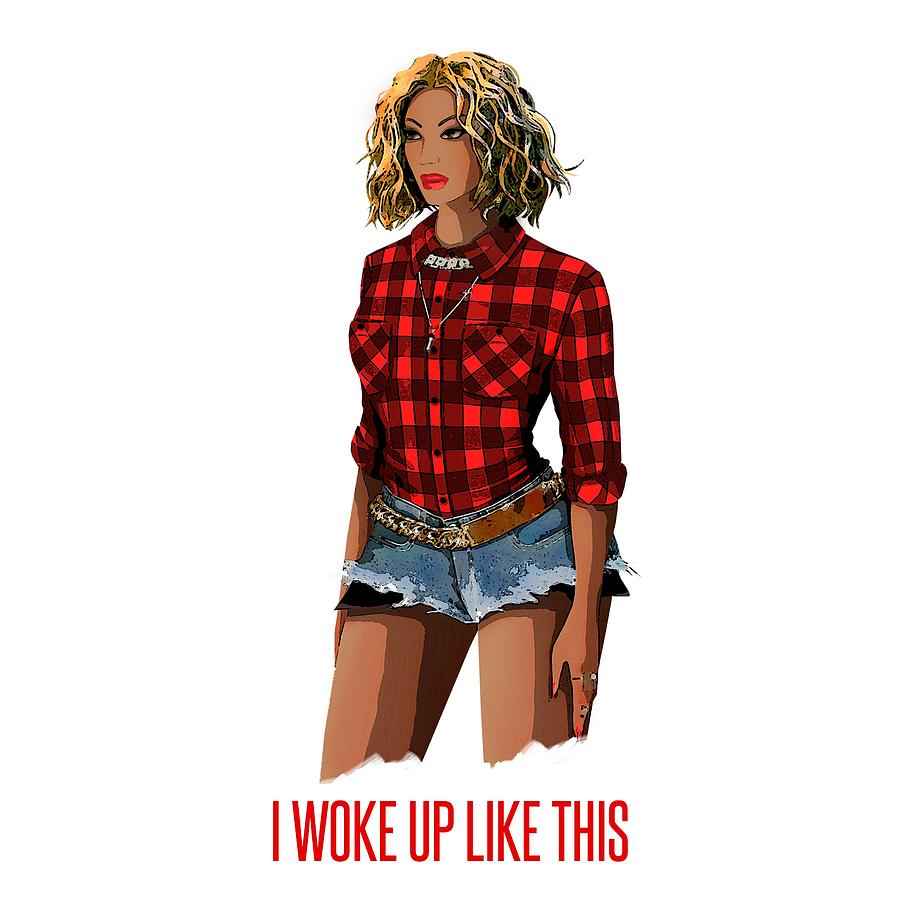
Scenes from ‘Flawless’ music video.

American singer Beyoncé has long been a leading icon in the feminist movement. She is often found uplifting women in her emphasis of inner beauty and self-worth through the messages of her songs. The song ‘Flawless’ featuring Nigerian writer Chimamanda Ngozi Adichie is no different –perhaps even more direct– as Beyoncé sings about female independence and autonomy in a society that is historically patriarchal. 

The first verse of the song is a response to the criticism Beyoncé has received from other artists about her being the leader of female artists, as well as the discourse about her hiatus from music in 2010: 

I know when you were little girls

You dreamt of being in my world

Don’t forget it, don’t forget it

Respect that, bow down, bitches

I took some time to live my life

But don’t think I’m just his little wife

Don’t get it twisted, get it twisted

This my shit, bow down, bitches

Beyoncé pushes back against the social norm that women rely on their husband for happiness. Her opposition is similar to Betty Friedan’s stance on second-wave feminism in her book “The Feminist Mystique”. Friedan emphasized the regression of the feminist movement after World War II in which women were convinced that their ultimate goal was to find a husband and start a family. Friedan simply argues that the notion of the ‘perfect housewife’ should be challenged, stating “the time is at hand when the voices of the feminist mystique can no longer drown out the inner voice that is driving women on to become complete” (Friedan 282). Beyoncé’s lyrics support this as she claims her success and fame independent of her hip-hop star husband. 

The critic of marriage as a social norm continues in the bridge, which is a snippet of Chimamanda Ngozi Adichie’s TedTalk “We Should All Be Feminist” as she embarks on the consequences of normalizing the importance of marriage:

Because I am female

I am expected to aspire to marriage

I am expected to make my life choices

Always keeping in mind that

Marriage is the most important

Now marriage can be a source of

Joy and love and mutual support

But why do we teach girls to aspire to marriage

And we don’t teach boys the same?

We raise girls to see each other as competitors

Not for jobs or for accomplishments

Which I think can be a good thing

But for the attention of men

We teach girls that they cannot be sexual beings

In the way that boys are

The overall message of the song is a call to action for women to express their independence and freedom from social and cultural norms that oppress them into gender roles. Through showing appreciation of all of her possessions and multiple identities, Beyoncé claims that her life as a successful business woman and a happily married woman is ‘Flawless’. 

One limitation of this song is its lack of discourse about Beyoncé’s struggle with being a black feminist figure. This course has taught us that the feminist movement has often times left out the thoughts and concerns of the Black women throughout history. Some feminists, like bell hooks, would argue that the power and authority that is used in Beyoncé’s lyrics paradoxically promotes the image of white women being powerless, when in reality they are the ones controlling the feminist narrative. By addressing the issues of racism in the feminist movement, Beyoncé would’ve tackled the overall issues of intersectionality of sexism and racism that all Black women face.

Feminist Mix-tape: The Man by Taylor Swift

Taylor Swift portrayed as a man in the music video.

Taylor Swift dominates the music industry in 2021, but it was not easy to get to the top when she was fighting misogyny for her whole career. In February of 2019, Swift released her hit song “The Man” confronting sexism in the music industry, and declaring that if she was a man, she’d be the man. Her lyrics compare her achievements and life as an artist to the same of a man, and how society interprets both very differently. Men are far more respected in the music industry, and women who make it to the same place as men are often portrayed as “lucky”. Some lyrics that struck me the most include these two: 

“I’m so sick of running as fast as I can
Wondering if I’d get there quicker
If I was a man (Swift, lines 11-12)”

and similarly,

“They’d say I hustled
Put in the work

They wouldn’t shake their heads and question how much of this I deserve (Swift, lines 19-21)”

            These ideas date back to the first wave of feminism. This reminded me of when our class read “Declarations of Sentiments and Resolutions” from the Women’s Rights Convention held at Seneca Falls in July of 1848. This document argues that women are oppressed by the government and the patriarchal society of which they are a part. One quote that emphasizes the ideas that are present in Swift’s song is, “That woman is man’s equal—was intended to be so by the Creator, and the highest good of the race demands that she should be recognized as such,” (Stanton 1). Women were first fighting for suffrage against the existing notion that they should not have careers outside of the household, but instead their only duty was to tend to the home and take care of children. This was a time of expanding the women’s role to the outside world and creating new opportunities. They were regarded as incapable and had to fight exponentially harder to just obtain a similar place in society among men.  Unfortunately, I think that this is still a present idea that is attributed when women outrank men. It is almost seen as intrusive when a woman holds a lot of power, as if she is not welcomed to have such a high status. Society resorts to wondering how she got there or if she had connections, instead of recognizing her hard work and drive. Women in this position are also called bossy and bitchy, instead of being viewed a strong leader like men.  

            One limitation of how this song represents feminism is that Swift herself is a wealthy, white female who through hard work was able to make it to the top. I think this view is not inclusive with the intersectionality of different races, disabilities, etc. that other female artists have to face. Swift did not have these added obstacles to work past on her journey to success. Overall, this song, accompanied by its music video, is a way to expose the sexism within the music industry and how women need to work harder for the same results and recognition that men receive.

Music video link: https://www.youtube.com/watch?v=AqAJLh9wuZ0

Citation:

Stanton, Elizabeth Cady, 1815-1902. Address of Mrs. Elizabeth Cady Stanton, Delivered at Seneca Falls & Rochester, N.Y., July 19th & August 2d, 1848. New York :R.J. Johnston, 1870.

Swift, Taylor. “The Man.” Lover, Republic Records. accessed November 9, 2021.

Feminist Mixtape: *Sisters Are Doin’ It For Themselves*

Music Video for “Sisters Are Doin’ It For Themselves” by Eurythmics feat. Aretha Franklin

In “Sisters Are Doin’ It For Themselves,” Eurythmics and Aretha Franklin come together to express women’s liberation and empowerment through the art of music. The song starts off strong with, “Now there was a time/When they used to say/That behind every great man/There had to be a great woman/But in these times of change/You know that it’s no longer true/So we’re comin’ out of the kitchen” (0:13-0:38), demonstrating not only the power of women but also the unison of a white woman and a black woman combatting the patriarchy together.

Unlike Betty Friedan’s white, middle-class centric views, Aretha and Annie Lennox (Eurythmics’ lead singer) join forces in this feminist song to empower women and demonstrate that women are capable of “doin’ it for themselves.” I believe this song captures bell hooks’ ideal version of feminism and can be related to second wave feminism. The addition of Aretha to this song strengthens its message because it adds the perspective of a black woman to the conversation, and the song is not focused on an issue that only affects white, middle-class women; the song is focused on liberating women and acknowledging their power as women, including women from different cultures.

The harmony created by Aretha and Annie is amazing, and the music video that accompanies this song does not focus on one sole type of woman; there is a focus on all women and their successes, but the spotlight is still focused on white woman in the beginning of the video. However, I like how Annie collaborates with Aretha to make the world aware of women’s strengths across different cultures and perspectives. This reminds me of bell hooks, especially when she says, “Had middle-class black women begun a movement […] no one would have taken them seriously,” and she continues, “[t]his was not the case with white bourgeois feminists, for they could appeal to a large audience of women like themselves who were eager to change their lot in life” (bell hooks 7). This song incorporates a black woman’s voice, and Annie does not overshadow Aretha; she uplifts her, incorporating Aretha’s voice into the conversation through music. There is a mixture of perspectives, but they are brought together with the idea of women’s liberation. Annie seems to be using her whiteness to bring awareness to the issues all women face, the opposite of Betty Friedan and taking into consideration bell hooks’ advice and criticism of Friedan.

In conclusion, Annie and Aretha created an empowering piece for all women, taking into consideration the women from different cultures and focusing on empowering women instead of focusing on a particular issue that only certain women deal with. The inclusion of black women in the music video and song is showing the power of women when they are united and not divided.

Book Review: “Beneath the Surface”

Cover of Beneath the Surface: A Transnational History of Skin Lightening by Lynn M. Thomas

Beauty standards have long had a hold on popular culture. Beauty allows for people to advance in the social hierarchies of our societies, as well as provide a sense of self worth. The history of beauty can be described as a history of struggle, as society deems it more and more necessary to alter the physical, material body to meet social standards. Skin lightening is one of the most criticized beauty practices throughout the latest century. As a booming industry that is engaged across all socioeconomic levels, discourse around skin lighteners informs us about the changing meanings of skin color and how it affects racial hierarchies and anti-racism activism. Beneath The Surface looks into the transnational history of skin lightening practices through the perspective of South Africa and the United States and outward. 

Lynn M. Thomas’ main argument in Beneath The Surface is that bodily surfaces are vectors of antiracist struggles through its complications of skin meaning and privilege– especially in the time of aparthied rule in South Africa. She also describes how skin lighteners and other beauty practices both reinforce and challenge pre-existing assumptions about race, class, and gender. Thomas comes to the conclusion that “surfaces matter. The unrelenting presence of beauty practices in our globalized world stems from their ability to play on and reproduce a range of inequalities while, at the same time, offering hope and stirring feelings of self-worth” (Thomas 236). 

Lynn M. Thomas, co-editor of this monograph, is indeed qualified to discuss the topics of materialism and its effects on the concepts of race, class, and gender in our lives. Currently a history professor at the University of Washington, Thomas is known to be a historian of politics and gender in East and Southern Africa. She acknowledges her love for history due to her “desire to gain knowledge of the past in order to better understand the problems and possibilities of the present” (Thomas). tShe is best known for being the co-editor of The Modern Girl Around The World: Consumption, Modernity, and Globalization where she explores the rise of capitalist consumer culture, mass media, and its resulting new conceptions of race and gender. 

Through her uses of archives, popular culture trends, and oral history sources, Thomas traces the wavering opinions of skin lighteners and the varying meanings of skin color throughout time. In the first chapter, she examines indigenous and traditional practices on bodily surfaces. Smearing practices like the use of Tambookie grass and egg whites on skin as a method of lightening skin tones led to colonists labeling the natives as inferior for attempting to “whitein” themselves. White lead was also a popular skin lightener as it was commonly found in European portraits and used in Chinese and Japanese cultures.

Chapter 2 elaborates on the role mass media played in influencing South African consumers through the advertisement of skin lighteners. Local newspapers like Bantu World–the first South African newspaper to advertise cosmetics and include women sections– portrayed women in the “modern girl” stereotype that framed women as engulfed in self-indulgence and rejecting her duties. Bleeding into the next chapter, Thomas acknowledges how the success of African American cosmetic companies influenced how the skin lightening industry was perceived in South Africa and neighboring countries. There was a distinct difference between cosmetic use and racial respectability across the Atlantic, however, as South African beauty culture was dominated by black men discourse and run by white owned companies. In contrast with the United States, African American women controlled both the manufacturing and advertisement of their skin lightening and other cosmetic products. Chapter 3 expands upon the idea of growing black consumerism and how white South Africans dominated the cosmetic business in South Africa. Simultaneously emerging with the shifting dynamics of the industry were the concepts of race consciousness as ideas regarding color privileges became more evident, encouraging South Africans to pass for white using skin lighteners. 

Chapters 4 through 6 further elaborated on the impact mass media had on people’s changing perceptions of racial and gender hierarchies. Through magazines, film, and photography, the media began portraying lighter skin in association with success and opportunity, emphasized by Thomas’ comment: “Skin color, as one highly visible marker of race, loomed large in this world where whiteness was synonymous with power and privilege, and small differences in appearance could carry significant consequences” (Thomas 106). Meanwhile, criticism from medical professionals and anti-racist activists remained persistent in developing regulations for skin lightening practices in South Africa. From the medical standpoint, the discovery of hydroquinone as a new and “substitute” ingredient of mercury created more speculation about the safety of the products, ultimately leading to the ban of mercury based cosmetics and closer examination of over-the-counter products. As discourse around the health of consumers increased, so did conversations acknowledging the psychological damage of beauty desires on Black women. Criticisms between medical professionals and antiracism activists entwined eventually, leading to regulations on skin lighteners being set across South Africa.

The final chapter looks at the issues of the modern day and the nuances that come with the everlasting problems of racism and capitalism. Thomas points out the irony in the apartheid museum being located on top of an old, wealthy skin lightener manufacturing company. Instances like these prove that the skin lightening industry still has a hold on today’s society, and that the meaning and politics around skin color will continue to evolve and change.

The greatest strength of Beneath The Surface was Thomas’ ability to trace the altering meanings and understandings of skin color. Her attention to detail–the products, advertisement, manufacturing, target audience, usage, and health problems– it all relates back to how bodily surfaces were a focal point of racial identification and how people used skin lighteners to use that focus to their own advantage. It’s astonishing to realize that beauty practices can be such a destructive force, yet they will continue to be utilized and invested in as people continue to modify their physical appearance to fit into social desires. A weakness I believe to have found is Thomas’ lack of perspective outside of South Africa and the United States. Although South Africa is a unique viewpoint that allows us to analyze changing conceptions of skin color from colonial times to the postcolonial present, I think addressing other perspectives of African countries would bring more knowledge of historical beauty practices and develop more nuances among the practices and their relations to the cultivation of racial hierarchies.

I personally enjoy this book because of its unique perspective of skin lightening as an agent of disturbing the efforts of antiracist thinkers and activists. I never thought cosmetics would have such an impact on how we perceive racial and gender dynamics, let alone evolving beauty standards. 

References

“Department of History.” Lynn M. Thomas | Department of History | University of Washington, https://history.washington.edu/people/lynn-m-thomas. 

Thomas, Lynn M. Beneath the Surface: A Transnational History of Skin Lighteners. Wits University Press, 2020. 

Book Review *Everyday Sexism: The Project That Inspired a Worldwide Movement*

The overwhelming truth of our world today is the ignorance or dismissal of still- rampant misogyny is as harmful as ever. In some cases, it feels as if the most effective way for the public to understand and agree there is a problem to actively work against, the accounts must be clearly laid out in front of our eyes. Laura Bates, journalist and feminist who details her own reports of assault, takes this to heart as she transforms what began as a catalog for women to share personal experiences of sexism, into a full-forged book of facts and real life stories of how misogyny is woven into everyday life. After her own experience of being harassed on London transport in 2012, Bates becomes passionate about the reality that if she went through this act, other women most definitely have their own stories to share as well.

The beginning of this movement was founded on the idea that the day to day instances of harassment and under representation of any degree deserve to be reported and known, so the argument that this does not occur in current day society can be rebutted. The Everyday Sexism Project, which began in London but became a worldwide phenomenon, is still running as a website, and anyone can report cases of misogynistic actions. After the online platform gained momentum, Bates formatted the stories told into one of the boldest works on the fight against sexism. The power of this collection comes from it being exclusively compiled of real life and relevant circumstances of misogyny being alive today, from women who have lived to tell the tale. 

Laura Bates has certainly already left her mark on the gender and sexualities field, from her numerous publications to her awards won in the craft. An English feminist writer who graduated from the University of Cambridge, Bates has published five works of literature, including Misogynation: The True Scale of Sexism (2018), The Burning (2019), and Men Who Hate Women (2020) as her most recent works. She is also working with the Women Under Siege Project, which is based in New York and has a mission of chronicling how gender violence has been utilized in warfare. Articles she has contributed to this platform include “The Impact of Nurturing Male Violence,” “Shutting us down: How online misogyny prevents women from fully participating in misogyny,” and “A crime upon a crime: rape, victim-blaming, and stigma.” Bates is strong in her assertion of important conversations into her work as she tackles women’s issues. Her relentless dedication to both breaking down injustice and empowering women, which go hand in hand, has led her to earn many honors, including the British Empire Medal in 2015 for services to gender equality and Cosmopolitan’s Ultimate New Feminist Award in 2013. More recently, she has been elected as a Fellow of the Royal Society of Literature as a result of all of the new and upcoming works she has provided. Bates’s publication of Everyday Sexism, in particular, began her trajectory as a feminist writer and opened more doors for how the misogyny women face can be addressed in future literary works. 

The approach Laura Bates takes covers how sexist behavior exists in all places, but it is easy for those who do not experience it’s harm to become oblivious to its effect when it goes unreported. Through the one hundred thousand entries posted, it can no longer be waved off as an invalid, already resolved issue. This myth is debunked further with every inclusion of personal stories from cat-calling, unfairness in the workforce, to violent rapes. Laura Bates declares these crimes against women need to be addressed on a wide, global platform. 

Bates presents both qualitative and quantitative research as the methods of which to layer this argument. The qualitative accounts are derived from the inclusion of women’s personal stories and experiences. While the Everyday Sexism itself website gained over 100,000 submissions before this book was published, the book includes around 15 short excerpts of what these posts had to say. This strengthened the work tremendously, since it backed up Bates’s argument of how misogyny is interwoven into the trials of daily life through following up a point with an undeniable example that proves it. Quantitatively, each chapter begins with a list of vital statistics regarding the topic. This is equally as advantageous to the case at hand, since it sets in place a series of irrefutable numbers and percentages that cannot be overlooked. Both methods, when imputed together, are effective in conveying the serious message of what women have faced both historically and, now, face currently. 

The first four chapters, after the introduction, focus primarily on “Silenced Women: The Invisible Problem”, “Women in Politics,” “Girls,” and “Young Women Learning.” Bates sets up her argument in a way that naturally flows and substantiates as it goes along. To start, she pinpoints three elements that lead silencing to occur: “these three powerful silencing factors- the invisibility of the problem, the social acceptance of it, and the blaming of victims- are corroborated loud and clear by the reports we received, particularly from young women who are learning such lessons hard and early” (29). Later on, in the chapter of women in politics, Bates offers striking statistics, including how at the current rate of progress, it will be 2121 before gender parity is achieved in Congress, according to the Institute for Women’s Policy Research. Bates follows this up with stating how women are enormously underrepresented in politics around the entire globe, and how “one frustrating consequence of women being underrepresented in politics is that often any woman is seen first and foremost to represent all women, as if she speaks and advocates for them, and can be judges as if all womankind stands or falls by her actions” (66). This is especially problematic when taking into account women who are also marginalized by their disabilities, sexuality, or skin color, “none of whom are miraculously included in the debate simply by the introduction of a white, middle-class voice” (66). Bates starts her book with powerful sentiments that cannot be overseen. 

The next following chapters include “Women in Public Spaces,” “Women in the Media,” “Women in the Workplace,” and “Motherhood.” These four sections are incredibly telling as they combine all of the different areas where women may face the most discrimination. One particular area this is amplified is street harassment. Bates includes stories of women who “describe the emotional and psychological ways street harassment affects them to an extent that those who do not experience it might struggle to imagine” (173) including the self-hatred and shame that can result from it. Bates also adds how “women of color, trans women, and women of the wider LGBT community experience disproportionate levels of street harassment (the Stop Street Harassment study found that 45 percent of all LGBT people surveyed experienced physically aggressive harassment or assault compared to 38 percent of all heterosexual people) (178). The implications of mistreatment in these key areas is extremely harmful, as Bate expresses, since it devalues the way women view their presence in their fields of study, and how much more difficult it becomes to advance. Also, it is detrimental for institutions to refuse to evaluate how they may be playing a complicit role in this issue. 

The final four chapters of this book incorporate “Double Discrimination,” “What About the Men?” “Women Under Threat,” and “People Standing Up.” The final excerpts of Bates’s work are arguably the most dire to address today. This is where Bates highlights intersectionality as a key term. She explains how “since the Everyday Sexism Project started, many of the stories we have catalogued have described not only sexism but sexism intermingled with other forms of prejudice- racism, homophobia, transphobia, classism, ageism, disablism, stigma around mental health problems, and more” (291). It is indisputable that transgressions are commonly made against multiple identities at once, and Bates’s inclusion of double discrimination as an entire chapter gives this book an added layer of depth. She states how anyone different from the dominant norms including heterosexuality, white, cisgendered, and nondisabled are met with serious threats. From a feminist perspective “if we are to tackle the fact that women have historically been oppressed because of characteristics that are seen to be different from the male norm, how can we protest such treatment while simultaneously excluding from our own movement the needs and agendas of those with other significant characteristics?” (293). Bates seeks for intersectionality to be synonymous, or rightfully included in every action of the feminist movement, which is crucial for her case to not be met with protest of it being catered exclusively towards white women, which is a route taken time and time again with feminist works that do not account for all women. 

One particular area where Bates’s strengths as a feminist writer come to fruition is her thoroughness when it comes to detail. Each chapter is filled to the brim with resources, research, and insight into the topic at hand. Her word choice is poignant and powerful, and causes readers to be introspective and process what is on the page, and how it is ever present in the world around them. Her inclusion of intersectionality and how incredibly important it is to understand how the issues white, middle class women experience cannot be the loudest voice in the room, since they cannot speak for everyone, sets her tone and supports her argument as one that is inclusive. 

One identifiable weakness is how, although there was a chapter dedicated to the presence of double discriminatory factors, this was not brought up until the very end. Bates did an exceptional job of spotlighting it as she wrote, but it could have been included throughout more of the book. If it were touched upon inside more of the work, readers might gain a greater sense of how pressing and real it truly is. Also, Bates does not elaborate much on what the word “women” covers for her, so this either means it is an umbrella not necessary to exclusively define for the book to still carry the same message, or it is a binary approach. After reading, I believe Bates refers to this term more closely to the first option. 

Critics rave of Everyday Sexism as a pioneering work, and after analyzing it, this remains true. The layout is concise, and the material is nothing short of compelling and raw. Bates has most definitely succeeded in bringing forth a book that is both personal and provocative in how it addresses the issues that need to be dissected. Every skeptic of misogyny and gender discrimination as a real deterrent of women’s empowerment and equality should read this book. College-age students specifically may gain the most from diving into this work, as it is important to pinpoint how these misogynistic mentalities penetrate our world as we are learning individuals, so we can dismantle them together. Overall, this work from Laura Bates is a must-read for all. 

Book Review: *Medical Bondage*

Sex, rape, injustice, medicine, slavery. These words spark an interconnected web of issues relating to sexism and racism in the antebellum era. Owens’ begins with ways in which the perpetuation of slavery and the expansion of the field of gynecology were directly proportional. When Congress prohibited the importation of slaves from Africa, slave owners feared that there would no longer be enough slaves to sustain the growing economy, so slave owners turned their focus to the reproductive health of female slaves in order to maintain and improve slave procreation. Slave owners and white, male physicians alike continued to expand the field of gynecology; however, their motives were unethical. The motive for the development of the field of gynecology was to maintain a growing economy built upon slave labor by experimenting on marginalized populations like black women and Irish immigrants. These experiments planted the seeds for racism and sexism in medicine that still plague society today, illustrating the power of science and a persuasion. 

As one of only two Black women in the US leading a program rooted in the medical humanities at a university, Dierdre Cooper Owens is an award-winning public speaker and activist. Time magazine claimed Owens are one of the most successful and “acclaimed experts in U.S. history”. Owens graduated with a Ph.D. in history form the University of California-Los Angeles. Currently, Owens is the Director of the Humanities in Medicine program at the University of Nebraska-Lincoln. With a doctoral degree in history, Owens’ is versed in the history of gender and racial discrimination; furthermore, her position as Director of the Humanities in Medicine program indicates her knowledge for the intersectionality of race, sex, and medicine which allows her to speak with intelligence and poise on the topics discussed in Medical Bondage. Medical Bondage, Owens’ first book, won The Darlene Clark Hine Award for the best book in African American women’s and gender history in 2018. As a black woman, Owens can write with an accurate, first-hand point of view because she herself may have been victim to racism and sexism, either in medicine or the workplace. 

In the first chapter, Owens discusses the “Birth of American Gynecology” in the hands of Dr. James Marion Sims and other antebellum-era white physicians. Dr. Sims invented the silk suture method through countless experiments on female slaves. The sorrowful reality of this process is that once the experiments were complete, and the female slave was proved “infertile”, they were sold back to their slave owner because they were no longer useful for research. In other words, female slaves were pawns for white males, the economy, and for the development of modern-day science and medicine. White supremacy, male dominance, and the slave holder mentality prevailed in that no credit was given to the female slaves for the brutality that they endured; in other words, the white males were apathetic to the fact that a population was suffering at the expense of their ingenuity, success, and scientific fame. To be specific, by experimenting on innocent women, white males asserted their dominance and searched for biological ways to justify differences between white women and black women, further perpetuating the idea of black inferiority and oppression. The physicians used science as a means of justifying racism and oppression, stating that black women are biologically inferior to white women. 

In the second chapter, Owens further describes the cruelties that black women face in the hands of white slave owners and white physicians. Black women were seen as pawns and merely “breeders” for producing more and more slaves to benefit white men. White men viewed black women and Irish immigrants (another marginalized and discriminated population) as “impervious to physical pain and unafraid of surgeries” (Owens 20), illustrating the dehumanization and alienation of blacks and minorities. This mindset of using black women and immigrants as pawns for research is explained in Thomas Wright’s and other southern physicians’ experimentations in that “they needed their black patients, as a means to learn about curing disease, much more than their black patients needed them” (Owens 27). In other words, the blatant disrespect of dragging a black woman’s body across the floor, disrobing her in front of other servants, and performing an invasive surgery without consent illustrates the selfish and egocentric nature of white physicians in the Antebellum era, as well at outlining one of the motives for their gynecological research: perpetuating systemic racism and sexism. One specific example of the brutality that black women faced was the Supreme Court case State of Missouri vs. Celia, a slave, which was the trial for Celia who murdered the slave master who repeatedly beat, raped, and impregnated her on several occasions. The jury decided that Celia be sentenced to death, but at the time of the murder, she was pregnant, so the State of Missouri decided to wait until the child was born before executing her. This cruel and unjust criminal justice system illustrates the slave master’s desperation for the slave procreation and the perpetuation of forced labor. 

The final three chapters parallel each other in that Owens explains reasons as to how physicians used scientific authority to justify their sexist and racist claims, as well as the various ways in which rape and mistreatment of black women went under the radar. The term “superbodies”, which is brought up in chapter five, suggests that rape does not even harm a black woman because they are physically dominant and capable of hard work which minimizes the pain and suffering of rape stories. For example, black women’s rapes were “private occurrences” and many of them went under the radar because it was considered normal and moral in the eyes of white supremacists. In short, gynecological medicine in the antebellum era was a field that allowed white physicians to stake inherently racist and sexist statements about women by using their title as doctors to bolster their claims. 

One of Owens’ strengths lies in her ability to synthesize information and find the intersections of medicine, race, and sex. The sexual discrimination and racial discrimination that arise in Medical Bondage relates to Audre Lorde’s “There is no Hierarchy of Oppression” In Audre Lorde’s “There is No Hierarchy of Oppressions”, the theme of oppression as a omnipresent challenge, not just individualistic, is revealed when Lorde states that “any attack against Black people is a lesbian and gay issue, because I and thousands of other Black women are part of the lesbian community” […] “I cannot afford the luxury of fighting one form of oppression only” (Lorde). In other words, oppression is bad in any of its forms: racism, sexism, heterosexism etc. One cannot classify one oppression to be less significant than another. In relation to Medical Bondage the brutality endured by women in bondage and the sexist claims created by male physicians is just as significant and oppressive as the racist classifications of white versus black female bodies. Black women were found to have “steatopygia (enlarged buttocks), elongated labia, low-hanging breasts, and lasciviousness” (19). These discriminatory and racist stereotypes perpetuated the racial binary of white versus black, which provided evidence for white supremacists to harass black women. These derogatory stereotypes relate to an article that I read in my writing class titled “Venus in Two Acts” written by Saidiya Hartman. Hartman brings up the term “Hottentot” which relates to Hottentot Venus, a stereotypical image of the black female physique, and further details the cruel language that is used to describe black women: “A sulky bitch. A dead negress. A syphilitic whore” (6, Venus in Two Acts). In short, Owens’ ability to create subtle connections with other texts, feminists, and activists illustrates the implicit strength of her argument. 

            A weak point in Owens’ book is when the term “superbodies” is brought up in Chapter 5 regarding black women seeming capable of harder work in the eyes of white men as a result of their “hypersexuality”, and their “physical strength” which was supposedly superior to that of white women. “Superbodies” is ironic in that it assumes black women are superior to white women because of their strength; however, women are supposed to be known for the weakness, fragility, tenderness, and submissiveness. Does the relationship drawn between “superbodies” and black women suggest that female slaves are not even human? “Superbodies” means “superhumans” or “superheros” which are all superior to humanity. Do female slaves not experience feelings, emotions, and physical suffering of normal humans? Black women were subject to racism and sexism and suffered the “ugly stereotypes that many American men, regardless of race, held about them as wanton seductresses,” (Owens 75) meaning that on top of racism coming from white men, black women experienced oppression from both white and black men who saw them solely for selfish sexual pleasure. However, I find the term “superbodies” to be hypocritical and illusionary by blurring the lines between white and black femininity. To strengthen the vagueness of this new term, Owens should have given an example for black women not showing emotion or pain or suffering and contrasting this with an example of white women’s fragility and emotion. 

In my opinion, the book Medical Bondage is an accurate representation of the intersectionality between sex, medicine, and race. While there are some weaknesses in the delivery of certain terms, Owens successfully describes the birth of American gynecology and draws connections between medicine and societal issues such as sexism and racism. Anyone seeking to learn more about the history of developing women’s health and the roots of prejudice in medicine that were planted during the antebellum era should read this book because the reading is accessible to the broader public and anyone who reads the book will benefit from its message about the ongoing quest for equity in medicine. 

Works Cited:

Owens, Deirdre Cooper. Medical Bondage Race, Gender, and the Origins of American Gynecology. University of Georgia Press, 2017. 

Lorde, Audre. “There is No Hierarchy of Oppressions”. Leaning into Lorde. Council on Interracial Books for Children, 1983.

Hartman, Saidiya. “Venus in Two Acts.” Small Axe, vol. 12 no. 2, 2008, p. 1-14. Project MUSE muse.jhu.edu/article/241115.

Walsh-Little, Maya. “Bio”. Dr. Deirdre Cooper Owens, https://www.deirdrecooperowens.com/bio

Dierdre Cooper Owens. “Charles and Linda Wilson Professor in the History of Medicine; Director, Humanities in Medicine”, University of Nebraska-Lincoln, 2019. 

Book Review: *The Gender Effect: Capitalism, Feminism, and the Corporate Politics of Development*

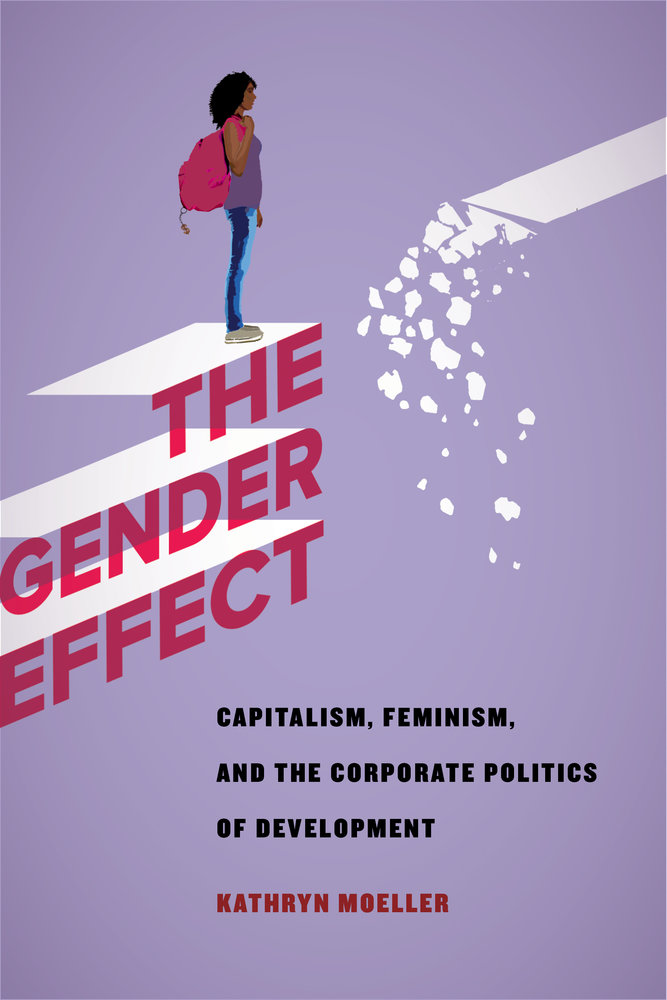
Book cover

In the 1990s, the idea of “investing in women” started circulating around large corporations and foundations. In developing countries, it was thought that this idea could help women, their families and their countries out of poverty. In return, it was then thought that women would pay specific attention to children’s nutrition, education and healthcare when considering where to spend their money and thus raise the country’s human capital. Educating women and girls was the most effective way to fight  poverty and encourage development in the Global South. This approach has since been adopted by powerful corporations and institutions, such as the United Nations, the World Bank, and the United Kingdom’s Department for International Development. Using her ethnographic case study of the Nike Foundation’s Girl Effect initiative as an example, the author Kathryn Moeller argues that these corporate led campaigns end up benefiting corporations but at the expense of women and equality in The Gender Effect: Capitalism, Feminism, and the Corporate Politics of Development. 

Continue reading “Book Review: *The Gender Effect: Capitalism, Feminism, and the Corporate Politics of Development*” →

Book Review: *Latinas in the Criminal Justice System*

Criminal justice systems are the systems in our government that enforce the law, protect the public, prevent crimes, and arrect people accused of crimes. However, criminal justice systems pick and choose who to protect; Latinas often suffer from the criminal justice systems rather than receiving help and support. In Vera Lopez and Lisa Pasko’s Latinas in the Criminal Justice System: Victims, Targets, and Offenders, readers are shown countless testimonies and interviews about system-impacted Latinas and their negative experiences with criminal justice systems. Lopez and Pasko use data and information from academic scholars and practitioners that work closely with system-impacted Latinas. Latinas in the Criminal Justice System explores Latinas’ negative involvement in the criminal justice systems through four distinct parts: the victimization of Latinas, how Latinas become ‘offenders’ and are forced into the systems, immigration and discrimination, and community programming for system-impacted Latinas (Lopez and Pasko).

Overall, Lopez and Pasko’s main argument focuses on the system-impacted Latinas and how the criminal justice systems have negatively affected their lives, especially the police. Lopez and Pasko explain how Latina women’s involvement in the systems is due to several factors: an increase in women immigrating to the United States than in previous decades, an increase in women advocating about domestic violence, and so on. This negative impact occurs because Latinas struggle fighting for their freedom since the systems do not support or help them. Latinas in the Criminal Justice System focuses specifically on Latinas because, according to Lopez and Pasko, there is not enough literature that explains and details the experiences of Latinas when facing the criminal justice systems. Whenever Latinas face the criminal justice systems, there are many of her aspects that are judged: her documentation status, her sexuality, her race makeup, and her ability to speak English (Lopez and Pasko). Lopez and Pasko go in-depth in the subject of system-impacted Latinas and describe the hardships and obstacles Latinas face when they are confronted with problems that require the involvement of the criminal justice systems.  

The authors bring substantial knowledge about feminist criminology in Latinas in the Criminal Justice System. Firstly, Vera Lopez, Ph.D. is a Professor of Justice and Social Inquiry in the School of Social Transformation at Arizona State University (NYU Press). She has studied feminist criminology and has researched girls’ and women’s involvement in the criminal justice systems. Her most famous book is titled Complicated Lives: Girls, Parents, Drugs, and Juvenile Justice.

Secondly, Lisa Pasko, Ph. D. is currently an Associate Professor of Sociology and Criminology at the University of Denver (NYU Press). She is also affiliated faculty in the Gender and Women’s Studies Program. Pasko is co-author of The Female Offender: Girls, Women, and Crime and Girls, Women, and Crime: Selected Readings. Pasko has primarily studied female offenders, violence in youths, adolescent behavior, delinquency, and the juvenile justice systems as well as sexualities for more than fifteen years.

As previously mentioned, in Latinas in the Criminal Justice System, Lopez and Pasko discuss system-impacted Latinas and how they are negatively impacted by criminal justice systems. In the introduction, the reader is introduced to the four parts that make up the book. Each part delves into a distinct aspect of Latinas’ involvement with criminal justice systems. Lopez and Pasko’s methodology consist of surveys, questionnaires, interviews, and information gathered from government offices.

In the first part, Lopez and Pasko describe the victimization of Latinas and how intersectionality plays a crucial role when it comes to the bullying of Latina girls. Many Latinas experience domestic violence; Lopez and Pasko discuss the tactics abusers use to control their victims, specifically isolation and fear. Abusers separate their victims from family members and friends to instill fear into them and prevent them from finding resources to receive help and support. Latinas who suffer from domestic violence struggle with escaping because of the lack of resources available to them. Regardless of their documentation status, Latinas who are isolated do not have connections that support them and aid them in searching for resources, leading to depression and feeling stuck in an abusive situation (Lopez and Pasko 30). Lopez and Pasko also discuss how Latine culture induces fear in Latinas. Latinas do not want to become the family ‘chisme’, so they fear reporting domestic violence to avoid facing judgment from their families. Also, undocumented Latinas feel like they do not have a choice but to endure their abusive situations because of fear towards the police and their immigration status. They know that the authorities will judge them rather than support them, worsening their situation. Through interviews, surveys, and testimonies, Lopez and Pasko gathered these details and factors that made Latinas afraid of criminal justice systems during their abusive situations. However, Latina women are not the only ones who are victims of violence; Latina girls, especially LGBTQ+ Latinas, face bullying in school settings. According to surveys given to high-school aged students, LGBTQ+ Latinas are more likely to face bullying than heterosexual Latinas. This study and results show the importance of taking intersectionality into consideration; Latinas face many obstacles and struggles, but those obstacles and struggles increase when identities intersect (i.e., being LGBTQ+ and Latina).

In the second part, Lopez and Pasko describe how Latinas become ‘offenders’ and how distinct settings induce Latinas to become ‘offenders’. Lopez and Pasko report research that shows that Latinas who have been in trouble with the law have experienced a variety of difficulties in their lives, such as childhood trauma, abuse, and self-image struggles, and Lopez and Pasko also mention that there has been in increase in girls who are juvenile offenders. After collecting some information from a juvenile diversion program, Lopez and Pasko found that Latinas were more likely to be charged with misdemeanor charges, disorderly conducts, and person offenses than their white counterparts. Moreover, Lopez and Pasko addressed how certain settings and situations cause Latinas to become ‘offenders’. The results from surveys and interviews showed that Latina girls witnessed violence in their homes or communities, a family member involved in a gang, a parent with substance abuse problems, and an important figure in their life jailed more than white girls reported. Lopez and Pasko also address how school settings and authorities promote violence in Latinas by not aiding them when needed; they just wait until Latinas show any sign of violence so that they can expulse them from school and detain them. Latinas are viewed by authorities, judges, and administrators as lazy and untrustworthy, preventing Latinas from willingly reaching for help and support. In this part of the monograph, the authors discuss how Latina girls move in and out of the system and are forced to be on the run. Several girls battle substance abuse, gang affiliation, and homelessness. Latina girls who have a warrant against them must stay with friends and/or partners to have a place to live in, but there are problems that can arise with that: some friends and/or partners could introduce Latina girls to drugs or abuse, forcing Latina girls to leave or feel stuck to avoid further issues with authorities (Lopez and Pasko 112). Rehabilitation is hard for Latina girls, especially if they are connected to gangs; they cannot leave gangs easily, which can lead to further rehabilitation and trauma for Latinas.

In the third part, Lopez and Pasko talk about immigration and discrimination. The opening chapter mentions the several reasons many Latinas immigrate from their home countries to the United States. Most Latinas immigrate from Central America, Mexico, and the Caribbean, and their reasons include poverty, inequality, and state repression. However, Latinas also immigrate for gendered reasons, such as domestic violence and sexual abuse. Lopez and Pasko discuss how the ‘border’ between the United States and Latin America is not only physical; there are language and culture barriers that become obstacles in immigrants’ lives, and systems take advantage of these barriers to criminalize Latines, especially Latinas due to their intersectionality of being a woman and a Latina. Lopez and Pasko explore the case of Adriana and Esther, two Latinas who were sentenced to prison and later deported to Mexico. Language was a huge barrier that affected them in different settings: during their sentencing, in prison, and when receiving medical attention. Language also impacted Adriana and Esther’s reintegration into Mexican society. Esther talks about how she was discriminated during her deportation; she received looks filled with judgment. Esther also mentions how she had to conform to gender norms in Mexico to not be perceived as a criminal and have the ability to start anew. The authors also discuss how immigration separates families (Lopez and Pasko 201). Mothers and children are split from each other, causing emotional trauma and distress in both the mother and the child.

In the fourth part, Lopez and Pasko discuss about the limited resources available to undocumented Latina girls, how Latinas cope with discrimination, and intervention programs installed for system-impacted Latinas. In one case study, Lopez and Pasko discuss Lupe’s experiences growing up as a Latina who was affiliated with a gang (Lopez and Pasko 264). Lupe mentions growing up being a star student and excelling in class. However, when she entered a private middle school, she lost confidence, and her grades reflected her feelings of unworthiness, leading her to join a gang through her cousins. After leaving the gang due to a cousin getting killed during gang violence, Lupe reflected on her past actions, decided to change, and pursued higher education after high school. Due to her undocumented status, she had a lot of hurdles to overcome, especially financial problems. However, the Colorado ASSET law helped Lupe cut her tuition in half. The ASSET law allows undocumented students to receive in-state tuition, making college more affordable for Lupe. Lopez and Pasko also mention how Latina girls react to discrimination based on their mother’s teachings. The results from questionnaires showed that Latina girls exhibit proud feelings of their culture, especially when motivated by their mothers. Latina girls who received positive teachings about their culture from their parents were more likely to dismiss discrimination and feel less impacted by others’ views. Finally, the fourth part is wrapped up with intervention programs and how they should be customized to fit Latinas’ perspectives, cultures, and intersectionality. According to surveys, Latinas believed that intervention programs should focus on how culture is impactful to their behaviors and how respect should be a mutual feeling between patients and staff. An example of a great intervention program is Xinachtli. This intervention program focuses on both gender and culture when it comes to Latinas’ perspectives and experiences. Xinachtli focuses on removing existing stereotypes on identities so that patients can define their own identities.

Overall, the strongest aspect of Lopez and Pasko’s book is the combination of perspectives of system-impacted Latinas. The variety of views and studies shows a collaborative input from academic scholars and practitioners that work closely with system-impacted Latinas. This combination also allows a conversation to occur regarding system-impacted Latinas and bring this topic to the forefront of criminology, more specifically feminist criminology. Many perspectives are brought together to discuss the issue of system-impacted Latinas, and it sets literature focused on Latinas, allowing further research to develop on this topic.

Alternatively, a weakness in Latinas in the Criminal Justice System is that some studies used surveys and questionnaires to gather their data, and self-reported data can have bias and could affect the accuracy of studies. Also, certain questionnaires that require rating an event could be rated differently depending on the individual. For example, some situations may be rated as stressful for one person while another could rate it as calm. Self-reported data can affect the accuracy of results due to how individuals answer questions.

In conclusion, Latinas in the Criminal Justice System discussed the issue and lack of literature around system-impacted Latinas. Vera Lopez and Lisa Pasko united distinct perspectives and brought up different aspects that Latinas face while facing criminal justice systems. This monograph also brings intersectionality into the book, allowing Latinas to think about their identities and see how they impact each other. Furthermore, this allows for more research to be addressed towards system-impacted Latinas, and it could lead to the creation of better, more effective intervention programs to support system-impacted Latinas. Ultimately, Latinas in the Criminal Justice System adds important information towards feminist criminology, and it combines distinct aspects of criminal justice systems that Latinas face.

Works Cited

Lopez, Vera and Pasko, Lisa. Latinas in the Criminal Justice System: Victims, Targets, and Offenders, New

York, USA: New York University Press, 2021. https://doi.org/10.18574/nyu/9781479804641

NYU Press. “Vera Lopez.” NYU Press, NYU Press, 21 Feb. 2019. https://nyupress.org/author/vera-lopez/.

NYU Press. “Lisa Pasko.” NYU Press, NYU Press, 21 Feb. 2019. https://nyupress.org/author/lisa-pasko/.

West Virginia University. “Lisa Pasko, Ph.D..” Research Center on Violence, West Virginia University,

https://violenceresearch.wvu.edu/executive-board/research-associates/lisa-pasko

Book Review: *Rape Culture on Campus*

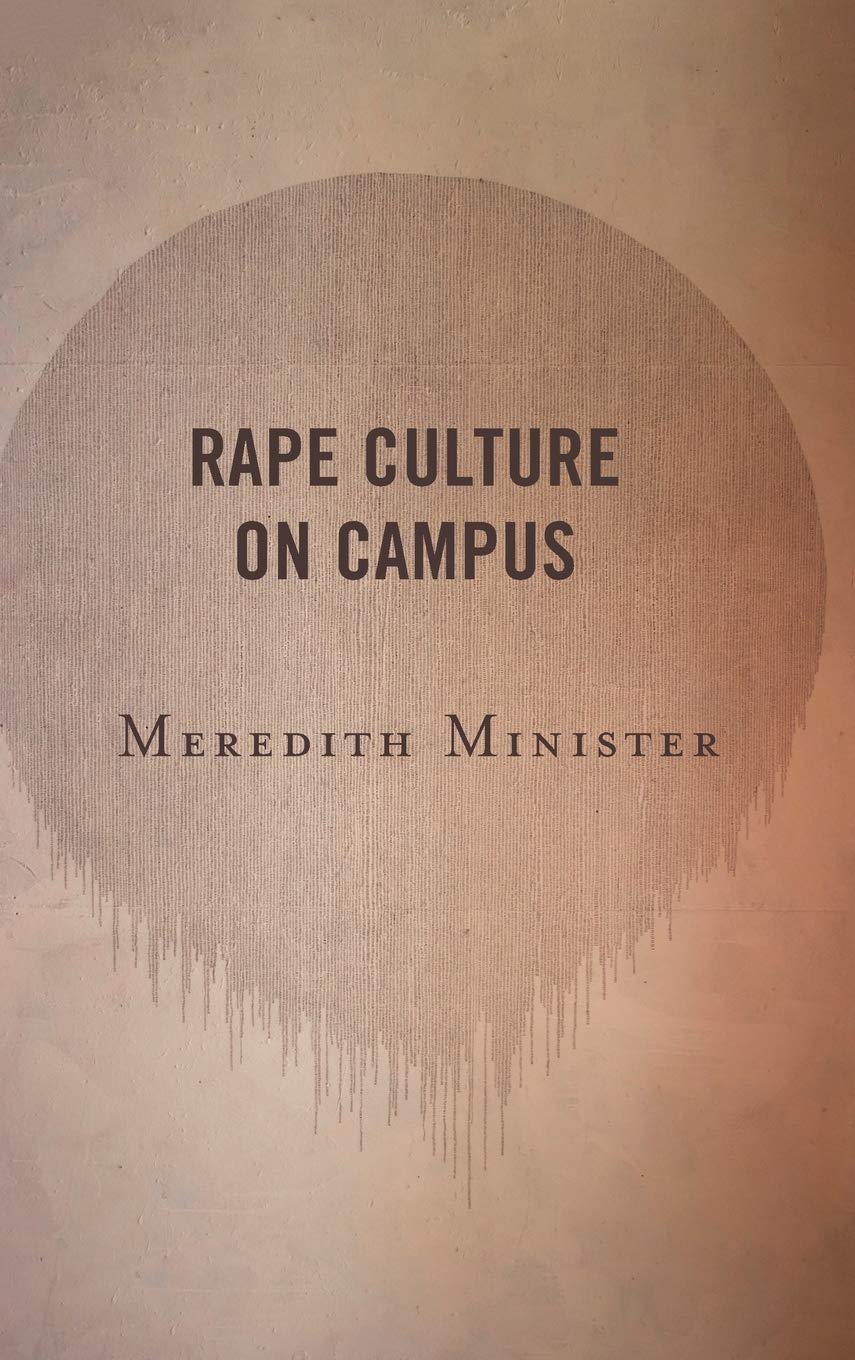
Meredith Minister’s Rape Culture on Campus Book Cover

Within college campuses, rape culture is a prominent issue that is often addressed on a surface level, leading to little or no change in the occurrence of sexual assualt and sexual violence. Meredith Minister breaks down how rape culture is continually perpetuated on college campuses and offers solutions to reducing the prominence of sexual assualt on campus in her book, Rape Culture on Campus. Minister emphasizes that not only is rape culture an issue that requires a change in ideolgies and how we approach sexual assault prevention, but also that rape culture is partially a result of binaries that often exclude gender, sexual, racial, and ethnic minorities. 

Minster begins her book by introducing how she defines rape culture, specifically saying that rape culture is “a socially accepted pattern that legitimates violence to police socially nonconforming activities, including expressions of sexuality and gender” (1). She equates the issue of rape culture existing in the first place to the way we view society and the people within that society. Colonial ways of thinking about gender and sexuality exacerbate the occurence of rape culture in society. She expands on her definition of rape culture by breaking the causes and continuation of rape culture down into pieces. Minister’s writing provides an up close look at how rape culture has defined college campuses and how colleges can do better to break the cycle of continuing the voilent pattern. Mininter draws on her educational expertise to include how purity culture, religion, and autonomy, in addition to policing and trigger warnings, do not assist in interrupting the rape culture pattern on college campuses. 

Book Review: *Against White Feminism: Notes on Disruption*

White feminism is a type of feminism that concentrates primarily on the hardships of white women without acknowledging oppression felt by non-white women or the layering intersectionalities of identity. While most modern-day feminists associate white feminism with the first wave of feminism, white feminism still very much endures within patriarchy and permeates into the rhetoric of many feminists. White feminism is not merely the image of white women holding a Daughters of the American Revolution flag and walking along the streets of Washington DC. It’s more than suffragettes and VOTES FOR WOMEN sashes. Rather, white feminism is a system of oppression that has stemmed from white supremacy and racism. 

Rafia Zakaria’s Against White Feminism: Notes on Disruption is a historical analysis of white feminism and an “argument for feminism to pitch itself against a very specific frontier, that of whiteness, where whiteness is not constructed as a biological category but as a set of practices and ideas that have emerged from the bedrock of white supremacy, itself the legacy of empire and slavery” (Zakaria 208). Against White Feminism is an attempt to excise whiteness and its assumptions of privilege in order to foster the liberation of all women. Zakaria splits up the book into eight different chapters regarding different areas of feminism, including the suffragette movement, the white savior complex, the insertion of white feminists into international wars, and sexual liberation. 

Rafia Zakaria is an attorney, political philosopher, and a Ph. D. candidate in Political Science at Indiana University. Furthermore, she serves on the board of directors of Amnesty International USA and has experience being a feminist of color within academic and professional spaces. Zakaria has written a few other works, including The Upstairs Wife: An Intimate History of Pakistan and Veil (Object Lessons). Zakaria is also the only Pakistani American woman recognized by the Indiana House and Senate for her effort towards women’s rights, a significant feat as few brown women are granted access to politics. Her personal experiences in academia and human rights are notable concerning Zakaria’s qualification because she has had first-hand experience with and discrimination from white feminism. 

Zakaria’s primary methodology is content and text analysis from well-known feminists such as Audre Lorde, Kimberlé Crenshaw, and Gayatri Chakravorty Spivak. By using the method of close readings from influential feminists of color that came from before her, she pieces together an argument for the deconstruction of white feminism that began long before the writing of this book. Additionally, Zakaria provides analyses of white feminist texts such as Simone de Beauvoir’s The Second Sex to contextualize white feminism. Alongside the close readings of critical feminist theories, Zakaria also provides information from historical events that western historians essentially recognize with little space for or mentions of women of color. By presenting these accounts, she restructures the narrative to uplift the voices and actions of black and brown women, using the book itself to accomplish her mission of liberation for all women. 

Zakaria begins her discussion with chapter 1, “In the Beginning, There Were White Women,” where she depicts the history of the feminism movement and the racism within, particularly in America and Europe. Zakaria dives into the history of colonialism and how the white feminism movement was able to progress due to being supported by colonial powers and white supremacy. For one, white British suffragettes during the early 20th century would defend voting rights for women in India (a colony of the British empire) but “refused to support the fight against colonial domination abroad” (29) because they profited off of colonial domination. Throughout the book, Zakaria notes these historical instances of hypocrisy within feminism movements that reinforced the subjugation of some, particularly women from Africa or the Global South. Similarly, Zakaria uses chapter 2, “Is Solidarity a Lie?,” to question the lack of intersectionality in contemporary feminist movements. Zakaria critiques Simone De Beauvior’s The Second Sex as universalizing “women” as “white women” and the “ultimate other,” disregarding the systems of oppression that overlap one another (43, 44). In response to this trend, Zakaria proposes a solution by combining two notable feminists, Kate Millett and Kimberlé Crenshaw. She asks, “by bringing together the intellectual tools of Millett’s epistemological skepticism and Crenshaw’s understanding of intersectionality, can a true feminist solidarity finally be born?” (55). Zakaria explores this idea through the rest of her book as she considers possible solutions.

Chapters 3 (“The White Savior Industrial Complex”), 4 (“Feminists and Feminist Wars”), and 6 (“Honor Killings, FGC, and White Feminist Supremacy”) all touch on the cultural differences between white feminists and women of color in the international realm. Specifically, Zakaria describes white female journalists and activists who attempt to “save” black and brown women via awareness or humanitarian aid. This notion is historically rooted in colonialism and white supremacy where Western (and almost always white) nations or cultures would attempt to enlighten black and brown people in Africa and the Global South based on the premise that western ideals were inherently correct. This ideology is exemplified by Gayatri Chakravorty Spivak’s famous declaration of “white men saving brown women from brown men” (11). Zakaria introduces white women into the equation, as they also participate in the white savior complex alongside white men. 

In Chapter 5, “Sexual Liberation is Women’s Empowerment,” Zakaria discusses sex-positive feminism and choice feminism as theories that “sideline the concerns of women of color and poor women who need the status quo to change” (138). This is because the liberation of women of color is reliant on structural change where sex-positive and choice feminists can comfortably exist within the oppressive status quo that fronts white women’s voices. Zakaria uses this notion to argue for a more collective movement to liberate all women. Chapter 7, “I Built a White Feminist Temple,” continues this discussion by asserting that a lack of parity between feminists results in a lack of equality between gender as a whole. Zakaria ends the book with chapter 8, “From Deconstruction to Reconstruction,” which provides a glimpse of “reconstructed feminism” (204). This form of feminism is meant to transform the discourses surrounding feminism and challenge neoliberalism. Contemporary feminism is without a “clear political frontier toward which to unite,” but Zakaria asserts that the most crucial frontier to unite against is capitalism since it is “bad for all women, even white women” (202). Zakaria’s conversation of the individual vs. the collective culminates in the last chapter as she calls for a collective understanding and engagement to deconstruct both capitalism and patriarchy, which aim to dominate all women and all people. While a wholly unified “we” is impossible within contemporary feminism movements, a reconstruction of feminism is possible. Zakaria argues that it will require the “great challenge of transformation” and white feminists to cede spaces to women of color (209). Zakaria concludes the book with a quote from Audre Lorde regarding the necessity of community: “without community, there is no liberation, only the most vulnerable and temporary armistice between an individual and her oppression. But community must not mean a shedding of our differences, nor the pathetic pretense that these differences do not exist” (209). This quote exemplifies both the historical continuity of whiteness within feminism and inspiration for a way forward. 

Zakaria’s greatest strength is that she provides anecdotes from her life and connects them to feminist theories or historical events. This allows the reader to have a direct connection with the book. Furthermore, feminist theory is often very arbitrary and abstract, so providing concrete stories from Zakaria’s life helps the reader understand the theory and issues in today’s world. For example, Zakaria wrote an article called “Women and Islamic Militancy” in 2015 for Dissent, a traditionally leftist magazine. Her article highlighted how “some Muslim militant organizations used ‘empowerment-like rhetoric” to entice women (111). Zakaria claimed that a cause of this development was the expulsion of Muslim women from the central narrative of Western feminism. Ultimately, the article was rendered so controversial that the editors included a response from a “real feminist” alongside Zakaria’s piece (111). One of the editors of Dissent also stated in an interview that Zakaria was “fascinated and even excited by the idea of a Muslim woman warrior and terrorist killing” (111). Alongside this anecdote, Zakaria provided an analysis of liberal Islamaphobia and how intersecting identities of gender, race, and religion can create oppression. By contextualizing the theory with her own personal experiences of discrimination, the reader has a much firmer grasp of the philosophy.  

One of Zakaria’s weaknesses is that some of her claims are very generalized. For example, Zakaria describes how white feminism often permeates into international relations, specifically when western nations claim commitment to a feminist framework, but their actions convey otherwise. Two examples Zakaria provides are Sweden and Canada, both countries with “feminist foreign policies” that engage in arms trade with Saudi Arabia “whose use of arms and intimidation to harass Saudi women’s rights activists was well known” (92). I took issue with this argument because it oversimplified the international process and politics behind arms dealing. For one, Zakaria makes a direct link that military arms are used to pressure women’s rights activists despite most women’s activists in Saudi Arabia being jailed rather than threatened via tanks or machine guns. Furthermore, Zakaria makes this claim but provides no evidence or source regarding the direct impact of military arms on women or feminists. While I agree that western nations contribute to the oppression of women of color via military arms sales, I do not believe that this was the best example or argumentation. 

Ultimately, I thoroughly enjoyed reading Against White Feminism and would recommend it to all individuals who identified as feminists. Zakaria opened my eyes to many historical events and processes that I had not thought of as perpetuating whiteness, but her argument was coherent and compelling. I also personally appreciated the inclusion of brown women’s works and historical oppression from white feminism because much of intersectional feminism in America focuses on the oppression of black women rather than black and brown women. Furthermore, I believe that feminists who are white (not necessarily white feminists) should read this work in order to deconstruct the biases that they may not be aware of. Taking inventory of one’s privileges and the historical context surrounding their identity, especially those who want to create structural change, is vital to the feminist movement. Reading Against White Feminism is one step towards this direction and the collective feminist movement to come.

Work Cited

Zakaria, Rafia. Against White Feminism: Notes on Disruption. 1 ed., New York, W. W. Norton & Company, 2021.

Lesbihonest: Pitch Perfect is Not As Progressive As We Think

Written by Sarah Butchko for Autostraddle

Pitch Perfect, directed by Jason Moore and written by Kay Cannon, hit theaters in 2012 and has remained an iconic pop culture staple since. The movie follows the Barden Bellas, an all-girl acapella group trying to make a comeback after an embarrassing performance at the ICCA Finals the year before. While the group used to be composed of basic, white, acapella girls, the Bellas have become desperate to recruit a new team and end up taking in a group of misfits as the new Bellas. This could be a whole other discussion on the fatphobia, racism and plain bitchiness rooted in the recruitment of the Bellas, like how they have to “settle” for people who do not fit their prior standards of: white, skinny, and conventionally pretty. Back to the plot of the movie; the Bellas rival the Treblemakers, the all-male group on campus, and beating them at the 2012 ICCA Finals fuels their fire. Pitch Perfect takes the audience through the reinvention of the Bellas and the trials and tribulations of college acapella. There are many subplots in the movie, Beca and Jesse’s relationship, the enemies to lovers trope of Fat Amy and Bumper, and the not so subtle will-they-won’t-they of Beca and Chloe, to list a few. The movie has a cliche happy ending, Beca gets her man and the Bellas win the ICCAs. 

Although at first glance, the story is inclusive of different people and identities, with further consideration it uses these different identities as the butt of the joke and perpetuates harmful stereotypes. Comments and off color jokes about lesbians are heard throughout the movie. In the specific scene I am focusing on, the Bellas are going around and telling each other something that the others do not know about them. As Cynthia Rose is standing up to share, Fat Amy says, “I think we know where this is going, lesbihonest,” insinuating that Cynthia Rose is going to come out to them. Instead, she shares about her gambling problem that started when she broke up with her girlfriend. Fat Amy reacts saying, “Whoomp there it is,” as if it is such a huge deal that Cynthia Rose is gay. Prior to Cynthia Rose officially coming out to the Bellas, the group constantly makes comments suggesting that Cynthia Rose is lesbian. This pressure on Cynthia Rose to label her sexuality for the comfort of the others in the group relays a message to the audience saying that it is necessary to have a defined identity that others must be aware of. This continues the pressure of coming out in society and the idea that if you are anything but straight you must define it and let everyone know. This becomes harmful as the assumptions and judgements of Cynthia Rose from the Bellas may cause someone watching who is unsure of their sexuality and their definition of it to feel pressure to come out or define their identity. It can also create fear for the person watching that others are judging them and making assumptions about them. 

The first time the audience meets Cynthia Rose is at the audition for the acapella groups where she is misgendered because of the clothes she is wearing and the way she looks. The character who misgendered her, corrects himself saying “Whoop not a dude!” which is a joke that is supposed to entertain the audience. However, this “joke” perpetuates the gender binary in clothes, making it out of the ordinary when a woman expresses her gender in a way outside of the norm. The fact that the comment comes from a man makes it even more frustrating. 

Cynthia Rose, in her own words from Pitch Perfect 2, is “black, gay, and a woman.” This intersectional representation taken at face value can be seen as progressive and positive for the community, however, throughout the movie, Cynthia Rose is portrayed as a sexually aggressive black butch lesbian that keeps up a harmful stereotype about lesbians. She makes sexual comments and innuendos, and borderline sexually assaults Fat Amy, Stacy, and other characters. She repeatedly grabs Stacy’s boob and stares at her ass. When Fat Amy is hit by the burrito, Cynthia Rose jumps on her and attempts to give her “mouth-to-mouth” resuscitation which the audience can tell is not her true motive. These aggressive instances contribute to the butch lesbian stereotype that make hetero women wary- that the lesbian wants to get with you even if you are not interested. With the additional fact that not only is she an angry butch lesbian, she is an angry black butch lesbian, this representation becomes even more dangerous. My guess is that the producers did not intend to create this harmful character that perpetuates harmful stereotypes in society but with more attention paid to how this representation would come across could have made this movie a little less problematic. While it is important to have inclusive representation in media, representations that are not done well can be more damaging than not. 

Comment (Shea Bonacci)

I have watched the Pitch Perfect Movies so many times since they first came out. These are issues I never noticed or picked up on as a kid in the 5th grade. Reading through your post allowed me to walk through the movie with a completely different lens as a 20 year old. I like how you highlight that on the surface, most people view the movie as inclusive of different people and identities, but the irony is that those people are the butt of the joke. Assuming and expecting people to come out about their sexuality, the fatphobia present within the movie, the misgendering present, and the unrealistic representations of certain “stereotypes,” are all very present issues within the movies. Overall, great job!