DRI Grant Proposal: Intersectional Feminism Workshop and Research Project

Prompt from DRI Application Directions 

Introduction: 

The purpose of this project is to study the types of feminism and their intersectionality that Davidson students identity with, as well as how a structured workshop impacts students’ feminisms. For the project, we would create an intersectional feminism workshop and survey students before and after they participate to gauge how their identification with and knowledge of intersectional feminism changed. There are two main objectives. The first is to have a greater understanding of the student body’s feminist views. The second is to create more space for inclusive feminist frameworks on our predominantly white campus. 

Justification: 

As a first-year student of color, I’ve already noticed that most of the feminisms from students are white and centered around issues of the west. They are also not all-encompassing of queer/trans feminists or feminists of color. A 2019 Davidsonian perspective article discusses the need for intersectional feminism, especially for women in STEM, and raises the question: is Davidson the most welcoming, inclusive place it can be for all women on campus? The author of the piece acknowledges that she doesn’t see the inequalities that others see on campus because she is a white cis woman, but even posing this question requires a look into how the campus’ environment fuels inequalities. 

This research project is also essential because it studies all students on campus, not just marginalized communities (students of color, queer/trans students, etc.). The campus places the burden on marginalized students to grapple with their own trauma or uncomfort through group therapy sessions, communal dinners, etc., rather than addressing attitudes that may be coming from the dominant culture. This workshop is one way to strike that notion.  

Furthermore, there is a handful of literature on the importance of dismantling privilege on PWIs and creating supportive spaces for students of color. Intersectionality and Dismantling Institutional Privilege: The case of the NSF ADVANCE Program suggests frameworks for dismantling race and gender-based institutional privileges. While the academy relies on eliteness, intersectional frameworks can minimize the effects of its violence.

Implementation: 

First, I would create a survey that assesses the types of feminisms with which students identify. Questions would include how students feel about different social, political, and economic issues. The survey would also address how they see feminism on Davidson’s campus. I would create a second survey for after the workshop that is similar to the first. This gauges how an interactive educational workshop can impact one’s feminism. 

Second, I would work with GSS professors to plan an intersectional feminism workshop that addresses different types of feminism, creating inclusive spaces as an individual, and why intersectionality is necessary at a PWI. 

I would advertise this workshop through flyers, GSS classes, and Sociology classes, as many students need to participate in research for their major requirements. 

Preparation: 

I am prepared to execute this research project for three reasons. 

First, although I’ve only taken GSS-101, I feel equipped to begin or expand conversations about types of feminism and the need for intersectionality. In GSS-101, we read works from many feminists, including Kimberlé Crenshaw who coined the term intersectionality. 

Second, in high school, I led an annual feminism workshop for my school. This is because I read a lot of feminist and queer theory including authors like bell hooks, Sara Ahmed, and Judith Butler. 

Third, during my senior year of high school, I executed a research project that was structured similar to this project. I surveyed local middle and high schoolers about their experience with menstrual stigma before and after presenting about menstrual stigma and global menstrual oppression.

Dissemination:

I’ll detail the findings of the research project in a report that is presented to the general Davidson community. This will provide faculty and students with an understanding of how inclusive the feminisms that Davidson students identity with, as well as if workshops are a practical means of making students’ feminisms more inclusive and intersectional.  

I would also present these findings to the Freshman Orientation Team to propose a similar workshop for incoming first-year students. This would help incoming freshmen begin to grapple with their privileges before beginning classes, contributing to a supportive environment on campus.  

I’d also share this report with other student groups at PWIs that may have similar questions about how supportive and inclusive their campuses are for marginalized communities. 

Example Survey Questions: 

  • Do you identify as a feminist? 
    • If so, how do you describe your feminism? 
    • If not, why not? 
  • Do you consider yourself an intersectional feminist? 
    • If so, how do you define intersectionality? 
    • If not, why not?
  • In your experience, is the Davidson community inclusive? 
    • If so, please provide examples.
    • If not, why not?
  • In your experience, do you see intersectionality on Davidson’s campus?
    • If so, please provide examples.  
  • In your experience, do you see feminism on Davidson’s campus? 
    • If so, please provide examples.  

Works Cited: 

Arday, Jason, and Heidi Safia Mirza, editors. Dismantling Race in Higher Education: Racism, Whiteness and Decolonising the Academy. 1 ed., Palgrave Macmillan, Cham, 2018. Link Springer, https://doi.org/10.1007/978-3-319-60261-5.

Crenshaw, Kimberlé. “Why intersectionality can’t wait.” The Washington Post, 24 September 2015, https://www.washingtonpost.com/news/in-theory/wp/2015/09/24/why-intersectionality-cant-wait/.

Helena. “Teaching Intersectionality: Activities and Resources.” DISORIENT, 2020, https://disorient.co/teaching-intersectionality-activity/. Accessed 22 November 2021.

Hickman, Ross. “Exclusion, Harm, and Disillusionment at Davidson.” Davidsonian, 10 November 2021, https://www.davidsonian.com/editorial-exclusion-harm-and-disillusionment-at-davidson/.

Hunt, Valerie H., et al. “Intersectionality and Dismantling Institutional Privilege: The Case of the NSF ADVANCE Program.” Race, Gender, & Class, vol. 19, no. 1/2, 2012, pp. 266-290. JSTOR, https://www.jstor.org/stable/43496873.

Stanton, Domna C., and Abigail J. Stewart, editors. Feminisms in the Academy. University of Michigan Press, 1995, https://www.press.umich.edu/10669/feminisms_in_the_academy.

Winters-Mccabe, Annabel. “Let’s Talk About Feminism On Our Campus Now.” Davidsonian, 3 October 2019, https://www.davidsonian.com/lets-talk-about-feminism-on-our-campus-now/.
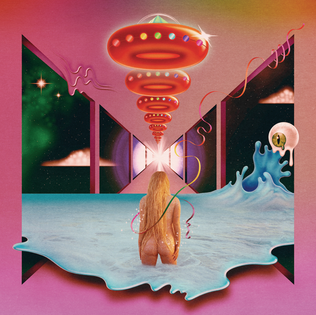

Feminist Mixtape: “Woman” by Kesha

Rainbow by Kesha

Kesha is no doubt a cultural icon and one of the most notable artists of our generation. Kesha’s studio album Rainbow made the headlines for its themes on forgiveness, self-worth, and female empowerment. “Woman” by Kesha falls directly under this category of female empowerment by emphasizing the importance of women’s independence. “Woman” has become a feminist anthem with its emphasis on liberation from patronizing attitudes as well as economic freedom, two elements that liberal feminism encompasses. 

Kesha begins “Woman” by telling those around her to “be serious” and “shut up” (Kesha 0:00-0:04). The act of telling others to be serious or shut up may have been a controversial decision, as women are socialized to not be outspoken or direct. However, by starting “Woman” with the attitude that she’s in charge, Kesha already sets the tone for the rest of the song. 

Kesha then lists a series of items she’s bought with her own money: she pays her own bills, she’s bought “these diamond rings,” she owns “automobiles,” etc. (Kesha 0:07-0:13). Kesha then explains that she buys what she wants because she “work[s] real hard every day” (Kesha 0:27). This notion is commenting on traditional gender roles, especially situated in American history which places men as breadwinners and therefore the ones in power. However, women are as capable as working hard and generating wealth, Kesha’s main theme of the song. 

Kesha then moves into the chorus: “I’m a motherfucking woman, baby, alright / I don’t need a man to be holding me too tight” (Kesha 0:29-0:34). By tying womanhood around economic independence and, specifically, independence from men, “Woman” embodies liberal feminism. Liberal feminism focuses on the individual and empowerment within oppressive systems such as capitalism. Betty Friedan’s The Feminist Mystique highlights this concept by describing the typical suburban woman and her dissatisfaction with “the domestic routine of the housewife” (Friedan 277). Rather than dismantling the system, Friedan opts for women to “look for jobs equal to their actual capacities” and for the government to provide more education for women (Friedan 280). While this concept may seem outdated, it’s very similar to Kesha’s message that a working woman is a free woman. However, working women are still alienated from their labor, eliciting the question of if working women are truly free. Specifically related to Kesha, I’m sure much of her profits go to her recording studio, her manager, etc. rather than directly into her bank account. 

The bridge of “Woman” repeats a couple of notable phrases. First, she sings “don’t buy me a drink, I make my money,” continuing the theme of liberal feminism and the expectation that women don’t have their own capital (Kesha 1:45-1:48). This line also comments on the expectation that men should pay for women’s dinners or drinks, a gender norm rooted in stereotypes about who has the ability and power to pay. Then, she sings, “don’t touch my weave, don’t call me honey” (Kesha 1:48-1:50). This line touches on patronizing attitudes many women (and specifically women of color) face from men. Although people of all races wear weaves, black women most notably face discrimination and micro-aggressions regarding their textured and thick hair. 

My main criticism of “Woman” is that Kesha ties womanhood to capitalism despite capitalism being an oppressor to women as well. Not only do unjust laws such as the wage gap or unpaid maternity leave disproportionately affect women (and women of color), the system of capitalism was built for the subjugation of all people. Furthermore, Kesha centers womanhood around men, but I believe that womanhood should be situated around the narratives of and love between women. Nevertheless, you will still find me loudly belting “I’m a motherfucking woman” as I grapple with my own beliefs about womanhood and feminism.

Book Review: *Against White Feminism: Notes on Disruption*

White feminism is a type of feminism that concentrates primarily on the hardships of white women without acknowledging oppression felt by non-white women or the layering intersectionalities of identity. While most modern-day feminists associate white feminism with the first wave of feminism, white feminism still very much endures within patriarchy and permeates into the rhetoric of many feminists. White feminism is not merely the image of white women holding a Daughters of the American Revolution flag and walking along the streets of Washington DC. It’s more than suffragettes and VOTES FOR WOMEN sashes. Rather, white feminism is a system of oppression that has stemmed from white supremacy and racism. 

Rafia Zakaria’s Against White Feminism: Notes on Disruption is a historical analysis of white feminism and an “argument for feminism to pitch itself against a very specific frontier, that of whiteness, where whiteness is not constructed as a biological category but as a set of practices and ideas that have emerged from the bedrock of white supremacy, itself the legacy of empire and slavery” (Zakaria 208). Against White Feminism is an attempt to excise whiteness and its assumptions of privilege in order to foster the liberation of all women. Zakaria splits up the book into eight different chapters regarding different areas of feminism, including the suffragette movement, the white savior complex, the insertion of white feminists into international wars, and sexual liberation. 

Rafia Zakaria is an attorney, political philosopher, and a Ph. D. candidate in Political Science at Indiana University. Furthermore, she serves on the board of directors of Amnesty International USA and has experience being a feminist of color within academic and professional spaces. Zakaria has written a few other works, including The Upstairs Wife: An Intimate History of Pakistan and Veil (Object Lessons). Zakaria is also the only Pakistani American woman recognized by the Indiana House and Senate for her effort towards women’s rights, a significant feat as few brown women are granted access to politics. Her personal experiences in academia and human rights are notable concerning Zakaria’s qualification because she has had first-hand experience with and discrimination from white feminism. 

Zakaria’s primary methodology is content and text analysis from well-known feminists such as Audre Lorde, Kimberlé Crenshaw, and Gayatri Chakravorty Spivak. By using the method of close readings from influential feminists of color that came from before her, she pieces together an argument for the deconstruction of white feminism that began long before the writing of this book. Additionally, Zakaria provides analyses of white feminist texts such as Simone de Beauvoir’s The Second Sex to contextualize white feminism. Alongside the close readings of critical feminist theories, Zakaria also provides information from historical events that western historians essentially recognize with little space for or mentions of women of color. By presenting these accounts, she restructures the narrative to uplift the voices and actions of black and brown women, using the book itself to accomplish her mission of liberation for all women. 

Zakaria begins her discussion with chapter 1, “In the Beginning, There Were White Women,” where she depicts the history of the feminism movement and the racism within, particularly in America and Europe. Zakaria dives into the history of colonialism and how the white feminism movement was able to progress due to being supported by colonial powers and white supremacy. For one, white British suffragettes during the early 20th century would defend voting rights for women in India (a colony of the British empire) but “refused to support the fight against colonial domination abroad” (29) because they profited off of colonial domination. Throughout the book, Zakaria notes these historical instances of hypocrisy within feminism movements that reinforced the subjugation of some, particularly women from Africa or the Global South. Similarly, Zakaria uses chapter 2, “Is Solidarity a Lie?,” to question the lack of intersectionality in contemporary feminist movements. Zakaria critiques Simone De Beauvior’s The Second Sex as universalizing “women” as “white women” and the “ultimate other,” disregarding the systems of oppression that overlap one another (43, 44). In response to this trend, Zakaria proposes a solution by combining two notable feminists, Kate Millett and Kimberlé Crenshaw. She asks, “by bringing together the intellectual tools of Millett’s epistemological skepticism and Crenshaw’s understanding of intersectionality, can a true feminist solidarity finally be born?” (55). Zakaria explores this idea through the rest of her book as she considers possible solutions.

Chapters 3 (“The White Savior Industrial Complex”), 4 (“Feminists and Feminist Wars”), and 6 (“Honor Killings, FGC, and White Feminist Supremacy”) all touch on the cultural differences between white feminists and women of color in the international realm. Specifically, Zakaria describes white female journalists and activists who attempt to “save” black and brown women via awareness or humanitarian aid. This notion is historically rooted in colonialism and white supremacy where Western (and almost always white) nations or cultures would attempt to enlighten black and brown people in Africa and the Global South based on the premise that western ideals were inherently correct. This ideology is exemplified by Gayatri Chakravorty Spivak’s famous declaration of “white men saving brown women from brown men” (11). Zakaria introduces white women into the equation, as they also participate in the white savior complex alongside white men. 

In Chapter 5, “Sexual Liberation is Women’s Empowerment,” Zakaria discusses sex-positive feminism and choice feminism as theories that “sideline the concerns of women of color and poor women who need the status quo to change” (138). This is because the liberation of women of color is reliant on structural change where sex-positive and choice feminists can comfortably exist within the oppressive status quo that fronts white women’s voices. Zakaria uses this notion to argue for a more collective movement to liberate all women. Chapter 7, “I Built a White Feminist Temple,” continues this discussion by asserting that a lack of parity between feminists results in a lack of equality between gender as a whole. Zakaria ends the book with chapter 8, “From Deconstruction to Reconstruction,” which provides a glimpse of “reconstructed feminism” (204). This form of feminism is meant to transform the discourses surrounding feminism and challenge neoliberalism. Contemporary feminism is without a “clear political frontier toward which to unite,” but Zakaria asserts that the most crucial frontier to unite against is capitalism since it is “bad for all women, even white women” (202). Zakaria’s conversation of the individual vs. the collective culminates in the last chapter as she calls for a collective understanding and engagement to deconstruct both capitalism and patriarchy, which aim to dominate all women and all people. While a wholly unified “we” is impossible within contemporary feminism movements, a reconstruction of feminism is possible. Zakaria argues that it will require the “great challenge of transformation” and white feminists to cede spaces to women of color (209). Zakaria concludes the book with a quote from Audre Lorde regarding the necessity of community: “without community, there is no liberation, only the most vulnerable and temporary armistice between an individual and her oppression. But community must not mean a shedding of our differences, nor the pathetic pretense that these differences do not exist” (209). This quote exemplifies both the historical continuity of whiteness within feminism and inspiration for a way forward. 

Zakaria’s greatest strength is that she provides anecdotes from her life and connects them to feminist theories or historical events. This allows the reader to have a direct connection with the book. Furthermore, feminist theory is often very arbitrary and abstract, so providing concrete stories from Zakaria’s life helps the reader understand the theory and issues in today’s world. For example, Zakaria wrote an article called “Women and Islamic Militancy” in 2015 for Dissent, a traditionally leftist magazine. Her article highlighted how “some Muslim militant organizations used ‘empowerment-like rhetoric” to entice women (111). Zakaria claimed that a cause of this development was the expulsion of Muslim women from the central narrative of Western feminism. Ultimately, the article was rendered so controversial that the editors included a response from a “real feminist” alongside Zakaria’s piece (111). One of the editors of Dissent also stated in an interview that Zakaria was “fascinated and even excited by the idea of a Muslim woman warrior and terrorist killing” (111). Alongside this anecdote, Zakaria provided an analysis of liberal Islamaphobia and how intersecting identities of gender, race, and religion can create oppression. By contextualizing the theory with her own personal experiences of discrimination, the reader has a much firmer grasp of the philosophy.  

One of Zakaria’s weaknesses is that some of her claims are very generalized. For example, Zakaria describes how white feminism often permeates into international relations, specifically when western nations claim commitment to a feminist framework, but their actions convey otherwise. Two examples Zakaria provides are Sweden and Canada, both countries with “feminist foreign policies” that engage in arms trade with Saudi Arabia “whose use of arms and intimidation to harass Saudi women’s rights activists was well known” (92). I took issue with this argument because it oversimplified the international process and politics behind arms dealing. For one, Zakaria makes a direct link that military arms are used to pressure women’s rights activists despite most women’s activists in Saudi Arabia being jailed rather than threatened via tanks or machine guns. Furthermore, Zakaria makes this claim but provides no evidence or source regarding the direct impact of military arms on women or feminists. While I agree that western nations contribute to the oppression of women of color via military arms sales, I do not believe that this was the best example or argumentation. 

Ultimately, I thoroughly enjoyed reading Against White Feminism and would recommend it to all individuals who identified as feminists. Zakaria opened my eyes to many historical events and processes that I had not thought of as perpetuating whiteness, but her argument was coherent and compelling. I also personally appreciated the inclusion of brown women’s works and historical oppression from white feminism because much of intersectional feminism in America focuses on the oppression of black women rather than black and brown women. Furthermore, I believe that feminists who are white (not necessarily white feminists) should read this work in order to deconstruct the biases that they may not be aware of. Taking inventory of one’s privileges and the historical context surrounding their identity, especially those who want to create structural change, is vital to the feminist movement. Reading Against White Feminism is one step towards this direction and the collective feminist movement to come.

Work Cited

Zakaria, Rafia. Against White Feminism: Notes on Disruption. 1 ed., New York, W. W. Norton & Company, 2021.

What is Mick Fleetwood’s Obsession with Balls?

Fleetwood Mac’s Rumors Album Cover

It’s been almost 50 years since the release of Fleetwood Mac’s Rumors (1977), but this album is still as popular as ever. From song versions sung by the Glee cast to a viral TikTok trend involving cranberry juice and “Dreams,” teenagers and adults alike fangirl over this influential record. They live for the drama, the ethereal energy, and the tack piano. But why, oh why, is there a pair of balls dangling between Mick Fleetwood’s legs, and who draped Stevie Nicks across Fleetwood like a damsel in distress? This blog post is an analysis of the album cover to Fleetwood Mac’s magnum opus and what it says about power dynamics between genders. 

If you’ve ever watched Superman, you know how much power superheroes exude solely from their stances. On the Rumors album cover, Mick Fleetwood stands tall and proud, one foot resting on a stool. His chest is proudly stretched, and his hand rests firmly on his hip. He’s set in place, grounded as he holds a crystal ball. On the other hand, Stevie Nicks is anything but steady. Her body is positioned closer to the floor, and her arm flexes behind her as if she’s turning (or possibly falling). She lacks balance, utilizing Fleetwood’s leg for support. At first glance, their stances are nothing to consider. However, this contrast of poses creates a clear power dynamic between Fleetwood and Nicks: Fleetwood is an object of power while Nicks floats along with little structure, reliant on Fleetwood’s body. These same power dynamics have dominated modern-day family and economic systems. During the 1950s, the cult of domesticity established the prevailing trend of male breadwinners. Even today, men are still seen as financial providers and political leaders of whom women are in desperate need. 

Along with posture, the juxtaposition of masculinity and femininity is apparent in Nicks’ attire. Nicks dons a black flowy shawl and is dressed as Rhiannon, the Welsh witch known from the song of the same name from Fleetwood Mac’s eponymous 1975 album. Throughout history, witches have been one of the most widespread images of female empowerment and resistance to patriarchal norms. Persecution of witches has existed as early as the creation of the Bible; the witch trials in The United States (most famously Salem, Massachusetts) and the United Kingdom merely dispersed witch hysteria throughout the world. Witch hunts often punished powerless women who were on the fringes of society: women of color, women that spoke against the man, outwardly sexual women, etc. Essentially, women – generally speaking, people – that didn’t conform to expectations set by society and the patriarchy were susceptible to being charged with witchcraft. Witchcraft’s connection to the feminine is also apparent in a witch’s connection to nature. While nature isn’t necessarily feminine, much of the discourse around women and motherhood connects to the Earth. Furthermore, women and the Earth alike have been subject to much exploitation, oppression, and destruction. Witches communicate with these forces of the environment, blurring the line between humans and nature. Now, what does this have to do with Stevie Nicks or Rumors? For much of the ‘80s, tabloids and haters alike speculated that Stevie Nicks was a witch. Rather than run from these harrowing accusations, Nicks embraced the identity – she embraced Rhiannon. Nicks even appeared on American Horror Story as the “White Witch.” She became this mystical, feminine icon in the male-dominated genre of rock, a “fuck you” to both the industry and patriarchy. This begs the question: if Nicks is a model of feminine power, what does the Rumors album cover say about the relationship between man and woman? Why is Fleetwood holding a crystal ball, Rhiannon’s median of art? Has he taken it, are they sharing it? Why is Fleetwood towering over Nicks, positioned as if he’s Captain Morgan overpowering the feminine? Is he part of the witch hunt? Expanding on the analysis of their gender dynamics from their posture, the cover art suggests an imperial conquest of wild and unruly women, i.e., witches. 

The last narrative piece that brings this analysis full circle is how Fleetwood himself is accessorized: with a pair of balls that hang below his pelvis. Why is it so crucial that Fleetwood reminds not just Nicks but the listeners (and therefore the world) of his genitals? The answer to this question is simple. He wants everyone to remember that he has balls. He wants his power as a man – as a person with a penis and testicles – to be known. We live in a world where power systems predominantly benefit those with one set of genitalia, so images related to testicles or phallic symbols can also be correlated to potency and strength. Today, we see phallic imagery in areas related to power, such as swords, rockets, skyscrapers, and cigars. These images create a subconscious association in our minds with hegemonic masculinity, a constant reminder of who and what is in charge. Similarly, Mick Fleetwood’s balls generate a reminder of his position in society and in relation to Rhiannon.  

Does this mean you should stop listening to the silky melodies of Fleetwood Mac? Absolutely not – I’ll always need my daily dose of Stevie! However, you should study and recognize the many messages the cover art delivers. Rumors has one of the most recognizable album designs of all time, so dissecting images that circulate pop culture is vital to understanding the social contexts in which we live. That being said, the next time you add “Songbird” to your Spotify queue, analyze the different stories hidden within the album cover and question any resemblances to your own relationship to gender and power.

Written by Anaya Patel with Autostraddle