Book Review – Medical Bondage: Race, Gender, and the Origins of American GynecologyBook Review: Medical Bondage

The origins of American gynecology reflect back to the racism that has been seen within medicine for quite some time. Black women were seen as these “superbodies” that were capable of withstanding all levels of pain. As a result of this belief, black women were abused in different ways and used for experimental and teaching purposes within the gynecology field. Author Deirdre Cooper Owens focused on the history of American gynecology and the racist origins behind the field. Dr. Cooper Owens reflects on the stories of black women who were at times left to die and then used as study subjects by the same doctors who were meant to cure them. At the same time, Dr. Cooper Owens reflects on the connection that slavery and medicine have and emphasizes the idea that black women in many ways can be seen as the founders of gynecology. 

Throughout the book Medical Bondage, Dr. Cooper Owens makes a connection between the racist doctrines within American gynecology and the abuse that black women faced as experimental subjects. For many black women, stepping into a gynecologist’s office was a sentence for death. More specifically, “Slavery and the rise of American gynecology were the vessels that poured both life and death into the black women’s lives” (Cooper Owens, 44). Many of these women were forced to go to these doctors for their own health concerns and yet they would end up being abused and used and as was often seen killed as a result of this abuse. Dr. Cooper Owens also reflects on the difference in treatment between white and black women. The experiments that black women were forced to undergo would eventually be used to treat white women. Although the procedures were the same, white women did not receive the same abusive treatment that black women did. From these various arguments, Dr. Cooper Owens emphasizes on the idea that black women are the real founders of American gynecology. Black women not only contributed through forced participation, but many black women were also nurses and midwives. The trauma that these white doctors inflicted upon black women led to many black women continuing as midwives and nurses as a way to avoid any further abuse from occurring. As I read Medical Bondage, it was clear that gynecology as a field was not founded by white men but rather by the black women who underwent abuse and various experimental procedures. 

Dr. Cooper Owens is an award-winning historian, a popular speaker, and a professor. Dr. Cooper Owens attended two historically black colleges and universities, Bennett College and Clark Atlanta University. After completing her education in these two institutions, Dr. Cooper Ownes went on to earn her Ph.D in history at the University of California Los Angeles. Dr. Cooper Owens has also taken part in various fellowships throughout the United States. Using her own personal experiences  has led to her realizing that stories are what draw in the attention of the readers. Having the historical background that she does, Dr. Cooper Owens is working to make history accessible to all people as well as inspiring to all. 

In order to create this monograph, Dr. Cooper Owens uses a variety of sources to discuss the role that black women had throughout the history of American gynecology. One source that Dr. Cooper Owens focuses on the stories of the black women who were forced to take part in these experimental procedures. One case that Dr. Cooper Brown’s discussed, the Julia Brown’s case,  reflects on the shift in value that the lives of black women had to the white doctors. Dr. Cooper Owens states that this case “…illuminates how southern white men developed and deployed medical and pharmaceutical methods that revealed how the value of black people’s lives shifted back and forth like measurements on a sliding scale” (Cooper Owens, 42). This specific example allows readers to understand how the value of black women depended on how valuable their bodies were for the purpose of advancing American gynecological practices. Dr. Cooper Owens also used different records and documents that reflect on this idea that enslaved people, and in particular, enslaved women were seen as nothing but experimental subjects and sources of income. The use of these various sources allow readers to visualize the abuse and disrespect that black women faced in order to have gynecology where it is today. 

The organization of the book made it easy to read along and this would have to be one of the strengths of the book. The actual book is divided into five chapters, with each chapter focusing on a different aspect of American gynecology. The first chapter focuses on the birth of American gynecology and on the father of gynecology, James Marion Sims. Dr. Cooper Owens uses this section to expand upon the procedures that were conducted by these white doctors at the time. It is during this chapter that Dr. Cooper Owens begins to expand on how doctors “… used stark medical terminology that reduced black women’s reproductive organs and bodies to mere “physical specimen” ” (Cooper Owens, 21). Chapter two focuses on these procedures but shifts the focus away from the doctors and the history of American gynecology overall and emphasizes on the experiences of black women during this time. In this chapter, the stories of various black women were told and the abuse and neglect that they received both from their owners and from their doctors. With the example of the State of Missouri v. Celia, Dr. Cooper Owens discusses how Celia, although she was raped by her owner, she was still sentenced to death for defending herself and killing her abuser. Celia was pregnant at the time and although her life was not spared, the life of the baby was (Cooper Owens, 43). This specific chapter highlights the importance that was placed on the unborn child, and the lack of care that was given to enslaved women during this time. Chapter three focuses on the connections between sex, slavery, and  medicine. Many of these black women were abused whether it was by their owners or their doctors. This same abuse is what led to many of these women ending up pregnant or developing certain health concerns that required them to be taken to a doctor. Chapter four expands on this topic of abuse and discusses the experiences of Irish women immigrants and the similarities with those of black women. The example of Mary Donovan reflects the commonalities between the experiences of Irish women and black women in relation to how they were treated by doctors. Donovan was described as “violent, dumb, and defective, but her body provided a pathway for doctors to learn more…” (Cooper Owens, 104). Similar to the experiences of black women, Irish women were also abused by white doctors and these white doctors also exposed the private medical matters of these women to public medical journals. Chapter five summarizes the main points made in the previous chapters as well as discusses the idea of a medical “superbody.” Although this topic was mentioned in previous chapters, Dr. Cooper Owens goes into detail on this topic as well as on the medical gaze and how these topics both added to the trauma that black women in particular endured during the beginning stages of American gynecology. 

Dr. Cooper Owens reflects on the experiences of Irish women, but this is a topic that is not as focused on throughout the monograph. The main focus of this book is on the experiences of black women as experimental subjects for white doctors, but it would be valuable to learn more on the experiences of Irish women. Seeing that this monograph does focus primarily on black women, adding the relationship between American gynecology and Irish women would take away from the main argument being made. Regardless of this, it is important to know the stories of these women as well. Rather than including a chapter towards the end on Irish women, it would be helpful to instead have the stories of Irish women in connection to American gynecology discussed throughout the book similar to the structure used to give the stories of black women. 

Medical Bondage is a book that I would say all people should read. It emphasizes the stories of black women and their role in the history of American gynecology. Dr. Cooper Owens also gives a voice to these black women by sharing their stories. During the time in which these events were occuring, these black women were not given a platform or rights to defend themselves. As a result of this, people are unaware of the actual history of American gynecology and the racist ideologies that make up the field. This monograph exposes the racism of gynecology while providing a voice for the Irish and black women who were silenced and used for experimental purposes. Ultimately, Dr. Cooper Owens’ writing reminds society of the vital role that Irish and black women played in making American gynecology what it is known to be today. 

Works Cited:

Owens, Deirdre Cooper. Medical Bondage: Race, Gender, and the Origins of American Gynecology. University of Georgia Press, 2017. 

“Bio.” Dr. Deirdre Cooper Owens. Accessed December 16, 2022. https://www.deirdrecooperowens.com/bio. 

Book Review: Feeling Medicine by Kelly Underman

Imagine this scenario: you are a black woman and you lay uncomfortably flat on your back with your legs strapped open. Slowly, you wake up from the poor anesthesia you were lucky to receive. You feel the cold sensation of the metallic instruments being inserted into your vagina and feel violated because you see someone who is not your doctor performing a medical procedure without your consent. This situation was not uncommon for the women of the twentieth century. Drexel University professor and former gynecological teaching associates (GTA), Dr. Kelly Underman, writes in her scholarly monograph, “Feeling Medicine: How the Pelvic Exam Shapes Medical Training,” on the horrific history and evolution of the pelvic exam. Dr. Underman analyzes life before gynecological training associates, the impact of the Women’s Health Movement in shaping modern-day pelvic exams, and the importance of building a doctor-patient relationship.

Kelly Underman is a woman from Rittman, Ohio who received her Ph.D. in Sociology from the University of Illinois at Chicago. She is a qualitative researcher and has an interest in researching medical sociology and how sociology plays a key role in the institution of medical schools. Her inspiration to conduct this research is derived from her first-hand experience of observing communities that have had the strength to grow and flourish despite living in the 1950s, where women were objectified for the purpose of gaining medical knowledge. Underman explains this throughout “Feeling Medicine: How the Pelvic Exam Shapes Medical Training,” where she highlights the Women’s Health Movement and how supporters of this movement challenged the healthcare system by drawing attention to issues that specifically women faced in medical practice. The Women’s Health Movement was powerful enough to defeat outdated practices that harmed women. 

Before the development of GTA’s programs, trained assistants served as models who volunteered to help students perform better pelvic exams with their own bodies. Throughout the early twentieth century, medical students learned how to perform a pelvic exam from random patients in a waiting room, who were then treated as objects to gain knowledge. In chapter 1 of her monograph, Dr. Underman explains “A woman waiting in a public clinic…medical students examine her in exchange for her ‘free’ healthcare…become an object under medical gaze.” (25) During the 1970s and 1980s, women who were patients were dehumanized and not treated with appropriate care. Dr. Underman elaborates on how medical students learned to do pelvic examinations on prostitutes and cadavers. The majority of the students cared more about receiving hands-on experiences on how to perform an examination rather than the importance of how their actions and attitude toward a patient influence a patient’s experience. The idea of medical students helping others was only recently established because in the past, it was not part of the norm. The author argues that the students were not taught to be delicate with the instrument such as the vaginal spectrum and how inserting it the wrong way could potentially harm a patient. In Chapter 1, Dr. Underman states “… the expectation that women deserved to be in pain or could tolerate it without complaint – while those who could not [were] considered psychologically abnormal” (31). However, later in the book, you learn the risks that come along with poorly performed pelvic exams, which includes increased chances of infection if a physician does not wash their hands before treating a patient. In Chapter 3, women told stories about students whose nails had not been properly trimmed and who, as a result, scratched their vaginal walls (107). Further, women of color were treated with less care than white women because doctors believed that Black people did not feel pain in the same manner because of the abuse they went underwent as slaves (29). Women who were mistreated by medical students rose up together and started a movement to help with the improvement of pelvic exams. 

Dr. Underman argues how the history of enduring painful pelvic exams led to the uprising of the Women’s Health Movement during the 1970s. Feminist activists were frustrated by how horrible the gynecology system was and advocated for change. They learned how to perform abortions and pelvic exams on one another and developed the fundamental components that would later shape the creation of gynecological training associates. Followers of the Women’s Health Movement were taught how to properly take care of a woman during an examination. In Chapter 1, Underman states “In 1975, feminist activists embarked on a new way of teaching the pelvic exam…[to] challenge the dehumanization of patients during the exam” (34-35). Because of these activists, women now receive better pelvic exams than in the 20th century. In addition, in chapter 4, Dr. Underman quotes Lena, a GTA who states, “We’re there because we want to improve healthcare…” (136). Lena and other GTAs have heard multiple stories of women who have had a pelvic exam and details about how uncomfortable it was for them. Through these narratives, it motivated the GTAs to continuously put their genitals on the line to instruct medical students to positively alter the experiences of patients. This will make future patients less anxious to receive a pelvic exam and reassure them that the physician knows what they are doing and that they will be treated with empathy. Not only does GTA teach students how to do a pelvic exam, but also how to reduce their anxiety and increase their confidence, which in turn, decreases the chances of harming the patient. Thus, Dr. Underman thoroughly argues in her monograph how imperative it is to shape great physicians through the assistance of GTAs. 

Dr. Underman elaborates on the importance of the doctor-patient relationship and how it was never taught until the creation of GTA. The experience for women used to be that physicians executed only their medical responsibilities, but the women were never given information about the procedure that was done on their bodies. However, GTAs teach their students the significance of “neutral touch,” which means placing a hand on the knee and providing a verbal warning before touching or inserting an instrument into the genitals (87). Having a connection between a doctor and a patient also improves the patient’s experience because having a conversation allows them to know what the physician is doing and enhances their level of comfort (123). Thus, the doctor-patient relationship is essential to ensuring patient comfort. 

In my opinion, Dr. Underman does a great job of explaining her arguments and providing primary sources to support her claim. In every chapter, the author includes a quote from a medical professional like gynecological teaching associates and doctors or students to bring validity to her claims. Quotes directly from someone in the field also makes her arguments in the monograph more trustworthy and reliable because her interviewers give her direct information that reinforces her claims. The quotes that Dr. Underman provides are highly qualitative, but the reader may be persuaded more by numerical evidence. 

A weakness of this source is that the author hardly uses statistical evidence. In the monograph, she elaborates on the enhancement of the pelvic exam but does not provide data on its impact nationwide. I believe that through statistics, the reader can understand more about how GTAs have improved the experiences of women compared to the early twentieth century. It would have been helpful to see a chart that analyzed women’s opinions on current-day pelvic exams, to see how much it has changed over time. For example, Dr. Underman could have researched data of the number of women involved in the Women’s Health Movement during the late 1970s compared to the 21st century after methods were improved. Including these statistics would have made Dr. Underman’s arguments stronger because her words would become more valuable and factual. 

Overall, I enjoyed reading this book because, although it had flaws, it was still well-written and held my attention. I like books that make me stop and think and even frustrate me because it pushes me to continue reading. Through her inclusion of personal experiences and direct quotes from medical professionals, Dr. Underman showcased the history of the pelvic exam and the Women’s Health Movement. Anyone who is interested in reading about how the medical system has evolved would benefit from reading this book. Also, those who care about how training medical students in the medical field shape how they practice medicine and how their actions impact their patients would enjoy Underman’s work.

Work Cited:

“Kelly Underman, Ph.D.” College of Arts and Sciences, Accessed 20 November 2022 https://drexel.edu/coas/faculty-research/faculty-directory/sociology/underman-kelly/#:~:text=Kelly%20Underman%20received%20her%20PhD,joining%20the%20faculty%20at%20Drexel.  

“Kelly Underman.” STS Infrastructures, Accessed 20 November 2022 https://stsinfrastructures.org/content/kelly-underman/essay.  

Underman, Kelly. Feeling Medicine: How the Pelvic Exam Shapes Medical Training. New York University Press, 2020. 

Dr. Kelly Underman

Stef M. Shuster: Trans Medicine, The Emergence and Practice of Treating Gender

GSS Book Review

Hale Robinson

            Although the emergence of trans-medicine as a discipline and the discourse surrounding it appears rather recent, transgender healthcare has existed since the early 20th century (Schuster 23). Despite this, physicians and other medical professionals are both hesitant and inexperienced in regard to the treatment of transgendered individuals. The book Trans Medicine, The Emergence and Practice of Treating Gender details how and why this disinclination to treat transgendered patients has occurred and the consequences of medical authority over gender and sexuality. Furthermore, the author seeks to identify practices and ideologies that have been normalized and “legitimized” in the decades of trans-medicine. Through this short publication, Schuster analyzes both contemporary and historical trans-medicine systems and norms in addition to specific examples highlighting the interactions between varying forms of healthcare and their implications on trans-medicine as a whole. From this we can understand how trans-healthcare provides a middle ground for intersection of personal values and scientific thought.

            To compile the examples and evidence presented in the book, author Stef M. Schuster used a multi-sited research design (Schuster 11). The majority of Schuster’s research is his collection of correspondence between healthcare providers in the 20th and 21st century (Schuster 2). Schuster also relies upon biological artifacts, collections of discourse, and other forms of scientific literature. (Schuster 6). Additionally, the author is an associate sociology professor at Michigan State University with a M.A. and Ph.D. in sociology and has conducted a number of interviews with both therapists and physicians as well as attended scholarly conferences on the topic of trans-medicine (Schuster 12). His final source of data collection came in the form of analyzing clinical guidelines, standards of care, and diagnostic criteria used by both contemporary and historical physicians (Schuster 13). Finally, the author notes that terminology surrounding gender and sexuality is fluid and specific word choice in the book may not be representative of the terminology used in the past or future.

            Early development of trans-medicine began in the mid-1950s in the post-World War II era (Schuster 23). Public trust in scientific communities to solve social and biological ills was at an all-time high (Schuster 23). According to Schuster, this increase in medical authority over gender and sexuality and the power difference between doctor and patient is one of the root causes of why trans-medicine has made little progress from the 20th to 21st centuries (Schuster 24). While there have been attempts to decentralize authority of medical providers, many still hold the view that the “doctor knows best” (Schuster 9). In terms of trans-healthcare, this mindset has resulted in a number of subsequent issues. Medicalization refers to “the process of how non-medical problems become defined and treated as medical problems” (Schuster 9). Through medicalization and especially regarding transgender-healthcare, social issues about bodies and bodily autonomy become scientific issues.

Schuster argues that the medicalization of transgenderism resulted in early physicians perceiving transgender patients as “severely troubled” and transgenderism was understood in terms of symptoms of “delusional thinking” (Schuster 24). On one hand, Schuster details how the medicalization of trans-sexuality excited physicians as it was a new uncharted form of medicine. On the other hand, many physicians were hesitant and felt unequipped to treat transgendered patients. As Schuster details in chapter 1, few endocrinologists and physicians in the U.S. were willing to assist transgender individuals out of fear of criticism from peers, revoking of medical licenses, and possible patient regret and future lawsuits following procedures (Schuster 24). It is from this medicalization and hesitance to treat patients that specific guidelines and evidence-based medicine (EBM) emerged. Providers began placing increased expectations onto their transgender patients in an attempt to ensure that the patient was truly willing to undergo hormone/surgical procedures. Schuster states that from these expectations, new scientific language, approaches, and guidelines for trans-medicine were created (Schuster 64). The Diagnostic and Statistical Manual of Mental Disorders (DSM) and the World Professional Association for Transgender Healthcare (WPATH) sought to define transgenderism and create a step-by-step protocol to treating transgender patients respectively (Schuster 80). While guidelines may serve as a “handrail” in other forms of medicine, Schuster explains that the steps outlined in the guidelines suggest a linear pathway, while gender transitions tend to be anything but linear and vary from individual to individual (Schuster 105). Furthermore, standardizing and defining transgenderism is ineffective as trans people’s experiences and self-concepts may not fit into binary modes of thought. Not all transgender patients have similar experiences and the notion that gender is fluid (not just extremes) is hard to process for many.

In addition to the medicalization of trans-sexuality, Schuster argues that certain strategies and mindsets have become normalized in trans-healthcare. One of these strategies is what he calls the “fake it till you make it” mindset (Schuster 131). Because few providers are trained in the social contexts and manifestation of gender, this lack of understanding causes discomfort amongst medical professionals. Many have trouble admitting their lack of knowledge in a field which further causes incorrect practices to become normalized over time (Schuster 134). Schuster also details the trope of the “self-assured expert” who present information in ways that leave little room for discourse and change (Schuster 138). Additionally, some solely follow clinical guidelines and understand trans identification as a clear, straight pathway “from point A (assigned gender at birth) to point B (undergoing a physical transition to the “other” binary gender)” (Schuster 138). The final and perhaps most prevalent strategy that Schuster recalls is “gate-keeping” and defining who is “truly” transgender (Schuster 106). To protect themselves from being sued by a patient, many providers were strict (and still are today) about who is able to obtain treatment procedures (Schuster 94). Schuster identified the following techniques that providers used to determine who would be able to receive hormone therapy. To begin, individuals who did not engage in illegal or risky activities indicated to providers that they could function as a “normal” person upon transitioning (Schuster 72). Second, those who were able to pass the “real life test” or live their life as if they had already received transgender treatment proved to providers that the patient was committed to go all the way with the procedures (Schuster 39). Finally, trans-patients whose ideologies closely aligned with traditional gender roles were significantly more likely to receive hormone therapy and surgical interventions (Schuster 16).

Schuster argues that progress in transgender medicine in recent times has been minimal. While he does not explicitly provide any solutions, he does detail specific providers who are making beneficial progress in trans-healthcare by utilizing smarter and favorable practices. He defines “flexible interpreters” as providers of trans-medicine who are able to “embrace the uncertainty in trans medicine and interpret the guidelines in ways that puts patients’ needs, and their varied ways of identifying as trans, first” (Schuster 117). In other words, these are medical professionals who are able to find a balance between social values and scientific fact and who refer to guidelines as recommendations rather than laws (Schuster 117). According to Schuster, flexible interpreters realize that guidelines take away focus on the individual and their healthcare needs (Schuster 118). When considering that each patient is unique, it is impossible to follow clinical guidelines exactly.

Schuster’s book thoroughly and concisely explains the emergence and history of trans-medicine from the 20th to 21st century. It highlights specific examples of social and medical trends that have impacted trans-healthcare over the years. For example, the book delves into topics such as the medicalization of sexuality through the DSM and WPATH and explains how this has had an effect on treatment strategies. Schuster draws upon various sources to formulate his claims and arguments with one of the sources being scholarly/medical conferences. However, the most convincing sources are direct quotes and letters of correspondence from the 1960s. These primary sources allowed the author to form arguments with supporting examples. This is demonstrated on page 31 in which Schuster presents a letter written by a transgender patient, “This letter is no trick and all I write is the truth and not made up. I want you to understand that my need to have this operation is not in passing, but is something of the deepest importance to me and has been for a long time…” This quote directly supports the author’s argument of the trope of transgender “trickster” where transgender people deliberately misrepresented information about themselves in order to gain access to hormones and surgery (Schuster 31). The abundance of direct quotes and examples make the book an informative and credible read.

While the author’s support of “flexible interpreters” is clear, the author says little about potential solutions and courses of action for the future of trans-medicine. Instead of offering specific solutions to the problems in trans-medicine that have been normalized over the years, Schuster simply critiques and summarizes these issues. While proposing healthcare solutions may be beyond the author’s expertise, with the immense amount of research collected to write this book, I would have expected the author to describe future plans and implications of his findings. In the conclusion and in the section titled “Redefining the treatment of gender,” the author states that “changing the protocols and shifting attention away from trans people as a problem to fix enables some providers to redefine the ‘treatment’ of gender in a way that shifts the attention to broader social inequalities that trans people experience in everyday life, rather than perpetuating inequalities in healthcare encounters” (Schuster 164). While I agree with this claim, it is a simple blanket statement that does not enact any specific changes or solutions.

Overall, Trans Medicine, The Emergence and Practice of Treating Gender, by Dr. Stef M. Schuster was an enjoyable and informative read. The book answers the questions of how medical authority over gender has occurred as well as what practices have become normalized over the years in trans-medicine and their specific consequences. While the author takes a clear stance against the current and past states of trans-healthcare, he does not dive in depth into solutions. In summary, I would recommend this book to anyone who is interested in history and specifically in the history of medicine and sexuality. Furthermore, I feel it is imperative that those pursuing a career in healthcare read this book. As healthcare and social values are increasingly interconnected, it is critical that our future healthcare providers adapt with the times to help serve diverse communities.


Works Cited

Shuster, Stephen M. Trans Medicine: The Emergence and Practice of Treating Gender. New York University Press, 2021.

Review of “Medical Bondage” by Dr. Deirdre Cooper Owens

Gynecology was not always the well known field of medicine that is present in the United States today. In fact, gynecology is a relatively new development in medicine that came to fruition in the United States in the 19th century. START HERE Before modern gynecology arose in the 19th century, women’s health was the job of women. Midwives were the heads of women’s health and pregnancies. These midwives were almost always women. It was not until the practice of gynecology took root that men became involved in women’s health. In her monograph, Medical Bondage: Race, Gender, and the Origins of American Gynecology, Deirdre Cooper Owens explores the impact that enslaved and working class women had on the development of gynecology and in return, the impact that gynecology had on them.

Continue reading “Review of “Medical Bondage” by Dr. Deirdre Cooper Owens” →

Book Review: Trans Medicine by Stef M. Shuster

Transgender and non-binary issues are beginning to come to the forefront of today’s world and access to medical care is one of the most important and nuanced matters for many transgender individuals. Adequate access to transitional surgery and hormones for those who want it is crucial to garnering equality and a comfortable life for gender minorities. While certain aspects of transgender care has improved and changed over the past century, there are still many complex issues that need to be addressed if transgender people are to have full bodily autonomy and access to adequate care. In their book, Trans Medicine, Stef M. Shuster discusses how transgender medical care has evolved from its beginnings in the early 1900’s to the more contemporary issues that the transgender population are dealing with today.

Continue reading “Book Review: Trans Medicine by Stef M. Shuster” →

Theory to Praxis: PurpLE Clinic

Background:

            Last spring, I took the class called Graphic Med: Drawing Disability with Dr. Fox. Specifically, the readings that we completed in the transgender unit really struck me because they exposed the treatment of transgender people, and LGBTQ+ people, in the medical world. This year, I am in both GSS 101 with Dr. Gonzalez and Child Psychopathology with Dr. Stutts. Both classes have highlighted the struggle that transgender people go through, specifically when it comes to being treated and understood in the medical world. Studies have shown that transgender youth as well as other LGBTQ+ people often avoid seeking medical care because they feel that doctors are not fully equipped with the knowledge and ability to help them (Thu et al., 2020.) Additionally, there is a large distrust of the medical world because of outdated practices by older physicians (Hackman et al., 2020) and a need for increase funding and inclusion for procedures and support services that directly benefit LGBTQ+ patients. Similar to what we learned about women’s representation through the creation of the Committee on the Status of Women in India (1974) and its purpose, something similar needs to occur in the medical world for transgender youth.

Goal:

            Sexual violence and assault is experienced by the majority of LGBTQ+ members, but a staggering 64% of transgender people alone (DeKeserdy et al., 2017). The stress and risk of lifestyle judgment keeps transgender people away from medical offices (Hackman et al., 2020). Combining what I have learned in these impactful classes, and acknowledging that there is so much more to learn, I have drafted this proposal for the Layendecker Grant as a way to increase social justice of transgender youth through shadowing in the PurpLE clinic in NYC.

PurpLE Clinic:

            This grant would help me partner with the PurpLE Clinic that serves to create an environment where survivors of assault in a specialized clinic. The PurpLE Clinic is an acronym for Purpose: Listen & Engage to ensure sensitive medical care. By getting involved, we could increase awareness and even eventually make more of these clinics across the country. The clinic was created in response to feedback from anti-sexual violence community based organizations that experienced challenges in connecting survivors of sexual violence with trauma-informed and stigma-sensitive medical care.

Plan:

            With the help of this grant, I would able to travel to the clinic to work alongside the most influential physicians and nurses in the world. These workers are the future of medicine, and being involved by watching their interactions with patients would be life-changing. Each day, I could take notes of interactions and how to approach certain topics in a way that is the most comfortable and helpful for the clinics’ patients. From these notes, I would put together a “manual” for healthcare regarding LGBTQ+ populations, and specifically those who suffer from any sort of sexual violence or other traumatic history due to their identity.

Future Impact:

            I could speak with Dr. Stutts specifically to integrate these ideas into her class to be taught every year, as well as for her to bring to the clinical world. Dr. Stutts is also a licensed psychologist who serves those in the Charlotte area. By working with her, I could then ask her to incorporate these ideas into future conferences with her peers. On a smaller scale, there could be seminars each semester for future medical students at Davidson. On a larger scale with more funding, a PurpLE Clinic could be established in Charlotte, equipped with doctors, nurses, PAs, NPs, Psychologists, psychiatrics, etc. who are ready and knowledgeable about the imminent needs of the LGBTQ+ community. By spreading this manual, we can start shifting the ideas in the medical world to a more inclusive and welcoming environment for all.

Works Cited:

Do, T. T., & Nguyen, A. T. V. (2020). ‘They know better than we doctors do’: Providers’ preparedness for transgender healthcare in Vietnam. Health Sociology Review, 29(1), 92–107. https://doi-org.proxy048.nclive.org/10.1080/14461242.2020.1715814

DeKeseredy, W., Hall-Sanchez, A., Nolan, J., & Schwartz, M. (2017). A campus LGBTQ community’s sexual violence and stalking experiences: the contribution of pro-abuse peer support. Journal of gender-based violence, 1(2), 169-185.

Hackman, C. L., Bettergarcia, J. N., Wedell, E., & Simmons, A. (2020). Qualitative exploration of perceptions of sexual assault and associated consequences among LGBTQ+ college students. Psychology of Sexual Orientation and Gender Diversity. https://doi-org.proxy048.nclive.org/10.1037/sgd0000457.supp

India. Committee on the Status of Women in India, & Guha, P. (1975). Towards equality : report of the committee on the status of women in india. Govt. of India, Ministry of Education & Social Welfare, Dept. of Social Welfare.

Theory to Praxis: Ending Child Abuse and Building Resilient Families

Written by Anna Newman

Overview:

I will be implementing my knowledge of gender and sexuality studies, specifically on women’s rights, feminism, and rape culture, to plan a civic engagement experience over the summer. Through a collaboration with SAFEchild in Raleigh, North Carolina and Strong Girls United, the goal of the project will be to educate children on noticing and responding to child abuse appropriately before it escalates, while also learning more about the implications that domestic violence has on parenting.  

About the Partners: 

SAFEchild is a non-profit advocacy center that ensures children have a safe living environment, free from abuse. SAFEchild empowers the children and their families by providing counseling services and childcare. One important aspect of SAFEchild is a program they run called “Funny Tummy Feelings” which is a program that educates first-graders about noticing and appropriately handling child abuse when they see it or are subject to it. Funny Tummy Feelings has been implemented in the Wake County public school curriculum for first graders; however, the goal of this project is to expand Funny Tummy Feelings to the Strong Girls United program. 

Strong Girls United is a mentorship program for young girls which pairs collegiate athletes with elementary school girls and the groups meet to discuss confidence building, mental health, and new sports skills. I believe that Funny Tummy Feelings could also be a beneficial addition to the Strong Girls United curriculum. Unfortunately, rape and sexual abuse are pervasive parts of society, but one way to combat this is to educate about rape culture and the ways you can stand up to it and notice it before it escalates.

Connections to GSS:

This project will be focusing on providing children and mothers the skills needed to build confidence in response to child abuse and domestic violence. Confidence and mental resiliency begin at a young age, and if we can empower elementary school girls, we can empower an entire generation to put an end to domestic violence and child abuse. My research would overlap with several articles that we studied in class about feminism. In the article titled Committee on the Status of Women in India, the author discusses how marriage can become a “hindrance for women seeking career advancement” which demonstrates that a marriage with power imbalances is the basis for domestic violence and abuse of power. Betty Friedan talks in the Feminine Mystique that in the 1970’s, rape was not considered a penalty. Friedan also discusses the topic of women not being fulfilled simply by staying in the house, making beds, washing dishes, and cooking for the family, which relates to the lack of liberties that the woman has within a marriage. These hindrances that married women face are the basis for domestic violence and patriarchy. One notable quote from the Feminine Mystique is “when she stopped conforming to the conventional picture of femininity, she finally began to enjoy being a woman” (279). When women stop allowing their husbands to control and abuse them, they enjoyed being women. Additionally, bell hooks’ work called Feminism is for Everybody encourages the notion that equality is the goal of feminism, and the goal is not to subvert men. In relation to my book review on the book titled Medical Bondage, white male physicians were abusing enslaved women’s bodies by taking advantage of their position of power and conducting unsolicited gynecological research and painful experiments. The consequences of these experiments were destructive, both physically and mentally, for these women. The enslaved women’s experiences with the gynecological experiments parallel the domestic violence that women today face in abusive relationships. Abuse within a relationship affects the way a mother can parent a child, which demonstrates the vicious cycle of domestic violence at a young age starting with a lack of self-confidence, then getting wrapped up in abusive relationships, and to then raise kids in an environment filled with abuse and neglect. So, my goal for this project is to confront and help children notice domestic violence at a young age so that they can grow up to be confident people in healthy relationships. After doing an analysis on the film Moonlight in my writing class, it was brought to my attention that some abusive family dynamics are avoidable, while others are out of one’s control. In Moonlight, a young boy by the name of Chiron was being raised in an abusive and neglectful household because his mother was involved with dangerous drugs and did not have time for her child; however, the opportunities available for the mother to parent her child were lacking. While I’m doing my research, l will be sure to look at the context of the situation (what resources are available to the family?) versus judging the situation and the parenting choices. 

Limitations:

The limitation of this project is that Strong Girls United does not mention anything about transgender children, non-binary children, or gender-nonconforming children. This is a research question that l will be asking the SGU executive board in hopes that something is done to make the organization more inclusive of children of all gender identities. Part of feminism is creating equity across the genders, so this feminist project is aimed at creating equity for boys, girls, and gender non-conforming children. Overall, the goal of this project is to provide a form of mentorship for children seeking assistance with confidence, mental health training, and skills needed to confront abuse if they ever need to use them. 

Implementation of Plan: 

A few summers ago, my mom and l volunteered at SAFEchild and we babysat the children while their mothers were in a counseling meeting. I am hoping to resume my volunteering with SAFEchild by babysitting the children and then shadowing one of the leaders during the counseling meetings. I feel like I would gain another dimension of appreciation for the struggles that these families deal with by listening to the mothers speak. Also, it would be impactful to listen to the women’s stories of domestic abuse within their marriages and how this abuse impacts their ability to mother their children. 

After shadowing a counselor, l would ask one of the leaders/counselors at SAFEchild to be a guest speaker at one of the meetings with Strong Girls United. The counselor can focus on teaching a Funny Tummy Feelings course for the SGU children. The plan is to empower young girls by giving them to skills to notice and respond to child abuse in a confident way. One possibility of furthering my research experience would be to shadow a pediatric physiatrist to learn about the impacts of child abuse, neglect, and domestic violence on youth’s mental health.  

From Theory to Praxis: Medical Care of LGBT Individuals

Over this semester, I have been exposed to a broad spectrum of concepts, issues, and questions through our readings and discussions. GSS has given me a new lens through which I see the world and a deeper understanding of the structures and institutions in place that govern our lives. As a senior, I will soon be entering the job market and am really looking forward to taking my newly acquired GSS knowledge to my future endeavors. I am looking for a job in the medical field, a field in which LGBT individuals are underserved and often reluctant to pursue care. In this context, lesbian, gay, bisexual, and transgender individuals are often grouped together in a way that implies homogeneity, which is not the case. These individuals are distinct in terms of race, socioeconomic status, age, and ethnicity in addition to their gender and sexual identities. What groups these people together is the underlying discrimination and stigma that they face in society as a result of living at the intersection of multiple different groups. The intersectionality of marginalized groups is a topic that came up frequently in our class discussion and has really opened my eyes as to how a person’s identity is not defined by just one element or trait, it is the combination of these interlinked traits that make up one’s identity.

There has been a long history of discrimination stemming from a lack of understanding of LGBT individuals in the medical field (i.e. the listing of homosexuality as a mental disorder in the DSM). However, as understanding has improved, the treatment of LGBT individuals in the medical setting has gotten somewhat better. There are certain diseases that disproportionately affect the LGBT community such as HIV and other STDs, and these disparities stem from structural and legal factors, social discrimination, access and availability of medical care, and the lack of culturally informed health care.

There are many things that those in the medical field can do to encourage an inclusive and welcoming medical environment. Below are some suggestions to be implemented in different medical environments, which I hope to bring with me to my future occupation:

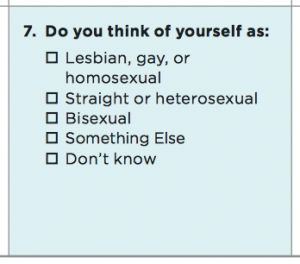
  1. Allow patients to privately self-input information about gender identity and sexual orientation (ensure that there are a wide range of options on the questionnaire).
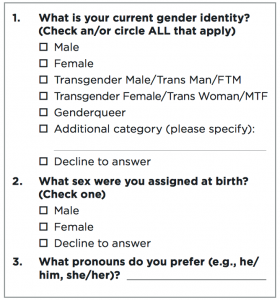
  2. Allow patients to specify the pronouns that they prefer.
  3. Be open and non-judgmental when collecting sexual histories of patients.
  4. Refrain from making assumptions about individuals based on appearance.
  5. Do not assume heterosexuality (i.e. Ask “Do you have a
    partner?” rather than “Do you have a boy/girlfriend?” when conducting sexual
    history).
  6. Make sure all staff are trained to interact respectfully
    with LGBT patients (i.e. ensuring use of their preferred pronouns).
  7. Make sure that the medical environment has a non-discrimination policy that includes discrimination based on gender identity and sexual orientation and publicly display this policy.
  8. The use of brochures and medical information that include images of LGBT people as well as medical information that specifically addresses concerns that
    these individuals face.

All of these suggestions are important, as a clinician may be one of the first people whom an individual discloses non-heterosexual behavior to, and for this to happen, individuals need to be in a space where they feel comfortable. The goals of medicine include providing quality and effective care, and through these suggestions and the scope of my GSS knowledge, I plan to do my best to create an inclusive and welcoming environment for all patients.

Works Cited

http://www.lgbthealtheducation.org/wp-content/uploads/Improving-the-Health-of-LGBT-People.pdf

http://www.aafp.org/dam/AAFP/documents/medical_education_residency/program_directors/Reprint289D_LGBT.pdf