Theory to Praxis: PurpLE Clinic

Background:

            Last spring, I took the class called Graphic Med: Drawing Disability with Dr. Fox. Specifically, the readings that we completed in the transgender unit really struck me because they exposed the treatment of transgender people, and LGBTQ+ people, in the medical world. This year, I am in both GSS 101 with Dr. Gonzalez and Child Psychopathology with Dr. Stutts. Both classes have highlighted the struggle that transgender people go through, specifically when it comes to being treated and understood in the medical world. Studies have shown that transgender youth as well as other LGBTQ+ people often avoid seeking medical care because they feel that doctors are not fully equipped with the knowledge and ability to help them (Thu et al., 2020.) Additionally, there is a large distrust of the medical world because of outdated practices by older physicians (Hackman et al., 2020) and a need for increase funding and inclusion for procedures and support services that directly benefit LGBTQ+ patients. Similar to what we learned about women’s representation through the creation of the Committee on the Status of Women in India (1974) and its purpose, something similar needs to occur in the medical world for transgender youth.

Goal:

            Sexual violence and assault is experienced by the majority of LGBTQ+ members, but a staggering 64% of transgender people alone (DeKeserdy et al., 2017). The stress and risk of lifestyle judgment keeps transgender people away from medical offices (Hackman et al., 2020). Combining what I have learned in these impactful classes, and acknowledging that there is so much more to learn, I have drafted this proposal for the Layendecker Grant as a way to increase social justice of transgender youth through shadowing in the PurpLE clinic in NYC.

PurpLE Clinic:

            This grant would help me partner with the PurpLE Clinic that serves to create an environment where survivors of assault in a specialized clinic. The PurpLE Clinic is an acronym for Purpose: Listen & Engage to ensure sensitive medical care. By getting involved, we could increase awareness and even eventually make more of these clinics across the country. The clinic was created in response to feedback from anti-sexual violence community based organizations that experienced challenges in connecting survivors of sexual violence with trauma-informed and stigma-sensitive medical care.

Plan:

            With the help of this grant, I would able to travel to the clinic to work alongside the most influential physicians and nurses in the world. These workers are the future of medicine, and being involved by watching their interactions with patients would be life-changing. Each day, I could take notes of interactions and how to approach certain topics in a way that is the most comfortable and helpful for the clinics’ patients. From these notes, I would put together a “manual” for healthcare regarding LGBTQ+ populations, and specifically those who suffer from any sort of sexual violence or other traumatic history due to their identity.

Future Impact:

            I could speak with Dr. Stutts specifically to integrate these ideas into her class to be taught every year, as well as for her to bring to the clinical world. Dr. Stutts is also a licensed psychologist who serves those in the Charlotte area. By working with her, I could then ask her to incorporate these ideas into future conferences with her peers. On a smaller scale, there could be seminars each semester for future medical students at Davidson. On a larger scale with more funding, a PurpLE Clinic could be established in Charlotte, equipped with doctors, nurses, PAs, NPs, Psychologists, psychiatrics, etc. who are ready and knowledgeable about the imminent needs of the LGBTQ+ community. By spreading this manual, we can start shifting the ideas in the medical world to a more inclusive and welcoming environment for all.

Works Cited:

Do, T. T., & Nguyen, A. T. V. (2020). ‘They know better than we doctors do’: Providers’ preparedness for transgender healthcare in Vietnam. Health Sociology Review, 29(1), 92–107. https://doi-org.proxy048.nclive.org/10.1080/14461242.2020.1715814

DeKeseredy, W., Hall-Sanchez, A., Nolan, J., & Schwartz, M. (2017). A campus LGBTQ community’s sexual violence and stalking experiences: the contribution of pro-abuse peer support. Journal of gender-based violence, 1(2), 169-185.

Hackman, C. L., Bettergarcia, J. N., Wedell, E., & Simmons, A. (2020). Qualitative exploration of perceptions of sexual assault and associated consequences among LGBTQ+ college students. Psychology of Sexual Orientation and Gender Diversity. https://doi-org.proxy048.nclive.org/10.1037/sgd0000457.supp

India. Committee on the Status of Women in India, & Guha, P. (1975). Towards equality : report of the committee on the status of women in india. Govt. of India, Ministry of Education & Social Welfare, Dept. of Social Welfare.

Feminist Mix-tape: The Man by Taylor Swift

Taylor Swift portrayed as a man in the music video.

Taylor Swift dominates the music industry in 2021, but it was not easy to get to the top when she was fighting misogyny for her whole career. In February of 2019, Swift released her hit song “The Man” confronting sexism in the music industry, and declaring that if she was a man, she’d be the man. Her lyrics compare her achievements and life as an artist to the same of a man, and how society interprets both very differently. Men are far more respected in the music industry, and women who make it to the same place as men are often portrayed as “lucky”. Some lyrics that struck me the most include these two: 

“I’m so sick of running as fast as I can
Wondering if I’d get there quicker
If I was a man (Swift, lines 11-12)”

and similarly,

“They’d say I hustled
Put in the work

They wouldn’t shake their heads and question how much of this I deserve (Swift, lines 19-21)”

            These ideas date back to the first wave of feminism. This reminded me of when our class read “Declarations of Sentiments and Resolutions” from the Women’s Rights Convention held at Seneca Falls in July of 1848. This document argues that women are oppressed by the government and the patriarchal society of which they are a part. One quote that emphasizes the ideas that are present in Swift’s song is, “That woman is man’s equal—was intended to be so by the Creator, and the highest good of the race demands that she should be recognized as such,” (Stanton 1). Women were first fighting for suffrage against the existing notion that they should not have careers outside of the household, but instead their only duty was to tend to the home and take care of children. This was a time of expanding the women’s role to the outside world and creating new opportunities. They were regarded as incapable and had to fight exponentially harder to just obtain a similar place in society among men.  Unfortunately, I think that this is still a present idea that is attributed when women outrank men. It is almost seen as intrusive when a woman holds a lot of power, as if she is not welcomed to have such a high status. Society resorts to wondering how she got there or if she had connections, instead of recognizing her hard work and drive. Women in this position are also called bossy and bitchy, instead of being viewed a strong leader like men.  

            One limitation of how this song represents feminism is that Swift herself is a wealthy, white female who through hard work was able to make it to the top. I think this view is not inclusive with the intersectionality of different races, disabilities, etc. that other female artists have to face. Swift did not have these added obstacles to work past on her journey to success. Overall, this song, accompanied by its music video, is a way to expose the sexism within the music industry and how women need to work harder for the same results and recognition that men receive.

Music video link: https://www.youtube.com/watch?v=AqAJLh9wuZ0

Citation:

Stanton, Elizabeth Cady, 1815-1902. Address of Mrs. Elizabeth Cady Stanton, Delivered at Seneca Falls & Rochester, N.Y., July 19th & August 2d, 1848. New York :R.J. Johnston, 1870.

Swift, Taylor. “The Man.” Lover, Republic Records. accessed November 9, 2021.

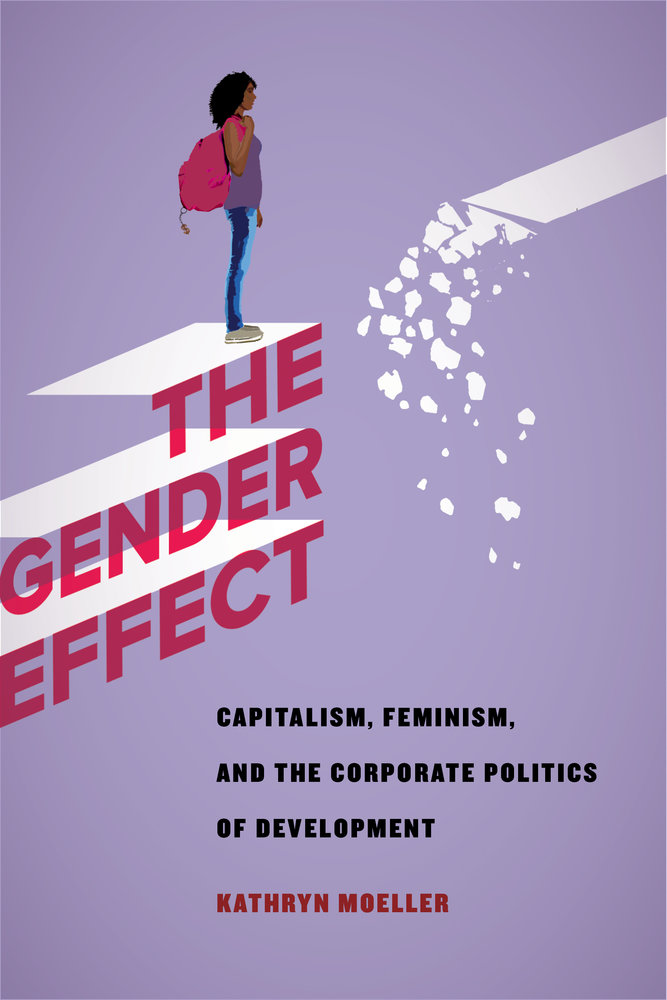
Book Review: *The Gender Effect: Capitalism, Feminism, and the Corporate Politics of Development*

Book cover

In the 1990s, the idea of “investing in women” started circulating around large corporations and foundations. In developing countries, it was thought that this idea could help women, their families and their countries out of poverty. In return, it was then thought that women would pay specific attention to children’s nutrition, education and healthcare when considering where to spend their money and thus raise the country’s human capital. Educating women and girls was the most effective way to fight  poverty and encourage development in the Global South. This approach has since been adopted by powerful corporations and institutions, such as the United Nations, the World Bank, and the United Kingdom’s Department for International Development. Using her ethnographic case study of the Nike Foundation’s Girl Effect initiative as an example, the author Kathryn Moeller argues that these corporate led campaigns end up benefiting corporations but at the expense of women and equality in The Gender Effect: Capitalism, Feminism, and the Corporate Politics of Development. 

Continue reading “Book Review: *The Gender Effect: Capitalism, Feminism, and the Corporate Politics of Development*” →

Simplifying Sexuality through Wine Labels

Written for Wear Your Voice by Molly Murphy

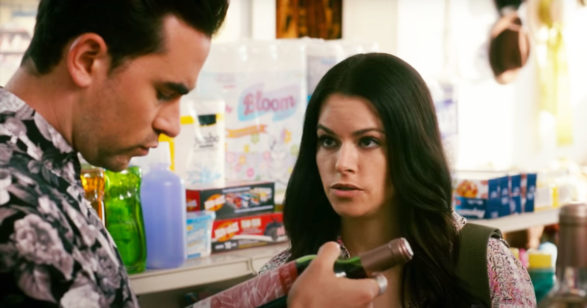
Let’s just be honest here, sexuality is complicated.  There are times that you don’t know exactly who you love and where you fit in. Having these feelings of insecurity and unsureness, and THEN trying to describe your own sexuality in a way that makes sense to others is even more complicated. In the hit series Schitt’s Creek, the main character engages in a conversation that perfectly balances the importance of openness and honesty in these conversations. This series follows a rich family of four who suddenly lose all of their money and their luxurious lifestyle. They are forced to pack up what is left of their property and move into a small town, their only remaining asset. Schitt’s Creek is the town that the father once bought the son as a joke for his birthday. That son and main character of the show is named David Rose. Presumably gay to the viewers and other characters in the show, he finds himself one night sleeping with a female and straight character named Stevie Budd. Stevie is confused, and decides to confront him while out wine shopping for an event. She hints, “Just to be clear, I am a red wine drinker, and I only drink red wine… and up until last night, I was under the impression that you too only drink red wine.” Catching on, David responds to her, “I do drink red wine. But I also drink white wine. I also have been known to sample Rosé. A couple summers back, I tried a Merlot that used to be a Chardonnay, it just got a bit complicated.” Stevie is a bit confused, and David goes on to say, “I like the wine, not the label. Does that make sense?” This iconic scene would go on to be quoted in many articles, printed on tee shirts, and used to give confidence to thousands of youth helping them come out to their parents and peers.


What is great about this use of a wine metaphor is how it is so unconventional, but so easy to comprehend. It allows even the most conservative and closed minded individual to understand that David is pansexual. And as a bonus- who doesn’t love wine? Everybody can relate to how David is describing to his sexuality through the use of this metaphor. David is able to bring forward his very complicated history of experimentation and self-discovery. He is so secure with himself and his journey, that he can calmly explain his sexuality to Stevie in an amusing way. David educates Stevie in a manner that is lighthearted but clear, and it is centered around inclusion and positivity. These conversations can be hard to have, but Stevie reacted in a way that let David come out to her while also not downplaying the importance of having “no labels” to David.

Society’s social constructs and biases make coming out a traumatic experience for so many people. How can they help not feel frightened at the possibility of having their loved ones turn on them for revealing their true self? Throughout every episode of Schitt’s Creek however, the creators challenged that idea that coming out needs to be traumatic. (As a disclaimer, they do not ever downplay the importance of that experience; having somebody working up that courage to finally be unapologetic and open with who they really are and love. There is an episode where David’s partner comes out to his parents in distress, but even then, his parents were only upset that he felt he couldn’t be honest with them about his sexuality, and not that he was actually gay.) By not making sexuality such a huge ordeal, it forces the viewers to imagine a world where there is no bias or judgment when two men are in love and holding hands in public. There is no talk among the characters of anybody’s sexuality beyond this scene, so the reaction to these couples is the same as any reaction would be to a heterosexual couple walking down the street holdings hands. This amazing directing is what sets Schitt’s Creek apart from other series. The series LBGTQ+ representation fosters an inclusive environment, free of bias and full of love and acceptance with no shame.  

Schitt’s Creek has made a difference in this world, right when we all needed it! It’s constant celebration of unconditional love and wholesome relationships between all of the characters really resonated with viewers, making it become one of the most popular and successful shows to ever hit the big screen. The series’ defiant representation of different races and sexualities throughout both acknowledge that facts that anybody in the audience who identifies with the characters are valid, and that they should be proud of themselves and love who they are. This show has won the battle of representation, and has helped pave the way in media for impenitent openness and inclusivity.