Background:
Last spring, I took the class called Graphic Med: Drawing Disability with Dr. Fox. Specifically, the readings that we completed in the transgender unit really struck me because they exposed the treatment of transgender people, and LGBTQ+ people, in the medical world. This year, I am in both GSS 101 with Dr. Gonzalez and Child Psychopathology with Dr. Stutts. Both classes have highlighted the struggle that transgender people go through, specifically when it comes to being treated and understood in the medical world. Studies have shown that transgender youth as well as other LGBTQ+ people often avoid seeking medical care because they feel that doctors are not fully equipped with the knowledge and ability to help them (Thu et al., 2020.) Additionally, there is a large distrust of the medical world because of outdated practices by older physicians (Hackman et al., 2020) and a need for increase funding and inclusion for procedures and support services that directly benefit LGBTQ+ patients. Similar to what we learned about women’s representation through the creation of the Committee on the Status of Women in India (1974) and its purpose, something similar needs to occur in the medical world for transgender youth.
Goal:
Sexual violence and assault is experienced by the majority of LGBTQ+ members, but a staggering 64% of transgender people alone (DeKeserdy et al., 2017). The stress and risk of lifestyle judgment keeps transgender people away from medical offices (Hackman et al., 2020). Combining what I have learned in these impactful classes, and acknowledging that there is so much more to learn, I have drafted this proposal for the Layendecker Grant as a way to increase social justice of transgender youth through shadowing in the PurpLE clinic in NYC.
PurpLE Clinic:
This grant would help me partner with the PurpLE Clinic that serves to create an environment where survivors of assault in a specialized clinic. The PurpLE Clinic is an acronym for Purpose: Listen & Engage to ensure sensitive medical care. By getting involved, we could increase awareness and even eventually make more of these clinics across the country. The clinic was created in response to feedback from anti-sexual violence community based organizations that experienced challenges in connecting survivors of sexual violence with trauma-informed and stigma-sensitive medical care.
Plan:
With the help of this grant, I would able to travel to the clinic to work alongside the most influential physicians and nurses in the world. These workers are the future of medicine, and being involved by watching their interactions with patients would be life-changing. Each day, I could take notes of interactions and how to approach certain topics in a way that is the most comfortable and helpful for the clinics’ patients. From these notes, I would put together a “manual” for healthcare regarding LGBTQ+ populations, and specifically those who suffer from any sort of sexual violence or other traumatic history due to their identity.
Future Impact:
I could speak with Dr. Stutts specifically to integrate these ideas into her class to be taught every year, as well as for her to bring to the clinical world. Dr. Stutts is also a licensed psychologist who serves those in the Charlotte area. By working with her, I could then ask her to incorporate these ideas into future conferences with her peers. On a smaller scale, there could be seminars each semester for future medical students at Davidson. On a larger scale with more funding, a PurpLE Clinic could be established in Charlotte, equipped with doctors, nurses, PAs, NPs, Psychologists, psychiatrics, etc. who are ready and knowledgeable about the imminent needs of the LGBTQ+ community. By spreading this manual, we can start shifting the ideas in the medical world to a more inclusive and welcoming environment for all.
Works Cited:
Do, T. T., & Nguyen, A. T. V. (2020). ‘They know better than we doctors do’: Providers’ preparedness for transgender healthcare in Vietnam. Health Sociology Review, 29(1), 92–107. https://doi-org.proxy048.nclive.org/10.1080/14461242.2020.1715814
DeKeseredy, W., Hall-Sanchez, A., Nolan, J., & Schwartz, M. (2017). A campus LGBTQ community’s sexual violence and stalking experiences: the contribution of pro-abuse peer support. Journal of gender-based violence, 1(2), 169-185.
Hackman, C. L., Bettergarcia, J. N., Wedell, E., & Simmons, A. (2020). Qualitative exploration of perceptions of sexual assault and associated consequences among LGBTQ+ college students. Psychology of Sexual Orientation and Gender Diversity. https://doi-org.proxy048.nclive.org/10.1037/sgd0000457.supp
India. Committee on the Status of Women in India, & Guha, P. (1975). Towards equality : report of the committee on the status of women in india. Govt. of India, Ministry of Education & Social Welfare, Dept. of Social Welfare.


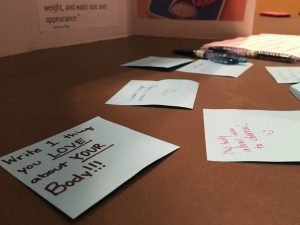 Because they are encouraged to subscribe to patriarchal standards of “masculinity,” many men are imprisoned by society’s definition of “healthy.” Harrison Pope argues in his book
  who seek to determine patient’s achievement of “good health” based on flawed scales like BMI contribute to the chorus of voices that say, falsely, that our bodies are too fat, not muscular enough, too short; basically, that our bodies are