The Obstacles Blocking the Pathway to Reproductive Rights

People, especially those who can give birth to a child, have been in a constant back and forth argument about having the choice to have or not have an abortion. 

Although Roe v. Wade was a big step in the reproductive rights movement, the idea of this choice of keeping or aborting a pregnancy goes back to before this impactful court decision. 

After the Dobbs vs. Jackson Women’s Health Organization (2022) decision was made, reproductive rights were taken away from many people in the United States. This decision led many individuals to lose their reproductive rights including the choice to have an abortion or even the decision to use birth control to avoid the possibility of pregnancy.

This image connects to what is occurring today especially in the United States because, for many people, going to the voting polls and taking part in elections is the only way to protect their reproductive rights. The image above shows a woman at a voting poll with a speech bubble that says “This is now a part of my birth control routine…”

What first stood out to me from this image was the way in which the woman is being portrayed. Based on things like her posture or even the colors used for her clothing, it seems like she is stressed or concerned even about the impact of her vote. In a way, this can connect to all people who were impacted by the Dobbs v. Jackson court case decision because many people are tired of having to fight for their own reproductive rights. Before and even after Roe v. Wade, reproductive rights were constantly being challenged by the government whether at the state or federal level, and people, especially women, were already having to go to voting polls to make their voices heard. Eventually, this got tiring for many once it was evident that the government did not really pay much attention to what the people wanted. This same sense of exhaustion and hopelessness can be seen in this image and the way in which the woman is standing at the voting poll in a posture that makes it seem like she has the weight of the world on her shoulders.

Going back to the colors of her clothing, for the most part these are all dark colors. The use of color for the clothing can reflect on the emotions being felt not only by the woman portrayed in this image, but by all people who are currently being impacted by Roe v. Wade being overturned. After the Dobb vs. Jackson Women’s Health Organization court case, women around the country felt a sense of defeat and loss of hope. These dark colors connect to the dark times that people are going through now that they do not have access to reproductive rights that for many were considered to be lifesaving, whether it is from a medical complication or simply as a way to avoid having an unsafe abortion. 

Another part of this image that caught my attention is the speech bubble. This idea that voting is a reproductive right alone says a lot about the accessibility to reproductive rights here in the United States. The text in the image is portrayed in a way that at least for me, it leads to a sense of uncertainty and worry even. Specifically, the use of the ellipsis in the end leads me to wonder about the even longer list of thoughts that people have when voting, especially on topics regarding reproductive rights. Reproductive rights alone encompass many different areas and having to vote for all these rights alone to then potentially not be heard can be quite a lot to have on your mind. 

This post also leads me to reflect on the lack of access to this right for people of color in the United States. For white people, it is a normal thing to be able to do things like vote, but many communities of color are given certain obstacles that make voting inaccessible to them. 

Obstacles like making voting polls farther away from people of color or having fewer voting polls than in places that are mainly made up of white communities leads to the voices of people of color to be ignored. Reproductive rights, before Roe v. Wade was overturned, were not as accessible to many people of color, but now that the case is overturned, women of color are left with few, if any, reproductive rights. This in itself is quite harmful because it leads many individuals to take part in unsafe abortions which can negatively impact a person’s health physically, mentally and emotionally. Going past the impact that this can have on a person’s health, limiting these rights, especially to women of color, has led to the deaths of many people who were only trying to ask for help, but instead were denied and left with options that were not safe for them at all. 

Overall, this social media post opens up the floor to the topic of reproductive rights, but it also reflects on the inequality seen in the voting system and the impact that this lack of choice can have towards people of color and their own reproductive rights.

Sharing the Chocolate Pudding: Abortion Representation in Sex Education

Before the following scene, the main character Maeve is heckled by two young members of an anti-abortion group. They intend to create a feeling of shame and guilt strong enough to dissuade Maeve from getting her abortion. Maeve enters the abortion clinic holding onto these complicated feelings as well as some level of fear.

The scene continues to show the shame and fear that consumes this medical space, but also shows the kindness and empathy that helps Maeve get through the experience. As seen from the comments on this video, this episode of Sex Education is cherished for showing the experience of getting an abortion in a realistic and nuanced way. 

The shame surrounding abortion is also shown coming from the medical community. Sarah, who is getting an abortion at the same time as Maeve has been to this same clinic before for to get an abortion. Someone working in the clinic says to her, “Maybe there will be a chocolate [pudding] the next time you’re here, Sarah.” This medical professional is painting Sarah’s choice to get an abortion as an innate moral failure which is bound to happen again.

One of the most powerful things about Sex Education’s depiction of abortion is the way that support changes the experience for Maeve. Sarah says to Maeve, “Don’t worry love, I’ve got three kids and I feel way more guilty about the ones that I had than the ones I chose not to. It’s better not being a mom at all than being a bad one.” Maeve is able to console Sarah and tell her that her kids really love her. Then, leaving the clinic, Maeve sees that Otis waited for her to drive her home and even got her flowers. Both of these acts of kindness allowed Maeve to not feel like she was making the wrong decision in terminating her pregnancy.

While this episode is cherished as one of the best depictions of abortion in mainstream pop culture, Maeve’s story doesn’t give the full picture. For one, I have only ever seen in-clinic abortions depicted in television. The reality is that a large percentage of abortions are completed by taking a series of two pills at home. The in-person abortion makes for a more dramatic scene in a show, but it leaves you thinking that is everyone’s experience. 

Another lens worth considering is abortion access based on location, class, and race. Maeve’s experience was as simple as contacting the clinic and making an appointment. The clinic appeared to be in town, and Maeve had a friend willing to help with travel. Imagining a similar situation in Oklahoma, a young woman would have to search for abortion clinics across state borders. Without the right resources this could prove to be impossible for a young student. We also don’t see much financial discussion of Maeve’s abortion. In the United States, an abortion can cost anywhere from 750 to 1500 dollars depending on your insurance and how far you are into your pregrancy. Maeve, in her financial situation, likely would not have been able to afford this procedure in the United States. It is also worth thinking about Maeve’s position as a white woman in this show. Having seen countless stories about the struggles of being a person of color in a healthcare system built for white people, we can imagine that Maeve’s experience would have been different if she wasn’t white. For one, her fear may have increased exponentially being operated on by a team of mostly white doctors and nurses. She also may have experienced a greater travel barrier in getting to an abortion clinic as medical facilities are more frequent and better funded in areas with historically privileged families. Also, the medical advice given to her may have aligned better with the research that had previously been done on white bodies.

I believe that this scene is overall a positive representation of an abortion experience for a young person in high school. We see the pain and sadness, the shame and secrecy, and the moments of support and kindness. We may not see the full picture of what it means to get an abortion around the world for people with varying levels of privilege, but that isn’t what Sex Education is trying to do in this episode. ‘Sex Ed’ does a great job of displaying different types of people and their stories; in this episode they are telling the story of Maeve. In the lens of contemporary social justice centered media, this is a great perspective to consider. This remains true as long as you remember that this isn’t everyone’s experience with abortion and actively seek out other perspectives.

https://www.plannedparenthood.org/learn/abortion/considering-abortion

https://www.axios.com/2022/06/25/abortion-illegal-7-states-more-bans-coming

Brandon Reid Theory to Praxis: Deliberation Guide

Title:

An Open, Honest Deliberation About Positions on Abortion

Central Question:

To what extent should the U.S. government intervene on the issue of abortion?

Intended Audience:

For this deliberation on the United States government’s intervention (or lack thereof) on the issue of abortion, Davidson students will be invited to participate. I am interested in helping Davidson students articulate a clear stance on the U.S. government’s intervention on abortion. Although students who are confidently supporters of the polar pro-life or pro-choice positions might be initially most prepared for this deliberation, I want this deliberation to be accessible to all students. With that said, student’s whose views align somewhere else on the pro-life/pro-choice spectrum will be encouraged to participate too. Additionally, I want experts on the issue of abortion to participate, so that there is a greater understanding of the issue that can be achieved. Those experts will include doctors, activists, and legal experts from across the ideological spectrum.

Continue reading “Brandon Reid Theory to Praxis: Deliberation Guide” →

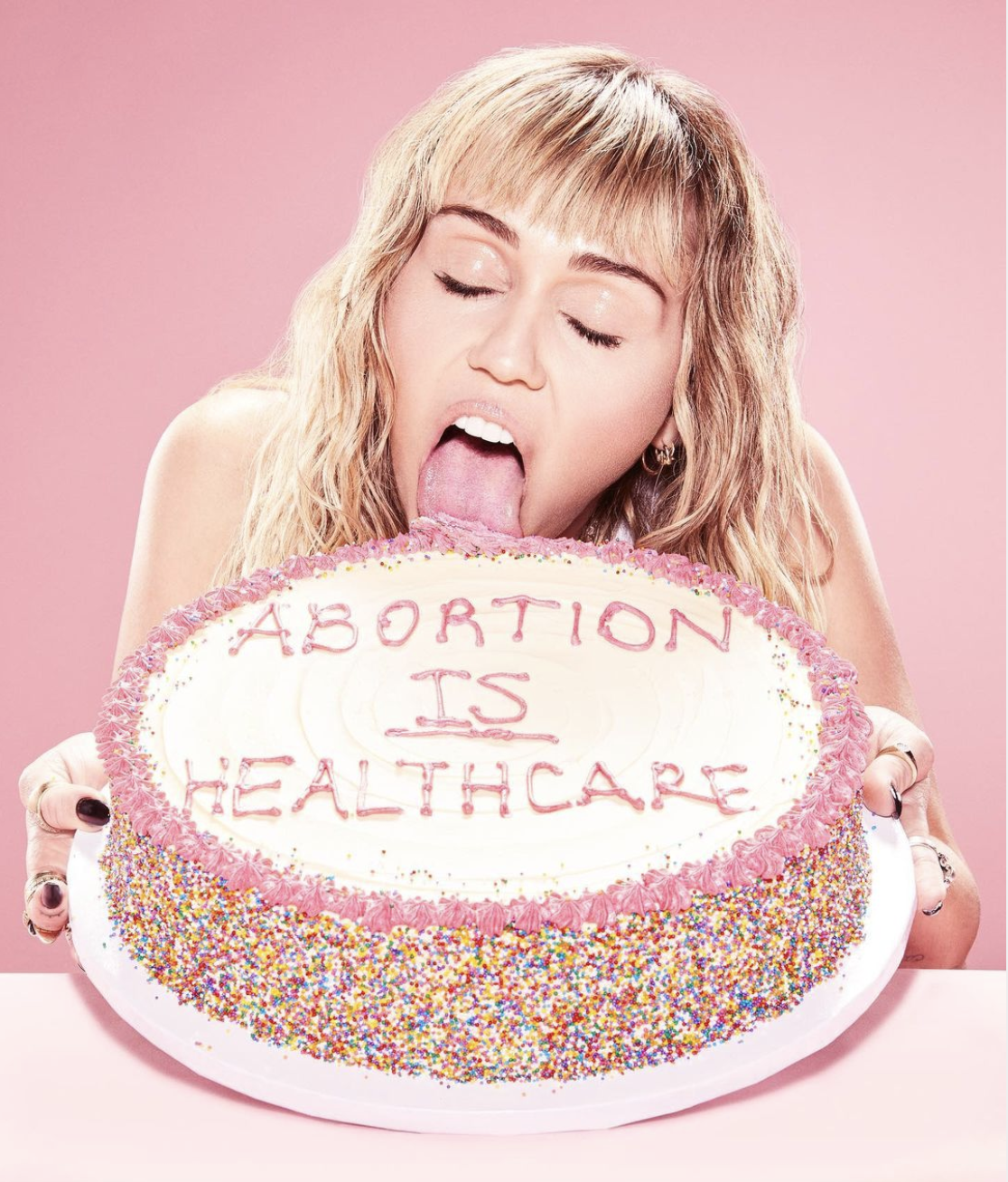
Miley Cyrus: “Mother’s Daughter”

Miley Cyrus [@mileycyrus]. Instagram, 4 June 2019, https://www.instagram.com/p/ByStizPJcO6/.

Miley Cyrus is no stranger to controversy. Her 2019 song “Mother’s Daughter”, its music video, and her partnership with Planned Parenthood continue this legacy of getting her fans -and critics- talking. In these mediums she advocates for choice and bodily autonomy, while simultaneously reclaiming misogynistic epithets and portraying diverse resistance against patriarchal control.

The song opens with Miley praising that she is a “freak” and that she is in control: “Oh my gosh, she got the power, oh look at her, she got the power”. Later describing herself as “nasty” (almost certainly a reference to Trump’s comments about Hillary Clinton), “evil”, and “a witch”, Miley affirms that she is defining her own power, employing language that typically is used to demonize women. In the chorus of the song, Miley attributes her fierceness to “something in the water or that [she’s her] mother’s daughter” (Cyrus).

Continue reading “Miley Cyrus: “Mother’s Daughter”” →

Theory To Praxis: Abortion Access and Class Equity Issues

Through our time in GSS, I learned more about something I am already very passionate about, reproductive justice issues. If I learned anything in our short time delving into these issues in class, it is that they are highly intersectional, something which is often omitted from mainstream discussions of them. While not the only reproductive justice issue in any regard, the most commonly discussed topic of our time is abortion access.  In popular media, pro-choice and pro-life narratives are heavily centered around towing the line of viability. Furthermore, a sticky compromise, legally, was made by founding the right to abortion in a constitution right to privacy. This has allowed the focus on abortion to be shifted on morality instead of looking at the many nuanced reasons that women reach out for these procedures.

In my literature review I focused on what the major ways in which pro-choice arguments have been founded and identifying some common themes that are seen across the literature. These themes did include some legislative basis, particularly regarding rights to autonomy and how we discursively construct or limit personhood, particularly in regards to the oxymoronic concept of fetal personhood. One of the more interesting themes that I found was the topic of class equity as a means for opening up abortion access. A lot of these arguments center around women lacking access to provide adequately for any child. A number of narratives have noted that it is not just to have children if they are unable to be provided for and cherished. These arguments have also been used in a similar fashion regarding the cost of maintaining a healthy pregnancy. Depending on a woman’s health needs and the state she lives in, the total cost of pregnancy can be a very expensive process in comparison to the cost of an abortion.

Due to these issues being more current than some that are often discussed, I would like to use this information to propose a DRI / some other research project specifically into the intersections of class equity issues and abortion access. I would specifically like to focus on class equity and how this concept interacts with race regarding these issues, as many of the books commented on token populations, and I would personally like a more thoroughly representative depiction of the wide experiences of women seeking out these procedures. I believe that, as this issue is one with many extremist attitudes on both sides of the aisle, this research is essential and would provide different points and voices in the reproductive justice conversation.