My song that I would like to add to out classes feminist mixtape is Ne-Yo’s song titled “Miss Independent”. In the song, Ne-Yo is singing about a beautiful woman who seems to also have her life together and is able to take care of herself. In the song, Ne-Yo is singing about a beautiful woman who seems to also have her life together and is able to take care of herself. This ties back to what I learned about feminism because if I am not mistaken, a key vocal point of modern feminism is the independence of women all around the world
In the song, one of Ne-Yo’s lyrics states, “Cause she walk like a boss, talk like a boss”, these lyrics from the song places a woman in a light of being what Ne-Yo refers to as a “boss” meaning that she is clearly very powerful and possesses abilities to reach heights that woman have not typically been prone to reach due to their history of being discriminated against and seen as lesser than a man. Another lyric from the song “Miss Independent” states, “Kind a woman that wants you but don’t need you”, this lyric from he song exemplifies this woman Ne-yo speaks of to be so into her independence that yes, she can want you to be with her, but she does not need you to be there for any kind of support other than to be in a relationship with you.
I believe this song can speak volumes to the feminist culture and put a light on women’s independence and gaining a role to where women are not being seen as weak or lesser than a man. So in conclusion, “Miss Independent” by Ne-Yo would be an excellent addition to our Feminist Mixtape.
Some of my fondest childhood memories are of my dad and I singing classic rock as we drove through the countryside. I happily swung my feet as my dad inserted Lola Versus Powerman and the Moneygoround, Part One—an album released by The Kinks—into the CD player. Finally, my favorite song, Lola, played as I cheerfully belted out the lyrics. It was in my adolescence that I learned the true meaning of Lola.
The song begins with the narrator going to a club where the “champagne…tastes just like Coca-Cola.” While not immediately clear, this line foreshadows later themes of the song, introducing the idea of something appearing as it originally wasn’t. Despite the difference, it is still enjoyable. It is at this point that listeners meet Lola, a woman that captivates the narrator.
She walked up to me and she asked me to dance
I asked her her name and in a dark brown voice she said Lola
…
Well, I’m not the world’s most physical guy
But when she squeezed me tight she nearly broke my spine
…
Well, I’m not dumb but I can’t understand
Why she walked like a woman but talked like a man
When listeners first meet Lola, she is introduced as having a deep and husky voice. She is also described as strong, capable of hugging the narrator in a way that overpowers him. The narrator depicts Lola as being quite masculine, going as far as to state that she “talked like a man.” Despite this, he is still enjoying his time with her and they spend the rest of their night drinking and dancing. Eventually, Lola asks him if he’ll come home with her, to which he agrees.
I pushed her away
I walked to the door
I fell to the floor
I got down on my knees
Then I looked at her and she at me
It is at this moment that the narrator realizes that Lola is not a cisgender woman. While he is initially shocked and even begins to leave, he quickly realizes that she is still Lola.
Well, that’s the way that I want it to stay
And I always want it to be that way for my Lola
…
Girls will be boys and boys will be girls
It’s a mixed up, muddled up, shook up world, except for Lola
The narrator states that he wants Lola to be a transgender woman because that is what makes her Lola. He further notes that there is a lot of confusion in the world, but Lola isn’t confused. She is confident in her identity.
But I know what I am and I’m glad I’m a man
And so is Lola
This is the most famous line of the song, as it is ambiguous. It is unclear if Lola is glad that the narrator is a man, or if she is a man. The popular belief is that she is glad that she is a male so that she could experience what it means to be a trans woman. While the lyrics may be a bit outdated—a product of the time that it was written in—it is still a transfemme love song nonetheless. Lola discusses transness in a positive light, signaling that transgender people are lovable. At the time of the song’s release, the topic of being trans was not widely discussed or understood, and when it occasionally was, transgender individuals were often painted in a poor light. Lola is progressive for its time, portraying trans women as sexy and desirable, a notion that was revolutionary for its time.
When I first heard about this assignment, I immediately thought of Lizzo’s “Like A Girl.” To me, it is the epitome of a feminist anthem that proclaims the power of women.
Woke up feelin’ like I just might run for President Even if there ain’t no precedent, switchin’ up the messaging I’m about to add a little estrogen Buy my whip by myself Pay my rent by myself
Only exes that I care about are in my fucking chromosomes I don’t really need you, I’m Macaulay Culkin home alone Bad bitch, diamonds in my collarbone Buy my whip by myself Pay my rent by myself
This opening verse is an embodiment of female power. In Lizzo’s eyes, there’s never been a female president—so what? There needs to be, and I can do it! It is incredibly self-empowering and asserts the independence of women. Who needs a man to help pay rent? I’m doing just fine on my own.
Sugar, spice, and I’m nice Show me what you’re made of Crazy, sexy, cool, baby With or without makeup Got nothing to prove But I’ma show you how I do
I really enjoy these lyrics because they take the common stereotypical image of a woman or belief of what women should be—“sugar, spice, and everything nice”—and both accept it and turn it on its head. Lizzo asserts that she is sugar, spice, and nice, but also crazy, sexy, and cool—with or without makeup. This is fighting back against the idea that women are only beautiful with makeup or that makeup is a method to cover insecurities or build confidence. Lizzo is saying that she wears makeup because she wants to, not because she needs to—she’s sexy without it too and she doesn’t have to prove it to you.
Find me up in Magic City bustin’ hundreds by the bands And I throw it like a girl Throw it, throw it like a girl Hangin’ out the 750 Feelin’ bossy in my city ‘Cause I run it like a girl Run it, run it like a girl I work my femininity I make these boys get on their knees Now watch me do it, watch me do it Look it, look it, I’ma do it Like a girl (like a girl) Like a girl (like a girl)
In modern culture, the phrase “like a girl” has a negative connotation: if you throw like a girl or hit like a girl, you’re doing it weakly or daintily. Lizzo is arguing the opposite. She’s painting her “throwing it and running it” like a girl as powerful and strong, and perhaps even surpassing the power and strength of boys as she sings “I make these boys get on their knees.”
Shoot the car through the fire, light the kerosene (we can do it) Lauryn Hill told me everything is everything (we can do it) Serena Willy showed me I can win the Wimbledon (we can do it) Put me on a pedestal Bet on me, bet I will
Here, Lizzo is citing specific women as inspiration for her self-empowerment. She mentions Lauryn Hill, who is often regarded as one of the most influential musicians of her generation and one of the greatest rappers of all time, and Serena Williams, who is among the greatest tennis players of all time, as encouragement for her realization of what she can do. The background vocals also chant “we can do it,” a reference to Rosie the Riveter’s popular phrase that asserts female empowerment.
So if you fight like a girl, cry like a girl Do your thing, run the whole damn world If you feel like a girl then you real like a girl Do your thing, run the whole damn world If you fight like a girl, cry like a girl Do your thing, run the whole damn world If you feel like a girl then you real like a girl Do your thing, run the whole damn world
This echoes the earlier positive reframing of the phrase “like a girl.” I also especially like the line “If you feel like a girl then you real like a girl.” To me, this is an intentional effort to include trans women in the conversation, saying that trans women are also real women and are just as powerful.
Overall, this song is a wonderful feminist anthem that encourages women to claim their rightful power and strength. Its message is that of self-empowerment and self-love. I highly recommend that everyone listen to it whenever they need a good confidence boost.
When it comes to strong feminist music, there’s nothing quite like the songs from the 90s. When considering which of these songs best encapsulates that iconic spirit of 3rd wave feminism and assertive, powerful women taking control over their own sexuality, Meredith Brooks’s hit song “Bitch” is the clear winner. The overarching theme of the song is a woman owning her individuality, and unapologetically celebrating the many facets of her identity that make up who she is as a person.
The title itself is an ironic critique of the way that men will claim that they want a “strong woman,” and then call her a “bitch” when she actually speaks her mind or refuses to conform to certain gender norms. This is referenced most clearly with the line “So take me as I am / This may mean you’ll have to be a stronger man,” which is essentially saying “If my strength and agency make you feel threatened in your masculinity, then that is your problem, not mine. I will not make myself weaker for your comfort, so you will simply have to be a stronger man.”
Her expression of the ways in which modern feminism begins to recognize the intersecting identities of womanhood is evident in the chorus of the song, where she lists the many facets of her sense of self; “I’m a bitch, I’m a lover / I’m a child, I’m a mother / I’m a sinner, I’m a saint / I do not feel ashamed.” The first line addresses how she can be both independent (referencing how society calls free-thinking women “bitches”) and loving at the same time. The second line addresses the way in which our society has determined that once a woman becomes a mother, this is all that she is allowed to be. With the words, “I’m a child, I’m a mother,” Meredith states that the responsibility and stability that come with the role of motherhood are not concepts incompatible with the freedom and creativity of childhood. The third line again challenges this notion that women must be “one or the other,” but this time in regards to her innocence and intentions. A final important line to consider is Brooks’s “And don’t try to save me,” where she acknowledges society’s tendency to disregard women who refuse to be silenced, and instead label them “hysterical.” She predicts that men will assume her duality is an illness or issue from which she needs deliverance, and reminds them she is not some “damsel in distress” in need of saving- so do not even try.
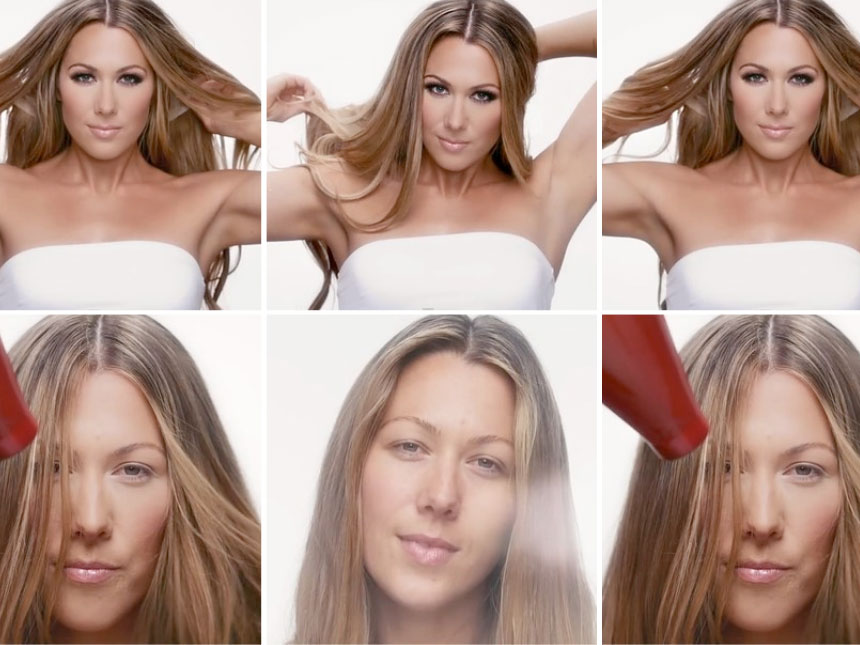
For the Feminist Mixtape assignment, I chose the song Try by Colbie Caillat. She wrote it as a rebellion against beauty standards, and the song resonated with both men and women. While the song may be viewed as merely that women should not wear makeup to feel beautiful, Caillat says that there is a deeper message– that everyone should learn to love themselves despite their imperfections. No one should have to change their appearance in order to please others. In the music video, a diverse set of women are shown with their makeup and hair done, and then as the song progresses, they (and Caillat) take off their makeup and reveal their true selves. They embrace the wrinkles, the smile lines, the messy hair. The song is empowering, and it aligns with the ideas of feminism.
Colbie Caillat in the Try music video
In class, we learned about the pressures that society puts on people, especially women, to fit a certain standard of beauty. Specifically, we analyzed the discipline of bodies, make-up, and hygiene through a Foucauldian framework, and how fat-shaming influences our perceptions of beauty. Jean Kilbourne’s Ted Talk that we watched talked about how the media– and specifically advertisements– portray women and reinforce the idea that skinny women are beautiful. We also read a few articles on how we as consumers have been told that we need certain products to be attractive. In a way, Caillat is promoting her own No Product Day challenge. This seems to be mainstream feminism.
A limitation of the song is that Caillat is still a woman who fits into the idealized standards of beauty– she is white, blonde, thin, and attractive. It may be easier for her to sing this “rebellion song” than someone who does not fit into our society’s standards of beauty.
For years, discrimination among men and women on social, political, and social aspects in society has been a growing issue. Women have been constantly fighting against the oppression of not being given equal rights as men. Such had led to the concept of Feminism, a worldview that women have equal rights as men on all political, social, and economic rights.
There has been a lot of effort to promote the idea of feminism through various mediums. Music has become one of the most engaging tools to promote feminism and raise awareness in today’s world. In this assignment, I have analyzed the song titled “ You Don’t Own Me” by Lesly Sue Goldstein, who is a popular American singer, actress, and activist. On September 21, 1963, she recorded one of the greatest feminist anthems of all time “ You don’t own me” at age 17. The lyrics were written by Aka Johnny Madara and David White. Lesley identified herself as ab Lesbian and was an advocate for the LGBTQ+ community.
The song “ You don’t own me “, emphasizes the need for equality between men and women on several social, political, and economic issues. Lesley unpacks the issue of a misogynistic society, discrimination, and oppression of women in the society to advocate the rights of women on the ground of the equality of sexes.
“You don’t own me, I’m not just one of your many toys’ “Don’t tie me down ’cause I’d never stay” “I’m free, and I love to be free, To live my life the way I want”
Through these lyrics, Lesley addresses the idea of liberal feminism. The first few lines mentioned above emphasize the importance of women’s individuality and independence. The song argues how a woman is autonomous and capable of controlling her words independently of men. Lesley reflects on how the dominance of male society has led to the suppression and suffocation of women. Such has hindered the equality and liberty of women in society. Through the title “ You don’t own me “, Lesley acknowledges the fact that freedom of choice is an important factor in feminism. This issue of liberal feminism in this song also unpacks several concepts we covered in class such as male supremacy, misogynistic society, and the concept of an egalitarian worldview of marriage. Such leads to the issue of Radical feminism.
Angela Davis provides, an author we covered during class discussion provides a similar insight on the misogynistic society and the expectation of women leading to liberal feminism. Similar to the song, Angela Davis acknowledges the fact that women’s enlightenment is a key to eradicating misogynistic worldview. She provides an insight into several discriminative anti-feminist societal structures putting women behind on social, economical, and political rights. She raises the issue of discrimination in the suffrage movement, male supremacy, working-class black women, domestic violence, important economic equality (unequal paycheck ), and Radical feminism. Such harsh reality in society has influenced the supremacy leaving women behind.
” You don’t own me ” by Lesley advocates and encourages women to stand for their rights and reflects the need to end the misogynistic and discriminative society to challenge inequalities faced by a woman.
The music video of the song begins with a guy complimenting Hailee Steinfeld saying “You’re just not like most girls.” After hearing his comment, she leaves him and starts singing, which her lyrics show why that cannot be a compliment and demonstrates the guy’s bias toward girls. It is not indicated specifically what type of stereotypes the guy has, but when he says ‘most girls’, it has a negative connotation that most girls are not special, boring, etc. He is using gender to emphasize and categorize how special Hailee Steinfeld is to him, instead of focusing on her as an individual human being. Her lyrics criticize his claim by implying that all girls are different (“No two are the same”) and special.
Some girls, feel best in their tiny dresses
Some girls, nothin’ but sweatpants, looking like a princess
…
Most girls are smart and strong and beautiful
Most girls, work hard, go far, we are unstoppable
Most girls, our fight to make everyday
No two are the same
The idea reminds me of constructivism, “The Social Construction of gender” by Judith Lorber, that the social environment is the biggest factor in gender. Every society classifies people as “girl and boy children” and “fully adult women and men,” which constructs similarities among them and differences between them (Judith Lorber 55). The problem arises when the pervasiveness of gender as a way of structuring social life demands that gender statuses be clearly differentiated. It hinders people from thinking outside the box, leading them to condemn those who do not follow gender norms or their interactions become limited to the gender stereotypes. The song accurately demonstrates such issues in society and the frustrations girls face when interacting with other people. However, the lyrics and the criticism are limited to – what girls wear, how they look, their beauty, etc. – which are important messages but not enough to address the challenges women face in society. It sounds as if the only problems in terms of gender are appearances and beauty when there are so many other biases that prevent women from enjoying their rights.
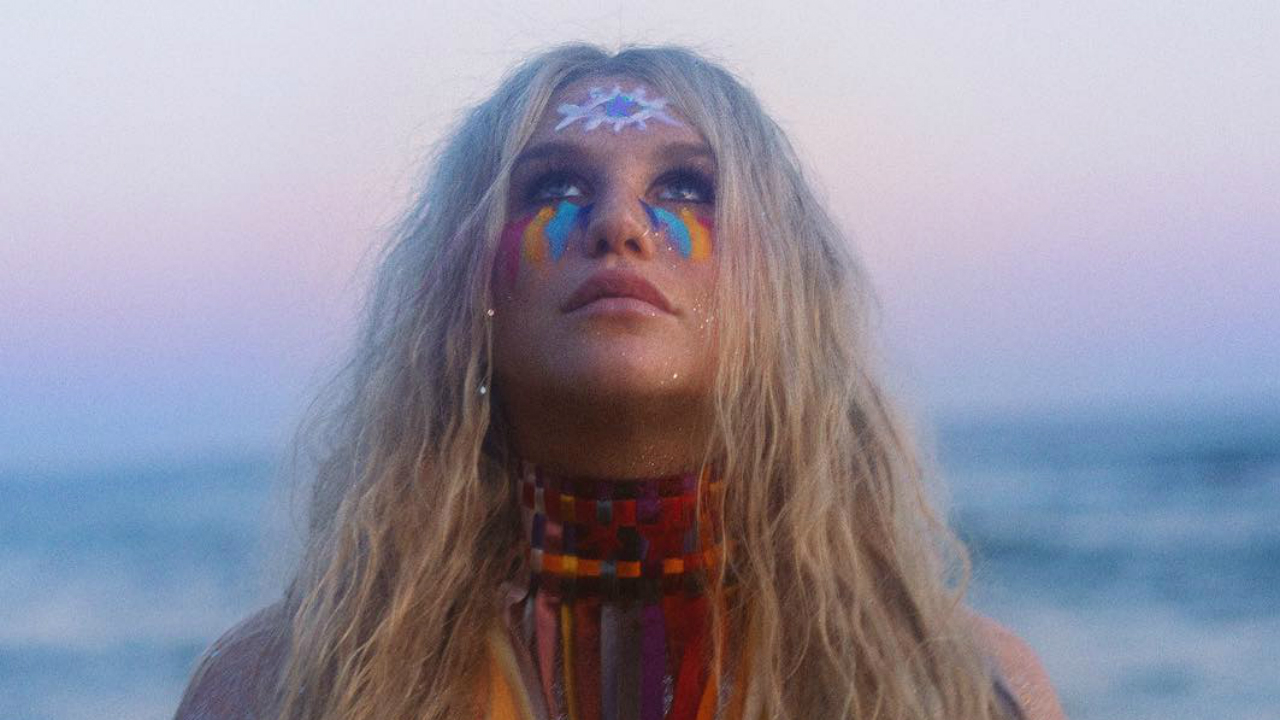
Kesha’s song “Woman”is from her 2017 album, Rainbow. Some would say that Kesha and her songs have a “party-girl” reputation, not to be taken seriously. However, this song is a catchy and punchy feminist anthem that directly speaks to the power Kesha derives from her womanhood. The lyrics center around her autonomy and strength, and Kesha demands to be heard. The song is still fun and upbeat though, proving that feminism doesn’t always have to be super serious, and also that being a “party-girl” doesn’t mean you can’t understand and promote feminist ideals. The song also gains more meaning after Kesha reveals she wrote it in response to Donald Trump’s infamous and vulgar “grab them by the pussy” comment. She said in an interview, “That made me so infuriated, as a hardcore feminist. Once I heard that I was like, okay, well, I’m going to write this song about being a badass mother—ing woman who you don’t want to f–k with.”
“I buy my own things, I pay my own bills
These diamond rings, my automobiles
Everything I got, I bought it
Boys can’t buy my love, buy my love, yeah”
This section of the song speaks to the independent and self-sufficient nature Kesha feels as a woman. Kesha is directly attacking the dated and patriarchal ideology that women need to be taken care of by men, especially when it comes to money and material possessions. There was a time when women were defined only in relation to men, and they were not allowed to own anything. This is an example of second-wave feminism.
“Don’t buy me a drink, I make my money
Don’t touch my weave, don’t call me “honey”
‘Cause I run my shit, baby”
Kesha doesn’t want to be patronized or condescended to, especially by men who think that women owe them something for buying them a drink. This is also a call out of Trump and the other men who believe they have permission to touch or violate women.
“I’m a motherfucking woman, baby, alright
I don’t need a man to be holding me too tight”
This is the chorus of the song, with Kesha’s empowering words telling listeners that being a woman makes her tough, and she doesn’t need any men. The words “too tight” also stand out here, and are another example of the oppressive and violating forces women can feel from men who don’t understand.
The 1920s brought an onslaught of improvements and rights for women. After World War I, the celebratory era opened the door to more scandalous clothing– e.g. flapper dresses– and suffrage via the 19th Amendment. However, these advancements were not long-lasting. By the 1950s, the end of World War II lent way for conservatism to reenter American households. In terms of the woman, the norms of motherhood grew feverishly and society preferred women that were pretty and dumb, over the ugly, smart, and unsexed. Daya concurs with Second-Wave Feminists and depicts many of these conservative stereotypes of motherhood within her song, Sit Still, Look Pretty.
One of the most prized texts of Second-Wave Feminism is “The Feminine Mystique,” written by Betty Friedan. To summarize, she furthers the notion that mothers need to be educated to be better moral compasses for their children and asserts that the women that have given up their career dreams are deeply regretting their choices (Friedan 270). As a result of this regret, Friedan suggests that wives stop being housewives as a career and learn to not depend on their husbands by getting “a job, any job” (279). This new claim spoke to a majority of white, upper-class women that felt as if their lives were wasting away as they only cared for kids and did chores around the house. Another document to consider would be Ms. Magazine’s “10 Things American Women Could Not Do Before the 1970s” article. Within this text, journalist Natasha Turner lists out laws based on pregnancy job discrimination, workplace sexual harassment, divorce cases, and more where women did not have the same rights as men. Acknowledging these restrictions makes clear how this time period tied women down to their husbands and gave their husbands more control over the household.
Daya, a 23-year-old Indian-American, released Sit Still, Look Pretty in 2016 when she was 17-years-old. Though decades apart, in her song, Daya directly aligns with the work of Friedan by calling out misogynists and individuals that devalue women. Within her song, she opposes the 1950s ideal that “dream[s] of picket fences and trophy wives” and that she needs to be “sugar sweet” to land a respectable husband. Similar to Friedan, Daya does not want her youth to be dominated by seeking a partner and marriage. This is further emphasized by her repetition of “Sure I’m a pretty girl up in a pretty world/ But they say pretty hurts/ And I don’t wanna sit still.” Highlighting this opinion ensures the audience is aware that Daya’s current life plans are to not settle down and become that “trophy wife” we previously mentioned.
Daya also reiterates that a woman’s life does not start at marriage. Referring to herself as a “queen” that does not “need a king” portrays this. By her own self-right she’s a queen, and she does not need marriage in order to obtain that title from a king. The concept that a woman’s life begins at marriage is incredibly restrictive and we see remnants of this to this day; for instance, many students often return to their female teachers as “Mrs.” over “Ms.” because they assume their teacher is married.
However, it is interesting to note a more extreme view that Daya and Friedan share. In The Feminine Mystique, Friedan fails to consider how poor, or non-white women may also have the liberty of chasing their dreams without much access to external lines of work or higher levels of education. And, Daya does something along those lines when she shifts women’s housework onto dwarves in the line “7 men to do the chores/ ‘Cause that’s not what a lady’s for.” In this case, the social connotations of dwarves being lesser-than connects with Friedan continuing to expect all less-fortunate maids to have to keep up with their housework and the housework of the people they work for (Hooks, Bell 1).
Moreover, the main audience of this song is heteronormative and misogynistic men. Which, in itself, is an issue. While she addresses a male audience that is primarily blamed for opposing domestic norms for women, Daya’s only focus is on heterosexual relationships. While the 1950s was less receptive to homosexual or polyamorous relationships, this modern song should have left more room for interpretation and representation of other couples. Daya also fails to mention how this 1950s conservative view is hurtful to men as well: men are expected to always be the financial providers and continuously work, instead of being home and emotionally present around their wives and kids. As a result, Daya’s song misses the mark on many contemporary aspect of nonheteronormative relationships; still, she does great work showcasing the work of Betty Friedan and Second-Wave Feminism.
Labelle, formed in 1971, was all-female rock trio comprised of Patti LaBelle, Nona Hendryx, and Sarah Dash. Known for their “godless gospel music” fit for the “space age,” Labelle was revolutionary and boundary breaking in a plethora of ways, whether it be their sex-positive lyrics, futuristic costumes or the fact that they were the first Black rock group to perform at the New York Metropolitan Opera and the first Black vocal group to be featured on the cover of Vogue magazine. I contend that Labelle was uniquely “womanist,” in all the senses of activist and author (and also anti-Semitic conspiracy theorist) Alice Walker’s term, as they were a Black feminist group that loved music and dance and promoted sexual and non-sexual love through their intimacy-laden lyrics and “sexual self-expression” focused performances.
In this short essay, I will analyze their 1971 track “Morning Much Better” from their first album Labelle and lay out why I think it is a feminist song. “Morning Much Better” begins with this demand addressed to a sexual partner: “But if you want to keep me happy / Better hear what I’m saying to you.” To me, this sets the song off on a particular feminist note, as it emphasizes the agency of the person making the demand, which in the case of Labelle, is three Black women. This is especially significant given the fact that Labelle was a departure from the girl group model of the sixties and seventies exemplified by The Supremes, who, also as Black women, were subject to a degree of respectability politics that made them look practically identical and sing about sentiments such as “waiting for love,” in the case of their song “You Can’t Hurry Love.” The difference in tone and agency of The Supremes’ song and “Morning Much Better” underlines both the boundary pushing nature of Labelle as well as their song’s feminist message, which rejected the notion of passively waiting for love and/or a sexual partner.
While the song has one mention of “Daddy,” it is otherwise pronoun-less and thus could apply to anyone of any gender identity, which is another unique feature of many Labelle songs that cultural anthropologist Maureen Mahon contends, “surely contributed to the group’s appeal among gay men and lesbians.” Thus, “Morning Much Better” is also part of Labelle’s legacy of promoting a more intersectional feminist message that included people of all gender identities and sexualities.
The central narrative in “Morning Much Better” is a desire to have sex in the morning. One line in the chorus goes: “But I usually like it much better in the morning, yeah.” This overall sentiment of the song renders it as one that is, in signature Labelle fashion, sex-positive, which is a feminist ideal exemplified by many feminists including poet and activist Pat Parker. It also renders the song as one that promotes communication and dialogue in sexual relationships, which I contend is a feminist principle in that it is the foundation of healthy relationships of mutual respect in which both sexual partners have the ability to express their desires as well as what makes them feel good.
In advocating for sexual partners vocalizing their own personal desires and preferences, “Morning Much Better” exemplifies what writer, feminist and civil rights activist Audre Lorde envisioned as radical self-care, which she writes, “is self-preservation, and that is an act of political warfare.” While self-care today has veered far from this conception as it has come to adopt the kind of “competitive atomistic” and “liberal individualism” that author and feminist bell hooks claims “undermines the potential radicalism of feminist struggle,” Labelle in “Morning Much Better” is advocating for a radical self-care based on consensual and fulfilling sex, healthy relationships and a good night’s sleep! As the song goes: “But I don’t know, baby, just what it is, but that’s mmmm, when I feel good / Oh, with seven (I assume hours) behind me / Oh, you better come find me, yeah.”
All in all, “Morning Much Better” is a “sonically intimate” and vibrant feminist, and arguably womanist, boundary breaking song that incapsulates a Black feminist tradition of “love-politics,” in the sense that it advocates not only for relationships of love and intimacy that personally feel good, but also a relationship of love with oneself through its promotion of radical self-care. According to a member of the Atlanta Feminist Lesbian Alliance, Labelle’s impact was indeed felt. In their words, Labelle represented “very together women who love people and each other. And they have a heavy feminist message.”
For my feminist mixtape assignment, I decided to submit Beyonce and Chimamanda Ngozi Adichie’s hit song “Flawless.” For context, Beyonce is a Black woman music artist who grew up in Houston, Texas. According to Wikipedia, Beyonce’s mother is Louisiana Creole and her father is African American. Chimamanda Ngozi Adichi is a Black woman writer who spent her childhood in Nigeria. Adichi’s parents are both Nigerian, and according to Wikipedia, Adichi has worked to support LGBT rights in Africa.
Next year will be 40 years since She’s So Unusual, album by Cyndi Lauper was released. Although it feels like ages for some, the pop artist marked a generation with her music, but especially with one particular song of the album: Girls Just Want to Have Fun. This iconic song not only was a hit of the 80’s for its catchy tune, but also because of the lyrics. What Feminist ideas can we find in Cyndi Lauper’s iconic Girls Just Want to Have Fun?
First of all, the song leverages the idea of sorority. As shown in her videoclip, the idea is for women to get together to support each other and create spaces that they can enjoy. With all the limitations of the repetitive “girls just want to have fun” line, the lyrics are a reflection of the radical Feminist view of Luisa Capetillo (1910s) that women also have the right to leisure, and that only with solidarity, this can be achieved.
Secondly, the song addresses the Feminist view of Friedan in The Feminine Mystique (1963) that criticises the generalised idea that there is one “right” way for women to live when it says:
My mother says “When are you going to live your life right?”
And right away, the song aligns with criticism against Friedan’s ideas for portraying a Feminist view that applies only for white, middle class, educated women (bell hooks, 1984). Addressing the intersectionality of class, the artist replies:
Oh momma dear, we’re not the fortunate ones
This last line is a reflection of the generalised priority and agenda of the 80’s: money. In fact, the whole song addresses the idea of the working class and class struggle during the 80’s. Twice, the song mentions:
When the workin’ day is done,
Oh girls, they wanna have fun
This, again, relates to the idea of women as human beings, entitled to leisure, over the idea of women only as productive agents.
On top of that, Girls Just Want to Have Fun also criticises controlling relations as a form of violence against women when it says:
Some boys take a beautiful girl
And hide her away from the rest o’ the world
This points out at a red flag for any relation, which is the attempts to isolate a person from their social circle and family. This often leads to violent relations that disproportionately affect women. (IOMA, 2020) The song continues by saying:
I wanna be the one to walk in the sun
This clever line addresses again the idea that there is a right way for women to live as addressed by The Feminist Mystique. The idea that women should stay at home in charge of the domestic chores and reducing their social interactions to “family friends” of the same socio-economic status. In sum, staying away from the rest of the world, unable to walk under the sun.
This hit clearly addresses the ideas of radical first-wave feminism and the debate of second-wave feminism on the importance of addressing intersectionality, in this case of the working class. Needless to say that the song is not a comprehensive summary of Feminism. In fact, it has clear limitations such as the reinforcement of the gender binary and the idea of the traditional family. Yet, this song was a hit and now remains in pop culture for many for good reasons. Girls Just Want to Have Fun is precisely a song for women, that brought to popular culture the idea of just having fun. While this idea is not novel for radical feminists like Capetillo, it does, as The Guardian points out, capture the cultural shift of the 80s. It shifts the focus from all-about-money, middle and lower-class women to the right of women to having fun, to leisure and to “come home, in the monin’ light.”
Like Goldilocks with her porridge that’s either “too hot” or “too cold,” women are often discussed in the same frivolous manner, as being too skinny, too fat, too promiscuous or too prudish. But while Goldilocks and the Three Bears is merely a fairytale, societal expectations on women are a harsh reality. Kacey Musgraves, in her song, “Follow Your Arrow,” rejects these paradoxical expectations and asserts that people should follow the path they desire, regardless of what anyone else has to say about it.
Musgraves doesn’t bother dolling up her lyrics in metaphors and frilly lyricism, and instead opts for a straightforward assertion of how women are never enough. She starts the song by addressing the expectation that women have to simultaneously get drunk and have sex, but also not drink too much or have sex before marriage. This verse tackles the phallocentric mindset of the world, in which women are merely accessories for men and their sexual desires.
She then addresses weight and body image expectations placed on women in the lines:
If you can’t lose the weight, then you’re just fat
But if you lose too much, then you’re on crack
This reminds me of “Health at Every Size,” which emphasizes that one should not focus on achieving a specific “ideal weight” but should instead appreciate the “wonderful diversity of body shapes, sizes and features,” (Burgard, 42).
Despite its directness, the song still has a lot to unpack between the lines. Not once does Musgraves address the song specifically to women, but any listener would assume she is through the societal connotations of the words she uses. She says that society would call you a ‘prude’ for refusing a drink, and says that if you don’t save yourself for marriage you’re a horrible person. Though the official lyric is ‘horrible,’ Musgraves cleverly pronounces it as ‘whore-ibble’ to rhyme with bore. Both ‘prude’ and ‘whore’ are used almost exclusively to describe women.
LGBTQ+ references are scattered throughout the song, touching on the intersections of being queer and a woman. For instance, Musgraves sings, “kiss lots of boys, or kiss lots of girls if that’s what you’re into.” She also sings, “When the straight and narrow gets a little too straight, roll up a joint,” which could also be a reference to break free from our heteronormative confines and to escape from our “little too straight” world. In the bridge of the song, she also sings the line, “love who you love,” which is a more straightforward reference to queerness. This intersectionality that Musgraves touches upon through these lyrics reminds me of Audre Lorde’s, “There is no Hierarchy of Oppressions,” where she writes that she “cannot afford the luxury of fighting one form of oppression only,” and that her identities will always be interwoven. While Musgraves sings some lines that can be applicable to all women, she also sings some that can only be applicable to queer women.
Musgraves brings up one more intersection when she talks about the issues women from religious households face in the lines, “If you don’t go to Church, you’ll go to Hell,” and “if you’re the first one on the front row you’re a self-righteous son of a-” Here she unpacks the stigma of being too religious and not being religious enough. She also sings the lines, “You’re damned if you do and you’re damned if you don’t, so might as well just do whatever you want,” to emphasize the point that women will be criticized regardless of what they do.
Kacey Musgraves has reshaped the conservative country music scene as a queer icon who is also religious. Most of her music has themes of self acceptance and love.
It must be noted that though Musgraves is singing to all women in this song, she makes no distinction or specific mention of women of color, so Black Feminist Theory cannot be applied to analyze this song.
Though mainstream media makes it hard for us women to believe, we will always be “just right” if we just follow our arrows as Kacey Musgraves tells us to.
Xenia Rubinos is an artist that does not dominate the mainstream. Her words often do not reach most Americans, and most do not hear her essential messages of the pain and joys of existing in an Afro-Latina body in America. Born to immigrant parents from Puerto Rico and Cuba, Xenia explores her place in creating music in non-white and westernized ways, through the innovation of jazz-funk and soul rhythms.
Since she speaks to being a brown girl in America and attempts to harness “black girl magic,” her music has often been diminished as solely “political,” not giving credit to her immense musical artistry and whimsical and smooth neo-soul vocals. While Xenia’s music has often been disregarded by popular American culture, her album, Black Terry Cat was ranked in the top 10 by NPR in 2016.
In the song “I Won’t Say,” on Black Terry Cat she speaks to the experience of being silenced and constrained by the toxic expectations forced upon women of color.
Throughout the song, she repeats the phrase, “I won’t say anything at all/No, I won’t say anything at all/ Anything at all.” She speaks to her conditioning to not question and openly defy the socially accepted institutions around her. Xenia stated in 2016 with the release of the song that she has been in a “fight with words for the last ten years” and stopped singing because of it. But with the rise of the Black Lives Matter movement, she was empowered to speak her mind and bring voice to important truths that she and millions of other Americans have experienced.
Xenia quotes civil rights activist Abbey Lincoln’s essay, Who Will Revere The Black Woman? Singing, “Whose hair is compulsively fried? Whose skin is bleached? Whose nose is too big? Whose mouth is too loud? Whose butt is too broad? Whose feet are too flat? Whose face is too black?” her words exemplify the how expectations of feminine beauty, whiteness, and thinness intersect and are interconnected in American beauty standards. This aligns with the perspectives of 2nd wave Black Feminism, and to the essay Why Intersectionality Cannot Wait. Since systems of discrimination are overlapping and interdependent, this can render black women of color invisible and vulnerable to oppression greater than the sum of racism and sexism combined (Crenshaw 2015).
However, in I Won’t Say, Xenia Rubinos also comments on the normative culture of social media and how posting pictures on these platforms reproduce the conditioning of women to uphold beauty standards. So, while she feels as if she cannot say anything and is oppressed by this pressure to stay silent, society is constantly in discourse about topics of white beauty within social media, bombarding her with how she should act and look through reproduced aesthetic expectations. Like stated in The History of Sexuality, our actions are constantly being regulated through public discourse and this discourse holds immense power (Foucault 17). She reclaims this power when singing her experiences to life. As stated by Wann in The Fat Studies Reader, power also lies in naming (Wann 7). Xenia is resisting and undo her alienation by naming her blackness, loudness, unique features, and desire to be heard.
By stating, “Look at me/Look at me/Look at you/Look at yourself looking at your selfie/Where’s your selfie?/Let go your selfie/I tried to see my ego but was blinded by my selfie,” she demonstrates the salient message that posting the “perfect” photo only upholds the stigmatization of those who are coded as socially undesirable and unworthy of a like.
In the words, “Where is the place you are?/Put it down/put it down,” Xenia urges young brown and black girls like her to let go of the pressure to conform and accept the normative standards of beauty and worth on social media. Like proclaimed in “Killing Us Softly IV: Advertising Images of Women,” women of color are forced to resemble the white ideal, straighten their hair, and lighten their skin (Kilbourne). They are set up to fail, never able to measure up to the unrealistic image of physical perfection—which is why Xenia urges people to “put it down” and see and appreciate themselves as they are.
By repeatedly stating that she is “only sleeping,” she exemplifies how women are compelled to uphold norms through the hundreds of unconscious actions that we are programmed to do every day. For instance, “playing hide and go seek with a prince charming” is an action she does while sleeping, unquestioning the constructed heterosexual expectations that pervade every aspect of society. However, sexual orientation is not examined further within the album, and it is important to stay cognizant of how queer identities intersect with black identities. In “There Is No Hierarchy of Oppressions” for instance, Audre Lorde urges for homophobia to be seen as inseparable from racism and sexism (Lorde 1). Her newest 2021 album, Una Rosa, provides more insight on how sexuality intertwines with Xenia’s life story, inspired by Puerto Rican, diva drag queens.
When stating, “I don’t know her/she don’t know me/I don’t know me/I’m only sleeping,” Xenia speaks to girls’ ignorance over themselves and their own bodies. In light of Our Bodies Ourselves, the song demonstrates the immense occurrence of self-dissatisfaction within women because of cultural images of the female body and the little control they possess over others’ perceptions of them. But, this song is a testament to Xenia Rubinos’ journey of learning herself, letting go of expectations, and reclaiming the facets of her identity that she has been forced to conceal for so long.
In our society, women are expected to want nothing more than to have kids and stay at home to take care of them, whereas men’s work for the family is considered done once the child is conceived. No one bats an eye when fathers spend most of their time out of the house while the mother is always at home with the kids. Many women resent this expectation and wish to be able to be more than mothers and have other life experiences and careers. In her song “The Pill”, Loretta Lynn condemns the way in which women are expected to be mothers and nothing else. She celebrates her newfound access to ‘the pill’, as in the birth control pill, that has given her her freedom back in the sense that she now has autonomy over her own body and reproduction. This control over her life allows her to choose to be more than just a mother and do the things that she has always wanted to do.
She reveals how she has felt that she was treated like an animal with the line “you’ve set this chicken your last time”, in which she demonstrates how she feels as if she’s been seen as a farm animal whose only job is to reproduce. In this way, she describes how she’s felt more like a body than a person. She recounts how “all these years I’ve stayed at home while you had all your fun” and she was forced to be the only one taking care of her children while her husband could leave the house to have fun, and that now that she can control whether or not she has kids, she can enjoy all of the things that life has to offer that she was unable to before. Not to mention the physical and economic toll that comes with giving birth, as Lynn feels that “all I’ve seen of this old world, Is a bed and a doctor bill”. Women are forced to deal with the effects of being pregnant and having children, and thus this is why it is so important for people who are able to get pregnant to access to birth control methods that allow them to choose when they want to pregnant or not. This is a problem that is still prevalent today as the debates about reproductive rights, Planned Parenthood services, and abortions are all topics of political debates in which women’s access to these fundamental services is revoked.
As a wealthy white woman, Lynn’s song most closely resembles the first-wave feminism movement in which white women were the central figures and women of color were pushed to the wayside. Lynn neglects to reveal anything about the expectations for white women versus women of color and the intersectionality that is so clearly present between gender and race. In addition, birth control is not accessible to all people who need it and wealthy women are going to be more likely to have access to these reproductive products than women of low socioeconomic status. LGBTQ perspectives are also important to consider, as we need to remember that women are not the only people who require these types of reproductive products and transgender individuals are likely to have even more trouble gaining access to birth control methods. While Lynn provides an important perspective on how autonomy over our own reproductive processes can lead to a plethora of new opportunities for women, there is much to feminism that is not represented in her song.