Like Goldilocks with her porridge that’s either “too hot” or “too cold,” women are often discussed in the same frivolous manner, as being too skinny, too fat, too promiscuous or too prudish. But while Goldilocks and the Three Bears is merely a fairytale, societal expectations on women are a harsh reality. Kacey Musgraves, in her song, “Follow Your Arrow,” rejects these paradoxical expectations and asserts that people should follow the path they desire, regardless of what anyone else has to say about it.
Musgraves doesn’t bother dolling up her lyrics in metaphors and frilly lyricism, and instead opts for a straightforward assertion of how women are never enough. She starts the song by addressing the expectation that women have to simultaneously get drunk and have sex, but also not drink too much or have sex before marriage. This verse tackles the phallocentric mindset of the world, in which women are merely accessories for men and their sexual desires.
She then addresses weight and body image expectations placed on women in the lines:
If you can’t lose the weight, then you’re just fat
But if you lose too much, then you’re on crack
This reminds me of “Health at Every Size,” which emphasizes that one should not focus on achieving a specific “ideal weight” but should instead appreciate the “wonderful diversity of body shapes, sizes and features,” (Burgard, 42).
Despite its directness, the song still has a lot to unpack between the lines. Not once does Musgraves address the song specifically to women, but any listener would assume she is through the societal connotations of the words she uses. She says that society would call you a ‘prude’ for refusing a drink, and says that if you don’t save yourself for marriage you’re a horrible person. Though the official lyric is ‘horrible,’ Musgraves cleverly pronounces it as ‘whore-ibble’ to rhyme with bore. Both ‘prude’ and ‘whore’ are used almost exclusively to describe women.
LGBTQ+ references are scattered throughout the song, touching on the intersections of being queer and a woman. For instance, Musgraves sings, “kiss lots of boys, or kiss lots of girls if that’s what you’re into.” She also sings, “When the straight and narrow gets a little too straight, roll up a joint,” which could also be a reference to break free from our heteronormative confines and to escape from our “little too straight” world. In the bridge of the song, she also sings the line, “love who you love,” which is a more straightforward reference to queerness. This intersectionality that Musgraves touches upon through these lyrics reminds me of Audre Lorde’s, “There is no Hierarchy of Oppressions,” where she writes that she “cannot afford the luxury of fighting one form of oppression only,” and that her identities will always be interwoven. While Musgraves sings some lines that can be applicable to all women, she also sings some that can only be applicable to queer women.
Musgraves brings up one more intersection when she talks about the issues women from religious households face in the lines, “If you don’t go to Church, you’ll go to Hell,” and “if you’re the first one on the front row you’re a self-righteous son of a-” Here she unpacks the stigma of being too religious and not being religious enough. She also sings the lines, “You’re damned if you do and you’re damned if you don’t, so might as well just do whatever you want,” to emphasize the point that women will be criticized regardless of what they do.
Kacey Musgraves has reshaped the conservative country music scene as a queer icon who is also religious. Most of her music has themes of self acceptance and love.
It must be noted that though Musgraves is singing to all women in this song, she makes no distinction or specific mention of women of color, so Black Feminist Theory cannot be applied to analyze this song.
Though mainstream media makes it hard for us women to believe, we will always be “just right” if we just follow our arrows as Kacey Musgraves tells us to.
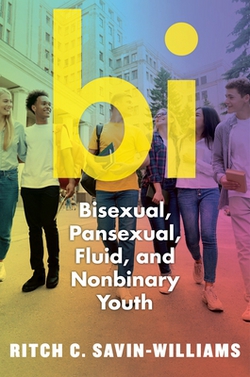
Bisexuality, to me, has always felt like squeezing into the bottom bunk of a bunk bed. I try to sandwich myself somewhere in the middle of the spectrum, while society tries to bang my head against the top bunk of complete hetereosexuality or homosexuality. Reading ‘bi’ by Ritch C. Savin-Williams made me realize that I’m not alone. Through his in-depth research into bisexuality through the lenses of behavior, attraction and identity, the author aims to express that sexuality is seldom static. Through a series of anecdotes collected from bisexual-identifying individuals, Savin-Williams analyses love, fantasies, sex and romance and claims that these factors are found in different combinations for different people, and that there is no singular formula for bisexuality. He also examines stereotypes that hinder individuals from identifying as bisexual and counters traditionally masculine views towards romance and sexuality. The author ultimately aims to recognize the multitude of ways in which bisexuals present themselves and are perceived in today’s society.
For an openly queer woman on this campus, I sure do spend a lot of time in closets.
Over the years, I’ve come to realize that clothing and fashion are creative outlets for me. I enjoy trying out different styles, mixing and matching, and dressing according to my mood. It’s astounding how quickly a cute outfit and makeup can flip a bad day into a great one.
When I decided to do the No-Product Day Challenge, I knew what was expected of me, and was excited for the test. In a way, this was nothing but trying out a different look. I couldn’t have been more wrong. From the very start of the day, not being able to moisturize and perform my morning ‘self-care routine’ threw me off my rhythm. I didn’t realize that I’d associated ‘me-time’ with rubbing my soothing lavender scented lotion down my skin, applying my favorite raspberry chapstick on my lips and repeatedly stabbing my eye in an attempt to perfect my eyeliner. By skipping all these items on my morning checklist, I didn’t care that I looked any different, but I definitely felt different.
I view my products the way writers view their pens and singers use their voices: they’re my medium of expression. That day, I kept thinking about how my brown eyeshadow would’ve worked perfectly with my brown top and my dark lipstick would’ve provided the perfect contrast to my white pants. It wasn’t that I didn’t feel beautiful without them- they just would’ve added to the look. I can eat my cereal without milk. I would just prefer not to, given the choice.
I have gone days without using any products. I know I don’t need them, but the idea that they’re inherently unnecessary or that humans should learn to live without materialistic possessions is archaic. The products I use reaffirm my identity and are a part of who I am. The loss of them for a day definitely made me feel like I was losing a crucial creative outlet.
“Try not to abuse your power,” Billie Eilish sang to a crowd of 15,000 fans in Charlotte last month. Every other song in the concert was accompanied by manic shouts of the lyrics, jumping, and choruses of “We love you Billie!” but once the familiar chord progression sounded from a single accompanying guitar, silence engulfed the auditorium. As Eilish tells Rolling Stone, the song “Your Power,” released in 2021, talks specifically about the relationship between a young girl and an older man in the entertainment industry. Her usage of he/him pronouns to describe the abuser and she/her pronouns to describe the victim additionally narrows this focus.
The music video for the song opens with Billie sitting on top of a mountain in a desert wearing neutral, almost camouflaging colors. She has a snake in her lap who appears to be friendly.
The first shot of Billie Eilish in the music video for ‘Your Power’
There’s a lot to unpack here. Firstly, her sitting on a mountain could imply that she has a certain element of power of her own. Perhaps, the higher up she goes, the more alone she feels because she has so much more to lose if something goes wrong. Perhaps, the reason she’s so high up in the first place is because she got accustomed to this dark, desolate place with snakes. She let herself relax around the snake, not knowing what it could potentially do to her. The clothing choice could also add to the atmosphere of desolation. She’s acclimated to her surroundings; like a chameleon she’s changed her colors to fit the role she’s meant to play. She’s in bed with the enemy because she knows it’ll take her higher up the mountain. It could also signify that she’s blended in so well that a) no one can tell that something’s wrong and b) no one can see her pain and help her. Another possible reason for the neutral tones and not something flashier or individualistic could be to signify that she is not a special case- she is just one of many victims who have gone through the same abuse.
The video is first a zoomed out view of the entire mountain landscape, which then slowly zooms into Billie sitting on the mountain. This could signify that things don’t always seem the way that they are. One might’ve thought it was an empty stretch of mountains at first, but it wasn’t- there’s someone sitting there. Similarly, one might’ve thought there was no foul play at hand, but there is- it’s an abusive power relationship.
Zooming into Billie Eilish
Billie’s interactions with the snake are symbolism for the power dynamic explored in the song. When the snake crawls into Billie’s lap, her hands are limp and she makes no attempt to push it off, communicating perhaps that she’s scared and she doesn’t know how to.
Billie’s first interaction with the snake
Slowly through the course of the song, the snake wraps itself tighter and tighter around her. She’s also sitting at the ledge of the mountain, implying that she has nowhere to run and adds to the feeling of powerlessness.
Billie being strangled by the snake
The song ends with Billie being strangled by the snake and the camera zooms out to show that she is camouflaging with the background. No one would be able to see her pain and see what’s happening behind the scenes.
Zooming out of Billie to show the mountains
While the music video has many subtle layers and nuances to unpack with multiple viewings, the lyrics are direct and straightforward, without being laced with too many metaphors.
The lines, “She was sleeping in your clothes but now she’s got to get to class,” add to the narrative of the younger girl with the older man. It is clear that he was sleeping with her, and she’s a student.
And you swear you didn’t know (didn’t know)
No wonder why you didn’t ask
She was sleeping in your clothes (in your clothes)
But now she’s got to get to class
Verse of ‘Your Power’
The line, “You said you thought she was your age,” is a clear indicator of the age gap. There is also a reference to the abuser’s ‘contract’ which is a reference to their professions in the entertainment industry, which adds to the complex power dynamic.
And you swear you didn’t know (didn’t know) You said you thought she was your age
How dare you? And how could you? Will you only feel bad if it turns out That they kill your contract? Would you?
Verse of ‘Your Power’
The victim has so much more to lose as a young woman who has just started advancing in her career, as opposed to this man who appears to be her supervisor and has control over her future. She has nothing she can do, just like Billie with the snake: if she tells someone or tries to get herself out, she could fall off the ledge.
We must emphasize the usage of the word “try” in “Try not to abuse your power.”
Try not to abuse your power I know we didn’t choose to change You might not wanna lose your power But power isn’t pain
Chorus of ‘Your Power’
This implies that men in power abuse it so often that it almost goes without saying that they will; it’s such a common occurrence that Billie almost says, “I know it’s hard and you’re used to doing this, but please try not to.” This adds to the submissive tone of the song and reinforces the idea that the women have to plead to not be taken advantage of. Rather than the song’s lyrics being, “Do not abuse your power,” the usage of the word ‘try’ implies that young women like Billie do not even have the power to stand up for themselves without them having to pay some kind of price for it or face brutal consequences in their careers and reputations.
The song’s lyrics alternate between using third and first person pronouns for the victim, possibly implying that Billie has gone through this, but that she isn’t the only one. She’s speaking about her own experiences, but is also indicating that several young people in the entertainment industry are also in complex power relationships and being used for sex.
I thought that I was special, you made me feel Like it was my fault you were the devil, lost your appeal Does it keep you in control? (In control) For you to keep her in a cage?
Eilish uses first-person pronounsin the first two lines and third-person in the last line
Something must be said of what power means to Billie Eilish and how that could differ for different sections of society. Billie Eilish may have a snake around her body, but she is still on top of a mountain. That mountain is the privileges she has as a white, cis, rich celebrity. Some may not have that mountain, and it’s important to recognize that she is representing a single story that does not accurately represent intersectionality.
Additionally, there is the question of the color of the snake. Perhaps it wasn’t intentional that a black snake was being wrapped around a white woman’s body to represent abusive power relationships. But intentions go out the window when we question impact. If the singer was intentional about the neutral palette of her clothes, then surely she was intentional about choosing a dark, contrasting colored snake. This could perpetuate the dangerous idea that a majority of abusers are people of color, which is untrue, especially in the predominantly white music industry that Billie Eilish is singing about. These are details that must not be overlooked when creating media for the consumption of millions of viewers.
Although the song has issues that must be addressed, it also touched a chord with several individuals who have had similar experiences. That night in Charlotte, I didn’t just hear a song about abusing power. I heard Billie Eilish use her power.