The Tragedy of Heterosexuality by Jane Ward

The “norm” for sexual relationships in the 21st century has become increasingly diverse, reflecting shifting social attitudes and greater acceptance of different relationship styles. While “traditional” monogamous, heterosexual relationships are still common, a broader spectrum of relationships has gained visibility and acceptance. Nonetheless, individuals in the LGBTQ+ community continue to face significant challenges, including discrimination, stigma, rejection, and even hate crimes. This heightened focus on LGBTQ+ struggles can sometimes overshadow the challenges faced by those in heterosexual relationships. While issues of queerness are frequently discussed and acknowledged, the struggles present within heterosexual relationships often go unspoken, partly due to the assumption that these relationships are inherently easier and free of complication. In The Tragedy of Heterosexuality, Jane Ward explores the complex realities that heterosexual relationships trap women in: endless loops of sexism, toxic masculinity, and disappointment.

Ward argues that heterosexual women endure forms of gendered and sexualized violence, highlighting that these are often even more pervasive than those faced by queer people. According to Ward, the emotional, physical, and sexual violence women experience within heterosexual relationships underscores the oppressive nature of these partnerships. She suggests that heterosexual relationships often lack feminist ideals, with an unequal division of labor and limited space for women’s autonomy and fulfillment. This gendered suffering, Ward notes, mirrors that of queer individuals, yet without the benefits queer communities might offer—such as humor, solidarity, or more fluid sexual expression. In her analysis, Ward questions whether men and women are genuinely attracted to each other or if they are compelled to conform to heteronormative expectations, which often trap women in relationships that lack emotional or sexual satisfaction. Many women, she observes, consent to sex that they neither desire nor find pleasurable, reflecting a broader issue within heterosexual frameworks that can feel alienating or even hostile. She contends that this “tragic” state of heterosexuality arises from social norms that fail to instill empathy, affection, or respect for women in men, leaving women with relationships that fall short of the emotional and relational depth that heterosexual love is presumed to offer. Through a feminist and queer lens, Ward critiques the ways traditional gender norms perpetuate these patterns, calling for solidarity between queer people and straight women as misogyny is challenged within heterosexual frameworks.

American scholar, feminist, and author, Jane Ward is known for her work focusing on gender, sexuality, and queer theory. Her research and writing critically examine the social constructs of heterosexuality, whiteness, and gender norms, often challenging traditional views on these topics. In 2003, she earned her PhD in sociology from the University of California Santa Barbara and is professor and chair of Feminist Studies there. Ward’s research spans the intersections of feminist theory, queer theory, gender politics, and straight culture with a particular focus on how these frameworks reinforce societal norms. Her interests also include examining heterosexual culture and the marriage self-help industry, where she critically assesses how these institutions shape people’s expectations of relationships and gender roles. Her three major publications The Tragedy of Heterosexuality, Not Gay: Sex Between Straight White Men, and Respectably Queer: Diversity Culture in LGBT Activist Organizations offer a critical exploration of sexuality, gender norms, and identity politics. Together, they provide nuanced insights into the complexities of straight culture, the performative aspects of masculinity, and the impact of diversity practices within LGBTQ+ activism, challenging conventional understandings of both queer and heterosexual identities through a feminist lens. Her work has gained attention in both academic and public spheres, with media features in The New York Times, BBC, and NPR, making her a notable voice in feminist and queer studies.

Ward approaches The Tragedy of Heterosexuality with a queer feminist methodology, analyzing heterosexuality through the lens of gender politics, power, and cultural expectations. Her background as a scholar in sociology and gender and sexuality studies, combined with her focus on critical heterosexuality studies, lends her a unique perspective that examines heterosexuality not as a natural default but as a socially enforced norm. Ward uses her training to draw on a wide range of sources, including interviews, historical texts, popular media, and personal narratives, to explore how societal norms influence heterosexual love. Ward’s argument includes discourse analysis of self-help literature and media targeting heterosexual women, as well as ethnographic and critical discourse analysis methods to understand the lived experiences within “straight culture.” Her expertise makes her viewpoint credible, as she deconstructs heterosexuality using queer and feminist theories to reveal its often unexamined impact on women’s well-being. Ward’s background allows her to view heterosexuality from an outsider’s perspective, offering readers a fresh perspective that challenges the assumptions and power structures underlying straight relationships. She critically examines popular advice literature on relationships, dissecting how they often reinforce limiting gender roles and perpetuate problematic behaviors in heterosexual dynamics. Ward’s approach is rigorous and layered, offering both theoretical insights and practical examples. Her methodology effectively illuminates the disparity between romantic ideals and the often less-than-ideal reality many women face. Ward’s blend of qualitative analysis and cultural critique provides a strong foundation for her argument, pushing readers to critically evaluate societal investment in traditional heterosexual norms and consider how these structures might evolve.

Ward’s book’s strengths lie in its insightful analysis, as she challenges heteronormative narratives that often go unquestioned, including widely held assumptions about love, romance, and traditional relationships. Ward’s assessment provides an accessible introduction to gender studies, making complex theories on sexuality and relationships understandable for those new to the subject. By engaging with contemporary culture, she connects her analysis to current issues, showing how modern media and social norms influence our perceptions of romance. Additionally, her focus on gender equality in relationships highlights the importance of mutual respect, illustrating how traditional norms can harm both partners in a heterosexual pairing. These strengths make the book a powerful tool for examining deeply ingrained beliefs and promoting a more balanced understanding of modern day relationships. However, the book also has some weaknesses. While Ward expertly diagnoses the problems with heterosexual culture, she offers fewer practical solutions, which might leave readers unsure about applying her commentary in real life. Additionally, some critics find her portrayal of heterosexual relationships overly negative and generalized, potentially alienating readers whose experiences differ. Lastly, her focus on Western notions of heterosexuality may feel restrictive, as it does not account for the diverse expressions of relationships and gender norms worldwide. Critics suggest that the book could benefit from a more diverse sample of heterosexual experiences, particularly across different cultures and socioeconomic backgrounds.

This book offers a thought provoking and well argued analysis of the impact of traditional heterosexual norms, pushing readers to rethink assumptions about gender roles and relationship dynamics. Ward’s insights push for a more equitable view of romance and partnership, making this book especially valuable for those interested in gender studies, sociology, and cultural critique. The Tragedy of Heterosexuality has sparked diverse reactions among scholars. Many commend her incisive analysis of heterosexual culture and its inherent misogyny. However, while Ward’s stance is widely recognized for its depth and originality, discussions continue regarding the nuances of her arguments and their broader implications. Audiences such as students, educators, and anyone curious about the social constructs of relationships would find this book beneficial. Additionally, those seeking to understand or improve their own relationship dynamics might appreciate Ward’s perspective, even if they do not agree with every point. By provoking critical thought on familiar topics, Ward offers readers a chance to examine and redefine their own expectations of love and partnership in today’s world.

Sources

Ward, Jane. The Tragedy of Heterosexuality. New York University Press, 2022.

A Disection Into A Feminist Anthem

On April 13th, 2024, No Doubt performed one of their most iconic songs “Just A Girl” at the Coachella Music Festival, 29 years after its initial release. Following their release, “Just A Girl” received positive reviews from multiple music critics and later “Just A Girl” became a feminist anthem for many feminists. Through its satirical lyrics, Gwen Stefani portrays the struggle it is to be a woman in America. Although released in 1995, “Just A Girl” is a song beyond its years. 

In the first clip that can be found on YouTube, Gwen Stefani is seen standing in front a red  crashed car: 

Gwen Stefani, a woman, standing in front of a crashed car is a metaphor for the common misconception that women are bad drivers. These sexist notions have been surrounding society for decades and yet, they hold no truth to them. Men are twice as likely to get into a fatal car crash (Kelly). 

While Gwen Stefani is standing in front of a crashed car, the lyrics that follow are: 

[Verse 1]
Take this pink ribbon off my eyes


I’m exposed, and it’s no big surprise


Don’t you think I know exactly where I stand?


This world is forcing me to hold your hand

The “pink ribbon” being removed from Gwen Stefani’s eyes is symbolism that displays the lies of womanhood. The pink color is a mask of the truth that hides behind the reality of what it is being a woman, constantly being suppressed and undermined. Pink is chosen to criticize the stereotype that pink is a “girl color”. These gender color assignments did not begin until the 20th century. Originally, pink was a color for boys and blue was a color for girls because, “pink, being a more decided and stronger color, is more suitable for the boy, while blue, which more delicate and dainty, is prettier for the girl” (Grannan). Which is contrary to the modern notion that pink is “girl” color.  This proves that colors should not be associated with a specific gender. 

 In Gwen Stefani’s lyrics she is being forced to hold hands which displays the patriarchal standards of women being forced to be with men to “have” a role in society. Often times, especially in the 90’s women are more recognized and treated with respect if they have a man by their side. Stefani shuts down and criticizes these widely held beliefs that women are worthy only if they are with a man. 

[Chorus]
‘Cause I’m just a girl, oh, little old me


Well, don’t let me out of your sight


Oh, I’m just a girl, all pretty and petite


So don’t let me have any rights

The use of the words “little”, “pretty and petite”, illustrate the societal view of women being seen as dainty and fragile. This ideology makes it difficult for women to progress when they are limited by being viewed as defenseless and needing a man to make any progress. 

[Post-Chorus]
Oh, I’ve had it up to here

[Verse 2]
The moment that I step outside


So many reasons for me to run and hide


I can’t do the little things I hold so dear


‘Cause it’s all those little things that I fear

“So many reasons for me to run and hide” displays the fear that woman constantly face when they are alone. Society has created woman to be afraid of so many things because of what many men have done to women such as rape, murder, etc. The inability in pursuing a normal life highlights the difference between a man and a woman’s day to day life. A man can do anything he wants without fearing for his safety, whereas a woman cannot. 

[Chorus]
‘Cause I’m just a girl, I’d rather not be


‘Cause they won’t let me drive late at night


Oh, I’m just a girl, guess I’m some kind of freak


‘Cause they all sit and stare with their eyes


Oh, I’m just a girl, take a good look at me


Just your typical prototype.

Stefani continues her song by demonstrating strict rules she must follow because she is a female. Because she is a female, she cannot drive late at night. It is incredibly common to be stopped by your parents from going out late at night because you are a woman. Being from a Hispanic household, I would have to beg my parents to let me drive out late. I always knew that if I was not a female, there would be no issue with me driving out at night. These sexist ideologies founded in multiple households do not end with a singular restriction. There are still multiple restrictions that girls from a young age must face because of their gender. These restrictions are even more so emphasized if they are from a non-white household. 

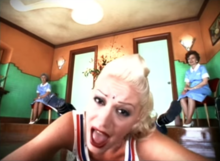
Throughout the video, Stefani is seen in an orange and cyan room with two ladies in blue dresses in a corner. Images of a men’s bathroom in black and white also flash throughout the video. Gwen Stefani is separated from the men’s bathroom which is dirty and grimy which is a foil of the clean bathroom with the two ladies to create symbolism of how society treats women like overly emotional creatures. Stefani stays in this clean bathroom throughout the music video to stay true that Stefani is “safe” in this restroom away from the rest of the world. 

In the end of the music video, both sides (the dirty bathroom vs the clean bathroom) come together to display that woman can handle the “dark parts” of the world, just like men. 

The enduring power of “Just A Girl” by No Doubt lies in its ability to capture the persistent struggles and stereotypes women face, even decades after its initial release. Gwen Stefani’s poignant and satirical lyrics, coupled with the vivid imagery in the music video, highlight the societal constraints placed on women and challenge these outdated norms. 

The song’s performance at the 2024 Coachella Music Festival underscores its timeless relevance and continued resonance with audiences. Through “Just A Girl,” No Doubt not only crafted a feminist anthem but also a cultural critique that remains strikingly relevant in the ongoing discourse on gender equality. The song and its accompanying visuals serve as a powerful reminder of the progress made and the journey still ahead in dismantling gender stereotypes and advocating for women’s autonomy and rights.

Works cited: 

Kelly, J. (2015, May 27). The Kelly Law Team. Phoenix Personal Injury Lawyer. https://www.jkphoenixpersonalinjuryattorney.com/whats-that-about-women-drivers-better-think-again/

‌Grannan, C. (2016). Has Pink Always Been a “Girly” Color?. In Encyclopædia Britannica. https://www.britannica.com/story/has-pink-always-been-a-girly-color

Lemonade’s Celebration of Oneself

Beauty standards and expectations about how people should act are omnipresent. They largely affect women, particularly Black women. These expectations and standards are perpetuated in various forms of media. 

Watching Beyoncé’s visual album Lemonade gives a much more comprehensive experience than simply listening to the album. The visual album is divided into 11 chapters, all with videos accompanying them. The music videos for each of the 11 songs in Lemonade are also in the visual album; the visual album incorporates a medley of references and cameos, including highlighting the prose of Warsan Shire. 

Beyoncé accompanied by notable individuals, including Zendaya and Amandla Stenberg, in the chapter “Redemption” while speaking Shire’s prose

Although much of the media is made with the white male gaze in mind, Beyoncé’s visual album Lemonade strays from this trend. Beyoncé tells her story from her perspective, how she wants to tell it, and narrates in the way she sees best fits. Women of color are victims of numerous harmful stereotypes in the media, such as the “angry Black woman” stereotype, and generally being portrayed as hypersexual. Black women are oftentimes minimized to be seen just as these harmful stereotypes, stripping them of their individuality. Lemonade shows Black women in more than one way. Beyoncé illustrates the diversity of Black women, smashing various stereotypical images down. 

Beyoncé allows herself and other Black women to express their emotions unapologetically within Lemonade. Women are generally expected to be composed, submissive, and suppress emotions. If a woman does express her emotions, she is often quickly labeled emotional or irrational. Black women expressing emotions are especially stigmatized. Beyoncé does not hide her emotions but instead showcases them. Each chapter’s title relates to emotion. The stages of emotion, as shown through the chapters, subverts the unidimensional view of Black women and successfully allows Beyoncé to illustrate Black women’s complexity. By showing the versatility of Black women, she defies the generally monolithic representation in the media. She humanizes Black women in the media by creating Lemonade and displaying emotions in a raw, exposed manner.

Beyoncé teary-eyed while singing “Sandcastles”

Throughout the visual album, Beyoncé does not shy away from expressing her anger to avoid the label of an “angry Black woman.” During “Hold Up,” Beyoncé is seen strutting down a street holding a baseball bat with a sly grin on her face. She releases her anger throughout the song, causing destruction, including smashing windows and battering cars. Her sheer fury continues to be seen in “Don’t Hurt Yourself,” where she continues to embrace emotions like anger that Black women are taught to subdue, labeling herself “the dragon breathing fire.” She has a right to be angry without worrying about how others perceive it. She exercises that right, illustrating that anger is a normal emotion that an individual should be able to express without being put within the “angry Black woman” trope. Later in the song, viewers can hear the anguish in her voice as she screams, “Tonight I’m fucking up all your shit, boy” while staring into the camera. She powerfully shares what she feels. It is much more normalized for men than women to express rage and anger, often even being labeled as a masculine trait. When women do express rage, they are quickly described as a bitch or crazy. She normalizes outwardly expressing anger without resistance from others.

Beyoncé smashing a car window in “Hold Up”

Beyoncé calls attention to how beauty standards have a greater impairment on women of color, including herself. Individuals portrayed in the media have been altered to fit beauty standards, so when viewers can not find themselves in the media- since anyone who once represented the viewer likely has been altered- it sends a message to the viewer that they are not good enough. In the chapter, “Denial,” Beyoncé shares how she resorted to trying to change: she fasted, wore white, tried to be prettier, grew her hair out, bathed in bleach, etc. Some of the ways she wanted to change herself to cope with feelings of inadequacy affect women regardless of race. However, many aspects of beauty standards constrict women of color disproportionately in comparison to white women. A lot of those have to do with the Eurocentric beauty standard and labels that women are supposed to conform to.

Beyoncé’s perception of herself and her identity evolve throughout Lemonade. By the end of the album, she has learned to embrace aspects of her identity that don’t fit the Eurocentric beauty standard. In the last song, “Formation,” she sings about how she likes her nose and her baby’s afro. She embraces aspects of her identity she once may have thought to be unsatisfactory since they did not align with the European beauty standard. The pressure to assimilate to fit beauty standards is not often talked about. Beyoncé’s honesty and vulnerability shed light on the problem. She admits to wanting to conform and then takes ownership of herself and her power.

Beyoncé and others powerfully dance during lyrics about embracing features in “Formation”

Beyoncé’s visual album Lemonade, is a work of art full of intention. From the outfits to scenery to poignant celebrity appearances, Beyoncé chose each aspect of the album to serve a purpose and can essentially all be analyzed. While Beyoncé does shed light on issues related to gender in Lemonade, that is only the tip of the iceberg of what she explores and sends messages about within. 

Mulan: Warrior or Wife?

Similar to most girls, I was captivated by Disney princesses’ perfectly styled hair, the way their dress moved while they danced the night away, and of course, their happy ending with the prince of every girl’s dreams. What I failed to realize was that societal norms, such as expectations of gender and sexuality, were being covertly imposed upon me. One example of this is the Disney film Mulan, which tells the story of a girl who disguises herself as a man to take her father’s place in the Imperial Army, ultimately saving his life and the entire nation of China. Mulan’s heroism and nonconformity inspired many girls, including myself, teaching us to defy expectations and be true to ourselves. However, while conducting a deeper analysis of this film, I recognized its shortcomings and accomplishments in the execution of these messages. 

A central topic in this film is gender and the way society portrays it. The gender roles of the depicted time period and culture are made evident early on; women are expected to become wives, while men are expected to be warriors. Mulan challenges these standards by posing as a man so she could fight in the Imperial Army. In the scene titled, “Becoming a Warrior”, Mulan alters her appearance by cutting her hair, wearing armor that broadens her figure, and binding her breasts, which is revealed later in the film. This shows the emphasis that is placed on appearance when distinguishing between genders. Moreover, it demonstrates that gender is both culturally implemented and fluid. Through these minimal changes, Mulan was able to pass as a man and conceal her femininity, despite being raised within rigid gender roles. This film succeeds in showing the importance of discovering and embracing one’s identity, even if that entails defying societal gender norms. 

A snapshot of Mulan cutting her hair from the scene “Becoming a Warrior” (link: https://www.youtube.com/watch?v=4Magj6z-Ex8 ).

Another idea that the film Mulan explores is gender roles in terms of sexuality. The strict and traditional gender norms of this society are also present within their romantic relationships. Heterosexual, cis-gendered relationships are the only ones present, and the notion of a dominant male with a submissive woman is emphasized. For example, in the song “A Girl Worth Fighting For”, the male soldiers discuss their ideal wife and claim that their motivation for fighting derives from the desire to obtain a partner who fits these submissive standards. Even though each man has different requirements, they all agree that they want a partner who will praise them and think they “have no flaws”. All while failing to consider other attributes, such as the intellectual capacities and ambitions of their future wives. Through this, the film reinforces the power dynamic and ideals of a heterosexual relationship. It appoints the man as the authority figure capable of molding his partner and the woman as the subordinate with no noteworthy characteristics beyond her ability to please her husband.

“A Girl Worth Fighting For” with Lyrics

Possibly the most complex reference to gender and sexuality in this film is the portrayal of the relationship between Mulan and her love interest, Li Shang. Their connection slowly develops throughout the movie; however, it begins while Mulan is disguised as a male soldier. Some argue that their bond is purely platonic until her true identity is revealed. While others argue that there is underlying sexual chemistry from the start, thus indicating a dynamic outside of heterosexual norms. Many overlook the intricacy of this trope because the audience is aware that it is a relationship between a man and a woman, despite Mulan’s misleading appearance. The creators of Mulan include Li Shang’s homosexual attraction towards Mulan’s male persona, recognizing that it would avoid controversy and be perceived as heteronormative. 

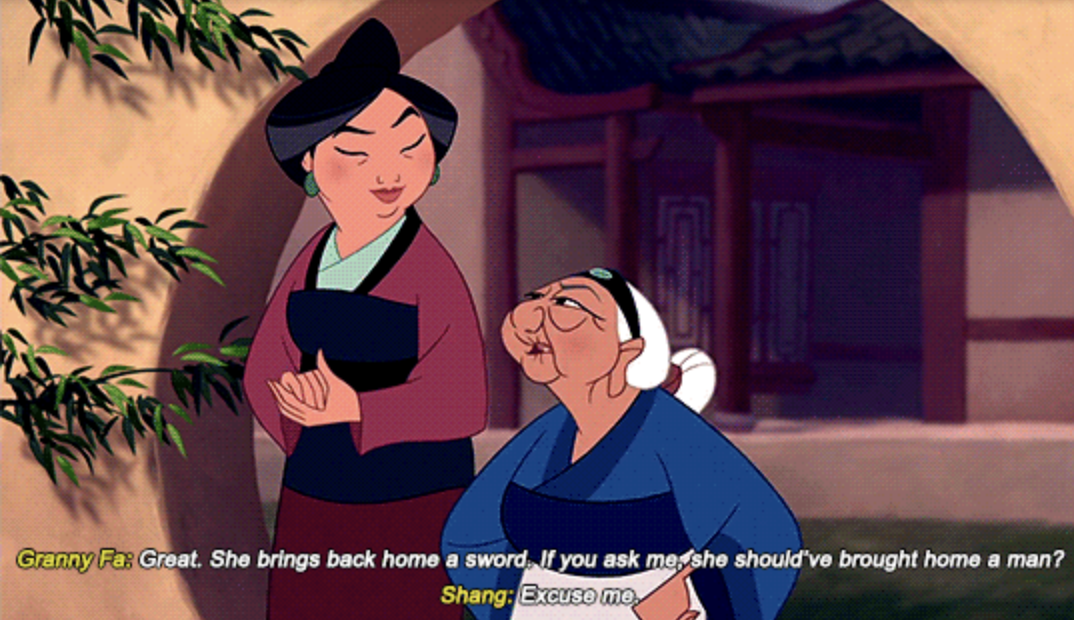
Another way to analyze the romantic storyline of this movie is how it affects Mulan’s nonconforming narrative. Mulan is raised within a society where her only role is to become a wife; instead, she challenges these norms by excelling in battle, a traditionally male-dominated realm. She goes through extensive efforts to carve her own path and reject the expectations of her culture, yet her conquest ends with a typical “fairytale ending”. In film’s closing scene, Mulan’s grandmother, Grandmother Fa, states, “Great. She brings home a sword. If you ask me, she should’ve brought home a man.” Shortly after Grandmother Fa’s line, Li Shang appears at Mulan’s home, implying the continuation of the relationship between Mulan and him. This scene not only undermines Mulan’s accomplishments as an individual, but it also fortifies the traditional gender roles that the movie claimed to oppose.  

A snapshot of Grandmother Fa’s line from the closing scene. 

The film Mulan can be considered as socially progressive and inspirational to its young female audience, due to its message that girls can accomplish the same feats as boys. However, it falls short of successfully defying societal norms. The consequence of this failure is that it validates the temporary nonconformity of an individual with the expectation that they will revert back to societal standards, such as participating in a heteronormative relationship.

Feminism and Fierce Sexuality: The Real Talk Behind Ginny & Georgia

The Netflix series Ginny & Georgia follows the complicated relationship between 15-year-old biracial teen Ginny Miller and her free-spirited, thirty-something mother, Georgia, as they settle in a picturesque New England town after years of being on the run. The show delves into themes of identity, family secrets, and social dynamics as both Ginny and Georgia search for their place in the world. Ginny grapples with her sense of belonging, wrestling with issues of race and the pressures of adolescence, while Georgia is determined to secure a better future for her family by any means necessary, even resorting to murder on various occasions. Beneath its surface drama, the series also offers an exploration of feminism and sexuality, highlighting how both characters challenge or conform to societal expectations around gender roles.

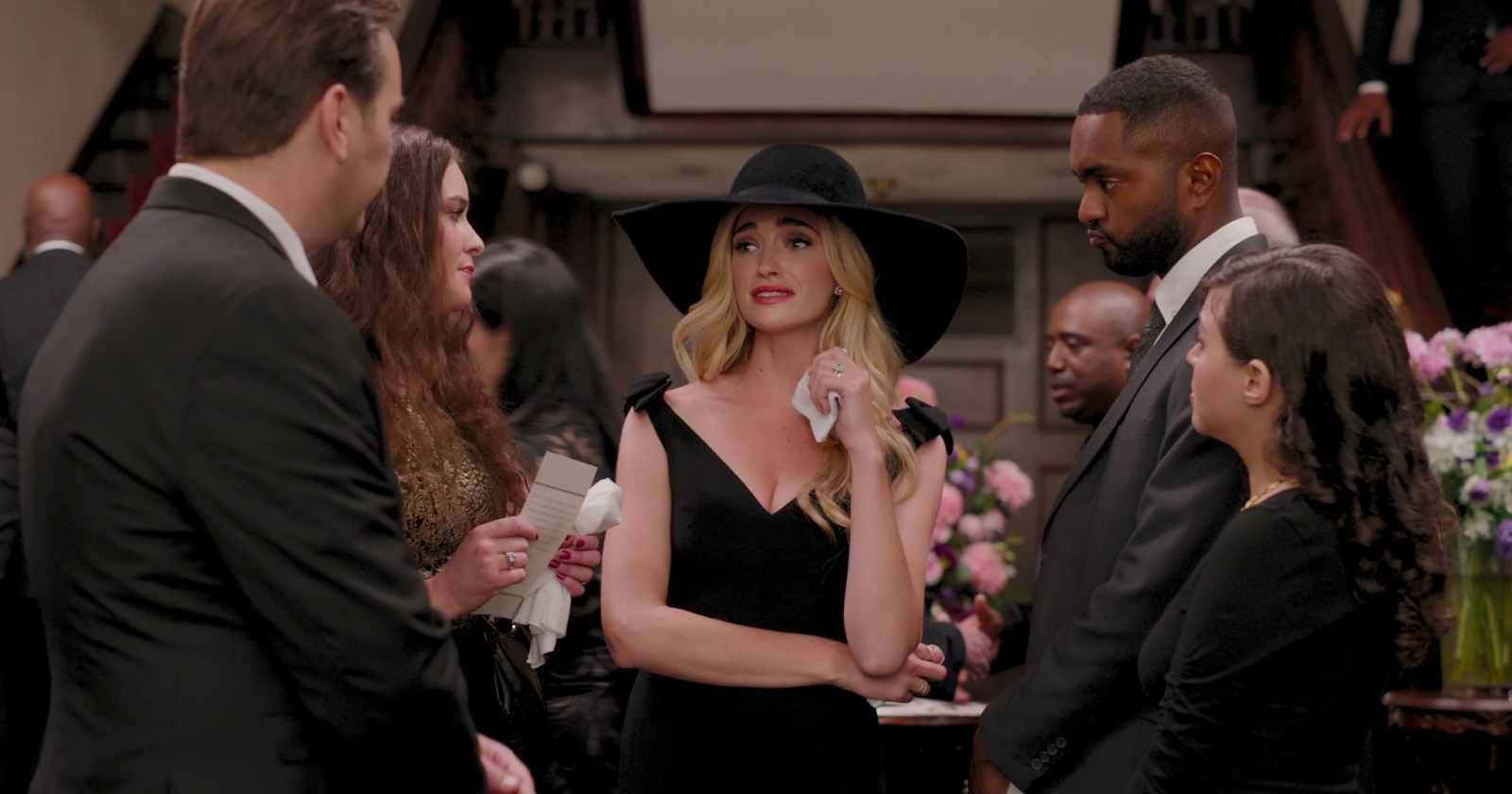
One of the show’s central themes is how both characters confront and challenge societal expectations of femininity and womanhood. Georgia embodies a pragmatic, survival-driven form of feminism, using her femininity and sexuality as tools to navigate a patriarchal world. While her methods are morally complex—sometimes involving manipulation or unethical decisions—Georgia’s actions reflect the reality of a single mother who has faced abuse and poverty. In the show, after witnessing her older, wealthy husband Kenny sexually assault Ginny, Georgia poisons him with wolfsbane in his protein shake. As he is on his way to work, he goes into cardiac arrest mimicking a heart attack. Georgia plays the poor, helpless widow at the funeral and later takes the inheritance to start a new life with her family. Her ability to use her circumstances to protect her family demonstrates a form of agency that can be seen as feminist, even as it challenges conventional ideas of empowerment. In society, feminism is often misconstrued as opposing traditional roles like being a family woman, while womanhood and motherhood are generally viewed as making women dependent on their male counterparts. As a young, single mother, Georgia defies traditional views on motherhood, embodying a fiercely protective, self-sufficient, and self-sacrificing matriarch. Her complicated morality, especially when she resorts to questionable means to safeguard her family, raises questions about what it means to be a feminist mother, blurring the lines between survival, empowerment, and ensuring her children do not face the same gendered oppressions she has.

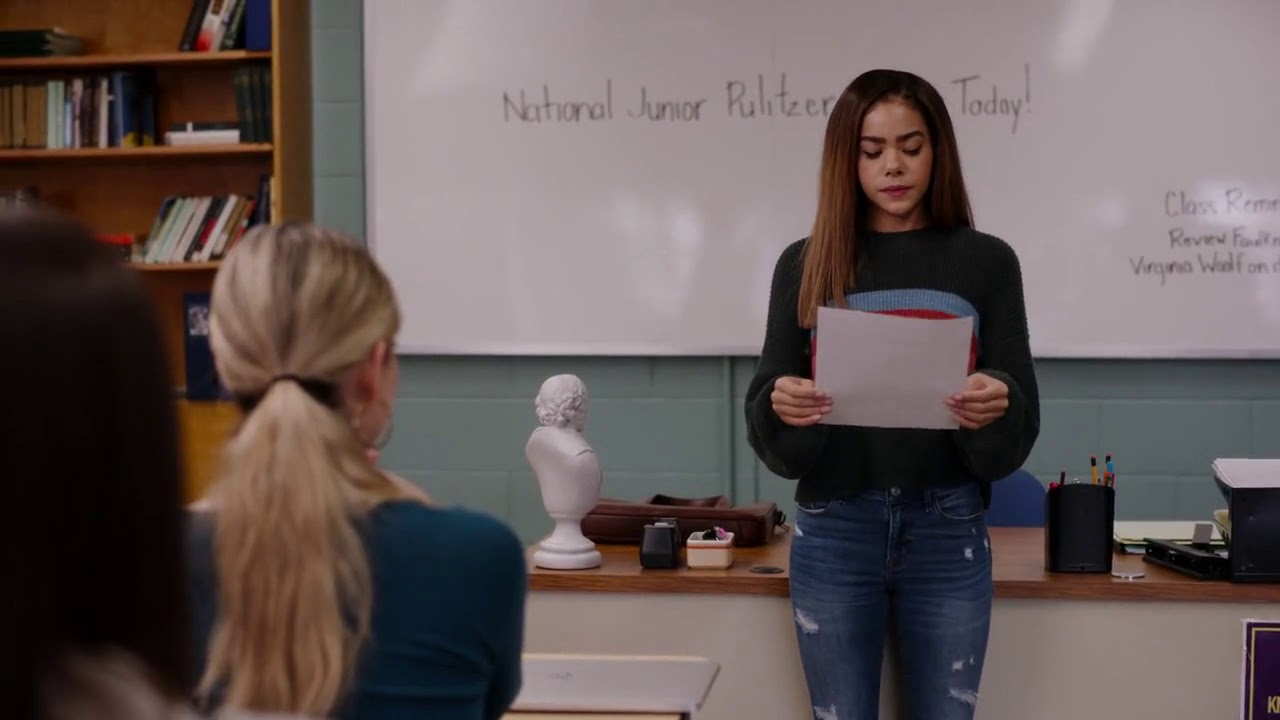
Ginny reflects a more intersectional form of feminism. As a biracial teenager, she navigates the complexities of race, identity, and gender, with her feminism shaped by a growing awareness of social justice issues. Ginny’s journey is deeply intertwined with her struggles for self-expression and navigating the intersections of privilege and oppression. Her experiences offer a lens into the challenges that young women today face as they navigate their evolving sense of self within societal expectations. The biracial daughter of Georgia (a white woman) and Zion (a Black man), Ginny often feels like she does not fully belong in either the Black or white community. Georgia, despite her own struggles, represents a kind of privilege Ginny feels disconnected from. Ginny’s internal conflict around race becomes evident when she critiques Georgia for not understanding what it is like to be a person of color. Her relationship with Zion adds further tension, as he encourages her to more fully embrace her Black identity, leaving Ginny torn between the worlds of her two parents. The show explores code-switching as Ginny tries to navigate her biracial identity, feeling out of place among her white peers who dismiss or fetishize her Blackness, while also feeling distanced from the Black community due to her lighter skin and upbringing in white spaces. To highlight this, the show has Ginny straighten her hair as a symbol of her conformity to her predominantly white upbringing and high school environment. Further, in the scene depicted above, Ginny’s teacher praises her essay stating that it “speaks to her lived experience.” This moment highlights how Ginny feels tokenized and singled out because of her race, which leads to her outburst about being more than her skin color or background. The rest of the show goes deeper into how Ginny learns to express her identity authentically, challenging the societal norms that impose strict definitions of race and womanhood.

Both Ginny and Georgia also explore their sexualities in ways that reflect their generational differences and personal circumstances. Georgia’s use of her sexuality to manipulate men for protection and advancement brings up questions about the intersection of sexuality and power. While her actions could reinforce stereotypes of women using sex for gain, the show frames her choices as a form of survival in a world that often exploits women’s bodies and desires. Through flashbacks in the show, it is revealed that Georgia marries several wealthy men as a way to gain financial security. Georgia shows that she is conscious of the benefits her sexuality and charm bring to her by using them as tools for survival and upward mobility. Of note, her most recent love interest Paul is the mayor of the town she recently moved to. Georgia seduces him knowing that a powerful figure like him would provide security and social standing in their town. Georgia’s use of sexuality can thus be seen as both empowering and problematic, as it simultaneously challenges and reinforces harmful stereotypes about women and sex.

Ginny, on the other hand, experiences her sexual identity as typical of many teenagers, marked by confusion, experimentation, and self-discovery. In the media, young girls exploring their sexuality are often portrayed as engaging in dangerous or morally wrong behavior, typically accompanied by negative consequences. They are frequently criticized and shamed for their actions, while young boys are celebrated and glorified for engaging in similar behaviors. Simultaneously, the exploration of sexuality at a young age has become more normalized, and those who choose not to participate in it are often viewed as unusual or out of step with societal expectations. Ginny’s relationships with Marcus and Hunter, her two main love interests in the show, reflect the fluidity of sexual identity in contemporary discourse, while showcasing different dynamics of teenage relationships, including emotional intimacy and issues of consent and power. Ginny and Marcus, both sexually inexperienced, quickly form a deep connection, which they solidify physically early on. Their relationship remains secret for much of the first season, but when it eventually comes to light, it becomes the center of high school gossip, with people fixating on the drama and misunderstandings surrounding them. With Hunter, Ginny also faces criticism. While Hunter is well-liked and praised by many, Ginny struggles internally, feeling as though their relationship is not entirely authentic. She often questions whether she is with Hunter because it is what she is “supposed” to do. Overall, both relationships reflect different pressures young girls feel as they try to figure out who they are sexually.

Can a Girlboss really be a Tradwife?

Growing up my own mother was a stay-at-home mom and she worked incredibly hard. More importantly, she chose that lifestyle when she and my dad decided to have children. I am beyond grateful and extraordinarily privileged to have had a mother who was at home when I got home from school, around to take me to sports practices, and take care of me when I was sick.

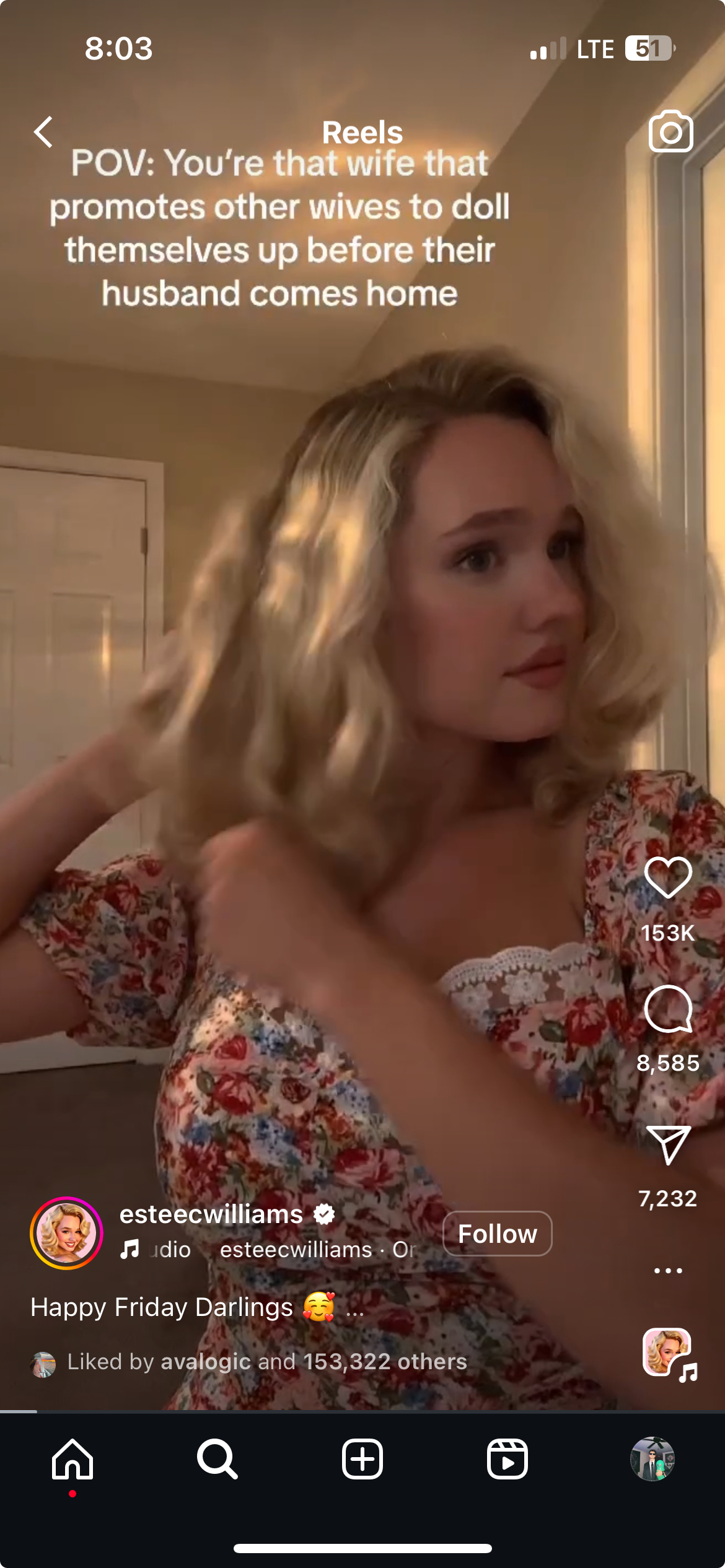
Picture of a social media tradwife, posting for her followers

According to Google, a “tradwife (a neologism for traditional wife or traditional housewife) is a woman who believes in and practices traditional gender roles and marriages.” Traditional refers to performing actions like women did in the 20th century, when they were seen primarily as caretakers and cooks for the family.

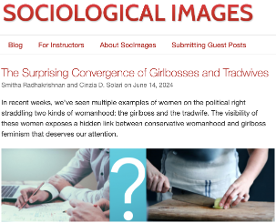
This view seems to be backwards from the modern 21st century view on what women are capable of doing both as mothers and as professionals. In no way do I think that it is bad or wrong to want to be a tradwife but, there is one issue I have with them and that is what the article The Surprising Convergence of Girlbosses and Tradwives aims to convey.

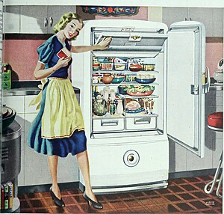
Example of the style of women tradwives are attempting to replicate

This article links the tradwife to the girlboss, which is a woman who is hyperfocused on her career. You might be asking how would a tradwife, a woman who is primarily taking care of her husband, children, and house, also be able to be a girlboss? Well, like my introduction to tradwives, many opt to film their tasks or thoughts and post them on social media. The article states that being a tradwife in modern society is nothing like the 20th century lifestyle.


“We might assume that tradwives hearken back to an earlier “backward” mode of femininity and marriage. But this way of being in the world is unmistakably modern because it involves “choice” and entrepreneurship. It is not enough for a tradwife to simply focus on her husband and kids, she must be entrepreneurial about it. She must blog about it, vlog about it, become an influencer. This is where the “girlboss” mentality comes in.”

(The Surprising Convergence of Girlbosses and Tradwives 2024)

The quote above highlights another aspect where modern tradwives are problematic. As soon as a tradwife becomes an influencer, her main objective has moved from caring for a family to influencing their following and pushing their ideals onto others. Because these women chose to utilize social media and display to the world their ideal way of life, they are using their influence as a powerful tool. They still attempt to attain the unrealistic beauty standards that are concurrent with the “backward” mode of femininity, yet they feel the need to post about it on social media as well. Social media tradwives, like the one in the screenshot before, preach putting family above all else, but at what point does the necessity to cater to a following dictate the actions of an influencer? Moreover, the need to both be entrepreneurs and caretakers and mothers takes away crucial time and energy necessary for each role. Being a social media influencer takes the demands of a full-time job by having to record, re-record, edit videos, brainstorm new ideas, etc. To balance those demands with the already strenuous lifestyle of taking care of a family is counterproductive.

I think that this article is a great read for those that care about the portrayals and standards of women in modern society. It highlights the backwards thinking of social media tradwives, who inherently believe in strong family centric and patriarchal values, but still feel compelled to post their lifestyle on social media. The article dives further into the reasons many women have to become tradwives, especially for women of color. The article cites black tradwives as saying, “we have decided it’s way too exhausting to run the family and corporate America at the same time” (Girlbosses and Tradwives 2024). There is definitely truth to this statement, especially since women of color are valued less in the labor market. For these women, who are paid less and discriminated against in the corporate workplace, the appeal to live as a tradwife is apparent.

Overall, the overlap between tradwife and girlboss is a real phenomenon in the modern age of social media. But when and where is the blurry line drawn between the two labels and at what point do the goals of and priorities of one overtake the other?

Book Review – Medical Bondage: Race, Gender, and the Origins of American GynecologyBook Review: Medical Bondage

The origins of American gynecology reflect back to the racism that has been seen within medicine for quite some time. Black women were seen as these “superbodies” that were capable of withstanding all levels of pain. As a result of this belief, black women were abused in different ways and used for experimental and teaching purposes within the gynecology field. Author Deirdre Cooper Owens focused on the history of American gynecology and the racist origins behind the field. Dr. Cooper Owens reflects on the stories of black women who were at times left to die and then used as study subjects by the same doctors who were meant to cure them. At the same time, Dr. Cooper Owens reflects on the connection that slavery and medicine have and emphasizes the idea that black women in many ways can be seen as the founders of gynecology. 

Throughout the book Medical Bondage, Dr. Cooper Owens makes a connection between the racist doctrines within American gynecology and the abuse that black women faced as experimental subjects. For many black women, stepping into a gynecologist’s office was a sentence for death. More specifically, “Slavery and the rise of American gynecology were the vessels that poured both life and death into the black women’s lives” (Cooper Owens, 44). Many of these women were forced to go to these doctors for their own health concerns and yet they would end up being abused and used and as was often seen killed as a result of this abuse. Dr. Cooper Owens also reflects on the difference in treatment between white and black women. The experiments that black women were forced to undergo would eventually be used to treat white women. Although the procedures were the same, white women did not receive the same abusive treatment that black women did. From these various arguments, Dr. Cooper Owens emphasizes on the idea that black women are the real founders of American gynecology. Black women not only contributed through forced participation, but many black women were also nurses and midwives. The trauma that these white doctors inflicted upon black women led to many black women continuing as midwives and nurses as a way to avoid any further abuse from occurring. As I read Medical Bondage, it was clear that gynecology as a field was not founded by white men but rather by the black women who underwent abuse and various experimental procedures. 

Dr. Cooper Owens is an award-winning historian, a popular speaker, and a professor. Dr. Cooper Owens attended two historically black colleges and universities, Bennett College and Clark Atlanta University. After completing her education in these two institutions, Dr. Cooper Ownes went on to earn her Ph.D in history at the University of California Los Angeles. Dr. Cooper Owens has also taken part in various fellowships throughout the United States. Using her own personal experiences  has led to her realizing that stories are what draw in the attention of the readers. Having the historical background that she does, Dr. Cooper Owens is working to make history accessible to all people as well as inspiring to all. 

In order to create this monograph, Dr. Cooper Owens uses a variety of sources to discuss the role that black women had throughout the history of American gynecology. One source that Dr. Cooper Owens focuses on the stories of the black women who were forced to take part in these experimental procedures. One case that Dr. Cooper Brown’s discussed, the Julia Brown’s case,  reflects on the shift in value that the lives of black women had to the white doctors. Dr. Cooper Owens states that this case “…illuminates how southern white men developed and deployed medical and pharmaceutical methods that revealed how the value of black people’s lives shifted back and forth like measurements on a sliding scale” (Cooper Owens, 42). This specific example allows readers to understand how the value of black women depended on how valuable their bodies were for the purpose of advancing American gynecological practices. Dr. Cooper Owens also used different records and documents that reflect on this idea that enslaved people, and in particular, enslaved women were seen as nothing but experimental subjects and sources of income. The use of these various sources allow readers to visualize the abuse and disrespect that black women faced in order to have gynecology where it is today. 

The organization of the book made it easy to read along and this would have to be one of the strengths of the book. The actual book is divided into five chapters, with each chapter focusing on a different aspect of American gynecology. The first chapter focuses on the birth of American gynecology and on the father of gynecology, James Marion Sims. Dr. Cooper Owens uses this section to expand upon the procedures that were conducted by these white doctors at the time. It is during this chapter that Dr. Cooper Owens begins to expand on how doctors “… used stark medical terminology that reduced black women’s reproductive organs and bodies to mere “physical specimen” ” (Cooper Owens, 21). Chapter two focuses on these procedures but shifts the focus away from the doctors and the history of American gynecology overall and emphasizes on the experiences of black women during this time. In this chapter, the stories of various black women were told and the abuse and neglect that they received both from their owners and from their doctors. With the example of the State of Missouri v. Celia, Dr. Cooper Owens discusses how Celia, although she was raped by her owner, she was still sentenced to death for defending herself and killing her abuser. Celia was pregnant at the time and although her life was not spared, the life of the baby was (Cooper Owens, 43). This specific chapter highlights the importance that was placed on the unborn child, and the lack of care that was given to enslaved women during this time. Chapter three focuses on the connections between sex, slavery, and  medicine. Many of these black women were abused whether it was by their owners or their doctors. This same abuse is what led to many of these women ending up pregnant or developing certain health concerns that required them to be taken to a doctor. Chapter four expands on this topic of abuse and discusses the experiences of Irish women immigrants and the similarities with those of black women. The example of Mary Donovan reflects the commonalities between the experiences of Irish women and black women in relation to how they were treated by doctors. Donovan was described as “violent, dumb, and defective, but her body provided a pathway for doctors to learn more…” (Cooper Owens, 104). Similar to the experiences of black women, Irish women were also abused by white doctors and these white doctors also exposed the private medical matters of these women to public medical journals. Chapter five summarizes the main points made in the previous chapters as well as discusses the idea of a medical “superbody.” Although this topic was mentioned in previous chapters, Dr. Cooper Owens goes into detail on this topic as well as on the medical gaze and how these topics both added to the trauma that black women in particular endured during the beginning stages of American gynecology. 

Dr. Cooper Owens reflects on the experiences of Irish women, but this is a topic that is not as focused on throughout the monograph. The main focus of this book is on the experiences of black women as experimental subjects for white doctors, but it would be valuable to learn more on the experiences of Irish women. Seeing that this monograph does focus primarily on black women, adding the relationship between American gynecology and Irish women would take away from the main argument being made. Regardless of this, it is important to know the stories of these women as well. Rather than including a chapter towards the end on Irish women, it would be helpful to instead have the stories of Irish women in connection to American gynecology discussed throughout the book similar to the structure used to give the stories of black women. 

Medical Bondage is a book that I would say all people should read. It emphasizes the stories of black women and their role in the history of American gynecology. Dr. Cooper Owens also gives a voice to these black women by sharing their stories. During the time in which these events were occuring, these black women were not given a platform or rights to defend themselves. As a result of this, people are unaware of the actual history of American gynecology and the racist ideologies that make up the field. This monograph exposes the racism of gynecology while providing a voice for the Irish and black women who were silenced and used for experimental purposes. Ultimately, Dr. Cooper Owens’ writing reminds society of the vital role that Irish and black women played in making American gynecology what it is known to be today. 

Works Cited:

Owens, Deirdre Cooper. Medical Bondage: Race, Gender, and the Origins of American Gynecology. University of Georgia Press, 2017. 

“Bio.” Dr. Deirdre Cooper Owens. Accessed December 16, 2022. https://www.deirdrecooperowens.com/bio. 

Feminist Mixtape: Lizzo’s “Like A Girl”

When I first heard about this assignment, I immediately thought of Lizzo’s “Like A Girl.” To me, it is the epitome of a feminist anthem that proclaims the power of women.

Woke up feelin’ like I just might run for President
Even if there ain’t no precedent, switchin’ up the messaging
I’m about to add a little estrogen
Buy my whip by myself
Pay my rent by myself

Only exes that I care about are in my fucking chromosomes
I don’t really need you, I’m Macaulay Culkin home alone
Bad bitch, diamonds in my collarbone
Buy my whip by myself
Pay my rent by myself

This opening verse is an embodiment of female power. In Lizzo’s eyes, there’s never been a female president—so what? There needs to be, and I can do it! It is incredibly self-empowering and asserts the independence of women. Who needs a man to help pay rent? I’m doing just fine on my own.

Sugar, spice, and I’m nice
Show me what you’re made of
Crazy, sexy, cool, baby
With or without makeup
Got nothing to prove
But I’ma show you how I do

I really enjoy these lyrics because they take the common stereotypical image of a woman or belief of what women should be—“sugar, spice, and everything nice”—and both accept it and turn it on its head. Lizzo asserts that she is sugar, spice, and nice, but also crazy, sexy, and cool—with or without makeup. This is fighting back against the idea that women are only beautiful with makeup or that makeup is a method to cover insecurities or build confidence. Lizzo is saying that she wears makeup because she wants to, not because she needs to—she’s sexy without it too and she doesn’t have to prove it to you.

Find me up in Magic City bustin’ hundreds by the bands
And I throw it like a girl
Throw it, throw it like a girl
Hangin’ out the 750
Feelin’ bossy in my city
‘Cause I run it like a girl
Run it, run it like a girl
I work my femininity
I make these boys get on their knees
Now watch me do it, watch me do it
Look it, look it, I’ma do it
Like a girl (like a girl)

In modern culture, the phrase “like a girl” has a negative connotation: if you throw like a girl or hit like a girl, you’re doing it weakly or daintily. Lizzo is arguing the opposite. She’s painting her “throwing it and running it” like a girl as powerful and strong, and perhaps even surpassing the power and strength of boys as she sings “I make these boys get on their knees.”

Shoot the car through the fire, light the kerosene (we can do it)
Lauryn Hill told me everything is everything (we can do it)
Serena Willy showed me I can win the Wimbledon (we can do it)
Put me on a pedestal
Bet on me, bet I will

Here, Lizzo is citing specific women as inspiration for her self-empowerment. She mentions Lauryn Hill, who is often regarded as one of the most influential musicians of her generation and one of the greatest rappers of all time, and Serena Williams, who is among the greatest tennis players of all time, as encouragement for her realization of what she can do. The background vocals also chant “we can do it,” a reference to Rosie the Riveter’s popular phrase that asserts female empowerment.

So if you fight like a girl, cry like a girl
Do your thing, run the whole damn world
If you feel like a girl then you real like a girl
Do your thing, run the whole damn world
If you fight like a girl, cry like a girl
Do your thing, run the whole damn world
If you feel like a girl then you real like a girl
Do your thing, run the whole damn world

This echoes the earlier positive reframing of the phrase “like a girl.” I also especially like the line “If you feel like a girl then you real like a girl.” To me, this is an intentional effort to include trans women in the conversation, saying that trans women are also real women and are just as powerful.

Overall, this song is a wonderful feminist anthem that encourages women to claim their rightful power and strength. Its message is that of self-empowerment and self-love. I highly recommend that everyone listen to it whenever they need a good confidence boost.

Book Review: Feeling Medicine by Kelly Underman

Imagine this scenario: you are a black woman and you lay uncomfortably flat on your back with your legs strapped open. Slowly, you wake up from the poor anesthesia you were lucky to receive. You feel the cold sensation of the metallic instruments being inserted into your vagina and feel violated because you see someone who is not your doctor performing a medical procedure without your consent. This situation was not uncommon for the women of the twentieth century. Drexel University professor and former gynecological teaching associates (GTA), Dr. Kelly Underman, writes in her scholarly monograph, “Feeling Medicine: How the Pelvic Exam Shapes Medical Training,” on the horrific history and evolution of the pelvic exam. Dr. Underman analyzes life before gynecological training associates, the impact of the Women’s Health Movement in shaping modern-day pelvic exams, and the importance of building a doctor-patient relationship.

Kelly Underman is a woman from Rittman, Ohio who received her Ph.D. in Sociology from the University of Illinois at Chicago. She is a qualitative researcher and has an interest in researching medical sociology and how sociology plays a key role in the institution of medical schools. Her inspiration to conduct this research is derived from her first-hand experience of observing communities that have had the strength to grow and flourish despite living in the 1950s, where women were objectified for the purpose of gaining medical knowledge. Underman explains this throughout “Feeling Medicine: How the Pelvic Exam Shapes Medical Training,” where she highlights the Women’s Health Movement and how supporters of this movement challenged the healthcare system by drawing attention to issues that specifically women faced in medical practice. The Women’s Health Movement was powerful enough to defeat outdated practices that harmed women. 

Before the development of GTA’s programs, trained assistants served as models who volunteered to help students perform better pelvic exams with their own bodies. Throughout the early twentieth century, medical students learned how to perform a pelvic exam from random patients in a waiting room, who were then treated as objects to gain knowledge. In chapter 1 of her monograph, Dr. Underman explains “A woman waiting in a public clinic…medical students examine her in exchange for her ‘free’ healthcare…become an object under medical gaze.” (25) During the 1970s and 1980s, women who were patients were dehumanized and not treated with appropriate care. Dr. Underman elaborates on how medical students learned to do pelvic examinations on prostitutes and cadavers. The majority of the students cared more about receiving hands-on experiences on how to perform an examination rather than the importance of how their actions and attitude toward a patient influence a patient’s experience. The idea of medical students helping others was only recently established because in the past, it was not part of the norm. The author argues that the students were not taught to be delicate with the instrument such as the vaginal spectrum and how inserting it the wrong way could potentially harm a patient. In Chapter 1, Dr. Underman states “… the expectation that women deserved to be in pain or could tolerate it without complaint – while those who could not [were] considered psychologically abnormal” (31). However, later in the book, you learn the risks that come along with poorly performed pelvic exams, which includes increased chances of infection if a physician does not wash their hands before treating a patient. In Chapter 3, women told stories about students whose nails had not been properly trimmed and who, as a result, scratched their vaginal walls (107). Further, women of color were treated with less care than white women because doctors believed that Black people did not feel pain in the same manner because of the abuse they went underwent as slaves (29). Women who were mistreated by medical students rose up together and started a movement to help with the improvement of pelvic exams. 

Dr. Underman argues how the history of enduring painful pelvic exams led to the uprising of the Women’s Health Movement during the 1970s. Feminist activists were frustrated by how horrible the gynecology system was and advocated for change. They learned how to perform abortions and pelvic exams on one another and developed the fundamental components that would later shape the creation of gynecological training associates. Followers of the Women’s Health Movement were taught how to properly take care of a woman during an examination. In Chapter 1, Underman states “In 1975, feminist activists embarked on a new way of teaching the pelvic exam…[to] challenge the dehumanization of patients during the exam” (34-35). Because of these activists, women now receive better pelvic exams than in the 20th century. In addition, in chapter 4, Dr. Underman quotes Lena, a GTA who states, “We’re there because we want to improve healthcare…” (136). Lena and other GTAs have heard multiple stories of women who have had a pelvic exam and details about how uncomfortable it was for them. Through these narratives, it motivated the GTAs to continuously put their genitals on the line to instruct medical students to positively alter the experiences of patients. This will make future patients less anxious to receive a pelvic exam and reassure them that the physician knows what they are doing and that they will be treated with empathy. Not only does GTA teach students how to do a pelvic exam, but also how to reduce their anxiety and increase their confidence, which in turn, decreases the chances of harming the patient. Thus, Dr. Underman thoroughly argues in her monograph how imperative it is to shape great physicians through the assistance of GTAs. 

Dr. Underman elaborates on the importance of the doctor-patient relationship and how it was never taught until the creation of GTA. The experience for women used to be that physicians executed only their medical responsibilities, but the women were never given information about the procedure that was done on their bodies. However, GTAs teach their students the significance of “neutral touch,” which means placing a hand on the knee and providing a verbal warning before touching or inserting an instrument into the genitals (87). Having a connection between a doctor and a patient also improves the patient’s experience because having a conversation allows them to know what the physician is doing and enhances their level of comfort (123). Thus, the doctor-patient relationship is essential to ensuring patient comfort. 

In my opinion, Dr. Underman does a great job of explaining her arguments and providing primary sources to support her claim. In every chapter, the author includes a quote from a medical professional like gynecological teaching associates and doctors or students to bring validity to her claims. Quotes directly from someone in the field also makes her arguments in the monograph more trustworthy and reliable because her interviewers give her direct information that reinforces her claims. The quotes that Dr. Underman provides are highly qualitative, but the reader may be persuaded more by numerical evidence. 

A weakness of this source is that the author hardly uses statistical evidence. In the monograph, she elaborates on the enhancement of the pelvic exam but does not provide data on its impact nationwide. I believe that through statistics, the reader can understand more about how GTAs have improved the experiences of women compared to the early twentieth century. It would have been helpful to see a chart that analyzed women’s opinions on current-day pelvic exams, to see how much it has changed over time. For example, Dr. Underman could have researched data of the number of women involved in the Women’s Health Movement during the late 1970s compared to the 21st century after methods were improved. Including these statistics would have made Dr. Underman’s arguments stronger because her words would become more valuable and factual. 

Overall, I enjoyed reading this book because, although it had flaws, it was still well-written and held my attention. I like books that make me stop and think and even frustrate me because it pushes me to continue reading. Through her inclusion of personal experiences and direct quotes from medical professionals, Dr. Underman showcased the history of the pelvic exam and the Women’s Health Movement. Anyone who is interested in reading about how the medical system has evolved would benefit from reading this book. Also, those who care about how training medical students in the medical field shape how they practice medicine and how their actions impact their patients would enjoy Underman’s work.

Work Cited:

“Kelly Underman, Ph.D.” College of Arts and Sciences, Accessed 20 November 2022 https://drexel.edu/coas/faculty-research/faculty-directory/sociology/underman-kelly/#:~:text=Kelly%20Underman%20received%20her%20PhD,joining%20the%20faculty%20at%20Drexel.  

“Kelly Underman.” STS Infrastructures, Accessed 20 November 2022 https://stsinfrastructures.org/content/kelly-underman/essay.  

Underman, Kelly. Feeling Medicine: How the Pelvic Exam Shapes Medical Training. New York University Press, 2020. 

Dr. Kelly Underman

Book Review: The Tragedy of Heterosexuality

The narrative surrounding queerness in society today includes overcoming challenges, facing daily adversities, and experiencing more hardships than heterosexual peers. The Tragedy of Heterosexuality breaks this illusion of heterosexuality being easier than homosexuality and provides sympathy for those oppressed in heterosexual relationships. Jane Ward suggests that straightness is a means for people to access cultural and institutional rewards. However, while heterosexuality offers this privilege, it continues to be a site of oppression, violence, disappointment, and discrimination for women. Heterosexuality, from a queer lens, is just a ‘fetish for normalcy.’ Through this book, Ward reveals how heterosexuality is rooted in concepts of patriarchy, male domination, and toxic masculinity, to name a few. Ward realized she was ‘crying queer tears for straight people.’ Hence, through her research and personal experiences of being a lesbian feminist, Ward examines how queer relationships are healthier and more empowering than straight ones. According to her, ‘It’s not that it gets better for queer people; it’s that heterosexuality is often worse.’

While Jane Ward is best known for her 2021 PROSE Award Winning book, The Tragedy of Heterosexuality (New York University Press, 2020), she has written several outstanding books, including the 2016 Lambda Literary Award Finalist- Not Gay: Sex Between Straight White Men (NYU Press, 2015), and Respectability Queer: Diversity Culture in LGBT Activist Organisations. In addition, her research has been featured in The Guardian, Huffington Post, BBC, and The New York Times, to name a few. Apart from being an author, Ward is a professor, urban gardener, baker, and parent to what she likes to call ‘one human child, one potbelly pig, nine chickens, and one cat.’ Ward has also cofounded the Altadena/Pasadena chapter of Showing Up for Racial Justice. She received her Ph.D. in sociology in 2003 from the University of California Santa Barbara and is now a Gender and Sexuality Studies professor at the University of California Riverside. Her teaching and writing focus on feminism, queer, and heterosexuality studies.

The tragedy of heterosexuality is caused by what Ward has termed the misogyny paradox. The misogyny paradox is where ‘boys’ and men’s desire for girls and women is expressed within a broader culture that encourages them to hate girls and women.’ (pp. 25-26) Hence, the misogyny paradox promotes stereotypical roles in heterosexual relationships, such as the dominance of men and the submission of women. Ward exposes how this oppresses straight women as ‘their sexual relationships with men have been maintained by force, both through cultural propaganda targeting girls and women and more directly through sexual assault, incest, compulsory marriage, economic dependence, control of children, and domestic violence (p. 3). The situation is worse because straight men and women romanticize this unequal gender binary.

Their romantic and erotic attachments to the misogyny paradox give rise to an entire industry of self-help books, marriage and relationship counselors, pick-up artists, and seduction coaches. These industries encourage toxic masculinity and promote the idea that women want men to take the lead and be the decision-makers in the relationship. Women are objectified, and the ideal woman is created and viewed through the male gaze- waxed, shaved, toned, etc. Hence, Ward suggests that the ‘key difference between straight culture and queer culture in this regard is that the latter does not attribute these destructive behaviors to a romantic story about a natural and inescapable gender binary.’ (p. 27). Ward proposes the concept of ‘deep heterosexuality’ as the solution for this ‘tragedy.’ Deep heterosexuality is a ‘framework for honoring and preserving what straight people experience as fulfilling about hetero sex and straight culture and for pushing further and deeper in these pleasurable hetero directions’ (p. 159). Ward pushes for the expansion of heterosexual attraction to include the sexual vulnerability of men and the humanity of women. Hence, “straight men do not need to be queered; they need to learn to like women” (158)

What I admire most about Jane Ward’s writing is her unapologetic honesty, blunt criticism, and matter-of-fact approach to controversial topics. She rips off the band-aid of ignorance and forces us to see the pain caused by the oppression and inequalities associated with heterosexuality. Her strength lies in her ability to voice deeply personal opinions while supporting them with concrete empirical evidence. Her in-depth analysis of the historical context of the self-help industry and marriage counseling in the 1900s, the deep-dive into the pick-up artist and seduction industry, the critique of books such as Men Are from Mars, Women Are from Venus (1992) make it impossible to turn a bind eye to her argument. In addition, ward does a great job highlighting and examining the intersectionality of race and sexuality, a topic often overlooked. For example, she talks about how heterosexuality is often the only privilege black women have, which they cannot afford to lose, regardless of the oppression and injustice they might face within it. She also cites the work of the South Asian American feminist scholar Shamita Das Gupta, who highlights how immigant women conceal their husbands’ violence to project an ‘unblemished’ image of their communities to prevent discrimination. Hence, her writing displays the layers of oppression associated with heterosexuality.

However, there are some topics that I wish Ward had touched upon in the book. In my opinion, the book focuses on comparing and contrasting the ways straight men and lesbian women treat and think about women. While this is a valid and current issue to be discussed, it would have been interesting to include a few other perspectives. For example, I would have loved to know how bisexual, pansexual, asexual, and transgender relationships would have played into this debate. Would there be a difference in the relationship dynamic between two straight people and two bisexual people? How would an asexual-identifying male’s opinion differ from a straight man’s opinion on women? I think including these perspectives would have made the book more inclusive and reflective of our society’s diversity of opinions and experiences.
Moreover, homosexuality in the book is depicted as a safe haven and escape from the oppression and violence associated with heterosexuality. This can lead to a dangerous trajectory of justifying violence or toxicity in queer relationships. Physical, mental, and emotional abuse can occur in all sorts of relationships, regardless of whether they’re queer or straight.

As a South Asian woman, I felt the book was centered around white American opinions on heterosexuality, where men are the bad guys and women are the damsels in distress. While I truly respect how Ward centered the book around calling out toxic male behavior and directly addressed men, I think she failed to address an equally important demographic- women! Ward suggests that a part of the problem would be solved if ‘men liked women more, but I believe that women need to like women more too. In South Asian cultures, women are often the strongest upholders of patriarchy. In my life, I’ve experienced more women shaming, discriminating, and slamming other women than men. Teachers slut-shame girls in school, grandmothers, and aunts constantly comment on bodies and clothing, and mothers train girls to believe their only role in life is to be good wives and mothers. While my dad refuses to celebrate any patriarchal Indian festivals and rituals, my mom consciously continues to partake in them for the sake of ‘tradition.’ It’s ironic how the matriarchs in South Asian culture actively promote patriarchy in the name of culture and tradition. Hence, men and women must reflect on their indoctrination of patriarchal values. It’s impossible to fight discrimination if women stand against each other rather than together and in support of each other.

Overall, I think this book provides us with a much-needed wake-up call. After reading this book, I became aware of the saturation of heteronormativity in my upbringing. I realized how the media I consumed (books, movies, social media) contributed to the romanticization of the gender binary. I think this book is a fascinating read and has much to offer to everyone. It shows us that oppression is multifaceted and emphasizes the intersectionality of feminism, queerness, race, and culture. It is one of few books that call out heteronormativity and shows us what we can learn from queer communities. The illuminating discussion and debate initiated in this book will ensure that everyone reflects on how they can better their relationships.

Book Report: The Tragedy of Heterosexuality

The Tragedy of Heterosexuality

“To the straight people reading this book, let me say with all my love and solidarity, I am your ally” (Ward, 13). Who knew that such a normalized sexuality – heterosexuality – could result in the depressing lives of both parties? In Jane Ward’s scholarly monograph The Tragedy of Heterosexuality, she examines the normalized problems inside hetero-relationships, like misogyny, toxic masculinity, and gender roles. Because of these problems, women feel like many parts of their lives are trivial compared to men; on the other hand, men don’t feel secure in their own manhood to “pick up” a woman and keep them around. Let’s dive into why Ward says such things, and why Ward ends the book with “Straight men do not need to be queered; they need to learn to like women” (Ward, 171).

Beside The Tragedy of Heterosexuality, Jane Ward, a professor of Feminist Studies at University of California Santa Barbara, has written two other books: Not Gay: Sex Between Straight White Men, which was published in 2015, and Respectably Queer: Diversity Culture in LGBT Activist Organizations, which was published in 2008. With these published books, Ward has written about various topics, such as “trans relationships”, “the evolution of straight culture”, “the meaning of sex between straight-identfied men”, and more (these topics as well as the complete information of Jane Ward will be linked). Because of these previous works, Ward knows the reality of, in this case, straight people and their couple troubles. She has been aware of such topics early on, to which one could say she has an expertise in these fields. Even if not straight herself, Ward seems to know more than enough than one might expect.

As the book starts, Ward tells the reader that she views the life of “‘straight culture’…through a queer, feminist lens.” To put the problem of “straight culture” into perspective, Ward, as a queer person herself states, “Straight women’s lives are very, very hard. It’s not that it ‘gets better’ for queer people; it’s that heterosexuality is often worse.” With this line, I kind of reflected and thought how true it is – of course queer lives get better, but never realized how hard heterosexuality actually is. Growing up and accepting the fact that one is queer is already hard enough, but to put this context into the actual world of men trying to get with women is already depressing enough. This idea of sexism and toxic masculinity takes over straight culture, to which women and men can not have a successful life with one another because of these coinciding problems. How can men expect more from women when they can not expect more out of themselves? Men are too scared to break out of this heteronormative shell to which they resort of to the seduction of women and plain sexism. 

There is a shift from women doing things to themselves – dieting, shaving, waxing, dying – to deem themselves worthy of a man’s “love,” now to men who realize that their bodies may not be enough to attract a woman’s love, such as being too bald, too short, or too fat. Because of this shift in men’s views, some men have started going to get help from pickup artists, which is, essentially, the idea of “how fast am I able to inappropriately touch you?” During this rise of pickup artists, Strauss’s book The Game was introduced; because of this, the pickup industry expanded into bootcamps, allowing for usually men to give men a lesson on how to get “game,” which is the same idea of seducing woman – how to get a woman into you and getting with her the same night (Ward, 87). As years passed, men slowly started to realize this isn’t what girls need or what – they want to feel seen, heard, and reassured; as a matter of fact, we know women don’t want to be seduced because women have developed “survival strategies…to manage sexual objectification” – these strategies being “bitch shields (i.e., being rude to, or ignoring, men) and shit tests (i.e., insulting men)” (Ward, 99). Women want men who are capable of showing these range of emotions, not the typical self-destructive men who needed a woman to “save” them and make them feel like woman actually had a job other than sex (Ward, 109). Like said earlier, as time moved, these pickup artist industry got more progressive (at least some of them, like Project Rockstar, who had better – younger, more attractive – instructors teaching men how to properly “game”: “thinking beyond consent to consider the quality of women’s sexual experiences, and using spot-on metaphors to help each other conceptualize good, humanizing sex” (Ward, 115). With this shift to a more progressive pickup artist industry, 

One strength about Ward’s writing is her tendency to use others’ work as examples, which strengthen Ward’s own argument. For example, during chapter 4, Ward uses her queer acquaintances and friends as more opinions onto straight life and its culture; with these opinions, she is able to reinforce her own perspective to something more reliable and accurate. She’s also able to draw out something more from these different opinions and perspectives. Additionally, another strength with Ward’s writing is critique a problem – with detail – within straight culture, and is able to offer a solution or workarounds to be able to enjoy a relationship where men actually love women and vice versa. 

While I admire almost everything about the book, one weakness about the book is  the lack of perspectives coming from the other side. Yes, I agree this is something that shouldn’t have another side, and that dismantling this patriarchy is ultimately the step that allows for something more in these relationships. However, one effective strategy, I would say, is that Ward would be better off using rebuttals to her perspective, and counter those arguments, which also give the mentality of “Nothing-to-lose.” Here’s what I mean: for example, within the pickup industry, some men had “that nothing-to-lose frame of mind that allows men to approach women they would otherwise find intimidating” (Ward, 104). By refuting these opinions coming from the other side of this battle, we can then give women and men a same state of mind, allowing them to try these new, which they somehow deem “queer,” like exploring sexual, such as polyamory or “pegging.”

After reading this book, I realized that some of these issues did not occur to me. While I am queer myself and know there has always been issues within straight relationships, I never knew what specifically. Reflecting on my past years, I recognize how little my life has been filled with straight relationships and their problems. I have three sisters, so of course I’ve been exposed to that of hetero couples, but have never actually noticed the problems embedded within. This book has put out more than I realized could be wrong with straight relationships, such as how men are scared of hurting their manhood in any way and would rather dismiss their female partner and their feelings and/or interests (I knew men were scared of hurting their manhood, but did not know until now how they would treat their partner just to protect themselves). While this book has a specific audience range consisting of mostly straight people, I say anyone with an open-mind should read this book. While some people may not consider themselves straight, I think this book provides a great opportunity to know more of the world around us revolving around straight culture. To some degree, I would not say there is a specific audience; although it mostly takes place within these hetero-relationships and they should be the one to fix it – through communicating and experimenting – I think those outside of the straight community also play as a role to disassemble this hetero-patriarchy: as Ward, a queer person, says herself, “I wish for them that their lust for one another might be genuinely born out of mutual regard and solidarity.” For straight women, this book does a great job at giving light to these problems; it can be freeing to have a book dedicated to the ways your life can be improved. Thus, I think this book has something in store for everyone, and we could all learn a thing or two as the principle of love is something mentioned, even if towards straight men. 

Works Cited

Ward, Jane. “Jane Ward: Scholarship for the Feminist Future.” Jane Ward, https://www.janewardphd.com/. 

Ward, Jane. The Tragedy of Heterosexuality. New York University Press, 2020.

Reversing the Ally Relationship: Straight Women’s Gendered Suffering and “The Tragedy of Heterosexuality”

About a year ago, I went through my first real breakup. I was in a toxic, straight relationship with a man for nearly three years, and since our breakup, I have often wondered: how unique was my experience? Reading Jane Ward’s monograph, The Tragedy of Heterosexuality, I was struck by the degree to which my former relationship was indicative of a larger problem with straight culture, and the ways my experience aligned with many other women’s experiences. Ward outlines the patriarchal structures and influences of rape culture that inform straight men’s violence against and general lack of empathy toward women. She goes on to connect these structures and influences to the widespread dissatisfaction (at best) of women in straight relationships. Ward proposes that straight women are in danger and calls for a reversal of the ally relationship in which queer individuals become allies to straight women.

According to Ward, straight culture’s impact on straight women has elicited queer concern and confusion for decades; members of the LGBTQIA+ community have often described straight relationships as, at best, boring, but often toxic, and at worst, violent. Ward talks about her love for her queer life and argues “that the basic premise of the question—that heterosexuality is easier than queerness—requires renewed investigation” (Ward 2). Ward centers lesbian feminist scholarship and cites that the “tragedy of heterosexuality” is “a critical but still largely overlooked consequence of the drowning out of lesbian feminist ideas and experiences” (Ward 4). By centering lesbian and queer feminist perspectives, Ward posits the tragedy of heterosexuality is that “straight life is characterized by the inescapable influence of sexism and toxic masculinity” (Ward 8).

The Tragedy of Heterosexuality’s overarching argument is that heterosexuality is “a system equally organized around love and abuse,” and rooted in white supremacy and patriarchal structures (Ward 12). Many straight women, according to Ward, are unhappy—so what entices them to stay? By outlining the historical and structural contexts of straight culture, Ward situates straightness as a “fetish for normalcy” (Ward 15). Heterosexuality has often been framed as the norm, reinscribing gender roles and biological essentialism, among other sexist narratives that permeate straight culture. Ward argues we must address the ways in which heterosexual relationships reinscribe these narratives—the “we” presumably being individuals across the spectrum of sexuality.

Ward quickly addresses that her focus is straight culture, not necessarily sexuality itself. One prominent aspect of straight culture is normalized mutual dislike: “Across time and place, most forms of heterosexual coupling have been organized around men’s ownership of women (their bodies, their work, their children) rather than their attraction to, or interest in, women” (Ward 34). But Ward argues that in addition to men’s control of women, “straight women’s and men’s shared romantic and erotic attachments to an unequal gender binary” indicates a wider issue with and fear of detachment from the norms of the gender binary and sexuality, further reinforcing heterosexuality as a fetish for normalcy (Ward 22).  

Ward, who is a professor of Feminist Studies at UC Santa Barbara, “has published on topics including the marriage self-help industry, the rise and fall of pickup artists, how early lesbian feminist ideas shaped contemporary gender politics, the meaning of sex between straight-identified men, queer childhood and parenting, the evolution of straight culture, the corporatization of gay pride festivals, the race politics of same-sex marriage, the social construction of whiteness, feminist pornography, and trans relationships” (Jane Ward). In addition to The Tragedy of Heterosexuality, she is known for her works Not Gay: Sex Between Straight White Men (2015) and Respectably Queer: Diversity and Culture in LGBT Activist Organizations (2008). Ward’s book, Not Gay, was featured in Newsweek, New York Magazine, Forbes, The Guardian, BBC, Washington Post, USA Today, Huffington Post, Salon, Vice, and Slate (Jane Ward). Her first book, Respectably Queer, was named by The Progressive magazine as a best book of 2008 and has been featured on NPR (Jane Ward). Ward, who herself identifies as queer, has published many works about queer existence, flipping the dominant narrative of straight as normalcy on its head.  

In Ward’s discussion of the history of straight culture, she begins with the eugenicist marital hygiene ideals of the early 20th century: “…this era also initiates straight culture as a gendered mode of consumption in which the purchase of beauty products and relationship advice were vital to maintaining the delicate balance” (Ward 47). Then, midcentury advertising campaigns and educational films capitalized on these gendered modes of consumption to add more pressure on women: “…advertisers skillfully connected their products—from cosmetics to electronic dishwashers—to the project of heterosexual repair…” (Ward 53). Ward finishes out the historical context with the late-century explosion of a self-help industry “built on biopsychological claims about gender difference,” which further normalized heterosexual misery (Ward 30). To explore these circles of the late-century, and more recent iterations, of self-help, Ward discusses pickup artists and seduction coaches, and their redevelopment of a “woke masculinity” (Ward 31). Ward outlines the motives and degree to which these self-proclaimed dating experts contribute to the tragedy of heterosexuality: “Seduction coaches, at some level, know that heterosexuality’s continued fragility and failure produce a demand for interventions that can build a women’s sexual desire for average men and increase average men’s capacity to elicit that desire” (Ward 87).

Starkly contrasting the perspectives of seduction coach culture are the queer subcultural materials and interviews with queer people. For instance, one portion of the queer testimonials is entitled “It’s Sad How Much Women and Men Dislike Each Other,” in which queer individuals talk about the heartbreaking ways straight culture normalizes mutual dislike and straight women’s dissatisfaction with their male partner. As a rebuttal to the tragedy of heterosexuality, and particularly the issue of mutual dislike, Ward discusses the concept of “deep heterosexuality,” in which straight men would essentially take notes from lesbians and identify with women to develop a deep mutual regard (Ward 158).  

The Tragedy of Heterosexuality’s greatest strength as an academic work is its grounding in reality, not the theoretical. Ward takes an anthropological approach, using real human testimonials supported by lesbian feminist scholarly literature; her inclusion of queer perspectives in the chapter “Sick and Boring Life” exemplifies the degree to which this work is rooted in lived human experience. In addition to these queer perspectives, her interviews and described interactions with modern pick-up artists and dating coaches emphasize the humans behind and the humans suffering because of hetero-patriarchal structures. What makes the book so powerful is the way in which Ward marries the academic and the personal; I related to nearly every single tragedy of heterosexuality—but before reading this I did not know these experiences were a part of a larger system. I thought it was normal and inevitable to feel stuck with a boyfriend who disappoints you, relies on you for therapeutic counseling, and acts in controlling, manipulative and misogynistic ways. Ward shows straight women (and men) that there is another way.

Though I heavily related to the content of this book, I find that one thing it was missing was the perspective of straight women. Much of the discussion of straight women’s experience is rooted in academia and considering this is a work about straight women, a lot of the included perspectives were not theirs. From Ward, we learned how queer people feel about straight relationships and how some straight men feel about straight relationships (although, not the ones who indicate an inclination toward deep heterosexuality), but to “save” straight women, do we not need to understand the feelings tied to the tragedy of heterosexuality, too? I think a chapter like the queer perspectives chapter, but with anecdotes from straight women, could have made the work stronger.

As a personal reading experience, I found this book to be very validating and liberating. As a scholarly experience, I found the book immensely enlightening in how Ward breaks down the structures that cultivate oppressive realities for straight women in heterosexual relationships. Any straight women or women who have been in a straight relationship should read this book to understand why straight relationships function as they do; frankly, they should read The Tragedy of Heterosexuality to understand that many of the shortcomings of their straight relationships are not their fault. I also think straight men could benefit from reading this book; Ward provides insight into the situations they place women in and outlines how heterosexual misery is not an inevitability.

As Ward calls for queer allyship, queer individuals should at least read excerpts from the book (potentially excluding the queer perspectives chapter if they are very well-versed in the realities of heteronormativity and the tragedy of heterosexuality). Examining the tragedy of heterosexuality from a queer lens is an example of why it is critical to view normative, dominant structures from those who have been marginalized by them. Queer people understand their own existence and straight existence, and the insights they can provide, as outlined by Ward, are invaluable in turning the tragedy of heterosexuality into healthy relationships bonded by deep heterosexuality.

Works Cited

Jane Ward: Scholarship for the Feminist Future, https://www.janewardphd.com/.

Ward, Jane. The Tragedy of Heterosexuality. New York University Press, 2020.

Book Review – Aesthetics of Excess: The Art and Politics of Black and Latina Embodiment

Spending my most formative years growing up in the city of Brooklyn, New York, I was surrounded by Black and Latina women of different body shapes, using colors, and bodily embellishments creatively in their fashion and self-representation, which seemed beautiful and fascinating to me. Until I learned to classify them as “other”… As a young white girl experiencing the world and all its differences, I learned to classify these groups as “other” based on their bodily aesthetic, the very aesthetics that society warned me about. Enter the monograph titled, Aesthetics of Excess: The Art and Politics of Black and Latina Embodiment, by Jillian Hernandez, the book that breaks down my childhood thoughts surrounding a topic called “aesthetic excess.” Hernandez examines the concept of aesthetic excess through the stories of working-class Black and Latina women from Miami. By amplifying these voices, the author sheds more light on ways that Black and Latina women in Miami have separated themselves from the prescribed white norms around gender, race, sexuality, and the neoliberal view of class.

Continue reading “Book Review – Aesthetics of Excess: The Art and Politics of Black and Latina Embodiment“ →

Review of “Medical Bondage” by Dr. Deirdre Cooper Owens

Gynecology was not always the well known field of medicine that is present in the United States today. In fact, gynecology is a relatively new development in medicine that came to fruition in the United States in the 19th century. START HERE Before modern gynecology arose in the 19th century, women’s health was the job of women. Midwives were the heads of women’s health and pregnancies. These midwives were almost always women. It was not until the practice of gynecology took root that men became involved in women’s health. In her monograph, Medical Bondage: Race, Gender, and the Origins of American Gynecology, Deirdre Cooper Owens explores the impact that enslaved and working class women had on the development of gynecology and in return, the impact that gynecology had on them.

Continue reading “Review of “Medical Bondage” by Dr. Deirdre Cooper Owens” →

Big Hero 6 Spin Off Takes a Big Step 

I am a disney fan, as a lot of people I know are. I love the kid friendly content that also sometimes has adult humor mixed in; the cute sidekicks and comic relief; and so many heartwarming stories about love, friendship, and finding yourself. However, there is one thing Disney has always lacked. Take a look at some of their most beloved characters and couples, and see if anything stands out to you. 

Rapunzel and Flynn Rider from Disney’s Tangled
Ariel and Eric from Disney’s The Little Mermaid
Cinderella and Prince Charming from Disney’s Cinderella
Anna and Elsa from Disney’s Frozen
Belle from Disney’s Beauty and the Beast

All white, cis gender, unrealistically skinny, and straight. Granted, the company as a whole has come a very long way but they have long struggled with diversity and inclusion. The majority of notable and big role human characters, specifically princesses, are still predominantly white, all have the same (very skinny and oddly proportioned) body type, and there still has not been a big film that features a non straight romance. 

As I was pursuing Disney Plus, I came across a show that I had seen mentioned on tik tok, being either applauded or berated for a few scenes it included. The show is called “Baymax!”, created by writer Don Hall, and it features six short episodes around ten minutes each of the adorable healthcare robot Baymax, famously from the movie “Big Hero Six ”, helping different people in their respective predicaments. As I was watching the third episode, I was shocked. The third episode follows a 12 year old girl named Sofia through her day at school, when suddenly, she gets her first period. Baymax the robot comes into the bathroom to help her and explains that what she is experiencing is completely normal, and then he offers to go to the store to get her some menstrual products. First of all, it is completely unheard of for Disney to be openly talking about periods, which have historically been a taboo topic. For them to base a whole episode on the subject of menstruation shows big progress. When Baymax is talking to the frazzled Sofia, he says, “It is common for people to feel embarrassed, fearful, or uncomfortable, with the subject of menstruation. But it is just biology. It is nothing to be ashamed of.” This quote is so refreshing, because talking about periods has become a thing to avoid doing. It has often become something used to shame or embarrass women, instead of something that should be normalized and even empowering. Having even just a short spin off episode on this subject is a huge step in the right direction for Disney. 

 Even more huge progress is shown in Disney’s diversity and inclusion in the scene when Baymax is at the store in the pad and tampon aisle. Baymax is confused on what product to buy so he asks a woman near him for help. Once she offers her suggestion, lots of different people start chiming in letting the robot know which products they recommend. One of the people to chime in is a man wearing a shirt that is striped with the colors of the transgender flag, and he lets Baymax know that he prefers the pads with wings. 

Image from the scene

While the scene is only about 20 seconds long. It is the first time Disney has had a trans person in their content. The casualness of the scene shows the progress even more, because it simply shows a trans man doing a mundane task, the attention is never directly surrounding his trans-ness, and it shouldn’t be, because it should be accepted that men can have periods too. For those of you that don’t have Disney +, here is a link to the short scene:Baymax goes Shopping for Tampons. 

This episode, but especially this scene, caused immense outrage among some viewers, being labeled as “woke nonsense” by our very own Republican North Carolina Congressman Dan Bishop. Many parents also expressed their anger by tweeting about how this scene would make their kids uncomfortable and asking what the reason for this scene was:

The truth is, the audience for this show is kids. It is a PG rated show, meaning that kids probably as young as toddler age are watching this. Toddlers are not going to watch this scene and shout about how disturbed they are that a man is buying pads. Toddlers are going to watch this show and laugh at the adorably hilarious robot, and wish that he was there to help them with their medical needs. If a child is uncomfortable watching this scene, it is because they have been taught that it is wrong to speak about your body, and that it is right to judge what other people are doing with theirs. 

While Disney obviously still has a long way to go, this small mini series is a big step in the right direction in terms of recreating and redirecting the conversation around gender, sexuality, bodily autonomy, and inclusion, especially for young kids. 

(This is a post text side note: I highly recommend watching the rest of the series of “Baymax!”. It is adorable and heart warming and also includes an episode (episode 4) featuring an absolutely precious gay love story that made me tear up with happiness because it is just so adorable. )