Lemonade’s Celebration of Oneself

Beauty standards and expectations about how people should act are omnipresent. They largely affect women, particularly Black women. These expectations and standards are perpetuated in various forms of media. 

Watching Beyoncé’s visual album Lemonade gives a much more comprehensive experience than simply listening to the album. The visual album is divided into 11 chapters, all with videos accompanying them. The music videos for each of the 11 songs in Lemonade are also in the visual album; the visual album incorporates a medley of references and cameos, including highlighting the prose of Warsan Shire. 

Beyoncé accompanied by notable individuals, including Zendaya and Amandla Stenberg, in the chapter “Redemption” while speaking Shire’s prose

Although much of the media is made with the white male gaze in mind, Beyoncé’s visual album Lemonade strays from this trend. Beyoncé tells her story from her perspective, how she wants to tell it, and narrates in the way she sees best fits. Women of color are victims of numerous harmful stereotypes in the media, such as the “angry Black woman” stereotype, and generally being portrayed as hypersexual. Black women are oftentimes minimized to be seen just as these harmful stereotypes, stripping them of their individuality. Lemonade shows Black women in more than one way. Beyoncé illustrates the diversity of Black women, smashing various stereotypical images down. 

Beyoncé allows herself and other Black women to express their emotions unapologetically within Lemonade. Women are generally expected to be composed, submissive, and suppress emotions. If a woman does express her emotions, she is often quickly labeled emotional or irrational. Black women expressing emotions are especially stigmatized. Beyoncé does not hide her emotions but instead showcases them. Each chapter’s title relates to emotion. The stages of emotion, as shown through the chapters, subverts the unidimensional view of Black women and successfully allows Beyoncé to illustrate Black women’s complexity. By showing the versatility of Black women, she defies the generally monolithic representation in the media. She humanizes Black women in the media by creating Lemonade and displaying emotions in a raw, exposed manner.

Beyoncé teary-eyed while singing “Sandcastles”

Throughout the visual album, Beyoncé does not shy away from expressing her anger to avoid the label of an “angry Black woman.” During “Hold Up,” Beyoncé is seen strutting down a street holding a baseball bat with a sly grin on her face. She releases her anger throughout the song, causing destruction, including smashing windows and battering cars. Her sheer fury continues to be seen in “Don’t Hurt Yourself,” where she continues to embrace emotions like anger that Black women are taught to subdue, labeling herself “the dragon breathing fire.” She has a right to be angry without worrying about how others perceive it. She exercises that right, illustrating that anger is a normal emotion that an individual should be able to express without being put within the “angry Black woman” trope. Later in the song, viewers can hear the anguish in her voice as she screams, “Tonight I’m fucking up all your shit, boy” while staring into the camera. She powerfully shares what she feels. It is much more normalized for men than women to express rage and anger, often even being labeled as a masculine trait. When women do express rage, they are quickly described as a bitch or crazy. She normalizes outwardly expressing anger without resistance from others.

Beyoncé smashing a car window in “Hold Up”

Beyoncé calls attention to how beauty standards have a greater impairment on women of color, including herself. Individuals portrayed in the media have been altered to fit beauty standards, so when viewers can not find themselves in the media- since anyone who once represented the viewer likely has been altered- it sends a message to the viewer that they are not good enough. In the chapter, “Denial,” Beyoncé shares how she resorted to trying to change: she fasted, wore white, tried to be prettier, grew her hair out, bathed in bleach, etc. Some of the ways she wanted to change herself to cope with feelings of inadequacy affect women regardless of race. However, many aspects of beauty standards constrict women of color disproportionately in comparison to white women. A lot of those have to do with the Eurocentric beauty standard and labels that women are supposed to conform to.

Beyoncé’s perception of herself and her identity evolve throughout Lemonade. By the end of the album, she has learned to embrace aspects of her identity that don’t fit the Eurocentric beauty standard. In the last song, “Formation,” she sings about how she likes her nose and her baby’s afro. She embraces aspects of her identity she once may have thought to be unsatisfactory since they did not align with the European beauty standard. The pressure to assimilate to fit beauty standards is not often talked about. Beyoncé’s honesty and vulnerability shed light on the problem. She admits to wanting to conform and then takes ownership of herself and her power.

Beyoncé and others powerfully dance during lyrics about embracing features in “Formation”

Beyoncé’s visual album Lemonade, is a work of art full of intention. From the outfits to scenery to poignant celebrity appearances, Beyoncé chose each aspect of the album to serve a purpose and can essentially all be analyzed. While Beyoncé does shed light on issues related to gender in Lemonade, that is only the tip of the iceberg of what she explores and sends messages about within. 
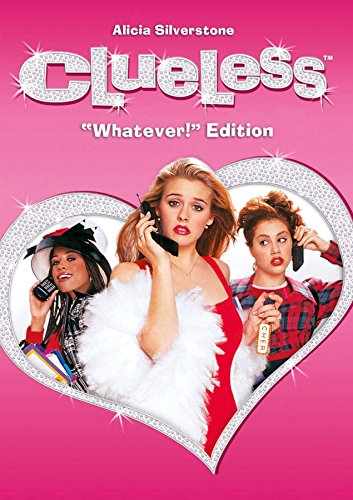
How the Clueless Creators of “Clueless” Contributed to a Harmful Culture Around Gay Men

Amazon.com: Clueless : Alicia Silverstone, Stacey Dash, Brittany Murphy,  Paul Rudd, Donald Adeosun Faison, Dan Hedaya, Justin Walker, Donald Faison,  Elisa Donovan, Breckin Meyer, Jeremy Sisto, Aida Linares, Wallace Shawn,  Twink Caplan,

Arguably, one of the most iconic movies ever created is “Clueless.” This movie features everything you could want and more from a classic 90’s high school movie. The lead, Cher, is the “it girl” at Bronson Alcott High, and she seems to have her life fully figured out. With her side-kick Dionne, she takes on some typical challenges accustomed to the privileged teenage life, like failing her driver’s test, going to parties, and meeting a cute boy she might have a crush on. His name is Christian, and, despite Cher’s keen eye, she fails to realize that he is gay. 

Cher tries every play in the book to try and seduce Chrisitan, she drops her pen to bait him into picking it up for her, invites him out to parties, and brings him to her house when her father is away. She puts an entire roll of cookie dough in the oven, in the hopes that the warm, sweet smell in combination with her domestic abilities will be enough to woo him. She ends up burning the cookies, and they move on to tour the house. As they walk through the backyard, Chrisitan is telling Cher what a beautiful art collection her father has and comments on all the statues talking about the various artists and meanings behind the works. This is a stereotype associated with gay men, a love and appreciation for art. This is only one of many different stereotypes the creators of “Clueless,” put on Christian, however.

Clueless': Cher's Love Interest, Christian, Was Almost Played by This  'Twilight' Star

All the characters from the movie continuously point out the effeminate qualities Christian has. His love for art and fashion comes to mind. He is also the most well-dressed and groomed man on the show. All these things are associated with and are stereotypical qualities of gay men. After the not-so-romantic night between Cher and Christian comes to an end, the movie flashes forward to Cher in the car with Dionne and her boyfriend, Murray. Murray is trying to teach Dionne how to drive while the two of them listen and try to counsel Cher about her failed date. After she says she was ready to, “go all the way,” and have sex with Christian, Murray laughs out loud and says, “are you bitches blind or something? Your man, Chrisitan, is a cake boy.” The sexist language he uses here and throughout the film is enough for a whole other essay, but he uses an old derogatory term, “cake boy,” meant to put down and make fun of effeminate men. He then goes on to list more stereotypically gay things that Christian does, like enjoying disco music and reading Oscar Wild. He then finishes his line by saying “he’s a friend of Dorthy if you know what I’m saying.” After all of that, Cher finally realizes that Christian is gay.

While the creators of the movie did a good job at making Chrisitan a likable character, they abused gay stereotypes and the “gay aesthetic” of the time to perpetuate a misguided view of what being gay means. The Hollywood interpretation of gay men specifically, was one of two character archetypes. Either a creepy, predatory character that you are meant to hate and fear, or an effeminate one that is clean, pristine, and loves to shop. Chrisitan is clearly the latter. 

Having this “gay aesthetic” be so wildly loved, admired, and used in media is damaging to gay youth. We’re told this is what it means to be gay. You have to dress a certain way, act a certain way, and like specific things to be “gay.” This puts pressure on young gay men especially to behave like this idolized character of fashion, art, and shopping. If you don’t look put together you aren’t good enough to be gay. If you don’t love shopping with your girlfriends then you’re either in the closet or some kind of outcast. These characters often become the “gay best friend” of a powerful female character as well. Effeminate gay men were never portrayed as powerful or independent, they always had a popular girl to take care of them and protect them from the rampant homophobia and toxic masculinity of high school. This is damaging to watch as a young gay child. You are told that to fit in and be accepted, you have to be feminine and hide behind other people for safety. When you stand up for yourself a bully will knock you down, and if you don’t act “gay enough,” neither the gay nor straight people will want to include you. Yet, this feminine gay aesthetic was one of the only positive representations of gayness from before the 2010s. Despite how damaging it is to be told you must be and act a certain way, it was the only way to survive.

Gayness is more than being effeminate and liking clothes and Britney Spears, however. As more modern media is starting to realize, gayness looks different for everybody and there isn’t one box of mannerisms and inflections that you can sort us into. Gay people each have their own personalities, behaviors, and interests. Being gay is just one part of us, one identity we have, nothing more. It can mean to you whatever you want it to. That’s why having this kind of representation (as in characters like Christian) is damaging to the gay community. Although Christian is seen as this perfect, sexy man better than all the other men in Bronson Alcott High, his character perpetuates a harmful culture around being gay.

written for Autostraddle | autostraddle.com

work cited:

Heckerling, A. (1995). “Clueless” movie poster. Amazon. Paramount Pictures. Retrieved October 1, 2021, from https://www.amazon.com/Clueless-Alicia-Silverstone/dp/B01M9B4FDS.

Heckerling, A. (2021). Cher and Christian watching a movie. cheatsheet. Paramount Pictures. Retrieved October 1, 2021, from https://www.cheatsheet.com/entertainment/clueless-christian-was-almost-played-by-this-twilight-star.html/.

Audi’s Display of Sexism and Stereotyping

In 2017, Audi, a German car manufacturer known for its luxury vehicles, released an advertisement to its Chinese market that sparked much controversy around the world. In their attempt to promote used cars to potential customers living in China, the brand not only displayed apparent examples of sexism, but promoted racist stereotypes. This commercial starts off with an Asian heterosexual couple standing at the alter about to get married. Right before their marriage was officially declared, the groom’s mother interrupts the officiant and begins handling the bride roughly, attempting to inspect parts of her body. Only after the bride’s future mother-in-law examines some of her physical aspects, like her eyes, nose, ears, and teeth does she declare the bride fit to marry her son and gives her approval. The terrified bride is seemingly relieved after her future mother gives the couple her consent, until the mother’s focus turns to the bride’s breasts, bring her back to a panicked state. After this blatant objectification, the commercial’s narrator voices “An important decision must be made carefully” as a red Audi Sudan zooms down a highway (Greatdung 0:22-0:23).

YouTube, 17 July 2017

This sexist Audi advertisement centers around the objectification of a woman by not only debasing the bride’s value to just her physical attributes, particularly her facial features, but also by comparing her to something one can buy and own. By insinuating that marrying a living breathing person is an equivalent decision to buying a car, Audi turns the bride into an object that can be materialized and possessed. Not only is the bride objectified by her future mother-in-law, but with the attention shifting to her breasts, she also becomes sexualized. This overt objectification and sexualization of a woman not only advance the harmful ideology of women not being actual people and simply objects for the benefit of men, it can have dangerous consequences that go beyond these beliefs. The United Nations International Children’s Emergency Fund (UNICEF) makes this connection by declaring “The objectification and sexualization of girls in the media are linked to violence against women and girls worldwide” (UNICEF USA 2021). This treatment can also have a multitude of negative consequences on the targeted individual’s mental health that can last throughout a lifetime. With the massive platform stemming from the ability to air advertisements to millions of people, comes much responsibility to further notions of equality rather than ideologies that have the potential to cause an immense amount of harm. 

Not only is objectification based on gender a prominent issue in this ad, but race also plays a problematic role. The stereotype of the “tiger mom,” a term coined by Amy Chua which describes Chinese mothers as strict, controlling, and borderline abusive, is also deployed in this Audi advertisement. One aspect of this stereotype is the fixation Asian mothers have on the physical appearance of their daughters (Chua 2011). In this case, the need for the bride’s soon to be mother-in-law to examine her physical features, deciding whether they meet her standards prior to the couple’s marriage further perpetuates this stereotype. Most Asian mothers do not align with this parenting style and utilize a wide range of other strategies, contrary to popular belief. The bride also remains passive during this offensive interaction, exemplifying to this advertisement’s audience that this is the appropriate reaction in the face of maltreatment, which could be easily internalized by woman and child viewers. By displaying this inaccurate idea of what Chinese mothers usually place high value on, as well as the expectation of women staying passive, not only does Audi promote sexism, but also racist stereotypes.

Connecting these ideas, Audi exhibits how the intersection of both gender and race can work together, producing an even greater amount of discrimination for individuals like the bride in their commercial. On the basis of Kimberlé Williams Crenshaw’s concept of intersectionality, two social categorizations of the bride’s identity, being Asian and a woman, create a somewhat unique distinction of the discrimination she faces in this Audi advertisement. Unfortunately, this situation is not rare and many individuals who share these similarities in their identity experience this prejudice on a day-to-day basis. 

Shortly after this commercial aired, it received mass amount of criticism and backlash from the public. One commenter even voiced “The annoying thing about Audi’s used-car ad, besides its objectification of women, is that it thinks Chinese customers deserve only commercials like this” (Washington Post 2019). Others simply called the advisement sexist and disgusting. Many people initiated plans to boycott this company and convinced those around them to partake in this form of protest. Following this severe condemnation, Audi apologized for its ignorance related to this particular incident, assured the public an internal investigation would take place to avoid a mistake like this in the future, and removed this advertisement from television. Audi’s response to this backlash and quick withdraw of their commercial displays the power the public holds and how each individual’s voice matters when speaking out against discrimination. 

Unfortunately, this type of sexist and racist commercial is not the only one of its kind. These companies must continue to be held responsible for the harmful ideologies their advertisements promote and be hyper aware of the massive audience they have the ability to reach just through the commercials they release. These examples of sexism and racism through promoting stereotypes and targeting certain audiences unfairly in advertising must come to an end in order to create a more egalitarian world. These large-scale brands have the responsibility to advance impactful and beneficial messages to the massive audience they are capable of reaching, instead of carelessly feeding this harmful ideology to the masses. 

Works Cited: 

Chua, Amy. Battle Hymn of the Tiger Mother. Penguin Books, 2011. 

Greatdung. “Audi Used Car Commercial in China. Full of Sex Discrimination.” YouTube, YouTube, 17 July 2017, www.youtube.com/watch?v=WiBva8pEgTc. 

Smith, Jamiee, and Hannah Gould. “Not an Object: On Sexualization and Exploitation of Women and Girls.” UNICEF USA, 11 Jan. 2021, www.unicefusa.org/stories/not-object-sexualization-and-exploitation-women-and-girls/30366. 

Wang, Amy B. “An Audi Commercial in China Compared Women to Used Cars. It Didn’t Go Well.” The Washington Post, WP Company, 18 Apr. 2019, www.washingtonpost.com/news/worldviews/wp/2017/07/18/an-audi-commercial-in-china-compared-women-to-used-cars-it-didnt-go-well/.