A Christmas Story

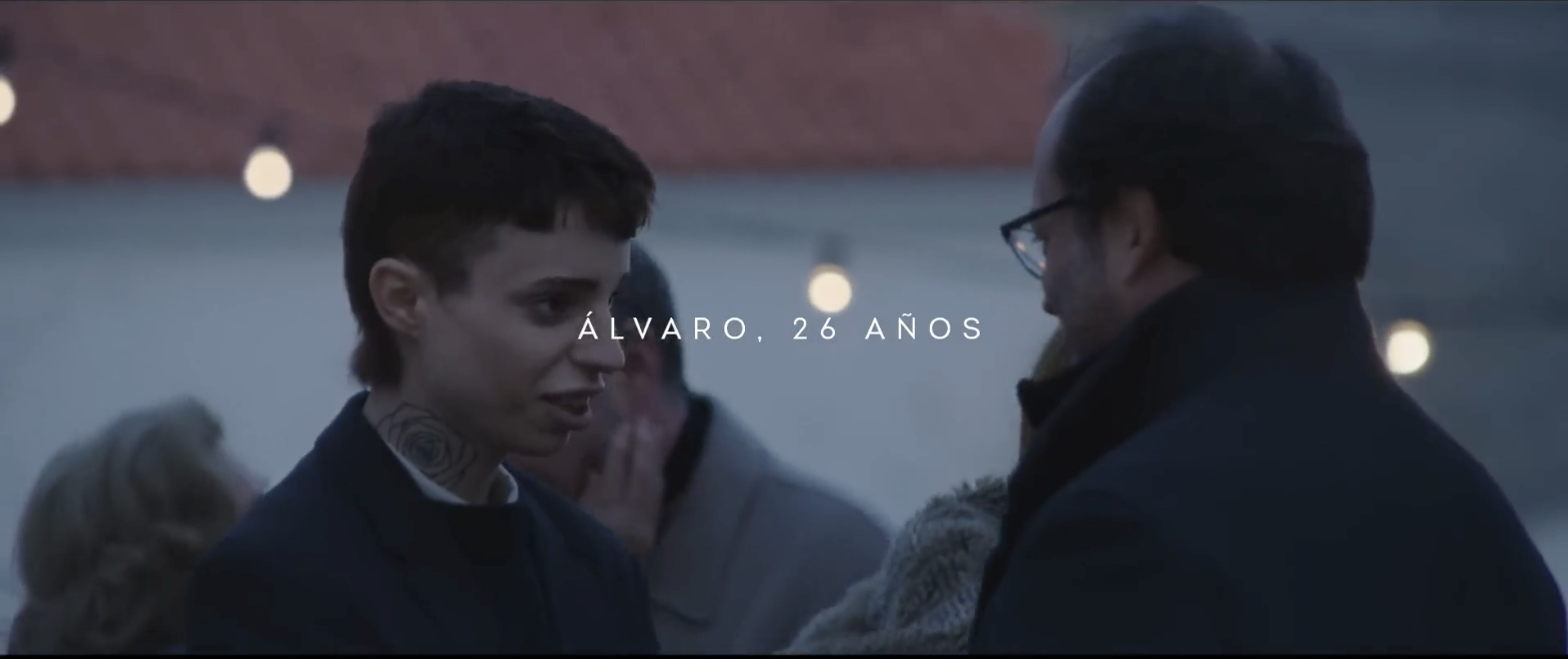
J&B Rare’s advertisement “She, a J&B Tale,” for Diageo Scotch whisky
The protagonist of J&B’s advertisement
Ana

Theory to Praxis: Reforming Sex Ed On-Campus and in Local Schools

The clear truth, as we have all experienced, is that improper and outdated sexual education lessons do not just appear when we enter institutions for higher learning, but have followed us as early as 6th grade. In fact, if we want to improve the entire conversation of sexual health and wellness and revamp it to be inclusive and universal, we must start with earlier teachings of it. In order to take action in changing the current dialogue that is being taught in schools, there are several routes to be taken. 

Through my conversations, both within small and large group discussions during class, and through speaking with all of my friends growing up, it is unanimous that we have felt left in the dark on many topics. For example, the week-long, once a year lesson plans growing up in South Carolina were exclusively for cis, heterosexual partners only. In fact, the major takeaway that I remember is simply hearing that abstinence is key, and that this is essentially the answer to everything. Very little details were stated on STIs/STDs in comprehensive ways, there were zero inclusions on any type of sex that was not between a cisgender man and a cisgender woman, and, arguably most concerning, there was absolutely no emphasis placed on the need for enthusiastic and specific consent between people. Combined together, the lack of these very real topics becomes incredibly concerning. It gives way too much room for students to formulate harmful, underrepresented images of what sexual health and wellness means and looks like. 

Firstly, I believe we have enough fostered support among students here at Davidson to start a Improving Sex Ed in Schools Club (ISEC). Once we have a group formed, we can figure out a mission statement and, if necessary, assign subgroups. For example, we could have one group of 3-5 working within Davidson to improve the Sex Ed training on our own campus (is there any accountability if a student does not complete the Sex Ed online course? Is there a way to have group seminars/discussions about the content afterwards so it is not forgotten?) We could have a larger group of 8-10 centered on reaching out to middle or high schools in Davidson or Mecklenburg County to see if there are any current efforts to reform Sex Ed, or if they would be open to a group of Davidson students writing or helping to lead that conversation. 

A subgroup within the Planned Parenthood Generation Action club on campus attended sexual education training and is now able to actually give the lessons within schools and organizations. I believe this has the potential to be a phenomenal opportunity for students our age to make a difference and to become a fresh voice for younger students who are just beginning to learn about sexual health and wellness. Before joining PPGA, I did not know we were able to become certified trainers in sexual education. We could spread the word, inform students on set training dates offered, and see if this garners even more interest. 

I imagine that the impacts of having open-minded, inclusive, and respectful attitudes surrounding sexual health and wellness, paired with updated and comprehensive lesson plans, will be astounding for younger students. I hope that, starting with Davidson and then spreading to middle and high schools within the area, we can make this positive change.

Theory to Praxis: Inclusivity at Davidson

Because of the intersectionality and applicability of GSS, there are many ways to apply these theories and ideas to different aspects of daily life. For example, one way is just in general interaction with others. By understanding the basic ideas about respecting pronouns or body size or race, it is easy to treat everyone with respect. Additionally, understanding these ideas in a position of influence is very helpful because not only are you able to spread the awareness of different ideas more effectively, but you can also apply the theories to your cause. For instance, at Davidson, we have many different clubs and organizations that could take advantage of their status and promote the intersectional ideas of inclusivity. Turner Eating House has done a good job of this by being the first Eating House to allow gender non-conforming members to join, adapting their service mission statement to highlight the importance of combatting white supremacy and police violence around Davidson, and making the house a safe space for all genders, races, body sizes, and sexualities. 

If other organizations around campus took action as Turner has, I believe that the campus would be a much more receptive place to change and a community working towards bettering itself as a whole. This could take place in multiple different ways, but even small steps would be helpful. To start, I think it would be a good idea to introduce the Disorienting Davidson tour to the orientation schedule as a way to highlight Davidson’s racist history and provide a forum for students to give their opinion on how to help the campus learn from its past. Disorienting Davidson is a tour of campus that highlights the impact of white supremacy and racism at different spots around campus, from race-based crimes on Chambers lawn to the blatant ties to slavery with cotton having been planted outside Commons. 

Even though the addition of different events to orientation or alumni engagement may be steps towards a more inclusive future, there are still many different perspectives that haven’t even begun to be seen, from disabled voices just starting to get a foothold to the problematic aspects of sorority/fraternity culture and therefore the allegations of rape and sexual assault becoming bigger topics of conversation. While students are making a huge effort to be heard, the administration is stuck in traditional ways and is hesitant to change, but with the help of GSS principles and theory of awareness, I believe that the campus community can change for the better and the future of Davidson can be much more open to inclusivity in all senses.

Progressive period products: degendering language and representation in the menstrual hygiene industry

JUNE [@thejunecup]. Photo of Model Holding Menstrual Cup. Instagram, 29 June 2020, https://www.instagram.com/p/CCCdEtTF8f_/.

One of the most recent items to surge in popularity with advocates for eco-friendly bathroom swaps is the menstrual cup. These cups are typically made of silicone and shaped like a cone or a bell and have cult followings because they minimize risk of toxic shock syndrome, can safely be used for more hours at a time, produce less waste, and are often cheaper than other hygiene products over the long term. For decades, the market was dominated by a single brand; however, in recent years there have been a handful of new brands, campaigns, and curious cup-users.

June is a menstrual cup brand that was founded in 2017, among a small handful of cup competitors. What sets them apart from many other menstrual hygiene product brands is their shift away from heavily gendered language for periods, such as “feminine hygiene”, or referring to their customers as women and girls. One of their Instagram posts during the summer of 2020 depicted a model with shorter hair and masculine features, smiling and holding a June cup. The caption of the image reads: “At JUNE, we strive to make sustainable menstrual care accessible and affordable to everyone. We’re excited to be a part of a community of inclusivity that’s always growing”. This was posted nonchalantly and without any fanfare, hashtag, or huge announcement of a related marketing campaign. The social media ad does not specify the gender of the model, and the caption only refers to “inclusivity”. Yet the post still stirred up many more likes and many more comments than is typical of their posts. Why? Because their model, Skylar, is a nonbinary trans man.

The fact is that some people who menstruate are women, some are not, and there are also some women who don’t menstruate at all. Yet having a period is often explicitly tied to womanhood and femininity, a narrative that is often initiated in health class and incessantly perpetuated through media depictions of girls “becoming women” and ads for period products. Menstruation in and of itself can cause significant dysphoria for many trans men and nonbinary folks, even without alienating advertising. For a while the primary menstrual cup on the market was called the Diva Cup- some other brands now have names like Femly, Blossom, Athena Cup, Duchess Cup, and Lily Cup. And of course, the cups come in pink and purple with cursive fonts, and the packaging is stamped with floral patterns. Doesn’t seem to welcoming and inclusive, right? The majority of the imagery and language associated with advertising menstruation products is hyperfeminine and does not present the product in a way that is inclusive of their potential customer base.

What’s interesting about June’s advertisement is that by casually introducing diverse menstruating bodies as the faces of their campaign, they are not only signaling that they are a brand that welcomes all genders, but they are encouraging people to challenge their assumptions about who menstruates and the language that they use to have these conversations. They acknowledge on their webpage that they used to use gendered language to advertise their products but have realized their error and corrected it. Of course, we have to keep in mind that June is a brand, and their number one mission as a company is to sell their product. Even if their goals and values are aligned with authentic diversity and inclusion of the LGBTQ+ community, it is difficult to consider that inclusion in isolation from their marketing strategy. Since June didn’t introduce Skylar as trans in their initial post, comments ranged to enthusiastic support, to angry bigotry, to confusion. Most of the comments were expressing support and excitement for both the model and the brand.

“Messaged yall a while back about more inclusive language and so happy to see youve done the work 🤗💜 appreciate ya!” – @ileak_balance

“thank you so much for recognizing that menstruating bodies exist outside of the false binaries we’ve been taught. Thank you thank you thank you” – @novadame

However, many commenters were expressing disgust or anger at the post. A few were initially confused as to why someone who is not a woman is representing period products but seemed to understand once the brand responded in the comments.

Screenshot of comments from June’s Instagram post. JUNE [@thejunecup]. Photo of Model Holding Menstrual Cup. Instagram, 29 June 2020, https://www.instagram.com/p/CCCdEtTF8f_/.

Since they don’t identify the Skylar’s gender, June is assuming that followers will draw their own conclusions from the image. An example of a menstrual cup brand that was not so subtle and took a much different tone was Ruby Cup, which posted an article discussing how they were going to change the language on their website to be more inclusive and started off with the words “Dear Transgender Community, Sorry for being narrow-minded and for discriminating against you”. Was June’s approach to inclusivity more powerful because of its subtlety, or was the bold acknowledgement and education that Ruby demonstrated taking more ownership?

Either way, the reality is that some menstrual health brands are shifting their brand away from ultra-feminine, binary-reinforcing language and imagery that isn’t inclusive of everyone who has a period. It is important to keep in mind that these are brands with marketing goals that are behind these changes, but the hopefully representation and inclusivity demonstrated by brands like June continues.


Citations:

JUNE [@thejunecup]. Photo of Model Holding Menstrual Cup. Instagram, 29 June 2020, https://www.instagram.com/p/CCCdEtTF8f_/.

We Need to Apologize., Ruby Cup, https://rubycup.com/blogs/news/we-need-to-apologize.

Simplifying Sexuality through Wine Labels

Written for Wear Your Voice by Molly Murphy

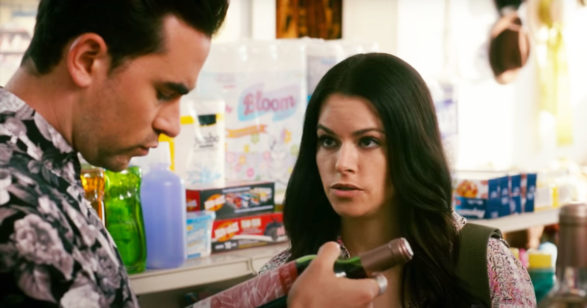
Let’s just be honest here, sexuality is complicated.  There are times that you don’t know exactly who you love and where you fit in. Having these feelings of insecurity and unsureness, and THEN trying to describe your own sexuality in a way that makes sense to others is even more complicated. In the hit series Schitt’s Creek, the main character engages in a conversation that perfectly balances the importance of openness and honesty in these conversations. This series follows a rich family of four who suddenly lose all of their money and their luxurious lifestyle. They are forced to pack up what is left of their property and move into a small town, their only remaining asset. Schitt’s Creek is the town that the father once bought the son as a joke for his birthday. That son and main character of the show is named David Rose. Presumably gay to the viewers and other characters in the show, he finds himself one night sleeping with a female and straight character named Stevie Budd. Stevie is confused, and decides to confront him while out wine shopping for an event. She hints, “Just to be clear, I am a red wine drinker, and I only drink red wine… and up until last night, I was under the impression that you too only drink red wine.” Catching on, David responds to her, “I do drink red wine. But I also drink white wine. I also have been known to sample Rosé. A couple summers back, I tried a Merlot that used to be a Chardonnay, it just got a bit complicated.” Stevie is a bit confused, and David goes on to say, “I like the wine, not the label. Does that make sense?” This iconic scene would go on to be quoted in many articles, printed on tee shirts, and used to give confidence to thousands of youth helping them come out to their parents and peers.


What is great about this use of a wine metaphor is how it is so unconventional, but so easy to comprehend. It allows even the most conservative and closed minded individual to understand that David is pansexual. And as a bonus- who doesn’t love wine? Everybody can relate to how David is describing to his sexuality through the use of this metaphor. David is able to bring forward his very complicated history of experimentation and self-discovery. He is so secure with himself and his journey, that he can calmly explain his sexuality to Stevie in an amusing way. David educates Stevie in a manner that is lighthearted but clear, and it is centered around inclusion and positivity. These conversations can be hard to have, but Stevie reacted in a way that let David come out to her while also not downplaying the importance of having “no labels” to David.

Society’s social constructs and biases make coming out a traumatic experience for so many people. How can they help not feel frightened at the possibility of having their loved ones turn on them for revealing their true self? Throughout every episode of Schitt’s Creek however, the creators challenged that idea that coming out needs to be traumatic. (As a disclaimer, they do not ever downplay the importance of that experience; having somebody working up that courage to finally be unapologetic and open with who they really are and love. There is an episode where David’s partner comes out to his parents in distress, but even then, his parents were only upset that he felt he couldn’t be honest with them about his sexuality, and not that he was actually gay.) By not making sexuality such a huge ordeal, it forces the viewers to imagine a world where there is no bias or judgment when two men are in love and holding hands in public. There is no talk among the characters of anybody’s sexuality beyond this scene, so the reaction to these couples is the same as any reaction would be to a heterosexual couple walking down the street holdings hands. This amazing directing is what sets Schitt’s Creek apart from other series. The series LBGTQ+ representation fosters an inclusive environment, free of bias and full of love and acceptance with no shame.  

Schitt’s Creek has made a difference in this world, right when we all needed it! It’s constant celebration of unconditional love and wholesome relationships between all of the characters really resonated with viewers, making it become one of the most popular and successful shows to ever hit the big screen. The series’ defiant representation of different races and sexualities throughout both acknowledge that facts that anybody in the audience who identifies with the characters are valid, and that they should be proud of themselves and love who they are. This show has won the battle of representation, and has helped pave the way in media for impenitent openness and inclusivity.