I have learned about so many new things this semester and I am grateful that I have a greater awareness of many issues in society today. One thing that is really important that I was able to learn a lot about was rape culture. Unfortunately, we did not have enough time in the semester to discuss rape culture far in depth, but we were able to discuss it for a class period, and I was still able to take away a lot. I found our in-class discussion very valuable to add to what I had learned on my own from my book for the book review.
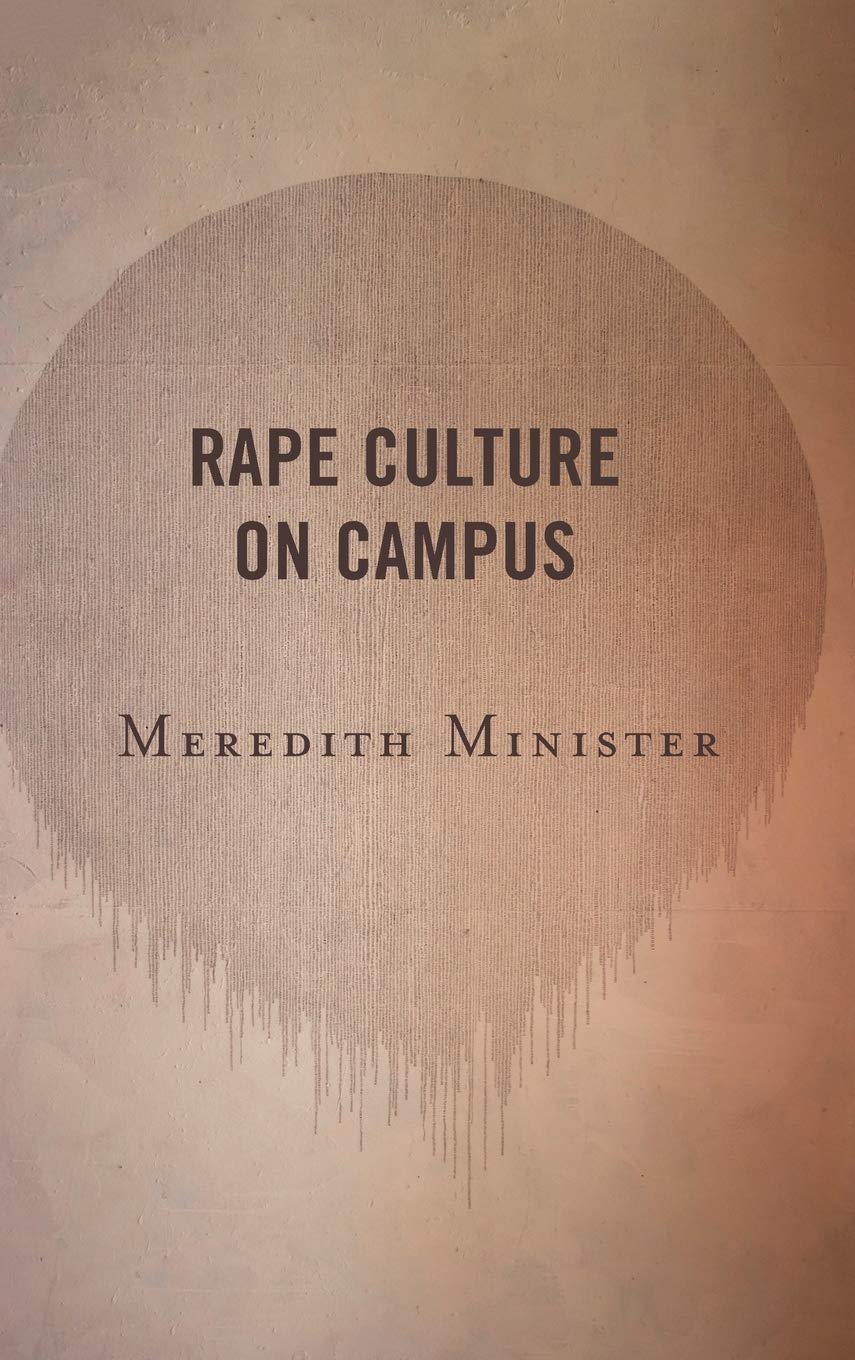
For the book review, I read the book Rape Culture on Campus by Meredith Minister. After reading this book for class, I became really invested in rape culture in general, but especially on college campuses since it is a very relevant topic to Davidson that pertains to everyone here. Through doing some digging around Davidson’s website and pulling from my previous knowledge, I, like many others on this campus, see a need for greater sexual assault resources. I would like to propose many steps that the college could take action on to implement more resources for not only sexual assault survivors, but also in preventing sexual assault on campus. Currently, I find that the prevention efforts are minimal on campus and I would like to lay out a plan for how to proceed in doing more sexual assault prevention on campus.
Currently, there is a petition going around campus online for the Davidson community to sign that would require Davidson College to hire a second Title IX coordinator, in addition to a few other measures. The link to this petition was shared via email with our entire GSS 101 class recently. I contacted the creator of the petition, and she said that currently the petition has about 750 signatures, just over half of the required number of students of 1,322. Getting this petition to its goal would be a huge step in the right direction, however it will take some time to get to that many signatures. I have looked into and thought of a few ways that staff and faculty on campus can do better to provide a safer place for students regarding sexual assault.
My first thought was in regards to the required courses on Moodle that freshmen now must complete before they arrive at Davidson. Since the Summer of 2019, freshmen have been required to complete two “Davidson Close-Up” courses that were created in association with students, faculty, and staff around campus. The two courses are Alcohol & Drugs and Sexual Health & Sexual Misconduct. I think that this is a great starting point for educating students as they begin their lives at college; however, being a current sophomore, I will tell you that I honestly do not remember most of what was in those courses. They were educational, but brief, which is beneficial to a certain extent. Unfortunately, the college does not reinforce these things once students arrive on campus. Serving as an Orientation Leader this year for the incoming freshmen, I can tell you that the discussion with the health center in general was very short, and sexual assault was rarely touched on again once everyone was all moved in. I think that not only should the Davidson Close-Up course be required each returning Summer for students, but that a large assembly should also be held for those who want to attend where people can learn more about resources, prevention efforts, and ask questions should they have any. This would create a more open and reassuring atmosphere.
In looking through the resource pages for Davidson College, I found that Campus Police actually offers Rape and Defense (R.A.D.) classes where students can learn tecniques for self-defense. I did not know this and I have never heard of this. This seems like a great program, but I had never heard of it until now and you have to contact Campus Police to learn more about taking the program. I am assuming that since I was unaware of this program, many others are as well. This led me to wonder why Campus Police does not just offer these classes for people to sign up for every couple of months? The skills learned in a class like this would be beneficial not just only on this campus, but outside of the Davidson bubble as well. I think without a class like this being offered, this is an important preventative resource that is hidden away and unused.
One other thing that I found to be problematic with the college’s response to sexual assault is that I can tell many of the web pages have not been updated in a while. On at least three different Davidson web pages, I found Georgia Ringle’s name listed as someone to contact with questions or for help. For those who do not know, Georgia Ringle worked as the main health educator on campus through the Center for Student Health and Well-Being for years. She retired this past year and now there is a temporary person filling her shoes this year, but last I heard they are still looking for someone to hire long-term. Since she is no longer employed at the college, she is another resource lost for students. These web pages can be considered out of date since they have not been updated in about six months and campus is now lacking even more outlets for students in regards to sexual assault.
To compile my thoughts, campus needs to do better to educate students yearly to keep up to date with prevention and resources for sexual assault, the health center needs to hire more staff, including a health educator, which means updating many online resources for information, and to promote more ways the college can help in protecting students. I think that all of these ideas I am proposing are practical and simple fixes; however, this will require the support of the college and require Davidson to recognize the ongoing issue at hand. By Davidson doing nothing to support students in this way, they are contributing to the continuation of rape culture on college campuses. Change and intervention will help break the cycle of rape culture around Davidson College’s small campus.
*Also, if you have not signed the petition I discussed in my proposal above, please do! Here is the link: https://forms.gle/dNhujsTScpNccRaX6
Works Cited:
Javed, Ikra. “Davidson Close-Up: Sexual Health & Sexual Misconduct.” Davidson College Digital Learning, 10 Jan. 2020, https://digitallearning.davidson.edu/digitalprojects/davidson-close-up-sexual-health-sexual-misconduct/.
“Sexual Assault.” Davidson College, https://www.davidson.edu/offices-and-services/public-safety/safety-resources/sexual-assault.
“Sexual Misconduct.” Davidson College, https://www.davidson.edu/offices-and-services/dean-students/sexual-misconduct.
“Three-Year Summary of Sexual Misconduct Reports.” Davidson College, https://www.davidson.edu/offices-and-services/dean-students/sexual-misconduct/three-year-summary-sexual-misconduct-reports.