Theory to Praxis: Steps to Changing Rape Culture at Davidson College

I have learned about so many new things this semester and I am grateful that I have a greater awareness of many issues in society today. One thing that is really important that I was able to learn a lot about was rape culture. Unfortunately, we did not have enough time in the semester to discuss rape culture far in depth, but we were able to discuss it for a class period, and I was still able to take away a lot. I found our in-class discussion very valuable to add to what I had learned on my own from my book for the book review. 

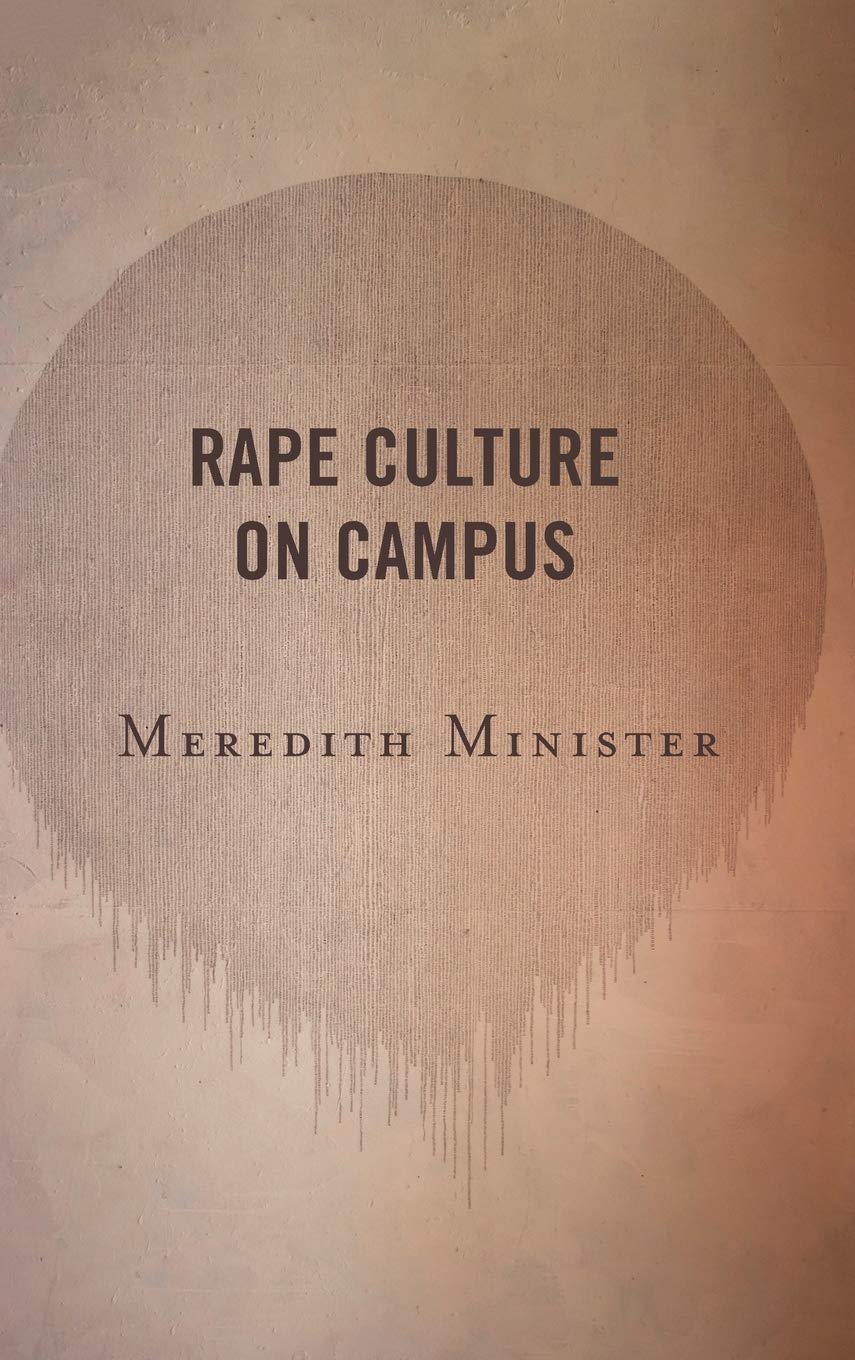
For the book review, I read the book Rape Culture on Campus by Meredith Minister. After reading this book for class, I became really invested in rape culture in general, but especially on college campuses since it is a very relevant topic to Davidson that pertains to everyone here. Through doing some digging around Davidson’s website and pulling from my previous knowledge, I, like many others on this campus, see a need for greater sexual assault resources. I would like to propose many steps that the college could take action on to implement more resources for not only sexual assault survivors, but also in preventing sexual assault on campus. Currently, I find that the prevention efforts are minimal on campus and I would like to lay out a plan for how to proceed in doing more sexual assault prevention on campus. 

Currently, there is a petition going around campus online for the Davidson community to sign that would require Davidson College to hire a second Title IX coordinator, in addition to a few other measures. The link to this petition was shared via email with our entire GSS 101 class recently. I contacted the creator of the petition, and she said that currently the petition has about 750 signatures, just over half of the required number of students of 1,322. Getting this petition to its goal would be a huge step in the right direction, however it will take some time to get to that many signatures. I have looked into and thought of a few ways that staff and faculty on campus can do better to provide a safer place for students regarding sexual assault. 

My first thought was in regards to the required courses on Moodle that freshmen now must complete before they arrive at Davidson. Since the Summer of 2019, freshmen have been required to complete two “Davidson Close-Up” courses that were created in association with students, faculty, and staff around campus. The two courses are Alcohol & Drugs and Sexual Health & Sexual Misconduct. I think that this is a great starting point for educating students as they begin their lives at college; however, being a current sophomore, I will tell you that I honestly do not remember most of what was in those courses. They were educational, but brief,  which is beneficial to a certain extent. Unfortunately, the college does not reinforce these things once students arrive on campus. Serving as an Orientation Leader this year for the incoming freshmen, I can tell you that the discussion with the health center in general was very short, and sexual assault was rarely touched on again once everyone was all moved in. I think that not only should the Davidson Close-Up course be required each returning Summer for students, but that a large assembly should also be held for those who want to attend where people can learn more about resources, prevention efforts, and ask questions should they have any. This would create a more open and reassuring atmosphere. 

In looking through the resource pages for Davidson College, I found that Campus Police actually offers Rape and Defense (R.A.D.) classes where students can learn tecniques for self-defense. I did not know this and I have never heard of this. This seems like a great program, but I had never heard of it until now and you have to contact Campus Police to learn more about taking the program. I am assuming that since I was unaware of this program, many others are as well. This led me to wonder why Campus Police does not just offer these classes for people to sign up for every couple of months? The skills learned in a class like this would be beneficial not just only on this campus, but outside of the Davidson bubble as well. I think without a class like this being offered, this is an important preventative resource that is hidden away and unused. 

One other thing that I found to be problematic with the college’s response to sexual assault is that I can tell many of the web pages have not been updated in a while. On at least three different Davidson web pages, I found Georgia Ringle’s name listed as someone to contact with questions or for help. For those who do not know, Georgia Ringle worked as the main health educator on campus through the Center for Student Health and Well-Being for years. She retired this past year and now there is a temporary person filling her shoes this year, but last I heard they are still looking for someone to hire long-term. Since she is no longer employed at the college, she is another resource lost for students. These web pages can be considered out of date since they have not been updated in about six months and campus is now lacking even more outlets for students in regards to sexual assault. 

To compile my thoughts, campus needs to do better to educate students yearly to keep up to date with prevention and resources for sexual assault, the health center needs to hire more staff, including a health educator, which means updating many online resources for information, and to promote more ways the college can help in protecting students. I think that all of these ideas I am proposing are practical and simple fixes; however, this will require the support of the college and require Davidson to recognize the ongoing issue at hand. By Davidson doing nothing to support students in this way, they are contributing to the continuation of rape culture on college campuses. Change and intervention will help break the cycle of rape culture around Davidson College’s small campus. 

*Also, if you have not signed the petition I discussed in my proposal above, please do! Here is the link: https://forms.gle/dNhujsTScpNccRaX6

Works Cited:

Javed, Ikra. “Davidson Close-Up: Sexual Health & Sexual Misconduct.” Davidson College Digital Learning, 10 Jan. 2020, https://digitallearning.davidson.edu/digitalprojects/davidson-close-up-sexual-health-sexual-misconduct/. 

“Sexual Assault.” Davidson College, https://www.davidson.edu/offices-and-services/public-safety/safety-resources/sexual-assault. 

“Sexual Misconduct.” Davidson College, https://www.davidson.edu/offices-and-services/dean-students/sexual-misconduct. 

“Three-Year Summary of Sexual Misconduct Reports.” Davidson College, https://www.davidson.edu/offices-and-services/dean-students/sexual-misconduct/three-year-summary-sexual-misconduct-reports.

Feminist Mix-Tape: “Kings and Queens” by Ava Max

Image of Ava Max on a throne from the music video for her song “Kings and Queens”

The song “Kings and Queens” by Amanda Ava Koci, known better as Ava Max professionally, is a feminist song of empowerment. Max compares the positions of kings and queens and how they are differently perceived by society. She points out the inequalities and expectations of women compared to men. In addition, she sings that women are much more capable of things than men. Women can rule and lead others, control their emotions unlike many think as a result of stereotypes, and give birth. Women are strong and amazing and Max makes sure that this is known to the listener with her analogy containing royalty. 

Continue reading “Feminist Mix-Tape: “Kings and Queens” by Ava Max” →

Book Review: *Rape Culture on Campus*

Meredith Minister’s Rape Culture on Campus Book Cover

Within college campuses, rape culture is a prominent issue that is often addressed on a surface level, leading to little or no change in the occurrence of sexual assualt and sexual violence. Meredith Minister breaks down how rape culture is continually perpetuated on college campuses and offers solutions to reducing the prominence of sexual assualt on campus in her book, Rape Culture on Campus. Minister emphasizes that not only is rape culture an issue that requires a change in ideolgies and how we approach sexual assault prevention, but also that rape culture is partially a result of binaries that often exclude gender, sexual, racial, and ethnic minorities. 

Minster begins her book by introducing how she defines rape culture, specifically saying that rape culture is “a socially accepted pattern that legitimates violence to police socially nonconforming activities, including expressions of sexuality and gender” (1). She equates the issue of rape culture existing in the first place to the way we view society and the people within that society. Colonial ways of thinking about gender and sexuality exacerbate the occurence of rape culture in society. She expands on her definition of rape culture by breaking the causes and continuation of rape culture down into pieces. Minister’s writing provides an up close look at how rape culture has defined college campuses and how colleges can do better to break the cycle of continuing the voilent pattern. Mininter draws on her educational expertise to include how purity culture, religion, and autonomy, in addition to policing and trigger warnings, do not assist in interrupting the rape culture pattern on college campuses. 

From a Pantsuit to They/Them: How “One Day at a Time” Promotes Everyday Conversations on Gender and Sexuality

Main Characters of One Day at a Time. From left to right: Alex, Lydia, Penelope, Schneider, and Elena.

Are you looking for a new show to watch where you can get your fill of comedy and strong feminism? No?…Um, uh, okay then; you probably do not need to continue reading this then. Yes?…Well then One Day at a Time is definitely the show for you. Based off of the original show One Day at a Time that first aired in the 70s, the modern One Day at a Time (2017-2020) is available on Netflix and brings humor, feminism, sexuality, and family all together. The show follows a Cuban-American family in California, which includes the grandmother who immigrated from Cuba, Lydia, played by the stunning Rita Moreno, the daughter of the grandmother, Penelope, and then the daughter’s two children, Elena and Alex. It is so hard to pick one episode of this show that displays feminism and social justice best because every episode of the show introduces or addresses a large variety of modern issues elegantly. For this reason, I will highlight a few episodes from the show that display how modern and influential the show is. Honestly, explaining just one episode does not serve the show enough justice for how significant it is. 

The very first episode of this Netflix original show introduces some of the main characters that appear throughout the show’s duration, including the mom, Penelope, and her daughter, Elena. Elena is fifteen years old at the beginning of the show and the first episode focuses on her opposition to having a quinceañera. Elena is opposed to having a quinceañera because of its misogynistic roots and does not want to be put on display like a show horse (and personally, I cannot blame her for feeling that way). This is very upsetting news to her family as they fully embrace their Cuban roots because they are proud, as they should be. While Penelope and Lydia try to get Elena to embrace her Cuban roots with them, Lydia also tries to tell Penelope that she does not need the antidepressants she has been prescribed. Lydia is a little old fashioned and does not agree with the use of antidepressants. Going against her mother’s opinion, Penelope eventually does take the antidepressants for the betterment of her mental health. This is promising since being a single mother, and a non-white single mother especially, is not easy to say the least. Elena does eventually decide to have a quinceañera by the end of the episode to please her family, as long as some things are done to Elena’s liking, such as what the dress she will wear will look like. Lydia eventually makes her a pantsuit to wear to her quinceañera, and it is a truly touching moment later in season one. 

Elena in her school uniform at home.

Further into the first season, the show addresses sex, porn, and sexuality. When porn, a video of a threesom specifically for those who are curious, is found on Alex’s computer, the household breaks into chaos on what to do. Penelope approaches Alex about this, but he remains adamant that it was not him watching the porn. We later learn in the episode that it was actually Elena watching it on Alex’s computer. Penelope tries to give Elena the sex talk so she is prepared if things begin to go further with her boyfriend at the time, but in the process, Elena comes out to her mom as gay. Penelope is surprised, but supportive (phew, thank god). Side note: it is also mentioned in that same episode that Elena loves to read Autostraddle articles, so yay, we have made it to television everyone (and honestly I think she has got good taste in blogs)! Elena being honest to her mother and coming out shows bravery while Penelope approaching Elena shows motherly compassion, all while tying in humor in addition to expression of sexuality. 

In season two, Elena invites over a friend of video gamers who introduce themselves to the rest of the family with their preferred pronouns, confusing Penelope and Lydia as to why the teenagers are doing this. One friend of Elena’s, Syd, uses they/them pronouns. Elena’s friends introducing themselves with their pronouns casually normalizes this concept for the audience and provides a learning opportunity on gender for Elena’s family as well. As season two continues, Syd and Elena begin to grow closer to each other, eventually forming a relationship together. The two are very awkward with each other at first when they both learn that the other is gay, but it is a joyous and funny moment well written into the episode. Their relationship hits bumps like any relationship does, but it also displays Elena still figuring out her sexuality and who she is as an openly gay person now. Syd has had girlfriends before, but Elena has not and watching Elena learn to be authentically herself is an encouraging storyline. Syd being supportive of Elena discovering who she is is another lesson with sexuality seen in the show. One Day at a Time brings many modern issues into play and goes deeper than the surface level, taking many factors into account. It hits on many difficult subjects, but it is all portrayed tastefully with humor added in. 

Elena and Syd both learn that the other is gay in this awkward, but funny scene from season two.

These are only a few of the many topics that are crucial to today’s society that this show addresses, without giving too much away for those interested in watching the show now. This show is honest and displays how sometimes feminism is not what everyone understands, however, when one feels strong enough to educate others around them, like Elena, then these ideas continue positively. Elena is a really important part to introducing and addressing many social justice issues head on through being intelligent and well educated. One Day at a Time addresses queerness, sexuality, feminism, gender, heritage, race, class, and so much more. This show is amazing, funny, and progressive, and I highly recommend it be a show that you add to your Netflix list (at least for those who said yes at the beginning of this article anyways, and if you said no, why did you still read this far?). One Day at a Time tells us that educating others on today’s issues, including feminism and sexuality is often not a simple task. However, taking the time to explain ideas thoroughly is worth it in the end for both the ones who care deeply enough to teach others, and the ones that listen and are just beginning to learn.

Written for Autostraddle | www.autostraddle.com

Works Cited

Kellett, Gloria Calderon, and Mike Royce. One Day at a Time, Netflix, www.netflix.com. 

Lawler, Kelly. “Isabella Gomez as Elena Alvarez in ‘One Day at a Time’.” USA Today, 23 Jan. 2017, www.usatoday.com/story/life/tv/2017/01/23/one-day-at-a-time-coming-out-story-elena-netflix/96787436/. 

“ME GAY TOO – One Day At a Time Elena and Syd.” Youtube, Netflix, 2018, www.youtube.com/watch?v=GFRZXDXlHek. 

Poniewozik, James. “From Left, Marcel Ruiz, Rita Moreno, Justina Machado, Todd Grinnell and Isabella Gomez in ‘One Day at a Time,’ on Netflix.” The New York Times, 4 Jan. 2017, www.nytimes.com/2017/01/04/arts/television/review-the-2017-class-divide-in-a-new-one-day-at-a-time.html.