Discovering the Secrets of Aristotle

Aristotle and Dante Discover the Secrets of the Universe is a young-adult fiction novel written by Benjamin Alire Sáenz, a Mexican American author. The book was published on February 21st, 2012, and was later adapted into a movie released on September 8th, 2023. The story follows two Mexican American teenagers living in El Paso, Texas in 1987

www.history.com/topics/1980s/hiv-aids-crisis-timeline: Discovering the Secrets of Aristotle

Read the book instead of watching the movie, it’s significantly better.

Mulan: Warrior or Wife?

Similar to most girls, I was captivated by Disney princesses’ perfectly styled hair, the way their dress moved while they danced the night away, and of course, their happy ending with the prince of every girl’s dreams. What I failed to realize was that societal norms, such as expectations of gender and sexuality, were being covertly imposed upon me. One example of this is the Disney film Mulan, which tells the story of a girl who disguises herself as a man to take her father’s place in the Imperial Army, ultimately saving his life and the entire nation of China. Mulan’s heroism and nonconformity inspired many girls, including myself, teaching us to defy expectations and be true to ourselves. However, while conducting a deeper analysis of this film, I recognized its shortcomings and accomplishments in the execution of these messages. 

A central topic in this film is gender and the way society portrays it. The gender roles of the depicted time period and culture are made evident early on; women are expected to become wives, while men are expected to be warriors. Mulan challenges these standards by posing as a man so she could fight in the Imperial Army. In the scene titled, “Becoming a Warrior”, Mulan alters her appearance by cutting her hair, wearing armor that broadens her figure, and binding her breasts, which is revealed later in the film. This shows the emphasis that is placed on appearance when distinguishing between genders. Moreover, it demonstrates that gender is both culturally implemented and fluid. Through these minimal changes, Mulan was able to pass as a man and conceal her femininity, despite being raised within rigid gender roles. This film succeeds in showing the importance of discovering and embracing one’s identity, even if that entails defying societal gender norms. 

A snapshot of Mulan cutting her hair from the scene “Becoming a Warrior” (link: https://www.youtube.com/watch?v=4Magj6z-Ex8 ).

Another idea that the film Mulan explores is gender roles in terms of sexuality. The strict and traditional gender norms of this society are also present within their romantic relationships. Heterosexual, cis-gendered relationships are the only ones present, and the notion of a dominant male with a submissive woman is emphasized. For example, in the song “A Girl Worth Fighting For”, the male soldiers discuss their ideal wife and claim that their motivation for fighting derives from the desire to obtain a partner who fits these submissive standards. Even though each man has different requirements, they all agree that they want a partner who will praise them and think they “have no flaws”. All while failing to consider other attributes, such as the intellectual capacities and ambitions of their future wives. Through this, the film reinforces the power dynamic and ideals of a heterosexual relationship. It appoints the man as the authority figure capable of molding his partner and the woman as the subordinate with no noteworthy characteristics beyond her ability to please her husband.

“A Girl Worth Fighting For” with Lyrics

Possibly the most complex reference to gender and sexuality in this film is the portrayal of the relationship between Mulan and her love interest, Li Shang. Their connection slowly develops throughout the movie; however, it begins while Mulan is disguised as a male soldier. Some argue that their bond is purely platonic until her true identity is revealed. While others argue that there is underlying sexual chemistry from the start, thus indicating a dynamic outside of heterosexual norms. Many overlook the intricacy of this trope because the audience is aware that it is a relationship between a man and a woman, despite Mulan’s misleading appearance. The creators of Mulan include Li Shang’s homosexual attraction towards Mulan’s male persona, recognizing that it would avoid controversy and be perceived as heteronormative. 

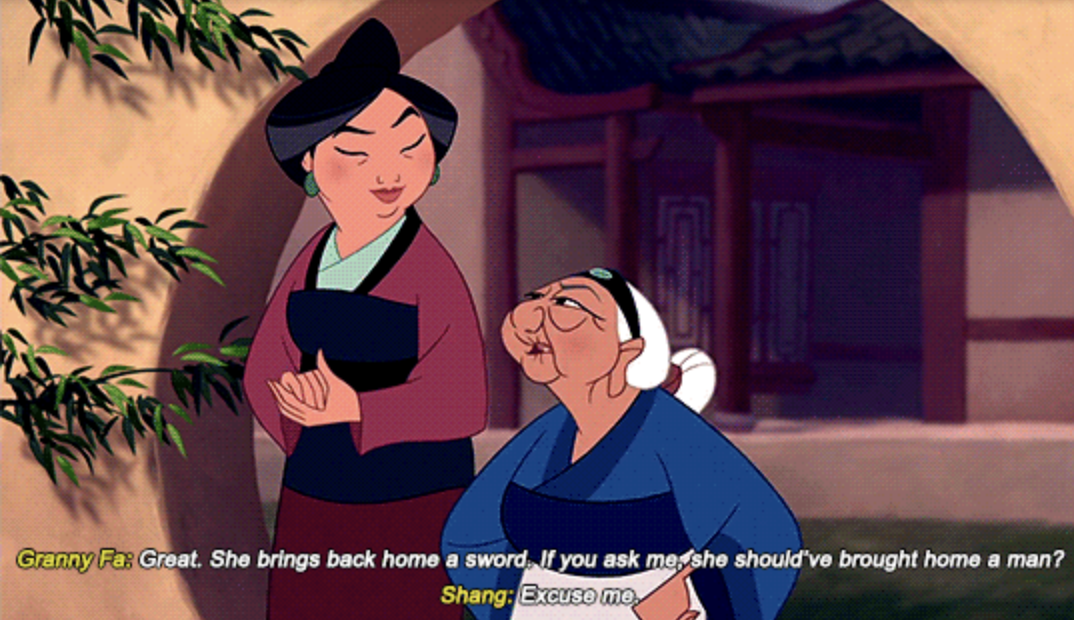
Another way to analyze the romantic storyline of this movie is how it affects Mulan’s nonconforming narrative. Mulan is raised within a society where her only role is to become a wife; instead, she challenges these norms by excelling in battle, a traditionally male-dominated realm. She goes through extensive efforts to carve her own path and reject the expectations of her culture, yet her conquest ends with a typical “fairytale ending”. In film’s closing scene, Mulan’s grandmother, Grandmother Fa, states, “Great. She brings home a sword. If you ask me, she should’ve brought home a man.” Shortly after Grandmother Fa’s line, Li Shang appears at Mulan’s home, implying the continuation of the relationship between Mulan and him. This scene not only undermines Mulan’s accomplishments as an individual, but it also fortifies the traditional gender roles that the movie claimed to oppose.  

A snapshot of Grandmother Fa’s line from the closing scene. 

The film Mulan can be considered as socially progressive and inspirational to its young female audience, due to its message that girls can accomplish the same feats as boys. However, it falls short of successfully defying societal norms. The consequence of this failure is that it validates the temporary nonconformity of an individual with the expectation that they will revert back to societal standards, such as participating in a heteronormative relationship.

Can a Girlboss really be a Tradwife?

Growing up my own mother was a stay-at-home mom and she worked incredibly hard. More importantly, she chose that lifestyle when she and my dad decided to have children. I am beyond grateful and extraordinarily privileged to have had a mother who was at home when I got home from school, around to take me to sports practices, and take care of me when I was sick.

Picture of a social media tradwife, posting for her followers

According to Google, a “tradwife (a neologism for traditional wife or traditional housewife) is a woman who believes in and practices traditional gender roles and marriages.” Traditional refers to performing actions like women did in the 20th century, when they were seen primarily as caretakers and cooks for the family.

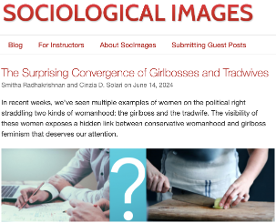
This view seems to be backwards from the modern 21st century view on what women are capable of doing both as mothers and as professionals. In no way do I think that it is bad or wrong to want to be a tradwife but, there is one issue I have with them and that is what the article The Surprising Convergence of Girlbosses and Tradwives aims to convey.

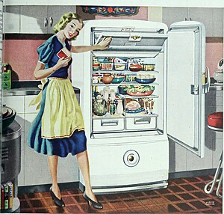
Example of the style of women tradwives are attempting to replicate

This article links the tradwife to the girlboss, which is a woman who is hyperfocused on her career. You might be asking how would a tradwife, a woman who is primarily taking care of her husband, children, and house, also be able to be a girlboss? Well, like my introduction to tradwives, many opt to film their tasks or thoughts and post them on social media. The article states that being a tradwife in modern society is nothing like the 20th century lifestyle.


“We might assume that tradwives hearken back to an earlier “backward” mode of femininity and marriage. But this way of being in the world is unmistakably modern because it involves “choice” and entrepreneurship. It is not enough for a tradwife to simply focus on her husband and kids, she must be entrepreneurial about it. She must blog about it, vlog about it, become an influencer. This is where the “girlboss” mentality comes in.”

(The Surprising Convergence of Girlbosses and Tradwives 2024)

The quote above highlights another aspect where modern tradwives are problematic. As soon as a tradwife becomes an influencer, her main objective has moved from caring for a family to influencing their following and pushing their ideals onto others. Because these women chose to utilize social media and display to the world their ideal way of life, they are using their influence as a powerful tool. They still attempt to attain the unrealistic beauty standards that are concurrent with the “backward” mode of femininity, yet they feel the need to post about it on social media as well. Social media tradwives, like the one in the screenshot before, preach putting family above all else, but at what point does the necessity to cater to a following dictate the actions of an influencer? Moreover, the need to both be entrepreneurs and caretakers and mothers takes away crucial time and energy necessary for each role. Being a social media influencer takes the demands of a full-time job by having to record, re-record, edit videos, brainstorm new ideas, etc. To balance those demands with the already strenuous lifestyle of taking care of a family is counterproductive.

I think that this article is a great read for those that care about the portrayals and standards of women in modern society. It highlights the backwards thinking of social media tradwives, who inherently believe in strong family centric and patriarchal values, but still feel compelled to post their lifestyle on social media. The article dives further into the reasons many women have to become tradwives, especially for women of color. The article cites black tradwives as saying, “we have decided it’s way too exhausting to run the family and corporate America at the same time” (Girlbosses and Tradwives 2024). There is definitely truth to this statement, especially since women of color are valued less in the labor market. For these women, who are paid less and discriminated against in the corporate workplace, the appeal to live as a tradwife is apparent.

Overall, the overlap between tradwife and girlboss is a real phenomenon in the modern age of social media. But when and where is the blurry line drawn between the two labels and at what point do the goals of and priorities of one overtake the other?

Feminist Mixtape: Lizzo’s “Like A Girl”

When I first heard about this assignment, I immediately thought of Lizzo’s “Like A Girl.” To me, it is the epitome of a feminist anthem that proclaims the power of women.

Woke up feelin’ like I just might run for President
Even if there ain’t no precedent, switchin’ up the messaging
I’m about to add a little estrogen
Buy my whip by myself
Pay my rent by myself

Only exes that I care about are in my fucking chromosomes
I don’t really need you, I’m Macaulay Culkin home alone
Bad bitch, diamonds in my collarbone
Buy my whip by myself
Pay my rent by myself

This opening verse is an embodiment of female power. In Lizzo’s eyes, there’s never been a female president—so what? There needs to be, and I can do it! It is incredibly self-empowering and asserts the independence of women. Who needs a man to help pay rent? I’m doing just fine on my own.

Sugar, spice, and I’m nice
Show me what you’re made of
Crazy, sexy, cool, baby
With or without makeup
Got nothing to prove
But I’ma show you how I do

I really enjoy these lyrics because they take the common stereotypical image of a woman or belief of what women should be—“sugar, spice, and everything nice”—and both accept it and turn it on its head. Lizzo asserts that she is sugar, spice, and nice, but also crazy, sexy, and cool—with or without makeup. This is fighting back against the idea that women are only beautiful with makeup or that makeup is a method to cover insecurities or build confidence. Lizzo is saying that she wears makeup because she wants to, not because she needs to—she’s sexy without it too and she doesn’t have to prove it to you.

Find me up in Magic City bustin’ hundreds by the bands
And I throw it like a girl
Throw it, throw it like a girl
Hangin’ out the 750
Feelin’ bossy in my city
‘Cause I run it like a girl
Run it, run it like a girl
I work my femininity
I make these boys get on their knees
Now watch me do it, watch me do it
Look it, look it, I’ma do it
Like a girl (like a girl)

In modern culture, the phrase “like a girl” has a negative connotation: if you throw like a girl or hit like a girl, you’re doing it weakly or daintily. Lizzo is arguing the opposite. She’s painting her “throwing it and running it” like a girl as powerful and strong, and perhaps even surpassing the power and strength of boys as she sings “I make these boys get on their knees.”

Shoot the car through the fire, light the kerosene (we can do it)
Lauryn Hill told me everything is everything (we can do it)
Serena Willy showed me I can win the Wimbledon (we can do it)
Put me on a pedestal
Bet on me, bet I will

Here, Lizzo is citing specific women as inspiration for her self-empowerment. She mentions Lauryn Hill, who is often regarded as one of the most influential musicians of her generation and one of the greatest rappers of all time, and Serena Williams, who is among the greatest tennis players of all time, as encouragement for her realization of what she can do. The background vocals also chant “we can do it,” a reference to Rosie the Riveter’s popular phrase that asserts female empowerment.

So if you fight like a girl, cry like a girl
Do your thing, run the whole damn world
If you feel like a girl then you real like a girl
Do your thing, run the whole damn world
If you fight like a girl, cry like a girl
Do your thing, run the whole damn world
If you feel like a girl then you real like a girl
Do your thing, run the whole damn world

This echoes the earlier positive reframing of the phrase “like a girl.” I also especially like the line “If you feel like a girl then you real like a girl.” To me, this is an intentional effort to include trans women in the conversation, saying that trans women are also real women and are just as powerful.

Overall, this song is a wonderful feminist anthem that encourages women to claim their rightful power and strength. Its message is that of self-empowerment and self-love. I highly recommend that everyone listen to it whenever they need a good confidence boost.

Sexing The Body: Questioning The Binary

In our current political climate, Conservative pundits spew MUCH misinformation regarding gender and its relation to sex. The common belief in the conservative western world is that sex and gender are interchangeable and distinctly binary. The progressive viewpoint, which seemingly contradicts that of the conservatives, accepts the gender binary as a social construct but maintains that the sex binary is indeed embedded in reality. Author, Feminist, and Biologist Dr. Anne Fausto-Sterling challenges these beliefs in her book Sexing the Body. The underlining question of the book: mainstream political and medical discourse tends to agree on the sex binary (male/female), is this rooted in biological truth? 

Dr. Anne Fausto-Sterling is a renowned American sexologist who pioneered the Anti-Binary ? movement. She has written extensively on the topic of sex and gender, including several books and opinion pieces in multiple prominent newspapers. Due to her scientific background, Fausto-Sterling provides a unique argument for HUMAN REJECTION OF THE SEX BINARY, WHICH HAS GROWN MUCH BROADER AND BIGGER SINCE SHE PUBLISHED THE FIRST EDITION IN XX. Fausto-Sterling is best known for her work “The Five Sexes,” which calls for broadening the sex binary to include three additional categories. https://www2.kobe-u.ac.jp/~alexroni/IPD%202016%20readings/IPD%202016_3/FAUSTO_STERLING-2000-The_Sciences%205%20sexes%20revisited.pdf In Sexing The Body, Fausto-Sterling analyzes research and medical practices (1700s-Present) related to reinforcing the sex binary. As a feminist and biologist, Fausto-Sterling examines THIS research through scientific and social lenses. Her analysis follows a similar pattern, a summary of the research question, an explanation of the actual study and its findings, and a lengthy examination of its questionable conclusions. 

Fausto-Sterling opens with an issue relevant to contemporary debate; the classification of female athletes. Until the late 1960s, Olympic woman athletes seeking to verify their sex for competition were asked to “parade naked in front of a board of examiners” (3). This blatant violation of personal health reinforces Fausto-Sterling’s belief in the sex binary. If sex is confirmed through visual inspection — “Breasts and a vagina were all one needed to certify one’s femininity” (3) — then is it impossible that the binary can exist; because a person could show both ovarian and testicular tissue. Through visual inspection, the board is not conforming to the actual sex of the subject. It is instead comparing the subject to their social understanding of a woman. Fausto concludes, “We may use scientific knowledge to help us make the decision, but only our beliefs about gender—not science—can define our sex” (5). Identifications have long been glorified assumptions, and biological truths are at odds with the male/female binary. 

Fausto-Sterling’S rejection of the male/female binary is at odds with most scientific and medical beliefs. Fausto-Sterling argues that doctors and scientists alike are not looking to address sex from a truthful and biological standpoint but are instead REVISE a product of fear and “deep confusion that arises when it [sex] can’t be easily determined” (30). The “scientific” classification of sex is additionally meant to support the “natural dominance of male over female hormones” (164). Inter-sex or hermaphrodite persons are at odds with this scientific community. Today children born WITH ” “either/or—neither/both” GENITALS—a fairly commonNOT UNCOMMON? phenomenon—usually disappear from view because doctors “correct” them right away with surgery.” (31). Fausto-Sterling argues that INTERSEX persons pose such a risk to our societal structure at large because we rely on the binary system. But if we eliminate those at odds with our biologically “correct” system, isn’t it biologically incorrect? Conservative movements point to the idea of “biology” as a way of endorsing the two-sex, two-gender NORM. However,  a further dive into the reality of biology reveals that regularly and naturally, people defy these classifications. Fausto-Sterling asks that we move to a medical system that “permits ambiguity to thrive” (101). There are, without a doubt, variations of sex that exist; it is time our medical practices accept them. 

The author includes studies regarding hormonal research to demonstrate the relationship between respected biological studies and the pervasive and unfounded assumption of two sexes. Researchers  “never questioned the fundamental assumption that there are only two sexes because their goal in studying intersexuals was to find out more about ‘‘normal’’ development” (46). Fausto-Sterling underlines that the majority of intersex and sex hormone research is reliant on the assumption of a sex binary and that this binary is a “false dichotomy” (27). Researchers and doctors sought to correct the confusion around intersex folk by attributing them to the “cultural conceptions of maleness” (59) or femaleness and carrying out medical procedures that endorsed the dichotomy. Fausto-Sterling comes to two bold and well-supported claims: 1. The sex binary is not biologically accurate 2. the medical community and medical research have never questioned the legitimacy of the sex binary and only seek to reinforce it. 

Fausto-Sterling is strongest in her understanding and critique of scientific processes, but her piece lacks in other areas. First, Fausto-Sterling is thoughtful and diligent in her writing regarding intersex persons; but her writing regarding transgender and binary persons seems like an afterthought. It appears that Fausto-Sterling is most concerned with medical discrimination during unwanted procedures (intersex) but pushes aside alterations of sex that are requested (transgender) and how they experience similar discrimination. Secondly, Fausto-Sterling’s strength is indeed her scientific exploration of the topic. But the pages of complex explanations, which I am certain adequately back up her claims, are dull and far from engaging. Lastly, FAILS to grapple with the racial implications of a failed medical system. Fausto-Sterling’s exploration of intersex medical intervention is overwhelmingLY white-centric, and the author fails to mention centuries of sterilization against the black community Fausto-Sterling’s inability to analyze her position from a radicalized lens severely limits the credibility of her argument 

Although Fausto-Sterling lacks in certain areas, it is difficult not to applaud her work. Fausto-Sterling challenges mainstream academia; she is unapologetic in her UNPOPULAR? beliefs and successfully backs them up. It is her dual credentials that provide such a convincing argument. Her ability to critique historically accepted research from a feminist and biological standpoint provides multidisciplinary reasoning. Fausto-Sterling provides diagrams that are especially helpful in understanding the research being explained — specifically the rat diagrams and pictures regarding natural sexual interactions. Fausto-Sterling’s plea for a more accepting model, which refuses the sole dichotomy of male/female, provides the reader with a conclusive answer to the issue at hand; and a system that enables naturally inter-sexual people to exist is far from controversial. Fausto-Sterling is uniquely successful in de-radicalizing a concept — abolishing the sex binary —  that can, at times, appear TOO radical. 

I strongly recommend Sexing The Body to every reader, especially those interested in the history of medicine. The book is somewhat time-consuming but yields life-changing and necessary information. Before I read this book, I, too, subscribed to the mainstream belief in the sex binary and brushed inter-sex people off as medical enigmas. This book has taught me that the non-female/male sexes exist naturally in our world and inherently contradict the two-sex model. I am aware of the controversy surrounding the claim Fausto-Sterling is making, and for this reason, I doubt this literature will find its way into MANY K-12 schools; this underscores the necessity to seek out information outside of what is handed to us and question what is. Sexing The Body will do just that. 

Sources:

  1. “Home – Dr. Anne Fausto-Sterling.” Dr. Anne Fausto-Sterling, 3 Oct. 2016, www.annefaustosterling.com.

2. “Sexing the Body: Gender Politics and the Construction of Sexuality: 9780465077144: Fausto-Sterling, Anne: Books.” Sexing the Body: Gender Politics and the Construction of Sexuality: 9780465077144: Fausto-Sterling, Anne: Books, 30 Nov. 2000, www.amazon.com/Sexing-Body-Politics-Construction-Sexuality/dp/0465077145.

Book Review: The Tragedy of Heterosexuality

The narrative surrounding queerness in society today includes overcoming challenges, facing daily adversities, and experiencing more hardships than heterosexual peers. The Tragedy of Heterosexuality breaks this illusion of heterosexuality being easier than homosexuality and provides sympathy for those oppressed in heterosexual relationships. Jane Ward suggests that straightness is a means for people to access cultural and institutional rewards. However, while heterosexuality offers this privilege, it continues to be a site of oppression, violence, disappointment, and discrimination for women. Heterosexuality, from a queer lens, is just a ‘fetish for normalcy.’ Through this book, Ward reveals how heterosexuality is rooted in concepts of patriarchy, male domination, and toxic masculinity, to name a few. Ward realized she was ‘crying queer tears for straight people.’ Hence, through her research and personal experiences of being a lesbian feminist, Ward examines how queer relationships are healthier and more empowering than straight ones. According to her, ‘It’s not that it gets better for queer people; it’s that heterosexuality is often worse.’

While Jane Ward is best known for her 2021 PROSE Award Winning book, The Tragedy of Heterosexuality (New York University Press, 2020), she has written several outstanding books, including the 2016 Lambda Literary Award Finalist- Not Gay: Sex Between Straight White Men (NYU Press, 2015), and Respectability Queer: Diversity Culture in LGBT Activist Organisations. In addition, her research has been featured in The Guardian, Huffington Post, BBC, and The New York Times, to name a few. Apart from being an author, Ward is a professor, urban gardener, baker, and parent to what she likes to call ‘one human child, one potbelly pig, nine chickens, and one cat.’ Ward has also cofounded the Altadena/Pasadena chapter of Showing Up for Racial Justice. She received her Ph.D. in sociology in 2003 from the University of California Santa Barbara and is now a Gender and Sexuality Studies professor at the University of California Riverside. Her teaching and writing focus on feminism, queer, and heterosexuality studies.

The tragedy of heterosexuality is caused by what Ward has termed the misogyny paradox. The misogyny paradox is where ‘boys’ and men’s desire for girls and women is expressed within a broader culture that encourages them to hate girls and women.’ (pp. 25-26) Hence, the misogyny paradox promotes stereotypical roles in heterosexual relationships, such as the dominance of men and the submission of women. Ward exposes how this oppresses straight women as ‘their sexual relationships with men have been maintained by force, both through cultural propaganda targeting girls and women and more directly through sexual assault, incest, compulsory marriage, economic dependence, control of children, and domestic violence (p. 3). The situation is worse because straight men and women romanticize this unequal gender binary.

Their romantic and erotic attachments to the misogyny paradox give rise to an entire industry of self-help books, marriage and relationship counselors, pick-up artists, and seduction coaches. These industries encourage toxic masculinity and promote the idea that women want men to take the lead and be the decision-makers in the relationship. Women are objectified, and the ideal woman is created and viewed through the male gaze- waxed, shaved, toned, etc. Hence, Ward suggests that the ‘key difference between straight culture and queer culture in this regard is that the latter does not attribute these destructive behaviors to a romantic story about a natural and inescapable gender binary.’ (p. 27). Ward proposes the concept of ‘deep heterosexuality’ as the solution for this ‘tragedy.’ Deep heterosexuality is a ‘framework for honoring and preserving what straight people experience as fulfilling about hetero sex and straight culture and for pushing further and deeper in these pleasurable hetero directions’ (p. 159). Ward pushes for the expansion of heterosexual attraction to include the sexual vulnerability of men and the humanity of women. Hence, “straight men do not need to be queered; they need to learn to like women” (158)

What I admire most about Jane Ward’s writing is her unapologetic honesty, blunt criticism, and matter-of-fact approach to controversial topics. She rips off the band-aid of ignorance and forces us to see the pain caused by the oppression and inequalities associated with heterosexuality. Her strength lies in her ability to voice deeply personal opinions while supporting them with concrete empirical evidence. Her in-depth analysis of the historical context of the self-help industry and marriage counseling in the 1900s, the deep-dive into the pick-up artist and seduction industry, the critique of books such as Men Are from Mars, Women Are from Venus (1992) make it impossible to turn a bind eye to her argument. In addition, ward does a great job highlighting and examining the intersectionality of race and sexuality, a topic often overlooked. For example, she talks about how heterosexuality is often the only privilege black women have, which they cannot afford to lose, regardless of the oppression and injustice they might face within it. She also cites the work of the South Asian American feminist scholar Shamita Das Gupta, who highlights how immigant women conceal their husbands’ violence to project an ‘unblemished’ image of their communities to prevent discrimination. Hence, her writing displays the layers of oppression associated with heterosexuality.

However, there are some topics that I wish Ward had touched upon in the book. In my opinion, the book focuses on comparing and contrasting the ways straight men and lesbian women treat and think about women. While this is a valid and current issue to be discussed, it would have been interesting to include a few other perspectives. For example, I would have loved to know how bisexual, pansexual, asexual, and transgender relationships would have played into this debate. Would there be a difference in the relationship dynamic between two straight people and two bisexual people? How would an asexual-identifying male’s opinion differ from a straight man’s opinion on women? I think including these perspectives would have made the book more inclusive and reflective of our society’s diversity of opinions and experiences.
Moreover, homosexuality in the book is depicted as a safe haven and escape from the oppression and violence associated with heterosexuality. This can lead to a dangerous trajectory of justifying violence or toxicity in queer relationships. Physical, mental, and emotional abuse can occur in all sorts of relationships, regardless of whether they’re queer or straight.

As a South Asian woman, I felt the book was centered around white American opinions on heterosexuality, where men are the bad guys and women are the damsels in distress. While I truly respect how Ward centered the book around calling out toxic male behavior and directly addressed men, I think she failed to address an equally important demographic- women! Ward suggests that a part of the problem would be solved if ‘men liked women more, but I believe that women need to like women more too. In South Asian cultures, women are often the strongest upholders of patriarchy. In my life, I’ve experienced more women shaming, discriminating, and slamming other women than men. Teachers slut-shame girls in school, grandmothers, and aunts constantly comment on bodies and clothing, and mothers train girls to believe their only role in life is to be good wives and mothers. While my dad refuses to celebrate any patriarchal Indian festivals and rituals, my mom consciously continues to partake in them for the sake of ‘tradition.’ It’s ironic how the matriarchs in South Asian culture actively promote patriarchy in the name of culture and tradition. Hence, men and women must reflect on their indoctrination of patriarchal values. It’s impossible to fight discrimination if women stand against each other rather than together and in support of each other.

Overall, I think this book provides us with a much-needed wake-up call. After reading this book, I became aware of the saturation of heteronormativity in my upbringing. I realized how the media I consumed (books, movies, social media) contributed to the romanticization of the gender binary. I think this book is a fascinating read and has much to offer to everyone. It shows us that oppression is multifaceted and emphasizes the intersectionality of feminism, queerness, race, and culture. It is one of few books that call out heteronormativity and shows us what we can learn from queer communities. The illuminating discussion and debate initiated in this book will ensure that everyone reflects on how they can better their relationships.

Book Report: The Tragedy of Heterosexuality

The Tragedy of Heterosexuality

“To the straight people reading this book, let me say with all my love and solidarity, I am your ally” (Ward, 13). Who knew that such a normalized sexuality – heterosexuality – could result in the depressing lives of both parties? In Jane Ward’s scholarly monograph The Tragedy of Heterosexuality, she examines the normalized problems inside hetero-relationships, like misogyny, toxic masculinity, and gender roles. Because of these problems, women feel like many parts of their lives are trivial compared to men; on the other hand, men don’t feel secure in their own manhood to “pick up” a woman and keep them around. Let’s dive into why Ward says such things, and why Ward ends the book with “Straight men do not need to be queered; they need to learn to like women” (Ward, 171).

Beside The Tragedy of Heterosexuality, Jane Ward, a professor of Feminist Studies at University of California Santa Barbara, has written two other books: Not Gay: Sex Between Straight White Men, which was published in 2015, and Respectably Queer: Diversity Culture in LGBT Activist Organizations, which was published in 2008. With these published books, Ward has written about various topics, such as “trans relationships”, “the evolution of straight culture”, “the meaning of sex between straight-identfied men”, and more (these topics as well as the complete information of Jane Ward will be linked). Because of these previous works, Ward knows the reality of, in this case, straight people and their couple troubles. She has been aware of such topics early on, to which one could say she has an expertise in these fields. Even if not straight herself, Ward seems to know more than enough than one might expect.

As the book starts, Ward tells the reader that she views the life of “‘straight culture’…through a queer, feminist lens.” To put the problem of “straight culture” into perspective, Ward, as a queer person herself states, “Straight women’s lives are very, very hard. It’s not that it ‘gets better’ for queer people; it’s that heterosexuality is often worse.” With this line, I kind of reflected and thought how true it is – of course queer lives get better, but never realized how hard heterosexuality actually is. Growing up and accepting the fact that one is queer is already hard enough, but to put this context into the actual world of men trying to get with women is already depressing enough. This idea of sexism and toxic masculinity takes over straight culture, to which women and men can not have a successful life with one another because of these coinciding problems. How can men expect more from women when they can not expect more out of themselves? Men are too scared to break out of this heteronormative shell to which they resort of to the seduction of women and plain sexism. 

There is a shift from women doing things to themselves – dieting, shaving, waxing, dying – to deem themselves worthy of a man’s “love,” now to men who realize that their bodies may not be enough to attract a woman’s love, such as being too bald, too short, or too fat. Because of this shift in men’s views, some men have started going to get help from pickup artists, which is, essentially, the idea of “how fast am I able to inappropriately touch you?” During this rise of pickup artists, Strauss’s book The Game was introduced; because of this, the pickup industry expanded into bootcamps, allowing for usually men to give men a lesson on how to get “game,” which is the same idea of seducing woman – how to get a woman into you and getting with her the same night (Ward, 87). As years passed, men slowly started to realize this isn’t what girls need or what – they want to feel seen, heard, and reassured; as a matter of fact, we know women don’t want to be seduced because women have developed “survival strategies…to manage sexual objectification” – these strategies being “bitch shields (i.e., being rude to, or ignoring, men) and shit tests (i.e., insulting men)” (Ward, 99). Women want men who are capable of showing these range of emotions, not the typical self-destructive men who needed a woman to “save” them and make them feel like woman actually had a job other than sex (Ward, 109). Like said earlier, as time moved, these pickup artist industry got more progressive (at least some of them, like Project Rockstar, who had better – younger, more attractive – instructors teaching men how to properly “game”: “thinking beyond consent to consider the quality of women’s sexual experiences, and using spot-on metaphors to help each other conceptualize good, humanizing sex” (Ward, 115). With this shift to a more progressive pickup artist industry, 

One strength about Ward’s writing is her tendency to use others’ work as examples, which strengthen Ward’s own argument. For example, during chapter 4, Ward uses her queer acquaintances and friends as more opinions onto straight life and its culture; with these opinions, she is able to reinforce her own perspective to something more reliable and accurate. She’s also able to draw out something more from these different opinions and perspectives. Additionally, another strength with Ward’s writing is critique a problem – with detail – within straight culture, and is able to offer a solution or workarounds to be able to enjoy a relationship where men actually love women and vice versa. 

While I admire almost everything about the book, one weakness about the book is  the lack of perspectives coming from the other side. Yes, I agree this is something that shouldn’t have another side, and that dismantling this patriarchy is ultimately the step that allows for something more in these relationships. However, one effective strategy, I would say, is that Ward would be better off using rebuttals to her perspective, and counter those arguments, which also give the mentality of “Nothing-to-lose.” Here’s what I mean: for example, within the pickup industry, some men had “that nothing-to-lose frame of mind that allows men to approach women they would otherwise find intimidating” (Ward, 104). By refuting these opinions coming from the other side of this battle, we can then give women and men a same state of mind, allowing them to try these new, which they somehow deem “queer,” like exploring sexual, such as polyamory or “pegging.”

After reading this book, I realized that some of these issues did not occur to me. While I am queer myself and know there has always been issues within straight relationships, I never knew what specifically. Reflecting on my past years, I recognize how little my life has been filled with straight relationships and their problems. I have three sisters, so of course I’ve been exposed to that of hetero couples, but have never actually noticed the problems embedded within. This book has put out more than I realized could be wrong with straight relationships, such as how men are scared of hurting their manhood in any way and would rather dismiss their female partner and their feelings and/or interests (I knew men were scared of hurting their manhood, but did not know until now how they would treat their partner just to protect themselves). While this book has a specific audience range consisting of mostly straight people, I say anyone with an open-mind should read this book. While some people may not consider themselves straight, I think this book provides a great opportunity to know more of the world around us revolving around straight culture. To some degree, I would not say there is a specific audience; although it mostly takes place within these hetero-relationships and they should be the one to fix it – through communicating and experimenting – I think those outside of the straight community also play as a role to disassemble this hetero-patriarchy: as Ward, a queer person, says herself, “I wish for them that their lust for one another might be genuinely born out of mutual regard and solidarity.” For straight women, this book does a great job at giving light to these problems; it can be freeing to have a book dedicated to the ways your life can be improved. Thus, I think this book has something in store for everyone, and we could all learn a thing or two as the principle of love is something mentioned, even if towards straight men. 

Works Cited

Ward, Jane. “Jane Ward: Scholarship for the Feminist Future.” Jane Ward, https://www.janewardphd.com/. 

Ward, Jane. The Tragedy of Heterosexuality. New York University Press, 2020.

Onnagata: An Assessment of Female-likeness within Kabuki Theater

Kabuki theater is a traditional form of Japanese performance art. Known for its highly stylized performances, including songs, dance, mime, and lavish costumes, Kabuki theater has remained a major theatrical form in Japan for over four centuries. In 1629, the shogun, Tokugawa Iemitsu, banned women’s participation in Kabuki theater as he felt their sensuality was disgraceful. As a result, male actors filled these roles. Today, Kabuki theater is known for its use of male actors in female roles—referred to as “Onnagata.” The Onnagata have, WCfor far too long, been referred to as the “essence of femininity” (Mezur, 2005, p. 24). In her monograph, Beautiful Boys/Outlaw Bodies, Devising Kabuki Female-Likeness, Katherine Mezur counters this belief by asserting that The Onnagata’s stylized acts of female-likeness contradict the actual concept of a woman. Rather, modern perception of the Onnagata represents the male fantasy of what women should be, exemplifying traits such as submission, repression, and endurance (Mezur, 2005, p. 196). The Onnagata are a fictional depiction of female-likeness created during the Edo period (Mezur, 2005, p. 5). This monograph is not only a fascinating discussion of Kabuki theater but also a necessary analysis of gender and traditional Japanese theater.

In Beautiful Boys/Outlaw Bodies, Devising Kabuki Female-Likeness, Katherine Mezur uses two methods to evaluate the Onnagata and its relationship to gender. Her first method reviews Onnagata’s history and scholarly studies to garner concrete factual information. Her second method analyzes Onnagata aesthetics for artistic value. Dr. Mezur is a scholar and artist who specializes in gender studies and transnational dance and theater in western Asia. She received her Ph.D. in Theater and Dance with an emphasis on Asian performance from the University of Hawaii, Manoa. Mezur’s background in Nihon buyô dance—a classical Japanese dance style that originated from Kabuki theater—her firm understanding of Western feminism, as well as her firsthand experiences watching Kabuki theater prepared her well for synthesizing studies on the Onnagata that were written by both Japanese and non-Japanese scholars. Though Kabuki theater is structured within Japan’s binary and masculinist society, the Onnagata serve as a displacement of gender norms (Mezur, 2005, p. 153-154). In my opinion, Dr. Mezur’s methods are appropriate. By reviewing the history of Kabuki theater and using scholarly papers, such as William Malm’s “Studies in Kabuki: Its Acting, Music, and Historical Context” and Takashi Tsukada’s “Stratified and Composite Social Groups in Tokugawa Society,” Dr. Mezur gained valuable insight that provided a foundation to build her assessment on. In the social sciences, it is important to draw from the work of previous scholars and add to it. By reviewing writings from both Japanese and non-Japanese authors, Mezur is able to make credible conclusions through a diversity of voices. For the aesthetics method, it is appropriate because Dr. Mezur has established herself as a subject matter expert in this area and is applying this valuable skill to add a novel contribution to the study of Onnagata within Kabuki theater.

In her monograph–>REVISE THE BEGINNING TO MAKE IT CLEAR THAT YOU ARE INTRODCUING CENTRAL RESEARCH QUESTIONS, Mezur addresses the following: In what way is the female gender portrayed by the Onnagata? How is the naturalized concept of desire and identity undermined by the Onnagata? In what ways does the Onnagata transcend gender as we traditionally see it? To answer these questions, Mezur pulls from theories presented by notable Western feminist scholars AND TRANSNATIONAL?. The summary of Mezur’s conclusions to these questions will be discussed below.

Judith Butler’s theory on performative gender was a point of inspiration for Mezur. This theory asserts that gender identity cannot exist outside of gendered acts. Drawing from this, Mezur maintains that when the Onnagata perform stylized gender acts (such as turned-in walks) or wear certain costumes (such as kimonos) and these acts are repeated in a formulaic pattern, the Onnagata ‘gender’ is created (Mezur, 2005, p. 36). Therefore, the Onnagata do not represent female likeness; they are a stylized fiction of women. The Onnagata are not an ideal representation of womanhood or female essence, but an entirely new gender role. Mezur takes the theory presented by Butler and applies it to Kabuki theater to effectively assess how the Onnagata present gender. By doing this, she addresses an interesting perspective that Judith Butler failed to touch upon.

Mezur also pulls from Sue-Ellen Case, a scholar on feminism and theater. To Case, gender is an effective mode of repression, and those in power have often encouraged the naturalization of gender roles, both on-stage and off (Mezur, 2005, p. 39). Mezur argues that the Onnagata destabilizes and questions the binary. She asserts that while the Onnagata are often designated as the female roles, they are really a challenge of this designation. The Onnagata fiction, controlled and shaped by the male body, represents an alternative gender possibility, disrupting the masculinist ideology prevailing in Japan (Mezur, 2005, p. 46). Though Kabuki theater is structured within Japan’s binary and masculinist society, it more accurately serves as a medium for a displacement of gender norms (Mezur, 2005, p. 153-154). Though Mezur agrees with the basic concept voiced by Case, she expands upon it in order to gain a better understanding of how and why the Onnagata may be challenging structural repression.

This deterioration of the gender binary then allows for a transcendence of gender. Onnagata gender—especially as it relates to the aesthetics of eroticism, sensuality, and attraction—is complex. The lack of gender role specialization permitted the consolidation of only a few Onnagata gender acts, and these acts transcended gender altogether (Mezur, 2005, p. 114). The limits of a single-gender identity do not apply. The Onnagata are delicate, graceful, and refined while also being chaotic and unbalanced (Mezur, 2005, p. 167). Their gender is ambiguous. This is what makes the Onnagata gender so powerful and tantalizing. Mezur further notes that while the Onnagata gender is independent of the binary—existing more in a liminal state—it requires the male body. Mezur emphasizes that this does not mean the Onnagata are males playing female roles; in fact, she would find this perspective to be problematic (Mezur, 2005, p. 141). Instead, she feels that the ‘male body beneath’ is a requisite for the Onnagata.

Spectators occasionally catch glimpses of the ‘male body beneath.’ For example, when the Onnagata bow, unpainted patches of skin near the wig line and nape of the neck are often visible. Clearly, even in a delicate moment, the male body is still ever-present. Mezur argues Onnagata gender acts must be created by the ‘male body beneath’ since the Onnagata “simultaneously performs both his male body beneath and his role,” (Mezur, 2005, p. 8). This stance, of course, prevents the possibility for women to act in this role, as an audience member could no longer imagine a male body beneath the kimono. Katherine Mezur’s assertion on this particular topic works against cultural feminism by reemphasizing the superiority of the male body. However, I do not find this perspective to be intentional, as Mezur has openly criticized other scholars for this position.

Having done a lot of recent reading on Kabuki theater, it disappointed me to see that Mezur overlooked important female Kabuki actresses. During the peak of Japonisme—a time following the reopening of foreign trade with Japan and when Japanese art influenced several Western European artists—Sada Yacco, a popular Japanese geisha, actress, and dancer, toured with the first Kabuki theater troupe ever seen in the West. Therefore, while women in Kabuki are certainly a minority, they do exist. This dismantles the notion of the requirement for a ‘male body beneath.’ As long as the body of those acting in the role of Onnagata continues to be concealed, it is unclear to me why the ‘male body beneath’ would add any importance. Asserting that actresses will never attain the power and vigor of the male actor only enables the de-powering of women—a major patriarchal goal.

Mezur concludes her monograph with an important message: gender is neither true nor false. Gender is not original nor obtained. To Mezur, the Onnagata are not ‘natural.’ They reject womanhood while ‘portraying’ femininity. They defy the patriarchal and naturalized binary. They transcend gender altogether. Katherine Mezur challenges contemporary theater makers and scholars to break the binary when enacting human roles, as this ambiguous transformation will create an entirely new theatrical dimension. Beautiful Boys/Outlaw Bodies, Devising Kabuki Female-Likeness is a valuable contribution to the study of Kabuki theater. I am confident that readers will have much to consider regarding Onnagata female-likeness, or rather, lack of it, after reflecting on Mezur’s analysis.

Bibliography  

Mezur, K. (2005). Beautiful Boys/Outlaw Bodies: Devising Kabuki Female-likeness. Palgrave Macmillan. 

Testimonies from Transgender Youth: A Book Review of The Trans Generation

Every year, transgender youth in North America become increasingly prevelent, and yet Canadian and United States societies continue to fail them with a lack of safety, support and protection. Not SINGLE institution can be blamed for the oppression of trans kids; many systems in North America, often intentionally, work to promote and enforce harmful gender norms. Even more so now in The United States, anti-trans bills are being introduced across the nation. This transphobia perpetuated in North America has caused transgender youth to be disproportionally affected by mental illnesses, drug abuse and violence. While the situation seems hopeless, trans activists and scholars in the country have long been fighting for a better future. One, Ann Travers(they/them), aimed to do so with their book, The Trans Generation. 

In the scholarly monograph, published in 2018, Travers documents the negative effects of growing up transgender in North America through personal accounts of transgender youth and their parents. While the children interviewed are mostly coming from supportive families, governments, school administrations and other systems that uphold the gender binary often prevent transgender kids from having complete and fulfilling childhoods. Travers notes, “It would clearly be beneficial to all children if gender were not used to organize kids at school” (147). Travers argues that without that rigid gender binary imposing on the lives of children, young kids of all genders would be more freely able to express their identities. Travers quotes geographer  Kath Browne to echo their own statement, saying “Gendered spaces are disabling environments; it is the normative constructions of sex that are both built into, and interact in, everyday spaces that reproduce the ‘abnormal’” (79). Additionally, Travers makes a strong effort to decenter their whiteness and draw attention to the inequalities within the trans community due to differences in race, class, sexuality, etc. As Travers questions what can be done to improve the conditions for transgender children in North America, they discuss how any efforts made to protect these children would only affect the most privileged few. Travers quotes political scientist Kimberley Manning in saying, “Publicly tackling transphobia is only possible for those who can afford the costs of time, labor, finances, and risk” (128). This statement especially highlights the need to keep underprivileged children at the forefront of the fight to end trans oppression. Only some kids can afford to transition, switch schools, connect with other trans people, etc., though all of these opportunities are crucial to a child’s physical and mental wellbeing. Systems upholding racial and class opression would need to be dismantled before these opportunities could be made available to everyone, however Travers believes decentralizing the gender binary is the first step to reducing the precarity of trans kids.

Ann Travers devoted 5 years to learning from 36 transgender kids aged 4-20 about their experiences, working to find children of various identities, races, classes and family structures. Despite being a non-binary person themself, Travers commentS on how “transformative” this RESEARCH was for them, CLARIFYespecially in their lack of using the words ‘gender assigned at birth’; they state, “In writing this way, I have endeavored to model a much more open and less biologically deterministic way of enabling and respecting each person’s right to determine their own gender” (8). Their desire for writing this book was to improve the quality of life for both transgender children and cisgender children alike. 

The book itself covers topics ranging from parental support to bathroom usage to healthcare to sports teams, all exemplifying that most areas of life for transgender children are frequently interrupted because of their identities. In the case of education, trans children often must switch schools or leave school entirely because of the oppressive environment they are in. As Travers states, “Gender policing and harassment affect mental health, school attendance and achievement” (67). The harassment children face from peers, teachers and parents is not only detrimental for trans kids’ physical and mental health, but causes them to miss out on academic opportunities as well. A lack of access, safety or inclusion in public spaces such as restrooms also contributes to physical and mental health risks for kids of all ages. Travers explains how several young children in their study would wet themselves before using a public restroom. Since some schools prohibit transgender students from using their desired bathroom, the discomfort surrounding public gendered spaces is often heightened there. A GLSEN report included in the monograph documents that “60% of students had been restricted to using a bathroom or change room according to their legal sex” (50). Trans oppression from school administrations does not stop at bathroom usage, AS many schools prevent children from using their desired name or pronouns and in extreme cases HAVE suspended /CAN SUSPEND or expelled children who want to transition while attending school. Even for schools that do support transgender children, there are still barriers due to two-sex systems, especially in sports. Many subjects of Travers’s study talk of needing to leave a sport they are passionate about because they either cannot play on their preferred team or they face harassment from team members, coaches and parents, among other reasons. Travers states broadly, “For trans people of all ages, the sex segregation of sport is a key obstacle to participation” (95). The statements from the subjects and their parents as well speak volumes to the interruptions of “normal” childhood life. 

I found the testimonies from this book particularly enlightening as they spoke to the way young children experience gender. The usage of personal voice from these young kids highlights the self-awareness and understanding one gains from questioning and discovering their identity. With their clear and open definitions of the gender spectrum, they are truly paving the way for a more less sex-segregated future. One child, as Travers notes, “Believes that children and young people should be able to ‘try stuff out, find what fits for them’” (31). THIS CHILD ALSO articulates clearly the fluidity of gender and children’s right to self-determination. Travers describes another kid REVISE,  “Stef resists both a binary-based trans narrative of permanence and the kind of criticism of that narrative that legitimates trans-opressive refusals to acknowledge the ‘realness’ of trans kids’ gender identities” (30). These personal accounts educate readers on both the transphobia children endure as well as validate gender as a spectrum. All people, transgender or cisgender, young and old, can learn from this new generation of children. 

While this monograph succeeds in addressing the severity of trans kids’ mental health issues, some of the descriptions of self-harm and suicide are in need of content warnings. Of course, trans children are disproportionately at risk, but the explicit and somewhat graphic detail used is not necessary. The main instance of this is in a description of a young boy named Finn who took his life. While the language used came from his mother’s announcement in an online parent group and was only quoted by Travers, their discussion of the death was disturbing. Again, suicide is an uncomfortable and disturbing topic to begin with, but also a significant aspect of trans oppression. Travers explains that they see Finn as a “casualty” of this oppression due to his feelings of “hopelessness about the future” and the “limited agency available to him” (35). This description does help readers understand the state of despair of trans children, but I don’t believe this serious of an issue can be brought up so honestly in this way.

Overall, I thought this book was incredibly informative and well constructed considering the difficult subject matter. Not only did Travers broaden my understanding of trans life in North America, they ended the book in such a thoughtful conclusion of the nuances within the trans community given intersecting identities. I would be curious to know how the history of trans youth has expanded since 2018; much has changed in the past 4 years and I wonder what effect the pandemic especially has had on trans youth. Besides the outrageous amount of anti-trans bills proposed in 2021, I do wonder if conditions in schools have improved for trans children with the growing impact social media has on society. While the contents of the monograph are deeply saddening, this book is a must read for anyone wanting to learn from children affected by trans oppression. 

Travers, Ann. The Trans Generation. New York University Press. New York. 2018.

Improving Straight Culture: A Review of The Tragedy of Heterosexuality

“Men want women and also hate women” (Ward 28). In American culture, misogyny, strict gender roles, and the normalization of heterosexuality are elements that have become so ingrained in our society that people rarely question them. We teach young girls that their purpose in life is to find a husband and live happily ever after and young boys that their identity must be found in rigid masculinity, all while creating a society where the patriarchy is rampant and controlling. While the violence, hatred, and shame of heterosexual culture have been normalized in our society for hundreds of years, feminists and scholars of gender and sexuality studies are beginning to unpack the framework of heterosexual culture and take a critical view of the issues that historically, few have addressed. 

One such author is Jane Ward, who addresses misogyny and the patriarchy, as well as race, gender, and queerness in her 2020 book, The Tragedy of Heterosexuality. Ward, a professor of Feminist studies at the University of California Santa Barbara, is an author and scholar. Originally receiving her PhD in sociology from the University of California Santa Barbara, Ward now focuses her studies on queer and feminist cultures, including heterosexuality, race, and trans cultures. Prior to writing The Tragedy of Heterosexuality, Ward wrote and published two other books, Not Gay: Sex Between Straight White Men (2015) and Respectably Queer: Diversity Culture in LGBT Activist Organization (2008) (Ward). As a queer woman, Ward takes a critical approach to both heterosexual culture, patriarchy, and white queer culture in her works. 

In The Tragedy of Heterosexuality, Ward examines the history of heterosexuality within the United States through a queer feminist lens. She analyzes primary elements of straight culture, such as what she refers to as the “heterosexual repair industry”, and looks towards queer lesbian culture to claim that as a society, men should improve their treatment of and their actual desire for women and women should heighten their standards for the men in their lives. Ward also argues that while people often treat heterosexuality as the “default” and the “easiest” option in society, it is actually not the case. She writes, “This book argues that the basic premise of this question–that heterosexuality is easier than queerness–requires renewed investigation” (Ward 2). Though heterosexuality may be seen as the “default” in society, Ward claims that heterosexual culture requires significant improvements, and envisions a better, more authentic, and more desirable future for heterosexuals. 

In the opening chapter of The Tragedy of Heterosexuality, Ward clarifies her intentions for the book. First, she is not fighting against heterosexuality itself, but simply envisioning a better future for heterosexuality. She even uses language that straight people often use towards queer people, writing “To the straight people reading this book, let me say with all my love and solidarity, I am your ally” (Ward 7). Second, Ward aims to take an intersectional approach to the topics of straight and queer cultures. She acknowledges that queer culture is often represented from a privileged white point of view, and wants to recognize and honor the intersections of race, as well as class and ability, in her critique of straight culture. To do so, she writes, “I have leaned heavily on the writings of queer feminists of color and placed their insights at the forefront of my analysis” (Ward 7). Lastly, Ward uses multiple forms of evidence throughout the book, such as citing interviews and writings with other scholars in her field, looking towards cultural and media evidence, and even conducting her own small forms of research among the queer people in her community. It is through this methodology and philosophy that Ward forms her critiques of heterosexual culture. 

One of Ward’s greatest strengths in her writing of The Tragedy of Heterosexuality is her unique approach to issues of heterosexual men and patriarchy. Instead of simply using the rampant evidence of the oppression of women to criticize men and their heterosexuality, she claims that much of heterosexual culture would be improved if men actually like women more. While we often view heterosexuality and patriarchy as men’s control of women through their lust and desire for women, Ward writes that “heteromasculinity is characterized by a much weaker and far more conditional desire for women’s bodies than is often claimed” (Ward 19). At the forefront of her arguments is the idea that men do not actually like women very much, but instead, they like the power, control, and ownership that heterosexuality gives them. In her analysis of the history of heterosexuality in America, Ward writes, “Across time and place, most forms of heterosexual coupling have been organized around men’s ownership of women (their bodies, their work, their children), rather than their attraction to, or interest in, women” (Ward 34). Instead, Ward writes that straight men should look within themselves for a greater desire for women, not just sexually, but as people, which would result in greater respect for women. As Ward points out, in our intensely heterosexual culture, it is often in social differences between men and women that we are taught to see as desirable; it is from these differences that sexual and romantic compatibility emerges. However, more often than not, this is a falsehood. The strict gender binary culture of heterosexuality results in harsh, and often forced, differences between the genders that do not result in a desire for one another, but instead in annoyance and misunderstanding of one another. As Ward claims, a greater understanding between men and women, as well as greater acceptance of gender expression would result in men and women desiring one another more. This line of thinking, which is foundational to the arguments of the text, is a compelling and unique one that offers tangible ways in which cishet men can treat women better. 

Another strength of The Tragedy of Heterosexuality is Ward’s open critiques of white queer culture. Ward, even as a white queer woman, does not hold back in her criticism. She writes, “Many queer subcultures, like straight culture, are built on intersecting forms of violence: anti-Blackness, misogyny, transphobia, ableism, and economic injustice. . . In other words, taking queerness seriously as a cultural formation distinct from straight culture does not obscure hierarchies among queer people” (Ward 119). While uplifting queer, and particularly lesbian, culture, Ward still takes a critical view and acknowledges the racism and other injustices that are often far too present within white queer culture. In particular, she is critical of white gay male culture, writing that “Gay men, especially white gay men, are often the greatest defenders of the narrative about queer suffering, probably because they have more power and privilege to lose as a result of inhabiting and nonnormative sexual orientation (and sometimes a nonnormative gender)” (Ward 3). So, while being critical of heterosexual culture, Ward is still able to express her critiques of queer culture, as well as the extreme differences between lesbian culture and gay male culture (and particularly white gay male culture) which are rarely discussed. Ward’s ability to present a nuanced view of white queer culture speaks to the quality of her writing and the arguments in The Tragedy of Heterosexuality. 

While The Tragedy of Heterosexuality has many strengths in its arguments and methodology of writing, it could include more quantitative studies and research. Ward cites evidence throughout the book, such as quotes from other feminist scholars, as well as evidence such as ads and media sources that display gender roles. In the fourth chapter of the book, she even conducts her sample study in which she surveyed and quoted people within her own queer community about their views of heterosexual culture. While the quotes from queer people in her life provided relatively sufficient evidence of her claims, I believe that she could have strengthened the chapter by expanding her research and giving a survey to a much larger group of people outside of her own queer community. Conducting research about queer views on heterosexual culture could have provided Ward with more compelling evidence to back her claims. However, Ward does acknowledge the challenges of conducting this type of large-scale research, writing, “Suffice it to say that the kind of quantitative data that would be most useful to the queer feminist investigation at hand are, by their very nature, limited. The field of critical heterosexuality studies is still in its infancy, and ‘straight culture,’ so hegemonic as to be unnameble outside of queer space, is a relatively new object of inquiry” (Ward 27). As Ward points out, The Tragedy of Heterosexuality is a unique work in a relatively new field, so finding and conducting sufficient research can be difficult. 

In The Tragedy of Heterosexuality, scholar Jane Ward addresses large-scale issues of American heterosexual culture that few have before. With intersectionality in mind, she encourages men to look to lesbian queer culture as an image of how women should be treated, desired, and loved, all while encouraging women to hold high standards for the men in their lives. The text is sufficiently nuanced, especially in its allyship and encouragement towards straight people, as well as its accurate critiques of queer culture. I believe that this relatively-accessible text is one that everyone should read and could benefit from, regardless of gender or sexuality. This thought-provoking and unique text could help anyone and everyone reimagine the oppressive heterosexual culture that has been ingrained in our society.

Works Cited

Ward, Jane. “Jane Ward: Scholarship for the Feminist Future.” Jane Ward, https://www.janewardphd.com/. 

Ward, Jane. The Tragedy of Heterosexuality. New York University Press, 2020.

Is the Uterus Really to Blame: Review of Andrew Scull’s Hysteria: The Disturbing History

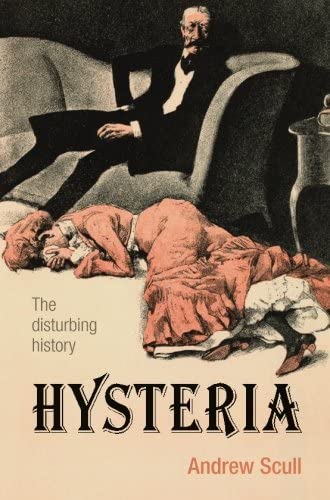
A recent Grey’s Anatomy episode opens with a commentary on the history of hysteria: “In the 1800s, one of the more common reasons women visited the doctor was hysteria—a now-defunct diagnosis. Hysteria was used to describe a wide array of symptoms: chest pain, anxiety, a swollen abdomen, mood swings. They tried a variety of treatments for hysteria ranging from rest to psychosomatic therapy. But true relief for these women didn’t exist until physicians tried using what they called ‘pelvic massage.’ The cure was called a hysterical paroxysm which today has come to be known as an orgasm” (“Let’s”). But what is hysteria? Why was it associated with women and cures associated with sex? What caused hysteria? Andrew Scull, a Distinguished Professor of Sociology at the University of California, San Diego, who has researched and written about the history of psychiatric illnesses for more than three decades, attempts to answer these questions. His scholarly monograph, Hysteria: The Disturbing History, highlights the shifting perspectives on the root cause of hysteria while simultaneously revealing shocking elements of history. 

While female hysteria is no longer recognized in The Diagnostic and Statistical Manual of Mental Disorder, Fifth Edition, manifestations of hysteria are recognized in diagnoses of illnesses such as Schizophrenia, Post-traumatic Stress Disorder, Panic Disorder, Borderline Personality Disorder, and Premenstrual Dysphoric Disorder, among other mental illnesses. That said, understanding the history of hysteria is pertinent when forming perceptions and educating oneself about mental health and mental illnesses. Scull recognizes this in his “biography of what contemporaries saw and interpreted as hysteria” as he discusses hysteria’s “fascinating and tortuous medical and cultural history” (6, 8). Scull’s work propelled him to receive the Roy Porter Medal for his lifetime contributions to the history of medicine and the Eric. T. Carlson Award for lifetime contributions to the history of psychiatry (“Andrew”). His research for Hysteria: The Disturbing History serves as an essential base for developing a comprehensive understanding of psychiatry today.

Continue reading “Is the Uterus Really to Blame: Review of Andrew Scull’s Hysteria: The Disturbing History” →

Pharrell Williams: Blurred Misogyny 

Pharrell Williams: Blurred Misogyny 

In 2013 superstar Pharrell Williams teamed up with artists Robin Thicke and T.I to bring us “Blurred Lines.” The Times’ 2013 song of the summer, 640 million streams, 14 million copies sold – The song enjoyed instant and lasting success. But the song’s undeniable catchy beat, ironically, blurred its appalling lyrical and visual message. This piece will uncover what so many of us missed: 

The song’s lyrics promote three very troubling concepts:

While one of the most catchy, the line “I know you want it, I know you want it” is equally – if not more – problematic. These lyrics, sung by Pharrell, are a direct challenge to a woman’s consent. They imply that what comes from a woman’s mouth is not truly what she wants. Smiling, laughing, pushing – the video encourages a man to reject a woman’s word and insinuates he can do so in a joking and fun manner. This line reflects a more significant cultural issue; men have historically – purposely and not – misinterpreted a woman’s consent. This lyric suggests the line between consent and refusal is cloudy (blurred) when in reality, a woman is always firm in her decision.

Additionally, Pharrell sings about the “good girl,” the perfectly manufactured woman in the eyes of the patriarchy. “good girls”, as defined by Pharrell, are women who are sexually passive, almost timid about their desires, and are in need a man to direct, if not force them. The concept of “good girls” exists to build frequently unachievable standards for women. These lyrics normalize a concept we see so often in other forms of media today: women are sexually drawn to men who are aggressive and forceful about their desires. This enables men to feel as if forms of sexual harassment and sexual assault are just another kind of “advanced” flirtation. 

Lastly, Pharrell sings, “Tried to domesticate you, but you’re an animal, baby it’s in your nature” – In the music video, Robert Thicke mouths Pharrell’s words into the ear of a black model. An insensitive shot in which the lyrics can be perceived in a racial context. Black women being considered anything but human has enabled centuries of medical malpractice in which Black women were used as test subjects to advance scientific understanding. The racial implications of this shot are undeniable; forceful power dynamics and dehumanization have assisted and continue to assist in the oppression of black women.

How Blurred Lines directs masculine objectives: 

Along with the lyrics, It’s important to analyze who Pharrell’s intended audience is. While an artist will generally cater to the reasonably widest audience, it is clear that the message he pushes is meant for young men. This becomes apparent as he displays the social and sexual success of men who employ the technique of using and forcing themselves onto women. 

On the top: T.I, a rapper most popular with young male audiences, flirts and dances with three separate women while the lyrics “I know you want it, I know you want it” play. The positioning of the shot is essential; T.I dances in front of the women, who appear to serve as his backup, dancing behind him. This shot reinforces the idea that women should be treated as props and helpers in a man’s life. The inappropriately flirtatious T.I also underlines that men who subscribe to aggression and assertion with women will be sexually hyper-successful. 

On the Bottom: T.I, Pharrell and Robert Thicke are pictured together. All three of the men are in classy attire. The scene endorses the idea that forcing yourself onto women will not only bring you success with women, but will additionally give you status and respect among your friends. In contrasting their clothing, we see that the men, who are fully dressed, exude a message of strength and control, while women, dressed in only revealing clothing, are judged solely based on their body image and are a supporting entity to the man’s status. 

Years later, Pharrell and Robert Thicke have admitted their embarrassment for their part in writing the song. Remorse is a step in the right direction, but the damage this song has caused and will continue to cause is evident. Younger generations that are broadly refused access to sex education in schooling often turn to forms of media for guidance. Messages like that of Blurred Lines subconsciously encourage the persistence of misogyny and rape culture in our society. The importance of the lesson we can learn from this is anything but blurry: the media we consume matters, our consumption has the possibility of enabling good and bad. 

#Sharetheload

I’ve grown up watching my father do all the household chores. To many, this may be the ‘bare minimum,’ as it rightly is. However, patriarchy is so deep-rooted in Indian culture that such behavior is considered abnormal. Family members visiting our home would become physically uncomfortable watching my father cook, wash dishes, clean, and do the laundry, because that wasn’t ‘his job.’ In Indian society, men partaking in domestic chores is an alien concept.

This gender stereotype was challenged by an award-winning #ShareTheLoad initiative by an Indian laundry detergent company, Ariel, in 2015. The company launched this campaign through impactful advertisements, spotlighting the everyday, normalized gender inequality experienced in Indian households. They aimed to create “happier households where men and women Share The Load equally.”

https://youtu.be/QAxm23SjHDo

In the advertisement, we see how a young child observes the polar opposite realities experienced by her parents. The daughter notices how her mother is never asleep next to her at night and is up late doing household chores. In the morning, her mother wakes up unrested, hastily tossing breakfast for her family. She returns home after a long day of work only to face the endless to-do list on her phone. Yet, her mother never lets her professional commitments come in the way of looking after her family. She’s seen tucking her daughter into bed, reading to her, and preparing materials for the next school day.
In contrast, the daughter watches her dad get a good night’s sleep. He enjoys a relaxed morning, spending quality time with his daughter before heading to work. He seems carefree and unburdened. He is also oblivious to the amount of work his wife completes ‘behind the scenes’ at night to provide him with a comfortable lifestyle.

We can see the woman working- what Marxist feminist sociologists call- the triple shift. This refers to the idea that women in capitalist societies are expected to do paid and unpaid work and cater to their families’ emotional needs. Women are expected to juggle professional and familial responsibilities mechanically. Hence, the rise in the percentage of women employment in India is progressive only at face value. The reality is that there has been no change in the social expectations put on women. Women must work, be the best wives and mothers and conform to all social norms. Multi-tasking is glorified and regarded as a skill that ‘successful’ women have, prompting others to achieve this unrealistic standard.

In the advertisement, the daughter is the change initiator. When she notices her overworked mother, she wakes her father up and ushers him to the laundry room. The girl symbolizes the literal wake-up call that Ariel wanted to give India. The father is shocked to find his wife, completely exhausted, dozing off near the laundry machine in the middle of the night. He realizes how his lack of contribution affects his wife and makes an immediate change by taking over the laundry. The advertisement ends with a display of empirical evidence to support its argument. It draws a connection between the unequal division of household chores and women’s health, stating that 71% of women sleep less than men.

Apart from highlighting the unequal distribution of domestic work between men and women, the advertisement also emphasizes how children unconsciously pick up gender norms and roles. Children internalize gendered behaviors, roles, and activities by watching their parents. This advertisement was applauded for its ability to convey a meaningful message in a minimalistic way. It illustrated a scene that most Indians were familiar with and could relate to. It showed the Indian population that making a change doesn’t always entail grand gestures. One can change the status quo by something as simple as sharing the laundry with their partner.

However, the advertisement is far from perfect. In my opinion, the ads create a one-step forward, two-step back situation. The campaign fails to address the issue’s root- that household chores are not a woman’s job. The phrase ‘ShareTheLoad’ implies that household work is a woman’s job or ‘load’ to begin with and that men should ‘help’ them by ‘sharing’ the burden. It encourages the depiction of men as saviors who go out of their way to help the women in their families. Household work continues to be portrayed as a gender-specific role. The idea that domestic work is a life skill everyone should have regardless of gender is not translated through the screen.

Moreover, the campaign is very heteronormative. It does not do an excellent job of representing queer individuals and families. While the ad does a great job of exposing the inequalities faced by women in households, it continues to reinforce the idea that families can only consist of heterosexual couples. 2018 was a monumental year for LGBTQ+ rights in India. Article 377 of the Indian Penal code (which criminalized any form of queer sex) was struck down and deemed unconstitutional. However, removing the law did not manage to remove the social stigma around the LGBTQ community in India. The fear of representing queer relationships in mainstream media remains evident through the continuous display of heteronormativity.

Nevertheless, the campaign marked a significant first step towards encouraging companies to use their mainstream platforms to advocate for gender equality. I hope to see a more mainstream representation of the Queer community in India in the future!

“Gender” Reveal Gone Wrong: Gender Reveal Celebrations that Leave Behind Casualties

Boy or girl? Pink or blue? Penis or vagina? Imagine a newborn is on the way and a party is being thrown to celebrate this big milestone. Most of us have probably seen videos of joy on the faces of those celebrating this occasion. Maybe we’ve been to a celebration like this on our own, or even had one thrown for us, but what we don’t see are the casualties of some of these extravagant gender reveal parties and what gets left behind. 

Gender reveal parties are a common practice that many couples do to celebrate their expected child. But a time that is meant to be celebrated for some could have horrible repercussions for others. Matt Bernstein (he/they) with the Instagram handle @mattxiv who identifies as a “queer Jew with very long nails” in their Instagram bio recently posted about the horrible effects that over the top gender reveal parties could cause and brings into question the need for this practice that informs others of an unborn baby’s genitalia. 

Matt Bernstein’s Instagram post about gender reveals

This Instagram post has pictures, videos, and captions that all show how something as common as a gender reveal party is actually very absurd. It starts by saying that “society has progressed past the need for gender reveals” which sets us up for the rest of the post that then shows a gender reveal party where a couple puts blue dye in the water and celebrates that their expected child has a penis.

But this isn’t all that this couple and their loves ones are celebrating. They are also celebrating the fact that they are assigning a gender to their child based on the child’s genitalia and all the gender norms that go with the idea of being a boy with one of them being the color blue when the color blue doesn’t innately have a gender. These parents already made an important decision for their baby who can’t even talk yet. The gender these parents are assigning to their unborn child shapes the way this child will grow up from what they wear to how they act. Gender isn’t something that should be assigned, but instead chosen by each individual. 

Matt Bernstein’s Instagram post about a couple that polluted a water source for a gender reveal party. Source of this story is the Washington Post.

The couple shown in the Instagram post above are just one of the many couples who decide to celebrate their child with a gender reveal party. The blue dye shown in the waterfall at this couple’s gender reveal party contaminates a primary drought-stricken water source in Brazil for the town of Tangará da Serra (Paúl, Washington Post). Water is a human necessity and this couple’s celebration has taken that away from many locals in the area. This moment of celebration created a human rights issue.

Matt Bernstein’s Instagram post about extreme gender reveals

But this isn’t the only sad gender reveal story. Bernstein goes on by noting other gender reveal story headlines including, “2 dead after plane crashes during gender-reveal stunt in Mexico” (Deliso, ABC News Network) and “Gender reveal party couple face jail over deadly California wildfire” (BBC News). We now see that these extreme gender reveals that happen annually “have caused wildfires, plane crashes, and numerous deaths” (Bernstein). Gender reveal parties are widely celebrated and it’s a big issue not only for the extreme ones where someone has to figure out where to get their water, die, or go to jail; but also innately because these gender reveals are assigning gender to babies who can’t talk. 

Matt Bernstein’s gender reveal analogy Instagram post

After posting about situations where gender reveals have gone wrong, Bernstein tries to put the idea of gender reveals in a way people might understand. A clip from the cartoon SpongeBob SquarePants shows SpongBob tripping over a rock while carrying a pie that gets thrown onto Squidward’s face and blows up all of Bikini Bottom which is the town they live in. The analogy of SpongeBob SquarePants shows that something as seemingly harmless like a pie could cause so much damage to the surrounding town. This is just like those who do gender reveals without thinking about the consequences. Those who throw this party are only thinking about the fun everyone is having for a moment and not the long term harm. 

Matt Bernstein’s Instagram post about gender reveals

The post is then ended with the caption “if you feel compelled to tell everyone about the genitalia of your infant, just send out an email.” Bernstein once again shows how absurd this practice of gender reveals are by mentioning sending out an email that tells people of the unborn baby’s genitalia. 

Gender reveals are all based on genitalia. If a baby has both genitalia from the two different binaries, a parent may choose to pick one over the other so that it fits one of the two binaries. This could hurt the child in the long run who may have wanted the other genitalia that their parents didn’t choose for them and removed.

After analyzing this post, some questions need to be asked. Why is it called a gender reveal when what is actually being revealed is the sex of the child and not the socially constructed ideas of gender? Why aren’t there other genders being revealed and what colors would they be? Why are there no other colors besides these two? How are colors gendered? Why can’t we as a society say bye bye to the binary? There are no new genders being “revealed”, just the same two. It should be called a sex reveal instead! The people who do these “gender” reveals probably don’t know the difference between the two. Education about these topics are important and have been increasing slowly over the years, but more needs to be done. Gender reveals are so ingrained into society that these “gender celebrations” probably won’t stop anytime soon. How many casualties will it take to stop this practice?

Sources

Paúl, María Luisa. “They Dyed a Waterfall for a Gender Reveal. an Investigation Followed.” The Washington Post, WP Company, 30 Sept. 2022, https://www.washingtonpost.com/nation/2022/09/30/gender-reveal-waterfall-brazil-dyed/. 

Deliso, Meredith. “2 Dead after Plane Crashes during Gender-Reveal Stunt in Mexico.” ABC News, ABC News Network, 1 Apr. 2021, https://abcnews.go.com/International/dead-plane-crashes-gender-reveal-stunt-mexico/story?id=76824951. 

“Gender Reveal Party Couple Face Jail over Deadly California Wildfire.” BBC News, BBC, 21 July 2021, https://www.bbc.com/news/world-us-canada-57898993. 

The Perpetuation of the Sapphire Stereotype: The Portrayal of Serena Williams as an “Angry Black Woman”

Media Analysis: Hale Robinson

“2018 US Open Highlights: Serena Williams’ dispute overshadows Naomi Osaka’s final win”

The origins of the words “sapphire,” “mammy,” and the stereotype of an “angry black woman (ABW),” date back from the 1800s to mid 1900s where caricatures, cinema, and other forms of media perpetuated these racial tropes (“The Sapphire Caricature”). The term sapphire was originally used to portray black women as angry, rude, loud, malicious, and masculine (“The Sapphire Caricature”). Often, sapphire imagery is accompanied by black men to demonstrate how “through her use of verbal putdowns” the black woman emasculates the man, “robbing” him of his manhood (“The Sapphire Caricature”). Similarly, the “mammy image” was created to justify the economic exploitation of house slaves where black women are “penalized if they do not appear warm and nurturing (Collins 267).” More modern examples of sapphire depictions are coined with the term “ABW.” While there is little empirical evidence supporting the stereotype that black women are more aggressive by nature, the U.S. mass media continues to push ABW headlines, videos, and imagery (J. Celeste).

Serena Williams is widely renowned as one of the greatest women’s tennis players of all time and an incredible overall athlete. She retired as a tennis legend with a total record of 858-156, 6 U.S. Open Championships, and 23 Grand Slam titles (“Serena Williams Fast Facts”).

While Serena Williams’ success is celebrated, she unfortunately became a target of the ABW stereotype on several occasions throughout her career. There are numerous videos titled “Serena Williams Rage Compilation” posted on social media platforms in addition to hundreds of newspaper and magazine articles covering her sporting disputes and frustrated moments. In fact, Williams’ portrayal as an ABW in the mass media is so significant that if you were to do an image search of the term “angry black woman,” the first few pictures are of Williams.

Of the many sources covering Serena Williams’ career disputes, I focused on one video published by the largest American cable sports coverage network, ESPN. The video, titled “2018 US Open Highlights: Serena Williams’ dispute overshadows Naomi Osaka’s final win,” covers the 2018 US Open Championship between Serena Williams and Japan’s Naomi Osaka. The video begins with a clip of Williams breaking her tennis racket out of frustration. The video crew proceeds to zoom in on the broken racket and then later replays the clip of a frustrated Williams throwing her racket down. Soon after, the referee accuses Williams of receiving coaching and cheating.

On multiple instances, Williams demands an apology from the referee stating, “you are attacking my character.” In response to this, the referee gives Williams yet another violation. While disputes and frustration often go unpenalized and are often overlooked or granted leniency in men’s tennis, Williams received multiple penalties for her actions. When pleading her case, Williams notes, “because I’m a woman you’re going to take this away from me.”


While the contents of the video itself are controversial, I additionally wanted to focus on the ways in which ESPN perpetuates the ABW stereotype through the title of the video, the clips they provide, and the specific zoom and camera angles chosen. Although the video is titled “U.S. Open Highlights,” very few clips in the video are dedicated to the tennis match itself. Rather than replaying points and impressive displays of athleticism, the “highlights” in this video are clips of a frustrated Serena Williams. The camera angles and zoom were methodically used in a way to emphasize Williams’ anger with an example being the amount of screen time Williams’ broken racket received and the frequent replaying of Williams arguing with the referee. By doing this, ESPN paints Williams as angry, similar to how post slavery media pushed the agenda that Black women were angry, aggressive, and emasculated men by “failing to be submissive.” Furthermore, the video title states, “Serena Williams’ dispute overshadows Naomi Osaka’s final win.” By naming the video in this way, it paints Williams as the “bad guy” and accuses her of ruining Osaka’s moment. This depiction of Williams as aggressive and malicious is representative of 20th and 21st Century ABW media.  In addition to the title, the video’s description is equally disappointing…

While the match showcased the skill of two amazing Black female athletes, ESPN implies that the match will only be remembered because of Williams’ quarrel with the referee. Not only does this take away from Osaka’s victory, but it places further blame on Williams.

Through the notion of sapphires, mammies, and more recently “angry black women,” Black women have continued to fall victim to racial stereotypes depicting them as aggressive, malicious, and out to emasculate men. Following the 2018 U.S. Open Championships, ESPN perpetuated these racial tropes via a “highlight video” that covers a dispute between Serena Williams and a referee. While male tennis players receive little backlash from similar actions during matches (e.g., John McEnroe was known for his outbursts throughout his career), Williams was accused of “overshadowing” Naomi Osaka’s win and was given three penalties. While the term sapphire may be a thing of the past, the theme of portraying Black women as angry and aggressive in the media continues.


Sources

Collins, Patricia Hill. “Race and Ethnicity.” Controlling Images and Black Women’s Oppression , pp. 266–273.

ESPN. 2018 US Open Highlights: Serena Williams’ Dispute Overshadows Naomi Osaka’s Final Win. Youtube, 8 Sept. 2018, https://www.youtube.com/watch?v=uiBrForlj-k.

J. Celeste Walley-Jean. “Debunking the Myth of the ‘Angry Black Woman’: An Exploration of Anger in Young African American Women.” Black Women, Gender + Families, vol. 3, no. 2, 2009, pp. 68–86. JSTOR, https://www.jstor.org/stable/10.5406/blacwomegendfami.3.2.0068. Accessed 6 Oct. 2022.

“Serena Williams Fast Facts.” CNN, Cable News Network, 16 Sept. 2022, https://www.cnn.com/2013/09/13/us/serena-williams-fast-facts.

“The Sapphire Caricature.” Ferris State University, https://www.ferris.edu/HTMLS/news/jimcrow/antiblack/sapphire.htm.