Stacey Waite, a poet and Associate Professor of English at the University of Nebraska-Lincoln, is known for her poetry exploring the intersections of gender, sexuality, and relationships. Waite’s Dear Gender event elaborated on this exploration, allowing some audience members to feel heard and others to comprehend the perspectives of those who defy the gender binary.
As discussed in our class, gender begins at birth—sometimes even pre-birth. Gender reveals have become increasingly popular as finding out the sex of the baby becomes a milestone that many look forward to when pregnant. Professionals have begun to cite that parents only reinforce the idea of a “gendered world” in the gender stereotypes reinforced through toys, play, and the environment.
Stacey Waite takes a new perspective on all of this, questioning what happens when instead of getting rid of gender, we take gender less seriously.
While it is hard for me, as a cis-woman, to connect to the struggles gender non-confirming individuals face in a world designed for the binary, Waite’s helped to establish this connection. Waite noted that everyone, even cis-gendered individuals, has stories of gender. Immediately, I remembered something that happened to me in 5th grade. I was at aftercare sitting cross-legged at my desk when the person leading it, a male, gave me a note: “You can’t sit like that as a girl. You have to cross your legs.” I quickly got up from my desk and threw the note away before returning to my desk and sitting “like a lady.” I was mortified. I immediately questioned myself. “Why was he watching the way I was sitting? Was he looking up my skirt? I was wearing shorts under anyways. What had I done wrong?” Fifth-grade me knew what he did was weird, but I respected him because he was in a position of authority. However, I was too young to recognize that this was just one of the many ways society reinforces gender norms.
As a cis-woman, I am in a position of power. Still, gender is forced on me in numerous ways; this is something nearly all of us experience daily. While Waite’s poems were moving—and very much needed in today’s world—I took more away from Waite’s conversation about gender. As Waite established, individuals must identify the systems of privilege they are in and use that for change. Simply reflecting on some of my experiences, as sparked by Waites, only amplified the importance of doing such.
In 2011, Stephen Broden, a member of a Dallas-based pro-life organization, Life Always, put up an anti-abortion billboard. The billboard stated, “that the most dangerous place for an African American is in the womb.” The effect of the billboard was monumental.
Marsha Jones, co-founder and executive director of the Afiya Center, responded to Broden’s statement with a billboard of her own. Establishing the hashtag #trustblackwomen, Jones unapologetically declared that “Black women take care of their families by taking care of themselves. Abortion is Self-Care.” Jone’s billboard received more pushback than Broden’s billboard. The message was strong, but was it worth the pushback it received? What feelings did the message spark within Black women? Author, playwright, and news reporter Natalie Moore too had these questions, many of which served as the origin story for her play, “The Billboard.” The play features a fictional women’s clinic in Chicago and their fight with a local individual running for City Council that puts up an affronting billboard that spurs the clinic to fight back. Both the plot of the play and the real events served as the base of her talk.
I, as a privileged White woman, was unaware of the controversy between Broden and Jones. Yes, I was young when this all went down, but the lasting implications do not apply to me. Because I am not a Black woman, I was not impacted by the events that occurred. I feel like this connects to the discussions we have been having in class recently regarding feminist movements. In “There is No Hierarchy of Oppressions,” author Audre Lorde writes, “There is no hierarchy of oppression. I cannot afford the luxury of fighting one form of oppression only. I cannot afford to believe that freedom from intolerance is the right of only one particular group.” The feminist movement is one of the groups Lorde calls out; the feminist movement has long been a White women’s movement. I am privileged to be included in the feminist movement. Yet, this very inclusion also contributes to my ignorance. Personally, Natalie Moore’s talk served as a self-reminder that I need to continue to educate myself, continue to acknowledge my privilege, and continue to fight for all people experiencing oppression.
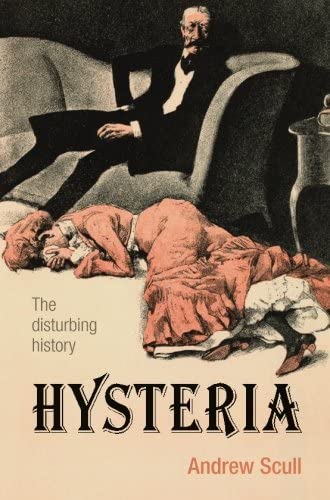
A recent Grey’s Anatomy episode opens with a commentary on the history of hysteria: “In the 1800s, one of the more common reasons women visited the doctor was hysteria—a now-defunct diagnosis. Hysteria was used to describe a wide array of symptoms: chest pain, anxiety, a swollen abdomen, mood swings. They tried a variety of treatments for hysteria ranging from rest to psychosomatic therapy. But true relief for these women didn’t exist until physicians tried using what they called ‘pelvic massage.’ The cure was called a hysterical paroxysm which today has come to be known as an orgasm” (“Let’s”). But what is hysteria? Why was it associated with women and cures associated with sex? What caused hysteria? Andrew Scull, a Distinguished Professor of Sociology at the University of California, San Diego, who has researched and written about the history of psychiatric illnesses for more than three decades, attempts to answer these questions. His scholarly monograph, Hysteria: The Disturbing History, highlights the shifting perspectives on the root cause of hysteria while simultaneously revealing shocking elements of history.
While female hysteria is no longer recognized in The Diagnostic and Statistical Manual of Mental Disorder, Fifth Edition, manifestations of hysteria are recognized in diagnoses of illnesses such as Schizophrenia, Post-traumatic Stress Disorder, Panic Disorder, Borderline Personality Disorder, and Premenstrual Dysphoric Disorder, among other mental illnesses. That said, understanding the history of hysteria is pertinent when forming perceptions and educating oneself about mental health and mental illnesses. Scull recognizes this in his “biography of what contemporaries saw and interpreted as hysteria” as he discusses hysteria’s “fascinating and tortuous medical and cultural history” (6, 8). Scull’s work propelled him to receive the Roy Porter Medal for his lifetime contributions to the history of medicine and the Eric. T. Carlson Award for lifetime contributions to the history of psychiatry (“Andrew”). His research for Hysteria: The Disturbing History serves as an essential base for developing a comprehensive understanding of psychiatry today.
Women are taught to never walk alone at night, to carry their keys between their fingers, and to dress modestly but not too modestly. I consider these basic “Woman 101” tips. And somehow, these tips are supposed to keep me and other women from becoming another 1 in 3.
When current conditions are voiced, we as a society tend to turn a blind eye. Supreme Court Justice Brett Kavanaugh was confirmed to the court despite being accused by multiple women of sexual assault. Many women and girls limit their behaviors for fear of rape— for fear of being told that “boys will be boys,” “you were asking for it in that dress,” or “maybe next time you shouldn’t drink so much.” Concomitantly, adolescents have learned that consent does not matter—that it is irrelevant.
While discussions are finite, popular media has begun to tackle the topic of rape. The season fifteen Grey’s Anatomy episode, “Silent All These Years,” written by Elisabeth R Finch, aims to initiate the dismantling of rape culture while highlighting the importance of consent and the lasting impacts of rape. The title, in and of itself, highlights just how oppressive and dismissive society becomes when women speak up about instances of sexual assault and rape.
The episode begins when Khalilah Joi, guest-starring as a woman named Abby, arrives at Grey Sloan Memorial. With a cut to her face and bruises, coupled with skittish behavior, Dr. Jo Wilson recognizes the signs of rape. As the episode progresses, viewers learn that Abby was raped after leaving a bar. Aware of the victim-blaming narrative frequently used against women, Abby is hesitant to report the incident to the police or let her husband know. In attempting to break the stigma, Dr. Jo Wilson breaks protocol and shares her story of rape and sexual violence. She humanizes herself, therefore allowing Abby to see her as more than a woman in a white coat. When Abby agrees to a rape kit, something she knows will probably end up sitting in the back of a police station, Dr. Jo Wilson and Dr. Teddy Altman shift the power back to Abby. Before moving to the next portion of the rape kit, Abby must give them consent. She makes all the choices for herself. Something so seemingly simple is immensely powerful. Just hours before, Abby had lost all body autonomy.
Dr. Jo Wilson sharing her story with Abby
That said, the most moving part of the episode comes prior to Abby’s surgery. Hesitant to go under anesthesia out of fear of being vulnerable again and fearful of seeing her attacker in the faces of the male staff and doctors, Abby resists the surgery. From that, the “hall of awesomeness” was assembled. The hospital’s female employees lined the entire length of the hallway right up to the operating room (which only had female doctors because girl power!!). The vast majority did not know Abby but showed up because they would want others to do the same if they were in that position.
The “Hall of Awesomeness”
The show made an additional point to shift the fault from the woman. We live in a society that thrives off victim-blaming. Contrary, in “Silent All These Years,” Ben Warren, played by Jason Winston George, took the time to explain consent to his stepson Tuck Bailey, played by BJ Tanner: “If she stops having fun, just plain stop,” said Ben. “Time out. Game Over.”
Media portrayals of sexual assault correlate with increased victim blaming and the way the public discerns victims. Contrasting the standard image of women as sexual objects, Grey’s Anatomy humanizes the victim, emphasizing the importance of consent while moving away from victim blaming.
I was talking to someone the other day who said he thought this episode was cringy. He viewed the “hall of awesomeness” as unrealistic and unnecessary, leaving him emotionally detached. And while I listened to his opinion and told him he had the right to hold that belief, I elaborated on my perspective. The unity and “women supporting women” narrative present throughout the episode not only reinforced the idea that you are never alone but highlighted just how essential lessons on consent and education about rape are.
There is a common misconception that feminism is anti-male when the movement’s principle is contingent on equal rights for women. Women want to be heard, to be supported, and to be given a choice. This episode highlights this message. The creators gave a voice to the voiceless. They addressed the intersectionality between race and gender; Abby was played by a Black woman, serving as a nod to the increased vulnerability of Black women. They highlighted the healing power of female solidarity while recognizing that trauma is real and does not go away overnight. They emphasize that survivors are not alone and that they are not at fault.
To anyone that finds Grey’s Anatomy over-dramatic, cringy, or over-rated, I encourage you to give it another chance. While it might not change your opinions on the show, it empowers survivors in a world that usually silences them. If not for yourself, do it for the one in three.