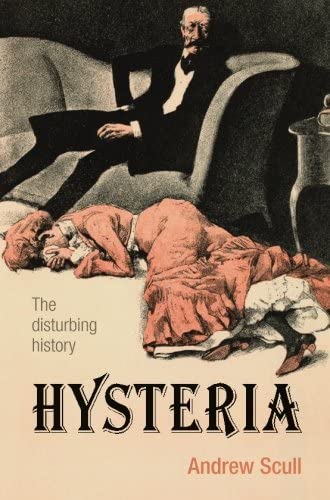
A recent Grey’s Anatomy episode opens with a commentary on the history of hysteria: “In the 1800s, one of the more common reasons women visited the doctor was hysteria—a now-defunct diagnosis. Hysteria was used to describe a wide array of symptoms: chest pain, anxiety, a swollen abdomen, mood swings. They tried a variety of treatments for hysteria ranging from rest to psychosomatic therapy. But true relief for these women didn’t exist until physicians tried using what they called ‘pelvic massage.’ The cure was called a hysterical paroxysm which today has come to be known as an orgasm” (“Let’s”). But what is hysteria? Why was it associated with women and cures associated with sex? What caused hysteria? Andrew Scull, a Distinguished Professor of Sociology at the University of California, San Diego, who has researched and written about the history of psychiatric illnesses for more than three decades, attempts to answer these questions. His scholarly monograph, Hysteria: The Disturbing History, highlights the shifting perspectives on the root cause of hysteria while simultaneously revealing shocking elements of history.
While female hysteria is no longer recognized in The Diagnostic and Statistical Manual of Mental Disorder, Fifth Edition, manifestations of hysteria are recognized in diagnoses of illnesses such as Schizophrenia, Post-traumatic Stress Disorder, Panic Disorder, Borderline Personality Disorder, and Premenstrual Dysphoric Disorder, among other mental illnesses. That said, understanding the history of hysteria is pertinent when forming perceptions and educating oneself about mental health and mental illnesses. Scull recognizes this in his “biography of what contemporaries saw and interpreted as hysteria” as he discusses hysteria’s “fascinating and tortuous medical and cultural history” (6, 8). Scull’s work propelled him to receive the Roy Porter Medal for his lifetime contributions to the history of medicine and the Eric. T. Carlson Award for lifetime contributions to the history of psychiatry (“Andrew”). His research for Hysteria: The Disturbing History serves as an essential base for developing a comprehensive understanding of psychiatry today.