Violence and Homoeroticism- NBC’s Hannibal

Thomas Harrison’s franchise has had many life-action adaptations from novel to screen over the years, one of its most ambitious was NBC’s Hannibal. Until then, most adaptations had focused on Hannibal the character, and/or Clarice Starling due to the cult classic Silence of the Lambs. NBC didn’t have rights to Silence of the Lambs and, therefore, no access to Clarice as a character. Showrunner Brian Fulmer adapted by giving many roles that Clarice fulfilled to Will Graham. 

The main focus of NBC’s Hannibal is our two main characters’ relationship. Will Graham, an FBI agent who can empathize with killers to catch them, and Hannibal, a serial killer and cannibal with a manipulative streak. Throughout the show, other characters constantly refer to their increasing closeness and the effect Hannibal has on Will. This influence is framed as Hannibal teaching Will about a new side of himself and guiding him towards it, this new side being violent. This could be seen through a queer lens: Hannibal and violence are so intrinsically tied that as Will becomes more attracted to his darker, more violent side, he is also more attracted to Hannibal as a person and as a killer. Many events happen that further exemplify this, but I wanted to focus on the final episode, the culmination of the show and of Will’s “becoming”, “The Wrath of the Lamb.”
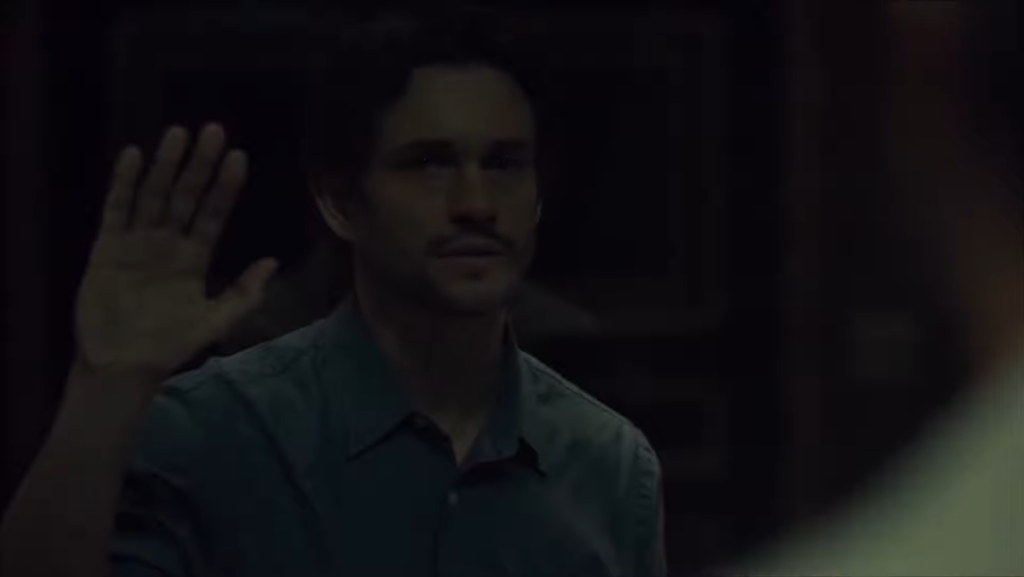
In this scene, near the start of the episode, Hannibal alludes to Will taking part in the murder of another character. His tone is prideful, but not towards Will, but towards himself. He sees Will’s violent and manipulative actions as a result of him- as evidence of how he has marked Will. Will refuses to comment as if he is aware of this. Hannibal then turns the conversation towards Will’s newfound family. Will married and even gained a stepson after Hannibal’s arrest and their separation mid-season. Throughout the series Will was characterized by his “otherness”, not just when it came to his relationship with Hannibal but also his general demeanor. He has described himself on a spectrum “closer to Asperger’s and autistics and narcissists and sociopaths.” The show doesn’t delve too much into this, but it serves the point that Will isn’t “normal” and he is vividly aware of it. This new life he has, away from Hannibal and away from his FBI work, is the best life a heteronormative audience would expect: a life with a wife and kid- away from the man who is implied to have feelings for him. It is almost framed as Will’s marriage fixing him and the effect Hannibal had on him.

Hannibal then says, “When life becomes maddingly polite, think of me, Will.” Here Hannibal refers to himself as another option for Will’s life. Rather than a supposedly peaceful life, he could come back to Hannibal and all the violence and acceptance that comes with him. Rather than being with his wife, he could be with him. Will responds by placing his hand on the glass that separates them, an act that shows that he reciprocates Hannibal’s intent to a certain extent, that he too yearns to be close again. Kind of. 

This scene sets up the big decision Will has to make in this episode, and the whole series, to be with Hannibal or not. Removing all the murder, this can be seen as a portrayal of compulsive heterosexuality in the way Will tries to reach normativity by marrying a woman and fitting society’s expectations of what a man should be. While the show frames Will as trying to run away from the violent impulses Hannibal brings forth it can also be said that he is trying to flee the feelings he feels for Hannibal in the way he touches the glass- wanting to get close while still keeping distance.

Start at 1:29 if embedding goes wrong

At the very end, we have Will helping Hannibal escape from prison and them fleeing to a house where they are ambushed by a killer called the Red Dragon. After killing the Red Dragon, Will and Hannibal embrace while covered in blood. This scene is the most vulnerable we have seen either of these characters and it is violent. The way they hold each other and even the way they look at each other through the fight- it is all raw emotion. It is reminiscent of the season 2 finale, only that instead of Hannibal grabbing Will, Will is grabbing Hannibal and even resting his cheek on his chest. Both still involve them holding each other while making their feelings known, but these are differing feelings. The season two finale was all about Hannibal’s betrayal over Will double-crossing him in trying to turn him over to the FBI. The show’s finale is all about Will coming to terms with himself. With the bloodlust he feels, with Hannibal’s love, and his reciprocation.

It wouldn’t be right to say that one’s pension for violence is the same as one’s sexuality in any sort of way, but when it comes to defying society, thematically there may be some give, especially when it comes to Will. To Will, Hannibal is violence itself and he is attracted to both. This may seem problematic to some but sometimes that’s what you need. Sometimes you need to see someone struggle with themselves as much as you do. It is not a new argument to say that queer audiences are attracted to horror. In an article by Medium, Gil Hatcher writes about NBC’s Hannibal, “…It’s the unconditional understanding that you are not a monster despite what the world may say that can bond so many queer people and it’s why many of us see Hannibal and Will’s relationship as a queer love story.” When in the eyes of society you are seen as a monster, you feel an attachment to other “monsters” in media. Brian Fuller, Hannibal’s showrunner, is a gay man and has been open about the queer themes within Hannibal. Obviously, he doesn’t speak for all queer people. People can see Hannibal and Will’s relationship and be offended at the tie between violence and homoeroticism within it, and they’d be right. It isn’t “good” representation, but it is many people’s reality. Many like Will feel “othered” so they need an out, for Will that’s Hannibal, for others it’s seeing that conflict between them on screen. Both are right, neither are wrong, that’s the beauty of media and representation, all sides can and are seen.

(watch Hannibal it’s a real good show it’s like an 18-hour art film)

Lemonade’s Celebration of Oneself

Beauty standards and expectations about how people should act are omnipresent. They largely affect women, particularly Black women. These expectations and standards are perpetuated in various forms of media. 

Watching Beyoncé’s visual album Lemonade gives a much more comprehensive experience than simply listening to the album. The visual album is divided into 11 chapters, all with videos accompanying them. The music videos for each of the 11 songs in Lemonade are also in the visual album; the visual album incorporates a medley of references and cameos, including highlighting the prose of Warsan Shire. 

Beyoncé accompanied by notable individuals, including Zendaya and Amandla Stenberg, in the chapter “Redemption” while speaking Shire’s prose

Although much of the media is made with the white male gaze in mind, Beyoncé’s visual album Lemonade strays from this trend. Beyoncé tells her story from her perspective, how she wants to tell it, and narrates in the way she sees best fits. Women of color are victims of numerous harmful stereotypes in the media, such as the “angry Black woman” stereotype, and generally being portrayed as hypersexual. Black women are oftentimes minimized to be seen just as these harmful stereotypes, stripping them of their individuality. Lemonade shows Black women in more than one way. Beyoncé illustrates the diversity of Black women, smashing various stereotypical images down. 

Beyoncé allows herself and other Black women to express their emotions unapologetically within Lemonade. Women are generally expected to be composed, submissive, and suppress emotions. If a woman does express her emotions, she is often quickly labeled emotional or irrational. Black women expressing emotions are especially stigmatized. Beyoncé does not hide her emotions but instead showcases them. Each chapter’s title relates to emotion. The stages of emotion, as shown through the chapters, subverts the unidimensional view of Black women and successfully allows Beyoncé to illustrate Black women’s complexity. By showing the versatility of Black women, she defies the generally monolithic representation in the media. She humanizes Black women in the media by creating Lemonade and displaying emotions in a raw, exposed manner.

Beyoncé teary-eyed while singing “Sandcastles”

Throughout the visual album, Beyoncé does not shy away from expressing her anger to avoid the label of an “angry Black woman.” During “Hold Up,” Beyoncé is seen strutting down a street holding a baseball bat with a sly grin on her face. She releases her anger throughout the song, causing destruction, including smashing windows and battering cars. Her sheer fury continues to be seen in “Don’t Hurt Yourself,” where she continues to embrace emotions like anger that Black women are taught to subdue, labeling herself “the dragon breathing fire.” She has a right to be angry without worrying about how others perceive it. She exercises that right, illustrating that anger is a normal emotion that an individual should be able to express without being put within the “angry Black woman” trope. Later in the song, viewers can hear the anguish in her voice as she screams, “Tonight I’m fucking up all your shit, boy” while staring into the camera. She powerfully shares what she feels. It is much more normalized for men than women to express rage and anger, often even being labeled as a masculine trait. When women do express rage, they are quickly described as a bitch or crazy. She normalizes outwardly expressing anger without resistance from others.

Beyoncé smashing a car window in “Hold Up”

Beyoncé calls attention to how beauty standards have a greater impairment on women of color, including herself. Individuals portrayed in the media have been altered to fit beauty standards, so when viewers can not find themselves in the media- since anyone who once represented the viewer likely has been altered- it sends a message to the viewer that they are not good enough. In the chapter, “Denial,” Beyoncé shares how she resorted to trying to change: she fasted, wore white, tried to be prettier, grew her hair out, bathed in bleach, etc. Some of the ways she wanted to change herself to cope with feelings of inadequacy affect women regardless of race. However, many aspects of beauty standards constrict women of color disproportionately in comparison to white women. A lot of those have to do with the Eurocentric beauty standard and labels that women are supposed to conform to.

Beyoncé’s perception of herself and her identity evolve throughout Lemonade. By the end of the album, she has learned to embrace aspects of her identity that don’t fit the Eurocentric beauty standard. In the last song, “Formation,” she sings about how she likes her nose and her baby’s afro. She embraces aspects of her identity she once may have thought to be unsatisfactory since they did not align with the European beauty standard. The pressure to assimilate to fit beauty standards is not often talked about. Beyoncé’s honesty and vulnerability shed light on the problem. She admits to wanting to conform and then takes ownership of herself and her power.

Beyoncé and others powerfully dance during lyrics about embracing features in “Formation”

Beyoncé’s visual album Lemonade, is a work of art full of intention. From the outfits to scenery to poignant celebrity appearances, Beyoncé chose each aspect of the album to serve a purpose and can essentially all be analyzed. While Beyoncé does shed light on issues related to gender in Lemonade, that is only the tip of the iceberg of what she explores and sends messages about within. 

Justice to the Closeted Homophobe

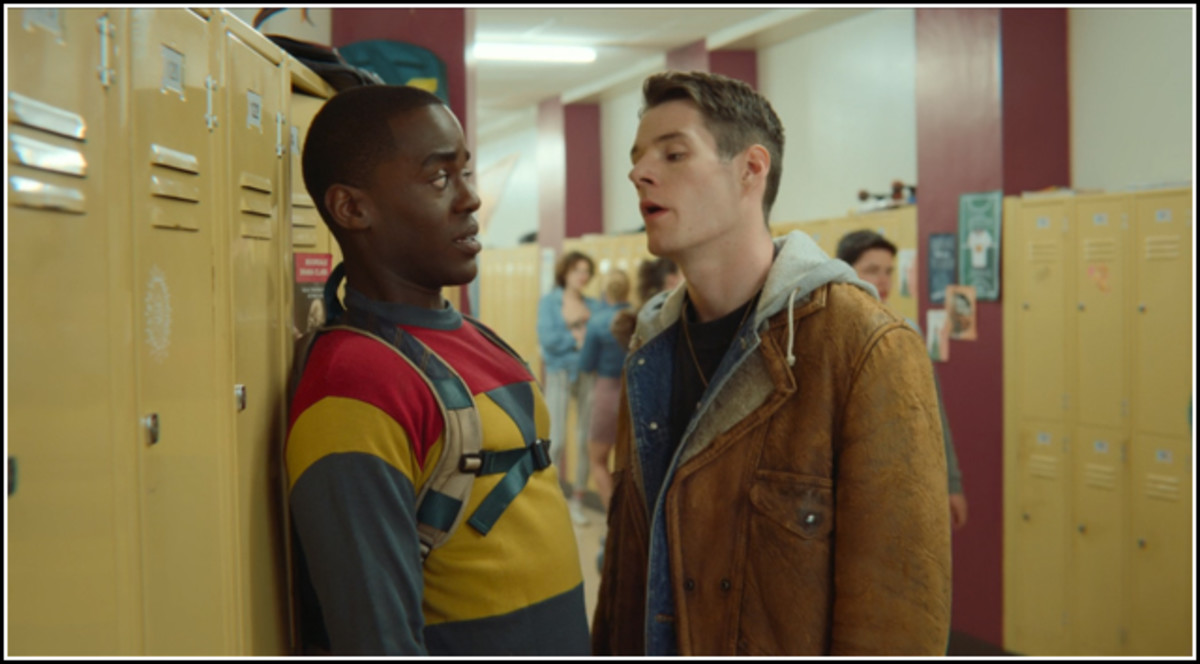
Netflix’s hit series Sex Education is one that attempts to address many of the multifaceted aspects of not only sex but the emotions, relationships, and trauma of both teenagers and adults alike. Instead of turning to adults about the multitude of issues regarding going through adolescence, the students of Moorsdale Secondary School seek the unprofessional but shrewd advice of fellow classmate Otis Milburn, son of sex therapist Jean Milburn. In the show, the character of Adam Groff stands out for me particularly. Adam is the son of the principal and a clear embodiment of the jerk jock trope. He is often seen tormenting Eric Effiong, an openly gay black character multiple times throughout the first season. Since the very beginning, it is obvious that Adam has trouble coming to terms with his own sexual orientation as he fails to sense arousal when engaging in intercourse with his then girlfriend Aimee. As the show slowly progresses, we can see Adam’s evolution from the jerk jock to the closeted homophobe trope. Although Hollywood often demonizes these characters from the start to the end, I would like to explore how Sex Education does Adam justice. 

Eric Effiong, being the best friend of Otis Milburn, quickly establishes that he isn’t one of the popular kids at school. Being both black and gay, and not to mention his affinity with drag, his minority status makes him an easy target for any bully. For emotionally and sexually repressed Adam, Eric couldn’t have been a better prey. As the son of the school’s strict principal, Adam fails to meet his father’s expectations in any way except for being a toxic masculine jock. Unable to recognize nor express his own attraction to Eric, he takes it out on Eric physically as a form of frustration relief and sexual expression. 

The closeted homophobe trope isn’t a stranger in Hollywood. While it does give a (most typically) gay man more complexity, it’s morally dubious to portray a large number of gay men as bitter and resentful when reality doesn’t necessarily reflect that situation. Netflix’s show does Adam more justice. Sex Education gives him more complexity. Contrary to many characters whose development reaches a climax without further exploration, Adam’s journey has just started after engaging in oral sex with Eric during detention. He begins to explore his overall identity and passion even more. Contrary to what the typical jock does, Adam begins to pick up dog racing and trains his dogs to do different tricks and stunts. As opposed to his bitter and resentful self in the first season, Adam finds a new passion and begins to smile more as he treads through this journey. It is truly a redemption arc.

It’s worth noting that the series not only does the closeted homophobe justice by giving him further development, but there’s also a lot of backstories given on why he potentially turned out this way. One primary source of influence is his father, Mr. Groff. Originally, I believed that Adam’s constant bullying is an outlet to express his frustrations of never living up to his father’s expectations or not receiving any fatherly love. Headmaster Groff has difficulty loving his family, repressing his emotions so much that he simply doesn’t feel them anymore. It’s not difficult to see who Adam takes after. 

After I talked so much about how the closeted homophobe is given justice in Sex Education, I would still refrain from fully endorsing this trope from appearing in future movies and series. Not only does it misrepresent a large portion of the LGBTQ+ community, an abundance of such character may influence the audience to think that many gay men portray themselves as such. Even when Sex Education gives Adam Groff more complexity, he isn’t yet a fully round character. This may be attributed to the way the directors would like to portray this character, but from my perspective, it is indeed morally questionable. 

It’s also worth speaking about the fact that the actor portraying Adam Groff isn’t gay in real life. Knowing this fact after research, I wonder if the show is taking opportunities away for LGBTQ+ actors. Although the show isn’t intentionally trying to mislead its viewers, having a straight man act as a gay man may destroy some of the authenticity of the experience depicted in the series. This simply reinforces the fact that Hollywood and popular media still has a long way to go in terms of fully representing the world’s people. But then again, an issue with representation that people are fighting for is always good, for if there are no issues, the whole business is one.

The Obstacles Blocking the Pathway to Reproductive Rights

People, especially those who can give birth to a child, have been in a constant back and forth argument about having the choice to have or not have an abortion. 

Although Roe v. Wade was a big step in the reproductive rights movement, the idea of this choice of keeping or aborting a pregnancy goes back to before this impactful court decision. 

After the Dobbs vs. Jackson Women’s Health Organization (2022) decision was made, reproductive rights were taken away from many people in the United States. This decision led many individuals to lose their reproductive rights including the choice to have an abortion or even the decision to use birth control to avoid the possibility of pregnancy.

This image connects to what is occurring today especially in the United States because, for many people, going to the voting polls and taking part in elections is the only way to protect their reproductive rights. The image above shows a woman at a voting poll with a speech bubble that says “This is now a part of my birth control routine…”

What first stood out to me from this image was the way in which the woman is being portrayed. Based on things like her posture or even the colors used for her clothing, it seems like she is stressed or concerned even about the impact of her vote. In a way, this can connect to all people who were impacted by the Dobbs v. Jackson court case decision because many people are tired of having to fight for their own reproductive rights. Before and even after Roe v. Wade, reproductive rights were constantly being challenged by the government whether at the state or federal level, and people, especially women, were already having to go to voting polls to make their voices heard. Eventually, this got tiring for many once it was evident that the government did not really pay much attention to what the people wanted. This same sense of exhaustion and hopelessness can be seen in this image and the way in which the woman is standing at the voting poll in a posture that makes it seem like she has the weight of the world on her shoulders.

Going back to the colors of her clothing, for the most part these are all dark colors. The use of color for the clothing can reflect on the emotions being felt not only by the woman portrayed in this image, but by all people who are currently being impacted by Roe v. Wade being overturned. After the Dobb vs. Jackson Women’s Health Organization court case, women around the country felt a sense of defeat and loss of hope. These dark colors connect to the dark times that people are going through now that they do not have access to reproductive rights that for many were considered to be lifesaving, whether it is from a medical complication or simply as a way to avoid having an unsafe abortion. 

Another part of this image that caught my attention is the speech bubble. This idea that voting is a reproductive right alone says a lot about the accessibility to reproductive rights here in the United States. The text in the image is portrayed in a way that at least for me, it leads to a sense of uncertainty and worry even. Specifically, the use of the ellipsis in the end leads me to wonder about the even longer list of thoughts that people have when voting, especially on topics regarding reproductive rights. Reproductive rights alone encompass many different areas and having to vote for all these rights alone to then potentially not be heard can be quite a lot to have on your mind. 

This post also leads me to reflect on the lack of access to this right for people of color in the United States. For white people, it is a normal thing to be able to do things like vote, but many communities of color are given certain obstacles that make voting inaccessible to them. 

Obstacles like making voting polls farther away from people of color or having fewer voting polls than in places that are mainly made up of white communities leads to the voices of people of color to be ignored. Reproductive rights, before Roe v. Wade was overturned, were not as accessible to many people of color, but now that the case is overturned, women of color are left with few, if any, reproductive rights. This in itself is quite harmful because it leads many individuals to take part in unsafe abortions which can negatively impact a person’s health physically, mentally and emotionally. Going past the impact that this can have on a person’s health, limiting these rights, especially to women of color, has led to the deaths of many people who were only trying to ask for help, but instead were denied and left with options that were not safe for them at all. 

Overall, this social media post opens up the floor to the topic of reproductive rights, but it also reflects on the inequality seen in the voting system and the impact that this lack of choice can have towards people of color and their own reproductive rights.

A Voice for the Voiceless: How Grey’s Anatomy Moves from “Silent All These Years” to “Shattering the Glass Ceiling”

Women are taught to never walk alone at night, to carry their keys between their fingers, and to dress modestly but not too modestly. I consider these basic “Woman 101” tips. And somehow, these tips are supposed to keep me and other women from becoming another 1 in 3. 

When current conditions are voiced, we as a society tend to turn a blind eye. Supreme Court Justice Brett Kavanaugh was confirmed to the court despite being accused by multiple women of sexual assault. Many women and girls limit their behaviors for fear of rape— for fear of being told that “boys will be boys,” “you were asking for it in that dress,” or “maybe next time you shouldn’t drink so much.” Concomitantly, adolescents have learned that consent does not matter—that it is irrelevant. 

While discussions are finite, popular media has begun to tackle the topic of rape. The season fifteen Grey’s Anatomy episode, “Silent All These Years,” written by Elisabeth R Finch, aims to initiate the dismantling of rape culture while highlighting the importance of consent and the lasting impacts of rape. The title, in and of itself, highlights just how oppressive and dismissive society becomes when women speak up about instances of sexual assault and rape. 

The episode begins when Khalilah Joi, guest-starring as a woman named Abby, arrives at Grey Sloan Memorial. With a cut to her face and bruises, coupled with skittish behavior, Dr. Jo Wilson recognizes the signs of rape. As the episode progresses, viewers learn that Abby was raped after leaving a bar. Aware of the victim-blaming narrative frequently used against women, Abby is hesitant to report the incident to the police or let her husband know. In attempting to break the stigma, Dr. Jo Wilson breaks protocol and shares her story of rape and sexual violence. She humanizes herself, therefore allowing Abby to see her as more than a woman in a white coat. When Abby agrees to a rape kit, something she knows will probably end up sitting in the back of a police station, Dr. Jo Wilson and Dr. Teddy Altman shift the power back to Abby. Before moving to the next portion of the rape kit, Abby must give them consent. She makes all the choices for herself. Something so seemingly simple is immensely powerful. Just hours before, Abby had lost all body autonomy. 

Dr. Jo Wilson sharing her story with Abby

That said, the most moving part of the episode comes prior to Abby’s surgery. Hesitant to go under anesthesia out of fear of being vulnerable again and fearful of seeing her attacker in the faces of the male staff and doctors, Abby resists the surgery. From that, the “hall of awesomeness” was assembled. The hospital’s female employees lined the entire length of the hallway right up to the operating room (which only had female doctors because girl power!!). The vast majority did not know Abby but showed up because they would want others to do the same if they were in that position. 

The “Hall of Awesomeness”

The show made an additional point to shift the fault from the woman. We live in a society that thrives off victim-blaming. Contrary, in “Silent All These Years,” Ben Warren, played by Jason Winston George, took the time to explain consent to his stepson Tuck Bailey, played by BJ Tanner: “If she stops having fun, just plain stop,” said Ben. “Time out. Game Over.”

Media portrayals of sexual assault correlate with increased victim blaming and the way the public discerns victims. Contrasting the standard image of women as sexual objects, Grey’s Anatomy humanizes the victim, emphasizing the importance of consent while moving away from victim blaming. 

I was talking to someone the other day who said he thought this episode was cringy. He viewed the “hall of awesomeness” as unrealistic and unnecessary, leaving him emotionally detached. And while I listened to his opinion and told him he had the right to hold that belief, I elaborated on my perspective. The unity and “women supporting women” narrative present throughout the episode not only reinforced the idea that you are never alone but highlighted just how essential lessons on consent and education about rape are. 

There is a common misconception that feminism is anti-male when the movement’s principle is contingent on equal rights for women. Women want to be heard, to be supported, and to be given a choice. This episode highlights this message. The creators gave a voice to the voiceless. They addressed the intersectionality between race and gender; Abby was played by a Black woman, serving as a nod to the increased vulnerability of Black women. They highlighted the healing power of female solidarity while recognizing that trauma is real and does not go away overnight. They emphasize that survivors are not alone and that they are not at fault. 

To anyone that finds Grey’s Anatomy over-dramatic, cringy, or over-rated, I encourage you to give it another chance. While it might not change your opinions on the show, it empowers survivors in a world that usually silences them. If not for yourself, do it for the one in three. 

From Palestine to Ukraine: The Roles of Race, Whiteness and Gender in Negotiating Resistance

War and social media have coexisted for the last two decades or so, however, the role social media is playing in the recent Russian invasion of Ukraine stands out from other ongoing conflicts, whether it be the current bombardment and mass starvation of Yemen, the ongoing civil war in Syria, or the practically invisible suppression of West Papuans in their prolonged struggle for independence. I contend that the distinction lies in the way the Western world is responding to the crisis in Ukraine. As a very active American consumer of social media, primarily on Instagram and Twitter, I have noticed an outpouring of support for Ukraine from my American peers previously averse to posting on matters of politics and current events as well as from American and European individuals and institutions with prominent social media followings, including corporations, celebrities and government officials (see images below). These individuals and institutions are what I am referring to when I say “the Western world.” Even my own college of Davidson in North Carolina is currently flying the Ukrainian flag beneath the American one in the center of campus.

I am pointing out this distinction that is the Western world’s response to the war in Ukraine because I think it can teach us an important lesson on a) the political construction of whiteness, b) how race and gender influence how the West perceives and responds to human suffering around the world, c) who is entitled to resistance to violent aggression in the eyes of the West, and d) who is given unequivocal support from the West in their respective fights against imperialist aggression.

I will perform my analysis using a TikTok I encountered on Twitter depicted below. First of all, for a TikTok to make it onto Twitter, especially the politics-focused Twitter spaces I am a part of, it needs to be one that is very prominent and being widely discussed and shared. In the case of this TikTok, it had over 750,000 likes, 16,000 comments and 15,000 shares and 14.2 million views alone at the time that I encountered it. The TikTok itself centered a horizontal video of a young girl confronting a taller and armed male soldier. The video follows the girl as she yells at the solider who responds by walking away and laughing. The environment in the background resembles a desert with a sandy road and hardly any trees. For a moment at the end, the video cuts to an old woman who is crying being interviewed by RT, a Russian media outlet. Above the video, there is text that reads: “LITTLE GIRL TRY TO STOP” followed by two broken heart emojis and a sad face emoji, which is then followed by: “PRAY FOR UKRAINE” [Ukrainian flag emoji] [broken heart emoji]. The caption for the TikTok read: “#ukraine #army #fyp #fyyyyyyyyyyyyyyy #RUSIA #emotional.” The TikTok was posted by @staystrongukrainee, which had 127,400 followers on the app, and now appears to have been removed (most likely for spreading misinformation).

As evidenced by the strange caption and the questionable editing of the video, this TikTok exhibits many standard “red flags” of misinformation. In fact, the TikTok is an example of misinformation as the video it references as depicting Ukraine is really a ten-year-old video depicting a Palestinian girl named Ahed Tamimi confronting an Israeli soldier in the Palestinian territory known as the West Bank. It is precisely the fake nature of this TikTok that interests me the most, as I believe its ability to exist as a piece of misinformation to illicit support, solidarity and sympathy for Ukraine in the current conflict reveals a lot about the political construction of whiteness, as well as the role of race and gender in shaping Western discourse around the Ukrainian conflict specifically, but also war and resistance in general.

First and foremost, I want to speak on this video’s ability to be used as a tool for misinformation and how that is related to whiteness. Ahed Tamimi, who has blonde hair and a fare skin tone, is white passing.

Before I delve into this, I want to touch on the history of this term. “Passing” was first used in runaway slave notices from 19th century America, which Andrea Guzman claims “brings us back to the tension between being white and being free. Are they really the same thing?” This history is significant as it reveals that the concept of “passing” for white is a political construction with implications of power and freedom. It also reveals the fact that whiteness has historically been a threshold demarcated by upper-class, property-owning white people. The runaway slaves could not decide themselves whether they were or were not white passing, but rather their whiteness was contingent on the whims of white people as revealed by the fact that poor white people were sometimes cast as “mulatto” by other whites and sold into slavery.

This is all related to the case for Ahed Tamimi in this example of misinformation as it was her white appearance that allowed this video of her to be repurposed for the Ukrainian conflict, which is situated in a country where the majority of the population has fare skin and, in some regards, is considered white. In fact, some journalists are noting how the skewed coverage of the Ukrainian conflict compared to others around the world (Syria, Yemen, Somalia and West Papua as some examples) is due to its nature as a nation of white people. Another source astutely classified the skewed nature of the coverage as “blatant racism.”

But while Tamimi’s white passing appearance has allowed an account like @staystrongukrainee to co-opt and frame her resistance against the Israeli soldier to be an assumed example of resistance from a Ukrainian girl against a Russian soldier, Tamimi’s identity as a Palestinian, and therefore a non-white, non-Western individual, did not afford her resistance to Israeli aggression the same level of support and sympathy from the Western world that has been afforded to cases of Ukrainian resistance against Russian aggression. Kuan-Yun Wang, in an analysis of American and Canadian media coverage of Tamimi notes that “the media frame Tamimi and the Palestinians as violent initiators.” Wang found that the media also decry her persona as “fake’ and ‘propaganda,'” all of which Wang claims to “achieve the purpose of legitimising the use of state violence on colonised bodies, which ultimately reflects settler-colonial history in North America.” In terms of Tamimi’s reception in Israel, one member of the Israeli government has called her a terrorist, while the current Prime Minister, and Education Minister at the time, Naftali Bennett stated Tamimi deserved to be incarcerated for life following another instance of her slapping a soldier in 2018, which she served time in prison for. I will also speak on popular gendered tropes used against Tamimi in Israel later on.

This is all in stark contrast to the women in Ukraine who have taken up armed resistance against the recent Russian aggression and have been hailed by Western media outlets (examples: France24, Vanity Fair, Slate) and labeled as “brave” and as “heroes,” as seen in the tweets below.

While Tamimi’s relation to whiteness (being non-white but white passing) has impacted the way her resistance is received and, in this case, commodified to illicit certain reactions, her gender has also been used to further delegitimize her resistance, unlike the case of the Ukrainian women. For example, Yasmeen Serhan in an article for The Atlantic noted that “a young girl known for her long, curly hair isn’t the image one might typically come to expect of a national freedom fighter.” While the validity of Tamimi’s status as a “hero” figure is questioned due to her age, appearance and gender, the Ukrainian women being heralded on Twitter and in the media are not subjected to such scrutiny, even when, in another case of misinformation used to illicit support for Ukrainian women fighters, the women are wearing neo-Nazi symbols on their bullet-proof vests. Additionally, I have yet to come across any source that labels the Ukrainian women fighters as “fiery,” which is the sexist term The Mirror used to characterize Tamimi.

The fetishization of Tamimi’s hair is also very prevalent in media and individual accounts of her. The Washington Post described the appearance of her hair as “wild locks swept up in a hair band,” which is yet another example of the emphasis on Tamimi’s supposed feistiness and “wild” nature, which is notably not how men, or the Ukrainian women I’ve referenced, that participate in resistance are ever described. A popular nickname for Tamimi among Israelis and others is “Shirley Temper,” which both fetishizes her hair, in its reference to the hair of Shirley Temple, and weaponizes her gender as something that is associated with rage. The general focus on her hair above everything also points to a form of dehumanization that Tamimi, and not the Ukrainian women, experience.

Other accounts of Tamimi have described her as a “metoo heroic victim” and have classified her resistance as “provocative,” which is yet another sexist term commonly used to objectify and victim-blame women. One Twitter user, who notably has their profile picture set as the Ukrainian flag, objectifies Tamimi in referencing her “usefulness.” They wrote: “Shirley Temper’s arrest was the grand finale of her parents’ grooming. Now that she’s no longer a photogenic little girl, she’s no longer useful.”

Returning to the focus of this analysis, it is clear from these examples that resistance to violent aggression is not created equal according to the West. While Ukrainians are heralded for resisting the violent invasion of Russia, Palestinians like Tamimi who resist the violence of Israeli soldiers (unarmed, in the case of Tamimi) are put under intense scrutiny, delegitimized, objectified and ridiculed. Additionally, it is clear race and gender play key roles in how resistance to violence is negotiated and classified by the West. As evidenced by the TikTok I’ve been referencing, the political construction of whiteness, and its ability to be weaponized at the whims of those looking to achieve certain goals, also plays a key role. Tamimi’s white passing appearance was weaponized to create misinformation to illicit Western sympathy for Ukraine, while her identity as a non-white Palestinian girl (at the time of the 2012 video) complicated and invalidated her actual act of resistance in the eyes of the West.  

Tamimi’s relationship to whiteness can be understood using the words of Bree Newsome Bass, an artist and organizer based in North Carolina, who writes that “The ongoing conflict in Eurasia again shows that whiteness is not an ethnicity but a fluid power construct, a product of colonialism, where inclusion/exclusion fluctuates largely according to the whims of the ruling white elite. Where is the dividing line between Europe & Asia? Between East & West? Between European & non-European? Between white & nonwhite? Anti-Black racism remains the only constant that holds this fragile construct together. There must be clarity on who is unequivocally excluded.”

Bass’ inclusion of anti-Black racism is also relevant to the Ukrainian conflict, as African international students, migrants and residents of Ukraine have experienced immense racism, as well as acts of violence, in their attempts to escape the fighting.  

This case of misinformation from TikTok I have dissected is important in that it reveals the impact of whiteness as a “power construct,” to use Bass’ terminology, that factors into the negotiation of whether or not certain people are entitled to resistance, whether or not it is acceptable that certain people suffer, and whether or not certain people are given unequivocal support from the West, even in the extreme cases of displaying connections to Nazism, like some fighters in the Ukrainian army.

As the Ukrainian conflict continues to this day, alongside numerous other conflicts and cases of Western imperialism around the world that have been purposefully swept under the rug and overlooked, it is important that we do not perpetuate narratives or spread media that supports the racist Western double standard regarding resistance that is rooted in whiteness and its weaponization. All peoples are entitled to resistance against oppressive forces, and we must recognize that.