Discovering the Secrets of Aristotle

Aristotle and Dante Discover the Secrets of the Universe is a young-adult fiction novel written by Benjamin Alire Sáenz, a Mexican American author. The book was published on February 21st, 2012, and was later adapted into a movie released on September 8th, 2023. The story follows two Mexican American teenagers living in El Paso, Texas in 1987

www.history.com/topics/1980s/hiv-aids-crisis-timeline: Discovering the Secrets of Aristotle

Read the book instead of watching the movie, it’s significantly better.

Lemonade’s Celebration of Oneself

Beauty standards and expectations about how people should act are omnipresent. They largely affect women, particularly Black women. These expectations and standards are perpetuated in various forms of media. 

Watching Beyoncé’s visual album Lemonade gives a much more comprehensive experience than simply listening to the album. The visual album is divided into 11 chapters, all with videos accompanying them. The music videos for each of the 11 songs in Lemonade are also in the visual album; the visual album incorporates a medley of references and cameos, including highlighting the prose of Warsan Shire. 

Beyoncé accompanied by notable individuals, including Zendaya and Amandla Stenberg, in the chapter “Redemption” while speaking Shire’s prose

Although much of the media is made with the white male gaze in mind, Beyoncé’s visual album Lemonade strays from this trend. Beyoncé tells her story from her perspective, how she wants to tell it, and narrates in the way she sees best fits. Women of color are victims of numerous harmful stereotypes in the media, such as the “angry Black woman” stereotype, and generally being portrayed as hypersexual. Black women are oftentimes minimized to be seen just as these harmful stereotypes, stripping them of their individuality. Lemonade shows Black women in more than one way. Beyoncé illustrates the diversity of Black women, smashing various stereotypical images down. 

Beyoncé allows herself and other Black women to express their emotions unapologetically within Lemonade. Women are generally expected to be composed, submissive, and suppress emotions. If a woman does express her emotions, she is often quickly labeled emotional or irrational. Black women expressing emotions are especially stigmatized. Beyoncé does not hide her emotions but instead showcases them. Each chapter’s title relates to emotion. The stages of emotion, as shown through the chapters, subverts the unidimensional view of Black women and successfully allows Beyoncé to illustrate Black women’s complexity. By showing the versatility of Black women, she defies the generally monolithic representation in the media. She humanizes Black women in the media by creating Lemonade and displaying emotions in a raw, exposed manner.

Beyoncé teary-eyed while singing “Sandcastles”

Throughout the visual album, Beyoncé does not shy away from expressing her anger to avoid the label of an “angry Black woman.” During “Hold Up,” Beyoncé is seen strutting down a street holding a baseball bat with a sly grin on her face. She releases her anger throughout the song, causing destruction, including smashing windows and battering cars. Her sheer fury continues to be seen in “Don’t Hurt Yourself,” where she continues to embrace emotions like anger that Black women are taught to subdue, labeling herself “the dragon breathing fire.” She has a right to be angry without worrying about how others perceive it. She exercises that right, illustrating that anger is a normal emotion that an individual should be able to express without being put within the “angry Black woman” trope. Later in the song, viewers can hear the anguish in her voice as she screams, “Tonight I’m fucking up all your shit, boy” while staring into the camera. She powerfully shares what she feels. It is much more normalized for men than women to express rage and anger, often even being labeled as a masculine trait. When women do express rage, they are quickly described as a bitch or crazy. She normalizes outwardly expressing anger without resistance from others.

Beyoncé smashing a car window in “Hold Up”

Beyoncé calls attention to how beauty standards have a greater impairment on women of color, including herself. Individuals portrayed in the media have been altered to fit beauty standards, so when viewers can not find themselves in the media- since anyone who once represented the viewer likely has been altered- it sends a message to the viewer that they are not good enough. In the chapter, “Denial,” Beyoncé shares how she resorted to trying to change: she fasted, wore white, tried to be prettier, grew her hair out, bathed in bleach, etc. Some of the ways she wanted to change herself to cope with feelings of inadequacy affect women regardless of race. However, many aspects of beauty standards constrict women of color disproportionately in comparison to white women. A lot of those have to do with the Eurocentric beauty standard and labels that women are supposed to conform to.

Beyoncé’s perception of herself and her identity evolve throughout Lemonade. By the end of the album, she has learned to embrace aspects of her identity that don’t fit the Eurocentric beauty standard. In the last song, “Formation,” she sings about how she likes her nose and her baby’s afro. She embraces aspects of her identity she once may have thought to be unsatisfactory since they did not align with the European beauty standard. The pressure to assimilate to fit beauty standards is not often talked about. Beyoncé’s honesty and vulnerability shed light on the problem. She admits to wanting to conform and then takes ownership of herself and her power.

Beyoncé and others powerfully dance during lyrics about embracing features in “Formation”

Beyoncé’s visual album Lemonade, is a work of art full of intention. From the outfits to scenery to poignant celebrity appearances, Beyoncé chose each aspect of the album to serve a purpose and can essentially all be analyzed. While Beyoncé does shed light on issues related to gender in Lemonade, that is only the tip of the iceberg of what she explores and sends messages about within. 

Cancel Culture Knows No Nuances

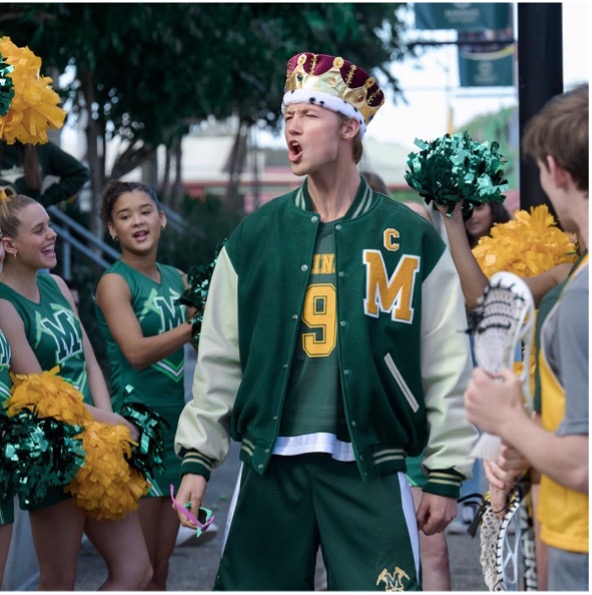
Figure 1. The Wilds Show Cover

The Wilds, an Amazon Prime, 2 season show, created by Sarah Streicher in 2020 follows a group of teens stranded on an island, all of whom have crossed paths in one way or another­ before the stranding–two brothers, two best friends, and 2 sets of students who went to school together. To those who have watched The Wilds, we all know season 2 did not live up to the hype of season 1. However, I think there are still meaningful stories told and dynamics to analyze in the second season. I am choosing to focus on the argument between two main characters, Ivan and Kirin, during their character-focused episode. While the two went to high school together, they ran in entirely different social circles. Kirin was the stereotypical popular, egotistical jock, and Ivan was a proud, witty, gay teen. I believe the selected scene, and their dynamic as a whole, is a commentary on the totality of “cancel culture”, and its modern-day lack of situational consideration. I cannot begin to imagine the struggles and intersectionality of living life as a young, gay, black man, but I will be discussing my understanding of the message as portrayed.

Figure 2. The Wilds Season 2, screenshots from episode 6.
Kirin pictured left; Ivan pictured right.

The conflict begins with Ivan scrolling through the Instagram of Kirin’s lacrosse coach. While deep diving, he uncovers an old photo of the coach doing blackface for a Halloween costume. Ivan exposes this image and gets the coach fired. Ivan is riding the high of being deemed a “hero” and is clearly enjoying the attention he is receiving from exposing the coach. A brief interruption to this buzz, was catching Kirin hugging his coach goodbye and crying, causing Ivan to call him a “sympathizer”.

We don’t know the full story behind Kirin’s relationship with his coach until Ivan and his love interest, Luc, stumble on Kirin sitting alone in the locker room, drinking heavily. Ivan smiles down on him, and begins asking what’s going on, to which Kirin angrily responds that Ivan acts like a know-it-all, who doesn’t know anything about real life. He divulges into how the coach was a father to him, a good man with a wife and kids, someone who took him in when he needed family. Ivan pushes that he protected himself and the school from a bigot. He slowly gets closer to Kirin, with no intentions of defusing the situation but rather aggravating it.

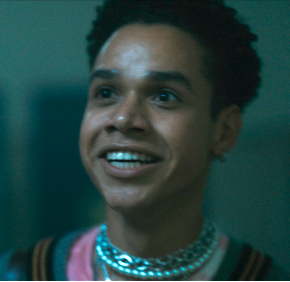
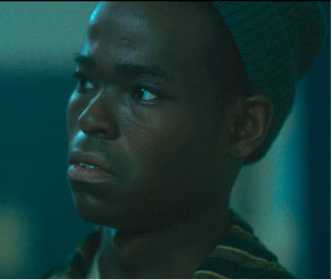
At no point does Kirin actually try to justify the coach’s racist actions, something I think slipped by Ivan, because to him it was an ‘all or nothing’ situation. As Kirin gets increasingly angry, Ivan excitedly pulls out his phone, stating he’s “been waiting for this. The white rage boiling point”. Kirin punches a locker, denying the “white rage” claim. Ivan continually taunts, “you wish that locker had been my face, don’t you?”, with a gleeful expression. The progression of the dialogue in the scene is upsetting and contains the use of a homophobic slur, so to those looking to watch, take this as a trigger warning. Ivan does not stop provoking Kirin and is uncomfortably exhilarated by his increasing anger. I think the following images speak for themselves, as Kirin is in a drunken, emotionally unstable state, Ivan appears gleeful, and Luc looks disturbed by Ivan’s comments.

Figure 3. The Wilds Season 2, screenshots from episode 6. From left to right; Kirin, Ivan, Luc.

Kirin screams at Ivan to shut up and get out, refusing to say the things Ivan is probing him to. The scene comes to a climax after Ivan does not cease tormenting Kirin. He insists on calling him homophobic slurs, to which Kirin finally does. Ivan has all of this on video, which gets Kirin expelled.


This is a heavy scene, leaving all 3 characters hurt and disturbed by what took place. In my analysis, I am in no way trying to justify any acts of racism or homophobia portrayed in this episode. Kirin is not in the right; being drunk, hurt, or having any other extenuating circumstance does not warrant bigotry.

However, I do not believe viewers were supposed to interpret Ivan as being in the right either. The look in Ivan’s eyes as he taunts Kirin is hungry and uncomfortable, he wasn’t an underdog hero who prevented further harm but rather incited it. Kirin and his coach deserved consequences, and they received such, but it is revealed to the viewers that Ivan did too. Luc, so upset by the situation, breaks it off with him. He leaves Ivan with the message “Be tender” on a dollar bill he owed him.

Figure 4. The Wilds Season 2, screenshot from episode 6. “Be tender”.

I believe this goodbye sentiment supports the message that Ivan was overtly cruel, likely out of fear. As a young, gay, black man, much of the world is out to get him. His fear is understandable, trying to protect himself offensively, rather than leave himself vulnerable to attack. His fear and defensiveness causes him to not just encounter enemies but to make them out of strangers. Kirin had no right to say slurs, but he truly did not seem to do it out of a real hatred for gay or black people–it was borderline coercion. In reality, Kirin was hurting and Ivan was too. To Kirin, Ivan was an unsympathetic attention seeker, and to Ivan, Kirin was a sympathizer and bigot. I believe neither of them was correct, but this episode showed the two imperfect characters at incredibly low moments in their lives.

This is where I believe the show can be extended to a larger metaphor about the world. “Cancel culture”, while at times truly does give harmful people the consequences they deserve, has also become bloodthirsty. There is no black and white in the way society “cancels” people nowadays. Someone is good, until they inevitably mess up, and then they are irredeemably bad. The general media shows no mercy, nor the ability to portray someone as simply human, i.e., flawed.

Ivan felt that he was protecting his community by canceling the enemy he saw in Kirin. What he didn’t see was the nuances of the situation. Kirin didn’t say his coach shouldn’t be punished for blackface, and was, not so eloquently, expressing the massive grief he felt at losing another father figure. It is possible for his coach to have been a loving person to Kirin, while also being incredibly ignorant and insensitive to the impact of his actions. It is important to understand that situations are not so cut and dry. Someone could get canceled over a viral video that makes them out to be a horrible person, when in reality, we caught a glimpse into one of the worst days of someone’s life. I believe most of us could only hope to be shown grace, were we to mess up during one of our lowest moments.

Through this character pairing of Ivan and Kirin, The Wilds, portrays how quickly fear can devolve into violence. Kirin could not understand the root of Ivan’s defensive demeanor– someone who will be faced with hate and prejudice his whole life. Similarly, Ivan could not see where Kirin was coming from due to his preconceived notions about him. While this depiction was a hard watch, and deeply sad from multiple angles, the creators very masterfully challenged our usual assumptions about a protagonist and antagonist. You’d think with a white, straight jock versus a black, queer character, it’s not difficult to assume who is the hero and who is the villain of the scene. However, the show writers didn’t allow for such an easy interpretation. It is an uncomfortable position for a viewer to not know who is right or wrong.

Nowadays, there is a level of overcompensation when trying to be politically correct, in order to avoid the mob mentality of “cancel culture”. That’s not to say society didn’t need to advance its sensitivity and empathy towards others, but one must think critically and look for a larger picture before pointing a finger and slapping a label on someone. Humans will make mistakes, especially young ones, and deeming them an abhorrent person dismisses a chance to better themselves and learn. Ivan and Kirin eventually make amends, and show how capable of growth and compassion they are. Rather than crucify all who make mistakes, people should be allowed an opportunity to become a more understanding, educated, and loving person. 

Token: Judy Heumann’s Reynolds Lecture Reflection

​Judy Heumann is an internationally known disability activist. As someone with a physical disability I have looked up to Judy for much of my life. Due to her dedication to equality and disability justice, I have many of my basic human rights, so getting the opportunity to listen and learn from her was such an honor.

 For much of the lecture, Judy spoke on her experiences dealing with ableism in education and her work within the U.S. government. I could relate greatly to her experiences growing up with a disability and going through the public education system with one. I knew the Americans with Disabilities Act (ADA) was signed into place 30 years prior. However, hearing Judy’s experiences really put it in perspective. For instance, Judy talked about how she was not allowed to attend her local elementary school because she was considered a “hazard.” Now due to her activism the ADA is in place and prevents discrimination.

I do question Judy’s commitment to the ADA. Throughout her lecture she would reference and quote the ADA. I am so grateful for the rights it has granted me. However, I do believe the ADA is the bare minimum and there is so much that can be done. In my opinion the ADA reinforces the medical model of disability, which is the idea that the disability is the problem and needs to be fixed. Whereas, remodeling it would help promote the social model of disability, which is the belief that society is the issue – not the disability.

After listening to the lecture, I am still questioning the United States’ lack of implementation of the United Nations Convention on the Rights of Persons with Disabilities. Judy helped fight for its implementation back in 2009, but it did not get enough support. I am wondering how Judy would advise us to continue to push for the ratification. Especially with Judy’s past experience, I wonder what she thought worked well and what didn’t, and we as the new generation can further her work.

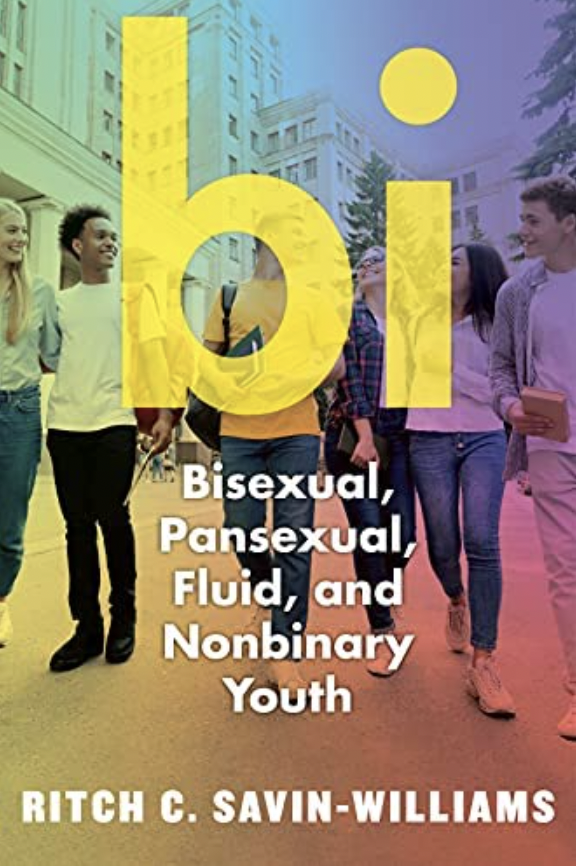
Book Review of Bi: Bisexual, Pansexual, Fluid, and Nonbinary Youth

Book Review of Bi: Bisexual, Pansexual, Fluid, and Nonbinary Youth

How many times have you heard of someone who identifies as bisexual being discredited or accused of queer-baiting, just because they are in a heterosexual relationship, or because they don’t act “gay enough”? This phenomenon is called bisexual erasure, and it is now, more prevalent than ever in our media and our society today. The book Bi: Bisexual, Pansexual, Fluid, and Nonbinary Youth by Ritch C. Savin-Williams, aims to discuss the often disregarded complexity behind term bisexuality, and bring to light the prevalence and relevance of emerging fluidity and varying sexualities and genders. The author does this through the stories and experiences of college aged students who have had varying journeys regarding their sexuality and/or gender. 

An overarching and important theme throughout this work, is the idea that the term “bisexual” is an “inadequate namesake” (Savin-Williams 21), as stated in the introduction of the book however the term is widely accepted by the public, which is why so many stereotypes and misconceptions have emerged out of this term. Many, as the author calls it, “individuals who are, to varying degrees, sexually and/or romantically attracted to multiple genders or sexes” (Savin-Williams 21), will refer to themseleves using the term bisexual, because it is really the only publicly accepted term other than gay or straight. However, because of this, many of the complexities of sexual attraction, gender, and fluidity are hidden, because when the public sees “bi”, they automatically think boy and girl. The pervasive bisexual stereotypes that rule a lot of our society and media, and how they can be dangerous are a big point in this book. The author is ultimately aiming to discuss many of the lesser known identities that are often hidden behind the veil of bisexuality, and bring to light the term’s complexity, as well as intersectionality between sexuality, gender identity, and other things like race and social class. 

Ritch C. Savin-Williams is a developmental psychology professor at Cornell University as well as a licenced clinical psychologist who got his PhD at the University of Chicago, and he specializes in researching and writing about the sexual and romantic development of mainly adolescent and young adults of varying genders and sexualities. He is known for writing books on adolescent development, with this being his 10th book in that subject area. Having the baseline of adolescent developmental psychology, and having studied young men and women of all varying identities, with many different backgrounds this has helped him bring his expertise into more niche areas like being an expert witness for cases involving same sex marriage, gay adoption, and intersectionalities of gender/sexuality and race. Having this background has put him in a good place to write so many books on adolescent development, many of which involve the complexities of fluidity of sexuality and gender. 

For this particular book, Dr. Savin-Williams conducted three studies where he interviewed and listened to the stories and journeys of 69 college aged students, focusing on the fluidity and spectrum of sexuality and gender. The interview contained many open ended questions about their development from both sexual and romantic perspectives, and the participants were asked to talk about broad topics from this lens, ranging from their early memories to where they see themselves in the future. He emphasizes that the questions were open ended and were asked, “not as an inquisition but as an explanation” (Savin-Williams 16). It was essential for the author to use this style of interview, so that the process would almost be led by the participants, taking Savin-Williams to where they wanted to go when discussing their experiences. He says, “Young people want to tell us their stories, their secrets, all we have to do is to want to listen”. The stories gained from this interview are the basis of the book and help the author show that the nuance to bisexuality, fluidity, pansexuality, etc, is a lot deeper and more complex than many think. Savin-Williams admits that almost three quarters of his participants “reported that they are white and grew up in middle or upper class homes in small or medium sized towns throughout the United States” (Savin Williams 15). He later goes on to say that urban and rural communities were represented in the participants, as well as young people of color or young people that grew up in lower class households, however, the majority of his participants fit that first bill. 

One thing this book does very well is discussing the distinction between romantic and sexual attraction. This is something that is not talked about very much, because so many people blur the lines between these two things, and while there can often be some crossover, the bottom line is that these two things are separate. When considering parts of one’s identity, this work describes sexual, romantic, and gender aspects, drawing a clear line between sexual and romantic attraction, as well as touching on the idea that attraction/sexuality and gender are also separate things that are often lumped together. It is made clear in this work that sexual and romantic attraction for others can be- and is often- varying and fluid for different genders, body types, personality types, etc. For example, someone can be sexually attracted to both men and women, but not romantically attracted to men. For many, this is a complex idea to grasp, because for a large majority of people sexual attraction is supposed to come with romantic attraction and vise versa. Savin-Williams says that something in common with many of the youths he interviewed was that many of them had, “ an assortment of sexual and romantic attractions, a mixture of sex and romance that did not always corespond to their attractions, and a search for an identity that made sense”. In other words, it is often confusing for many young people (as demonstrated by the youths interviewed), to make sense of their attractions and sexuality, when their sexual and romantic appeals did not line up. This distinction is extremely important to talk about, especially in today’s environment, and this book did an excellent job of working through and discussing this. 

I believe that this book would have benefited from more intersectional participation in the interview. While it should be noted that this lack of inclusion is something that the author addresses and discloses towards the start of the book, the book would have benefited if the author had just included more intersectional diversity in the first place when the interviews were taking place. The junctions between sexuality and gender, along with race, religion, class, and/or upbringing are important to discuss and it would have been interesting and more complex to hear about more of the different experiences between, say, a white, upperclass person who identifies as bisexual, and a person of color from a different upbringing who identifies as bisexual. There is some of this in the book towards the middle of the interviews, but increasing the intersectionality of participants would help this book be more well rounded. 

I really enjoyed reading this book, because as someone who identifies as bisexual, I have struggled with many of the stereotypes, questions, and definitions discussed in this book. I myself, am pretty sure that I might be pansexual or some other sexuality, but up until recently I call myself bisexual because as stated in this book, it is the most widely accepted term other than gay or straight. However, more recently, I have stuck with the bisexual label because I realized that the term is expansive, and can mean many things- something that this book has affirmed. This book resonated with me because I was able to read stories about young people around my age who have had similar experiences to me: my dad refusing to accept that I am bi because I have only ever been in heterosexual relationships; struggling with separating romatic and sexual attraction and figuring out where they intersect for me; struggling to find a label that fits. I would recommend this book for almost everyone to read, I think that no matter your sexuality or gender, you could benefit and gain new understanding by reading this book. However, if I were to be more specific, I would especially recommend this book to anyone who identifies as something in between gay and straight- somewhere on the spectrum but you are not sure where- this book will help with understanding of the complexities and fluidity that come with adolescent development no matter your identity. 

Sources: 

SAVIN-WILLIAMS, RITCH C. Bi: Bisexual, Pansexual, Fluid, and Nonbinary Youth. NEW YORK UNIVERSITY PRESS, 2023. 

“Ritch Savin-Williams.” Cornell College of Human Ecology, https://www.human.cornell.edu/people/rsw36. 

Book Review: The Tragedy of Heterosexuality

The narrative surrounding queerness in society today includes overcoming challenges, facing daily adversities, and experiencing more hardships than heterosexual peers. The Tragedy of Heterosexuality breaks this illusion of heterosexuality being easier than homosexuality and provides sympathy for those oppressed in heterosexual relationships. Jane Ward suggests that straightness is a means for people to access cultural and institutional rewards. However, while heterosexuality offers this privilege, it continues to be a site of oppression, violence, disappointment, and discrimination for women. Heterosexuality, from a queer lens, is just a ‘fetish for normalcy.’ Through this book, Ward reveals how heterosexuality is rooted in concepts of patriarchy, male domination, and toxic masculinity, to name a few. Ward realized she was ‘crying queer tears for straight people.’ Hence, through her research and personal experiences of being a lesbian feminist, Ward examines how queer relationships are healthier and more empowering than straight ones. According to her, ‘It’s not that it gets better for queer people; it’s that heterosexuality is often worse.’

While Jane Ward is best known for her 2021 PROSE Award Winning book, The Tragedy of Heterosexuality (New York University Press, 2020), she has written several outstanding books, including the 2016 Lambda Literary Award Finalist- Not Gay: Sex Between Straight White Men (NYU Press, 2015), and Respectability Queer: Diversity Culture in LGBT Activist Organisations. In addition, her research has been featured in The Guardian, Huffington Post, BBC, and The New York Times, to name a few. Apart from being an author, Ward is a professor, urban gardener, baker, and parent to what she likes to call ‘one human child, one potbelly pig, nine chickens, and one cat.’ Ward has also cofounded the Altadena/Pasadena chapter of Showing Up for Racial Justice. She received her Ph.D. in sociology in 2003 from the University of California Santa Barbara and is now a Gender and Sexuality Studies professor at the University of California Riverside. Her teaching and writing focus on feminism, queer, and heterosexuality studies.

The tragedy of heterosexuality is caused by what Ward has termed the misogyny paradox. The misogyny paradox is where ‘boys’ and men’s desire for girls and women is expressed within a broader culture that encourages them to hate girls and women.’ (pp. 25-26) Hence, the misogyny paradox promotes stereotypical roles in heterosexual relationships, such as the dominance of men and the submission of women. Ward exposes how this oppresses straight women as ‘their sexual relationships with men have been maintained by force, both through cultural propaganda targeting girls and women and more directly through sexual assault, incest, compulsory marriage, economic dependence, control of children, and domestic violence (p. 3). The situation is worse because straight men and women romanticize this unequal gender binary.

Their romantic and erotic attachments to the misogyny paradox give rise to an entire industry of self-help books, marriage and relationship counselors, pick-up artists, and seduction coaches. These industries encourage toxic masculinity and promote the idea that women want men to take the lead and be the decision-makers in the relationship. Women are objectified, and the ideal woman is created and viewed through the male gaze- waxed, shaved, toned, etc. Hence, Ward suggests that the ‘key difference between straight culture and queer culture in this regard is that the latter does not attribute these destructive behaviors to a romantic story about a natural and inescapable gender binary.’ (p. 27). Ward proposes the concept of ‘deep heterosexuality’ as the solution for this ‘tragedy.’ Deep heterosexuality is a ‘framework for honoring and preserving what straight people experience as fulfilling about hetero sex and straight culture and for pushing further and deeper in these pleasurable hetero directions’ (p. 159). Ward pushes for the expansion of heterosexual attraction to include the sexual vulnerability of men and the humanity of women. Hence, “straight men do not need to be queered; they need to learn to like women” (158)

What I admire most about Jane Ward’s writing is her unapologetic honesty, blunt criticism, and matter-of-fact approach to controversial topics. She rips off the band-aid of ignorance and forces us to see the pain caused by the oppression and inequalities associated with heterosexuality. Her strength lies in her ability to voice deeply personal opinions while supporting them with concrete empirical evidence. Her in-depth analysis of the historical context of the self-help industry and marriage counseling in the 1900s, the deep-dive into the pick-up artist and seduction industry, the critique of books such as Men Are from Mars, Women Are from Venus (1992) make it impossible to turn a bind eye to her argument. In addition, ward does a great job highlighting and examining the intersectionality of race and sexuality, a topic often overlooked. For example, she talks about how heterosexuality is often the only privilege black women have, which they cannot afford to lose, regardless of the oppression and injustice they might face within it. She also cites the work of the South Asian American feminist scholar Shamita Das Gupta, who highlights how immigant women conceal their husbands’ violence to project an ‘unblemished’ image of their communities to prevent discrimination. Hence, her writing displays the layers of oppression associated with heterosexuality.

However, there are some topics that I wish Ward had touched upon in the book. In my opinion, the book focuses on comparing and contrasting the ways straight men and lesbian women treat and think about women. While this is a valid and current issue to be discussed, it would have been interesting to include a few other perspectives. For example, I would have loved to know how bisexual, pansexual, asexual, and transgender relationships would have played into this debate. Would there be a difference in the relationship dynamic between two straight people and two bisexual people? How would an asexual-identifying male’s opinion differ from a straight man’s opinion on women? I think including these perspectives would have made the book more inclusive and reflective of our society’s diversity of opinions and experiences.
Moreover, homosexuality in the book is depicted as a safe haven and escape from the oppression and violence associated with heterosexuality. This can lead to a dangerous trajectory of justifying violence or toxicity in queer relationships. Physical, mental, and emotional abuse can occur in all sorts of relationships, regardless of whether they’re queer or straight.

As a South Asian woman, I felt the book was centered around white American opinions on heterosexuality, where men are the bad guys and women are the damsels in distress. While I truly respect how Ward centered the book around calling out toxic male behavior and directly addressed men, I think she failed to address an equally important demographic- women! Ward suggests that a part of the problem would be solved if ‘men liked women more, but I believe that women need to like women more too. In South Asian cultures, women are often the strongest upholders of patriarchy. In my life, I’ve experienced more women shaming, discriminating, and slamming other women than men. Teachers slut-shame girls in school, grandmothers, and aunts constantly comment on bodies and clothing, and mothers train girls to believe their only role in life is to be good wives and mothers. While my dad refuses to celebrate any patriarchal Indian festivals and rituals, my mom consciously continues to partake in them for the sake of ‘tradition.’ It’s ironic how the matriarchs in South Asian culture actively promote patriarchy in the name of culture and tradition. Hence, men and women must reflect on their indoctrination of patriarchal values. It’s impossible to fight discrimination if women stand against each other rather than together and in support of each other.

Overall, I think this book provides us with a much-needed wake-up call. After reading this book, I became aware of the saturation of heteronormativity in my upbringing. I realized how the media I consumed (books, movies, social media) contributed to the romanticization of the gender binary. I think this book is a fascinating read and has much to offer to everyone. It shows us that oppression is multifaceted and emphasizes the intersectionality of feminism, queerness, race, and culture. It is one of few books that call out heteronormativity and shows us what we can learn from queer communities. The illuminating discussion and debate initiated in this book will ensure that everyone reflects on how they can better their relationships.

Sexuality, Disability, and Aging: Queer Temporalities of the Phallus Review

26% of the United States population and 16% of the entire world’s population has some type of disability–born with or later acquired in life. That makes disability the largest minority. Yet, so often it is forgotten, especially when discussing topics of sexuality. Despite the lack of discourse around disability, there are some scholars that choose to examine disability through a disability studies lens or through crip theory. According to the University of Minnesota, crip theory is “a blurring or merging of queer theory and critical disability studies. Crip theory explores how the social pressures and norms around ability intersect with the social pressures and norms around gender/sexuality.” In the book “Sexuality, Disability, and Aging: Queer Temporalities of the Phallus” by Jane Gallop, crip theory is utilized to examine the intersections of disability, sexuality, and disease.  

Rather than making an argument in “Sexuality, Disability, and Aging: Queer Temporalities of the Phallus,” Gallop instead chooses to explore the intersections of disability, sexuality, and aging through anecdotal theory. By doing that she hopes to share her experience of sexuality, while aging with a disability. 

Jane Gallop was born in Duluth, Minnesota and went to Cornell University for her undergraduate and graduate degrees. Now she works at University of Wisconsin-Milwaukee as a professor in the English department–specializing in feminist, queer, and critical theory alongside academic writing. Gallop, a long-time feminist, is known for her writing on feminism, and is credited for writing ten books. Gallop developed her interest in disability from her own physical disability. She was born with her disability, flat feet and weak ligaments, but its symptoms did not start to manifest themselves until her late 40s. As her foot pain started to progress into chronic pain, she began to walk less–eventually using a wheelchair as her primary source of aid. Claiming her disability identity was not easy for Gallop, as she struggled with feeling invisible and unattractive. As time went on she began to explore the intersections of disability, sexuality, and aging, which is what prompted her to write “Sexuality, Disability, and Aging: Queer Temporalities of the Phallus.”

The book opens with Gallop saying that “This book is, first and foremost, rooted in the way crip theory resonates with my own experiences” (Gallop 2). That sets the tone for the rest of the book. Gallop then proceeds to explain where she got the ideas for the different themes of the book. When discussing aging she says, “The swath of experience that can be understood either as disability or as aging” (Gallop 5) suggesting that as we age we develop more disabilities. Then she believes that sexuality and disability are so intertwined that both topics are wrote about together, saying, “I immediately loved the attitudinal kinship of ‘crip’ with ‘queer’ and felt that was the direction I wanted my theorizing to head’” (Gallop 1). Lastly, she explains where she developed the idea for the phallus. Initially she was unsure if she should include phallus in the subtitle, as, “Someone who contributed to the feminist critique of the psychoanalytic concept of the phallus, I feel sheepish indeed to return here to the phallus as a term for thinking about sexuality” (Gallop 14). Yet, she does acknowledge the phallus is male centered. There are only two chapters within the book. Staying true to her anecdotal theory, she opens each chapter with a personal narrative. The first chapter’s narrative is about her discovering her disability and how she associates it with castration, but then she discovers how to navigate it and it becomes phallus for her. The second narrative is about her discovering her sexuality after her husband discovers and is treated for prostate cancer. There, castration is used to describe her husband’s illness, and phallus is used when they become sexual again. 

The main strength of “Sexuality, Disability, and Aging: Queer Temporalities of the Phallus” is the way Gallop’s personal narrative is used throughout the entire book. Each chapter opens with a story of Gallop either realizing her disability or learning to navigate it then for the rest of the chapter she uses the different themes of her story to discuss the intersections of disability, sexuality, and aging. The great amount of personal narrative used helps the reader sympathize with Gallop’s experiences, and better comprehend the investigation within the book.  

The overarching weakness of “Sexuality, Disability, and Aging: Queer Temporalities of the Phallus” is the lack of accessibility of the content to the general reader. Throughout the book Gallop references different theories–temporality theory, crip theory, queer theory, decline theory, and psychoanalytic theory, to name a few. Gallop mentions and refers to these theories without explaining them or defining them. The lack of detail makes much of the content difficult to understand. I have had to look up many of the terms myself, causing the reading to be extremely tedious. It makes it very obvious that the intended audience is not the everyday reader, but rather other scholars who are already familiar with the topics. 

In conclusion I thought “Sexuality, Disability, and Aging: Queer Temporalities of the Phallus” by Jane Gallop was extremely interesting. It gave me another perspective on the intersections of disability, sexuality, and aging that I did not have before. Yet, the inaccessible nature of this book was very prominent. I believe anyone would benefit from reading this book, as the topic is almost never talked about. However, the lack of details when stating different terms or theories used makes it quite challenging for someone not well-versed in these theories to truly understand the full message behind the book. Overall, “Sexuality, Disability, and Aging: Queer Temporalities of the Phallus” by Jane Gallop is an interesting, well-written and extremely informative book, especially for someone already familiar with the theories underpinning it.

Work cited

Gallop, Jane. Sexuality, Disability, and Aging: Queer Temporalities of the Phallus. Duke University Press, 2019. 

Testimonies from Transgender Youth: A Book Review of The Trans Generation

Every year, transgender youth in North America become increasingly prevelent, and yet Canadian and United States societies continue to fail them with a lack of safety, support and protection. Not SINGLE institution can be blamed for the oppression of trans kids; many systems in North America, often intentionally, work to promote and enforce harmful gender norms. Even more so now in The United States, anti-trans bills are being introduced across the nation. This transphobia perpetuated in North America has caused transgender youth to be disproportionally affected by mental illnesses, drug abuse and violence. While the situation seems hopeless, trans activists and scholars in the country have long been fighting for a better future. One, Ann Travers(they/them), aimed to do so with their book, The Trans Generation. 

In the scholarly monograph, published in 2018, Travers documents the negative effects of growing up transgender in North America through personal accounts of transgender youth and their parents. While the children interviewed are mostly coming from supportive families, governments, school administrations and other systems that uphold the gender binary often prevent transgender kids from having complete and fulfilling childhoods. Travers notes, “It would clearly be beneficial to all children if gender were not used to organize kids at school” (147). Travers argues that without that rigid gender binary imposing on the lives of children, young kids of all genders would be more freely able to express their identities. Travers quotes geographer  Kath Browne to echo their own statement, saying “Gendered spaces are disabling environments; it is the normative constructions of sex that are both built into, and interact in, everyday spaces that reproduce the ‘abnormal’” (79). Additionally, Travers makes a strong effort to decenter their whiteness and draw attention to the inequalities within the trans community due to differences in race, class, sexuality, etc. As Travers questions what can be done to improve the conditions for transgender children in North America, they discuss how any efforts made to protect these children would only affect the most privileged few. Travers quotes political scientist Kimberley Manning in saying, “Publicly tackling transphobia is only possible for those who can afford the costs of time, labor, finances, and risk” (128). This statement especially highlights the need to keep underprivileged children at the forefront of the fight to end trans oppression. Only some kids can afford to transition, switch schools, connect with other trans people, etc., though all of these opportunities are crucial to a child’s physical and mental wellbeing. Systems upholding racial and class opression would need to be dismantled before these opportunities could be made available to everyone, however Travers believes decentralizing the gender binary is the first step to reducing the precarity of trans kids.

Ann Travers devoted 5 years to learning from 36 transgender kids aged 4-20 about their experiences, working to find children of various identities, races, classes and family structures. Despite being a non-binary person themself, Travers commentS on how “transformative” this RESEARCH was for them, CLARIFYespecially in their lack of using the words ‘gender assigned at birth’; they state, “In writing this way, I have endeavored to model a much more open and less biologically deterministic way of enabling and respecting each person’s right to determine their own gender” (8). Their desire for writing this book was to improve the quality of life for both transgender children and cisgender children alike. 

The book itself covers topics ranging from parental support to bathroom usage to healthcare to sports teams, all exemplifying that most areas of life for transgender children are frequently interrupted because of their identities. In the case of education, trans children often must switch schools or leave school entirely because of the oppressive environment they are in. As Travers states, “Gender policing and harassment affect mental health, school attendance and achievement” (67). The harassment children face from peers, teachers and parents is not only detrimental for trans kids’ physical and mental health, but causes them to miss out on academic opportunities as well. A lack of access, safety or inclusion in public spaces such as restrooms also contributes to physical and mental health risks for kids of all ages. Travers explains how several young children in their study would wet themselves before using a public restroom. Since some schools prohibit transgender students from using their desired bathroom, the discomfort surrounding public gendered spaces is often heightened there. A GLSEN report included in the monograph documents that “60% of students had been restricted to using a bathroom or change room according to their legal sex” (50). Trans oppression from school administrations does not stop at bathroom usage, AS many schools prevent children from using their desired name or pronouns and in extreme cases HAVE suspended /CAN SUSPEND or expelled children who want to transition while attending school. Even for schools that do support transgender children, there are still barriers due to two-sex systems, especially in sports. Many subjects of Travers’s study talk of needing to leave a sport they are passionate about because they either cannot play on their preferred team or they face harassment from team members, coaches and parents, among other reasons. Travers states broadly, “For trans people of all ages, the sex segregation of sport is a key obstacle to participation” (95). The statements from the subjects and their parents as well speak volumes to the interruptions of “normal” childhood life. 

I found the testimonies from this book particularly enlightening as they spoke to the way young children experience gender. The usage of personal voice from these young kids highlights the self-awareness and understanding one gains from questioning and discovering their identity. With their clear and open definitions of the gender spectrum, they are truly paving the way for a more less sex-segregated future. One child, as Travers notes, “Believes that children and young people should be able to ‘try stuff out, find what fits for them’” (31). THIS CHILD ALSO articulates clearly the fluidity of gender and children’s right to self-determination. Travers describes another kid REVISE,  “Stef resists both a binary-based trans narrative of permanence and the kind of criticism of that narrative that legitimates trans-opressive refusals to acknowledge the ‘realness’ of trans kids’ gender identities” (30). These personal accounts educate readers on both the transphobia children endure as well as validate gender as a spectrum. All people, transgender or cisgender, young and old, can learn from this new generation of children. 

While this monograph succeeds in addressing the severity of trans kids’ mental health issues, some of the descriptions of self-harm and suicide are in need of content warnings. Of course, trans children are disproportionately at risk, but the explicit and somewhat graphic detail used is not necessary. The main instance of this is in a description of a young boy named Finn who took his life. While the language used came from his mother’s announcement in an online parent group and was only quoted by Travers, their discussion of the death was disturbing. Again, suicide is an uncomfortable and disturbing topic to begin with, but also a significant aspect of trans oppression. Travers explains that they see Finn as a “casualty” of this oppression due to his feelings of “hopelessness about the future” and the “limited agency available to him” (35). This description does help readers understand the state of despair of trans children, but I don’t believe this serious of an issue can be brought up so honestly in this way.

Overall, I thought this book was incredibly informative and well constructed considering the difficult subject matter. Not only did Travers broaden my understanding of trans life in North America, they ended the book in such a thoughtful conclusion of the nuances within the trans community given intersecting identities. I would be curious to know how the history of trans youth has expanded since 2018; much has changed in the past 4 years and I wonder what effect the pandemic especially has had on trans youth. Besides the outrageous amount of anti-trans bills proposed in 2021, I do wonder if conditions in schools have improved for trans children with the growing impact social media has on society. While the contents of the monograph are deeply saddening, this book is a must read for anyone wanting to learn from children affected by trans oppression. 

Travers, Ann. The Trans Generation. New York University Press. New York. 2018.

Improving Straight Culture: A Review of The Tragedy of Heterosexuality

“Men want women and also hate women” (Ward 28). In American culture, misogyny, strict gender roles, and the normalization of heterosexuality are elements that have become so ingrained in our society that people rarely question them. We teach young girls that their purpose in life is to find a husband and live happily ever after and young boys that their identity must be found in rigid masculinity, all while creating a society where the patriarchy is rampant and controlling. While the violence, hatred, and shame of heterosexual culture have been normalized in our society for hundreds of years, feminists and scholars of gender and sexuality studies are beginning to unpack the framework of heterosexual culture and take a critical view of the issues that historically, few have addressed. 

One such author is Jane Ward, who addresses misogyny and the patriarchy, as well as race, gender, and queerness in her 2020 book, The Tragedy of Heterosexuality. Ward, a professor of Feminist studies at the University of California Santa Barbara, is an author and scholar. Originally receiving her PhD in sociology from the University of California Santa Barbara, Ward now focuses her studies on queer and feminist cultures, including heterosexuality, race, and trans cultures. Prior to writing The Tragedy of Heterosexuality, Ward wrote and published two other books, Not Gay: Sex Between Straight White Men (2015) and Respectably Queer: Diversity Culture in LGBT Activist Organization (2008) (Ward). As a queer woman, Ward takes a critical approach to both heterosexual culture, patriarchy, and white queer culture in her works. 

In The Tragedy of Heterosexuality, Ward examines the history of heterosexuality within the United States through a queer feminist lens. She analyzes primary elements of straight culture, such as what she refers to as the “heterosexual repair industry”, and looks towards queer lesbian culture to claim that as a society, men should improve their treatment of and their actual desire for women and women should heighten their standards for the men in their lives. Ward also argues that while people often treat heterosexuality as the “default” and the “easiest” option in society, it is actually not the case. She writes, “This book argues that the basic premise of this question–that heterosexuality is easier than queerness–requires renewed investigation” (Ward 2). Though heterosexuality may be seen as the “default” in society, Ward claims that heterosexual culture requires significant improvements, and envisions a better, more authentic, and more desirable future for heterosexuals. 

In the opening chapter of The Tragedy of Heterosexuality, Ward clarifies her intentions for the book. First, she is not fighting against heterosexuality itself, but simply envisioning a better future for heterosexuality. She even uses language that straight people often use towards queer people, writing “To the straight people reading this book, let me say with all my love and solidarity, I am your ally” (Ward 7). Second, Ward aims to take an intersectional approach to the topics of straight and queer cultures. She acknowledges that queer culture is often represented from a privileged white point of view, and wants to recognize and honor the intersections of race, as well as class and ability, in her critique of straight culture. To do so, she writes, “I have leaned heavily on the writings of queer feminists of color and placed their insights at the forefront of my analysis” (Ward 7). Lastly, Ward uses multiple forms of evidence throughout the book, such as citing interviews and writings with other scholars in her field, looking towards cultural and media evidence, and even conducting her own small forms of research among the queer people in her community. It is through this methodology and philosophy that Ward forms her critiques of heterosexual culture. 

One of Ward’s greatest strengths in her writing of The Tragedy of Heterosexuality is her unique approach to issues of heterosexual men and patriarchy. Instead of simply using the rampant evidence of the oppression of women to criticize men and their heterosexuality, she claims that much of heterosexual culture would be improved if men actually like women more. While we often view heterosexuality and patriarchy as men’s control of women through their lust and desire for women, Ward writes that “heteromasculinity is characterized by a much weaker and far more conditional desire for women’s bodies than is often claimed” (Ward 19). At the forefront of her arguments is the idea that men do not actually like women very much, but instead, they like the power, control, and ownership that heterosexuality gives them. In her analysis of the history of heterosexuality in America, Ward writes, “Across time and place, most forms of heterosexual coupling have been organized around men’s ownership of women (their bodies, their work, their children), rather than their attraction to, or interest in, women” (Ward 34). Instead, Ward writes that straight men should look within themselves for a greater desire for women, not just sexually, but as people, which would result in greater respect for women. As Ward points out, in our intensely heterosexual culture, it is often in social differences between men and women that we are taught to see as desirable; it is from these differences that sexual and romantic compatibility emerges. However, more often than not, this is a falsehood. The strict gender binary culture of heterosexuality results in harsh, and often forced, differences between the genders that do not result in a desire for one another, but instead in annoyance and misunderstanding of one another. As Ward claims, a greater understanding between men and women, as well as greater acceptance of gender expression would result in men and women desiring one another more. This line of thinking, which is foundational to the arguments of the text, is a compelling and unique one that offers tangible ways in which cishet men can treat women better. 

Another strength of The Tragedy of Heterosexuality is Ward’s open critiques of white queer culture. Ward, even as a white queer woman, does not hold back in her criticism. She writes, “Many queer subcultures, like straight culture, are built on intersecting forms of violence: anti-Blackness, misogyny, transphobia, ableism, and economic injustice. . . In other words, taking queerness seriously as a cultural formation distinct from straight culture does not obscure hierarchies among queer people” (Ward 119). While uplifting queer, and particularly lesbian, culture, Ward still takes a critical view and acknowledges the racism and other injustices that are often far too present within white queer culture. In particular, she is critical of white gay male culture, writing that “Gay men, especially white gay men, are often the greatest defenders of the narrative about queer suffering, probably because they have more power and privilege to lose as a result of inhabiting and nonnormative sexual orientation (and sometimes a nonnormative gender)” (Ward 3). So, while being critical of heterosexual culture, Ward is still able to express her critiques of queer culture, as well as the extreme differences between lesbian culture and gay male culture (and particularly white gay male culture) which are rarely discussed. Ward’s ability to present a nuanced view of white queer culture speaks to the quality of her writing and the arguments in The Tragedy of Heterosexuality. 

While The Tragedy of Heterosexuality has many strengths in its arguments and methodology of writing, it could include more quantitative studies and research. Ward cites evidence throughout the book, such as quotes from other feminist scholars, as well as evidence such as ads and media sources that display gender roles. In the fourth chapter of the book, she even conducts her sample study in which she surveyed and quoted people within her own queer community about their views of heterosexual culture. While the quotes from queer people in her life provided relatively sufficient evidence of her claims, I believe that she could have strengthened the chapter by expanding her research and giving a survey to a much larger group of people outside of her own queer community. Conducting research about queer views on heterosexual culture could have provided Ward with more compelling evidence to back her claims. However, Ward does acknowledge the challenges of conducting this type of large-scale research, writing, “Suffice it to say that the kind of quantitative data that would be most useful to the queer feminist investigation at hand are, by their very nature, limited. The field of critical heterosexuality studies is still in its infancy, and ‘straight culture,’ so hegemonic as to be unnameble outside of queer space, is a relatively new object of inquiry” (Ward 27). As Ward points out, The Tragedy of Heterosexuality is a unique work in a relatively new field, so finding and conducting sufficient research can be difficult. 

In The Tragedy of Heterosexuality, scholar Jane Ward addresses large-scale issues of American heterosexual culture that few have before. With intersectionality in mind, she encourages men to look to lesbian queer culture as an image of how women should be treated, desired, and loved, all while encouraging women to hold high standards for the men in their lives. The text is sufficiently nuanced, especially in its allyship and encouragement towards straight people, as well as its accurate critiques of queer culture. I believe that this relatively-accessible text is one that everyone should read and could benefit from, regardless of gender or sexuality. This thought-provoking and unique text could help anyone and everyone reimagine the oppressive heterosexual culture that has been ingrained in our society.

Works Cited

Ward, Jane. “Jane Ward: Scholarship for the Feminist Future.” Jane Ward, https://www.janewardphd.com/. 

Ward, Jane. The Tragedy of Heterosexuality. New York University Press, 2020.

Intersectional Feminism in bell hooks’ Feminist Theory: From Margin to Center

Although bell hooks’ Feminist Theory: From Margin to Center was found to be “provocative” when it was published in 1984, hooks’ ideas of intersectional feminism fit well in 4th wave feminism. In Feminist Theory, hooks aims to create a blueprint for a mass-based feminist revolution that speaks to all genders, races, and classes. hooks explores the limitations of various aspects of feminist theory and practice, how to improve them, and other experts’ opinions. 

bell hooks, born in Kentucky in 1952, studied English at Stanford University and the University of Wisconsin-Madison. In 1983, following years spent teaching and writing, she received her Doctorate in English from the University of California, Santa Cruz. Before her untimely death in 2021, she published around 40 books ranging from essays and poetry to children’s books, as well as scholarly articles. 

Her writings address ideas of intersectionality of race, gender, and capitalism, and how these concepts produce and perpetuate systems of oppression and domination. Despite her breadth of academic experience and qualification, hooks is known for her skill in writing for a the greater public with accessible language, furthering her goal of a common language for feminism.

In Feminist Theory, hooks approaches topics by analyzing how much progress has been made by 1984, then discusses what must be changed for feminist revolution. She enhances arguments by supporting or refuting other feminist scholars’ voices including Betty Friedan, Toni Morrison, Grace Lee Boggs and James Boggs, Charlotte Bunch, Lucia Valeska, and Paulo Freire.

hooks first criticizes Betty Friedan’s The Feminine Mystique, because it ignored women who did not fit the white, upper-middle class mold. She asserts that Black women are the most victimized group of women in terms of sexual oppression, bearing the brunt of sexist, racist, and classist oppression. Their marginality gives them a unique consciousness and central role in feminist movement.

In the second chapter, hooks expands on feminist revolution. She states how race, class, and sex work together to determine the extent to which an individual will be oppressed. Although this book was written in 1984, the importance of intersectional feminism remains relatively new in dominant feminist thought. According to hooks, the mainstream attempts at defining feminism in 1984 reflected the class nature of the movement, being liberal in origin, because society is more respective to feminist demands that don’t threaten the status quo. 

In chapter three, hooks addresses the significance of feminism as a channel for ideological meetings between people. She states that liberal white feminists never explained why feminism is important, believing that social equality was a universal concern. This resulted in failure to emphasize the necessity for mass-based movement and grassroots organizing, making feminism appear relevant only to women in feminist organizations. In reality, hooks believes that sexist oppression is the domination that most people experience. She argues that children are socialized from birth to accept group oppression and family liberation must be a result of feminist movement.

In chapter four, hooks explains the importance of solidarity among women. Male supremacist ideology encourages women to believe they obtain value only by relating to or bonding over men, which corresponds to the Bechdel Test. hooks analyzes the competitive nature of women, and how this must be unlearned in order to build a sustainable movement. She argues that many white bourgeois feminists exploit the stories of Black women for their issues, but don’t include them in the movement or acknowledge their racism. Women are taught to bond over images of women as victims, which white women liberationists embraced, allowing them to abdicate responsibility for their role in the maintenance and perpetuation of sexism, racism, and classism. They victimized themselves in order to make Black women the perpetrator, another result of a patriarchal society and form of white supremacy. hooks explains that women should work together to expose, examine, and eliminate sexist socialization within ourselves to build a foundation for solidarity. Feminist movement needs to show women how racism and sexism are connected, rather than pit one struggle against the other or blatantly dismiss racism.

The feminist movement has also splintered into special-interest groups because women doubt that other groups see the significance of their individual experiences. However, this erects unnecessary barriers to Sisterhood, because feminists must learn to fight oppressions that may not directly affect us as individuals. When we show our concern for the collective, we strengthen our solidarity.

In chapter five, hooks discusses why men are our comrades in feminism. When women lead the feminist movement, this assigns another “sex-role” to them of making feminist revolution (68). This rhetoric reinforces sexism, implying that women’s liberation is at the expense of men. However, men do not share a common social status, because patriarchy does not negate the existence of class and race privilege. Anti-male sentiments alienated many poor and working-class, especially non-white, women, from feminist movement, because Black women know the hardships all genders face in their communities. 

hooks also explains that working-class men attack and oppress women because they are usually “hurt” and emotionally scared because they do not have the privilege or power society has taught them ‘real men’ should possess” (75). She argues that when men beat or rape women, they may feel satisfied in exercising the only form of domination allowed to them in patriarchal society. Men must assume responsibility for transforming their consciousness.

Chapter six examines perspectives of power. hooks quotes Nancy Hartsock’s words that women must recognize how “power understood as energy, strength, and effective interaction needn’t be the same as power that requires the domination of others” (91). hooks says that feminist ideology should clarify for women the powers they exercise daily and show them how these powers can resist sexist domination and exploitation. For example, “one of the most significant forms of power held by the weak is the ‘refusal to accept the definition of oneself that is put forward by the powerful’” (92).

hooks also discusses the need to rethink the nature of work, once more criticizing Friedan for claiming that the most pressing problem for women was the need to get outside and work, to cease being ‘just’ housewives. This ignores how many working-class women find joy in housewifery outside of difficult, menial labor. Work can be an affirmation of one’s identity rather than a negation, as the powerful want women to view it. 

In chapter eight, hooks introduces how educating women is a feminist agenda. She explains how writing and literacy help develop an individual’s imagination and ability to think. A person’s access, through reading a variety of interpretations of reality, increases that person’s capacity to think for themself, to go against cultural norms, and to conceive of alternatives for society. However, many people don’t have literacy. Therefore, feminist ideas must also be spread by word-of-mouth. She proposes bringing women’s studies courses to local community centers. Ideology and mobilization are both vital parts to feminist movement, and hooks believes that revolutionary politics can only arrive from correct ideology.

In chapter nine, hooks discusses the feminist movement to end violence. She explains how the Western philosophical notion of hierarchical rule and coercive authority is the root cause of violence between those who dominate and those who are dominated, affecting male supremacy. hooks believes that battery is caused by the cultural belief that hierarchical rule and coercive authority are natural.

She introduces the idea of a “cycle of violence” for Black men and women. In the public world, the male worker may be subjected to psychological abuse by a boss or authority figure. Since he depends on the work situation for material survival, he suppresses this violence and releases it in what she calls a ‘control’ situation, at home and on women. hooks argues that the sexist and patriarchal notion of masculinity, exacerbated by capitalism, impacts men so that they feel degraded, alienated, and exploited in the work force. Men must begin to challenge notions of masculinity that equate manhood with the ability to exert power over others.

Furthermore, hooks explains how love and violence have become intertwined in this society, due to television and romance novels. Women are encouraged to accept violence as a sign of masculinity. Feminist efforts to end male violence against women must be expanded into a movement to end all forms of violence as social control.

In the next chapter, hooks asserts that effective parenting must make no distinction between maternal and paternal care. Until males are taught how to parent using the same model of effective parenting as is taught to women, they won’t participate equally in child care. hooks argues that community-based child care should become more prevalent, which could be improved through public day-care centers with all genders sharing responsibility for child care.

In chapter eleven, hooks explains the need to end sexual oppression. She explains how there is stigma regardless of how sexual people choose to be, including compulsive heterosexuality. Sexual freedom can exist only when individuals are no longer oppressed by a socially constructed sexuality based on biologically determined definitions of sexuality: repression, guilt, shame, dominance, conquest, and exploitation. Social relations must change to rid people from any of the violence and alienation of fixed images and norms. A line that still applies today is that “the right to choose must characterize all sexual interactions between individuals” (157).

hooks concludes Feminist Theory by explaining how feminist revolution must develop through gradual struggle. At the end of many small quantitative changes, everything will change gradually so that the whole system is completely different. However, a mass-based feminist movement requires ideology that can be shared with everyone, which can only be created if the experiences of marginalized people who suffer sexist oppression and other forms of group oppression are understood, addressed, and incorporated. Positive types of reforms focus foremost on educating masses about feminist movement on how it would transform their lives for the better. 

She also states that love is an essential part of the revolution, because love means commitment to others and their cause. This love is important particularly to those who are politically unconscious, because we cannot motivate them to join feminist struggle by asserting a political superiority that makes the movement just another oppressive hierarchy. The basis for revolution must be on cultural transformation and eradicating systems of domination. There are numerous examples of liberation struggles led by oppressed peoples globally who resist formidable powers that can serve as guidance.

Overall, this monograph explains complicated ideas clearly and accessibly. hooks wrote this monograph for the everyday human, and explains fundamental ideas in the beginning to ensure understanding. She references other voices effectively; enhancing the monograph with their diverse perspectives. 

hooks’ weakness is that she condemns women for enjoying forms of entertainment that many find enjoyable, such as romance novels and watching television. While I understand the patriarchal and dangerous sides of these consumption areas, she implies that they are ‘shallow’ pastimes. Furthermore, there are sections where she puts the impetus on women to help men overcome their internalized misogyny, when this isn’t women’s responsibility. 

I really enjoyed this monograph. It wasn’t too long, yet covered several different topics pertaining to a feminist revolution. Although it was written almost 40 years ago, many ideas still hold true, which is unsettling yet fascinating. It continued my education on intersectional feminism, which I’ve been interested in ever since reading bell hooks for the first time during my first year at Davidson. I think her ideas will continue to be applicable and relevant to all people for a long time.

Bibliography

Hooks, Bell. Feminist Theory: From Margin to Center. South End Press, 2000.

Wikimedia Foundation. “Bell Hooks.” Wikipedia, Wikimedia Foundation, 2 Nov. 2022, https://en.wikipedia.org/wiki/Bell_hooks.

Insatiable: The Complex Commentary on Body Image for Young Women

Poster for Insatiable

Growing up, we are often told what to do with our bodies – women especially. We are told how to dress, act, speak, and eat. This message comes from many sources, including our parents, social media, and movies/TV shows. One TV show that communicates these social norms to teen girls is Insatiable. It shows women in a negative light in a variety of ways. Fat women are unhappy, inhuman and undesirable; skinny women are manipulative and willing to do anything for a man. Another message communicated by Insatiable is that, for women, romantic relationships with men are more valuable than female friendships.

Insatiable follows a high school student named Patty Bladell, played by Debby Ryan – a former Disney channel star, who already has a large following of pre-teen girls. Patty spends much of her life struggling with her weight until she breaks her jaw and is forced to go onto a liquid diet that causes her to lose 70 lbs. Once she becomes skinny everyone starts paying attention to her, including Bob Armstrong, a local lawyer and beauty pageant coach. 

Debby Ryan as “Fatty Patty” vs. “Sexy Patty”

Insatiable reinforces the idea that there is a wrong way for women’s bodies to be—fat and unhealthy—and a right way for women’s bodies to be—skinny, pretty, young, and sexy. Regardless of their weight, all women’s bodies are objectified, showing their power and agency coming from external factors such as appearance. Fat women are portrayed as unhealthy and undesirable; skinny women are portrayed as selfish and boy obsessed. 

These messages are communicated through scenes involving “Fatty Patty” and “Sexy Patty.” The scenes involving Fatty Patty alway portray fatness in a negative light. She is seen binge eating at home on a Friday night with her best friend instead of going to a football game. She says, “So, while my classmates were out losing their virginity, I was at home, stuffing another hole…” (“Pilot” 1:002 ). That links being sexually desirable and active to being skinny. It also denigrates a strong female friendship and places more value on heterosexual relations. There are also several instances when Patty is compared to a pig. Someone pasted a photo of her face taped to a pig on her locker, and she received the comment, “Smells like bacon,” (“Pilot” 2:34) from skinny girls. This is comparing Patty to an animal and dehumanizing her. Pigs are known for being dirty animals so comparing her to one conveys the message that being fat is “dirty.” Being fat is also associated with being unhealthy. When Patty starts her laps in gym class, she passes out after 15 seconds. Throughout the episode, flashbacks of Debby Ryan in a fat suit reminds the audience how bad Patty’s life was when she was fat. It instills the idea that being fat is undesirable, dirty and unhealthy within younger and teenage girls.

Just as Fatty Patty is used here as a cautionary tale, Sexy Patty is used to show how women use their sexuality to attain their end goal: men. Patty’s main goal is to get with Bob Armstrong, who is an older, married man and an accused child molester. Rather than being cautious, she makes light of this by saying, “Which means I might actually have a shot [at being with him]” (“Pilot” 12:35). Patty goes to great lengths to achieve her goal. Now that she is skinny she understands that she can use her sexuality as a tool to achieve this. Patty seduces a clerk at a convenience store to get him to commit a felony on her and Bob’s behalf. Patty also harms other women to achieve her goal. When Patty and Bob’s wife, Coralee, first meet, Patty calls Coralee “A shrew” (“Pilot” 20:45). Then, Patty says, “I was already driving a wedge between them. Long Island Lolita would have been proud” (“Pilot” 20:50). This is an allusion to Amy Fisher who had an affair with Joey Buttafuco when she was 16 and he was 38. Fisher shot Buttafuco’s wife in the hope she would be able to be with Joey. Coralee also objectifies Patty, based on her appearance. She tells Bob, “She looks like an underage hooker” (“Pilot” 20:15) immediately focusing on Patty’s sexual appearance. 

The title of this show, Insatiable, has multiple meanings. Patty is always hungry and wants to eat, but cannot eat everything she wants due to the fear she will get fat again  (which apparently is the worst thing imaginable). Insatiable also refers to women being hungry for power, often with the ultimate goal of being with men.

While Insatiable can be seen as a parody, the images and messages about women, their bodies, and how they achieve agency (or not) are pervasive. Even though these messages are ostensibly being ridiculed, the intended audience of pre-teen girls may not realize that much of it is satire. Insatiable is “funny” but its humor is based on negative ideas and stereotypes that are harmful to women, especially young viewers who don’t have a well-developed lens of media literacy and who will not understand that this is a parody not a guidebook on how women should behave.

Citations: “Pilot.” Insatiable, created by Lauren Gussis, season 1, episode 1, Netflix, 2018.

A Voice for the Voiceless: How Grey’s Anatomy Moves from “Silent All These Years” to “Shattering the Glass Ceiling”

Women are taught to never walk alone at night, to carry their keys between their fingers, and to dress modestly but not too modestly. I consider these basic “Woman 101” tips. And somehow, these tips are supposed to keep me and other women from becoming another 1 in 3. 

When current conditions are voiced, we as a society tend to turn a blind eye. Supreme Court Justice Brett Kavanaugh was confirmed to the court despite being accused by multiple women of sexual assault. Many women and girls limit their behaviors for fear of rape— for fear of being told that “boys will be boys,” “you were asking for it in that dress,” or “maybe next time you shouldn’t drink so much.” Concomitantly, adolescents have learned that consent does not matter—that it is irrelevant. 

While discussions are finite, popular media has begun to tackle the topic of rape. The season fifteen Grey’s Anatomy episode, “Silent All These Years,” written by Elisabeth R Finch, aims to initiate the dismantling of rape culture while highlighting the importance of consent and the lasting impacts of rape. The title, in and of itself, highlights just how oppressive and dismissive society becomes when women speak up about instances of sexual assault and rape. 

The episode begins when Khalilah Joi, guest-starring as a woman named Abby, arrives at Grey Sloan Memorial. With a cut to her face and bruises, coupled with skittish behavior, Dr. Jo Wilson recognizes the signs of rape. As the episode progresses, viewers learn that Abby was raped after leaving a bar. Aware of the victim-blaming narrative frequently used against women, Abby is hesitant to report the incident to the police or let her husband know. In attempting to break the stigma, Dr. Jo Wilson breaks protocol and shares her story of rape and sexual violence. She humanizes herself, therefore allowing Abby to see her as more than a woman in a white coat. When Abby agrees to a rape kit, something she knows will probably end up sitting in the back of a police station, Dr. Jo Wilson and Dr. Teddy Altman shift the power back to Abby. Before moving to the next portion of the rape kit, Abby must give them consent. She makes all the choices for herself. Something so seemingly simple is immensely powerful. Just hours before, Abby had lost all body autonomy. 

Dr. Jo Wilson sharing her story with Abby

That said, the most moving part of the episode comes prior to Abby’s surgery. Hesitant to go under anesthesia out of fear of being vulnerable again and fearful of seeing her attacker in the faces of the male staff and doctors, Abby resists the surgery. From that, the “hall of awesomeness” was assembled. The hospital’s female employees lined the entire length of the hallway right up to the operating room (which only had female doctors because girl power!!). The vast majority did not know Abby but showed up because they would want others to do the same if they were in that position. 

The “Hall of Awesomeness”

The show made an additional point to shift the fault from the woman. We live in a society that thrives off victim-blaming. Contrary, in “Silent All These Years,” Ben Warren, played by Jason Winston George, took the time to explain consent to his stepson Tuck Bailey, played by BJ Tanner: “If she stops having fun, just plain stop,” said Ben. “Time out. Game Over.”

Media portrayals of sexual assault correlate with increased victim blaming and the way the public discerns victims. Contrasting the standard image of women as sexual objects, Grey’s Anatomy humanizes the victim, emphasizing the importance of consent while moving away from victim blaming. 

I was talking to someone the other day who said he thought this episode was cringy. He viewed the “hall of awesomeness” as unrealistic and unnecessary, leaving him emotionally detached. And while I listened to his opinion and told him he had the right to hold that belief, I elaborated on my perspective. The unity and “women supporting women” narrative present throughout the episode not only reinforced the idea that you are never alone but highlighted just how essential lessons on consent and education about rape are. 

There is a common misconception that feminism is anti-male when the movement’s principle is contingent on equal rights for women. Women want to be heard, to be supported, and to be given a choice. This episode highlights this message. The creators gave a voice to the voiceless. They addressed the intersectionality between race and gender; Abby was played by a Black woman, serving as a nod to the increased vulnerability of Black women. They highlighted the healing power of female solidarity while recognizing that trauma is real and does not go away overnight. They emphasize that survivors are not alone and that they are not at fault. 

To anyone that finds Grey’s Anatomy over-dramatic, cringy, or over-rated, I encourage you to give it another chance. While it might not change your opinions on the show, it empowers survivors in a world that usually silences them. If not for yourself, do it for the one in three. 

                   THEORY TO PRAXIS: DELIBERATION GUIDE 

Title: 

 Deliberation on the participation of transgender athletes in college sports  

Before the Deliberation: 

  1. Read this document for the understanding of the subject matter in detail   https://en.wikipedia.org/wiki/Transgender and https://www.plannedparenthood.org/learn/gender-identity/transgender 
  1. Read this article regarding the recent laws against the transgender school and college athletes in North Carolina https://www.nbcnews.com/feature/nbc-out/n-c-lawmakers-file-bill-ban-transgender-athletes-sports-n1261958 and  https://www.wunc.org/politics/2021-04-15/north-carolina-anti-trans-athletes-bill-debated-high-school-sports   
  1. Analyze this graph on the public opinion on transgender athlete and their participation in college sports https://www.statista.com/statistics/1238594/college-transgender-athletes-by-age/ 
  1. Be familiar with Davidson NCAA policy on transgender athlete participation    https://www.davidson.edu/offices-and-services/diversity-and-inclusion/lgbtqia-resources/gender-identity-resources 

Introduction: 

Everyone has their own gender identity depending upon the internal understanding of oneself as either male, female, or neither. Apart from our own gender identity, our gender expression helps us express our gender through the way we dress, pronouns we choose to be referred to, style, dressing, etc. Society’s understanding of gender construction as only male or female since birth has failed to recognize transgender people in the community. Similarly, in today’s world societies gender construction have mixed opinions on whether a transgender athlete should be able to compete in sports. 

The survey of the public opinion on whether a transgender athlete should compete in college sports in the United States as of April 2021, by age shows that only 20.2 % of the entire population support transgender in competing in college sports whereas the rest of the population is unsure and are against it (Reference). As a result, the debate on whether transgender people should participate in college sports in accordance with their gender identity has been a polarizing issue. Through this deliberation, I will include the several perspective and opinions of the entire Davidson community to provide a suitable conclusion for the Davidson college transgender athletes community in relation to their participation in sports. 

 
Background:  

North Carolina Republican lawmakers introduced a bill that hinders transgender students in schools and college from competing in sports. There have been 84 bills filed against transgender people mostly focusing on school and college sports. Mark Brody, one of the bill’s sponsors, Republican, introduced a bill in the North Carolina House of Representatives which argues how transgender dominance in sports has pushed out cisgender athletes from school and college sports. Such has affected their records and scholarships The North Carolina argues how such laws were introduced to protect the integrity of sports competition. 

Such laws limiting transgender people to school and college sports have had a significant impact on the mental health of transgender people. In response to such bills, statistics from a national survey of LGBTQ youth from Trevor Project (a non-profit organization on crisis and suicide prevention services) state that 40% of LGBTQ respondents, with more than half of transgender and nonbinary youth, seriously considered attempting suicide.  

This has been a highly debatable topic in college sports. Similarly, the Davidson college recently follows the NCAA policy on transgender athlete participation. Such a policy emphasizes the medical treatment of testosterone. 

  1. (FTM) A trans male assigned birth as a female receiving medical exception treatment with testosterone may compete on a men’s team but is no longer eligible to compete on a women’s team without changing that team status to a mixed team. 
  1. (MTF) A trans female assigned birth as a male receiving medical exception treatment with testosterone may continue to compete on a men’s team but may not compete on a women’s team without changing it to a mixed team status until completing one calendar year of testosterone suppression treatment. ( Reference) 

 
Similarly, any transgender student-athlete not taking hormone treatment related to gender transition may participate in sex-separated sports activities in accordance with his or her assigned birth gender. 

  • A trans male (FTM) student-athlete who is not taking testosterone related to gender transition may participate on a men’s or women’s team. 
  • A trans female (MTF) transgender student-athlete who is not taking hormone treatments related to gender transition may not compete on a women’s team. ( Reference)  

Central question: 

 
To what extent should Davidson college intervene in transgender athletes participating in sports.? 

 Intended audience: 

 I acknowledge the fact that the collaborative voice of the entire Davidson college community is highly valuable and matters to improve the understanding of this topic in detail. As a result, an entire Davidson community along with some professionals will be directly or indirectly involved in this deliberation. It will include the voice of every Davidson member and each opinion, discussion and perspective will be highly valuable for suitable outcome in relation to the transgender athlete and their participation in college sports. I will invite lawyers and the North Carolina athletic director as participants in the deliberation. 

General Format: 

The event will be held in person at Duke Hall. Although it is extremely difficult to include the voice of all1983 students and the faculty members at a single event at once, everyone will somehow contribute to this deliberation through an online survey, petition, and a form to include their voice and perspective. The event will be highly monitored by the invited professionals such as lawyers and the North Carolina athletic director who will play an important part in the evaluation and conclusion process. Below will be the general format of the deliberation.  

Part one: – Introduction and discussion of the background material (10 minutes).             

– Presentation of the facts, article, laws, collected data, and research (10 minutes) 

Part two: –    Anonymous survey and petition (5 minutes) 

                  –   Identification of the pros and cons (5 minutes) 

                  –   Discussion of the main topic in detail (15 min) 

        –    Discussion on the current policy NCAA Policy on Student-Athlete Transgender.                                    

                 –    Debate to evaluate important considerations and opinions (10 minutes) 

                 –    Deliberation: generating and evaluating ideas to transcend (15 minutes) 

 
Part 3:        Reflection (15 min) 

 
Question of consideration: 

 
1. What do you mean by “transgender athlete “? 

2.  what are the current policies in the United States in relation to the transgender athlete and their participation in college sports? 

3. To what extent do cisgender athletes get affected by transgender athletes? 

4. To what extent do transgender athletes get affected by cisgender athletes?  

6. Should Davidson College preserve or amend the NCAA Policy on Transgender Student-Athlete Participation after the bill on not allowing transgender athletes to participate in college sports is passed? 

7. Does excluding transgender athletes protect the integrity of sports competition. 

8. What are the main arguments in Favour of the transgender athlete participating in college sports? 

9. What are the main arguments against transgender athletes participating in college sports? 

10. Should the North Carolina house committee pass the bill that would exclude transgender rights to college sports? 

11. What are the pros and cons of allowing transgender athletes in competing for college sports? 

12. How it is or not fair to allow the transgender athlete to college sports.  

13.  What are the ways in which both transgender and cisgender people can participate in sports while protecting the integrity of college sports competitions. 

14. How will Davidson college respond to the issue of not allowing transgender into college sports? 

14. What are the ways in which Davidson college can provide a fair and comfortable environment for transgender athletes in sports. 

Reflection and Follow ups: 

For the reflection, all the data, research, opinions, perspective, and recommendation of the entire Davidson community will be evaluated to provide an insight to make a new understanding of Davison college transgender athlete and their sports participation. Everyone’s opinions will be highly valuable. The gathered information will be evaluated to create a suitable environment for both transgender and cisgender athlete in the Davidson college sports. The evaluation will help determine if Davidson college should continue to implement and follow the NCAA policy on transgender athlete participation or amend it in relation to new demands and policy.  

Confidentiality will be maintained. All the discussions among the parties involved along with the required documentation will be confidential unless a person makes a specific request. All the information regarding the collected data, information, and documents of the transgender and cisgender students including their identity and medical information will be kept confidential.  

 Following that, each will provide some feedback and suggestions at the end of the meeting for any future deliberations on this topic. Such opinions will help accumulate different plans, amendments, and changes. The Davidson athletic community will play a vital role and each transgender and cisgender athlete will be able to share their understanding, concerns, and questions. After the discussion and gathering of data, the invitee such as lawyers and the North Carolina athletic director along with Davidson college’s president and president of the athletic department will produce suitable conclusions to this subject matter in detail. 


References: 

https://www.wunc.org/politics/2021-04-15/north-carolina-anti-trans-athletes-bill-debated-high-school-sports

https://www.nbcnews.com/feature/nbc-out/n-c-lawmakers-file-bill-ban-transgender-athletes-sports-n1261958

https://www.davidson.edu/offices-and-services/diversity-and-inclusion/lgbtqia-resources/gender-identity-resources

“The Invention of Women:” A Review for Oyèrónkẹ́ Oyěwùmí’s Revolutionary Book

In 2011, Beyoncé asked, “Who run the world?” and answered, “Girls.” Almost a decade later, many of the protest signs at the Women’s March on Washington featured this same declaration. Worthy as it may be, Nigerian sociologist Oyèrónkẹ́ Oyěwùmí’s first book, The Invention of Women: Making an African Sense of Western Gender Discourses, which provides a deconstructive analysis and history of womanhood and gender—and their absence— in Yorùbán society, presents a strong case against the idea that “girls” are, and have been, a global and universal social category. As evidenced by the title, The Invention of Women, Oyěwùmí lays out how “the fundamental category “woman,” which she claims is “foundational in Western gender discourses,” “simply did not exist in Yorùbáland prior to its sustained contact with the West.” (Oyěwùmí x) Moreover, Oyěwùmí presents evidence for how the Western constructions of gender, as well as sex, were brought to Yorùbáland and implemented in such a way that they became salient social institutions that eventually led to the “patriarchalization” (86) of Yorùbán history and society and as a result, the subordination of what is now the category of women.

Before I begin to review and summarize the work of Oyěwùmí in The Invention of Women, I want to foreground her definition of gender as it forms the basis of her analysis. Oyěwùmí considers gender to be “an institution that establishes patterns of expectations for individuals based on their body-type, orders the social processes of everyday life, and is built into major social organizations of society, such as the economy, ideology, the family, and politics” (39).

The work of Oyěwùmí in her 1997 monograph takes the boundary pushing scholarship of sociologist Judith Lorber and others at the time who were focused on the construction of gender, and complicates it by noting that gender was not only socially constructed, but that it was socially constructed in the West and is therefore not applicable transnationally or transculturally. To set the stage for her argument, Oyěwùmí speaks to the characteristics of Western thought that allowed for the construction of gender. She contends that the somatocentricity (ix) of Western thought, in which biological determinism is the basis for the organization of society, coupled with the West’s “privileging of the visual,” (3) made the physical human body “the foundation of social thought and identity” (x) and thus subject to the creation of gender. Oyěwùmí makes it clear that in contrast to the West, Yorùbán society, prior to Western contact, did not privilege the visual sense or the body in its construction of sociocultural meaning.

Oyěwùmí then goes on to explain the ways in which Yorùbán society was organized absent of gender and sex. One key tenet of Yorùbán society that Oyěwùmí explains is the “centrality of the family compound,” rather than gender, “in defining the status of residents” (44). People who married into a household, or “ilé,” were known as “aya,” while those in the household were known as “ọkọ.” The “aya” was considered an outsider while the “ọkọ” was considered an insider and their relationship was ranked such that the “ọkọ” was “the privileged senior” (44). Overall, the hierarchy of Yorùbán society was based on age—with older people having the most status— and thus “social positions of people shifted constantly in relation to those with whom they were interacting” (xiii).

In the latter half of the monograph, Oyěwùmí speaks to the process in which gender was brought to Yorùbán society through missionaries and the imposition of the British “patriarchal colonial state” (123). Because “access to power was gender-based” in Britain, the British arrival in Yorùbáland led to the creation of “women as an identifiable category, defined by their anatomy and subordinated to men in all situations” (123). Oyěwùmí claims that one the most impactful aspects of colonialism that led to this subordination was the colonial educational system as it excluded those under the new category of women. This in turn led to the creation of a stark gender divide in terms of power, wealth, and status, which Oyěwùmí claims is an impact that is still felt in “the contemporary period” (128).

In the final pages of her book, Oyěwùmí widens her focus and criticizes the way in which “womanhood has been pathologized, at a global level” (177). As a result, Western feminists have assumed that the experience and subordination of women is universal without recognizing that this represents a “globalization of what was once a local Western preoccupation” (177). However, because colonialism imprinted gender and the category of women on Yorùbán society, Oyěwùmí speaks to the challenge of “present[ing] alternative ways of looking at anatomic sex-distinctions without pathologizing the female” (178).

I believe the greatest strength of Oyěwùmí’s The Invention of Women lies in the fact that it paints a holistic picture of Yorùbán society and culture before gender was introduced, as well as after colonial contact. As a result, I was able to understand the way in which specific cultural institutions were changed and perverted in the formation of male hegemony in Yorùbán society as a result of colonialism. Oyěwùmí also relies on primary sources, such as Yorùbán elders, to make her argument without preemptively imposing foreign cultural concepts, such as gender, on her research, which she claims is often the case with Western and Western-educated researchers. In her words, “Researchers always find gender when they look for it” (31).

A challenge I would levy on the work on Oyěwùmí in her monograph is the lack of elaboration on her very brief mention of homosexuality. In a discussion around sexual relations in precolonial Yorùbán society, Oyěwùmí contends that “homosexuality does not seem to have been an option” (63) without any further elaboration. Feminist, academic and human rights activist Sylvia Tamale, in her essay, “Confronting the Politics of Nonconforming Sexualities in Africa,” reveals that in many African cultures, there are examples of nonconforming sexuality while noting that “the context and experiences of such relationships did not mirror homosexual relations as understood in the West, nor were they necessarily consistent with what we may today describe as a gay or queer identity” (Tamale 35). Thus, without assuming the presence of homosexuality and nonconforming sexuality in precolonial Yorùbán culture, I wonder whether or not it is even possible to state that these sexualities were absent given Oyěwùmí’s evidence of the absence of gendered identities. In other words, how would nonconforming sexuality be conceived without the construction of gender? Additionally, Oyěwùmí claims that “issues of sexuality were not really issues of morality” (Oyěwùmí 64) until the arrival of Christianity and Islam. Thus, what is nonconforming sexuality when there is no conception of moral, normative and conforming sexuality? Nevertheless, I think Oyěwùmí’s work would be strengthened with a deeper interrogation of homo/nonconforming sexuality in precolonial Yorùbán culture in addition to a discussion on the impact colonialism had on notions of homo/nonconforming sexuality.

All in all, Oyěwùmí’s The Invention of Women is a fairly accessible and relatively short monograph that is not only vital to understanding how gender is constructed, but also vital in that it problematizes the supposed universality of the construction of gender. This book is suited for anyone interested in the intersection of gender and colonialism, for Oyěwùmí reveals how the colonial project in Nigeria was inseparable from the imposition of gendered identities and a gendered hierarchy. Finally, if there’s anything to take away from this review it is this. Next time you hear/say/think “Fuck the patriarchy!” think about the contributions of Oyěwùmí, and how they might inform your answer to this question raised by philosopher and art historian Nkiru Nzegwu: Is patriarchy a “valid transcultural category of analysis?” (21).

Token: Chelsea Manning Talk

Sitting in the Lilly Gallery, hearing Chelsea Manning speak made me want to throw my phone across the room. Manning discussed how technology has gotten so good at understanding what we view as innately human, which made my spine crawl and my leg violently shake. While I have been exposed to and heard about the power of artificial intelligence in controlling our battles, Manning talked about how technology can predict our actions, which made me feel like freedom is really subjective. Manning pushed the idea that while in 2010, her leaking of information was critical in helping transparency, the issue we face now is having too much news available to the public, to the point where it’s hard to distinguish misinformation, disinformation, and what is reality. Culture is controlled by technology, which is all ruled by capitalism.

However, having the awareness that this is our reality provides hope. Manning talked about the importance of building coalitions. From her years in the US’s unjust prison systems, she recognized the importance of working together and intersectionality, a topic we talked about in GSS this term, to help break this negative feedback loop that technology has placed us in. She spoke of the absurdity of having solely one cause to be passionate about when everything intersects. The way Manning encouraged intersectional action was aligned with the ideas we learned about in class as well as through readings such as hooks. 

During the Q&A section of the talk, the last question that was asked of Manning was, “What advice would you give young activists?” Manning’s answer was what stuck with me as she said something along the lines of “You guys don’t need any advice from us; all I can give is encouragement.” I thought this answer was insightful and spoke to her support of young voices.