Xenia Rubinos is an artist that does not dominate the mainstream. Her words often do not reach most Americans, and most do not hear her essential messages of the pain and joys of existing in an Afro-Latina body in America. Born to immigrant parents from Puerto Rico and Cuba, Xenia explores her place in creating music in non-white and westernized ways, through the innovation of jazz-funk and soul rhythms.
Since she speaks to being a brown girl in America and attempts to harness “black girl magic,” her music has often been diminished as solely “political,” not giving credit to her immense musical artistry and whimsical and smooth neo-soul vocals. While Xenia’s music has often been disregarded by popular American culture, her album, Black Terry Cat was ranked in the top 10 by NPR in 2016.
In the song “I Won’t Say,” on Black Terry Cat she speaks to the experience of being silenced and constrained by the toxic expectations forced upon women of color.
Throughout the song, she repeats the phrase, “I won’t say anything at all/No, I won’t say anything at all/ Anything at all.” She speaks to her conditioning to not question and openly defy the socially accepted institutions around her. Xenia stated in 2016 with the release of the song that she has been in a “fight with words for the last ten years” and stopped singing because of it. But with the rise of the Black Lives Matter movement, she was empowered to speak her mind and bring voice to important truths that she and millions of other Americans have experienced.
Xenia quotes civil rights activist Abbey Lincoln’s essay, Who Will Revere The Black Woman? Singing, “Whose hair is compulsively fried? Whose skin is bleached? Whose nose is too big? Whose mouth is too loud? Whose butt is too broad? Whose feet are too flat? Whose face is too black?” her words exemplify the how expectations of feminine beauty, whiteness, and thinness intersect and are interconnected in American beauty standards. This aligns with the perspectives of 2nd wave Black Feminism, and to the essay Why Intersectionality Cannot Wait. Since systems of discrimination are overlapping and interdependent, this can render black women of color invisible and vulnerable to oppression greater than the sum of racism and sexism combined (Crenshaw 2015).
However, in I Won’t Say, Xenia Rubinos also comments on the normative culture of social media and how posting pictures on these platforms reproduce the conditioning of women to uphold beauty standards. So, while she feels as if she cannot say anything and is oppressed by this pressure to stay silent, society is constantly in discourse about topics of white beauty within social media, bombarding her with how she should act and look through reproduced aesthetic expectations. Like stated in The History of Sexuality, our actions are constantly being regulated through public discourse and this discourse holds immense power (Foucault 17). She reclaims this power when singing her experiences to life. As stated by Wann in The Fat Studies Reader, power also lies in naming (Wann 7). Xenia is resisting and undo her alienation by naming her blackness, loudness, unique features, and desire to be heard.
By stating, “Look at me/Look at me/Look at you/Look at yourself looking at your selfie/Where’s your selfie?/Let go your selfie/I tried to see my ego but was blinded by my selfie,” she demonstrates the salient message that posting the “perfect” photo only upholds the stigmatization of those who are coded as socially undesirable and unworthy of a like.
In the words, “Where is the place you are?/Put it down/put it down,” Xenia urges young brown and black girls like her to let go of the pressure to conform and accept the normative standards of beauty and worth on social media. Like proclaimed in “Killing Us Softly IV: Advertising Images of Women,” women of color are forced to resemble the white ideal, straighten their hair, and lighten their skin (Kilbourne). They are set up to fail, never able to measure up to the unrealistic image of physical perfection—which is why Xenia urges people to “put it down” and see and appreciate themselves as they are.
By repeatedly stating that she is “only sleeping,” she exemplifies how women are compelled to uphold norms through the hundreds of unconscious actions that we are programmed to do every day. For instance, “playing hide and go seek with a prince charming” is an action she does while sleeping, unquestioning the constructed heterosexual expectations that pervade every aspect of society. However, sexual orientation is not examined further within the album, and it is important to stay cognizant of how queer identities intersect with black identities. In “There Is No Hierarchy of Oppressions” for instance, Audre Lorde urges for homophobia to be seen as inseparable from racism and sexism (Lorde 1). Her newest 2021 album, Una Rosa, provides more insight on how sexuality intertwines with Xenia’s life story, inspired by Puerto Rican, diva drag queens.
When stating, “I don’t know her/she don’t know me/I don’t know me/I’m only sleeping,” Xenia speaks to girls’ ignorance over themselves and their own bodies. In light of Our Bodies Ourselves, the song demonstrates the immense occurrence of self-dissatisfaction within women because of cultural images of the female body and the little control they possess over others’ perceptions of them. But, this song is a testament to Xenia Rubinos’ journey of learning herself, letting go of expectations, and reclaiming the facets of her identity that she has been forced to conceal for so long.
On Saturday, April 9th, I attended the drag show at Rusk’s eating house in Patterson Court. This event was co-hosted by Queers and Allies and Rusk Eating House. During this event, there were many different drag performances. Some of the performances were done by professional drag performers, while others were performed by Davidson College students. The event was emceed by a member of Queers and Allies, who helped add context to the performances by introducing the performers and providing some narrative of what the performers would perform.
Before attending this event, I completed some personal reading on drag. Specifically, I sought to learn more about the history of drag. According to Wikipedia, the first known drag balls in the United States were in Harlem in the 1920s. The Wikipedia page also said that in this show and others that happened around that time, gays and lesbians impersonated members of the opposite sex and competed in fashion contests. Today, and then, drag shows are forms of entertainment, as they are skits that involve impersonating members of the opposite sex. These skits are filled with both serious stories and humorous ones.
This event was relevant to our class’s content, because it involved conversations and actions that push against heterosexual norms of our society. In class, we have become deeply aware of heterosexual norms and how they function in our society. As a student in GSS 101, I have become even more invested in working against homophobic norms, and supporting this event and engaging with the event’s content was a way of doing so. When it comes to course readings, this event most reminded me of our readings on intersectionality, as there were many intersecting identities in the performances.
Further reflecting on the event, I am glad that many students came to support the drag show. However, I still wish that there was more attendance from those on campus who are actively supporting homophobic trends.
Video by India Arie connects to the Womanist movement and body neutrality. It broadcasts ideologies found in the womanist movement by rejecting the ideals associated with whiteness and femininity. Black women are often ignored in the conversation about equality and representation. India Arie sings about not needing wealth or fancy things to be happy. Through this language, she is rejecting the idea of wealth in order to be feminine. This is part of what the womanist movement rejected from the first-wave feminists. First-wave feminism focused on white, upper-middle-class women instead of the intersectionality and marginalization of different women. India Arie also aims to spread body neutrality by accepting herself and not nourishing the unrealistic beauty standard. She makes references to not shaving her legs, not combing her hair, not getting plastic surgery, and not wearing pantyhose. This is deconstructing the ideals and standards set for women. In the class reading about body hair, it explains how in the late nineteenth century, body hair removal was normalized to show racial superiority and modernization. The Instagram book review writes, “Maintenance of white women’s ‘proper’ physical appearance became about maintaining ‘health’ of the white race in the face of migration and racial unrest” (@alokvmenon). This was an effort by men to control (white) women’s femininity and sexuality. The understanding of black women as inferior because they have body hair connects back to the womanist movement. The standards, acceptance, and discrimination between white and black women were very different. Black women had to deal not only with sexism but also racism. White men during this time aimed to control Black women while simultaneously interpreting them as racially inferior. The need for a movement that accepted all women regardless of race, socioeconomic status, and body size came from the rejection of Black women into the feminist movement. The chorus says, “I’m not the average girl from your video. And I ain’t built like a supermodel. But I learned to love myself unconditionally. Because I am a queen.” This song expresses modern feminist thought by inspiring women to take control of their lives and do what makes them happy. As a Black woman, India Arie tells the story of acceptance, self-love, and independence from the controlling society we live in.
This song is personally inspiring to me as a Black woman because it rejects the beauty standard that is reinforced through all aspects of society. So often, young girls are told they are too fat, too skinny, not tall enough, too tall, etc. This song teaches young girls that they are beautiful just the way they are. Unlike many current artists, India aims to empower not degrade women. I grew up listening to her in my household which I believe positively impacted my self-esteem.
In the book titled, Nature’s Wild: Love, Sex, and Law in the Caribbean, Andil Gosine takes an interesting approach to demonstrate a global issue of homophobia and general exclusionary attitudes that societies have adopted towards marginalized communities. In this piece Gosine describes these global issues in a way that incorporates experiential storytelling on their experiences, and broader data, laws, and systemic forms of oppression. Before even diving into the book, Gosine’s book cover greets students with an intriguing image of a person blending into a jungle, while holding a rooster. By starting with this image, Gosine invites readers to pause and contemplate the message that is being conveyed, as it pairs beautifully with what is represented in the actual book. In this book report, I will share my perception of the work’s content.
Crunch. Bits of crushed-up peanuts add an element of surprise as I chew. The chunky texture intertwined with the smooth layers of peanut butter creates a satisfying experience. Extra crunchy peanut butter. A treasured delicacy of mine. When the dining hall does not fill my grumbling stomach’s desires, I chow down in my dorm room alone on my favorite snack. A yummy snack? Yes. A snack that works as a form of resistance against the normative intimacies of eating in the public sphere? Well, that is an idea I had not even begun to consider until reading Anita Mannur’s 2022 monograph entitled Intimate Eating: Racialized Spaces and Radical Futures.
Mannur, a self-proclaimed “professor, writer, thinker, recovering optimist,” works as an Associate Professor of English at Miami University. Mannur teaches interdisciplinary courses centered on race, class, gender, and sexuality. Additionally, she is the author of Culinary Fictions: Food in South Asian Diasporic Culture and co-editor of Eating Asian America: A Food Studies Reader. Mannur received her BA in Comparative Literature at the University of Wisconsin-Madison and Ph.D. at the University of Massachusetts Amherst. Mannur’s background and primary research in food studies as well as her interdisciplinary teaching approach qualify her to examine food in Intimate Eating.
Black literature is often criticized more heavily and held to a higher standard than the literature of other races. The lack of historical Black narratives has left many Black writers focused on constructing non-fictional literature and realistic portrayals to rewrite history and break down racist ideologies. Non-fiction has always and will continue to have a place in society, however, much can be learned and expressed through speculative fiction. Bodyminds Reimagined investigates Black speculative fiction as a necessary avenue to understand the implications of the intersectionality of (dis)ability, race, and gender. However, many Black authors criticize this hybrid genre and accuse other Black writers of betraying their mission. The question then arises, does Black speculative fiction have a place in Black literature and provide alternative modes for understanding oppression?
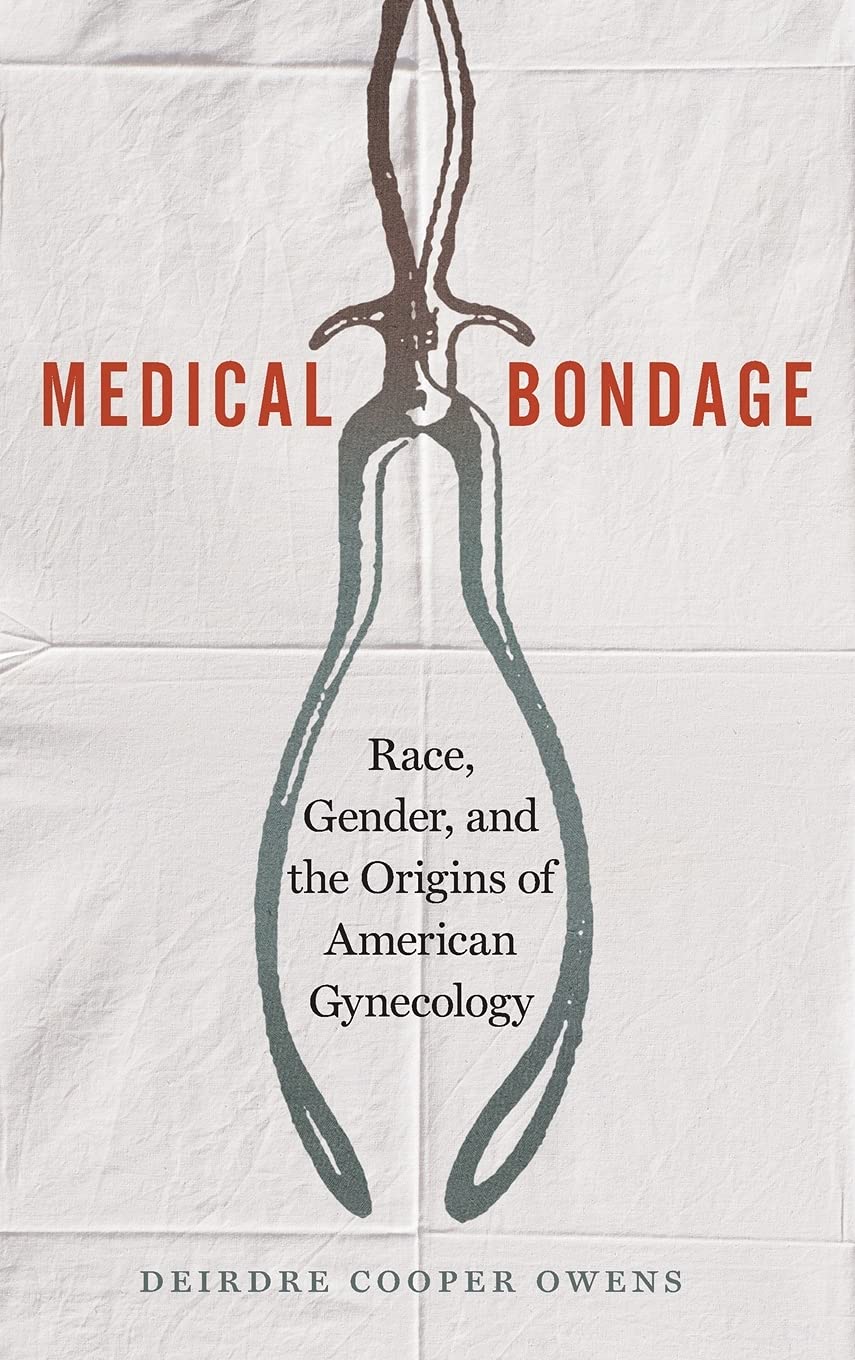
American gynecology would not be what it is today without Black women. In fact, the first women’s hospital in the United States was on a small enslaved persons farm in Mount Meigs, Alabama. In Medical Bondage: Race, Gender, and the Origins of American Gynecology (Medical Bondage), Dr. Deirde Cooper Owens examines the history of gynecological practices and the way that they came about, all while painting a picture of the women who shaped American gynecology. The book investigates both southern plantations and northern urban centers to showcase how nineteenth century ideas about topics such as race influenced relationships between doctors and their patients. Cooper Owens makes two significant arguments about the correlation between slavery and medicine: reproductive medicine was esstential to the maintenance and success of southern slavery and that southern doctors knew enslaved women’s reproductive labor helped them to revolutionize professional women’s medicine. Medical Bondage also, most importantly,retells history from the perspectives of exploited groups. By examining nineteenth century literature and correspondence between doctors and other archival materials, Cooper Owens explains how exploited groups changed the course of American gynecology, ultimately creating a field that would be forever changed by the experiments done on their bodies.
War and social media have coexisted for the last two decades or so, however, the role social media is playing in the recent Russian invasion of Ukraine stands out from other ongoing conflicts, whether it be the current bombardment and mass starvation of Yemen, the ongoing civil war in Syria, or the practically invisible suppression of West Papuans in their prolonged struggle for independence. I contend that the distinction lies in the way the Western world is responding to the crisis in Ukraine. As a very active American consumer of social media, primarily on Instagram and Twitter, I have noticed an outpouring of support for Ukraine from my American peers previously averse to posting on matters of politics and current events as well as from American and European individuals and institutions with prominent social media followings, including corporations, celebrities and government officials (see images below). These individuals and institutions are what I am referring to when I say “the Western world.” Even my own college of Davidson in North Carolina is currently flying the Ukrainian flag beneath the American one in the center of campus.
I am pointing out this distinction that is the Western world’s response to the war in Ukraine because I think it can teach us an important lesson on a) the political construction of whiteness, b) how race and gender influence how the West perceives and responds to human suffering around the world, c) who is entitled to resistance to violent aggression in the eyes of the West, and d) who is given unequivocal support from the West in their respective fights against imperialist aggression.
I will perform my analysis using a TikTok I encountered on Twitter depicted below. First of all, for a TikTok to make it onto Twitter, especially the politics-focused Twitter spaces I am a part of, it needs to be one that is very prominent and being widely discussed and shared. In the case of this TikTok, it had over 750,000 likes, 16,000 comments and 15,000 shares and 14.2 million views alone at the time that I encountered it. The TikTok itself centered a horizontal video of a young girl confronting a taller and armed male soldier. The video follows the girl as she yells at the solider who responds by walking away and laughing. The environment in the background resembles a desert with a sandy road and hardly any trees. For a moment at the end, the video cuts to an old woman who is crying being interviewed by RT, a Russian media outlet. Above the video, there is text that reads: “LITTLE GIRL TRY TO STOP” followed by two broken heart emojis and a sad face emoji, which is then followed by: “PRAY FOR UKRAINE” [Ukrainian flag emoji] [broken heart emoji]. The caption for the TikTok read: “#ukraine #army #fyp #fyyyyyyyyyyyyyyy #RUSIA #emotional.” The TikTok was posted by @staystrongukrainee, which had 127,400 followers on the app, and now appears to have been removed (most likely for spreading misinformation).
As evidenced by the strange caption and the questionable editing of the video, this TikTok exhibits many standard “red flags” of misinformation. In fact, the TikTok is an example of misinformation as the video it references as depicting Ukraine is really a ten-year-old video depicting a Palestinian girl named Ahed Tamimi confronting an Israeli soldier in the Palestinian territory known as the West Bank. It is precisely the fake nature of this TikTok that interests me the most, as I believe its ability to exist as a piece of misinformation to illicit support, solidarity and sympathy for Ukraine in the current conflict reveals a lot about the political construction of whiteness, as well as the role of race and gender in shaping Western discourse around the Ukrainian conflict specifically, but also war and resistance in general.
First and foremost, I want to speak on this video’s ability to be used as a tool for misinformation and how that is related to whiteness. Ahed Tamimi, who has blonde hair and a fare skin tone, is white passing.
Before I delve into this, I want to touch on the history of this term. “Passing” was first used in runaway slave notices from 19th century America, which Andrea Guzman claims “brings us back to the tension between being white and being free. Are they really the same thing?” This history is significant as it reveals that the concept of “passing” for white is a political construction with implications of power and freedom. It also reveals the fact that whiteness has historically been a threshold demarcated by upper-class, property-owning white people. The runaway slaves could not decide themselves whether they were or were not white passing, but rather their whiteness was contingent on the whims of white people as revealed by the fact that poor white people were sometimes cast as “mulatto” by other whites and sold into slavery.
This is all related to the case for Ahed Tamimi in this example of misinformation as it was her white appearance that allowed this video of her to be repurposed for the Ukrainian conflict, which is situated in a country where the majority of the population has fare skin and, in some regards, is considered white. In fact, some journalists are noting how the skewed coverage of the Ukrainian conflict compared to others around the world (Syria, Yemen, Somalia and West Papua as some examples) is due to its nature as a nation of white people. Another source astutely classified the skewed nature of the coverage as “blatant racism.”
But while Tamimi’s white passing appearance has allowed an account like @staystrongukrainee to co-opt and frame her resistance against the Israeli soldier to be an assumed example of resistance from a Ukrainian girl against a Russian soldier, Tamimi’s identity as a Palestinian, and therefore a non-white, non-Western individual, did not afford her resistance to Israeli aggression the same level of support and sympathy from the Western world that has been afforded to cases of Ukrainian resistance against Russian aggression. Kuan-Yun Wang, in an analysis of American and Canadian media coverage of Tamimi notes that “the media frame Tamimi and the Palestinians as violent initiators.” Wang found that the media also decry her persona as “fake’ and ‘propaganda,'” all of which Wang claims to “achieve the purpose of legitimising the use of state violence on colonised bodies, which ultimately reflects settler-colonial history in North America.” In terms of Tamimi’s reception in Israel, one member of the Israeli government has called her a terrorist, while the current Prime Minister, and Education Minister at the time, Naftali Bennett stated Tamimi deserved to be incarcerated for life following another instance of her slapping a soldier in 2018, which she served time in prison for. I will also speak on popular gendered tropes used against Tamimi in Israel later on.
This is all in stark contrast to the women in Ukraine who have taken up armed resistance against the recent Russian aggression and have been hailed by Western media outlets (examples: France24, Vanity Fair,Slate) and labeled as “brave” and as “heroes,” as seen in the tweets below.
While Tamimi’s relation to whiteness (being non-white but white passing) has impacted the way her resistance is received and, in this case, commodified to illicit certain reactions, her gender has also been used to further delegitimize her resistance, unlike the case of the Ukrainian women. For example, Yasmeen Serhan in an article for The Atlantic noted that “a young girl known for her long, curly hair isn’t the image one might typically come to expect of a national freedom fighter.” While the validity of Tamimi’s status as a “hero” figure is questioned due to her age, appearance and gender, the Ukrainian women being heralded on Twitter and in the media are not subjected to such scrutiny, even when, in another case of misinformation used to illicit support for Ukrainian women fighters, the women are wearing neo-Nazi symbols on their bullet-proof vests. Additionally, I have yet to come across any source that labels the Ukrainian women fighters as “fiery,” which is the sexist term The Mirrorused to characterize Tamimi.
The fetishization of Tamimi’s hair is also very prevalent in media and individual accounts of her. The Washington Post described the appearance of her hair as “wild locks swept up in a hair band,” which is yet another example of the emphasis on Tamimi’s supposed feistiness and “wild” nature, which is notably not how men, or the Ukrainian women I’ve referenced, that participate in resistance are ever described. A popular nickname for Tamimi among Israelis and others is “Shirley Temper,” which both fetishizes her hair, in its reference to the hair of Shirley Temple, and weaponizes her gender as something that is associated with rage. The general focus on her hair above everything also points to a form of dehumanization that Tamimi, and not the Ukrainian women, experience.
Other accounts of Tamimi have described her as a “metoo heroic victim” and have classified her resistance as “provocative,” which is yet another sexist term commonly used to objectify and victim-blame women. One Twitter user, who notably has their profile picture set as the Ukrainian flag, objectifies Tamimi in referencing her “usefulness.” They wrote: “Shirley Temper’s arrest was the grand finale of her parents’ grooming. Now that she’s no longer a photogenic little girl, she’s no longer useful.”
Returning to the focus of this analysis, it is clear from these examples that resistance to violent aggression is not created equal according to the West. While Ukrainians are heralded for resisting the violent invasion of Russia, Palestinians like Tamimi who resist the violence of Israeli soldiers (unarmed, in the case of Tamimi) are put under intense scrutiny, delegitimized, objectified and ridiculed. Additionally, it is clear race and gender play key roles in how resistance to violence is negotiated and classified by the West. As evidenced by the TikTok I’ve been referencing, the political construction of whiteness, and its ability to be weaponized at the whims of those looking to achieve certain goals, also plays a key role. Tamimi’s white passing appearance was weaponized to create misinformation to illicit Western sympathy for Ukraine, while her identity as a non-white Palestinian girl (at the time of the 2012 video) complicated and invalidated her actual act of resistance in the eyes of the West.
Tamimi’s relationship to whiteness can be understood using the words of Bree Newsome Bass, an artist and organizer based in North Carolina, who writes that “The ongoing conflict in Eurasia again shows that whiteness is not an ethnicity but a fluid power construct, a product of colonialism, where inclusion/exclusion fluctuates largely according to the whims of the ruling white elite. Where is the dividing line between Europe & Asia? Between East & West? Between European & non-European? Between white & nonwhite? Anti-Black racism remains the only constant that holds this fragile construct together. There must be clarity on who is unequivocally excluded.”
Bass’ inclusion of anti-Black racism is also relevant to the Ukrainian conflict, as African international students, migrants and residents of Ukraine have experienced immense racism, as well as acts of violence, in their attempts to escape the fighting.
This case of misinformation from TikTok I have dissected is important in that it reveals the impact of whiteness as a “power construct,” to use Bass’ terminology, that factors into the negotiation of whether or not certain people are entitled to resistance, whether or not it is acceptable that certain people suffer, and whether or not certain people are given unequivocal support from the West, even in the extreme cases of displaying connections to Nazism, like some fighters in the Ukrainian army.
As the Ukrainian conflict continues to this day, alongside numerous other conflicts and cases of Western imperialism around the world that have been purposefully swept under the rug and overlooked, it is important that we do not perpetuate narratives or spread media that supports the racist Western double standard regarding resistance that is rooted in whiteness and its weaponization. All peoples are entitled to resistance against oppressive forces, and we must recognize that.
Mastermind magazine produced this image of Willow and Jaden Smith in the 2019 fall issue. Mastermind magazine releases bi-annually and focuses on current events and attitudes of the younger generations. It is a space to be creative and display a range of talents and people. The intended audience ranges from young adults to millennials. This exclusive magazine was founded in 2017 and is available for purchase online and paperback. They chose to include Willow and Jaden in the 2019 issue because of their impact on gender expression, unique styles, and confidence as individuals. Willow and Jaden both actively participate and advocate within queer spaces. They also have developed into queer fashion, music, and film symbols. Willow and Jaden reinforce that beauty, individuality, and confidence does not have to fit into the narrow boundaries of what society portrays as normal and abnormal. As young, black, queer adults, Willow and Jaden represent the positive ways non-conforming people can live in our nation. As the younger generations become more accepting and educated on topics of gender and sexuality, we come to realize that beauty and gender have no particular features, shape, or color, and Willow and Jaden depict this with no remorse. The photograph from the magazine presents a symmetric reflection of Willow and Jaden gazing upward, hands identically pressed to their cheeks. They are challenging this notion of physical difference between men and women. If one did not know the Smith siblings prior, would the gendered differences be obvious? I believe this is the question they are forcing the audience to reconcile with and reflect on. This photograph examines the viewer’s bias and understanding of how gender functions as invented categorizations to divide people.
Although intersectionality of gender and race play into the lives of Willow and Jaden, it does not consume this photograph. As a person of color, perhaps I brush over the fact of their blackness when gazing at the photograph, or perhaps it was looking for an intentional gender-directed reaction. However, I want to acknowledge the intersectionality in this photo as another product of social construction that produces real consequences. Willow and Jaden also come from a previously wealthy family which contributes to their success and ability to be openly unique individuals. Intersectionality plays an important role when discussing aspects of gender and sexuality because it often influences and dedicates the way we interact with it.
Willow and Jaden break down the gender norms and stereotypes associated with the binary in the photograph. As Jonathan Van Ness explains in his Netflix special, Can We Say Bye-Bye to the Gender Binary, gender is performed and enforced in society. This can be seen through the segregation of colors inflicted on people in society. Jaden projects a commonly feminine look with his pink eyebrows and hair. In the context of public expectation and presentation, blue is typically for boys, and pink is for girls. Pink has not always been associated with femininity. Pink was more of a boy’s color, if a gendered color at all, in the late 19th and early 20th centuries. People dressing in gendered clothes is a relatively new invention. Jaden proves in this photograph that people can dress, alter, and perform gender in any way they choose. It also connects deeper to the ideas of how the binary should project and display itself. Men are supposed to be tough and masculine whereas women are soft and emotional. Jaden and Willow’s gazes are identical with soft, innocent-like features. Neither of them is visibly wearing makeup, contributing to the vulnerable look. They both wear rings in the photo, revealing that jewelry does not belong to a singular gender. Willow does have earrings and a nose piercing, however, this just means that every individual is different. It is celebrating diversity, preferences, and choices between human beings. Willow Smith wears a similar short hairstyle to Jaden further breaking down the ideas of what is supposed to be masculine. Society loves to associate female beauty with hair, but Willow shows that beauty exists beyond long this. As Lorber explains, “For the individual, gender construction starts with an assignment to a sex category on the basis of what the genitalia look like at birth… A sex category becomes a gender status through naming, dress, and the use of other gender markers” (Labor 55). Gender is not determined by biological or psychological differences. There are no features that accurately reproduce the binary, but instead, it is a construction of our surroundings, interactions, media depictions, and upbringing. This calls to question the title of this photograph. If their names were not written across the page, neatly drawn into their boxes, would it be obvious which image was Jaden and which one was Willow? In a way, it feels as though the magazine wants to be progressive, but not to the extent of complete freedom. If the magazine did reject all gender norms, it would not have placed the lettering where it did. Alternatively, it could simply be educating viewers who are unfamiliar with the Smith siblings. There are multiple ways to interpret the purpose and placement of the title.
Willow and Jaden Smith have become icons of the younger generation for their confidence, identity expression, and talent. Mastermind magazine exhibits Willow and Jaden’s beauty and originality in this edition. The photograph calls to question our notions of gender and forces us to reconcile with our constructed worldview. The upcoming generations are more and more open to diverse gender expressions, giving me hope that many adolescents looked to this photograph as inspiration, not with hostility.
One public health issue that falls within the realm of gender and sexuality studies -particularly reproductive justice- is period poverty. Insufficient access to menstrual supplies or environments that allow safe changing of products means that people who experience periods face additional challenges to their everyday hygiene, which has a direct impact on other aspects of their life. For example, a survey of U.S. teens found that 4 out of 5 individuals “either missed or knew someone who missed class time because they did not have access to period products” (Capozzi). In addition to encompassing the lack of menstrual products available to people that need them, the term period poverty also references the lack of health education because of stigma around periods, lack of funding and resources, or other reasons.
Period poverty is often cited as an issue for developing nations, and while this is true, it is also a pervasive problem for people in many situations where their needs cannot be met. Not everyone who needs period products is a woman, but since they are marketed towards women, they are unnecessarily expensive (llano). In the United States, this means that people living in poverty or experiencing homelessness are especially susceptible to period poverty. It is important to note that youth experiencing homelessness are disproportionately LGBTQ people of color (Griffith), so period poverty is not just a women’s health issue, but a very intersectional one.
Two ways Davidson can make menstrual care less stigmatized and more accessible for the community are by increasing the availability of period products in public restrooms and providing opportunities to support menstrual justice in the greater community.
Many of the public women’s restrooms on campus have free tampons available in them- Wall, Union, the library, and Chambers are a few examples. However, they are often out of stock, which eliminates any benefit of them being offered there. In addition, they are only ever set out by the sinks in the women’s restrooms, but not the men’s. Increasing options for gender-neutral restrooms is something we have discussed in class and other students have brought up in their proposals, and I would argue that offering free menstrual products in all public campus restrooms would be a small, good first step to implement towards that goal.
Davidson has the wealth to provide widespread access to menstrual products in public restrooms, but this kind of accessibility is unfortunate not the norm. To encourage action on this issue, I propose putting up posters about period poverty in restrooms. These would include a definition of what period poverty is, as well as a QR code that leads you to the links of organizations to support. For example, Flo Charlotte is an organization that collects and distributes menstrual hygiene supplies to those in need around Charlotte. Their mission statement emphasizes that they “focus primarily on families experiencing homeless, but [they] also support domestic violence shelters, schools, and safe havens for LGBTQ+ teens and young adults” (Flo Charlotte). They accept donations of menstrual hygiene supplies, but also monetary donations, so the posters could even have a QR code that links straight to their PayPal. It would be great to have these posters up in the bathrooms of public buildings on campus to inform people of all genders about this issue and what they can do to combat it.
References
Capozzi, Lindsay. “Period Poverty: The Public Health Crisis We Don’t Talk About.” Children’s Hospital of Philadelphia Policy Lab, 6 Apr. 2021, https://policylab.chop.edu/blog/period-poverty-public-health-crisis-we-dont-talk-about.
Flo Charlotte, https://www.flocharlotte.com/.
Griffith, Daiana. “LGBTQ Youth Are at Greater Risk of Homelessness and Incarceration.” Prison Policy Initiative, 22 Jan. 2019, https://www.prisonpolicy.org/blog/2019/01/22/lgbtq_youth/.
llano, Alejandra De. “The Pink Tax: Why Are Feminine Products More Expensive?” CavsConnect, 10 Mar. 2021, https://www.cavsconnect.com/opinion/2021/03/10/the-pink-tax-why-are-feminine-products-more-expensive/.
One thing that has stood out to me after taking GSS101 this semester is how feminist and queer theory is inherently inaccessible to the average person. Theory has been kept in the realm of academia and most do not ever interact with or see feminist and queer theory until college, if ever. In my experience, I never learned about any theory in any of my years in public school and I had never heard of most of the scholars we discussed until reading their work in class. This course has been eye opening for me and I feel a more informed person after taking it. I personally think that it is important for everyone to, at the very least, know the basics of feminist and queer theory because I believe it informs critical thinking and social awareness.
I am interested in the development of an interdisciplinary course that would be a part of the educational studies department and the gender and sexuality studies department at Davidson College. This course would cover how we can incorporate theory into elementary and middle school education. A focus would be on how we can create a standardized curriculum that would educate students on feminist and queer theory but in accessible terms so that it is easy to understand. Examples of projects in the course would be: to pare down Michel Foucault’s “History of Sexuality” into a simpler, easier to understand format, to develop a lesson plan that teaches about the waves of feminism and how they have shaped women’s rights, or to incorporate bell hook’s theory from “Black Women Shaping Feminist Theory” into a presentation and assignment suited for different grade levels. Throughout the development of this course and then into how this course is taken into the real world, it will be important to ensure that the information covered is intersectional and inclusive.
Young students that do not feel like they fit in society’s definitions of gender or labels of sexuality will see early on that they are valid and that the whole concepts of gender and sexuality are ever changing and fluid. Introducing these ideas at a young age will cultivate a generation that will break down the gender binary, sexuality labels, and will create a more inclusive and accepting society.
Taylor Swift’s pop anthem, “The Man,” is a catchy, upbeat song aiming to address the inequality between how female artists and male artists are treated and talked about. With a driving bass line, fun and catchy melody, and easy to understand lyrics, this song is able to reach audiences young and old alike. In her song, Swift discusses how every aspect of her personality, looks, actions, and decisions would be seen in a different way if she were a man. In our society there is a double standard between what is acceptable for men to do and for women to do.
The line “They’d say I played the field before I found someone to commit to” addresses how when a woman cycles through multiple relationships before settling down with “the one,” she is judged differently than a man would be even though it is very common for both men and women to have many relationships. Swift changes this negative narrative by stating “And that would be okay for me to do” confirming to her audience that having multiple partners in life is normal and not something to be ashamed of.
Later in the song, Swift says “When everyone believes ya/ What’s that like?” This line is referring to the #MeToo movement and how women that come forward about sexual assualt, harrassment, and rape are most often doubted and questioned. Victim blaming is present in our society and is disproportionately against women more than men.
The final line that stood out to me when listening to this song was “What I was wearing, if I was rude/ Could all be separated from my good ideas and power moves.” Women’s clothing is all too often equated with their success and the quality of their work. Instead of focusing on what women actually have to say or what their ideas are, the focus is on what she is wearing. Specifically, when female artists, actresses, or celebrities are interviewed the topic is almost always about what they are wearing, or how they look. In contrast, men are typically interviewed on what their acting experience was like, or what the song is about, for example.
I connected this song to the reading by Lorber called “The Social Construction of Gender.” In the reading she argues that “it does not matter what men or women actually do; it does not matter if they do the same exact thing, the social institution of gender insists only that what they do is perceived as different” (Lorber 58). In “The Man,” Taylor is arguing that if she did not change anything about her actions but existed as a man, she would be perceived differently by society and treated better. Simply because we as a society perceive some actions to be more acceptable when done by a certain gender, it has become unacceptable to cross those made-up gender barriers. The issue is that there is no rhyme or reason for why we have these expectations for what different genders can or cannot do. The idea that what a woman is wearing determines her worth or success or how many partners a woman has had determines her value is a baseless belief that society has created. Taylor Swift is one of, if not the, biggest artist currently. She has an enormous platform and the ability to create change with the message she shares through her artistry and voice. This song is an attempt to address the disparities between how female and male artists are treated and spark discussion on how we can create change. Her feminism is not perfect and she can do a lot more to include intersectionality in her feminism and to use her priviledge uplift marginalized voices.
After taking GSS 101, a theme that stood out to me was understanding gender as a social construct. Growing up I had a very limited mindset about gender and sexuality and accepted many of the ideas as they were presented to me. However, over the years I have understood more about the complexities and many identities within gender and sexuality. With this in mind, it led to me thinking about how I can use these ideas to influence an art piece for campus to spread awareness and normalize identities that aren’t ‘cis-gender heterosexual’. While there are already many sculptures, especially of bodies, around campus I wanted to propose a new sculpture of a body that implements the ideas of the diversity of gender identities and sexual orientations. My piece is inspired by the metal sculpture on campus by Jaume Plensa, titled Waves III. This piece is made up of letters from all different languages to signify unity and diversity. It is based upon cultural identity and the way that one individual holds a connection to a greater culture.
Waves III, Jaume Plensa
My idea is to create a sculpture on Davidson’s campus that intersects the ideas of gender as socially constructed as well as show the variety of identities among individuals. The sculpture would be made out of glass and would depict a human form, without genitalia, to represent an individual not tied to a gender. The position of the body would be arranged so that the arms were extended outward to signify openness of the individual. The idea is to show the complexities of humans and the many identities, both genders and sexual orientations that exist. The form of the body would be composed of words carved into the glass form of sexual identities, such as: “queer, bisexual, lesbian” and words associated with gender identities: “she, they, him, non-binary, trans.” And instead of the exterior of the form being perfectly smooth, shards of glass would poke out in all different directions to create an ambiguous body shape.The words would be repeated all over and done in different fonts to completely cover the entire form. The sculpture would symbolize the many identities that don’t receive recognition in a heteronormative society. This sculpture would work towards normalizing those identities that are not cis-gender heterosexuals, but also serve as a reminder of the hardships of LGTBQ+ individuals. The title of this piece would be “Complexities of Intersectionality” and would capture the chaotic and diverse nature of the gender and sexuality spectrum. While this sculpture wouldn’t explicitly touch upon identities within class and race that also affect an individuals experience, this would be the starting point to begin examining identities and start the conversation about other impacts on an individuals’ experience.
King Princess, in her Genius lyrics interview breaking down the song, states how “gay people have always existed in religious texts, but never in a way that is respectful.” Within the lyric “honey, on your knees,” King Princess is referring to being bowed down to like a god or saint. It is a strong move to take back this power through the inclusions and allusions to religion throughout the song. Other areas in this song, including “cause when this day is done, I still got shit to run” mention how she is in charge and in control of what she decides. It also sends the message that one can succeed in life with or without the relationship, and how important healthy independence still is even while being with someone. This is a component of empowerment: understanding our worth in both the presence of and in the absence of a partner, and being with someone who does not discredit or misinterpret this fact as selfishness. Her albums have definitely opened up conversations about gender and sexuality, and the open space a person can live in between the binary. Through my recent readings, I have learned that King Princess has, however, faced controversies regarding the “Cheap Queen” album, as some may argue it is capitalizing off of queerness instead of helping to foster an inclusive community, and there are several stories online regarding some problematic actions done by King Princess. So, in general, while songs may result in a boost of confidence among listening, the intentions of the artists can be contested.
“Nina Cried Power” by Hozier ft. Mavis Staples may not be regarded as a feminist tune, as it is more of an anthem of the Civil Rights movement, but it is an exceptional song of revolution and includes the names of some incredible activists in the lyrics, including Nina Simone, and the voice of Mavis Staples herself. I think it always deserves a replay on Spotify. It is an incredible composition and promotes intersectionality, so I figured I might add it to our class playlist based off of our discussions and focuses throughout the semester as well.
Part of being a freshman at Davidson is looking for clubs for everything you’re interested in. Freshmen crave connection to people interested in the same things they are, much like anyone does. Last year, when I was a freshman, I fell into many clubs that I now hold leadership positions in, clubs where I found some of my closest friends. Some of the clubs I joined included Weekly College Worship (a multi-denominational Christian group that holds a worship service once a week), UKirk (the Presbyterian group on campus), and the clubs/affinity groups for LGBTQ+ people. I was looking for ways to engage with some of my identity communities: my faith, my sexuality, and my gender. By my engagement in these groups, I noticed a distinct lack of a space meant for queer people to interact with their faith. While the spaces I’m active in are affirming of LGBTQ+ Christians, they aren’t spaces designed with us in mind. This distinction is an important one to make.
To start working on a solution to this problem, I propose a dinner event or series, maybe co-sponsored by the Chaplains’ Office and the Center for Diversity and Inclusion, focused on creating a space for queer people with a desire to explore their connection to religion. While my own experience lies with being a queer Christian, I would love for this to be an interfaith space that celebrates each person’s connection to both their queerness and their faith. My book report selection for this class, A House of Prayer for All by David K. Seitz, looked partially at how people in the LGBTQ+ community engage with faith when they’re in a space that they feel comfortable exploring the two together. Spaces for these connections to happen already exist in other places, and the Davidson community would be better by encouraging them.
Areas and groups made intentionally for LGBTQ+ students at Davidson are lacking. The Lavender Lounge, while a good resource, is a tiny room near a study area and a laundry room in the basement of a freshman dorm. The Spencer-Weinstein Center, while a great space for all affinity groups on campus, is exactly that: one building meant to allow space for every affinity group on campus. For the queer community, there’s either YANASH or Queers & Allies. Both organizations are wonderful, I’m by no means trying to bash any of these places or groups. My only point is that I can count the spaces, both physical and relational, intended for queer students on one hand. For a group as diverse and with such incredibly varied experience as the queer community, surely we are deserving of more than this? A group for support, encouragement, and community among religious LGBTQ+ people at Davidson deserves a chance.