Grant Proposal Token: Davidson Sexual Education

This class has opened my eyes to a variety of issues that need to be addressed on campus. I have always been passionate about reproductive health, and ever since coming to college, I realize that there is a very small number of people on this campus who truly understand reproductive health and how important it is. Also, when I think of reproductive health, I am also thinking of sexual health education, more commonly known as Sex. Ed. I think that students need better access to reproductive health and sexual health education resources. 

I think that incoming college students do not understand the importance of reproductive and sexual health education in college. Many people view “hook-up culture” as an important part of their college experiences. To be able to safely participate in “hook-up culture,” students need to have a good understanding of sexual and reproductive health.

Incoming students to Davidson have to complete a Sexual Health and Sexual Misconduct course for orientation. However, this course only touches a certain parts of sexual health, and focuses on it through a very cis-gender, heteronormative lens. Davidson has a strong population of LGBTQ+ identifying students. Davidson claims to have and support a “number of student-led organizations that promote advocacy and acceptance of its students, faculty, and staff as well as members of the greater community.” All of these organizations, such as Queer and Allies, provide a great support system for LGBTQ+ students on campus, but the college is still lacking support in the area of sexual health for LGBTQ+ students. 

Most Davidson students also come in with little sexual health education. I went to a very progressive high school and still only recieved a week of sex ed. freshman year. It promoted abstinence by saying that “the only way to truly prevent pregnancy is by not having sex.” To create a sexually healthier population, people need to acknowledge that college students have sex and create resources that make sure they are practicing safe sex and understanding reproductive health. 

Davidson has the health advisors program which focuses on sexual health, while also teaching students about mental health and safe drinking culture. This program is an amazing resource. However, I think that Davidson needs a specific program for sexual education. It could be a subprogram of the Planned Parenthood Generation Action (PPGA) club on campus, or a completely separate organization. It would be called Davidson Sex Ed (DSE) and would be comprised of students who are passionate about sexual and reproductive health who would work, in collabortion with administrators, to put together an inclusive and informative sexual health education program. DSE would then go into PCC organizations (it would count as an EDU credit) and educate members on sexual health. These conversations would include how to practice safe sex, forms of birth control, support systems on campus, and where to find STD testing. Students would be able to request topics to learn about and DSE would make an anonymous form where students could submit questions related to sexual health and reproductive health. DSE can also redo the orientation sex. ed program to make it more informative and inclusive.

Once the program gets up and running on campus, it could possibly be expanded to local middle and high schools, so these students head off into the “real world” with a strong sexual education. 

I think that having a strong sexual health education program on campus will make our campus a more comfortable and healthier place!

Sources:

https://www.davidson.edu/offices-and-services/student-activities/student-organizations/gender-and-sexuality

https://www.davidson.edu/offices-and-services/student-health-and-well-being/health-education/health-advisers

Feminist Mixtape: “9 to 5” by Dolly Parton

Dolly Parton is a well-known force in the music industry and, in general, the world. She is a nine-time grammy winner, while also having written over three thousand songs for various film and television projects. On top of her musical success, she has also had many philanthropic efforts, which include supporting child literacy programs and funding a COVID-19 vaccine. As you can tell by the previously stated information, Parton is an inspirational figure to all. 

One of Parton’s most well-known songs is “9 to 5.” Parton wrote the song for a movie with the same title that dealt with an American 9 to 5 workday. The song won a Grammy for Best Female Country Vocal Performance and for Best Country Song, both at the 1982 Grammys. It has been streamed more than 3.5 million times on Spotify alone. 

Continue reading “Feminist Mixtape: “9 to 5” by Dolly Parton” →

A Review of Medical Bondage: Race, Gender, and the Origins of American Gynecology

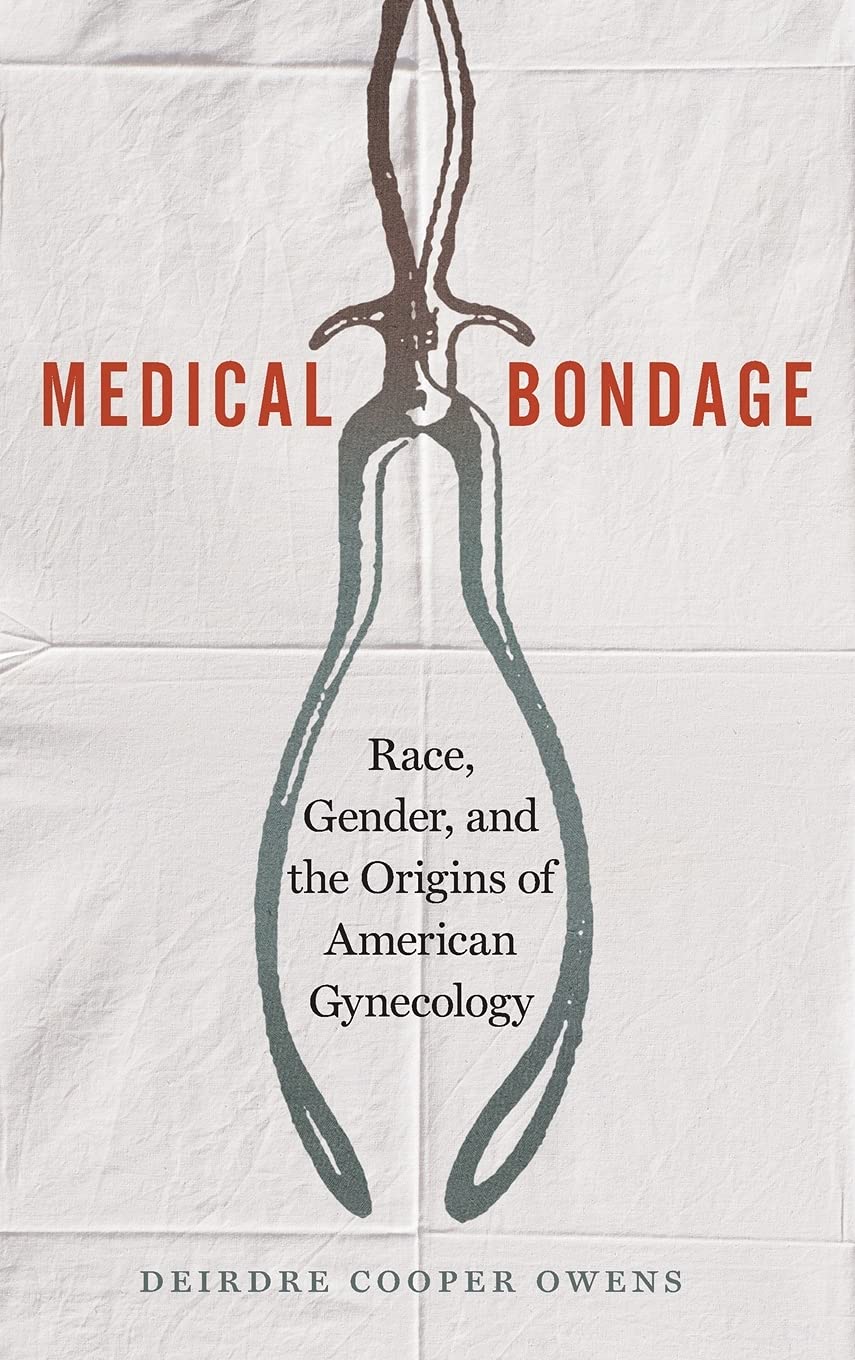
Medical Bondage: Race, Gender, and the Origins of American Gynecology:  Owens, Deirdre Cooper: 9780820351353: Amazon.com: Books

American gynecology would not be what it is today without Black women. In fact, the first women’s hospital in the United States was on a small enslaved persons farm in Mount Meigs, Alabama. In Medical Bondage: Race, Gender, and the Origins of American Gynecology (Medical Bondage), Dr. Deirde Cooper Owens examines the history of gynecological practices and the way that they came about, all while painting a picture of the women who shaped American gynecology. The book investigates both southern plantations and northern urban centers to showcase how nineteenth century ideas about topics such as race influenced relationships between doctors and their patients. Cooper Owens makes two significant arguments about the correlation between slavery and medicine: reproductive medicine was esstential to the maintenance and success of southern slavery and that southern doctors knew enslaved women’s reproductive labor helped them to revolutionize professional women’s medicine. Medical Bondage also, most importantly, retells history from the perspectives of exploited groups. By examining nineteenth century literature and  correspondence between doctors and other archival materials, Cooper Owens explains how exploited groups changed the course of American gynecology, ultimately creating a field that would be forever changed by the experiments done on their bodies. 

Continue reading “A Review of Medical Bondage: Race, Gender, and the Origins of American Gynecology” →

Do Pelotons Lead to Even More Insecurity?

When Peloton dropped a holiday ad right before Christmas 2020, they expected it to be received as an ad showing a husband gifting his wife a Peloton bike for Christmas because he loves her. However, Peloton received major backlash for their commercial, as it was received in the complete opposite way that it was intended. 

Snapshot from the controversial Peloton Commercial

The commercial starts off with a man gifting a woman, who the audience can assume is his wife, a Peloton exercise bike. When she gets onto the bike she says, “A little nervous, but excited. Let’s do this.” The commercial then shows the woman doing daily Peloton sessions and taking selfies and videos during every single one, while also explaining how she is surprised that she has been doing it everyday (and even getting up at 6 a.m.). As evident from the photo above, there is a constant look of fear in the woman’s eyes. She is also very obviously grimacing, which suggests that she is uncomfortable. She looks scared that she is not going to get approval from her husband if she does not use the bike he got her, so she makes sure to document the whole process as proof. She does not look excited about the bike, and looks like she is being forced to exercise. Because the commercial was not understood by viewers as the creators intended it to be, the grimace on the woman’s face heightened the negative parts of Peloton.

For the whole commercial, she is unsure, timid, and shy, all while acting like she needs approval from her husband (which is why she started the workouts in the first place). The commercial pans to an instructor shouting her out and the woman saying “She just said my name!” All of these clips are then compiled into a documentary that the woman created to show her husband how grateful she is for the gift. She thanks him by saying, “A year ago, I didn’t realize how much this would change me. Thank you.” 

The controversy within the commercial comes with the claim that it’s sexist. The husband wanted his wife to get in shape so he gave her a peloton to “force” her to work out, and then, when she shows him the final video, he looks satisfied with the transformation. The other controversy within the commercial is how the woman is portrayed. There are many scenes in the commercial where you can see her big eyes with a look of fear in them. She is constantly taking videos of her on the Peloton to prove to her husband that she is using it, while also saying that she is surprised that she is still going, which means that she is feeling the effects of working out and is exhausted. At the end of the commercial, she compiles her videos to show to her husband. After her husband sees the video, he just gives her a smile and no other words of affirmation.

This Peloton commercial and its choice of actors proves further stereotypes and standards that society places on women. At the beginning of the commercial, the woman was not working out and was surprised to get a Peloton, which is obvious through her surprise when her husband gifts her one. She was timid while working out and is still timid at the end when she shows her husband the video that she made. The woman in the commercial is also already a healthy weight. She is what society would consider “skinny,” and society believes that if a person is skinny, they are healthy. However, she is still seemingly forced to work out by her husband, which further supports the impossible standards that society puts on women’s bodies. Women will never be able to achieve a “perfect body” and will always feel like they have to work to achieve a body that others will find attractive, even when they are already at a healthy weight.

The commercial also completely skews why people decide to workout. The Peloton commercial portrays the woman as only working out because her husband thinks that she should. When she starts using the Peloton, it’s obvious that she is “out-of-shape” and trying to get into a schedule for working out. She is trying to figure out how to use the bike, while also visibly struggling in all the classes. It makes it seem like she is doing it for him, and not just for herself.  While some women work out because they want to change their appearance others workout because it helps their mental health. This Peloton commercial puts forward many toxic ideas about women’s workout culture. 

Snapshot from another Peloton Commercial

The previously mentioned ad is not the only problematic ad that Peloton has released. The majority of Peloton commercials are considered controversial. Peloton creates their ads to be targeted towards a certain demographic, which is the group of people who can afford a fifteen hundred dollar exercise bike. As evident in the photo above, Peloton commercials almost always include a skinny woman on her Peloton bike, which has a designated platform in her well-decorated house. The snapshot above includes a thin white woman on her bike in front of a wall that is all windows, which can lead a viewer to infer that she is well-off. Peloton’s CEO John Foley even said that Peloton’s target demographic are “people who have children, live in suburbs, have nice homes, they have the money and space but don’t necessarily have time.” The majority of people in the commercials are also white. All of these factors put forward an unrealistic expectation of what people’s peloton experiences are going to be. It also gives off the impression that everyone riding a peloton has to be a “put-together rich person.” This is further complicated by the majority of the commercials including white people. Does this mean that Peloton’s vision of a “well-off” person is a white person?

Broadcasting exclusively skinny women working out can make fat people feel like a Peloton is not meant for them. It can also create unrealistic body standards for people working out on Pelotons. If Peloton is broadcasting skinny white women as the ideal Peloton users, other Peloton users could use this as unrealistic and unhealthy goals that would turn their workout journey into more of a “self-hate” journey than a “self-love” journey, all while trying to get their bodies to look like the ones they see in commercials. 

Peloton tries to put forward a “life-changing” experience with their workout machines, but they are not successful– but this could all be part of their marketing scheme. Leaving viewers feeling insecure and feeling desirous can lead to more business for Peloton. Their commercials leaves viewers feeling insecure about their own bodies and workout routines, all while projecting harmful ideals about body types, along with certain demographics of Peloton users. 

References:

Peloton Commercial: https://www.vox.com/culture/2019/12/3/20993432/peloton-new-commercial-horror-movie

CEO Quote: https://www.cnbc.com/2016/01/08/pelotons-race-for-home-cycling.html

Photos: https://www.vox.com/culture/2019/12/3/20993432/peloton-new-commercial-horror-movie

Peloton Commercial Song – Indoor Exercise Bike