The Tragedy of Heterosexuality by Jane Ward

The “norm” for sexual relationships in the 21st century has become increasingly diverse, reflecting shifting social attitudes and greater acceptance of different relationship styles. While “traditional” monogamous, heterosexual relationships are still common, a broader spectrum of relationships has gained visibility and acceptance. Nonetheless, individuals in the LGBTQ+ community continue to face significant challenges, including discrimination, stigma, rejection, and even hate crimes. This heightened focus on LGBTQ+ struggles can sometimes overshadow the challenges faced by those in heterosexual relationships. While issues of queerness are frequently discussed and acknowledged, the struggles present within heterosexual relationships often go unspoken, partly due to the assumption that these relationships are inherently easier and free of complication. In The Tragedy of Heterosexuality, Jane Ward explores the complex realities that heterosexual relationships trap women in: endless loops of sexism, toxic masculinity, and disappointment.

Ward argues that heterosexual women endure forms of gendered and sexualized violence, highlighting that these are often even more pervasive than those faced by queer people. According to Ward, the emotional, physical, and sexual violence women experience within heterosexual relationships underscores the oppressive nature of these partnerships. She suggests that heterosexual relationships often lack feminist ideals, with an unequal division of labor and limited space for women’s autonomy and fulfillment. This gendered suffering, Ward notes, mirrors that of queer individuals, yet without the benefits queer communities might offer—such as humor, solidarity, or more fluid sexual expression. In her analysis, Ward questions whether men and women are genuinely attracted to each other or if they are compelled to conform to heteronormative expectations, which often trap women in relationships that lack emotional or sexual satisfaction. Many women, she observes, consent to sex that they neither desire nor find pleasurable, reflecting a broader issue within heterosexual frameworks that can feel alienating or even hostile. She contends that this “tragic” state of heterosexuality arises from social norms that fail to instill empathy, affection, or respect for women in men, leaving women with relationships that fall short of the emotional and relational depth that heterosexual love is presumed to offer. Through a feminist and queer lens, Ward critiques the ways traditional gender norms perpetuate these patterns, calling for solidarity between queer people and straight women as misogyny is challenged within heterosexual frameworks.

American scholar, feminist, and author, Jane Ward is known for her work focusing on gender, sexuality, and queer theory. Her research and writing critically examine the social constructs of heterosexuality, whiteness, and gender norms, often challenging traditional views on these topics. In 2003, she earned her PhD in sociology from the University of California Santa Barbara and is professor and chair of Feminist Studies there. Ward’s research spans the intersections of feminist theory, queer theory, gender politics, and straight culture with a particular focus on how these frameworks reinforce societal norms. Her interests also include examining heterosexual culture and the marriage self-help industry, where she critically assesses how these institutions shape people’s expectations of relationships and gender roles. Her three major publications The Tragedy of Heterosexuality, Not Gay: Sex Between Straight White Men, and Respectably Queer: Diversity Culture in LGBT Activist Organizations offer a critical exploration of sexuality, gender norms, and identity politics. Together, they provide nuanced insights into the complexities of straight culture, the performative aspects of masculinity, and the impact of diversity practices within LGBTQ+ activism, challenging conventional understandings of both queer and heterosexual identities through a feminist lens. Her work has gained attention in both academic and public spheres, with media features in The New York Times, BBC, and NPR, making her a notable voice in feminist and queer studies.

Ward approaches The Tragedy of Heterosexuality with a queer feminist methodology, analyzing heterosexuality through the lens of gender politics, power, and cultural expectations. Her background as a scholar in sociology and gender and sexuality studies, combined with her focus on critical heterosexuality studies, lends her a unique perspective that examines heterosexuality not as a natural default but as a socially enforced norm. Ward uses her training to draw on a wide range of sources, including interviews, historical texts, popular media, and personal narratives, to explore how societal norms influence heterosexual love. Ward’s argument includes discourse analysis of self-help literature and media targeting heterosexual women, as well as ethnographic and critical discourse analysis methods to understand the lived experiences within “straight culture.” Her expertise makes her viewpoint credible, as she deconstructs heterosexuality using queer and feminist theories to reveal its often unexamined impact on women’s well-being. Ward’s background allows her to view heterosexuality from an outsider’s perspective, offering readers a fresh perspective that challenges the assumptions and power structures underlying straight relationships. She critically examines popular advice literature on relationships, dissecting how they often reinforce limiting gender roles and perpetuate problematic behaviors in heterosexual dynamics. Ward’s approach is rigorous and layered, offering both theoretical insights and practical examples. Her methodology effectively illuminates the disparity between romantic ideals and the often less-than-ideal reality many women face. Ward’s blend of qualitative analysis and cultural critique provides a strong foundation for her argument, pushing readers to critically evaluate societal investment in traditional heterosexual norms and consider how these structures might evolve.

Ward’s book’s strengths lie in its insightful analysis, as she challenges heteronormative narratives that often go unquestioned, including widely held assumptions about love, romance, and traditional relationships. Ward’s assessment provides an accessible introduction to gender studies, making complex theories on sexuality and relationships understandable for those new to the subject. By engaging with contemporary culture, she connects her analysis to current issues, showing how modern media and social norms influence our perceptions of romance. Additionally, her focus on gender equality in relationships highlights the importance of mutual respect, illustrating how traditional norms can harm both partners in a heterosexual pairing. These strengths make the book a powerful tool for examining deeply ingrained beliefs and promoting a more balanced understanding of modern day relationships. However, the book also has some weaknesses. While Ward expertly diagnoses the problems with heterosexual culture, she offers fewer practical solutions, which might leave readers unsure about applying her commentary in real life. Additionally, some critics find her portrayal of heterosexual relationships overly negative and generalized, potentially alienating readers whose experiences differ. Lastly, her focus on Western notions of heterosexuality may feel restrictive, as it does not account for the diverse expressions of relationships and gender norms worldwide. Critics suggest that the book could benefit from a more diverse sample of heterosexual experiences, particularly across different cultures and socioeconomic backgrounds.

This book offers a thought provoking and well argued analysis of the impact of traditional heterosexual norms, pushing readers to rethink assumptions about gender roles and relationship dynamics. Ward’s insights push for a more equitable view of romance and partnership, making this book especially valuable for those interested in gender studies, sociology, and cultural critique. The Tragedy of Heterosexuality has sparked diverse reactions among scholars. Many commend her incisive analysis of heterosexual culture and its inherent misogyny. However, while Ward’s stance is widely recognized for its depth and originality, discussions continue regarding the nuances of her arguments and their broader implications. Audiences such as students, educators, and anyone curious about the social constructs of relationships would find this book beneficial. Additionally, those seeking to understand or improve their own relationship dynamics might appreciate Ward’s perspective, even if they do not agree with every point. By provoking critical thought on familiar topics, Ward offers readers a chance to examine and redefine their own expectations of love and partnership in today’s world.

Sources

Ward, Jane. The Tragedy of Heterosexuality. New York University Press, 2022.

Book Review – Medical Bondage: Race, Gender, and the Origins of American GynecologyBook Review: Medical Bondage

The origins of American gynecology reflect back to the racism that has been seen within medicine for quite some time. Black women were seen as these “superbodies” that were capable of withstanding all levels of pain. As a result of this belief, black women were abused in different ways and used for experimental and teaching purposes within the gynecology field. Author Deirdre Cooper Owens focused on the history of American gynecology and the racist origins behind the field. Dr. Cooper Owens reflects on the stories of black women who were at times left to die and then used as study subjects by the same doctors who were meant to cure them. At the same time, Dr. Cooper Owens reflects on the connection that slavery and medicine have and emphasizes the idea that black women in many ways can be seen as the founders of gynecology. 

Throughout the book Medical Bondage, Dr. Cooper Owens makes a connection between the racist doctrines within American gynecology and the abuse that black women faced as experimental subjects. For many black women, stepping into a gynecologist’s office was a sentence for death. More specifically, “Slavery and the rise of American gynecology were the vessels that poured both life and death into the black women’s lives” (Cooper Owens, 44). Many of these women were forced to go to these doctors for their own health concerns and yet they would end up being abused and used and as was often seen killed as a result of this abuse. Dr. Cooper Owens also reflects on the difference in treatment between white and black women. The experiments that black women were forced to undergo would eventually be used to treat white women. Although the procedures were the same, white women did not receive the same abusive treatment that black women did. From these various arguments, Dr. Cooper Owens emphasizes on the idea that black women are the real founders of American gynecology. Black women not only contributed through forced participation, but many black women were also nurses and midwives. The trauma that these white doctors inflicted upon black women led to many black women continuing as midwives and nurses as a way to avoid any further abuse from occurring. As I read Medical Bondage, it was clear that gynecology as a field was not founded by white men but rather by the black women who underwent abuse and various experimental procedures. 

Dr. Cooper Owens is an award-winning historian, a popular speaker, and a professor. Dr. Cooper Owens attended two historically black colleges and universities, Bennett College and Clark Atlanta University. After completing her education in these two institutions, Dr. Cooper Ownes went on to earn her Ph.D in history at the University of California Los Angeles. Dr. Cooper Owens has also taken part in various fellowships throughout the United States. Using her own personal experiences  has led to her realizing that stories are what draw in the attention of the readers. Having the historical background that she does, Dr. Cooper Owens is working to make history accessible to all people as well as inspiring to all. 

In order to create this monograph, Dr. Cooper Owens uses a variety of sources to discuss the role that black women had throughout the history of American gynecology. One source that Dr. Cooper Owens focuses on the stories of the black women who were forced to take part in these experimental procedures. One case that Dr. Cooper Brown’s discussed, the Julia Brown’s case,  reflects on the shift in value that the lives of black women had to the white doctors. Dr. Cooper Owens states that this case “…illuminates how southern white men developed and deployed medical and pharmaceutical methods that revealed how the value of black people’s lives shifted back and forth like measurements on a sliding scale” (Cooper Owens, 42). This specific example allows readers to understand how the value of black women depended on how valuable their bodies were for the purpose of advancing American gynecological practices. Dr. Cooper Owens also used different records and documents that reflect on this idea that enslaved people, and in particular, enslaved women were seen as nothing but experimental subjects and sources of income. The use of these various sources allow readers to visualize the abuse and disrespect that black women faced in order to have gynecology where it is today. 

The organization of the book made it easy to read along and this would have to be one of the strengths of the book. The actual book is divided into five chapters, with each chapter focusing on a different aspect of American gynecology. The first chapter focuses on the birth of American gynecology and on the father of gynecology, James Marion Sims. Dr. Cooper Owens uses this section to expand upon the procedures that were conducted by these white doctors at the time. It is during this chapter that Dr. Cooper Owens begins to expand on how doctors “… used stark medical terminology that reduced black women’s reproductive organs and bodies to mere “physical specimen” ” (Cooper Owens, 21). Chapter two focuses on these procedures but shifts the focus away from the doctors and the history of American gynecology overall and emphasizes on the experiences of black women during this time. In this chapter, the stories of various black women were told and the abuse and neglect that they received both from their owners and from their doctors. With the example of the State of Missouri v. Celia, Dr. Cooper Owens discusses how Celia, although she was raped by her owner, she was still sentenced to death for defending herself and killing her abuser. Celia was pregnant at the time and although her life was not spared, the life of the baby was (Cooper Owens, 43). This specific chapter highlights the importance that was placed on the unborn child, and the lack of care that was given to enslaved women during this time. Chapter three focuses on the connections between sex, slavery, and  medicine. Many of these black women were abused whether it was by their owners or their doctors. This same abuse is what led to many of these women ending up pregnant or developing certain health concerns that required them to be taken to a doctor. Chapter four expands on this topic of abuse and discusses the experiences of Irish women immigrants and the similarities with those of black women. The example of Mary Donovan reflects the commonalities between the experiences of Irish women and black women in relation to how they were treated by doctors. Donovan was described as “violent, dumb, and defective, but her body provided a pathway for doctors to learn more…” (Cooper Owens, 104). Similar to the experiences of black women, Irish women were also abused by white doctors and these white doctors also exposed the private medical matters of these women to public medical journals. Chapter five summarizes the main points made in the previous chapters as well as discusses the idea of a medical “superbody.” Although this topic was mentioned in previous chapters, Dr. Cooper Owens goes into detail on this topic as well as on the medical gaze and how these topics both added to the trauma that black women in particular endured during the beginning stages of American gynecology. 

Dr. Cooper Owens reflects on the experiences of Irish women, but this is a topic that is not as focused on throughout the monograph. The main focus of this book is on the experiences of black women as experimental subjects for white doctors, but it would be valuable to learn more on the experiences of Irish women. Seeing that this monograph does focus primarily on black women, adding the relationship between American gynecology and Irish women would take away from the main argument being made. Regardless of this, it is important to know the stories of these women as well. Rather than including a chapter towards the end on Irish women, it would be helpful to instead have the stories of Irish women in connection to American gynecology discussed throughout the book similar to the structure used to give the stories of black women. 

Medical Bondage is a book that I would say all people should read. It emphasizes the stories of black women and their role in the history of American gynecology. Dr. Cooper Owens also gives a voice to these black women by sharing their stories. During the time in which these events were occuring, these black women were not given a platform or rights to defend themselves. As a result of this, people are unaware of the actual history of American gynecology and the racist ideologies that make up the field. This monograph exposes the racism of gynecology while providing a voice for the Irish and black women who were silenced and used for experimental purposes. Ultimately, Dr. Cooper Owens’ writing reminds society of the vital role that Irish and black women played in making American gynecology what it is known to be today. 

Works Cited:

Owens, Deirdre Cooper. Medical Bondage: Race, Gender, and the Origins of American Gynecology. University of Georgia Press, 2017. 

“Bio.” Dr. Deirdre Cooper Owens. Accessed December 16, 2022. https://www.deirdrecooperowens.com/bio. 

A Utopian View of Art in LGBTQ+ Community

For everyone, the word utopia may take the form of many different ideas and concepts. It might be a world free of war, a world free of crime, or for many members of the LGBTQ+ community: a world free of discrimination and bigotry. Everyone will be able to live however they want without holding back from expressing their true, authentic selves. However, most of us can agree that these worlds are called utopias simply because they are ideals. The etymology of utopia is quite literally “nowhere.” As tragic as it might be, it is and will forever be impossible for everyone to live in harmony. Well, José Esteban Muñoz invites readers in Cruising Utopia: The Then and There of Queer Futurity to shift the focus away from the logistics and examine the past and present efforts that are stepping stones for the potential utopia. He claims that people have been too focused on the practical issues of the present day (LGBTQ+ in the military for example) and are not celebrating the progress that was made in the past. Not just merely dwelling in the past, Muñoz created a new definition of queerness in which everything must be seen with a beacon of hope. Without hope, nothing can be achieved. 

José Muñoz was a Cuban American who specialized in the fields of queer theory and cultural studies. He went to Sarah Lawrence College for his undergrad and Duke University for his doctorate. He was a professor and former chair of the Department of Performance Studies at New York University’s Tisch School of the Arts. While he was working on his third book, he passed away in New York City. In this book, he redefined what “queerness” means. 

“Queerness is not yet here.” (Muñoz 1). That’s the first sentence of this work. Five simple words encapsulated one of the most important messages that he wanted to deliver to the audience. Essentially, queerness is unattainable nor is it an identity for people to embody. Essentially, he claimed that queerness is simply a synonymous term to hope. Rather for people to focus on the practical issues of battling with the government and opposition to gain rights and affirmation of their identity, taking another look at the aesthetic art and culture that have been inspired by queerness is another method in which people can gain a better understanding of what the term truly means. From that argument alone, there are some strengths and also faults that I find. In terms of strengths, Muñoz turned the public’s glances away from the dirty politics and the never-ending fight that it posed in front of us. It is definitely empowering and invigorating to look at the progress that manifested itself in the form of art, exhibited in museums and cultures all around the world. Sometimes, we are too focused on the obstacle that’s present in front of us that we forget to celebrate what has come before. It should be mentioned that this book was written before the legalization of same-sex marriage in the United States, so some of the current events obviously don’t match up with the society we live in today. That being said, I do find some of his arguments somewhat controversial. The LGBTQ+ struggle for equal rights has been something that has been ongoing for decades, even centuries. Yes, I agree that we do have to look at past successes and acknowledge how far and how much progress was made. At the same time, we must not grow complacent when the struggle for equality is not over. 

While the hope is the main focus of Muñoz’s works, he wasn’t completely fixated on the idea that everything will be optimistic in the future. Understanding that hope can easily disintegrate in front of huge obstacles, he urged people not to grow pessimistic about the changes that are going to be made in the future. Perusing this section was a bit confusing, especially when he claimed earlier that political goals shouldn’t be the main aim of the community. In my own interpretation, I believe that he was calling for another sense of viewing queerness rather than stopping political progress entirely. He also imagined a future society in which people aren’t necessarily living in an all-perfect world, but a world that has evolved from the present one we have today with an element of queerness. Muñoz didn’t specify any detail that this new society would include, and regardless of being intentional or not, this concept gives readers the freedom to imagine a world in which they would be willing to live in without any restraints of individual expression. What’s truly utopian is our understanding of the many forms of art. 

Overall, José Muñoz’s Cruising Utopia: The Then and There of Queer Futurity is an interesting book to gain a new perspective in regards to a modern-day viewpoint of queer theory. While this book is quite interesting, it’s also very confusing to go through. There were many sections that I had to reread to fully understand or even just to interpret what the author might’ve meant. While this book is popular, the theory and argument behind it haven’t necessarily made their way into the current landscape of popular gender theories. For those who are interested in the connection of the world of art to queer society, I believe that this book is a great choice to begin with. 

Works Cited:

New York University Press. (2009). Cruising Utopia: The Then and There of Queer Futurity. 

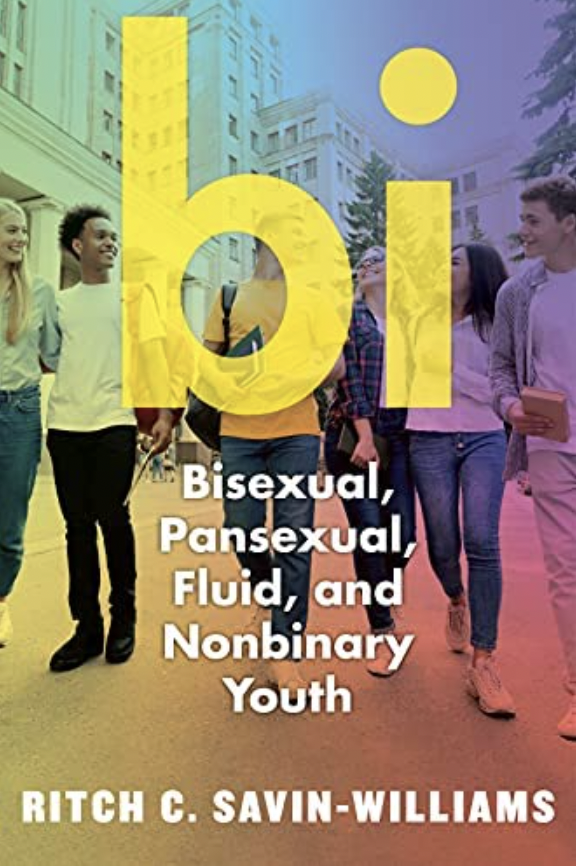
Book Review of Bi: Bisexual, Pansexual, Fluid, and Nonbinary Youth

Book Review of Bi: Bisexual, Pansexual, Fluid, and Nonbinary Youth

How many times have you heard of someone who identifies as bisexual being discredited or accused of queer-baiting, just because they are in a heterosexual relationship, or because they don’t act “gay enough”? This phenomenon is called bisexual erasure, and it is now, more prevalent than ever in our media and our society today. The book Bi: Bisexual, Pansexual, Fluid, and Nonbinary Youth by Ritch C. Savin-Williams, aims to discuss the often disregarded complexity behind term bisexuality, and bring to light the prevalence and relevance of emerging fluidity and varying sexualities and genders. The author does this through the stories and experiences of college aged students who have had varying journeys regarding their sexuality and/or gender. 

An overarching and important theme throughout this work, is the idea that the term “bisexual” is an “inadequate namesake” (Savin-Williams 21), as stated in the introduction of the book however the term is widely accepted by the public, which is why so many stereotypes and misconceptions have emerged out of this term. Many, as the author calls it, “individuals who are, to varying degrees, sexually and/or romantically attracted to multiple genders or sexes” (Savin-Williams 21), will refer to themseleves using the term bisexual, because it is really the only publicly accepted term other than gay or straight. However, because of this, many of the complexities of sexual attraction, gender, and fluidity are hidden, because when the public sees “bi”, they automatically think boy and girl. The pervasive bisexual stereotypes that rule a lot of our society and media, and how they can be dangerous are a big point in this book. The author is ultimately aiming to discuss many of the lesser known identities that are often hidden behind the veil of bisexuality, and bring to light the term’s complexity, as well as intersectionality between sexuality, gender identity, and other things like race and social class. 

Ritch C. Savin-Williams is a developmental psychology professor at Cornell University as well as a licenced clinical psychologist who got his PhD at the University of Chicago, and he specializes in researching and writing about the sexual and romantic development of mainly adolescent and young adults of varying genders and sexualities. He is known for writing books on adolescent development, with this being his 10th book in that subject area. Having the baseline of adolescent developmental psychology, and having studied young men and women of all varying identities, with many different backgrounds this has helped him bring his expertise into more niche areas like being an expert witness for cases involving same sex marriage, gay adoption, and intersectionalities of gender/sexuality and race. Having this background has put him in a good place to write so many books on adolescent development, many of which involve the complexities of fluidity of sexuality and gender. 

For this particular book, Dr. Savin-Williams conducted three studies where he interviewed and listened to the stories and journeys of 69 college aged students, focusing on the fluidity and spectrum of sexuality and gender. The interview contained many open ended questions about their development from both sexual and romantic perspectives, and the participants were asked to talk about broad topics from this lens, ranging from their early memories to where they see themselves in the future. He emphasizes that the questions were open ended and were asked, “not as an inquisition but as an explanation” (Savin-Williams 16). It was essential for the author to use this style of interview, so that the process would almost be led by the participants, taking Savin-Williams to where they wanted to go when discussing their experiences. He says, “Young people want to tell us their stories, their secrets, all we have to do is to want to listen”. The stories gained from this interview are the basis of the book and help the author show that the nuance to bisexuality, fluidity, pansexuality, etc, is a lot deeper and more complex than many think. Savin-Williams admits that almost three quarters of his participants “reported that they are white and grew up in middle or upper class homes in small or medium sized towns throughout the United States” (Savin Williams 15). He later goes on to say that urban and rural communities were represented in the participants, as well as young people of color or young people that grew up in lower class households, however, the majority of his participants fit that first bill. 

One thing this book does very well is discussing the distinction between romantic and sexual attraction. This is something that is not talked about very much, because so many people blur the lines between these two things, and while there can often be some crossover, the bottom line is that these two things are separate. When considering parts of one’s identity, this work describes sexual, romantic, and gender aspects, drawing a clear line between sexual and romantic attraction, as well as touching on the idea that attraction/sexuality and gender are also separate things that are often lumped together. It is made clear in this work that sexual and romantic attraction for others can be- and is often- varying and fluid for different genders, body types, personality types, etc. For example, someone can be sexually attracted to both men and women, but not romantically attracted to men. For many, this is a complex idea to grasp, because for a large majority of people sexual attraction is supposed to come with romantic attraction and vise versa. Savin-Williams says that something in common with many of the youths he interviewed was that many of them had, “ an assortment of sexual and romantic attractions, a mixture of sex and romance that did not always corespond to their attractions, and a search for an identity that made sense”. In other words, it is often confusing for many young people (as demonstrated by the youths interviewed), to make sense of their attractions and sexuality, when their sexual and romantic appeals did not line up. This distinction is extremely important to talk about, especially in today’s environment, and this book did an excellent job of working through and discussing this. 

I believe that this book would have benefited from more intersectional participation in the interview. While it should be noted that this lack of inclusion is something that the author addresses and discloses towards the start of the book, the book would have benefited if the author had just included more intersectional diversity in the first place when the interviews were taking place. The junctions between sexuality and gender, along with race, religion, class, and/or upbringing are important to discuss and it would have been interesting and more complex to hear about more of the different experiences between, say, a white, upperclass person who identifies as bisexual, and a person of color from a different upbringing who identifies as bisexual. There is some of this in the book towards the middle of the interviews, but increasing the intersectionality of participants would help this book be more well rounded. 

I really enjoyed reading this book, because as someone who identifies as bisexual, I have struggled with many of the stereotypes, questions, and definitions discussed in this book. I myself, am pretty sure that I might be pansexual or some other sexuality, but up until recently I call myself bisexual because as stated in this book, it is the most widely accepted term other than gay or straight. However, more recently, I have stuck with the bisexual label because I realized that the term is expansive, and can mean many things- something that this book has affirmed. This book resonated with me because I was able to read stories about young people around my age who have had similar experiences to me: my dad refusing to accept that I am bi because I have only ever been in heterosexual relationships; struggling with separating romatic and sexual attraction and figuring out where they intersect for me; struggling to find a label that fits. I would recommend this book for almost everyone to read, I think that no matter your sexuality or gender, you could benefit and gain new understanding by reading this book. However, if I were to be more specific, I would especially recommend this book to anyone who identifies as something in between gay and straight- somewhere on the spectrum but you are not sure where- this book will help with understanding of the complexities and fluidity that come with adolescent development no matter your identity. 

Sources: 

SAVIN-WILLIAMS, RITCH C. Bi: Bisexual, Pansexual, Fluid, and Nonbinary Youth. NEW YORK UNIVERSITY PRESS, 2023. 

“Ritch Savin-Williams.” Cornell College of Human Ecology, https://www.human.cornell.edu/people/rsw36. 

Sexing The Body: Questioning The Binary

In our current political climate, Conservative pundits spew MUCH misinformation regarding gender and its relation to sex. The common belief in the conservative western world is that sex and gender are interchangeable and distinctly binary. The progressive viewpoint, which seemingly contradicts that of the conservatives, accepts the gender binary as a social construct but maintains that the sex binary is indeed embedded in reality. Author, Feminist, and Biologist Dr. Anne Fausto-Sterling challenges these beliefs in her book Sexing the Body. The underlining question of the book: mainstream political and medical discourse tends to agree on the sex binary (male/female), is this rooted in biological truth? 

Dr. Anne Fausto-Sterling is a renowned American sexologist who pioneered the Anti-Binary ? movement. She has written extensively on the topic of sex and gender, including several books and opinion pieces in multiple prominent newspapers. Due to her scientific background, Fausto-Sterling provides a unique argument for HUMAN REJECTION OF THE SEX BINARY, WHICH HAS GROWN MUCH BROADER AND BIGGER SINCE SHE PUBLISHED THE FIRST EDITION IN XX. Fausto-Sterling is best known for her work “The Five Sexes,” which calls for broadening the sex binary to include three additional categories. https://www2.kobe-u.ac.jp/~alexroni/IPD%202016%20readings/IPD%202016_3/FAUSTO_STERLING-2000-The_Sciences%205%20sexes%20revisited.pdf In Sexing The Body, Fausto-Sterling analyzes research and medical practices (1700s-Present) related to reinforcing the sex binary. As a feminist and biologist, Fausto-Sterling examines THIS research through scientific and social lenses. Her analysis follows a similar pattern, a summary of the research question, an explanation of the actual study and its findings, and a lengthy examination of its questionable conclusions. 

Fausto-Sterling opens with an issue relevant to contemporary debate; the classification of female athletes. Until the late 1960s, Olympic woman athletes seeking to verify their sex for competition were asked to “parade naked in front of a board of examiners” (3). This blatant violation of personal health reinforces Fausto-Sterling’s belief in the sex binary. If sex is confirmed through visual inspection — “Breasts and a vagina were all one needed to certify one’s femininity” (3) — then is it impossible that the binary can exist; because a person could show both ovarian and testicular tissue. Through visual inspection, the board is not conforming to the actual sex of the subject. It is instead comparing the subject to their social understanding of a woman. Fausto concludes, “We may use scientific knowledge to help us make the decision, but only our beliefs about gender—not science—can define our sex” (5). Identifications have long been glorified assumptions, and biological truths are at odds with the male/female binary. 

Fausto-Sterling’S rejection of the male/female binary is at odds with most scientific and medical beliefs. Fausto-Sterling argues that doctors and scientists alike are not looking to address sex from a truthful and biological standpoint but are instead REVISE a product of fear and “deep confusion that arises when it [sex] can’t be easily determined” (30). The “scientific” classification of sex is additionally meant to support the “natural dominance of male over female hormones” (164). Inter-sex or hermaphrodite persons are at odds with this scientific community. Today children born WITH ” “either/or—neither/both” GENITALS—a fairly commonNOT UNCOMMON? phenomenon—usually disappear from view because doctors “correct” them right away with surgery.” (31). Fausto-Sterling argues that INTERSEX persons pose such a risk to our societal structure at large because we rely on the binary system. But if we eliminate those at odds with our biologically “correct” system, isn’t it biologically incorrect? Conservative movements point to the idea of “biology” as a way of endorsing the two-sex, two-gender NORM. However,  a further dive into the reality of biology reveals that regularly and naturally, people defy these classifications. Fausto-Sterling asks that we move to a medical system that “permits ambiguity to thrive” (101). There are, without a doubt, variations of sex that exist; it is time our medical practices accept them. 

The author includes studies regarding hormonal research to demonstrate the relationship between respected biological studies and the pervasive and unfounded assumption of two sexes. Researchers  “never questioned the fundamental assumption that there are only two sexes because their goal in studying intersexuals was to find out more about ‘‘normal’’ development” (46). Fausto-Sterling underlines that the majority of intersex and sex hormone research is reliant on the assumption of a sex binary and that this binary is a “false dichotomy” (27). Researchers and doctors sought to correct the confusion around intersex folk by attributing them to the “cultural conceptions of maleness” (59) or femaleness and carrying out medical procedures that endorsed the dichotomy. Fausto-Sterling comes to two bold and well-supported claims: 1. The sex binary is not biologically accurate 2. the medical community and medical research have never questioned the legitimacy of the sex binary and only seek to reinforce it. 

Fausto-Sterling is strongest in her understanding and critique of scientific processes, but her piece lacks in other areas. First, Fausto-Sterling is thoughtful and diligent in her writing regarding intersex persons; but her writing regarding transgender and binary persons seems like an afterthought. It appears that Fausto-Sterling is most concerned with medical discrimination during unwanted procedures (intersex) but pushes aside alterations of sex that are requested (transgender) and how they experience similar discrimination. Secondly, Fausto-Sterling’s strength is indeed her scientific exploration of the topic. But the pages of complex explanations, which I am certain adequately back up her claims, are dull and far from engaging. Lastly, FAILS to grapple with the racial implications of a failed medical system. Fausto-Sterling’s exploration of intersex medical intervention is overwhelmingLY white-centric, and the author fails to mention centuries of sterilization against the black community Fausto-Sterling’s inability to analyze her position from a radicalized lens severely limits the credibility of her argument 

Although Fausto-Sterling lacks in certain areas, it is difficult not to applaud her work. Fausto-Sterling challenges mainstream academia; she is unapologetic in her UNPOPULAR? beliefs and successfully backs them up. It is her dual credentials that provide such a convincing argument. Her ability to critique historically accepted research from a feminist and biological standpoint provides multidisciplinary reasoning. Fausto-Sterling provides diagrams that are especially helpful in understanding the research being explained — specifically the rat diagrams and pictures regarding natural sexual interactions. Fausto-Sterling’s plea for a more accepting model, which refuses the sole dichotomy of male/female, provides the reader with a conclusive answer to the issue at hand; and a system that enables naturally inter-sexual people to exist is far from controversial. Fausto-Sterling is uniquely successful in de-radicalizing a concept — abolishing the sex binary —  that can, at times, appear TOO radical. 

I strongly recommend Sexing The Body to every reader, especially those interested in the history of medicine. The book is somewhat time-consuming but yields life-changing and necessary information. Before I read this book, I, too, subscribed to the mainstream belief in the sex binary and brushed inter-sex people off as medical enigmas. This book has taught me that the non-female/male sexes exist naturally in our world and inherently contradict the two-sex model. I am aware of the controversy surrounding the claim Fausto-Sterling is making, and for this reason, I doubt this literature will find its way into MANY K-12 schools; this underscores the necessity to seek out information outside of what is handed to us and question what is. Sexing The Body will do just that. 

Sources:

  1. “Home – Dr. Anne Fausto-Sterling.” Dr. Anne Fausto-Sterling, 3 Oct. 2016, www.annefaustosterling.com.

2. “Sexing the Body: Gender Politics and the Construction of Sexuality: 9780465077144: Fausto-Sterling, Anne: Books.” Sexing the Body: Gender Politics and the Construction of Sexuality: 9780465077144: Fausto-Sterling, Anne: Books, 30 Nov. 2000, www.amazon.com/Sexing-Body-Politics-Construction-Sexuality/dp/0465077145.

Book Review: Feeling Medicine by Kelly Underman

Imagine this scenario: you are a black woman and you lay uncomfortably flat on your back with your legs strapped open. Slowly, you wake up from the poor anesthesia you were lucky to receive. You feel the cold sensation of the metallic instruments being inserted into your vagina and feel violated because you see someone who is not your doctor performing a medical procedure without your consent. This situation was not uncommon for the women of the twentieth century. Drexel University professor and former gynecological teaching associates (GTA), Dr. Kelly Underman, writes in her scholarly monograph, “Feeling Medicine: How the Pelvic Exam Shapes Medical Training,” on the horrific history and evolution of the pelvic exam. Dr. Underman analyzes life before gynecological training associates, the impact of the Women’s Health Movement in shaping modern-day pelvic exams, and the importance of building a doctor-patient relationship.

Kelly Underman is a woman from Rittman, Ohio who received her Ph.D. in Sociology from the University of Illinois at Chicago. She is a qualitative researcher and has an interest in researching medical sociology and how sociology plays a key role in the institution of medical schools. Her inspiration to conduct this research is derived from her first-hand experience of observing communities that have had the strength to grow and flourish despite living in the 1950s, where women were objectified for the purpose of gaining medical knowledge. Underman explains this throughout “Feeling Medicine: How the Pelvic Exam Shapes Medical Training,” where she highlights the Women’s Health Movement and how supporters of this movement challenged the healthcare system by drawing attention to issues that specifically women faced in medical practice. The Women’s Health Movement was powerful enough to defeat outdated practices that harmed women. 

Before the development of GTA’s programs, trained assistants served as models who volunteered to help students perform better pelvic exams with their own bodies. Throughout the early twentieth century, medical students learned how to perform a pelvic exam from random patients in a waiting room, who were then treated as objects to gain knowledge. In chapter 1 of her monograph, Dr. Underman explains “A woman waiting in a public clinic…medical students examine her in exchange for her ‘free’ healthcare…become an object under medical gaze.” (25) During the 1970s and 1980s, women who were patients were dehumanized and not treated with appropriate care. Dr. Underman elaborates on how medical students learned to do pelvic examinations on prostitutes and cadavers. The majority of the students cared more about receiving hands-on experiences on how to perform an examination rather than the importance of how their actions and attitude toward a patient influence a patient’s experience. The idea of medical students helping others was only recently established because in the past, it was not part of the norm. The author argues that the students were not taught to be delicate with the instrument such as the vaginal spectrum and how inserting it the wrong way could potentially harm a patient. In Chapter 1, Dr. Underman states “… the expectation that women deserved to be in pain or could tolerate it without complaint – while those who could not [were] considered psychologically abnormal” (31). However, later in the book, you learn the risks that come along with poorly performed pelvic exams, which includes increased chances of infection if a physician does not wash their hands before treating a patient. In Chapter 3, women told stories about students whose nails had not been properly trimmed and who, as a result, scratched their vaginal walls (107). Further, women of color were treated with less care than white women because doctors believed that Black people did not feel pain in the same manner because of the abuse they went underwent as slaves (29). Women who were mistreated by medical students rose up together and started a movement to help with the improvement of pelvic exams. 

Dr. Underman argues how the history of enduring painful pelvic exams led to the uprising of the Women’s Health Movement during the 1970s. Feminist activists were frustrated by how horrible the gynecology system was and advocated for change. They learned how to perform abortions and pelvic exams on one another and developed the fundamental components that would later shape the creation of gynecological training associates. Followers of the Women’s Health Movement were taught how to properly take care of a woman during an examination. In Chapter 1, Underman states “In 1975, feminist activists embarked on a new way of teaching the pelvic exam…[to] challenge the dehumanization of patients during the exam” (34-35). Because of these activists, women now receive better pelvic exams than in the 20th century. In addition, in chapter 4, Dr. Underman quotes Lena, a GTA who states, “We’re there because we want to improve healthcare…” (136). Lena and other GTAs have heard multiple stories of women who have had a pelvic exam and details about how uncomfortable it was for them. Through these narratives, it motivated the GTAs to continuously put their genitals on the line to instruct medical students to positively alter the experiences of patients. This will make future patients less anxious to receive a pelvic exam and reassure them that the physician knows what they are doing and that they will be treated with empathy. Not only does GTA teach students how to do a pelvic exam, but also how to reduce their anxiety and increase their confidence, which in turn, decreases the chances of harming the patient. Thus, Dr. Underman thoroughly argues in her monograph how imperative it is to shape great physicians through the assistance of GTAs. 

Dr. Underman elaborates on the importance of the doctor-patient relationship and how it was never taught until the creation of GTA. The experience for women used to be that physicians executed only their medical responsibilities, but the women were never given information about the procedure that was done on their bodies. However, GTAs teach their students the significance of “neutral touch,” which means placing a hand on the knee and providing a verbal warning before touching or inserting an instrument into the genitals (87). Having a connection between a doctor and a patient also improves the patient’s experience because having a conversation allows them to know what the physician is doing and enhances their level of comfort (123). Thus, the doctor-patient relationship is essential to ensuring patient comfort. 

In my opinion, Dr. Underman does a great job of explaining her arguments and providing primary sources to support her claim. In every chapter, the author includes a quote from a medical professional like gynecological teaching associates and doctors or students to bring validity to her claims. Quotes directly from someone in the field also makes her arguments in the monograph more trustworthy and reliable because her interviewers give her direct information that reinforces her claims. The quotes that Dr. Underman provides are highly qualitative, but the reader may be persuaded more by numerical evidence. 

A weakness of this source is that the author hardly uses statistical evidence. In the monograph, she elaborates on the enhancement of the pelvic exam but does not provide data on its impact nationwide. I believe that through statistics, the reader can understand more about how GTAs have improved the experiences of women compared to the early twentieth century. It would have been helpful to see a chart that analyzed women’s opinions on current-day pelvic exams, to see how much it has changed over time. For example, Dr. Underman could have researched data of the number of women involved in the Women’s Health Movement during the late 1970s compared to the 21st century after methods were improved. Including these statistics would have made Dr. Underman’s arguments stronger because her words would become more valuable and factual. 

Overall, I enjoyed reading this book because, although it had flaws, it was still well-written and held my attention. I like books that make me stop and think and even frustrate me because it pushes me to continue reading. Through her inclusion of personal experiences and direct quotes from medical professionals, Dr. Underman showcased the history of the pelvic exam and the Women’s Health Movement. Anyone who is interested in reading about how the medical system has evolved would benefit from reading this book. Also, those who care about how training medical students in the medical field shape how they practice medicine and how their actions impact their patients would enjoy Underman’s work.

Work Cited:

“Kelly Underman, Ph.D.” College of Arts and Sciences, Accessed 20 November 2022 https://drexel.edu/coas/faculty-research/faculty-directory/sociology/underman-kelly/#:~:text=Kelly%20Underman%20received%20her%20PhD,joining%20the%20faculty%20at%20Drexel.  

“Kelly Underman.” STS Infrastructures, Accessed 20 November 2022 https://stsinfrastructures.org/content/kelly-underman/essay.  

Underman, Kelly. Feeling Medicine: How the Pelvic Exam Shapes Medical Training. New York University Press, 2020. 

Dr. Kelly Underman

Authority and Uncertainty in Trans Medicine

For decades, transgender medicine has been a site of confusion, fascination, and intense conflict. There remains disagreement in how to provide gender-affirming medical interventions as well as how to determine who should receive it. Stef Shuster (they/them) tackles these questions in their book Trans Medicine: The Emergence and Practice of Treating Gender. They argue that the uncertainty in trans medicine has led to a medicalization of gender that identifies medical providers as experts and ignores trans people’s expertise in their individual bodies and experiences. Because contemporary medical perspectives are influenced by old assumptions about gender, this power dynamic perpetuates inequalities in healthcare.

When the era of what we now know to be trans medicine first began, the few healthcare providers who entered the field faced intense backlash from those who viewed such interventions to be inappropriate or even immoral (26). To protect themselves from the critique, medical providers who treated transgender patients corresponded extensively with each other, creating a shared understanding of trans medicine and establishing a sense of authority within the field (24). The focus became on “normalizing” trans people’s bodies and experiences—strict guidelines were set for who could be provided with medical intervention. Providers needed to be assured that their patient would be able to “successfully” live in their target gender; this definition of successful was entirely based in the medical and scientific community’s expectations for gender conformity and sexuality (24). Anything that deviated was met with suspicion that the patient was not truly transgender. Due to this, trans patients were judged based on appearance and were subject to intensive questioning about their personal life in order to establish their credibility (34). Trans people who did not fit these expectations were deemed unworthy of access to gender-affirming medical interventions (24). The author argues that due to the strict guidelines enacted to establish medical authority, trans people were forced to acquiesce to public expectations of gender conformity in order to receive gender-affirming medical care.

Still, uncertainty on how to determine who should receive gender-affirming care remained, leading physicians to reach out to psychiatrists and psychologists for assistance in assessment with the expectation that they would support their recommendations (50). Rather than working together, however, each group of healthcare providers argued that their field’s method of understanding transgenderism was sufficient. The author argues that this disagreement resulted in a battle over which field of medicine should claim power and authority over transgender treatment (49). Not long after psychiatrists and psychologists began assisting with the evaluation of trans patients, they began to offer recommendations for allowing or denying access to gender-affirming care, much to the physicians’ dismay, who thought their only role should be in assessing patients’ mental health (51). This resulted in a battle for not only power, but legitimacy as both sides questioned whether the other was equipped to claim authority.

Psychiatrists and psychologists, like physicians, focused on transgender patients’ personal lives in assessing them for receiving gender-affirming intervention: they also made recommendations based off gender conformity and physical appearance (59). However, they needed another way to distinguish their authority from that of physicians, so they turned to taking explicit sexual histories in order to ensure the credibility of transgender patients. They wanted to ensure that people were not using gender-affirming medical transition as a method of ignoring homosexuality (60-1). Shuster argues that this further subjected transgender people to adhering to the strict binary of gender and gender roles: therapists assumed that trans people would leave their existent families and go establish new, heterosexual ones where they would fulfill the familial role of their new gender. Therapists based their recommendation off trans patients’ intentions to do so (61-2). The efforts of both physicians and therapists were to assert their authority in trans medicine by establishing scientific guidelines in which to abide by and quell the uncertainty that existed in the field.

In contemporary transgender medicine, this uncertainty remains. Evidence-based medicine (EBM) has rapidly increased in popularity arising from critique that medicine needed to be more objective and standardized (77). Rather than basing guidelines off personal expectations as before, EBM represented an effort to base recommendations off scientific evidence. The author argues that in contemporary trans medicine, providers attempted to confirm the legitimacy of trans medicine by constructing evidence and codifying expectations (78). Codifying the trans experience led to it becoming a diagnosis: “gender dysphoria.” Shuster argues that this is a “double-edged sword:” a diagnosis increases the likelihood that insurance companies will reimburse out-of-pocket expenses for gender-affirming care, but it also implies that transgenderism is an illness (80).

Despite this, there was no clear path for clinical guidelines to follow in trans medicine because there was no scientific evidence: there were no randomized control trials determining risks or benefits of medical intervention (85). Trans medicine has rather been supported by case studies and patient reports (86). Because of the lack of scientific evidence, there remains ambiguity in the guidelines for providing gender-affirming care, leaving decision-making regarding trans care largely up to the discretion of the provider and allowing decision-making to be influenced by norms and societal factors. With healthcare providers vying to claim expertise, patients cannot claim the expertise over their gender identities themselves (88).

Shuster argues that this discomfort in the lack of scientific evidence has also resulted in a lack of confidence in healthcare providers in treating trans patients (90). Having been taught EBM, providers feel unequipped. Trans medicine is not taught broadly in medical schools (90). This discomfort and lack of experience in working with trans people leads to providers unintentionally exhibiting trans exceptionalism—where trans patients are perceived to be so unique that it is difficult for providers to use their knowledge and experience in other areas of medicine to inform their decision-making regarding trans patients (4). This makes it difficult for trans people to find a provider who feels comfortable working with them (91). The lack of scientific evidence backing gender-affirming care and lack of knowledge of the risks makes providers even more hesitant to offer access, particularly when trans people have coexisting conditions that may be affected. Though the guidelines no longer dictate gender conformity, their ambiguity allows providers to turn away trans people with mental health disorders or other health conditions due to the potential risk (95-97).

In summary, the author argues that due to the fact that medical providers are not trained in trans medicine, there exists uncertainty in how to assess trans patients and how to go about providing gender-affirming medical interventions. Because of this, there has a been an ongoing power struggle between different fields of healthcare in who can claim expertise in trans medicine and offer recommendations for care. This has medicalized understanding of gender and has given medical providers authority over gender, leaving trans patients at the whim of physicians’ interpretations of the ambiguous clinical guidelines based in EBM (104). This unintentionally perpetuates healthcare inequalities because decision-making is influenced by societal factors, cultural norms, and historical contexts (159). Their conclusive argument is that medical providers should not have authority over gender identity, nor should they impose medicalized understandings of gender onto trans people’s experiences: providers must advocate for their trans patients’ needs and place more trust in their patients’ expertise over their own bodies (164-6).

To support their arguments, the author employed several different methods of research. First, to provide historical context of transgender medicine, they examined letters of correspondence between medical providers in the 20th century found in the archives of the Kinsey Institute (11). These documents provided the discourse present in the medical and scientific communities on how providers were to make decisions regarding eligibility for gender-affirming medical interventions. From these Shuster gained knowledge of the assumptions that medical providers had when working with trans patients (11). They then conducted interviews with therapists and physicians from a wide variety of specialties and geographical locations. These interviews informed them how old assumptions of gender continue to influence contemporary structure of trans medicine and its lack of certainty today (12). The author also attended healthcare conferences and observed how providers taught each other to work with patient populations. Lastly, they examined diagnostic criteria and clinical guidelines related to transgender medicine from leading health organizations (13).

In conclusion, Shuster argues for the focus in trans medicine to be shifted away from the expertise of medical providers and onto the individual experiences of trans people. They call for better training in medical schools, increased research into the long-term effects of medical interventions such as hormones, and increased focus to be put on the healthcare disparities that trans people experience. Trans medicine is a place where science and values can coexist, and it needs to be redefined that way.

Book Review: The Tragedy of Heterosexuality

The narrative surrounding queerness in society today includes overcoming challenges, facing daily adversities, and experiencing more hardships than heterosexual peers. The Tragedy of Heterosexuality breaks this illusion of heterosexuality being easier than homosexuality and provides sympathy for those oppressed in heterosexual relationships. Jane Ward suggests that straightness is a means for people to access cultural and institutional rewards. However, while heterosexuality offers this privilege, it continues to be a site of oppression, violence, disappointment, and discrimination for women. Heterosexuality, from a queer lens, is just a ‘fetish for normalcy.’ Through this book, Ward reveals how heterosexuality is rooted in concepts of patriarchy, male domination, and toxic masculinity, to name a few. Ward realized she was ‘crying queer tears for straight people.’ Hence, through her research and personal experiences of being a lesbian feminist, Ward examines how queer relationships are healthier and more empowering than straight ones. According to her, ‘It’s not that it gets better for queer people; it’s that heterosexuality is often worse.’

While Jane Ward is best known for her 2021 PROSE Award Winning book, The Tragedy of Heterosexuality (New York University Press, 2020), she has written several outstanding books, including the 2016 Lambda Literary Award Finalist- Not Gay: Sex Between Straight White Men (NYU Press, 2015), and Respectability Queer: Diversity Culture in LGBT Activist Organisations. In addition, her research has been featured in The Guardian, Huffington Post, BBC, and The New York Times, to name a few. Apart from being an author, Ward is a professor, urban gardener, baker, and parent to what she likes to call ‘one human child, one potbelly pig, nine chickens, and one cat.’ Ward has also cofounded the Altadena/Pasadena chapter of Showing Up for Racial Justice. She received her Ph.D. in sociology in 2003 from the University of California Santa Barbara and is now a Gender and Sexuality Studies professor at the University of California Riverside. Her teaching and writing focus on feminism, queer, and heterosexuality studies.

The tragedy of heterosexuality is caused by what Ward has termed the misogyny paradox. The misogyny paradox is where ‘boys’ and men’s desire for girls and women is expressed within a broader culture that encourages them to hate girls and women.’ (pp. 25-26) Hence, the misogyny paradox promotes stereotypical roles in heterosexual relationships, such as the dominance of men and the submission of women. Ward exposes how this oppresses straight women as ‘their sexual relationships with men have been maintained by force, both through cultural propaganda targeting girls and women and more directly through sexual assault, incest, compulsory marriage, economic dependence, control of children, and domestic violence (p. 3). The situation is worse because straight men and women romanticize this unequal gender binary.

Their romantic and erotic attachments to the misogyny paradox give rise to an entire industry of self-help books, marriage and relationship counselors, pick-up artists, and seduction coaches. These industries encourage toxic masculinity and promote the idea that women want men to take the lead and be the decision-makers in the relationship. Women are objectified, and the ideal woman is created and viewed through the male gaze- waxed, shaved, toned, etc. Hence, Ward suggests that the ‘key difference between straight culture and queer culture in this regard is that the latter does not attribute these destructive behaviors to a romantic story about a natural and inescapable gender binary.’ (p. 27). Ward proposes the concept of ‘deep heterosexuality’ as the solution for this ‘tragedy.’ Deep heterosexuality is a ‘framework for honoring and preserving what straight people experience as fulfilling about hetero sex and straight culture and for pushing further and deeper in these pleasurable hetero directions’ (p. 159). Ward pushes for the expansion of heterosexual attraction to include the sexual vulnerability of men and the humanity of women. Hence, “straight men do not need to be queered; they need to learn to like women” (158)

What I admire most about Jane Ward’s writing is her unapologetic honesty, blunt criticism, and matter-of-fact approach to controversial topics. She rips off the band-aid of ignorance and forces us to see the pain caused by the oppression and inequalities associated with heterosexuality. Her strength lies in her ability to voice deeply personal opinions while supporting them with concrete empirical evidence. Her in-depth analysis of the historical context of the self-help industry and marriage counseling in the 1900s, the deep-dive into the pick-up artist and seduction industry, the critique of books such as Men Are from Mars, Women Are from Venus (1992) make it impossible to turn a bind eye to her argument. In addition, ward does a great job highlighting and examining the intersectionality of race and sexuality, a topic often overlooked. For example, she talks about how heterosexuality is often the only privilege black women have, which they cannot afford to lose, regardless of the oppression and injustice they might face within it. She also cites the work of the South Asian American feminist scholar Shamita Das Gupta, who highlights how immigant women conceal their husbands’ violence to project an ‘unblemished’ image of their communities to prevent discrimination. Hence, her writing displays the layers of oppression associated with heterosexuality.

However, there are some topics that I wish Ward had touched upon in the book. In my opinion, the book focuses on comparing and contrasting the ways straight men and lesbian women treat and think about women. While this is a valid and current issue to be discussed, it would have been interesting to include a few other perspectives. For example, I would have loved to know how bisexual, pansexual, asexual, and transgender relationships would have played into this debate. Would there be a difference in the relationship dynamic between two straight people and two bisexual people? How would an asexual-identifying male’s opinion differ from a straight man’s opinion on women? I think including these perspectives would have made the book more inclusive and reflective of our society’s diversity of opinions and experiences.
Moreover, homosexuality in the book is depicted as a safe haven and escape from the oppression and violence associated with heterosexuality. This can lead to a dangerous trajectory of justifying violence or toxicity in queer relationships. Physical, mental, and emotional abuse can occur in all sorts of relationships, regardless of whether they’re queer or straight.

As a South Asian woman, I felt the book was centered around white American opinions on heterosexuality, where men are the bad guys and women are the damsels in distress. While I truly respect how Ward centered the book around calling out toxic male behavior and directly addressed men, I think she failed to address an equally important demographic- women! Ward suggests that a part of the problem would be solved if ‘men liked women more, but I believe that women need to like women more too. In South Asian cultures, women are often the strongest upholders of patriarchy. In my life, I’ve experienced more women shaming, discriminating, and slamming other women than men. Teachers slut-shame girls in school, grandmothers, and aunts constantly comment on bodies and clothing, and mothers train girls to believe their only role in life is to be good wives and mothers. While my dad refuses to celebrate any patriarchal Indian festivals and rituals, my mom consciously continues to partake in them for the sake of ‘tradition.’ It’s ironic how the matriarchs in South Asian culture actively promote patriarchy in the name of culture and tradition. Hence, men and women must reflect on their indoctrination of patriarchal values. It’s impossible to fight discrimination if women stand against each other rather than together and in support of each other.

Overall, I think this book provides us with a much-needed wake-up call. After reading this book, I became aware of the saturation of heteronormativity in my upbringing. I realized how the media I consumed (books, movies, social media) contributed to the romanticization of the gender binary. I think this book is a fascinating read and has much to offer to everyone. It shows us that oppression is multifaceted and emphasizes the intersectionality of feminism, queerness, race, and culture. It is one of few books that call out heteronormativity and shows us what we can learn from queer communities. The illuminating discussion and debate initiated in this book will ensure that everyone reflects on how they can better their relationships.

Book Report: The Tragedy of Heterosexuality

The Tragedy of Heterosexuality

“To the straight people reading this book, let me say with all my love and solidarity, I am your ally” (Ward, 13). Who knew that such a normalized sexuality – heterosexuality – could result in the depressing lives of both parties? In Jane Ward’s scholarly monograph The Tragedy of Heterosexuality, she examines the normalized problems inside hetero-relationships, like misogyny, toxic masculinity, and gender roles. Because of these problems, women feel like many parts of their lives are trivial compared to men; on the other hand, men don’t feel secure in their own manhood to “pick up” a woman and keep them around. Let’s dive into why Ward says such things, and why Ward ends the book with “Straight men do not need to be queered; they need to learn to like women” (Ward, 171).

Beside The Tragedy of Heterosexuality, Jane Ward, a professor of Feminist Studies at University of California Santa Barbara, has written two other books: Not Gay: Sex Between Straight White Men, which was published in 2015, and Respectably Queer: Diversity Culture in LGBT Activist Organizations, which was published in 2008. With these published books, Ward has written about various topics, such as “trans relationships”, “the evolution of straight culture”, “the meaning of sex between straight-identfied men”, and more (these topics as well as the complete information of Jane Ward will be linked). Because of these previous works, Ward knows the reality of, in this case, straight people and their couple troubles. She has been aware of such topics early on, to which one could say she has an expertise in these fields. Even if not straight herself, Ward seems to know more than enough than one might expect.

As the book starts, Ward tells the reader that she views the life of “‘straight culture’…through a queer, feminist lens.” To put the problem of “straight culture” into perspective, Ward, as a queer person herself states, “Straight women’s lives are very, very hard. It’s not that it ‘gets better’ for queer people; it’s that heterosexuality is often worse.” With this line, I kind of reflected and thought how true it is – of course queer lives get better, but never realized how hard heterosexuality actually is. Growing up and accepting the fact that one is queer is already hard enough, but to put this context into the actual world of men trying to get with women is already depressing enough. This idea of sexism and toxic masculinity takes over straight culture, to which women and men can not have a successful life with one another because of these coinciding problems. How can men expect more from women when they can not expect more out of themselves? Men are too scared to break out of this heteronormative shell to which they resort of to the seduction of women and plain sexism. 

There is a shift from women doing things to themselves – dieting, shaving, waxing, dying – to deem themselves worthy of a man’s “love,” now to men who realize that their bodies may not be enough to attract a woman’s love, such as being too bald, too short, or too fat. Because of this shift in men’s views, some men have started going to get help from pickup artists, which is, essentially, the idea of “how fast am I able to inappropriately touch you?” During this rise of pickup artists, Strauss’s book The Game was introduced; because of this, the pickup industry expanded into bootcamps, allowing for usually men to give men a lesson on how to get “game,” which is the same idea of seducing woman – how to get a woman into you and getting with her the same night (Ward, 87). As years passed, men slowly started to realize this isn’t what girls need or what – they want to feel seen, heard, and reassured; as a matter of fact, we know women don’t want to be seduced because women have developed “survival strategies…to manage sexual objectification” – these strategies being “bitch shields (i.e., being rude to, or ignoring, men) and shit tests (i.e., insulting men)” (Ward, 99). Women want men who are capable of showing these range of emotions, not the typical self-destructive men who needed a woman to “save” them and make them feel like woman actually had a job other than sex (Ward, 109). Like said earlier, as time moved, these pickup artist industry got more progressive (at least some of them, like Project Rockstar, who had better – younger, more attractive – instructors teaching men how to properly “game”: “thinking beyond consent to consider the quality of women’s sexual experiences, and using spot-on metaphors to help each other conceptualize good, humanizing sex” (Ward, 115). With this shift to a more progressive pickup artist industry, 

One strength about Ward’s writing is her tendency to use others’ work as examples, which strengthen Ward’s own argument. For example, during chapter 4, Ward uses her queer acquaintances and friends as more opinions onto straight life and its culture; with these opinions, she is able to reinforce her own perspective to something more reliable and accurate. She’s also able to draw out something more from these different opinions and perspectives. Additionally, another strength with Ward’s writing is critique a problem – with detail – within straight culture, and is able to offer a solution or workarounds to be able to enjoy a relationship where men actually love women and vice versa. 

While I admire almost everything about the book, one weakness about the book is  the lack of perspectives coming from the other side. Yes, I agree this is something that shouldn’t have another side, and that dismantling this patriarchy is ultimately the step that allows for something more in these relationships. However, one effective strategy, I would say, is that Ward would be better off using rebuttals to her perspective, and counter those arguments, which also give the mentality of “Nothing-to-lose.” Here’s what I mean: for example, within the pickup industry, some men had “that nothing-to-lose frame of mind that allows men to approach women they would otherwise find intimidating” (Ward, 104). By refuting these opinions coming from the other side of this battle, we can then give women and men a same state of mind, allowing them to try these new, which they somehow deem “queer,” like exploring sexual, such as polyamory or “pegging.”

After reading this book, I realized that some of these issues did not occur to me. While I am queer myself and know there has always been issues within straight relationships, I never knew what specifically. Reflecting on my past years, I recognize how little my life has been filled with straight relationships and their problems. I have three sisters, so of course I’ve been exposed to that of hetero couples, but have never actually noticed the problems embedded within. This book has put out more than I realized could be wrong with straight relationships, such as how men are scared of hurting their manhood in any way and would rather dismiss their female partner and their feelings and/or interests (I knew men were scared of hurting their manhood, but did not know until now how they would treat their partner just to protect themselves). While this book has a specific audience range consisting of mostly straight people, I say anyone with an open-mind should read this book. While some people may not consider themselves straight, I think this book provides a great opportunity to know more of the world around us revolving around straight culture. To some degree, I would not say there is a specific audience; although it mostly takes place within these hetero-relationships and they should be the one to fix it – through communicating and experimenting – I think those outside of the straight community also play as a role to disassemble this hetero-patriarchy: as Ward, a queer person, says herself, “I wish for them that their lust for one another might be genuinely born out of mutual regard and solidarity.” For straight women, this book does a great job at giving light to these problems; it can be freeing to have a book dedicated to the ways your life can be improved. Thus, I think this book has something in store for everyone, and we could all learn a thing or two as the principle of love is something mentioned, even if towards straight men. 

Works Cited

Ward, Jane. “Jane Ward: Scholarship for the Feminist Future.” Jane Ward, https://www.janewardphd.com/. 

Ward, Jane. The Tragedy of Heterosexuality. New York University Press, 2020.

Reversing the Ally Relationship: Straight Women’s Gendered Suffering and “The Tragedy of Heterosexuality”

About a year ago, I went through my first real breakup. I was in a toxic, straight relationship with a man for nearly three years, and since our breakup, I have often wondered: how unique was my experience? Reading Jane Ward’s monograph, The Tragedy of Heterosexuality, I was struck by the degree to which my former relationship was indicative of a larger problem with straight culture, and the ways my experience aligned with many other women’s experiences. Ward outlines the patriarchal structures and influences of rape culture that inform straight men’s violence against and general lack of empathy toward women. She goes on to connect these structures and influences to the widespread dissatisfaction (at best) of women in straight relationships. Ward proposes that straight women are in danger and calls for a reversal of the ally relationship in which queer individuals become allies to straight women.

According to Ward, straight culture’s impact on straight women has elicited queer concern and confusion for decades; members of the LGBTQIA+ community have often described straight relationships as, at best, boring, but often toxic, and at worst, violent. Ward talks about her love for her queer life and argues “that the basic premise of the question—that heterosexuality is easier than queerness—requires renewed investigation” (Ward 2). Ward centers lesbian feminist scholarship and cites that the “tragedy of heterosexuality” is “a critical but still largely overlooked consequence of the drowning out of lesbian feminist ideas and experiences” (Ward 4). By centering lesbian and queer feminist perspectives, Ward posits the tragedy of heterosexuality is that “straight life is characterized by the inescapable influence of sexism and toxic masculinity” (Ward 8).

The Tragedy of Heterosexuality’s overarching argument is that heterosexuality is “a system equally organized around love and abuse,” and rooted in white supremacy and patriarchal structures (Ward 12). Many straight women, according to Ward, are unhappy—so what entices them to stay? By outlining the historical and structural contexts of straight culture, Ward situates straightness as a “fetish for normalcy” (Ward 15). Heterosexuality has often been framed as the norm, reinscribing gender roles and biological essentialism, among other sexist narratives that permeate straight culture. Ward argues we must address the ways in which heterosexual relationships reinscribe these narratives—the “we” presumably being individuals across the spectrum of sexuality.

Ward quickly addresses that her focus is straight culture, not necessarily sexuality itself. One prominent aspect of straight culture is normalized mutual dislike: “Across time and place, most forms of heterosexual coupling have been organized around men’s ownership of women (their bodies, their work, their children) rather than their attraction to, or interest in, women” (Ward 34). But Ward argues that in addition to men’s control of women, “straight women’s and men’s shared romantic and erotic attachments to an unequal gender binary” indicates a wider issue with and fear of detachment from the norms of the gender binary and sexuality, further reinforcing heterosexuality as a fetish for normalcy (Ward 22).  

Ward, who is a professor of Feminist Studies at UC Santa Barbara, “has published on topics including the marriage self-help industry, the rise and fall of pickup artists, how early lesbian feminist ideas shaped contemporary gender politics, the meaning of sex between straight-identified men, queer childhood and parenting, the evolution of straight culture, the corporatization of gay pride festivals, the race politics of same-sex marriage, the social construction of whiteness, feminist pornography, and trans relationships” (Jane Ward). In addition to The Tragedy of Heterosexuality, she is known for her works Not Gay: Sex Between Straight White Men (2015) and Respectably Queer: Diversity and Culture in LGBT Activist Organizations (2008). Ward’s book, Not Gay, was featured in Newsweek, New York Magazine, Forbes, The Guardian, BBC, Washington Post, USA Today, Huffington Post, Salon, Vice, and Slate (Jane Ward). Her first book, Respectably Queer, was named by The Progressive magazine as a best book of 2008 and has been featured on NPR (Jane Ward). Ward, who herself identifies as queer, has published many works about queer existence, flipping the dominant narrative of straight as normalcy on its head.  

In Ward’s discussion of the history of straight culture, she begins with the eugenicist marital hygiene ideals of the early 20th century: “…this era also initiates straight culture as a gendered mode of consumption in which the purchase of beauty products and relationship advice were vital to maintaining the delicate balance” (Ward 47). Then, midcentury advertising campaigns and educational films capitalized on these gendered modes of consumption to add more pressure on women: “…advertisers skillfully connected their products—from cosmetics to electronic dishwashers—to the project of heterosexual repair…” (Ward 53). Ward finishes out the historical context with the late-century explosion of a self-help industry “built on biopsychological claims about gender difference,” which further normalized heterosexual misery (Ward 30). To explore these circles of the late-century, and more recent iterations, of self-help, Ward discusses pickup artists and seduction coaches, and their redevelopment of a “woke masculinity” (Ward 31). Ward outlines the motives and degree to which these self-proclaimed dating experts contribute to the tragedy of heterosexuality: “Seduction coaches, at some level, know that heterosexuality’s continued fragility and failure produce a demand for interventions that can build a women’s sexual desire for average men and increase average men’s capacity to elicit that desire” (Ward 87).

Starkly contrasting the perspectives of seduction coach culture are the queer subcultural materials and interviews with queer people. For instance, one portion of the queer testimonials is entitled “It’s Sad How Much Women and Men Dislike Each Other,” in which queer individuals talk about the heartbreaking ways straight culture normalizes mutual dislike and straight women’s dissatisfaction with their male partner. As a rebuttal to the tragedy of heterosexuality, and particularly the issue of mutual dislike, Ward discusses the concept of “deep heterosexuality,” in which straight men would essentially take notes from lesbians and identify with women to develop a deep mutual regard (Ward 158).  

The Tragedy of Heterosexuality’s greatest strength as an academic work is its grounding in reality, not the theoretical. Ward takes an anthropological approach, using real human testimonials supported by lesbian feminist scholarly literature; her inclusion of queer perspectives in the chapter “Sick and Boring Life” exemplifies the degree to which this work is rooted in lived human experience. In addition to these queer perspectives, her interviews and described interactions with modern pick-up artists and dating coaches emphasize the humans behind and the humans suffering because of hetero-patriarchal structures. What makes the book so powerful is the way in which Ward marries the academic and the personal; I related to nearly every single tragedy of heterosexuality—but before reading this I did not know these experiences were a part of a larger system. I thought it was normal and inevitable to feel stuck with a boyfriend who disappoints you, relies on you for therapeutic counseling, and acts in controlling, manipulative and misogynistic ways. Ward shows straight women (and men) that there is another way.

Though I heavily related to the content of this book, I find that one thing it was missing was the perspective of straight women. Much of the discussion of straight women’s experience is rooted in academia and considering this is a work about straight women, a lot of the included perspectives were not theirs. From Ward, we learned how queer people feel about straight relationships and how some straight men feel about straight relationships (although, not the ones who indicate an inclination toward deep heterosexuality), but to “save” straight women, do we not need to understand the feelings tied to the tragedy of heterosexuality, too? I think a chapter like the queer perspectives chapter, but with anecdotes from straight women, could have made the work stronger.

As a personal reading experience, I found this book to be very validating and liberating. As a scholarly experience, I found the book immensely enlightening in how Ward breaks down the structures that cultivate oppressive realities for straight women in heterosexual relationships. Any straight women or women who have been in a straight relationship should read this book to understand why straight relationships function as they do; frankly, they should read The Tragedy of Heterosexuality to understand that many of the shortcomings of their straight relationships are not their fault. I also think straight men could benefit from reading this book; Ward provides insight into the situations they place women in and outlines how heterosexual misery is not an inevitability.

As Ward calls for queer allyship, queer individuals should at least read excerpts from the book (potentially excluding the queer perspectives chapter if they are very well-versed in the realities of heteronormativity and the tragedy of heterosexuality). Examining the tragedy of heterosexuality from a queer lens is an example of why it is critical to view normative, dominant structures from those who have been marginalized by them. Queer people understand their own existence and straight existence, and the insights they can provide, as outlined by Ward, are invaluable in turning the tragedy of heterosexuality into healthy relationships bonded by deep heterosexuality.

Works Cited

Jane Ward: Scholarship for the Feminist Future, https://www.janewardphd.com/.

Ward, Jane. The Tragedy of Heterosexuality. New York University Press, 2020.

Stef M. Shuster: Trans Medicine, The Emergence and Practice of Treating Gender

GSS Book Review

Hale Robinson

            Although the emergence of trans-medicine as a discipline and the discourse surrounding it appears rather recent, transgender healthcare has existed since the early 20th century (Schuster 23). Despite this, physicians and other medical professionals are both hesitant and inexperienced in regard to the treatment of transgendered individuals. The book Trans Medicine, The Emergence and Practice of Treating Gender details how and why this disinclination to treat transgendered patients has occurred and the consequences of medical authority over gender and sexuality. Furthermore, the author seeks to identify practices and ideologies that have been normalized and “legitimized” in the decades of trans-medicine. Through this short publication, Schuster analyzes both contemporary and historical trans-medicine systems and norms in addition to specific examples highlighting the interactions between varying forms of healthcare and their implications on trans-medicine as a whole. From this we can understand how trans-healthcare provides a middle ground for intersection of personal values and scientific thought.

            To compile the examples and evidence presented in the book, author Stef M. Schuster used a multi-sited research design (Schuster 11). The majority of Schuster’s research is his collection of correspondence between healthcare providers in the 20th and 21st century (Schuster 2). Schuster also relies upon biological artifacts, collections of discourse, and other forms of scientific literature. (Schuster 6). Additionally, the author is an associate sociology professor at Michigan State University with a M.A. and Ph.D. in sociology and has conducted a number of interviews with both therapists and physicians as well as attended scholarly conferences on the topic of trans-medicine (Schuster 12). His final source of data collection came in the form of analyzing clinical guidelines, standards of care, and diagnostic criteria used by both contemporary and historical physicians (Schuster 13). Finally, the author notes that terminology surrounding gender and sexuality is fluid and specific word choice in the book may not be representative of the terminology used in the past or future.

            Early development of trans-medicine began in the mid-1950s in the post-World War II era (Schuster 23). Public trust in scientific communities to solve social and biological ills was at an all-time high (Schuster 23). According to Schuster, this increase in medical authority over gender and sexuality and the power difference between doctor and patient is one of the root causes of why trans-medicine has made little progress from the 20th to 21st centuries (Schuster 24). While there have been attempts to decentralize authority of medical providers, many still hold the view that the “doctor knows best” (Schuster 9). In terms of trans-healthcare, this mindset has resulted in a number of subsequent issues. Medicalization refers to “the process of how non-medical problems become defined and treated as medical problems” (Schuster 9). Through medicalization and especially regarding transgender-healthcare, social issues about bodies and bodily autonomy become scientific issues.

Schuster argues that the medicalization of transgenderism resulted in early physicians perceiving transgender patients as “severely troubled” and transgenderism was understood in terms of symptoms of “delusional thinking” (Schuster 24). On one hand, Schuster details how the medicalization of trans-sexuality excited physicians as it was a new uncharted form of medicine. On the other hand, many physicians were hesitant and felt unequipped to treat transgendered patients. As Schuster details in chapter 1, few endocrinologists and physicians in the U.S. were willing to assist transgender individuals out of fear of criticism from peers, revoking of medical licenses, and possible patient regret and future lawsuits following procedures (Schuster 24). It is from this medicalization and hesitance to treat patients that specific guidelines and evidence-based medicine (EBM) emerged. Providers began placing increased expectations onto their transgender patients in an attempt to ensure that the patient was truly willing to undergo hormone/surgical procedures. Schuster states that from these expectations, new scientific language, approaches, and guidelines for trans-medicine were created (Schuster 64). The Diagnostic and Statistical Manual of Mental Disorders (DSM) and the World Professional Association for Transgender Healthcare (WPATH) sought to define transgenderism and create a step-by-step protocol to treating transgender patients respectively (Schuster 80). While guidelines may serve as a “handrail” in other forms of medicine, Schuster explains that the steps outlined in the guidelines suggest a linear pathway, while gender transitions tend to be anything but linear and vary from individual to individual (Schuster 105). Furthermore, standardizing and defining transgenderism is ineffective as trans people’s experiences and self-concepts may not fit into binary modes of thought. Not all transgender patients have similar experiences and the notion that gender is fluid (not just extremes) is hard to process for many.

In addition to the medicalization of trans-sexuality, Schuster argues that certain strategies and mindsets have become normalized in trans-healthcare. One of these strategies is what he calls the “fake it till you make it” mindset (Schuster 131). Because few providers are trained in the social contexts and manifestation of gender, this lack of understanding causes discomfort amongst medical professionals. Many have trouble admitting their lack of knowledge in a field which further causes incorrect practices to become normalized over time (Schuster 134). Schuster also details the trope of the “self-assured expert” who present information in ways that leave little room for discourse and change (Schuster 138). Additionally, some solely follow clinical guidelines and understand trans identification as a clear, straight pathway “from point A (assigned gender at birth) to point B (undergoing a physical transition to the “other” binary gender)” (Schuster 138). The final and perhaps most prevalent strategy that Schuster recalls is “gate-keeping” and defining who is “truly” transgender (Schuster 106). To protect themselves from being sued by a patient, many providers were strict (and still are today) about who is able to obtain treatment procedures (Schuster 94). Schuster identified the following techniques that providers used to determine who would be able to receive hormone therapy. To begin, individuals who did not engage in illegal or risky activities indicated to providers that they could function as a “normal” person upon transitioning (Schuster 72). Second, those who were able to pass the “real life test” or live their life as if they had already received transgender treatment proved to providers that the patient was committed to go all the way with the procedures (Schuster 39). Finally, trans-patients whose ideologies closely aligned with traditional gender roles were significantly more likely to receive hormone therapy and surgical interventions (Schuster 16).

Schuster argues that progress in transgender medicine in recent times has been minimal. While he does not explicitly provide any solutions, he does detail specific providers who are making beneficial progress in trans-healthcare by utilizing smarter and favorable practices. He defines “flexible interpreters” as providers of trans-medicine who are able to “embrace the uncertainty in trans medicine and interpret the guidelines in ways that puts patients’ needs, and their varied ways of identifying as trans, first” (Schuster 117). In other words, these are medical professionals who are able to find a balance between social values and scientific fact and who refer to guidelines as recommendations rather than laws (Schuster 117). According to Schuster, flexible interpreters realize that guidelines take away focus on the individual and their healthcare needs (Schuster 118). When considering that each patient is unique, it is impossible to follow clinical guidelines exactly.

Schuster’s book thoroughly and concisely explains the emergence and history of trans-medicine from the 20th to 21st century. It highlights specific examples of social and medical trends that have impacted trans-healthcare over the years. For example, the book delves into topics such as the medicalization of sexuality through the DSM and WPATH and explains how this has had an effect on treatment strategies. Schuster draws upon various sources to formulate his claims and arguments with one of the sources being scholarly/medical conferences. However, the most convincing sources are direct quotes and letters of correspondence from the 1960s. These primary sources allowed the author to form arguments with supporting examples. This is demonstrated on page 31 in which Schuster presents a letter written by a transgender patient, “This letter is no trick and all I write is the truth and not made up. I want you to understand that my need to have this operation is not in passing, but is something of the deepest importance to me and has been for a long time…” This quote directly supports the author’s argument of the trope of transgender “trickster” where transgender people deliberately misrepresented information about themselves in order to gain access to hormones and surgery (Schuster 31). The abundance of direct quotes and examples make the book an informative and credible read.

While the author’s support of “flexible interpreters” is clear, the author says little about potential solutions and courses of action for the future of trans-medicine. Instead of offering specific solutions to the problems in trans-medicine that have been normalized over the years, Schuster simply critiques and summarizes these issues. While proposing healthcare solutions may be beyond the author’s expertise, with the immense amount of research collected to write this book, I would have expected the author to describe future plans and implications of his findings. In the conclusion and in the section titled “Redefining the treatment of gender,” the author states that “changing the protocols and shifting attention away from trans people as a problem to fix enables some providers to redefine the ‘treatment’ of gender in a way that shifts the attention to broader social inequalities that trans people experience in everyday life, rather than perpetuating inequalities in healthcare encounters” (Schuster 164). While I agree with this claim, it is a simple blanket statement that does not enact any specific changes or solutions.

Overall, Trans Medicine, The Emergence and Practice of Treating Gender, by Dr. Stef M. Schuster was an enjoyable and informative read. The book answers the questions of how medical authority over gender has occurred as well as what practices have become normalized over the years in trans-medicine and their specific consequences. While the author takes a clear stance against the current and past states of trans-healthcare, he does not dive in depth into solutions. In summary, I would recommend this book to anyone who is interested in history and specifically in the history of medicine and sexuality. Furthermore, I feel it is imperative that those pursuing a career in healthcare read this book. As healthcare and social values are increasingly interconnected, it is critical that our future healthcare providers adapt with the times to help serve diverse communities.


Works Cited

Shuster, Stephen M. Trans Medicine: The Emergence and Practice of Treating Gender. New York University Press, 2021.

Onnagata: An Assessment of Female-likeness within Kabuki Theater

Kabuki theater is a traditional form of Japanese performance art. Known for its highly stylized performances, including songs, dance, mime, and lavish costumes, Kabuki theater has remained a major theatrical form in Japan for over four centuries. In 1629, the shogun, Tokugawa Iemitsu, banned women’s participation in Kabuki theater as he felt their sensuality was disgraceful. As a result, male actors filled these roles. Today, Kabuki theater is known for its use of male actors in female roles—referred to as “Onnagata.” The Onnagata have, WCfor far too long, been referred to as the “essence of femininity” (Mezur, 2005, p. 24). In her monograph, Beautiful Boys/Outlaw Bodies, Devising Kabuki Female-Likeness, Katherine Mezur counters this belief by asserting that The Onnagata’s stylized acts of female-likeness contradict the actual concept of a woman. Rather, modern perception of the Onnagata represents the male fantasy of what women should be, exemplifying traits such as submission, repression, and endurance (Mezur, 2005, p. 196). The Onnagata are a fictional depiction of female-likeness created during the Edo period (Mezur, 2005, p. 5). This monograph is not only a fascinating discussion of Kabuki theater but also a necessary analysis of gender and traditional Japanese theater.

In Beautiful Boys/Outlaw Bodies, Devising Kabuki Female-Likeness, Katherine Mezur uses two methods to evaluate the Onnagata and its relationship to gender. Her first method reviews Onnagata’s history and scholarly studies to garner concrete factual information. Her second method analyzes Onnagata aesthetics for artistic value. Dr. Mezur is a scholar and artist who specializes in gender studies and transnational dance and theater in western Asia. She received her Ph.D. in Theater and Dance with an emphasis on Asian performance from the University of Hawaii, Manoa. Mezur’s background in Nihon buyô dance—a classical Japanese dance style that originated from Kabuki theater—her firm understanding of Western feminism, as well as her firsthand experiences watching Kabuki theater prepared her well for synthesizing studies on the Onnagata that were written by both Japanese and non-Japanese scholars. Though Kabuki theater is structured within Japan’s binary and masculinist society, the Onnagata serve as a displacement of gender norms (Mezur, 2005, p. 153-154). In my opinion, Dr. Mezur’s methods are appropriate. By reviewing the history of Kabuki theater and using scholarly papers, such as William Malm’s “Studies in Kabuki: Its Acting, Music, and Historical Context” and Takashi Tsukada’s “Stratified and Composite Social Groups in Tokugawa Society,” Dr. Mezur gained valuable insight that provided a foundation to build her assessment on. In the social sciences, it is important to draw from the work of previous scholars and add to it. By reviewing writings from both Japanese and non-Japanese authors, Mezur is able to make credible conclusions through a diversity of voices. For the aesthetics method, it is appropriate because Dr. Mezur has established herself as a subject matter expert in this area and is applying this valuable skill to add a novel contribution to the study of Onnagata within Kabuki theater.

In her monograph–>REVISE THE BEGINNING TO MAKE IT CLEAR THAT YOU ARE INTRODCUING CENTRAL RESEARCH QUESTIONS, Mezur addresses the following: In what way is the female gender portrayed by the Onnagata? How is the naturalized concept of desire and identity undermined by the Onnagata? In what ways does the Onnagata transcend gender as we traditionally see it? To answer these questions, Mezur pulls from theories presented by notable Western feminist scholars AND TRANSNATIONAL?. The summary of Mezur’s conclusions to these questions will be discussed below.

Judith Butler’s theory on performative gender was a point of inspiration for Mezur. This theory asserts that gender identity cannot exist outside of gendered acts. Drawing from this, Mezur maintains that when the Onnagata perform stylized gender acts (such as turned-in walks) or wear certain costumes (such as kimonos) and these acts are repeated in a formulaic pattern, the Onnagata ‘gender’ is created (Mezur, 2005, p. 36). Therefore, the Onnagata do not represent female likeness; they are a stylized fiction of women. The Onnagata are not an ideal representation of womanhood or female essence, but an entirely new gender role. Mezur takes the theory presented by Butler and applies it to Kabuki theater to effectively assess how the Onnagata present gender. By doing this, she addresses an interesting perspective that Judith Butler failed to touch upon.

Mezur also pulls from Sue-Ellen Case, a scholar on feminism and theater. To Case, gender is an effective mode of repression, and those in power have often encouraged the naturalization of gender roles, both on-stage and off (Mezur, 2005, p. 39). Mezur argues that the Onnagata destabilizes and questions the binary. She asserts that while the Onnagata are often designated as the female roles, they are really a challenge of this designation. The Onnagata fiction, controlled and shaped by the male body, represents an alternative gender possibility, disrupting the masculinist ideology prevailing in Japan (Mezur, 2005, p. 46). Though Kabuki theater is structured within Japan’s binary and masculinist society, it more accurately serves as a medium for a displacement of gender norms (Mezur, 2005, p. 153-154). Though Mezur agrees with the basic concept voiced by Case, she expands upon it in order to gain a better understanding of how and why the Onnagata may be challenging structural repression.

This deterioration of the gender binary then allows for a transcendence of gender. Onnagata gender—especially as it relates to the aesthetics of eroticism, sensuality, and attraction—is complex. The lack of gender role specialization permitted the consolidation of only a few Onnagata gender acts, and these acts transcended gender altogether (Mezur, 2005, p. 114). The limits of a single-gender identity do not apply. The Onnagata are delicate, graceful, and refined while also being chaotic and unbalanced (Mezur, 2005, p. 167). Their gender is ambiguous. This is what makes the Onnagata gender so powerful and tantalizing. Mezur further notes that while the Onnagata gender is independent of the binary—existing more in a liminal state—it requires the male body. Mezur emphasizes that this does not mean the Onnagata are males playing female roles; in fact, she would find this perspective to be problematic (Mezur, 2005, p. 141). Instead, she feels that the ‘male body beneath’ is a requisite for the Onnagata.

Spectators occasionally catch glimpses of the ‘male body beneath.’ For example, when the Onnagata bow, unpainted patches of skin near the wig line and nape of the neck are often visible. Clearly, even in a delicate moment, the male body is still ever-present. Mezur argues Onnagata gender acts must be created by the ‘male body beneath’ since the Onnagata “simultaneously performs both his male body beneath and his role,” (Mezur, 2005, p. 8). This stance, of course, prevents the possibility for women to act in this role, as an audience member could no longer imagine a male body beneath the kimono. Katherine Mezur’s assertion on this particular topic works against cultural feminism by reemphasizing the superiority of the male body. However, I do not find this perspective to be intentional, as Mezur has openly criticized other scholars for this position.

Having done a lot of recent reading on Kabuki theater, it disappointed me to see that Mezur overlooked important female Kabuki actresses. During the peak of Japonisme—a time following the reopening of foreign trade with Japan and when Japanese art influenced several Western European artists—Sada Yacco, a popular Japanese geisha, actress, and dancer, toured with the first Kabuki theater troupe ever seen in the West. Therefore, while women in Kabuki are certainly a minority, they do exist. This dismantles the notion of the requirement for a ‘male body beneath.’ As long as the body of those acting in the role of Onnagata continues to be concealed, it is unclear to me why the ‘male body beneath’ would add any importance. Asserting that actresses will never attain the power and vigor of the male actor only enables the de-powering of women—a major patriarchal goal.

Mezur concludes her monograph with an important message: gender is neither true nor false. Gender is not original nor obtained. To Mezur, the Onnagata are not ‘natural.’ They reject womanhood while ‘portraying’ femininity. They defy the patriarchal and naturalized binary. They transcend gender altogether. Katherine Mezur challenges contemporary theater makers and scholars to break the binary when enacting human roles, as this ambiguous transformation will create an entirely new theatrical dimension. Beautiful Boys/Outlaw Bodies, Devising Kabuki Female-Likeness is a valuable contribution to the study of Kabuki theater. I am confident that readers will have much to consider regarding Onnagata female-likeness, or rather, lack of it, after reflecting on Mezur’s analysis.

Bibliography  

Mezur, K. (2005). Beautiful Boys/Outlaw Bodies: Devising Kabuki Female-likeness. Palgrave Macmillan. 

Perception of women in the Victorian Times: Review of Sexual Science: The Victorian Construction of Womanhood

“Women, it seemed, had no right to self-fulfillment that could stand for a moment against the claims of society on their wombs” (Russett 1989, 123).

Living in a society is equal to facing a variety of expectations, roles, and behaviors deemed acceptable or unacceptable. Women’s roles, in particular, have changed quite a lot in the past few centuries. Nowadays, people with uteruses have more reproductive freedom and opportunities to be economically equal to men than in the nineteenth century. The book Sexual Science: The Victorian Construction of Womanhood by Cynthia Eagle Russett describes how women were perceived in the Victorian times. It focuses mainly on the source of the viewpoints, on people who had the power to convince the society of those perceptions – scientists. The book describes their findings and conclusions about womanhood, one by one, and dismantles them in a very powerful way.

In the nineteenth century, women had little to no say over their bodies, minds, and rights. White male scientists focused greatly on explaining differences between sexes; in other words, why they had little to nothing in common and why women were inferior to men. They took control over proving that women are physically and mentally unable to be equal to men due to Nature’s challenges that people with uteruses had to face, such as menstruating or being able to carry a child. Scientists at that time accepted only facts that would agree with that claim and rejected all information against their beliefs.

The author, Cynthia Eagle Russett, was born in Pennsylvania in 1937. She was a historian, earned her Bachelor’s Degree from Trinity Colege and her Master’s and Ph.D from Yale University, where later she worked as a faculty member. She wrote several books, though she is best known for her exploration of Victorian “findings” about womanhood in Sexual Science: The Victorian Construction of Womanhood. Cynthia passed away in 2013, aged 76 years old, leaving behind a great legacy of fighting for women’s rights through exploring history.

A lot of what Cynthia Russett does is present statements and reasoning of white male scientists and let their words speak for themselves throughout the majority of the book; those alleged findings are challenged later on, at the very end. She mentions “experts” from a variety of fields of science, including phrenology, anthropology, craniology, biology, sociology, and many concepts within those fields of study. Victorian scientist greatly contributed to how women were perceived by the society at that time and what roles they were allowed to hold due to “the near-total absence of information in the field of sex differences, which made it inevitable that ideas now seen as preposterous were not preposterous at the time” (Russett 1989, 183). People listened to them; they had no other choice as no other credible source of information was available to them. Scientists were responsible for shaping society’s beliefs, despite the fact that later on they were proved wrong.

In the Victorian times, it was well-established that women were inferior to men. Many white male scientist were highly motivated to prove that statement to be correct. Any differences between men’s and women’s bodies, they emphasized, and automatically made men the one to hold the superior traits, no matter what they were. They held a firm belief that bigger equals better, which applied mainly to people’s bodies and brains. It was known that men were bigger than women, both in terms of physical appearance and brain volume/skull size. They claimed that “women’s brains were smaller and lighter than those of men” (35) and women’s skulls resembled more those of gorillas than men (36). Scientists refused to admit that heavy brains existed among “idiots, imbeciles, criminals, insane, and other defectives” (37). Women were also compared to children, said that “the brain of woman as a whole was always in a more or less infantile condition” (54). The full maturity of women was seen to be reached earlier than in men, which meant that a crucial part of development, women never attained. Men would always be better developed; they pass the “woman stage” and develop abstract thinking and reasoning. Half the population was automatically put in a disadvantaged position to be considered a significant contribution to society’s success. Simply put, a woman was an underdeveloped man (74).

A very important stigma that was emphasized during the Victorian times and still exists in many spaces today is menstruation. GIVE DATE Scientists claimed that “the phenomenon of menstruation was alone fully sufficient to explain why women could never hope to stand on a level of social and professional equality with men” (30). They connected it to the claim that the more someone eats, the more they think, and the more energy they have. Menstruation took away that energy. They used method of manipulation to make sure women understand the responsibility they bear – that of preserving the human race. They claimed that “the necessary outcome of an absolute intellectual equality of the sexes would be the extinction of the human race” (105). They also stated that the energy that men can put into thought and education, girls have to use during the development of their reproductive systems. Because of what Nature “gifted” them with, they were set for failure, both in educational and professional settings.

Scientists also decided that motherhood is a woman’s only role and goal in life. “She is the sex sacrificed for reproductive necessities,” they said (43). Alongside came the claim that the suffering connected to childbirth is exaggerated because women, just like Black people, do not feel pain; “[…] even the pains of childbirth caused little suffering to women” (56). Feeling pain was associated with courage, which was a characteristic of men and men only, therefore “[women’s] courage must be indifference; their endurance, insensibility” (57). That particular example shows a point previously mentioned about scientists deeming acceptable only information that fits their beliefs. Since there was a possibility that women were brave because of the way they could cope with pain, it needed to be dismantled, therefore they were claimed to be numb, unable to feel physical pain.

The book provides an opportunity for the reader to put the present and the past into perspective. Many people do not realize that the oppression that women face today started in the place of no evidence for many aspects of womanhood. Some individuals nowadays might say that societal roles are there for a reason and are based on science. As Cynthia Russett proves in her book, the science of the past is not what we would define as science in modern times. In Victorian times it was far from objective, not based on real evidence, and many findings at the time were assumed based on pre-existing beliefs. In other words, a group of white men decided that women are inferior and have no benefit from education or equal opportunities – and people listened, accepted it as the universal truth, and passed it over generations.

One of the things that readers might struggle with while reading the book is being overwhelmed by the amount of names and scientific facts presented. The author includes a great number of names; however, there is rarely any relevant information about their backgrounds. It would be a great addition to know the context of how popular a scientist was at the time, how influential, and to put more focus on explaining that to the reader. Additionally, a lot of theory was presented, though only addressed to be wrong or incorrect at the very end, if ever. The author might have tried to remain objective, which she succeeded in, though information shared in the book is disproportionate to the challenging of that information present. Moreover, women’s voices were not amplified enough, they played a passive role in the book. For example, there is no mention of general population’s response to most of the harmful claims made by the scientists (such as women compared to gorillas or children). It is an aspect that can be seen as missing, and might have made the book significantly stronger.

Sexual Science: The Victorian Construction of Womanhood by Cynthia Eagle Russett is a very important resource as it provides an accurate and well-researched historical context of women’s oppression. Even though what Victorian scientists claimed was seen as true a long time ago, a lot from what they said still applies to a certain extent to modern times. The book is a powerful tool for everyone, especially those involved in the fight for women’s rights. It can create a research-supported argument against the fact that, for example, women’s role is to bear children and their wombs can and should be controlled by the society and the government.

Works cited:

Fox, Margalit. 2013. “Cynthia Eagle Russett, Chronicler of Women’s History, Dies at 76.” New York Times, December 18, 2013. https://www.nytimes.com/2013/12/19/books/cynthia-russett-historian-of-women-dies-at-76.html

Russett, Cynthia Eagle. 1989. Sexual Science: The Victorian Construction of Womanhood. Cambridge: Harvard University Press.

Book Review: The Tragedy of Heterosexuality

I was raised by my two lesbian moms, so my perception of love and heterosexuality is admittedly skewed. In my house, coming out as straight is more of an unfortunate realization and is always followed by the same comment, “if sexuality really was a choice, who on earth would choose men?” Apparently my family is not alone in asking this question. Jane Ward felt strongly enough about the issues with being attracted to heterosexual men that she wrote a whole book to check on straight women and see if they’re okay. After her in-depth analysis of primarily black, queer, feminist rhetoric to explore the true tragedies of heterosexuality for straight women, I’m left wondering, am I in fact okay?

The main argument of The Tragedy of Heterosexuality is that heterosexuality is not the “ideal” sexuality, but rather has plenty of its own systemic issues that are deeply engrained in our society. This book not only highlights these issues, but explores the root causes so that we as a whole can better understand how to work toward resolutions. Ward starts to approach this through the common misconception that gay people would be straight if they could choose, and proposes how that narrative itself is evidence of the oppression in our society that makes heterosexuality so tragic. The book consists of five partsCHAPTERS–  “Let’s Call it What It Is: The Tragedy of Heterosexuality,” He’s Just Not That into You: The Misogny Paradox, Pickup Artists: Inside the Seduction Industry, A Sick and Boring Life: Queer People Diagnose the Tragedy, and Deep Heretosexuality: Toward a Future in Which Straight Men Like Women So Much That they Actually Like Women. Each part plays its own role in establishing the issues of heterosexuality throughout history and how fixes in our systems of race and gender can ultimately contribute toward the resolution of the tragedy that is heterosexuality. 

Ward herself is an American author from California where she teaches Feminist Studies at University of California Santa Barbara. Her work both in and out of the classroom focuses on gender and sexuality studies, specifically from her own queer, feminist point of view. The book The Tragedy of Heterosexuality is arguably the most successful of her three works, all of which address the politics of gender and sexuality in our society today, with the other two entitled Not Gay and Respectably Queer. Her extensive studies of the history of sexuality, the self help industry, and even pick up artists, establishes her as a vast source of knowledge on the topics discussed throughout the book. Both this book and her work overall as an author prompt the desire to know more about what we have come to accept as straightness and question if it really is what we display on the surface when you break it down to its roots. This question provokes further research into what other societal issues need to be addressed in order to solve the true tragedies– racial inequality, women’s rights, problems of a patriarchal society– encompassed by the tragedy of heterosexuality. 

The first chapter, Let’s Call It What It Is, Ward hopes to “sufficiently introduce the idea of the tragedy of heterosexuality” (Ward, 30) and lay out her plans for the remaining four chapters. In chapter two, He’s Just Not That Into You, it provides historical context for how heterosexual expectations have changed and developed. For example, Lysol’s douching advertisement saying it “can keep her husband and herself eager, happy married lovers” inspired the subsequent expectation of women to work to appeal to their husbands (Ward, 52). Pickup Artists: Inside the Seduction Industry, the third chapter of the book, explores the idea of women being a “game” to be won (Ward, 78). In this chapter, Ward addresses the idea of women being seen as a “birthright” to straight men, and how society has capitalized on that to make millions of dollars (Ward, 79). Next, Sick and Boring Life: Queer People Diagnose the Tragedy is included to address the role queerness has in the creation of what it means to be straight. The author explores the idea of homophobia being “the outward expression of heterosexual misery” and other subsequent oppression queers face as a result of heterosexuals own distate for the reality of their personal sexualities (Ward, 115). 

The final chapter, Deep Heterosexuality, ties together all the pieces that make up the tragedy of sexuality and highlights the main goal of the book, to unify queer and straight women alike to defy the patriarchy that oppresses them all (Ward, 155). The final page shares the three main takeaways of this book. First is the need for us as a society to address the violence that women, particularly straight women, face at the hands of men, and how addressing this issue will lead to a more loving version of heterosexuality (Ward, 172). Next, self-help movements and other capitalistic ideas influencing sexuality should not be underestimated nor left unaddressed (Ward, 173). The chapter and book conclude with the final argument, listening to outside perspectives, in this case queer viewpoints of heterosexuality, can give insights and guidance we might otherwise lack in our own decision making, leading to overlooked problems and missed opportunities (Ward, 173). 

The strongest aspect of this book was Ward’s vast research, knowledge, and utilization of marginalized perspectives. Immediately in the second chapter, Ward develops the history of heterosexuality from eighteenth century colonial America to modern day, with the inclusion of global perspectives such as nineteenth century Iranian accounts of the misogyny paradox (Ward, 35-37). Ward addresses the root causes of sexist associations to heterosexuality and travels through the history of men’s feelings for women as actual people. She succeeds in her goal of presenting a new relationship between queers and straights, a new meaning to the word “ally”. Overall, the “dyke’s-eye view” (Ward, 31) may have its own biases, and to some may make it seem like Jane Ward is unqualified to talk about being straight, but after reading, I’d argue it’s the opposite. The combination of  queer, feminist, black, and marginalized voices produces a powerful critique that left me second guessing everything I knew about myself as a straight woman, and truly reassessing my role in my own sexuality. 

While I ate up every last word of this captivating book, I was left a little hungry for more information on how we really go about addressing the issues of heterosexuality. The author does an incredible job laying out what the issues are throughout the chapters and dives into solutions for straight women, but I was left wondering, how would this work? Yes, straight women can demand more from their heterosexual relationships and refuse abuse (Ward, 172). Yes, queer women can work to better support women as a whole so that we can conquer the issues of patriarchy that we face regardless of sexuality (Ward, 173). Yes, queer men and women alike can change the narrative that being straight is the preferred sexuality if given the choice (Ward, 160), but how? Many, if not all, of the things Ward suggests in the book require widespread change amongst individuals. The book thoroughly explains how each of these solutions works to address the problem at hand, but I desired a more clear bridge between where we are now and how we start. For example, how do we get the majority of women to stop accepting the bare minimum from men?  The issue I see is that yes, we could influence women one by one to expect more, but what do you do about the women who are then willing to step in their spots and accept less? If “Men who say they love women need to show women the receipts”(Ward, 173), how do they do this? I think if Ward had spent a little more time discussing how we encourage so many individuals to change their ideas and behaviors, there would be a much better connection to how these solutions are feasible and less questions left unanswered. 

I have told my three roommates that The Tragedy of Heterosexuality will be living on the coffee table in our apartment, and my reasoning is twofold. The primary reason is I think anyone who enters the apartment stands to benefit in one way or another from the information included. Regardless of who the audience is, this book provides new ideas of sexuality through the utilization of frequently skipped over perspectives and experiences, those of marginalized groups. So whether it is a straight woman who might need a reality check of what she is putting up with from men or a homosexual man who stands to learn the role that he plays in oppression of women, Jane Ward does an amazing job of getting just about anyone to stop and question why our norms are what they are and what we can do to change them. My second reason for the book’s new home in a predominant spot of the apartment is the reactions. This book is not an attack, but instead an attempt to bridge the gap between what we advertise as happy heterosexuality and the reality of straightness today. Initial reactions of men in my apartment, especially those who identify as straight, might be defensive. However, my personal agenda is to see whether or not these men are willing to push past their uncomfortability to actually educate themselves through Jane Ward’s mission to obtain a society of love and respect regardless of race, sexuality or gender identity. So, while I risk causing arguments or losing friends, I consider those who deprive themselves of joining Ward’s journey through the reality of heterosexuality tol be at the real loss. After this book of empowerment you will not be asking straight women if they are okay, but rather asking men if their privilege and masculinity are okay. 

Works Cited

Ward, Jane. “Jane Ward: Scholarship for the Feminist Future.” Jane Ward, https://www.janewardphd.com/. 

Ward, Jane. The Tragedy of Heterosexuality. New York University Press, 2020.

McDill Book Review: Learning Femininity in Colonial India: 1820-1932

In recent years, historians have looked to the diverse perspectives of Indian and Anglo-Indian women to understand the female experience under the British Raj. While the period of the British Raj is defined as 1858-1947, British, and European, influence in India began long before, starting with the establishment of the Dutch East India Company. Particularly, British educational and medical programs were essential to shaping conceptions of femininity in colonial India. Tim Allender’s book Learning Femininity in Colonial India: 1820-1932 examines “the changing influences and networks that operated around the female education dynamic in India, including those that applied to medical training” to understand the interaction of education, gender, and empire in colonial India (Allender 2-3). Methodologically, Allender traces continuity and change over time in these approaches to education, both in academics and medical education. The book is divided into nine chapters, tracing the evolution of these systems from 1820 to 1932. Allender asserts that throughout this 112-year period, under the “strong race and class agenda” of the British raj, “official gender articulation became a complex but powerful conduit for attempted enculturation from the West” (297). Ultimately, Allender argues that “the interaction between state and schoolgirl created a powerful and distinctive symbiosis that evolved over time” (3). Particularly, by conducting this temporal analysis, Allender seeks to “demonstrate that the colonial project remained capable of evolution, producing broader outcomes that both accentuated and reconfigured race and class and gender boundaries as they related to women and girls in India” (3).

Dr. Tim Allender is a professor at the University of Sydney specializing in the study of history, gender, and empire. For the past twenty years, Allender’s research has focused on education in India specifically, and Learning Femininity in Colonial India is one of several monographs on female education he has recently published. Allender is an acclaimed scholar, and Learning Feminity is the recipient of the “Anne Bloomfield book prize awarded by the HES (UK) for best history of education book published between 2014 and 2017.” More broadly, his research falls at the intersection of the disciplines of history, gender and sexuality studies, education, and postcolonialism. For this reason, Allender’s work is valuable in understanding the reciprocal relationship between education and conceptions of race and gender. 19th-century colonial India is an excellent setting for this type of study, because it witnessed tremendous cross-cultural exchange between the colonizers and colonized, and these interactions were also informed by global social movements, like first-wave feminism. 

The book is organized chronologically and thematically, with each chapter covering a different period from the early 19th to early 20th centuries. Allender incorporates existing secondary scholarship on each topic with primary source material, like letters from government officials or Anglo-Indian women’s personal writings. He describes the intention behind this methodology, writing, “the book’s illustrative approach gives voice to the rich experiences of many of these women, and to groups of women living in colonial India through the strong documentary record that remains”(34). By using a variety of primary sources, located “in the dispersed depositories still available to scholars of gender in India and Pakistan, and at the old metropole, and in depositories located in other former colonies of empire,” Allender shows the diverse perspectives of women, both from the imperialist and Indian female point of view (34). This produces a more well-rounded and nuanced narrative of state-sponsored education in India, unlike previous scholarship, especially in the twentieth century, which focused on the British perspective without acknowledging the personal experiences of Indian women in their own words.

Chapter one, titled “Finding Feminine Scholars, 1820-65” starts with a brief overview of Indian female education prior to British occupation. Allender then goes on to describe the British authorization of evangelical education missions in 1813, and how these programs developed until 1865 (48). The chapter describes “how fledgling Western education endeavours began to take hold” in India, with Allender concluding that this “sporadic evangelical mission engagement” established a “Christian stereotype about the emotional deficits of Indian women, requiring remedy by the metropole” (27).Chapter two, “Shaping a New Eurasian Moral Body 1840-67,” expands upon the first chapter, stating that between 1840 and 1867, education moved away from the missionary model established in the 1820s, and reflected British anxieties about Indian female morality (71). He states that in this period, the purpose of female education in India shifted to become a “mediator of English middle-class moral norms”(88). As a result, education sought to separate the Indian student from the “cultural benefits of her own traditional Indian education,” in favor of an education that taught middle-class, British values (88). This shift encouraged more European women to enter into the Indian education system, which Allender elaborates on in chapter three.

Chapter 3, “Mary Carpenter and Feminine ‘Rescue’ from Europe 1866-77,” focuses on the influx of European women to India, and their impact on educational efforts for Indian women and girls (91). Allender uses the work and life of Mary Carpenter, a prominent British educational reformist, to frame this chapter. He concludes that the European, female intervention in education during this period “was made possible” when “the newly established relationship between statecraft and female education was taken over by a novel narrative concerning the teacher ‘training’ of women” (28-9). Chapter four,  “Both sides of the Mission Wall 1875-84,” describes the work of female missionaries beyond the walls of the missionary compound, especially education within the zenana, a space in some Indian homes reserved exclusively for women. However, he also recognizes that despite moving outside of the physical mission “the actions of women missionaries…remained bounded by the co-imperatives of piety and conversion,” which framed their motivations in conducting these missionary efforts (154). Allender transitions to the next section of the book, stating that “such female missionary work also set up new avenues of female learning for Indian females…this time concerning Indian female medical care” (154).

In chapters five and six, Allender shifts his focus to medical education. Chapter five, “Female Medical Care: A New Professional Learning Space” examines the evolution of women’s medicine in India between 1865 and 1890 (30). Sanitation was a major concern for medical professionals in this time period, and Allender relates ideas of cleanliness with the British moral purity mission, writing how, for example, “the white starched uniforms of its practitioners suggested a fierce conformity to European propriety and procedure” (159). Chapter six, “Feminine Missionary Medical Professionalism and Secular Medical Feminists 1880-1927,” explores similar themes, but focuses on the consolidation and formalization of medical practices by the end of the nineteenth century. He writes that this effort “was at the hands of Indian, Eurasian and European women working both inside and outside these race and class divides and also with the broader Indian population in view” (178). In particular, he focuses on the Lady Dufferin medical fund as an example of the streamlining and operation of hospitals in India.

In chapter seven, “Code School Accomplishments and Froebel: Race and Pedagogy 1888-1903,” Allender returns to the issue of education, this time in the late nineteenth century. He writes that, the “ earlier endeavour of female missionaries concerning medicine had inconveniently blurred raj race and class agendas,” so it was determined that the “teacher training of women: could be used to “stem this racial and class shifting in policy application” (31). This emphasized the importance of bringing white, female teachers to India to teach the native population, solidifying differences across racial lines. However, this was difficult for British, female teachers, who were expected to “satisfy market demand in India for British middle-class credentials in a way that was also sensitive to India’s socio-cultural realities concerning females” (32). Chapter eight, “‘Better Mothers’: Feminine and Feminist Educators and Thresholds of Indian Female Interaction, 1870-1932,” examines the ways European teachers engaged with Indian culture to effectively engage their students. Specifically, Allender speaks about “the emerging receptiveness of leading European females to the increasingly recognisable, to them, veracity of Indian cultural and intellectual educational spaces” (233) It was difficult to reconcile these cultural differences, because this period witnessed greater Indian opposition to British rule, intensifying tensions between the two groups. Finally, chapter nine “Loreto and the Paradigm of Piety 1890-1932,” describes education reform in India at the turn of the nineteenth century and the beginning of the twentieth century. The educational effort in India was impacted by Britain’s involvement in WWI, during which Catholic nuns dominated the Indian education system (271). Allender finishes the chapter by describing the longevity of some of these Catholic missionaries, like Loreto schooling for girls, which has changed over time but remains active in India today (294).

Overall,  Learning Femininity in Colonial India: 1820-1932 provides a thorough and well-rounded analysis of medical and educational systems in colonial India, and how they shaped ideas of womanhood. Allender uses a copious amount of primary sources to back up his claims, and effectively demonstrates the continuity and changes within these systems over time, using a narrative thread to connect each chapter to the previous one. However, India is a huge and diverse country, and a 112 year span is a large amount of time to cover in a single monograph. Allender’s focus was to show the evolution of education in India over time, but it limited the extent he could dive into each time period. Each chapter of the book could be made into a monograph, so Allender’s study is limited by the span and scope of his project.

In the conclusion, Allender summarizes his longitudinal study. He then speaks about the legacy of the educational programs of the nineteenth and early twentieth centuries in Indian schools today. Finally, Allender briefly puts his research in conversation with scholarship on education in post-colonial India. In doing so, he proposes new avenues for historical inquiry building off of his established work.