26% of the United States population and 16% of the entire world’s population has some type of disability–born with or later acquired in life. That makes disability the largest minority. Yet, so often it is forgotten, especially when discussing topics of sexuality. Despite the lack of discourse around disability, there are some scholars that choose to examine disability through a disability studies lens or through crip theory. According to the University of Minnesota, crip theory is “a blurring or merging of queer theory and critical disability studies. Crip theory explores how the social pressures and norms around ability intersect with the social pressures and norms around gender/sexuality.” In the book “Sexuality, Disability, and Aging: Queer Temporalities of the Phallus” by Jane Gallop, crip theory is utilized to examine the intersections of disability, sexuality, and disease.
Rather than making an argument in “Sexuality, Disability, and Aging: Queer Temporalities of the Phallus,” Gallop instead chooses to explore the intersections of disability, sexuality, and aging through anecdotal theory. By doing that she hopes to share her experience of sexuality, while aging with a disability.
Jane Gallop was born in Duluth, Minnesota and went to Cornell University for her undergraduate and graduate degrees. Now she works at University of Wisconsin-Milwaukee as a professor in the English department–specializing in feminist, queer, and critical theory alongside academic writing. Gallop, a long-time feminist, is known for her writing on feminism, and is credited for writing ten books. Gallop developed her interest in disability from her own physical disability. She was born with her disability, flat feet and weak ligaments, but its symptoms did not start to manifest themselves until her late 40s. As her foot pain started to progress into chronic pain, she began to walk less–eventually using a wheelchair as her primary source of aid. Claiming her disability identity was not easy for Gallop, as she struggled with feeling invisible and unattractive. As time went on she began to explore the intersections of disability, sexuality, and aging, which is what prompted her to write “Sexuality, Disability, and Aging: Queer Temporalities of the Phallus.”
The book opens with Gallop saying that “This book is, first and foremost, rooted in the way crip theory resonates with my own experiences” (Gallop 2). That sets the tone for the rest of the book. Gallop then proceeds to explain where she got the ideas for the different themes of the book. When discussing aging she says, “The swath of experience that can be understood either as disability or as aging” (Gallop 5) suggesting that as we age we develop more disabilities. Then she believes that sexuality and disability are so intertwined that both topics are wrote about together, saying, “I immediately loved the attitudinal kinship of ‘crip’ with ‘queer’ and felt that was the direction I wanted my theorizing to head’” (Gallop 1). Lastly, she explains where she developed the idea for the phallus. Initially she was unsure if she should include phallus in the subtitle, as, “Someone who contributed to the feminist critique of the psychoanalytic concept of the phallus, I feel sheepish indeed to return here to the phallus as a term for thinking about sexuality” (Gallop 14). Yet, she does acknowledge the phallus is male centered. There are only two chapters within the book. Staying true to her anecdotal theory, she opens each chapter with a personal narrative. The first chapter’s narrative is about her discovering her disability and how she associates it with castration, but then she discovers how to navigate it and it becomes phallus for her. The second narrative is about her discovering her sexuality after her husband discovers and is treated for prostate cancer. There, castration is used to describe her husband’s illness, and phallus is used when they become sexual again.
The main strength of “Sexuality, Disability, and Aging: Queer Temporalities of the Phallus” is the way Gallop’s personal narrative is used throughout the entire book. Each chapter opens with a story of Gallop either realizing her disability or learning to navigate it then for the rest of the chapter she uses the different themes of her story to discuss the intersections of disability, sexuality, and aging. The great amount of personal narrative used helps the reader sympathize with Gallop’s experiences, and better comprehend the investigation within the book.
The overarching weakness of “Sexuality, Disability, and Aging: Queer Temporalities of the Phallus” is the lack of accessibility of the content to the general reader. Throughout the book Gallop references different theories–temporality theory, crip theory, queer theory, decline theory, and psychoanalytic theory, to name a few. Gallop mentions and refers to these theories without explaining them or defining them. The lack of detail makes much of the content difficult to understand. I have had to look up many of the terms myself, causing the reading to be extremely tedious. It makes it very obvious that the intended audience is not the everyday reader, but rather other scholars who are already familiar with the topics.
In conclusion I thought “Sexuality, Disability, and Aging: Queer Temporalities of the Phallus” by Jane Gallop was extremely interesting. It gave me another perspective on the intersections of disability, sexuality, and aging that I did not have before. Yet, the inaccessible nature of this book was very prominent. I believe anyone would benefit from reading this book, as the topic is almost never talked about. However, the lack of details when stating different terms or theories used makes it quite challenging for someone not well-versed in these theories to truly understand the full message behind the book. Overall, “Sexuality, Disability, and Aging: Queer Temporalities of the Phallus” by Jane Gallop is an interesting, well-written and extremely informative book, especially for someone already familiar with the theories underpinning it.
Work cited
Gallop, Jane. Sexuality, Disability, and Aging: Queer Temporalities of the Phallus. Duke University Press, 2019.
Every year, transgender youth in North America become increasingly prevelent, and yet Canadian and United States societies continue to fail them with a lack of safety, support and protection. Not SINGLE institution can be blamed for the oppression of trans kids; many systems in North America, often intentionally, work to promote and enforce harmful gender norms. Even more so now in The United States, anti-trans bills are being introduced across the nation. This transphobia perpetuated in North America has caused transgender youth to be disproportionally affected by mental illnesses, drug abuse and violence. While the situation seems hopeless, trans activists and scholars in the country have long been fighting for a better future. One, Ann Travers(they/them), aimed to do so with their book, The Trans Generation.
In the scholarly monograph, published in 2018, Travers documents the negative effects of growing up transgender in North America through personal accounts of transgender youth and their parents. While the children interviewed are mostly coming from supportive families, governments, school administrations and other systems that uphold the gender binary often prevent transgender kids from having complete and fulfilling childhoods. Travers notes, “It would clearly be beneficial to all children if gender were not used to organize kids at school” (147). Travers argues that without that rigid gender binary imposing on the lives of children, young kids of all genders would be more freely able to express their identities. Travers quotes geographer Kath Browne to echo their own statement, saying “Gendered spaces are disabling environments; it is the normative constructions of sex that are both built into, and interact in, everyday spaces that reproduce the ‘abnormal’” (79). Additionally, Travers makes a strong effort to decenter their whiteness and draw attention to the inequalities within the trans community due to differences in race, class, sexuality, etc. As Travers questions what can be done to improve the conditions for transgender children in North America, they discuss how any efforts made to protect these children would only affect the most privileged few. Travers quotes political scientist Kimberley Manning in saying, “Publicly tackling transphobia is only possible for those who can afford the costs of time, labor, finances, and risk” (128). This statement especially highlights the need to keep underprivileged children at the forefront of the fight to end trans oppression. Only some kids can afford to transition, switch schools, connect with other trans people, etc., though all of these opportunities are crucial to a child’s physical and mental wellbeing. Systems upholding racial and class opression would need to be dismantled before these opportunities could be made available to everyone, however Travers believes decentralizing the gender binary is the first step to reducing the precarity of trans kids.
Ann Travers devoted 5 years to learning from 36 transgender kids aged 4-20 about their experiences, working to find children of various identities, races, classes and family structures. Despite being a non-binary person themself, Travers commentS on how “transformative” this RESEARCH was for them, CLARIFYespecially in their lack of using the words ‘gender assigned at birth’; they state, “In writing this way, I have endeavored to model a much more open and less biologically deterministic way of enabling and respecting each person’s right to determine their own gender” (8). Their desire for writing this book was to improve the quality of life for both transgender children and cisgender children alike.
The book itself covers topics ranging from parental support to bathroom usage to healthcare to sports teams, all exemplifying that most areas of life for transgender children are frequently interrupted because of their identities. In the case of education, trans children often must switch schools or leave school entirely because of the oppressive environment they are in. As Travers states, “Gender policing and harassment affect mental health, school attendance and achievement” (67). The harassment children face from peers, teachers and parents is not only detrimental for trans kids’ physical and mental health, but causes them to miss out on academic opportunities as well. A lack of access, safety or inclusion in public spaces such as restrooms also contributes to physical and mental health risks for kids of all ages. Travers explains how several young children in their study would wet themselves before using a public restroom. Since some schools prohibit transgender students from using their desired bathroom, the discomfort surrounding public gendered spaces is often heightened there. A GLSEN report included in the monograph documents that “60% of students had been restricted to using a bathroom or change room according to their legal sex” (50). Trans oppression from school administrations does not stop at bathroom usage, AS many schools prevent children from using their desired name or pronouns and in extreme cases HAVE suspended /CAN SUSPEND or expelled children who want to transition while attending school. Even for schools that do support transgender children, there are still barriers due to two-sex systems, especially in sports. Many subjects of Travers’s study talk of needing to leave a sport they are passionate about because they either cannot play on their preferred team or they face harassment from team members, coaches and parents, among other reasons. Travers states broadly, “For trans people of all ages, the sex segregation of sport is a key obstacle to participation” (95). The statements from the subjects and their parents as well speak volumes to the interruptions of “normal” childhood life.
I found the testimonies from this book particularly enlightening as they spoke to the way young children experience gender. The usage of personal voice from these young kids highlights the self-awareness and understanding one gains from questioning and discovering their identity. With their clear and open definitions of the gender spectrum, they are truly paving the way for a more less sex-segregated future. One child, as Travers notes, “Believes that children and young people should be able to ‘try stuff out, find what fits for them’” (31). THIS CHILD ALSO articulates clearly the fluidity of gender and children’s right to self-determination. Travers describes another kid REVISE, “Stef resists both a binary-based trans narrative of permanence and the kind of criticism of that narrative that legitimates trans-opressive refusals to acknowledge the ‘realness’ of trans kids’ gender identities” (30). These personal accounts educate readers on both the transphobia children endure as well as validate gender as a spectrum. All people, transgender or cisgender, young and old, can learn from this new generation of children.
While this monograph succeeds in addressing the severity of trans kids’ mental health issues, some of the descriptions of self-harm and suicide are in need of content warnings. Of course, trans children are disproportionately at risk, but the explicit and somewhat graphic detail used is not necessary. The main instance of this is in a description of a young boy named Finn who took his life. While the language used came from his mother’s announcement in an online parent group and was only quoted by Travers, their discussion of the death was disturbing. Again, suicide is an uncomfortable and disturbing topic to begin with, but also a significant aspect of trans oppression. Travers explains that they see Finn as a “casualty” of this oppression due to his feelings of “hopelessness about the future” and the “limited agency available to him” (35). This description does help readers understand the state of despair of trans children, but I don’t believe this serious of an issue can be brought up so honestly in this way.
Overall, I thought this book was incredibly informative and well constructed considering the difficult subject matter. Not only did Travers broaden my understanding of trans life in North America, they ended the book in such a thoughtful conclusion of the nuances within the trans community given intersecting identities. I would be curious to know how the history of trans youth has expanded since 2018; much has changed in the past 4 years and I wonder what effect the pandemic especially has had on trans youth. Besides the outrageous amount of anti-trans bills proposed in 2021, I do wonder if conditions in schools have improved for trans children with the growing impact social media has on society. While the contents of the monograph are deeply saddening, this book is a must read for anyone wanting to learn from children affected by trans oppression.
Travers, Ann. The Trans Generation. New York University Press. New York. 2018.
Rape has been a phenomenon experienced throughout history and redefined through centuries (Webster). Rape is currently defined as “unlawful sexual activity and usually, sexual intercourse carried out forcibly or under threat of injury against a person’s will or with a person who is beneath a certain age or incapable of valid consent because of mental illness, mental deficiency, intoxication, unconsciousness, or deception” .The work of rape, written by Rana M. Jaleel in October 2021, shows a great representation of the process of “understanding rape and sexualized violence- as well as their primary components, namely consent, force and coercion” that have been a product of history. The Work of Rape examines “how rape has historically functioned as a technology of racial terror enabled by law and the state, women of color feminism and queer scholarship have only sporadically engaged the role of the US race making and empire”. In other words, Dr. Jaleel writes about the redefinition of sexual violence through international law by examining mass rape in areas such as Yugoslavia, Rwanda, Guatemala, and Peru.
Dr. Jaleel is an associate professor of Gender, Sexuality, and Women’s studies at the University of California Davis. She has a Ph.D. in American studies from New York University, a JD from Yale Law school, and an MFA in poetry from the University of Michigan. The Work of rape received the Author of Color’s first book award from Duke University Press. Dr. Jaleel is “Chair of the Cultural Studies Graduate Group, Chair of the Designated Emphasis in Feminist theory and research, Faculty Advisor for the Sexuality studies Minor, and the co-director of HATCH: the feminist Arts & sciences initiative”(Snow).
REVISE The work of Rape starts of in the introduction, where this book asks” what is uplifted, occluded or viciously suppressed within the very definition of rape so that sexualized violence might be recognized”(4). ADD SIGNPOSTS THROUGHOUT THIS PARAGRPHDr. Jaleel explains how The work of Rape “demonstrates the wide ranging importance of rape within contemporary sociolegal understandings of power transnational”(4). Dr. Jaleel goes more in depth about the several meanings to what rape is, and has been defined by global feminists. This brings awarness to bigger questions “How do we enter into our imaginaries of sex-how we determine, how we know, what sex is and what bad or violent sex might be? How do we approach the long, diverse histories of indigenous women, women of color, Third World feminisms and queer/trans responses to rape and other forms of sexualized violence”(6). While these questions aren’t answered in the introduction, Dr. Jaleel makes sure to restate them later on in her book.
In chapter one Dr. Jaleel discusses the rape epidemic seen in Africa, emphasizing the impacts happening during the Cold war era in Yugoslavia and Rwanda.HOW ARE THE CONTINENTS AND COUNTRIES MENTIONED ABOVE RELATED ACCORDING TO THE AUTHOR? HOW DOES SHE APPROACH THE DIFFERENT SITES? She introduces the history of Yugoslavia and explores “how The divisive, transnationally mobile feminist theorizations and dialogues surroiding mass rape,war rape and genocidal rape enabled conflict in the former Yugoslavia and, later, Rwanda”; NEW SENTENCE. ALSO GIVE THE ANSWER AUTHOR GIVES TO THE HOW ABOVE while doing this Jaleel highlights some elite?POWERFUL feminist WRITING? inFROM? the 1990s. In chapter two Dr. Jaleel explores mass rape in Guatemala, peru and Argentina during the civil wars . Jaleel explains how “legal feministS? portrayed sexualized violence in Latin America either as proof of the general pervasiveness of wartime sexualized violence, or a domestic violence or intimate terror which they subsequently named torture”(89).
Dr. Jaleel presents a view on rape that I have yet seen before. She includes various examples from several countries in order to present a further argument. For example, Dr.Jaleel explores rape in former Yugoslavia and Rwanda, where “racialization is an ongoing process that produces the war-raped as a population internationally managed and governed”(51). This chapter suggests different approaches on what is now the global mandate to end rape and sexualized violence. FOR EXAMPLE.. Moreover, Jaleel introducesCONNECTS? the radical feminists seen during the forged antiwar movement seen by Chicanos, Asian American, Native Americans and Black liberations.AND DRAWS WHAT CONCLUSION? Dr. Jaleel establishes several terms such as “settler sexual contract” to describe how racialized sexualized violence comes to bear on state sovereignty through human rights guarantees of international law (106).
In chapter three, the MCA is introduced EXPLAIN ACRONYM, as it repurposed international law to codified definitions of torture, rape, and sexual violence. Jaleel argues how the theorization of rape and other sexualized violence creates a different between the individual and teh population. The last chapter, four, explains in campus “entanglement of animality and sexuality” through a series of scenes(142). Jaleel explains how the stories mentioned are in order to underlie lines of force that animate different subjective sexual claims. Through this chapter Jaleel considers the relationship between campus sexual securitization initiatives and tribal nations jurisdictional struggles with the federal government. Dr. Jaleel concludes the book by promoting activism and protest that can ultimately bring everyone together. GIVE EXAMPLE
Although Dr. Jaleel’s work well presents the ongoing issues with mass rape, and the representation through history, i found that the text was very hard to read. This text uses a lot of big words or complex vocabulary, very similar to that of Michel Foucault’s books. Although this can be seen throughout the whole text, I found it the most prominent in the introduction of the book. This can discourage readers from analyzing the text, as the words can make it hard to understand, or even keep up with the book. In addition, the text does not well introduce books/articles that are presented to support Dr. Jaleel’s argument. The lack of introducing information about mentioned articles can negatively affect readers who get lost during the reading, just like I did. Finally, The Work of Rape has evolved into a book that questions and redefines rape. Dr. Jaleel “argues that the redefinition of sexual violence within international law as war crime, crime against humanity, and genocide owes a disturbing and unacknowledged debt to power and knowledge achieved from racial, imperial, and settler colonial domination,” as demonstrated by a number of examples across the countries. It is critical that people read this book at least once because it explains mass rape in a way that no one else has.
Works Cited
Jaleel, Rana M. The Work of Rape. Duke University Press, 2021.
Even in the era of fourth wave feminism, most American children still grow up in a rigid gender binary. They learn to practice gender roles that shape their personalities and their lives. Then, those with a certain amount of privilege find themselves thrown onto American college campuses with unprecedented freedom in their gender identity and expression. How do they navigate this freedom? Do they play into the gender roles they have been taught or learn new ways of existing as a human? A place where these questions are especially relevant is in American Greek life. Fraternities and sororities are the epitome of gendered social organizations and they have been the subject of much controversy over the past 200 years. How does gender manifest itself inside these privileged organizations, and what are the solutions to the woes of Greek life?
In his book “Inside Greek U,” Alan DeSantis (he/him) breaks down gender within America’s fraternities and sororities. His deep dive into Greek life through being a professor and Greek advisor at University of Kentucky (nicknamed GU for Greek University), led to five conclusions about the state of modern fraternities and sororities with a specific focus on gender. After his five specific conclusions, DeSantis summarizes what he has come to believe through his extensive research:
“Men want women and also hate women” (Ward 28). In American culture, misogyny, strict gender roles, and the normalization of heterosexuality are elements that have become so ingrained in our society that people rarely question them. We teach young girls that their purpose in life is to find a husband and live happily ever after and young boys that their identity must be found in rigid masculinity, all while creating a society where the patriarchy is rampant and controlling. While the violence, hatred, and shame of heterosexual culture have been normalized in our society for hundreds of years, feminists and scholars of gender and sexuality studies are beginning to unpack the framework of heterosexual culture and take a critical view of the issues that historically, few have addressed.
One such author is Jane Ward, who addresses misogyny and the patriarchy, as well as race, gender, and queerness in her 2020 book, The Tragedy of Heterosexuality. Ward, a professor of Feminist studies at the University of California Santa Barbara, is an author and scholar. Originally receiving her PhD in sociology from the University of California Santa Barbara, Ward now focuses her studies on queer and feminist cultures, including heterosexuality, race, and trans cultures. Prior to writing The Tragedy of Heterosexuality, Ward wrote and published two other books, Not Gay: Sex Between Straight White Men (2015) and Respectably Queer: Diversity Culture in LGBT Activist Organization (2008) (Ward). As a queer woman, Ward takes a critical approach to both heterosexual culture, patriarchy, and white queer culture in her works.
In The Tragedy of Heterosexuality, Ward examines the history of heterosexuality within the United States through a queer feminist lens. She analyzes primary elements of straight culture, such as what she refers to as the “heterosexual repair industry”, and looks towards queer lesbian culture to claim that as a society, men should improve their treatment of and their actual desire for women and women should heighten their standards for the men in their lives. Ward also argues that while people often treat heterosexuality as the “default” and the “easiest” option in society, it is actually not the case. She writes, “This book argues that the basic premise of this question–that heterosexuality is easier than queerness–requires renewed investigation” (Ward 2). Though heterosexuality may be seen as the “default” in society, Ward claims that heterosexual culture requires significant improvements, and envisions a better, more authentic, and more desirable future for heterosexuals.
In the opening chapter of The Tragedy of Heterosexuality, Ward clarifies her intentions for the book. First, she is not fighting against heterosexuality itself, but simply envisioning a better future for heterosexuality. She even uses language that straight people often use towards queer people, writing “To the straight people reading this book, let me say with all my love and solidarity, I am your ally” (Ward 7). Second, Ward aims to take an intersectional approach to the topics of straight and queer cultures. She acknowledges that queer culture is often represented from a privileged white point of view, and wants to recognize and honor the intersections of race, as well as class and ability, in her critique of straight culture. To do so, she writes, “I have leaned heavily on the writings of queer feminists of color and placed their insights at the forefront of my analysis” (Ward 7). Lastly, Ward uses multiple forms of evidence throughout the book, such as citing interviews and writings with other scholars in her field, looking towards cultural and media evidence, and even conducting her own small forms of research among the queer people in her community. It is through this methodology and philosophy that Ward forms her critiques of heterosexual culture.
One of Ward’s greatest strengths in her writing of The Tragedy of Heterosexuality is her unique approach to issues of heterosexual men and patriarchy. Instead of simply using the rampant evidence of the oppression of women to criticize men and their heterosexuality, she claims that much of heterosexual culture would be improved if men actually like women more. While we often view heterosexuality and patriarchy as men’s control of women through their lust and desire for women, Ward writes that “heteromasculinity is characterized by a much weaker and far more conditional desire for women’s bodies than is often claimed” (Ward 19). At the forefront of her arguments is the idea that men do not actually like women very much, but instead, they like the power, control, and ownership that heterosexuality gives them. In her analysis of the history of heterosexuality in America, Ward writes, “Across time and place, most forms of heterosexual coupling have been organized around men’s ownership of women (their bodies, their work, their children), rather than their attraction to, or interest in, women” (Ward 34). Instead, Ward writes that straight men should look within themselves for a greater desire for women, not just sexually, but as people, which would result in greater respect for women. As Ward points out, in our intensely heterosexual culture, it is often in social differences between men and women that we are taught to see as desirable; it is from these differences that sexual and romantic compatibility emerges. However, more often than not, this is a falsehood. The strict gender binary culture of heterosexuality results in harsh, and often forced, differences between the genders that do not result in a desire for one another, but instead in annoyance and misunderstanding of one another. As Ward claims, a greater understanding between men and women, as well as greater acceptance of gender expression would result in men and women desiring one another more. This line of thinking, which is foundational to the arguments of the text, is a compelling and unique one that offers tangible ways in which cishet men can treat women better.
Another strength of The Tragedy of Heterosexuality is Ward’s open critiques of white queer culture. Ward, even as a white queer woman, does not hold back in her criticism. She writes, “Many queer subcultures, like straight culture, are built on intersecting forms of violence: anti-Blackness, misogyny, transphobia, ableism, and economic injustice. . . In other words, taking queerness seriously as a cultural formation distinct from straight culture does not obscure hierarchies among queer people” (Ward 119). While uplifting queer, and particularly lesbian, culture, Ward still takes a critical view and acknowledges the racism and other injustices that are often far too present within white queer culture. In particular, she is critical of white gay male culture, writing that “Gay men, especially white gay men, are often the greatest defenders of the narrative about queer suffering, probably because they have more power and privilege to lose as a result of inhabiting and nonnormative sexual orientation (and sometimes a nonnormative gender)” (Ward 3). So, while being critical of heterosexual culture, Ward is still able to express her critiques of queer culture, as well as the extreme differences between lesbian culture and gay male culture (and particularly white gay male culture) which are rarely discussed. Ward’s ability to present a nuanced view of white queer culture speaks to the quality of her writing and the arguments in The Tragedy of Heterosexuality.
While The Tragedy of Heterosexuality has many strengths in its arguments and methodology of writing, it could include more quantitative studies and research. Ward cites evidence throughout the book, such as quotes from other feminist scholars, as well as evidence such as ads and media sources that display gender roles. In the fourth chapter of the book, she even conducts her sample study in which she surveyed and quoted people within her own queer community about their views of heterosexual culture. While the quotes from queer people in her life provided relatively sufficient evidence of her claims, I believe that she could have strengthened the chapter by expanding her research and giving a survey to a much larger group of people outside of her own queer community. Conducting research about queer views on heterosexual culture could have provided Ward with more compelling evidence to back her claims. However, Ward does acknowledge the challenges of conducting this type of large-scale research, writing, “Suffice it to say that the kind of quantitative data that would be most useful to the queer feminist investigation at hand are, by their very nature, limited. The field of critical heterosexuality studies is still in its infancy, and ‘straight culture,’ so hegemonic as to be unnameble outside of queer space, is a relatively new object of inquiry” (Ward 27). As Ward points out, The Tragedy of Heterosexuality is a unique work in a relatively new field, so finding and conducting sufficient research can be difficult.
In The Tragedy of Heterosexuality, scholar Jane Ward addresses large-scale issues of American heterosexual culture that few have before. With intersectionality in mind, she encourages men to look to lesbian queer culture as an image of how women should be treated, desired, and loved, all while encouraging women to hold high standards for the men in their lives. The text is sufficiently nuanced, especially in its allyship and encouragement towards straight people, as well as its accurate critiques of queer culture. I believe that this relatively-accessible text is one that everyone should read and could benefit from, regardless of gender or sexuality. This thought-provoking and unique text could help anyone and everyone reimagine the oppressive heterosexual culture that has been ingrained in our society.
Works Cited
Ward, Jane. “Jane Ward: Scholarship for the Feminist Future.” Jane Ward, https://www.janewardphd.com/.
Ward, Jane. The Tragedy of Heterosexuality. New York University Press, 2020.
Photo of Jack Halberstam and cover of book by Vincent Tullo
In Jack Halberstam’s Wild Things: the disorder of desire, wildness is a multifaceted concept intertwined with queerness, queer bodies, and human desire. There are many ways of thinking of the “wild” and “wildness” in culture today. The wild speaks of uninhabited growth and unrestrained actions of something (un)natural, of people resisting societal rules, and of animals refusing to submit to humans. The wild is often something that we do not, and cannot, fully understand. Therefore, it is applied to a variety of things that do not make sense to a society that thinks in binaries of male and female, heterosexual and homosexual, and animal and human. With wild queerness comes wild desire. Wild desire is neither heterosexual nor homosexual, but also neither normal nor perverse (Halberstam 11). The people that exhibit wild desire have sexualities that are difficult to place in post-1800s conceptions of sexuality and that are sometimes linked to a longing to become wild and even fully feral (23). Halberstam also investigates what makes something wild, the rules of wildness, and our role in destroying or perpetuating the wild. Wild Things: the disorder of desire explores human fascination with the wild, wildness’ ability to escape binary thinking, and the benefits of being wild.
Through the book’s nine sections, Halberstam traces the wild through the past and the present to assert various arguments about the humanity-wildness connection but also to explain how the wild challenges human hierarchies that separate the human from the other. He begins by locating the original European-American ideas of wildness and longing for the wild in colonialism; wildness was something “native,” non-European, pagan, or savage that Europeans fell in love with and tried to replicate (35, 53-54). At the same time, he highlights Native American and Black uses of wildness; where wildness was once used to control and dehumanize these groups, they reject the idea of humanity as defined by Western standards, choosing to live outside any colonial or Western conception of what they should be (26). He then analyzes specific modern narratives of falconry to point out that some people do not only wish to replicate wildness, but also long to shed their humanity and become feral animals (79). These lines between human and animal blur even further in the section on pets and children that not only brings together wildness and domesticity, but also introduces “zombie humanism” wherein humans project living death onto others so that their humanity can only be discerned when compared with these (un)dead beings (116-120). First, he expands on the feral child, asserting that before entering the adult world, the child lives in a space of wild emotion and rejection of adult-imposed power systems, opting instead to follow the rules of the wild (130). Second, he expands on the trope of the zombie that represents modern anxiety over the blurring boundaries between the wild, the domestic, the living, and the dead (148-149). He finally concludes that the wild is all around us and urges us to deconstruct the world we know and let the wild accept us into its fold (180). Halberstam communicates these arguments as the wild and queerness continue to fascinate him in his professional career and personal experiences.
Jack Halberstam is known mostly for his scholarly writing and public speaking about gender, sexuality, and popular media. He holds a Ph.D. and an M.A. in English Literature from the University of Minnesota, Minneapolis and a B.A. with Highest Honors in English from the University of California Berkeley (“CV”). He is currently a professor of English and Gender Studies at Columbia University and the author of seven books including Female Masculinity and The Queer Art of Failure (Jack Halberstam). In 2018, Places Journal awarded him its Arcus/Places Prize for “innovative public scholarship on the relationship between gender, sexuality, and the built environment” (Jack Halberstam). He has also written articles for journals and magazines and is a co-editor and public speaker on topics such as queer failure, subcultures, gender variance, popular film, and animation (“Bio”). In recent years of his everyday life, Halberstam has gone by he/him pronouns but tried not to ‘police’ other iterations of his pronouns or his name, such as Judith or Jude (Sexsmith). His attitude towards his own gender expression in his personal life reflects the way of living outside binaries that he illustrates in Wild Things. This relationship between queerness, media, and the wild intrigues him so much that he is working on a second volume of this work titled The Wild Beyond: Music, Architecture, and Anarchy (Jack Halberstam).
Halberstam’s methodology for illustrating his arguments in Wild Things is to weave together a variety of media that supports his theories. The book is divided into two parts, the first of which is “Sex in the Wild” which explores wild sexualities and their histories. The first instance of wild sexuality that he mentions appears in chapter one, “Wilderness, Loss, and Death,” with Roger Casement, an Irish diplomat who was both an anti-colonialist figure and a man who sought sexual favors from men in the Congo and the Amazon whose rights he fought for. To Halberstam, Casement displays an ‘untimely sexuality:’ a desire for the wild, non-European person and his/her world understood as queer and yet established before the language of homosexuality (Halberstam 43). In discussing colonial wild desire, he also mentions anthropologist Michael Taussig’s theory that colonialism views the non-western other as savage and violent and in trying to subdue those wild traits ends up displaying those traits itself (37). Halberstam then uses The Rite of Spring in chapter two, “‘A New Kind of Wildness:’ The Rite of Spring and an Indigenous Aesthetics of Bewilderment,” as an example of that colonial view of wildness in art. Through examining its convention-breaking choreography, its inversion of musical chords and instrumentation, its creative team’s queer relationships with each other, and its riotous reception by critics, he presents the ballet as a replication of a fictional Native American rite and of queer fantasies of wildness (53-60). However, his analysis of Kent Monkman’s paintings points to a Native American embracing of this characterization of wildness through works like Seeing Red that parody western art by inserting queer symbols such as Monkman’s alter ego Miss Chief Eagle Testickle (74). Moving away from colonialism, the falconry accounts of J.A. Baker, Helen Macdonald, and T. H. White in chapter three, “The Epistemology of the Ferox: Sex, Death, and Falconry,” demonstrate wild desire outside of the hetero/homo binary that is not attributed to being in the closet or longing for human connection and while related to sexuality, is not actually sexual (79). The wild desire here is to live vicariously through birds and use their knowledge even when that knowledge makes no sense in human contexts (80, 82). According to the falconers, when people have this desire that does not fit human categories, they long for a similarly wild place where their desire does not have to be dissected or designated (94). Thus, part one of the book connects colonialism, art, and queer theory with different interpretations of wildness.
Part two of the book, “Animality,” explores wild animals, children, and forms of living. The introduction to part two, “Animals Wild and Tame,” examines capitalism’s role in human-animal relationships. Halberstam looks at Gabriel Rosenberg’s “How Meat Changed Sex: The Law of Interspecies Intimacy after Industrial Reproduction” which details a contradiction of anti-bestiality laws that forbid bestiality on moral grounds yet allow human-animal contact for meat production, suggesting that the difference between a companion and meat is not love but capital (120-122). Extrapolating from Jane Bennet’s book, Vibrant Matter, he states that pets are not alive in their wild original form, but are not dead like animals for slaughter (119). A pet is useful in its companionship but has to live by human rules; it can nip but cannot bite, so pets become prosthetic extensions of humans doomed to a half-wild life (119). Halberstam also looks at the child, that other half-wild creature, and compares Max from Maurice Sendak’s Where the Wild Things Are with Pi from Yann Martel’s Life of Pi. He notes that both boys understand that the wild separates people into predator-prey relationships, that it has a set of rules entirely different from the human realm, and that the only way to survive it is to follow those rules and participate in the ‘wild rumpus’ (134-139). Halberstam then returns to “zombie humanism” and how zombies force us to consider the value of life. In the film, White God, animals will revolt if given the chance as in the case of Hagen, an abandoned dog who spends the film meeting and killing other dogs, rising up against pound guards, and feeling indifferent when reunited with his previous owner (159-160). In looking at zombie films, Halberstam demonstrates that zombies’ motivation in The Walking Dead is not to become human but to destroy humanity as agents of the wild (170). He compares this motivation with how In the Flesh tries to question the importance of life over a zombified existence through a gay protagonist who committed suicide and then was revived as a zombie. (172). In his final chapter, “The Ninth Wave,” he analyzes the B-side of Kate Bush’s album Hounds of Love and encourages readers to surrender to the wild in their lives just as Bush seems to surrender to the themes of her music (176-180).
Wild Things’ use of multiple forms of media and of racial, class, and economic perspectives contributes greatly to its success. While referencing other scholars like Foucault, Wild Things works within queer theory by arguing against the view of wild desire as specifically homosexual, instead suggesting that it is something entirely different because the desire is not for a human subject. It also adds to philosophical discourse about the differences and similarities between humans and animals and to racial discourse on slavery as well as empowerment. By looking at where wild things appear in popular culture, making connections, and speculating as to the implications for our lives, the book calls for furtherinvestigation by queer scholars. A good amount of writing on this relationship between wildness and queerness exists, but Halberstam seems to have written the first monograph within the discipline. The book’s insistence on accepting the wild also fits into Halberstam’s previous work with accepting failure as a queer way to escape the status quo enforced by nationalism, capitalism, and heteronormativity. All of this is delivered through Halberstam’s succinct writing, lively tone, and reference pictures for a quick but deep read that makes one question one’s assumptions.
However, Wild Things falls short in a few areas. First, it requires that one know or research large amounts of (sometimes obscure) media. Without knowledge of the referenced material, one’s understanding of the book cannot be as deep as Halberstam assumes it is. One might even say he overuses media. Almost the entire book is quotes of other people, and what original main ideas he does have he sometimes struggles to make flow from chapter to chapter or to sum up efficiently. While he focuses on queer sexuality, he omits queer gender and misses out on analyzing the popular media trope of the wild woman. Most importantly, he offers a critique of modern thinking by pointing out certain issues, but does not attempt to convince the reader to take action. In the chapters on pets, he seems to oppose pet owning, but provides no alternative. He says nothing about his personal stance on pet owning and focuses almost exclusively on dogs, leaving out other more independent house pets such as cats. One is often left wondering if other scholars would agree with his assumptions about and connections between pieces of evidence.
Despite its flaws, I would recommend this work to scholars and those interested in learning more about queer theory or wildness as a concept. However, an open mind is essential to reading this book because of the heavy and occasionally controversial topics Halberstam takes on such as bestiality, animal domestication, and sexual exploitation. Overall, Wild Things presents a roaming yet insightful analysis of the wild and wildness.
Works Cited
1. Halberstam, Jack. Wild Things: the disorder of desire. Duke University Press, 2020.
Asexual Erotics: Intimate Readings of Compulsory Sexuality, was written by Ela Przybylo and published in 2019 by the Ohio State University Press. In the monograph, Przybylo focuses on the topics of asexuality and erotics. She looks at both terms from a unique perspective and works to redefine them in a new light instead of one based on ideas influenced by heteronormativity and compulsory sexuality. She hopes that in writing Asexual Erotics she can combat the centralization of sex as a central factor in the experience of sexuality and erotics. Przybylo uses the term “asexual erotics” to show that these two ideas that seem like polar opposites when viewed in the typical way of thinking, can in fact go hand in hand. She wants readers to understand that erotics do not always have to be in reference to sex and sexuality doesn’t always mean sexual.
Ela Przybylo (she/her/ona) received her B.F.A. in Visual Communication Design, B.A. in Women’s and Gender Studies, and M.A. in English and Film Studies and Women’s and Gender Studies from the University of Alberta. She also received her Ph.D. in Gender, Feminist, and Women’s Studies from York University in 2016. Asexual Erotics is her only mongraph but she has published many articles and chapters in peer-reviewed journals during her career. She is currently working as Assistant Professor in the Department of English and is also a core faculty member in the Women’s Gender and Sexuality Studies Program at Illinois State University. Przybylo is also one of the founders and managing editor of Feral Feminisms, a peer-reviewed journal. The Ohio State University Press was founded in 1957 and publishes an average of fifty to sixty books every year. They are a member of the Association of University Presses and specialize in literary and cultural studies. In addition to publishing new books, they also publish a number of distinguished journals.
In order to write her monograph, Przybylo had to gather the data she used to support her arguments. She used a derived and compiled method for generating this data. Rather than conducting studies to generate brand new information, she sorted through the data that had already been collected by other researchers and compiled their findings to back up what she discussed in her monograph. She used a wide variety of sources which were referenced throughout her monograph.
Przybylo’s main argument that showed up many times throughout the book, was the idea of redefining asexuality and erotics. She uses the monograph to build her argument for why these concepts need to be redefined, focusing on multiple subjects within the wider umbrella of these two topics. She begins her monograph by providing readers with a clear view of where her work falls within the field of knowledge about asexuality, as well as sexuality in general. She references the work of many other authors – including Audre Lorde and Cameron Awkward-Rich – as well as past studies that have been conducted on topics ranging from health and medical research to feminist and queer theories in order to establish what is known about the subject. She uses the information from these other authors and researchers to establish a frame for how she wants readers to think about asexuality and erotics as they read the monograph. Then Przybylo goes on to discuss the gaps in knowledge and uses what follows after the introduction to fill those. Other works have talked about the idea that sexuality and the erotics don’t need to be linked to sex, but Przybylo’s monograph is the first to provide readers with a language they can use to discuss intimacy without needing to talk about it in terms of sex.
Przybylo places a lot of focus on how sex has historically played a huge role in determining people’s sexual identities even though it only allows for a generalized understanding of these identities. Sex is not the only form of intimacy and basing one’s sexual identity solely on who they feel inclined to engage in sexual behaviors with does not allow for investigation of the intricacies of relationships with others. Asexuality is a sexual identity that allows for a new perspective on how people relate to each other. Asexual identifying poeple are still able to determine how they feel about others without depending on sex as a way to define their feelings.
The idea that sexuality and the erotic are not inherently linked to sex or other sexual things is crucial to Przybylo’s reinvention of these concepts. She goes into a lot of detail about how compulsory sexuality – the assumption that heterosexuality is standard – has been ingrained in society for centuries. In the past, asexuality has been labeled as someone having a low sex drive and viewed as a health issue. Asexual Erotics says while many asexual identifying people have low sex drives is true, it is not unnatural or unusual despite the fact that compulsory sexuality makes this seem as though this is the case. This compulsory sexuality originated from a heteronormative system that labels sexuality and calls anyone who doesn’t follow the standards of those in power – usually white, straight, cis men – unnatural. This system is grounded in its assumption that sex is a natural and necessary thing and those who don’t want it must be sick or lying. Przybylo says the creation of the term “allosexual,” currently defined as someone who does experience sexual attraction, is one way to challenge this system because it refutes the heteronormative notion of compulsory sexuality.
Focusing on asexuality, another important part of the redefining of asexuality that’s highlighted by Przybylo’s writing is the understanding that there is not only one kind of asexuality. The current official definition of this sexual orientation says that an asexual person is someone who does not experience any sexual attraction. Przybylo writes that this definition is very limiting and does not allow for the nuances that come with each individual’s experience of asexuality. She believes that asexuality can’t be reduced to a lack of sexual attraction and this is another one of the many reasons why it needs to be redefined in a way that allows people to talk about it without needing to relate it to sex.
There is still a lot of work to be done but Przybylo’s creation of new definitions for the concepts of asexuality and erotics is the first step toward addressing the problems faced by asexual identifying people. These are discussed in the monograph and they come from many sources both external and internal. Some of the external problems include standards for sexuality established by systems based on heteronormative ideals, lack of representation in the media, asexphobia, and incels that make it difficult for some people to distinguish between incels and asexual identifying people. Many of the problems within the asexual community stem from it being a predominantly white space. Minorities within the community often feel isolated and are subject to racism. Przybylo writes that even in the media, asexual characters are almost always white, cis men. Przybylo achieved her goal of using Asexual Erotics to provide a new way to view asexuality and other sexual identities and setting the groundwork for decentralizing sex within society. Even though there is still much to do before this decentralization becomes a reality, her monograph has opened up conversations about how this can be attained. This matters not only because it will allow society to shift away from a system grounded in heteronormativity and compulsory sexuality, but also because it encourages people to recognize that anything that deviates from what is considered the societal norm is not necessarily unnatural. Once people begin to realize this the world can become a much more accepting place where people are free to be themselves and express themselves. There will be less pressure put on people to live up to society’s standards because the standard will allow for so many nuanced experiences of life and identities. Przybylo’s Asexual Erotics is one of the first steps towards helping people open their minds to different experiences and learning to be more accepting of things they don’t currently view as normal.
Works Cited
“Dr. Ela Przybylo.” College of Arts and Sciences, June 8, 2017. https://cas.illinoisstate.edu/faculty_staff/profile.php?ulid=emprzy1#fs-tabs-accord1.
Przybylo, Ela. Asexual Erotics: Intimate Readings of Compulsory Sexuality. Columbus: The Ohio State University Press, 2019.
“The Ohio State University Press.” The Ohio State University Press. Accessed November 12, 2022. https://ohiostatepress.org/.
Spending my most formative years growing up in the city of Brooklyn, New York, I was surrounded by Black and Latina women of different body shapes, using colors, and bodily embellishments creatively in their fashion and self-representation, which seemed beautiful and fascinating to me. Until I learned to classify them as “other”… As a young white girl experiencing the world and all its differences, I learned to classify these groups as “other” based on their bodily aesthetic, the very aesthetics that society warned me about. Enter the monograph titled, Aesthetics of Excess: The Art and Politics of Black and Latina Embodiment, by Jillian Hernandez, the book that breaks down my childhood thoughts surrounding a topic called “aesthetic excess.” Hernandez examines the concept of aesthetic excess through the stories of working-class Black and Latina women from Miami. By amplifying these voices, the author sheds more light on ways that Black and Latina women in Miami have separated themselves from the prescribed white norms around gender, race, sexuality, and the neoliberal view of class.
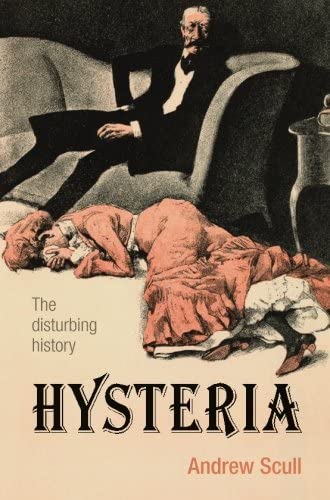
A recent Grey’s Anatomy episode opens with a commentary on the history of hysteria: “In the 1800s, one of the more common reasons women visited the doctor was hysteria—a now-defunct diagnosis. Hysteria was used to describe a wide array of symptoms: chest pain, anxiety, a swollen abdomen, mood swings. They tried a variety of treatments for hysteria ranging from rest to psychosomatic therapy. But true relief for these women didn’t exist until physicians tried using what they called ‘pelvic massage.’ The cure was called a hysterical paroxysm which today has come to be known as an orgasm” (“Let’s”). But what is hysteria? Why was it associated with women and cures associated with sex? What caused hysteria? Andrew Scull, a Distinguished Professor of Sociology at the University of California, San Diego, who has researched and written about the history of psychiatric illnesses for more than three decades, attempts to answer these questions. His scholarly monograph, Hysteria: The Disturbing History, highlights the shifting perspectives on the root cause of hysteria while simultaneously revealing shocking elements of history.
While female hysteria is no longer recognized in The Diagnostic and Statistical Manual of Mental Disorder, Fifth Edition, manifestations of hysteria are recognized in diagnoses of illnesses such as Schizophrenia, Post-traumatic Stress Disorder, Panic Disorder, Borderline Personality Disorder, and Premenstrual Dysphoric Disorder, among other mental illnesses. That said, understanding the history of hysteria is pertinent when forming perceptions and educating oneself about mental health and mental illnesses. Scull recognizes this in his “biography of what contemporaries saw and interpreted as hysteria” as he discusses hysteria’s “fascinating and tortuous medical and cultural history” (6, 8). Scull’s work propelled him to receive the Roy Porter Medal for his lifetime contributions to the history of medicine and the Eric. T. Carlson Award for lifetime contributions to the history of psychiatry (“Andrew”). His research for Hysteria: The Disturbing History serves as an essential base for developing a comprehensive understanding of psychiatry today.
Gynecology was not always the well known field of medicine that is present in the United States today. In fact, gynecology is a relatively new development in medicine that came to fruition in the United States in the 19th century. START HERE Before modern gynecology arose in the 19th century, women’s health was the job of women. Midwives were the heads of women’s health and pregnancies. These midwives were almost always women. It was not until the practice of gynecology took root that men became involved in women’s health. In her monograph, Medical Bondage: Race, Gender, and the Origins of American Gynecology, Deirdre Cooper Owens explores the impact that enslaved and working class women had on the development of gynecology and in return, the impact that gynecology had on them.
In “Trans Medicine: The Emergence and Practice of Treating Gender,” stef m. shuster evaluates the medical and scientific communities’ “treatment” of gender, as well as the development of trans medicine as a field. This book was written in an effort to understand what has been normalized in the practice of trans medicine that has unintentionally perpetuated healthcare inequalities. It dives into issues the medical and scientific community face in regards to experience, skill, knowledge, and uncertainty in trans medicine, such as lack of experience, guidance, and scientific evidence. It addresses social constructs, such as the medical and scientific community holding ultimate authority over patients despite individual needs with respect to identity. It also acknowledges the uncertainty medical providers face with respect to providing gender affirming care to non-binary individuals and how the providers often operate under the normalization of a gender binary. While providers have difficulty keeping up with social changes as their practices become standardized, it is important that they strive to break from traditional ways of thinking about specific groups of people. This book makes an important intervention in how we understand the field of trans medicine.
The author of this book is stef shuster, an Assistant Professor at Michigan State University and the Lyman Briggs College and the Department of Sociology. They received their M.A. and Ph.D. in sociology from the University of Iowa with a certificate in Gender Studies. stef Shuster’s research and interests involve topics of medical sociology, gender, inequality, and social movements. Their main point of interest is on the social, culture, and historical lens through which scientific evidence is constituted and utilized by the scientific and medical communities.
This book was constructed using research from interviews as well as archival and ethnographic research dating back to the mid 20th century. A wide variety of medical providers were interviewed about their experiences treating trans people, as well as their sentiments on the development and future of the field. Letters of correspondence between providers were also utilized as the basis of information for the book, and were cited heavily throughout it. Providers were also observed and recorded during their presentations at conferences discussing trans-specific healthcare.
The first part of the book addresses the historical context of trans medicine, specifically the uncertainty and suspicion surrounding trans patients and potential gender-affirming interventions or procedures during the mid-20th century. It begins by acknowledging the “doctor knows best” paternalistic model of medicine present at this time, and the strong sense of authority associated with medical providers. New scientific and medical advancements introduced a sense of excitement in exploration. The trans community and trans medicine, while viewed as abnormal, became the target for exploration by the medical and scientific communities. While the medical community viewed trans people as deeply troubled, it was excited to “be on the forefront of medical information and knowledge.” However, when seeking gender affirming care, trans patients were pressured to prove their “credibility” to providers, as they “sought assurances that trans people would be able to successfully live in their target gender.” However, “successful” was defined so rigidly that many trans patients were set up for denial of care if they were unable to fulfill expectations for “gender conformity, heterosexual desire, stable jobs, and no interest in raising children.” A knowledge base formed within the medical and scientific communities was established to filter out trans people who did not meet the expectations for a model citizen; these people were perceived as unworthy of gender affirming medical treatment. The sense of power and authority in medical professionalism also coincided with a need for the reliance on empirical evidence; many providers practicing trans medicine fought uncertainty due to such lack of scientific evidence. As many providers sought credibility in their work with trans patients, they “began to frame their work within the spirit of scientific research.” In an effort to avert questions of morality and distract people from their uncertainty, providers “instituted the trope of the ‘trickster’ trans person, deflecting professional critiques by focusing attention on the moral character of trans people.” This gave providers the authority to set boundaries and requirements for deeming a trans patient “credible” for gender-affirming treatment, and to establish these under the name of science. There was an overarching idea that transness should be diagnosed or proven before being able to undergo gender affirming medical interventions. Due to the lack of information to “verify” someone as trans, providers were keen to refuse to treat people who they suspected were lying about being trans. Noncompliance with the rigid expectations placed on trans people to prove their trans identities resulted in denial of care. Such expectations included matching the standard narrative of a trans person’s life: one feeling disgusted with one’s genitals from an early age and wanting to dress in the clothing of the “opposite” gender. Trans people were also required to tell providers everything about their lives in order to have the possibility of accessing medical care. Gender affirming operations were also only granted to those who showed most promise in conforming to gender norms and expectations, and being able to move through society in their “target gender.”
In the second part of the book, shuster elucidates the contemporary practices and stigma surrounding trans medicine. This part discusses the rise in reliance on evidence based medicine and how this has impacted trans medicine and trans access to gender-affirming interventions. As technology becomes more advanced and more information on trans medicine is collected, providers have established professional documents to serve as guidelines and diagnostic criteria. This was motivated by the evidence-based medicine movement that emerged in the 1980s to make medicine more objective and standardized. Many believed that using the EBM approach would solve problems in trans medicine. With the increase in reliance on scientific evidence and trust in medical diagnoses, many providers have worked under the assumption that diagnoses are “anchored in science and therefore devoid of social values regarding proper bodily expression or behaviors.” However, shuster also highlights that the existence of diagnoses in trans medicine insinuates that being trans is an illness. This reinforces the harmful idea that being trans means that one is biologically deviant. In the tenth version of the International Classification of Diseases, “‘transexualism’ was one of several subcodes within a broader diagnostic category of ‘gender identity disorder.’” This conveys “broader implications in defining realt rans people as those individuals who understand their bodies as simply needing to be changed to fix a problem.” shuster then evaluates the unintended consequences of constructing evidence that can be used to form these diagnoses. They highlight the idea that evidence is never morally or ethically neutral, and that it relies heavily upon who has the control over the definition and qualification of evidence. As evidence-based medicine is constructed within a medical model that implies that a patient carries a “problem,” this reinforces providers’ power to control trans patients and their lives. Also, shuster adds that the lack of scientific evidence existing in trans medicine in the first place makes procedures and guidelines extremely uncertain and up to interpretation, which may lead to the unintended consequences. shuster argues that in using medical guidelines, providers “use strategies in trans medicine that raise broader questions about how the rhetoric of EBM and interpretations of clinical guidelines for medical decision-making may unintentionally perpetuate healthcare inequalities.”
The main strength reflected in this book is the amount of detail displayed from the research, and the well organized structure of such information within each chapter. Each chapter dives into a wide range of information that include results from studies, interviews of providers, or the personal experiences of trans patients. All of this information is very well integrated within shuster’s own analysis of it. Upon bringing up a new point, shuster then shifts to cite entire letters written by medical providers or long personal accounts of medical providers to back up his argument.
“Trans Medicine: The Emergence and Practice of Treating Gender” demonstrates how medical providers are very uncertain in their work with trans people. Through their analysis of ethnographic and archival research as well as other personal accounts from medical providers, shuster shows how providers lack the scientific research and clinical experience to interact with trans patients and create treatment plans. This has resulted in providers relying on social and cultural norms or their intuition to inform their decisions in terms of care. This book offers a glimpse into the uncertainty surrounding trans medicine as well as an opportunity to understand the challenges to their expertise which providers face. It shows how in the process of navigating how to create an evidence based system of treatment for trans individuals while dealing with uncertainty, providers have acquired power of gender itself.
In 2011, Beyoncé asked, “Who run the world?” and answered, “Girls.” Almost a decade later, many of the protest signs at the Women’s March on Washington featured this same declaration. Worthy as it may be, Nigerian sociologist Oyèrónkẹ́ Oyěwùmí’s first book, The Invention of Women: Making an African Sense of Western Gender Discourses, which provides a deconstructive analysis and history of womanhood and gender—and their absence— in Yorùbán society, presents a strong case against the idea that “girls” are, and have been, a global and universal social category. As evidenced by the title, The Invention of Women, Oyěwùmí lays out how “the fundamental category “woman,” which she claims is “foundational in Western gender discourses,” “simply did not exist in Yorùbáland prior to its sustained contact with the West.” (Oyěwùmí x) Moreover, Oyěwùmí presents evidence for how the Western constructions of gender, as well as sex, were brought to Yorùbáland and implemented in such a way that they became salient social institutions that eventually led to the “patriarchalization” (86) of Yorùbán history and society and as a result, the subordination of what is now the category of women.
Before I begin to review and summarize the work of Oyěwùmí in The Invention of Women, I want to foreground her definition of gender as it forms the basis of her analysis. Oyěwùmí considers gender to be “an institution that establishes patterns of expectations for individuals based on their body-type, orders the social processes of everyday life, and is built into major social organizations of society, such as the economy, ideology, the family, and politics” (39).
The work of Oyěwùmí in her 1997 monograph takes the boundary pushing scholarship of sociologist Judith Lorber and others at the time who were focused on the construction of gender, and complicates it by noting that gender was not only socially constructed, but that it was socially constructed in the West and is therefore not applicable transnationally or transculturally. To set the stage for her argument, Oyěwùmí speaks to the characteristics of Western thought that allowed for the construction of gender. She contends that the somatocentricity (ix) of Western thought, in which biological determinism is the basis for the organization of society, coupled with the West’s “privileging of the visual,” (3) made the physical human body “the foundation of social thought and identity” (x) and thus subject to the creation of gender. Oyěwùmí makes it clear that in contrast to the West, Yorùbán society, prior to Western contact, did not privilege the visual sense or the body in its construction of sociocultural meaning.
Oyěwùmí then goes on to explain the ways in which Yorùbán society was organized absent of gender and sex. One key tenet of Yorùbán society that Oyěwùmí explains is the “centrality of the family compound,” rather than gender, “in defining the status of residents” (44). People who married into a household, or “ilé,” were known as “aya,” while those in the household were known as “ọkọ.” The “aya” was considered an outsider while the “ọkọ” was considered an insider and their relationship was ranked such that the “ọkọ” was “the privileged senior” (44). Overall, the hierarchy of Yorùbán society was based on age—with older people having the most status— and thus “social positions of people shifted constantly in relation to those with whom they were interacting” (xiii).
In the latter half of the monograph, Oyěwùmí speaks to the process in which gender was brought to Yorùbán society through missionaries and the imposition of the British “patriarchal colonial state” (123). Because “access to power was gender-based” in Britain, the British arrival in Yorùbáland led to the creation of “women as an identifiable category, defined by their anatomy and subordinated to men in all situations” (123). Oyěwùmí claims that one the most impactful aspects of colonialism that led to this subordination was the colonial educational system as it excluded those under the new category of women. This in turn led to the creation of a stark gender divide in terms of power, wealth, and status, which Oyěwùmí claims is an impact that is still felt in “the contemporary period” (128).
In the final pages of her book, Oyěwùmí widens her focus and criticizes the way in which “womanhood has been pathologized, at a global level” (177). As a result, Western feminists have assumed that the experience and subordination of women is universal without recognizing that this represents a “globalization of what was once a local Western preoccupation” (177). However, because colonialism imprinted gender and the category of women on Yorùbán society, Oyěwùmí speaks to the challenge of “present[ing] alternative ways of looking at anatomic sex-distinctions without pathologizing the female” (178).
I believe the greatest strength of Oyěwùmí’s The Invention of Women lies in the fact that it paints a holistic picture of Yorùbán society and culture before gender was introduced, as well as after colonial contact. As a result, I was able to understand the way in which specific cultural institutions were changed and perverted in the formation of male hegemony in Yorùbán society as a result of colonialism. Oyěwùmí also relies on primary sources, such as Yorùbán elders, to make her argument without preemptively imposing foreign cultural concepts, such as gender, on her research, which she claims is often the case with Western and Western-educated researchers. In her words, “Researchers always find gender when they look for it” (31).
A challenge I would levy on the work on Oyěwùmí in her monograph is the lack of elaboration on her very brief mention of homosexuality. In a discussion around sexual relations in precolonial Yorùbán society, Oyěwùmí contends that “homosexuality does not seem to have been an option” (63) without any further elaboration. Feminist, academic and human rights activist Sylvia Tamale, in her essay, “Confronting the Politics of Nonconforming Sexualities in Africa,” reveals that in many African cultures, there are examples of nonconforming sexuality while noting that “the context and experiences of such relationships did not mirror homosexual relations as understood in the West, nor were they necessarily consistent with what we may today describe as a gay or queer identity” (Tamale 35). Thus, without assuming the presence of homosexuality and nonconforming sexuality in precolonial Yorùbán culture, I wonder whether or not it is even possible to state that these sexualities were absent given Oyěwùmí’s evidence of the absence of gendered identities. In other words, how would nonconforming sexuality be conceived without the construction of gender? Additionally, Oyěwùmí claims that “issues of sexuality were not really issues of morality” (Oyěwùmí 64) until the arrival of Christianity and Islam. Thus, what is nonconforming sexuality when there is no conception of moral, normative and conforming sexuality? Nevertheless, I think Oyěwùmí’s work would be strengthened with a deeper interrogation of homo/nonconforming sexuality in precolonial Yorùbán culture in addition to a discussion on the impact colonialism had on notions of homo/nonconforming sexuality.
All in all, Oyěwùmí’s The Invention of Women is a fairly accessible and relatively short monograph that is not only vital to understanding how gender is constructed, but also vital in that it problematizes the supposed universality of the construction of gender. This book is suited for anyone interested in the intersection of gender and colonialism, for Oyěwùmí reveals how the colonial project in Nigeria was inseparable from the imposition of gendered identities and a gendered hierarchy. Finally, if there’s anything to take away from this review it is this. Next time you hear/say/think “Fuck the patriarchy!” think about the contributions of Oyěwùmí, and how they might inform your answer to this question raised by philosopher and art historian Nkiru Nzegwu: Is patriarchy a “valid transcultural category of analysis?” (21).
What comes to mind when you hear the words “soap opera”? Grey’s Anatomy? One Tree Hill? Jane the virgin? Whichever show you thought of, you probably thought of a modern example in the genre. But have you ever stepped back and wondered about the history behind the genre? Or what role does it play in society? If you’re anything like me, the answer is no! Even after binge-watching all eighteen seasons of Grey’s Anatomy. Yes, eighteen full seasons, never once did I stop and think about the impact a soap opera could have. Whether you answered yes or no, but especially if you answered yes, I recommend you read the book Her Stories, by Elana Levine! She spent twelve years researching and connecting pieces of soap opera history in order to grasp and explain the effect of how soaps influence the role of women, and how it affects society.
In a three-part book Levine gives a very informative, yet extremely interesting explanation of the impact of soaps. As the author herself puts it: “Her Stories is a history of the US daytime television soap opera as a gendered cultural form and a central force in the economic and social power of American broadcast network television from the late 1940s through the 2010s” (4). She believes that social identities and changes in television were heavily influenced by soap operas. She works to prove her points by exploring developments and trends in media and society depending on the time period and current events.
Elana Levine grew up in Chicago Illinois. She attended Indiana University and received her Bachelor’s in English and Telecommunications in 1992. She then moved on to the University of Wisconsin-Madison to earn her Masters in Communication Arts in 1997. Next, she remained at the University of Wisconsin-Madison to earn her Ph.D. in Communication Arts in 2002. With her Ph.D., She started out as an assistant professor in the department of journalism and mass communication at the University of Wisconsin-Milwaukee from 2002-to 2008. She continued to work her way up and from 2016 to the current day, she is a professor at the University of Wisconsin-Milwaukee in the department of Journalism, Advertising, and Media studies. Along the way she got married and gave birth to two sons. She currently lives with her family in Milwaukee Wisconsin. With her degrees alone, it is clear research in soap operas is her passion project, she examines how soap operas affect the past, present, and future, and reveals that soaps were her main focus of grad school, even were the focus of her thesis. Accompanying the teaching, she continues to research and write.
The book’s introduction starts out with Levine thanking those that made her 12 years of researching and writing possible. She conducted many interviews with those currently in the daytime soap opera industry including Holly Cato, fans of the field, and past members of the industry. In addition to the interviews, the majority of her research utilized the qualitative methodology, by digging into and analyzing the archives of soap operas. In order to gain access, she connected with many universities including Northwestern and UCLA to view episodes, scripts, and summaries of soap operas. With that, she also utilized the quantitative methodology through graphs and images to further her points. After describing the early technique of superimpositions to show a character’s state of mind, Levine shows an image of an example in the show Search for Tomorrow (26). Additionally, she mentions every soap opera she cites an exact episode, she has seen it (as opposed to reading a script or summary). She watched many episodes, and seasons of shows and this book also contains interpretations of her own, along with those discussed with colleagues, in a more casual style than an interview.
Part one consists of chapters one and two and stretches through the time period of 1940-1960, known as the post-World War II era. Chapter one explains the transitions of soap operas being streamed on the radio onto the television, where we now enjoy them. She takes us through popular trends for the time period, as networks were learning how to film this type of a show. The progression was astounding. Beginning with actors featured in Big Sister “standing in front of a microphone reading a script”(22), and amounting to visual storytelling effects, such as reaction shots used to “mimic characters’ states of mind”(26). Chapter two zeros in on the role of soap operas, and how they began to make gender assumptions. When tv programs began to be used instead of radios, tv stations feared that divorces would increase because women wouldn’t be able to get their work done around the house. That being said, “white, middle class, suburban homemaker”(45) women were their targeted audience. They created soap operas to entertain this crowd and succeeded in offering a therapeutic element into these women’s lives, by having characters that related to the struggles of post-war life for women.
Part two consists of chapters three through five and takes us through the peak of soap opera economic and cultural power. The period covered spans from the mid-1960s to the 1980s. Chapter three goes into detail about how much popularity soaps had gained, because of this more and more networks started broadcasting and airing soaps. By the beginning of the 1960s, soaps had earned their permanent spot on television (vs. being a Radioshow). The audience still targeted the wealthy white woman housewife, but in chapter four we see heavy shifts. Chapter four demonstrates, how with the power soaps held they could now experiment with more than just housewife struggles. Starting out as a subtle, yet notable change, the Soap General Hospital in the 1960s goes into detail about the lives of Jessie and her husband Dr. Phil, with their marital problems both at home and in the hospital, their shared workplace. Female characters “no longer to be confined to the sphere of home and family” (107). As this show was successful, among others expanding women outside of the home, channels started incorporating more current social issues, such as reproductive drama, “stories about pregnancies wanted and unwanted, term and aborted” (120). Another big shift is in the 1960’s women’s sexual desire became much more explicit and shared through soap operas. All of these shifts had a huge impact on society, making women watching these networks feel heard, and their struggles normalized, soap operas now show women are more than just stay-at-home housewives.
Finally, chapter five focuses on the peak of soap opera culture in the 1980’s and prefaces the downfall. With peak popularity, the audience had clearly broadened to more than housewives. “Male fans included shift workers home during the day, corporate types taking lunch at men’s club, college professors and professional athletes with flexible work schedules” (157). Eventually, soap operas began showing later at night too, so that the audience was not constrained to only those with schedules allowing them to watch during the day. Students in school, elder people, and working women were all added to the audience, bringing soap operas to their absolute peak of popularity. With that increased audience, additional sponsors came in as well, making the business more profitable. Characters of color also slowly integrated into the main characters of soap operas through the trend of supercouples. Supercouples was a story that followed two lovers that were not supposed to be together due to society’s normalities. Supercouples showed couples “triumphs over structural forces” (187) such as economic equality, “class, race, and external threats” (186). Finally, the start to decline, although the supercouples storylines were popular, they failed to keep up with changing culture and for that became unsustainable and began losing popularity towards the very end of the 1980s.
That beginning of the end, brings us to part three of the book which captures chapters six through eight, during the time period of the late 1980s through 2010s. Chapter six explains the struggles and eventual failures within the networks of soap operas that led to the slow decline of the industry from it’s peak of popularity. Levine blames structural instability for the main three causes of the decline. Those three causes are: “conceptions of the audience and the problem of measuring the audience, the challenge of different ownership structures and their implications for creative control, and the limitations of existing distribution system” (201). Chapter seven expands upon the ways the industry of soap operas tried to save itself, and bring viewers back. They tried to incorporate new techniques hoping to expand their audience once again. Aesthetic experimentation such as the integration of music video style performances were thrown in as a final effort to appeal to younger audiences. Unfortunately, the soap operas only received temporary rise in viewership and then back to a steady decline. Despite producers’ best efforts, by the late 2000s “a wave of cancellations… had drastically shrunken the business” (234). Lastly, chapter eight explains more efforts to make the business as successful as it once was but failing. By 2012 the soap opera cancellations had come to a close and only four daytime soaps remained on air. To end the book, Levine brings us almost up to current day, 2020, and says that there is limited space for soaps nowadays when the traditional housewife was the long thought of natural viewer. Women are not all housewives that have open periods in the middle of the day to watch as they please. The industry of course isn’t dead! But nowhere near where it was 40 years ago.
One element Levine did to make this book more enjoyable was her descriptions of soap opera scenes. When I originally read the introduction of the book to get a glimpse as to what I was about to read, Levine went into depth about all the soaps she’s seen, read about, studied archives of, and the line: “Indeed my analysis is rooted in part in my own personal archive, episodes I haved saved to videotape, DVD, or digital format over decades” (14) made me uneasy. My knowledge on early soap operas was so limited, and I had sure not seen any myself. I feared this book was going to be using analogies, comparisons and examples from shows I’d never seen and I’d be lost and missing the main points of the research. This was not the case. Levine did a spectacular job of giving just the right amount of information/plot summary to the readers so that I was not overwhelmed, confused, or getting hung up on unnecessary details. I felt all her examples of past soap operas were well thought out and explained clearly to further her points and argument.
One element that I think Levine could have improved on is sentence structure. This is a nitpicky type of critique because I honestly loved the content of this book. I thought all of her points were well stated and all backed up with evidence easy to understand. That being said, when I am reading or writing I try to vary my sentence length. Sometimes, shorter sentences are needed. When there is continuous paragraphs of long, detailed, descriptive sentences it is really tiresome for the reader and easy to lose focus. My English teacher from this semester said: “Varying sentence length is how you distinguish between a good writer and a great writer”. That goes to say, I do think Levine is a great writer. She also packs in about 70 years of soap opera history, and 12 years of research into 298 pages of content, so it is understandable for it to be necessary to have long detailed sentences often.
In conclusion, this book is relevant for anyone and everyone to read. Levine takes an everyday media, soap opera, something we are all familiar with and have an understanding of, and does a deep dive. That common understanding does an excellent job of enticing and making the material relevant in to all audiences. In addition to giving a summary of soap operas, she explains the unrealized takeaways weaved into the storylines. Recognizing and understanding when these biases are being pushed onto you is so important when forming opinions. Additionally, I could not summarize everything, there are far more fascinating trends and interesting details following the progression of soap operas (especially in chapter four) that had to be left out. That being said, Levine has an expansive vocabulary, that may be difficult to get through for younger audiences, I’d say it’s a great read for anyone 13+. In other words, go read this book!
Levine, Elana. Her Stories: Daytime Soap Opera & US Television History. Duke U.P., 2020.
Beauty standards control our perception of society. While these standards may be different throughout the world, there are common understandings of what makes a person beautiful. Beauty is a market that influences the economy and the way that people view themselves and each other. One example that has been widely debated is the billion-dollar skin lightening industry. Although this is a surface-level change to one’s body, there are deeply rooted implications to a society that perpetuates the idea that skin lightening is a necessary product for beauty.
Skin lighteners are compounds that remove the top layer of skin to expose lighter layers underneath. Some contain extremely harsh chemicals, such as mercury. Skin lighteners are a huge industry around the globe, with products used by both wealthy and poor people. However, there is a movement to eliminate these lighteners, both because of health concerns due to the toxicity of many of the creams and because of anti-racist efforts.
In order to understand the importance of this issue, it is necessary to have a consciousness of colorism. This prejudice is based on skin color, oftentimes among people of the same racial group. There is generally a preference for people with lighter skin tones, much to the detriment of those with darker skin tones.
The author, Lynn M. Thomas, is a historian and professor at the University of Washington. Specifically, she studies politics and gender in Africa. She has written several other books, mainly centered around parts of Africa and society.
In Beneath the Surface, Thomas focuses on skin lightening in South Africa and the complex history associated with it. She argues that the history of skin lightening is rooted not only in racism, but in the intersectionality of different labels– specifically gender, sexuality, and class. Thomas understands that complex issues are layered, and there are various historical understandings that are crucial to study.
She is intentional about her methodology. Because she is a historian, Thomas is able to use archives and historical sources such as letters and volumes to sharpen her points. She has collected and studied historical writings and interviews. Also, as her argument moves toward culture and media references today, she uses various examples of these to explain her theories. For example, she mentions Lupita Nyong’o, a known Mexican-Kenyan actress, and how she gave a speech explaining how messages about her skin being too dark when she was growing up caused self-hatred. Now, by seeing other powerful darker-skinned women, she sees the beauty in her own skin.
A major strength of the author is that she chooses to write her book chronologically. She utilizes, as she calls it, the method of connective comparison, which “draws attention to how ‘things previously understood to be local come into being through complex global dynamics’ that are neither derivative nor linear” (Thomas 12). Thus, the historical implications of colonization and early instances of racism are explained and connected to the current politics of skin lighteners. She then explores Westernized cultural messages, and how cosmetic marketing was targeting women of color.
The market for skin lightening was huge in South Africa, especially in connection with apartheid and racial discrimination. Lighter skin was connected with more opportunities, and consumers utilized these products to gain advantages, marriage potential, and economic privilege.
However, a major issue associated with skin lightening creams is the dangerous health effects. Overuse of hydroquinone, the ingredient developed to lighten skin, led to blemishes called chubabas which appear as discoloration on the skin. Because of this, guidelines were developed on how much hydroquinone could be in a product.
For anti-racist activists, skin-lightening creams have another problem. When lighter skin is considered closer to the beauty standard, this sends a message that lighter skin is superior. When a multi-billion dollar industry is perpetuating these standards that are rooted in racism, that is concerning. Black activists worked to reframe these conceptions of beauty and light skin and created campaigns such as “Black is Beautiful.”
South Africa now bans skin lighteners, but demand is high enough that they remain popular and accessible. Thomas concludes by reminding the reader that beauty practices are rooted in politics that can be traced back for decades and are ingrained in our culture.
I recommend Thomas’ book because of how she approaches the topic through her writing. She articulates that, in order to avoid oversimplification of complicated historical issues, one needs to approach a subject with empathy and an appreciation of the layers of history. However, it is important to note that Thomas is a white woman who did not grow up learning about skin lighteners. It was later on in her academics that she became interested in this topic. I wonder how or if the book might have been different if it was written by a black author who has a history that is more intertwined with the subject matter.
Overall, I enjoyed the book and learned a lot. I think that any scholar who is interested in learning about complicated topics should read it. Therefore, I would recommend this book to our class. Skin lighteners appear on the surface to be a narrow topic, but Thomas includes so many cultural examples and historical details that the reader is able to unfold the complexities and politics of the issue. In our class, we talked a bit about beauty and beauty standards in our culture. They are so ingrained in how we think and act toward others. It is important to recognize the ways that these standards make people feel inferior. A large reason for this classification is due to our upholding of whiteness as something that should be on a pedestal for everyone to strive for. Because Foucault teaches us that power is reinforced throughout all levels of society, it is important to analyze our own perceptions of beauty and how they contribute to this unattainable standard.
Works Cited:
Thomas, Lynn M. Beneath the Surface: A Transnational History of Skin Lighteners. Duke University Press, 2020.
Referencing the movie Twilight in a room often draws a mixed reaction. Either people are incredibly interested and ready to contribute their fan experience to the conversation, or they immediately groan and drown out any further discussion. No matter its polarizing tendencies, it is undeniable that Twilight has had a major impact as a social phenomenon. In fact, many aspects within this saga perpetuate 1940s family ideals and traditions onto the pregnant body. Kelly Oliver analyzes this film, and the films before it, in her book Knock Me Up, Knock Me Down: Images of Pregnancy in Hollywood Films, which was published in 2012. Within her book, she emphasizes how, despite pregnancy being more openly seen on television over time, Hollywood has not embraced new feminist thought, but has, instead, kept conservative family values at the forefront of heterosexual movies that depict horror, comedy, and/or romantic plots.
Born and raised in Spokane, WA, Kelly Oliver now teaches as a philosophy professor at Vanderbilt University and has published articles about the refugee crisis, the prominence of rape on college campuses, and about women in the media for newspapers such as The New York Times. Alongside these achievements, she founded philoSOPHIA, which is a feminist philosophy journal. Born in 1958, Oliver most likely watched the developments of pregnancy on-screen throughout her adolescent years. As a young child, she would not have seen much, as the word “pregnancy” was banned on television until 1959, and women were not allowed to look pregnant for several years later (21). But, as she grew up, there would have been increasing visualizations and normalization of pregnancy on-screen; yet, with these developments came a negative side effect that Oliver explores in the rest of her book. Covering the negative representations of pregnancy in film has helped further a specific aspect of the feminist movement: pro-choice and women’s reproductive rights. By exposing how Western media present all of their characters as pro-life, which feeds into anti-abortion conservative beliefs and force excessive social pressures onto moms to be perfect, Oliver’s scholarship works against this media of influence on younger generation girls.
Using the methods of textual analysis, Oliver focuses on symbolism in shows and cinemas to decipher Hollywood’s representations of pregnancy and and women’s reproductive rights, given the prevalence there of men directors and executives. She also takes the time to chronologize pregnancy in film for us within her monograph. Starting in the early 1600s and 1700s, midwifery was transferred to male control resulting in the medicalization of pregnancy (112). This change in labor ties in with Foucalt’s understanding of male experts taking over many lines of work, and that includes midwifery. During this time, women were advised against exercise and encouraged to complete bed rest in order to not disturb the baby (24). On top of the physical restriction women had, they were told their thoughts negatively impacted the child: that mothers “corrupted by forces outside herself, which cause her to have morbidly perverse fantasies and episodes during pregnancy” had moral insanity which caused horrific and monstrous children (115). Hollywood, in this manner, greatly aligned with First-Wave Feminists who perceived women to be the educators and standard for children’s moral upbringing. Regardless, with pregnancy being seen as a private and delicate matter, pregnancy was never mentioned or shown on film. Additionally, since sex and reproduction were linked in this era, viewers would have seen pregnant characters as less pure than ideal. It is not until the popularity of birth control and the Sexual Revolution in the 1960s that we even see sex on-screen without its former ties to reproduction (66). Nevertheless, the newfound acceptance of sex opened the door for a stronger pregnancy presence in the media; to note, we can also thank Demi Moore’s 1991 nude Vanity Fair illustration for pushing more pregnancy representation as well (37). Although these progressions can be seen as beneficial, it is not without their downsides.
Oliver demonstrates that throughout the latter of the twentieth century and early twenty-first, Hollywood has increasingly promoted unhealthy and harmful practices via pregnant characters. In one regard, Hollywood’s portrayal of white mothers in comparison to black or Latina mothers is blatantly racist. For white moms that keep an accidental pregnancy instead of aborting the fetus, they are described as “good choice makers” (100) while their black counterparts are seen as having “‘bad’ babies to ‘put on welfare’” (96). Not only is this stereotypical of socioeconomic status, but it also plays into eugenics and the belief that “educated white women have a duty to have babies because they provide the ‘best’ gene pool” (95). Thus, when Hollywood continuously enforces the idea that middle-class white women have happy endings when they have kids, they exclude the notion that women of other races and social classes can as well. But, Hollywood only supports a specific type of middle-class white woman: the ones that push back their careers in favor of building a family first. Often, career-driven women are explained as “bossy” and “racing against their biological clocks” to have children (67;93). These women’s success is blamed for their “baby hunger,” (93) and the impressionable audience is encouraged to have kids younger, else they too will be “racing against their biological clocks” for kids when they are older. In these cases, the women who are ‘too late’ and resort to IVF, are described as less-satisfied than parents with “real” babies (150). Like in the movie The Backup Plan, Hollywood again displays its conservative values by promoting traditional heterosexual relationships over assisted reproductive technologies which do not depend on a heterosexual couple to reproduce. Moreover, Hollywood also makes pregnant women the butt of its jokes in its films. From comedies’ gross-out humor about women’s excessive cravings, ‘larger-than-life’ size, and constant need to pee, movies and television that partake in these tropes consistently do not take pregnant women seriously (79). With the culmination of all these attributes, it is safe to say that the increase in pregnancy in film has not been completely positive.
Similarly, Twilight has not contributed positive images related to pregnancy. During Bella’s birth in Twilight: Breaking Dawn, we see “the most blood we ever see…associated with birth and women’s role in reproduction” despite previous movies in the series going over vampire wars, hunts, and beheadings (196). These portrayals also reflect the view of “women’s wombs as harboring evil” since Renesmee, Bella’s child, survives by drinking her mother’s blood and ends up temporarily killing her mother in the “nightmarish” labor scene (14,195). This Othering of pregnant women and acknowledging them to be a risk to society exposes how little Hollywood understands about pregnancy and how much they can vilify their pregnancy fears, producing controlling images that shape public ideas about pregnancy. Not only are these fetuses seen as a danger and life-threatening, but knowing that Bella refused to abort the baby continues to show how Hollywood “endorse[s] family values” and disregards abortion as a proper solution to a grave issue (197). END SENTENCE
Oliver engages feminist scholarship on the general stigmatization of pregnancy, including Julia Kristeva, Iris Young, and Simone de Beauvoir. Julia Kristeva, a French Feminist philosopher of the 1970s and 1980s, “described pregnancy and the maternal body in positive body in positive terms” (4). She and her American follower, Iris Young, do not believe that women have a biological clock and that the urgency for early pregnancy is unnecessary (6). Not only does Oliver agree with these two and that regard, but she also agrees when these two assert that pregnant bodies are not abject or gross, but desirable (21). Where Oliver disagrees with Kristeva is on the topic of assisted reproductive technology: while Kristeva goes against the “automation” of reproduction (34), Oliver values its versatility and ability for people to have kids later without worry. Another stance of disagreement comes up with the value of motherhood. While individuals like Simone de Beauvoir, who never had kids or was married, say that pregnancy “renders women docile,” Kristeva and Young do not. In this instance, Oliver takes a more neutral stance and leaves the value of pregnancy up to each individual woman. Although Oliver agrees with de Beauvoir that biology “never completely defines human beings”, she is not as extreme to believe “that women’s reproductive function limits them and prevents their true participation in the social and political spheres” (23). Another circumstance where Oliver partially agrees is with Young’s hope to “resexualize” pregnant bodies (36). Over time, as the media defined pregnant bodies to be abject and horrific, they were not sexualized and Young acknowledges that “the desexualization of the pregnant body can open up a space for ‘self-love,’” yet insists that, since “Patriarchy is founded on the border between motherhood and sexuality,” mothers should be “resexualized” (36). In this sense, Young understands men as the cause of the initial aversion over pregnant bodies, which would be why motherhood and sexuality were not previously associated. Oliver does not agree that the solution to this border is to sexualize any woman; however, she relents that pregnant women can be desirable and that a “desiring body would be liberating for women” (36). To resist the de-sexualization of pregnant women is a way for expecting mothers to take back their independence and have more control over what people should/should not say about their bodies.
Across the board, Oliver has made her stance clear on dispositions against and for pregnant women’s bodies, but that does not mean to say she wrote the perfect book. Though her writing covers the depiction of pregnancy as abhorrent in horror films, she never includes how this may apply to transgender or gay couples too. In this book, Oliver highlights how IVF and assisted reproductive technology help older women have children, but she forgets that these same procedures also help same-sex couples or transgender couples have children as well. The failure to mention the importance of non-heterosexual couples now being able to have kids, and how that may also impact Hollywood’s opinion on these procedures, is unfortunate. However, it is important to note that this book was published in 2012; as a result, some of the LGBTQ+ considerations we have now were not as common then. Still, Oliver was successful in other domains of intersectionality. By including examples of Latin and black moms in film, she put the attention away from the typical middle-class, white mom we usually see and recognizes how racism and classism are still prominent issues within Hollywood–and that includes their pregnancy movies. But, the focus solely on live-action films limits her piece. Mentioning other types of media, such as animation, could have also breached how the lack of pregnancy in these genres represents Hollywood’s unwillingness to have pregnant characters–who are impure in Hollywood’s conservative mindset–shown to the younger audiences that consume animated films. Nonetheless, Oliver has done an incredible job in defining and outlining the portrayal of pregnancy in the media across multiple decades. Her book and the scholarship it provides would be a strong resource for any film producers or avid movie-watchers who want to properly and accurately understand how what we see on screen about reproduction does not correlate to the realities of pregnancy today.