I attended a Gender and sexuality presentation over working thesis that each student presented through their research questions. In this presentation I saw a diverse variety of students who I had previously talked to/ and were new to me. The first student presenting title was “You look Gay: imagining queer body liberation alongside the canon of queer aesthetics”. My initial thought was that I loved the title it was very creative. As they presented, we learned about the queer theories liberations and what they tell us about the queer experiences. She went into further detail about Jose Esteban Munoz whose theory is important because the understanding queerness has a purpose. At first, I was not sure what the presentation was trying to argue however I did understand that the person presenting was focused on the mainstream queer aesthetic of clothing. For the second presentation Grant Hearn who is double majoring in GSS and Economics, had the question “to what degree are incarcerated workers economically exploited, and how does the exploitation of incarcerated workers operate to serve bio/capitalist agenda”. Grant brought up so many facts that I was not aware of and some that I was. He stated that there are “5 times more black men than white men in prison”, which was something that I was not aware of, a least not the exact percentage. He later brought awareness how although the 13 amendment was put to place, there is still forced labor throughout the prison system. I was not aware to what extent force labor was in the United States and how 16 states use this as a form of criminal punishment. I really liked how he mention The New Jim Crow by Michelle Alexander, this book is so essential for people to read because it states many current events of The war on drugs that president Nixon, and Clinton brought into play.
Author: Former Student
No product day challenge: Token
Back in September 27 I participated in the No product day challenge. As I read the instructions the day before, It seemed pretty easy. When the day came, I learned how hard it was for me to stay away from so many products. I have been insecure about one main feature from my face that being my eyebrows. I put makeup on everyday in order to cover how light my eyebrows are, so it was very hard to go one day with out putting makeup on. In addition, I found it challenging not to use cream on my face, because I have very dry skin and It is something i have to use.
Through the day I felt as though something was missing, It made me feel very negative and insecure that I did not feel okay with out makeup. I tried to close myself from people or avoid seeing people in order not to get any comments about my appearance. I however, got a different response and a lot of compliments. This day helped me a lot about how I feel, I needed to know that I am still myself with or without makeup.
9.08.22 BIPOC Premedical Experiences at Davidson College Token
Nick Nguyễn shared his ethnography in this talk where he pointed out challenges, barriers that were in the past and are still being phased now by BIPOC at Davidson college and in the American Medicine. Nguyen brought up many statistics and personal statements given by students at Davidson college. Something that stuck out the most to me was the Imposter syndrome BIPOC students at Davidson feel. He talked about an specific experience he encountered where a classmate had got published their fall semester of freshman year. Nguyen talked about how many BIPOC students came from public schools and were not funded the same education white students had.
I really enjoyed this talk because I was suffering from imposter syndrome during this time. I am from a public underfunded school, and did not even have the options to select the classes I wanted to take like AP biology or anatomy. Coming here was such a culture shock and kept doubting myself. After the talk Nguyen made me feel more assure of myself and that I have place in.
Book Review: The Work of Rape
Rape has been a phenomenon experienced throughout history and redefined through centuries (Webster). Rape is currently defined as “unlawful sexual activity and usually, sexual intercourse carried out forcibly or under threat of injury against a person’s will or with a person who is beneath a certain age or incapable of valid consent because of mental illness, mental deficiency, intoxication, unconsciousness, or deception” .The work of rape, written by Rana M. Jaleel in October 2021, shows a great representation of the process of “understanding rape and sexualized violence- as well as their primary components, namely consent, force and coercion” that have been a product of history. The Work of Rape examines “how rape has historically functioned as a technology of racial terror enabled by law and the state, women of color feminism and queer scholarship have only sporadically engaged the role of the US race making and empire”. In other words, Dr. Jaleel writes about the redefinition of sexual violence through international law by examining mass rape in areas such as Yugoslavia, Rwanda, Guatemala, and Peru.

Dr. Jaleel is an associate professor of Gender, Sexuality, and Women’s studies at the University of California Davis. She has a Ph.D. in American studies from New York University, a JD from Yale Law school, and an MFA in poetry from the University of Michigan. The Work of rape received the Author of Color’s first book award from Duke University Press. Dr. Jaleel is “Chair of the Cultural Studies Graduate Group, Chair of the Designated Emphasis in Feminist theory and research, Faculty Advisor for the Sexuality studies Minor, and the co-director of HATCH: the feminist Arts & sciences initiative”(Snow).
REVISE The work of Rape starts of in the introduction, where this book asks” what is uplifted, occluded or viciously suppressed within the very definition of rape so that sexualized violence might be recognized”(4). ADD SIGNPOSTS THROUGHOUT THIS PARAGRPHDr. Jaleel explains how The work of Rape “demonstrates the wide ranging importance of rape within contemporary sociolegal understandings of power transnational”(4). Dr. Jaleel goes more in depth about the several meanings to what rape is, and has been defined by global feminists. This brings awarness to bigger questions “How do we enter into our imaginaries of sex-how we determine, how we know, what sex is and what bad or violent sex might be? How do we approach the long, diverse histories of indigenous women, women of color, Third World feminisms and queer/trans responses to rape and other forms of sexualized violence”(6). While these questions aren’t answered in the introduction, Dr. Jaleel makes sure to restate them later on in her book.
In chapter one Dr. Jaleel discusses the rape epidemic seen in Africa, emphasizing the impacts happening during the Cold war era in Yugoslavia and Rwanda.HOW ARE THE CONTINENTS AND COUNTRIES MENTIONED ABOVE RELATED ACCORDING TO THE AUTHOR? HOW DOES SHE APPROACH THE DIFFERENT SITES? She introduces the history of Yugoslavia and explores “how The divisive, transnationally mobile feminist theorizations and dialogues surroiding mass rape,war rape and genocidal rape enabled conflict in the former Yugoslavia and, later, Rwanda”; NEW SENTENCE. ALSO GIVE THE ANSWER AUTHOR GIVES TO THE HOW ABOVE while doing this Jaleel highlights some elite?POWERFUL feminist WRITING? inFROM? the 1990s. In chapter two Dr. Jaleel explores mass rape in Guatemala, peru and Argentina during the civil wars . Jaleel explains how “legal feministS? portrayed sexualized violence in Latin America either as proof of the general pervasiveness of wartime sexualized violence, or a domestic violence or intimate terror which they subsequently named torture”(89).
Dr. Jaleel presents a view on rape that I have yet seen before. She includes various examples from several countries in order to present a further argument. For example, Dr.Jaleel explores rape in former Yugoslavia and Rwanda, where “racialization is an ongoing process that produces the war-raped as a population internationally managed and governed”(51). This chapter suggests different approaches on what is now the global mandate to end rape and sexualized violence. FOR EXAMPLE.. Moreover, Jaleel introducesCONNECTS? the radical feminists seen during the forged antiwar movement seen by Chicanos, Asian American, Native Americans and Black liberations.AND DRAWS WHAT CONCLUSION? Dr. Jaleel establishes several terms such as “settler sexual contract” to describe how racialized sexualized violence comes to bear on state sovereignty through human rights guarantees of international law (106).
In chapter three, the MCA is introduced EXPLAIN ACRONYM, as it repurposed international law to codified definitions of torture, rape, and sexual violence. Jaleel argues how the theorization of rape and other sexualized violence creates a different between the individual and teh population. The last chapter, four, explains in campus “entanglement of animality and sexuality” through a series of scenes(142). Jaleel explains how the stories mentioned are in order to underlie lines of force that animate different subjective sexual claims. Through this chapter Jaleel considers the relationship between campus sexual securitization initiatives and tribal nations jurisdictional struggles with the federal government. Dr. Jaleel concludes the book by promoting activism and protest that can ultimately bring everyone together. GIVE EXAMPLE
Although Dr. Jaleel’s work well presents the ongoing issues with mass rape, and the representation through history, i found that the text was very hard to read. This text uses a lot of big words or complex vocabulary, very similar to that of Michel Foucault’s books. Although this can be seen throughout the whole text, I found it the most prominent in the introduction of the book. This can discourage readers from analyzing the text, as the words can make it hard to understand, or even keep up with the book. In addition, the text does not well introduce books/articles that are presented to support Dr. Jaleel’s argument. The lack of introducing information about mentioned articles can negatively affect readers who get lost during the reading, just like I did.
Finally, The Work of Rape has evolved into a book that questions and redefines rape. Dr. Jaleel “argues that the redefinition of sexual violence within international law as war crime, crime against humanity, and genocide owes a disturbing and unacknowledged debt to power and knowledge achieved from racial, imperial, and settler colonial domination,” as demonstrated by a number of examples across the countries. It is critical that people read this book at least once because it explains mass rape in a way that no one else has.
Works Cited
Jaleel, Rana M. The Work of Rape. Duke University Press, 2021.
Snow, Hunter Kyle. “Rana Jaleel.” Gender, Sexuality and Women’s Studies, Ucdavis, 19 Sept. 2022, https://gsws.ucdavis.edu/people/rana-jaleel.
“Rape Definition & Meaning.” Merriam-Webster, Merriam-Webster, https://www.merriam-webster.com/dictionary/rape.
Take me to church music music video analysis
I was always aware as a child that I was bisexual. I was aware of homosexuality, which my mother, due to her religious beliefs, would never accept. As a fourth grader, I was aware of how strongly my mother pushed religion on me. Going to church was the most difficult part of my Sundays. “The music isn’t even that good,” I’d complain every time I went. One day while driving, Hozier’s “Take Me to Church” comes on the radio. It was fantastic, in my opinion. I’d sing it everywhere to please my mother, who was overjoyed that I was finally becoming religious. However, one day she tells me to stop singing this song, and when I ask why, she says it has nothing to do with religion, according to the pastor’s daughter, and it contains a horrifying hidden message.
So, what is the message?
The music video for “Take Me to Church” begins with a bonfire, and the film is presented in black and white. “Fire becomes a signifier connoting danger and aggression, though potentially passion and power” in this opening scene (Caty). The bonfire foreshadows a negative action featured later in the music video. The following frame depicts two men (the main characters) in distress.
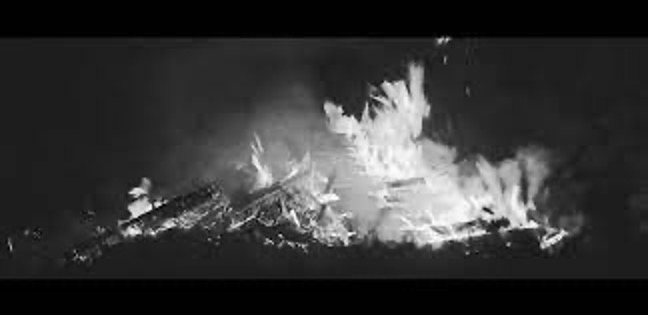
As this is happening, the lyrics contend:
[Verse 1]
“My lover’s got humor
She’s the giggle at a funeral
Knows everybody’s disapproval
I should’ve worshiped her sooner
If the Heavens ever did speak.”
In some traditions, humor at a funeral is considered blasphemous. Hozier describes how he “always saw the catholic church’s hypocrisy”(Hozier). The song expresses a desire to worship someone; however, in the Catholic church, worshiping a person is frowned upon because God is believed to be the only entity praised. We can see the rebellious ideologies against the Catholic Church in these lyrics.
“I was born sick, but I love it
Command me to be well
A-, Amen, Amen, Amen”
Hozier continues his song by demonstrating how homosexuality is considered sinful by many religions: he mentions being born sick but loving it, implying his forbidden homosexual love. He is bringing awareness to millions of people who have concealed their identity and sexuality, leading many to live a double life or even commit suicide, through these lyrics.
[Chorus]
Take me to church
I’ll worship like a dog at the shrine of your lies
I’ll tell you my sins so you can sharpen your knife
Offer me my deathless death
Good God, let me give you my life
Take me to church
I’ll worship like a dog at the shrine of your lies
I’ll tell you my sins so you can sharpen your knife
Offer me my deathless death
Good God, let me give you my life
The chorus conveys a variety of messages, clarifies his admissions of wrongdoing, and reiterates his homosexuality. Despite knowing that he is wrong, Hozier wants to continue worshiping and is willing to accept the church’s penalty when he sings, “I’ll worship like a dog at the altar of your falsehoods.” The chorus symbolizes his loathing for his own faults.
Throughout the music video, close-ups of a chained box held by one of the main actors are shown; he grabs onto this box almost as if it were a part of him. Later in the video, the main character is chased by a group of men dressed in black sweaters. He rushes to hide the chained box, but he is apprehended by this group of men. His partner rushes to find him, but his expression indicates that he is too late. The music video concludes with the chained box being burned.
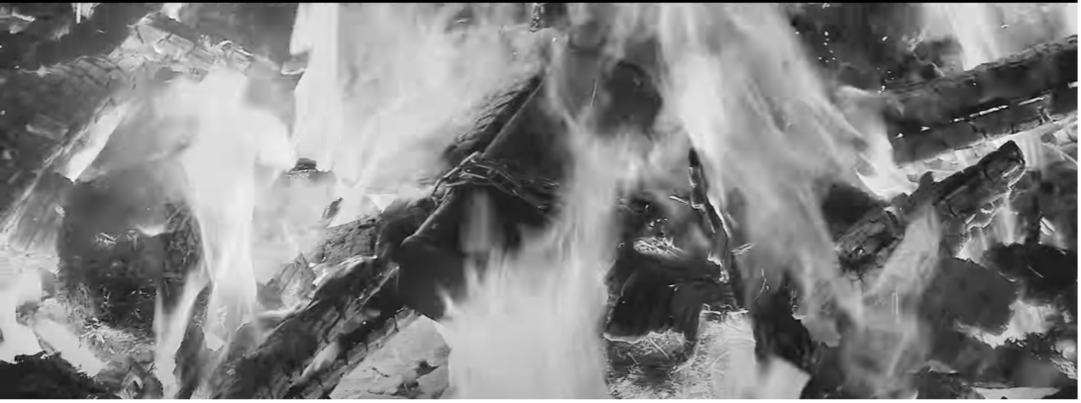
Through the frames, the chained box can be seen as a metaphor for the main characters’ hidden love due to their sexuality. The main character tries to conceal the chained box. However, he is stopped by a group of men, indicating that their sexuality is not permitted. In the final scene, a group of men can be seen beating on this box, which represents their hatred of homosexuality.

Hozier ends his song with:
That’s a fine-looking high horse
What you got in the stable?
We’ve a lot of starving faithful
That looks tasty
That looks plenty
This is hungry work
Here Hozier interprets “high horse” as describing the appearance if a muscular man. He’s saying that “the church’s high horse looks like an excellent sacrifice”. In other words, Hozier refers high horse to a state of mind of misogynist. This state of mind is followed by many people who are hungry or are in desire of being a part of the church.
Homosexuality is considered sinful in many religions, including Christianity, where being part of the LGBTQ+ community is frowned upon. The music video for “Take me to Church” by Hozier emphasizes the Catholic church’s discrimination against homosexuality. The active oppression against homosexuality has caused millions of people to conceal their identity and sexuality, leading some to commit suicide or live double lives.
“Take me to church” was released on September 13, 2013, by Hozier, an Irish musician, singer, and songwriter. “Take me to church” was a big hit that had streamed 82 million times in one year. Although many people assume that he is gay due to the song’s music video, Hozier has never stated his sexuality. Hozier makes a statement saying that many people think that he is gay, “which is fine” to him; however, he doesn’t believe that’s a factor whenever it comes to relationships and love. Hozier centered the idea around homosexuality to “reference something that was going on in Russia.” Hozier states that there was much anti-gay propaganda “passed in parliament” that “prohibited the LGBT community from advocating for their rights in public places”(Canty). There were a series of attacks in Russia as homosexuality was compared to pedophilia and bestiality that led to “an increase of attacks by far-right gangs.”(Canty)
To this day, “Take me to Church” is one of Hozier’s biggest hits. However, this brought much negative attention from both the media and the people. Hozier received “a few delightful letters from pastors who have some choice words to say,”; implying the oppositions pastors had with his music. Although many people disagree, Hozier also has a solid support of fans. He explains how he was “jarred by people’s excitement at seeing” he talks and how “most of the phone calls were very sweet”(Kenney).
The “Take me to church” music video is an excellent example of different oppressions currently happening to people of the LGBTQ+ community. To summarize the video, Hozier uses various lenses to indicate the darkness seen with homosexuality. He uses a black-and-white frame structure that is seen not only in the background but in the character’s clothing. “Take me to church also” addresses discrimination against sexuality by building an emotional connection with the two main characters, stripped back by the lack of names, speech, and color, creating a clear, simplified message. Hozier brings awareness towards sexuality, specifically homosexuality, so we can see oppression happening to these characters. Hozier used the power of his race and fame to bring awareness towards past and present marginalization in the LGBTQ+ community.
Work Cited
Canty, Brendan, director. Take Me to Church. YouTube, YouTube, 25 Mar. 2014, https://www.youtube.com/watch?v=PVjiKRfKpPI. Accessed 7 Oct. 2022.
Kenney, Els. “The Meaning behind ‘Take Me to Church’.” Medium, Late Space, 4 Aug. 2020, https://medium.com/thelatespace/hoziers-take-me-to-church-b27663bc516f.
“Take Me to Church by Hozier.” Genius, https://genius.com/albums/Hozier/Take-me-to-church.