Discussion Guide: Sex Workers and their Current Fight for Legality in North Carolina

Format for Deliberation

Before the Deliberation

1.  Read this document’s Background, Shared Language, Expected Outcomes and Conversation Agreements section.

  • If you encounter words or concepts that you are unfamiliar with or have questions about, refer to the Shared Language section that provides some discussion and definitions of key terms related to gender and sexuality

2. (Optional) Review the sources listed in the footnotes of this document

During the Deliberation

  1. Shared Language – 5 mins
  2. Expected Outcomes and Conversation Agreements – 5 mins
  3. Introduction and Personal Stake – 10 mins
  4. Gaps and Solutions – 30 mins
  5. Reflections – 10 mins

Background

From North Carolina Prostitution Offenses and Penalties

Prostitution is the act of “performing, offering, or agreeing to perform vaginal intercourse, any sexual act, or any sexual contact for the purpose of sexual or another gratification for money or other consideration.”

It is important to note that this law has only been updated twice in recent history: once is 2013, and the last time being 1919. As such, there is archaic language and traditional marital roles present within much of these laws. For instance, one can be charged with “patronizing a prostitute” with anyone “who is not his spouse.” Not only does this assume older individuals seeking sex workers are married, it assumes they are male. On top of those assumptions, it assumes they are heterosexual as well. Making the clarification of “vaginal intercourse” instead of simply stating “intercourse” clearly demarcates how some legislators define sex as vaginal intercourse between a man and woman. Additionally, even if the participants were heterosexual, it excludes anal intercourse from this specification. Still, the wording and referring to the readers as “his” indicates a misogynistic viewpoint that only men pursue prostitutes.

From Safer Sex Work – NC Harm Reduction Coalition

The North Carolina Harm Reduction Coalition defines a sex worker as someone that “provides sexual or sexual related services in exchange for money, drugs, other favors” explicitly as a form of income/work. This article addresses the myth that “all sex workers are women” or that “sex workers can not be raped.” In this page, the coalition also gives advice on avoiding STIs and date violence all while using common vernacular to explain their reasoning. 

Shared Language- 5 minutes

Language to Consider Adopting/Preferred Terms

  • Intercourse
    • Intercourse can be the emotional or physical acts of engaging in sex. It is not limited to vaginal intercourse and is not dependent on the participants’ gender or sexual orientation. 
  • Sex worker > Prostitute
    • Prostitute is a notoriously derogatory term for sex workers and is similar to “lady of the night.” It demeans their work with a socially negative connotation and falsely separates sex workers in categories between prostitutes (physical sex workers in cities) against pornography stars or strippers. 
  • Sex Trafficking versus Choice
    • While it possible that many sex workers acquired this profession via sex trafficking, there are many individuals that chose this line of work and being respectful of this choice is imperative to continue. 
  • Solicitor > John
    • While the North Carolina Harm Reduction Coalition refer to all sex worker clients as “John,” to avoid gendered language it would be beneficial to use “solicitor” or “client” instead. Calling all clients “John” ties back to the heterosexual myth that all sex workers are women and their clients are all men; both sides come with a range in genders. 

Dynamics to Consider

  • Many sex workers consider “prostitute” and “lady of the night” to be demeaning terms. These terms are also gender-exclusive which is why saying “sex worker” is preferred to the former options. Not all sex workers are cis gendered women, so it is imperative to use this distinction.
  • Despite the rise of technology, and the increasing use of platforms such as OnlyFans, we will only be discussing sex work when it comes to physical intercourse, stripping, and pornography. Although OnlyFans is new, its complex interface and user interaction are too expansive for this discussion. 

Expected Outcomes and Conversation Agreements- 5 minutes

Expected Outcomes

Given the complexity and religious as well as economic nature of this topic, the purpose of this forum is not to come to a formal agreement or declaration about any policies related to the legality of prostitution within North Carolina. Instead, the North Carolina Harm Reduction Coalition will take ideas generated from this forum to be utilized in committee meeting discussions and planning for future political decisions and lobbying.

Conversation Agreements

In entering into this discussion, to the best of our ability we each agree to:

  1. Be authentic to our experiences and be respectful of others’ experiences shared.
  2. Be an attentive and active listener for all parties involved–whether or not you agree with their stance on prostitution.
  3. Be a purposeful and concise speaker. 
  4. Approach fellow deliberators’ stories, experiences, and arguments with curiosity, not hostility.
  5. Assume the best-and not the worst-about the intentions and values of others, and avoid snap judgements.
  6. Demonstrate intellectual humility, recognizing that no one has all the answers, by asking questions and making space for others to do the same.
  7. Be open to answering others’ questions to the best of your ability; however, be aware it is not your job to educate others.
  1. Critique the idea we disagree with, not the person expressing it, and remember to practice empathy. 
  2. Note areas of both agreement and disagreement.
  3. Respect the confidentiality of the discussion
    1. When referencing specific individuals, whether part of the sex work industry or not, no names or identifying remarks will be shared outside of this group
  4. Avoid speaking in absolutes (i.e. “All people think this,” or “No educated people hold that view”).

Introduction and Personal Stake- 10 minutes

  1. Who are you, how old are you, what are your pronouns, what do you do for work, and what do you hope to gain from tonight’s discussion?
  2. What about the legality of sex work is important to you personally and for our broader community? 
    • If willing, please explain sex work’s economic impact on your livelihood.
  3. What immediate issues, if any, do you see regarding sex work in our current North Carolina social sphere?

Gaps and Solutions- 30 minutes

Gaps (15 minutes)

1. Based on the background materials or your own personal experiences, what do you think are the most pressing needs related to the sex work industry in North Carolina?

2. Living in an idealistic world, what would sex work look like in North Carolina in the future if we adopt change?

3. Now more realistically, what goals do you think are most achievable in the short and long term?

Solutions (15 minutes)

1. What solutions do you think have the greatest potential for positive change in North Carolina? Do you think these solutions can be applied nationally? Why or why not?

2. Which proposed solutions do you think would have a detrimental effect and/or negative unintended consequences? Why are you concerned about them?

3. Many of these actions will require different levels and combinations of time, political influence, and broad institutional support. Do these differences factor into your priorities for change, and if so, how?

Reflections- 10 minutes

  1. What was your biggest takeaway tonight?
  • How do these conversations begin larger discussions in the political atmosphere?

2. What perspectives aren’t in the room that would be important to consider?

  • What perspectives would be best to lead these conversations on a legal floor?

3. Is there any other future step you would like to take related to tonight’s discussion?

Feminist Mixtape: Daya

The 1920s brought an onslaught of improvements and rights for women. After World War I, the celebratory era opened the door to more scandalous clothing– e.g. flapper dresses– and suffrage via the 19th Amendment. However, these advancements were not long-lasting. By the 1950s, the end of World War II lent way for conservatism to reenter American households. In terms of the woman, the norms of motherhood grew feverishly and society preferred women that were pretty and dumb, over the ugly, smart, and unsexed. Daya concurs with Second-Wave Feminists and depicts many of these conservative stereotypes of motherhood within her song, Sit Still, Look Pretty. 

One of the most prized texts of Second-Wave Feminism is “The Feminine Mystique,” written by Betty Friedan. To summarize, she furthers the notion that mothers need to be educated to be better moral compasses for their children and asserts that the women that have given up their career dreams are deeply regretting their choices (Friedan 270). As a result of this regret, Friedan suggests that wives stop being housewives as a career and learn to not depend on their husbands by getting “a job, any job” (279). This new claim spoke to a majority of white, upper-class women that felt as if their lives were wasting away as they only cared for kids and did chores around the house. Another document to consider would be Ms. Magazine’s “10 Things American Women Could Not Do Before the 1970s” article. Within this text, journalist Natasha Turner lists out laws based on pregnancy job discrimination, workplace sexual harassment, divorce cases, and more where women did not have the same rights as men. Acknowledging these restrictions makes clear how this time period tied women down to their husbands and gave their husbands more control over the household.

Daya, a 23-year-old Indian-American, released Sit Still, Look Pretty in 2016 when she was 17-years-old. Though decades apart, in her song, Daya directly aligns with the work of Friedan by calling out misogynists and individuals that devalue women. Within her song, she opposes the 1950s ideal that “dream[s] of picket fences and trophy wives” and that she needs to be “sugar sweet” to land a respectable husband. Similar to Friedan, Daya does not want her youth to be dominated by seeking a partner and marriage. This is further emphasized by her repetition of “Sure  I’m a pretty girl up in a pretty world/ But they say pretty hurts/ And I don’t wanna sit still.” Highlighting this opinion ensures the audience is aware that Daya’s current life plans are to not settle down and become that “trophy wife” we previously mentioned.   

Daya also reiterates that a woman’s life does not start at marriage. Referring to herself as a “queen” that does not “need a king” portrays this. By her own self-right she’s a queen, and she does not need marriage in order to obtain that title from a king. The concept that a woman’s life begins at marriage is incredibly restrictive and we see remnants of this to this day; for instance, many students often return to their female teachers as “Mrs.” over “Ms.” because they assume their teacher is married. 

However, it is interesting to note a more extreme view that Daya and Friedan share. In The Feminine Mystique, Friedan fails to consider how poor, or non-white women may also have the liberty of chasing their dreams without much access to external lines of work or higher levels of education. And, Daya does something along those lines when she shifts women’s housework onto dwarves in the line “7 men to do the chores/ ‘Cause that’s not what a lady’s for.” In this case, the social connotations of dwarves being lesser-than connects with Friedan continuing to expect all less-fortunate maids to have to keep up with their housework and the housework of the people they work for (Hooks, Bell 1). 

Moreover, the main audience of this song is heteronormative and misogynistic men. Which, in itself, is an issue. While she addresses a male audience that is primarily blamed for opposing domestic norms for women, Daya’s only focus is on heterosexual relationships. While the 1950s was less receptive to homosexual or polyamorous relationships, this modern song should have left more room for interpretation and representation of other couples. Daya also fails to mention how this 1950s conservative view is hurtful to men as well: men are expected to always be the financial providers and continuously work, instead of being home and emotionally present around their wives and kids. As a result, Daya’s song misses the mark on many contemporary aspect of nonheteronormative relationships; still, she does great work showcasing the work of Betty Friedan and Second-Wave Feminism.

Transgender Fertility Care Talk

I loved this talk a lot! It was presented by Dr. Matrika Johnson, a 2002 Davidson alum, who now owns and runs her own fertility clinic. Instead of simply talking about the care she provides for her transgender patients, she structured this event more like a discussion where she would give us case studies and have us consider possible treatment options. Before we continued on with treatments, she gave us the definitions of top surgery, IVF, IUI, and reciprocal IVF. Initially, I had never heard of top surgery in this implication; I knew that the general idea was to have the physical body match more of what the gender typically looks like (e.g. transgender male removing breast tissue to look more like a “real man”). However, I never considered the fact that if both partners were to go onto hormones and/or become pregnant, any remaining breast tissue could be stimulated and grow. This seems like such a conflicting decision because, with top surgery, this individual took great lengths to have their outer appearance match how they truly feel and the fact that could be reversed would be nerve-racking. Pregnancy is already a mental toll due to the physical changes one undergoes; but, the addition of having a significant gender-related body part change as well can be a difficult decision.

Regardless, I greatly appreciated Dr. Johnson’s approach to this fertility care. She seems to not only value the patients themselves (such as through open insurance conversations), but also the status of their fertility. What I mean by insurance conversations is, in some cases, Dr. Johnson has to refer to her patients by their birth sex on paperwork despite their transition. For instance, if a transgender male received a mammogram, he’s charted as a female because no insurance codes exist for a male getting checked for breast cancer. While not being Dr. Johnson’s fault, this is definitely something that insurance companies need to become more understanding about in the future for all their transgender clients. 

The only aspect of this presentation that I questioned the most was the recommendation for all transgender females to store their sperm before making the transition. Essentially, after taking estrogen for a long time, the production of sperm stops and thus any future genetic reproduction abilities. While this recommendation is good in theory, my issue with it is the fact that, if you’re transitioning from male to female, the last thing that’d be on my mind would be to save some of my sperm– the very identifier I’d want to leave behind of the male sex. And, especially since transitioning is occurring around younger age groups, reproductive options may not even be thought about. Unless further counseling concerning this option is done, this recommendation may seem a little insensitive to the struggles a transgender female had to go through.

Black German Heritage Zoom

This event was quite nuanced to the readings we have done for class. I feel as though much of the papers and media we have absorbed was through the lens of America and seeing the differences with Germany was interesting. However, the closest assignment we’ve done to this talk was definitely The Half of It. Ellie, the only Chinese girl in her town, was visually and culturally isolated from many of her peers. John Amoateng-Kantara was similarly isolated: he noted how any time he walked down the street, he would be stared at. Ironically, John felt most German in the German navy– despite being the only black person on board, the routine and uniforms helped him fit in. Ellie also starts to fit in later on in the movie when she befriends Paul– they met regularly, biked/ran to school together, and even Ellie’s father adjusted to Paul being around. But the two stories do differ. John’s question of “Who am I?” centered primarily around race– the conflict between feeling German (a majority white nationality) and black (a concept he felt tied to mainly from what he saw in American media) left him confused for much of his youth. Ellie, on the other hand, knew who she was, but was more so hidden and less open about her sexuality. Thankfully, at least for John, change did come for Germany and he finds comfort in more black people within the country. The existence of more marginal groups is reflected in a different media piece we’ve covered in this course: Disclosure. Sandra Caldwell emphasizes throughout much of the documentary that she enjoys the presence of more transgender individuals in Hollywood. In a place where she previously was not comfortable with ‘disclosing’ her gender history, she became more open to the idea after she realized how many others like her were around. People like Laverne Cox and more make being transgender in Hollywood less scary than it was before as John finds being black in Germany less isolating.

Despite this talk’s focus on the film industry, which I understood little of, I did learn something else regarding immigration. During this talk, the subject of inappropriate words did come up; more specifically, the use of the R-word was touched upon. And, basically, it made me realize how, if you’re not up-to-date on American terminology, words that were once okay to say may become taboo. As a result, this reminded me of the brief mention in class over the value of “transsexuals” and how, for many younger generations, it can be seen as a slur. But, to someone not familiar with the rapidly changing environment in America, they may not be aware of the cultural change against some words, and taking the time to inform them of the change may be helpful.

Book Review: Pregnancy and Its Negative Images in Hollywood

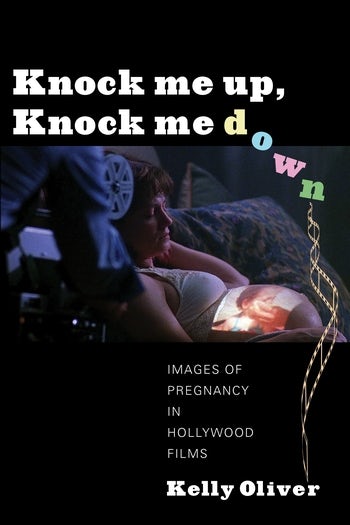
Referencing the movie Twilight in a room often draws a mixed reaction. Either people are incredibly interested and ready to contribute their fan experience to the conversation, or they immediately groan and drown out any further discussion. No matter its polarizing tendencies, it is undeniable that Twilight has had a major impact as a social phenomenon. In fact, many aspects within this saga perpetuate 1940s family ideals and traditions onto the pregnant body. Kelly Oliver analyzes this film, and the films before it, in her book Knock Me Up, Knock Me Down: Images of Pregnancy in Hollywood Films, which was published in 2012. Within her book, she emphasizes how, despite pregnancy being more openly seen on television over time, Hollywood has not embraced new feminist thought, but has, instead, kept conservative family values at the forefront of heterosexual movies that depict horror, comedy, and/or romantic plots. 

Knock Me Up, Knock Me Down | Columbia University Press

Born and raised in Spokane, WA, Kelly Oliver now teaches as a philosophy professor at Vanderbilt University and has published articles about the refugee crisis, the prominence of rape on college campuses, and about women in the media for newspapers such as The New York Times. Alongside these achievements, she founded philoSOPHIA, which is a feminist philosophy journal. Born in 1958, Oliver most likely watched the developments of pregnancy on-screen throughout her adolescent years. As a young child, she would not have seen much, as the word “pregnancy” was banned on television until 1959, and women were not allowed to look pregnant for several years later (21). But, as she grew up, there would have been increasing visualizations and normalization of pregnancy on-screen; yet, with these developments came a negative side effect that Oliver explores in the rest of her book. Covering the negative representations of pregnancy in film has helped further a specific aspect of the feminist movement: pro-choice and women’s reproductive rights. By exposing how Western media present all of their characters as pro-life, which feeds into anti-abortion conservative beliefs and force excessive social pressures onto moms to be perfect, Oliver’s scholarship works against this media of influence on younger generation girls.

Using the methods of textual analysis, Oliver focuses on symbolism in shows and cinemas to decipher Hollywood’s representations of pregnancy and and women’s reproductive rights, given the prevalence there of men directors and executives. She also takes the time to chronologize pregnancy in film for us within her monograph. Starting in the early 1600s and 1700s, midwifery was transferred to male control resulting in the medicalization of pregnancy (112). This change in labor ties in with Foucalt’s understanding of male experts taking over many lines of work, and that includes midwifery. During this time, women were advised against exercise and encouraged to complete bed rest in order to not disturb the baby (24). On top of the physical restriction women had, they were told their thoughts negatively impacted the child: that mothers “corrupted by forces outside herself, which cause her to have morbidly perverse fantasies and episodes during pregnancy” had moral insanity which caused horrific and monstrous children (115). Hollywood, in this manner, greatly aligned with First-Wave Feminists who perceived women to be the educators and standard for children’s moral upbringing. Regardless, with pregnancy being seen as a private and delicate matter, pregnancy was never mentioned or shown on film. Additionally, since sex and reproduction were linked in this era, viewers would have seen pregnant characters as less pure than ideal. It is not until the popularity of birth control and the Sexual Revolution in the 1960s that we even see sex on-screen without its former ties to reproduction (66). Nevertheless, the newfound acceptance of sex opened the door for a stronger pregnancy presence in the media; to note, we can also thank Demi Moore’s 1991 nude Vanity Fair illustration for pushing more pregnancy representation as well (37). Although these progressions can be seen as beneficial, it is not without their downsides.   

Oliver demonstrates that throughout the latter of the twentieth century and early twenty-first, Hollywood has increasingly promoted unhealthy and harmful practices via pregnant characters. In one regard, Hollywood’s portrayal of white mothers in comparison to black or Latina mothers is blatantly racist. For white moms that keep an accidental pregnancy instead of aborting the fetus, they are described as “good choice makers” (100) while their black counterparts are seen as having “‘bad’ babies to ‘put on welfare’” (96). Not only is this stereotypical of socioeconomic status, but it also plays into eugenics and the belief that “educated white women have a duty to have babies because they provide the ‘best’ gene pool” (95). Thus, when Hollywood continuously enforces the idea that middle-class white women have happy endings when they have kids, they exclude the notion that women of other races and social classes can as well. But, Hollywood only supports a specific type of middle-class white woman: the ones that push back their careers in favor of building a family first. Often, career-driven women are explained as “bossy” and “racing against their biological clocks” to have children (67;93). These women’s success is blamed for their “baby hunger,” (93) and the impressionable audience is encouraged to have kids younger, else they too will be “racing against their biological clocks” for kids when they are older. In these cases, the women who are ‘too late’ and resort to IVF, are described as less-satisfied than parents with “real” babies (150). Like in the movie The Backup Plan, Hollywood again displays its conservative values by promoting traditional heterosexual relationships over assisted reproductive technologies which do not depend on a heterosexual couple to reproduce. Moreover, Hollywood also makes pregnant women the butt of its jokes in its films. From comedies’ gross-out humor about women’s excessive cravings, ‘larger-than-life’ size, and constant need to pee, movies and television that partake in these tropes consistently do not take pregnant women seriously (79). With the culmination of all these attributes, it is safe to say that the increase in pregnancy in film has not been completely positive.  

Similarly, Twilight has not contributed positive images related to pregnancy. During Bella’s birth in Twilight: Breaking Dawn, we see “the most blood we ever see…associated with birth and women’s role in reproduction” despite previous movies in the series going over vampire wars, hunts, and beheadings (196). These portrayals also reflect the view of “women’s wombs as harboring evil” since Renesmee, Bella’s child, survives by drinking her mother’s blood and ends up temporarily killing her mother in the “nightmarish” labor scene (14,195). This Othering of pregnant women and acknowledging them to be a risk to society exposes how little Hollywood understands about pregnancy and how much they can vilify their pregnancy fears, producing controlling images that shape public ideas about pregnancy. Not only are these fetuses seen as a danger and life-threatening, but knowing that Bella refused to abort the baby continues to show how Hollywood “endorse[s] family values” and disregards abortion as a proper solution to a grave issue (197). END SENTENCE 

Oliver engages feminist scholarship on the general stigmatization of pregnancy, including Julia Kristeva, Iris Young, and Simone de Beauvoir. Julia Kristeva, a French Feminist philosopher of the 1970s and 1980s, “described pregnancy and the maternal body in positive body in positive terms” (4). She and her American follower, Iris Young, do not believe that women have a biological clock and that the urgency for early pregnancy is unnecessary (6). Not only does Oliver agree with these two and that regard, but she also agrees when these two assert that pregnant bodies are not abject or gross, but desirable (21). Where Oliver disagrees with Kristeva is on the topic of assisted reproductive technology: while Kristeva goes against the “automation” of reproduction (34), Oliver values its versatility and ability for people to have kids later without worry. Another stance of disagreement comes up with the value of motherhood. While individuals like Simone de Beauvoir, who never had kids or was married, say that pregnancy “renders women docile,” Kristeva and Young do not. In this instance, Oliver takes a more neutral stance and leaves the value of pregnancy up to each individual woman. Although Oliver agrees with de Beauvoir that biology “never completely defines human beings”, she is not as extreme to believe “that women’s reproductive function limits them and prevents their true participation in the social and political spheres” (23). Another circumstance where Oliver partially agrees is with Young’s hope to “resexualize” pregnant bodies (36). Over time, as the media defined pregnant bodies to be abject and horrific, they were not sexualized and Young acknowledges that “the desexualization of the pregnant body can open up a space for ‘self-love,’” yet insists that, since “Patriarchy is founded on the border between motherhood and sexuality,” mothers should be “resexualized” (36). In this sense, Young understands men as the cause of the initial aversion over pregnant bodies, which would be why motherhood and sexuality were not previously associated. Oliver does not agree that the solution to this border is to sexualize any woman; however, she relents that pregnant women can be desirable and that a “desiring body would be liberating for women” (36). To resist the de-sexualization of pregnant women is a way for expecting mothers to take back their independence and have more control over what people should/should not say about their bodies. 

Across the board, Oliver has made her stance clear on dispositions against and for pregnant women’s bodies, but that does not mean to say she wrote the perfect book. Though her writing covers the depiction of pregnancy as abhorrent in horror films, she never includes how this may apply to transgender or gay couples too. In this book, Oliver highlights how IVF and assisted reproductive technology help older women have children, but she forgets that these same procedures also help same-sex couples or transgender couples have children as well. The failure to mention the importance of non-heterosexual couples now being able to have kids, and how that may also impact Hollywood’s opinion on these procedures, is unfortunate. However, it is important to note that this book was published in 2012; as a result, some of the LGBTQ+ considerations we have now were not as common then. Still, Oliver was successful in other domains of intersectionality. By including examples of Latin and black moms in film, she put the attention away from the typical middle-class, white mom we usually see and recognizes how racism and classism are still prominent issues within Hollywood–and that includes their pregnancy movies. But, the focus solely on live-action films limits her piece. Mentioning other types of media, such as animation, could have also breached how the lack of pregnancy in these genres represents Hollywood’s unwillingness to have pregnant characters–who are impure in Hollywood’s conservative mindset–shown to the younger audiences that consume animated films. Nonetheless, Oliver has done an incredible job in defining and outlining the portrayal of pregnancy in the media across multiple decades. Her book and the scholarship it provides would be a strong resource for any film producers or avid movie-watchers who want to properly and accurately understand how what we see on screen about reproduction does not correlate to the realities of pregnancy today.

The Infamous Cackle: The Rise of Drew Afualo and Her Presence on TikTok

As we all know, especially through the beginning of the Coronavirus pandemic, when individuals dealt with the stay-at-home order and many were without work or school, TikTok’s popularity soared. One of the content creators on this app that later found success after this rise was Drew Afualo. To note, Drew is from California and is now 26 years-old. Regardless, Drew, who uses she/her/hers pronouns, started posting on TikTok on March 25th, 2020. However, she did not reach her current target audience until the end of March 2021 with her video captioned “UR WELCOME.” That video now has 3.2 million views and counting and almost 700,000 likes. Since then, she now has a total of 149.1 million likes and over 6.2 million followers on her verified account. Her other accounts on Instagram, Snapchat, and Twitter garner her an extra half-a-million people. 

Making the majority of her content for mainstream heterosexual women, Drew confidently attacks stereotypical gender norms through nontraditional methods. If we were to analyze the social roles of gender, men would feel the need to be overly dominant and masculine to differentiate themselves from women. As seen in Alok Menon’s book report of Plucked: A History of Hair Removal, they outline how societies preferred there to be a “visible difference between males and females.” While that book report was directly talking about body hair removal, it applies to all other aspects of life. This need for differentiation furthers the tradition, in some men, that they have the right to control women who are socially seen as inferior and submissive. Drew’s stitches work to interrupt these societal norms and clap back at misogynistic creators by specifically undermining these norms for her impressionable audience. As such, Drew’s main following and uploading focuses on her target audience of women, especially teens/young adults, and feminists. For Drew, it seems her intended purpose is to directly influence and inform her younger audience that they do not need to degrade their self-worth at the pleasure of men.

In order to contextualize Drew’s videos, she typically takes 3-5 second long clips from other accounts to use for her own educational/entertainment purposes; these are called “stitches.”  So, in this video, you’ll first see about 5 seconds of a clip by another TikToker, and then Drew jumps in afterwards with her own commentary. In the video mentioned above, it utilizes this Tiktok stitch filter with a different content creator, @Maysunbabe. As of 2022, Drew uses this stitch feature to directly react to misogynistic men or anyone opposing feminist ideology; but, in the video I linked, she is responding specifically to the prompt of “weirdly specific things I consider red flags in men.” For her answer, Drew lists out men that “love the movie Wolf of Wall Street [sic],” “call women ‘females’,” “starts any debate about women’s equality at all,” etc. In each of these examples, men who believe that women should be called females or that women’s equality is a subject to debate feed into the ideology that women are inferior to males. When it comes to Wolf of Wall Street, the movie portrays women as a commodity for rich men to objectify and do with as they please. This association to women as objects of pleasure in this movie demonstrates how the male audience should not revere this film. Additionally, referring to women as “females” also demotes women, a term inherently for humans, as something less-than-human because “females” refers to any egg-bearers for all animal species. And starting an argument with any intention to oppose women’s equality diminishes the hundreds of years of fighting women across history have done to better women’s socioeconomic position in relation to men. The real-life culmination of these beliefs in men or partners, as well as the other beliefs listed in Drew’s video, encompass her main reasonings for posting: to go against mysogynists and anti-feminists while creating a space where women feel comfortable enough to share their experiences with these types of men and avoid similar ones in the future.

Nowadays, Drew’s content contains more elements of comedy, but her message and support for women remains the same. She will start off her videos with a brief stitch, deliver her signature laugh, and dive into conversation about why men are not socially above women. In this newer video, Drew is much more comfortable with the audience and takes on a casual tone. She sits in what appears to be her bedroom, looking down as if she is on Facetime, and has a conversation with her viewers. For this tiktok, she laughs at and mocks the notion that men treat women nicely, and that women have full political and bodily autonomy, as a response to a male creator who was upset at the “men ain’t shit” narrative. The male creator in question, Actlikemetoo, is currently banned on TikTok, but previously asked “What if men treated women the exact same way women treated men?” His main argument was that the newfound hatred women are fostering towards men is unfair, and that men do not treat women badly enough to warrant this current aversion. Drew argues back by mentioning a list of achievements, like the right to vote or own property, that women have only recently acquired in the past 100 years, noting how the way men have treated women throughout much of human history was never fair to begin with, and that Actlikemetoo is severely in the wrong.

Considering Drew’s content and relatable video styling, she is greatly appreciated as an influencer: as Photoshop and what we see online becomes more edited, ensuring there are people to look up to that prioritize healthy mindsets is incredibly valuable. For her audience of young women, they can rely on her to not only produce videos that diminish sexist ideologies but also make a comfortable atmosphere for other women to laugh at these misogynistic stitches. In the end, women should live for themselves and not have to change when they enter heterosexual relationships.Still, while the majority of her content is meant for mainstream heterosexual women, she confidently attacks stereotypical gender norms. If we were to analyze the social roles of gender, men would feel the need to be overly dominant and masculine to differentiate themselves from women. This furthers the tradition, in some men, that they have the right to control women who are socially seen as inferior and submissive. These norms are interrupted by Drew’s stitches, which focus on specifically undermining these norms for her impressionable audience. As such, Drew’s main following and uploading focuses on her target audience of women, especially teens/young adults, and feminists. For Drew, it seems her intended purpose is to directly influence and inform her audience that they do not need to degrade their self-worth at the pleasure of men. Influencers such as Drew are greatly appreciated: as Photoshop and what we see online becomes more edited, ensuring there are people to look up to that prioritize healthy mindsets is incredibly valuable. In the end, women should live for themselves and not have to change when they enter heterosexual relationships.