
Spending my most formative years growing up in the city of Brooklyn, New York, I was surrounded by Black and Latina women of different body shapes, using colors, and bodily embellishments creatively in their fashion and self-representation, which seemed beautiful and fascinating to me. Until I learned to classify them as “other”… As a young white girl experiencing the world and all its differences, I learned to classify these groups as “other” based on their bodily aesthetic, the very aesthetics that society warned me about. Enter the monograph titled, Aesthetics of Excess: The Art and Politics of Black and Latina Embodiment, by Jillian Hernandez, the book that breaks down my childhood thoughts surrounding a topic called “aesthetic excess.” Hernandez examines the concept of aesthetic excess through the stories of working-class Black and Latina women from Miami. By amplifying these voices, the author sheds more light on ways that Black and Latina women in Miami have separated themselves from the prescribed white norms around gender, race, sexuality, and the neoliberal view of class.
Hernandez informs readers about societal ideals concerning the portrayal of aesthetic excess through an intergenerational feminist art praxis methodology. The goal of this praxis is “to generate a place for girls of color, both in detention and at other community sites, to engage in self-expression and critical dialogue, practices that they were either socially and institutionally excluded from (being artists) or were believed incapable of (being theorists)” (13). By centering this goal, Hernandez creates a space of agency, liberation, and expression in opposition to the exclusion, marginalization, and oppression that surround the lived experience of the young Black and Latina women in the book. The author’s methodology helps redistribute systemic power that has historically disadvantaged and suppressed the aesthetic expression of Black and Latina female voices in such a way that elevates and centers those voices in the fullness of their creativity and expression.
Hernandez adds an additional layer of proximity and authenticity to her methodology by sharing her personal experience as the child of first-generation, working-class Cuban and Puerto Rican migrants and founder of Women on the Rise! (WOTR), a community arts project (3). Hernandez was raised in Latinx neighborhoods throughout West New York, New Jersey, and Miami and received her Ph.D. in Women’s and Gender Studies (“About”). Currently, Hernandez spends her time as an Assistant Professor at the Center for Gender, Sexualities, and Women’s Studies Research at the University of Florida. Although Hernandez’s educational accomplishments position her as an expert in her field of study, it is her personal lived experience to the subject that offers a more proximate and authentic perspective. Hernandez collaborates with other artists to teach, analyze, and theorize media and traditional artwork and takes an interdisciplinary approach to her teaching by combining art history with gender and feminist studies through discussion based practices.
As a response to learning about the increasing number of girls committed to the juvenile justice system in Florida and the lack of creative educational release in that taxing environment, Hernandez founded WOTR in collaboration with the Museum of Contemporary Art (MOCA) in North Miami. Through workshops showcasing contemporary artwork from feminist, antiracist, and queer artists, Hernandez and instructors invite participants to respond to these pieces in group charlas (chats) and artistic projects of their own. These response pieces point to the ways WOTR members view practices of aesthetic excess in relation to themselves and their communities. This release challenges the oppressive effects that come from the policing of their bodies. The book incorporates actual discussions that take place within the charlas, placing the reader into the chat circle. This intimate positioning challenges readers to face the realities of the young women’s lived experiences head on rather than shying away from the oppression and marginalization they face.
Each chapter of the book centers on the policing of Black and Latinx bodies. Black and Latinx bodies become hypervisible through the eyes of others. According to the book, “In a social and cultural context in which Black and Latinx people are still viewed as subjects who belong outside high-class spaces, there is pressure for these communities to excessively perform respectability in order to be legible as legitimate class subjects” (103). In other words, the societal exclusion of Black and Latinx people in high-class spaces unfairly positions them as inferior rather than acknowledging their inherent respectability as people. Those spaces force people with oppressed identities to perform or “prove themselves” in order to fit within the expectations of a system intentionally designed to exclude them. Outside and in direct opposition to these inequitable expectations comes aesthetic excess – a release beyond the constraints of unjust norms and expectations.
Chapter 1, “Reading Black and Latina Embodiment in Miami,” begins with depicting the landscape of racialization in Miami with emphasis on the historical background of immigration, which shapes current-day anti-Blackness throughout the city. In addition, this chapter highlights the ways in which Miami depicts Black and Latina women. This depiction transitions into the chapter titled “Sexual Aesthetic Excess: Or How Chonga Girls Make Class Burn,” where the focus shifts to working-class Latina embodiment, often referred to as the “chonga girl.”

Media and discourse outside and within Latinx communities frame the chonga style as “an undesirable and deviant mode of embodiment that warrants ridicule” (63-64). The discourse surrounding chonga girls establishes characteristics a girl should not be: deviant, unsophisticated, and low-class. Hernandez offers her personal experience with the chonga girl aesthetic when she was equated to a Bratz Doll because of her clothing, makeup, and hairstyle. She recalls grappling with the societal conceptions of this comment by thinking, “Why was I viewed this way? More importantly, why was this comparison so objectionable to me?” (3). Societal constructs establish distance from the large gold hoop earrings, excessive hair gel, and tight clothing associated with chonga girls to ensure “legitimate class status.” While on the other hand, chonga girls embrace the stereotypes assigned to them by continuing to use aesthetic excess to reject class and white ideals of the “proper woman.”
Chapter 3, “Fine as Hell: The Aesthetic Erotics of Masculinity,” focuses on queer masculine embodiment of Black and Latina girls, highlighting societal perceptions of this embodiment and the narratives of WOTR participants. Black and Latina girls express their relationship navigating masculine embodiment and familial ties. The girls must balance their found confidence when utilizing masculine aesthetics with familial adherence to normative and “respectable” forms of body presentation. The presentation of queer masculine aesthetics threatens prescribed feminine norms and masculinity. Continuing the discussion of embodiment, Chapter 4, “Rococo Pink: The Power of Nicki Minaj’s Aesthetics of Fakery,” focuses on how rococo aesthetics are employed in images of rapper Nicki Minaj. These images visualize Minaj’s embrace of bodily enhancements and displays of hyperfemininity. WOTR members critique Minaj by saying she is “conforming to Eurocentric norms of beauty and stereotypes of excessive Black female sexuality,” while other members framed Minaj as inspiration (146). Through Minaj’s sexualized body presentation and rococo style, she signifies her divergence from norms of sexuality and respectability.

Bacon, 2012.) (screenshot from chapter 5 of book)
The final chapter, chapter 5, “Encounters With Excess: Girls Creating Art, Theory, and Sexual Bodies,” discusses the challenges WOTR instructors encounter among coworkers and workshop participants. The featured artwork spurred aggressive commentary regarding the depiction of the grotesque aesthetic of excess, which ignited intergender body surveillance among participants. When hostilities settled, members enjoyed working on response pieces regarding black representation in visual culture. The book culminates with an Epilogue where Hernandez uses poetry as a methodology to narrate her experience with MOCA and WOTR. The MOCA board of directors parted with the museum and took 1/4 of MOCA’s permanent collection of artwork to open the Institute of Contemporary art located in a more exclusive location in Miami (258). White women who worked at the museum viewed WOTR as risque and disruptive to the status quo, often presenting the program carefully to donors (a primarily white group), obscuring the true nature of the collaborative, creative, lively, and freeing characteristics of the program.
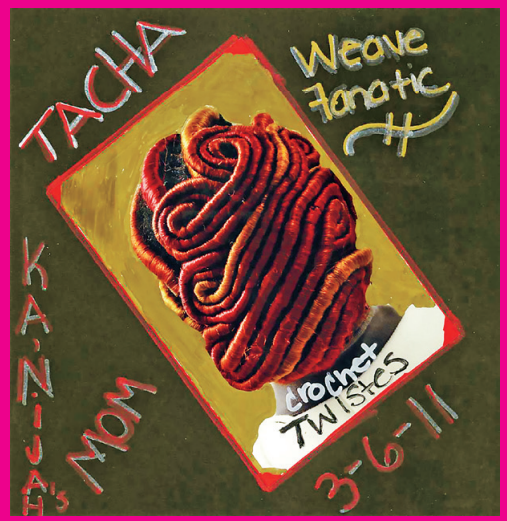
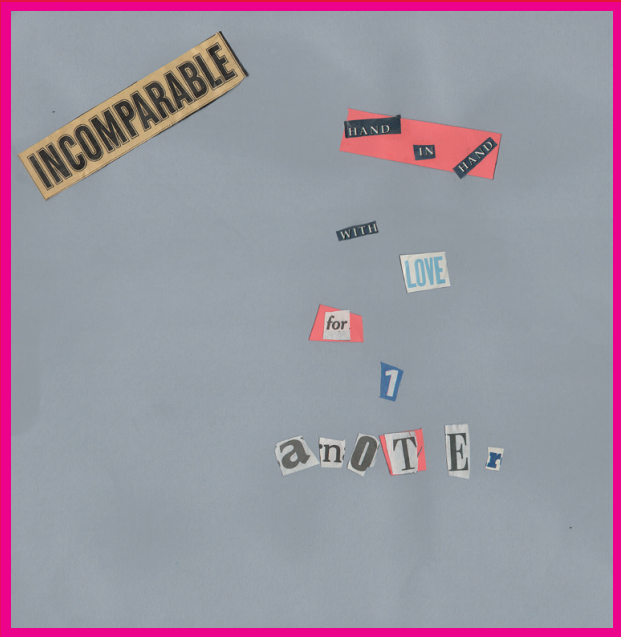
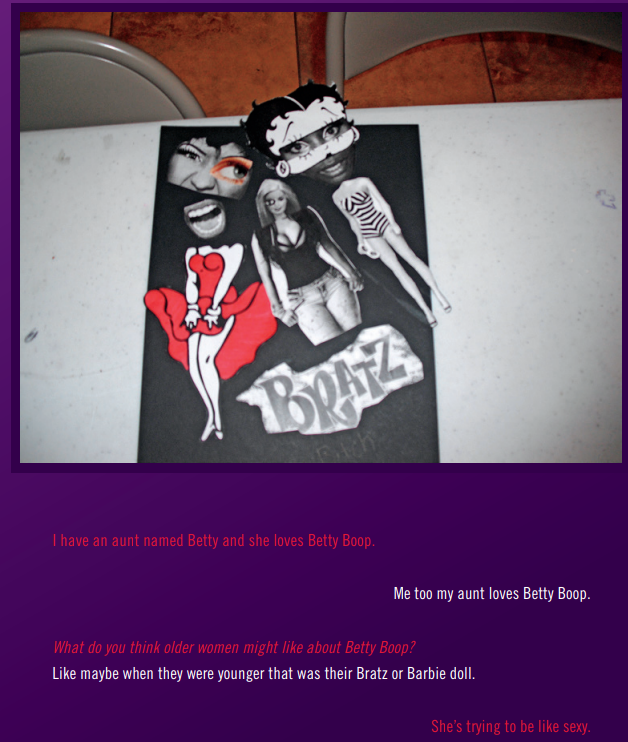
The interludes artfully integrated between each chapter further captivate the reader’s attention. These sections penetrate the pages with beautifully crafted artwork and workshop activities from WOTR participants. Visually seeing the artwork transcends the descriptions Hernandez provides in-text. The images depict how working-class Black and Latina youth visualize and express themselves in a world dominated by Eurocentric views on femininity, race, and sexuality. The disclosed images from WOTR workshops give me, as a reader, a better understanding of the struggles and stylistic choices surrounding the body that affect racial and ethnic groups outside of myself.
Although the book communicated its intended message, it accomplished this goal with some confusion. A reader without a foundational understanding of art terminology may encounter difficulties understanding certain descriptions of art styles used in the book. Lack of art knowledge poses an issue to understanding relationships between the art itself and topics of gender, race, sexuality, and class. I did, however, appreciate the embedded images throughout the book, which portrayed the different art pieces and styles that were being studied. This tactic helped mitigate the effect of a lack of artistic knowledge, but having a basic familiarity with art terminology would have been more helpful.
Overall, the book was both informative and thought-provoking. It helped me better assess my thoughts about aesthetic excess and recognize that my views are heavily shaped by white societal norms. Active interrogation of my own privileged perspective helps me better identify my role within the broader system that privilege certain identities at the expense of others. I would recommend this book to all members of society aged 16 and older, because white ideals not only shape white judgment on other racial and ethnic groups but also impact the ways that other racial and ethnic groups’ view themselves. Challenging the notion of “fitting in,” the book serves as an affirmation of standing out and standing up to unjust norms through the practice of aesthetic excess. Though surrounding social structures seek to force conformity and constraints upon Black and Latina expression, the experiences and examples of artistic expression from WOTR participants provides a proximate perspective on reclaiming power and agency through aesthetic excess. Although the board at MOCA sought to monetize and remove the work of Black and Latina women from the neighborhoods they represent, Hernandez continues to raise the voices oppressors try to silence. The lessons and theories generated from WOTR participants continue to live on through this book and its impact on readers.
Works Cited:
Hernandez, Jillian. “About.” Jillian Hernandez, https://www.jillianhernandez.com/about.
Hernandez, Jillian. “Aesthetics of Excess: The Art and Politics of Black and Latina Embodiment.” Duke University Press, 2020, https://www.dukeupress.edu/aesthetics-of-excess.
I really like your post and how you tied in your own ideas. Growing up, I remember hearing lots of judgment directed towards individuals dressing in ways that would fall under Hernandez’s definition of aesthetic excess. I had never heard this term before, so it was really interesting to read about the ways in which aesthetic excess is used as a release beyond the constraints and unjust norms placed on Black and Mexican women. That said, do you think dressing in a way that qualifies as aesthetic excess helps individuals to release beyond the constraints of expectations placed on these women? Sometimes I feel like it only adds to stereotypes about these women, but I recognize that my view is coming from a position of privilege as a White woman.
Your analysis of chapter 3 was well done and interesting. I have heard of black women being described as “manly,” or “aggressive” or “emasculating” through notions of the “sapphire” and “angry black women” but not in this context. In the case of Latinx women you state that they “must balance their found confidence when utilizing masculine aesthetics with familial adherence to normative and ‘respectable’ forms of body presentation.” Does masculine aesthetics refer to clothing or is it more based on behavioral traits? Additionally I wonder if other cultures of people experience similar issues in which they feel they have to adhere to feminine norms to gain acceptance?