In the book titled, Nature’s Wild: Love, Sex, and Law in the Caribbean, Andil Gosine takes an interesting approach to demonstrate a global issue of homophobia and general exclusionary attitudes that societies have adopted towards marginalized communities. In this piece Gosine describes these global issues in a way that incorporates experiential storytelling on their experiences, and broader data, laws, and systemic forms of oppression. Before even diving into the book, Gosine’s book cover greets students with an intriguing image of a person blending into a jungle, while holding a rooster. By starting with this image, Gosine invites readers to pause and contemplate the message that is being conveyed, as it pairs beautifully with what is represented in the actual book. In this book report, I will share my perception of the work’s content.
Gender roles have always been present in relationships. With any orientation, these masculine and feminine roles create expectations on how to act, dress, and conduct oneself in a relationship. Masculinity in relationships can be overpowering, especially in diaspora, the dispersion of peoples from their homeland. In Mexican culture, this can lead to Machismo, the concept of the ideal Mexican man. Having machismo can lead to being patriarchal and sexist. However, the role of a male figure amongst these Mexican diasporic relationships are not always like this. In Nichole Guidotti-Hernández’s most recent book, Archiving Mexican Masculinities in Diaspora, she collects the visual archives from Enrique Flores Magón and Leonard Nadel to document and interpret intimacy across relationships amongst Mexican men during the late 1800’s and early 1900’s.
The book is separated into two sections, each with their own conclusion. The first half of the book follows the gendered migrations and life of Enrique Flores Magón, a Mexican anarchist. Guidotti-Hernández focuses on Enrique’s virility amongst his relationships around the time he fled to El Paso, Texas. Guidotti-Hernández notes the masculine style of his word choice when writing letters throughout his life, drawing attention to his masculine virility. With Enrique’s first relationship, being with Paula Carmona, it is possible that his virility caused a breakup. Despite Paula having visual evidence of their relationship, Enrique did not, erasing the relationship from his side. The reason why this relationship was problematic in diaspora is because of Enrique’s masculinity – he was patriarchal and misogynistic. This shows how heteronormative gender roles can affect one’s intimate relationship in diaspora. The second half of the book looks at the homoerotic conflicts within the bracero program captured by photojournalist Leonard Nadel. Guidotti-Hernández says that Leonard traveled over five thousand miles with for his photojournalism, focusing on his bracero subjects from their homes in Central Mexico to processing centers in the United States and labor camps. In Leonard’s photographs Guidotti-Hernández traces the tensions between two sides of the braceros’ identity; one side represents braceros in a more mainstream image, being seen as the typical masculine character. However, the other side shows same-sex relationships between the Mexican laborers. Hernández exposes the unseen side of bracero life to show that feminine masculinity and homoeroticism livened bracero life and culture while avoiding the dominant influence of Mexican patriarchy and heterosexuality. The book is wrapped up with the conclusion of the relationship between Mexicans separated by the border. Despite a lack of solidarity, these Mexican communities developed political connections that were highly emotive and intimate through their agitation for labor rights. What we learn from the changes that occurred between anarchists of the 1910s and 1920s and braceros in the 1950s has to do with how emotional bonds and attachments were forged. Both the archives of Enrique Flores Magón and braceros required narration against machismo. This is because Mexican male migration patterns and narratives of sociality are interpreted through machismo.
The author of this book, Nichole M. Guidotti-Hernández, is currently a professor of English at Emory University. Her first book is Unspeakable Violence: Remapping U.S. and Mexican National Imaginaries, which is about the epistemic and physical violence that racialized and gendered peoples faced in the U.S. Mexico border from the mid 1800’s to the early 1900’s. Guidotti-Hernández has also written many articles for the feminist magazine Ms. and the feminist blog The Feminist Wire, discussing various topics from immigration to reproductive rights. Archiving Mexican Masculinities in Diaspora is her second and most recent book. This book can be applied to wider research or career trajectories involving Gender Studies and Latinx Culture and Literature Studies.
In Archiving Mexican Masculinities in Diaspora, there is an emphasis on visuals, hence why a lot of the research material used is photos and artwork. Most analyses are of the photos, as Guidotti-Hernández says that Photographs capture the best state of something. The archives of Enrique Flores Magón and of Leonard’s photography have been carefully selected to tell historical narratives. Guidotti-Hernández’s display of visual archives includes photos, artwork, police reports, newspaper reports, and personal letters. When analyzing, Guidotti-Hernández describes the background information of the image then ties its connection to the main topic at hand. For example, in the section of Enrique Flores Magón, there are two sketches by him of Paula Carmona, his first wife. Guidotti-Hernández gives us context about Enrique’s relationship with Paula, saying that they show an intimacy that counters Enrique’s narratives, yet he erases his relationship with Paula. He makes the false claim that he was married to his second partner, Teresa Arteaga, around the time he was in El Paso in 1908. Despite Enrique saying he married his second wife Teresa Arteaga by 1905, he still showed his love for Paula by creating art in 1908.
One strength of Archiving Mexican Masculinities in Diaspora is its in-depth analysis on every visual archive provided. By doing so, each archive reflects the effects of Mexican masculinity across time, relationships, and the location of the partners. As a result, Archiving Mexican Masculinities in Diaspora provides a look at gender dynamics of migrants from the mid-1800’s to the early 1900’s. These analyses also provide insight into the different types of relationships found in Mexican culture, such as father-son as well as partners and lovers, from homosocial and heteronormative. Another strength of this book is its connections to other cultures that had diasporic communities. In her section examining Leonard Nadel’s photography, Guidotti-Hernández brings attention to communities such as Japanese American sharecroppers and German prisoners of war. For example, she brings up how there were laborers imported from Japan to work with braceros during berry picking season. Guidotti-Hernández says that the history of multiethnic labor and racialized forms of capitalism were created by the homosocial labor conditions for Japanese and Mexican workers along with Japanese share cropping families. The connection between the two cultures emphasizes the effect of racialized capitalist systems that created these diasporic communities amongst laborers.
One potential weakness of Archiving Mexican Masculinities in Diaspora is that it feels drawn out at times. The book does sometimes feel longer than it should be, especially when analyzing its visual archives. While Guidotti-Hernández does a great job gathering and utilizing evidence to get a point across, sometimes it feels like there is too much being explained. This is a minor complaint for the book overall, as the number of visual archives presented to the reader does not shallow her overall message from the book. Depending on how you look at it, the plethora of archives presented only strengthens the claim.
Overall, I think that Archiving Mexican Masculinities in Diaspora does a great job explaining diasporic masculinity and how it reflects gender roles of Mexican culture. When looking at the intimacies of diasporic relationships, Guidotti-Hernández emphasizes the effects of virility and machismo within them. This is done by looking through the public and private aspects of Enrique Flores Magón’s relationships and looking at the two-sides of masculinity within bracero life captured by Leonard Nadel’s photography. This book was informative showing how Mexican masculinities formed by becoming outsiders through diaspora. I would recommend this American studies and ethnicity, gender studies, Latinx studies, and Latin American studies.
For a number of reasons, humans have always had a complicated relationship with sex and sexuality. In his book, Nature’s Wild, Andil Gosine explores the complex history behind these feelings towards homosexuality, clothing, gender, and sex as a whole. Throughout his book and across a number of studies, Gosine argues that these attitudes stem from the human desire to distance ourselves from being animals. He explores one of the sources of this mindset primarily through a history of colonialism and colonial law, and goes on to discuss how these ideas persist today. He also includes how race, white supremacy, and religion play a role. Andil Gosine is currently a professor of Environmental Arts and Justice at York University. He is a well published and respected author, focused on environmental arts, environmental justice, and Caribbean sexualities. Nature’s Wild is a culmination of Gosine’s own personal experiences and his archival research, including historic accounts and literature and primary and secondary sources.
“Legalizing sex” by Chaitanya Lakkimsetti reflects the everyday struggle, difficulties, and discrimination faced by the Lesbian Gay Bisexual Transgender Queer Kothi Hijara (LGBTQKHI) Community, on the social, political, and economic level in India. It presents the conservative, discriminative and unwelcoming culture of the LGBTQKHI community in India. Lakkimsetti introduces a new term “LGBTQKHI “instead of the renowned term “LGBTQ” where she includes men who have sex with men, the Kothi, and the hijra (MSMKHI), marginalized sex workers neglected by the government. Lakkimsetti effectively portrays the reality and the constant struggles of the transgender, sex workers, and the gay community in fighting for their rights and class in society.
Lakkimsetti questions the ghettoization of sexual minorities in India. She questions the position of sexual minorities in society by presenting the everyday struggles of the sexual minorities. She collaborates with the LGBTQKHI community, several organizations, and the government to promote equal protection, control the pandemic, and fight for the rights of the marginalized sexual minorities. She reflects on the unsupportive government, its sardonic anti-homophobic laws, and a discriminative society in marginalization and stigmatization of the LGBTQKHI community. Her research and surveys around various parts of India such as New Delhi, Mumbai, Kolkata, and Chennai gather the data on sexual minorities that reflects the reality of the discrimination in civil, political, social, and economic rights of LTBTQKHI people in India.
She also reflects on the boorish nature of the government and how the pandemic shifted the position of sexual minorities in India. Sexual minorities once discriminated against and marginalized by the Indian government come to attention as “high risk “groups to combat HIV/AIDS to create an effective response in the mid-1980s. This book reflects on how unsupportive government, homophobic laws, and discriminative society have led to several social, political, and economic barriers to sexual minorities. Such barriers have left them with no choice but to fight for social, political, and basic civil and political rights demanded by the state government of India. It reflects the heterosexist perspective of society as demands and protests by the sexual minorities for their right results in shock to the government with how previously stigmatized and marginalized groups could stand up for themself and make demands.
Chaitanya Lakkimsetti is a professor specializing in gender, sexuality, law, and citizenship. She is renowned for her studies in sexual and gender inequalities in a global context using transnational and intersectional approaches. Her expertise in the field of gender inequality has contributed to her book “Legalizing sex” where she successfully addresses the demand for political and legal change by the gender minorities in India. Her wider extended research on the sexual minorities in contemporary India has highlighted the contemporary struggle for social and political justice in relation to the anti-sodomy. She provides a social and political approach to ending the injustice and suppression of sexual minorities legally.
The first chapter reflects on how sexual minorities are drawn into the category of “high-risk group” to develop a strategic approach to control the HIV/ AIDS pandemic. After the first detection of HIV/AIDS on sexual minorities, they are taken into serious consideration as a threat, blamed, hatred, and even punishment. The same marginalized group is later given a leadership position in combating the pandemic by the Indian government. The second chapter – “Challenging bare life” emphasizes abuse and incessant violence especially arbitrary police violence supported by the criminal laws against sexual minorities. It presents the ways in which sexual minorities negotiate for accountability and redirects the government’s attention towards the protection of the rights of marginalized groups.
Chapter 3 “Empowered Criminals” focuses on the mechanism of resistance as a means for negotiations with the Government regarding the HIV/AIDS pandemic. It addresses the success of sexual minorities as they become able to gain the support of several HIV/AIDS organizations and from the federal state ministry of health. This chapter elaborates on legal acts as important implications for the rights of the sexually marginalized group. Lakkimsetti successfully scrutinizes the everyday policing of the non-generated class and emphasizes the struggles of gay groups and transgender/ Hijara focusing on two judgments. Those two judgments include the Indian supreme court, the Koushal that declared section 377 constitutional, and NALSA(National legal services agency) that granted rights to transgender people. The closing chapter “Interconnected rights” presents the need for cooperation and active participation among the sexually marginalized groups for the transformation of goals of sexual minorities with a focus on a welfare discourse. It includes the success of the sexual minorities who have been protesting against section 377 for two decades and finally supreme court of India makes it unconstitutional in September 2018.
One of the greatest strengths of this book is that it successfully presents the reality of the constant struggles and fights for legal change by the sexual minorities in India. Through her experiments, research, interviews, and collaboration with several organizations is able to reflect on several homophobic laws, discrimination, and homophobic society resulting in discrimination, unfairness, and harassment of sexual minorities not only in India but in the entire world. She mostly emphasizes the homophobic laws in chapter two with how Such laws freely consigned sexual minorities to death by depriving resources and made it extremely harder for the sexual minorities to stand up for their right and place. She portrayed that such violence reveals the internal contradictions in the Indian government, the cusp of the juridical and biopower. She not only includes the difficulties and the suffocation of sexual minorities but also points out some success and positive changes that took place after the mid-1980s after the HIV/AIDS pandemic, a global issue. For example, in chapter one, she includes the repeal of section 377 in 2009, which marks a significant history for sexual minorities as a victory in a legal battle for their social, political, and economic rights.
Despite some positive changes and success, she presents the reality of how the homophobic perspective of society remained the same, and they are still marginalized and stigmatized in today’s modern world. Although the author effectively communicates the struggle and reality and their oppression of LGBTQKHI people, it does not provide a fully comprehensive account of minorities such as lesbians and bisexual people. She emphasizes more on the Gay, transgender, hijra leaving behind bisexuals and lesbian community. Such has left a small room with not much understanding of the reality of bisexual and lesbian people and their struggle and class in society. It would be better if she had emphasized including all the sexual minorities in the category of the LGBTQKHI community and not just Gay, transgender, and sex workers.
Overall, its intersectional nature provides the deep root stigma, discrimination, and struggles associated with the marginalized sections. The author does an excellent job as she helps us understand how activism can influence and change the different political discourses and the dominant politics in bringing positive legal change. She emphasizes how active cooperation, active participation, and fighting for a change play a vital role in achieving a goal. The book successfully presents the existence of discriminatory and biased laws against sexual minorities and encourages its views to thrive for a change and fight for rights and equality. I would highly recommend anyone interested in the field of sexuality read this book.
Reference:
Legalizing Sex: Sexual Minorities, AIDS, and Citizenship in India, Chaitanya Lakkimsetti , 2020
Superdads: “How Fathers Balance Work and Family in the 21st Century” by Gayle Kaufman
Book Cover for Superdads: How fathers balance work and family in the 21st century
The introduction to “Super dads” starts with what the author’s observation at the bus stop: unexpectedly, there were more dads than moms waiting for elementary school children. This was surprising to the author because as she states: “The point is that fathers are no longer an anomaly at the bus stop. I call these men “new” dads or “involved” dads, a sign that times are changing and men’s role as fathers are changing too. (Kaufman 2013).
GAYLE KAUFMAN is a Sociology professor at Davidson; I never had a chance to take her class, but it is a great opportunity for me and also other students who read my post to be able to ask questions directly to the author of the book. She specializes in gender equality, parental leave policy, and modern families, also she published her second book “Fixing Parental Leave”, explaining her observation of the policies of Sweden and the UK.
Throughout the book, Kaufman mainly explains the new dilemmas and social expectations involved fathers face when it comes to work and families. For instance, one of the interviewees explained how he cannot find time to spend with his daughter while working overtime. She categorizes ‘new dads’ and ‘old dads’ to explain the generational differences and the discrepancies between them. Then, she argues for both individual and societal level solutions that could potentially alleviate the problems new dads face. She presents the solutions by showing the interviews she has done with dads who successfully balance family and work. One of the examples were focusing less on the success in the workplace and interacting with superiors or employees.
Kaufman’s methods are mainly qualitative and include multiple interviews of both “old”, and “new and involved” dads. By presenting her interviews, she gives details on the challenges the dads face balancing between work and family. Moreover, she provides interviewees’ detailed narratives of how they dealt with the problem and found balance in doing both.
To give an overview of how Kaufman develops her overarching argument, she first introduces the problem statement in Chapter One: Introduction, Chapter Two: Becoming a father, and Chapter Three: Work-Family Dilemmas, describing the challenges of balancing between work and family. Then, she analyzes dads in three categories in each chapter: Chapter Four: “Old Dads”, Chapter Five: New Dads and Partial Solutions, Chapter Six: Super dads, and Chapter Seven: Single Super dads. Throughout Chapters Four to Six, while introducing the concepts she also suggests solutions by introducing the personal narrative of the interviewees.
First, to summarize the presented issue, one of the interesting findings was that fathers consider their roles as having two full-time jobs, considering their job at home ‘a second shift’. Evidence suggests that men these days are going through what women went through when large numbers first entered the labor force. In short, the facts demonstrate the pressure and feelings of imbalance men face and the consequences it brings to their lives and families. The significant cause of the problem is too much time at work – overtime and being on call. Fathers who work unusual hours face stress over not being at home when “normal” fathers are supposed to be at home.
In the second part of her observations, she also describes the lives of “old” dads as the opposite of “new” dads, who often expresses the sense of loss that he was not there, knowing that he has missed “anything that has happened” at home. Masculinity and the provider role remain prevalent among old dads, who grew up in a society where people and scholars emphasized the importance of separate roles for men and women—the instrumental role for men and the expressive role for women. Men’s primary roles as workers and providers were seen as key to the functioning of family life and the larger society. Despite the differences between old and new dads, a recurring theme in both generations is that the fathers have long hours of work and a lack of time to spend at home. However, when she interviewed the old dads, men often talk about their own individual aspirations as a motivation to work long hours. Yet, they are grounded in external pressures and standards to which men compare themselves. As a result, “the force causing them to work both surrounds them and is internalized by them, creating normative patterns, understandings, and definitions about work. Another important theme in old dads is their reliance on their wives who become the primary caretaker and a parent. They express concerns over their missing roles of appearing as a parent to their children.
While some fathers stick to a more traditional view of their role as a father, most of the younger fathers Kaufman talked with seeing themselves as involved dads. They are not completely dismissive of their monetary contributions to their family, but they do not define themselves as breadwinners. The transition from an old to a new identity as a father leads us to the third part of the book, where the author attempts to suggest a solution for the struggles the ‘new paternal identity’ presents. Kaufman closely examines the lives of fathers who claim to have found a good fit between their work and family. It is not necessarily that they have made major adjustments to their work lives but rather that they find themselves in positions that are amenable to family life. One of the noticeable similarities of these respondents is that they have jobs that offer a good deal of autonomy which may be used to arrange better work schedules for themselves. For instance, Walter really enjoys the flexibility in both his daily work tasks and his need to answer to his boss. He has control over what he does and when he does it. As he suggests, this freedom is particularly useful for a father of two preschool children, and he takes advantage of this flexibility when his family needs him. Another factor that determines the good balance and work effort is the father’s attitude toward his career. The fathers who are not aspiring to move up the ladder but work to make sure to get the job done to have more laid-back work experience and energy to focus on family. Gary, one of the interviewees, says he used to work longer hours and was more driven to work, sometimes trading home for work on weekends. Since his son was born, he works a more regular schedule, which means fewer hours, and he appreciates time at home, including time with his son and extra sleep. Kaufman brings interesting insights by examining the respondents and suggests that the work environment and the attitude toward work significantly matter.
The book primarily focuses on ‘new dads’ who try to find a balance between work and family by looking into the respondent’s lives on an individual level. The strength of the book comes from a narrow topic that it goes over multiple possible explanations of the problem and solutions. Moreover, the detailed experiences shared by some of the successful ‘new dads’ can be a practical guideline for readers struggling with similar problems. For those who are not fathers that find it difficult to emphasize the situation, it is easier for us to understand the context by reading about their personal experiences.
The weakness that came to mind was its lack of focus on policy and institutional analysis. Corporate policies related to paternal leave and social services such as child care are an important part of the welfare system to encourage parents to continue their work while taking care of their children. However, the author focused more on the cultural and social factors of new dads, which was helpful and insightful, but made me wonder about any legal difficulties that hindered them from balancing between work and family. For the same reason, I also expected to see policy suggestions and a review of government responsibilities that governs the lives of working parents. However, her second book reinforces the weakness by addressing the policy issues through comparative case studies of countries. The title of her second book is “Fixing Parental Leave: The Six Month Solution” which gives more detail on policies and institutional solutions.
Personally, the book was very interesting because I could not help but compare her observation to South Korea, a country I grew up in since there has been a growing number of involved dads even though still less compared to other developed countries. The public is unwelcoming toward these fathers due to the outdated stereotype that a child must be taken care of by mothers and also the majority of members in communities related to childcare are women. Moreover, government welfare and policies discourage fathers from participating in childcare with many companies refusing to provide paternity leave. I read the book with great interest since it touches upon the area of study that I enjoy learning more about: growing social and policy issues of involved dads.
In conclusion, as a female college student who rarely has a chance to analyze the struggles of working fathers, the book provided a new perspective on child care and work-family dilemmas. I also think it would benefit the fathers and mothers, who try to understand their spouses, as a guide and reference for raising their children. Moreover, the text could be used to argue for specific child policies or social systems because of the vast background information the book provides.
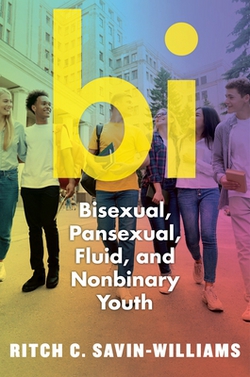
Bisexuality, to me, has always felt like squeezing into the bottom bunk of a bunk bed. I try to sandwich myself somewhere in the middle of the spectrum, while society tries to bang my head against the top bunk of complete hetereosexuality or homosexuality. Reading ‘bi’ by Ritch C. Savin-Williams made me realize that I’m not alone. Through his in-depth research into bisexuality through the lenses of behavior, attraction and identity, the author aims to express that sexuality is seldom static. Through a series of anecdotes collected from bisexual-identifying individuals, Savin-Williams analyses love, fantasies, sex and romance and claims that these factors are found in different combinations for different people, and that there is no singular formula for bisexuality. He also examines stereotypes that hinder individuals from identifying as bisexual and counters traditionally masculine views towards romance and sexuality. The author ultimately aims to recognize the multitude of ways in which bisexuals present themselves and are perceived in today’s society.
Transgender and non-binary issues are beginning to come to the forefront of today’s world and access to medical care is one of the most important and nuanced matters for many transgender individuals. Adequate access to transitional surgery and hormones for those who want it is crucial to garnering equality and a comfortable life for gender minorities. While certain aspects of transgender care has improved and changed over the past century, there are still many complex issues that need to be addressed if transgender people are to have full bodily autonomy and access to adequate care. In their book, Trans Medicine, Stef M. Shuster discusses how transgender medical care has evolved from its beginnings in the early 1900’s to the more contemporary issues that the transgender population are dealing with today.
Crunch. Bits of crushed-up peanuts add an element of surprise as I chew. The chunky texture intertwined with the smooth layers of peanut butter creates a satisfying experience. Extra crunchy peanut butter. A treasured delicacy of mine. When the dining hall does not fill my grumbling stomach’s desires, I chow down in my dorm room alone on my favorite snack. A yummy snack? Yes. A snack that works as a form of resistance against the normative intimacies of eating in the public sphere? Well, that is an idea I had not even begun to consider until reading Anita Mannur’s 2022 monograph entitled Intimate Eating: Racialized Spaces and Radical Futures.
Mannur, a self-proclaimed “professor, writer, thinker, recovering optimist,” works as an Associate Professor of English at Miami University. Mannur teaches interdisciplinary courses centered on race, class, gender, and sexuality. Additionally, she is the author of Culinary Fictions: Food in South Asian Diasporic Culture and co-editor of Eating Asian America: A Food Studies Reader. Mannur received her BA in Comparative Literature at the University of Wisconsin-Madison and Ph.D. at the University of Massachusetts Amherst. Mannur’s background and primary research in food studies as well as her interdisciplinary teaching approach qualify her to examine food in Intimate Eating.
For many straight women, heterosexuality is simultaneously idealized as the ultimate goal and recognized as a painful necessity. While girls grow up being told they should dream about finding and marrying their prince, women often bond over romantic relationships with men who are violent, emotionally unavailable, or simply unpleasant. Queer women regularly acknowledge the struggle of heterosexual relationships for straight women. They both seriously and jokingly discuss how glad they are that their romantic and sexual satisfaction does not depend on straight men. Queer women often feel bad for their straight counterparts’ romantic prospects.
In The Tragedy of Heterosexuality, Jane Ward asks why queer people would feel sorry for straight people if being straight is easy while being gay is a curse that can only be explained by the “born this way” idealogy (which depends on the assumption that no one would choose to be gay). Ward pushes against this narrative and claims that “the basic premise [. . .] that heterosexuality is easier than queerness –requires renewed investigation” (2). Ward uses her perspective as a queer woman to defamiliarize heterosexuality, allowing her to point out its many structural flaws that are often overlooked or accepted as unchangeable. She uses queer relationships as a reference point for creating a healthier type of heterosexuality.
Jane Ward has lots of experience writing and thinking about both straight and queer relationship dynamics. She is a professor of Gender and Sexuality Studies and the program chair of Lesbian, Gay, Bisexual, Intersex, and Transgender Studies at the University of California, Riverside. Her courses are about feminist, queer, and heterosexuality studies. She has a Ph.D. in sociology from the University of California, Santa Barbara. She has published two other books: Respectably Queer: Diversity Culture in LGBT Activist Organizations (2008) and Not Gay: Sex Between Straight White Men (2015). She has explored many facets of sexuality, from queer feminist parenting to straight men who have sex with each other. She brings a refreshing perspective to the conversation around the issues with straight relationships, as she uses queer relationships to demonstrate that straight couples do not have to cope with relationships built on dislike and misunderstanding (an assumption so many books for straight couples work off), but can have an entirely new kind of relationship.
In Chapter 1, “Let’s Call It What It Is: The Tragedy of Heterosexuality,” Ward introduces the premise that heterosexuality is more flawed than straight people are willing to admit. She explains that many queer women internalize the idea of the “tragedy of queerness,” when, in reality, they are grateful for their queer relationships and are relieved not to be a part of straight culture (4). She points to personal conversations with queer parents who feel they should not wish homosexuality on their children despite their own happiness with their sexuality. She also details the work of many feminist scholars and activists such as Audre Lorde, Gloria Anzaldua, and Kate Millet who discuss the discomfort of straight relationships and how they enforce the patriarchy.
Ward questions and denormalizes heterosexuality, leading her to three main conclusions. The first, which she discusses in Chapter 2, “He’s Just Not That Into You: The Misogyny Paradox,” is that “the normalization of violence and mutual dislike was central to straight culture from its modern inception” (172). In this chapter, Ward points out that straight people often do not like the gender to which they are romantically attracted. She explains that men often look to each other for close homosocial connections while they have “disgust or resentment for the object of one’s sexual desire” (37). Ward shows that much of our culture assumes that men and women cannot stand each other and that “mutual likeability” between men and women is a very new idea, as, for most of history, marriages were based on transactions and ownership (34). Ward explores the self-help and beauty industry that has sprung up for straight women to try to get straight men to actually like and respect them. She analyzes historical and modern resources in this industry, including advertisements for douches and the advice of “experts” like John Gray, author of Men are from Mars, Women are from Venus.
In Chapter 3, “Pickup Artists: Inside the Seduction Industry,” Ward explores the bastardization of feminist ideas for heterosexual male gain through the lens of the pick-up industry. Ward sat in on several seminars and classes taught by pick-up artists (men who consider themselves experts at getting women to have sex with them through their flirting and seduction methods) and interviewed the attendees and organizers of these programs about their intentions. She uses her field notes and ethnographic work to illustrate how pick-up artists integrate feminist ideas of respecting and listening to women as a way to have more sex (one instructor even had a seminar on the #MeToo Movement). In Chapter 4, “A Sick and Boring Life: Queer People Diagnose the Tragedy,” Ward has queer friends and colleagues fill out a survey about what disturbs them about straight relationships or culture. She uses these answers to unpack the phenomena of straight culture that are problematic and confusing when not assumed to be the norm. Topics she covers include the boredom of straight relationships (including sexual boredom), men and women’s strong dislike for each other, straight men’s treatment of everyone in their life, and the focus on conformity.
In the final chapter, “Deep Heterosexuality: Toward a Future in Which Straight Men Like Women So Much That They Actually Like Women,” Ward calls on straight men to “put their politics where their lust is: in alignment with women” (155). Ward implores straight couples to stop trying to embrace traditional masculinity and femininity as a way to thrive; the very foundation of men and women as complementary figures is built on a power dynamic. Instead, she encourages men to truly identify with the women in their lives as fully-formed people. She also encourages straight couples to push further than heterosexual expectations in their connection with each other. As an example for straight couples, Ward points to lesbian feminists’ respect and care for the women they are with, which is inseparable from their attraction.
One of the book’s strengths is the in-depth research of a wide variety of people. While there is no way to capture all facets of straight culture in a single book, I loved how Ward dived into so many different areas of heterosexuality. Her work included exploring the phenomenon of pick-up artists (she spent days shadowing “experts” to learn everything she could about how they view women), analyzing media such as t-shirts with jokes about how terrible marriage is, and including the perspectives of more than fifty queer people on the problems with heterosexuality. Ward illustrated each of her points with rich and compelling examples.
One of the book’s weaknesses is the limited age range that Ward discussed. I wish that, along with discussions of the problems of middle-aged heterosexuality, Ward had applied her ideas about heterosexuality to teenage dating and college hook-up culture. While she briefly mentioned that frat culture is an example of men having disdain for women and close relationships with other men, I wish she had gone more in-depth with this analysis. For example, she could have discussed the similarities and differences between straight culture on college campuses to straight culture in other generations.
Overall, I am so glad I read this book, and I will be recommending it to everyone in my life. From older women complaining about their husbands’ incompetency to men my age rolling their eyes whenever their girlfriends speak, it gave voice to and explained much of what I have observed but been unable to describe in my own experiences with heterosexuality. I think many straight women who read this book will have the freeing experience of seeing their relationship struggles validated and see new possibilities for ways of being in relationships with men. However, I also hope many men read this book, so that heterosexual couples can begin to find true partnerships, free from some of the baggage surrounding heterosexuality.
If asked to define an ideal relationship, most people influenced by Western and European norms would describe monogamy. They would boast of a love that is “loyal,” a devoted union between two people—usually between a man and a woman. Yet, even within the LGBTQ+ community, monogamy is an expectation, and there is a heavy stigma around having a committed relationship with multiple people. Monogamy, in fact, has been so normalized that it is often seen as the only option, and any one who breaks this expectation is labeled as deviant, as inhuman, as criminal. Polyamorous Americans, unprotected under the law, can be fired from their jobs and discriminated against in housing, healthcare, and courts for simply loving too much and too many (McArdle). However, can polyamory potentially foster more loving relationships and a more loving society? And how can examining the origins of monogamy reveal all the ways in which the institution oppresses people of all gender, racial, and sexual orientations? The 2016 novel by Mimi Schippers, Beyond Monogamy: Polyamory and the Future of Polyqueer Sexualities, begins to answer these questions and sets up a theoretical framework for identifying how compulsory monogamy legitimizes the dominance of white heteromasculinity.
Beyond Monogamy challenges the definition of monogamous couples as natural and inevitable, asserting this assumption has been used to maintain the dominance of masculinity and subordination of femininity. In fact, Schippers claims mononormativity to be the central pillar that upholds heteromasculine privilege and contemporary gender relations (Schippers 25). For instance, compulsory monogamy outcasts women who cheat or have relationships with multiple partners because they threaten expectations of feminine loyalty that uphold male possession. The same can be said for race relations, since monogamy was institutionalized alongside the “eugenic constructions of racial superiority” (8). When examining the sociohistorical construction of sexual normalcy, Schippers finds that mononormative rhetoric pathologizes black Americans to be incapable of marital monogamy and therefore inferior. The author cites the hypersexualization of black women and emasculation of black men who accept the “promiscuity” of wives as examples of the racist deployment of monogamy (41). As a consequence, black, feminist, and queer communities have historically adopted monogamy into their definitions of respectability in order to be deemed worthy in a society that already demonizes them to begin with. However, Mimi Schippers’ main argument provides some hope, that polyqueer sexualities offer an opportunity for the deconstruction of gender, racial, sexual, and class hierarchies, allowing for bonding and love across difference. For individual relationships and for the entirety of society, polyamory has the potential to revolutionize how humans relate with one another.
As a Professor of Gender and Sexuality Studies and Department Chair of the Sociology Department at Tulane University, Mimi Schippers is an expert on the sociology of polyamory. Embracing sociological and queer theorist perspectives, Schippers focuses the book around how the construction of sexual normalcy is central to social structure and interpersonal relations. While Schippers builds on the work of Adrienne Rich, Michel Foucault, Gayle Rubin, and other feminist writers, she notes how there are few theoretical interrogations of how monogamy in particular is implicated in production of gender, racism and sexual hierarchies. She reorients away from radical feminist theory that positions men as oppressors and towards queer theories of monogamy as central to “regimes of normalcy” (6). Schippers likewise critiques Foucault for the omission of race and emphasizes how white supremacy is central to regimes of sexual normalcy that compel individuals into exclusivity.
Curious of how non-monogamous relations are portrayed in various media representations and take shape in everyday interactions, Mimi Schippers in Beyond Monogamy analyzes popular texts and film along with her own life experiences dealing with polyamorous relationships. Thus, she combines multiple methodologies of auto-ethnography and deconstructionist methods of discursively analyzing fictional representations of polyqueer sexualities. By including explicit descriptions of her own sexual experiences and short fictional vignettes about polyqueer sexual interactions, Schippers helps readers imagine a polyqueer future and collapse the binary between “the profane pornographic and sacred academic” (28). For each narrative discursivly analyzed, she attempts to demonstrate the feminist, anti-racist, queer potential of polysexuality.
In the first chapter, Schippers explores cultural narratives around “love triangles” and how these narratives dictate correct masculine behavior and establish the white monogamous couple as evolutionarily superior. In the classic erotic triangulation between two men and one women, the men are pitted against each other as rivals, fighting each other for the woman. Schippers uses the example of her own erotic triangle with her lover and his best friend to exemplify how having two male partners would conflict with hegemonic masculinity. The hegemonic assumption that men are naturally jealous and predisposed to control women’s sexuality, forces her lovers to have to determine a winner and a loser. This sprouts from the assumption that humans evolved to be monogamous in order to protect genetic investments and ensure offspring survival (54). However, not only are unions between one woman and multiple men found in every part of the world, they can be highly beneficial. Rather than taking ownership of women, many communities are better served by cooperation and resource sharing. For example, in North Alaskan Inuit societies, men who share spouses form strong bonds of friendship and protection that last a lifetime, due the nonexistence of jealousy and male possessiveness (55). Schippers examined this in her own life when her lover Ben and their friend Matthew were able to reconfigure their heteromasculinity and bond with each other through their love and desire for Mimi. They were able to release control over her and her sexuality through embracing the erotic triangulation.
In the second chapter, Mimi Shippers focuses on the novel by E. Lynn Harris, Invisible Life, which through the narrative of a black man on “down low,” critiques compulsory monogamy and imagines a world in which bisexual black men have the freedom to express their sexuality. The “down low” refers to African American men who identity as heterosexual, but secretrly have sex with men as well as women (73). Media representations of men on the DL categorize them as dishonest, unfair to women, and selfish. In Invisible Life, compulsory monogamy forces the protagonist into secrecy, since as a black man in the 1990s he cannot be economically successful, and involved in his community and church while simultaneously exploring his sexuality with women and men. Schippers attributes this to the politics of black respectability, in which black activists and churches embraced the inherent morality of monogamy so that they could earn a place in society and defy racist stereotypes of black promiscuity (77). This suffocating construction of the monogamous “respectable” black man, forces men to hide their love of black women and men and desire to be intimate with both. The values of the gay community likewise constrained the protagonist, as gay men in the 90s adopted “politics of normalcy” emphasizing monogamy to resist negative images of gay men during HIV epidemic (78). Yet, Schippers displays the potential for polyqueer narratives to reconfigure racialized sexualities and challenge the politics of respectability and homonormalcy that uphold compulsory monogamy. Reimagining queer black men—not as confused, promiscuous, or dangerous, but as human desiring intimacy and respect—the analysis proposes a future in which polyamours people of all races, genders, and orientations can lead prosperous lives in society and openly experience fulfilling relationships.
In the final chapter, Schippers deep dives into cultural narratives around erotic threesomes—their inherent mononormativity and heteromasculine assumptions—and how diversified sexual interactions offer an opportunity to work against racial and gender hierachies. Through her own encounters with hetersexual men and popular media representations, Schippers analyzes the common fantasy of sex between one man and two women—aka “every man’s dream.” In this hegemonic threesome, imaginary traditional Western gender structures are upheld as the women are solely objects of desire for the male gaze, not desiring subjects themselves, able to form deep, romantic connections with each other. The man is also able to maintain a sense of status since penile penetration is symbolic of power, while being penetrated is symbolic of passivity (154). Not only does the dominance of this fantasy depend on and perpetuate heterosexual expectations, but monogamous ones as well. Threesomes tend to only be considered acceptable when framed as momentary suspension of normalcy to “spice things up” in an otherwise monogamous partnership. The sexual preference for threesomes or sex among polyamorous triads are highly demonized, as are intimate interactions with two men and one woman—referred to as “devils threesomes.” However, the monograph asserts that threesomes with all men are actually the most common, yet do not dominate discourse because controlling images of what is “sexy” and “normal” embed into individuals’ subconscious (143). Schippers suggests that this erotic habitus, structed by race, class, and gender, can be dissolved through polyamorous touch and pleasure. For instance, if two straight men of differing races are engaged in a threesome with a woman, they are forced to reconfigure the meaning of racialized genders and their own heteromasculine subjectivity. Brought together by her desire for them and their desire for her, the men have the space to explore cross-racial, same-gender intimacy through the pleasure of orgasm.
One shortcoming of this analysis however is that Mimi Schippers never addresses the logistics of how this potential could be realized. What will allow for such a dramatic shift in sexual norms that dominate every part of Western culture? With still unquestionable levels of fear and shame around polyamory in comtemporary life, how can polyamorous lovers be protected and truly accepted? Barely acknowledging the legal repercussions of polyamory in the United States, Schippers neglects to offer a feasible route for starting to reconfigure gender, race, sexual relations through non-monogamy. If Schipper’s theory proves true that polyamory can dismantle white patriarchal supremacy, the real question is: what can dismantle the oppressive system of compulsory monogamy?
Though as a polyamorous and pansexual person myself, I applaud the attempt to prove the enormous potential of plural loving. Providing a framework that embraces the intersectionality of gender, class, and race, the monograph gives an accurate depiction of the sexist and racist origins of monogamy as a route to social control. Any audience member that takes monogamy for granted as common sense would benefit from reading the historical construction of the practice and perhaps reconsider how they truly want to relate to their partners—as possessions or free human beings? Perhaps the revolution to create a non-monogamous society starts with each polyqueer interaction at a time, one reader at a time reconfiguring their hegemonic assumptions until polyamory becomes the new norm.
Cultural propaganda, sexual assault, incest, compulsory marriage, economic dependence, control of children, and domestic violence; are the only possible reasons a woman would remain in a heterosexual relationship. As a straight woman and having had conversations with other straight women, these reasons are evident in every heterosexual relationship I have come across. Jane Ward in The Tragedy of Heterosexuality explores the societal expectations and pressures of the patriarchy upon heterosexuality and the heterosexual-repair industry that desperately attempts to mend these broken relationships. In addition, as a lesbian, in her book, she describes the sadness she feels upon witnessing the violence, control, diminishment, and disappointment experienced by straight women. In summary, her book leaves readers wondering, are heterosexual relationships worth the toxicity of straight culture?
Jane Ward is a professor of Gender and Sexuality Studies at the University of California, Riverside. She received her Ph.D. in sociology from the University of California, Santa Barbara. In addition to The Tragedy of Heterosexuality, Jane Ward has written two other books: Not Gay and Respectably Queer. Her books cover a wide array of topics including, feminism, queer parenting, the racial politics of same-sex marriage, and the social construction of heterosexuality and whiteness. She currently resides in Southern California with her partner, Kat Ross. One may argue that because Jane Ward is a lesbian, she should not be making such broad claims about heterosexual women. I counter this by suggesting that a lesbian is the best person to observe and criticize heterosexual relationships and the burden they put upon women. Ward can compare the respect and fulfillment she feels in her lesbian relationship, to the stress and disrespect felt by the heterosexual women in her life.
As a white woman, one aspect lacking from The Tragedy of Heterosexuality is the expectations imposed upon Black women by the patriarchy. One hardship that Ward’s book does examine is the fact that many early white feminists based their arguments for nonviolent marriage and women’s rights on the claim that bringing white women closer to equality with their husbands will ensure a unified front among white people against the Black civil rights activists. However, as a reader who has now read “Controlling Images and Black Women’s Oppression,” by Patricia Hill Collins, the lack of attention paid to the controlling images forced upon Black women in heterosexual relationships, and the constant criticism of their sexuality, is highlighted. Therefore, there is a slight bias in the book to feel sadness toward white women in heterosexual relationships, because Jane Ward is a white woman.
The overarching argument present in The Tragedy of Heterosexuality by Jane Ward includes the efforts by the heterosexual-repair industry to improve the enduring defects of straight culture. The heterosexual-repair industry has been flawed since its emergence. It is made up of eugenicists, sexologists, and social reformers. Ward cites three broad concepts present in the industry: they exposed the violence and mutual dislike in heterosexual relationships and reassured the population that this was natural, they took on the role of defining modern heterosexuality and repairing the problems that came along with it, and they accepted the premise that men and women found each other’s bodies undesirable and advocated for the use of beauty products to stimulate desire. Each of these concepts is inherently misogynistic. For example, at one point, experts were channeling their efforts to discover why women had annoying personalities and attempted to mediate men’s irritations with their wives. The solution the “experts” discovered involved women being submissive, lovely, and always putting their husband’s needs before their own. They went as far as asserting that women should be responsible for heterosexual success because they managed men’s emotions and should also be responsible for the happiness of their households and communities. Did no one ever wonder if it was men’s sexism and unrealistic expectations that caused them to be irritated with their wives? Or consider this: perhaps wives’ personalities come across as irritating because they are having unpleasurable sex?
Furthermore, the heterosexual-repair industry also came to the solution that women had to keep their bodies “fresh” and sexually appealing to their husbands. Advertisers collaborated with the heterosexual-repair industry in provoking fear among women to purchase their beauty products. The logic was that if women were not careful about their appearance then they could risk losing their husbands’ affection or “suffer their wrath.” One should not even have to explain the flaws in this argument and the unnecessary strain it places upon women to improve straight culture and desire. The toxicity rooted in straight culture is thanks to the patriarchy, and yet women are expected to help men improve their relationships. To conclude, Jane Ward, in her argument, exposes how the efforts to improve the conditions of straight culture are misogynistic and put the responsibility onto women.
The single greatest strength in The Tragedy of Heterosexuality by Jane Ward is explaining the misogyny paradox that plagues straight culture. Essentially, this paradox asserts that boys’ and men’s desire for girls and women is expressed in a society that simultaneously encourages them to hate girls and women. Jane Ward provides a possible explanation for this paradox in which society is suspicious of women because they stand to threaten men’s patriarchal power. The author analyzes this in the context of violence against women and girls. The misogyny paradox is evident when a man rapes and/or murders a woman that he reported to have desired or loved. Another example of this outlook is seen in the 18th and 19th centuries in England and colonial America. At this time, wives were seen as a “necessary evil.” Many would argue that wives, and heterosexual marriages, in general, are still seen in this negative light today. While these are all extreme examples, the misogyny paradox takes a simpler form in everyday life. Often, straight men claim to love women but continue to speak over them, mansplain subjects to them, and train their sons to imitate this lack of respect for women. To comprehend the true tragedy of heterosexuality, the author must portray the disrespect, violence, and ignorance displayed by men to women who claim to be in affectionate, romantic relationships. Jane Ward understands the importance of this paradox to her argument and succeeds in making the misogyny paradox accessible and easy for her readers to understand.
One weakness present in Jane Ward’s book, The Tragedy of Heterosexuality, is the lack of proposed solutions to this tragedy. The author notes that no feminist efforts have made a dent in straight culture, but she doesn’t go further to explain where they fell short. In fact, Ward describes the sexism and toxic masculinity surrounding heterosexuality as “inescapable.” Later, she also reveals that, as a lesbian, it is painful to witness straight women’s “endless and ineffective” efforts to repair straight men. As a straight woman reading this book, it is incredibly depressing to read these statements and feel as though there is no hope. The patriarchy and toxic masculinity seem like grand problems that can never be solved, certainly not by the time that I’m ready to settle down and get married. It leaves me wondering, am I destined for an unhappy marriage? Is there any point in dating if sexism is normalized in straight culture?
After reading this book and sharing facts and anecdotes with my non-straight friends, they unanimously decided that I represent The Tragedy of Heterosexuality. Over my 19 years as a straight woman, I have heard from friends, family members, and therapists that there are good men out there and not to give up. However, upon reading Jane Ward’s book about the emotional and physical strain of heterosexual relationships on women, I began to question if straight culture is worth the control, diminishment, and not to mention, disappointing sex. I will now respond to these friends, family members, and therapists that until the misogyny paradox is abolished and women are treated with genuine respect, finding “one of the good ones” will be challenging. Finally, I wish the heterosexual-repair industry the best of luck as they take on the impossible endeavor of mending the relationships between men and women, following a long history of sexism and abuse.
Works Cited
Ward, Jane. The Tragedy of Heterosexuality. New York, New York University Press, 2020.
Black literature is often criticized more heavily and held to a higher standard than the literature of other races. The lack of historical Black narratives has left many Black writers focused on constructing non-fictional literature and realistic portrayals to rewrite history and break down racist ideologies. Non-fiction has always and will continue to have a place in society, however, much can be learned and expressed through speculative fiction. Bodyminds Reimagined investigates Black speculative fiction as a necessary avenue to understand the implications of the intersectionality of (dis)ability, race, and gender. However, many Black authors criticize this hybrid genre and accuse other Black writers of betraying their mission. The question then arises, does Black speculative fiction have a place in Black literature and provide alternative modes for understanding oppression?
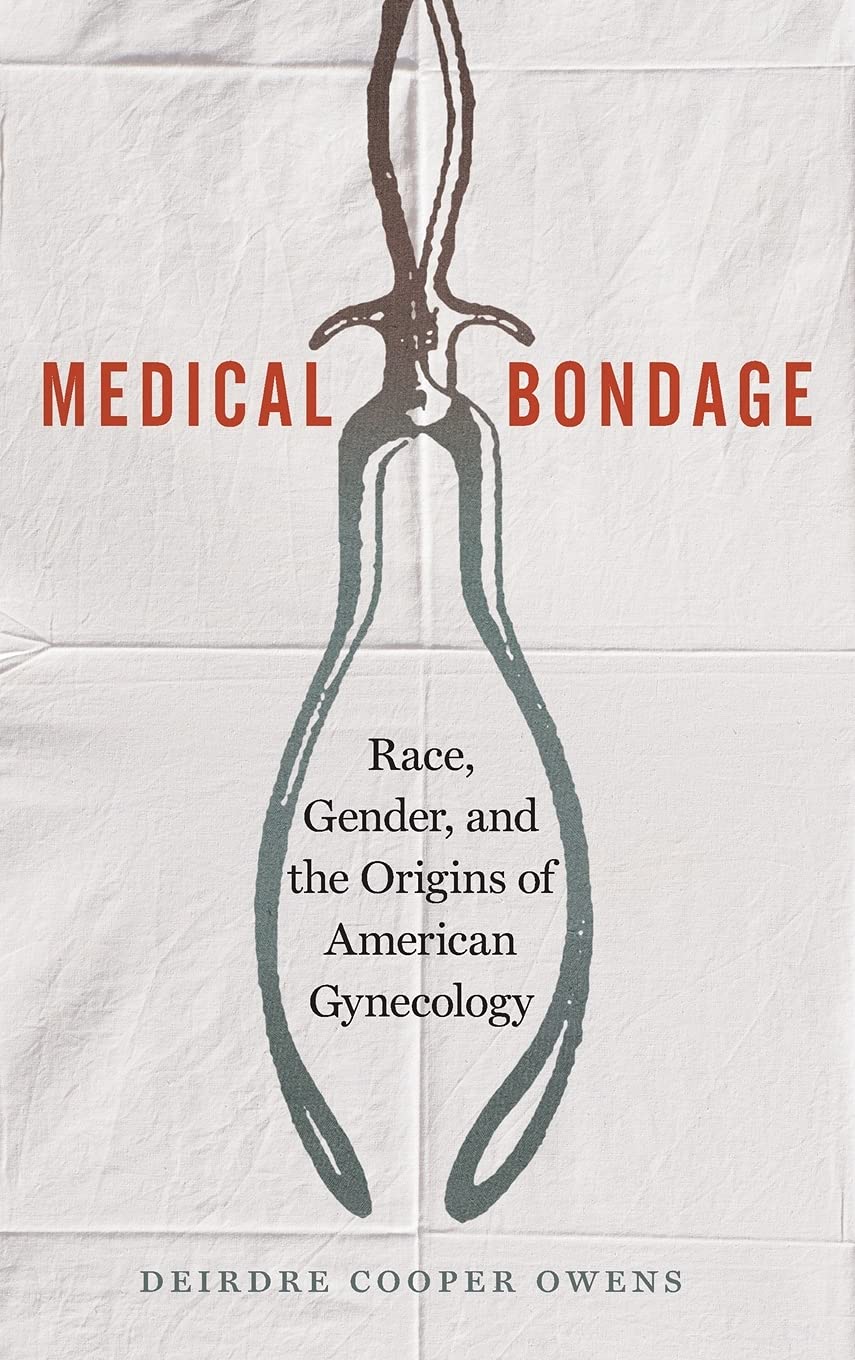
American gynecology would not be what it is today without Black women. In fact, the first women’s hospital in the United States was on a small enslaved persons farm in Mount Meigs, Alabama. In Medical Bondage: Race, Gender, and the Origins of American Gynecology (Medical Bondage), Dr. Deirde Cooper Owens examines the history of gynecological practices and the way that they came about, all while painting a picture of the women who shaped American gynecology. The book investigates both southern plantations and northern urban centers to showcase how nineteenth century ideas about topics such as race influenced relationships between doctors and their patients. Cooper Owens makes two significant arguments about the correlation between slavery and medicine: reproductive medicine was esstential to the maintenance and success of southern slavery and that southern doctors knew enslaved women’s reproductive labor helped them to revolutionize professional women’s medicine. Medical Bondage also, most importantly,retells history from the perspectives of exploited groups. By examining nineteenth century literature and correspondence between doctors and other archival materials, Cooper Owens explains how exploited groups changed the course of American gynecology, ultimately creating a field that would be forever changed by the experiments done on their bodies.
Around the world, as many as 1 in 3 women face marital violence (National Coalition Against Domestic Violence). In India, this statistic climbs to approximately 3 out of 4. 77.4%, to be precise (Ram, Anath, et. al 362). This violence encompasses physical, sexual, and emotional abuse, and many institutions contribute to it. In The Trouble with Marriage: Feminists Confront Law and Violence in India, Srimati Basu explores the ways in which feminist law in India can be used and reformed to combat these marital issues. She does, however, also make note of the complications of settling a marital dispute. From colonialism to the division of inheritance to maintenance payments, Basu comments on the repercussions of divorce and the origins of the struggles women in India often experience when involved in unhealthy relationships.
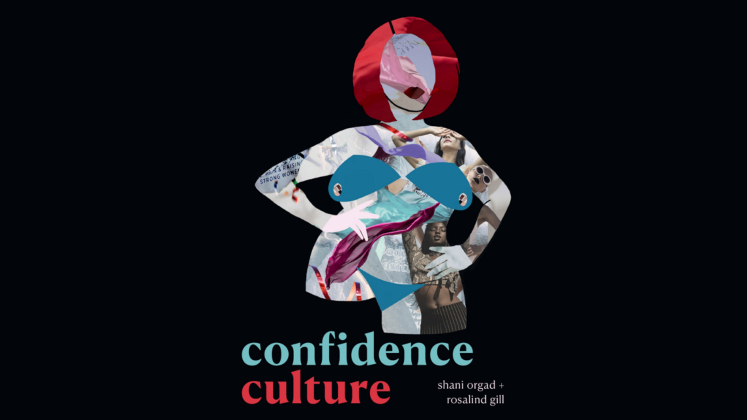
Hit songs like “Truth Hurts” by Lizzo or “Sorry Not Sorry” by Demi Lovato, hashtags like #realmemonday or #wellnesswednesday, and advertisements like Dove’s self-esteem project represent the influx of self-confidence messaging in today’s mainstream media. Women, in particular, are targeted by these messages. They are told to embrace their fears and insecurities by self-help books, celebrities, and television shows. Subsequently, there is a growing “confidence cult” as the authors of Confidence Culture, Shani Orgad and Rosalind Gill, suggest.