I attended Chelsea Manning’s talk on Monday night, and what stood out to me most throughout the entire event was her incredible resilience. Manning explained that at one point she was in solitary confinement for almost a year straight. I could not comprehend how she could have psychologically survived that experience, since isolation, even for a short period of time, is one of the worst kinds of torture. Not only did she survive this experience, along with other extremely difficult experiences such as homelessness, but she seems to have found a community and hobbies that bring her real joy and support. I do not think this should be taken as a feel-good story, since no human being should have to experience what she went through, but it did make me realize how incredibly strong she must be to create a meaningful life for herself after all that has happened.
Chelsea Manning’s description of life in prison forced me to question many of the stereotypes that are enforced in media. She spoke of a real community in prison, with inmates who would look out for each other and even break rules to give each other supplies they needed. She also said the most dangerous and violent people in prisons were always the people working there. While it did not surprise me that the people working in prisons abused their power, I had always assumed there would be lots of danger and violence coming from fellow inmates as well. I got this idea from TV shows like Orange Is the New Black. This stereotype probably makes it more difficult for formerly incarcerated people to find jobs and does not reflect the experience Manning spoke about. Manning even mentioned that she did not have a bad experience being transgender in prison and that many of the other inmates were just happy that she and her lawyers had “gotten one over” on the prison system by getting her access to hormones.
I was deeply moved by Chelsea Manning’s talk. The criminal justice system and prison abolition are issues I hope to be able to learn more about through an intersectional lens with Gender and Sexuality Studies.
“March March” by The Chicks is a protest song that explicitly addresses several current political issues, as well as the history of activism in the United States. The Chicks themselves have a history of activism and controversy. In 2003, they criticized George W. Bush and the invasion of Iraq, leading to backlash from their mostly conservative (at the time) fanbase. The Chicks have recently become even more politically active, changing their name from The Dixie Chicks due to its confederate connotations.
The song begins with a strong drumbeat and a classic twang that country music fans easily recognize. However, the lyrics are less typical of a country music song: “March, march to my own drum […] hey, hey, I’m an army of one.” The music video begins with a montage of protests over the years, including videos of a black man dancing in front of a line of police officers and a person with their back to the camera waving a pride flag. The song references a broad range of political issues, implying that work towards equity and justice cannot be separated into different fights.
This idea is expanded upon by Kimberlé Crenshaw in her opinion piece “Why Intersectionality Can’t Wait.” Crenshaw explains that intersectionality was her attempt to “make feminism, anti-racist activism, and anti-discrimination law do what I thought they should — highlight the multiple avenues through which racial and gender oppression were experienced so that the problems would be easier to discuss and understand.” Audre Lorde also discusses the importance of intersectionality, just through different language. In “There Is No Hierarchy of Oppressions” she writes, “I simply do not believe that one aspect of myself can possibly profit from the oppression of any other part of my identity.” The Chicks do not leave the meaning of their protest song up for interpretation. At the end of the music video, they even have text listing the websites of organizations including Black Lives Matter, March for Our Lives, Native American Rights Fund, and Planned Parenthood. However, rather than focusing on one particular type of injustice, “March March” is about encouraging listeners to stand up against inequality and discrimination wherever they may encounter it, a core idea of intersectional feminism.
However, the broad scope of The Chicks’ song could also be seen as a limitation. The lyrics have only brief references to specific activist groups and are not grounded in any ideology. The Chicks, three white people, may be taking advantage of relevant social justice issues that primarily younger audiences care about in order to become culturally relevant again. It is difficult to know all the intentions behind the song since activism is much more beneficial to one’s career than it was when The Chicks originally spoke out in 2003. Additionally, it would have been great to see The Chicks use their platform to collaborate with performers from marginalized communities, as a way to elevate the voices of individuals who have more personal experience than The Chicks with many of the injustices mentioned.
For many straight women, heterosexuality is simultaneously idealized as the ultimate goal and recognized as a painful necessity. While girls grow up being told they should dream about finding and marrying their prince, women often bond over romantic relationships with men who are violent, emotionally unavailable, or simply unpleasant. Queer women regularly acknowledge the struggle of heterosexual relationships for straight women. They both seriously and jokingly discuss how glad they are that their romantic and sexual satisfaction does not depend on straight men. Queer women often feel bad for their straight counterparts’ romantic prospects.
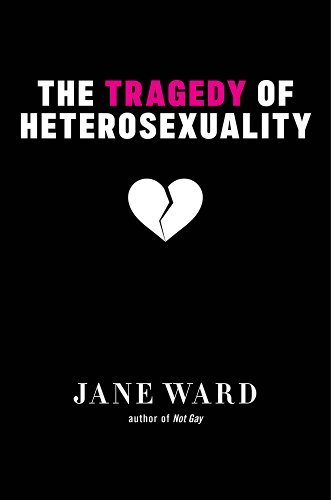
In The Tragedy of Heterosexuality, Jane Ward asks why queer people would feel sorry for straight people if being straight is easy while being gay is a curse that can only be explained by the “born this way” idealogy (which depends on the assumption that no one would choose to be gay). Ward pushes against this narrative and claims that “the basic premise [. . .] that heterosexuality is easier than queerness –requires renewed investigation” (2). Ward uses her perspective as a queer woman to defamiliarize heterosexuality, allowing her to point out its many structural flaws that are often overlooked or accepted as unchangeable. She uses queer relationships as a reference point for creating a healthier type of heterosexuality.
Jane Ward has lots of experience writing and thinking about both straight and queer relationship dynamics. She is a professor of Gender and Sexuality Studies and the program chair of Lesbian, Gay, Bisexual, Intersex, and Transgender Studies at the University of California, Riverside. Her courses are about feminist, queer, and heterosexuality studies. She has a Ph.D. in sociology from the University of California, Santa Barbara. She has published two other books: Respectably Queer: Diversity Culture in LGBT Activist Organizations (2008) and Not Gay: Sex Between Straight White Men (2015). She has explored many facets of sexuality, from queer feminist parenting to straight men who have sex with each other. She brings a refreshing perspective to the conversation around the issues with straight relationships, as she uses queer relationships to demonstrate that straight couples do not have to cope with relationships built on dislike and misunderstanding (an assumption so many books for straight couples work off), but can have an entirely new kind of relationship.
In Chapter 1, “Let’s Call It What It Is: The Tragedy of Heterosexuality,” Ward introduces the premise that heterosexuality is more flawed than straight people are willing to admit. She explains that many queer women internalize the idea of the “tragedy of queerness,” when, in reality, they are grateful for their queer relationships and are relieved not to be a part of straight culture (4). She points to personal conversations with queer parents who feel they should not wish homosexuality on their children despite their own happiness with their sexuality. She also details the work of many feminist scholars and activists such as Audre Lorde, Gloria Anzaldua, and Kate Millet who discuss the discomfort of straight relationships and how they enforce the patriarchy.
Ward questions and denormalizes heterosexuality, leading her to three main conclusions. The first, which she discusses in Chapter 2, “He’s Just Not That Into You: The Misogyny Paradox,” is that “the normalization of violence and mutual dislike was central to straight culture from its modern inception” (172). In this chapter, Ward points out that straight people often do not like the gender to which they are romantically attracted. She explains that men often look to each other for close homosocial connections while they have “disgust or resentment for the object of one’s sexual desire” (37). Ward shows that much of our culture assumes that men and women cannot stand each other and that “mutual likeability” between men and women is a very new idea, as, for most of history, marriages were based on transactions and ownership (34). Ward explores the self-help and beauty industry that has sprung up for straight women to try to get straight men to actually like and respect them. She analyzes historical and modern resources in this industry, including advertisements for douches and the advice of “experts” like John Gray, author of Men are from Mars, Women are from Venus.
In Chapter 3, “Pickup Artists: Inside the Seduction Industry,” Ward explores the bastardization of feminist ideas for heterosexual male gain through the lens of the pick-up industry. Ward sat in on several seminars and classes taught by pick-up artists (men who consider themselves experts at getting women to have sex with them through their flirting and seduction methods) and interviewed the attendees and organizers of these programs about their intentions. She uses her field notes and ethnographic work to illustrate how pick-up artists integrate feminist ideas of respecting and listening to women as a way to have more sex (one instructor even had a seminar on the #MeToo Movement). In Chapter 4, “A Sick and Boring Life: Queer People Diagnose the Tragedy,” Ward has queer friends and colleagues fill out a survey about what disturbs them about straight relationships or culture. She uses these answers to unpack the phenomena of straight culture that are problematic and confusing when not assumed to be the norm. Topics she covers include the boredom of straight relationships (including sexual boredom), men and women’s strong dislike for each other, straight men’s treatment of everyone in their life, and the focus on conformity.
In the final chapter, “Deep Heterosexuality: Toward a Future in Which Straight Men Like Women So Much That They Actually Like Women,” Ward calls on straight men to “put their politics where their lust is: in alignment with women” (155). Ward implores straight couples to stop trying to embrace traditional masculinity and femininity as a way to thrive; the very foundation of men and women as complementary figures is built on a power dynamic. Instead, she encourages men to truly identify with the women in their lives as fully-formed people. She also encourages straight couples to push further than heterosexual expectations in their connection with each other. As an example for straight couples, Ward points to lesbian feminists’ respect and care for the women they are with, which is inseparable from their attraction.
One of the book’s strengths is the in-depth research of a wide variety of people. While there is no way to capture all facets of straight culture in a single book, I loved how Ward dived into so many different areas of heterosexuality. Her work included exploring the phenomenon of pick-up artists (she spent days shadowing “experts” to learn everything she could about how they view women), analyzing media such as t-shirts with jokes about how terrible marriage is, and including the perspectives of more than fifty queer people on the problems with heterosexuality. Ward illustrated each of her points with rich and compelling examples.
One of the book’s weaknesses is the limited age range that Ward discussed. I wish that, along with discussions of the problems of middle-aged heterosexuality, Ward had applied her ideas about heterosexuality to teenage dating and college hook-up culture. While she briefly mentioned that frat culture is an example of men having disdain for women and close relationships with other men, I wish she had gone more in-depth with this analysis. For example, she could have discussed the similarities and differences between straight culture on college campuses to straight culture in other generations.
Overall, I am so glad I read this book, and I will be recommending it to everyone in my life. From older women complaining about their husbands’ incompetency to men my age rolling their eyes whenever their girlfriends speak, it gave voice to and explained much of what I have observed but been unable to describe in my own experiences with heterosexuality. I think many straight women who read this book will have the freeing experience of seeing their relationship struggles validated and see new possibilities for ways of being in relationships with men. However, I also hope many men read this book, so that heterosexual couples can begin to find true partnerships, free from some of the baggage surrounding heterosexuality.
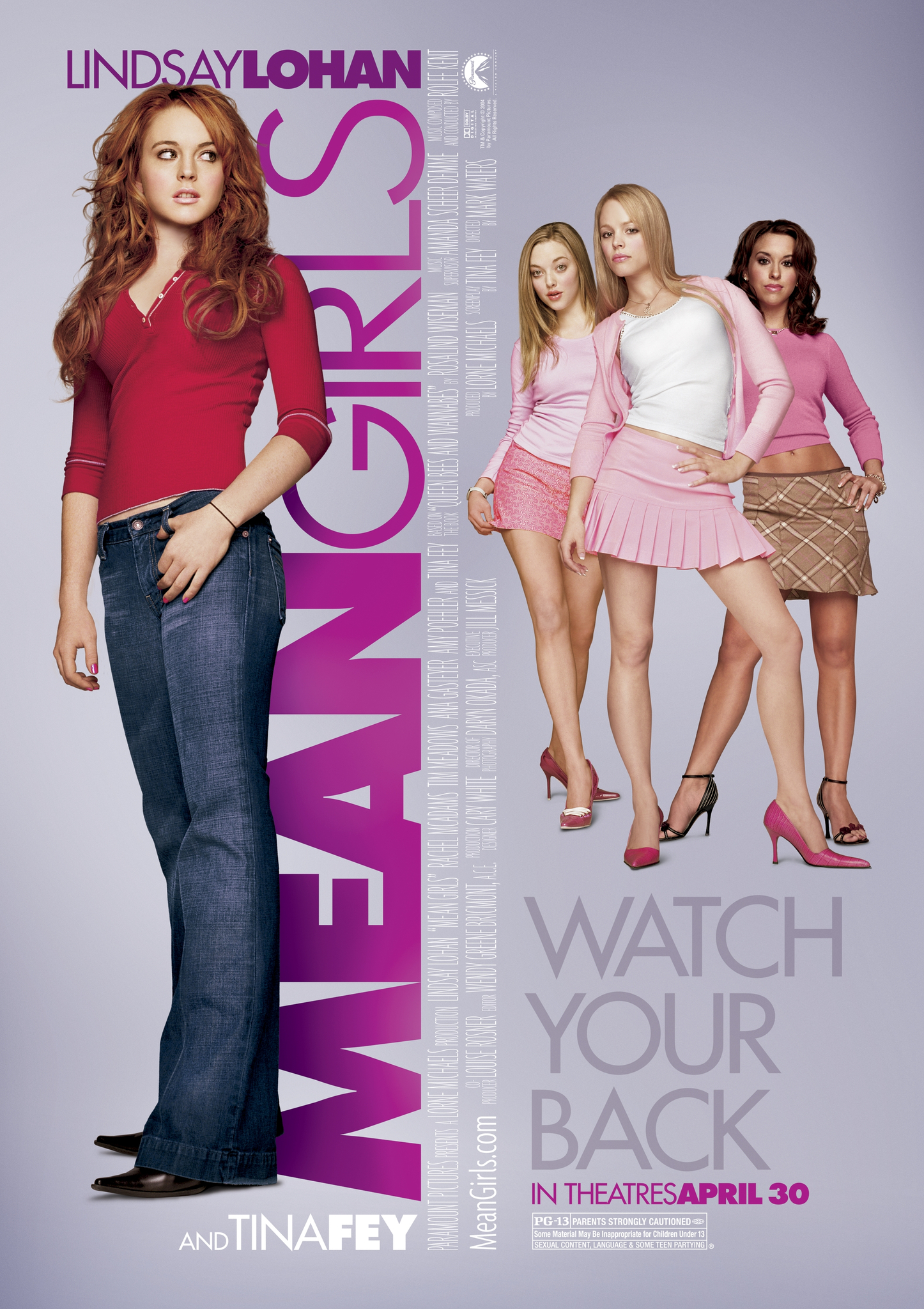
Mean Girls was released in 2004 and was quickly embraced as a cult classic, especially by young women. The movie follows Cady, who has recently moved from Africa (country unspecified) and has to navigate the drama and politics of “girl world,” where mean girl Regina George and her friend group, “The Plastics,” control the high school social scene. Cady joins The Plastics as a spy for her new, unpopular friends Janis and Damian, but her loyalties and goals become muddled when she has a crush on Regina’s ex-boyfriend Aaron. Tina Fey wrote the chick flick, which was partially inspired by her own high school experiences.
Body image issues, especially relating to weight, are prevalent throughout Mean Girls. Disparaging comments about the appearance of women are common in the movie. One example of diet culture that stands out is how Cady weaponizes the fear of fatness against Regina as part of her plot to destroy Regina’s popularity. While there are many mentions of weight and body image throughout the movie, this specific subplot brings to light many of the stereotypes connected to anti-fatness and diet culture.
In the cafeteria, Cady gives Regina “weight loss bars” which are actually Swedish Kalteen bars that her mother used to give children in Africa to help them gain weight (a plot point that is problematic for its own reasons). Cady deceptively gives her these bars in an attempt to rid Regina of her “hot body” by inducing her to gain weight non-consensually. This correlation between gaining weight and becoming unattractive is implied and never questioned. Regina immediately grabs the bar from Cady and stuffs it in her mouth. When Regina points out the packaging is in “Swedish or something,” Cady says the bars have an ingredient that is not legal in the US. Regina then names several weight-loss drugs that she’s memorized and asks if these are the illegal ingredient, but she still eats the bar when Cady says they are not. Regina mentions she wants to lose three pounds and waits expectantly until Gretchen and Karen assure her she is already skinny enough, to which her only response is “shut up.”
This scene is clearly supposed to be a mockery due to Regina’s obsession with weight loss. There is dramatic irony since the audience knows the bars are going to cause the opposite effect of what Regina wanted. The audience is laughing at Regina for being so eager to try this new weight-loss method, despite it being dangerous enough that the active ingredient is illegal in the US. The audience is also supposed to be making fun of Regina for being so obsessed with weight loss that she has memorized the names of common weight-loss drugs (ephedrine and phentermine, both of which can cause heart issues). While these moments are supposed to be funny, the thing that is being made fun of is not the beauty standards themselves; it is how fully the obsession with thinness controls young women. The movie frames Regina’s obsession with weight as stemming from her own vanity and shallowness, with little exploration of the outside pressures and standards that might be causing this harmful behavior. This view of disordered eating puts all blame on the individual and acts as if she is making these dangerous and foolish decisions in a vacuum. Unfortunately, Regina is not wrong in her belief that being skinny will benefit her. Fat people are given worse medical care, paid less, and treated worse overall than non-fat people in our thin-obsessed world. Regina’s beliefs are troubling, but not because they are unfounded, because of the damaging culture and realities that have led to these beliefs. Regina’s obsession is sad, but it is not uncommon, and trivializing the diet culture so many people fall victim to invalidates the real (and sometimes deadly) harm of fatphobia. Additionally, all the lead female characters throughout the movie are thin, so there is a level of removal from the most serious effects of fatphobia that allows the audience to laugh at Regina without considering the extremely harmful consequences that attitudes like hers have on actually fat people.
The end of the scene, where Regina stares at Karen and Gretchen until they tell her that she’s already skinny, enforces this idea that anyone would prefer being skinny over being fat, and it would be offensive to let someone think they are fat without correcting them. Regina considers telling someone they are not actually fat to be such a common courtesy that it means nothing to her, and she tells them to “shut up.” This idea strongly contrasts the body neutrality and Health At Every Size movements, which claim that body size is not necessarily a good thing or a bad thing, just a characteristic that varies among individuals. Karen and Gretchen’s comments also exemplify bonding around body image issues, which is a common practice for young women.
The idea that fatphobia is ingrained in the message of Mean Girls was confirmed for me near the end of the movie when Cady decides there is no use in being a mean girl because putting down others will not benefit her. In her internal dialogue, one of the examples that helps Cady come to this realization is that “calling someone fat doesn’t make you skinnier.” This is one of the most serious moments of the movie, and it clarifies that the writers of the movie consider it to be an unquestioned truth that anyone would prefer being skinny to being fat. Cady’s growth is realizing that you should not bully fat people because it is unkind and will not help you avoid the same fate, and not because there is nothing wrong with being fat in the first place. This moment enforces the idea that fatness is an inherently negative characteristic, so the kind thing to do is ignore someone’s fatness or pity them for it. While Cady thinks she’s being kind, this idea continues to stigmatize fatness.
At the surface, Mean Girls seems to address body insecurity and diet culture. However, the movie makes fun of the results of these issues, and the young women who fall prey to them, without any discussion of where these beliefs come from. Representation like Mean Girls minimizes the dangers of diet culture and fatphobia.
Works Cited
Burgard, D. (2009). What is “health at every size”? In E. Rothblum & S. Solovay (Eds.), The fat studies reader (pp. 42–53). New York University Press.
Waters, M. (2004). Mean Girls [Film]. Lorne Michaels Productions.
Witter, B. (2020, May 19). Tina Fey used her real life as inspiration for the unforgettable characters in ‘mean girls’. Biography.com. Retrieved March 4, 2022, from https://www.biography.com/news/tina-fey-mean-girls-characters