Feminist MixTape: “enough for you” by Olivia Rodrigo

If you ever feel the need to go for a drive and cry about how much the patriarchy sucks, listen to “enough for you” by Olivia Rodrigo. Olivia Rodrigo is a singer, songwriter, and actress. She blessed the world with “enough for you” in 2021, as part of her album, Sour, which also presents several feminist perspectives. I particularly recommend listening to the final song, “hope ur ok,” as it reaches out to the LGBTQ+ community through its discussion of abuse, sexual orientation, and acceptance. 

The first way that Olivia Rodrigo instills feminist beliefs in “enough for you” is through the theme that she, as a woman, felt as though she did something wrong or was flawed and that is why she is experiencing a breakup. This feeling of self-hate is obvious in the lyrics, “You found someone more exciting The next second, you were gone And you left me there cryin’, wonderin’ what I did wrong…”. When listening to this song, it reminds me of the book I read for the book review, The Tragedy of Heterosexuality by Jane Ward. I sense a similarity between this song and that book because of its connections with the misogyny paradox. Essentially, the misogyny paradox asserts that boys’ and men’s desire for girls and women is expressed in a society that simultaneously encourages them to hate girls and women. This is evident in everyday life through men’s practices of abuse, mansplaining, and disrespect towards women (Ward 35-38). Olivia Rodrigo’s lyrics demonstrate the harmful effects that the misogyny paradox has on women. Specifically, it leads to negative thoughts in which women think that they are at fault for men’s poor treatment of them. In reality, women have done nothing wrong and this is a flaw of the patriarchy. 

Olivia Rodrigo also presents the societal expectation that women should be responsible to beautify and improve themselves to be “acceptable” to men. The artist sings, “I wore makeup when we dated ‘Cause I thought you’d like me more If I looked like the other prom queens I know that you loved before Tried so hard to be everything that you liked Just for you to say you’re not the compliment type…”. These lyrics remind me of the efforts by the diet and deodorant industries to exploit people’s insecurities so that they feel motivated to buy their products. A similar practice is at work in the heterosexual-repair industry, as I learned in The Tragedy of Heterosexuality by Jane Ward. Women are led to believe that they must keep their bodies “fresh” and “sexually appealing” to their male partners. Advertisers then put the strain on women to maintain their appearances to keep their partners happy (Ward 47). Olivia Rodrigo also falls victim to this harmful burden put on women. She sings about how she felt as though a romantic interest may have liked her more if she used more beauty products. 

While this song speaks to me as a straight, white woman, there may be some limitations in that the song is not inclusive of Black feminist theory and Olivia Rodrigo appears to be singing about a heterosexual relationship. While Olivia Rodrigo is unlabeled in her sexuality, she uses the term “boy,” to describe the person she is singing about. Therefore, a member of the LGBTQ+ community may feel ostracized from relating to the lyrics of “enough for you.” Furthermore, Olivia Rodrigo seems to be singing very generally about problems faced by women and does not acknowledge Black feminist theory and the increased inequity faced by Black women due to the intersectionality of their identities. 

To conclude, Olivia Rodrigo finally establishes at the end of “enough for you” that there is nothing wrong with her, she is a strong, beautiful, powerful woman. Instead, there is a problem with the patriarchy and the expectations put upon women. She demonstrates that in the following lyrics: “Yeah, you always say I’m never satisfied But I don’t think that’s true You say I’m never satisfied But that’s not me, it’s you…”. Overall, I find that this song has its most profound impact when I think about any relationships with men, whether that is professional, familial, or romantic relationships. It is in these relationships that I find myself questioning my self-worth the most and feeling as though I am never good enough. In response to that, Olivia Rodrigo reminds her audience to be kind to themselves despite patriarchal barriers. Listeners need to keep in mind that despite societal pressures and expectations, there is nothing wrong with them. 
Book Review: The Tragedy of Heterosexuality by Jane Ward

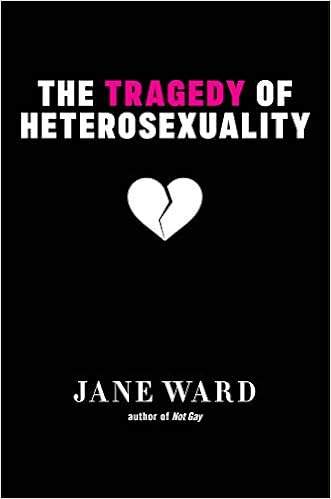
Cultural propaganda, sexual assault, incest, compulsory marriage, economic dependence, control of children, and domestic violence; are the only possible reasons a woman would remain in a heterosexual relationship. As a straight woman and having had conversations with other straight women, these reasons are evident in every heterosexual relationship I have come across. Jane Ward in The Tragedy of Heterosexuality explores the societal expectations and pressures of the patriarchy upon heterosexuality and the heterosexual-repair industry that desperately attempts to mend these broken relationships. In addition, as a lesbian, in her book, she describes the sadness she feels upon witnessing the violence, control, diminishment, and disappointment experienced by straight women. In summary, her book leaves readers wondering, are heterosexual relationships worth the toxicity of straight culture?

Jane Ward is a professor of Gender and Sexuality Studies at the University of California, Riverside. She received her Ph.D. in sociology from the University of California, Santa Barbara. In addition to The Tragedy of Heterosexuality, Jane Ward has written two other books: Not Gay and Respectably Queer. Her books cover a wide array of topics including, feminism, queer parenting, the racial politics of same-sex marriage, and the social construction of heterosexuality and whiteness. She currently resides in Southern California with her partner, Kat Ross. One may argue that because Jane Ward is a lesbian, she should not be making such broad claims about heterosexual women. I counter this by suggesting that a lesbian is the best person to observe and criticize heterosexual relationships and the burden they put upon women. Ward can compare the respect and fulfillment she feels in her lesbian relationship, to the stress and disrespect felt by the heterosexual women in her life.

As a white woman, one aspect lacking from The Tragedy of Heterosexuality is the expectations imposed upon Black women by the patriarchy. One hardship that Ward’s book does examine is the fact that many early white feminists based their arguments for nonviolent marriage and women’s rights on the claim that bringing white women closer to equality with their husbands will ensure a unified front among white people against the Black civil rights activists. However, as a reader who has now read “Controlling Images and Black Women’s Oppression,” by Patricia Hill Collins, the lack of attention paid to the controlling images forced upon Black women in heterosexual relationships, and the constant criticism of their sexuality, is highlighted. Therefore, there is a slight bias in the book to feel sadness toward white women in heterosexual relationships, because Jane Ward is a white woman. 

 The overarching argument present in The Tragedy of Heterosexuality by Jane Ward includes the efforts by the heterosexual-repair industry to improve the enduring defects of straight culture. The heterosexual-repair industry has been flawed since its emergence. It is made up of eugenicists, sexologists, and social reformers. Ward cites three broad concepts present in the industry: they exposed the violence and mutual dislike in heterosexual relationships and reassured the population that this was natural, they took on the role of defining modern heterosexuality and repairing the problems that came along with it, and they accepted the premise that men and women found each other’s bodies undesirable and advocated for the use of beauty products to stimulate desire. Each of these concepts is inherently misogynistic. For example, at one point, experts were channeling their efforts to discover why women had annoying personalities and attempted to mediate men’s irritations with their wives. The solution the “experts” discovered involved women being submissive, lovely, and always putting their husband’s needs before their own. They went as far as asserting that women should be responsible for heterosexual success because they managed men’s emotions and should also be responsible for the happiness of their households and communities. Did no one ever wonder if it was men’s sexism and unrealistic expectations that caused them to be irritated with their wives? Or consider this: perhaps wives’ personalities come across as irritating because they are having unpleasurable sex?

Furthermore, the heterosexual-repair industry also came to the solution that women had to keep their bodies “fresh” and sexually appealing to their husbands. Advertisers collaborated with the heterosexual-repair industry in provoking fear among women to purchase their beauty products. The logic was that if women were not careful about their appearance then they could risk losing their husbands’ affection or “suffer their wrath.” One should not even have to explain the flaws in this argument and the unnecessary strain it places upon women to improve straight culture and desire. The toxicity rooted in straight culture is thanks to the patriarchy, and yet women are expected to help men improve their relationships. To conclude, Jane Ward, in her argument, exposes how the efforts to improve the conditions of straight culture are misogynistic and put the responsibility onto women. 

The single greatest strength in The Tragedy of Heterosexuality by Jane Ward is explaining the misogyny paradox that plagues straight culture. Essentially, this paradox asserts that boys’ and men’s desire for girls and women is expressed in a society that simultaneously encourages them to hate girls and women. Jane Ward provides a possible explanation for this paradox in which society is suspicious of women because they stand to threaten men’s patriarchal power. The author analyzes this in the context of violence against women and girls. The misogyny paradox is evident when a man rapes and/or murders a woman that he reported to have desired or loved. Another example of this outlook is seen in the 18th and 19th centuries in England and colonial America. At this time, wives were seen as a “necessary evil.” Many would argue that wives, and heterosexual marriages, in general, are still seen in this negative light today. While these are all extreme examples, the misogyny paradox takes a simpler form in everyday life. Often, straight men claim to love women but continue to speak over them, mansplain subjects to them, and train their sons to imitate this lack of respect for women. To comprehend the true tragedy of heterosexuality, the author must portray the disrespect, violence, and ignorance displayed by men to women who claim to be in affectionate, romantic relationships. Jane Ward understands the importance of this paradox to her argument and succeeds in making the misogyny paradox accessible and easy for her readers to understand. 

One weakness present in Jane Ward’s book, The Tragedy of Heterosexuality, is the lack of proposed solutions to this tragedy. The author notes that no feminist efforts have made a dent in straight culture, but she doesn’t go further to explain where they fell short. In fact, Ward describes the sexism and toxic masculinity surrounding heterosexuality as “inescapable.” Later, she also reveals that, as a lesbian, it is painful to witness straight women’s “endless and ineffective” efforts to repair straight men. As a straight woman reading this book, it is incredibly depressing to read these statements and feel as though there is no hope. The patriarchy and toxic masculinity seem like grand problems that can never be solved, certainly not by the time that I’m ready to settle down and get married. It leaves me wondering, am I destined for an unhappy marriage? Is there any point in dating if sexism is normalized in straight culture?

After reading this book and sharing facts and anecdotes with my non-straight friends, they unanimously decided that I represent The Tragedy of Heterosexuality. Over my 19 years as a straight woman, I have heard from friends, family members, and therapists that there are good men out there and not to give up. However, upon reading Jane Ward’s book about the emotional and physical strain of heterosexual relationships on women, I began to question if straight culture is worth the control, diminishment, and not to mention, disappointing sex. I will now respond to these friends, family members, and therapists that until the misogyny paradox is abolished and women are treated with genuine respect, finding “one of the good ones” will be challenging. Finally, I wish the heterosexual-repair industry the best of luck as they take on the impossible endeavor of mending the relationships between men and women, following a long history of sexism and abuse. 

Works Cited

Ward, Jane. The Tragedy of Heterosexuality. New York, New York University Press, 2020. 

Sister Cindy’s Shaming: Funny or Harmful?

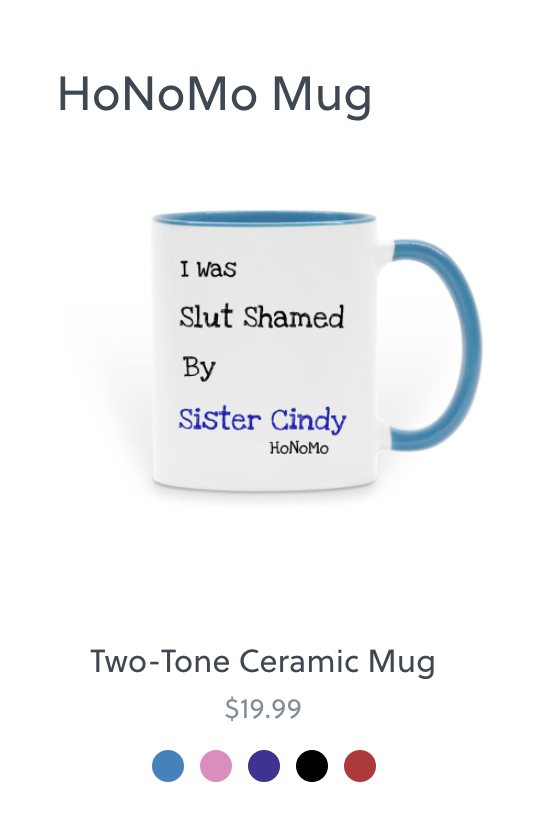
Cindy Smock, or “Sister Cindy” as she calls herself, is an Evangelical campus preacher turned Tik Tok user. She first gained attention when college students posted clips of her speeches on Tik Tok, inspiring her to make her own account. She currently has over 370,000 followers, and #sistercindy has over 194 million views (Fowler). The main subject of her Tik Tok content is encouraging college students, particularly women, to turn to Christianity and be a “ho no mo.” In many of the videos she uploads, she welcomes viewers to “Sister Cindy’s Slut-Shaming Show.” While many of Sister Cindy’s followers regard her as a comical figure, the shock factor she employs in her preaching through homophobic and misogynistic comments is harmful. 

Through a glance at Sister Cindy’s Tik Tok account, it is evident that her content is misogynistic and demeaning towards women. In nearly every video she uploads, she casually uses the words “slut,” “hoe,” or “thot,” as insults towards women. For example, when visiting college campuses, she often changes the names of the universities to incorporate the word “slut.” At the Louisiana State University campus, she renamed the institution, “Louisiana Slut University.” By insinuating that college students are sluts, Sister Cindy is weaponizing the word to be used against women and normalizing the slut-shaming that is common in society, particularly on college campuses. However, Sister Cindy is proud of her slut-shaming tendencies and makes it a common theme in her posts. In a different post filmed by a college student, she exclaims, “You are princesses made in the image of God. Yet, you’ve traded your crown to be a cock-sucker.” This is quite the opposite of sex positivity and guilts women into practicing abstinence. Sister Cindy, or anyone for that matter, should never use guilt tactics to influence other people’s lives. Furthermore, why is this hateful comment only directed towards “princesses,” or women? Why is it that women should feel guilty for engaging in consensual oral sex and men should not? Last I checked, oral sex is an act requiring at least two people. 

https://www.tiktok.com/@maraudwh4re/video/7067272503181364526?_t=8QEQwcooDyV&_r=1

Another example of sexism in her uploads is found in a Tik Tok filmed by a student at the University of Florida. In this clip, Sister Cindy shouts, “Men, if you buy her one margarita, she will spread her legs.” This statement is incredibly insulting towards women. Not only does it perpetuate the view that women are sexual objects, but it also furthers the entitled belief held by some men that women are sexually indebted to them after buying them a drink. In addition, this comment is heteronormative and leads straight men to assume that all women are attracted to them and want to have sex with them, which is simply not the case. Finally, similar harmful views were expressed in a Tik Tok clip of Sister Cindy telling a college student that she is “an accessory to the rape crime on campus” because she is causing boys to get their “passions stirred up” (Fowler). This belief is so inherently false, that it should not require any explanation. The blatant disregard for holding men accountable in situations of sexual assault is destructive to anyone who views this post. It reminds me of the common argument in society that someone is “asking for it” based on the clothes they are wearing. Placing blame and guilt upon women seems to be a common theme in the media posted by Sister Cindy. Again, why is it that sexual assault victims should feel guilty for something that is out of their control and not their fault? 

If you thought her content could not get any worse, we have not even analyzed the blatant display of homophobia present in countless Tik Toks. For example, in one clip while preaching to college students, she orders, “Don’t do it. Don’t kiss a girl and like it.” In defiance of her hate speech, two women make their way through the crowd to kiss in front of Sister Cindy’s platform. Apparently, the act of two women kissing is a difficult sight for Sister Cindy, because she has to cover her eyes. In a second Tik Tok, Sister Cindy, with no shame, shouts to a young man walking past her, “Are you a homo? You kinda act a little effeminate there. You need to repent!” There are so many problems with this statement, it is a challenge to decide what to unpack first. To begin, a straight, cisgender person should never use the term “homo” to describe someone of the LGBTQ+ community. Second, Sister Cindy is reinforcing the societal gender expectations that men cannot be feminine and women cannot be masculine. And if that is the case, then that person must be a member of the LGBTQ+ community. Finally, telling someone that they need to repent because of their sexuality, something that is out of their control, is unacceptable. Religion should never be manipulated to discriminate against groups of people. People’s sex lives and sexuality are an intimate part of their lives and should never be a subject of criticism. Therefore, someone who posts homophobic content, like Sister Cindy, should not have a platform to project those hateful beliefs. 

To reflect, one’s values and beliefs should never be used as a weapon or a way of guilting others into adopting those practices. While Sister Cindy’s intention may be to educate college students, her comments are misogynistic, heteronormative, homophobic, and may even be classified as hate speech. Sister Cindy even admits that she expects to be removed from social media for her problematic comments (Fowler). If that is the case, what is Tik Tok waiting for?

Works Cited

Fowler, Kate. “Who is Sister Cindy? Evangelist Christian Preacher Turned Tik Tok Star.” Newsweek, 6 June 2021, https://www.newsweek.com/who-sister-cindy-evangelist-preacher-tiktok-star-1597651. 

I love this post and how it highlights the way that people will oftentimes use comedy to hide rhetoric that is actually very harmful. Although Sister Cindy is oftentimes funny, she’s still promoting a toxic culture that prevents women from embracing their sexuality. This is a super important topic and I’m glad that you’re shedding light on it!