I think that this is a really cool idea for a challenge. I think I was a little hesitant to participate at first, but wanted to push myself. I don’t normally put on a lot of makeup, just a little blush in the morning and sometimes highlighter. I think that blush helps add a little life to my face and helps me look more awake, and the highlighter helps when I feel like my skin looks dull. I do use deodorant everyday and will feel uncomfortable if I forget to put it on, so that is what I was the most nervous about going into the challenge. I don’t worry as much about smelling a certain way, but I don’t enjoy the feeling of sweat. I did not use any of these products today because I wanted to commit to the challenge. I did not partake in any physical activity during the day. I do think that if I was planning on going to the gym or had a shift at work I would have broken the challenge and put on deodorant. This was the hardest thing to go without. The easiest thing to go without was makeup, because I recognise that it doesn’t make a huge difference to others, it mostly just helps me with my own self-image. While my routine doesn’t take up a lot of time in the morning, I did notice that I was able to get out of the door faster. As I expected, no one really noticed that I was going without products, and I didn’t anticipate people in class having a reaction. I was a little worried that people might think I seemed a little pale or tired, but that was not the case. I even mentioned it to some of my friends, and they said they couldn’t notice. Overall, this was an interesting challenge, and I wonder what the challenge would be like if I regularly used a lot of enhancement products. I have learned that people are usually just thinking about themselves, are not noticing what you look like, and we will always be our own worst critics.
Author: Former Student
FEMINIST MIXTAPE: “WOMAN”
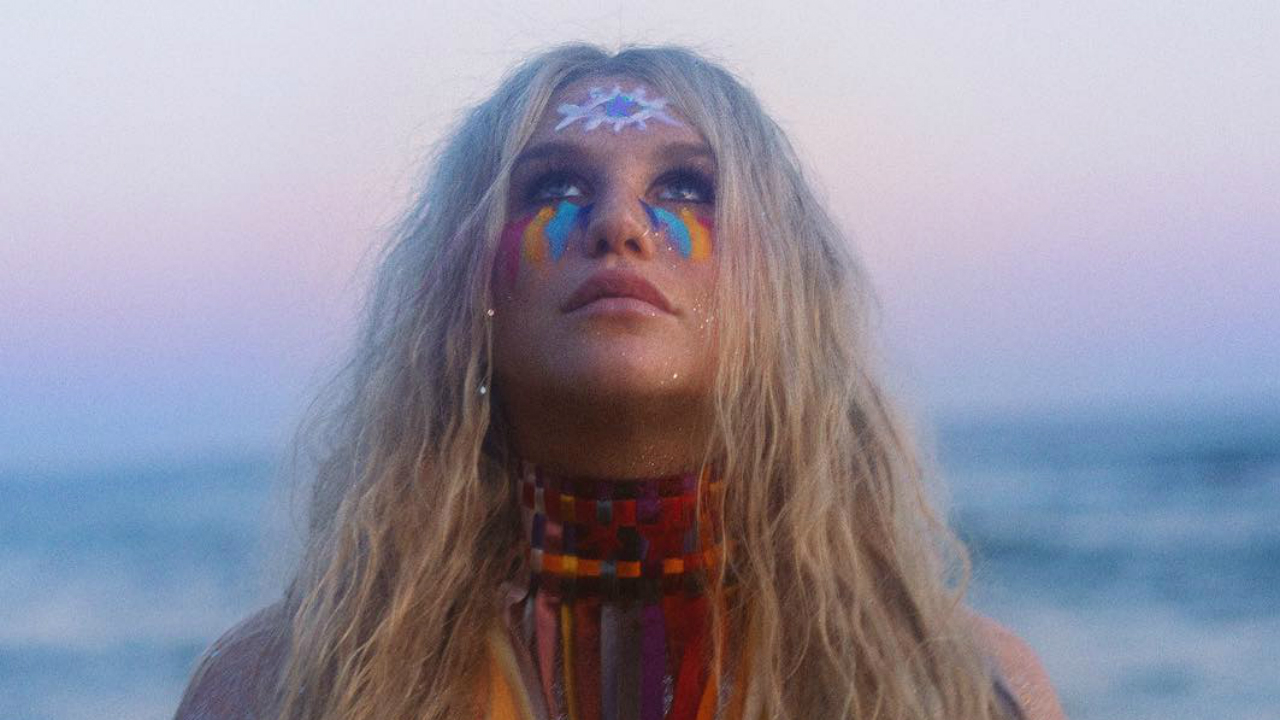
Kesha’s song “Woman” is from her 2017 album, Rainbow. Some would say that Kesha and her songs have a “party-girl” reputation, not to be taken seriously. However, this song is a catchy and punchy feminist anthem that directly speaks to the power Kesha derives from her womanhood. The lyrics center around her autonomy and strength, and Kesha demands to be heard. The song is still fun and upbeat though, proving that feminism doesn’t always have to be super serious, and also that being a “party-girl” doesn’t mean you can’t understand and promote feminist ideals. The song also gains more meaning after Kesha reveals she wrote it in response to Donald Trump’s infamous and vulgar “grab them by the pussy” comment. She said in an interview, “That made me so infuriated, as a hardcore feminist. Once I heard that I was like, okay, well, I’m going to write this song about being a badass mother—ing woman who you don’t want to f–k with.”
“I buy my own things, I pay my own bills
These diamond rings, my automobiles
Everything I got, I bought it
Boys can’t buy my love, buy my love, yeah”
This section of the song speaks to the independent and self-sufficient nature Kesha feels as a woman. Kesha is directly attacking the dated and patriarchal ideology that women need to be taken care of by men, especially when it comes to money and material possessions. There was a time when women were defined only in relation to men, and they were not allowed to own anything. This is an example of second-wave feminism.
“Don’t buy me a drink, I make my money
Don’t touch my weave, don’t call me “honey”
‘Cause I run my shit, baby”
Kesha doesn’t want to be patronized or condescended to, especially by men who think that women owe them something for buying them a drink. This is also a call out of Trump and the other men who believe they have permission to touch or violate women.
“I’m a motherfucking woman, baby, alright
I don’t need a man to be holding me too tight”
This is the chorus of the song, with Kesha’s empowering words telling listeners that being a woman makes her tough, and she doesn’t need any men. The words “too tight” also stand out here, and are another example of the oppressive and violating forces women can feel from men who don’t understand.
https://www.popsongprofessor.com/blog/2017/7/13/what-does-woman-by-kesha-mean
BOOK REVIEW – NATURE’S WILD
For a number of reasons, humans have always had a complicated relationship with sex and sexuality. In his book, Nature’s Wild, Andil Gosine explores the complex history behind these feelings towards homosexuality, clothing, gender, and sex as a whole. Throughout his book and across a number of studies, Gosine argues that these attitudes stem from the human desire to distance ourselves from being animals. He explores one of the sources of this mindset primarily through a history of colonialism and colonial law, and goes on to discuss how these ideas persist today. He also includes how race, white supremacy, and religion play a role. Andil Gosine is currently a professor of Environmental Arts and Justice at York University. He is a well published and respected author, focused on environmental arts, environmental justice, and Caribbean sexualities. Nature’s Wild is a culmination of Gosine’s own personal experiences and his archival research, including historic accounts and literature and primary and secondary sources.
Continue reading “BOOK REVIEW – NATURE’S WILD”Selling Sex – The Theatrics of Perfume Ads
Perfume ads are known to be dramatic and over the top while not actually saying anything substantive. Unlike ads for most things, where companies can show their product being used, perfume doesn’t do anything and you cannot smell a scent through a screen. This means that companies need to tap into the consumer’s emotions and desires through a video in order to sell their product. To do this, they create advertisements that sell a very specific aesthetic: sex. Perfume ads are loaded with sexual imagery and tones and often have roles played by celebrities or individuals who are the beauty standard. The advertisements are ultimately trying to say that if you buy our perfume or if you smell a certain way, you too will be sexually desired, beautiful, and successful. The specific perfume advertisement I chose to analyze was for Jean Paul Gaultier’s perfume “Le Male”. I originally saw a very condensed version of this on TikTok, but I will be looking at the full video for my media analysis.
The opening scenes of this advertisement depict scenes of male presenting sailors in a port. These sailors are all muscular and well-defined, shirtless, and engaging in activities that are stereotypically masculine and physical – carrying and pulling ropes, arm wrestling, carrying large boxes. Most of them are white and the main character in the video is a blond, blue-eyed, tanned, (and shirtless) man. He becomes entranced by the female lead in the advertisement, a white blonde woman in bright red lipstick wearing a pink bustier/bodysuit. She sings opera from the top of a lighthouse, and the male sailor begins running towards her, cutting through the crowd of people and jumping over things.


Along the way, he evades seduction attempts from other women in bodysuits and a group of shirtless male sailors (pictured above and below). These moments from the advertisement had overt bisexual undertones, which I thought was interesting. As one commenter stated, “Never in my life have I seen a commercial with bisexual energy like this. Gay energy, sure. Straight energy, totally. Bi energy? First time. I am very happy.” I thought this was a positive inclusion, but did not erase the much stronger tones of misogyny and heteronormativity.


He eventually makes it to the top of the lighthouse and he and the woman kiss as the crowd of sailors and women in bodysuits look on. The advertisement includes a short scene of a young boy in a sailor outfit tipping his hat to them before they kiss. This scene of the young sailor was also included in the shortened version of TikTok, and is one of the reasons I selected this piece of media. Many portions of this advertisement felt unnecessary, but this was perhaps the most unnecessary scene in the whole video.

Overall, this is an extremely over-sexualized advertisement that has absolutely nothing to do with the product it is selling (or even perfume in general). Additionally, it enforces the societal beauty standard, is unnecessarily gendered, and has misogynistic undertones. These can be seen through the individuals cast in this video, what they are wearing, and the plot of the advertisement itself. It suggests that women are a type of prize or reward, and that it is a man’s job to pursue and ultimately get to the woman. Even the name of the perfume “Le Male” translates into “The Male”, and implies that to be a “true male”, you have to look, act, and ultimately smell a certain way. The advertisement makes it clear what this “male” look is – shirtless, well muscled and defined, and gets the girl in the end. Beyond this, the creation and advertisement of a perfume specifically made for men suggests that men are only allowed to smell specific ways. This advertisement is not unique in these qualities, as I think it is very common for perfume ads to be very heteronormative, gendered, and marketed in a manner that sells sex or a specific aesthetic. As I stated previously, perfume ads are the perfect storm for these kinds of issues because it is impossible to advertise a perfume online in a way that allows people to smell the product.
The comments on this ad from YouTube are a little bit all over the place. Many were in french, and others were praising the advertisement itself or the product: “I’m going to buy this because it will make me handsome and beautiful women will long for me”. I honestly wasn’t sure if this was a sarcastic comment or not, but either way, it targets one of the overarching problems with this advertisement and many perfume ads in general. There were a few comments criticizing the advertisement for the same issues I had recognized in the video: “Men and women are so sexualized these days. This is so unnecessary. What kind of implicit messages does this ad send?” and, “No hate but is it just me who thinks this contains gender roles and is slightly misogynistic?” It seems as if other viewers were able to pick up on the same reasons why I chose this advertisement to analyze.