I attended the My Body, My Choice, My Voice talk hosted by AKA. This talk focused on the reality of reproductive rights in our country today and worked to inform all of us on what abortion really is. While I would consider myself pretty knowledgable on the topic of abortion and reproductive rights, I do think I gained a lot from the talk.
The new information that I was most surprised by was the percentage of abortions that are done six weeks or earlier. According to the speakers, about 90% of abortions occur before the 13th week and about 75% before or during the sixth week. This fact was astonishing because so often the argument against abortion is, in reality, an argument against late abortion. In combination with this fact, the speakers included pictures of what a six week abortion looks like as well as a, if I remember correctly, a ten week abortion. Both images showed what looked like a small white sack, which had only grown a little in the four week difference. The importance of these images was to show that the images pro-life supporters commonly use are not accurate depictions of an abortion and are instead, frequently, pictures of late-term miscarriages.
I think the talk in general is very applicable to GSS101, but my new understanding most closely relates to our discussions in class about abortion at the beginning of the semester. In my opinion, the images provide proof of the fear mongering that pro-life supports do in order to try to prevent abortions from happening. However, the reality is they only prevent safe abortions. I think this can be applied to so many topics we’ve talked about, such as gay rights. For example, strict laws against gay marriage or even expression of gay ideologies and behaviors did not stop them from occurring. Instead, people just got better at sneaking around, but it became less safe because they had no protection, abortion is similar in this way. Overall, I think that attending talks about the reality of reproductive justice in America is incredibly important in order to form an evidence based opinion before voting. I am personally thankful for AKA hosting this open event and showing me that even when I think I’ve learned all there is to know about a topic such as abortion, there is always misinformation to be corrected and perspective to be given.
I was raised by my two lesbian moms, so my perception of love and heterosexuality is admittedly skewed. In my house, coming out as straight is more of an unfortunate realization and is always followed by the same comment, “if sexuality really was a choice, who on earth would choose men?” Apparently my family is not alone in asking this question. Jane Ward felt strongly enough about the issues with being attracted to heterosexual men that she wrote a whole book to check on straight women and see if they’re okay. After her in-depth analysis of primarily black, queer, feminist rhetoric to explore the true tragedies of heterosexuality for straight women, I’m left wondering, am I in fact okay?
The main argument of The Tragedy of Heterosexuality is that heterosexuality is not the “ideal” sexuality, but rather has plenty of its own systemic issues that are deeply engrained in our society. This book not only highlights these issues, but explores the root causes so that we as a whole can better understand how to work toward resolutions. Ward starts to approach this through the common misconception that gay people would be straight if they could choose, and proposes how that narrative itself is evidence of the oppression in our society that makes heterosexuality so tragic. The book consists of five partsCHAPTERS– “Let’s Call it What It Is: The Tragedy of Heterosexuality,” He’s Just Not That into You: The Misogny Paradox, Pickup Artists: Inside the Seduction Industry, A Sick and Boring Life: Queer People Diagnose the Tragedy, and Deep Heretosexuality: Toward a Future in Which Straight Men Like Women So Much That they Actually Like Women. Each part plays its own role in establishing the issues of heterosexuality throughout history and how fixes in our systems of race and gender can ultimately contribute toward the resolution of the tragedy that is heterosexuality.
Ward herself is an American author from California where she teaches Feminist Studies at University of California Santa Barbara. Her work both in and out of the classroom focuses on gender and sexuality studies, specifically from her own queer, feminist point of view. The book The Tragedy of Heterosexuality is arguably the most successful of her three works, all of which address the politics of gender and sexuality in our society today, with the other two entitled Not Gay and Respectably Queer. Her extensive studies of the history of sexuality, the self help industry, and even pick up artists, establishes her as a vast source of knowledge on the topics discussed throughout the book. Both this book and her work overall as an author prompt the desire to know more about what we have come to accept as straightness and question if it really is what we display on the surface when you break it down to its roots. This question provokes further research into what other societal issues need to be addressed in order to solve the true tragedies– racial inequality, women’s rights, problems of a patriarchal society– encompassed by the tragedy of heterosexuality.
The first chapter, Let’s Call It What It Is, Ward hopes to “sufficiently introduce the idea of the tragedy of heterosexuality” (Ward, 30) and lay out her plans for the remaining four chapters. In chapter two, He’s Just Not That Into You, it provides historical context for how heterosexual expectations have changed and developed. For example, Lysol’s douching advertisement saying it “can keep her husband and herself eager, happy married lovers” inspired the subsequent expectation of women to work to appeal to their husbands (Ward, 52). Pickup Artists: Inside the Seduction Industry, the third chapter of the book, explores the idea of women being a “game” to be won (Ward, 78). In this chapter, Ward addresses the idea of women being seen as a “birthright” to straight men, and how society has capitalized on that to make millions of dollars (Ward, 79). Next, Sick and Boring Life: Queer People Diagnose the Tragedy is included to address the role queerness has in the creation of what it means to be straight. The author explores the idea of homophobia being “the outward expression of heterosexual misery” and other subsequent oppression queers face as a result of heterosexuals own distate for the reality of their personal sexualities (Ward, 115).
The final chapter, Deep Heterosexuality, ties together all the pieces that make up the tragedy of sexuality and highlights the main goal of the book, to unify queer and straight women alike to defy the patriarchy that oppresses them all (Ward, 155). The final page shares the three main takeaways of this book. First is the need for us as a society to address the violence that women, particularly straight women, face at the hands of men, and how addressing this issue will lead to a more loving version of heterosexuality (Ward, 172). Next, self-help movements and other capitalistic ideas influencing sexuality should not be underestimated nor left unaddressed (Ward, 173). The chapter and book conclude with the final argument, listening to outside perspectives, in this case queer viewpoints of heterosexuality, can give insights and guidance we might otherwise lack in our own decision making, leading to overlooked problems and missed opportunities (Ward, 173).
The strongest aspect of this book was Ward’s vast research, knowledge, and utilization of marginalized perspectives. Immediately in the second chapter, Ward develops the history of heterosexuality from eighteenth century colonial America to modern day, with the inclusion of global perspectives such as nineteenth century Iranian accounts of the misogyny paradox (Ward, 35-37). Ward addresses the root causes of sexist associations to heterosexuality and travels through the history of men’s feelings for women as actual people. She succeeds in her goal of presenting a new relationship between queers and straights, a new meaning to the word “ally”. Overall, the “dyke’s-eye view” (Ward, 31) may have its own biases, and to some may make it seem like Jane Ward is unqualified to talk about being straight, but after reading, I’d argue it’s the opposite. The combination of queer, feminist, black, and marginalized voices produces a powerful critique that left me second guessing everything I knew about myself as a straight woman, and truly reassessing my role in my own sexuality.
While I ate up every last word of this captivating book, I was left a little hungry for more information on how we really go about addressing the issues of heterosexuality. The author does an incredible job laying out what the issues are throughout the chapters and dives into solutions for straight women, but I was left wondering, how would this work? Yes, straight women can demand more from their heterosexual relationships and refuse abuse (Ward, 172). Yes, queer women can work to better support women as a whole so that we can conquer the issues of patriarchy that we face regardless of sexuality (Ward, 173). Yes, queer men and women alike can change the narrative that being straight is the preferred sexuality if given the choice (Ward, 160), but how? Many, if not all, of the things Ward suggests in the book require widespread change amongst individuals. The book thoroughly explains how each of these solutions works to address the problem at hand, but I desired a more clear bridge between where we are now and how we start. For example, how do we get the majority of women to stop accepting the bare minimum from men? The issue I see is that yes, we could influence women one by one to expect more, but what do you do about the women who are then willing to step in their spots and accept less? If “Men who say they love women need to show women the receipts”(Ward, 173), how do they do this? I think if Ward had spent a little more time discussing how we encourage so many individuals to change their ideas and behaviors, there would be a much better connection to how these solutions are feasible and less questions left unanswered.
I have told my three roommates that The Tragedy of Heterosexuality will be living on the coffee table in our apartment, and my reasoning is twofold. The primary reason is I think anyone who enters the apartment stands to benefit in one way or another from the information included. Regardless of who the audience is, this book provides new ideas of sexuality through the utilization of frequently skipped over perspectives and experiences, those of marginalized groups. So whether it is a straight woman who might need a reality check of what she is putting up with from men or a homosexual man who stands to learn the role that he plays in oppression of women, Jane Ward does an amazing job of getting just about anyone to stop and question why our norms are what they are and what we can do to change them. My second reason for the book’s new home in a predominant spot of the apartment is the reactions. This book is not an attack, but instead an attempt to bridge the gap between what we advertise as happy heterosexuality and the reality of straightness today. Initial reactions of men in my apartment, especially those who identify as straight, might be defensive. However, my personal agenda is to see whether or not these men are willing to push past their uncomfortability to actually educate themselves through Jane Ward’s mission to obtain a society of love and respect regardless of race, sexuality or gender identity. So, while I risk causing arguments or losing friends, I consider those who deprive themselves of joining Ward’s journey through the reality of heterosexuality tol be at the real loss. After this book of empowerment you will not be asking straight women if they are okay, but rather asking men if their privilege and masculinity are okay.
Works Cited
Ward, Jane. “Jane Ward: Scholarship for the Feminist Future.” Jane Ward, https://www.janewardphd.com/.
Ward, Jane. The Tragedy of Heterosexuality. New York University Press, 2020.
The newest Netflix tv series Monster: The Jeffrey DahmerStory broke the record for biggest series debut on Netflix with the most streams yet. The storyline follows the notorious Milwaukee serial killer, Jeffrey Dahmer, who killed a total of seventeen males ages fourteen to thirty three. The show begins with how Dahmer ultimately got caught and works backwards to fill in the questions about his childhood, adolescence, and adulthood in an attempt to answer why he was such a monster. I will warn, this blog post contains spoilers and content that may be disturbing for readers, especially people of color and the LGBTQ+ community. I aim to unpack how this documentary exposes the disturbing truth about how society and law enforcement views the needs and rights of marginalized groups.
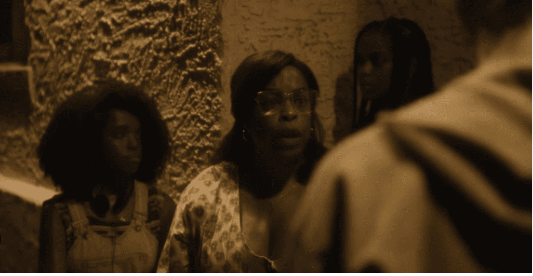
Here is an image of the scene. In this image is Glenda, her daughter, and her niece. Glenda can be seen yelling at the cop in an attempt to get him to believe her that Jeffrey is dangerous and should not be allowed to take the boy back inside.
While there are many examples within the documentary of both homophobia and racism, there is one case that struck me the most and has haunted me since. 14 year old Konerak Sinthasomphone, whose brother Dahmer was currently on probation for molesting, was taken home by Jeffrey Dahmer with the promise of receiving $100 if he could take pictures of him. Jeffrey Dahmer then convinced Konerak to drink alcohol, which unbeknownst to the boy, had been drugged. Once the boy was severely intoxicated, Dahmer left to go get more alcohol, as he usually killed in a state of severe inebriation. At that time, the young boy managed to escape outside of the apartment building where he was found by Glenda Cleveland, Dahmer’s neighbor who had already filed many complaints about him. She called the police and two white officers arrived to find the boy highly intoxicated and unable to keep conscious or speak. However, when the only other white man in the situation arrived, Jeffrey Dahmer, and claimed that it was his boyfriend, they listened. He told the police that the boy was his 19 years old boyfriend who lived with him and simply had too much to drink. Instead of listening to Glenda, a woman of color, and her continuous pleas to check the identification of the boy who appeared much younger than 19, they decided to follow Dahmer to his apartment. The officers ultimately did not search around because Dahmer claimed that there was “gay stuff” that they would find. However, if they had entered the bedroom they would have found evidence of multiple gruesome murders commited by Dahmer right where they were standing. The idea that homophobia benefited a serial killer is disturbing, but not the only reason Dahmer escaped the scrutiny of the police. The police ask him what a man like him, meaning a white man, is doing living in that neighborhood for crack addicts. This question immediately demonstrates why Dahmer was able to easily convince them there was nothing of concern and why Glenda failed to be heard by law enforcement. Racism and homophobia enabled Dahmer. It allowed for that Laos boy to be returned and killed moments after the police left. The prejudice ingrained in our systems killed that boy and now the Sinthasomphone family, and many others, will never see their baby boy ever again.
What would you do if your gut was telling you there is something seriously wrong with your next door neighbor, but everyone ignores you? What about if multiple people in your community were going missing, but still little to no action has taken place? And if it all ended with the same person having been killing and eating all seventeen of those people? The disgusting reality of Jeffrey Dahmer’s case is that the killer is not the only one to blame.
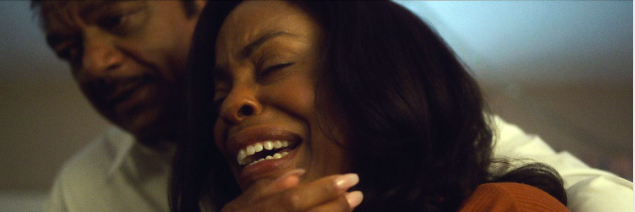
Above is an image of Glenda finding out in the show what Jeffrey Dahmer had been up to, a harsh realization that all of her instinct were correct, but still could not stop him. The raw emotion depicted by both this image and the one above contribute to the harsh impact of the show on viewers as they can see, even through acting, just how much emotional distress was caused.
There continue to be examples of groups, such as people of color and the LGBTQ+ community, being not only targeted with hate crimes, but also lacking the same legal response and repercussions that straight, white, cisgender men receive as victims. I believe the story of Jeffrey Dahmer calls into question whether we, as a society, need more physical, obvious proof to accuse white men? Or do we just not exhibit the same level of concern for people of marginalized groups who appear to be in danger? I believe both to be true, and Jeffrey Dahmer is only one example, but ultimately an ideal display of how members of society benefit from the prejudice exhibited toward those who are oppressed.
In conclusion, this documentary perfectly exemplifies both homophobia and racism within our society. Jeffrey Dahmer a notorious serial killer who was able to get away with killing 17 boys and young men simply on the grounds that he targeted mainly gay men of color, who the police underpatrolled and law enforcement failed to represent. Jeffrey Dahmer would not have been able to escape for as long as he did if he himself was a member of a racial minority. He would not have been afforded the same graces that he was, and hopefully, would have been caught early on before he could brutally murder several innocent males. The repeatedly ignored signs of problematic behavior that Dahmer presented show something that in our society has not changed, as many serial killers tend to be white men. Due to their race and gender, these heinous killers commit multiple murders before getting caught, just as Dahmer did.
This is an ongoing issue that needs to be addressed by our society. Crime should not know a color of skin or gender identity. Marginalized groups should not be targeted while cis white men get away with murder, especially those within our own law enforcement. Jeffrey Dahmer’s case may be over thirty years old, but it sheds light on an issue that still exists today. It is time to take action and ensure justice is served for all members of society equally, it is their human right.