Miley Cyrus is no stranger to controversy. Her 2019 song “Mother’s Daughter”, its music video, and her partnership with Planned Parenthood continue this legacy of getting her fans -and critics- talking. In these mediums she advocates for choice and bodily autonomy, while simultaneously reclaiming misogynistic epithets and portraying diverse resistance against patriarchal control.
The song opens with Miley praising that she is a “freak” and that she is in control: “Oh my gosh, she got the power, oh look at her, she got the power”. Later describing herself as “nasty” (almost certainly a reference to Trump’s comments about Hillary Clinton), “evil”, and “a witch”, Miley affirms that she is defining her own power, employing language that typically is used to demonize women. In the chorus of the song, Miley attributes her fierceness to “something in the water or that [she’s her] mother’s daughter” (Cyrus).
“Don’t f*ck with my freedom
I came up to get me some
I’m nasty I’m evil
Must be something in the water
Or that I’m my mother’s daughter”
Miley Cyrus
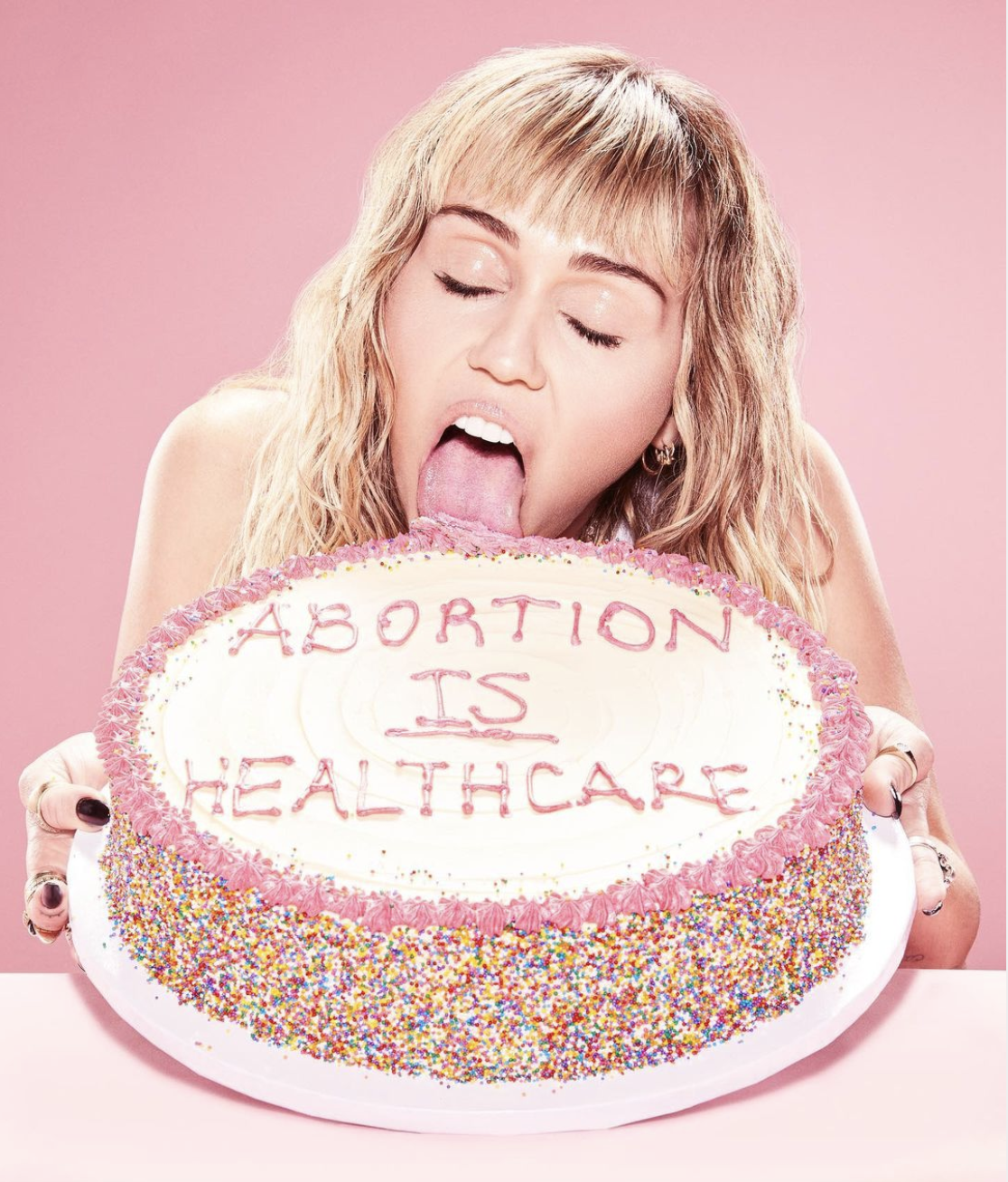
In addition to being a personal tribute to her mother, this song also has a political edge. The chorus’s iconic line “don’t f*ck with my freedom” (Cyrus) is a warning to anyone who tries to get in the way of her autonomy. If there was any confusion about that line when the song was first released, within days she announced a collaboration with Planned Parenthood in an Instagram post of her licking a cake with the message “ABORTION IS HEALTHCARE” and accompanied by the hashtag #DONTF*CKWITHMYFREEDOM. “Mother’s Daughter” is a testament to her mother’s power being passed down to her, and a feminist empowerment anthem with a warning to pro-life legislation that attempts to impede women’s freedom.
The focused emphasis on choice above all else is one common critique of white/mainstream feminism (Silliman 5), which does not often consider the challenges that impede non-white (or non-wealthy, non-cisgender, etc.) women from making truly informed and autonomous choices. The music video for this song expands the conversation of bodily autonomy to be more inclusive and intersectional. It portrays a variety of people lip-syncing the warning “don’t f*ck with my freedom” and taking a stand along with Miley: Black women, fat women, her mother, a woman breastfeeding, a disabled person, and nonbinary models and activists. The debut of the song was in conjunction with her Planned Parenthood partnership, but the video’s diversity and powerful messaging goes beyond abortion and reproductive justice. Freedom and bodily autonomy can be restricted in many ways, and the people who are most targeted by this are non-men. “Mother’s Daughter” is feminist because above all else it is about reclaiming power from patriarchal structures and owning your body.
Cyrus, Miley. “Miley Cyrus – Mother’s Daughter (Official Video).” Youtube, 2 July 2019, https://www.youtube.com/watch?v=7T2RonyJ_Ts.
Cyrus, Miley. “Mother’s Daughter.” SHE IS COMING, RCA Records, 2019, track 1. Spotify, https://open.spotify.com/track/2WyRfGeHo97VC5mP1BBSzr?si=2efbd3921da6409c.
Miley Cyrus [@mileycyrus]. Instagram, 4 June 2019, https://www.instagram.com/p/ByStizPJcO6/.
Silliman, Jael Miriam, et al. “Women of Color and Their Struggle for Reproductive Justice.” Undivided Rights: Women of Color Organize for Reproductive Justice, South End Press, Cambridge, MA, 2004, pp. 1–18.
Lovely analysis! I love how you mentioned that the focus on choice and bodily autonomy is a white feminist view, but I also like how you mentioned that the music video shifts that view onto all women. I believe that, like you mentioned, Miley Cyrus’ song is to be interpreted as being in control of your own body. I also like how you describe Miley reclaiming her power, using derogatory words to embrace her power and reclaim it.
This is a great addition to the playlist, Stine! I’m a huge Miley Cyrus fan and love the message of this song. I had actually never seen the music video so I just went and watched it and it made me love the song even more. You do a really great job of pointing out the limitations of this song around the question of who even had the privilege of choice. For me, this project has really changed the way that I look at a lot of girl power songs produced by white artists. But I also agree that the music video does a great job of incorporating more perspectives and identities. Great job!
I really enjoyed your analysis. You pointed out how this song was a personal tribute to her mother and a political message, which shows this generational maintenance of patriarchal structures. I really liked how you acknowledge the focus on choice as a limitation of this song. Although this emphasis suppresses many voices, the inclusion of many identities in the music video was amazing.
I love that not only did she write this song but she worked with planned parenthood! I like how you incorporated a scene from her music video, I wasn’t aware that she included other women to support her point, and the diversity of those people definitely helps show how freedom of bodily autonomy is an issue for all people. I like Miley but I do not enjoy listening to her perform, but I love that her songs are fighting these important issues.