Book Review: *The Tragedy of Heterosexuality*

Cover of Jane Ward’s The Tragedy of Heterosexuality.

The Tragedy of Heterosexuality, winner of the 2021 PROSE Award in Cultural Anthropology and Sociology, is Jane Ward’s third book. In it, she explores what is wrong with heterosexuality in the 21st century and what straight people can do to fix it. She compares straight to queer relationships, pointing out where straight couple could learn from queer culture, takes a look at the self-help industry (and how it’s not helping at all) and ultimately wonders how straight women (and to a lesser extent men) have survived the tragedy of heterosexuality. Ward offers us a map of the complex and shifting landscape of heterosexual desire in the era of #MeToo, sexual harassment, and Title IX.

Continue reading “Book Review: *The Tragedy of Heterosexuality*” →

Book Review: ‘Disrupting Dignity: Rethinking Power and Progress in LGBTQ Lives’

Dignity is almost universally viewed as something to aspire to. However, dignity can often be an isolating concept that drives people apart, negatively affecting societies as a whole. Stephen M. Engel and Timothy S. Lyle’s Disrupting Dignity: Rethinking Power and Progress in LGBTQ Lives offers readers a better and more nuanced understanding of the concept of dignity and the role that it plays in the day-to-day life of our world’s LGBTQ+ citizens. This book is centered around the concept of dignity and how it is not always a good thing. Moreover, the book demonstrates that, in many cases, dignity is a tool of the state that is used to shame and disempower members of the LGBTQIA+ community. Disrupting Dignity is divided into two parts: part one focuses on the power of dignity to affect the lives of people living in the United States from the perspective of public health, while part two focuses on the promotion of sameness and also the embracing of difference in popular culture representations. This work gives ample examples of politicians, policymakers, media leaders, and people within the LGBTQ community who invoke the concept of dignity in a harmful manner.

Continue reading “Book Review: ‘Disrupting Dignity: Rethinking Power and Progress in LGBTQ Lives’” →

Book Review: *Against White Feminism: Notes on Disruption*

White feminism is a type of feminism that concentrates primarily on the hardships of white women without acknowledging oppression felt by non-white women or the layering intersectionalities of identity. While most modern-day feminists associate white feminism with the first wave of feminism, white feminism still very much endures within patriarchy and permeates into the rhetoric of many feminists. White feminism is not merely the image of white women holding a Daughters of the American Revolution flag and walking along the streets of Washington DC. It’s more than suffragettes and VOTES FOR WOMEN sashes. Rather, white feminism is a system of oppression that has stemmed from white supremacy and racism. 

Rafia Zakaria’s Against White Feminism: Notes on Disruption is a historical analysis of white feminism and an “argument for feminism to pitch itself against a very specific frontier, that of whiteness, where whiteness is not constructed as a biological category but as a set of practices and ideas that have emerged from the bedrock of white supremacy, itself the legacy of empire and slavery” (Zakaria 208). Against White Feminism is an attempt to excise whiteness and its assumptions of privilege in order to foster the liberation of all women. Zakaria splits up the book into eight different chapters regarding different areas of feminism, including the suffragette movement, the white savior complex, the insertion of white feminists into international wars, and sexual liberation. 

Rafia Zakaria is an attorney, political philosopher, and a Ph. D. candidate in Political Science at Indiana University. Furthermore, she serves on the board of directors of Amnesty International USA and has experience being a feminist of color within academic and professional spaces. Zakaria has written a few other works, including The Upstairs Wife: An Intimate History of Pakistan and Veil (Object Lessons). Zakaria is also the only Pakistani American woman recognized by the Indiana House and Senate for her effort towards women’s rights, a significant feat as few brown women are granted access to politics. Her personal experiences in academia and human rights are notable concerning Zakaria’s qualification because she has had first-hand experience with and discrimination from white feminism. 

Zakaria’s primary methodology is content and text analysis from well-known feminists such as Audre Lorde, Kimberlé Crenshaw, and Gayatri Chakravorty Spivak. By using the method of close readings from influential feminists of color that came from before her, she pieces together an argument for the deconstruction of white feminism that began long before the writing of this book. Additionally, Zakaria provides analyses of white feminist texts such as Simone de Beauvoir’s The Second Sex to contextualize white feminism. Alongside the close readings of critical feminist theories, Zakaria also provides information from historical events that western historians essentially recognize with little space for or mentions of women of color. By presenting these accounts, she restructures the narrative to uplift the voices and actions of black and brown women, using the book itself to accomplish her mission of liberation for all women. 

Zakaria begins her discussion with chapter 1, “In the Beginning, There Were White Women,” where she depicts the history of the feminism movement and the racism within, particularly in America and Europe. Zakaria dives into the history of colonialism and how the white feminism movement was able to progress due to being supported by colonial powers and white supremacy. For one, white British suffragettes during the early 20th century would defend voting rights for women in India (a colony of the British empire) but “refused to support the fight against colonial domination abroad” (29) because they profited off of colonial domination. Throughout the book, Zakaria notes these historical instances of hypocrisy within feminism movements that reinforced the subjugation of some, particularly women from Africa or the Global South. Similarly, Zakaria uses chapter 2, “Is Solidarity a Lie?,” to question the lack of intersectionality in contemporary feminist movements. Zakaria critiques Simone De Beauvior’s The Second Sex as universalizing “women” as “white women” and the “ultimate other,” disregarding the systems of oppression that overlap one another (43, 44). In response to this trend, Zakaria proposes a solution by combining two notable feminists, Kate Millett and Kimberlé Crenshaw. She asks, “by bringing together the intellectual tools of Millett’s epistemological skepticism and Crenshaw’s understanding of intersectionality, can a true feminist solidarity finally be born?” (55). Zakaria explores this idea through the rest of her book as she considers possible solutions.

Chapters 3 (“The White Savior Industrial Complex”), 4 (“Feminists and Feminist Wars”), and 6 (“Honor Killings, FGC, and White Feminist Supremacy”) all touch on the cultural differences between white feminists and women of color in the international realm. Specifically, Zakaria describes white female journalists and activists who attempt to “save” black and brown women via awareness or humanitarian aid. This notion is historically rooted in colonialism and white supremacy where Western (and almost always white) nations or cultures would attempt to enlighten black and brown people in Africa and the Global South based on the premise that western ideals were inherently correct. This ideology is exemplified by Gayatri Chakravorty Spivak’s famous declaration of “white men saving brown women from brown men” (11). Zakaria introduces white women into the equation, as they also participate in the white savior complex alongside white men. 

In Chapter 5, “Sexual Liberation is Women’s Empowerment,” Zakaria discusses sex-positive feminism and choice feminism as theories that “sideline the concerns of women of color and poor women who need the status quo to change” (138). This is because the liberation of women of color is reliant on structural change where sex-positive and choice feminists can comfortably exist within the oppressive status quo that fronts white women’s voices. Zakaria uses this notion to argue for a more collective movement to liberate all women. Chapter 7, “I Built a White Feminist Temple,” continues this discussion by asserting that a lack of parity between feminists results in a lack of equality between gender as a whole. Zakaria ends the book with chapter 8, “From Deconstruction to Reconstruction,” which provides a glimpse of “reconstructed feminism” (204). This form of feminism is meant to transform the discourses surrounding feminism and challenge neoliberalism. Contemporary feminism is without a “clear political frontier toward which to unite,” but Zakaria asserts that the most crucial frontier to unite against is capitalism since it is “bad for all women, even white women” (202). Zakaria’s conversation of the individual vs. the collective culminates in the last chapter as she calls for a collective understanding and engagement to deconstruct both capitalism and patriarchy, which aim to dominate all women and all people. While a wholly unified “we” is impossible within contemporary feminism movements, a reconstruction of feminism is possible. Zakaria argues that it will require the “great challenge of transformation” and white feminists to cede spaces to women of color (209). Zakaria concludes the book with a quote from Audre Lorde regarding the necessity of community: “without community, there is no liberation, only the most vulnerable and temporary armistice between an individual and her oppression. But community must not mean a shedding of our differences, nor the pathetic pretense that these differences do not exist” (209). This quote exemplifies both the historical continuity of whiteness within feminism and inspiration for a way forward. 

Zakaria’s greatest strength is that she provides anecdotes from her life and connects them to feminist theories or historical events. This allows the reader to have a direct connection with the book. Furthermore, feminist theory is often very arbitrary and abstract, so providing concrete stories from Zakaria’s life helps the reader understand the theory and issues in today’s world. For example, Zakaria wrote an article called “Women and Islamic Militancy” in 2015 for Dissent, a traditionally leftist magazine. Her article highlighted how “some Muslim militant organizations used ‘empowerment-like rhetoric” to entice women (111). Zakaria claimed that a cause of this development was the expulsion of Muslim women from the central narrative of Western feminism. Ultimately, the article was rendered so controversial that the editors included a response from a “real feminist” alongside Zakaria’s piece (111). One of the editors of Dissent also stated in an interview that Zakaria was “fascinated and even excited by the idea of a Muslim woman warrior and terrorist killing” (111). Alongside this anecdote, Zakaria provided an analysis of liberal Islamaphobia and how intersecting identities of gender, race, and religion can create oppression. By contextualizing the theory with her own personal experiences of discrimination, the reader has a much firmer grasp of the philosophy.  

One of Zakaria’s weaknesses is that some of her claims are very generalized. For example, Zakaria describes how white feminism often permeates into international relations, specifically when western nations claim commitment to a feminist framework, but their actions convey otherwise. Two examples Zakaria provides are Sweden and Canada, both countries with “feminist foreign policies” that engage in arms trade with Saudi Arabia “whose use of arms and intimidation to harass Saudi women’s rights activists was well known” (92). I took issue with this argument because it oversimplified the international process and politics behind arms dealing. For one, Zakaria makes a direct link that military arms are used to pressure women’s rights activists despite most women’s activists in Saudi Arabia being jailed rather than threatened via tanks or machine guns. Furthermore, Zakaria makes this claim but provides no evidence or source regarding the direct impact of military arms on women or feminists. While I agree that western nations contribute to the oppression of women of color via military arms sales, I do not believe that this was the best example or argumentation. 

Ultimately, I thoroughly enjoyed reading Against White Feminism and would recommend it to all individuals who identified as feminists. Zakaria opened my eyes to many historical events and processes that I had not thought of as perpetuating whiteness, but her argument was coherent and compelling. I also personally appreciated the inclusion of brown women’s works and historical oppression from white feminism because much of intersectional feminism in America focuses on the oppression of black women rather than black and brown women. Furthermore, I believe that feminists who are white (not necessarily white feminists) should read this work in order to deconstruct the biases that they may not be aware of. Taking inventory of one’s privileges and the historical context surrounding their identity, especially those who want to create structural change, is vital to the feminist movement. Reading Against White Feminism is one step towards this direction and the collective feminist movement to come.

Work Cited

Zakaria, Rafia. Against White Feminism: Notes on Disruption. 1 ed., New York, W. W. Norton & Company, 2021.

A Review of *Plucked: A History of Hair Removal*

          Rebecca Herzig’s Plucked of 2015 sheds light on the tumultuous history and divisive nature of hair. Although it was not always the case in the past, today more than 99% of women in America voluntarily remove their hair by shaving, waxing, or lasering (Herzig 9). This leads to the questions, was hair removal always voluntary? Is it really voluntary in the present? Herzig delves into questions such as these taking a scientific approach to the history of technology of hair removal in the United States. She chronologically highlights the progression of American attitudes on body hair and hair removal from the 1700s to 2015, culturally critiquing the way that American society has used hair or lack thereof to divide and categorize people since colonial times. The concept of hair makes the constructs supporting such societal divisions more visible. In the early 18th century, American colonists looked down upon Native peoples who removed their facial hair, calling them lazy and unmanly (25). However, by the 21st century, American scientists developed advanced depilatory technologies, and society uses body hair as a means of social control over women. Although today’s society uses these technological methods of hair removal to promote the idea of choice and self-determination over depilation, the fact that over 99% of women regularly remove body hair brings Herzig to push the reader to reflect whether hair removal is truly voluntary, necessary, and can prevent suffering.

            Rebecca M. Herzig is a Gender and Sexuality Studies professor at Bates College and a historian of science. She received her doctorate in history and the social study of science and technology from MIT. Her other works include Suffering for Science: Reason and Sacrifice in Modern America and The Nature of Difference: Science of Race in the United Sates from Jefferson Genomics. Before publication of Plucked in 2015, several mentors and colleagues told Herzig to give up on the topic of hair removal and that it was not worth the extensive research and work that went into this monograph (194). However, Herzig continued to delve into this topic while being conscious of her own privilege as a “white, straight, able-bodied, middle-class American woman” (195).

            Herzig completed extensive research on the history of technology of hair removal to develop her monograph, with an emphasis on the changing political, social, and scientific attitudes towards hair removal. She analyzed advertisements in magazines and newspapers such as Ms. And Science News Letter, as well as scientific studies regarding hair. For instance, an 1892 study on “insanity” in women found that “insane women [presented] excessive facial hair more frequently than the sane” (73). She also investigated books on evolution, including Darwin’s Descent of Man. Her thorough research on the beliefs and stances of popular historians over the generations provides a reflection of the dominant perspectives on hair and hair removal since the 1700s. Herzig received a grant from the National Science Foundation in 2008 to conduct research on RNA-interference, the most advanced, and potentially effective, means of hair removal to date. Chapter One, “The Hairless Indian: Savagery and Civility before the Civil War”, reveals how hyper-fixation on hair led to distinctions between races and similarities between minoritized races and animals. These classifications were used to “support the continuing enslavement of men, women, and children of African descent” (30). Chapter Two, “‘Chemicals of the Toilette’: From Homemade Remedies to a New Industrial Order”, emphasizes how smooth, white, hairless faces were ideal in the early 1800s, making hairlessness a symbol of purity, status, and wealth for white people. Hair removal powders and creams appeared in advertisements during this time as well. Chapter Three, “Bearded Women and Dog-Faced Men: Darwin’s Great Denudation”, marks the first medical pathologizing of hair in the early 20th century with hypertrichosis, the condition of excessive hair. In 1871, Darwin’s Descent of Man explained man’s hair loss as a result of sexual selection, which subsequently led to excessive hair being viewed as a sign of sexual and mental deviance.

            Chapter Four, “‘Smooth, White, Velvety Skin’: X-Ray Salons and Social Mobility”, introduces new hair removal technologies: electrolysis and X-ray radiation. Throughout the mid-1900s, hairiness was associated with lesbianism and feminism, while hair removal became a way for middle-class women to dissociate themselves from “cruder people, lower class and immigrants” (79). X-ray salon marketing targeted these people to give them the perception that hair removal led to upward class mobility. Chapter 5, “Glandular Trouble: Sex Hormones and Deviant Hair Growth”, explains how endocrinology linked hairiness to internal hormones of the glands, leading glandular remedies and hormonal drug therapies to become popular hair removal treatments within a culture of self-improvement in the 20th century. Hirsutism, the disorder of abnormal hairiness due to glandular trouble in women was first diagnosed in 1922 (107). Although there was no official classification for what constituted abnormal hairiness, the Journal of the American Medical Association reflected that “the level of patient distress drove medical diagnosis – distress that was itself dependent on mutable social norms” in the mid-1900s (109). Chapter 6, “Unshaven: ‘Arm-Pit Feminists’ and Women’s Liberation”, highlights the role of visible body hair as a symbol of political activism in second wave feminism. On the other hand, the innovation of private bathrooms further mobilized middle-class women’s obsession with hygiene and depilation with Gillette’s new safety razors (124). World War I soldiers were required to shave, making facial shaves a new daily routine for men. Meanwhile, Black Power groups rejected white norms of straight hair during this time, challenging society’s implicit association between Black people, hairiness, and lower status.

            Brazilian waxing is introduced in Chapter 7, “Cleaning the Basement’: Labor, Pornography, and Brazilian Waxing”, as a means for self-enhancement, hygiene, and sexual desirability. Around 1977, the economy saw a shift towards producer and consumer services with a growth of personal care services. Service workers, mainly lower-class female immigrants, were “tied to their client’s bodily location” and received very minimal protections from the government (147). Chapter 8, “Magic Bullets: Laser Regulation and Elective Medicine”, presents the invention of laser hair removal in the 1990s and its popularization in the early 2000s. This technology initially did not work on dark pigmentation, limiting people of color’s access to advanced hair removal technology. However, medical professionals considered hair removal as cosmetic and not a legitimate medical need, and thus were hesitant to provide laser hair treatment at all, putting hair removal “on the edges of professional medicine” (162). The final chapter, “The Next Frontier: Genetic Enhancement and the End of Hair”, delves into RNA-interference (RNAi), genetic technology that could be used to stop growth of unwanted hair. Despite great financial investment in research for this type of hair removal, scientists have not focused resources on this technology. Interviews with pharmaceutical employees revealed that RNAi for hair removal is considered low-prestige work and the potential harm may be greater than the potential benefits. Scientists prefer to work on “life-saving” drugs, whereas hair removal therapies tend to be called “lifestyle drugs” (176). Herzig notes that the “line between lifestyle indication and serious medical need was flexible, shaped by ‘general cultural shift[s]’” (177). The stigma against cosmetic drug development suggests that suffering from ‘excessive’ hair is deemed less important than other forms of suffering.

            The distinction between “the superfluous and the truly necessary” in terms of bodily hair has evolved over time, yet Herzig concludes it will never be clearly defined (191). Medical professionals’ resistance to providing hair removal treatments and developing drugs to inhibit hair growth is reflective of how today’s society sees hair removal as a trivial cosmetic treatment, because many people do not believe that body hair causes suffering. However, hair has been used to mark racial, class, and gender differences and socially categorize people throughout history. Access to ever modernizing technology allows those with privilege – wealthy, white people – to become “enhanced”, whereas those who cannot afford these expensive treatments, the “unenhanced”, are discriminated against (189). Thus, who is to say whether hair causes suffering and who is truly suffering? Herzig asserts that the changing methods of hair removal and self-enhancement inherently necessitate the reliance of those with privilege to access expensive treatments on those socially ranked below them. In Herzig’s words, Plucked is a “call to remember those excluded others: the staggering volumes of sweat and blood and imagination and fear expended to produce a single hairless chin” (190). Participation in the trends of hair removal is to unconsciously separate yourself from others, creating a divide between those who remove hair and those who do not. Herzig argues that no matter what we decide to do with our body hair, we are “unconsciously pressed by society” and the “enthrallment to consumerism” to perceive body hair as dirty, wrong (137). In other words, each person’s perception of body hair and other people’s choices about their body hair in modern society is influenced by this division.

            One of Herzig’s strengths in writing Plucked is her thorough descriptions of each type of hair removal technology, including their development, use, and psychological, physiological, and social impact on users. From the homemade hair removal concoctions containing arsenic – causing skin damage, convulsions, and even death to women in the mid-1880s, to the laser hair removal devices created over one hundred years later with the potential to cause blistering and hyperpigmentation of the skin, Herzig guides the reader through the history of each new technology through a scientific lens. She facilitates an understanding of the differences in access to each type of hair remover, as well as of the reliance of those with privilege on those socially ranked below them for development and treatment services of hair removal. For example, Brazilian waxing in the early 2000s, which targeted new audiences and hard-to-reach body parts, relied heavily upon skilled service workers. Herzig compares waxers to housekeepers and child or elderly caretakers, highlighting how essential waxers became to the daily lives of middle-class women. Many of these workers are female immigrants whom society views as “shunned, ‘wasted,’ disposable workers in the contemporary global economy” with little chance to climb the socioeconomic ladder (150). These detailed analyses of each piece of hair removal technology enhance her argument that no one individual can determine the collective’s suffering and are indicative of society’s, mainly women’s, apparent desperation for improving hair removal methods. This desperation stems, of course, from the implicit and explicit societal expectation for women to be hairless in order to be sexually desirable and feminine that has been developing in the Unites States since the 18th century.

             One of Plucked’s weaknesses is its specificity of exploration of white, Eurocentric, post-colonial examples regarding body hair. Herzig provides far fewer specific examples of the body hair removal trends and issues for the many racial groups in the United States, including Black, Asian, Hispanic, and Indian. Rather, she focuses more heavily on white, gender, and socioeconomic issues and provides many concrete examples. Herzig’s arguments on suffering and the lack of acknowledgement of excluded, oppressed groups would be stronger if she included transnational observations and specific examples of the use and impacts of body hair removal technologies for other racial groups in Plucked.

             Herzig effectively guides the reader through the history of hair removal in the United States while continually evoking the difficult issues of what constitutes suffering and who gets to decide this. Her journey through the development of hair removal technology articulates the privilege dynamics between those removing hair and those getting their hair removed, as well as those with access to modern society’s advanced, expensive technology. Thus, I believe white people would benefit from reading Plucked to further understand their privilege and how it has evolved since the 1700s, even in a seemingly “trivial” context. Herzig makes clear that body hair and hair removal is far from trivial and is implicated with gendered, racist, and classist roots.

Works Cited

Herzig, Rebecca M. Plucked: A History of Hair Removal. New York University Press, 2016.

Book Review: *Hope In a Jar: The Making of America’s Beauty Culture*

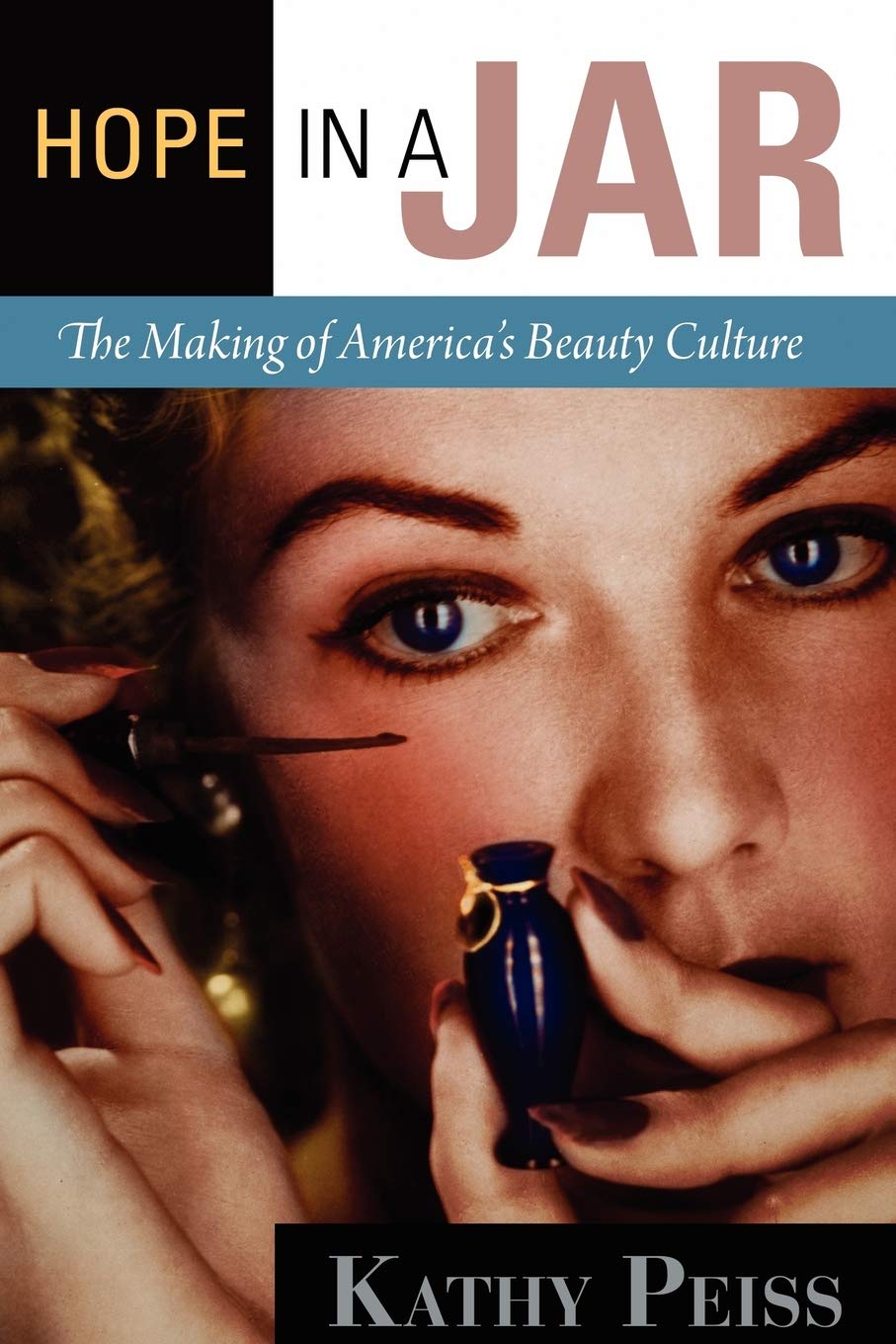
Hope in a Jar: The Making of America's Beauty Culture: Peiss, Kathy:  9780812221671: Amazon.com: Books

Beauty in American culture has been constructed around an accepted norm or a set-standard of what makes someone desirable and beautiful. Overtime, cosmetics have become deeply intertwined with this beauty culture in America and it is no small industry – a $43.6 billion industry to be exact(1). The vastness of this industry has caused a lot of examination of beauty culture and cosmetics during the nineteenth and twentieth century and picking apart common misconceptions associated with the beginning of cosmetics. It has been a long standing assumption that the beauty industry was pioneered and dominated by males in order to sway women into a singular, confined definition of beauty, however, in Kathy Lee Peiss’s book, Hope in a Jar: The Making of America’s Beauty Culture, she demonstrates that this is not the case. Within this book, Peiss illustrates a beauty industry powered by women in the late 1800s and early 1900s – one where women owned the companies producing the cosmetics and one where women sold the cosmetics. Hope in a Jar: The Making of America’s Beauty Culture elaborates on two things that cosmetics gave women: opportunity for expression through make-up and employment for women. 

As someone born during the baby boom and coming of age in the 1960s(2), Peiss watched as the judgments surrounding manufactured beauty changed with great speed. The meaning of cosmetics in relation to beauty standards, ideals of femininity, profit making, and politics remained difficult to pin-point. However, Peiss argues that beauty culture should be understood not only as a type of commerce but as a system of meaning that helps women navigate the changing conditions of modern social experience. Women dipping their toe in “modernity,” often placed them into a public space that was not always welcoming. In the history of beauty culture, there lies a web of intimate rituals, social relationships, and female institutions. Over decades, women have passed down the teachings of cosmetics to their children and in these little jars of makeup, lies a detailed history of women’s ambition, pleasure, and community. 

Kathy Lee Peiss, born in 1953, is a well-known author and American historian. She received her Bachelor at Carleton College and her Master of Arts and Doctorate of Philosophy at Brown University. During her lifetime, she was an instructor at Rutgers University and New Brunswick, Canada from 1980 to 1981. Additionally, from 1981 to 1986, Peiss worked as an assistant professor at the University of Maryland and as an associate professor at the University of Massachusetts from 1986 to 1992. Since this time, she has continued to teach as a professor. Peiss has also been listed as a noteworthy History educator by Marquis Who’s Who. In 2011, she chronicled the purpose of cosmetics over time and the impact they have in regards to economic, sociological, and psychological aspects(3). 

Peiss uses a mix of both qualitative and quantitative methods by developing her argument with participants and observations; first hand accounts of people’s experiences; and consumer surveys. Peiss begins her novel towards the end of the 19th century. During this time, cosmetics often contained toxic substances (i.e. lead) and were associated with “hussies” or prostitutes. In the introduction, she brings this up in the example of two lipstick shades named Lady and Hussy. The Hussy shade outsold Lady 15:1. Additionally, cosmetics were condemned by society saying that they created false needs, manipulated fears of the consumer, and raised superficiality over true substance. All this being said, Peiss makes sure to bring it back to the beauty business being largely built by women – some of the most successful entrepreneurs being immigrants, working class, and black women. The focused attention on face and figure paved the way for the pursuit of beauty to be acceptable and respectable. Transitioning into the early 20th century, women began to embrace cosmetics a lot more. However, advertising and social pressure to be “attractive” lowered self-esteem. In the first chapter, Peiss talks about an incident involving a 24 year old housewife who applied a commercial skin lightener who was admitted to the hospital and became paralyzed from the elbow down. This led to a focus on cosmetic preparation. Women were expected to be able to gather roots, distill essences, identify different herbs, and compound remedies for the skin. Many household manuals during this time included information regarding waters, oils, powders, and ointments meant to aid in the beautification of women. In this chapter, Peiss also discusses the origin of different cosmetics and beauty techniques. For example, indigenous plants were used to treat skin problems and methods like using crushed berries to redden cheeks were brought from Native Americans and West Africa. Moving on to chapter 2, Peiss describes the ideal beauty image as pale and because of this, white powder and skin lighteners became a big part of daily life for both white and African Americans, thus further propelling the aesthetic dimension of racism. Additionally, the rise of photography changed how people perceived their appearances. Portraits gave many people an idealistic version of how they looked – therefore, when people began to be photographed, they were not pleased with how they appeared. This resulted in the retouching of photos with painting or simply just wearing more makeup during photography sessions. Similarly, as photographs became more widely available, a domino effect was instituted: celebrities becoming beauty icons; celebrities using more makeup; the acceptance and consumption of makeup continually growing; and the cosmetics industry evolving into a commercialized industry. And of course, with the growth of a new “trend,” many opinions followed. Some people stood firm in their belief that painting was morally corrupt. Others sat more towards the middle, feeling that it was alright only if it was worn in a conservative fashion. Then on the other end, makeup was viewed by some as helping out the women who had not been blessed with “beauty” at birth. The key takeaway from this chapter is that someone painting their face moved from a trait of prostitutes and hussies to that of the “average” woman. During a time where it had been prohibited, chapter three centers on the transition of women into the commercial beauty industry. The Achilles heel of the beauty industry at this time was that it was a quiet industry. Many who used these products did not speak about their use of them in addition to wanting no one to know about their purchasings of them. However, in contrast to the women who were ashamed, there were the women who saw their own potential within the beauty industry. They saw an industry focused mainly around women as a place where they could get their foot in the door. Peiss drops a few names of entrepreneurs within the industry: Florence Nightingale Graham, Helena Rubinstein, Annie Malone, and Madam C.J. Walker. All were successful within their respective careers, however, their approaches were not all the same. Rubinstein and Graham sold their products in a more primitive “boutique” style, while Malone and Walker tried to market to everyday women. Transitioning onto chapter four, The Rise of the Mass Market, Peiss expands on the growth of the market for cosmetics following World War I. Between the years 1909 and 1929, the number of cosmetic manufacturers nearly doubled and their value rose exponentially. With this came a large scale system of mass production, distribution, marketing, and advertising that later transformed the initial patterns of buying and selling. The cosmetics industry transitioned to producing goods for national sale. Then, in promoting the Made-Up Woman, during the 1920s, mass produced images of glamorous screen stars, flappers, and beautiful women began to influence the fashionable ideal and beauty rituals. However, within this were racial divisions.The mass market’s democratic vision of beauty denied African Americans entry due to the unfortunate fact that white women were the target audience for national advertising. In Peiss’s sixth chapter, she talks about the beauty industry’s success in convincing their consumers that in order to fulfill individuality and femininity, one would need to purchase cosmetics. However, where information is pulled from is skewed due to its sources being limited to white middle and working class women. The use of cosmetics boomed in larger cities like New York and Chicago and came into play a lot later in smaller towns. Then, wrapping up in Peiss’s final two chapters, she discussed the white-dominated ideal “appearance,” and the weight that these powder and porcelain jars had in the war of cultural visions. Many black reformers and educators spoke out about the political meaning of appearance. The beauty industry increased the discontent of African Americans, gay activists, and feminists in regards to commercial exploitation by the long-standing beauty ideals. 

One area in Hope in a Jar: The Making of America’s Beauty Culture, that Peiss really excels at is disproving the wide-spread assumption that the cosmetic industry painted women as the victim in its narrative. The history of beauty in America is often looked back upon as one where the women experienced shame and they were looked at as being on the losing side.  Peiss’s greatest strength within her novel is combatting this misconception but in chapter 3, Peiss does an exceptional job of illustrating that the cosmetic industry resulted in both social and economic empowerment for women. Beauty was the catalyst that allowed women to break from the confinements that labeled working as taboo unless their social class truly depended on it. It is depicted and regarded as women viewing it as a way to get their foot in the door – it was something for them – specific to them. Peiss even uses accounts of four entreprenuers to further her argument regarding the doors that the cosmetic industry opened for them. 

Overall, Peiss does a great job in her documentation and elaboration of the cosmetic industry in her novel – however, that is the only thing she focuses on. I would have loved for her to dive deeper into related areas since she alludes throughout the book to discussing beauty as a whole. This is not necessarily a weakness, but I think her writing could have been further developed and well-rounded by drawing parallels between fashion, plastic surgery trends, diet culture, and “ideal beauty.” The title of Peiss’s book is Hope in a Jar: The Making of America’s Beauty Culture, with emphasis on that second part: the making of America’s beauty culture. By Peiss only focusing on the wearing and history of cosmetics – I feel that it shadows other very important fields that are within the umbrella of beauty culture. More specifically, she could’ve addressed those other fields and made connections with the dangerous and sometimes unhealthy lengths people would go to in order to fall within the parameters of America’s beauty culture.

After reading this book, it is safe to say that my initial view of the history of the cosmetic industry has been broadened. I feel that this could be a really good book for college students or anyone wanting to look deeper into the history of the oppression of women or even just women’s beginnings in the workplace. I now see the opportunities that the industry gave to many women. However, I believe after reading this book that women were victims at times, victorious at times, and sometimes even the ones being the oppressors. This is a read I would love to revisit and draw deeper connections with other viewpoints after my completion of the GSS 101 course. .

(1) Manager, Jonas Sickler SEO. “Beauty Industry: Cosmetics Market Share, Trends, and Statistics.” Terakeet, 22 Oct. 2021, https://terakeet.com/blog/beauty-industry/. 

(2) Peiss, Kathy Lee. Hope in a Jar: The Making of America’s Beauty Culture. University of Pennsylvania Press, 2011. 

(3) “Kathy Lee Peiss.” Prabook.com, https://prabook.com/web/kathy_lee.peiss/639345. 

*What It Feels Like*: Book Review

Rape culture is so pervasive in almost every aspect of today’s society, sometimes seemingly impossible to combat, however, in her book What It Feels Like, Stephanie R. Larson examines rape culture from a rhetorical perspective and gives insight on the possible resolutions for its abolishment. As part of this solution, Larson introduces the concept of “visceral rhetorics,” which describes the felt communication that takes place within one’s self as well as the erasure of this perspective, and explains why this conceptual framework is often overlooked when it has the power to uproot rape culture altogether. She deeply analyses how we communicate about rape culture by examining a multitude of different case studies, revealing how much the embodied experience is undermined within this discourse, along with certain types of evidence like personal testimonials and voices such as non-white women. 

In the first chapter, Larson examines pornography and the movements against it in the 1980’s, uncovering how these create a notion of sexual citizenship and risk connected to it, resulting in panic surrounding individuals accused of sexual violence while simultaneously ignoring actual victims. Rape prevention campaigns build off this notion in Chapter 2 to include the bystander, but ultimately highlight how the issues and solutions related to rape currently center around the male perspective. While Chapter 1 and 2 discuss the consequence of women’s bodies being deemed unfit for body politics because of the centralization of men in rape culture, Chapter 3 and 4 take a turn focusing on how women’s bodies are leveraged politically in the response of rape. These two chapters explore how the embodied experience of sexual violence victims is often seen as inferior to other kinds of evidence, particularly though technological tools like rape kits, even though this visceral framework is essential to shape the public’s perception of rape. Lastly in Chapter 5, Larson argues how powerful the feminist implementation of megethos, a central aspect of Aristotle’s epideictic forms of rhetoric, also meaning magnitude, within the #MeToo movement is in order to show the magnitude of rape culture in our society today. Not only did the sheer number of responses reveal the reality of rape culture, it also created collective believability surrounding it. The analysis of these case studies ultimately display Larson’s main point that “discourses about rape culture rely on strategies of containment to assert control over a presumed affective excess of femininity but also that those discourses can be challenged by mobilizing forms of embodiment that stress what it feels like to be raped” (4). 

Stephanie R. Larson, the author of What It Feels Like, is an Assistant Professor at Carnegie Melon University in the department of English. Although this is Larson’s first book, she is already very involved in the rhetorical community through presenting at many conferences, her CV demonstrates her engaging in interviews, and continuously publishing new written work pertaining to rape culture, mostly in the form of scholarly articles. Larson predominantly focuses on the topic of rape in all of her work because she views it as a necessity at this point and shares “I do not want to live in a society where people experience violence and then have no way to talk about it or are met with skepticism when they try. I study rape culture because I know it to be a true and pervasive reality” (xiv). This book builds off of past scholar’s work by in feminist rhetoric by not only addressing how women’s voices are being silenced by rape culture, but how rape culture suppresses their bodies as well. 

To come to this conclusion, Larson analyses anti-pornography debates from the 1980s, Violence Against Women Act (VAWA) advocacy materials, sexual assault forensic kits, public performances by survivors, and online social movements (5). By using the methodology of rhetorical analysis, as well as using information from historical archives, she examines this history of rape culture, how rape culture is still present today, the rhetorical strategies used to uphold it, as well as what rhetorical strategies could be useful to abolishing it (7). Each of these sources provide a different angle, strengthening Larson’s overall point of the importance of embodiment and its potential to uproot rape culture when shared and believed. 

In Chapter 1, Larson begins by addressing the case study of the Meese Commission, a commission ordered by Ronald Regan investigating the impacts of pornography, focusing on the historical legacy of the construction of a victim’s subjectivity in contemporary public discourse. Connected to pornography, the distinction of a “proper citizen” through sensation experience was a large aspect intertwined in this inspection and shaped the meaning of what constituted as victimhood (35). This ultimately resulted in victims not fitting into this conceptualization of the “ideal citizen.” Through the main arguments of the letters written to the commission, blame shifted away from the men viewing pornography to the sexuality happening within it, serving as a basis in the decision of what bodies are valuable (41). This eventually led to the definition of rape during the 1980s to stray away from inherently sexually violent behavior to a consequence of male contamination, bringing the focus to the rehabilitation of straight white males and away from the actual experiences of victims (41). The declaration of women’s sexuality as the real threat in rape cases and failure to truly listen to the experiences of victims allowed the histories of misogyny, white supremacy, and violent masculinity to go unrecognized within the overall discussion of rape. 

Larson then brings attention to bystander discourses in Chapter 2 by analyzing the two contemporary rape prevention campaigns “It’s On Us” and “1 is 2 Many”. She heavily critiques “It’s On Us” regarding their history centered around protecting white womanhood and how this is still seen in their discussion of the bystander, along with the promotion of other problematic misconceptions like feeding into the racial stereotype of Black men as the majority of rapists (71). In a similar way, “1 is 2 Many” offers men as the answer to fixing the horrors of rape culture, without considering how “masculinity remains unquestioned while it is leveraged as the solution” (78). By presenting these two examples in regard to the role of the bystander, Larson acknowledges that in attempting to change the logics of rape culture by shifting the responsibility away from women, men are often viewed as the ideal mitigators of rape culture. In turn, this completely disregards the fact that men’s actions created this issue and continue to fuel it today. 

Chapter 3 and 4 shift the focus of this book by looking at how bodies interact with the public and overall discourse of rape in personal, and usually responsive, ways. To begin this transfer in discussion, Larson analyses how rape kits, while beneficial in supplementing testimonials, overshadow the voices and embodied accounts of victims, deeming them less credible (87). Larson identifies three of the largest problems surrounding them, being: situating rape as a problem with violent criminals with no cultural aspect involved, placing far too much emphasis on scientific tools like rape kits which leads the public further away from believing victims, and the control of a rape experience by medical, legislative, and testimonial accounts, going against the value of visceral rhetorics (99, 103, 111). Rape kits ultimately turn the prevalence of rape into a scientific matter with scientific answers, ignoring underlying historical, cultural, and ideological factors, while simultaneously furthering the notion that the body and its boundaries are inferior in regard to rape cases (95).

 However, Emma Sulkowicz and Chanel Miller, both victims of high-profile rape cases, push against this effacing by publicly centering their bodies in a form of protest, highlighted in Chapter 4 (113). In 2016, Miller read a letter she wrote aloud in court that many news outlets published shortly after in which she asks her audience not to just see her perspective, but “to feel her perspective, to feel what her body felt in the aftermath of rape” after describing her embodied experience (122). Sulkowicz released her performance, Ceci N’est Pas Un Viol, online in 2015, a staged violent raping that forces viewers to see and feel rape, evoking a visceral response from them and giving her audience a better understanding of the embodied responses to situations of rape (128). Not only do these performances help alter the public’s opinion by assessing rape outside of the male perspective, it also brings attention to non-white women and gender nonbinary people who usually get left out of the wider public discourses of rape (114). While Miller’s form of visceral counterpublicity internalizes the use of the body and Solowitz’s externalizes it, they both expose public audiences to this embodied violence and better shape their understanding of how the body should be centralized in the instance of rape.

Following these instances that sparking embodied reactions among the public came the #MeToo movement, ultimately shifting how the world views sexual violence and the discussion surrounding it. In April 2017, Alyssa Milano sent out a tweet encouraging those who have been sexually harassed or assaulted to unite themselves by using #MeToo hashtag (136). The sheer number of responses to this tweet led to the rhetorical form of megethos, or magnitude, that transformed the discussion of rape culture (138). This extensive list of experiences not only engaged viewers, but it overwhelmed them, bringing to light just how common these instances occur. This list employs feminist megethos as a strategy that helps undo problematic, yet normalized, attitudes towards rape, expose the reality of rape culture, and offers another tactic of visceral rhetoric to change the discourse surrounding rape and rape culture at large. 

One of Larson’s greatest strengths throughout her book was her the variation in case studies she used to justify her points. Including sources like anti-pornography debates from the 1980s, Violence Against Women Act (VAWA) advocacy materials, sexual assault forensic kits, public performances by survivors, and online social movements allows for a more holistic understanding of the importance of embodied experiences and the power they have to abolish rape culture. In addition to this, something very commendable throughout Larson’s writing is the alternate wording of complicated concepts and arguments she offers. Continuously, she would make a statement then follow it with phrases like “in other words,” making her arguments very clear and easier to grapple by hearing them in different ways. 

Centering discourse around the male perspective is one of the main issues of rape culture presented throughout the entire book, but one of Larson’s weaknesses is not addressing male victims. By no means should the focus on male victims be prevalent throughout the book since only 9% of rape victims are male, but discussing one example of how the experiences of male victims shape the visceral response of their audience would be useful. Analyzing the contrast between male and female victims would offer another layer into the gendered differences embedded in rape culture.

Larson does an excellent job giving readers a better understanding of the different aspects that contribute to and reinforce rape culture by providing analysis of many distinct case studies. I think her work is an extremely useful and an important addition to feminist rhetoric, especially with this issue being so pervasive in today’s society. The grim and sometimes even disturbing reality of the impacts of rape culture in the sources used by Larson made this work difficult to read at some points, but the main argument providing a solution to help uproot rape culture provided a silver lining throughout the entire book. Although I believe everyone would benefit from reading this book, especially those involved in law, I think it would assist women who have experienced sexual violence the most. Listening to Larson explain the importance of women sharing their stories, feelings, and most importantly embodied experiences after undergoing something so traumatic in a world that constantly invalidates women would be very comforting. Everyone deserves the affirmation that their words are powerful and their feelings are valid, and through What It Feels Like, Larson does just that.  

Larson, Stephanie L. What It Feels Like: Visceral Rhetoric and the Politics of Rape Culture. Pennsylvania State University Press, 2021. 

How the Clueless Creators of “Clueless” Contributed to a Harmful Culture Around Gay Men

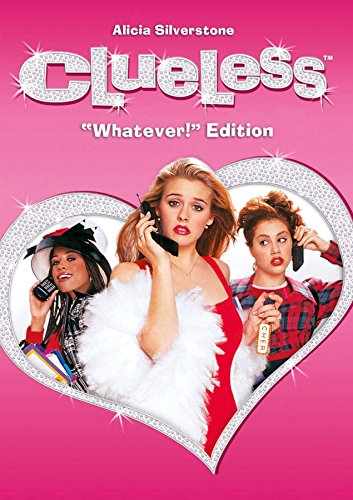
Amazon.com: Clueless : Alicia Silverstone, Stacey Dash, Brittany Murphy,  Paul Rudd, Donald Adeosun Faison, Dan Hedaya, Justin Walker, Donald Faison,  Elisa Donovan, Breckin Meyer, Jeremy Sisto, Aida Linares, Wallace Shawn,  Twink Caplan,

Arguably, one of the most iconic movies ever created is “Clueless.” This movie features everything you could want and more from a classic 90’s high school movie. The lead, Cher, is the “it girl” at Bronson Alcott High, and she seems to have her life fully figured out. With her side-kick Dionne, she takes on some typical challenges accustomed to the privileged teenage life, like failing her driver’s test, going to parties, and meeting a cute boy she might have a crush on. His name is Christian, and, despite Cher’s keen eye, she fails to realize that he is gay. 

Cher tries every play in the book to try and seduce Chrisitan, she drops her pen to bait him into picking it up for her, invites him out to parties, and brings him to her house when her father is away. She puts an entire roll of cookie dough in the oven, in the hopes that the warm, sweet smell in combination with her domestic abilities will be enough to woo him. She ends up burning the cookies, and they move on to tour the house. As they walk through the backyard, Chrisitan is telling Cher what a beautiful art collection her father has and comments on all the statues talking about the various artists and meanings behind the works. This is a stereotype associated with gay men, a love and appreciation for art. This is only one of many different stereotypes the creators of “Clueless,” put on Christian, however.

Clueless': Cher's Love Interest, Christian, Was Almost Played by This  'Twilight' Star

All the characters from the movie continuously point out the effeminate qualities Christian has. His love for art and fashion comes to mind. He is also the most well-dressed and groomed man on the show. All these things are associated with and are stereotypical qualities of gay men. After the not-so-romantic night between Cher and Christian comes to an end, the movie flashes forward to Cher in the car with Dionne and her boyfriend, Murray. Murray is trying to teach Dionne how to drive while the two of them listen and try to counsel Cher about her failed date. After she says she was ready to, “go all the way,” and have sex with Christian, Murray laughs out loud and says, “are you bitches blind or something? Your man, Chrisitan, is a cake boy.” The sexist language he uses here and throughout the film is enough for a whole other essay, but he uses an old derogatory term, “cake boy,” meant to put down and make fun of effeminate men. He then goes on to list more stereotypically gay things that Christian does, like enjoying disco music and reading Oscar Wild. He then finishes his line by saying “he’s a friend of Dorthy if you know what I’m saying.” After all of that, Cher finally realizes that Christian is gay.

While the creators of the movie did a good job at making Chrisitan a likable character, they abused gay stereotypes and the “gay aesthetic” of the time to perpetuate a misguided view of what being gay means. The Hollywood interpretation of gay men specifically, was one of two character archetypes. Either a creepy, predatory character that you are meant to hate and fear, or an effeminate one that is clean, pristine, and loves to shop. Chrisitan is clearly the latter. 

Having this “gay aesthetic” be so wildly loved, admired, and used in media is damaging to gay youth. We’re told this is what it means to be gay. You have to dress a certain way, act a certain way, and like specific things to be “gay.” This puts pressure on young gay men especially to behave like this idolized character of fashion, art, and shopping. If you don’t look put together you aren’t good enough to be gay. If you don’t love shopping with your girlfriends then you’re either in the closet or some kind of outcast. These characters often become the “gay best friend” of a powerful female character as well. Effeminate gay men were never portrayed as powerful or independent, they always had a popular girl to take care of them and protect them from the rampant homophobia and toxic masculinity of high school. This is damaging to watch as a young gay child. You are told that to fit in and be accepted, you have to be feminine and hide behind other people for safety. When you stand up for yourself a bully will knock you down, and if you don’t act “gay enough,” neither the gay nor straight people will want to include you. Yet, this feminine gay aesthetic was one of the only positive representations of gayness from before the 2010s. Despite how damaging it is to be told you must be and act a certain way, it was the only way to survive.

Gayness is more than being effeminate and liking clothes and Britney Spears, however. As more modern media is starting to realize, gayness looks different for everybody and there isn’t one box of mannerisms and inflections that you can sort us into. Gay people each have their own personalities, behaviors, and interests. Being gay is just one part of us, one identity we have, nothing more. It can mean to you whatever you want it to. That’s why having this kind of representation (as in characters like Christian) is damaging to the gay community. Although Christian is seen as this perfect, sexy man better than all the other men in Bronson Alcott High, his character perpetuates a harmful culture around being gay.

written for Autostraddle | autostraddle.com

work cited:

Heckerling, A. (1995). “Clueless” movie poster. Amazon. Paramount Pictures. Retrieved October 1, 2021, from https://www.amazon.com/Clueless-Alicia-Silverstone/dp/B01M9B4FDS.

Heckerling, A. (2021). Cher and Christian watching a movie. cheatsheet. Paramount Pictures. Retrieved October 1, 2021, from https://www.cheatsheet.com/entertainment/clueless-christian-was-almost-played-by-this-twilight-star.html/.

“‘Cause Shade Never Made Anybody Less Gay”

Written by Liz Truluck for Autostraddle

“You Need to Calm Down” by Taylor Swift

Calling all Swifties! Taylor Swift has done it once again in her banging new music video. Supporting queer rights through music, dancing, and a upbeat production, the song “You Need To Calm Down” is a queer anthem bashing the hate experienced by many LGBTQIA+ members. By incorporating a catchy beat, colorful props and many queer icons themselves, T-Swizzle shines a light on both the celebration of pride along with the hardships of many queer folk past and present. Billy Porter, Laverne Cox, Ellen DeGeneres, and Jonathan Van Ness are just a few of the incredible appearances throughout the music video. “You Need to Calm Down” challenges gender norms with references such as “can you just not step on his gown?” This lyric is breaking the assumptions that girls are meant to wear dresses and allows a space for self-expression through clothing.


Not only does Taylor stand up for queer rights through her artistic lense, but she also uses the music video as a educational experience for ways people can also help the queer movement. At the end of the music video she linked a petition for Senate Support of the Equality Act on Change.org along with the statement, “Let’s show our pride by demanding that, on a national level, our laws truly treat all of our citizens equally.” The music video served as an inclusive and welcoming place for queer people, allies, and anyone who likes a fire pop song. Taylor used her platform to put in the public eye queer artists, actors, and celebrities alike. The bopping tunes and gay flags are woven together through this video capturing how extraordinary queer culture and the queer community are.
While this video served mostly as a queer anthem, it also supported women empowerment and feminism. Two scenes that really shouted those themes for me were when there was a stage filled with drag queens dressed as big pop stars lined up from left to right: Ariana Grande, Lady Gaga, Adele, Cardi B, Taylor Swift, Beyoncé, Katy Perry and Nicki Minaj. They all stood alongside each other on a stage. RuPaul walked towards the stage holding a crown on top of a pillow. Before crowning the winner, he walked to the center of the stage standing in front of all of them. Instead of crowning one winner, he smirked and then threw the crown into the air. As this scene was happening the lyric “We all know now, we all got crowns” began playing. This scene and lyric supports women backing other women. In today’s society, judgement and comparisons about bodies, especially among women, have created a negative space filled with doubt and unworthiness. However this moment in the video pushes against those norms and celebrates all individuals.


The next scene transitions into colorful cake and confetti flying left and right. The camera zooms in on Taylor Swift, who is wearing a french fries costume, looking around confused. It then focuses on Katy Perry, dressed as a hamburger swaying side to side with her head down. Taylor and Katy then make eye contact from across the set and after recognizing each other, awkwardly smile and begin approaching one another. Taylor shyly waves as they get closer and then they embrace in a big hug. Previous to this video, Taylor and Katy were rumored to have a long on-going beef with one another. But this video finally squashed what had happened in the past and ended on a cheerful and loving note. 

From a Pantsuit to They/Them: How “One Day at a Time” Promotes Everyday Conversations on Gender and Sexuality

Main Characters of One Day at a Time. From left to right: Alex, Lydia, Penelope, Schneider, and Elena.

Are you looking for a new show to watch where you can get your fill of comedy and strong feminism? No?…Um, uh, okay then; you probably do not need to continue reading this then. Yes?…Well then One Day at a Time is definitely the show for you. Based off of the original show One Day at a Time that first aired in the 70s, the modern One Day at a Time (2017-2020) is available on Netflix and brings humor, feminism, sexuality, and family all together. The show follows a Cuban-American family in California, which includes the grandmother who immigrated from Cuba, Lydia, played by the stunning Rita Moreno, the daughter of the grandmother, Penelope, and then the daughter’s two children, Elena and Alex. It is so hard to pick one episode of this show that displays feminism and social justice best because every episode of the show introduces or addresses a large variety of modern issues elegantly. For this reason, I will highlight a few episodes from the show that display how modern and influential the show is. Honestly, explaining just one episode does not serve the show enough justice for how significant it is. 

The very first episode of this Netflix original show introduces some of the main characters that appear throughout the show’s duration, including the mom, Penelope, and her daughter, Elena. Elena is fifteen years old at the beginning of the show and the first episode focuses on her opposition to having a quinceañera. Elena is opposed to having a quinceañera because of its misogynistic roots and does not want to be put on display like a show horse (and personally, I cannot blame her for feeling that way). This is very upsetting news to her family as they fully embrace their Cuban roots because they are proud, as they should be. While Penelope and Lydia try to get Elena to embrace her Cuban roots with them, Lydia also tries to tell Penelope that she does not need the antidepressants she has been prescribed. Lydia is a little old fashioned and does not agree with the use of antidepressants. Going against her mother’s opinion, Penelope eventually does take the antidepressants for the betterment of her mental health. This is promising since being a single mother, and a non-white single mother especially, is not easy to say the least. Elena does eventually decide to have a quinceañera by the end of the episode to please her family, as long as some things are done to Elena’s liking, such as what the dress she will wear will look like. Lydia eventually makes her a pantsuit to wear to her quinceañera, and it is a truly touching moment later in season one. 

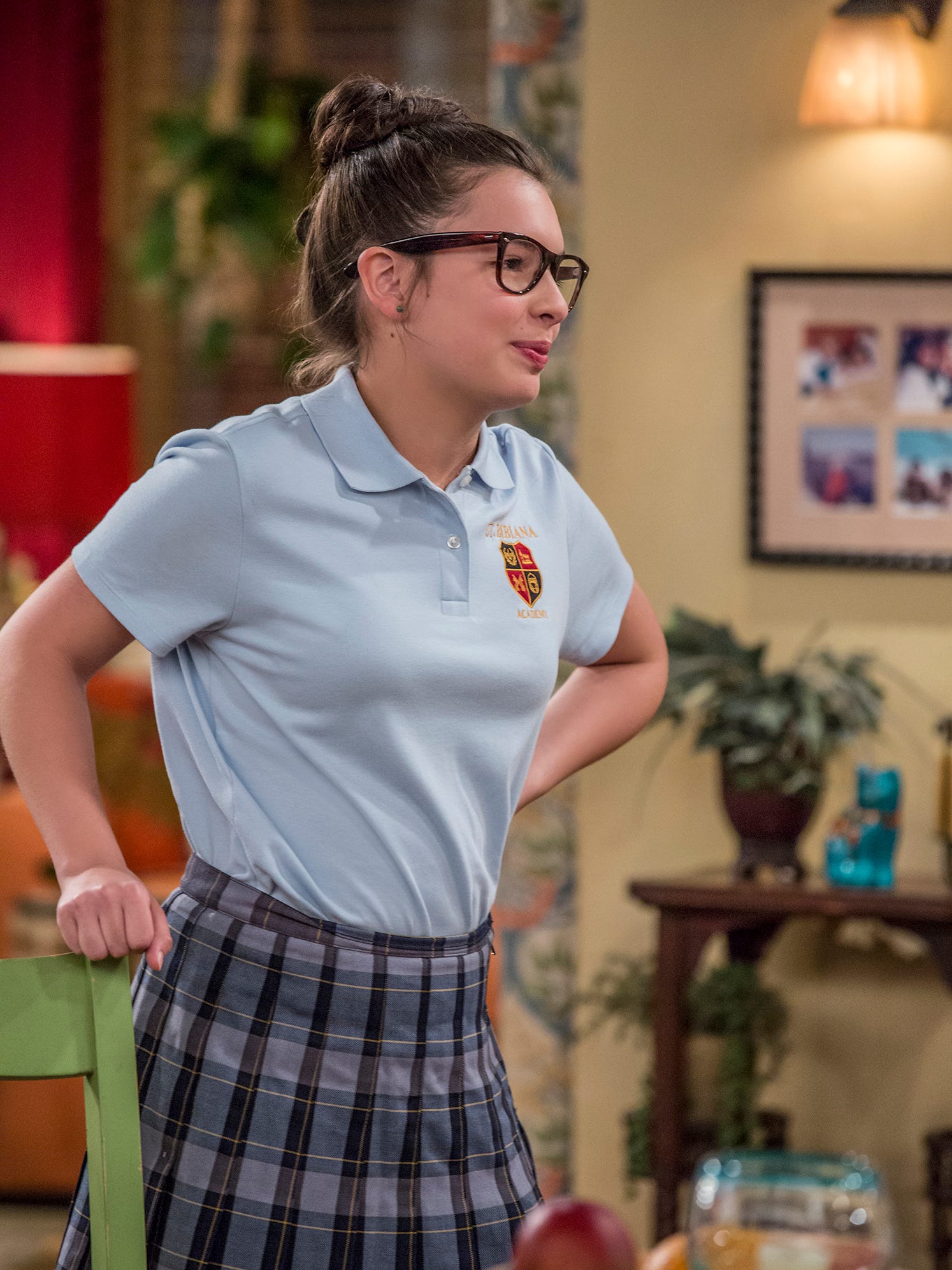
Elena in her school uniform at home.

Further into the first season, the show addresses sex, porn, and sexuality. When porn, a video of a threesom specifically for those who are curious, is found on Alex’s computer, the household breaks into chaos on what to do. Penelope approaches Alex about this, but he remains adamant that it was not him watching the porn. We later learn in the episode that it was actually Elena watching it on Alex’s computer. Penelope tries to give Elena the sex talk so she is prepared if things begin to go further with her boyfriend at the time, but in the process, Elena comes out to her mom as gay. Penelope is surprised, but supportive (phew, thank god). Side note: it is also mentioned in that same episode that Elena loves to read Autostraddle articles, so yay, we have made it to television everyone (and honestly I think she has got good taste in blogs)! Elena being honest to her mother and coming out shows bravery while Penelope approaching Elena shows motherly compassion, all while tying in humor in addition to expression of sexuality. 

In season two, Elena invites over a friend of video gamers who introduce themselves to the rest of the family with their preferred pronouns, confusing Penelope and Lydia as to why the teenagers are doing this. One friend of Elena’s, Syd, uses they/them pronouns. Elena’s friends introducing themselves with their pronouns casually normalizes this concept for the audience and provides a learning opportunity on gender for Elena’s family as well. As season two continues, Syd and Elena begin to grow closer to each other, eventually forming a relationship together. The two are very awkward with each other at first when they both learn that the other is gay, but it is a joyous and funny moment well written into the episode. Their relationship hits bumps like any relationship does, but it also displays Elena still figuring out her sexuality and who she is as an openly gay person now. Syd has had girlfriends before, but Elena has not and watching Elena learn to be authentically herself is an encouraging storyline. Syd being supportive of Elena discovering who she is is another lesson with sexuality seen in the show. One Day at a Time brings many modern issues into play and goes deeper than the surface level, taking many factors into account. It hits on many difficult subjects, but it is all portrayed tastefully with humor added in. 

Elena and Syd both learn that the other is gay in this awkward, but funny scene from season two.

These are only a few of the many topics that are crucial to today’s society that this show addresses, without giving too much away for those interested in watching the show now. This show is honest and displays how sometimes feminism is not what everyone understands, however, when one feels strong enough to educate others around them, like Elena, then these ideas continue positively. Elena is a really important part to introducing and addressing many social justice issues head on through being intelligent and well educated. One Day at a Time addresses queerness, sexuality, feminism, gender, heritage, race, class, and so much more. This show is amazing, funny, and progressive, and I highly recommend it be a show that you add to your Netflix list (at least for those who said yes at the beginning of this article anyways, and if you said no, why did you still read this far?). One Day at a Time tells us that educating others on today’s issues, including feminism and sexuality is often not a simple task. However, taking the time to explain ideas thoroughly is worth it in the end for both the ones who care deeply enough to teach others, and the ones that listen and are just beginning to learn.

Written for Autostraddle | www.autostraddle.com

Works Cited

Kellett, Gloria Calderon, and Mike Royce. One Day at a Time, Netflix, www.netflix.com. 

Lawler, Kelly. “Isabella Gomez as Elena Alvarez in ‘One Day at a Time’.” USA Today, 23 Jan. 2017, www.usatoday.com/story/life/tv/2017/01/23/one-day-at-a-time-coming-out-story-elena-netflix/96787436/. 

“ME GAY TOO – One Day At a Time Elena and Syd.” Youtube, Netflix, 2018, www.youtube.com/watch?v=GFRZXDXlHek. 

Poniewozik, James. “From Left, Marcel Ruiz, Rita Moreno, Justina Machado, Todd Grinnell and Isabella Gomez in ‘One Day at a Time,’ on Netflix.” The New York Times, 4 Jan. 2017, www.nytimes.com/2017/01/04/arts/television/review-the-2017-class-divide-in-a-new-one-day-at-a-time.html. 

Progressive period products: degendering language and representation in the menstrual hygiene industry

JUNE [@thejunecup]. Photo of Model Holding Menstrual Cup. Instagram, 29 June 2020, https://www.instagram.com/p/CCCdEtTF8f_/.

One of the most recent items to surge in popularity with advocates for eco-friendly bathroom swaps is the menstrual cup. These cups are typically made of silicone and shaped like a cone or a bell and have cult followings because they minimize risk of toxic shock syndrome, can safely be used for more hours at a time, produce less waste, and are often cheaper than other hygiene products over the long term. For decades, the market was dominated by a single brand; however, in recent years there have been a handful of new brands, campaigns, and curious cup-users.

June is a menstrual cup brand that was founded in 2017, among a small handful of cup competitors. What sets them apart from many other menstrual hygiene product brands is their shift away from heavily gendered language for periods, such as “feminine hygiene”, or referring to their customers as women and girls. One of their Instagram posts during the summer of 2020 depicted a model with shorter hair and masculine features, smiling and holding a June cup. The caption of the image reads: “At JUNE, we strive to make sustainable menstrual care accessible and affordable to everyone. We’re excited to be a part of a community of inclusivity that’s always growing”. This was posted nonchalantly and without any fanfare, hashtag, or huge announcement of a related marketing campaign. The social media ad does not specify the gender of the model, and the caption only refers to “inclusivity”. Yet the post still stirred up many more likes and many more comments than is typical of their posts. Why? Because their model, Skylar, is a nonbinary trans man.

The fact is that some people who menstruate are women, some are not, and there are also some women who don’t menstruate at all. Yet having a period is often explicitly tied to womanhood and femininity, a narrative that is often initiated in health class and incessantly perpetuated through media depictions of girls “becoming women” and ads for period products. Menstruation in and of itself can cause significant dysphoria for many trans men and nonbinary folks, even without alienating advertising. For a while the primary menstrual cup on the market was called the Diva Cup- some other brands now have names like Femly, Blossom, Athena Cup, Duchess Cup, and Lily Cup. And of course, the cups come in pink and purple with cursive fonts, and the packaging is stamped with floral patterns. Doesn’t seem to welcoming and inclusive, right? The majority of the imagery and language associated with advertising menstruation products is hyperfeminine and does not present the product in a way that is inclusive of their potential customer base.

What’s interesting about June’s advertisement is that by casually introducing diverse menstruating bodies as the faces of their campaign, they are not only signaling that they are a brand that welcomes all genders, but they are encouraging people to challenge their assumptions about who menstruates and the language that they use to have these conversations. They acknowledge on their webpage that they used to use gendered language to advertise their products but have realized their error and corrected it. Of course, we have to keep in mind that June is a brand, and their number one mission as a company is to sell their product. Even if their goals and values are aligned with authentic diversity and inclusion of the LGBTQ+ community, it is difficult to consider that inclusion in isolation from their marketing strategy. Since June didn’t introduce Skylar as trans in their initial post, comments ranged to enthusiastic support, to angry bigotry, to confusion. Most of the comments were expressing support and excitement for both the model and the brand.

“Messaged yall a while back about more inclusive language and so happy to see youve done the work 🤗💜 appreciate ya!” – @ileak_balance

“thank you so much for recognizing that menstruating bodies exist outside of the false binaries we’ve been taught. Thank you thank you thank you” – @novadame

However, many commenters were expressing disgust or anger at the post. A few were initially confused as to why someone who is not a woman is representing period products but seemed to understand once the brand responded in the comments.

Screenshot of comments from June’s Instagram post. JUNE [@thejunecup]. Photo of Model Holding Menstrual Cup. Instagram, 29 June 2020, https://www.instagram.com/p/CCCdEtTF8f_/.

Since they don’t identify the Skylar’s gender, June is assuming that followers will draw their own conclusions from the image. An example of a menstrual cup brand that was not so subtle and took a much different tone was Ruby Cup, which posted an article discussing how they were going to change the language on their website to be more inclusive and started off with the words “Dear Transgender Community, Sorry for being narrow-minded and for discriminating against you”. Was June’s approach to inclusivity more powerful because of its subtlety, or was the bold acknowledgement and education that Ruby demonstrated taking more ownership?

Either way, the reality is that some menstrual health brands are shifting their brand away from ultra-feminine, binary-reinforcing language and imagery that isn’t inclusive of everyone who has a period. It is important to keep in mind that these are brands with marketing goals that are behind these changes, but the hopefully representation and inclusivity demonstrated by brands like June continues.


Citations:

JUNE [@thejunecup]. Photo of Model Holding Menstrual Cup. Instagram, 29 June 2020, https://www.instagram.com/p/CCCdEtTF8f_/.

We Need to Apologize., Ruby Cup, https://rubycup.com/blogs/news/we-need-to-apologize.

“Same Love” — A Legacy of Perpetuating Gay Myths and Gay Liberation?

“Same Love” by Macklemore & Ryan Lewis featuring Mary Lambert was released in October 2012 on YouTube.¹ It “became the first song that explicitly promotes same-sex marriage to hit the Top 40 in the US.”² This song was primarily written to persuade voters of the State of Washington to approve Referendum 74, the legislation that would legalize same-sex marriage, as well as call out conservative Christians for their hypocrisy and intolerance on the matter. While the song served as a state (and later on as a national) anthem for gay marriage and equality, the song equally contains messages that ignore the social construction of sexuality and gender.

The opening scene lasts for approximately 40 seconds and depicts the scene of pregnancy and the birth of a biracial baby boy. This is intentional to emphasize the mainstream LGBTQ+ narrative that sexuality is innate — that “queer people are born that way” or are “eternal homosexual[s]”.³ The next few scenes depict the mixed-race boy riding bikes and playing outside with other boys, wearing attire associated with boys, and displaying assertiveness through romantic gestures, which all in contrast to girls running a lemonade stand, playing with dolls, wearing dresses, and displaying passiveness. These scenes perpetuate gender stereotypes and show gender being constructed by doing.⁴ 

Additionally, the lyrics at the beginning recounts Macklemore’s (Ben Haggerty) experience of questioning his sexuality. Within the lyrics, the idea of being gay was construed on the lines of gender stereotypes and that to be gay is to be good at drawing, to be good at organizing one’s room, and to be bad at sports. 

The following scenes show the mixed-race boy growing up and becoming keenly aware of sexuality such that he felt excluded from the church, a game of spin the bottle, homecoming dances, and formals. The song also speaks of the “man-made rewiring of a predisposition” through some cure through treatment or religion. This emphasis reflects the historically negative discourse of homosexuality through medical science and the church.⁵ Furthermore, when the song mentions hip hop and drops the phrase “that’s so gay” and the word “f*gg*t,” this was directing attention at the hip hop community as being a toxic place for homosexual expression. Thus, these scenes and lyrics reveal how places that hold power determine the morality of homosexuality. 

The chorus is sung by Mary Lambert, and repeats the sentiment that sexuality is biological and innate in the lyrics, “I can’t change.” Once again, this perpetuates the thinking that homosexuality is not socially constructed through history. From this point on, the biracial individual embraces his sexuality, gets married, and dies with his partner and lover by his side. 

Overall, this song is an appeal to logos, ethos, and pathos. In logos, the song accuses some Christians of forgetting that “God loves all his children” and “paraphras[ing] a book written 3,500 hundred years ago”. While some Christians believe that even if the Bible is written 3,500 hundred years ago it is still relevant, there is no denying that Christians have historically spoken heavily against homosexuality by drawing upon seven verses associated with homosexuality, commonly referred to as the Clobber Passages. 

In ethos, the song emphasizes God as love, and it concludes with a refrain from 1 Corinthians 13 that says “love is patient, love is kind.” Just as some Christians hold Biblical passages on homosexuality highly, the song draws on the ethos of the Bible. Additionally, the song makes comparisons between the LGBTQIA+ movement with the Civil Rights Movement, thereby drawing upon the same ethos that everyone has some inalienable rights. 

Finally, the song is an appeal to pathos, where we, as the audience, practice empathy. The music video visually portrays the story of a biracial kid navigating through his sexuality from birth to childhood to marriage to death. The lyrics reveal Macklemore’s (Ben Haggerty’s) personal journey towards understanding sexuality, as well as his compassion for his gay uncles and other LGBTQIA+ individuals. 

Overall, “Same Love,” as the title implies, suggests that love is the same, regardless of gender and sexuality. Despite reinforcing some gender stereotypes and myths about homosexuality, the song has a powerful message. In response to “till my uncles could be united by law,” the State of Washington passed Referendum 74 in 2012, and three years later, same-sex marriage was legalized nationwide through Obergefell v. Hodges. As the lyrics foresaw, a “certificate on paper isn’t going to solve it all,” but marriage equality is a “good place to start,” as is “Same Love” by Macklemore & Ryan Lewis featuring Mary Lambert to the liberation movement. 

Works Cited

  1. “Macklemore & Ryan Lewis – Same Love Feat. Mary Lambert (Official Video).” YouTube, October 2, 2012. https://youtu.be/hlVBg7_08n0.
  2. “Macklemore & Ryan Lewis (Ft. Mary Lambert) – Same Love.” Genius. Accessed September 25, 2021. https://genius.com/Macklemore-and-ryan-lewis-same-love-lyrics. 
  3. Abelove, Henry, Barale Michèle Aina, and David M. Halperin. The Lesbian and Gay Studies Reader. New York: Routledge, 1993. This citation is specifically referencing Chapter 31: Capitalism and Gay Identity by John D’Emilio.
  4. Bornstein, Kate. My New Gender Workbook a Step-by-Step Guide to Achieving World Peace through Gender Anarchy and Sex Positivy. New York, NY u.a: Routledge, 2013. 
  5. Foucault, Michel. The History of Sexuality: An Introduction. New York: Vintage Books, 1980. 

Writing for Wear Your Voice | www.wearyourvoicemag.com

Real Men Clean? A husband in the household goes viral on TikTok.

Written by Jack Muldoon for Jezebel www.jezebel.com

Maya and Hunter Leppard are the social media duo whose recent day in the life series has launched them to star status. The videos displaying a wife doing her day job and her husband cooking, cleaning and other daily chores have allowed the couple to rack up just short of 500,000 followers.

The quickly-paced video has racked up just shy of 20 million views and over a million likes. It is just one in a series of viral videos in the same bane. https://vm.tiktok.com/ZMRGHLM9W/

The tone of the video may seem mocking at first, with the meme favorite Home Depot soundtrack playing in the background and #girlboss description, this short clip could be written off as another misogynistic joke about a wife’s expectations. It appears however that the roles in the house are for real, and while they certainly want the series to be a laughing matter, the joke does not lie in the wife and husbands’ roles in the house. The short video has Hunter completing household tasks that are often still viewed in many parts of society as feminine. Making the bed, cooking breakfast, and feeding the dog are somehow the highlights of a video with over a million likes. While the humorous commentary does have a part to play, it is the fact a man is completing these tasks while supporting his working wife that draws most of the attention.

 These videos claim to fame is a man doing mundane tasks that millions of people complete every day, and this was seen as undeserved by some commenters. They argued that there was nothing extraordinary about this video and that the completion of these tasks by men should be as normal as working a construction job. The people, however salty they may be that their daily life hasn’t made them famous, are absolutely correct. These commenters are likely missing the point of the video though. The goal was not to get famous from displaying how different their life is from the “normal”, but to dispel the idea of a normal straight relationship that many still hold. While society has moved past the 1950’s era of housewives, the notion that a husband supporting his wife’s career by taking care of the house is an oddity still persists. While the number of stay-at-home husbands has hit their highest numbers ever at 2.2 million in 2016, they still only account for 16% of stay-at-home spouses. (https://athomedad.org/advocacy/statistics-on-stay-at-home-dads/). Seeing women take a role in the household that was traditionally reserved for men could be a small part in dispelling incredibly harmful notions about gender that still linger in society. Exposure to these videos and other media displaying women as the breadwinners will undoubtedly signal to young girls that the concept of marriage does not mean they need to put goals to the side and hit a pause button on their careers. These videos do participate in the idea that women are the ones typically supporting their husband’s career by addressing the relationship is not what society normally expects. While this does play into the myth in some ways, and a woman being the breadwinner in media without it being discounted as odd may be better representation, I would argue that this video is a benefit because it provides young people with an exampling differing that held in the mainstream.

Other commenters prove that these genderless still have strong gendered connotations in society. The couple recently mocked commentators who claim that this dynamic is unnatural and that Maya’s and all women’s job in a straight relationship is to support their significant other. These comments are proving the theory that every action we take is gendered, even when we believe that we have progressed as a society to the point that cleaning is not associated with women, there will always be people who assign these roles and judge those who do not conform to their standards. This video series utilizes a new medium, TikTok to help disprove a harmful trope. Young people seeing a financially strong wife and a husband complete housework and will hopefully help in dispelling the mythos of the traditional straight marriage, and as the video says, smash the patriarchy that upholds these standards.

The most recent video in the series put Maya’s point of view center stage with a retitled “Day in the life of a working wife”. https://vm.tiktok.com/ZMRGH6JwV/

The societal pressure still lays on women to be the ones taking care of the house, but these viral videos and their “like to smash the patriarchy” slogan could be helping. With the massive viewing they have, these videos may offer a fun and upbeat alternative to the societal norm. Young girls can see Maya hard at work, pursuing her goals while maintaining a healthy relationship like a true #girlboss. Seeing these strong examples at a young age and in a lively video could provide a new option that opposes the gender norms children are being conditioned to accept. 

Old Spice: Perpetuating Genderism Through Advertising

Written by Billy Schoel for Autostraddle

Who would’ve guessed?! We all know Old Spice: the pinnacle of male hygiene and every straight man’s best friend. The American-based men’s hygiene company has produced multitudes of popular commercials over the years, now laying claim to the largest share of the men’s grooming product industry. Even with the over-the-top, absurdist style of advertising that they’ve become known for, their commercials still perpetuate the heteronormative worldviews present in most contemporary advertising. In the recent commercial titled “The Man Your Man Could Smell Like”, Old Spice makes assumptions that support and perpetuate unrealistic expectations, heteronormative approaches to society, and the gender binary.

While this absolute gem of heteronormative marketing is only a mere thirty seconds, its featured fast-paced monologue is where the meat of this advertisement lies. For those who don’t have the pleasure of watching our knight in shining armor, I would be honored to transcribe: “Hello ladies. Look at your man. Now back at me. Now back at your man. Now back at me. Sadly, he isn’t me. But if he stopped using lady scented body wash and switched to Old Spice, he could smell like he’s me. Look down. Back up. Where are you? You’re on a boat with the man your man could smell like. What’s in your hand? Back at me. I have it. It’s an oyster with two tickets to that thing you love. Look again. The tickets are now diamonds. Anything is possible when your man smells like Old Spice and not a lady. I’m on a horse.” Visuals aside, see any problems? I sure do. Let’s talk about it.

Within the opening five seconds, the commercial establishes its audience and general premise. A well-defined, half-naked man nearly bursting with masculine energy exclaims “Hello ladies…look at your man…sadly, he isn’t me.” From the get-go, the commercial sets unrealistic expectations for men by comparing them to a representation of perfect masculinity. Despite the delivery’s fast-paced and absurdist nature, the commercial still establishes the inferiority of men who don’t meet the society’s standards of masculinity. The man continues, “if he stopped using lady-scented body wash and switched to Old Spice, he could smell like he’s me.” Not only does this disparage identities outside heteronormative masculinity by implying the inferiority of “lady-scented” body washes, but it also enforces unrealistic expectations for men. Additionally, by stating “he could smell like he’s me” instead of “he could smell like me”, the commercial continues its degradation of imperfect masculinity by clearly defining the ideal man and the other, forcing their separation and inequality.

The public dragging of the “imperfect man” quickly proceeds with the progression of the scene, painting a beautiful, idyllic picture of the life of the “perfect man.” He states, “you’re on a boat with a man your man could smell like.” Of course, this broadens the disparity between the perfect and imperfect men, implying that the lady would prefer the more masculine alternative over other men, even if they represented normal men in society. The precedence given to overly-masculine men concludes with the final moments of the commercial, the man stating, “Anything is possible when your man smells like Old Spice and not a lady.” Not only does it appear that Old Spice doesn’t know “ladies” smell good, too, but the quote places direct preference towards the ideal of overly-masculine men smelling unquestionably overly-masculine (talk about a tongue-twister), perpetuating, and ultimately strengthening, heteronormative conventions such as the gender binary.

Speaking of the oh-so-popular topic, this post would be quite incomplete without mentioning the commercial’s shameless defense of society’s gender binary. For starters, let’s address the assumed heterosexual relationship that the commercial stamps down as its starting point. Old Spice confines the audience into normality. Who is being addressed? A woman! Who must she love? A man—of course! What else could it be?! You mean to tell me that people have non-heterosexual relationships?! Nope, not never. Moreover, Old Spice expands the binary’s gap by implying that girls not only want just men, but the most masculine men life can offer. Men should not be wearing Old Spice to be hygienic—why would they? Men should wear Old Spice to be masculine, to attract women, to be men. Duh! Why would any woman ever be attracted to anything but the most masculine of men?! Despite my flippancy, the assumptions that this commercial makes are significant. In a world where gender/identity equality was reality, the heteronormative structures of society that enable this commercial’s marketability and ultimate efficacy would be relics of the past. Truly, the marketing of deodorant as a way to enhance heteronormative validation for men, even among their own partners, is almost as absurd as a deodorant commercial abruptly ending with “I’m on a horse.”

Also—newsflash—Old Spice works on everyone! While I’ve yet to find a man who doesn’t like Old Spice, I know plenty of other people who wear Old Spice too. Just because it is marketed to men doesn’t mean that only men use it! It’s deodorant, not a walking beacon of unapologetic masculinity. No matter how hard Old Spice tries to be the lodestar of manliness, at the end of the day, it’s a hygiene company. I could go on—but the point is that they shouldn’t be the deciding factor on what’s masculine, what’s attractive, or even what’s normal in our society. Old Spice may be a great deodorant company, but their marketing clearly needs some tweaks. Don’t even get me started on the fact that the tone of the whole commercial is rather belittling—I have to save something to write about next week.

Prada takes a racist turn down the runway

Written by Anna Newman for the website Jezebel

Fashion changes the world by controlling the definition of beauty. Designers like Prada, Chanel, Yves Saint Laurent, and Marc Jacobs hold positions of power as they are all high-fashion industries, catering to the materialistic needs of the white, upper-class. However, with this position of power comes global publicity and attention, which can be good and bad. One designer in particular, Prada, dug themselves into a hole of backlash after displaying a gadget with racist connotations in the window of the SOHO store in Manhattan. This gadget appeared to resemble the Golliwog, which was a blackface caricature in the 19th century. Given that Prada is a world-recognized and respected retailer, the world was shocked by this decision to display a gadget with references to “Little Black Sambo” and discriminatory black facial features. In response to this criticism, Prada took down the display, rightfully so; however, simply taking down the display was not enough to reconcile the damage that the retailer had caused. Prada decided to form a council within the company focused on diversity and inclusion for their clothing, accessories, and models. To go the extra step, Prada sent the proceeds from the remaining gadgets to a New York based non-profit that advocates for racial justice. In conclusion, the danger of the fashion industry is that they hold so much power and authority in determining what the beauty standards are and what the trends are, which means that people idolize these companies; when these companies begin suggesting racist ideas and connotations about their products, that is when we, as citizens, should start questioning where this position of power is coming from. Why does the high fashion industry have the authority to deem what is considered beautiful and trendy? To answer this question, we must refer to Foucault’s stance on how power is defined. Foucault believes that power is “multifaceted [and …] not just top-down” (Foucault) which means that even though we may think that Prada, being high ranking and respected worldwide, knows what real beauty and fashion trends are, true beauty is determined within society on a fluid level; it something that is ever changing and subjective, a concept that cannot be determined by a single company or power. 

Relating to challenging the norms, the Three to Infinity Movie about getting rid of gender labels in order to live a happy and boundary- free life for trans and queer people. The movie’s message is about challenging the norms of a binary society, recognizing that one does not have to be either male or female, realizing that you do not have to be the same gender you were at the time you were born, and accepting that gender can change and fluctuate throughout your life. This idea of an ambiguous and amorphously genderless society relates to the fashion and beauty construct that large franchises have created. These physically and monetarily unattainable fashion standards have been labeled and idolized by the industry as the sole way in which one can be beautiful, which creates discrimination on the socioeconomic and appearance level. Additionally, Marilyn Wann published an article called The Fat Studies Reader which discusses how the weight loss industry is worth 58.6 billion dollars and it feeds off of the public’s desire for a smaller, more model-like body. The weight loss industry and the high fashion industry go hand in hand; without the high fashion industry, the weight loss industry struggle to find an incentive for people to get involved with losing weight because the attractive, trendy, and chic styles would no longer be modeled on the bodies of skinny, white women and the end goal would be masked from the public. In conclusion, high fashion and social media has a significant impact on how people perceive themselves which creates tension and standards which are unachievable, demonstrating the self-serving and money seeking nature of the workplace. 

Figure 1: Blackface Prada gadgets

Smelling Like a Female: Versace Eros Pour Femme 2014 Campain

Written by Tramanh Le for Jezebel www.jezebel.com

Two years after the launch of Versace Eros in 2012, Versace launched Eros Pour Femme. The story of Eros continues when the ad opens with the return of the male model from the 2021 campaign entering the same mysterious setting. He is again shirtless to show a sculpture-like muscular physique holding a bow and arrow to symbolize the Greek god Eros. A few seconds later, we see a slim, female figure with an elegant pose floating towards the light from the dark water. From her silhouette, you can see she wears a dress with gladiator sandals, which continues the Greek motif. When the female model emerges from the water, the two encounter each other.

In this snapshot, there is a sensual scene where the female model, Lara Stone, slowly brushes Eros’s hand to take the golden arrow. Enchanting music accompanies this scene to help create a dramatic effect for the seduction of Eros by Lara Stone. Although this sensual act is supposed to symbolize the strength of women, her strength is only validated by the ability to seduce a male. In the 2012 Versace Eros campaign, there was only a male actor, who was accompanied by a fast-paced and intense soundtrack. This choice in focusing on just the male model assumes that men are powerful by themselves and do not need to have a woman to contribute to this power. However, a woman’s strength is characterized by the ability to successfully seduce a male. This depiction of women is a common trend in advertising with a woman depicted as a support or the seductress next to a man.

In this last snapshot, the light from Olympus shines on Lara Stone as she lies on her side with a seductive pose while holding the golden arrow she had successfully taken from Eros. Placed next to her is an enlarged, glamorous, and golden fragrance bottle adorned with the iconic Versace Medusa head. In contrast to this scene, the Eros campaign’s ending scene is dark and mysterious with a turquoise blue bottle, which has historically been a color associated with males. We can see the different marketing techniques companies use in order to sell specifically to men and women. This bright and gold bottle is for women, while this dark and blue one is for men.

Not only does the bottle look like it is for women, but the fragrance smells feminine. The words pour femme show that this fragrance is the female scent interpretation of Versace Eros cologne. Those words also state that this perfume is only for women. The heart of the Pour Femme fragrance contains jasmine infusion and jasmine sambac absolute, which Versace states on their website, “conveys an authentic and timeless femininity.” Unlike its counterpart, Versace Eros does not have floral notes that dominate the scent. The Versace website states that the fragrance was supposed to “interpret the sublime masculinity through a luminous aura with an intensely vibrant and glowing freshness.” My question is what determines which scents are feminine or masculine. The answer is the cultural and societal frameworks that have constructed certain scents as either feminine or masculine, not that we are biologically wired to do so. Perfume companies have taken advantage of these frameworks and contributed to the manufactured idea of gendered smells in order to sell products specific to men and women separately. Because we associate floral scents with femininity, it shows normativity of gendered scents.

Versace Eros Pour Femme | Fragrances – YouTube

Versace Eros 100 ml for Men | US Online Store

Versace Eros pour Femme 100 ml for Women | US Online Store