This afternoon, I am mindlessly scrolling though Tik Tok and come across a string of videos under a new trend. This particular trend includes somber background sounds with the user staying in frame of the video. The user then types out multiple text boxes which describe the current obstacles they are facing onto the screen while editing. The point of the video is supposed to be a “there it is again… that funny feeling” vibe, with this user’s season of life being home to bad habits and thought patterns resurfacing. Several of the texts I saw included sayings like “my bad relationship with food is coming back” or “the pressure to lose weight” or “feeling trapped in my own body.” The comments under this videos are proof that the user is not alone in this particular experience, in fact, the idea of food and the need to restrict oneself from it is anything but a rare occurrence within the Tik Tok community. The beauty standards of today, the lacking representation of all body types in the media, and the shortage of healthy attitudes circulating on weight all contribute to this phenomenon.
Tuesday, Dec. 7th at Davidson College:
On this day, I began watching the fourth season of Selling Sunset on Netflix, which is a show that follows The Oppenheim Real Estate Group and the women who work there. It highlights the seemingly luxurious lives these women lead and the extravagant homes they sell along the way. One element that I have been noticing that is increasingly lacking is the representation of people who do not either fit the beauty standard, or do not fit into the smaller sizes that all of the characters seemed to maintain. This exclusion of different body types is not uncommon, unfortunately. It can be detected in almost every form of TV, and if they are included, they are portrayed as a “before” image, or a life that is inherently less. We know this is true because we phrase body types that do not fit the mold, or the set “beauty standard” as “different” when, in actuality, they are normal and more common than the unrealistic standards, they are just not popularly projected as desirable in the media.
Wednesday, Dec. 8th at Davidson College:
This day, I was searching online for at-home, easy workouts that work to strengthen core. After I few clicks, I started noticing how the headlines of articles started to change and become increasingly toxic. There are sites dedicated to providing “helpful tips” for losing weight fast, but the actual methods posted for doing so do not seem at all helpful or healthy for a person to attempt. Public platforms that list these habits as effective are promoting detrimental eating habits. Someone in recovery for an eating disorder may find such easy access to these sites and the wrongful messages they send especially damaging. The impact diet culture has on the media we consume is seen across all boards, and does not aid in the movement of body positivity in the slightest.
The clear truth, as we have all experienced, is that improper and outdated sexual education lessons do not just appear when we enter institutions for higher learning, but have followed us as early as 6th grade. In fact, if we want to improve the entire conversation of sexual health and wellness and revamp it to be inclusive and universal, we must start with earlier teachings of it. In order to take action in changing the current dialogue that is being taught in schools, there are several routes to be taken.
Through my conversations, both within small and large group discussions during class, and through speaking with all of my friends growing up, it is unanimous that we have felt left in the dark on many topics. For example, the week-long, once a year lesson plans growing up in South Carolina were exclusively for cis, heterosexual partners only. In fact, the major takeaway that I remember is simply hearing that abstinence is key, and that this is essentially the answer to everything. Very little details were stated on STIs/STDs in comprehensive ways, there were zero inclusions on any type of sex that was not between a cisgender man and a cisgender woman, and, arguably most concerning, there was absolutely no emphasis placed on the need for enthusiastic and specific consent between people. Combined together, the lack of these very real topics becomes incredibly concerning. It gives way too much room for students to formulate harmful, underrepresented images of what sexual health and wellness means and looks like.
Firstly, I believe we have enough fostered support among students here at Davidson to start a Improving Sex Ed in Schools Club (ISEC). Once we have a group formed, we can figure out a mission statement and, if necessary, assign subgroups. For example, we could have one group of 3-5 working within Davidson to improve the Sex Ed training on our own campus (is there any accountability if a student does not complete the Sex Ed online course? Is there a way to have group seminars/discussions about the content afterwards so it is not forgotten?) We could have a larger group of 8-10 centered on reaching out to middle or high schools in Davidson or Mecklenburg County to see if there are any current efforts to reform Sex Ed, or if they would be open to a group of Davidson students writing or helping to lead that conversation.
A subgroup within the Planned Parenthood Generation Action club on campus attended sexual education training and is now able to actually give the lessons within schools and organizations. I believe this has the potential to be a phenomenal opportunity for students our age to make a difference and to become a fresh voice for younger students who are just beginning to learn about sexual health and wellness. Before joining PPGA, I did not know we were able to become certified trainers in sexual education. We could spread the word, inform students on set training dates offered, and see if this garners even more interest.
I imagine that the impacts of having open-minded, inclusive, and respectful attitudes surrounding sexual health and wellness, paired with updated and comprehensive lesson plans, will be astounding for younger students. I hope that, starting with Davidson and then spreading to middle and high schools within the area, we can make this positive change.
While taking my GSS101 course this semester, I noticed that there was little to no Asian and/or Asian American representation. I propose the development of an interdisciplinary course that combines Asian Studies with Gender and Sexuality Studies. The goal of this course is to provide Asian/ Asian American representation within the field of Gender and Sexuality Studies by introducing Asian/ Asian American theorists and the discourse revolving around Asian/ Asian Americans and gender and sexuality. This course will provide students with a perspective that deviates from the dominating white narrative.
As a freshman at Davidson, coming to college opened up a world of experiences for me. I was excited to explore new opportunities and discover more about myself. While Davidson does more than the public schools I’ve previously attended to support different groups of people, there are still many ways the school can support marginalized and underrepresented voices to create a healthier environment on campus.
Unfortunately, sexual assualt is prevalent in college, even at Davidson, but I have yet to witnessed this issue being addressed by administration. If someone, typically a woman, comes out about having been sexually assaulted, nothing seems to be done about this. This reluctance of disclosure about something uncomfortable or traumatic can be due to the normalization of ignorance about such subjects at institutions, which mirrors rape culture. It normalizes something that is in fact a huge deal, and people should be able to reach out and feel supported during a time like this. A step in the right direction would be implementing a program or even creating a social media account through the college that is open for anonymous messages for victims of sexual assault, or an anonymous chat room for victims to speak about their experiences and connect with others so they don’t feel alone. This could also expand to people who want to talk about other issues we have learned about in GSS, such as questioning sexuality, adjusting to a PWI, or discovering one’s social identity. Simply talking about troubles and worries anonymously with others students who are feeling the same way can be reassuring and validating of their experience. This can help them feel heard and understood. I also think it could be beneficial if at least one of the counselors specialized in aiding sexual assault victims so they can effectively help students who want to talk about their experiences. Pairing this with an administration that addresses issues of sexual assault would create a much more comfortable and supportive environment for victims.
Something else that should be addressed that comes even before what I’ve mentioned above, is how sexual assault can be prevented in the first place. Although all first-years must complete modules about drugs, alcohol, and sexual assault, I think it is important to keep this relevant to all students throughout the year, not just the summer before they arrive. Similar to alcohol-related posters often displayed in dorms or bathrooms describing how much is appropriate to drink and resources for help, one way to maintain awareness could be to hang posters like this concerning consent – how to show it, enforce it as best you can, and be safe if it goes too far. Davidson could offer more talks or information for resources that can help students be more informed and aware of how to be as respectful and safe as possible. In order to make these resources well known, the college must spread the word effectively and let all students know what is available to them, which hopefully can soon be more.
Generally, I think there are many ways that Davidson can implement, even small, but effective, means of support and aid for sexual assault victims, and minority groups on campus, and these are only a few.
To begin, I want to acknowledge that my interest in this subject began from learning about HIV/AIDS activism in GSS101 and in PBH395: Public Health & Film. I learned that HIV/AIDS activism was a movement where individuals, mainly from the lesbian and gay community, radicalized and advocated for expedited research on treatment and quality healthcare even through the stigma. Furthermore, I learned the impact of HIV/AIDS activism on healthcare and drug development, as well as the development of pre-exposure prophylaxis (PrEP) to stop HIV transmission. However, a recent study on college students reported that 73% of students do not use condoms during sex and 43% of students have never received HIV testing (Stutts et al., 2020). Students who did get tested for HIV were more likely to be women, students at public schools, upper-year students, and students with higher HIV and PrEP knowledge (Stutts et al., 2020). Meanwhile, Davidson College is a private liberal arts college with a balanced student body in terms of gender and class year.
When I first arrived at Davidson College, I heard about the free and confidential, monthly STI and HIV testing provided by the Mecklenburg County Health Department and Davidson Health Education Office. However, I learned this semester that this was no longer a service that was offered. Furthermore, while Davidson College offers a sexual health education course during orientation and resources (condoms, dental damns, lubricants, etc.) to improve sexual health behavior, it does not provide HIV education or resources, including education on and access to pre-exposure prophylaxis (PrEP). Thus, for my theory to praxis assignment, I would like to create a comprehensive policy to reinstate the free and confidential monthly STI testing clinic and implement health education and resources for HIV.
First, Davidson College should partner with the Mecklenburg County Health Department (MCHD) once again to provide free and confidential STI testing to students. Currently, STI testing requires scheduling with a nurse clinic and paying $105 for a Gonorrhea/Chlamydia swab test, $35 for a Syphilis blood sample test, or $170 for a HIV blood sample test. Clearly, these costs may present a financial barrier to some students, and many students are not aware that MCHD offers free STI testing. Since at least one study has shown that college students do not use condoms often, STI testing is the crucial next-line of prevention. Thus, Davidson College should partner with MCHD once again to increase access and affordability of STI testing to all students, and at the very least, list MCHD as a resource to students.
Second, Davidson College should implement HIV health education and resources on campus. The HIV health education can take place during orientation to help students deconstruct preconceived biases and notions because HIV can be contracted by anyone who is sexually active. Furthermore, HIV health education should discuss PrEP as an effective HIV medication and prevention measure since students are not actively getting HIV testing. Access and affordability may be barriers to receiving PrEP, so it will be important to inform students of the Ready, Set, PrEP program funded by the US Department of Health and Human Services as some students may qualify for free PrEP medications.
Overall I hope that this comprehensive policy can assist Davidson College from simply stating “Protect Yourself From STIs: 1 out of every 2 sexually active people have an STI by age 25” to enacting policies that truly improve student health and well-being.
References
Stutts, L. A., Robinson, P. A., Witt, B., & Terrell, D. F. (2020). Lost in translation: College students’ knowledge of HIV and PrEP in relation to their sexual health behaviors. Journal of American college health : J of ACH, 1–7. Advance online publication. https://doi.org/10.1080/07448481.2020.1757679
Ready, Set, PrEP. (n.d.). Ready, Set, PrEP: Find Out If You Qualify to Enroll for Free PrEP Medications. Ready Set PrEP. Retrieved December 7, 2021, from https://readysetprep.hiv.gov/
I have learned about so many new things this semester and I am grateful that I have a greater awareness of many issues in society today. One thing that is really important that I was able to learn a lot about was rape culture. Unfortunately, we did not have enough time in the semester to discuss rape culture far in depth, but we were able to discuss it for a class period, and I was still able to take away a lot. I found our in-class discussion very valuable to add to what I had learned on my own from my book for the book review.
For the book review, I read the book Rape Culture on Campus by Meredith Minister. After reading this book for class, I became really invested in rape culture in general, but especially on college campuses since it is a very relevant topic to Davidson that pertains to everyone here. Through doing some digging around Davidson’s website and pulling from my previous knowledge, I, like many others on this campus, see a need for greater sexual assault resources. I would like to propose many steps that the college could take action on to implement more resources for not only sexual assault survivors, but also in preventing sexual assault on campus. Currently, I find that the prevention efforts are minimal on campus and I would like to lay out a plan for how to proceed in doing more sexual assault prevention on campus.
Currently, there is a petition going around campus online for the Davidson community to sign that would require Davidson College to hire a second Title IX coordinator, in addition to a few other measures. The link to this petition was shared via email with our entire GSS 101 class recently. I contacted the creator of the petition, and she said that currently the petition has about 750 signatures, just over half of the required number of students of 1,322. Getting this petition to its goal would be a huge step in the right direction, however it will take some time to get to that many signatures. I have looked into and thought of a few ways that staff and faculty on campus can do better to provide a safer place for students regarding sexual assault.
My first thought was in regards to the required courses on Moodle that freshmen now must complete before they arrive at Davidson. Since the Summer of 2019, freshmen have been required to complete two “Davidson Close-Up” courses that were created in association with students, faculty, and staff around campus. The two courses are Alcohol & Drugs and Sexual Health & Sexual Misconduct. I think that this is a great starting point for educating students as they begin their lives at college; however, being a current sophomore, I will tell you that I honestly do not remember most of what was in those courses. They were educational, but brief, which is beneficial to a certain extent. Unfortunately, the college does not reinforce these things once students arrive on campus. Serving as an Orientation Leader this year for the incoming freshmen, I can tell you that the discussion with the health center in general was very short, and sexual assault was rarely touched on again once everyone was all moved in. I think that not only should the Davidson Close-Up course be required each returning Summer for students, but that a large assembly should also be held for those who want to attend where people can learn more about resources, prevention efforts, and ask questions should they have any. This would create a more open and reassuring atmosphere.
In looking through the resource pages for Davidson College, I found that Campus Police actually offers Rape and Defense (R.A.D.) classes where students can learn tecniques for self-defense. I did not know this and I have never heard of this. This seems like a great program, but I had never heard of it until now and you have to contact Campus Police to learn more about taking the program. I am assuming that since I was unaware of this program, many others are as well. This led me to wonder why Campus Police does not just offer these classes for people to sign up for every couple of months? The skills learned in a class like this would be beneficial not just only on this campus, but outside of the Davidson bubble as well. I think without a class like this being offered, this is an important preventative resource that is hidden away and unused.
One other thing that I found to be problematic with the college’s response to sexual assault is that I can tell many of the web pages have not been updated in a while. On at least three different Davidson web pages, I found Georgia Ringle’s name listed as someone to contact with questions or for help. For those who do not know, Georgia Ringle worked as the main health educator on campus through the Center for Student Health and Well-Being for years. She retired this past year and now there is a temporary person filling her shoes this year, but last I heard they are still looking for someone to hire long-term. Since she is no longer employed at the college, she is another resource lost for students. These web pages can be considered out of date since they have not been updated in about six months and campus is now lacking even more outlets for students in regards to sexual assault.
To compile my thoughts, campus needs to do better to educate students yearly to keep up to date with prevention and resources for sexual assault, the health center needs to hire more staff, including a health educator, which means updating many online resources for information, and to promote more ways the college can help in protecting students. I think that all of these ideas I am proposing are practical and simple fixes; however, this will require the support of the college and require Davidson to recognize the ongoing issue at hand. By Davidson doing nothing to support students in this way, they are contributing to the continuation of rape culture on college campuses. Change and intervention will help break the cycle of rape culture around Davidson College’s small campus.
*Also, if you have not signed the petition I discussed in my proposal above, please do! Here is the link: https://forms.gle/dNhujsTScpNccRaX6
Works Cited:
Javed, Ikra. “Davidson Close-Up: Sexual Health & Sexual Misconduct.” Davidson College Digital Learning, 10 Jan. 2020, https://digitallearning.davidson.edu/digitalprojects/davidson-close-up-sexual-health-sexual-misconduct/.
“Three-Year Summary of Sexual Misconduct Reports.” Davidson College, https://www.davidson.edu/offices-and-services/dean-students/sexual-misconduct/three-year-summary-sexual-misconduct-reports.
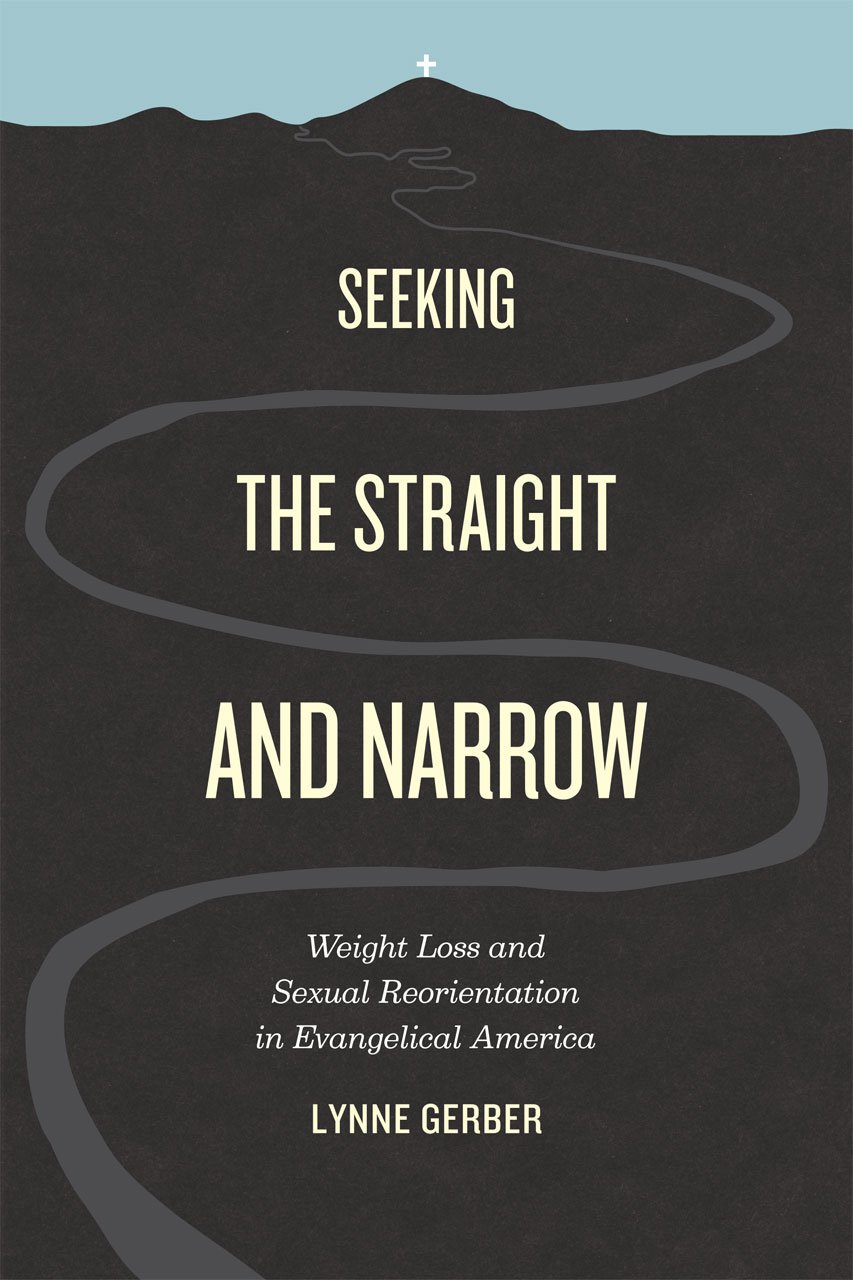
Seeking the Straight and Narrow: Weight Loss and Sexual Reorientation in Evangelical America by Lynne Gerber explores the intersection of weight and sexuality in the Evangelical church. The book draws focus to two Evangelical ministries that directly address these topics, First Place and Exodus International. First Place is a Christian weight loss program that was founded in 1981 by members of the First Baptist Church of Houston. The premise of the program is that Christians look to guidance and help from God for every other aspect of life, so they should be able to seek help from him for weight loss. First Place claims that it is grounded in both a spiritual and scientific approach to weight loss that benefits the person physically, mentally, emotionally, and spiritually. It uses divine assistance rather than intervention, and sees divine authority as complementary to scientific authority rather than contradictory. With the rise of the ideas that homosexuality is immutable and natural from the gay right’s movement, ex-gay ministries grew in opposition. Exodus International is an organizational umbrella for roughly one hundred and thirty ex-gay ministries that evolved when the new evangelical movements started to reach out to gay people in the 70s. These ministries use evangelicalism to focus on issues like drug addiction, cultural exploration, sexual promiscuity, and homosexuality. Gays and lesbians that were “newly saved” went to these ministries to reconsider their sexuality in the context of their faith. Exodus International was intent on helping people overcome their homosexuality rather than them being in the closet or taking the liberal approach of acceptance. The ministries see homosexuality as a moral and psychological issue that is undeniably a sin.
Although the connection between homosexuality and fatness is not a direct one at first glance and First Place and Exodus International exist in different realms of the Evangelical world, Gerber argues that they are in fact deeply connected. She states that “both are associated with excessive desires and excessive bodily expression, excesses that have long disturbed American culture and moral sensibilities” (Gerber 14). Also, homosexuality and fatness have been a “focus of containment” for the state, medicine, and religion. “Losing weight and reorienting sexual orientation are projects fueled by a tension between malleability and limitation that is very compelling in American culture” (3).” The interconnectedness between ex-gay ministries and weight loss ministries through the focus on the body, excess, containment, and malleabillity displays a strong similarity between the two groups that would not come to mind when first looking into these topics.
The monograph is split into an introduction, three chapters, each with two subchapters, and a conclusion. This setup provides for a very organized and clear structure of Gerber’s argument. The first chapter titled, “Framing Right and Wrong,” is split into two subsections, “Sin” and “Health.” This chapter discusses how evangelicals use sin and health as a way to argue what is morally right and wrong. Food is often talked about in relation to sin, sinful foods or the sin of overconsumption of food. Homosexuality as a whole is seen as a sin by many religious communities. Gerber discusses how the definition of sin varies from person to person. Some people believe that some sins are mild and “not what God created you to be” (39) or to be very harsh and “disobeying God’s commands” (40). On the other hand there are people that believe a sin is a sin and that all sins are seen as equal in the eyes of God. One of the most interesting things I found in this section was Gerber’s claim that gluttony is seen as a worse offense than homosexuality in the bible but in Evangelical American society, homosexuality is seen as worse. In “Health,” Gerber discusses how “the Lord is conflated with health” (53) and any behaviors that do not promote health are against God’s will. Each Evangelical group equates their ideal with health, heterosexual relationships being the only healthy relationships, and having low cholesterol or weight is the only way to be healthy. The next chapter, “Making Christian Bodies,” discusses how these programs place the responsibility of the outcome on the participants. If people want to see change, either in their sexuality or weight it is on them to make that change. This then puts the success or failure of the program on the participant and not the ineffectiveness of the programs. The third and final chapter titled, “Accountings,” is split into “Success/Failure” and “Breaking.” In “Success/Failure” Gerber discusses the approach of the ex-gay and fat-loss groups. Both use a flexible programming design which lets participants talk about their frustrations about how they are not seeing progress. This pulls attention away from the program and to the actions of the participants. The flexibility makes it so the program’s successes and failures can be justified and not questioned. The section “Breaking” posits that the rise in queer activism and fat positivity and acceptance movements has allowed for positive narritives about gay and fat Evangelicals. As a result of this rise, Exodus and First Place had to work against those new movements to retain their membership and participant devotion. This was, however, not successful as many participants in these programs reach a breaking point and leave. They then find acceptance in themselves and their fatness or gayness. “Sexual identity is no more inherently true than religious identity. If people feel they need to pick, they may pick either” (223). The final conclusion of the book discusses how these ex-members must face an internal battle between their fat or gay identities and their Evangelical identities because they feel they cannot exist as both harmoniously. Gerber comes to the acceptance that some people, although not necessary, feel like those identities are not compatible and must choose one.
Lynne Gerber is an independent researcher and scholar. She has held academic positions at both the University of California, Berkeley and Harvard Divinity School. Presently, she is an independent researcher based in San Francisco. At the time of writing this monograph, Gerber was a research fellow in the Religion, Politics, and Globalization program at the University of California, Berkeley. Gerber’s research focuses on religion, the body, and morality.
Gerber used qualitative research in her investigation through participant observation, interviews, and content analysis of ministry materials. She attended First Place meetings for seven and a half months and although she was not a Christian and they knew she was a researcher, the group welcomed her and filled in the gaps of what she might not understand without a Christian background. However, it was not as easy to get participant observation in Exodus International. The groups were not welcoming to a researcher that was neither gay nor Christian. They had experience with undercover journalists and also thought that she would not understand their teachings or process since she was not a part of the groups they worked with. Therefore, she conducted her research through public gatherings and conferences of ex-gay ministries. She also interviewed sixty three people, twenty eight from First Place, twenty eight from Exodus, and 7 former members of Exodus. She is transparent in the possibility of bias in her samples as the majority of them were white and in leadership roles.
One of the main strengths I found with Gerber’s book was how she took into account all perspectives on these issues and did not use her preconceived notions on the topics to influence her findings. She is very explicit in saying that everyone comes into the book expecting a different answer based on their beliefs about religion, gayness, or fatness. She knew that the people she interviewed and worked with throughout the process were expecting fair representation and that their vulnerable experiences were not going to be exploited. I think she shares their stories tastefully and respectfully, without any bias and without passing any judgement on them. I personally had thoughts about this book before reading it that were proved wrong. I think that the work is written very well and tells all sides of the story even if it’s not necessarily what some audience members want to hear. She acknowledges that there is validity to these programs while also talking about the pitfalls of them.
The main weakness I found in the book was that the samples that Gerber used in her research were mainly white- 5 out of 63 participants were people of color. Although Gerber explicitly recognizes this underrepresentation in her analysis, it does not change the fact that her findings are not an accurate representation of the population. The attitudes and experiences collected from the Exodus and First Place people are only really representative of the white experience. The social impacts of weight and sexuality are not independent of race, for example a fat white person, fat black person, skinny white person, and fat black person will all have very different attitudes towards their fatness or lack thereof and will all have very different experiences regarding their fatness. Another example is that black gay men are more likely to face adversity than white gay men. Queer theory has historically already been focused around the white experience and failing to complete a more diverse assessment adds to this issue. Painting a white centered narrative of experiences in these Evangelical programs does not provide a comprehensive, representative view on how the programs affect people and the success of them.
Overall, I enjoyed this scholarly read. I think it was a very interesting intersection between queer studies, fat studies, and religion studies. The book is written well and structured clearly, making it a read that is fairly easy to understand and follow while also being engaging. It is fascinating how these two Evangelical groups that seem to have nothing to do with each other, are very similar in their ways of teaching and programming, their beliefs around the things they are trying to fix, and how neither of them are very successful for their participants.
Works Cited:
Gerber, Lynne. Seeking the Straight and Narrow : Weight Loss and Sexual Reorientation in Evangelical America, University of Chicago Press, 2012. ProQuest Ebook Central, https://ebookcentral-proquest-com.proxy048.nclive.org/lib/davidson/detail.action?docID=772137.
One brand new theory I came across in GSS 101 this year is fat studies. It has never occurred to me that studying fat is included in the realm of gender and sexuality studies. Before this semester, I was convinced by the stigmatization of fat in media that it is related to health problems and never aware of my privileges and oprressions associated with fatness. Furthermore, our discussion on fat studies made me realize how being fat and body sizes act as a social identity, just like gender and race.
But what confused me at first was the introduction to fatphobia existed in American context, as my impression of the U.S. society is not fatphobic. What considered “overly fat” in China may not be surprising in America. Only last year, there was a major Tik Tok trend in China when girls tried to fit themselves in children’s clothes to prove how slim they are. I witnessed a lot of women internalizing ridiculous body shame as I grow up, and naturally, I assume America accepts fat people better. Nevertheless, I know that it is not the case after taking GSS. In addition, I start to compare different forms of fatphobia in American context (what I have read in class) and in Chinese context (what I experienced in the past)
Inspired by this, I would envision myself doing a research after coming back to China, in which I would draw a comparison between how fatphobia is expressed in two countries. There might be genetic factors as well as differences in diet cultures that determine factors like average weights as well as people’s common ideas about “normal body.” It would also be interesting, considering America and the entire western world control media and culture export, and their values influence the east. For example, fitness training and gyms are becoming common in China nowadays, and that could also impact on the forms of fatphobia in China. Most important of all, by studying how fatphobia is expressed in different ways, I would be better capable of combating it, after understanding how it convinces people in different cultures.
One thing that has stood out to me after taking GSS101 this semester is how feminist and queer theory is inherently inaccessible to the average person. Theory has been kept in the realm of academia and most do not ever interact with or see feminist and queer theory until college, if ever. In my experience, I never learned about any theory in any of my years in public school and I had never heard of most of the scholars we discussed until reading their work in class. This course has been eye opening for me and I feel a more informed person after taking it. I personally think that it is important for everyone to, at the very least, know the basics of feminist and queer theory because I believe it informs critical thinking and social awareness.
I am interested in the development of an interdisciplinary course that would be a part of the educational studies department and the gender and sexuality studies department at Davidson College. This course would cover how we can incorporate theory into elementary and middle school education. A focus would be on how we can create a standardized curriculum that would educate students on feminist and queer theory but in accessible terms so that it is easy to understand. Examples of projects in the course would be: to pare down Michel Foucault’s “History of Sexuality” into a simpler, easier to understand format, to develop a lesson plan that teaches about the waves of feminism and how they have shaped women’s rights, or to incorporate bell hook’s theory from “Black Women Shaping Feminist Theory” into a presentation and assignment suited for different grade levels. Throughout the development of this course and then into how this course is taken into the real world, it will be important to ensure that the information covered is intersectional and inclusive.
Young students that do not feel like they fit in society’s definitions of gender or labels of sexuality will see early on that they are valid and that the whole concepts of gender and sexuality are ever changing and fluid. Introducing these ideas at a young age will cultivate a generation that will break down the gender binary, sexuality labels, and will create a more inclusive and accepting society.
Taylor Swift’s pop anthem, “The Man,” is a catchy, upbeat song aiming to address the inequality between how female artists and male artists are treated and talked about. With a driving bass line, fun and catchy melody, and easy to understand lyrics, this song is able to reach audiences young and old alike. In her song, Swift discusses how every aspect of her personality, looks, actions, and decisions would be seen in a different way if she were a man. In our society there is a double standard between what is acceptable for men to do and for women to do.
The line “They’d say I played the field before I found someone to commit to” addresses how when a woman cycles through multiple relationships before settling down with “the one,” she is judged differently than a man would be even though it is very common for both men and women to have many relationships. Swift changes this negative narrative by stating “And that would be okay for me to do” confirming to her audience that having multiple partners in life is normal and not something to be ashamed of.
Later in the song, Swift says “When everyone believes ya/ What’s that like?” This line is referring to the #MeToo movement and how women that come forward about sexual assualt, harrassment, and rape are most often doubted and questioned. Victim blaming is present in our society and is disproportionately against women more than men.
The final line that stood out to me when listening to this song was “What I was wearing, if I was rude/ Could all be separated from my good ideas and power moves.” Women’s clothing is all too often equated with their success and the quality of their work. Instead of focusing on what women actually have to say or what their ideas are, the focus is on what she is wearing. Specifically, when female artists, actresses, or celebrities are interviewed the topic is almost always about what they are wearing, or how they look. In contrast, men are typically interviewed on what their acting experience was like, or what the song is about, for example.
I connected this song to the reading by Lorber called “The Social Construction of Gender.” In the reading she argues that “it does not matter what men or women actually do; it does not matter if they do the same exact thing, the social institution of gender insists only that what they do is perceived as different” (Lorber 58). In “The Man,” Taylor is arguing that if she did not change anything about her actions but existed as a man, she would be perceived differently by society and treated better. Simply because we as a society perceive some actions to be more acceptable when done by a certain gender, it has become unacceptable to cross those made-up gender barriers. The issue is that there is no rhyme or reason for why we have these expectations for what different genders can or cannot do. The idea that what a woman is wearing determines her worth or success or how many partners a woman has had determines her value is a baseless belief that society has created. Taylor Swift is one of, if not the, biggest artist currently. She has an enormous platform and the ability to create change with the message she shares through her artistry and voice. This song is an attempt to address the disparities between how female and male artists are treated and spark discussion on how we can create change. Her feminism is not perfect and she can do a lot more to include intersectionality in her feminism and to use her priviledge uplift marginalized voices.
After taking GSS 101, a theme that stood out to me was understanding gender as a social construct. Growing up I had a very limited mindset about gender and sexuality and accepted many of the ideas as they were presented to me. However, over the years I have understood more about the complexities and many identities within gender and sexuality. With this in mind, it led to me thinking about how I can use these ideas to influence an art piece for campus to spread awareness and normalize identities that aren’t ‘cis-gender heterosexual’. While there are already many sculptures, especially of bodies, around campus I wanted to propose a new sculpture of a body that implements the ideas of the diversity of gender identities and sexual orientations. My piece is inspired by the metal sculpture on campus by Jaume Plensa, titled Waves III. This piece is made up of letters from all different languages to signify unity and diversity. It is based upon cultural identity and the way that one individual holds a connection to a greater culture.
Waves III, Jaume Plensa
My idea is to create a sculpture on Davidson’s campus that intersects the ideas of gender as socially constructed as well as show the variety of identities among individuals. The sculpture would be made out of glass and would depict a human form, without genitalia, to represent an individual not tied to a gender. The position of the body would be arranged so that the arms were extended outward to signify openness of the individual. The idea is to show the complexities of humans and the many identities, both genders and sexual orientations that exist. The form of the body would be composed of words carved into the glass form of sexual identities, such as: “queer, bisexual, lesbian” and words associated with gender identities: “she, they, him, non-binary, trans.” And instead of the exterior of the form being perfectly smooth, shards of glass would poke out in all different directions to create an ambiguous body shape.The words would be repeated all over and done in different fonts to completely cover the entire form. The sculpture would symbolize the many identities that don’t receive recognition in a heteronormative society. This sculpture would work towards normalizing those identities that are not cis-gender heterosexuals, but also serve as a reminder of the hardships of LGTBQ+ individuals. The title of this piece would be “Complexities of Intersectionality” and would capture the chaotic and diverse nature of the gender and sexuality spectrum. While this sculpture wouldn’t explicitly touch upon identities within class and race that also affect an individuals experience, this would be the starting point to begin examining identities and start the conversation about other impacts on an individuals’ experience.
King Princess, in her Genius lyrics interview breaking down the song, states how “gay people have always existed in religious texts, but never in a way that is respectful.” Within the lyric “honey, on your knees,” King Princess is referring to being bowed down to like a god or saint. It is a strong move to take back this power through the inclusions and allusions to religion throughout the song. Other areas in this song, including “cause when this day is done, I still got shit to run” mention how she is in charge and in control of what she decides. It also sends the message that one can succeed in life with or without the relationship, and how important healthy independence still is even while being with someone. This is a component of empowerment: understanding our worth in both the presence of and in the absence of a partner, and being with someone who does not discredit or misinterpret this fact as selfishness. Her albums have definitely opened up conversations about gender and sexuality, and the open space a person can live in between the binary. Through my recent readings, I have learned that King Princess has, however, faced controversies regarding the “Cheap Queen” album, as some may argue it is capitalizing off of queerness instead of helping to foster an inclusive community, and there are several stories online regarding some problematic actions done by King Princess. So, in general, while songs may result in a boost of confidence among listening, the intentions of the artists can be contested.
“Nina Cried Power” by Hozier ft. Mavis Staples may not be regarded as a feminist tune, as it is more of an anthem of the Civil Rights movement, but it is an exceptional song of revolution and includes the names of some incredible activists in the lyrics, including Nina Simone, and the voice of Mavis Staples herself. I think it always deserves a replay on Spotify. It is an incredible composition and promotes intersectionality, so I figured I might add it to our class playlist based off of our discussions and focuses throughout the semester as well.
Davidson College is dedicated to “improv[ing] the Davidson campus climate for our transgender, genderqueer, and gender-variant students, faculty, staff, community members, and alumni” (LGBTQIA + resources, Davidson). However, much work still needs to be done to provide basic needs, such as comfortable bathroom stall usage, to the increasingly diverse student body.
A Gender Inclusive Restroom Map can be found on the school’s website showing the gender-inclusive restroom options for the members and community of Davidson. At first glance, it appears that the school provides a wide range of gender-inclusive restroom options. After analyzing the map, all options are single-occupant restrooms which single out people who do not identify as cisgender. A few single-occupant restrooms on campus are still designated as either “male” or “female”. Shockingly, many places on campus designed to be “safe” places for students like Residence Halls (Akers, Knox, etc) and Student Life Buildings (Wildcat Den, Summit Coffee on Campus, etc) include no options for people in the LGBTQIA community who do not identify themselves as male or female. Academic buildings at Davidson College that do have single-occupant stalls tend to have them on the basement floor level. Students who need bathrooms not labeling them as “male” or “female” have a hard time accessing stalls quickly.
It is evident that Davidson has a long way to go in creating a community that “welcomes and fosters mutual respect among all campus members” (LGBTQIA + resources, Davidson). I believe the best way to achieve this goal is by reconstructing bathroom labeling in restrooms at Davidson College. However, it is important to note that creating a safe bathroom environment that nurtures everyone’s needs will be a challenge and a long-term plan. To start, Davidson College should redesign the bathroom signs outside the door. Rather than having your typical ‘male’ and ‘female’ doll symbol, there should be a mixture of both figures where half is wearing a skirt and half is wearing pants. The same symbol should be used in all bathroom signs on campus. Changing the picture on a sign seems like a minor change, but is a big step towards creating a positive climate and raising awareness about gender diversity on campus. Along with labeling, the single-use bathroom should be changed from its traditional “unisex bathroom” title to “community bathroom.” Doing this, single-use bathrooms are rooted to meet everyone’s needs and eliminate the pressure of having to identify as ‘one sex’ as the term ‘unisex’ emphasizes. Using the term ‘community’ accounts for everyone on campus and eliminates gender and identity labeling.
In the long run, Davidson can create a plan to create multi and single-community bathrooms on every floor starting in academic and residential buildings to provide options for everyone at Davidson and make basic tasks, like using the bathroom, accessible to all. Reconstructing the bathroom signs and labels is only the beginning.
Part of being a freshman at Davidson is looking for clubs for everything you’re interested in. Freshmen crave connection to people interested in the same things they are, much like anyone does. Last year, when I was a freshman, I fell into many clubs that I now hold leadership positions in, clubs where I found some of my closest friends. Some of the clubs I joined included Weekly College Worship (a multi-denominational Christian group that holds a worship service once a week), UKirk (the Presbyterian group on campus), and the clubs/affinity groups for LGBTQ+ people. I was looking for ways to engage with some of my identity communities: my faith, my sexuality, and my gender. By my engagement in these groups, I noticed a distinct lack of a space meant for queer people to interact with their faith. While the spaces I’m active in are affirming of LGBTQ+ Christians, they aren’t spaces designed with us in mind. This distinction is an important one to make.
To start working on a solution to this problem, I propose a dinner event or series, maybe co-sponsored by the Chaplains’ Office and the Center for Diversity and Inclusion, focused on creating a space for queer people with a desire to explore their connection to religion. While my own experience lies with being a queer Christian, I would love for this to be an interfaith space that celebrates each person’s connection to both their queerness and their faith. My book report selection for this class, A House of Prayer for All by David K. Seitz, looked partially at how people in the LGBTQ+ community engage with faith when they’re in a space that they feel comfortable exploring the two together. Spaces for these connections to happen already exist in other places, and the Davidson community would be better by encouraging them.
Areas and groups made intentionally for LGBTQ+ students at Davidson are lacking. The Lavender Lounge, while a good resource, is a tiny room near a study area and a laundry room in the basement of a freshman dorm. The Spencer-Weinstein Center, while a great space for all affinity groups on campus, is exactly that: one building meant to allow space for every affinity group on campus. For the queer community, there’s either YANASH or Queers & Allies. Both organizations are wonderful, I’m by no means trying to bash any of these places or groups. My only point is that I can count the spaces, both physical and relational, intended for queer students on one hand. For a group as diverse and with such incredibly varied experience as the queer community, surely we are deserving of more than this? A group for support, encouragement, and community among religious LGBTQ+ people at Davidson deserves a chance.
Although Fifth Harmony may no longer be together, the message in their hit song “BO$$” remains relevant and important. The lyrics paired with the strong brassy sound of the instrumentals make this song an anthem of empowerment for women.
This song portrays ideas of second wave feminism, defying ideas that women must stay in the home and only be a housewife, and instead empowers women to work and get the money they deserve, demanding respect from everyone around them. This can relate to one of the most prominent works from the second wave, The Feminine Mystique by Betty Friedan, saying “She can say ‘no’ to those mass daydreams of the women’s magazines and television, ‘no’ to the depth researchers and manipulators who are trying to ruin her life” (Friedan 280). Lyrics such as “Workin’ for the money ‘cause it’s what my momma taught me So yo ass better show me some re-spect” reject stereotypes continually placed on women, similar to Friedan’s quote and the idea of second wave feminism overall.
Additionally, given the fact all five members are women of color, the song can be interpreted as a message of empowerment for all women, no matter their race or ethnicity. The lyrics repeatedly include strong Black women, saying “I’m on my Michelle Obama sh-” and “purse so heavy getting Oprah dollars,” highlighting the successes of notable women of color.
Not only are the lyrics empowering, but the music video sends a strong message of feminism and defying gender roles. Within the first ten seconds, messages such as “Find yourself. And be that,” or “Dreams don’t work unless you do,” are displayed across black screen for us to really read and understand their importance. There is also a scene of arm wrestling with the five girls against a group of men, where they all take their turn beating each man in a match. Arm wrestling has always been portrayed as a sign of strength and masculinity, I’ve noticed particularly in TV shows or media, so having all the girls beat the group of boys shows the reversed gender roles the message of the song conveys.
Something that could have added more nuance and depth to the song is the mentioning of certain struggles or difficulties the members, or women in general, have to face. Lyrics such as “Don’t want yo compliments, use common sense,” or “I ain’t thirsting for no bae” hint at struggles women face by highlighting assumptions often made about women, but the message of the song could have been more impactful if deeper, more direct struggles women universally can relate to were included. Bringing back the fact that all of the members are women of color, while I love that they included other iconic Black women in the song, it would have been more impactful to see the members mention moments of struggle and triumph from their perspective as women of color. This would add more interest and depth, avoid repetition, and make it more relatable to women of color everywhere.