How the Clueless Creators of “Clueless” Contributed to a Harmful Culture Around Gay Men

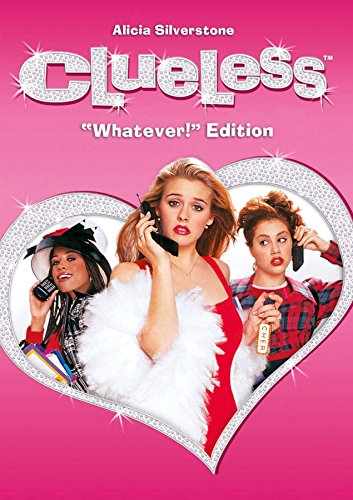
Amazon.com: Clueless : Alicia Silverstone, Stacey Dash, Brittany Murphy,  Paul Rudd, Donald Adeosun Faison, Dan Hedaya, Justin Walker, Donald Faison,  Elisa Donovan, Breckin Meyer, Jeremy Sisto, Aida Linares, Wallace Shawn,  Twink Caplan,

Arguably, one of the most iconic movies ever created is “Clueless.” This movie features everything you could want and more from a classic 90’s high school movie. The lead, Cher, is the “it girl” at Bronson Alcott High, and she seems to have her life fully figured out. With her side-kick Dionne, she takes on some typical challenges accustomed to the privileged teenage life, like failing her driver’s test, going to parties, and meeting a cute boy she might have a crush on. His name is Christian, and, despite Cher’s keen eye, she fails to realize that he is gay. 

Cher tries every play in the book to try and seduce Chrisitan, she drops her pen to bait him into picking it up for her, invites him out to parties, and brings him to her house when her father is away. She puts an entire roll of cookie dough in the oven, in the hopes that the warm, sweet smell in combination with her domestic abilities will be enough to woo him. She ends up burning the cookies, and they move on to tour the house. As they walk through the backyard, Chrisitan is telling Cher what a beautiful art collection her father has and comments on all the statues talking about the various artists and meanings behind the works. This is a stereotype associated with gay men, a love and appreciation for art. This is only one of many different stereotypes the creators of “Clueless,” put on Christian, however.
Clueless': Cher's Love Interest, Christian, Was Almost Played by This  'Twilight' Star

All the characters from the movie continuously point out the effeminate qualities Christian has. His love for art and fashion comes to mind. He is also the most well-dressed and groomed man on the show. All these things are associated with and are stereotypical qualities of gay men. After the not-so-romantic night between Cher and Christian comes to an end, the movie flashes forward to Cher in the car with Dionne and her boyfriend, Murray. Murray is trying to teach Dionne how to drive while the two of them listen and try to counsel Cher about her failed date. After she says she was ready to, “go all the way,” and have sex with Christian, Murray laughs out loud and says, “are you bitches blind or something? Your man, Chrisitan, is a cake boy.” The sexist language he uses here and throughout the film is enough for a whole other essay, but he uses an old derogatory term, “cake boy,” meant to put down and make fun of effeminate men. He then goes on to list more stereotypically gay things that Christian does, like enjoying disco music and reading Oscar Wild. He then finishes his line by saying “he’s a friend of Dorthy if you know what I’m saying.” After all of that, Cher finally realizes that Christian is gay.

While the creators of the movie did a good job at making Chrisitan a likable character, they abused gay stereotypes and the “gay aesthetic” of the time to perpetuate a misguided view of what being gay means. The Hollywood interpretation of gay men specifically, was one of two character archetypes. Either a creepy, predatory character that you are meant to hate and fear, or an effeminate one that is clean, pristine, and loves to shop. Chrisitan is clearly the latter. 

Having this “gay aesthetic” be so wildly loved, admired, and used in media is damaging to gay youth. We’re told this is what it means to be gay. You have to dress a certain way, act a certain way, and like specific things to be “gay.” This puts pressure on young gay men especially to behave like this idolized character of fashion, art, and shopping. If you don’t look put together you aren’t good enough to be gay. If you don’t love shopping with your girlfriends then you’re either in the closet or some kind of outcast. These characters often become the “gay best friend” of a powerful female character as well. Effeminate gay men were never portrayed as powerful or independent, they always had a popular girl to take care of them and protect them from the rampant homophobia and toxic masculinity of high school. This is damaging to watch as a young gay child. You are told that to fit in and be accepted, you have to be feminine and hide behind other people for safety. When you stand up for yourself a bully will knock you down, and if you don’t act “gay enough,” neither the gay nor straight people will want to include you. Yet, this feminine gay aesthetic was one of the only positive representations of gayness from before the 2010s. Despite how damaging it is to be told you must be and act a certain way, it was the only way to survive.

Gayness is more than being effeminate and liking clothes and Britney Spears, however. As more modern media is starting to realize, gayness looks different for everybody and there isn’t one box of mannerisms and inflections that you can sort us into. Gay people each have their own personalities, behaviors, and interests. Being gay is just one part of us, one identity we have, nothing more. It can mean to you whatever you want it to. That’s why having this kind of representation (as in characters like Christian) is damaging to the gay community. Although Christian is seen as this perfect, sexy man better than all the other men in Bronson Alcott High, his character perpetuates a harmful culture around being gay.

written for Autostraddle | autostraddle.com

work cited:

Heckerling, A. (1995). “Clueless” movie poster. Amazon. Paramount Pictures. Retrieved October 1, 2021, from https://www.amazon.com/Clueless-Alicia-Silverstone/dp/B01M9B4FDS.

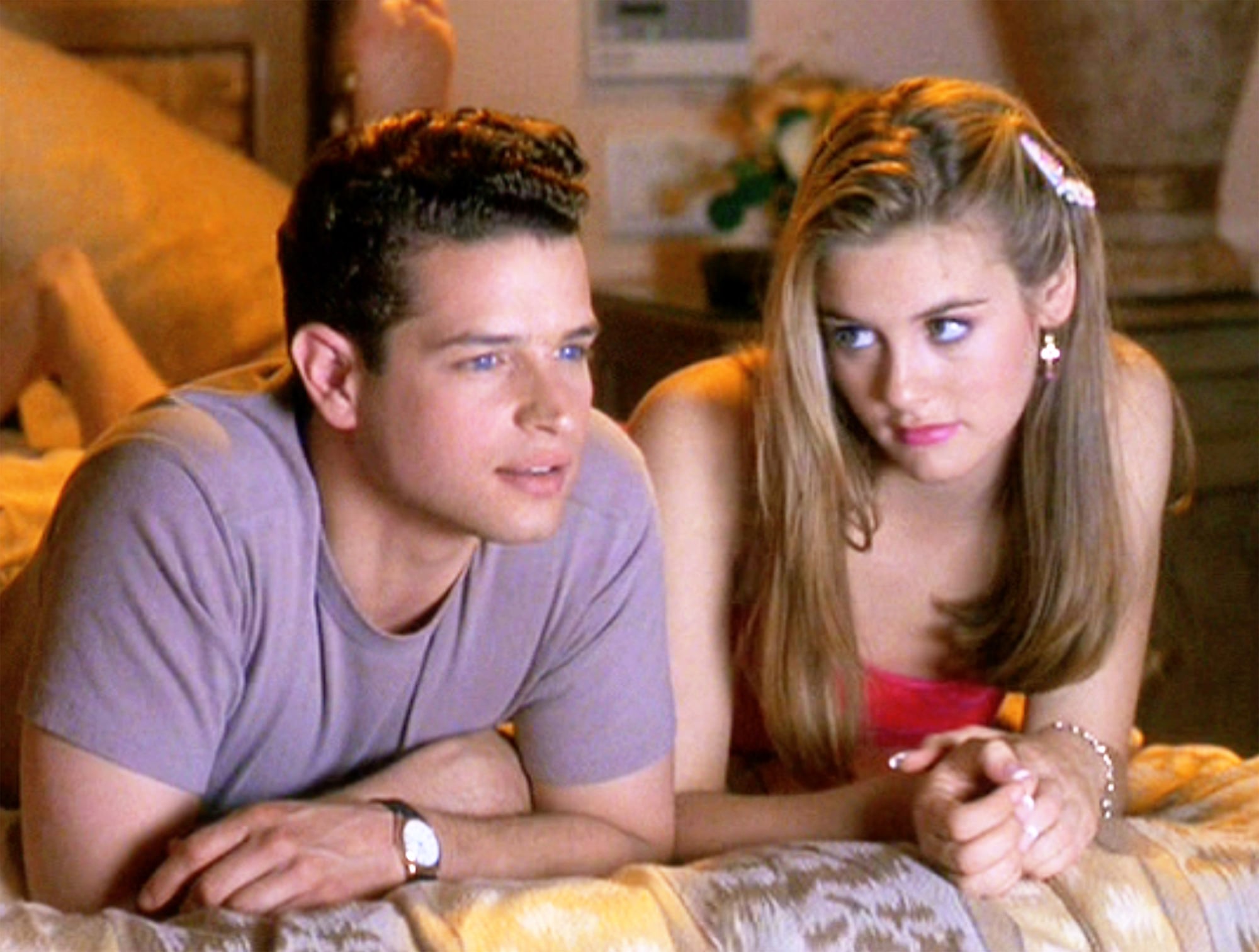
Heckerling, A. (2021). Cher and Christian watching a movie. cheatsheet. Paramount Pictures. Retrieved October 1, 2021, from https://www.cheatsheet.com/entertainment/clueless-christian-was-almost-played-by-this-twilight-star.html/.

From a Pantsuit to They/Them: How “One Day at a Time” Promotes Everyday Conversations on Gender and Sexuality

Main Characters of One Day at a Time. From left to right: Alex, Lydia, Penelope, Schneider, and Elena.

Are you looking for a new show to watch where you can get your fill of comedy and strong feminism? No?…Um, uh, okay then; you probably do not need to continue reading this then. Yes?…Well then One Day at a Time is definitely the show for you. Based off of the original show One Day at a Time that first aired in the 70s, the modern One Day at a Time (2017-2020) is available on Netflix and brings humor, feminism, sexuality, and family all together. The show follows a Cuban-American family in California, which includes the grandmother who immigrated from Cuba, Lydia, played by the stunning Rita Moreno, the daughter of the grandmother, Penelope, and then the daughter’s two children, Elena and Alex. It is so hard to pick one episode of this show that displays feminism and social justice best because every episode of the show introduces or addresses a large variety of modern issues elegantly. For this reason, I will highlight a few episodes from the show that display how modern and influential the show is. Honestly, explaining just one episode does not serve the show enough justice for how significant it is. 

The very first episode of this Netflix original show introduces some of the main characters that appear throughout the show’s duration, including the mom, Penelope, and her daughter, Elena. Elena is fifteen years old at the beginning of the show and the first episode focuses on her opposition to having a quinceañera. Elena is opposed to having a quinceañera because of its misogynistic roots and does not want to be put on display like a show horse (and personally, I cannot blame her for feeling that way). This is very upsetting news to her family as they fully embrace their Cuban roots because they are proud, as they should be. While Penelope and Lydia try to get Elena to embrace her Cuban roots with them, Lydia also tries to tell Penelope that she does not need the antidepressants she has been prescribed. Lydia is a little old fashioned and does not agree with the use of antidepressants. Going against her mother’s opinion, Penelope eventually does take the antidepressants for the betterment of her mental health. This is promising since being a single mother, and a non-white single mother especially, is not easy to say the least. Elena does eventually decide to have a quinceañera by the end of the episode to please her family, as long as some things are done to Elena’s liking, such as what the dress she will wear will look like. Lydia eventually makes her a pantsuit to wear to her quinceañera, and it is a truly touching moment later in season one. 

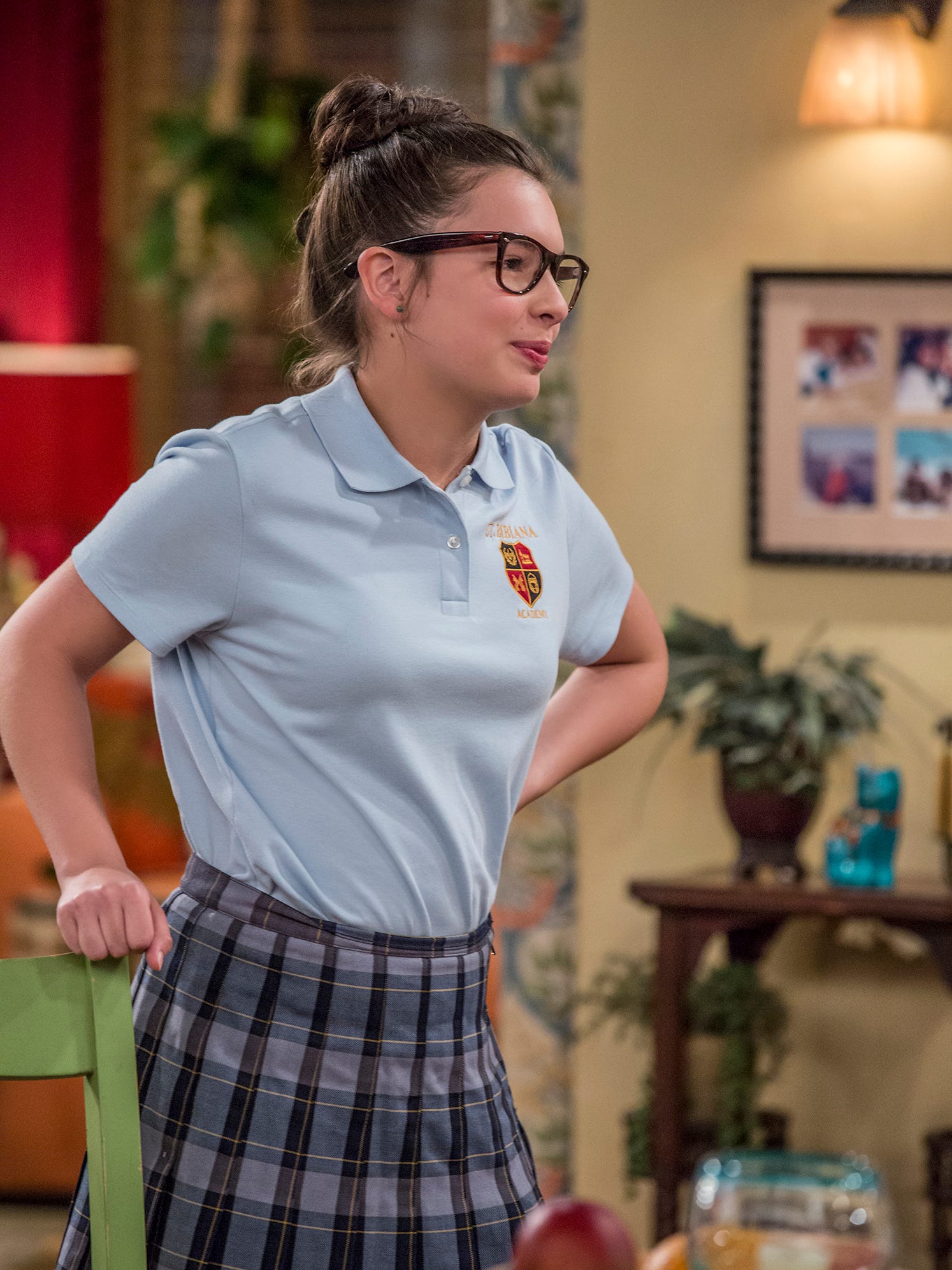
Elena in her school uniform at home.

Further into the first season, the show addresses sex, porn, and sexuality. When porn, a video of a threesom specifically for those who are curious, is found on Alex’s computer, the household breaks into chaos on what to do. Penelope approaches Alex about this, but he remains adamant that it was not him watching the porn. We later learn in the episode that it was actually Elena watching it on Alex’s computer. Penelope tries to give Elena the sex talk so she is prepared if things begin to go further with her boyfriend at the time, but in the process, Elena comes out to her mom as gay. Penelope is surprised, but supportive (phew, thank god). Side note: it is also mentioned in that same episode that Elena loves to read Autostraddle articles, so yay, we have made it to television everyone (and honestly I think she has got good taste in blogs)! Elena being honest to her mother and coming out shows bravery while Penelope approaching Elena shows motherly compassion, all while tying in humor in addition to expression of sexuality. 

In season two, Elena invites over a friend of video gamers who introduce themselves to the rest of the family with their preferred pronouns, confusing Penelope and Lydia as to why the teenagers are doing this. One friend of Elena’s, Syd, uses they/them pronouns. Elena’s friends introducing themselves with their pronouns casually normalizes this concept for the audience and provides a learning opportunity on gender for Elena’s family as well. As season two continues, Syd and Elena begin to grow closer to each other, eventually forming a relationship together. The two are very awkward with each other at first when they both learn that the other is gay, but it is a joyous and funny moment well written into the episode. Their relationship hits bumps like any relationship does, but it also displays Elena still figuring out her sexuality and who she is as an openly gay person now. Syd has had girlfriends before, but Elena has not and watching Elena learn to be authentically herself is an encouraging storyline. Syd being supportive of Elena discovering who she is is another lesson with sexuality seen in the show. One Day at a Time brings many modern issues into play and goes deeper than the surface level, taking many factors into account. It hits on many difficult subjects, but it is all portrayed tastefully with humor added in. 

Elena and Syd both learn that the other is gay in this awkward, but funny scene from season two.

These are only a few of the many topics that are crucial to today’s society that this show addresses, without giving too much away for those interested in watching the show now. This show is honest and displays how sometimes feminism is not what everyone understands, however, when one feels strong enough to educate others around them, like Elena, then these ideas continue positively. Elena is a really important part to introducing and addressing many social justice issues head on through being intelligent and well educated. One Day at a Time addresses queerness, sexuality, feminism, gender, heritage, race, class, and so much more. This show is amazing, funny, and progressive, and I highly recommend it be a show that you add to your Netflix list (at least for those who said yes at the beginning of this article anyways, and if you said no, why did you still read this far?). One Day at a Time tells us that educating others on today’s issues, including feminism and sexuality is often not a simple task. However, taking the time to explain ideas thoroughly is worth it in the end for both the ones who care deeply enough to teach others, and the ones that listen and are just beginning to learn.

Written for Autostraddle | www.autostraddle.com

Works Cited

Kellett, Gloria Calderon, and Mike Royce. One Day at a Time, Netflix, www.netflix.com. 

Lawler, Kelly. “Isabella Gomez as Elena Alvarez in ‘One Day at a Time’.” USA Today, 23 Jan. 2017, www.usatoday.com/story/life/tv/2017/01/23/one-day-at-a-time-coming-out-story-elena-netflix/96787436/. 

“ME GAY TOO – One Day At a Time Elena and Syd.” Youtube, Netflix, 2018, www.youtube.com/watch?v=GFRZXDXlHek. 

Poniewozik, James. “From Left, Marcel Ruiz, Rita Moreno, Justina Machado, Todd Grinnell and Isabella Gomez in ‘One Day at a Time,’ on Netflix.” The New York Times, 4 Jan. 2017, www.nytimes.com/2017/01/04/arts/television/review-the-2017-class-divide-in-a-new-one-day-at-a-time.html. 

Progressive period products: degendering language and representation in the menstrual hygiene industry

JUNE [@thejunecup]. Photo of Model Holding Menstrual Cup. Instagram, 29 June 2020, https://www.instagram.com/p/CCCdEtTF8f_/.

One of the most recent items to surge in popularity with advocates for eco-friendly bathroom swaps is the menstrual cup. These cups are typically made of silicone and shaped like a cone or a bell and have cult followings because they minimize risk of toxic shock syndrome, can safely be used for more hours at a time, produce less waste, and are often cheaper than other hygiene products over the long term. For decades, the market was dominated by a single brand; however, in recent years there have been a handful of new brands, campaigns, and curious cup-users.

June is a menstrual cup brand that was founded in 2017, among a small handful of cup competitors. What sets them apart from many other menstrual hygiene product brands is their shift away from heavily gendered language for periods, such as “feminine hygiene”, or referring to their customers as women and girls. One of their Instagram posts during the summer of 2020 depicted a model with shorter hair and masculine features, smiling and holding a June cup. The caption of the image reads: “At JUNE, we strive to make sustainable menstrual care accessible and affordable to everyone. We’re excited to be a part of a community of inclusivity that’s always growing”. This was posted nonchalantly and without any fanfare, hashtag, or huge announcement of a related marketing campaign. The social media ad does not specify the gender of the model, and the caption only refers to “inclusivity”. Yet the post still stirred up many more likes and many more comments than is typical of their posts. Why? Because their model, Skylar, is a nonbinary trans man.

The fact is that some people who menstruate are women, some are not, and there are also some women who don’t menstruate at all. Yet having a period is often explicitly tied to womanhood and femininity, a narrative that is often initiated in health class and incessantly perpetuated through media depictions of girls “becoming women” and ads for period products. Menstruation in and of itself can cause significant dysphoria for many trans men and nonbinary folks, even without alienating advertising. For a while the primary menstrual cup on the market was called the Diva Cup- some other brands now have names like Femly, Blossom, Athena Cup, Duchess Cup, and Lily Cup. And of course, the cups come in pink and purple with cursive fonts, and the packaging is stamped with floral patterns. Doesn’t seem to welcoming and inclusive, right? The majority of the imagery and language associated with advertising menstruation products is hyperfeminine and does not present the product in a way that is inclusive of their potential customer base.

What’s interesting about June’s advertisement is that by casually introducing diverse menstruating bodies as the faces of their campaign, they are not only signaling that they are a brand that welcomes all genders, but they are encouraging people to challenge their assumptions about who menstruates and the language that they use to have these conversations. They acknowledge on their webpage that they used to use gendered language to advertise their products but have realized their error and corrected it. Of course, we have to keep in mind that June is a brand, and their number one mission as a company is to sell their product. Even if their goals and values are aligned with authentic diversity and inclusion of the LGBTQ+ community, it is difficult to consider that inclusion in isolation from their marketing strategy. Since June didn’t introduce Skylar as trans in their initial post, comments ranged to enthusiastic support, to angry bigotry, to confusion. Most of the comments were expressing support and excitement for both the model and the brand.

“Messaged yall a while back about more inclusive language and so happy to see youve done the work 🤗💜 appreciate ya!” – @ileak_balance

“thank you so much for recognizing that menstruating bodies exist outside of the false binaries we’ve been taught. Thank you thank you thank you” – @novadame

However, many commenters were expressing disgust or anger at the post. A few were initially confused as to why someone who is not a woman is representing period products but seemed to understand once the brand responded in the comments.

Screenshot of comments from June’s Instagram post. JUNE [@thejunecup]. Photo of Model Holding Menstrual Cup. Instagram, 29 June 2020, https://www.instagram.com/p/CCCdEtTF8f_/.

Since they don’t identify the Skylar’s gender, June is assuming that followers will draw their own conclusions from the image. An example of a menstrual cup brand that was not so subtle and took a much different tone was Ruby Cup, which posted an article discussing how they were going to change the language on their website to be more inclusive and started off with the words “Dear Transgender Community, Sorry for being narrow-minded and for discriminating against you”. Was June’s approach to inclusivity more powerful because of its subtlety, or was the bold acknowledgement and education that Ruby demonstrated taking more ownership?

Either way, the reality is that some menstrual health brands are shifting their brand away from ultra-feminine, binary-reinforcing language and imagery that isn’t inclusive of everyone who has a period. It is important to keep in mind that these are brands with marketing goals that are behind these changes, but the hopefully representation and inclusivity demonstrated by brands like June continues.


Citations:

JUNE [@thejunecup]. Photo of Model Holding Menstrual Cup. Instagram, 29 June 2020, https://www.instagram.com/p/CCCdEtTF8f_/.

We Need to Apologize., Ruby Cup, https://rubycup.com/blogs/news/we-need-to-apologize.

Real Men Clean? A husband in the household goes viral on TikTok.

Written by Jack Muldoon for Jezebel www.jezebel.com

Maya and Hunter Leppard are the social media duo whose recent day in the life series has launched them to star status. The videos displaying a wife doing her day job and her husband cooking, cleaning and other daily chores have allowed the couple to rack up just short of 500,000 followers.

The quickly-paced video has racked up just shy of 20 million views and over a million likes. It is just one in a series of viral videos in the same bane. https://vm.tiktok.com/ZMRGHLM9W/

The tone of the video may seem mocking at first, with the meme favorite Home Depot soundtrack playing in the background and #girlboss description, this short clip could be written off as another misogynistic joke about a wife’s expectations. It appears however that the roles in the house are for real, and while they certainly want the series to be a laughing matter, the joke does not lie in the wife and husbands’ roles in the house. The short video has Hunter completing household tasks that are often still viewed in many parts of society as feminine. Making the bed, cooking breakfast, and feeding the dog are somehow the highlights of a video with over a million likes. While the humorous commentary does have a part to play, it is the fact a man is completing these tasks while supporting his working wife that draws most of the attention.

 These videos claim to fame is a man doing mundane tasks that millions of people complete every day, and this was seen as undeserved by some commenters. They argued that there was nothing extraordinary about this video and that the completion of these tasks by men should be as normal as working a construction job. The people, however salty they may be that their daily life hasn’t made them famous, are absolutely correct. These commenters are likely missing the point of the video though. The goal was not to get famous from displaying how different their life is from the “normal”, but to dispel the idea of a normal straight relationship that many still hold. While society has moved past the 1950’s era of housewives, the notion that a husband supporting his wife’s career by taking care of the house is an oddity still persists. While the number of stay-at-home husbands has hit their highest numbers ever at 2.2 million in 2016, they still only account for 16% of stay-at-home spouses. (https://athomedad.org/advocacy/statistics-on-stay-at-home-dads/). Seeing women take a role in the household that was traditionally reserved for men could be a small part in dispelling incredibly harmful notions about gender that still linger in society. Exposure to these videos and other media displaying women as the breadwinners will undoubtedly signal to young girls that the concept of marriage does not mean they need to put goals to the side and hit a pause button on their careers. These videos do participate in the idea that women are the ones typically supporting their husband’s career by addressing the relationship is not what society normally expects. While this does play into the myth in some ways, and a woman being the breadwinner in media without it being discounted as odd may be better representation, I would argue that this video is a benefit because it provides young people with an exampling differing that held in the mainstream.

Other commenters prove that these genderless still have strong gendered connotations in society. The couple recently mocked commentators who claim that this dynamic is unnatural and that Maya’s and all women’s job in a straight relationship is to support their significant other. These comments are proving the theory that every action we take is gendered, even when we believe that we have progressed as a society to the point that cleaning is not associated with women, there will always be people who assign these roles and judge those who do not conform to their standards. This video series utilizes a new medium, TikTok to help disprove a harmful trope. Young people seeing a financially strong wife and a husband complete housework and will hopefully help in dispelling the mythos of the traditional straight marriage, and as the video says, smash the patriarchy that upholds these standards.

The most recent video in the series put Maya’s point of view center stage with a retitled “Day in the life of a working wife”. https://vm.tiktok.com/ZMRGH6JwV/

The societal pressure still lays on women to be the ones taking care of the house, but these viral videos and their “like to smash the patriarchy” slogan could be helping. With the massive viewing they have, these videos may offer a fun and upbeat alternative to the societal norm. Young girls can see Maya hard at work, pursuing her goals while maintaining a healthy relationship like a true #girlboss. Seeing these strong examples at a young age and in a lively video could provide a new option that opposes the gender norms children are being conditioned to accept. 

Old Spice: Perpetuating Genderism Through Advertising

Written by Billy Schoel for Autostraddle

Who would’ve guessed?! We all know Old Spice: the pinnacle of male hygiene and every straight man’s best friend. The American-based men’s hygiene company has produced multitudes of popular commercials over the years, now laying claim to the largest share of the men’s grooming product industry. Even with the over-the-top, absurdist style of advertising that they’ve become known for, their commercials still perpetuate the heteronormative worldviews present in most contemporary advertising. In the recent commercial titled “The Man Your Man Could Smell Like”, Old Spice makes assumptions that support and perpetuate unrealistic expectations, heteronormative approaches to society, and the gender binary.

While this absolute gem of heteronormative marketing is only a mere thirty seconds, its featured fast-paced monologue is where the meat of this advertisement lies. For those who don’t have the pleasure of watching our knight in shining armor, I would be honored to transcribe: “Hello ladies. Look at your man. Now back at me. Now back at your man. Now back at me. Sadly, he isn’t me. But if he stopped using lady scented body wash and switched to Old Spice, he could smell like he’s me. Look down. Back up. Where are you? You’re on a boat with the man your man could smell like. What’s in your hand? Back at me. I have it. It’s an oyster with two tickets to that thing you love. Look again. The tickets are now diamonds. Anything is possible when your man smells like Old Spice and not a lady. I’m on a horse.” Visuals aside, see any problems? I sure do. Let’s talk about it.

Within the opening five seconds, the commercial establishes its audience and general premise. A well-defined, half-naked man nearly bursting with masculine energy exclaims “Hello ladies…look at your man…sadly, he isn’t me.” From the get-go, the commercial sets unrealistic expectations for men by comparing them to a representation of perfect masculinity. Despite the delivery’s fast-paced and absurdist nature, the commercial still establishes the inferiority of men who don’t meet the society’s standards of masculinity. The man continues, “if he stopped using lady-scented body wash and switched to Old Spice, he could smell like he’s me.” Not only does this disparage identities outside heteronormative masculinity by implying the inferiority of “lady-scented” body washes, but it also enforces unrealistic expectations for men. Additionally, by stating “he could smell like he’s me” instead of “he could smell like me”, the commercial continues its degradation of imperfect masculinity by clearly defining the ideal man and the other, forcing their separation and inequality.

The public dragging of the “imperfect man” quickly proceeds with the progression of the scene, painting a beautiful, idyllic picture of the life of the “perfect man.” He states, “you’re on a boat with a man your man could smell like.” Of course, this broadens the disparity between the perfect and imperfect men, implying that the lady would prefer the more masculine alternative over other men, even if they represented normal men in society. The precedence given to overly-masculine men concludes with the final moments of the commercial, the man stating, “Anything is possible when your man smells like Old Spice and not a lady.” Not only does it appear that Old Spice doesn’t know “ladies” smell good, too, but the quote places direct preference towards the ideal of overly-masculine men smelling unquestionably overly-masculine (talk about a tongue-twister), perpetuating, and ultimately strengthening, heteronormative conventions such as the gender binary.

Speaking of the oh-so-popular topic, this post would be quite incomplete without mentioning the commercial’s shameless defense of society’s gender binary. For starters, let’s address the assumed heterosexual relationship that the commercial stamps down as its starting point. Old Spice confines the audience into normality. Who is being addressed? A woman! Who must she love? A man—of course! What else could it be?! You mean to tell me that people have non-heterosexual relationships?! Nope, not never. Moreover, Old Spice expands the binary’s gap by implying that girls not only want just men, but the most masculine men life can offer. Men should not be wearing Old Spice to be hygienic—why would they? Men should wear Old Spice to be masculine, to attract women, to be men. Duh! Why would any woman ever be attracted to anything but the most masculine of men?! Despite my flippancy, the assumptions that this commercial makes are significant. In a world where gender/identity equality was reality, the heteronormative structures of society that enable this commercial’s marketability and ultimate efficacy would be relics of the past. Truly, the marketing of deodorant as a way to enhance heteronormative validation for men, even among their own partners, is almost as absurd as a deodorant commercial abruptly ending with “I’m on a horse.”

Also—newsflash—Old Spice works on everyone! While I’ve yet to find a man who doesn’t like Old Spice, I know plenty of other people who wear Old Spice too. Just because it is marketed to men doesn’t mean that only men use it! It’s deodorant, not a walking beacon of unapologetic masculinity. No matter how hard Old Spice tries to be the lodestar of manliness, at the end of the day, it’s a hygiene company. I could go on—but the point is that they shouldn’t be the deciding factor on what’s masculine, what’s attractive, or even what’s normal in our society. Old Spice may be a great deodorant company, but their marketing clearly needs some tweaks. Don’t even get me started on the fact that the tone of the whole commercial is rather belittling—I have to save something to write about next week.

Prada takes a racist turn down the runway

Written by Anna Newman for the website Jezebel

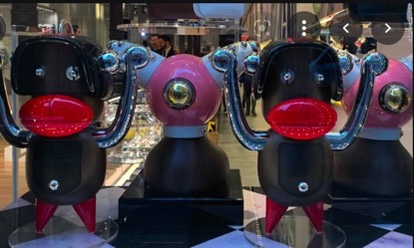
Fashion changes the world by controlling the definition of beauty. Designers like Prada, Chanel, Yves Saint Laurent, and Marc Jacobs hold positions of power as they are all high-fashion industries, catering to the materialistic needs of the white, upper-class. However, with this position of power comes global publicity and attention, which can be good and bad. One designer in particular, Prada, dug themselves into a hole of backlash after displaying a gadget with racist connotations in the window of the SOHO store in Manhattan. This gadget appeared to resemble the Golliwog, which was a blackface caricature in the 19th century. Given that Prada is a world-recognized and respected retailer, the world was shocked by this decision to display a gadget with references to “Little Black Sambo” and discriminatory black facial features. In response to this criticism, Prada took down the display, rightfully so; however, simply taking down the display was not enough to reconcile the damage that the retailer had caused. Prada decided to form a council within the company focused on diversity and inclusion for their clothing, accessories, and models. To go the extra step, Prada sent the proceeds from the remaining gadgets to a New York based non-profit that advocates for racial justice. In conclusion, the danger of the fashion industry is that they hold so much power and authority in determining what the beauty standards are and what the trends are, which means that people idolize these companies; when these companies begin suggesting racist ideas and connotations about their products, that is when we, as citizens, should start questioning where this position of power is coming from. Why does the high fashion industry have the authority to deem what is considered beautiful and trendy? To answer this question, we must refer to Foucault’s stance on how power is defined. Foucault believes that power is “multifaceted [and …] not just top-down” (Foucault) which means that even though we may think that Prada, being high ranking and respected worldwide, knows what real beauty and fashion trends are, true beauty is determined within society on a fluid level; it something that is ever changing and subjective, a concept that cannot be determined by a single company or power. 

Relating to challenging the norms, the Three to Infinity Movie about getting rid of gender labels in order to live a happy and boundary- free life for trans and queer people. The movie’s message is about challenging the norms of a binary society, recognizing that one does not have to be either male or female, realizing that you do not have to be the same gender you were at the time you were born, and accepting that gender can change and fluctuate throughout your life. This idea of an ambiguous and amorphously genderless society relates to the fashion and beauty construct that large franchises have created. These physically and monetarily unattainable fashion standards have been labeled and idolized by the industry as the sole way in which one can be beautiful, which creates discrimination on the socioeconomic and appearance level. Additionally, Marilyn Wann published an article called The Fat Studies Reader which discusses how the weight loss industry is worth 58.6 billion dollars and it feeds off of the public’s desire for a smaller, more model-like body. The weight loss industry and the high fashion industry go hand in hand; without the high fashion industry, the weight loss industry struggle to find an incentive for people to get involved with losing weight because the attractive, trendy, and chic styles would no longer be modeled on the bodies of skinny, white women and the end goal would be masked from the public. In conclusion, high fashion and social media has a significant impact on how people perceive themselves which creates tension and standards which are unachievable, demonstrating the self-serving and money seeking nature of the workplace. 

Figure 1: Blackface Prada gadgets

Smelling Like a Female: Versace Eros Pour Femme 2014 Campain

Written by Tramanh Le for Jezebel www.jezebel.com

Two years after the launch of Versace Eros in 2012, Versace launched Eros Pour Femme. The story of Eros continues when the ad opens with the return of the male model from the 2021 campaign entering the same mysterious setting. He is again shirtless to show a sculpture-like muscular physique holding a bow and arrow to symbolize the Greek god Eros. A few seconds later, we see a slim, female figure with an elegant pose floating towards the light from the dark water. From her silhouette, you can see she wears a dress with gladiator sandals, which continues the Greek motif. When the female model emerges from the water, the two encounter each other.

In this snapshot, there is a sensual scene where the female model, Lara Stone, slowly brushes Eros’s hand to take the golden arrow. Enchanting music accompanies this scene to help create a dramatic effect for the seduction of Eros by Lara Stone. Although this sensual act is supposed to symbolize the strength of women, her strength is only validated by the ability to seduce a male. In the 2012 Versace Eros campaign, there was only a male actor, who was accompanied by a fast-paced and intense soundtrack. This choice in focusing on just the male model assumes that men are powerful by themselves and do not need to have a woman to contribute to this power. However, a woman’s strength is characterized by the ability to successfully seduce a male. This depiction of women is a common trend in advertising with a woman depicted as a support or the seductress next to a man.

In this last snapshot, the light from Olympus shines on Lara Stone as she lies on her side with a seductive pose while holding the golden arrow she had successfully taken from Eros. Placed next to her is an enlarged, glamorous, and golden fragrance bottle adorned with the iconic Versace Medusa head. In contrast to this scene, the Eros campaign’s ending scene is dark and mysterious with a turquoise blue bottle, which has historically been a color associated with males. We can see the different marketing techniques companies use in order to sell specifically to men and women. This bright and gold bottle is for women, while this dark and blue one is for men.

Not only does the bottle look like it is for women, but the fragrance smells feminine. The words pour femme show that this fragrance is the female scent interpretation of Versace Eros cologne. Those words also state that this perfume is only for women. The heart of the Pour Femme fragrance contains jasmine infusion and jasmine sambac absolute, which Versace states on their website, “conveys an authentic and timeless femininity.” Unlike its counterpart, Versace Eros does not have floral notes that dominate the scent. The Versace website states that the fragrance was supposed to “interpret the sublime masculinity through a luminous aura with an intensely vibrant and glowing freshness.” My question is what determines which scents are feminine or masculine. The answer is the cultural and societal frameworks that have constructed certain scents as either feminine or masculine, not that we are biologically wired to do so. Perfume companies have taken advantage of these frameworks and contributed to the manufactured idea of gendered smells in order to sell products specific to men and women separately. Because we associate floral scents with femininity, it shows normativity of gendered scents.

Versace Eros Pour Femme | Fragrances – YouTube

Versace Eros 100 ml for Men | US Online Store

Versace Eros pour Femme 100 ml for Women | US Online Store

Simplifying Sexuality through Wine Labels

Written for Wear Your Voice by Molly Murphy

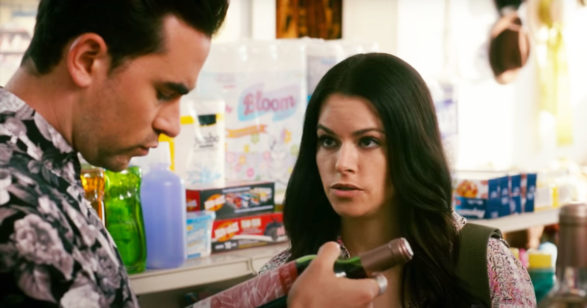
Let’s just be honest here, sexuality is complicated.  There are times that you don’t know exactly who you love and where you fit in. Having these feelings of insecurity and unsureness, and THEN trying to describe your own sexuality in a way that makes sense to others is even more complicated. In the hit series Schitt’s Creek, the main character engages in a conversation that perfectly balances the importance of openness and honesty in these conversations. This series follows a rich family of four who suddenly lose all of their money and their luxurious lifestyle. They are forced to pack up what is left of their property and move into a small town, their only remaining asset. Schitt’s Creek is the town that the father once bought the son as a joke for his birthday. That son and main character of the show is named David Rose. Presumably gay to the viewers and other characters in the show, he finds himself one night sleeping with a female and straight character named Stevie Budd. Stevie is confused, and decides to confront him while out wine shopping for an event. She hints, “Just to be clear, I am a red wine drinker, and I only drink red wine… and up until last night, I was under the impression that you too only drink red wine.” Catching on, David responds to her, “I do drink red wine. But I also drink white wine. I also have been known to sample Rosé. A couple summers back, I tried a Merlot that used to be a Chardonnay, it just got a bit complicated.” Stevie is a bit confused, and David goes on to say, “I like the wine, not the label. Does that make sense?” This iconic scene would go on to be quoted in many articles, printed on tee shirts, and used to give confidence to thousands of youth helping them come out to their parents and peers.


What is great about this use of a wine metaphor is how it is so unconventional, but so easy to comprehend. It allows even the most conservative and closed minded individual to understand that David is pansexual. And as a bonus- who doesn’t love wine? Everybody can relate to how David is describing to his sexuality through the use of this metaphor. David is able to bring forward his very complicated history of experimentation and self-discovery. He is so secure with himself and his journey, that he can calmly explain his sexuality to Stevie in an amusing way. David educates Stevie in a manner that is lighthearted but clear, and it is centered around inclusion and positivity. These conversations can be hard to have, but Stevie reacted in a way that let David come out to her while also not downplaying the importance of having “no labels” to David.

Society’s social constructs and biases make coming out a traumatic experience for so many people. How can they help not feel frightened at the possibility of having their loved ones turn on them for revealing their true self? Throughout every episode of Schitt’s Creek however, the creators challenged that idea that coming out needs to be traumatic. (As a disclaimer, they do not ever downplay the importance of that experience; having somebody working up that courage to finally be unapologetic and open with who they really are and love. There is an episode where David’s partner comes out to his parents in distress, but even then, his parents were only upset that he felt he couldn’t be honest with them about his sexuality, and not that he was actually gay.) By not making sexuality such a huge ordeal, it forces the viewers to imagine a world where there is no bias or judgment when two men are in love and holding hands in public. There is no talk among the characters of anybody’s sexuality beyond this scene, so the reaction to these couples is the same as any reaction would be to a heterosexual couple walking down the street holdings hands. This amazing directing is what sets Schitt’s Creek apart from other series. The series LBGTQ+ representation fosters an inclusive environment, free of bias and full of love and acceptance with no shame.  

Schitt’s Creek has made a difference in this world, right when we all needed it! It’s constant celebration of unconditional love and wholesome relationships between all of the characters really resonated with viewers, making it become one of the most popular and successful shows to ever hit the big screen. The series’ defiant representation of different races and sexualities throughout both acknowledge that facts that anybody in the audience who identifies with the characters are valid, and that they should be proud of themselves and love who they are. This show has won the battle of representation, and has helped pave the way in media for impenitent openness and inclusivity.

“We Raise Our Cups” to Anaïs Mitchell’s Hadestown

Written by Zoe Smithwick, for Autostraddle.com

When I think about a musical geared towards social justice and societal change, my first thought would not be about a depression-era retelling of a Greek myth. BUT, if I tell you that this same musical is entirely women-directed, inspired by cultural and political tones in modern society, and focused on shedding light on the application of age-old themes to current topics of discussion, I bet you would change your mind. After watching Hadestown, I was blown away by the ability to not only tell the classic story of Orpheus and his journey to retrieve Eurydice from “Hadestown,” but also the ability to resonate with many of the songs and emotions portrayed in the show.

Hadestown Broadway Trailer

To start, there is the attention to feminism in every aspect of the show. Anaïs Mitchell, a singer/songwriter, came up with the vision for Hadestown and wrote the music, lyrics, and book associated with it. The musical started off as a story told through an album that Mitchell was writing, which, with help from director Rachel Chavkin, became an off-broadway and finally a broadway and touring musical. The musical made headlines with Mitchell as the first woman in years to have sole credit on a Broadway show. 

Looking back to high school, who dominated the theater-kid scene? Overly-dramatic girls who always outnumbered the less-enthusiastic guys. Yet looking at the professional scene, it seems as though a majority of the main roles on Broadway and the majority of directors/playwrights happen to be male-dominated. It’s interesting to see such a shift in a field that is primarily more “feminine” to where the majority (as per-usual) is cishet white men. This shift impacts women so heavily because in creating an atmosphere where women are not even able to succeed in their stereotypical niche, how would they be able to break out of the shell of modern gender roles? Mitchell’s work allows for younger girls and women to be empowered by her bold leadership in such a male-dominated field, not unlike the movement for women in STEM. Some other shows with similar experiences of women leading the way have been covered in this New York Times article by Michael Paulson and this Bustle article by Leah Marilla Thomas.

Additionally, Mitchell’s creative choices in music allowed for the show to highlight the female vocal range (specifically catering to Eurydice and Persephone’s songs), while she made the male range the separate ends of the range (Hermes in the middle, Orpheus at the top, and Hades at the bottom). In doing so, she allows the female characters to have a strength and versatility that is not provided to the male characters, which reflects in their individual portrayals; Eurydice and Persephone are both strong figures in their relationships and hold a lot of power over their male counterparts, whereas Orpheus’ high range mimics his innocence while Hades’ low range presents his power-driven personality. 

In the video trailer above, at the 0:32 mark, you can hear an example of Patrick Page as Hades singing in his gravelly, seemingly unnaturally low voice, marking his love for Persephone and somewhat “claiming” her as his territory. At 0:24, you can hear Persephone’s objections to the intolerable conditions that Hadestown creates for everyone there, adding to her constant efforts to ameliorate Hades’ world. On the contrary, you can hear Orpheus’ song of desire at 1:25, calling out to Eurydice and saying that he will do essentially anything in his power to bring her back to be with him, even traverse the treacherous conditions of the underworld. Meanwhile, Eurydice sings her version of his song at 0:50, singing of her experiences in Hadestown and of her love for Orpheus. In singing her song, Eurydice asserts that she chooses her path, so after stepping away from Orpheus and voluntarily joining Hades in Hadestown, she is ready to return to her husband.

Even in the setting of the show (depression-era, coal-mining, steampunk-esque), the woman’s place is considered. The silencing of women by men and society as a whole is reflected in Eurydice’s and Persephone’s main conflicts being with men and with their powerless position in the ways of the world. By recreating the myth in such a setting, Mitchell was able to communicate the timelessness of the issues faced by each character. Hades’ character was based heavily on a capitalist, upper-class leader who, while his morals were “broken” in a sense, was constantly trying to get back on a path to win back his wife. Orpheus, an artist stuck in his own head, dealing with the dilemma of how to win back his wife and conquering any obstacle in his path to love. Eurydice, a poor girl, trying to find a balance between surviving and listening to the Fates who govern her every decision. Persephone, a woman who has seen how bad the world can be, struggling to maintain an acceptable life for everyone. The intersection between doing what it takes to survive in desperate times and living a life full of wonder and love, as seen in Orpheus’ and Eurydice’s drastically different characters. We can see this in our world today, looking at how the power-hungry upper-class rules the world, how the climate is changing and those who have the power to change it aren’t doing so, and looking at poverty and finding the balance between a life of struggle and a carefree philosophy. 

Works Cited

Browne, David. “The Hell With Broadway: The Story of Anais Mitchell’s ‘Hadestown’.” Rolling Stone, Rolling Stone, 22 Oct. 2019, www.rollingstone.com/music/music-features/broadway-hadestown-best-musical-tony-anais-mitchell-842447/.

Brunner, Jeryl. “Hadestown Is A Broadway Musical Like No Other.” Forbes, Forbes Magazine, 29 July 2019, www.forbes.com/sites/jerylbrunner/2019/04/18/hadestown-is-a-broadway-musical-like-no-other/?sh=45e1beef4905.

Kallstrom, Megan. “Hadestown’s Tonys Triumph Was a Win for Women.” Slate Magazine, Slate, 11 June 2019, slate.com/culture/2019/06/hadestown-tony-awards-women-rachel-chavkin.html.

Sernaker, Emily, et al. “The Ms. Q&A: What Led Anaïs Mitchell to Hadestown.” Ms. Magazine, 15 Sept. 2020, msmagazine.com/2019/09/02/the-ms-qa-what-led-anais-mitchell-to-hadestown/.

Thomas, Leah Marilla. “Anaïs Mitchell’s ‘Hadestown’ Is Making Broadway History For Women – But She Wants It To Be Normal For The Next Generation.” Bustle, Bustle, 6 May 2019, www.bustle.com/p/anais-mitchells-hadestown-is-making-broadway-history-for-women-but-she-wants-it-to-be-normal-for-the-next-generation-17130069.», Dominique Rossi

Changing Gender Roles: Get Tattoos. Scare People!

Written by Patricia Raudales Calvario for Wear Your Voice/ https://www.wearyourvoicemag.com

The animated comedy The Simpsons is widely known by the media for “predicting the future.” Scenes from past episodes are scaringly connected to current events. Whether or not you believe this theory to be accurate, you will find many Simpson reference memes on social media. Scenes from the show have contributed to meme culture. The meme culture is rapidly growing on many social media platforms like Facebook and Instagram. People see memes everywhere, and the description following the meme, although used to entertain, can show a lot about society’s current views.  

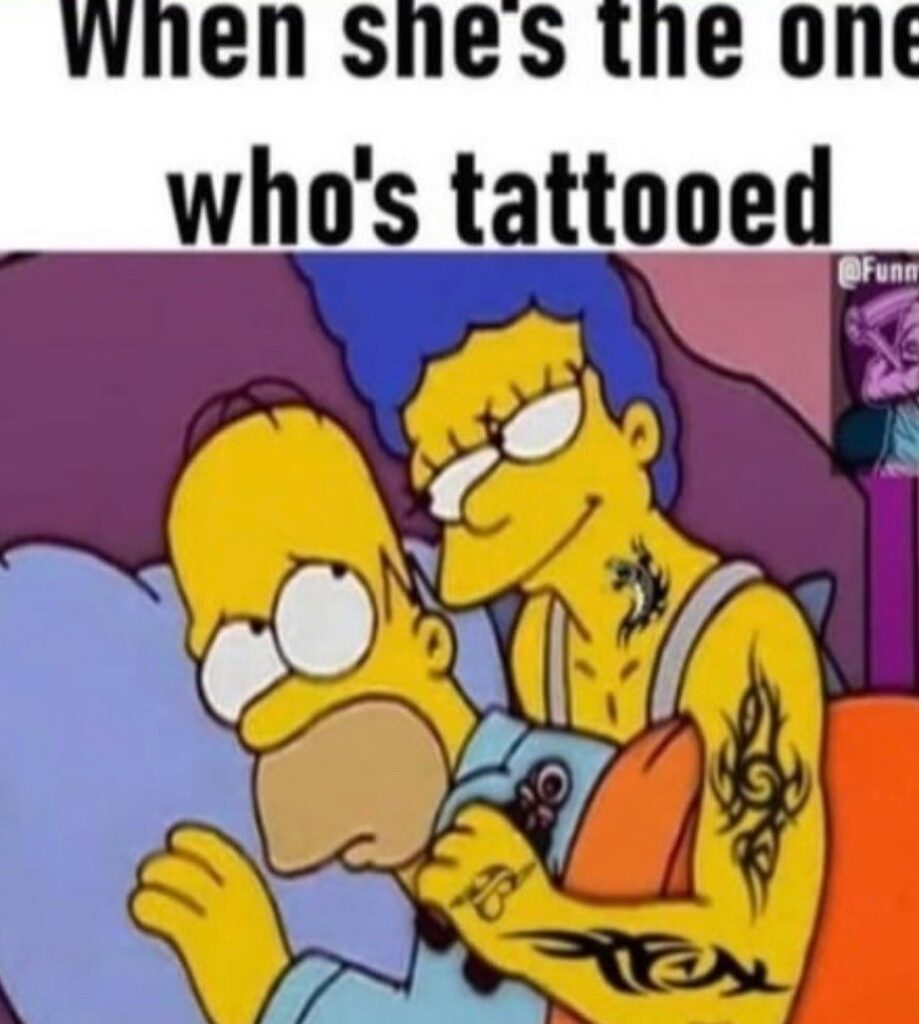
“When she’s the one who’s tattooed” meme shows the fear of Homer Simpson (the person on the left) as his wife, Marge Simpson (the person on the right), leans over him with a seductive face. This interaction goes far beyond Homer and Marge; the facial expressions themselves depict gender roles in society. Although women are now empowered in all aspects of life (social, educational, political, and psychological), seeing a woman embodying more “masculine” traits still frightens many, as seen in Homer’s face. Women who show confidence and are assertive are considered more “manly.” Women can be confident but also need to spread warmth and bring joy to others. Rather than being strong, women are expected to be relaxed and easygoing. Anything that contradicts these ideas is quite scary to society. 

Beyond the facial expressions shown in this meme, the creator edited a tattoo sleeve on Marge’s arm to create his “When she’s the one who’s tattooed” meme. This meme is looked at, laughed at, and then people move on to the next meme. However, it is crucial to be aware that memes such as this one tell us a lot about gender roles and identity in society. Memes go beyond giggles and laughs. Memes have meanings and values. 

Why does Homer look afraid in this meme? A tattooed female is leaning over him. This meme does a great job of showing the perception of women and men with tattoos that society holds. When a man has tattoos, he is a “strong man,” a “brave man.” This is why this meme would have not been successful or considered funny if the roles were reversed. Although more and more women are now getting tattoos to represent the femininity and morals they hold, they are not always viewed as “strong women” or “brave women.”  Instead, women with tattoos are described as “aggressive” or “more masculine.” This meme shows how it has become more socially acceptable for a man to have tattoos than a woman. 

The type of tattoos put on Marge’s arm is also specifically picked, creating a more masculine image. A simple google search of “tattoos for women” and “tattoos for men” can show what type of tattoos are acceptable for each gender. For example, Marge’s tattoos would be found within a “tattoos for men” Google search. A simple “tattoos for men” google images search will suggest dark and more frightening tattoo ideas. Tattoos of skulls, fires, lions, snakes, and “king” phrases will be the first to come out. Googling “tattoo ideas for women” would give you the complete opposite: sweet and fragile ideas. Top suggestions would include flowers, hearts, and butterfly tattoos. Google searches for tattoos should be nothing more than inspiration and should not determine the tattoo you think would be the most socially acceptable. No matter your gender identity, get a butterfly tattoo, a skull tattoo, get both. 

Memes like the one described above are dangerous and can complicate people trying to understand their gender identity. A woman can wear “masculine” tattoos and still hold more feminine characteristics. A man can wear “feminine” tattoos and still have masculine features. Tattoos are now becoming more popular in American life. Our role is to dissociate ourselves with putting labels on the type of tattoo one chooses to put on their body.  

Tattoos can have personal meanings to some people, and to others just be a form of art put on their bodies. Tattoos are not gendered, and one should get tattooed with whichever design they desire. Tattoos can be hidden from the public view, or they can be exposed for everyone to see. Regardless, get whatever tattoo you want. Be as creative, bold, and SCARY with your tattoos. Be Marge Simpson and frighten society!         

Lesbihonest: Pitch Perfect is Not As Progressive As We Think

Written by Sarah Butchko for Autostraddle

Pitch Perfect, directed by Jason Moore and written by Kay Cannon, hit theaters in 2012 and has remained an iconic pop culture staple since. The movie follows the Barden Bellas, an all-girl acapella group trying to make a comeback after an embarrassing performance at the ICCA Finals the year before. While the group used to be composed of basic, white, acapella girls, the Bellas have become desperate to recruit a new team and end up taking in a group of misfits as the new Bellas. This could be a whole other discussion on the fatphobia, racism and plain bitchiness rooted in the recruitment of the Bellas, like how they have to “settle” for people who do not fit their prior standards of: white, skinny, and conventionally pretty. Back to the plot of the movie; the Bellas rival the Treblemakers, the all-male group on campus, and beating them at the 2012 ICCA Finals fuels their fire. Pitch Perfect takes the audience through the reinvention of the Bellas and the trials and tribulations of college acapella. There are many subplots in the movie, Beca and Jesse’s relationship, the enemies to lovers trope of Fat Amy and Bumper, and the not so subtle will-they-won’t-they of Beca and Chloe, to list a few. The movie has a cliche happy ending, Beca gets her man and the Bellas win the ICCAs. 

Although at first glance, the story is inclusive of different people and identities, with further consideration it uses these different identities as the butt of the joke and perpetuates harmful stereotypes. Comments and off color jokes about lesbians are heard throughout the movie. In the specific scene I am focusing on, the Bellas are going around and telling each other something that the others do not know about them. As Cynthia Rose is standing up to share, Fat Amy says, “I think we know where this is going, lesbihonest,” insinuating that Cynthia Rose is going to come out to them. Instead, she shares about her gambling problem that started when she broke up with her girlfriend. Fat Amy reacts saying, “Whoomp there it is,” as if it is such a huge deal that Cynthia Rose is gay. Prior to Cynthia Rose officially coming out to the Bellas, the group constantly makes comments suggesting that Cynthia Rose is lesbian. This pressure on Cynthia Rose to label her sexuality for the comfort of the others in the group relays a message to the audience saying that it is necessary to have a defined identity that others must be aware of. This continues the pressure of coming out in society and the idea that if you are anything but straight you must define it and let everyone know. This becomes harmful as the assumptions and judgements of Cynthia Rose from the Bellas may cause someone watching who is unsure of their sexuality and their definition of it to feel pressure to come out or define their identity. It can also create fear for the person watching that others are judging them and making assumptions about them. 

The first time the audience meets Cynthia Rose is at the audition for the acapella groups where she is misgendered because of the clothes she is wearing and the way she looks. The character who misgendered her, corrects himself saying “Whoop not a dude!” which is a joke that is supposed to entertain the audience. However, this “joke” perpetuates the gender binary in clothes, making it out of the ordinary when a woman expresses her gender in a way outside of the norm. The fact that the comment comes from a man makes it even more frustrating. 

Cynthia Rose, in her own words from Pitch Perfect 2, is “black, gay, and a woman.” This intersectional representation taken at face value can be seen as progressive and positive for the community, however, throughout the movie, Cynthia Rose is portrayed as a sexually aggressive black butch lesbian that keeps up a harmful stereotype about lesbians. She makes sexual comments and innuendos, and borderline sexually assaults Fat Amy, Stacy, and other characters. She repeatedly grabs Stacy’s boob and stares at her ass. When Fat Amy is hit by the burrito, Cynthia Rose jumps on her and attempts to give her “mouth-to-mouth” resuscitation which the audience can tell is not her true motive. These aggressive instances contribute to the butch lesbian stereotype that make hetero women wary- that the lesbian wants to get with you even if you are not interested. With the additional fact that not only is she an angry butch lesbian, she is an angry black butch lesbian, this representation becomes even more dangerous. My guess is that the producers did not intend to create this harmful character that perpetuates harmful stereotypes in society but with more attention paid to how this representation would come across could have made this movie a little less problematic. While it is important to have inclusive representation in media, representations that are not done well can be more damaging than not. 

Comment (Shea Bonacci)

I have watched the Pitch Perfect Movies so many times since they first came out. These are issues I never noticed or picked up on as a kid in the 5th grade. Reading through your post allowed me to walk through the movie with a completely different lens as a 20 year old. I like how you highlight that on the surface, most people view the movie as inclusive of different people and identities, but the irony is that those people are the butt of the joke. Assuming and expecting people to come out about their sexuality, the fatphobia present within the movie, the misgendering present, and the unrealistic representations of certain “stereotypes,” are all very present issues within the movies. Overall, great job!

Un-Defining Parenting

What are we taught to believe about motherhood? The stereotypical idealist view tends to be the birth of a child after marriage. Yes this view is one road to becoming a mother but there are so many others. Even today there is some stigma around certain types of births, many of these are addressed in the tv show Friends. Although this show does have some of its own issues, including its lack of diversity, it portrayed multiple ways of becoming a mother that may go against the norm. 

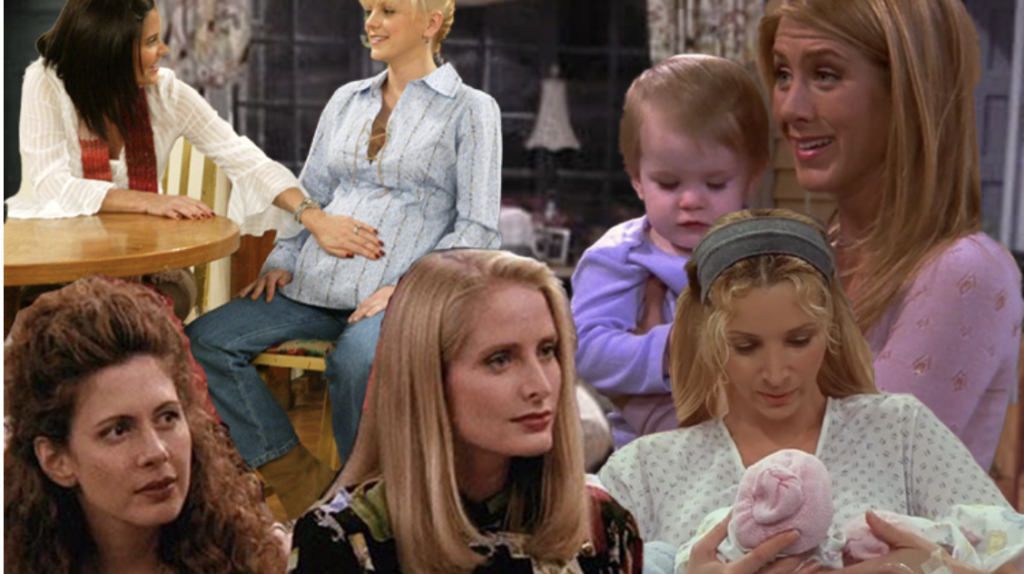
The first baby born in Friends was Ben, Ross and Carol’s son. Ben was an unexpected pregnancy; Ross found out his ex wife, Carol, was pregnant shortly after she left him for another woman. This birth was controversial in the 90s, not only were the parents not married (yet, Carol and Susan get married later in the show) but the baby had 3 parents. Although this sitcom was not perfect and incorporated many homophobic jokes, it was also one of the only shows at this time to feature a lesbian wedding. The show also did a decent job with their family relationship. Each and every family is unique, and we got to watch as Ross, Carol, and Susan figured out a new dynamic as they raised Ben. 

Phoebe Buffay, A badass hippie, was a surrogate to her brother’s children. Frank Buffay and his wife, Alice, had a very large age gap. Alice was Frank’s Professor in college and was over twice his age. Although their marriage was mostly used as a joke in the show, it did highlight and bring attention to age differences. When Phoebe first found out about their relationship, she was shocked but by the end of the episode came to the belief that love is love. Later in the show, Frank and Alice want to have a child but are unable to due to Alice’s age, so they ask Phoebe to be their surrogate. In the show they express the pregnancy and surrogacy well, but do make jokes such as when Phoebe tells the nurse at the hospital, “the father is my brother”. Many of these quotes are lighthearted. They bring up some of the harder parts of surrogacy such as carrying and birthing a child that is not theirs and having to give the babies to their parents. Ultimately the directors and writers wrote this story well and for the most part accurately portrayed the ups and downs of Phoebe’s decision. 

Rachel Green is from a very posh family in which she was raised to believe that her goals in life should be to marry a wealthy man and be a stay at home mother. This ideology was quickly challenged for her when she ran from her fiancé on her wedding day and then decided to get a job and become an independent woman. Later she also had an unconventional pregnancy for this era because she got pregnant and did not get married. Despite how she was raised and societal pressure from her family, she decided to have the baby on her own; Ross was still there to raise the child, but they were not together. At one point during a family convention, Ross’s mother even tells them to pretend they got married because they had been telling that to friends. Despite the pressure to get married by both their families, she still decided it was not the right time. And even though Rachel was not in a relationship to help raise Emma, she still had a ton of support from Ross, her family, and friends. She proved to many that you can be a single mother, work, date, and succeed, breaking many conventionalized beliefs. 

Monica Geller was one of the more heartbreaking stories. When her dream of having kids was put on hold because she had a hostile uterus and was unable to bear a child, she and Chandler started looking into other options and got into adoption. After being put on a list, they met a mother that agreed to let them adopt the baby when it was born. Although this process went by a lot faster than it normally would in real life, it still very accurately described this unconventional way of becoming a mother. 

All 7 babies born into this show either had unconventional births or family dynamics, but no matter the story they all had friends and family that supported their decisions. Recognizing that this sitcom did make many jokes that are viewed as offensive today, they were not seen as offensive in the 90s. The show incorporates these stories into their plot well, some may not even realize that all 4 main characters had unconventional stories. Even though this show was not perfect, it enforced the fact that there is no right or wrong to being a mother. 

Sex Education: Discovering Yourself During The Turbulent Years of High School

Written by Abby Yokoyama for Wear Your Voice | https://www.wearyourvoicemag.com

Sex Education is not only educating the students of Moordale secondary school in the UK, but its viewers worldwide too. Sex Education is a comedy-teen drama Netflix show all about sex, pleasure, and discovering your identity as a high school student. In their third season that just released, the show portrays people of different sexual orientations and gender identities and highlights their struggles and triumphs after a stark shift in administration. This blog post will analyze the new administration’s effect on the student body, as well as one of the prominent homosexual relationships present in season three.

Every school needs a sex therapist, right? Jean Milburn, the main character Otis’s mother, was just that for the students of Moordale, helping students become more comfortable with their sexual experiences, sexual orientation and addressing their concerns. The positive response from the students because of Jean’s help made headlines, making Moordale known as the “sex school”. In season 3, Jean has left, along with head teacher Mr. Groff, leaving new head teacher, Hope, with the sole desire of clearing the school of this title. 

Jean is pre-Victorian, and Hope is the Victorian response to sex. According to Foucault, people were very open and much more comfortable with sex up until the Victorian era. Moordale goes from sexual freedom and openness with Jean to school uniforms, single file lines, and an outdated, inaccurate video on sex education with Hope. Sex became shameful and frowned upon. It was discouraged and even against the rules to be spoken about aloud between students and faculty. Any traces of sexuality were to be destroyed or removed, including The Penis wall, which, you guessed it, is a wall full of drawings of penises.  

Hope publicly shames students during school assembly

Hope’s initiative to get rid of sex at Moordale lines up with Foucault’s repressive hypothesis. She is shutting down all the progress and work Jean had done with the sexual concerns the students had been having, and pushing that aside for “more important” matters. She wants students to focus all of their energy on getting good grades and doing well in school. Sex is nothing but a distraction. Nothing good comes of it. So she erases all traces of it. This is similar to how sexuality was repressed during the Victorian era and the rise of the bourgeoisie in order for capitalism to become the main focus. Hope represents capitalism. She is implementing rules and guidelines that repress any sort of sexuality so that school is the top priority. She even publicly ridicules those who are open about their sexuality and interests, like a new student, Cal, who identifies as nonbinary. Because of the new uniforms, they don’t know which one to wear, the one for girls or the one for boys. Hope has the answer! Because Cal was assigned female at birth, of course they must wear the girls’ uniform. This blatantly ignores and suppresses queer peoples’ identities and expression, but at least Moordale will look good in the press. 

Cal (left) with friend Jackson in front of The Penis wall

Moreover, the repressive hypothesis argues that power works in a top-down fashion, which is reflected in the school’s hierarchy. Hope is at the top as the head teacher, and she uses that power to overtake anyone’s voice below her. She silences the students, and not even the teachers are allowed to help with any personal issues they may be facing.

Another prominent aspect of his season is Eric and Adam’s relationship, consisting of two gay men in very different places in their lives. Eric is confident and outspoken about his identity, and doesn’t care who knows it. However, while Eric is very secure in himself at home in the UK, when he travels to Nigeria for a wedding, those around him, namely his family, want him to repress his identity. Homosexuality is illegal in Nigeria, so his family is not nearly as socially aware of it. His grandmother keeps asking when he is going to meet a nice Christian girl and get married, which Eric and his family know will never happen. At the wedding, he meets a gay man named Oba who takes him to an underground gay club. Inside, Eric finds a booming scene full of queer people, similar to the latter hald of the nineteenth century where D’Emilio explains that gay people created underground spaces for queer people. Eric feels the most liberated he’s ever felt in a country he shouldn’t really be feeling in such a way, which only strengthens his confidence in his identity. 

Adam (left) and Eric’s (right) budding relationship

Adam, on the other hand, is just starting to figure himself out and is having a particularly hard time embracing his identity. In earlier seasons, Adam was portrayed as a straight homophobe, and because he was repressing his own homosexuality, he bullied Eric. Adam also has a difficult relationship with his father, and was sent to military school at the end of season 1, where he meets plenty of other gay people. The military used to be a place of discovery for homosexuals during the wars, and while Adam did not uncover his homosexual identity while in military school, it is ironic that that is where he was sent in the midst of his journey in figuring out who he is as a gay man. When he comes back to Moordale, he attempts to become more comfortable with his sexuality so he and Eric can start a relationship, but Adam is not prepared for such publicity and vulnerability in his identity. Because of his relationship with his father and always being looked down upon and ridiculed by him, Adam is closed-off and rarely vulnerable, which is proving to be very difficult in trying to rebuild his reputation and identity from straight bad boy to gay man.

Sex Education is an effective means for important information for this generation; it’s a funny, but heartwarming, honest and educational show that conveys an important and relevant idea of discovering yourself and identity during a critical time. It is important to educate teenagers about sex and encourage finding you identity and being yourself, and this show does just that. By the end of the season, Hope is gone, but thankfully, The Penis wall remains.

A Fatphobic Lucky Strike Ad: Another Bad Side of the Tobacco Industry

Written by John Rogers for Jezebel.

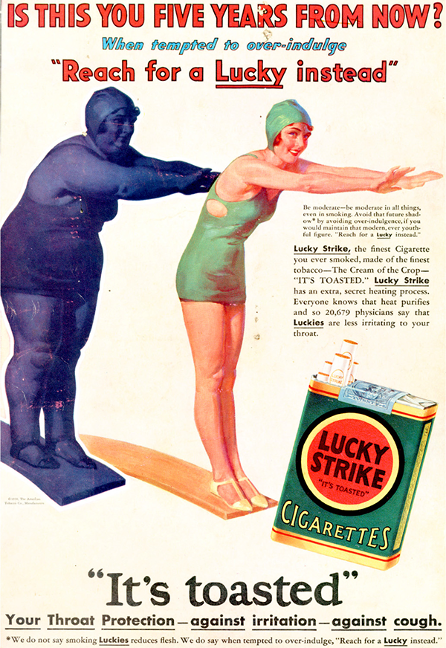
This horrific ad was created by Lucky Strike cigarettes in 1930 as an attempt to sell their unhealthy product. It is no longer in circulation today (thank goodness) but it can be found online, and looking at it provides important history on how advertising has always been manipulative. The ad purports that Lucky Strike cigarettes will reduce feelings of hunger, leading consumers to be less snacky, and thus, presumably avoid tacking on weight from overeating. This ad is targeted towards women, since it features a woman in the picture, and it suggests that ladies can avoid weight gain by smoking cigarettes. In this way, the ad reinforces harmful gender norms that women must avoid being fat in order to be attractive to potential partners. 

The ad is not just sexist towards women by holding them to high beauty standards. It is also deeply fatphobic, meaning that it reinforces the idea that fat is ugly and must be avoided. According to Marilyn Wann, “health is a problematic concept when linked with weight. Health is not a number, but rather a subjective experience with many influences.” So, implying that a certain weight is unhealthy or undesirable, as this ad does, is a constructed idea that harms fat people. They are less self-confident, ostracized from society, and given worse health care as a result of this fatphobic thinking.

On top of some sexist and fatphobic tendencies, the ad is racist as well. It presents the skinny woman as white, and darkens her fat shadow. This reinforces the historical idea that fat is a Black quality, and that Blackness is bad just like fat. By presenting the white woman as the ideal, and the dark woman as the problem to be avoided, this ad upholds a racist ideal of white superiority.

The intended purpose of the ad is to sell cigarettes, and the ad hopes that preying upon women’s fears of being fat will impel them to buy the product that is offered as a solution to weight gain. It has another angle as well. It claims that the cigarettes will protect consumer’s throats from irritation and a cough.  It is ridiculous by our 21st century standards to smoke unhealthy cigarettes as a way to resist weight gain or clear your throat, but this was a clever argument at the time of the ad. Doctors were paid to claim that cigarettes were healthy, allowing Lucky Strike to prey on consumers with misleading data. In this way, the ad uses the rhetorical appeal of ethos by appealing to over 20,000 doctor recommendations to back up claims of health benefits from smoking.

The advertisement uses the rhetorical appeals of pathos and logos as well. The scare tactic of the “fat shadow” that could occur in 5 years if one engages in “over-indulgence” is intended to create fear in the audience, a fear that will be dissuaded by the supposed benefits of smoking Lucky Strikes. Thus, the images in the ad appeal to pathos. In terms of logos, the ad makes an argument that cigarettes lead to less hunger, and less hunger leads to less eating, and less eating will prevent weigh gain. Of course, this logic is faulty, because it assumes that less eating will prevent weight gain, even though this is an open question. It also assumes that weight is a choice that results solely from eating habits, which reinforces problematic fatphobic ideas that Wann references. Humans have weights on a bell curve, just like height or other characteristics, so picking a “skinny” ideal that is a specific spot on the bell curve is not only misguided, it is impossible to accomplish.

The ad has two images. One is a basic image of a cigarette box, intended to make the packaging look clean and appealing. The other image is of a thin, conventionally attractive woman with a fat shadow. The then woman looks happy and calm, while the fat shadow has more of a grimace on her face. This illustrates the argument of the ad: buy Lucky Strike cigarettes to reduce hunger, or else weight gain will inevitably follow from an inability to control urges to eat.

Overall, the ad tries to convince women to buy Lucky Strike cigarettes with two claims that are both tied to health – the cigarettes will prevent weight gain by reducing hunger pangs, and they protect people’s throats by eliminating irritation and coughing. The ad is an example of problematic advertising that uses fatphobia to encourage people to buy unhealthy cigarettes. Ads like these were used throughout history to promote sexist, racist, and fatphobic ideas, convincing consumers that products which were actually harmful to them would help them avoid these made-up problems. Examining this history of constructing false needs is vitally important so that we can identify where ads are using these tactics today and snuff them out.

A cigarette ad riddled with fatphobia, false science, and problematic beauty standards

Gay Tok: Hook-up Culture and Discrimination in the Gay Community

Tik Tok is home to a variety of trends from new dances to popular audios. There are many sides of Tik Tok, and you may be in multiple, depending on how diverse your ‘For You’ page is. However, I will be talking about a specific side of Tik Tok today, and this side of Tik Tok is referred to as Gay Tok (the side of Tik Tok created by and for the gay male community). There are innocent Tik Toks about gay couples on a date, but there are also videos that showcase the problematic side of the gay community. These short videos shine light on hook-up culture while other videos touch on the discrimination gay men of color face in the dating scene.

The first Tik Tok, created by @itslucasmorales, includes him sitting still in a room with the caption, “me remembering the time in high school where I thought I would find the love of my life on Grindr and ended up losing my virginity at 2am to some random guy in a tank top.” The audio in the background exclaims, “Don’t you feel silly, don’t you feel stupid, don’t you feel a little ashamed,” with an ominous sound playing in the background.

This short, twelve-second video shows the difficult dating scene gay teenagers face. The gay community’s dating pool is extremely small. Some people are closeted and not ready for a relationship, others are not queer, and some are already in relationships. The lack of a dating pool created a different pool within the gay community: hook-up culture. Younger gay people are thrown into hook-up culture through Grindr: a dating app intended for gay men. However, Grindr is used primarily to seek potential hook-ups instead of potential relationships. The way Grindr is used exposes teenagers to predators and potential grooming, which leads to gay teenagers engaging in sexual activities with older men. Early exposure to hook-up culture shifts gay teenager’s perception of relationships and their functioning. Instead of a relationship being seen as an emotional connection, it is perceived as a physical connection; gay teenagers will focus more on their bodies than their mental health.

The unhealthy, toxic atmosphere of hook-up culture perpetuates the idea that appearance, especially body shape, is a deciding factor in whether one deserves love or not. The fixation on bodies is deeper than expected. Each body type has their own category, such as twink (hairless, thin bodies) to otter (hairy, thin to athletic-build bodies) to bear (hairy athletic-build to larger bodies); there’s a category where any body type fits. This body categorization has been normalized to the point that there are quizzes, such as this one, to help identify your body type! Hook-up culture creates this body categorization and physical damage, but it also causes emotional damage. There are no emotional relationships. In hook-up culture, there are friends with benefits and sex with no strings attached. This goes back to the physical harm hook-up culture can cause with body fixation, but these issues also cause a mental toll on the person involved. The emotional aspect of relationships is not taken into consideration, making it difficult for gay teenagers to define a healthy relationship, especially if they are deeply involved in hook-up culture.

Hook-up culture is the root of most of the problems in the gay community. Hook-up culture leads to the creation of body categorization, physical over emotional relationships, and the use of preferences to justify discrimination in the gay community, which leads to my next Tik Tok.

The second Tik Tok involves a queer, black man talking about dating as a black person. This person discusses discrimination they have faced in the gay community from other black men. He starts his Tik Tok with the quote, “I’m getting to realize that I’m lowkey not in the mood to date black men anymore, and here’s why.” @Miamiboykhai explains the standards black men face in the gay community and the standards forced upon him. He mentions how black men have commented on his femininity, his skin tone, and his height in comparison to his position during sex, “What I’ve often heard towards myself was I was too feminine […] too dark while being feminine, and then I had people tell me I’m too tall for my position.”

Caption: @Miamiboykhai talks about the struggles he faces in the gay community when dating other black men

@Miamiboykhai discusses how the “outside world” already treats him differently, and now, he is ostracized from his own community. Many gay people feel out of place even within the gay community. They are treated differently due to their gender expression, body shape (as described in the first Tik Tok), and skin color. Grindr also plays a part into these standards. Many profiles have bios that exclude many people (no fats, no fems, no Asians), and the discrimination within the gay community creates an unsafe environment for people of color because of the intersectionality we face. Our cultures and religions are homophobic while the gay community is racist and discriminatory.

Another important argument this Tik Toker brings is, “[…] and I watch you guys pick and choose who you allow to be feminine, who you allow to date, you guys have many rules in the dating world as black people.” Femininity in the gay community is used to categorize gay people; it is associated with thinner body types, bottoms, and submissiveness. However, we need to move away from these stereotypes and realize femininity is a gender expression, and it does not dictate one’s position during sex, their likes and dislikes, or their behavior. Another thing that I should mention is that anyone can be feminine; it is not an exclusive trait reserved for people who are “allowed” to be feminine.          

So, what can we take from this? Tik Tok is a social media platform filled with a variety of genres and videos. The ones spoken about here display problems within the gay community in distinct ways. The first Tik Tok only used an audio and a caption, but it still made a strong point about the dating scene in the community, and it leads to discussing how the gay dating scene became what it is now. The second one was more of a rant, but it also showcased discrimination from someone’s personal experience. Tik Tok allows several people to discuss matters like this one, and it gives the younger generation some insight and information about several other issues in our world. In this case, we see how hook-up culture has perpetuated the idea that appearance, specifically body shape, dictates how desirable and valuable a person is and the assumptions that are made about a person through their gender expression.

Writing for Wear Your Voice | www.wearyourvoicemag.com