Book Review: *Medical Bondage*

Sex, rape, injustice, medicine, slavery. These words spark an interconnected web of issues relating to sexism and racism in the antebellum era. Owens’ begins with ways in which the perpetuation of slavery and the expansion of the field of gynecology were directly proportional. When Congress prohibited the importation of slaves from Africa, slave owners feared that there would no longer be enough slaves to sustain the growing economy, so slave owners turned their focus to the reproductive health of female slaves in order to maintain and improve slave procreation. Slave owners and white, male physicians alike continued to expand the field of gynecology; however, their motives were unethical. The motive for the development of the field of gynecology was to maintain a growing economy built upon slave labor by experimenting on marginalized populations like black women and Irish immigrants. These experiments planted the seeds for racism and sexism in medicine that still plague society today, illustrating the power of science and a persuasion. 

As one of only two Black women in the US leading a program rooted in the medical humanities at a university, Dierdre Cooper Owens is an award-winning public speaker and activist. Time magazine claimed Owens are one of the most successful and “acclaimed experts in U.S. history”. Owens graduated with a Ph.D. in history form the University of California-Los Angeles. Currently, Owens is the Director of the Humanities in Medicine program at the University of Nebraska-Lincoln. With a doctoral degree in history, Owens’ is versed in the history of gender and racial discrimination; furthermore, her position as Director of the Humanities in Medicine program indicates her knowledge for the intersectionality of race, sex, and medicine which allows her to speak with intelligence and poise on the topics discussed in Medical Bondage. Medical Bondage, Owens’ first book, won The Darlene Clark Hine Award for the best book in African American women’s and gender history in 2018. As a black woman, Owens can write with an accurate, first-hand point of view because she herself may have been victim to racism and sexism, either in medicine or the workplace. 

In the first chapter, Owens discusses the “Birth of American Gynecology” in the hands of Dr. James Marion Sims and other antebellum-era white physicians. Dr. Sims invented the silk suture method through countless experiments on female slaves. The sorrowful reality of this process is that once the experiments were complete, and the female slave was proved “infertile”, they were sold back to their slave owner because they were no longer useful for research. In other words, female slaves were pawns for white males, the economy, and for the development of modern-day science and medicine. White supremacy, male dominance, and the slave holder mentality prevailed in that no credit was given to the female slaves for the brutality that they endured; in other words, the white males were apathetic to the fact that a population was suffering at the expense of their ingenuity, success, and scientific fame. To be specific, by experimenting on innocent women, white males asserted their dominance and searched for biological ways to justify differences between white women and black women, further perpetuating the idea of black inferiority and oppression. The physicians used science as a means of justifying racism and oppression, stating that black women are biologically inferior to white women. 

In the second chapter, Owens further describes the cruelties that black women face in the hands of white slave owners and white physicians. Black women were seen as pawns and merely “breeders” for producing more and more slaves to benefit white men. White men viewed black women and Irish immigrants (another marginalized and discriminated population) as “impervious to physical pain and unafraid of surgeries” (Owens 20), illustrating the dehumanization and alienation of blacks and minorities. This mindset of using black women and immigrants as pawns for research is explained in Thomas Wright’s and other southern physicians’ experimentations in that “they needed their black patients, as a means to learn about curing disease, much more than their black patients needed them” (Owens 27). In other words, the blatant disrespect of dragging a black woman’s body across the floor, disrobing her in front of other servants, and performing an invasive surgery without consent illustrates the selfish and egocentric nature of white physicians in the Antebellum era, as well at outlining one of the motives for their gynecological research: perpetuating systemic racism and sexism. One specific example of the brutality that black women faced was the Supreme Court case State of Missouri vs. Celia, a slave, which was the trial for Celia who murdered the slave master who repeatedly beat, raped, and impregnated her on several occasions. The jury decided that Celia be sentenced to death, but at the time of the murder, she was pregnant, so the State of Missouri decided to wait until the child was born before executing her. This cruel and unjust criminal justice system illustrates the slave master’s desperation for the slave procreation and the perpetuation of forced labor. 

The final three chapters parallel each other in that Owens explains reasons as to how physicians used scientific authority to justify their sexist and racist claims, as well as the various ways in which rape and mistreatment of black women went under the radar. The term “superbodies”, which is brought up in chapter five, suggests that rape does not even harm a black woman because they are physically dominant and capable of hard work which minimizes the pain and suffering of rape stories. For example, black women’s rapes were “private occurrences” and many of them went under the radar because it was considered normal and moral in the eyes of white supremacists. In short, gynecological medicine in the antebellum era was a field that allowed white physicians to stake inherently racist and sexist statements about women by using their title as doctors to bolster their claims. 

One of Owens’ strengths lies in her ability to synthesize information and find the intersections of medicine, race, and sex. The sexual discrimination and racial discrimination that arise in Medical Bondage relates to Audre Lorde’s “There is no Hierarchy of Oppression” In Audre Lorde’s “There is No Hierarchy of Oppressions”, the theme of oppression as a omnipresent challenge, not just individualistic, is revealed when Lorde states that “any attack against Black people is a lesbian and gay issue, because I and thousands of other Black women are part of the lesbian community” […] “I cannot afford the luxury of fighting one form of oppression only” (Lorde). In other words, oppression is bad in any of its forms: racism, sexism, heterosexism etc. One cannot classify one oppression to be less significant than another. In relation to Medical Bondage the brutality endured by women in bondage and the sexist claims created by male physicians is just as significant and oppressive as the racist classifications of white versus black female bodies. Black women were found to have “steatopygia (enlarged buttocks), elongated labia, low-hanging breasts, and lasciviousness” (19). These discriminatory and racist stereotypes perpetuated the racial binary of white versus black, which provided evidence for white supremacists to harass black women. These derogatory stereotypes relate to an article that I read in my writing class titled “Venus in Two Acts” written by Saidiya Hartman. Hartman brings up the term “Hottentot” which relates to Hottentot Venus, a stereotypical image of the black female physique, and further details the cruel language that is used to describe black women: “A sulky bitch. A dead negress. A syphilitic whore” (6, Venus in Two Acts). In short, Owens’ ability to create subtle connections with other texts, feminists, and activists illustrates the implicit strength of her argument. 

            A weak point in Owens’ book is when the term “superbodies” is brought up in Chapter 5 regarding black women seeming capable of harder work in the eyes of white men as a result of their “hypersexuality”, and their “physical strength” which was supposedly superior to that of white women. “Superbodies” is ironic in that it assumes black women are superior to white women because of their strength; however, women are supposed to be known for the weakness, fragility, tenderness, and submissiveness. Does the relationship drawn between “superbodies” and black women suggest that female slaves are not even human? “Superbodies” means “superhumans” or “superheros” which are all superior to humanity. Do female slaves not experience feelings, emotions, and physical suffering of normal humans? Black women were subject to racism and sexism and suffered the “ugly stereotypes that many American men, regardless of race, held about them as wanton seductresses,” (Owens 75) meaning that on top of racism coming from white men, black women experienced oppression from both white and black men who saw them solely for selfish sexual pleasure. However, I find the term “superbodies” to be hypocritical and illusionary by blurring the lines between white and black femininity. To strengthen the vagueness of this new term, Owens should have given an example for black women not showing emotion or pain or suffering and contrasting this with an example of white women’s fragility and emotion. 

In my opinion, the book Medical Bondage is an accurate representation of the intersectionality between sex, medicine, and race. While there are some weaknesses in the delivery of certain terms, Owens successfully describes the birth of American gynecology and draws connections between medicine and societal issues such as sexism and racism. Anyone seeking to learn more about the history of developing women’s health and the roots of prejudice in medicine that were planted during the antebellum era should read this book because the reading is accessible to the broader public and anyone who reads the book will benefit from its message about the ongoing quest for equity in medicine. 

Works Cited:

Owens, Deirdre Cooper. Medical Bondage Race, Gender, and the Origins of American Gynecology. University of Georgia Press, 2017. 

Lorde, Audre. “There is No Hierarchy of Oppressions”. Leaning into Lorde. Council on Interracial Books for Children, 1983.

Hartman, Saidiya. “Venus in Two Acts.” Small Axe, vol. 12 no. 2, 2008, p. 1-14. Project MUSE muse.jhu.edu/article/241115.

Walsh-Little, Maya. “Bio”. Dr. Deirdre Cooper Owens, https://www.deirdrecooperowens.com/bio

Dierdre Cooper Owens. “Charles and Linda Wilson Professor in the History of Medicine; Director, Humanities in Medicine”, University of Nebraska-Lincoln, 2019. 
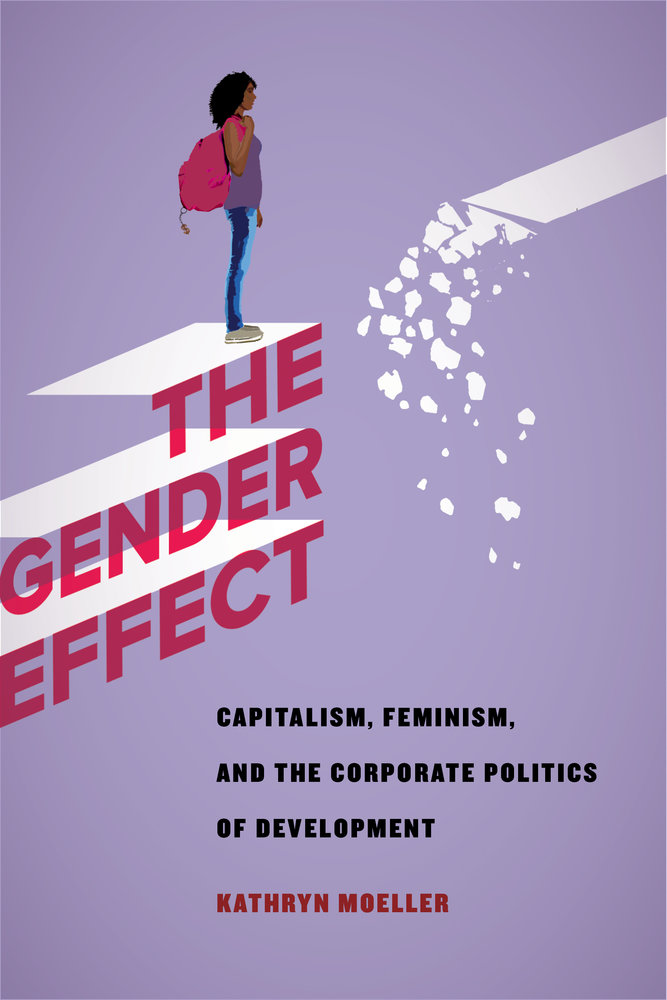
Book Review: *The Gender Effect: Capitalism, Feminism, and the Corporate Politics of Development*

Book cover

In the 1990s, the idea of “investing in women” started circulating around large corporations and foundations. In developing countries, it was thought that this idea could help women, their families and their countries out of poverty. In return, it was then thought that women would pay specific attention to children’s nutrition, education and healthcare when considering where to spend their money and thus raise the country’s human capital. Educating women and girls was the most effective way to fight  poverty and encourage development in the Global South. This approach has since been adopted by powerful corporations and institutions, such as the United Nations, the World Bank, and the United Kingdom’s Department for International Development. Using her ethnographic case study of the Nike Foundation’s Girl Effect initiative as an example, the author Kathryn Moeller argues that these corporate led campaigns end up benefiting corporations but at the expense of women and equality in The Gender Effect: Capitalism, Feminism, and the Corporate Politics of Development. 

Continue reading “Book Review: *The Gender Effect: Capitalism, Feminism, and the Corporate Politics of Development*” →

*Fearing the Black Body: The Racial Origins of Fat Phobia* Review

Unlike existing historical scholarship, Fearing the Black Body: The Racial Origins of Fat Phobia by Sabrina Strings is one of the first historical studies that emphasizes the interconnectedness of race, gender, and morality in the development of thin fetishism and fat phobia. Strings argues that anti-fat bias is not recent discourse, instead claiming that fat phobia has been circulating since the Renaissance. The transatlantic slave trade and spread of Protestantism were key historical events that contributed to the bias toward slenderness and fear of fatness. Another important point Strings makes is that fat phobia did not originate from  health issues but was instead implemented  to justify the race and class hierarchy. 

Continue reading “*Fearing the Black Body: The Racial Origins of Fat Phobia* Review” →

Book review on Daring to Be Bad: Radical Feminism in America 1967-1975

Daring to Be Bad: Radical Feminism in America 1967-1975 is an academic monograph by Alice Echols, published in 1989. As the title suggests, the book offers a detailed account of the rise and fall of radical feminism in America from late ‘60s to ‘70s. Echols vividly depicts the achievements, struggles and conflicts within radical feminism, identifies and categorizes different theories and activists’ groups emerged from the movement, and attempts to explain how radical feminism eventually came to its doom. The book organizes a complex half-decade of political history into an easily comprehensible timeline, while summarizing many scholar ideologies towards radical feminism. It serves as an accessible scholarly introduction to readers who lack significant knowledges about this topic.

Echols contends that radical feminism, several years after its establishment, was eclipsed by cultural feminism, which was a “tendency that grew out of radical feminism” (5) Whereas radical feminists called for a political confrontation with the government and a subversion of the male supremacy society, cultural feminists were keen on creating an alternate counter-culture with only women. These are not the only two tendencies shared by women of the radical movements. Echols also introduces other categories of feminist ideologies, such as politicos, liberal feminists, new left women, socialist-feminists. She focuses on how, in the movement, radical feminism gradually dissipated, along with fatal flaws within the movement that prefigure its end. In her opinion, if one successfully articulates the reason for the popularity of radical feminist movements in ‘60s as well as their lethal flaws, it might be possible for she and her contemporaries to revitalize the movements.

As Echols concludes herself, her work is “not simply an intellectual history, a social history, or a collective biography” but “the combination of three”. (19) Her academic approach in this book is primarily historiographical. Employing a large number of direct quotes from speeches, interviews and writings, Echols presents a wide range of narratives from scholar’s and activists’ views from 1967-1975. Her sources of evidence consist of multiple types of texts, since her emphasis is not solely on the feminism theories, but also their practice, the interpersonal relationships between feminists, the engagement with other ongoing movements black movements, as well as media response. As the radical feminist movement was, in her own words, “factious”, she often introduces each sub-group and its theories in separate sections of a chapter, accompanied by a micro biography of their founders and leaders. However, her work is not uncritical. Though the historical narratives are kept objective and impartial, she presents her analysis on the feminists’ theories and approaches as conclusions.

The book is divided into 6 chapters, ordered chronologically. Each chapter marks a certain time period with distinct features attributed to it, such as 1973-1975 and the flourishment of cultural feminism. Generally, the radical feminism history in the book can be divided into three parts: the early days radical feminism as an affiliate to other radical movements, the rise of many radical feminism theories and organizations, and radical feminism’s decline that started the development of lesbian feminism and cultural feminism.

Beginning from 1965, the prototype of the actual radical feminism that appeared after 1967 emerged. As early as 1965, women activists still worked inside male-dominating movements, such as the new left and civil rights movement. Women’s issues were not taken seriously, as ““Male chauvinism” was a phrase that one did not utter unless one was ready to be laughed at.” (26) At the same time, the growing gender tensions on sex roles forced (SDS) to start holding workshops on women’s roles. Later on, women activists like Jo Freeman and Shulamith Firestone from the Chicago’s group embarked on the earliest women liberation movements by forming small independent women groups and issuing a manifesto about “defining their own struggles” (49) Echols argues that the black power before 1967 ultimately inspired the statement that “it was only valid form women the organize their own oppression and to define the terms of their struggle.” The radical feminists’ struggle begins with a fundamental “politico-feminist schism.” (52) “Politicos” and “Feminists” occupied opposing theoretical positions inside the women liberation groups by 1969. Politicos viewed capitalism as the main enemy of women’s liberation and claimed women’s movements as an important sector of the leftist movements at the time. By contrast, feminists believed male supremacy to be the biggest problem faced by women and refused to be in only a subordinate position under male-dominating movements. The earliest women liberation groups included D.C. Women Liberation, The Westside Group of Chicago, and New York Radical Women. Together, they articulated the early radical feminist theories and organized events and protests, such as consciousness-raising meetings. In chapter two, Echols demonstrates in detail how problems arose within women liberation groups. Besides the clashes between politicos and feminists, the theories divided on questions like whether men should be challenged or rejected, and whether consciousness-raising groups should demand for actions. In addition, Echols argues that the premise of consciousness-raising, as well as the largely embraced theories at the time, was dismissive of class and sexuality differences, as they contended that “differences still had the same root.” As the white upper- and middle-class women of liberation groups based their theories on assumptions that all women shared universal experiences which united them, bringing up differences was discouraged. The inner conflicts, the unorganized groups, as well as the growing sizes, all contributed to the early failures of radical feminism such as the dissolution of a large group like NYRW.

However, the tendency of the whole movement became much less politico and much more feminist towards 1969, when feminists faced increasing hostility from the larger movements. The sexism within the leftist movements at the time forced women to organize their movements outside of the left. Starting from 1969, radical feminism grew continuously into even more strains and more radical of theoretical positions. Echols contends that “In the early ‘70s radical feminism seemed to be flourishing” as “there was an explosion of radical feminism literature.” (197) Moreover, she also illustrates several flaws within these groups. For example, Redstockings continued on the previous generalized assumptions of all women by upper class, white women. It failed again, to see the need of specifying class and race differences in consciousness-raising. The in-movement schism still existed, and was expressed in opposition between pro-woman line and gender conditioning theory. The former, represented by Redstockings, believed women were forced by the material reality of the male-dominating society to take oppressed roles, while the latter, represented by Cell 16, maintained that women were “brainwashed.” (161) Accusations of elitism, especially against the most educated member, who were also main theorists and writers, were growing. Organizations like The Feminists and New York Radical Feminists were so obsessed with an egalitarian approach to achieve leader-less structure and a true sisterhood that they became greatly unorganized. In addition, prefiguration of cultural feminism started to appear when arguments from Cell 16 transformed into a more gender essentialism theory. Besides, they also proposed that “women withdraw from men personally as well as politically.” (164) It was also true that in 1970, “the newcomers often lacked the founders’ radical perspective” as they “seemed more interested in self-improvement than in the radical restructuring of society.” Radical feminism, in reality, started to decline.

The start of chapter five, titled “the Eruption of Differences,” marks the turning point of radical feminism. In the winter of 1970, Barbara Mehrhof and Pam Kearon organized the Class Workshop for women activists to discuss class. However, Echols maintains that class workshops were “response to the media’s growing fascination with the women’s liberation movement.” Class and elitism were assessed as a result of the resentment created when only few people(leaders) had attention of the press. The discussion about class equality did not have noticeable positive results; instead, it “had become a tyranny of personal conformity. Imagination, inspiration, and efficient political organization are suspected and throttled.” (210)

Meanwhile, Lesbianism emerged as more and more lesbian-feminists entered the movement and demanded for more inclusiveness within radical feminism. Lesbians faced mostly hostility among the heterosexual women liberationists, for lesbian sexuality was regarded as sexual rather than political. As evidenced by quotes from Roxanne Dunbar, “feminism…to get women out of bed rather than change the gender of their partners,” Most radical feminists were anti-sex. To convince the heterosexual women in the movement, lesbian-feminists like Rita Mae Brown promoted lesbianism with the term “women-identified women.” They legitimized lesbian as a political term and contradicted the stigmatization that lesbians were “male-identified bogeywomen.” (216) To them, their sexuality “involved sensuality rather than sexuality, communication rather than conquest.” Echols comments on the de-sexualization of lesbianism that “the movement’s acceptance of lesbianism was always conditional – contingent upon lesbians’ wiliness to de-emphasize sexuality…Lesbianism was never really legitimated on sexual grounds.” While the eruption of differences was not directly correlated to cultural feminism, she contends that “cultural feminism’s ascendence is in large measure attributable to the turmoil created by lesbianism and class.” From 1969, cultural feminists proposed arguments in “The Fourth World Manifesto” and “Mother Right.” The manifesto declared that the female culture formed a fourth world, since women were essentially a colonized group. In addition, Jane Alpert articulated in “Mother Right” that women exhibited a super power due to female biology, as she explained, “biology is hence the source and not the enemy of feminist revolution.” (250) A vision of women united by their shared “motherhood” (251) was described, and Echols concludes that the reason why cultural feminism was constructed and embraced was a “desire to put an end to the painful and often immobilizing discussions about women’s differences.” Cultural feminism was, inevitably, a logical solution which feminists sought for after a long time of turmoil and an intensifying tendency to essentialism.

Over 30 years after its first publication, Echols’ book is still not outdated and serves as a valuable text for those who are curious about radical feminist movements in 60s and 70s. While the book is relatively accessible so that people without fundamental knowledge in social movements or feminism can understand Echols’ ideas, the ways she structures her material are sometimes misleading. For example, the contradicting theories of pro-woman line and gender conditioning are firstly mentioned in conclusion of chapter 2. Without further explanation in chapter 2, this material is revisited in chapter 4 and finally addressed in detail. As the chapters describe mostly simultaneous events, similar situation happens multiple times and render one particular piece of content quite confusing. Other than that, the book is based on a cis-gender assumption. Mostly limited by ‘80s gender concepts(it was written in 1987), the book fails to address struggle of non-cis-gender women, as well as other non-binary communities. Though Echols provides ample insights into the race and class perspective of radical feminism, gender minorities other than gays and lesbians are ignored.

Work Cited:

Echols, Alice, “Daring to Be Bad”: Radical Feminism in America 1967-1975, University of Minnesota Press, 1989

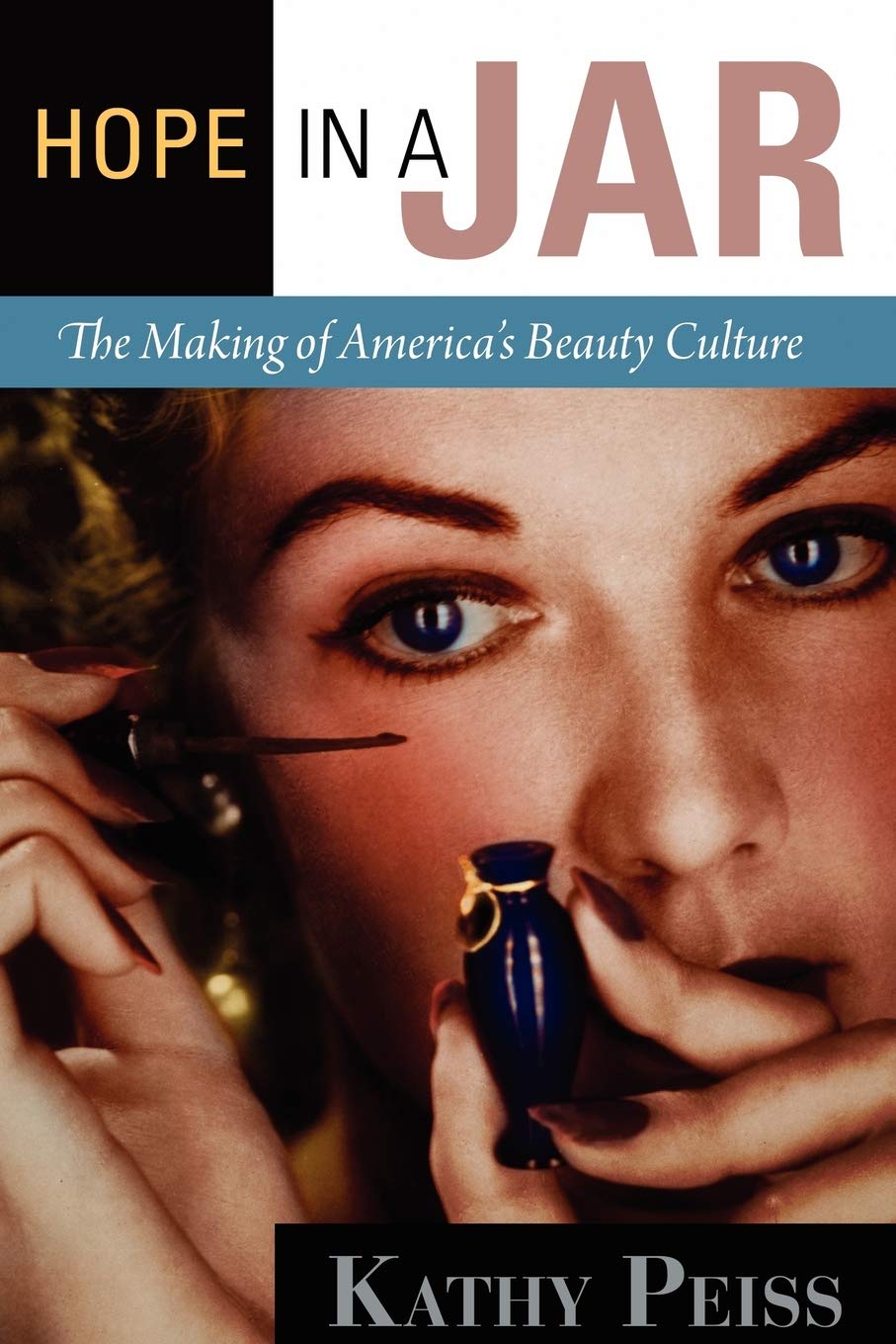
Book Review: *Hope In a Jar: The Making of America’s Beauty Culture*

Hope in a Jar: The Making of America's Beauty Culture: Peiss, Kathy:  9780812221671: Amazon.com: Books

Beauty in American culture has been constructed around an accepted norm or a set-standard of what makes someone desirable and beautiful. Overtime, cosmetics have become deeply intertwined with this beauty culture in America and it is no small industry – a $43.6 billion industry to be exact(1). The vastness of this industry has caused a lot of examination of beauty culture and cosmetics during the nineteenth and twentieth century and picking apart common misconceptions associated with the beginning of cosmetics. It has been a long standing assumption that the beauty industry was pioneered and dominated by males in order to sway women into a singular, confined definition of beauty, however, in Kathy Lee Peiss’s book, Hope in a Jar: The Making of America’s Beauty Culture, she demonstrates that this is not the case. Within this book, Peiss illustrates a beauty industry powered by women in the late 1800s and early 1900s – one where women owned the companies producing the cosmetics and one where women sold the cosmetics. Hope in a Jar: The Making of America’s Beauty Culture elaborates on two things that cosmetics gave women: opportunity for expression through make-up and employment for women. 

As someone born during the baby boom and coming of age in the 1960s(2), Peiss watched as the judgments surrounding manufactured beauty changed with great speed. The meaning of cosmetics in relation to beauty standards, ideals of femininity, profit making, and politics remained difficult to pin-point. However, Peiss argues that beauty culture should be understood not only as a type of commerce but as a system of meaning that helps women navigate the changing conditions of modern social experience. Women dipping their toe in “modernity,” often placed them into a public space that was not always welcoming. In the history of beauty culture, there lies a web of intimate rituals, social relationships, and female institutions. Over decades, women have passed down the teachings of cosmetics to their children and in these little jars of makeup, lies a detailed history of women’s ambition, pleasure, and community. 

Kathy Lee Peiss, born in 1953, is a well-known author and American historian. She received her Bachelor at Carleton College and her Master of Arts and Doctorate of Philosophy at Brown University. During her lifetime, she was an instructor at Rutgers University and New Brunswick, Canada from 1980 to 1981. Additionally, from 1981 to 1986, Peiss worked as an assistant professor at the University of Maryland and as an associate professor at the University of Massachusetts from 1986 to 1992. Since this time, she has continued to teach as a professor. Peiss has also been listed as a noteworthy History educator by Marquis Who’s Who. In 2011, she chronicled the purpose of cosmetics over time and the impact they have in regards to economic, sociological, and psychological aspects(3). 

Peiss uses a mix of both qualitative and quantitative methods by developing her argument with participants and observations; first hand accounts of people’s experiences; and consumer surveys. Peiss begins her novel towards the end of the 19th century. During this time, cosmetics often contained toxic substances (i.e. lead) and were associated with “hussies” or prostitutes. In the introduction, she brings this up in the example of two lipstick shades named Lady and Hussy. The Hussy shade outsold Lady 15:1. Additionally, cosmetics were condemned by society saying that they created false needs, manipulated fears of the consumer, and raised superficiality over true substance. All this being said, Peiss makes sure to bring it back to the beauty business being largely built by women – some of the most successful entrepreneurs being immigrants, working class, and black women. The focused attention on face and figure paved the way for the pursuit of beauty to be acceptable and respectable. Transitioning into the early 20th century, women began to embrace cosmetics a lot more. However, advertising and social pressure to be “attractive” lowered self-esteem. In the first chapter, Peiss talks about an incident involving a 24 year old housewife who applied a commercial skin lightener who was admitted to the hospital and became paralyzed from the elbow down. This led to a focus on cosmetic preparation. Women were expected to be able to gather roots, distill essences, identify different herbs, and compound remedies for the skin. Many household manuals during this time included information regarding waters, oils, powders, and ointments meant to aid in the beautification of women. In this chapter, Peiss also discusses the origin of different cosmetics and beauty techniques. For example, indigenous plants were used to treat skin problems and methods like using crushed berries to redden cheeks were brought from Native Americans and West Africa. Moving on to chapter 2, Peiss describes the ideal beauty image as pale and because of this, white powder and skin lighteners became a big part of daily life for both white and African Americans, thus further propelling the aesthetic dimension of racism. Additionally, the rise of photography changed how people perceived their appearances. Portraits gave many people an idealistic version of how they looked – therefore, when people began to be photographed, they were not pleased with how they appeared. This resulted in the retouching of photos with painting or simply just wearing more makeup during photography sessions. Similarly, as photographs became more widely available, a domino effect was instituted: celebrities becoming beauty icons; celebrities using more makeup; the acceptance and consumption of makeup continually growing; and the cosmetics industry evolving into a commercialized industry. And of course, with the growth of a new “trend,” many opinions followed. Some people stood firm in their belief that painting was morally corrupt. Others sat more towards the middle, feeling that it was alright only if it was worn in a conservative fashion. Then on the other end, makeup was viewed by some as helping out the women who had not been blessed with “beauty” at birth. The key takeaway from this chapter is that someone painting their face moved from a trait of prostitutes and hussies to that of the “average” woman. During a time where it had been prohibited, chapter three centers on the transition of women into the commercial beauty industry. The Achilles heel of the beauty industry at this time was that it was a quiet industry. Many who used these products did not speak about their use of them in addition to wanting no one to know about their purchasings of them. However, in contrast to the women who were ashamed, there were the women who saw their own potential within the beauty industry. They saw an industry focused mainly around women as a place where they could get their foot in the door. Peiss drops a few names of entrepreneurs within the industry: Florence Nightingale Graham, Helena Rubinstein, Annie Malone, and Madam C.J. Walker. All were successful within their respective careers, however, their approaches were not all the same. Rubinstein and Graham sold their products in a more primitive “boutique” style, while Malone and Walker tried to market to everyday women. Transitioning onto chapter four, The Rise of the Mass Market, Peiss expands on the growth of the market for cosmetics following World War I. Between the years 1909 and 1929, the number of cosmetic manufacturers nearly doubled and their value rose exponentially. With this came a large scale system of mass production, distribution, marketing, and advertising that later transformed the initial patterns of buying and selling. The cosmetics industry transitioned to producing goods for national sale. Then, in promoting the Made-Up Woman, during the 1920s, mass produced images of glamorous screen stars, flappers, and beautiful women began to influence the fashionable ideal and beauty rituals. However, within this were racial divisions.The mass market’s democratic vision of beauty denied African Americans entry due to the unfortunate fact that white women were the target audience for national advertising. In Peiss’s sixth chapter, she talks about the beauty industry’s success in convincing their consumers that in order to fulfill individuality and femininity, one would need to purchase cosmetics. However, where information is pulled from is skewed due to its sources being limited to white middle and working class women. The use of cosmetics boomed in larger cities like New York and Chicago and came into play a lot later in smaller towns. Then, wrapping up in Peiss’s final two chapters, she discussed the white-dominated ideal “appearance,” and the weight that these powder and porcelain jars had in the war of cultural visions. Many black reformers and educators spoke out about the political meaning of appearance. The beauty industry increased the discontent of African Americans, gay activists, and feminists in regards to commercial exploitation by the long-standing beauty ideals. 

One area in Hope in a Jar: The Making of America’s Beauty Culture, that Peiss really excels at is disproving the wide-spread assumption that the cosmetic industry painted women as the victim in its narrative. The history of beauty in America is often looked back upon as one where the women experienced shame and they were looked at as being on the losing side.  Peiss’s greatest strength within her novel is combatting this misconception but in chapter 3, Peiss does an exceptional job of illustrating that the cosmetic industry resulted in both social and economic empowerment for women. Beauty was the catalyst that allowed women to break from the confinements that labeled working as taboo unless their social class truly depended on it. It is depicted and regarded as women viewing it as a way to get their foot in the door – it was something for them – specific to them. Peiss even uses accounts of four entreprenuers to further her argument regarding the doors that the cosmetic industry opened for them. 

Overall, Peiss does a great job in her documentation and elaboration of the cosmetic industry in her novel – however, that is the only thing she focuses on. I would have loved for her to dive deeper into related areas since she alludes throughout the book to discussing beauty as a whole. This is not necessarily a weakness, but I think her writing could have been further developed and well-rounded by drawing parallels between fashion, plastic surgery trends, diet culture, and “ideal beauty.” The title of Peiss’s book is Hope in a Jar: The Making of America’s Beauty Culture, with emphasis on that second part: the making of America’s beauty culture. By Peiss only focusing on the wearing and history of cosmetics – I feel that it shadows other very important fields that are within the umbrella of beauty culture. More specifically, she could’ve addressed those other fields and made connections with the dangerous and sometimes unhealthy lengths people would go to in order to fall within the parameters of America’s beauty culture.

After reading this book, it is safe to say that my initial view of the history of the cosmetic industry has been broadened. I feel that this could be a really good book for college students or anyone wanting to look deeper into the history of the oppression of women or even just women’s beginnings in the workplace. I now see the opportunities that the industry gave to many women. However, I believe after reading this book that women were victims at times, victorious at times, and sometimes even the ones being the oppressors. This is a read I would love to revisit and draw deeper connections with other viewpoints after my completion of the GSS 101 course. .

(1) Manager, Jonas Sickler SEO. “Beauty Industry: Cosmetics Market Share, Trends, and Statistics.” Terakeet, 22 Oct. 2021, https://terakeet.com/blog/beauty-industry/. 

(2) Peiss, Kathy Lee. Hope in a Jar: The Making of America’s Beauty Culture. University of Pennsylvania Press, 2011. 

(3) “Kathy Lee Peiss.” Prabook.com, https://prabook.com/web/kathy_lee.peiss/639345. 

Smelling Like a Female: Versace Eros Pour Femme 2014 Campain

Written by Tramanh Le for Jezebel www.jezebel.com

Two years after the launch of Versace Eros in 2012, Versace launched Eros Pour Femme. The story of Eros continues when the ad opens with the return of the male model from the 2021 campaign entering the same mysterious setting. He is again shirtless to show a sculpture-like muscular physique holding a bow and arrow to symbolize the Greek god Eros. A few seconds later, we see a slim, female figure with an elegant pose floating towards the light from the dark water. From her silhouette, you can see she wears a dress with gladiator sandals, which continues the Greek motif. When the female model emerges from the water, the two encounter each other.

In this snapshot, there is a sensual scene where the female model, Lara Stone, slowly brushes Eros’s hand to take the golden arrow. Enchanting music accompanies this scene to help create a dramatic effect for the seduction of Eros by Lara Stone. Although this sensual act is supposed to symbolize the strength of women, her strength is only validated by the ability to seduce a male. In the 2012 Versace Eros campaign, there was only a male actor, who was accompanied by a fast-paced and intense soundtrack. This choice in focusing on just the male model assumes that men are powerful by themselves and do not need to have a woman to contribute to this power. However, a woman’s strength is characterized by the ability to successfully seduce a male. This depiction of women is a common trend in advertising with a woman depicted as a support or the seductress next to a man.

In this last snapshot, the light from Olympus shines on Lara Stone as she lies on her side with a seductive pose while holding the golden arrow she had successfully taken from Eros. Placed next to her is an enlarged, glamorous, and golden fragrance bottle adorned with the iconic Versace Medusa head. In contrast to this scene, the Eros campaign’s ending scene is dark and mysterious with a turquoise blue bottle, which has historically been a color associated with males. We can see the different marketing techniques companies use in order to sell specifically to men and women. This bright and gold bottle is for women, while this dark and blue one is for men.

Not only does the bottle look like it is for women, but the fragrance smells feminine. The words pour femme show that this fragrance is the female scent interpretation of Versace Eros cologne. Those words also state that this perfume is only for women. The heart of the Pour Femme fragrance contains jasmine infusion and jasmine sambac absolute, which Versace states on their website, “conveys an authentic and timeless femininity.” Unlike its counterpart, Versace Eros does not have floral notes that dominate the scent. The Versace website states that the fragrance was supposed to “interpret the sublime masculinity through a luminous aura with an intensely vibrant and glowing freshness.” My question is what determines which scents are feminine or masculine. The answer is the cultural and societal frameworks that have constructed certain scents as either feminine or masculine, not that we are biologically wired to do so. Perfume companies have taken advantage of these frameworks and contributed to the manufactured idea of gendered smells in order to sell products specific to men and women separately. Because we associate floral scents with femininity, it shows normativity of gendered scents.

Versace Eros Pour Femme | Fragrances – YouTube

Versace Eros 100 ml for Men | US Online Store

Versace Eros pour Femme 100 ml for Women | US Online Store

Lesbihonest: Pitch Perfect is Not As Progressive As We Think

Written by Sarah Butchko for Autostraddle

Pitch Perfect, directed by Jason Moore and written by Kay Cannon, hit theaters in 2012 and has remained an iconic pop culture staple since. The movie follows the Barden Bellas, an all-girl acapella group trying to make a comeback after an embarrassing performance at the ICCA Finals the year before. While the group used to be composed of basic, white, acapella girls, the Bellas have become desperate to recruit a new team and end up taking in a group of misfits as the new Bellas. This could be a whole other discussion on the fatphobia, racism and plain bitchiness rooted in the recruitment of the Bellas, like how they have to “settle” for people who do not fit their prior standards of: white, skinny, and conventionally pretty. Back to the plot of the movie; the Bellas rival the Treblemakers, the all-male group on campus, and beating them at the 2012 ICCA Finals fuels their fire. Pitch Perfect takes the audience through the reinvention of the Bellas and the trials and tribulations of college acapella. There are many subplots in the movie, Beca and Jesse’s relationship, the enemies to lovers trope of Fat Amy and Bumper, and the not so subtle will-they-won’t-they of Beca and Chloe, to list a few. The movie has a cliche happy ending, Beca gets her man and the Bellas win the ICCAs. 

Although at first glance, the story is inclusive of different people and identities, with further consideration it uses these different identities as the butt of the joke and perpetuates harmful stereotypes. Comments and off color jokes about lesbians are heard throughout the movie. In the specific scene I am focusing on, the Bellas are going around and telling each other something that the others do not know about them. As Cynthia Rose is standing up to share, Fat Amy says, “I think we know where this is going, lesbihonest,” insinuating that Cynthia Rose is going to come out to them. Instead, she shares about her gambling problem that started when she broke up with her girlfriend. Fat Amy reacts saying, “Whoomp there it is,” as if it is such a huge deal that Cynthia Rose is gay. Prior to Cynthia Rose officially coming out to the Bellas, the group constantly makes comments suggesting that Cynthia Rose is lesbian. This pressure on Cynthia Rose to label her sexuality for the comfort of the others in the group relays a message to the audience saying that it is necessary to have a defined identity that others must be aware of. This continues the pressure of coming out in society and the idea that if you are anything but straight you must define it and let everyone know. This becomes harmful as the assumptions and judgements of Cynthia Rose from the Bellas may cause someone watching who is unsure of their sexuality and their definition of it to feel pressure to come out or define their identity. It can also create fear for the person watching that others are judging them and making assumptions about them. 

The first time the audience meets Cynthia Rose is at the audition for the acapella groups where she is misgendered because of the clothes she is wearing and the way she looks. The character who misgendered her, corrects himself saying “Whoop not a dude!” which is a joke that is supposed to entertain the audience. However, this “joke” perpetuates the gender binary in clothes, making it out of the ordinary when a woman expresses her gender in a way outside of the norm. The fact that the comment comes from a man makes it even more frustrating. 

Cynthia Rose, in her own words from Pitch Perfect 2, is “black, gay, and a woman.” This intersectional representation taken at face value can be seen as progressive and positive for the community, however, throughout the movie, Cynthia Rose is portrayed as a sexually aggressive black butch lesbian that keeps up a harmful stereotype about lesbians. She makes sexual comments and innuendos, and borderline sexually assaults Fat Amy, Stacy, and other characters. She repeatedly grabs Stacy’s boob and stares at her ass. When Fat Amy is hit by the burrito, Cynthia Rose jumps on her and attempts to give her “mouth-to-mouth” resuscitation which the audience can tell is not her true motive. These aggressive instances contribute to the butch lesbian stereotype that make hetero women wary- that the lesbian wants to get with you even if you are not interested. With the additional fact that not only is she an angry butch lesbian, she is an angry black butch lesbian, this representation becomes even more dangerous. My guess is that the producers did not intend to create this harmful character that perpetuates harmful stereotypes in society but with more attention paid to how this representation would come across could have made this movie a little less problematic. While it is important to have inclusive representation in media, representations that are not done well can be more damaging than not. 

Comment (Shea Bonacci)

I have watched the Pitch Perfect Movies so many times since they first came out. These are issues I never noticed or picked up on as a kid in the 5th grade. Reading through your post allowed me to walk through the movie with a completely different lens as a 20 year old. I like how you highlight that on the surface, most people view the movie as inclusive of different people and identities, but the irony is that those people are the butt of the joke. Assuming and expecting people to come out about their sexuality, the fatphobia present within the movie, the misgendering present, and the unrealistic representations of certain “stereotypes,” are all very present issues within the movies. Overall, great job!

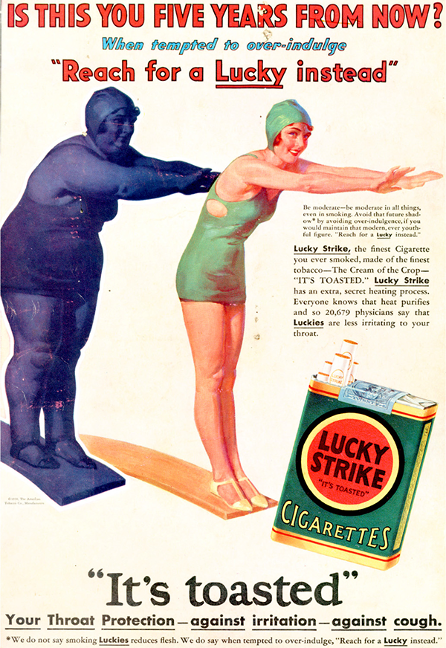
A Fatphobic Lucky Strike Ad: Another Bad Side of the Tobacco Industry

Written by John Rogers for Jezebel.

This horrific ad was created by Lucky Strike cigarettes in 1930 as an attempt to sell their unhealthy product. It is no longer in circulation today (thank goodness) but it can be found online, and looking at it provides important history on how advertising has always been manipulative. The ad purports that Lucky Strike cigarettes will reduce feelings of hunger, leading consumers to be less snacky, and thus, presumably avoid tacking on weight from overeating. This ad is targeted towards women, since it features a woman in the picture, and it suggests that ladies can avoid weight gain by smoking cigarettes. In this way, the ad reinforces harmful gender norms that women must avoid being fat in order to be attractive to potential partners. 

The ad is not just sexist towards women by holding them to high beauty standards. It is also deeply fatphobic, meaning that it reinforces the idea that fat is ugly and must be avoided. According to Marilyn Wann, “health is a problematic concept when linked with weight. Health is not a number, but rather a subjective experience with many influences.” So, implying that a certain weight is unhealthy or undesirable, as this ad does, is a constructed idea that harms fat people. They are less self-confident, ostracized from society, and given worse health care as a result of this fatphobic thinking.

On top of some sexist and fatphobic tendencies, the ad is racist as well. It presents the skinny woman as white, and darkens her fat shadow. This reinforces the historical idea that fat is a Black quality, and that Blackness is bad just like fat. By presenting the white woman as the ideal, and the dark woman as the problem to be avoided, this ad upholds a racist ideal of white superiority.

The intended purpose of the ad is to sell cigarettes, and the ad hopes that preying upon women’s fears of being fat will impel them to buy the product that is offered as a solution to weight gain. It has another angle as well. It claims that the cigarettes will protect consumer’s throats from irritation and a cough.  It is ridiculous by our 21st century standards to smoke unhealthy cigarettes as a way to resist weight gain or clear your throat, but this was a clever argument at the time of the ad. Doctors were paid to claim that cigarettes were healthy, allowing Lucky Strike to prey on consumers with misleading data. In this way, the ad uses the rhetorical appeal of ethos by appealing to over 20,000 doctor recommendations to back up claims of health benefits from smoking.

The advertisement uses the rhetorical appeals of pathos and logos as well. The scare tactic of the “fat shadow” that could occur in 5 years if one engages in “over-indulgence” is intended to create fear in the audience, a fear that will be dissuaded by the supposed benefits of smoking Lucky Strikes. Thus, the images in the ad appeal to pathos. In terms of logos, the ad makes an argument that cigarettes lead to less hunger, and less hunger leads to less eating, and less eating will prevent weigh gain. Of course, this logic is faulty, because it assumes that less eating will prevent weight gain, even though this is an open question. It also assumes that weight is a choice that results solely from eating habits, which reinforces problematic fatphobic ideas that Wann references. Humans have weights on a bell curve, just like height or other characteristics, so picking a “skinny” ideal that is a specific spot on the bell curve is not only misguided, it is impossible to accomplish.

The ad has two images. One is a basic image of a cigarette box, intended to make the packaging look clean and appealing. The other image is of a thin, conventionally attractive woman with a fat shadow. The then woman looks happy and calm, while the fat shadow has more of a grimace on her face. This illustrates the argument of the ad: buy Lucky Strike cigarettes to reduce hunger, or else weight gain will inevitably follow from an inability to control urges to eat.

Overall, the ad tries to convince women to buy Lucky Strike cigarettes with two claims that are both tied to health – the cigarettes will prevent weight gain by reducing hunger pangs, and they protect people’s throats by eliminating irritation and coughing. The ad is an example of problematic advertising that uses fatphobia to encourage people to buy unhealthy cigarettes. Ads like these were used throughout history to promote sexist, racist, and fatphobic ideas, convincing consumers that products which were actually harmful to them would help them avoid these made-up problems. Examining this history of constructing false needs is vitally important so that we can identify where ads are using these tactics today and snuff them out.

A cigarette ad riddled with fatphobia, false science, and problematic beauty standards

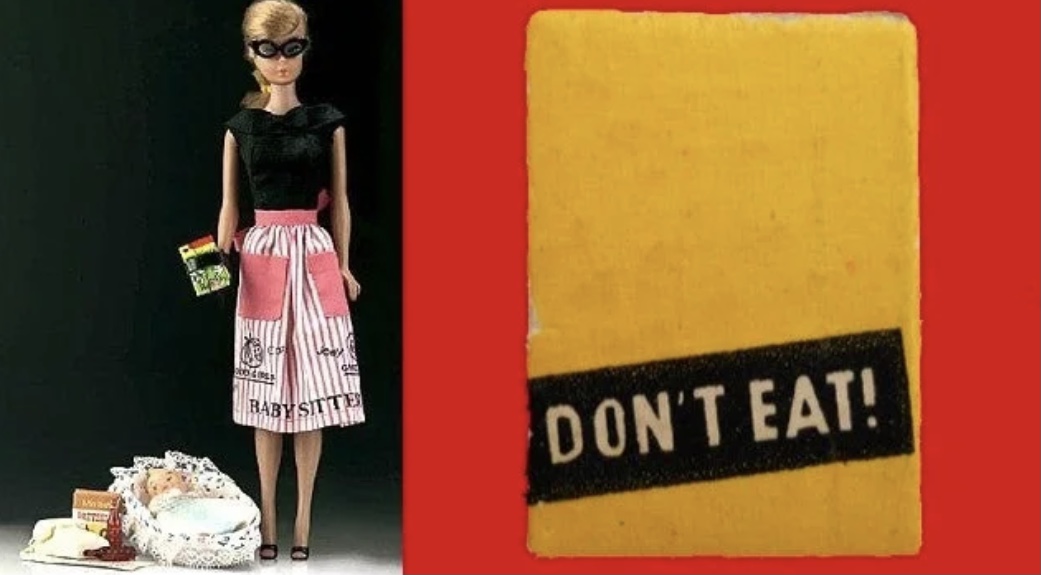
The Problematic Past of Barbie™️ Advertisements

Written for Feministing magazine.

Mattel’s advertisement from the 1960s.

The Barbie industry serves as an integral part of many young people’s childhoods and continues to be an influential brand. Up until these last two decades, the trademark has kept selling an item that lacks real representation- one that is appearingly not meant for everyone. One of the most notable red flags with this brand is the unrealistic model of body anatomy that is set before young generations. While recent strides to become a trademark that is known as more inclusive and empowering have been ongoing, there is still an entire history of wrongful messages and branding to be seen in order to account for its controversial narrative. 

A prime example (and one of many) is none other than the “Babysitter Barbie” ad, which includes the words “DON’T EAT” and features Barbie holding a book entitled “How To Lose Weight.” Mattel, the company behind the entire franchise, promotes a harmful lesson to an incredibly impressionable audience. A young person who comes across this graphic becomes instilled with the need to already be regulating an area of their lives in order to be seen as valid from the golden standard Barbie places. This becomes a confusing take on what is supposed to be a franchise dedicated to lifting girls up. 

Not only does this ad present a norm that should not be reiterated to a young group eager to view Barbie as a role model, but it reinforces poor beliefs regarding body image. Any advertisement that emphasizes a problem before one might even be aware can change someone’s entire perception of what is “socially acceptable” for them to look like. In this case, Barbie’s message can unknowingly kickstart unhealthy eating habits and overall insecurity, and young people may not be aware of the root of where it all began until much later.

The positive impacts the Barbie industry has had on its audience is not to be discredited; however, regarding topics of feminism, it can be noted that Barbie’s history of branding has not always been helpful to that cause. Luckily, Mattel has made strides in inclusivity and Barbies is much more aware today. It is essential that brands are conscious of the content they present to audiences, especially when it can negatively impact the confidence of young girls and their bodies. The Barbie franchise missed the mark on this one.  

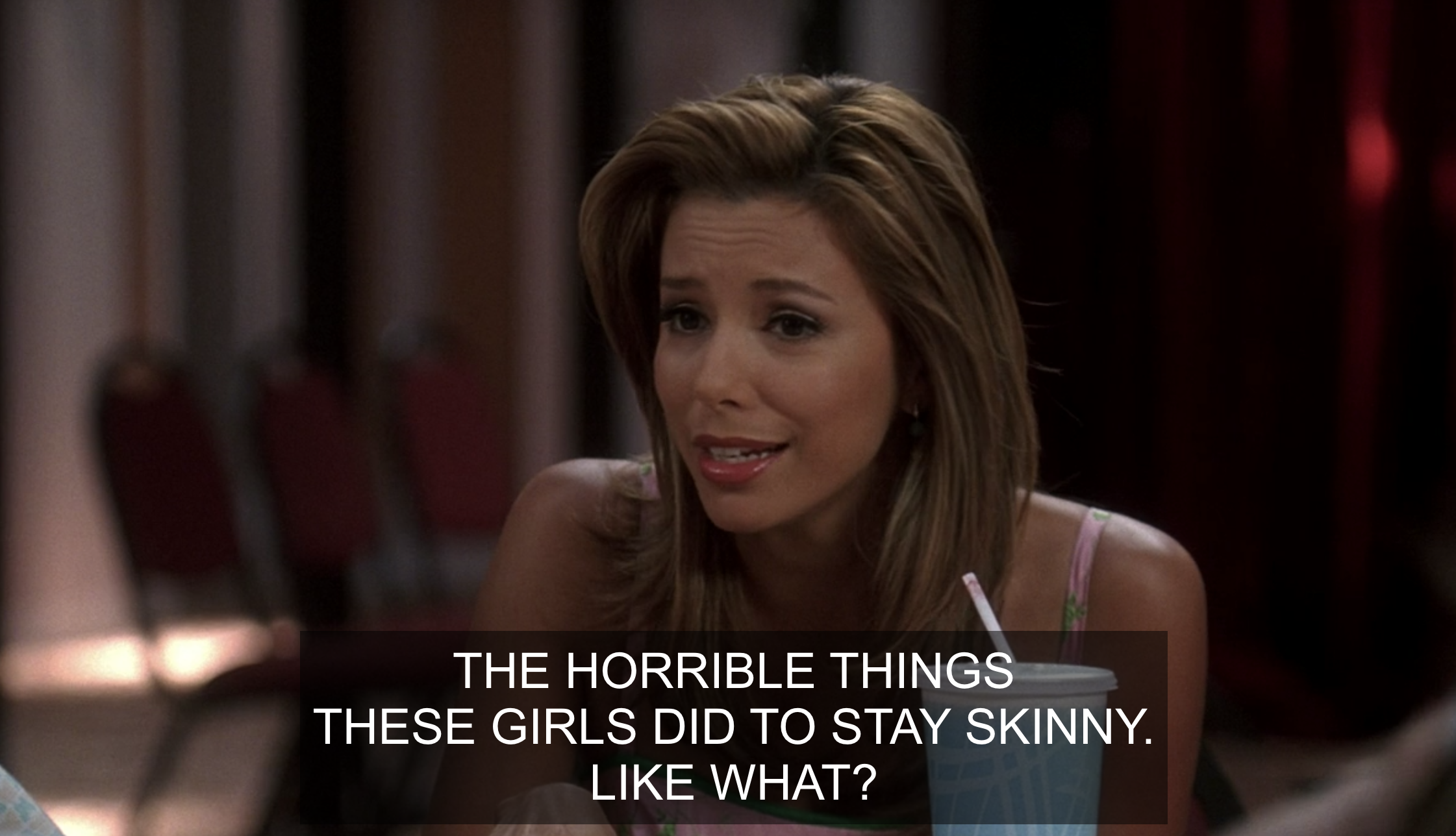
Latest on Desperate Housewives: depiction of women with assumptions and stereotypes

by Yuncong Hu

Written for Autostraddle

Last week, Desperate Housewives just released episode 9 of season 3, named “Beautiful Girls” after the character Gabrielle Solis’s plotline in this episode. Since 2004, when its first season started airing on ABC, the show has been positively received for its exploration on the inner dark sides and complicated personalities of the ordinary upper-class housewives, in contrast to the traditional plain, dour mother/wife figures on screen. Surprisingly in this episode, Gabrielle’s story isn’t technically boundary-breaking, and instead, it is borderline-misogynist.

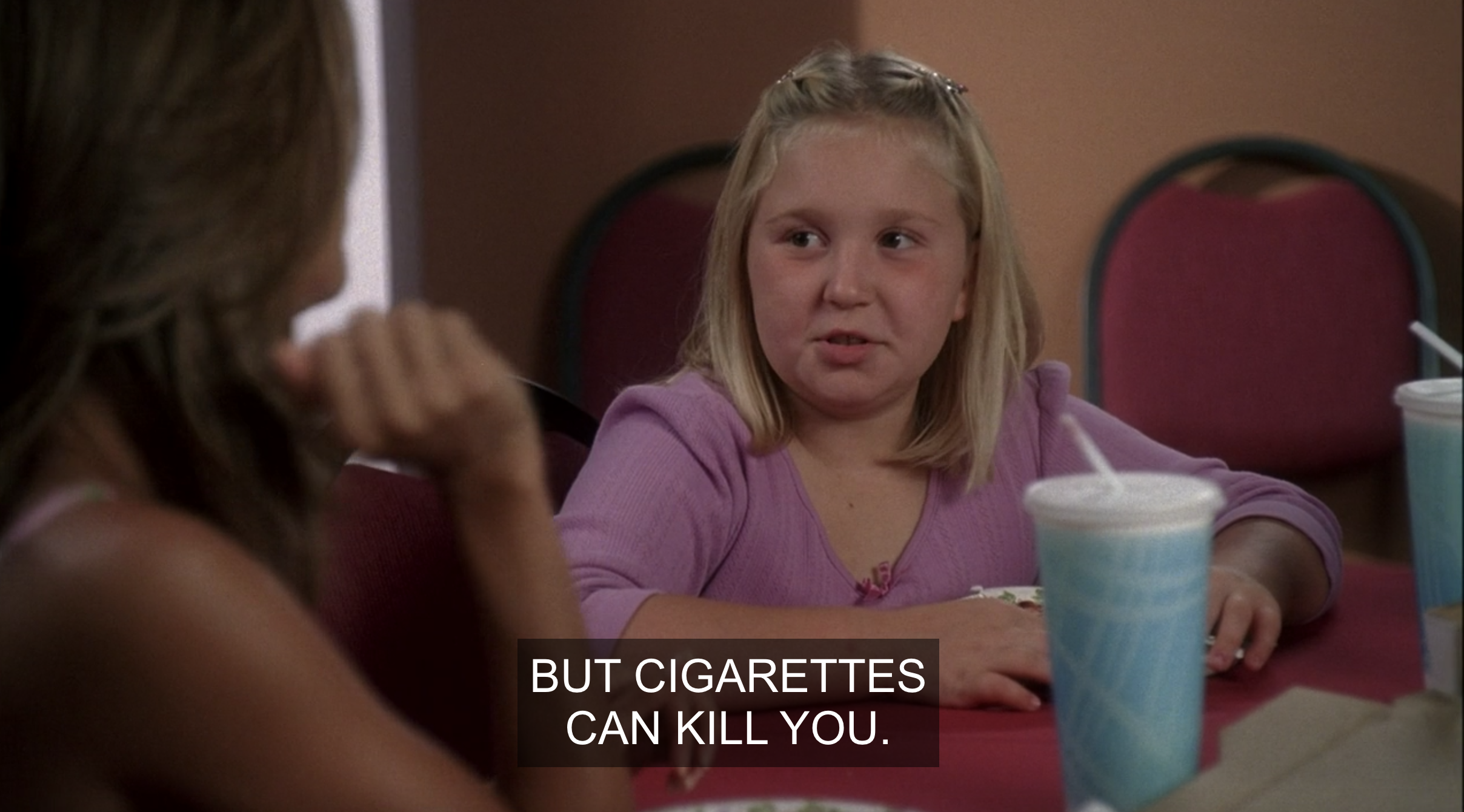
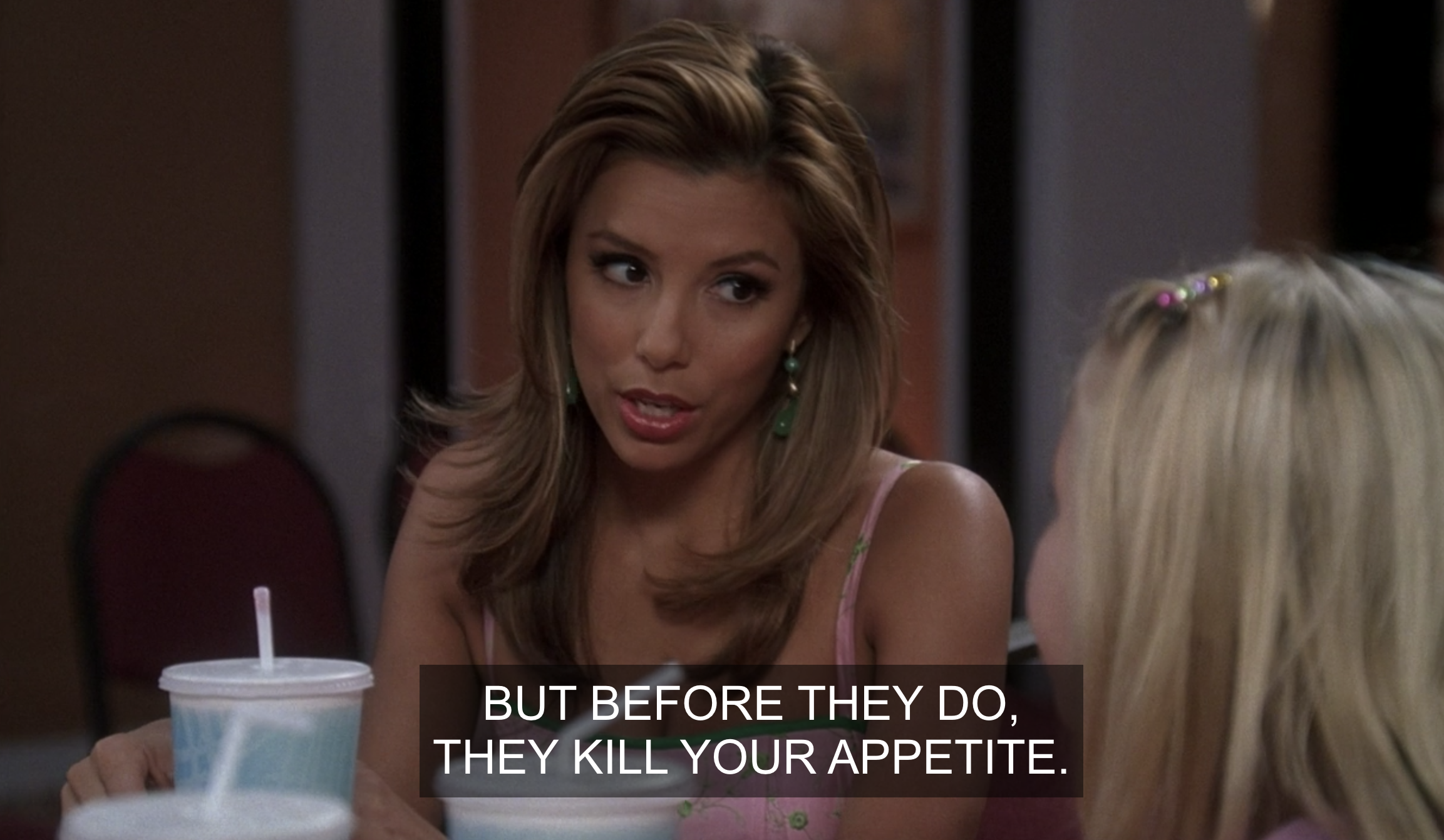
For those of you who haven’t watched Desperate Housewives, Gabrielle Solis is one of the four female protagonists, all of whom are close friends and neighbors living in a fictitious suburb are called Wisteria Lane. Gabrielle has a Mexican heritage, and the other three housewives are white. In S309, Gabrielle’s divorce is finalized. With the failed attempt to go back to her modeling career in last episode, Gabrielle accepts the fact that she is becoming an unemployed divorcée. In need of a distraction from her empty life, she accepts invitation from her gay personal shopper, Vern, to coach young pageant girls for his new beauty pageant consulting firm. While she reluctantly takes the offer, she later finds herself enjoying coaching the girls as her modeling expertise is incredibly idolized by these younger women. However, when she is reminiscing on her old modeling days, she accidentally tells the girls about some ill-advised weight-loss methods such as sticking fingers in throats and smoking. Later on, some girls are caught by their parents smoking and vomiting, and Gabrielle is fired. She then comes to the mothers of the girls, confesses to them that beauty pageant coaching is now the one single meaningful thing in the life of a woman without husband and family, and makes a subtle offer to give illegal diet pills to them. The parents give her a second chance.

It is noticeable that Gabrielle’s conversation with the girls in this particular scene demonstrate how fat stigmatization is socially institutionalized in popular culture. Specifically, Gabrielle starts with the warning “You would not believe all the horrible things model do to stay skinny” and “I never did it” before she introduced the kids into smoking and vomiting as weight-loss methods. The children, though aware of “smoking will kill you”, still ask “Do you have to be skinny to be a model?”, to which she answers, “When was the last time you saw a fat person on a magazine cover?” This is a highly representative example of anti-fat beliefs being passed on by someone elder and experienced to a younger generation, thereby creating an invisible social structure that is constantly renewing and strengthening itself. In her introduction to Fat Studies Readers, Marilyn Wann comments on this structure, “Every person who lives in a fat-hating culture inevitably absorbs anti-fat beliefs, assumptions and stereotypes, and also inevitably comes to occupy a position in relation to power arrangements that are based on weight,” The power relationship in this narrative is clearly the contrast between professional fashion models and some 9-to-12-year-old who wish they could be beauty pageant girls. As a result, Gabrielle herself, without realizing it, teaches the girls about the established beauty standard that discriminate against fat people. Her expertise, just like the enormous power of social norms behind beauty standards, is invisible and very restrictive, as the girls immediately accepts the norms and attempt to fit into them. Even worse, when she acknowledges that the methods she mentions is “horrible”, she is also explaining the conventional rules for fat people, that they need to suffer to lose weight, that being fat is even more dreadful than being unhealthy. These rules are internalized by the girls and soon, they start to punish themselves for being fat.

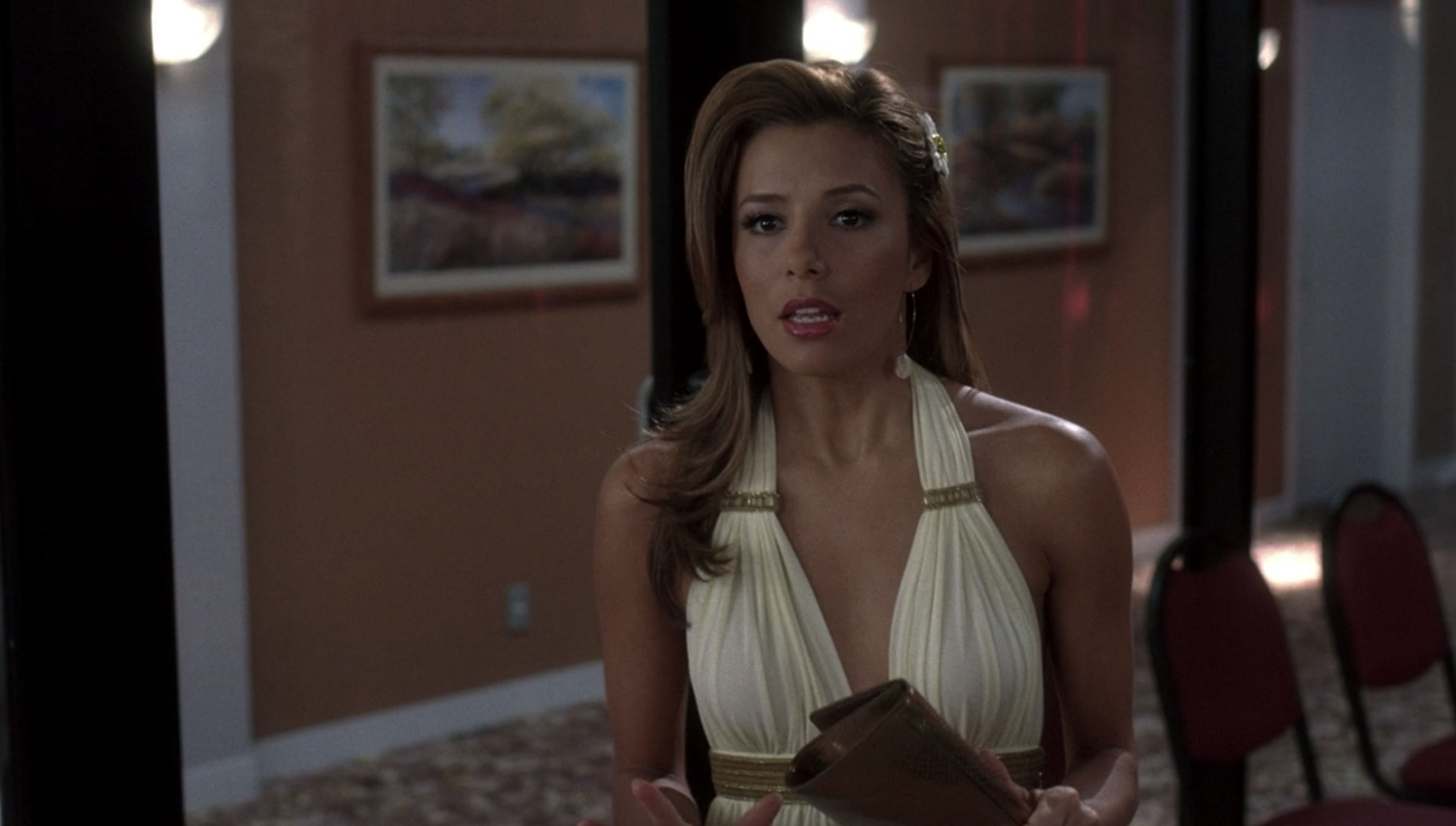
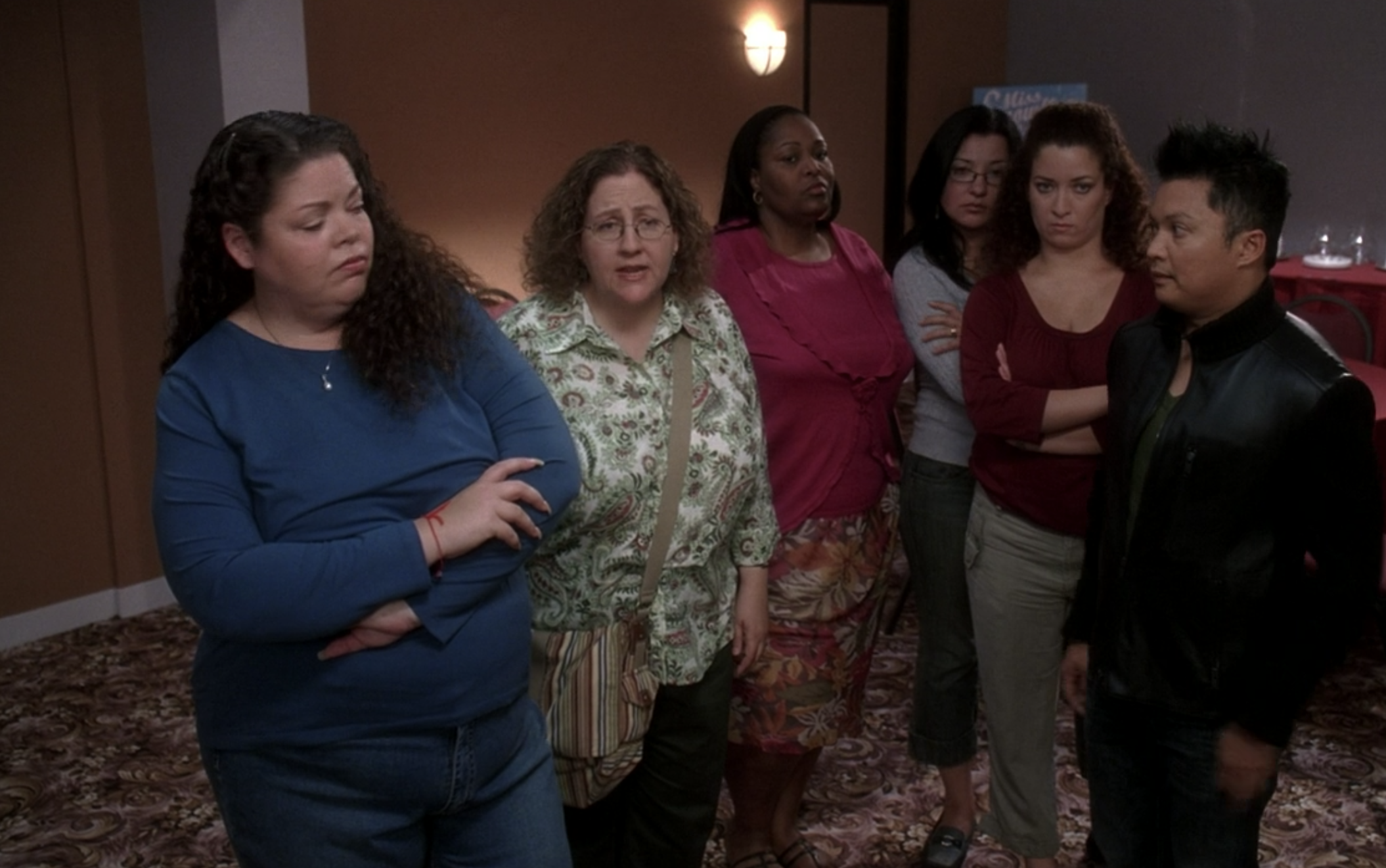
There is more to the fatphobia side of this episode. While it gives us an example of how fat-stigmatization transforms into social structures, it fails to offer any critical resolution towards it. This presentation of this story, which primarily focuses on weight and beauty standards, chooses to continue conforming to anti-fat beliefs and misrepresenting fat community. In the last scene, a sharp contrast is made between Gabrielle and the parents:

Eva Longoria, as Gabrielle, is intentionally put into better clothes, hair, accessories and make-up in this scene, while the other actors are clearly not. Gabrielle is wearing a full-length, Versace-styled ball gown while holding a clutch. Her hair is curly and silky, and she has full-makeup on. The other ladies are all wearing dowdy clothes, much less make-up and three of them can definitely be considered as fat. These women quickly changed their idea about firing Gabrielle after she mentions she has “highly effective non-FDA approved diet pills from Zurich”, and claim that “I guess the Christian thing is to forgive her” without admitting that they are attracted by the pills in reality. The plot and lines intuitively assume the beauty standards between two binaries – fat and thin, and coveys the implied message that thinner people do look better to its audience. Moreover, it falsely represents fat people by portraying them as automatically desiring losing weight at any cost. Therefore, it inevitably represents another effort to normalize weight-loss and anti-fat health promotion by making an assumption that fat people need to lose weight. In doing so, they neglect the group of audiences who belong to the self-accepting fat community.

In addition, the underlying assumption about Gabrielle’s social class is striking. She is a wealthy woman who can afford a personal shopper even after losing her steady income – her ex-husband. Her motivation for this job is not for survival, but only spiritual fulfilment. Just like Gabrielle, her other friends share the same social class and work motivation: they are married to lawyers, doctors, managers, etc. Essentially, the depiction of women’s struggle is mainly about upper-middle class, white women’s struggle (Gabrielle is the only POC protagonist in the show) A vast majority of women are already excluded in the production of this episode, as well as the whole series.

As the only non-white protagonist, the character of Gabrielle also indicates conformity to racial and gender stereotypes prevalent in America. She is undoubtedly, even in the script description, the most attractive housewife of all four, and a Latina ex-supermodel. There is a hyper-sexuality attached to her with her race, a form of over-sexualization of Latin women. The character has no choice but to be a gorgeous stereotype like a lot of other Latin women on screen, while diversity is allowed in white women. The same thing is applied to Gabrielle’s background. She is the only one who has a background story: she comes from a poor family, goes into modeling at a very young age, earns a new life through her new social circle, marries a rich husband and retires from fashion industry. Interestingly, Desperate Housewives does not introduce the backgrounds of other three white protagonists. They are assumed to be raised, educated and married normally as if they are in a standard white family, while Gabrielle needs an explanation of why she lives in a rich, white suburbs neighborhood. In other words, The abnormality in the life of a female, like Gabrielle, is highlighted and associated with her racialized background.            

Above all, the series Desperate Housewives does have many things to complement about: it gives a space for more female-centered narratives in the male-dominating media world, and it strives to tell stories from women’s points of view. Still, one must not neglect the problematic assumptions and stereotypes of women that it displays in only one episode. The production team need to inspect its work with more consciousness of preventing prejudices and assumption. And the audiences, while enjoying the marvelous episodes, should be aware of these problems.

Works Cited:

Wann, Marilyn. Foreword To Fat Studies Reader. NYU Press. 2009

Why can only white men drink beer?

A Budweiser beer advertisement from the 1950s

What do you first think of whenever you look at this ad? Budweiser is a very popular beer company, so it particularly stands out. When I first looked at it, I thought to myself “Hmm, this advertisement is probably from the 1900s”. Budweiser created this advertisement in the 1950s and the intended audience of it seems to be pretty clear: white men. The purpose can also be quite clear: sell Budweiser beer to white men. These are the things you can decipher when you just take a slight glance at this advertisement. 

As you dive deeper into the symbolic art that is presented in the advertisement, these things unearth more purpose and intention from the advertiser. Let us talk think about and analyze the actions of the two people in this ad. For instance, looking at the white man, he holds a hammer. As he is holding this hammer, it seems he is working hard on building something and we can assume this is either something for home or it is a part of his job. When looking at the white woman who we can assume is his wife, she is pouring him a glass of Budweiser beer. There is nothing hardworking about what she is doing, she is just simply acting upon her husband’s needs. This image sparks more controversial topics. In the 1950s, they would say “Well that is the role of a women, isn’t it?”. They would assume that the role of the women is to take care of her husband and fulfill all of his needs. Whenever we compare these two actions of the man and the woman, it really reflects those assumed and assigned gender roles that society claimed to be “right” in the 1900s. The typical woman staying at home, tending to her husband, the breadwinner. In contrast, the husband is the hardworking spouse in the relationship who has a job, does the “handyman” work at home, and acts upon all the “masculine” things society expects him to do. Just by looking at the actions of the two in the ad, it easily already brings those gender assumptions to the audience’s minds. However, when looking at the advertising techniques of Budweiser, you can question them on why they ignited these prominent gender roles in the ad. Well, since it was the 1950s, it was assumed that after a long day of hard work, men needed to decompress, so their wives could pour them some Budweiser beer at the end of the day. 

These points can also be proven by the facial expressions of the man and the woman in the advertisement. By the looks of the man’s face with his wrinkled forehead lines and his subtle yet irritated facial expression, he seems to be stressed out and tired from a long day of labor and responsibilities. Let’s remember, the 1950s were times when gender roles were prominent. Where the golden standard was the men working and laboring during the day while the women stayed at home with the children. So, because men are stressed out at the end of the day, this is why Budweiser aims at this audience of white men who have jobs. Budweiser tries to convince you that alcohol, specifically their beer, will help you decompress and relax at the end of the day. Now, looking at the intended audience of the advertisement, it sparks conversation on the assumptions of gender roles. For example, why is Budweiser assuming that only white men drink beer? Why can’t they advertise it to women or even non-white men? This question does have an obvious answer which has to do with the time that the advertisement was released, however, this only shows how prominent these gender stereotypes and standards as well as racial issues were during the 1950s. It shows how companies and businesses convinced society that men have specific roles and women have specific roles. It shows how there was so much assumption on what race was superior during the time and which were inferior. Moving on, let’s start looking at the women pouring the Budweiser beer for who we assume is her husband. She looks so content while pouring the beer. She looks as if she has no problems in this world. That may be true, or it may not be. Budweiser is trying to convince the audience that since it is the 1950s where women are at home while men are working during the day, the least they could do for their hardworking husbands is pour them a glass of Budweiser beer. Budweiser is trying to force these couples into these roles in order to advertise their product.  

Looking back at the advertising strategies that Budweiser tried to use, it may have been effective during the 1950s. However, that does not make it necessarily “right” to advertise in the first place. When people look at the advertisement in modern time, there are so many gender, racial, and class issues within the ad. However, we can learn to appreciate that advertisements such as this one was produced in history, because we can now analyze them and learn from them. That is the major takeaway we can obtain from media that occurred a long time ago, and that is what we need for social justice. 

Writing for Feministing / www.feministing.com

The Fresh Prince Takes a Future Look into Fatphobia

Written by Trey Messer with Autostraddle, 1991

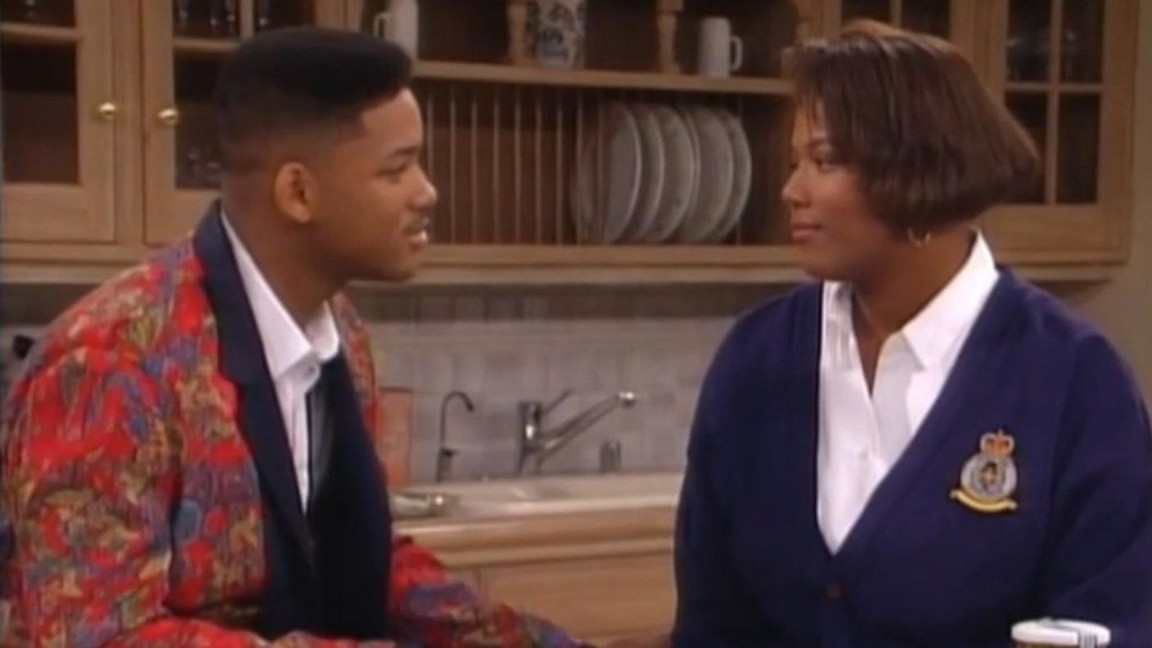
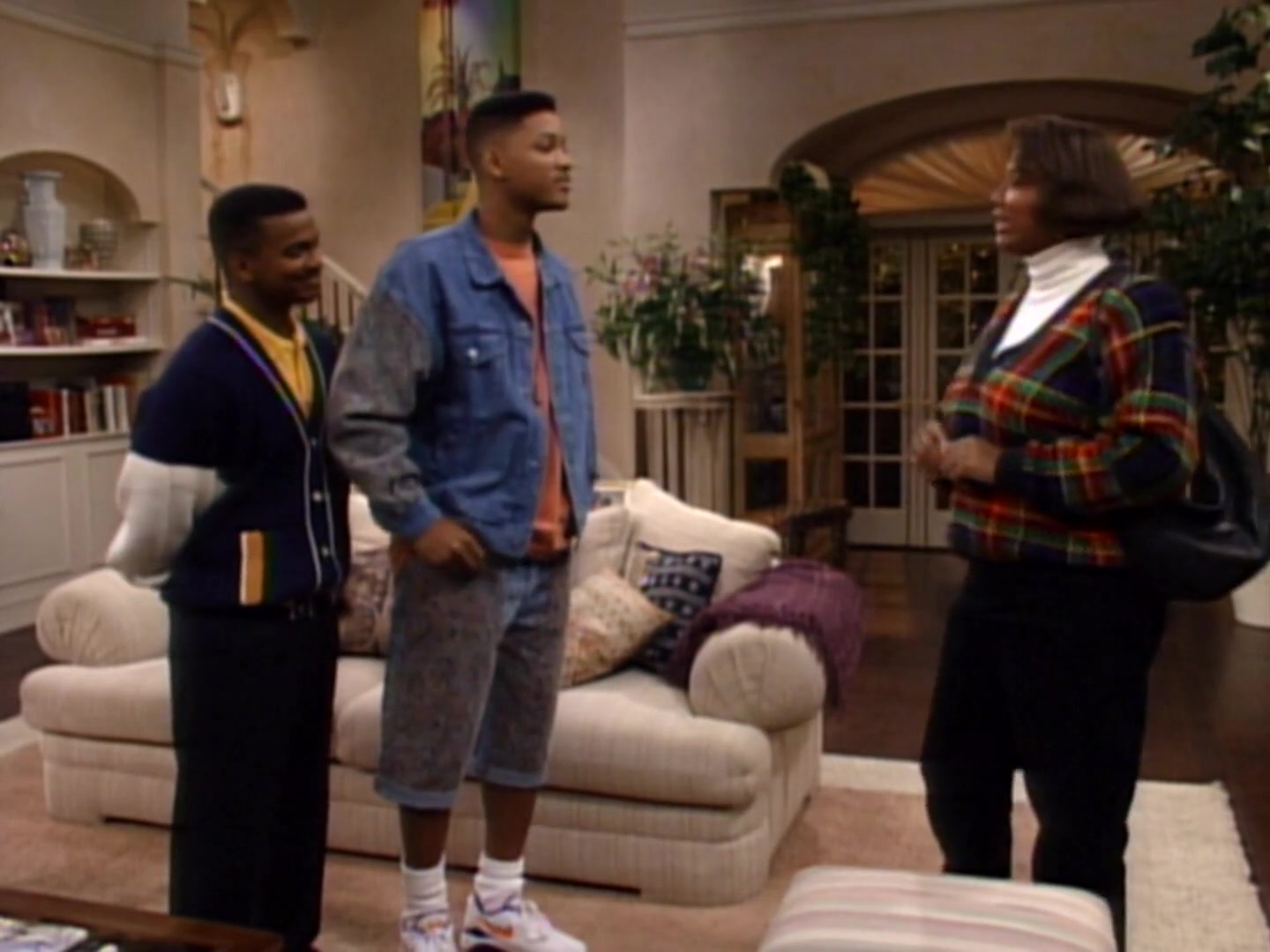
Scenes from Fresh Prince of Bel Air Season 2, Episode 8: She Ain’t Heavy

The hit sitcom The Fresh Prince of Bel-Air has been a blessing to our eyes as we watch Will Smith work his magic, entertaining the audience with his wittiness and colorful nature, as well as addressing some important issues that Black people in America face such as racial profiling, gun violence, and the struggles of growing up in rough neighborhoods. Season 2 looks to continue to this trend with new episodes tackling other issues of our society. In Season 2, Episode 3, the Fresh Prince is forced to address his own flaw of body shaming, an ideology that many men (including myself) struggle with resisting.

Throughout Season 1, the sitcom makes it clear that Will’s character is undoubtfully a ladies’ man. The “She Ain’t Heavy” episode even includes a flashback of all the fine honeys that Will has gone on blind-dates with—black, beautiful, elegant, but most noticeably, skinny. As Will gets excited to see who his potential blind date will be to the Lakers basketball game, his expectations are far from met when hip-hop artist and actress Queen Latifah walks through the door of the Banks residence. Latifah, who plays the role of “DeeDee” in this episode, is noticeably plus-sized compare to Will’s previous female acquaintances. The cameras cut to Will standing in shock and disbelief (in the comedic way only he knows how), serving as an slight at her body. The insults get worse when Will comes up with the excuse not to go to the game with her, stating that she wouldn’t fit in his packed car. He immediately realizes the fault in his words and recovers with “Not just you, anybody.” The scene ends with DeeDee walking out after telling Will and Carlton that she planned to be screaming her number at NBA superstar Magic Johnson, which Will replies behind her back: “I hope Magic ate his Wheaties.”

As the episode progresses, Will and DeeDee bond over their shared sense of humor and common interests, but Will is too afraid to ask her to the dance knowing that his friends make fun of him for hanging out with her. As they are seen in a restaurant together, Will’s classmates suggest she is “tons of fun” and even claims “the babe got more buns than a day-old bakery”. Will then asks his friend the question: “Now how you trying to play me? Now you’ve seen the honeys that I had up in here”. DeeDee, eavesdropping, hears this and storms out. The two end up going to the dance with separate dates, have a horrible time, and eventually make up. The crowd got one last laugh, however, when the king bed collapses in the final scene as every character sits on it watching a home cooking show. As funny as it was watching it the first time through, I’ve realized that the episode portrayed many important issues regarding society’s assumptions about weight and our social interactions with people we define as “fat”.

Scenes from Fresh Prince of Bel Air Season 2, Episode 8: She Ain’t Heavy

To start, the jargon and jabs used in the episode are very relatable to the reality to our assumptions about fat people. Euphemisms like “heavy”, “big”, and “husky” are substituted for fat in conversations, giving a “false positive spin on a negative view of fatness”. For those who use such words, they try to convince themselves by placing positive connotations on the idea, but the truth is they do not find it as acceptable. The fat synonyms also change the focus of the word, ultimately changing the relationship to one’s body. “Obese” and “overweight” –what Marilyn Wann would call the O-words—puts a medical gaze on the body, convincing people that being fat is something that is medically fixable (assuming that it’s a problem in the first place, rather than just being a bodily difference and variation).

The reason fat jokes and slander is so popular today is because of the power structure that we are subconsciously participating in through societal norms and expectations. In Wann’s foreword to “Fat Studies: An Innovation to Revolution” she claims, “Every person who lives in a fat-hating culture inevitably absorbs anti-fat beliefs… also inevitably comes to occupy a position in relation to power arrangements that are based on weight”. Weights and body shapes, effortlessly, assign women rank in the social hierarchy as the standards of “body goals” continues to become skinnier waist and wider hips.  When people don’t live to such expectations, we ignore, shame, bully, and ostracize them for not conforming to the standards that we force ourselves to do. The power we exercise to separate ourselves from those below us in the hierarchy is what Michel Foucault calls “productive power”—shaming others in attempt to encourage them to change their ways of living to improve their social status. In this perspective, corporations practice productive power by encouraging weight loss programs, expensive dieting, and weight loss medication.            

What makes this episode of The Fresh Prince of Bel Air so unique is how ahead of its time it is. Body positivity is relatively a new concept that gets confused with fat activism, which is barely even an ideology at this point. While body positivity encourages us to accept who we are and “love ourselves”, fat activism will force the public to stop discriminating against bigger bodies and to accept them for who they are. The episode effectively shows how we shouldn’t focus on the body or size of people we get into relation with, but more so emphasize compatibility and personality that we desire. Will Smith and the rest of the writers of the show reveal their agenda of promoting change and education to an audience swarmed by the anti-fat beliefs of society. I hope to see more episodes like this that continue to challenge my own understanding of the world and how it affects the relationships around me.

TikTok: Its Perpetuation of Gender-Based Stereotypes and Human Body Standards

Over the past few years, TikTok has become a mainstream social media platform. This application, available for most smartphones, uses an algorithm to curate content for users, effectively getting them addicted to scrolling on the app. There are many subcultures on TikTok… For example, people who like dogs might find that the algorithm has put them on ‘dog TikTok,’ because their ‘For You’ page is filled with videos of dogs. The same concept applies to gender and sexuality. There are many different points of view represented on the application, and once the algorithm figures out what yours is, it will show you a plethora of content to reinforce that exact idea. 

There is a large subculture (or really, a set of subcultures) on TikTok that perpetuates the gender binary system and all of the gender roles that come along with that. For example, this video is a representation of many of the different videos that are found on ‘straight TikTok’: 

When the individual speaking in the video says, “Men will choose a peaceful woman before a beautiful woman,” they are enforcing many of the expectations that are placed on female-identifying people in our society. Moreover, the speaker is implying that women must be ‘peaceful,’ therefore implying that often, women are not peaceful. This implication tells women that they need not express their emotions; rather, they should focus on being as passive as possible in an effort to be chosen by a man. 

Next, when the person speaking says, “Men seek for peace, and it don’t matter if you’re Black, blue, asian, Latina… they want to come home to a peaceful woman,” they are demonstrating a lack of awareness of the intersection between race and gender. This statement also reinforces the idea that men come home to women, therefore saying also that women should not be working professionals. 

On top of that, the speaker discusses the intellect of women and expectations in that area that men hold. They say, “He wants a woman that’s resourceful, a woman that can think on her feet. So when he can’t hold it down if he’s ill and he’s unable to pay the bills, she can be resourceful and have her intellect to make things happen.” The first implication I see in this statement is that the woman should just be intellectual as a safeguard… the woman will never actually have to use these skills unless it comes down to it. The assumption that men always pay the bills is harmful to all people, regardless of gender, because that is not the case for everybody. By the same token, the fact that the speaker is bringing this point up implies that women are, in general, less naturally intellectual than men. Drawing this unfounded connection between gender and intellectual capacity is harmful to society as a whole. 

Perhaps most disturbingly, our speaker talks about the ‘appropriate’ role of women in a sexual context. They say that men are “looking for a woman to supply their physical needs… A woman that looks good and proper and public but is a beast in bed” is the golden standard. First of all, in addition to ignoring the physical desires of the women at hand, this statement claims that the purpose of women is to fulfill mens’ sexual desires. This incredibly sexist ideology has the capacity to negatively influence the lives of many people. On top of this, the speaker is assuming a common definition of beauty… she is saying that women who have a certain physical appearance and demeanor are examples for what all other women should try to be when in pursuit of a relationship with a man. 

In conclusion, the ideology contained within this video is based on the idea that women are socially inferior to men, and that female sovereignty should not exist when it comes to romantic and sexual relationships. The central claim is that women should constantly be cultivating their personas to match what they think men are looking for in women, in hopes that they will ‘meet the cut’ for some man.

Similar to the last clip, this piece of satire brings awareness to many of the appearance-based expectations that our society holds for women, and the stark contrast between these expectations and those for men. The actor, mimicking a man, says: “Alright, so I want a girl with huge, but perky boobs, small waist, huge butt, flawless skin (but can’t wear makeup). And I like blondes, but I think she should also be brunette… because I get bored quickly, you know?” This statement encapsulates many of the body standards that our modern society has for women, and also touches on the normalized fact that men sleep around while women are expected to be loyal. 

In the caption of this video, the creator claims that this is how all men think. Although this is probably a sarcastic statement, it is representative of the way that many people think. Moreover, individuality is to be nonexistent: all men must act one way, and all women must act another way. Beyond pointing out, and perhaps reinforcing, the gender norms that are in place for men and women, this video illustrates the prevalence of the gender binary in our society. 

Content Warning: This video contains a real-life portrayal of surgical body mutilation. Use viewer discretion. 

In this shocking clip, we see a person that is identified as a man who has ‘overdeveloped’ breast tissue. His act of having the ‘excess’ tissue removed is labeled as life-changing. First of all, the video notes that this overdevelopment in the breast tissue of a man is an actual medical condition, which is known as ‘gynecomastia.’ Its causes are said to be “medications, drugs, testicular cancer, and hormonal imbalance.” 

Without looking into the history of this condition, it’s plausible to assume that this condition was developed in response to a bodily appearance that was not in line with society’s idea of what a man should look like. Moreover, this condition does not pose any medical risk to the patient; it is merely aesthetic. 

This video perpetuates a toxic standard of beauty, and is essentially telling men who have growth in their breast tissue that in order to be beautiful, they must undergo surgery. Explicitly, the caption says, “These [surgeries] literally change men’s lives.” In watching this video, men with growth in their breast tissue are inevitably going to receive the message that they are disgusting, and must go get surgery. 

In conclusion, the three videos I have analyzed here are examples of the many TikTok videos that enforce gender-based stereotypes and human body standards that are present in our society. This is not to say that TikTok is a problematic platform that should not exist; rather, this suggests that we as a society should critically examine the role that social media plays in perpetuating harmful gender-based stereotypes and expectations on a day-to-day basis.

Writing for Feministing | www.feministing.com

Learning to Love Our Bodies Through Acknowledging Photoshop

[From Theory to Praxis Flyer–Alternative to Grant Proposal]

Rosie Molinary speaks to the collective you in her book, Beautiful You: “Yesterday you looked in the mirror, and, instead of your inherent greatness, you saw flaws. […] This morning, you walked into work, class, the grocery store, wherever and compared your body to someone else’s” (Molinary xiv). Molinary’s introduction to her book only serves to corroborates Jen Baker’s TED Talk on Total Body Love where she shares the shocking statistic that, “only 4% of women call themselves beautiful”.

From the time babies are just six months old they are able to recognize advertisements and logos as they are ubiquitous in our society (Kilbourne). Starting at a young age these images are retained in our subconscious and we learn to normalize these images and the actions that these images perpetrate. By the time we enter grade school we only understand one definition of beauty—thin—because this is the only definition we have ever been exposed to. As many of us strive to reach this “gold standard” it is not uncommon that low self esteem, depression, and eating disorders are developed along the way. We perpetuate Laura Mulvey’s concept of the male gaze by unknowingly objectifying ourselves through this lens set forth by the media.

However, even beyond size, women of color are subject to white-washing.  Their skin color is often lightened to resemble the “white ideal” our society has created and they are not just victims of one element of editing, but often multiple. Before taking GSS 101 I was only slightly familiar with the concept of “intersectionality” and I had no idea to the extent it plays into the mainstream portrayal of women of color in media.

The negative way we view ourselves is amplified through the widespread use of Photoshop. By college age most students are aware of the use of Photoshop, but few fully understand to what extent this application is used or how to recognize its use. By creating a flyer to hang up around campus—in Chambers and in several dorm buildings—I aim to have more woman be able to recognize the widespread use of Photoshop and in turn learn to call themselves beautiful. Although men are also victims of Photoshop, it is not to the extent that women are and so I am focusing on just woman for the sake of this project. The images on the left side of the flyer are all images before they underwent Photoshop and the images on the right are all the images after they have been extensively Photoshopped. Although these flyers would be more effective hanging up in a grade school, where 81% of ten year olds are more afraid of “being fat than having cancer”, these flyers are also pertinent at the college level because these issues transcend age (Baker). I wanted to also capture the affect of Photoshop on woman of color in my flyers because most people are unaware of the role intersectionality plays in women of color—they not only have to deal with the false beauty standards of size but also of color. For even mainstream celebrities like Beyoncé and Michelle Obama have been altered by Photoshop. By recognizing happiness is not defined by a size we can redefine the beauty standard together and move toward understanding that beauty and health are at every size and color.  Jen Baker explains in her TED Talk how we have to recognize that body hate is learned and so it can also be unlearned—and I hope my flyer will help to do this.

Work Cited:

Baker, Jen. “Complete and Total Body Love.” TED. 2014. Lecture.

Kilbourne, Jean. “Killing Us Softly IV: Advertising Images of Women.” TED. 2014. Lecture.

Molinary, Rosie. Beautiful You: A Daily Guide to Radical Self-acceptance. Berkeley, CA: Seal, 2010. Print.


DirecTV Has No Strings Attached to Feminism

In the spring of 2014, DirecTV, a satellite television company, released a series of commercials on network television starring marionettes for the sake of advertising. The commercials, though eye-catching, did not garner much attention until one starred a white, sexualized female marionette wearing lingerie and standing in a bedroom.  The marionette, who exists as an object on screen, is placed in contrast to her human husband. She claims that ever since her husband signed up for DirecTV he keeps talking about how he doesn’t have to look at “those ugly wires”. The bashful marionette, who has her own set of wires, continually asks her husband, “do you still think I’m pretty?” to which her husband replies, “baby of course I do”. As a result, the marionette whips off her bathrobe exposing her lingerie beneath. She directs movements toward her husband while asking “do you like what you see?” as he lays on the bed and serves as a spectator. Not only does this commercial exemplify the male gaze and society’s limited acceptance of sexuality and outside the “norm”, but it also serves as a microcosm for women’s portrayal in media.

Through the actions of the marionette and her husband, this DirecTV commercial focuses on the concept of the male gaze. First coined by Laura Mulvey in 1975, it explains how society views women through a male’s perspective.  The marionette wife, dressed in a bathrobe, approaches her husband with concerns about her physical appearance.  When the husband squashes her insecurities surrounding her appearance she sexually takes off her bathrobe to uncover risqué, red lingerie hiding beneath. She proceeds to make movements and noises provoking sexual behavior in order to captivate her husband.  DirecTV plays into this concept of the male gaze by illustrating women as sexualized objects within a matrix of compulsive heterosexuality. The husband lurches up in bed once he lays eyes on his wife’s undergarments and scans her entire body up and down, further objectifying his string-puppet wife as a figure for show.  Once his wife asks a series of questions about her physical appearance, he quickly changes the tone of his voice to urge his wife to continue moving her body for him to see. This relationship portrayed on the screen is entirely based off of appearance with little focus on anything else—every dialogue between the couple pertains to her attempting to gain his approval and then showing him what she has to offer sexually. This theme of male gaze has been so prevalent throughout American history, especially in current day advertising, and the portrayal of the marionette continues to illustrate America as a “man’s world” with the wife’s only purpose to entertain the man.

Furthermore, although interventions into misogyny and patriarchy have been made, our society hasn’t been able to break beyond the heterosexual norm, which is illustrated through the interactions and stereotypes deployed in this commercial.  Katz examines heterosexuality, in The Invention of Heterosexuality, by exploring its changing definition throughout time. He explains how during World War II, the concept of the “cult of domesticity” prevailed. There was this “reassociation of women with the home”, which forced the “predominance of the hetero norm” and caused “an era of heterosexual hegemony” to ensue (Katz 237).  This DirecTV commercial is starkly similar to these concepts that emerged during the war, forcing us to question whether any progress for women in society has really been made throughout the years, as this commercial is covered in sexism and stereotypes which were hyper-prevelant throughout the 1950’s.  The marionette is placed in the bedroom, which alludes to women in the home.  Her blonde hair additionally plays into the stereotype that blondes are dumber than brunettes—thus this woman could not possibly be associated with work outside the home. Likewise, the husband is sitting, somewhat tired looking on the bed, as if he just endured a difficult day at his job. DirecTV is attempting to “play it safe” by staying within sexual norms that our society is comfortable with.

Moreover, the lack of intersectionality in this commercial is striking. Both the wife and husband are straight, Caucasian individuals in the upper-middle class due to the fact they can afford a cable plan in addition to an expensive TV and home. DirecTV wants to appeal to its viewers, and so we cannot only hold them accountable for this portrayal. They must think our society is additionally not ready to discontinue the heterosexual norm.

Women are repeatedly portrayed in media as sexual objects. This commercial is only one of the many times that women have been portrayed as “less intelligent”, “obedient”, “pleasing” beings compared to their male counterparts. The figure of the husband, moreover, helps to portray the wife as a being with the primary intent to serve her husband. Even beyond spectating his wife, the husband holds the remote with control of the channels to signify he additionally has control of the home. His wife is literally a puppet beyond the obvious—the husband holds the strings and decides what role she should play. The wife is not in control, she is at mercy of the husband, and strives to gain his approval, which is illustrated by her repeated questions concerning her appearance.

One journalist from Time magazine states, “our suggestion to the wired wife? Cut and run” (Time).  Using sex to sell is not a new concept in advertising.  Instead of evolving with the changing times, this method has persisted in current advertising. Even more shocking, this advertisement received more criticism about being “creepy” than it did about its sexist nature. The inhuman puppet-wife distracts the viewer from the sexist nature of the commercial—the viewer is unable to see the objectification of women as the problem in the advertisement. The sexualized wife embodies Sigmund Freud’s “uncanny” since she is strange, yet familiar to us because this type of advertising is ubiquitous in our culture (Freud 1). The wife should not have to gain affirmation from her husband about her looks nor should she have to be portrayed as a sexualized object in order to appease the male viewer.  Women should not have to be sexualized at the expense of a company trying to sell their product.  They are not synonymous with sex and it’s about time we cut the strings between this binary.


Works Cited

“DirecTV Marionettes Pretty.” YouTube. YouTube, 28 Apr. 2014. Web. 9 Sept. 2016. <https://www.youtube.com/watch?v=noFdLFMvh3Y>.

Dockterman, Eliana. “Selling Sexism: Why the Latest Commercials Are so Misogynist.” Time. Time, n.d. Web. 8 Sept. 2016.

Freud, Sigmund. The “Uncanny” 1 (n.d.): n. pag. Web.

Katz, Jonathan. The Invention of Heterosexuality. New York: Dutton, 1995. Print.