Book Review: *Visibility Interrupted: Rural Queer Life and the Politics of Unbecoming*

Would you consider a tomato a fruit or a vegetable? You are most likely thinking that a tomato is obviously a vegetable because they have more of a savory taste rather than a sweet one when comparing it to other fruits like a banana. You are also probably thinking it is a vegetable because when would someone ever use tomatoes when baking or eating desserts? Although these are all logical thoughts, that is a prime and simple example of stereotyping. Now it is not as severe as stereotyping an individual per say, however, it is stereotyping and assuming things nonetheless. More severe cases of stereotyping are applied when doing it to an individual based on their race, gender, class, or any other forms of social categorizations and identity. Now, I mention stereotyping because in the monograph Visibility Interrupted by Carly Thomsen, she focuses her studies on one specific term that applies labeling to its meaning: metronormativity. Understanding the term ‘metronormativity’ is something that readers should suggest prior to diving in on Carly Thomsen’s monograph. When breaking the word up, it can become easier to grasp the concept. ‘Metro’ or a ‘metropolitan area’ is generally a region that consists of a large urban population. “Normativity’ is a term that refers to behavior based on a standard or norm and it carries the notions of social pressure. When looking at the word ‘metronormativity,’ it can be comparable to the word ‘heteronormativity’ which is when the sexual orientation of an individual is preferred and normalized to be heterosexual. These two terms are comparable because ‘metronormativity’ is derived from a similar context. It exerts the idea that queer life and identity are inseparable from urban areas, therefore saying that the norm or standard is that queer identity thrives, flourishes, and remains in the urban core opposed to in rural life. Metronormativity is an idea that can be referred to as stereotyping. Believing and saying that queer life belongs and is more prominent and important in urban areas and not in rural areas is the same thing as believing and saying that a tomato belongs in the vegetable category and not the fruit category. Thomsen establishes the idea of metronormativity from the beginning of her monograph and branches her study off the opposite idea: rural queer life. 

Carly Thomsen is the author of the scholarly monograph Visibility Interrupted: Rural Queer Life and the Politics of Unbecoming that was published in this year: 2021. She resides in Vermont where she is an assistant professor of gender, sexuality, and feminist studies at Middlebury College. In her monograph, she wants to examine “the experiences, desires, and politics of LGBTQ women in the rural upper Midwestern United States in relation to broader ideas about rural place and LGBTQ sexuality” (Introduction ix). Her focus on specifically women coincides with her profession at Middlebury College regarding feminist studies and her outlook on their visibility inspires authenticity and freedom. 

Beginning her monograph, Carly Thomsen introduces a problem within the LGBTQ community: There is a visibility problem and a rurality problem. The sense of metronormativity dominance is constantly circulated throughout different communities and this fact leads to Thomsen’s main argument in this monograph. She states “It is my position that rural LGBTQ women are illegible not to rural people but to urban people; self-identified liberals, progressives, and leftists; and gay rights groups, and, further, that rural LGBTQ women become illegible through visibility discourses” (Introduction x). Following the introduction of her main position, Thomsen then establishes two important court cases in the first chapter of her monograph involving two members of the LGBTQ community. The first case infers a hate crime (murder crime to be specific) committed towards a gay man, Matthew Shepard, who resided in the Midwest. The second case regards a lesbian woman, Jene Newsome, who was discharged from the military under the policy Don’t Ask, Don’t Tell due to her hometown police department in the Midwest outing her. Although both cases differ in their own terms of context, each make their contribution to the assumptions made that visibility is desirable and politically valuable across geographic locales which illuminates the centrality of visibility politics to metronormativity. These assumptions inspire Thomsen’s curiosity in rural queer life regarding women which she further explores in the following chapters. 

 In chapter 2, Thomsen addresses the topic of coming out. She analyzes how many gay rights activists worship this understanding and process of “coming out of the closet” and LGBTQ scholars often criticize it. She believes that LGBTQ studies scholars have complicated the process of coming out. For example, she mentions how Mignon Moore, an LGBTQ scholar, “critiques those who represent ‘coming out’ as a linear process’” (41). Her study in this chapter analyzes her interviewees’ articulations of their relationships to visibility, specifically focusing on their disinterest in visibility, lack of identification with their sexuality, and overall, the role of rurality in shaping their positions. Thomsen concludes that “LGBTQ women in the rural Midwest can feel out and visible without speaking about their sexuality, identifying strongly with it, or politicizing it” as many gay rights activists who reside in urban areas do (57). Moving on to chapter 3, Thomsen intertwines LGBTQ and disability visibility in order to emphasize the hardships faced when struggling for visibility. Thomsen considers “moments in which disability and queerness come into contact and illustrate that visibility discourses can compel the erasure of material bodies, and in the process, render certain (spatialized and racialized) experiences obsolete” (64). Chapter 4 shifts to something different from disability as discussed in chapter 3, and now discusses queer labors. Thomsen focuses on the argument that coming out in one’s own workplace is work itself because it is a process of becoming visible. The constant demand from gay rights supporters to come out at work stresses the prevalence of metronormativity in not only urban areas but also rural areas. Thomsen concludes chapter 4 with the idea that “activists’ beliefs that all LGBTQ workers desire to be out at work and their related stitching of authenticity to visibility… are misguided at best and, at worst, write out of LGBTQ subjectively those for whom sum assumptions do not work” (116). Lastly, in chapter 5, Thomsen reflects on what we might learn about the relationship between metronormativity and visibility politics by observing the changes and similarities between rural queerness over the course of the last decade. She comes to find that long ago when Flickr was a popular source of social media, the LGBTQ side of it was dominated by men and this did not change much when Instagram came rolling around. The difference found was that although mostly displaying gay men, Flickr did not have much opportunity or accounts with LGBTQ members while when Instagram came out, there were more accounts with LGBTQ visibility. However, these accounts were still more dominated by men and more specifically, they were men in urban areas, not rural. In this monograph, Thomsen intentionally criticizes those who feel the need to politicize their queerness. Those who identify as LGBTQ in rural areas have developed more practices of freedom because they manage their queerness in the sense of how they feel most authentic to themselves.  

Carly Thomsen’s most prominent methodology used within her monograph is the use of interviews and having a core focus group; that focus group being women in the rural upper Midwestern United States. Throughout each of her different chapters, she focuses on different branches regarding visibility politics, however, she gathers different interviewees for each chapter. She allows for her interviewees to tell her their stories with no limits, rarely asking many specific questions and just letting them come to their own conclusions with their queerness in regards to where they live and how they identify themselves. With this being said, the data that Thomsen is collecting from these women is much more qualitative than quantitative. For example, in chapter 2 as I mentioned before, Thomsen interviews women to see how they view their relationship to visibility. These interviews helped Thomsen conclude that “demands to be visible actually interfere with [rural women’s] ability to be themselves, live their sexualities and engage politics in way that feel authentic to them” (44). Exemplified in chapter 3 is Thomsen interviewing women in the rural Midwest who are not only queer but also impaired with a disability. She does this in order to “consider the existence of post-racial and post-spatial epistemologies” in her interviewees’ narratives in regards to visibility politics (73). Thomsen concludes in this chapter with the help of the interviews that post-racial and post-spatial ideologies are reproduced as connections between sexuality and disability through discourses of visibility is articulated by each of the women interviewed. In chapter 4, Thomsen interviews women in the workforce and allows them to explain their perception on their visibility and outness in their place of work. One interviewee says, “I could be fired for being gay. So that’s a little bit scary” (114). Interviews with honesty like this helps Thomsen validate her concerns on employment discrimination and further her argument that gay rights activists demand visibility, however, it is not always the favored option in regards to rural queers. Drawing from these examples of how Thomsen uses interviews in order to construct her research and validate her claim, it is evident that the qualitative data she has obtained assists her argument that visibility politics do flow with the idea that metronormativity grants. Rural queer live is there, and it may not be prominent, however, it resides how those want it to. 

Something I would consider a strength of this monograph, disregarding the content within it, is the year that it was published. Visibility Interrupted was published in the year 2021, which means that the research was conducted in close proximity to the year it was published. Now transferring to the content in the monograph, the year it was published and the time in which the research was conducted gives accurate information in relation to the interviewee’s experiences in life and scholarly views on LGBTQ politics. The methodology of using interviews to gather research information also helps this scholarly monograph excel in its relatability towards readers as well as in its qualitative content which assists the author in validating her argument. The specificity of the women interviewed help Thomsen keep consistent research that readers will find accurate and reliable. The fact that Thomsen chose to focus on rural areas in the Midwest also helps contribute into finding interests in the monograph because it is not a super prominent topic that is researched amongst LGBTQ scholars. 

In contrast, something that holds this monograph back is its inability to have a consistent idea or argument flowing throughout the whole book. For instance, in the beginning, the term ‘metronormativity’ is introduced and described. Thomsen gave this term much importance and significance and set up the foundation for a monograph that would incorporate it often. Despite the few mentions of metronormativity throughout the monograph as each chapter moved to different topics, the term could have been more elaborated on in regards to the topics in each chapter. For instance, in chapter 4, queer labors are discussed. Thomsen concluded that women do not have to feel obligated to come out at their place of work if they feel it interferes with their authenticity and freedom and expression of choice. However, Thomsen could have included the idea of metronormativity in this chapter more than she did. The idea that women in rural areas do not feel the need to provoke their visibility in their place of work as much as women in urban areas do centers around the ideas that metronormativity generates. This idea is that queer life thrives more in urban areas and visibility politics are more prominent there. Overall, Thomsen could have included some slight elaborations and connections more in her monograph. 

Carly Thomsen’s Visibility Interrupted: Rural Queer Life and the Politics of Unbecoming sets to deconstruct the stereotypes of rural life in general. She intends to set rural life apart from the homogenous repetitive assumptions of the area and tries to reinforce when rurality and queerness encounter each other. Despite her lack of elaboration on what seemed like a key idea in her argument, Thomsen achieves finding the different perspectives on queer visibility in the rural upper Midwest of the United States as well as the politics that lie within it. Carly Thomsen calls that “taking on the cult of visibility will require that we examine its many iterations and mutations” which will allow for growth within the LGBTQ community overall.  

Works Cited

Thomsen, Carly Ann. Visibility Interrupted Rural Queer Life and the Politics of Unbecoming. University of Minnesota Press, 2021.
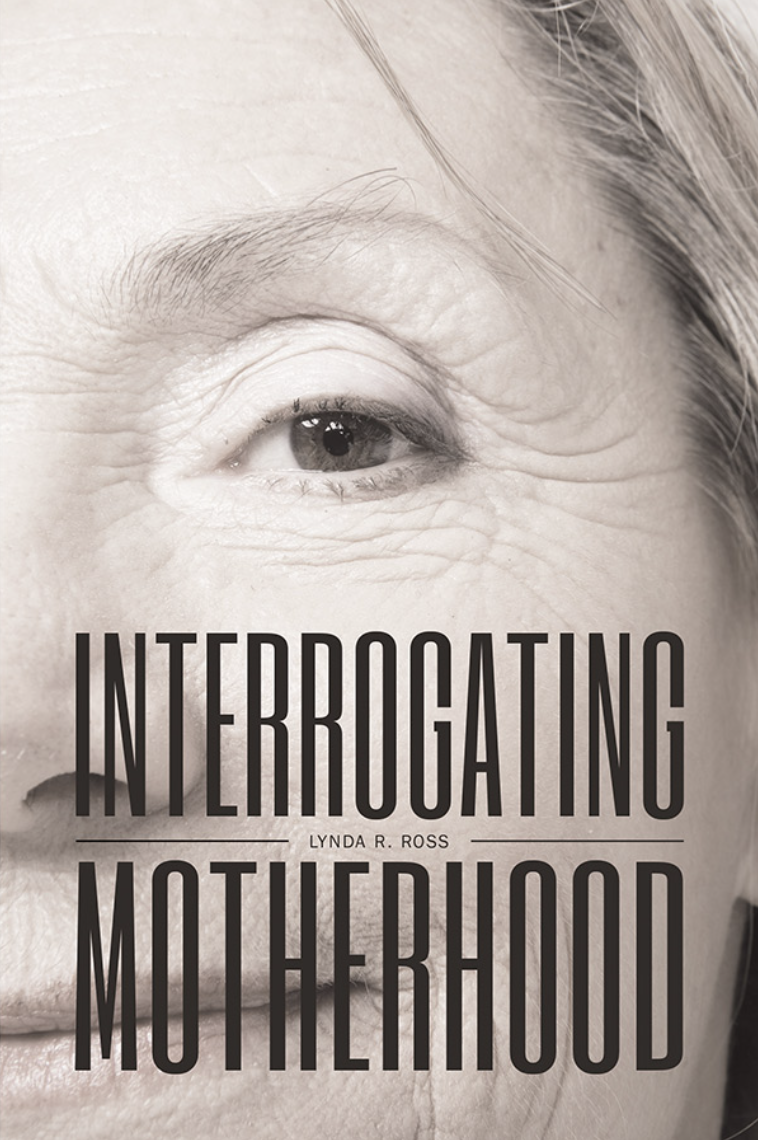
Book Review: *Interrogating Motherhood*

Motherhood can be a controversial topic yet is also held as a gold standard of womanhood. This is not only complicated by diversity of individuals and life goals, but the pressure that is put on mothers and the shame associated with mothering in a particular way or rejecting motherhood entirely. Discussion of motherhood is much more prevalent than fatherhood, with discourse more strongly focused on the different aspects of what it means to be a mother. This is the case because of the widely accepted notion that women hold more responsibility as a parent while men are more or less excused. Critical discussions of motherhood can be controversial because of these norms and expectations of gendered parental roles and childcare that are entrenched in policy, history, and day to day life. Nevertheless, it is important to engage with this topic as individuals and a collective to shed light on the private and public role that motherhood plays on mothers themselves, as well as shaping motherhood down the line. 

Lynda Ross is an associate professor at Athabasca University, in Athabasca, Canada. She is a professor in the Women’s and Gender Studies department and teaches courses about violence against women, and women and psychology (“Lynda R. Ross”). A primary interest of hers is the social construction of motherhood (“Lynda Ross and Shauna Wilton”). In her monograph, Interrogating Motherhood, Ross sets out to explore and explain the context in which motherhood in Western society rests, particularly in the United States.

            Interrogating Motherhood’s central argument is that women’s lives are made more complex and challenging by motherhood, because they receive little support considering the immense physical and emotional toll they go through. Ross states that “although childbirth is a universal biological event, it is obviously not independent of the economic, social, and cultural context in which it occurs” (Ross 70), and the result is that the experience of mothering is a very isolating one (127). In her book, Ross outlines the societal structures that emphasize the values place on mothering, but not mothers themselves. Her book’s eight chapters that walk through this argument are titled “The Study of Motherhood,” “Reflections on Motherhood: Theory and Popular Culture,” “Paid Employment and the Practice of Motherhood,” “Enabling Policies: In Theory and in Practice” (guest authored by Shauna Wilton), “Mothering and Poverty,” “Mothers, Mothering, and Mental Health,” “’Other’ Mothers, ‘Other’ Mothering,” and “The Future of Motherhood.” In these chapters she outlines how attachment theory, employment of women, policies surrounding maternity leave and paternity leave, mothers who struggle with parenting because of poverty or mental health, and mothers that face additional obstacles because they fall outside of the cookie cutter “good mother.”

Ross does not employ her own methodology in this book, but rather draws information from a plethora of relevant research and literature. She weaves this collection of facts and statistics from a variety of sources together to create view of motherhood in America that has more breadth than any of the individual works could reasonably provide. Alongside other authors, she draws from four of her own papers on attachment theory and postpartum depression to contribute her own expertise to the narrative. The second chapter of Interrogating Motherhood offers a history on the theory surrounding motherhood, and in it, Ross unpacks how attachment theory has contributed to the norm that maternal selflessness and ever presence is required for the successful raising of well cared-for children (18), partially because of the way theory and the media are influenced by external societal pressures (29). She illuminates that the accepted notion of what a “good mother” is does not assist mothers but instead leaves them without support (83). At the same time, this demonizes parents who do not fit into the narrow white, middle-class, heterosexual, and married mold (104), and further perpetuating the stereotype and expectation that mothers should be the primary caregivers for their children.

Although scholarly and offering a historical survey on motherhood theory, this book is extremely accessible to readers. In addition to being available online as a free PDF, this text is well organized and covers many diverse but not mutually exclusive topics related to motherhood, parenthood, and the historical and social forces that have shaped raising a child as a highly complex and gendered process. Ross also carefully balances her evidence within larger context and narratives within each chapter to paint a holistic picture of the dynamics impacting women. For example, in the chapter “Paid Employment and the Practice of Motherhood,” Ross contrasts the United States’ minimal maternity leave with that of Norway’s (45) to highlight how the difference in policy reflects how mothers are valued. Viewing this topic through a wide lens is essential due to the interrelated nature of its content, in which Ross executes by organizing the text’s content into well-defined categories.             

However, Interrogating Motherhood is somewhat held back by its breadth; since almost all of the information brought to readers’ attention is from outside of Ross’s personal research, there are a staggering amount of topics introduced that are not given equal depth and significance in the greater context of the book. For example, her commentary on how attachment theory supports norms of gender roles in parenting involves discussion of how constructions of Western society have influenced attachment style theory (125), and how this scholarly support has helped perpetuate these norms through media (29). On the other hand, when she attempts to summarize the impacts of the “anxiety, isolation, and sense of overwhelmed” that mothers may face in general, her conclusion is simply that these feelings “are not good for women” (127). Because of this, Interrogating Motherhood is essentially a literature review on policies and norms surrounding motherhood in the United States. Compared to the depth of analysis outlined in the introduction to the book, the text fails to interrogate motherhood beyond basic facts and their immediate outcomes.

Something that could have contributed to the strength of the book is the consideration of women who feel isolated from motherhood. Ross pinpoints the forced obligation of women’s responsibility to their children that some mothers must grapple with (114), but this leaves room for discussion of women who choose not to become mothers or regret becoming mothers. In addition, this book only focuses on Western society’s motherhood norms and expectations (1). The author acknowledges this, but the book could benefit from more cultural context, particulary in the discussions of family and gender roles.

            Ross’s Interrogating Motherhood sets out to unpack the nuanced, personal, and often controversial topic of what it means to be a mother, and how the idea of a “good mother” cannot be enacted in today’s society in a way that is supportive of a mother as well as her children. She covers a lot of ground in her discussion throughout the text and provides a well-supported argument. However, her lack of personal contribution to the research discussed reveals herself in her hesitance to jump into describing a more holistic perspective on the challenges mothers face beyond her two main areas of expertise: attachment theory, and mental health in pregnancy and motherhood (in chapters 2 and 6, respectively, as well as the introductory and concluding chapters). However, her call to action at the conclusion of the book is compelling; “a paradigm shift in how we understand mothering and motherhood is needed” (124) beyond essential policy shifts that need to occur, so that mothers are able to receive support, care, and attention alongside their children.

Works Cited:

“Lynda R. Ross.” CSPI, 1 Apr. 2010, https://www.canadianscholars.ca/authors/lynda-r-ross.

“Lynda Ross & Shauna Wilton.” JourMS, 11 Aug. 2016, https://jourms.org/lynda-ross-shauna-wilton/).

Ross, Lynda R. Interrogating Motherhood. Athabasca University Press, 2016.

*What It Feels Like*: Book Review

Rape culture is so pervasive in almost every aspect of today’s society, sometimes seemingly impossible to combat, however, in her book What It Feels Like, Stephanie R. Larson examines rape culture from a rhetorical perspective and gives insight on the possible resolutions for its abolishment. As part of this solution, Larson introduces the concept of “visceral rhetorics,” which describes the felt communication that takes place within one’s self as well as the erasure of this perspective, and explains why this conceptual framework is often overlooked when it has the power to uproot rape culture altogether. She deeply analyses how we communicate about rape culture by examining a multitude of different case studies, revealing how much the embodied experience is undermined within this discourse, along with certain types of evidence like personal testimonials and voices such as non-white women. 

In the first chapter, Larson examines pornography and the movements against it in the 1980’s, uncovering how these create a notion of sexual citizenship and risk connected to it, resulting in panic surrounding individuals accused of sexual violence while simultaneously ignoring actual victims. Rape prevention campaigns build off this notion in Chapter 2 to include the bystander, but ultimately highlight how the issues and solutions related to rape currently center around the male perspective. While Chapter 1 and 2 discuss the consequence of women’s bodies being deemed unfit for body politics because of the centralization of men in rape culture, Chapter 3 and 4 take a turn focusing on how women’s bodies are leveraged politically in the response of rape. These two chapters explore how the embodied experience of sexual violence victims is often seen as inferior to other kinds of evidence, particularly though technological tools like rape kits, even though this visceral framework is essential to shape the public’s perception of rape. Lastly in Chapter 5, Larson argues how powerful the feminist implementation of megethos, a central aspect of Aristotle’s epideictic forms of rhetoric, also meaning magnitude, within the #MeToo movement is in order to show the magnitude of rape culture in our society today. Not only did the sheer number of responses reveal the reality of rape culture, it also created collective believability surrounding it. The analysis of these case studies ultimately display Larson’s main point that “discourses about rape culture rely on strategies of containment to assert control over a presumed affective excess of femininity but also that those discourses can be challenged by mobilizing forms of embodiment that stress what it feels like to be raped” (4). 

Stephanie R. Larson, the author of What It Feels Like, is an Assistant Professor at Carnegie Melon University in the department of English. Although this is Larson’s first book, she is already very involved in the rhetorical community through presenting at many conferences, her CV demonstrates her engaging in interviews, and continuously publishing new written work pertaining to rape culture, mostly in the form of scholarly articles. Larson predominantly focuses on the topic of rape in all of her work because she views it as a necessity at this point and shares “I do not want to live in a society where people experience violence and then have no way to talk about it or are met with skepticism when they try. I study rape culture because I know it to be a true and pervasive reality” (xiv). This book builds off of past scholar’s work by in feminist rhetoric by not only addressing how women’s voices are being silenced by rape culture, but how rape culture suppresses their bodies as well. 

To come to this conclusion, Larson analyses anti-pornography debates from the 1980s, Violence Against Women Act (VAWA) advocacy materials, sexual assault forensic kits, public performances by survivors, and online social movements (5). By using the methodology of rhetorical analysis, as well as using information from historical archives, she examines this history of rape culture, how rape culture is still present today, the rhetorical strategies used to uphold it, as well as what rhetorical strategies could be useful to abolishing it (7). Each of these sources provide a different angle, strengthening Larson’s overall point of the importance of embodiment and its potential to uproot rape culture when shared and believed. 

In Chapter 1, Larson begins by addressing the case study of the Meese Commission, a commission ordered by Ronald Regan investigating the impacts of pornography, focusing on the historical legacy of the construction of a victim’s subjectivity in contemporary public discourse. Connected to pornography, the distinction of a “proper citizen” through sensation experience was a large aspect intertwined in this inspection and shaped the meaning of what constituted as victimhood (35). This ultimately resulted in victims not fitting into this conceptualization of the “ideal citizen.” Through the main arguments of the letters written to the commission, blame shifted away from the men viewing pornography to the sexuality happening within it, serving as a basis in the decision of what bodies are valuable (41). This eventually led to the definition of rape during the 1980s to stray away from inherently sexually violent behavior to a consequence of male contamination, bringing the focus to the rehabilitation of straight white males and away from the actual experiences of victims (41). The declaration of women’s sexuality as the real threat in rape cases and failure to truly listen to the experiences of victims allowed the histories of misogyny, white supremacy, and violent masculinity to go unrecognized within the overall discussion of rape. 

Larson then brings attention to bystander discourses in Chapter 2 by analyzing the two contemporary rape prevention campaigns “It’s On Us” and “1 is 2 Many”. She heavily critiques “It’s On Us” regarding their history centered around protecting white womanhood and how this is still seen in their discussion of the bystander, along with the promotion of other problematic misconceptions like feeding into the racial stereotype of Black men as the majority of rapists (71). In a similar way, “1 is 2 Many” offers men as the answer to fixing the horrors of rape culture, without considering how “masculinity remains unquestioned while it is leveraged as the solution” (78). By presenting these two examples in regard to the role of the bystander, Larson acknowledges that in attempting to change the logics of rape culture by shifting the responsibility away from women, men are often viewed as the ideal mitigators of rape culture. In turn, this completely disregards the fact that men’s actions created this issue and continue to fuel it today. 

Chapter 3 and 4 shift the focus of this book by looking at how bodies interact with the public and overall discourse of rape in personal, and usually responsive, ways. To begin this transfer in discussion, Larson analyses how rape kits, while beneficial in supplementing testimonials, overshadow the voices and embodied accounts of victims, deeming them less credible (87). Larson identifies three of the largest problems surrounding them, being: situating rape as a problem with violent criminals with no cultural aspect involved, placing far too much emphasis on scientific tools like rape kits which leads the public further away from believing victims, and the control of a rape experience by medical, legislative, and testimonial accounts, going against the value of visceral rhetorics (99, 103, 111). Rape kits ultimately turn the prevalence of rape into a scientific matter with scientific answers, ignoring underlying historical, cultural, and ideological factors, while simultaneously furthering the notion that the body and its boundaries are inferior in regard to rape cases (95).

 However, Emma Sulkowicz and Chanel Miller, both victims of high-profile rape cases, push against this effacing by publicly centering their bodies in a form of protest, highlighted in Chapter 4 (113). In 2016, Miller read a letter she wrote aloud in court that many news outlets published shortly after in which she asks her audience not to just see her perspective, but “to feel her perspective, to feel what her body felt in the aftermath of rape” after describing her embodied experience (122). Sulkowicz released her performance, Ceci N’est Pas Un Viol, online in 2015, a staged violent raping that forces viewers to see and feel rape, evoking a visceral response from them and giving her audience a better understanding of the embodied responses to situations of rape (128). Not only do these performances help alter the public’s opinion by assessing rape outside of the male perspective, it also brings attention to non-white women and gender nonbinary people who usually get left out of the wider public discourses of rape (114). While Miller’s form of visceral counterpublicity internalizes the use of the body and Solowitz’s externalizes it, they both expose public audiences to this embodied violence and better shape their understanding of how the body should be centralized in the instance of rape.

Following these instances that sparking embodied reactions among the public came the #MeToo movement, ultimately shifting how the world views sexual violence and the discussion surrounding it. In April 2017, Alyssa Milano sent out a tweet encouraging those who have been sexually harassed or assaulted to unite themselves by using #MeToo hashtag (136). The sheer number of responses to this tweet led to the rhetorical form of megethos, or magnitude, that transformed the discussion of rape culture (138). This extensive list of experiences not only engaged viewers, but it overwhelmed them, bringing to light just how common these instances occur. This list employs feminist megethos as a strategy that helps undo problematic, yet normalized, attitudes towards rape, expose the reality of rape culture, and offers another tactic of visceral rhetoric to change the discourse surrounding rape and rape culture at large. 

One of Larson’s greatest strengths throughout her book was her the variation in case studies she used to justify her points. Including sources like anti-pornography debates from the 1980s, Violence Against Women Act (VAWA) advocacy materials, sexual assault forensic kits, public performances by survivors, and online social movements allows for a more holistic understanding of the importance of embodied experiences and the power they have to abolish rape culture. In addition to this, something very commendable throughout Larson’s writing is the alternate wording of complicated concepts and arguments she offers. Continuously, she would make a statement then follow it with phrases like “in other words,” making her arguments very clear and easier to grapple by hearing them in different ways. 

Centering discourse around the male perspective is one of the main issues of rape culture presented throughout the entire book, but one of Larson’s weaknesses is not addressing male victims. By no means should the focus on male victims be prevalent throughout the book since only 9% of rape victims are male, but discussing one example of how the experiences of male victims shape the visceral response of their audience would be useful. Analyzing the contrast between male and female victims would offer another layer into the gendered differences embedded in rape culture.

Larson does an excellent job giving readers a better understanding of the different aspects that contribute to and reinforce rape culture by providing analysis of many distinct case studies. I think her work is an extremely useful and an important addition to feminist rhetoric, especially with this issue being so pervasive in today’s society. The grim and sometimes even disturbing reality of the impacts of rape culture in the sources used by Larson made this work difficult to read at some points, but the main argument providing a solution to help uproot rape culture provided a silver lining throughout the entire book. Although I believe everyone would benefit from reading this book, especially those involved in law, I think it would assist women who have experienced sexual violence the most. Listening to Larson explain the importance of women sharing their stories, feelings, and most importantly embodied experiences after undergoing something so traumatic in a world that constantly invalidates women would be very comforting. Everyone deserves the affirmation that their words are powerful and their feelings are valid, and through What It Feels Like, Larson does just that.  

Larson, Stephanie L. What It Feels Like: Visceral Rhetoric and the Politics of Rape Culture. Pennsylvania State University Press, 2021. 

Real Men Clean? A husband in the household goes viral on TikTok.

Written by Jack Muldoon for Jezebel www.jezebel.com

Maya and Hunter Leppard are the social media duo whose recent day in the life series has launched them to star status. The videos displaying a wife doing her day job and her husband cooking, cleaning and other daily chores have allowed the couple to rack up just short of 500,000 followers.

The quickly-paced video has racked up just shy of 20 million views and over a million likes. It is just one in a series of viral videos in the same bane. https://vm.tiktok.com/ZMRGHLM9W/

The tone of the video may seem mocking at first, with the meme favorite Home Depot soundtrack playing in the background and #girlboss description, this short clip could be written off as another misogynistic joke about a wife’s expectations. It appears however that the roles in the house are for real, and while they certainly want the series to be a laughing matter, the joke does not lie in the wife and husbands’ roles in the house. The short video has Hunter completing household tasks that are often still viewed in many parts of society as feminine. Making the bed, cooking breakfast, and feeding the dog are somehow the highlights of a video with over a million likes. While the humorous commentary does have a part to play, it is the fact a man is completing these tasks while supporting his working wife that draws most of the attention.

 These videos claim to fame is a man doing mundane tasks that millions of people complete every day, and this was seen as undeserved by some commenters. They argued that there was nothing extraordinary about this video and that the completion of these tasks by men should be as normal as working a construction job. The people, however salty they may be that their daily life hasn’t made them famous, are absolutely correct. These commenters are likely missing the point of the video though. The goal was not to get famous from displaying how different their life is from the “normal”, but to dispel the idea of a normal straight relationship that many still hold. While society has moved past the 1950’s era of housewives, the notion that a husband supporting his wife’s career by taking care of the house is an oddity still persists. While the number of stay-at-home husbands has hit their highest numbers ever at 2.2 million in 2016, they still only account for 16% of stay-at-home spouses. (https://athomedad.org/advocacy/statistics-on-stay-at-home-dads/). Seeing women take a role in the household that was traditionally reserved for men could be a small part in dispelling incredibly harmful notions about gender that still linger in society. Exposure to these videos and other media displaying women as the breadwinners will undoubtedly signal to young girls that the concept of marriage does not mean they need to put goals to the side and hit a pause button on their careers. These videos do participate in the idea that women are the ones typically supporting their husband’s career by addressing the relationship is not what society normally expects. While this does play into the myth in some ways, and a woman being the breadwinner in media without it being discounted as odd may be better representation, I would argue that this video is a benefit because it provides young people with an exampling differing that held in the mainstream.

Other commenters prove that these genderless still have strong gendered connotations in society. The couple recently mocked commentators who claim that this dynamic is unnatural and that Maya’s and all women’s job in a straight relationship is to support their significant other. These comments are proving the theory that every action we take is gendered, even when we believe that we have progressed as a society to the point that cleaning is not associated with women, there will always be people who assign these roles and judge those who do not conform to their standards. This video series utilizes a new medium, TikTok to help disprove a harmful trope. Young people seeing a financially strong wife and a husband complete housework and will hopefully help in dispelling the mythos of the traditional straight marriage, and as the video says, smash the patriarchy that upholds these standards.

The most recent video in the series put Maya’s point of view center stage with a retitled “Day in the life of a working wife”. https://vm.tiktok.com/ZMRGH6JwV/

The societal pressure still lays on women to be the ones taking care of the house, but these viral videos and their “like to smash the patriarchy” slogan could be helping. With the massive viewing they have, these videos may offer a fun and upbeat alternative to the societal norm. Young girls can see Maya hard at work, pursuing her goals while maintaining a healthy relationship like a true #girlboss. Seeing these strong examples at a young age and in a lively video could provide a new option that opposes the gender norms children are being conditioned to accept. 

Simplifying Sexuality through Wine Labels

Written for Wear Your Voice by Molly Murphy

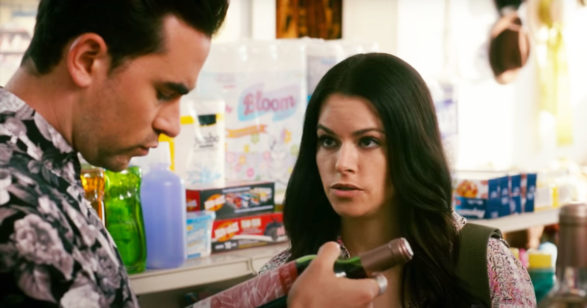
Let’s just be honest here, sexuality is complicated.  There are times that you don’t know exactly who you love and where you fit in. Having these feelings of insecurity and unsureness, and THEN trying to describe your own sexuality in a way that makes sense to others is even more complicated. In the hit series Schitt’s Creek, the main character engages in a conversation that perfectly balances the importance of openness and honesty in these conversations. This series follows a rich family of four who suddenly lose all of their money and their luxurious lifestyle. They are forced to pack up what is left of their property and move into a small town, their only remaining asset. Schitt’s Creek is the town that the father once bought the son as a joke for his birthday. That son and main character of the show is named David Rose. Presumably gay to the viewers and other characters in the show, he finds himself one night sleeping with a female and straight character named Stevie Budd. Stevie is confused, and decides to confront him while out wine shopping for an event. She hints, “Just to be clear, I am a red wine drinker, and I only drink red wine… and up until last night, I was under the impression that you too only drink red wine.” Catching on, David responds to her, “I do drink red wine. But I also drink white wine. I also have been known to sample Rosé. A couple summers back, I tried a Merlot that used to be a Chardonnay, it just got a bit complicated.” Stevie is a bit confused, and David goes on to say, “I like the wine, not the label. Does that make sense?” This iconic scene would go on to be quoted in many articles, printed on tee shirts, and used to give confidence to thousands of youth helping them come out to their parents and peers.


What is great about this use of a wine metaphor is how it is so unconventional, but so easy to comprehend. It allows even the most conservative and closed minded individual to understand that David is pansexual. And as a bonus- who doesn’t love wine? Everybody can relate to how David is describing to his sexuality through the use of this metaphor. David is able to bring forward his very complicated history of experimentation and self-discovery. He is so secure with himself and his journey, that he can calmly explain his sexuality to Stevie in an amusing way. David educates Stevie in a manner that is lighthearted but clear, and it is centered around inclusion and positivity. These conversations can be hard to have, but Stevie reacted in a way that let David come out to her while also not downplaying the importance of having “no labels” to David.

Society’s social constructs and biases make coming out a traumatic experience for so many people. How can they help not feel frightened at the possibility of having their loved ones turn on them for revealing their true self? Throughout every episode of Schitt’s Creek however, the creators challenged that idea that coming out needs to be traumatic. (As a disclaimer, they do not ever downplay the importance of that experience; having somebody working up that courage to finally be unapologetic and open with who they really are and love. There is an episode where David’s partner comes out to his parents in distress, but even then, his parents were only upset that he felt he couldn’t be honest with them about his sexuality, and not that he was actually gay.) By not making sexuality such a huge ordeal, it forces the viewers to imagine a world where there is no bias or judgment when two men are in love and holding hands in public. There is no talk among the characters of anybody’s sexuality beyond this scene, so the reaction to these couples is the same as any reaction would be to a heterosexual couple walking down the street holdings hands. This amazing directing is what sets Schitt’s Creek apart from other series. The series LBGTQ+ representation fosters an inclusive environment, free of bias and full of love and acceptance with no shame.  

Schitt’s Creek has made a difference in this world, right when we all needed it! It’s constant celebration of unconditional love and wholesome relationships between all of the characters really resonated with viewers, making it become one of the most popular and successful shows to ever hit the big screen. The series’ defiant representation of different races and sexualities throughout both acknowledge that facts that anybody in the audience who identifies with the characters are valid, and that they should be proud of themselves and love who they are. This show has won the battle of representation, and has helped pave the way in media for impenitent openness and inclusivity.

Lesbihonest: Pitch Perfect is Not As Progressive As We Think

Written by Sarah Butchko for Autostraddle

Pitch Perfect, directed by Jason Moore and written by Kay Cannon, hit theaters in 2012 and has remained an iconic pop culture staple since. The movie follows the Barden Bellas, an all-girl acapella group trying to make a comeback after an embarrassing performance at the ICCA Finals the year before. While the group used to be composed of basic, white, acapella girls, the Bellas have become desperate to recruit a new team and end up taking in a group of misfits as the new Bellas. This could be a whole other discussion on the fatphobia, racism and plain bitchiness rooted in the recruitment of the Bellas, like how they have to “settle” for people who do not fit their prior standards of: white, skinny, and conventionally pretty. Back to the plot of the movie; the Bellas rival the Treblemakers, the all-male group on campus, and beating them at the 2012 ICCA Finals fuels their fire. Pitch Perfect takes the audience through the reinvention of the Bellas and the trials and tribulations of college acapella. There are many subplots in the movie, Beca and Jesse’s relationship, the enemies to lovers trope of Fat Amy and Bumper, and the not so subtle will-they-won’t-they of Beca and Chloe, to list a few. The movie has a cliche happy ending, Beca gets her man and the Bellas win the ICCAs. 

Although at first glance, the story is inclusive of different people and identities, with further consideration it uses these different identities as the butt of the joke and perpetuates harmful stereotypes. Comments and off color jokes about lesbians are heard throughout the movie. In the specific scene I am focusing on, the Bellas are going around and telling each other something that the others do not know about them. As Cynthia Rose is standing up to share, Fat Amy says, “I think we know where this is going, lesbihonest,” insinuating that Cynthia Rose is going to come out to them. Instead, she shares about her gambling problem that started when she broke up with her girlfriend. Fat Amy reacts saying, “Whoomp there it is,” as if it is such a huge deal that Cynthia Rose is gay. Prior to Cynthia Rose officially coming out to the Bellas, the group constantly makes comments suggesting that Cynthia Rose is lesbian. This pressure on Cynthia Rose to label her sexuality for the comfort of the others in the group relays a message to the audience saying that it is necessary to have a defined identity that others must be aware of. This continues the pressure of coming out in society and the idea that if you are anything but straight you must define it and let everyone know. This becomes harmful as the assumptions and judgements of Cynthia Rose from the Bellas may cause someone watching who is unsure of their sexuality and their definition of it to feel pressure to come out or define their identity. It can also create fear for the person watching that others are judging them and making assumptions about them. 

The first time the audience meets Cynthia Rose is at the audition for the acapella groups where she is misgendered because of the clothes she is wearing and the way she looks. The character who misgendered her, corrects himself saying “Whoop not a dude!” which is a joke that is supposed to entertain the audience. However, this “joke” perpetuates the gender binary in clothes, making it out of the ordinary when a woman expresses her gender in a way outside of the norm. The fact that the comment comes from a man makes it even more frustrating. 

Cynthia Rose, in her own words from Pitch Perfect 2, is “black, gay, and a woman.” This intersectional representation taken at face value can be seen as progressive and positive for the community, however, throughout the movie, Cynthia Rose is portrayed as a sexually aggressive black butch lesbian that keeps up a harmful stereotype about lesbians. She makes sexual comments and innuendos, and borderline sexually assaults Fat Amy, Stacy, and other characters. She repeatedly grabs Stacy’s boob and stares at her ass. When Fat Amy is hit by the burrito, Cynthia Rose jumps on her and attempts to give her “mouth-to-mouth” resuscitation which the audience can tell is not her true motive. These aggressive instances contribute to the butch lesbian stereotype that make hetero women wary- that the lesbian wants to get with you even if you are not interested. With the additional fact that not only is she an angry butch lesbian, she is an angry black butch lesbian, this representation becomes even more dangerous. My guess is that the producers did not intend to create this harmful character that perpetuates harmful stereotypes in society but with more attention paid to how this representation would come across could have made this movie a little less problematic. While it is important to have inclusive representation in media, representations that are not done well can be more damaging than not. 

Comment (Shea Bonacci)

I have watched the Pitch Perfect Movies so many times since they first came out. These are issues I never noticed or picked up on as a kid in the 5th grade. Reading through your post allowed me to walk through the movie with a completely different lens as a 20 year old. I like how you highlight that on the surface, most people view the movie as inclusive of different people and identities, but the irony is that those people are the butt of the joke. Assuming and expecting people to come out about their sexuality, the fatphobia present within the movie, the misgendering present, and the unrealistic representations of certain “stereotypes,” are all very present issues within the movies. Overall, great job!

Un-Defining Parenting

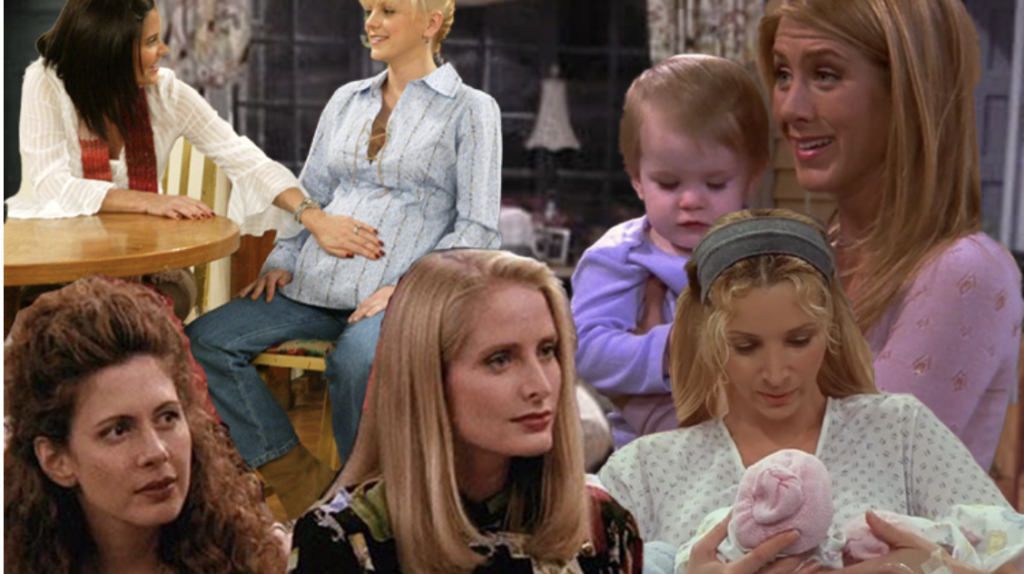
What are we taught to believe about motherhood? The stereotypical idealist view tends to be the birth of a child after marriage. Yes this view is one road to becoming a mother but there are so many others. Even today there is some stigma around certain types of births, many of these are addressed in the tv show Friends. Although this show does have some of its own issues, including its lack of diversity, it portrayed multiple ways of becoming a mother that may go against the norm. 

The first baby born in Friends was Ben, Ross and Carol’s son. Ben was an unexpected pregnancy; Ross found out his ex wife, Carol, was pregnant shortly after she left him for another woman. This birth was controversial in the 90s, not only were the parents not married (yet, Carol and Susan get married later in the show) but the baby had 3 parents. Although this sitcom was not perfect and incorporated many homophobic jokes, it was also one of the only shows at this time to feature a lesbian wedding. The show also did a decent job with their family relationship. Each and every family is unique, and we got to watch as Ross, Carol, and Susan figured out a new dynamic as they raised Ben. 

Phoebe Buffay, A badass hippie, was a surrogate to her brother’s children. Frank Buffay and his wife, Alice, had a very large age gap. Alice was Frank’s Professor in college and was over twice his age. Although their marriage was mostly used as a joke in the show, it did highlight and bring attention to age differences. When Phoebe first found out about their relationship, she was shocked but by the end of the episode came to the belief that love is love. Later in the show, Frank and Alice want to have a child but are unable to due to Alice’s age, so they ask Phoebe to be their surrogate. In the show they express the pregnancy and surrogacy well, but do make jokes such as when Phoebe tells the nurse at the hospital, “the father is my brother”. Many of these quotes are lighthearted. They bring up some of the harder parts of surrogacy such as carrying and birthing a child that is not theirs and having to give the babies to their parents. Ultimately the directors and writers wrote this story well and for the most part accurately portrayed the ups and downs of Phoebe’s decision. 

Rachel Green is from a very posh family in which she was raised to believe that her goals in life should be to marry a wealthy man and be a stay at home mother. This ideology was quickly challenged for her when she ran from her fiancé on her wedding day and then decided to get a job and become an independent woman. Later she also had an unconventional pregnancy for this era because she got pregnant and did not get married. Despite how she was raised and societal pressure from her family, she decided to have the baby on her own; Ross was still there to raise the child, but they were not together. At one point during a family convention, Ross’s mother even tells them to pretend they got married because they had been telling that to friends. Despite the pressure to get married by both their families, she still decided it was not the right time. And even though Rachel was not in a relationship to help raise Emma, she still had a ton of support from Ross, her family, and friends. She proved to many that you can be a single mother, work, date, and succeed, breaking many conventionalized beliefs. 

Monica Geller was one of the more heartbreaking stories. When her dream of having kids was put on hold because she had a hostile uterus and was unable to bear a child, she and Chandler started looking into other options and got into adoption. After being put on a list, they met a mother that agreed to let them adopt the baby when it was born. Although this process went by a lot faster than it normally would in real life, it still very accurately described this unconventional way of becoming a mother. 

All 7 babies born into this show either had unconventional births or family dynamics, but no matter the story they all had friends and family that supported their decisions. Recognizing that this sitcom did make many jokes that are viewed as offensive today, they were not seen as offensive in the 90s. The show incorporates these stories into their plot well, some may not even realize that all 4 main characters had unconventional stories. Even though this show was not perfect, it enforced the fact that there is no right or wrong to being a mother. 

A Fatphobic Lucky Strike Ad: Another Bad Side of the Tobacco Industry

Written by John Rogers for Jezebel.

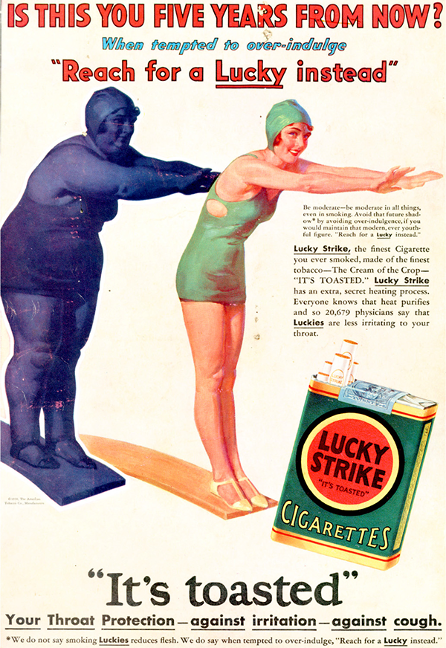
This horrific ad was created by Lucky Strike cigarettes in 1930 as an attempt to sell their unhealthy product. It is no longer in circulation today (thank goodness) but it can be found online, and looking at it provides important history on how advertising has always been manipulative. The ad purports that Lucky Strike cigarettes will reduce feelings of hunger, leading consumers to be less snacky, and thus, presumably avoid tacking on weight from overeating. This ad is targeted towards women, since it features a woman in the picture, and it suggests that ladies can avoid weight gain by smoking cigarettes. In this way, the ad reinforces harmful gender norms that women must avoid being fat in order to be attractive to potential partners. 

The ad is not just sexist towards women by holding them to high beauty standards. It is also deeply fatphobic, meaning that it reinforces the idea that fat is ugly and must be avoided. According to Marilyn Wann, “health is a problematic concept when linked with weight. Health is not a number, but rather a subjective experience with many influences.” So, implying that a certain weight is unhealthy or undesirable, as this ad does, is a constructed idea that harms fat people. They are less self-confident, ostracized from society, and given worse health care as a result of this fatphobic thinking.

On top of some sexist and fatphobic tendencies, the ad is racist as well. It presents the skinny woman as white, and darkens her fat shadow. This reinforces the historical idea that fat is a Black quality, and that Blackness is bad just like fat. By presenting the white woman as the ideal, and the dark woman as the problem to be avoided, this ad upholds a racist ideal of white superiority.

The intended purpose of the ad is to sell cigarettes, and the ad hopes that preying upon women’s fears of being fat will impel them to buy the product that is offered as a solution to weight gain. It has another angle as well. It claims that the cigarettes will protect consumer’s throats from irritation and a cough.  It is ridiculous by our 21st century standards to smoke unhealthy cigarettes as a way to resist weight gain or clear your throat, but this was a clever argument at the time of the ad. Doctors were paid to claim that cigarettes were healthy, allowing Lucky Strike to prey on consumers with misleading data. In this way, the ad uses the rhetorical appeal of ethos by appealing to over 20,000 doctor recommendations to back up claims of health benefits from smoking.

The advertisement uses the rhetorical appeals of pathos and logos as well. The scare tactic of the “fat shadow” that could occur in 5 years if one engages in “over-indulgence” is intended to create fear in the audience, a fear that will be dissuaded by the supposed benefits of smoking Lucky Strikes. Thus, the images in the ad appeal to pathos. In terms of logos, the ad makes an argument that cigarettes lead to less hunger, and less hunger leads to less eating, and less eating will prevent weigh gain. Of course, this logic is faulty, because it assumes that less eating will prevent weight gain, even though this is an open question. It also assumes that weight is a choice that results solely from eating habits, which reinforces problematic fatphobic ideas that Wann references. Humans have weights on a bell curve, just like height or other characteristics, so picking a “skinny” ideal that is a specific spot on the bell curve is not only misguided, it is impossible to accomplish.

The ad has two images. One is a basic image of a cigarette box, intended to make the packaging look clean and appealing. The other image is of a thin, conventionally attractive woman with a fat shadow. The then woman looks happy and calm, while the fat shadow has more of a grimace on her face. This illustrates the argument of the ad: buy Lucky Strike cigarettes to reduce hunger, or else weight gain will inevitably follow from an inability to control urges to eat.

Overall, the ad tries to convince women to buy Lucky Strike cigarettes with two claims that are both tied to health – the cigarettes will prevent weight gain by reducing hunger pangs, and they protect people’s throats by eliminating irritation and coughing. The ad is an example of problematic advertising that uses fatphobia to encourage people to buy unhealthy cigarettes. Ads like these were used throughout history to promote sexist, racist, and fatphobic ideas, convincing consumers that products which were actually harmful to them would help them avoid these made-up problems. Examining this history of constructing false needs is vitally important so that we can identify where ads are using these tactics today and snuff them out.

A cigarette ad riddled with fatphobia, false science, and problematic beauty standards

Latest on Desperate Housewives: depiction of women with assumptions and stereotypes

by Yuncong Hu

Written for Autostraddle

Last week, Desperate Housewives just released episode 9 of season 3, named “Beautiful Girls” after the character Gabrielle Solis’s plotline in this episode. Since 2004, when its first season started airing on ABC, the show has been positively received for its exploration on the inner dark sides and complicated personalities of the ordinary upper-class housewives, in contrast to the traditional plain, dour mother/wife figures on screen. Surprisingly in this episode, Gabrielle’s story isn’t technically boundary-breaking, and instead, it is borderline-misogynist.

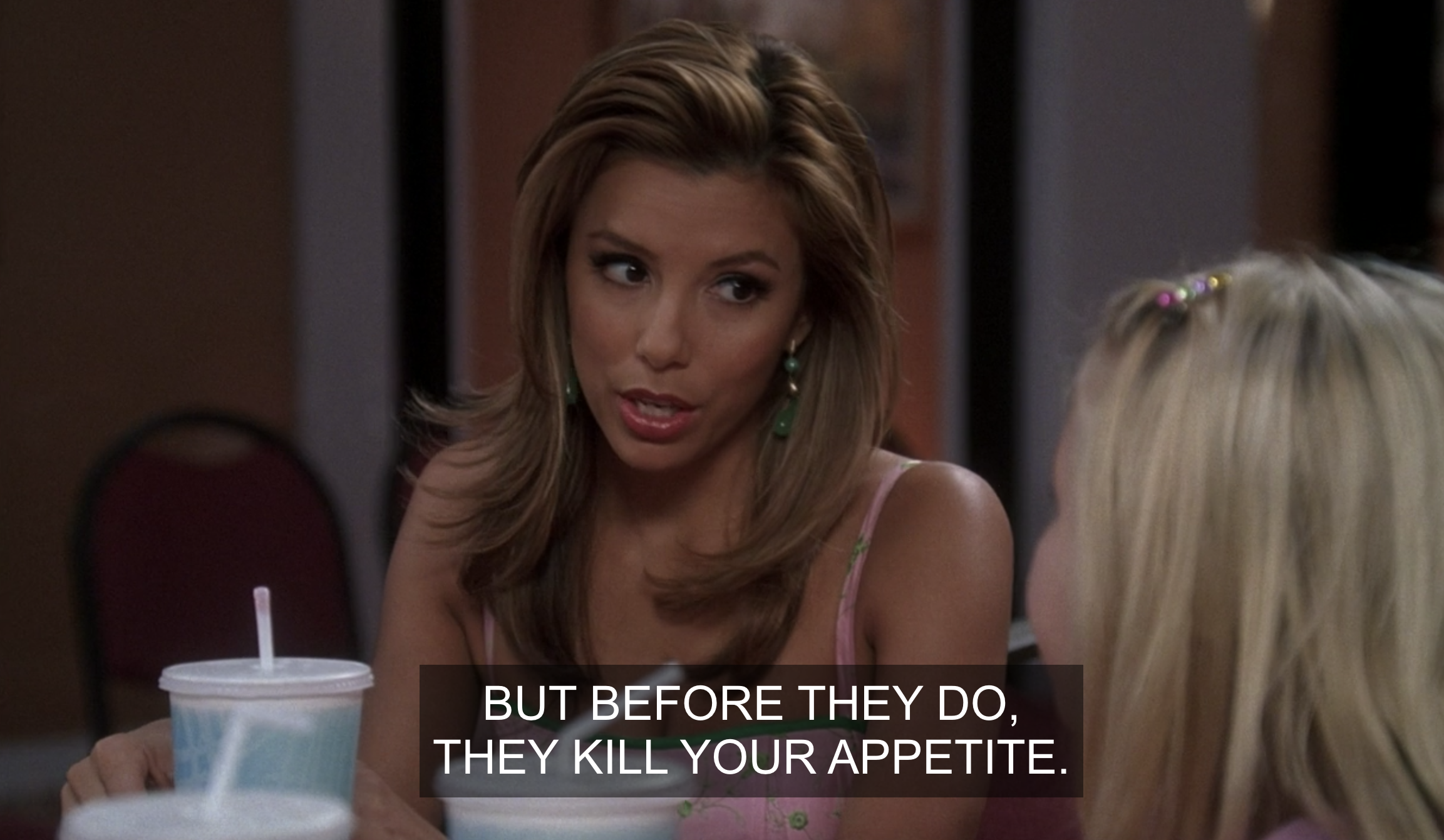
For those of you who haven’t watched Desperate Housewives, Gabrielle Solis is one of the four female protagonists, all of whom are close friends and neighbors living in a fictitious suburb are called Wisteria Lane. Gabrielle has a Mexican heritage, and the other three housewives are white. In S309, Gabrielle’s divorce is finalized. With the failed attempt to go back to her modeling career in last episode, Gabrielle accepts the fact that she is becoming an unemployed divorcée. In need of a distraction from her empty life, she accepts invitation from her gay personal shopper, Vern, to coach young pageant girls for his new beauty pageant consulting firm. While she reluctantly takes the offer, she later finds herself enjoying coaching the girls as her modeling expertise is incredibly idolized by these younger women. However, when she is reminiscing on her old modeling days, she accidentally tells the girls about some ill-advised weight-loss methods such as sticking fingers in throats and smoking. Later on, some girls are caught by their parents smoking and vomiting, and Gabrielle is fired. She then comes to the mothers of the girls, confesses to them that beauty pageant coaching is now the one single meaningful thing in the life of a woman without husband and family, and makes a subtle offer to give illegal diet pills to them. The parents give her a second chance.

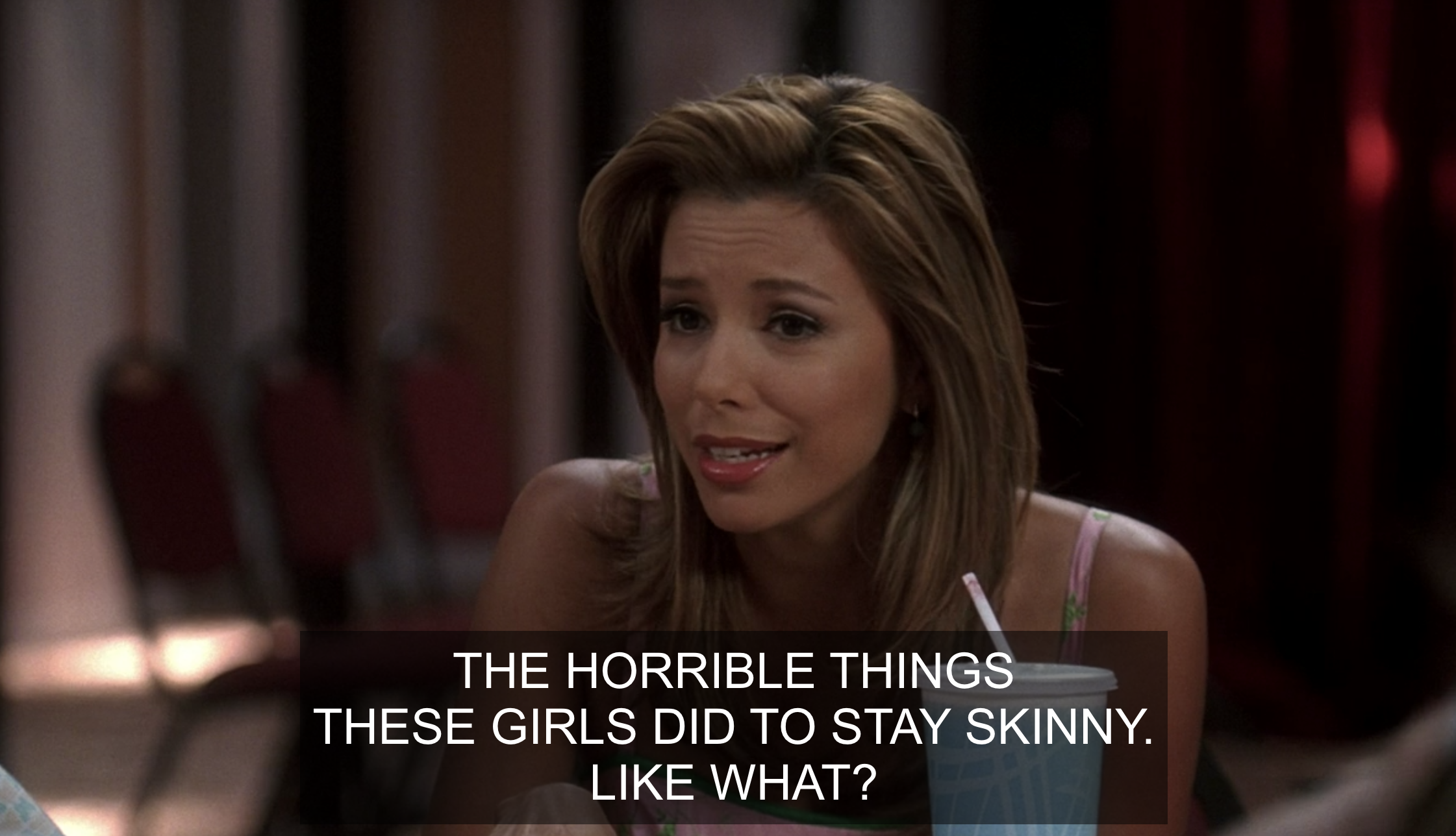
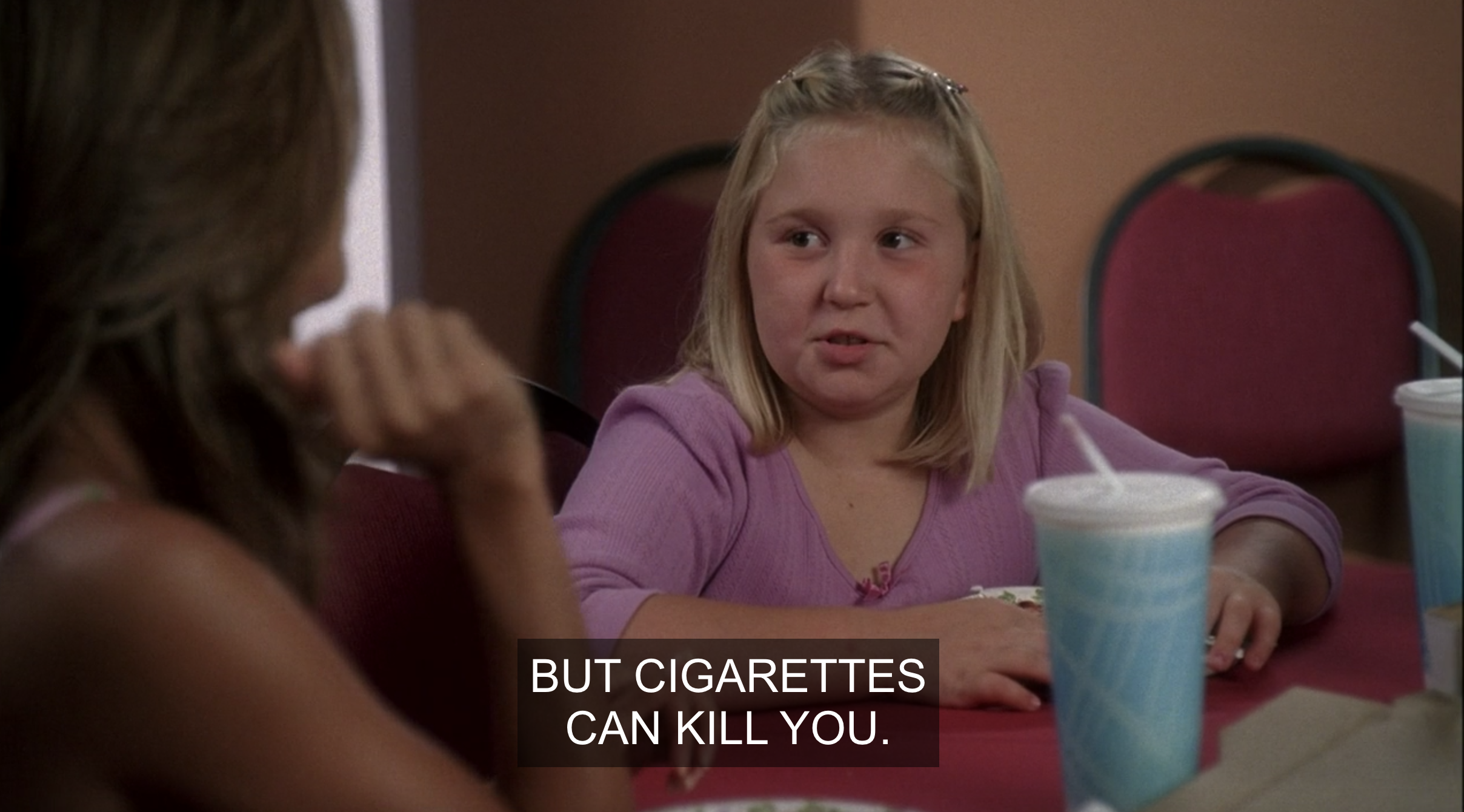
It is noticeable that Gabrielle’s conversation with the girls in this particular scene demonstrate how fat stigmatization is socially institutionalized in popular culture. Specifically, Gabrielle starts with the warning “You would not believe all the horrible things model do to stay skinny” and “I never did it” before she introduced the kids into smoking and vomiting as weight-loss methods. The children, though aware of “smoking will kill you”, still ask “Do you have to be skinny to be a model?”, to which she answers, “When was the last time you saw a fat person on a magazine cover?” This is a highly representative example of anti-fat beliefs being passed on by someone elder and experienced to a younger generation, thereby creating an invisible social structure that is constantly renewing and strengthening itself. In her introduction to Fat Studies Readers, Marilyn Wann comments on this structure, “Every person who lives in a fat-hating culture inevitably absorbs anti-fat beliefs, assumptions and stereotypes, and also inevitably comes to occupy a position in relation to power arrangements that are based on weight,” The power relationship in this narrative is clearly the contrast between professional fashion models and some 9-to-12-year-old who wish they could be beauty pageant girls. As a result, Gabrielle herself, without realizing it, teaches the girls about the established beauty standard that discriminate against fat people. Her expertise, just like the enormous power of social norms behind beauty standards, is invisible and very restrictive, as the girls immediately accepts the norms and attempt to fit into them. Even worse, when she acknowledges that the methods she mentions is “horrible”, she is also explaining the conventional rules for fat people, that they need to suffer to lose weight, that being fat is even more dreadful than being unhealthy. These rules are internalized by the girls and soon, they start to punish themselves for being fat.

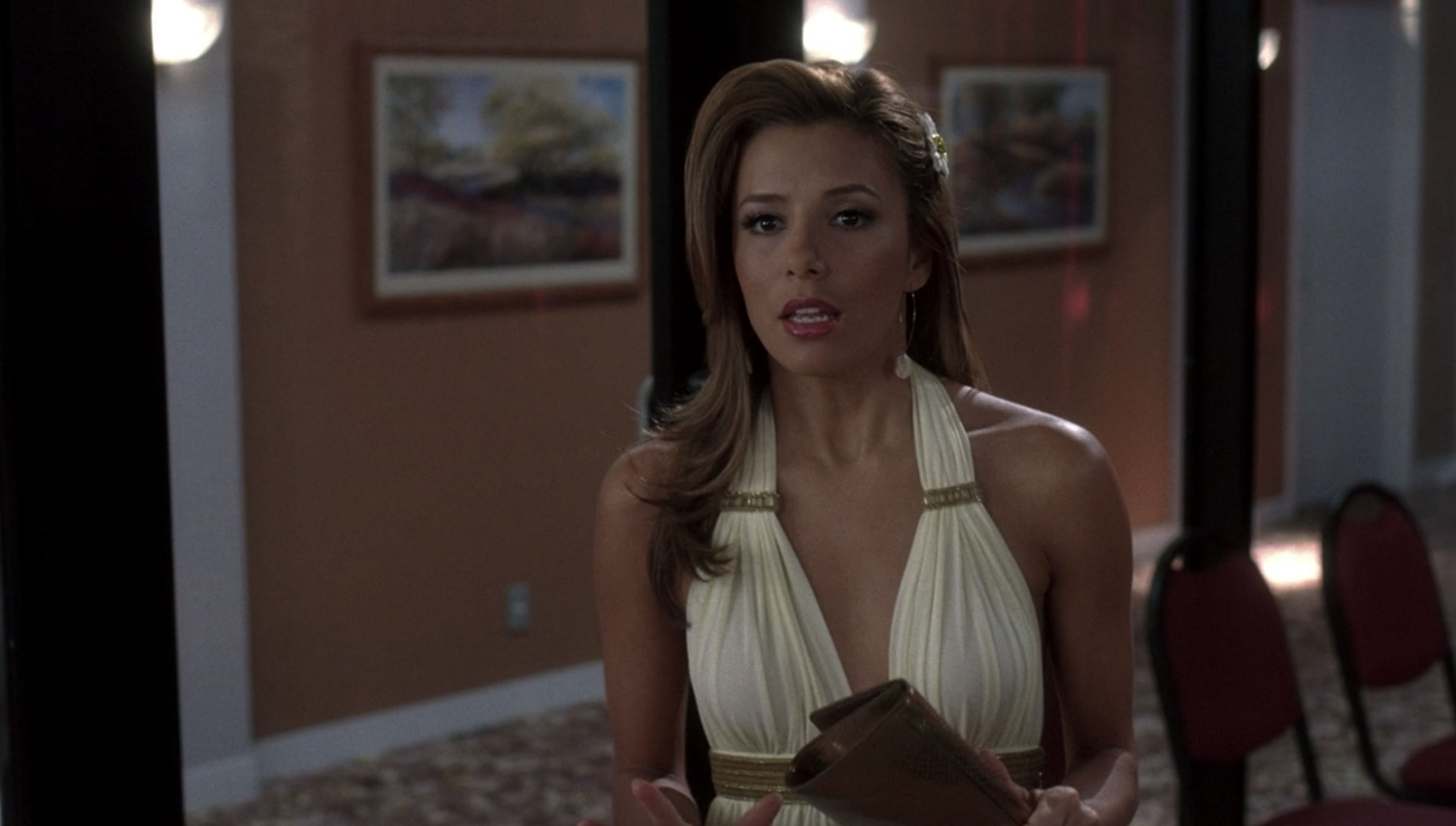
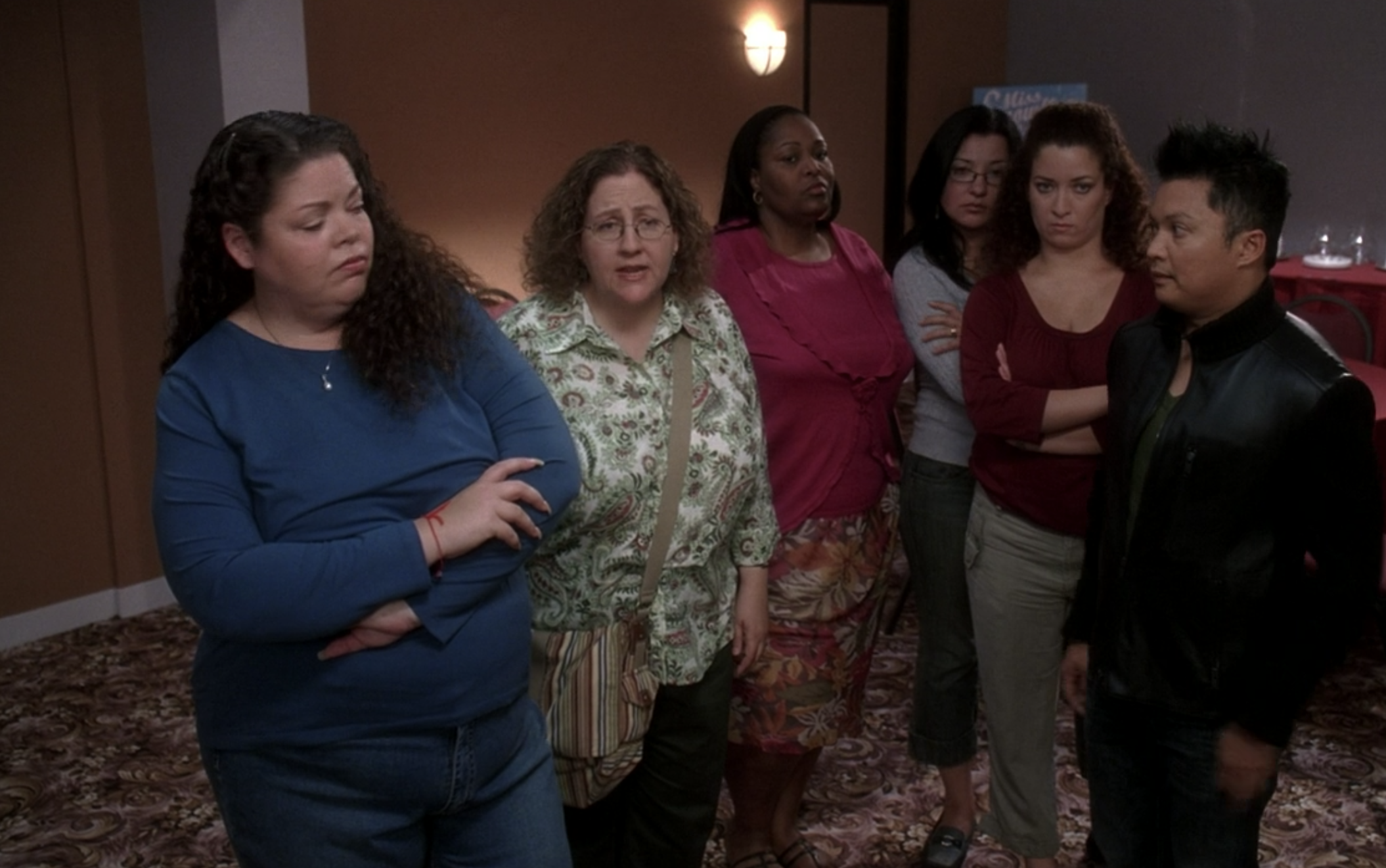
There is more to the fatphobia side of this episode. While it gives us an example of how fat-stigmatization transforms into social structures, it fails to offer any critical resolution towards it. This presentation of this story, which primarily focuses on weight and beauty standards, chooses to continue conforming to anti-fat beliefs and misrepresenting fat community. In the last scene, a sharp contrast is made between Gabrielle and the parents:

Eva Longoria, as Gabrielle, is intentionally put into better clothes, hair, accessories and make-up in this scene, while the other actors are clearly not. Gabrielle is wearing a full-length, Versace-styled ball gown while holding a clutch. Her hair is curly and silky, and she has full-makeup on. The other ladies are all wearing dowdy clothes, much less make-up and three of them can definitely be considered as fat. These women quickly changed their idea about firing Gabrielle after she mentions she has “highly effective non-FDA approved diet pills from Zurich”, and claim that “I guess the Christian thing is to forgive her” without admitting that they are attracted by the pills in reality. The plot and lines intuitively assume the beauty standards between two binaries – fat and thin, and coveys the implied message that thinner people do look better to its audience. Moreover, it falsely represents fat people by portraying them as automatically desiring losing weight at any cost. Therefore, it inevitably represents another effort to normalize weight-loss and anti-fat health promotion by making an assumption that fat people need to lose weight. In doing so, they neglect the group of audiences who belong to the self-accepting fat community.

In addition, the underlying assumption about Gabrielle’s social class is striking. She is a wealthy woman who can afford a personal shopper even after losing her steady income – her ex-husband. Her motivation for this job is not for survival, but only spiritual fulfilment. Just like Gabrielle, her other friends share the same social class and work motivation: they are married to lawyers, doctors, managers, etc. Essentially, the depiction of women’s struggle is mainly about upper-middle class, white women’s struggle (Gabrielle is the only POC protagonist in the show) A vast majority of women are already excluded in the production of this episode, as well as the whole series.

As the only non-white protagonist, the character of Gabrielle also indicates conformity to racial and gender stereotypes prevalent in America. She is undoubtedly, even in the script description, the most attractive housewife of all four, and a Latina ex-supermodel. There is a hyper-sexuality attached to her with her race, a form of over-sexualization of Latin women. The character has no choice but to be a gorgeous stereotype like a lot of other Latin women on screen, while diversity is allowed in white women. The same thing is applied to Gabrielle’s background. She is the only one who has a background story: she comes from a poor family, goes into modeling at a very young age, earns a new life through her new social circle, marries a rich husband and retires from fashion industry. Interestingly, Desperate Housewives does not introduce the backgrounds of other three white protagonists. They are assumed to be raised, educated and married normally as if they are in a standard white family, while Gabrielle needs an explanation of why she lives in a rich, white suburbs neighborhood. In other words, The abnormality in the life of a female, like Gabrielle, is highlighted and associated with her racialized background.            

Above all, the series Desperate Housewives does have many things to complement about: it gives a space for more female-centered narratives in the male-dominating media world, and it strives to tell stories from women’s points of view. Still, one must not neglect the problematic assumptions and stereotypes of women that it displays in only one episode. The production team need to inspect its work with more consciousness of preventing prejudices and assumption. And the audiences, while enjoying the marvelous episodes, should be aware of these problems.

Works Cited:

Wann, Marilyn. Foreword To Fat Studies Reader. NYU Press. 2009

Why can only white men drink beer?

A Budweiser beer advertisement from the 1950s

What do you first think of whenever you look at this ad? Budweiser is a very popular beer company, so it particularly stands out. When I first looked at it, I thought to myself “Hmm, this advertisement is probably from the 1900s”. Budweiser created this advertisement in the 1950s and the intended audience of it seems to be pretty clear: white men. The purpose can also be quite clear: sell Budweiser beer to white men. These are the things you can decipher when you just take a slight glance at this advertisement. 

As you dive deeper into the symbolic art that is presented in the advertisement, these things unearth more purpose and intention from the advertiser. Let us talk think about and analyze the actions of the two people in this ad. For instance, looking at the white man, he holds a hammer. As he is holding this hammer, it seems he is working hard on building something and we can assume this is either something for home or it is a part of his job. When looking at the white woman who we can assume is his wife, she is pouring him a glass of Budweiser beer. There is nothing hardworking about what she is doing, she is just simply acting upon her husband’s needs. This image sparks more controversial topics. In the 1950s, they would say “Well that is the role of a women, isn’t it?”. They would assume that the role of the women is to take care of her husband and fulfill all of his needs. Whenever we compare these two actions of the man and the woman, it really reflects those assumed and assigned gender roles that society claimed to be “right” in the 1900s. The typical woman staying at home, tending to her husband, the breadwinner. In contrast, the husband is the hardworking spouse in the relationship who has a job, does the “handyman” work at home, and acts upon all the “masculine” things society expects him to do. Just by looking at the actions of the two in the ad, it easily already brings those gender assumptions to the audience’s minds. However, when looking at the advertising techniques of Budweiser, you can question them on why they ignited these prominent gender roles in the ad. Well, since it was the 1950s, it was assumed that after a long day of hard work, men needed to decompress, so their wives could pour them some Budweiser beer at the end of the day. 

These points can also be proven by the facial expressions of the man and the woman in the advertisement. By the looks of the man’s face with his wrinkled forehead lines and his subtle yet irritated facial expression, he seems to be stressed out and tired from a long day of labor and responsibilities. Let’s remember, the 1950s were times when gender roles were prominent. Where the golden standard was the men working and laboring during the day while the women stayed at home with the children. So, because men are stressed out at the end of the day, this is why Budweiser aims at this audience of white men who have jobs. Budweiser tries to convince you that alcohol, specifically their beer, will help you decompress and relax at the end of the day. Now, looking at the intended audience of the advertisement, it sparks conversation on the assumptions of gender roles. For example, why is Budweiser assuming that only white men drink beer? Why can’t they advertise it to women or even non-white men? This question does have an obvious answer which has to do with the time that the advertisement was released, however, this only shows how prominent these gender stereotypes and standards as well as racial issues were during the 1950s. It shows how companies and businesses convinced society that men have specific roles and women have specific roles. It shows how there was so much assumption on what race was superior during the time and which were inferior. Moving on, let’s start looking at the women pouring the Budweiser beer for who we assume is her husband. She looks so content while pouring the beer. She looks as if she has no problems in this world. That may be true, or it may not be. Budweiser is trying to convince the audience that since it is the 1950s where women are at home while men are working during the day, the least they could do for their hardworking husbands is pour them a glass of Budweiser beer. Budweiser is trying to force these couples into these roles in order to advertise their product.  

Looking back at the advertising strategies that Budweiser tried to use, it may have been effective during the 1950s. However, that does not make it necessarily “right” to advertise in the first place. When people look at the advertisement in modern time, there are so many gender, racial, and class issues within the ad. However, we can learn to appreciate that advertisements such as this one was produced in history, because we can now analyze them and learn from them. That is the major takeaway we can obtain from media that occurred a long time ago, and that is what we need for social justice. 

Writing for Feministing / www.feministing.com

The Fresh Prince Takes a Future Look into Fatphobia

Written by Trey Messer with Autostraddle, 1991

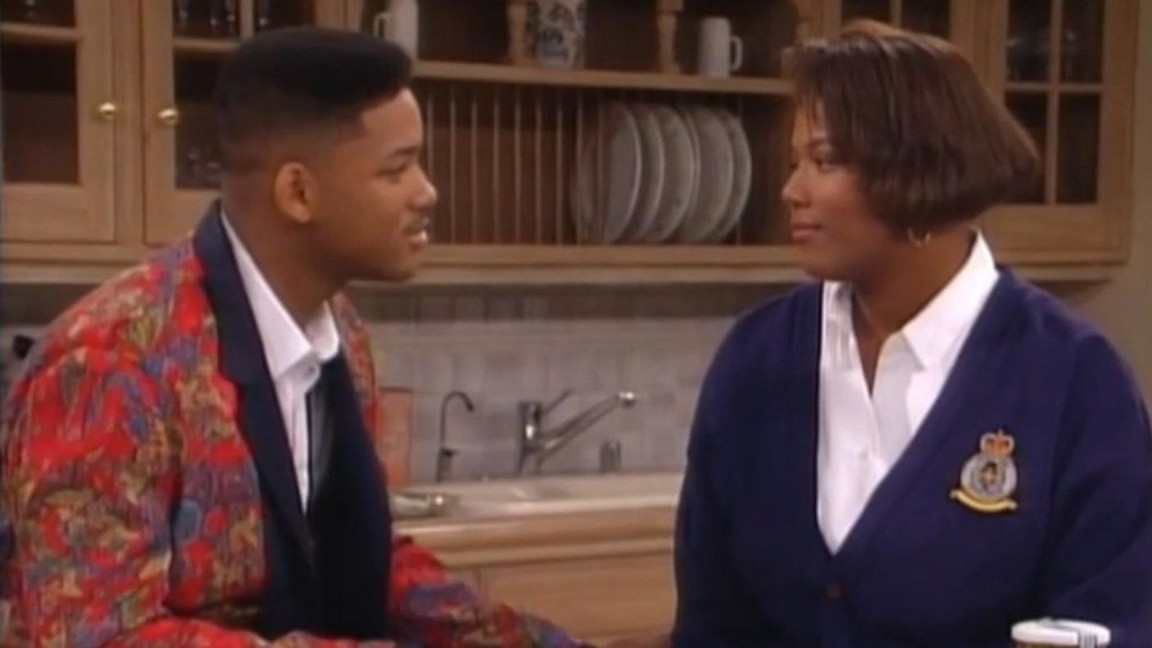
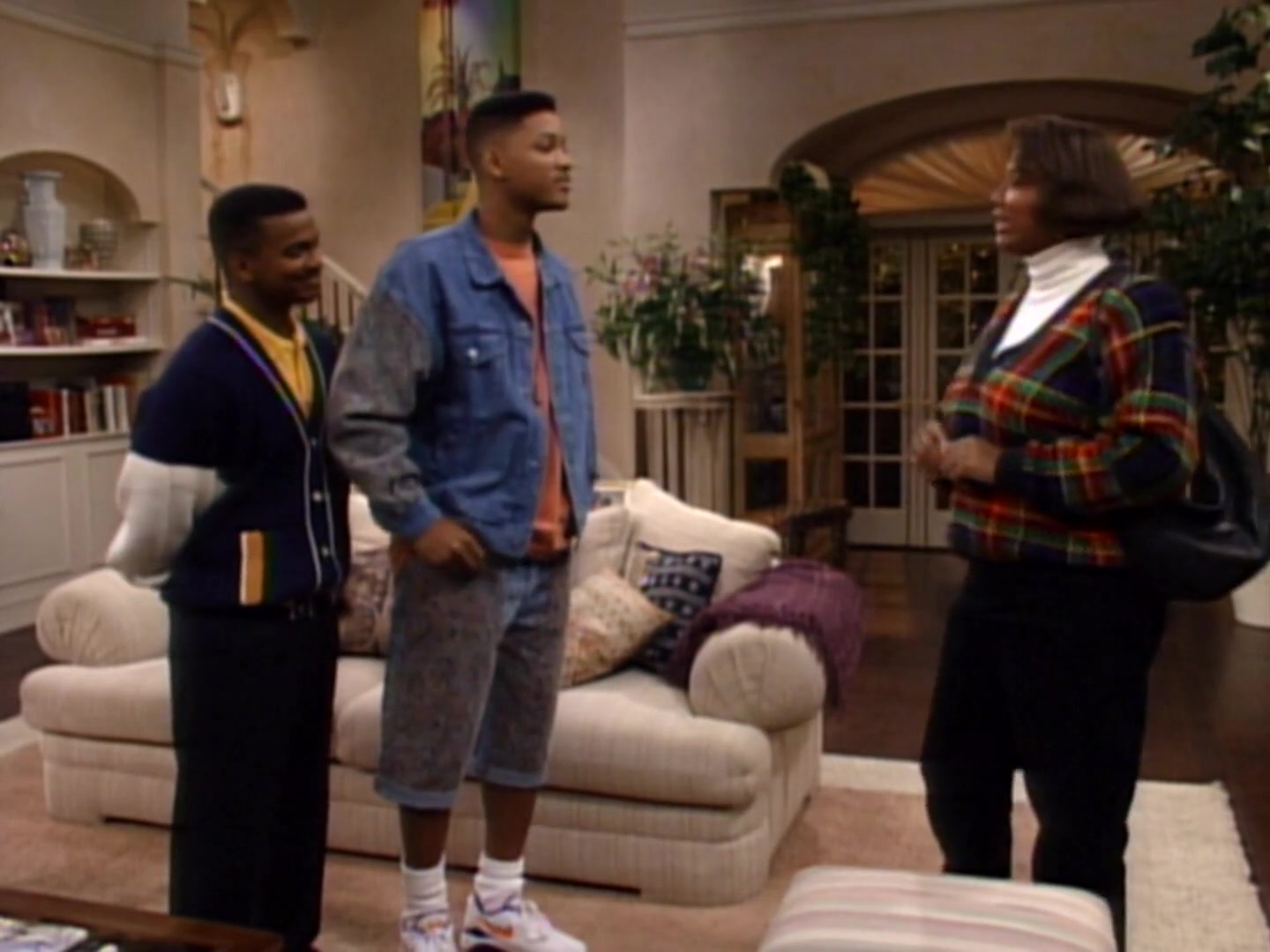
Scenes from Fresh Prince of Bel Air Season 2, Episode 8: She Ain’t Heavy

The hit sitcom The Fresh Prince of Bel-Air has been a blessing to our eyes as we watch Will Smith work his magic, entertaining the audience with his wittiness and colorful nature, as well as addressing some important issues that Black people in America face such as racial profiling, gun violence, and the struggles of growing up in rough neighborhoods. Season 2 looks to continue to this trend with new episodes tackling other issues of our society. In Season 2, Episode 3, the Fresh Prince is forced to address his own flaw of body shaming, an ideology that many men (including myself) struggle with resisting.

Throughout Season 1, the sitcom makes it clear that Will’s character is undoubtfully a ladies’ man. The “She Ain’t Heavy” episode even includes a flashback of all the fine honeys that Will has gone on blind-dates with—black, beautiful, elegant, but most noticeably, skinny. As Will gets excited to see who his potential blind date will be to the Lakers basketball game, his expectations are far from met when hip-hop artist and actress Queen Latifah walks through the door of the Banks residence. Latifah, who plays the role of “DeeDee” in this episode, is noticeably plus-sized compare to Will’s previous female acquaintances. The cameras cut to Will standing in shock and disbelief (in the comedic way only he knows how), serving as an slight at her body. The insults get worse when Will comes up with the excuse not to go to the game with her, stating that she wouldn’t fit in his packed car. He immediately realizes the fault in his words and recovers with “Not just you, anybody.” The scene ends with DeeDee walking out after telling Will and Carlton that she planned to be screaming her number at NBA superstar Magic Johnson, which Will replies behind her back: “I hope Magic ate his Wheaties.”

As the episode progresses, Will and DeeDee bond over their shared sense of humor and common interests, but Will is too afraid to ask her to the dance knowing that his friends make fun of him for hanging out with her. As they are seen in a restaurant together, Will’s classmates suggest she is “tons of fun” and even claims “the babe got more buns than a day-old bakery”. Will then asks his friend the question: “Now how you trying to play me? Now you’ve seen the honeys that I had up in here”. DeeDee, eavesdropping, hears this and storms out. The two end up going to the dance with separate dates, have a horrible time, and eventually make up. The crowd got one last laugh, however, when the king bed collapses in the final scene as every character sits on it watching a home cooking show. As funny as it was watching it the first time through, I’ve realized that the episode portrayed many important issues regarding society’s assumptions about weight and our social interactions with people we define as “fat”.

Scenes from Fresh Prince of Bel Air Season 2, Episode 8: She Ain’t Heavy

To start, the jargon and jabs used in the episode are very relatable to the reality to our assumptions about fat people. Euphemisms like “heavy”, “big”, and “husky” are substituted for fat in conversations, giving a “false positive spin on a negative view of fatness”. For those who use such words, they try to convince themselves by placing positive connotations on the idea, but the truth is they do not find it as acceptable. The fat synonyms also change the focus of the word, ultimately changing the relationship to one’s body. “Obese” and “overweight” –what Marilyn Wann would call the O-words—puts a medical gaze on the body, convincing people that being fat is something that is medically fixable (assuming that it’s a problem in the first place, rather than just being a bodily difference and variation).

The reason fat jokes and slander is so popular today is because of the power structure that we are subconsciously participating in through societal norms and expectations. In Wann’s foreword to “Fat Studies: An Innovation to Revolution” she claims, “Every person who lives in a fat-hating culture inevitably absorbs anti-fat beliefs… also inevitably comes to occupy a position in relation to power arrangements that are based on weight”. Weights and body shapes, effortlessly, assign women rank in the social hierarchy as the standards of “body goals” continues to become skinnier waist and wider hips.  When people don’t live to such expectations, we ignore, shame, bully, and ostracize them for not conforming to the standards that we force ourselves to do. The power we exercise to separate ourselves from those below us in the hierarchy is what Michel Foucault calls “productive power”—shaming others in attempt to encourage them to change their ways of living to improve their social status. In this perspective, corporations practice productive power by encouraging weight loss programs, expensive dieting, and weight loss medication.            

What makes this episode of The Fresh Prince of Bel Air so unique is how ahead of its time it is. Body positivity is relatively a new concept that gets confused with fat activism, which is barely even an ideology at this point. While body positivity encourages us to accept who we are and “love ourselves”, fat activism will force the public to stop discriminating against bigger bodies and to accept them for who they are. The episode effectively shows how we shouldn’t focus on the body or size of people we get into relation with, but more so emphasize compatibility and personality that we desire. Will Smith and the rest of the writers of the show reveal their agenda of promoting change and education to an audience swarmed by the anti-fat beliefs of society. I hope to see more episodes like this that continue to challenge my own understanding of the world and how it affects the relationships around me.

What is Mick Fleetwood’s Obsession with Balls?

Fleetwood Mac’s Rumors Album Cover

It’s been almost 50 years since the release of Fleetwood Mac’s Rumors (1977), but this album is still as popular as ever. From song versions sung by the Glee cast to a viral TikTok trend involving cranberry juice and “Dreams,” teenagers and adults alike fangirl over this influential record. They live for the drama, the ethereal energy, and the tack piano. But why, oh why, is there a pair of balls dangling between Mick Fleetwood’s legs, and who draped Stevie Nicks across Fleetwood like a damsel in distress? This blog post is an analysis of the album cover to Fleetwood Mac’s magnum opus and what it says about power dynamics between genders. 

If you’ve ever watched Superman, you know how much power superheroes exude solely from their stances. On the Rumors album cover, Mick Fleetwood stands tall and proud, one foot resting on a stool. His chest is proudly stretched, and his hand rests firmly on his hip. He’s set in place, grounded as he holds a crystal ball. On the other hand, Stevie Nicks is anything but steady. Her body is positioned closer to the floor, and her arm flexes behind her as if she’s turning (or possibly falling). She lacks balance, utilizing Fleetwood’s leg for support. At first glance, their stances are nothing to consider. However, this contrast of poses creates a clear power dynamic between Fleetwood and Nicks: Fleetwood is an object of power while Nicks floats along with little structure, reliant on Fleetwood’s body. These same power dynamics have dominated modern-day family and economic systems. During the 1950s, the cult of domesticity established the prevailing trend of male breadwinners. Even today, men are still seen as financial providers and political leaders of whom women are in desperate need. 

Along with posture, the juxtaposition of masculinity and femininity is apparent in Nicks’ attire. Nicks dons a black flowy shawl and is dressed as Rhiannon, the Welsh witch known from the song of the same name from Fleetwood Mac’s eponymous 1975 album. Throughout history, witches have been one of the most widespread images of female empowerment and resistance to patriarchal norms. Persecution of witches has existed as early as the creation of the Bible; the witch trials in The United States (most famously Salem, Massachusetts) and the United Kingdom merely dispersed witch hysteria throughout the world. Witch hunts often punished powerless women who were on the fringes of society: women of color, women that spoke against the man, outwardly sexual women, etc. Essentially, women – generally speaking, people – that didn’t conform to expectations set by society and the patriarchy were susceptible to being charged with witchcraft. Witchcraft’s connection to the feminine is also apparent in a witch’s connection to nature. While nature isn’t necessarily feminine, much of the discourse around women and motherhood connects to the Earth. Furthermore, women and the Earth alike have been subject to much exploitation, oppression, and destruction. Witches communicate with these forces of the environment, blurring the line between humans and nature. Now, what does this have to do with Stevie Nicks or Rumors? For much of the ‘80s, tabloids and haters alike speculated that Stevie Nicks was a witch. Rather than run from these harrowing accusations, Nicks embraced the identity – she embraced Rhiannon. Nicks even appeared on American Horror Story as the “White Witch.” She became this mystical, feminine icon in the male-dominated genre of rock, a “fuck you” to both the industry and patriarchy. This begs the question: if Nicks is a model of feminine power, what does the Rumors album cover say about the relationship between man and woman? Why is Fleetwood holding a crystal ball, Rhiannon’s median of art? Has he taken it, are they sharing it? Why is Fleetwood towering over Nicks, positioned as if he’s Captain Morgan overpowering the feminine? Is he part of the witch hunt? Expanding on the analysis of their gender dynamics from their posture, the cover art suggests an imperial conquest of wild and unruly women, i.e., witches. 

The last narrative piece that brings this analysis full circle is how Fleetwood himself is accessorized: with a pair of balls that hang below his pelvis. Why is it so crucial that Fleetwood reminds not just Nicks but the listeners (and therefore the world) of his genitals? The answer to this question is simple. He wants everyone to remember that he has balls. He wants his power as a man – as a person with a penis and testicles – to be known. We live in a world where power systems predominantly benefit those with one set of genitalia, so images related to testicles or phallic symbols can also be correlated to potency and strength. Today, we see phallic imagery in areas related to power, such as swords, rockets, skyscrapers, and cigars. These images create a subconscious association in our minds with hegemonic masculinity, a constant reminder of who and what is in charge. Similarly, Mick Fleetwood’s balls generate a reminder of his position in society and in relation to Rhiannon.  

Does this mean you should stop listening to the silky melodies of Fleetwood Mac? Absolutely not – I’ll always need my daily dose of Stevie! However, you should study and recognize the many messages the cover art delivers. Rumors has one of the most recognizable album designs of all time, so dissecting images that circulate pop culture is vital to understanding the social contexts in which we live. That being said, the next time you add “Songbird” to your Spotify queue, analyze the different stories hidden within the album cover and question any resemblances to your own relationship to gender and power.

Written by Anaya Patel with Autostraddle

Audi’s Display of Sexism and Stereotyping

In 2017, Audi, a German car manufacturer known for its luxury vehicles, released an advertisement to its Chinese market that sparked much controversy around the world. In their attempt to promote used cars to potential customers living in China, the brand not only displayed apparent examples of sexism, but promoted racist stereotypes. This commercial starts off with an Asian heterosexual couple standing at the alter about to get married. Right before their marriage was officially declared, the groom’s mother interrupts the officiant and begins handling the bride roughly, attempting to inspect parts of her body. Only after the bride’s future mother-in-law examines some of her physical aspects, like her eyes, nose, ears, and teeth does she declare the bride fit to marry her son and gives her approval. The terrified bride is seemingly relieved after her future mother gives the couple her consent, until the mother’s focus turns to the bride’s breasts, bring her back to a panicked state. After this blatant objectification, the commercial’s narrator voices “An important decision must be made carefully” as a red Audi Sudan zooms down a highway (Greatdung 0:22-0:23).

YouTube, 17 July 2017

This sexist Audi advertisement centers around the objectification of a woman by not only debasing the bride’s value to just her physical attributes, particularly her facial features, but also by comparing her to something one can buy and own. By insinuating that marrying a living breathing person is an equivalent decision to buying a car, Audi turns the bride into an object that can be materialized and possessed. Not only is the bride objectified by her future mother-in-law, but with the attention shifting to her breasts, she also becomes sexualized. This overt objectification and sexualization of a woman not only advance the harmful ideology of women not being actual people and simply objects for the benefit of men, it can have dangerous consequences that go beyond these beliefs. The United Nations International Children’s Emergency Fund (UNICEF) makes this connection by declaring “The objectification and sexualization of girls in the media are linked to violence against women and girls worldwide” (UNICEF USA 2021). This treatment can also have a multitude of negative consequences on the targeted individual’s mental health that can last throughout a lifetime. With the massive platform stemming from the ability to air advertisements to millions of people, comes much responsibility to further notions of equality rather than ideologies that have the potential to cause an immense amount of harm. 

Not only is objectification based on gender a prominent issue in this ad, but race also plays a problematic role. The stereotype of the “tiger mom,” a term coined by Amy Chua which describes Chinese mothers as strict, controlling, and borderline abusive, is also deployed in this Audi advertisement. One aspect of this stereotype is the fixation Asian mothers have on the physical appearance of their daughters (Chua 2011). In this case, the need for the bride’s soon to be mother-in-law to examine her physical features, deciding whether they meet her standards prior to the couple’s marriage further perpetuates this stereotype. Most Asian mothers do not align with this parenting style and utilize a wide range of other strategies, contrary to popular belief. The bride also remains passive during this offensive interaction, exemplifying to this advertisement’s audience that this is the appropriate reaction in the face of maltreatment, which could be easily internalized by woman and child viewers. By displaying this inaccurate idea of what Chinese mothers usually place high value on, as well as the expectation of women staying passive, not only does Audi promote sexism, but also racist stereotypes.

Connecting these ideas, Audi exhibits how the intersection of both gender and race can work together, producing an even greater amount of discrimination for individuals like the bride in their commercial. On the basis of Kimberlé Williams Crenshaw’s concept of intersectionality, two social categorizations of the bride’s identity, being Asian and a woman, create a somewhat unique distinction of the discrimination she faces in this Audi advertisement. Unfortunately, this situation is not rare and many individuals who share these similarities in their identity experience this prejudice on a day-to-day basis. 

Shortly after this commercial aired, it received mass amount of criticism and backlash from the public. One commenter even voiced “The annoying thing about Audi’s used-car ad, besides its objectification of women, is that it thinks Chinese customers deserve only commercials like this” (Washington Post 2019). Others simply called the advisement sexist and disgusting. Many people initiated plans to boycott this company and convinced those around them to partake in this form of protest. Following this severe condemnation, Audi apologized for its ignorance related to this particular incident, assured the public an internal investigation would take place to avoid a mistake like this in the future, and removed this advertisement from television. Audi’s response to this backlash and quick withdraw of their commercial displays the power the public holds and how each individual’s voice matters when speaking out against discrimination. 

Unfortunately, this type of sexist and racist commercial is not the only one of its kind. These companies must continue to be held responsible for the harmful ideologies their advertisements promote and be hyper aware of the massive audience they have the ability to reach just through the commercials they release. These examples of sexism and racism through promoting stereotypes and targeting certain audiences unfairly in advertising must come to an end in order to create a more egalitarian world. These large-scale brands have the responsibility to advance impactful and beneficial messages to the massive audience they are capable of reaching, instead of carelessly feeding this harmful ideology to the masses. 

Works Cited: 

Chua, Amy. Battle Hymn of the Tiger Mother. Penguin Books, 2011. 

Greatdung. “Audi Used Car Commercial in China. Full of Sex Discrimination.” YouTube, YouTube, 17 July 2017, www.youtube.com/watch?v=WiBva8pEgTc. 

Smith, Jamiee, and Hannah Gould. “Not an Object: On Sexualization and Exploitation of Women and Girls.” UNICEF USA, 11 Jan. 2021, www.unicefusa.org/stories/not-object-sexualization-and-exploitation-women-and-girls/30366. 

Wang, Amy B. “An Audi Commercial in China Compared Women to Used Cars. It Didn’t Go Well.” The Washington Post, WP Company, 18 Apr. 2019, www.washingtonpost.com/news/worldviews/wp/2017/07/18/an-audi-commercial-in-china-compared-women-to-used-cars-it-didnt-go-well/. 

Harry Styles Likes Women’s Clothing and He Doesn’t Care Who Knows It (Not Even Candace Owens)

By Alice Berndt

Written for Jezebel

Vogue Online, 13 Nov 2020

On November 13, 2020, jaws dropped and 1D fans swooned when the cover image for Vogue’s December issue was released. The shot features former boy bander and current pop sensation Harry Styles dressed in a black and white lace gown and black cropped blazer, his hair swept to the side in an intentionally effortless flop. He is the first man to appear solo on the cover of Vogue in 127 years. As the cover reads, “Harry Styles makes his own rules.” [Vogue]

Framed against a sprawling green meadow and clear blue sky, the British singer squints into the sunny distance. He holds a blue balloon to his lips, mid-blow, showing off an array of chunky rings, including one in the shape of an “H” and another in an “S.” The photo is iconically Harry — sexy, androgynous, playful, and edgy. 

Since the beginning of One Direction’s seemingly eternal “hiatus” back in 2015, Styles has been making a name for himself as a solo pop rock artist. In addition to releasing hit singles like “Sign of the Times” and “Watermelon Sugar,” he has also become a fashion icon, breaking free from his 1D wardrobe of V-necks and skinny jeans and embracing more traditionally feminine styles like colorful blouses, bootcut pants, and dresses. For the most part, fans and the public have been accepting of his style transformation, which recalls music legends of the past including David Bowie and Prince. But for some, this Vogue cover took it a step too far. 

Screenshot: Twitter / @RealCandaceO

In a move that sparked contentious debate, conservative commentator Candace Owens retweeted Vogue’s post on Styles’ cover shoot and wrote:

“There is no society that can survive without strong men. The East knows this. In the west, the steady feminization of our men at the same time that Marxism is being taught to our children is not a coincidence. It is an outright attack. Bring back manly men.”

[Twitter]

Yowza. Owens received immediate backlash from liberals, feminists, and Styles’ fans alike who claimed she was being sexist and close-minded. She was criticized for her assumption that masculinity and strength (or lack thereof) are directly connected to wardrobe — a man cannot be “manly” if he wears a dress. 

This assumption stems from centuries of clothing acting as a marker of gender — men wear pants and women wear dresses and skirts. Period. But is Owens implying that the inverse is true as well — that women cannot be feminine if they wear pants? Certainly Owens herself has been spotted wearing pants on more than one occasion. Commentators wondered how an article of clothing could limit or “attack” masculinity and strength but not femininity or grace. 

Screenshot: Instagram / @harrystyles

In a reclamation of Owens’ derogatory words, Styles posted an image to Instagram from his cover shoot with Variety and captioned the post “Bring back manly men.” The caption combined with the cheeky photo — Styles in a powder blue pantsuit eating a banana — pokes fun at his haters, addressing the situation while also making light of it. 

Styles is certainly not the first celebrity to be criticized for their clothing choices, so why did this get so much attention? Perhaps because it’s far less common for a woman to publicly shame a man for his outfit than vice versa. We’re used to female celebrities being called out for “scandalous” or “overly sexy” clothing (Billie Eilish’s British Vogue cover, for example), but typically male celebrities wear what they want or what their stylists give them and that’s that. It also cannot be ignored that Styles has a massive fanbase that has grown alongside his career since the inception of One Direction in 2010 and is prepared to defend him regardless of the context.

In talking about gender and fans, we must engage in a conversation about privilege. A quote from Styles on the Vogue cover reads, “Anytime you’re putting barriers up in your life, you’re limiting yourself.” For Styles, a straight white male celebrity with a net worth of over $80 million, he has the comfort and freedom to express himself through his clothing without fear. [Vogue]

For many others, including female-identifying, LGBTQ+, and POC celebrities, what they wear is often the biggest target for ridicule, criticism, and objectification. These individuals must first break down the barriers placed in front of them by society before they can even consider those they may have built for themselves. 

With that simple act of reclamation via his Instagram post, Styles had, in the minds of many, “won” the argument. For many others — celebrities or not — the complexities of how they use clothing to express themselves is a never-ending fight, both internally and externally. [Vogue]

Vogue Online, 13 Nov 2020

Don’t get me wrong, I worship Harry Styles as much as the next Gen Zer and wouldn’t dare question his status as a cultural icon. As actress and director Olivia Wilde says of Styles, “It’s pretty powerful and kind of extraordinary to see someone in his position redefining what it can mean to be a man with confidence.” By breaking free from the societal binary of gendered clothing, Styles utilizes his privilege to pave the way for others. But his work is far from being done. [Vogue]

TikTok: Its Perpetuation of Gender-Based Stereotypes and Human Body Standards

Over the past few years, TikTok has become a mainstream social media platform. This application, available for most smartphones, uses an algorithm to curate content for users, effectively getting them addicted to scrolling on the app. There are many subcultures on TikTok… For example, people who like dogs might find that the algorithm has put them on ‘dog TikTok,’ because their ‘For You’ page is filled with videos of dogs. The same concept applies to gender and sexuality. There are many different points of view represented on the application, and once the algorithm figures out what yours is, it will show you a plethora of content to reinforce that exact idea. 

There is a large subculture (or really, a set of subcultures) on TikTok that perpetuates the gender binary system and all of the gender roles that come along with that. For example, this video is a representation of many of the different videos that are found on ‘straight TikTok’: 

When the individual speaking in the video says, “Men will choose a peaceful woman before a beautiful woman,” they are enforcing many of the expectations that are placed on female-identifying people in our society. Moreover, the speaker is implying that women must be ‘peaceful,’ therefore implying that often, women are not peaceful. This implication tells women that they need not express their emotions; rather, they should focus on being as passive as possible in an effort to be chosen by a man. 

Next, when the person speaking says, “Men seek for peace, and it don’t matter if you’re Black, blue, asian, Latina… they want to come home to a peaceful woman,” they are demonstrating a lack of awareness of the intersection between race and gender. This statement also reinforces the idea that men come home to women, therefore saying also that women should not be working professionals. 

On top of that, the speaker discusses the intellect of women and expectations in that area that men hold. They say, “He wants a woman that’s resourceful, a woman that can think on her feet. So when he can’t hold it down if he’s ill and he’s unable to pay the bills, she can be resourceful and have her intellect to make things happen.” The first implication I see in this statement is that the woman should just be intellectual as a safeguard… the woman will never actually have to use these skills unless it comes down to it. The assumption that men always pay the bills is harmful to all people, regardless of gender, because that is not the case for everybody. By the same token, the fact that the speaker is bringing this point up implies that women are, in general, less naturally intellectual than men. Drawing this unfounded connection between gender and intellectual capacity is harmful to society as a whole. 

Perhaps most disturbingly, our speaker talks about the ‘appropriate’ role of women in a sexual context. They say that men are “looking for a woman to supply their physical needs… A woman that looks good and proper and public but is a beast in bed” is the golden standard. First of all, in addition to ignoring the physical desires of the women at hand, this statement claims that the purpose of women is to fulfill mens’ sexual desires. This incredibly sexist ideology has the capacity to negatively influence the lives of many people. On top of this, the speaker is assuming a common definition of beauty… she is saying that women who have a certain physical appearance and demeanor are examples for what all other women should try to be when in pursuit of a relationship with a man. 

In conclusion, the ideology contained within this video is based on the idea that women are socially inferior to men, and that female sovereignty should not exist when it comes to romantic and sexual relationships. The central claim is that women should constantly be cultivating their personas to match what they think men are looking for in women, in hopes that they will ‘meet the cut’ for some man.

Similar to the last clip, this piece of satire brings awareness to many of the appearance-based expectations that our society holds for women, and the stark contrast between these expectations and those for men. The actor, mimicking a man, says: “Alright, so I want a girl with huge, but perky boobs, small waist, huge butt, flawless skin (but can’t wear makeup). And I like blondes, but I think she should also be brunette… because I get bored quickly, you know?” This statement encapsulates many of the body standards that our modern society has for women, and also touches on the normalized fact that men sleep around while women are expected to be loyal. 

In the caption of this video, the creator claims that this is how all men think. Although this is probably a sarcastic statement, it is representative of the way that many people think. Moreover, individuality is to be nonexistent: all men must act one way, and all women must act another way. Beyond pointing out, and perhaps reinforcing, the gender norms that are in place for men and women, this video illustrates the prevalence of the gender binary in our society. 

Content Warning: This video contains a real-life portrayal of surgical body mutilation. Use viewer discretion. 

In this shocking clip, we see a person that is identified as a man who has ‘overdeveloped’ breast tissue. His act of having the ‘excess’ tissue removed is labeled as life-changing. First of all, the video notes that this overdevelopment in the breast tissue of a man is an actual medical condition, which is known as ‘gynecomastia.’ Its causes are said to be “medications, drugs, testicular cancer, and hormonal imbalance.” 

Without looking into the history of this condition, it’s plausible to assume that this condition was developed in response to a bodily appearance that was not in line with society’s idea of what a man should look like. Moreover, this condition does not pose any medical risk to the patient; it is merely aesthetic. 

This video perpetuates a toxic standard of beauty, and is essentially telling men who have growth in their breast tissue that in order to be beautiful, they must undergo surgery. Explicitly, the caption says, “These [surgeries] literally change men’s lives.” In watching this video, men with growth in their breast tissue are inevitably going to receive the message that they are disgusting, and must go get surgery. 

In conclusion, the three videos I have analyzed here are examples of the many TikTok videos that enforce gender-based stereotypes and human body standards that are present in our society. This is not to say that TikTok is a problematic platform that should not exist; rather, this suggests that we as a society should critically examine the role that social media plays in perpetuating harmful gender-based stereotypes and expectations on a day-to-day basis.

Writing for Feministing | www.feministing.com