Feminist Mixtape: The Man by Taylor Swift

Taylor Swift’s pop anthem, “The Man,” is a catchy, upbeat song aiming to address the inequality between how female artists and male artists are treated and talked about. With a driving bass line, fun and catchy melody, and easy to understand lyrics, this song is able to reach audiences young and old alike. In her song, Swift discusses how every aspect of her personality, looks, actions, and decisions would be seen in a different way if she were a man. In our society there is a double standard between what is acceptable for men to do and for women to do. 

The line “They’d say I played the field before I found someone to commit to” addresses how when a woman cycles through multiple relationships before settling down with “the one,” she is judged differently than a man would be even though it is very common for both men and women to have many relationships. Swift changes this negative narrative by stating “And that would be okay for me to do” confirming to her audience that having multiple partners in life is normal and not something to be ashamed of.

Later in the song, Swift says “When everyone believes ya/ What’s that like?” This line is referring to the #MeToo movement and how women that come forward about sexual assualt, harrassment, and rape are most often doubted and questioned. Victim blaming is present in our society and is disproportionately against women more than men. 

The final line that stood out to me when listening to this song was “What I was wearing, if I was rude/ Could all be separated from my good ideas and power moves.” Women’s clothing is all too often equated with their success and the quality of their work. Instead of focusing on what women actually have to say or what their ideas are, the focus is on what she is wearing. Specifically, when female artists, actresses, or celebrities are interviewed the topic is almost always about what they are wearing, or how they look. In contrast, men are typically interviewed on what their acting experience was like, or what the song is about, for example. 

I connected this song to the reading by Lorber called “The Social Construction of Gender.” In the reading she argues that “it does not matter what men or women actually do; it does not matter if they do the same exact thing, the social institution of gender insists only that what they do is perceived as different” (Lorber 58). In “The Man,” Taylor is arguing that if she did not change anything about her actions but existed as a man, she would be perceived differently by society and treated better. Simply because we as a society perceive some actions to be more acceptable when done by a certain gender, it has become unacceptable to cross those made-up gender barriers. The issue is that there is no rhyme or reason for why we have these expectations for what different genders can or cannot do. The idea that what a woman is wearing determines her worth or success or how many partners a woman has had determines her value is a baseless belief that society has created. Taylor Swift is one of, if not the, biggest artist currently. She has an enormous platform and the ability to create change with the message she shares through her artistry and voice. This song is an attempt to address the disparities between how female and male artists are treated and spark discussion on how we can create change. Her feminism is not perfect and she can do a lot more to include intersectionality in her feminism and to use her priviledge uplift marginalized voices.

Theory to Praxis Assignment

In today’s society kids are growing up with factors that are very different from what parents grew up with. Starting with technology. Kids’ actions and beliefs are influenced by what they see and hear, and less by what they are told. TV especially is a major influence on kids’ behavior and views on society. These factors include body image, diversity, and influence on societal beliefs. This last one is less obvious, for example in elementary school and high school I watched Jessie, Liv and Madi, and Wizards of Waverly Place. All of these shows have main characters in high school, these shows are what I based high school off on and how I expected high school to be like. TV can influence people’s expectations of real-life situations. Tv, especially Disney, (at least when I was a child) had very little diversity, and many of the main characters were skinny, pretty, straight, white women. This shows both a lack of diversity in race and sexuality. It can also create body image issues when little kids grow up with role models that look like actual models. Creating a stereotypical belief that all women are supposed to look that way when they are older. 

Although many tv programs including Disney are starting to work on becoming more diverse, there is still a long way to go to create shows that support and show all bodies and sexualities. Since our generation is the first to be influenced by tv and some of us will raise children in the next 15 ish years, I believe that we are the solution to help future generations understand and analyze what they see on technology. Learning how to analyze shows and media will not only help our generation understand factors that have influenced us without our knowledge but it will also help the next generations. This is a goal of many feminists, as seen in many of our texts including “You Say Nature, I Say Nurture… Let’s Call The Whole Thing Off” by Suzanna Danuta Walters. Whether it is a younger sibling, a kid being babysat, or our own children. If our generation gets educated on how we were and kids are being influenced by television then we can be more attentive to what we are watching and what the kids around us are watching. We have the ability to prevent kids from watching certain shows, although that method may not work because kids have access to their own phones and computers earlier. Rather than attempting to control our kids’ freedom, we need to equip them with the ability to understand and see what is wrong with shows. This limits parents from being super controlling while giving kids the tools they need to analyze what they see on television. 

Once you start to analyze television shows you begin to realize the number of issues that are ignored or looked past. These issues need to be understood and recognized. It will take time to completely fix this issue, although many television programs have already begun to recognize and fix this issue and expand their diversity. And even though there is change, our generation, including the students at Davidson, needs to recognize these issues so they can prevent future generations from perceiving these shows as reality. A class that analyzes televisions and technological physiological effects on kids and teens would benefit our generation and future generations.

Theory to Praxis: Love Yourself Program

As a child, I was always told that I was overweight, fat, chunky, or too big for my age. The constant pressure of my family telling me I needed to go for a walk and my physician saying “We need to change your diet and include some more physical activity in your life”. I am sure this is not uncommon because societal pressures influence people’s mind every day. This affected my life and happiness for so much of my life but this does not have to happen to other people too.  

Looking through clubs and organizations at Davidson, I was shocked that there wasn’t one regarding body positivity as much as it is being discussed and presented in our society today. Yes, there is Changing Minds which offers information and support regarding mental disorders on campus which can include eating disorders, however, this campus needs something more distinctive to help gain awareness for body positivity. Something to make people feel more confident in their own skin as they should be. 

With this in mind, I propose to create a program at Davidson that focuses on providing information and support to anyone who feels uncomfortable in their own body and skin. This program would be called Love Yourself and its goal is to create a safe space for people to discuss and support other people who feel the same way. In addition to this goal, Love Yourself would partner with Changing Minds to add additional support and awareness. 

The program, Love Yourself, is open to absolutely everyone with the intentions of finding confidence in their image as well as assisting others who have similar thoughts and ideas. With meetings once a week, the program will create an environment that stimulates personal growth and activism. Love Yourself will consist of workshops which can include reading pieces like Deb Burgard’s “What is Health at Every Size” as we discussed in our course this semester as well as experimenting with projects such as creating body positivity posters around campus to help gain awareness for it. Our mental capacity is so important, especially during these times in college, so it is vital that students have a space where they can unleash their frustrations or concerns with themselves as well as participate in fun activities and learnings regarding these issues.

Overall, the intentions of this program are to allow anyone to come and discuss their feelings about themselves with complete confidence that they are not alone as well as engaging in the progressive movement in body positivity. People will have a safe space and large support group that blocks out the judgements of society which hopefully grows the community of support for this topic. The discourse in this program will be vital to help change the harmful impacts of society on people all around campus and eventually the world.  

Theory to Praxis: A Program that Teaches GSS Concepts to Parents

Growing up, we are taught by society that gender dictates our roles in society. However, societal pressure is enforced by the people around us, our groups, and our cultures. Using the concepts taught in GSS, parents could raise their children in a healthy, judgment-free space. Also, occupations that work with children should employ the ideas taught in GSS as well. This includes teachers, child psychologists, counselors, pediatricians, coaches, and daycare workers. By employing GSS concepts, children will not be separated into boys and girls during gym class, children will not feel pressured to act a certain way to fit their societal role, and children will not be bullied for being fat if HAES is taught and the BMI index is reconstructed or removed.

I believe the most notable impact would come from parents teaching their children. Thus, I propose that a program or intervention should be created that teaches parents about GSS concepts; this way we can prepare parents to not enforce gender roles and allow their children to grow and to discover themselves and their identities without the influence of social constructs. Deconstructing Society would be a program that focuses on talking about GSS concepts to parents or future parents to provide them with information that will be helpful while they are raising a child. Deconstructing Society will create conversations around heteronormativity, gender roles, and sexuality. The purpose of this program would be to inform parents of the social construction of concepts and to help parents learn these concepts to properly educate their children on similar topics and to provide a healthy environment for their children to thrive.

However, Deconstructing Society could also be used to reach other audiences. Although aiding parents with GSS concepts would help parents provide a judgment-free zone for their children, Deconstructing Society could be used in colleges to discuss topics, such as rape culture, hookup culture, and similar topics discussed with parents. This program’s focus would be with parents. There are certain occupations available that could employ this program. For example, a family therapist could use this program to inform parents on how they can be supportive towards their gay child. Ultimately, Deconstructing Society would help parents create a safe and healthy environment for their children to thrive without being restricted by societal views due to heteronormativity and gender roles.

Feminist Mixtape: God is a Woman by Ariana Grande

by Chase Waldner

Ariana Grande Goes Heavy-Handed and Provocative in "God Is a Woman" | GQ

Pop icon Ariana Grande blessed us with a feminist masterpiece titled, “God is a Woman.” The title alone challenged many gendered stereotypes and the lyrics are a wonderful dive into female sexuality. Grande created something equally empowering as it is catchy. She reverses the patriarchal norm of male domination over women with lyrics like, “I’m tellin’ you the way I like it, how I want it,” and “And boy, if you confess, you might get blessed // See if you deserve what comes next.” Here, Grande is expressing the power she has over this man and how she is the one in control; something rare in heterosexual relationships. For most of history men have had all the power. They were the ones who owned property, and that sometimes included women. Nowadays, in the states at least, you can’t own a person but that power dynamic is still a festering pandemic lingering in our society. Women are supposed to be a submissive, pretty face. They are supposed to look good to attract a man and then stay home to raise their children. This translates to the bedroom as well. The expectation for heterosexual sex is male pleasure and fantasy, women are merely the vessel to achieve it. This is where Grande steps in to challenge the sexist norm and flip the script. She sings about female domination and pleasure; about women being the controlling force in both the bedroom and in life. She sings about the power she, along with all other women, have to take their deserved, rivaling spot in the fight for gender equality.

DRI Grant Proposal: Intersectional Feminism Workshop and Research Project

Prompt from DRI Application Directions 

Introduction: 

The purpose of this project is to study the types of feminism and their intersectionality that Davidson students identity with, as well as how a structured workshop impacts students’ feminisms. For the project, we would create an intersectional feminism workshop and survey students before and after they participate to gauge how their identification with and knowledge of intersectional feminism changed. There are two main objectives. The first is to have a greater understanding of the student body’s feminist views. The second is to create more space for inclusive feminist frameworks on our predominantly white campus. 

Justification: 

As a first-year student of color, I’ve already noticed that most of the feminisms from students are white and centered around issues of the west. They are also not all-encompassing of queer/trans feminists or feminists of color. A 2019 Davidsonian perspective article discusses the need for intersectional feminism, especially for women in STEM, and raises the question: is Davidson the most welcoming, inclusive place it can be for all women on campus? The author of the piece acknowledges that she doesn’t see the inequalities that others see on campus because she is a white cis woman, but even posing this question requires a look into how the campus’ environment fuels inequalities. 

This research project is also essential because it studies all students on campus, not just marginalized communities (students of color, queer/trans students, etc.). The campus places the burden on marginalized students to grapple with their own trauma or uncomfort through group therapy sessions, communal dinners, etc., rather than addressing attitudes that may be coming from the dominant culture. This workshop is one way to strike that notion.  

Furthermore, there is a handful of literature on the importance of dismantling privilege on PWIs and creating supportive spaces for students of color. Intersectionality and Dismantling Institutional Privilege: The case of the NSF ADVANCE Program suggests frameworks for dismantling race and gender-based institutional privileges. While the academy relies on eliteness, intersectional frameworks can minimize the effects of its violence.

Implementation: 

First, I would create a survey that assesses the types of feminisms with which students identify. Questions would include how students feel about different social, political, and economic issues. The survey would also address how they see feminism on Davidson’s campus. I would create a second survey for after the workshop that is similar to the first. This gauges how an interactive educational workshop can impact one’s feminism. 

Second, I would work with GSS professors to plan an intersectional feminism workshop that addresses different types of feminism, creating inclusive spaces as an individual, and why intersectionality is necessary at a PWI. 

I would advertise this workshop through flyers, GSS classes, and Sociology classes, as many students need to participate in research for their major requirements. 

Preparation: 

I am prepared to execute this research project for three reasons. 

First, although I’ve only taken GSS-101, I feel equipped to begin or expand conversations about types of feminism and the need for intersectionality. In GSS-101, we read works from many feminists, including Kimberlé Crenshaw who coined the term intersectionality. 

Second, in high school, I led an annual feminism workshop for my school. This is because I read a lot of feminist and queer theory including authors like bell hooks, Sara Ahmed, and Judith Butler. 

Third, during my senior year of high school, I executed a research project that was structured similar to this project. I surveyed local middle and high schoolers about their experience with menstrual stigma before and after presenting about menstrual stigma and global menstrual oppression.

Dissemination:

I’ll detail the findings of the research project in a report that is presented to the general Davidson community. This will provide faculty and students with an understanding of how inclusive the feminisms that Davidson students identity with, as well as if workshops are a practical means of making students’ feminisms more inclusive and intersectional.  

I would also present these findings to the Freshman Orientation Team to propose a similar workshop for incoming first-year students. This would help incoming freshmen begin to grapple with their privileges before beginning classes, contributing to a supportive environment on campus.  

I’d also share this report with other student groups at PWIs that may have similar questions about how supportive and inclusive their campuses are for marginalized communities. 

Example Survey Questions: 

  • Do you identify as a feminist? 
    • If so, how do you describe your feminism? 
    • If not, why not? 
  • Do you consider yourself an intersectional feminist? 
    • If so, how do you define intersectionality? 
    • If not, why not?
  • In your experience, is the Davidson community inclusive? 
    • If so, please provide examples.
    • If not, why not?
  • In your experience, do you see intersectionality on Davidson’s campus?
    • If so, please provide examples.  
  • In your experience, do you see feminism on Davidson’s campus? 
    • If so, please provide examples.  

Works Cited: 

Arday, Jason, and Heidi Safia Mirza, editors. Dismantling Race in Higher Education: Racism, Whiteness and Decolonising the Academy. 1 ed., Palgrave Macmillan, Cham, 2018. Link Springer, https://doi.org/10.1007/978-3-319-60261-5.

Crenshaw, Kimberlé. “Why intersectionality can’t wait.” The Washington Post, 24 September 2015, https://www.washingtonpost.com/news/in-theory/wp/2015/09/24/why-intersectionality-cant-wait/.

Helena. “Teaching Intersectionality: Activities and Resources.” DISORIENT, 2020, https://disorient.co/teaching-intersectionality-activity/. Accessed 22 November 2021.

Hickman, Ross. “Exclusion, Harm, and Disillusionment at Davidson.” Davidsonian, 10 November 2021, https://www.davidsonian.com/editorial-exclusion-harm-and-disillusionment-at-davidson/.

Hunt, Valerie H., et al. “Intersectionality and Dismantling Institutional Privilege: The Case of the NSF ADVANCE Program.” Race, Gender, & Class, vol. 19, no. 1/2, 2012, pp. 266-290. JSTOR, https://www.jstor.org/stable/43496873.

Stanton, Domna C., and Abigail J. Stewart, editors. Feminisms in the Academy. University of Michigan Press, 1995, https://www.press.umich.edu/10669/feminisms_in_the_academy.

Winters-Mccabe, Annabel. “Let’s Talk About Feminism On Our Campus Now.” Davidsonian, 3 October 2019, https://www.davidsonian.com/lets-talk-about-feminism-on-our-campus-now/.

Feminist Mixtape: “What A Girl Is”

Dove Cameron singing “What A Girl Is” in the episode “Rate-A-Rooney.”

I had been trying to think of a song for the mixtape and suddenly this bop started playing in my head on repeat. I love Disney Channel shows but I know that Disney is highly problematic in its representation of women and marginalised people, so when Dove Cameron sang this bop back in 2015 I was very pleasantly surprised.

On the Disney Channel show “Liv & Maddie,” on the episode “Rate-A-Rooney,” a group of guys had been rating girls, giving them numbers on their appearances. Protagonist Dove Cameron sings “What A Girl Is” in response to their comments.

“On a scale from 1 to 10/I am perfect like I am/I don’t need your number”

This is Dove Cameron’s response to the rankings of the men. She expresses that she determines her beauty, that beauty is something internal and personal, not determined by others.

“And these stupid magazines/Want me to change my everything/They don’t even matter/They’re not taking my power”

Magazines nowadays feature and promote impossible beauty standards for women. Like Jean Kilbourne mentioned in her TED Talk “Killing Us Softly,” “the image of women in media is worse than ever” and puts unnecessary pressure on women to look thin and young. These lyrics convey that women’s diversity and uniqueness is their power and they shouldn’t try to conform to what magazines and the outside world deem ‘beautiful.’ These lyrics also reminded of a quote in Feminine Mystique: “When she stopped conforming to the conventional picture of femininity she finally began to enjoy being a woman” (Friedan 279) which is similar in mindset since Dove Cameron is singing about not conforming to the standards for femininity.

“I’ll show you what a girl is/’Cause all of me is perfect/Who cares about a dress size?/It’s all about what’s inside”

As Jen Baker said in her TED Talk “Complete and Total Body Love,” happiness is not a number on the scale or a size, it’s a state of mind where we say “I’m okay just the way I am.” This is exactly the message being passed on through the first few lines of the chorus.

While Disney has a long way to go regarding its diversity and inclusion in TV and films (with TV taking steps forward a tad faster than the films) this song of female empowerment and independence, even though it is sang by a white cishet actress, is certainly a step in the right direction.

Feminist Mix-Tape: ‘Flawless’ by Beyoncé

Scenes from ‘Flawless’ music video.

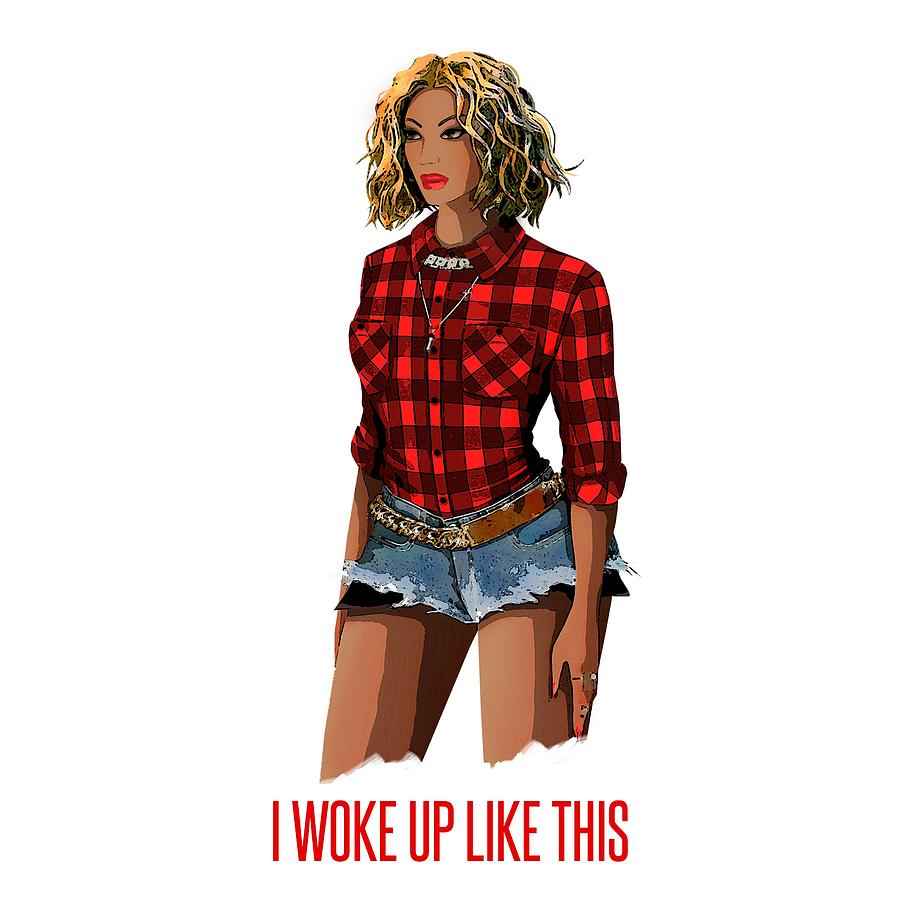
American singer Beyoncé has long been a leading icon in the feminist movement. She is often found uplifting women in her emphasis of inner beauty and self-worth through the messages of her songs. The song ‘Flawless’ featuring Nigerian writer Chimamanda Ngozi Adichie is no different –perhaps even more direct– as Beyoncé sings about female independence and autonomy in a society that is historically patriarchal. 

The first verse of the song is a response to the criticism Beyoncé has received from other artists about her being the leader of female artists, as well as the discourse about her hiatus from music in 2010: 

I know when you were little girls

You dreamt of being in my world

Don’t forget it, don’t forget it

Respect that, bow down, bitches

I took some time to live my life

But don’t think I’m just his little wife

Don’t get it twisted, get it twisted

This my shit, bow down, bitches

Beyoncé pushes back against the social norm that women rely on their husband for happiness. Her opposition is similar to Betty Friedan’s stance on second-wave feminism in her book “The Feminist Mystique”. Friedan emphasized the regression of the feminist movement after World War II in which women were convinced that their ultimate goal was to find a husband and start a family. Friedan simply argues that the notion of the ‘perfect housewife’ should be challenged, stating “the time is at hand when the voices of the feminist mystique can no longer drown out the inner voice that is driving women on to become complete” (Friedan 282). Beyoncé’s lyrics support this as she claims her success and fame independent of her hip-hop star husband. 

The critic of marriage as a social norm continues in the bridge, which is a snippet of Chimamanda Ngozi Adichie’s TedTalk “We Should All Be Feminist” as she embarks on the consequences of normalizing the importance of marriage:

Because I am female

I am expected to aspire to marriage

I am expected to make my life choices

Always keeping in mind that

Marriage is the most important

Now marriage can be a source of

Joy and love and mutual support

But why do we teach girls to aspire to marriage

And we don’t teach boys the same?

We raise girls to see each other as competitors

Not for jobs or for accomplishments

Which I think can be a good thing

But for the attention of men

We teach girls that they cannot be sexual beings

In the way that boys are

The overall message of the song is a call to action for women to express their independence and freedom from social and cultural norms that oppress them into gender roles. Through showing appreciation of all of her possessions and multiple identities, Beyoncé claims that her life as a successful business woman and a happily married woman is ‘Flawless’. 

One limitation of this song is its lack of discourse about Beyoncé’s struggle with being a black feminist figure. This course has taught us that the feminist movement has often times left out the thoughts and concerns of the Black women throughout history. Some feminists, like bell hooks, would argue that the power and authority that is used in Beyoncé’s lyrics paradoxically promotes the image of white women being powerless, when in reality they are the ones controlling the feminist narrative. By addressing the issues of racism in the feminist movement, Beyoncé would’ve tackled the overall issues of intersectionality of sexism and racism that all Black women face.

Feminist mixtape: The Man by Taylor Swift

Taylor Swift is notorious for her love and breakup songs, but in her song The Man, she identifies some key struggles that women deal with on a daily basis. Many of these struggles include not being respected or held to the same standards as men in workplaces. As her lyrics claim that if she was a man then, “they’d say I hustled/ Put in the work/ They wouldn’t shake their heads and question how much of this I deserve/ What I was wearing/ If I was rude/ Could all be separated from my good ideas and power moves?” Swift’s main point she is making is that women’s work and personalities/looks are not separated. They’re often criticized for their ideas based on their outward appearances and their ‘moods’. This reminds me of Peggy Mclntosh’s work “White Privilege and Male Privilege” because men have an advantage over women in the workforce whether they are aware of it or not. Similar to Jean Kilbourne’s Ted Talk on Killing us Softly where she goes into the sexualization of women and stereotypical thin women. Women are judged and criticized from a very young age and are treated differently if they don’t fit that stereotypical body. 

Although she does claim, “if I was a man/I’d be the man”(4), which is slightly construed since the idea is not to compare or wish women were men it’s to fix the gap and inequalities that stand between us. These lyrics can be viewed a few ways though because she is trying to show how if she was a man she would be treated differently than she is as a woman. This song perfectly explains how women have to work harder to be in the same place as a man.

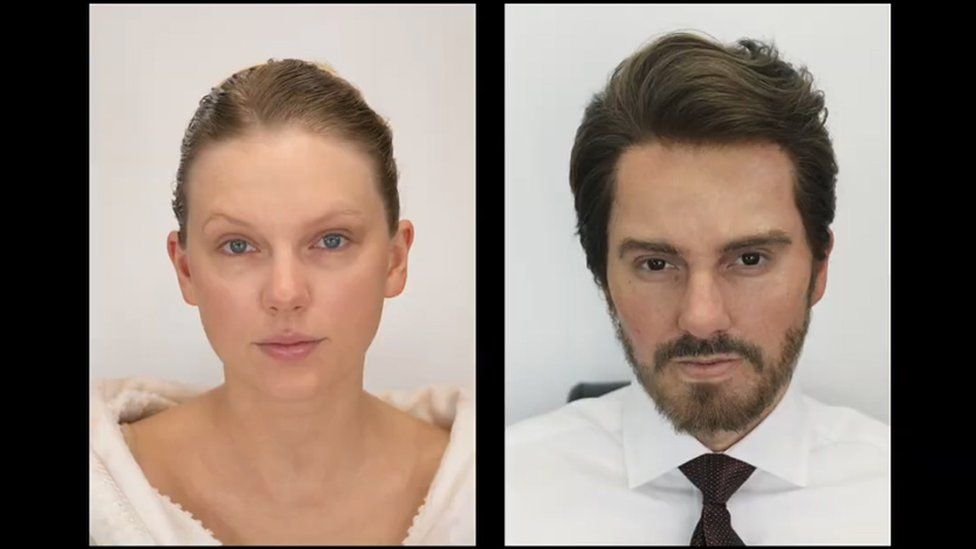
In Taylors music video for The Man, she literally plays the man.

Feminist Mix-tape: The Man by Taylor Swift

Taylor Swift portrayed as a man in the music video.

Taylor Swift dominates the music industry in 2021, but it was not easy to get to the top when she was fighting misogyny for her whole career. In February of 2019, Swift released her hit song “The Man” confronting sexism in the music industry, and declaring that if she was a man, she’d be the man. Her lyrics compare her achievements and life as an artist to the same of a man, and how society interprets both very differently. Men are far more respected in the music industry, and women who make it to the same place as men are often portrayed as “lucky”. Some lyrics that struck me the most include these two: 

“I’m so sick of running as fast as I can
Wondering if I’d get there quicker
If I was a man (Swift, lines 11-12)”

and similarly,

“They’d say I hustled
Put in the work

They wouldn’t shake their heads and question how much of this I deserve (Swift, lines 19-21)”

            These ideas date back to the first wave of feminism. This reminded me of when our class read “Declarations of Sentiments and Resolutions” from the Women’s Rights Convention held at Seneca Falls in July of 1848. This document argues that women are oppressed by the government and the patriarchal society of which they are a part. One quote that emphasizes the ideas that are present in Swift’s song is, “That woman is man’s equal—was intended to be so by the Creator, and the highest good of the race demands that she should be recognized as such,” (Stanton 1). Women were first fighting for suffrage against the existing notion that they should not have careers outside of the household, but instead their only duty was to tend to the home and take care of children. This was a time of expanding the women’s role to the outside world and creating new opportunities. They were regarded as incapable and had to fight exponentially harder to just obtain a similar place in society among men.  Unfortunately, I think that this is still a present idea that is attributed when women outrank men. It is almost seen as intrusive when a woman holds a lot of power, as if she is not welcomed to have such a high status. Society resorts to wondering how she got there or if she had connections, instead of recognizing her hard work and drive. Women in this position are also called bossy and bitchy, instead of being viewed a strong leader like men.  

            One limitation of how this song represents feminism is that Swift herself is a wealthy, white female who through hard work was able to make it to the top. I think this view is not inclusive with the intersectionality of different races, disabilities, etc. that other female artists have to face. Swift did not have these added obstacles to work past on her journey to success. Overall, this song, accompanied by its music video, is a way to expose the sexism within the music industry and how women need to work harder for the same results and recognition that men receive.

Music video link: https://www.youtube.com/watch?v=AqAJLh9wuZ0

Citation:

Stanton, Elizabeth Cady, 1815-1902. Address of Mrs. Elizabeth Cady Stanton, Delivered at Seneca Falls & Rochester, N.Y., July 19th & August 2d, 1848. New York :R.J. Johnston, 1870.

Swift, Taylor. “The Man.” Lover, Republic Records. accessed November 9, 2021.

Feminist Mix Tape: “Good as Hell” by Lizzo

Lizzo has recently risen to fame as one of the premier American pop stars, writing music with lyrics that are empowering and positive towards women. Her 2016 song, “Good as Hell,” is feminist and catchy.

Lizzo’s feminist lyrics relay a message that women are valuable in themselves and do not need validation from men to feel happy. This relates to first wave feminism arguments such as those from the Declaration of Sentiments, which states that “woman is man’s equal,” which means that women should occupy a place equal to men in society (Declaration of Sentiments 1). Lizzo’s message that “you know you a star you can touch the sky/ I know that it’s hard but you have to try” relates to this first wave perspective by emphasizing that self-worth comes from within, and men do not have the right to determine the worth of women.

In addition to containing the first wave feminist perspective that women are worth as much as men, the song also relates to second wave feminism. Betty Friedan’s argument in the Feminine Mystique claims that women have just as much of a right as men to work outside the home in professional roles (Friedan 278). This relates to Lizzo’s line advising her listener to “boss up and change your life.” This depiction of women as bosses normalizes women in the workplace, and emphasizes how women have a natural capacity to be leaders and have control, contrary to what the patriarchy dictates. Thus, Lizzo’s “Good as Hell” relates to second wave feminism by emphasizing women’s capacity for success in a professional setting.

One final way in which Lizzo’s “Good as Hell” relates to feminism outside of first wave and second wave perspectives is by centering women as its subject. By making women the default audience of the song, Lizzo goes against the patriarchal conception of maleness as the default state of being. This default state of maleness was pointed out by Luisa Capetillo (Capetillo 28). Lizzo rejects this patriarchal structure by making the subject of her song a woman, thus normalizing women as the default person.

Lizzo’s song is limited, however, in its conversation with transfeminism and intersectional feminism. Lizzo does not mention trans people, queer people, or people of different races in her songs. Therefore, her song does not relate to how feminism applies differently to women of color or members of the trans community. 

Despite this limitation, Lizzo’s “Good as Hell” is an important song in its relation to feminisms. It mentions the first wave perspective that women are equal to men, and emphasizes the second wave idea that women belong in the workplace as much as men do. It also centers women, a feminist stance. However, it does not have much to do with queer, trans, or women of color feminisms, so it is fairly surface-level in its feminism. Overall, the song is catchy, positive, and pro-women, so it is definitely worth a listen!

Feminist Mixtape: *Sisters Are Doin’ It For Themselves*

Music Video for “Sisters Are Doin’ It For Themselves” by Eurythmics feat. Aretha Franklin

In “Sisters Are Doin’ It For Themselves,” Eurythmics and Aretha Franklin come together to express women’s liberation and empowerment through the art of music. The song starts off strong with, “Now there was a time/When they used to say/That behind every great man/There had to be a great woman/But in these times of change/You know that it’s no longer true/So we’re comin’ out of the kitchen” (0:13-0:38), demonstrating not only the power of women but also the unison of a white woman and a black woman combatting the patriarchy together.

Unlike Betty Friedan’s white, middle-class centric views, Aretha and Annie Lennox (Eurythmics’ lead singer) join forces in this feminist song to empower women and demonstrate that women are capable of “doin’ it for themselves.” I believe this song captures bell hooks’ ideal version of feminism and can be related to second wave feminism. The addition of Aretha to this song strengthens its message because it adds the perspective of a black woman to the conversation, and the song is not focused on an issue that only affects white, middle-class women; the song is focused on liberating women and acknowledging their power as women, including women from different cultures.

The harmony created by Aretha and Annie is amazing, and the music video that accompanies this song does not focus on one sole type of woman; there is a focus on all women and their successes, but the spotlight is still focused on white woman in the beginning of the video. However, I like how Annie collaborates with Aretha to make the world aware of women’s strengths across different cultures and perspectives. This reminds me of bell hooks, especially when she says, “Had middle-class black women begun a movement […] no one would have taken them seriously,” and she continues, “[t]his was not the case with white bourgeois feminists, for they could appeal to a large audience of women like themselves who were eager to change their lot in life” (bell hooks 7). This song incorporates a black woman’s voice, and Annie does not overshadow Aretha; she uplifts her, incorporating Aretha’s voice into the conversation through music. There is a mixture of perspectives, but they are brought together with the idea of women’s liberation. Annie seems to be using her whiteness to bring awareness to the issues all women face, the opposite of Betty Friedan and taking into consideration bell hooks’ advice and criticism of Friedan.

In conclusion, Annie and Aretha created an empowering piece for all women, taking into consideration the women from different cultures and focusing on empowering women instead of focusing on a particular issue that only certain women deal with. The inclusion of black women in the music video and song is showing the power of women when they are united and not divided.

Feminist Mixtape: *Can’t Hold Us Down* by Christina Aguilera

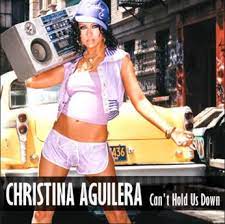
Can’t Hold Us Down by Christina Aguilera

Christina Aguilera is a strong feminist icon. With countless songs regarding feminism and female empowerment, Christina Aguilera consistently emphasizes the importance of respecting women in society. The song Can’t Hold Us Down by Christina Aguilera was released in the year 2002 which was shortly after the third feminist wave that occurred during the 1990s. In the song, she focuses on the double standards pit against women in contrast to men as well as the restrictions women face due to their silencing authorized by men and society.  

In the beginning of the song, Aguilera sings “Should I keep quiet just because I am a woman”. This line presents the familiar idea of silencing women and the assumptions that a woman’s word has no value. This idea is not only seen between the exchange of men and women on a daily basis, but it was and is also seen within the cultures of third world families as was discussed in Uma Narayan’s Contesting Cultures. In Narayan’s piece, she mentions how she was taught that “good daughters hold their tongue”, and this phrase alone embodies the circulated idea of women’s silencing in all aspects of a woman’s life (Narayan 398). In regards to Aguilera questioning that she should keep quiet because she is a woman, she later sings “Take a deep breath and say it loud”. This phrase inspires woman that listen to the song to voice their thoughts and opinions because they simply have the right and should not have any fear.  

Later on in the song, Aguilera sings “The guy gets all the glory the more he can score, while the girl can do the same yet you call her a whore”. These two lines in the song are powerful because it exemplifies the double standard between men and women presented in our world. It raises the question of why should men be able to do one thing while women are shamed to do the same? Aguilera wants to declare how this idea is a problem and her call to action comes when she sings “All my ladies come together and make a change”. 

One main critique of Christina Aguilera’s song is her fail to include and mention the LGBTQ community. Her consistent usage of male and female relations makes the assumption that these acts of silencing and double standards only occur to heterosexual members of the community and exclude other prominent relationships between transmen/women.  

Overall, Can’t Hold Us Down presents circulated ideas and focuses regarding the feminist community and calls for female empowerment and confidence.  

Feminist Mixtape: “Woman” by Kesha

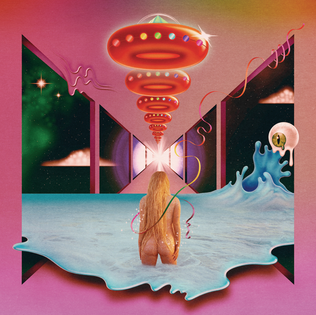
Rainbow by Kesha

Kesha is no doubt a cultural icon and one of the most notable artists of our generation. Kesha’s studio album Rainbow made the headlines for its themes on forgiveness, self-worth, and female empowerment. “Woman” by Kesha falls directly under this category of female empowerment by emphasizing the importance of women’s independence. “Woman” has become a feminist anthem with its emphasis on liberation from patronizing attitudes as well as economic freedom, two elements that liberal feminism encompasses. 

Kesha begins “Woman” by telling those around her to “be serious” and “shut up” (Kesha 0:00-0:04). The act of telling others to be serious or shut up may have been a controversial decision, as women are socialized to not be outspoken or direct. However, by starting “Woman” with the attitude that she’s in charge, Kesha already sets the tone for the rest of the song. 

Kesha then lists a series of items she’s bought with her own money: she pays her own bills, she’s bought “these diamond rings,” she owns “automobiles,” etc. (Kesha 0:07-0:13). Kesha then explains that she buys what she wants because she “work[s] real hard every day” (Kesha 0:27). This notion is commenting on traditional gender roles, especially situated in American history which places men as breadwinners and therefore the ones in power. However, women are as capable as working hard and generating wealth, Kesha’s main theme of the song. 

Kesha then moves into the chorus: “I’m a motherfucking woman, baby, alright / I don’t need a man to be holding me too tight” (Kesha 0:29-0:34). By tying womanhood around economic independence and, specifically, independence from men, “Woman” embodies liberal feminism. Liberal feminism focuses on the individual and empowerment within oppressive systems such as capitalism. Betty Friedan’s The Feminist Mystique highlights this concept by describing the typical suburban woman and her dissatisfaction with “the domestic routine of the housewife” (Friedan 277). Rather than dismantling the system, Friedan opts for women to “look for jobs equal to their actual capacities” and for the government to provide more education for women (Friedan 280). While this concept may seem outdated, it’s very similar to Kesha’s message that a working woman is a free woman. However, working women are still alienated from their labor, eliciting the question of if working women are truly free. Specifically related to Kesha, I’m sure much of her profits go to her recording studio, her manager, etc. rather than directly into her bank account. 

The bridge of “Woman” repeats a couple of notable phrases. First, she sings “don’t buy me a drink, I make my money,” continuing the theme of liberal feminism and the expectation that women don’t have their own capital (Kesha 1:45-1:48). This line also comments on the expectation that men should pay for women’s dinners or drinks, a gender norm rooted in stereotypes about who has the ability and power to pay. Then, she sings, “don’t touch my weave, don’t call me honey” (Kesha 1:48-1:50). This line touches on patronizing attitudes many women (and specifically women of color) face from men. Although people of all races wear weaves, black women most notably face discrimination and micro-aggressions regarding their textured and thick hair. 

My main criticism of “Woman” is that Kesha ties womanhood to capitalism despite capitalism being an oppressor to women as well. Not only do unjust laws such as the wage gap or unpaid maternity leave disproportionately affect women (and women of color), the system of capitalism was built for the subjugation of all people. Furthermore, Kesha centers womanhood around men, but I believe that womanhood should be situated around the narratives of and love between women. Nevertheless, you will still find me loudly belting “I’m a motherfucking woman” as I grapple with my own beliefs about womanhood and feminism.

Book Review: *Her Stories: Daytime Soap Opera and US Television History*

Soap operas have been a major part of television history, anyone who owns a TV has at some point in their lives watched a soap opera show. These programs have highly influenced popular culture. The monograph Her Stories by Elana Levine highlights the impacts soap operas have had on the US broadcasting industry as well as on “cultural constructions of gender and social identity”. Similar to the popular girls in high school, soap operas can be the trendsetters for what is and is not acceptable in our society. Soap operas often set the standard and definitions for gender and sexuality, many teens grow up watching these shows that can ultimately determine and impact each generation’s cultural beliefs. 

In Levine’s own words, Her Stories “is American television history, a lens through which to see the economic, creative, technological, social, and experiential path of television across seventy years that exposes its gendered structure” (6). This age was the start of the “cultural construction of femininity” as well. In the 1940s these serials were mainly viewed by American housewives and highlighted the differences between men’s and women’s lives that could push some to envision cultural changes. This book tells the history of soap operas and more specifically the shifts in culture and identities. Levine lays out this history, from the 1940s to 2010s, to support her claim that soap operas have shaped US culture on gender and identities. 

Elana Levine is a Professor at the University of Wisconsin-Milwaukee, she teaches Media, Cinema, and Digital Studies. Not only was she an avid soap opera watcher but it was her main focus in graduate school. She dedicated many of her papers and academic research to soap operas. This book was written over a span of twelve years, focusing on how the past, present, and future have been shaped by soaps. Levine got her undergraduate degree in English and Telecommunications from Indiana University and graduate degrees in Media and Cultural Studies from the University of Wisconsin-Madison where she currently teaches. Just from her degrees, it is obvious that soap operas and television’s effects on culture are the main focus of her studies. This topic could be researched for years, each generation tends to be impacted slightly differently. It could also go into depth on how this has affected teens mentally as they figure out who they are and how they fit into society. 

Levine’s research is mainly from archives, she combines her own personal experiences and research analysis with books, manuscripts from soap creators/networks, episodes, blogs, and websites. She is able to take into consideration the facts and opinions of that current time period and connect it to what occurs in the soap opera. She watches the soap opera shows or reads the scripts and she then analyzes them and makes connections on how they differ depending on the era.  

As stated above Levine goes through the history of soap operas and the cultural impacts they had on each decade. Focusing on two main changes, the first being “Change in US broadcast network television as an economic and social institution” (page 5). The second is “change in cultural and constructions of gender and intersecting aspects of social identity including race, class, and sexuality”(page 5). The first change is more on how TV changes and gets influenced/ influences society, whereas the second is how these changes affect cultural ideas and beliefs on intersectionality. These changes are constantly occurring in society but TV and soap operas specifically had and have a major impact on culture. 

This book is split into three parts each focusing on a different time period. “Part 1: The New TV Soap” is from the late 1940s to early 1960s focusing on the transition from radios to television and post-war soap operas. “Part 2: The Classic Network Era” is from the mid-1960s to the late 1980s and discusses the evolution of television businesses and content. “Part 3: A Post Network Age” from the late 1980s to 2010s is on issues of the post-network era.

The first chapter is called “Serials in Transition (From Radio to Television)”, as the name implies this chapter is describing the transition from radio to TV. Early television was trying to find ways to get people to watch more television, by appealing to current social expectations they can convince viewers to watch more television. Chapter Two: “Daytime Therapy (Help and Healing in the Postwar Soap)” discusses the postwar mentality on gender identities and family roles. Dissecting the soap opera, As the World Turns, helps show how this “eras investment in emotional realism” created characters that questioned traditional roles. This was the first era in television where characters started questioning and expressing current traditions and identities. 

In part two, Chapter three: “Building Network Power (The Broadcasting Business and the Craft of Soap Opera),” Levine examines the economic growth and development of television-influenced soaps. These “developments in the ownership and control of soaps were crucial shifts in the business, enabling network dominance”(83). Soaps were one of the most profitable forms of entertainment so they became very popular on many networks. At this time soap operas were still created with young housewives as the main audience. Chapter four: “Turning to Relevance (Social Issue Storytelling)” explains the new social issues emerging in soap operas in the 60s. General Hospital, a popular soap opera, was created in the early 19060s during a transitional period for soaps. The social issues being questioned changed, this show particularly “combined a focus on gender-specific ‘disorders’ of the psyche with a sense that gendered roles and the problems associated with them were changing, no longer confined to the sphere of home and family” (107). This chapter focuses on normalizing and expressing family and marital issues. This leads into Chapter five: “Love in the Afternoon (The Fracturing Fantasies of the Soap Boom)” introduces the soap romances that grew in popularity throughout the 1980s.  These fantasies often lacked an “explicit connection to the issues of the day” (154), which created a reprieve from societal issues. Though 1980s soaps were popular they were short-lived. 

The last section focuses on the late 1980s to 2010s starting with Chapter six: “Struggles for Survival (Stagnation and Innovation)”. This section focuses on the convergence era when networks began struggling to make a profit. The decline was due to many reasons but mainly structural instabilities in the dramas and the network, although despite many challenges the companies adapted to current audiences and technologies. Chapter seven: “Reckoning with the Past (Reimagining Characters and Stories)” focuses on the “Stories and Characters of the soaps”(12) across this same period of time. Many shows brought back soaps challenging family and couple dynamics but in this new era they then had to decide on how to incorporate race, sexuality and gender. Chapter eight: “Can Her Stories Go On? (Soap Opera in Digital Age)” discusses this era from the 2000s to 2010s. This chapter “details the major business, production, and storytelling changes that the soaps have experienced in the 2010s” (281), these changes ultimately led to a decline of daytime soap operas. Although it has declined, soap operas are still a major and important part of American media culture and influence current social standards and traditions. 

In Her Stories, Levine does a great job of connecting the economic/technological side of broadcasting with the decade and current social standards. This is clear in part three, Chapter six analyzes the economic decline of daytime soap operas and the reasons behind that decline. Chapter seven explains how the industry tried to save these shows by bringing back and incorporating social issues, thus adapting to the current societal wants and needs. And finally, chapter eight how despite these changes current modernizations in technology have hindered and continued the decline in soap operas. These three chapters, in the same time period, help to build on each other while giving different perspectives for the current state of the broadcasting networks. Levine’s main strength in her work is her organization, her entire book is structured to give the reader the best possible understanding of the history of daytime soap operas. She is able to take a complicated history and describe all the different factors that affected and determined the current shows being broadcast. 

Although her organization is strong her topic is so broad and her summary is misleading, in the introduction she summarizes each chapter and at the beginning of each chapter, she summarizes what is about to be said. This can be helpful so the reader can follow along easier, but it also makes it difficult to connect back to the main focus in her work. The author’s introduction gave the impression that most of this monograph would explain how soap operas have impacted social and cultural standards but a lot of the book seemed to be focused on the economic growth of broadcasting networks. Yes, the author still analyzed how many of the show’s characters and plots were based on social norms in that time period, but the overall book was the entire history of Broadcasting. 

Overall I enjoyed this book, the topic and history were interesting. It makes you consider how not only are we impacted by social constructs that we watch but what and how soaps create is also dependent on how we respond and what we enjoy in that time period. Although there was less focus on social and cultural impact than I was expecting I would still recommend reading this book especially if you enjoy the economic and historical perspectives of broadcasting. 

Levine, Elana. Her Stories: Daytime Soap Opera and US Television History. Duke University Press Books, (2020). Print.