The song “Prom Queen” was released on August 10th, 2018 by Lili Trifilio, who uses the name Beach Bunny, for her band. Trifilio began releasing music on her own in 2015, and began releasing music with her current band in 2017. None of Beach Bunny’s previous songs had reached 50 million streams on Spotify, but Prom Queen was a breakthrough. As of April 27th, 2022 the song has 218,116,371 streams, more than quadrupling her previous songs!
The song addresses common teenage struggles of wanting to be thin, in general, and in this instance for the upcoming dance, prom. Trifilio sings about the social pressures of being thin, and placing too much weight on the actual weight of yourself. The song blew up on Tiktok, which is no coincidence considering Tiktok is a social media platform by majority used by the teenager/young adult community. The song resonated with many teenage users, who posted videos relating to the lyrics. The sound has been used 105,200 times as of April 27th, 2022.
Trifilio starts the song out with the line: “Shut up, count your calories” already alluding to her struggling with body images. As the song progresses, we get more detail, “Wish I was like you, blue-eyed blondie, perfect body” and “I was never cut out for prom queen” she explains how she isn’t stick thin so the public would never choose her to be prom queen.
This is just one example of the many Tiktoks, of teenagers relating to these body confidence issues.
She then starts talking about how she feels like she has to be thin for boys to like her. She expresses that through the lines “If I’m pretty, will you like me?” Following with “They say, “Beauty makes boys happy”. This is a common and such a sad societal norm that I think directly connects to the Fat studies we did towards the end of February. Specifically, the conversation we had in class relating to the Jezebel article about the history of deodorants and how it relates to diets.
Just like advertisements made women feel like they had to wear deodorant to be attractive, and appeal to sexual partners, advertisements and media have done the same thing for body weight. The advertisers have invented a problem, not being stick-thin, in order to sell products, such as diet meal plans, or waist trainers, but in doing so, they’ve made a profitable income but also damaged our generation and so many to come. Teenagers are reached within the song prom queen, but people of all ages are so concerned with being thin in order to attract a partner, when in reality, by feeding into this, we are letting the advertisers win and profit.
Trifilio closes out the song talking about how she is starving herself and the final lines read “They say beauty is pain, you’ll only be happy if you look a certain way. I wanna be ok. I wanna be ok”. Trifilio wants to be comfortable in her own skin so badly, but because society tells her she must look a certain way, she is unsatisfied.
On Saturday, April 9th, I attended the drag show at Rusk’s eating house in Patterson Court. This event was co-hosted by Queers and Allies and Rusk Eating House. During this event, there were many different drag performances. Some of the performances were done by professional drag performers, while others were performed by Davidson College students. The event was emceed by a member of Queers and Allies, who helped add context to the performances by introducing the performers and providing some narrative of what the performers would perform.
Before attending this event, I completed some personal reading on drag. Specifically, I sought to learn more about the history of drag. According to Wikipedia, the first known drag balls in the United States were in Harlem in the 1920s. The Wikipedia page also said that in this show and others that happened around that time, gays and lesbians impersonated members of the opposite sex and competed in fashion contests. Today, and then, drag shows are forms of entertainment, as they are skits that involve impersonating members of the opposite sex. These skits are filled with both serious stories and humorous ones.
This event was relevant to our class’s content, because it involved conversations and actions that push against heterosexual norms of our society. In class, we have become deeply aware of heterosexual norms and how they function in our society. As a student in GSS 101, I have become even more invested in working against homophobic norms, and supporting this event and engaging with the event’s content was a way of doing so. When it comes to course readings, this event most reminded me of our readings on intersectionality, as there were many intersecting identities in the performances.
Further reflecting on the event, I am glad that many students came to support the drag show. However, I still wish that there was more attendance from those on campus who are actively supporting homophobic trends.
Dolly Parton is a well-known force in the music industry and, in general, the world. She is a nine-time grammy winner, while also having written over three thousand songs for various film and television projects. On top of her musical success, she has also had many philanthropic efforts, which include supporting child literacy programs and funding a COVID-19 vaccine. As you can tell by the previously stated information, Parton is an inspirational figure to all.
One of Parton’s most well-known songs is “9 to 5.” Parton wrote the song for a movie with the same title that dealt with an American 9 to 5 workday. The song won a Grammy for Best Female Country Vocal Performance and for Best Country Song, both at the 1982 Grammys. It has been streamed more than 3.5 million times on Spotify alone.
Video by India Arie connects to the Womanist movement and body neutrality. It broadcasts ideologies found in the womanist movement by rejecting the ideals associated with whiteness and femininity. Black women are often ignored in the conversation about equality and representation. India Arie sings about not needing wealth or fancy things to be happy. Through this language, she is rejecting the idea of wealth in order to be feminine. This is part of what the womanist movement rejected from the first-wave feminists. First-wave feminism focused on white, upper-middle-class women instead of the intersectionality and marginalization of different women. India Arie also aims to spread body neutrality by accepting herself and not nourishing the unrealistic beauty standard. She makes references to not shaving her legs, not combing her hair, not getting plastic surgery, and not wearing pantyhose. This is deconstructing the ideals and standards set for women. In the class reading about body hair, it explains how in the late nineteenth century, body hair removal was normalized to show racial superiority and modernization. The Instagram book review writes, “Maintenance of white women’s ‘proper’ physical appearance became about maintaining ‘health’ of the white race in the face of migration and racial unrest” (@alokvmenon). This was an effort by men to control (white) women’s femininity and sexuality. The understanding of black women as inferior because they have body hair connects back to the womanist movement. The standards, acceptance, and discrimination between white and black women were very different. Black women had to deal not only with sexism but also racism. White men during this time aimed to control Black women while simultaneously interpreting them as racially inferior. The need for a movement that accepted all women regardless of race, socioeconomic status, and body size came from the rejection of Black women into the feminist movement. The chorus says, “I’m not the average girl from your video. And I ain’t built like a supermodel. But I learned to love myself unconditionally. Because I am a queen.” This song expresses modern feminist thought by inspiring women to take control of their lives and do what makes them happy. As a Black woman, India Arie tells the story of acceptance, self-love, and independence from the controlling society we live in.
This song is personally inspiring to me as a Black woman because it rejects the beauty standard that is reinforced through all aspects of society. So often, young girls are told they are too fat, too skinny, not tall enough, too tall, etc. This song teaches young girls that they are beautiful just the way they are. Unlike many current artists, India aims to empower not degrade women. I grew up listening to her in my household which I believe positively impacted my self-esteem.
If you ever feel the need to go for a drive and cry about how much the patriarchy sucks, listen to “enough for you” by Olivia Rodrigo. Olivia Rodrigo is a singer, songwriter, and actress. She blessed the world with “enough for you” in 2021, as part of her album, Sour, which also presents several feminist perspectives. I particularly recommend listening to the final song, “hope ur ok,” as it reaches out to the LGBTQ+ community through its discussion of abuse, sexual orientation, and acceptance.
The first way that Olivia Rodrigo instills feminist beliefs in “enough for you” is through the theme that she, as a woman, felt as though she did something wrong or was flawed and that is why she is experiencing a breakup. This feeling of self-hate is obvious in the lyrics, “You found someone more exciting The next second, you were gone And you left me there cryin’, wonderin’ what I did wrong…”. When listening to this song, it reminds me of the book I read for the book review, The Tragedy of Heterosexuality by Jane Ward. I sense a similarity between this song and that book because of its connections with the misogyny paradox. Essentially, the misogyny paradox asserts that boys’ and men’s desire for girls and women is expressed in a society that simultaneously encourages them to hate girls and women. This is evident in everyday life through men’s practices of abuse, mansplaining, and disrespect towards women (Ward 35-38). Olivia Rodrigo’s lyrics demonstrate the harmful effects that the misogyny paradox has on women. Specifically, it leads to negative thoughts in which women think that they are at fault for men’s poor treatment of them. In reality, women have done nothing wrong and this is a flaw of the patriarchy.
Olivia Rodrigo also presents the societal expectation that women should be responsible to beautify and improve themselves to be “acceptable” to men. The artist sings, “I wore makeup when we dated ‘Cause I thought you’d like me more If I looked like the other prom queens I know that you loved before Tried so hard to be everything that you liked Just for you to say you’re not the compliment type…”. These lyrics remind me of the efforts by the diet and deodorant industries to exploit people’s insecurities so that they feel motivated to buy their products. A similar practice is at work in the heterosexual-repair industry, as I learned in The Tragedy of Heterosexuality by Jane Ward. Women are led to believe that they must keep their bodies “fresh” and “sexually appealing” to their male partners. Advertisers then put the strain on women to maintain their appearances to keep their partners happy (Ward 47). Olivia Rodrigo also falls victim to this harmful burden put on women. She sings about how she felt as though a romantic interest may have liked her more if she used more beauty products.
While this song speaks to me as a straight, white woman, there may be some limitations in that the song is not inclusive of Black feminist theory and Olivia Rodrigo appears to be singing about a heterosexual relationship. While Olivia Rodrigo is unlabeled in her sexuality, she uses the term “boy,” to describe the person she is singing about. Therefore, a member of the LGBTQ+ community may feel ostracized from relating to the lyrics of “enough for you.” Furthermore, Olivia Rodrigo seems to be singing very generally about problems faced by women and does not acknowledge Black feminist theory and the increased inequity faced by Black women due to the intersectionality of their identities.
To conclude, Olivia Rodrigo finally establishes at the end of “enough for you” that there is nothing wrong with her, she is a strong, beautiful, powerful woman. Instead, there is a problem with the patriarchy and the expectations put upon women. She demonstrates that in the following lyrics: “Yeah, you always say I’m never satisfied But I don’t think that’s true You say I’m never satisfied But that’s not me, it’s you…”. Overall, I find that this song has its most profound impact when I think about any relationships with men, whether that is professional, familial, or romantic relationships. It is in these relationships that I find myself questioning my self-worth the most and feeling as though I am never good enough. In response to that, Olivia Rodrigo reminds her audience to be kind to themselves despite patriarchal barriers. Listeners need to keep in mind that despite societal pressures and expectations, there is nothing wrong with them.
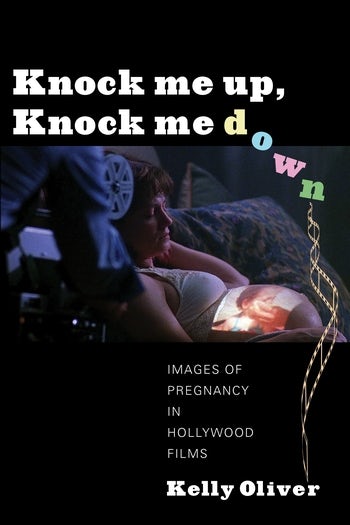
Referencing the movie Twilight in a room often draws a mixed reaction. Either people are incredibly interested and ready to contribute their fan experience to the conversation, or they immediately groan and drown out any further discussion. No matter its polarizing tendencies, it is undeniable that Twilight has had a major impact as a social phenomenon. In fact, many aspects within this saga perpetuate 1940s family ideals and traditions onto the pregnant body. Kelly Oliver analyzes this film, and the films before it, in her book Knock Me Up, Knock Me Down: Images of Pregnancy in Hollywood Films, which was published in 2012. Within her book, she emphasizes how, despite pregnancy being more openly seen on television over time, Hollywood has not embraced new feminist thought, but has, instead, kept conservative family values at the forefront of heterosexual movies that depict horror, comedy, and/or romantic plots.
Born and raised in Spokane, WA, Kelly Oliver now teaches as a philosophy professor at Vanderbilt University and has published articles about the refugee crisis, the prominence of rape on college campuses, and about women in the media for newspapers such as The New York Times. Alongside these achievements, she founded philoSOPHIA, which is a feminist philosophy journal. Born in 1958, Oliver most likely watched the developments of pregnancy on-screen throughout her adolescent years. As a young child, she would not have seen much, as the word “pregnancy” was banned on television until 1959, and women were not allowed to look pregnant for several years later (21). But, as she grew up, there would have been increasing visualizations and normalization of pregnancy on-screen; yet, with these developments came a negative side effect that Oliver explores in the rest of her book. Covering the negative representations of pregnancy in film has helped further a specific aspect of the feminist movement: pro-choice and women’s reproductive rights. By exposing how Western media present all of their characters as pro-life, which feeds into anti-abortion conservative beliefs and force excessive social pressures onto moms to be perfect, Oliver’s scholarship works against this media of influence on younger generation girls.
Using the methods of textual analysis, Oliver focuses on symbolism in shows and cinemas to decipher Hollywood’s representations of pregnancy and and women’s reproductive rights, given the prevalence there of men directors and executives. She also takes the time to chronologize pregnancy in film for us within her monograph. Starting in the early 1600s and 1700s, midwifery was transferred to male control resulting in the medicalization of pregnancy (112). This change in labor ties in with Foucalt’s understanding of male experts taking over many lines of work, and that includes midwifery. During this time, women were advised against exercise and encouraged to complete bed rest in order to not disturb the baby (24). On top of the physical restriction women had, they were told their thoughts negatively impacted the child: that mothers “corrupted by forces outside herself, which cause her to have morbidly perverse fantasies and episodes during pregnancy” had moral insanity which caused horrific and monstrous children (115). Hollywood, in this manner, greatly aligned with First-Wave Feminists who perceived women to be the educators and standard for children’s moral upbringing. Regardless, with pregnancy being seen as a private and delicate matter, pregnancy was never mentioned or shown on film. Additionally, since sex and reproduction were linked in this era, viewers would have seen pregnant characters as less pure than ideal. It is not until the popularity of birth control and the Sexual Revolution in the 1960s that we even see sex on-screen without its former ties to reproduction (66). Nevertheless, the newfound acceptance of sex opened the door for a stronger pregnancy presence in the media; to note, we can also thank Demi Moore’s 1991 nude Vanity Fair illustration for pushing more pregnancy representation as well (37). Although these progressions can be seen as beneficial, it is not without their downsides.
Oliver demonstrates that throughout the latter of the twentieth century and early twenty-first, Hollywood has increasingly promoted unhealthy and harmful practices via pregnant characters. In one regard, Hollywood’s portrayal of white mothers in comparison to black or Latina mothers is blatantly racist. For white moms that keep an accidental pregnancy instead of aborting the fetus, they are described as “good choice makers” (100) while their black counterparts are seen as having “‘bad’ babies to ‘put on welfare’” (96). Not only is this stereotypical of socioeconomic status, but it also plays into eugenics and the belief that “educated white women have a duty to have babies because they provide the ‘best’ gene pool” (95). Thus, when Hollywood continuously enforces the idea that middle-class white women have happy endings when they have kids, they exclude the notion that women of other races and social classes can as well. But, Hollywood only supports a specific type of middle-class white woman: the ones that push back their careers in favor of building a family first. Often, career-driven women are explained as “bossy” and “racing against their biological clocks” to have children (67;93). These women’s success is blamed for their “baby hunger,” (93) and the impressionable audience is encouraged to have kids younger, else they too will be “racing against their biological clocks” for kids when they are older. In these cases, the women who are ‘too late’ and resort to IVF, are described as less-satisfied than parents with “real” babies (150). Like in the movie The Backup Plan, Hollywood again displays its conservative values by promoting traditional heterosexual relationships over assisted reproductive technologies which do not depend on a heterosexual couple to reproduce. Moreover, Hollywood also makes pregnant women the butt of its jokes in its films. From comedies’ gross-out humor about women’s excessive cravings, ‘larger-than-life’ size, and constant need to pee, movies and television that partake in these tropes consistently do not take pregnant women seriously (79). With the culmination of all these attributes, it is safe to say that the increase in pregnancy in film has not been completely positive.
Similarly, Twilight has not contributed positive images related to pregnancy. During Bella’s birth in Twilight: Breaking Dawn, we see “the most blood we ever see…associated with birth and women’s role in reproduction” despite previous movies in the series going over vampire wars, hunts, and beheadings (196). These portrayals also reflect the view of “women’s wombs as harboring evil” since Renesmee, Bella’s child, survives by drinking her mother’s blood and ends up temporarily killing her mother in the “nightmarish” labor scene (14,195). This Othering of pregnant women and acknowledging them to be a risk to society exposes how little Hollywood understands about pregnancy and how much they can vilify their pregnancy fears, producing controlling images that shape public ideas about pregnancy. Not only are these fetuses seen as a danger and life-threatening, but knowing that Bella refused to abort the baby continues to show how Hollywood “endorse[s] family values” and disregards abortion as a proper solution to a grave issue (197). END SENTENCE
Oliver engages feminist scholarship on the general stigmatization of pregnancy, including Julia Kristeva, Iris Young, and Simone de Beauvoir. Julia Kristeva, a French Feminist philosopher of the 1970s and 1980s, “described pregnancy and the maternal body in positive body in positive terms” (4). She and her American follower, Iris Young, do not believe that women have a biological clock and that the urgency for early pregnancy is unnecessary (6). Not only does Oliver agree with these two and that regard, but she also agrees when these two assert that pregnant bodies are not abject or gross, but desirable (21). Where Oliver disagrees with Kristeva is on the topic of assisted reproductive technology: while Kristeva goes against the “automation” of reproduction (34), Oliver values its versatility and ability for people to have kids later without worry. Another stance of disagreement comes up with the value of motherhood. While individuals like Simone de Beauvoir, who never had kids or was married, say that pregnancy “renders women docile,” Kristeva and Young do not. In this instance, Oliver takes a more neutral stance and leaves the value of pregnancy up to each individual woman. Although Oliver agrees with de Beauvoir that biology “never completely defines human beings”, she is not as extreme to believe “that women’s reproductive function limits them and prevents their true participation in the social and political spheres” (23). Another circumstance where Oliver partially agrees is with Young’s hope to “resexualize” pregnant bodies (36). Over time, as the media defined pregnant bodies to be abject and horrific, they were not sexualized and Young acknowledges that “the desexualization of the pregnant body can open up a space for ‘self-love,’” yet insists that, since “Patriarchy is founded on the border between motherhood and sexuality,” mothers should be “resexualized” (36). In this sense, Young understands men as the cause of the initial aversion over pregnant bodies, which would be why motherhood and sexuality were not previously associated. Oliver does not agree that the solution to this border is to sexualize any woman; however, she relents that pregnant women can be desirable and that a “desiring body would be liberating for women” (36). To resist the de-sexualization of pregnant women is a way for expecting mothers to take back their independence and have more control over what people should/should not say about their bodies.
Across the board, Oliver has made her stance clear on dispositions against and for pregnant women’s bodies, but that does not mean to say she wrote the perfect book. Though her writing covers the depiction of pregnancy as abhorrent in horror films, she never includes how this may apply to transgender or gay couples too. In this book, Oliver highlights how IVF and assisted reproductive technology help older women have children, but she forgets that these same procedures also help same-sex couples or transgender couples have children as well. The failure to mention the importance of non-heterosexual couples now being able to have kids, and how that may also impact Hollywood’s opinion on these procedures, is unfortunate. However, it is important to note that this book was published in 2012; as a result, some of the LGBTQ+ considerations we have now were not as common then. Still, Oliver was successful in other domains of intersectionality. By including examples of Latin and black moms in film, she put the attention away from the typical middle-class, white mom we usually see and recognizes how racism and classism are still prominent issues within Hollywood–and that includes their pregnancy movies. But, the focus solely on live-action films limits her piece. Mentioning other types of media, such as animation, could have also breached how the lack of pregnancy in these genres represents Hollywood’s unwillingness to have pregnant characters–who are impure in Hollywood’s conservative mindset–shown to the younger audiences that consume animated films. Nonetheless, Oliver has done an incredible job in defining and outlining the portrayal of pregnancy in the media across multiple decades. Her book and the scholarship it provides would be a strong resource for any film producers or avid movie-watchers who want to properly and accurately understand how what we see on screen about reproduction does not correlate to the realities of pregnancy today.
In the book titled, Nature’s Wild: Love, Sex, and Law in the Caribbean, Andil Gosine takes an interesting approach to demonstrate a global issue of homophobia and general exclusionary attitudes that societies have adopted towards marginalized communities. In this piece Gosine describes these global issues in a way that incorporates experiential storytelling on their experiences, and broader data, laws, and systemic forms of oppression. Before even diving into the book, Gosine’s book cover greets students with an intriguing image of a person blending into a jungle, while holding a rooster. By starting with this image, Gosine invites readers to pause and contemplate the message that is being conveyed, as it pairs beautifully with what is represented in the actual book. In this book report, I will share my perception of the work’s content.
Crunch. Bits of crushed-up peanuts add an element of surprise as I chew. The chunky texture intertwined with the smooth layers of peanut butter creates a satisfying experience. Extra crunchy peanut butter. A treasured delicacy of mine. When the dining hall does not fill my grumbling stomach’s desires, I chow down in my dorm room alone on my favorite snack. A yummy snack? Yes. A snack that works as a form of resistance against the normative intimacies of eating in the public sphere? Well, that is an idea I had not even begun to consider until reading Anita Mannur’s 2022 monograph entitled Intimate Eating: Racialized Spaces and Radical Futures.
Mannur, a self-proclaimed “professor, writer, thinker, recovering optimist,” works as an Associate Professor of English at Miami University. Mannur teaches interdisciplinary courses centered on race, class, gender, and sexuality. Additionally, she is the author of Culinary Fictions: Food in South Asian Diasporic Culture and co-editor of Eating Asian America: A Food Studies Reader. Mannur received her BA in Comparative Literature at the University of Wisconsin-Madison and Ph.D. at the University of Massachusetts Amherst. Mannur’s background and primary research in food studies as well as her interdisciplinary teaching approach qualify her to examine food in Intimate Eating.
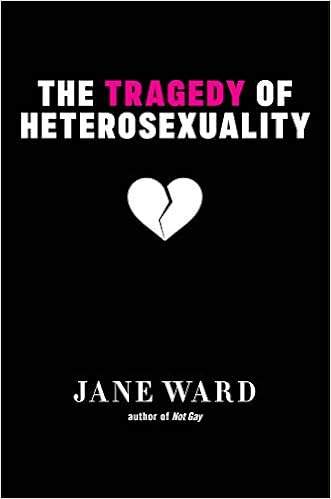
Cultural propaganda, sexual assault, incest, compulsory marriage, economic dependence, control of children, and domestic violence; are the only possible reasons a woman would remain in a heterosexual relationship. As a straight woman and having had conversations with other straight women, these reasons are evident in every heterosexual relationship I have come across. Jane Ward in The Tragedy of Heterosexuality explores the societal expectations and pressures of the patriarchy upon heterosexuality and the heterosexual-repair industry that desperately attempts to mend these broken relationships. In addition, as a lesbian, in her book, she describes the sadness she feels upon witnessing the violence, control, diminishment, and disappointment experienced by straight women. In summary, her book leaves readers wondering, are heterosexual relationships worth the toxicity of straight culture?
Jane Ward is a professor of Gender and Sexuality Studies at the University of California, Riverside. She received her Ph.D. in sociology from the University of California, Santa Barbara. In addition to The Tragedy of Heterosexuality, Jane Ward has written two other books: Not Gay and Respectably Queer. Her books cover a wide array of topics including, feminism, queer parenting, the racial politics of same-sex marriage, and the social construction of heterosexuality and whiteness. She currently resides in Southern California with her partner, Kat Ross. One may argue that because Jane Ward is a lesbian, she should not be making such broad claims about heterosexual women. I counter this by suggesting that a lesbian is the best person to observe and criticize heterosexual relationships and the burden they put upon women. Ward can compare the respect and fulfillment she feels in her lesbian relationship, to the stress and disrespect felt by the heterosexual women in her life.
As a white woman, one aspect lacking from The Tragedy of Heterosexuality is the expectations imposed upon Black women by the patriarchy. One hardship that Ward’s book does examine is the fact that many early white feminists based their arguments for nonviolent marriage and women’s rights on the claim that bringing white women closer to equality with their husbands will ensure a unified front among white people against the Black civil rights activists. However, as a reader who has now read “Controlling Images and Black Women’s Oppression,” by Patricia Hill Collins, the lack of attention paid to the controlling images forced upon Black women in heterosexual relationships, and the constant criticism of their sexuality, is highlighted. Therefore, there is a slight bias in the book to feel sadness toward white women in heterosexual relationships, because Jane Ward is a white woman.
The overarching argument present in The Tragedy of Heterosexuality by Jane Ward includes the efforts by the heterosexual-repair industry to improve the enduring defects of straight culture. The heterosexual-repair industry has been flawed since its emergence. It is made up of eugenicists, sexologists, and social reformers. Ward cites three broad concepts present in the industry: they exposed the violence and mutual dislike in heterosexual relationships and reassured the population that this was natural, they took on the role of defining modern heterosexuality and repairing the problems that came along with it, and they accepted the premise that men and women found each other’s bodies undesirable and advocated for the use of beauty products to stimulate desire. Each of these concepts is inherently misogynistic. For example, at one point, experts were channeling their efforts to discover why women had annoying personalities and attempted to mediate men’s irritations with their wives. The solution the “experts” discovered involved women being submissive, lovely, and always putting their husband’s needs before their own. They went as far as asserting that women should be responsible for heterosexual success because they managed men’s emotions and should also be responsible for the happiness of their households and communities. Did no one ever wonder if it was men’s sexism and unrealistic expectations that caused them to be irritated with their wives? Or consider this: perhaps wives’ personalities come across as irritating because they are having unpleasurable sex?
Furthermore, the heterosexual-repair industry also came to the solution that women had to keep their bodies “fresh” and sexually appealing to their husbands. Advertisers collaborated with the heterosexual-repair industry in provoking fear among women to purchase their beauty products. The logic was that if women were not careful about their appearance then they could risk losing their husbands’ affection or “suffer their wrath.” One should not even have to explain the flaws in this argument and the unnecessary strain it places upon women to improve straight culture and desire. The toxicity rooted in straight culture is thanks to the patriarchy, and yet women are expected to help men improve their relationships. To conclude, Jane Ward, in her argument, exposes how the efforts to improve the conditions of straight culture are misogynistic and put the responsibility onto women.
The single greatest strength in The Tragedy of Heterosexuality by Jane Ward is explaining the misogyny paradox that plagues straight culture. Essentially, this paradox asserts that boys’ and men’s desire for girls and women is expressed in a society that simultaneously encourages them to hate girls and women. Jane Ward provides a possible explanation for this paradox in which society is suspicious of women because they stand to threaten men’s patriarchal power. The author analyzes this in the context of violence against women and girls. The misogyny paradox is evident when a man rapes and/or murders a woman that he reported to have desired or loved. Another example of this outlook is seen in the 18th and 19th centuries in England and colonial America. At this time, wives were seen as a “necessary evil.” Many would argue that wives, and heterosexual marriages, in general, are still seen in this negative light today. While these are all extreme examples, the misogyny paradox takes a simpler form in everyday life. Often, straight men claim to love women but continue to speak over them, mansplain subjects to them, and train their sons to imitate this lack of respect for women. To comprehend the true tragedy of heterosexuality, the author must portray the disrespect, violence, and ignorance displayed by men to women who claim to be in affectionate, romantic relationships. Jane Ward understands the importance of this paradox to her argument and succeeds in making the misogyny paradox accessible and easy for her readers to understand.
One weakness present in Jane Ward’s book, The Tragedy of Heterosexuality, is the lack of proposed solutions to this tragedy. The author notes that no feminist efforts have made a dent in straight culture, but she doesn’t go further to explain where they fell short. In fact, Ward describes the sexism and toxic masculinity surrounding heterosexuality as “inescapable.” Later, she also reveals that, as a lesbian, it is painful to witness straight women’s “endless and ineffective” efforts to repair straight men. As a straight woman reading this book, it is incredibly depressing to read these statements and feel as though there is no hope. The patriarchy and toxic masculinity seem like grand problems that can never be solved, certainly not by the time that I’m ready to settle down and get married. It leaves me wondering, am I destined for an unhappy marriage? Is there any point in dating if sexism is normalized in straight culture?
After reading this book and sharing facts and anecdotes with my non-straight friends, they unanimously decided that I represent The Tragedy of Heterosexuality. Over my 19 years as a straight woman, I have heard from friends, family members, and therapists that there are good men out there and not to give up. However, upon reading Jane Ward’s book about the emotional and physical strain of heterosexual relationships on women, I began to question if straight culture is worth the control, diminishment, and not to mention, disappointing sex. I will now respond to these friends, family members, and therapists that until the misogyny paradox is abolished and women are treated with genuine respect, finding “one of the good ones” will be challenging. Finally, I wish the heterosexual-repair industry the best of luck as they take on the impossible endeavor of mending the relationships between men and women, following a long history of sexism and abuse.
Works Cited
Ward, Jane. The Tragedy of Heterosexuality. New York, New York University Press, 2020.
Black literature is often criticized more heavily and held to a higher standard than the literature of other races. The lack of historical Black narratives has left many Black writers focused on constructing non-fictional literature and realistic portrayals to rewrite history and break down racist ideologies. Non-fiction has always and will continue to have a place in society, however, much can be learned and expressed through speculative fiction. Bodyminds Reimagined investigates Black speculative fiction as a necessary avenue to understand the implications of the intersectionality of (dis)ability, race, and gender. However, many Black authors criticize this hybrid genre and accuse other Black writers of betraying their mission. The question then arises, does Black speculative fiction have a place in Black literature and provide alternative modes for understanding oppression?
It is not completely clear who Perry’s intended audience is for this music video, however, I can infer that it was intended for pop music fans. With that said, the video likely targets young Americans, since that demographic tends to be more interested in American pop music. Continuing to discuss intention, it seems that Perry’s music video’s intended purpose is to share an experience that she had when she kissed a girl for the first time.
“I Kissed A Girl” is a song that was sang and released in 2008 by Katy Perry, a 37-year-old female pop star from Santa Barbara, California. Before diving into my evaluation of the music video itself, I want to provide a brief biography of Katy Perry. For context, Katy Perry is an American singer and celebrity who was born in Santa Barbara, California to parents who were Pentecostal (a form of protestant Christianity) pastors. Growing up, Katy Perry’s family moved homes often to different places in the western United States. Perry’s family was strictly religious, and she left home at fifteen to pursue a music career in Nashville, Tennessee. Perry’s music breakthrough took place during the early 2000s. “I Kissed A Girl” remains one of Perry’s most popular songs.
To accompany Perry’s hit song, a music video for “I Kissed A Girl” was uploaded to YouTube in 2008. In this music video, Katy Perry sings her song “I Kissed A Girl,” while flirting with other female friends in a bedroom setting. Throughout the video, Katy Perry and her friends are all wearing lingerie, and at one point during the music video, Katy Perry has a pillow fight with some of her female friends in the scene. This pillow fight is an example of a scene here that has a flirtatious undertone.
While acting in a flirtatious way throughout the video, Katy Perry sings along to her song “I Kissed A Girl,” which overall communicates a regret for kissing a girl.
For instance, in the first few lines of her song as she approaches the chorus, Perry makes the following statements: “this was not the way I planned,” “not my intention,” “lost my discretion,” and “it’s not what I’m used to.” When I first clicked on the music video on YouTube, I was aware of the title, “I Kissed A Girl,” so when I heard the first few lines of Perry’s song, I interpreted her as trying to explain to the audience that she did not want to kiss the girl. The idea that presented in my mind as I was watching was “is she apologizing or trying to plead some sort of innocence because she kissed a girl?” When making these statements, Perry is alone with a devious smile in the video.
During the chorus part of her song, Perry makes these statements: “I kissed a girl and I liked it,” “I kissed a girl just to try it,” “I hope my boyfriend don’t mind it,” “it felt so wrong,” “it felt so right,” and “don’t mean I’m in love tonight.” When making these statements in the video, Perry displays a more genuine smile, while surrounded by other women.
Two key feelings are conveyed in these statements. First, it seems clear that Perry enjoyed kissing the girl. Second, it is suggested that Perry might regret kissing the girl, but it is clear that she feels that her kissing the girl was unacceptable. By saying that “it felt so wrong” and “just to try it,” and “I hope my boyfriend don’t mind it,” Perry is suggesting that her behavior was in some way potentially unacceptable by her, her boyfriend, or greater society.
All the statements mentioned up to this point only make up the first minute of the music video, which altogether is three minutes. Pausing here, an observer of the video up to this point can assume some norms of society that are represented. More specifically, the first minute of this video is enough for one to correctly assume that American society views homosexuality as something that does not fit with the societal norm (heterosexuality).
Perry’s music video takes an interesting approach to homosexuality not being the norm. While the words being sang in the music video are apologetic for kissing a girl, Perry’s behavior on screen challenges the norm. If a homophobic person were to watch Perry’s video, their comfort would be directly challenged. Perhaps this impact was Perry’s intention through her music video. Maybe she wanted her words to acknowledge that two girls kissing is not the norm, and her behavior to challenge society’s conception of this norm.
The earlier mentioned statements persist throughout the remainder of Perry’s music video, along with others that are consistent with Perry’s regretful and apologetic attitude. For instance, Perry says “it’s not what good girls do,” “my head gets so confused,” and “hard to obey.” These statements are consistent with the ones made in the first minute of Perry’s music video.
Later, towards the end of Perry’s video, she makes the statement “ain’t no big deal, it’s innocent” when singing more about kissing the girl. This statement towards the end of the music video suggests that Perry has come to accept that there is nothing wrong with her kissing a girl. Instead, she asserts that society is guilty of making homophobia an unfortunately powerful norm that American systems promote and protect.
As we all know, especially through the beginning of the Coronavirus pandemic, when individuals dealt with the stay-at-home order and many were without work or school, TikTok’s popularity soared. One of the content creators on this app that later found success after this rise was Drew Afualo. To note, Drew is from California and is now 26 years-old. Regardless, Drew, who uses she/her/hers pronouns, started posting on TikTok on March 25th, 2020. However, she did not reach her current target audience until the end of March 2021 with her video captioned “UR WELCOME.” That video now has 3.2 million views and counting and almost 700,000 likes. Since then, she now has a total of 149.1 million likes and over 6.2 million followers on her verified account. Her other accounts on Instagram, Snapchat, and Twitter garner her an extra half-a-million people.
Making the majority of her content for mainstream heterosexual women, Drew confidently attacks stereotypical gender norms through nontraditional methods. If we were to analyze the social roles of gender, men would feel the need to be overly dominant and masculine to differentiate themselves from women. As seen in Alok Menon’s book report of Plucked: A History of Hair Removal, they outline how societies preferred there to be a “visible difference between males and females.” While that book report was directly talking about body hair removal, it applies to all other aspects of life. This need for differentiation furthers the tradition, in some men, that they have the right to control women who are socially seen as inferior and submissive. Drew’s stitches work to interrupt these societal norms and clap back at misogynistic creators by specifically undermining these norms for her impressionable audience. As such, Drew’s main following and uploading focuses on her target audience of women, especially teens/young adults, and feminists. For Drew, it seems her intended purpose is to directly influence and inform her younger audience that they do not need to degrade their self-worth at the pleasure of men.
In order to contextualize Drew’s videos, she typically takes 3-5 second long clips from other accounts to use for her own educational/entertainment purposes; these are called “stitches.” So, in this video, you’ll first see about 5 seconds of a clip by another TikToker, and then Drew jumps in afterwards with her own commentary. In the video mentioned above, it utilizes this Tiktok stitch filter with a different content creator, @Maysunbabe. As of 2022, Drew uses this stitch feature to directly react to misogynistic men or anyone opposing feminist ideology; but, in the video I linked, she is responding specifically to the prompt of “weirdly specific things I consider red flags in men.” For her answer, Drew lists out men that “love the movie Wolf of Wall Street [sic],” “call women ‘females’,” “starts any debate about women’s equality at all,” etc. In each of these examples, men who believe that women should be called females or that women’s equality is a subject to debate feed into the ideology that women are inferior to males. When it comes to Wolf of Wall Street, the movie portrays women as a commodity for rich men to objectify and do with as they please. This association to women as objects of pleasure in this movie demonstrates how the male audience should not revere this film. Additionally, referring to women as “females” also demotes women, a term inherently for humans, as something less-than-human because “females” refers to any egg-bearers for all animal species. And starting an argument with any intention to oppose women’s equality diminishes the hundreds of years of fighting women across history have done to better women’s socioeconomic position in relation to men. The real-life culmination of these beliefs in men or partners, as well as the other beliefs listed in Drew’s video, encompass her main reasonings for posting: to go against mysogynists and anti-feminists while creating a space where women feel comfortable enough to share their experiences with these types of men and avoid similar ones in the future.
Nowadays, Drew’s content contains more elements of comedy, but her message and support for women remains the same. She will start off her videos with a brief stitch, deliver her signature laugh, and dive into conversation about why men are not socially above women. In this newer video, Drew is much more comfortable with the audience and takes on a casual tone. She sits in what appears to be her bedroom, looking down as if she is on Facetime, and has a conversation with her viewers. For this tiktok, she laughs at and mocks the notion that men treat women nicely, and that women have full political and bodily autonomy, as a response to a male creator who was upset at the “men ain’t shit” narrative. The male creator in question, Actlikemetoo, is currently banned on TikTok, but previously asked “What if men treated women the exact same way women treated men?” His main argument was that the newfound hatred women are fostering towards men is unfair, and that men do not treat women badly enough to warrant this current aversion. Drew argues back by mentioning a list of achievements, like the right to vote or own property, that women have only recently acquired in the past 100 years, noting how the way men have treated women throughout much of human history was never fair to begin with, and that Actlikemetoo is severely in the wrong.
Considering Drew’s content and relatable video styling, she is greatly appreciated as an influencer: as Photoshop and what we see online becomes more edited, ensuring there are people to look up to that prioritize healthy mindsets is incredibly valuable. For her audience of young women, they can rely on her to not only produce videos that diminish sexist ideologies but also make a comfortable atmosphere for other women to laugh at these misogynistic stitches. In the end, women should live for themselves and not have to change when they enter heterosexual relationships.Still, while the majority of her content is meant for mainstream heterosexual women, she confidently attacks stereotypical gender norms. If we were to analyze the social roles of gender, men would feel the need to be overly dominant and masculine to differentiate themselves from women. This furthers the tradition, in some men, that they have the right to control women who are socially seen as inferior and submissive. These norms are interrupted by Drew’s stitches, which focus on specifically undermining these norms for her impressionable audience. As such, Drew’s main following and uploading focuses on her target audience of women, especially teens/young adults, and feminists. For Drew, it seems her intended purpose is to directly influence and inform her audience that they do not need to degrade their self-worth at the pleasure of men. Influencers such as Drew are greatly appreciated: as Photoshop and what we see online becomes more edited, ensuring there are people to look up to that prioritize healthy mindsets is incredibly valuable. In the end, women should live for themselves and not have to change when they enter heterosexual relationships.
Pantene’s “Sorry, Not Sorry” ad urging women to stop apologizing
Well-intentioned, well-meaning, but well-executed? Yeah, that would be a no. In Pantene’s 2014 ad entitled “Sorry, Not Sorry,” an attempt is made to call attention to the tendency -specifically for women- to apologize. The ad cuts from scene to scene of female-identifying individuals of varying racial and ethnic backgrounds apologizing to male-identifying individuals. Examples featured include a woman sitting in a conference room asking her male colleague, “sorry, can I ask a stupid question?” or a woman sitting in an office waiting room apologizing for a man’s arm taking up too much of her personal space, causing her to say “sorry” and move her arm. These are just two of the many examples Pantene touches upon in their ad. Then, suddenly, a dramatic cut is made, and the screen states in big, bold black lettering, “don’t be sorry, be strong and shine.” The scenes are preceded to be re-told. The woman in the conference room confidently says, “I have a question,” and the woman in the waiting room refuses to move her arm when the man gets in her space.
Screenshot from commercial of women moving her arm to make space for a man’s arm
Screenshots from commercial of Pantene’s message to women
This command feels more imposing rather than empowering. Additionally, The “be” in “be Strong” is directed at women and their hair, implying women are not strong if they apologize and not strong if they do not use Pantene products. This messaging works to diminish the power of apologies and perpetuate certain beauty standards for hair care.
My major qualm with this ad is that it does not get at the root issue occurring; rather, the ad shames women for their inherent sorry problem. Granted, there is only so much Pantene can achieve in a 1:17 clip, but they should have known what they were signing up for. Therefore, this ad feels like it’s shaming women rather than “empowering women” because there is no acknowledgment about why women feel the urge to apologize so frequently. As seen above in the ad, the use of grammatical imperatives is practically yelling at women saying they are not enough. Therefore this is the individual women’s fault, which is simply incorrect. This sorry issue is a societal condition, not a group of women who don’t understand social cues.
On top of the scenes of apologies and dramatic phrases flashing across the screen, the spa-esque background music irked me. A single piano key is repeatedly played at a slow tempo; suddenly, once the message to stop apologizing flashes across the screen and the scenes are repeated with no apologies from the women, the piano playing gets faster. A fast strumming of a guitar is now audible. The stark change in tempo and guitar accompaniment sounds so disjointed and comes across as cheesy. While Pantene is trying to empower women, the music is another example of how their ad falls short.
This brings me to my second point, the way the ad tried to relate the message to their product is half-baked and undercooked. Profiting off of “women empowerment” poses its own moral dilemma that unfortunately seems inevitable in our capitalist society, but if you’re gonna do it, at least do it well. Sure, one could argue that no men apologizing in the video implicitly depicts the patriarchy being at fault in the matter and the greater systemic issue in educating our youth. But I think that would be giving this ad too much credit. Instead, this ad comes across as this sorry problem being a “women’s problem,” which is seen through the commands for women to “be strong,” and even in the left-hand corner of the cover of the ad saying, “why are women always over-apologizing?” These phrases feed into the idea that women don’t just apologize sometimes but “always.” The ad makes this dangerous generalization that paints women in one light and fuels the gender binary.
This ad promotes the binary of men and women and thus leaves no room for representation of other genders. I would be remiss if I did not contextualize this ad. In 2014, this ad was labeled as groundbreaking and perceived as empowering. However, reading it from the vantage point of 2022, the ad lacks an understating of intersectionality and its relation to patriarchal society. Events such as the Women’s March in 2017 remade the concept of intersectionality more visible to the public. The Guiding Visions and Definition of Principles for the March explicitly addressed intersectionality in its framework. Pantene’s ad does not promote intersectional thinking, therefore, does not successfully get out the complexities of the “sorry” issue being a product of the capitalist patriarchy. Only conventionally attractive women are depicted in the ad. There was no attempt at body inclusivity or representation around disability or even an attempt to address how gender nonconforming individuals fit into this equation.
In 2014, many articles came out applauding Pantene’s ad and discussing how it helped specifically women reflect on the idea of the apology. The Washington Post wrote, “pantene calls out women for saying sorry,” and The Huffington Post claimed Pantene “puts the power back in women’s language.” These praising reviews work to a. shame women for their word choice, and b. reinforce a gender binary by suggesting that there is such a thing as “women’s language” to even begin with.
Digging deeper into the “Shine Strong” campaign, I discovered how this ad was released alongside Pantene’s “Shine Strong Fund.” This fund’s purpose was to write grants and give women access to influential leaders. However, when I tried to access the campaign, I was greeted with the words “page not found” on the Pantene website, which left me feeling even more certain the only apology needed is one from Pentene to do better.
Screenshot of Pantene’s web page on the “Shine Strong Fund.”
Butler, Bethonie. “This Pantene Commercial Calls Women out for Saying ‘Sorry’ Too Often.” The Washington Post, WP Company, 30 Nov. 2021, https://www.washingtonpost.com/blogs/she-the-people/wp/2014/06/18/this-pantene-commercial-calls-women-out-for-saying-sorry-too-often/.
The Huffington Post Canada. “The One Speaking Tic Women Need to Stop Right Now.” HuffPost, HuffPost, 19 June 2014, https://www.huffpost.com/archive/ca/entry/pantene-not-sorry-ad_n_5511108.
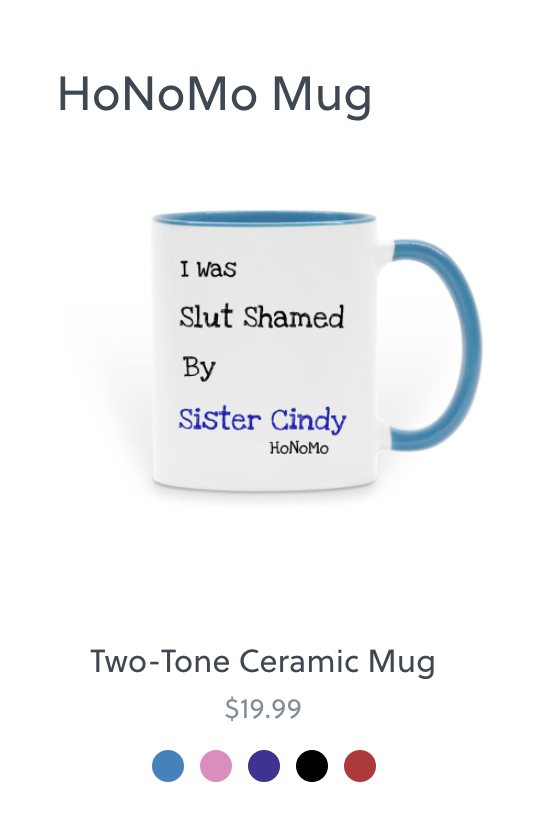
Cindy Smock, or “Sister Cindy” as she calls herself, is an Evangelical campus preacher turned Tik Tok user. She first gained attention when college students posted clips of her speeches on Tik Tok, inspiring her to make her own account. She currently has over 370,000 followers, and #sistercindy has over 194 million views (Fowler). The main subject of her Tik Tok content is encouraging college students, particularly women, to turn to Christianity and be a “ho no mo.” In many of the videos she uploads, she welcomes viewers to “Sister Cindy’s Slut-Shaming Show.” While many of Sister Cindy’s followers regard her as a comical figure, the shock factor she employs in her preaching through homophobic and misogynistic comments is harmful.
Through a glance at Sister Cindy’s Tik Tok account, it is evident that her content is misogynistic and demeaning towards women. In nearly every video she uploads, she casually uses the words “slut,” “hoe,” or “thot,” as insults towards women. For example, when visiting college campuses, she often changes the names of the universities to incorporate the word “slut.” At the Louisiana State University campus, she renamed the institution, “Louisiana Slut University.” By insinuating that college students are sluts, Sister Cindy is weaponizing the word to be used against women and normalizing the slut-shaming that is common in society, particularly on college campuses. However, Sister Cindy is proud of her slut-shaming tendencies and makes it a common theme in her posts. In a different post filmed by a college student, she exclaims, “You are princesses made in the image of God. Yet, you’ve traded your crown to be a cock-sucker.” This is quite the opposite of sex positivity and guilts women into practicing abstinence. Sister Cindy, or anyone for that matter, should never use guilt tactics to influence other people’s lives. Furthermore, why is this hateful comment only directed towards “princesses,” or women? Why is it that women should feel guilty for engaging in consensual oral sex and men should not? Last I checked, oral sex is an act requiring at least two people.
Another example of sexism in her uploads is found in a Tik Tok filmed by a student at the University of Florida. In this clip, Sister Cindy shouts, “Men, if you buy her one margarita, she will spread her legs.” This statement is incredibly insulting towards women. Not only does it perpetuate the view that women are sexual objects, but it also furthers the entitled belief held by some men that women are sexually indebted to them after buying them a drink. In addition, this comment is heteronormative and leads straight men to assume that all women are attracted to them and want to have sex with them, which is simply not the case. Finally, similar harmful views were expressed in a Tik Tok clip of Sister Cindy telling a college student that she is “an accessory to the rape crime on campus” because she is causing boys to get their “passions stirred up” (Fowler). This belief is so inherently false, that it should not require any explanation. The blatant disregard for holding men accountable in situations of sexual assault is destructive to anyone who views this post. It reminds me of the common argument in society that someone is “asking for it” based on the clothes they are wearing. Placing blame and guilt upon women seems to be a common theme in the media posted by Sister Cindy. Again, why is it that sexual assault victims should feel guilty for something that is out of their control and not their fault?
If you thought her content could not get any worse, we have not even analyzed the blatant display of homophobia present in countless Tik Toks. For example, in one clip while preaching to college students, she orders, “Don’t do it. Don’t kiss a girl and like it.” In defiance of her hate speech, two women make their way through the crowd to kiss in front of Sister Cindy’s platform. Apparently, the act of two women kissing is a difficult sight for Sister Cindy, because she has to cover her eyes. In a second Tik Tok, Sister Cindy, with no shame, shouts to a young man walking past her, “Are you a homo? You kinda act a little effeminate there. You need to repent!” There are so many problems with this statement, it is a challenge to decide what to unpack first. To begin, a straight, cisgender person should never use the term “homo” to describe someone of the LGBTQ+ community. Second, Sister Cindy is reinforcing the societal gender expectations that men cannot be feminine and women cannot be masculine. And if that is the case, then that person must be a member of the LGBTQ+ community. Finally, telling someone that they need to repent because of their sexuality, something that is out of their control, is unacceptable. Religion should never be manipulated to discriminate against groups of people. People’s sex lives and sexuality are an intimate part of their lives and should never be a subject of criticism. Therefore, someone who posts homophobic content, like Sister Cindy, should not have a platform to project those hateful beliefs.
To reflect, one’s values and beliefs should never be used as a weapon or a way of guilting others into adopting those practices. While Sister Cindy’s intention may be to educate college students, her comments are misogynistic, heteronormative, homophobic, and may even be classified as hate speech. Sister Cindy even admits that she expects to be removed from social media for her problematic comments (Fowler). If that is the case, what is Tik Tok waiting for?
Works Cited
Fowler, Kate. “Who is Sister Cindy? Evangelist Christian Preacher Turned Tik Tok Star.” Newsweek, 6 June 2021, https://www.newsweek.com/who-sister-cindy-evangelist-preacher-tiktok-star-1597651.
I love this post and how it highlights the way that people will oftentimes use comedy to hide rhetoric that is actually very harmful. Although Sister Cindy is oftentimes funny, she’s still promoting a toxic culture that prevents women from embracing their sexuality. This is a super important topic and I’m glad that you’re shedding light on it!
Wearing Peru’s national soccer team’s shirt, Moche district’s mayor Arturo Fernández smiles for the camera. Behind him, a red statue of a man raises his left arm in a fist. The red man sits in a cubic-like structure of the same colour, decorated with cream-coloured, geometric shapes. The statue has long hair and a white, large smile that looks more like just showing teeth than showing happiness. He wears a cylinder-shaped hat and big, circular earrings. Most surprisingly, apart from this, he is naked and his left arm holds his erect, disproportionally big penis, which rises diagonally to the same height as his nose.
The statue was put in place in Early January 2022, in the district of Moche, Northern Peru. Peruvian media and social media users got really engaged in a debate around this statue, which got coverage by newspapers, TV, streamers and, of course, social media users who did not wait to circulate memes about the statue. As a large-scale representation of Precolumbian vessels from civilizations that lived in the area between the II and VIII centuries, the statue would not have attracted as much coverage if not for one feature: The statue represents an erotic vessel characterised by an oversized, erect penis so big that, as the media put it, you can see it from kilometers away. In less than two months, since its inauguration in January, the statue has been vandalized, burnt down, and restored. For me, and probably for many other Peruvians too, this was sadly an expected reaction in a country as conservative and puritanical as Peru.
While the debate has raised important observations about Peruvian society, it quickly became a two-sided, moralized argument. One side calls the other pervert and immoral, and advocates for the removal of the statue. The other side responds by calling them prudish, and archaic, and fuels the debate even more with happy pictures next to the statue to “challenge the conservatives.” But maybe the heat of the debate can interest us all in understanding more about these vessels and raise questions about Peruvian society too.
What are the erotic vessels?
Most civilisations that inhabit what is now Peru between the II and VIII centuries developed pottery techniques that allowed them to produce pottery for daily use and for other purposes, such as religious and spiritual rituals. Notably, the Moche civilisation stands out for the realism and variety of techniques that were innovative in their times.
The erotic vessels were pottery pieces especially dedicated for religious purposes. As a farming community, the Moches centered their worldview around farming activities. Their calendar, visual representations, tales and oral traditions, rituals and religion were deeply connected to agriculture. Sex was also an activity connected to the fertility of the land and the production cycles. The erotic vessels are precisely a representation of this worldview. The vessels represent how different sexual acts were used to call for rain and good soil.
Our bodies
The techniques used to model the vessels were as advanced as the Moches’ knowledge of the human body. The detail and genius to represent the human expression and body, including the genitalia, are a reflection of a different view of the flesh. The human body was seen, explored and represented without the shame that in our society we express between ourselves and our bodies.
French philosopher Michael Foucault denounces the medicalization of the human experience. We give doctors almost full power to access our bodies, to tell us what is wrong with it. However, outside the medical practice, we punish the exploration of our own bodies. Outside a course of anatomy or biology, our bodies are kept distant from us, as the unexplored and not-to-be-explored territory. As a society, we effectively impose rules on how the body is to be explored, understood and taken care of.
If we, as the Moches did, had a worldview that connects sex with the agricultural calendar, the dead and the gods, then we would have a very different set of rules to explore our own body in modern times. Surely our current view would be a less puritanical, prudish, guilty view of our physicality; however, this does not mean we should advocate for Peruvians to return to a Moche worldview. Just as Foucault does not take a side with either the modern over the older worldview, I am not trying to advocate for the Moche’s over the modern worldview either. Instead, I am suggesting our relation to our own body is heavily regulated by our worldview, and people should view themselves in this context.
Why does this matter?
Going back to the debate around our phallic Moche friend, I try not to take a side with any of the two rivals. I am surely not suggesting to go full Moche worldview-lifestyle. This would be imposing another set of rules, with their own set of problems and complexities. It would also be practically impossible considering that our colonial history meant a witch hunt against indigenous worldviews and traditions. Instead, I am suggesting we stop for a moment and question whether the repressor can be ourselves. So far you may have thought that it is the others, the powerful, the majority, who impose a morality on us. But don’t you police yourself all the time? Don’t we follow rules for how our bodies ought to be explored, understood and treated just because we have been taught that? Why do you feel guilty when you break the rules? Where do the rules come from?
So far, each side has become the perfect villain for the other. There cannot be conservatives without liberals and the way around. But if we are teaching our children rules, and if we are vigilant if our neighbours are feeling guilt for even thinking of breaking the rules, it sounds to me like we are the enemies who actually made it inside our homes like Foucault suggests. Insofar these rules are going around totally unquestioned, insofar as we police whether everyone meets the rules, we will be walking around with no certainty that we ourselves are not the repressive enemy.
Janus Woloszyn and Katarzyna Piwowar, “Sodomite, Siamese Twins, and Scholars: Same-Sex Relationships in Moche Art,” American Anthropologist 117, no. 2 (June, 2015).