Theory to Praxis: Proposing a Piece of Art for Davidson’s Permanent Collection

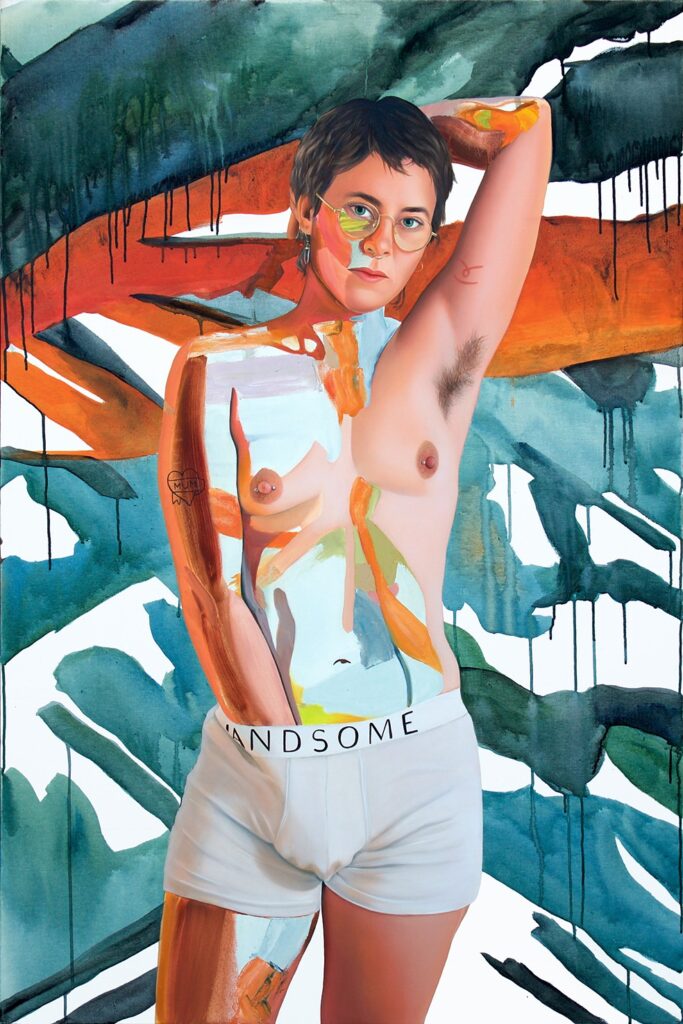
Watson, Kim Leutwyler, 2018, oil and acrylic on canvas

I’ve learned a lot this semester — about topics ranging from feminism to fat studies to queer theory. A topic that has really stuck with me and relates most to my experiences in the world is the idea of questioning and challenging gender norms and the social construct of gender itself. What would happen if we didn’t immediately place ourselves into one of two boxes from birth? What if our entire culture and society wasn’t organized into man and woman, male and female? This doesn’t mean that there’s no value in identifying with one gender over the other (or both or neither) — it’s one of the many ways we are able to understand ourselves. But there’s no reason that something as abstract as gender should define how and where we live, who we love, what we wear, what occupations are available to us, our role in the household, and even how we walk down the street. 

A major part of my Davidson experience has been interning with the Van Every/Smith Galleries in the Visual Arts Center for the past three years. Among many things, I’ve gotten an inside look into how powerful art can be in prompting conversations around various social issues. The exploration of identity has been a common theme among many of the artists and artworks I have encountered — both in my job with the galleries and in my Art History minor. Next semester, I’m taking ART 348: Buying and Collecting Art, co-taught by Dr. Rosaline Kyo in the Art History department and Lia Newman, the director and curator of the galleries. The major project of the class is that, by the end of the semester, we will have the opportunity to propose one or multiple artworks to be acquired by Davidson’s permanent collection. The focus of this search is on diversifying the collection and starting to chip away at systems of oppression that have existed for centuries within art collecting and buying practices at institutions worldwide. 

For my theory to praxis assignment, I want to get a jump start on this project for my final Art History course next semester. In tying together my longtime interest in art and my newfound curiosity about gender, I would like to hypothetically propose the piece Watson by Kim Leutwyler to be added to Davidson’s permanent collection (pictured above). Based in Sydney, Australia, Leutwyler is an American visual artist who is skilled in a range of mediums including painting, installation, ceramics, print media, and drawing. Her more recent work explores themes of beauty, gender, and queer identity. She uses painting as a medium for these works to subvert its masculinized history in the western canon. The piece I have chosen, Watson, comes from a series of colorful paintings of LGBTQ-identified and queer-allied women. In this series, Leutwyler paints realistic portraits of her close friends against bold abstract backgrounds in a celebration of diversity and identity (Leutwyler). 

The individual featured in this portrait is Melbourne-based musician Shan Watson. They host workshops for trans/non-binary/gender questioning people who need a safe space to explore their identity. On her website, Leutwyler writes that Watson’s “own relationship to gender is in a constant state of fluctuation, as conveyed through layering color, abstraction and figurative realism in this work” (Leutwyler). I was drawn to this piece because it’s a wonderful example of how gender isn’t something that can be “seen.” Watson displays expected physical attributes of women — nose ring, nipple piercings, the appearance of breasts —  and of men — short hair, boxers, a “Mum” tattoo, and armpit hair. Watson’s fist is placed inside their boxers, alluding to the presence of male genitalia. The word “handsome” is written across the waistband of their boxers — a potential identification with masculinity and male standards of beauty. The point of this portrait is not to try and “figure out” what Watson’s gender is or how they identify. Rather, Leutwyler beautifully captures Watson’s confidence and pride in their body through the way they don’t try to cover themselves and even have their arm raised above their head to further reveal their body.

Beyond being acquired by the Van Every/Smith Galleries, I would like to propose that this piece be added to the galleries’ art in residence halls program, ArtMate, which is launching a pilot this spring. Bringing this piece into a residence hall — a shared living space where bodies are constantly on display — will spark important conversations about identity and the ways in which dorms are designed to exclude and ostracize individuals whose identities do not align with the male/female binary. Additionally, like Alok Menon explores in their Instagram book reports, contemporary westernized standards of male and female beauty are not the norm; in other parts of the world throughout history, there isn’t such a stark divide between what a man should look like and what a woman should look like. I’m looking forward to bringing the knowledge I have gained through GSS 101 to my art history seminar next semester, and having the opportunity to propose a piece like this to be added to the college collection, leaving something permanent behind when I graduate in May.

Works Cited

“Kim Leutwyler.” Artist’s website. Accessed 4 Dec 2021. https://kimleutwyler.com/page/1-BIO.html.
Feminist Mix Tape: “The Man” by Taylor Swift

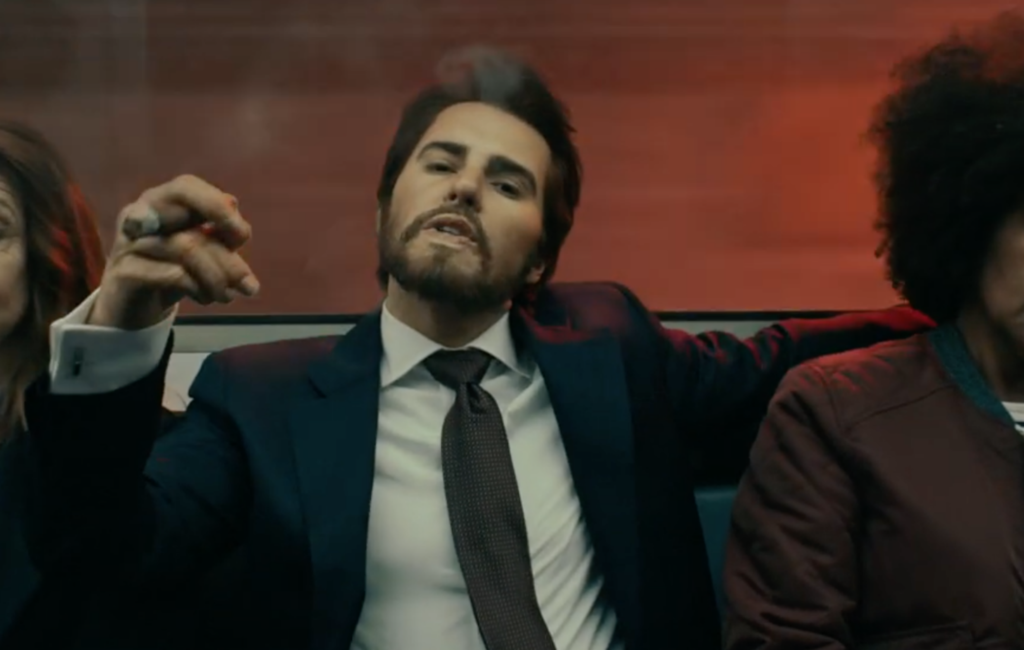
Taylor Swift in “The Man” music video

Throughout her entire career, Taylor Swift has been ridiculed, mocked, and trivialized for writing breakup songs in which she publicly calls out her exes. In her 2019 song “The Man,” Swift gives one big “F*** you” to her haters, asking the very legitimate question if she were a man, would everyone be talking about her this way? Swift’s question is not rhetorical. She wants people to really think about this — to think about the double standards she continues to be imprisoned by, regardless of her success as an artist. 

In this song, Swift does not go so far as to reject gender altogether, but she heavily critiques the stereotypes, limitations, and expectations that society places upon women in comparison to men. Her perspective mirrors that of scholars we studied in class, such as Lorber’s idea that “gender, like culture, is a human production that depends on everyone constantly ‘doing gender’” (Lorber 54). 

Swift begins her song by criticizing double standards around sexual activity: If she were a man, “They’d say I played the field before I found someone to commit to/… Every conquest I had made would make me more of a boss to you” (Swift). This is in response to the accusations she has faced throughout her entire career about stringing men along only to dump them and write an album about it. She challenges rape culture, asking “When everyone believes ya/ What’s that like?” (Swift) This of course relates to conversations around bodily autonomy and how rape culture entirely strips women of that power. Swift herself was also very publicly involved in a sexual assault trial in 2017. 

Continuing on, she makes comparisons between the very different public responses to male and female celebrities doing the exact same thing – another double standard. She sings, “If I was out flashing my dollars/ I’d be a bitch not a baller.” In her line “What I was wearing, if I was rude/ Could all be separated from my good ideas and power moves” is a nod to the level of scrutiny female celebrities face that male celebrities often do not (Swift).

In the chorus, Swift sings, “I’m so sick of running as fast as I can/ Wondering if I’d get there quicker if I was a man” (Swift). The overall aim of the song is not only to finally call out the unfair criticism she has received as a female artist, but also more broadly to criticize the extra lengths women have to go to — literally running to catch up to men — in order to prove themselves and retain dignity and respect.

I applaud Swift for stating the obvious and using her platform to bring attention to these double standards, but I think it’s also important to acknowledge the limitations that this song shares with first wave feminism. As an incredibly successful and wealthy white woman with a huge platform, Swift does not exactly represent the everywoman. Nor does she acknowledge the additional barriers that women of color face in proving their worth not only as compared to men but to white women as well. 

As bell hooks says of Betty Friedan, “She made her plight and the plight of white women like herself synonymous with a condition affecting all American women… she deflected attention away from her classism, her racism, her sexist attitudes towards the masses of American women” (hooks 2). Swift is primarily a musician not a social justice activist, nor does she claim to be the latter. We cannot blame her for wanting to share her experiences — and they are experiences many women can relate to — but it’s still important to acknowledge how her privilege shapes those experiences.

More Than Just a Haircut: Examining Gender Roles and Male Grooming in Kristen Barber’s *Styling Masculinity*

By Alice Berndt

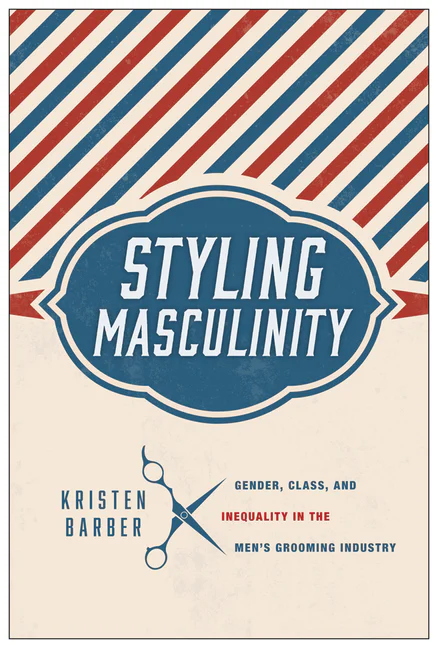
Image Credits: Rutgers University Press

Since the inception of the metrosexual in the mid-1990s, the United States has seen a rise in male participation in the beauty and grooming industry, an industry that was founded by women and has typically been associated with a more feminine lifestyle. For white middle to upper class American men, there is a tension between the expectation to look clean and professional and the fear of appearing to try too hard to look this way. To balance these conflicting desires, modern men’s hair salons create carefully cultivated male aesthetics in their shops, from the decor and products to their employees’ mannerisms and dress codes. Kristen Barber explores this phenomenon in her monograph Styling Masculinity: Gender, Class, and Inequality in the Men’s Grooming Industry, published by Rutgers University Press in 2016. Barber begins with an initial research question: “What makes a men’s salon a men’s salon?” (Barber 162) To answer this question, she spends nine months in 2009 investigating the painstakingly masculinized spaces of two upscale men’s salons in Southern California, The Executive and Adonis, where she uncovers the aesthetics and gender politics of male participation in the beauty industry and the complex role female employees play in this space.

Kristen Barber is a sociologist, professor, and researcher with a focus on masculinities, culture, and work. She has a PhD in sociology from the University of Southern California, and her research centers on examining what “everyday boundary-crossing behavior can teach us about complex systems of inequality” (“Kristen Barber”). Besides Styling Masculinity, Barber co-authored the textbook Gendered Worlds 4th Edition and is the co-editor of a journal called Men and Masculinities. She currently works at Southern Illinois University as an associate professor of sociology and the director of the Women, Gender, and Sexuality Studies program.

To get to the bottom of her question about what exactly constitutes a “men’s salon,” Barber performs an ethnographic study of two such salons in Southern California, Adonis and The Executive. She chooses Southern California as the site of her study because it is “a mecca for commercial aestheticizing” (Barber 12). She states that the phenomenon exemplified by these salons is not exclusive to California alone but rather extends to the rest of the country as well, though how it manifests in different settings may vary. Barber spends nearly a year frequenting The Executive and Adonis, interviewing the owners, employees, and clientele, and observing the interactions between the male clients and the female workers as well as between the male clients and the space itself. She writes, “I am interested in meanings as they are constructed through people’s face-to-face exchanges and how the organization in which these exchanges are embedded shape relationships between groups of people, identity building processes, and the reproduction and reimagining of cultural norms” (13).

Continue reading “More Than Just a Haircut: Examining Gender Roles and Male Grooming in Kristen Barber’s *Styling Masculinity*” →

Harry Styles Likes Women’s Clothing and He Doesn’t Care Who Knows It (Not Even Candace Owens)

By Alice Berndt

Written for Jezebel

Vogue Online, 13 Nov 2020

On November 13, 2020, jaws dropped and 1D fans swooned when the cover image for Vogue’s December issue was released. The shot features former boy bander and current pop sensation Harry Styles dressed in a black and white lace gown and black cropped blazer, his hair swept to the side in an intentionally effortless flop. He is the first man to appear solo on the cover of Vogue in 127 years. As the cover reads, “Harry Styles makes his own rules.” [Vogue]

Framed against a sprawling green meadow and clear blue sky, the British singer squints into the sunny distance. He holds a blue balloon to his lips, mid-blow, showing off an array of chunky rings, including one in the shape of an “H” and another in an “S.” The photo is iconically Harry — sexy, androgynous, playful, and edgy. 

Since the beginning of One Direction’s seemingly eternal “hiatus” back in 2015, Styles has been making a name for himself as a solo pop rock artist. In addition to releasing hit singles like “Sign of the Times” and “Watermelon Sugar,” he has also become a fashion icon, breaking free from his 1D wardrobe of V-necks and skinny jeans and embracing more traditionally feminine styles like colorful blouses, bootcut pants, and dresses. For the most part, fans and the public have been accepting of his style transformation, which recalls music legends of the past including David Bowie and Prince. But for some, this Vogue cover took it a step too far. 

Screenshot: Twitter / @RealCandaceO

In a move that sparked contentious debate, conservative commentator Candace Owens retweeted Vogue’s post on Styles’ cover shoot and wrote:

“There is no society that can survive without strong men. The East knows this. In the west, the steady feminization of our men at the same time that Marxism is being taught to our children is not a coincidence. It is an outright attack. Bring back manly men.”

[Twitter]

Yowza. Owens received immediate backlash from liberals, feminists, and Styles’ fans alike who claimed she was being sexist and close-minded. She was criticized for her assumption that masculinity and strength (or lack thereof) are directly connected to wardrobe — a man cannot be “manly” if he wears a dress. 

This assumption stems from centuries of clothing acting as a marker of gender — men wear pants and women wear dresses and skirts. Period. But is Owens implying that the inverse is true as well — that women cannot be feminine if they wear pants? Certainly Owens herself has been spotted wearing pants on more than one occasion. Commentators wondered how an article of clothing could limit or “attack” masculinity and strength but not femininity or grace. 

Screenshot: Instagram / @harrystyles

In a reclamation of Owens’ derogatory words, Styles posted an image to Instagram from his cover shoot with Variety and captioned the post “Bring back manly men.” The caption combined with the cheeky photo — Styles in a powder blue pantsuit eating a banana — pokes fun at his haters, addressing the situation while also making light of it. 

Styles is certainly not the first celebrity to be criticized for their clothing choices, so why did this get so much attention? Perhaps because it’s far less common for a woman to publicly shame a man for his outfit than vice versa. We’re used to female celebrities being called out for “scandalous” or “overly sexy” clothing (Billie Eilish’s British Vogue cover, for example), but typically male celebrities wear what they want or what their stylists give them and that’s that. It also cannot be ignored that Styles has a massive fanbase that has grown alongside his career since the inception of One Direction in 2010 and is prepared to defend him regardless of the context.

In talking about gender and fans, we must engage in a conversation about privilege. A quote from Styles on the Vogue cover reads, “Anytime you’re putting barriers up in your life, you’re limiting yourself.” For Styles, a straight white male celebrity with a net worth of over $80 million, he has the comfort and freedom to express himself through his clothing without fear. [Vogue]

For many others, including female-identifying, LGBTQ+, and POC celebrities, what they wear is often the biggest target for ridicule, criticism, and objectification. These individuals must first break down the barriers placed in front of them by society before they can even consider those they may have built for themselves. 

With that simple act of reclamation via his Instagram post, Styles had, in the minds of many, “won” the argument. For many others — celebrities or not — the complexities of how they use clothing to express themselves is a never-ending fight, both internally and externally. [Vogue]

Vogue Online, 13 Nov 2020

Don’t get me wrong, I worship Harry Styles as much as the next Gen Zer and wouldn’t dare question his status as a cultural icon. As actress and director Olivia Wilde says of Styles, “It’s pretty powerful and kind of extraordinary to see someone in his position redefining what it can mean to be a man with confidence.” By breaking free from the societal binary of gendered clothing, Styles utilizes his privilege to pave the way for others. But his work is far from being done. [Vogue]