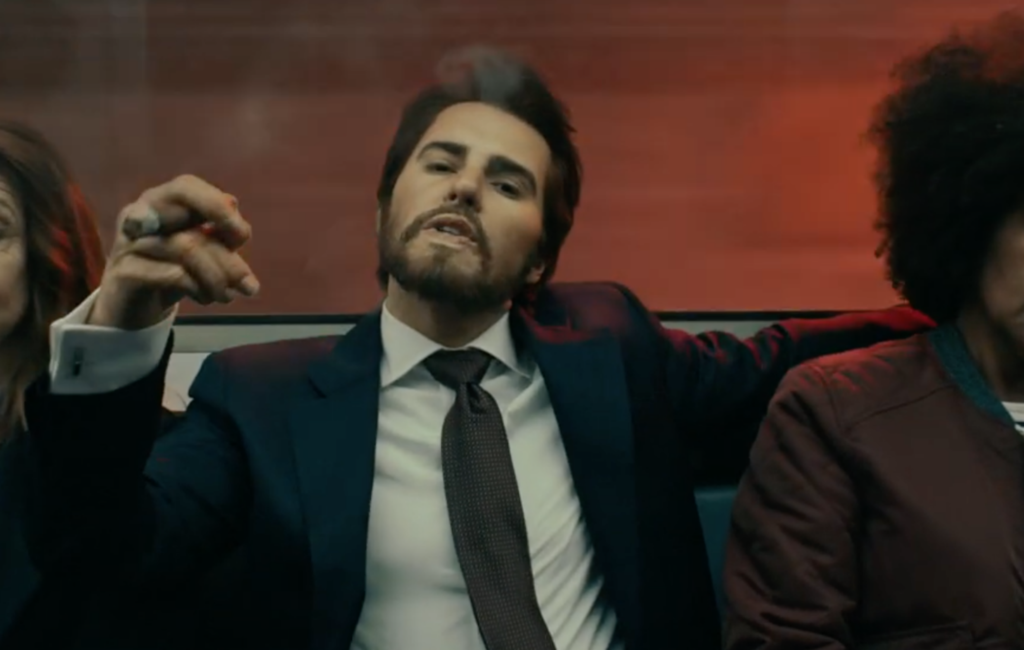
Throughout her entire career, Taylor Swift has been ridiculed, mocked, and trivialized for writing breakup songs in which she publicly calls out her exes. In her 2019 song “The Man,” Swift gives one big “F*** you” to her haters, asking the very legitimate question if she were a man, would everyone be talking about her this way? Swift’s question is not rhetorical. She wants people to really think about this — to think about the double standards she continues to be imprisoned by, regardless of her success as an artist.
In this song, Swift does not go so far as to reject gender altogether, but she heavily critiques the stereotypes, limitations, and expectations that society places upon women in comparison to men. Her perspective mirrors that of scholars we studied in class, such as Lorber’s idea that “gender, like culture, is a human production that depends on everyone constantly ‘doing gender’” (Lorber 54).
Swift begins her song by criticizing double standards around sexual activity: If she were a man, “They’d say I played the field before I found someone to commit to/… Every conquest I had made would make me more of a boss to you” (Swift). This is in response to the accusations she has faced throughout her entire career about stringing men along only to dump them and write an album about it. She challenges rape culture, asking “When everyone believes ya/ What’s that like?” (Swift) This of course relates to conversations around bodily autonomy and how rape culture entirely strips women of that power. Swift herself was also very publicly involved in a sexual assault trial in 2017.
Continuing on, she makes comparisons between the very different public responses to male and female celebrities doing the exact same thing – another double standard. She sings, “If I was out flashing my dollars/ I’d be a bitch not a baller.” In her line “What I was wearing, if I was rude/ Could all be separated from my good ideas and power moves” is a nod to the level of scrutiny female celebrities face that male celebrities often do not (Swift).
In the chorus, Swift sings, “I’m so sick of running as fast as I can/ Wondering if I’d get there quicker if I was a man” (Swift). The overall aim of the song is not only to finally call out the unfair criticism she has received as a female artist, but also more broadly to criticize the extra lengths women have to go to — literally running to catch up to men — in order to prove themselves and retain dignity and respect.
I applaud Swift for stating the obvious and using her platform to bring attention to these double standards, but I think it’s also important to acknowledge the limitations that this song shares with first wave feminism. As an incredibly successful and wealthy white woman with a huge platform, Swift does not exactly represent the everywoman. Nor does she acknowledge the additional barriers that women of color face in proving their worth not only as compared to men but to white women as well.
As bell hooks says of Betty Friedan, “She made her plight and the plight of white women like herself synonymous with a condition affecting all American women… she deflected attention away from her classism, her racism, her sexist attitudes towards the masses of American women” (hooks 2). Swift is primarily a musician not a social justice activist, nor does she claim to be the latter. We cannot blame her for wanting to share her experiences — and they are experiences many women can relate to — but it’s still important to acknowledge how her privilege shapes those experiences.
Alice, love this song! One of my favorites from Taylor Swift, especially the music video. I love the comparison to Lorber and the dependence on everyone following specific norms of what it means to be someone of a certain gender. Almost every line in this song refers to a stereotype or assumption about women, which needs to be eliminated in order for there to be any sort of gender equality. I also like how you pointed out the fact that while this song highlights how much easier it is to be a man, Taylor Swift is still a privileged, extremely successful white woman who does not have the same experiences as women of color, and while her experience and perspective is completely valid, there are still many other voices that she does not include that have different, and often worse experiences as a woman. Great job!
I’m glad to see this song posted about! This is a super thoughtful analysis- I like how you connect the song’s message to hooks’ analysis of Friedan and acknowledge that Taylor Swift’s privilege has been there alongside her personal and professional struggles as a woman in the music industry. I watched the music video again after reading your post, and it reminded me of a few quotes from the “Black Women Shaping Feminist Theory” chapter we read; “since these women are becoming men, in the end it will only mean a few more men” if white feminists aspire to assimilate into “a phallic masculine economy” (hooks 8). In the video, Swift dresses up and acts as a man would, but the tone conveys disgust and rage for the way men sometimes act. So even though this could be read as her trying to “become” a man in terms of success and respect, I also think she is asking us to question along with her how beneficial or harmful that would really be.
I love Taylor Swift! Thanks for a great post, Alice. It is important how Swift calls out the problems of her patriarchy in her song, and you make a good point that Swift neglects to mention problems for women of color or acknowledge her own privilege as a wealthy white women. It definitely reminds me a bit of Friedan’s work – complaining about issues of the patriarchy which affect all women, but not mentioning any that affect women of color in particular or explaining how oppression comes in degrees. Overall, I though your post was very interesting and I am always happy to read about Taylor Swift.
Hi Alice! Love your analysis of Taylor Swift’s song! I love how you focus on the double standards set on women, but you also touch on the limitations and tie in bell hooks’ criticism of Betty Friedan. It is amazing to see women use their platforms to speak on social issues, but I completely agree with you when it comes to the limitations. There seems to be a focus on white women, just like during first-wave feminism. I believe that because Taylor Swift is white, she does not think about intersectionality. However, if she were to collaborate with a woman of color, such as Lizzo, she could create a really powerful and empowering song for all women. Lovely analysis!
This was great! I loved your intro–it was a perfect way to introduce both the song and what you would eventually analyze from it. Additionally, I think your thoughts on the limitations of this song are also extremely valuable. You mention how the song doesn’t really touch on more non-first-wave feminisms, and I think it’s always important to think about the limitations of certain messages, which you’ve done perfectly! Great work!