Feminist Mix Tape: “Good as Hell” by Lizzo

Lizzo has recently risen to fame as one of the premier American pop stars, writing music with lyrics that are empowering and positive towards women. Her 2016 song, “Good as Hell,” is feminist and catchy.

Lizzo’s feminist lyrics relay a message that women are valuable in themselves and do not need validation from men to feel happy. This relates to first wave feminism arguments such as those from the Declaration of Sentiments, which states that “woman is man’s equal,” which means that women should occupy a place equal to men in society (Declaration of Sentiments 1). Lizzo’s message that “you know you a star you can touch the sky/ I know that it’s hard but you have to try” relates to this first wave perspective by emphasizing that self-worth comes from within, and men do not have the right to determine the worth of women.

In addition to containing the first wave feminist perspective that women are worth as much as men, the song also relates to second wave feminism. Betty Friedan’s argument in the Feminine Mystique claims that women have just as much of a right as men to work outside the home in professional roles (Friedan 278). This relates to Lizzo’s line advising her listener to “boss up and change your life.” This depiction of women as bosses normalizes women in the workplace, and emphasizes how women have a natural capacity to be leaders and have control, contrary to what the patriarchy dictates. Thus, Lizzo’s “Good as Hell” relates to second wave feminism by emphasizing women’s capacity for success in a professional setting.

One final way in which Lizzo’s “Good as Hell” relates to feminism outside of first wave and second wave perspectives is by centering women as its subject. By making women the default audience of the song, Lizzo goes against the patriarchal conception of maleness as the default state of being. This default state of maleness was pointed out by Luisa Capetillo (Capetillo 28). Lizzo rejects this patriarchal structure by making the subject of her song a woman, thus normalizing women as the default person.

Lizzo’s song is limited, however, in its conversation with transfeminism and intersectional feminism. Lizzo does not mention trans people, queer people, or people of different races in her songs. Therefore, her song does not relate to how feminism applies differently to women of color or members of the trans community. 

Despite this limitation, Lizzo’s “Good as Hell” is an important song in its relation to feminisms. It mentions the first wave perspective that women are equal to men, and emphasizes the second wave idea that women belong in the workplace as much as men do. It also centers women, a feminist stance. However, it does not have much to do with queer, trans, or women of color feminisms, so it is fairly surface-level in its feminism. Overall, the song is catchy, positive, and pro-women, so it is definitely worth a listen!

Feminist Mix Tape: “The Man” by Taylor Swift

Taylor Swift in “The Man” music video

Throughout her entire career, Taylor Swift has been ridiculed, mocked, and trivialized for writing breakup songs in which she publicly calls out her exes. In her 2019 song “The Man,” Swift gives one big “F*** you” to her haters, asking the very legitimate question if she were a man, would everyone be talking about her this way? Swift’s question is not rhetorical. She wants people to really think about this — to think about the double standards she continues to be imprisoned by, regardless of her success as an artist. 

In this song, Swift does not go so far as to reject gender altogether, but she heavily critiques the stereotypes, limitations, and expectations that society places upon women in comparison to men. Her perspective mirrors that of scholars we studied in class, such as Lorber’s idea that “gender, like culture, is a human production that depends on everyone constantly ‘doing gender’” (Lorber 54). 

Swift begins her song by criticizing double standards around sexual activity: If she were a man, “They’d say I played the field before I found someone to commit to/… Every conquest I had made would make me more of a boss to you” (Swift). This is in response to the accusations she has faced throughout her entire career about stringing men along only to dump them and write an album about it. She challenges rape culture, asking “When everyone believes ya/ What’s that like?” (Swift) This of course relates to conversations around bodily autonomy and how rape culture entirely strips women of that power. Swift herself was also very publicly involved in a sexual assault trial in 2017. 

Continuing on, she makes comparisons between the very different public responses to male and female celebrities doing the exact same thing – another double standard. She sings, “If I was out flashing my dollars/ I’d be a bitch not a baller.” In her line “What I was wearing, if I was rude/ Could all be separated from my good ideas and power moves” is a nod to the level of scrutiny female celebrities face that male celebrities often do not (Swift).

In the chorus, Swift sings, “I’m so sick of running as fast as I can/ Wondering if I’d get there quicker if I was a man” (Swift). The overall aim of the song is not only to finally call out the unfair criticism she has received as a female artist, but also more broadly to criticize the extra lengths women have to go to — literally running to catch up to men — in order to prove themselves and retain dignity and respect.

I applaud Swift for stating the obvious and using her platform to bring attention to these double standards, but I think it’s also important to acknowledge the limitations that this song shares with first wave feminism. As an incredibly successful and wealthy white woman with a huge platform, Swift does not exactly represent the everywoman. Nor does she acknowledge the additional barriers that women of color face in proving their worth not only as compared to men but to white women as well. 

As bell hooks says of Betty Friedan, “She made her plight and the plight of white women like herself synonymous with a condition affecting all American women… she deflected attention away from her classism, her racism, her sexist attitudes towards the masses of American women” (hooks 2). Swift is primarily a musician not a social justice activist, nor does she claim to be the latter. We cannot blame her for wanting to share her experiences — and they are experiences many women can relate to — but it’s still important to acknowledge how her privilege shapes those experiences.

Feminist Mixtape: *He Thinks He’ll Keep Her* by Mary Chapin Carpenter

Mary Chapin Carpenter is an American rock, folk, and country music singer-songwriter who signed in the late 1980s with Columbia Records, who promoted her as a country singer. One of her most famous songs is her 1992 hit, He Thinks He’ll Keep Her. This song is widely credited with illustrating the salvation of a woman freeing herself from the traditional atomic family into the workplace. The song begins by documenting a few items that make it evident that she is a housewife – one who appears to do everything for her husband. For example: making his coffee, his bed, doing his laundry, and keeping him fed. Following a few of these examples, the verses, “When she was twenty-one she wore her mother’s lace and said “forever” with a smile upon her face,” briefly touch on the “norm” of marriage as something that is supposed to happen when coming of the right age. The lines that come after continue to paint the picture of outdated stereotypical gender roles: taking care of the kids; putting on a surface front that portrays a perfect family despite her unhappiness that is prevalent in this song; and her keeping everything in line and on time like clockwork. The line, “He thinks he’ll keep her,” is inserted occasionally at the end of some verses, alluding to the strength that she will eventually find to leave the husband that takes her for granted and confines her abilities. This does indeed happen and there is a shift when she talks about being thirty-six and finally putting her foot down to leave him. One line that I think carries a lot of weight is “for fifteen years she had a job and not one raise in pay, now she’s in the typing pool at minimum wage.” I feel these verses highlight the difficulty of working hard for many years without any sort of compensation other than a rabbit-hole of a comfort zone that can seem extremely terrifying to leave. More importantly, she does in fact leave and even though she is starting from the bottom, she is slowly working to make her own way. 

This can be tied back to a few of the readings we did in class. For example, in Towards Equality, it highlights that marriage and motherhood should not be disabilities for women and in this song – it is very clear that the duties being performed by the woman are constraining both her happiness and ability to go out and do things for herself. Additionally, in Our Bodies, Our Selves, it emphasizes choice over destiny and I feel like this relates back to women being not properly educated about their bodies and having children that they did not necessarily want or getting married simply because that is what “everyone” did by a certain age. In a similar way, The Feminine Mystique, discusses that housewives feel trapped within themselves and their own minds – convincing them of the falsehood that motherhood and marriage is all that life has to give them. In this song, it isn’t until she leaves her husband that she finds her own life and what she wants. 

The song, however, does have specific limitations as a representation of feminisms broadly constructed. For example, her limited scope of just female and male relationships excludes the LGBTQ community and it implies that the type of situation being described in the song only occurs between heterosexual members of the community.

“Mary Chapin Carpenter – He Thinks He’ll Keep Her.” Genius, https://genius.com/Mary-chapin-carpenter-he-thinks-hell-keep-her-lyrics. 

Feminist Mixtape: *Sisters Are Doin’ It For Themselves*

Music Video for “Sisters Are Doin’ It For Themselves” by Eurythmics feat. Aretha Franklin

In “Sisters Are Doin’ It For Themselves,” Eurythmics and Aretha Franklin come together to express women’s liberation and empowerment through the art of music. The song starts off strong with, “Now there was a time/When they used to say/That behind every great man/There had to be a great woman/But in these times of change/You know that it’s no longer true/So we’re comin’ out of the kitchen” (0:13-0:38), demonstrating not only the power of women but also the unison of a white woman and a black woman combatting the patriarchy together.

Unlike Betty Friedan’s white, middle-class centric views, Aretha and Annie Lennox (Eurythmics’ lead singer) join forces in this feminist song to empower women and demonstrate that women are capable of “doin’ it for themselves.” I believe this song captures bell hooks’ ideal version of feminism and can be related to second wave feminism. The addition of Aretha to this song strengthens its message because it adds the perspective of a black woman to the conversation, and the song is not focused on an issue that only affects white, middle-class women; the song is focused on liberating women and acknowledging their power as women, including women from different cultures.

The harmony created by Aretha and Annie is amazing, and the music video that accompanies this song does not focus on one sole type of woman; there is a focus on all women and their successes, but the spotlight is still focused on white woman in the beginning of the video. However, I like how Annie collaborates with Aretha to make the world aware of women’s strengths across different cultures and perspectives. This reminds me of bell hooks, especially when she says, “Had middle-class black women begun a movement […] no one would have taken them seriously,” and she continues, “[t]his was not the case with white bourgeois feminists, for they could appeal to a large audience of women like themselves who were eager to change their lot in life” (bell hooks 7). This song incorporates a black woman’s voice, and Annie does not overshadow Aretha; she uplifts her, incorporating Aretha’s voice into the conversation through music. There is a mixture of perspectives, but they are brought together with the idea of women’s liberation. Annie seems to be using her whiteness to bring awareness to the issues all women face, the opposite of Betty Friedan and taking into consideration bell hooks’ advice and criticism of Friedan.

In conclusion, Annie and Aretha created an empowering piece for all women, taking into consideration the women from different cultures and focusing on empowering women instead of focusing on a particular issue that only certain women deal with. The inclusion of black women in the music video and song is showing the power of women when they are united and not divided.

Book Review: “Beneath the Surface”

Cover of Beneath the Surface: A Transnational History of Skin Lightening by Lynn M. Thomas

Beauty standards have long had a hold on popular culture. Beauty allows for people to advance in the social hierarchies of our societies, as well as provide a sense of self worth. The history of beauty can be described as a history of struggle, as society deems it more and more necessary to alter the physical, material body to meet social standards. Skin lightening is one of the most criticized beauty practices throughout the latest century. As a booming industry that is engaged across all socioeconomic levels, discourse around skin lighteners informs us about the changing meanings of skin color and how it affects racial hierarchies and anti-racism activism. Beneath The Surface looks into the transnational history of skin lightening practices through the perspective of South Africa and the United States and outward. 

Lynn M. Thomas’ main argument in Beneath The Surface is that bodily surfaces are vectors of antiracist struggles through its complications of skin meaning and privilege– especially in the time of aparthied rule in South Africa. She also describes how skin lighteners and other beauty practices both reinforce and challenge pre-existing assumptions about race, class, and gender. Thomas comes to the conclusion that “surfaces matter. The unrelenting presence of beauty practices in our globalized world stems from their ability to play on and reproduce a range of inequalities while, at the same time, offering hope and stirring feelings of self-worth” (Thomas 236). 

Lynn M. Thomas, co-editor of this monograph, is indeed qualified to discuss the topics of materialism and its effects on the concepts of race, class, and gender in our lives. Currently a history professor at the University of Washington, Thomas is known to be a historian of politics and gender in East and Southern Africa. She acknowledges her love for history due to her “desire to gain knowledge of the past in order to better understand the problems and possibilities of the present” (Thomas). tShe is best known for being the co-editor of The Modern Girl Around The World: Consumption, Modernity, and Globalization where she explores the rise of capitalist consumer culture, mass media, and its resulting new conceptions of race and gender. 

Through her uses of archives, popular culture trends, and oral history sources, Thomas traces the wavering opinions of skin lighteners and the varying meanings of skin color throughout time. In the first chapter, she examines indigenous and traditional practices on bodily surfaces. Smearing practices like the use of Tambookie grass and egg whites on skin as a method of lightening skin tones led to colonists labeling the natives as inferior for attempting to “whitein” themselves. White lead was also a popular skin lightener as it was commonly found in European portraits and used in Chinese and Japanese cultures.

Chapter 2 elaborates on the role mass media played in influencing South African consumers through the advertisement of skin lighteners. Local newspapers like Bantu World–the first South African newspaper to advertise cosmetics and include women sections– portrayed women in the “modern girl” stereotype that framed women as engulfed in self-indulgence and rejecting her duties. Bleeding into the next chapter, Thomas acknowledges how the success of African American cosmetic companies influenced how the skin lightening industry was perceived in South Africa and neighboring countries. There was a distinct difference between cosmetic use and racial respectability across the Atlantic, however, as South African beauty culture was dominated by black men discourse and run by white owned companies. In contrast with the United States, African American women controlled both the manufacturing and advertisement of their skin lightening and other cosmetic products. Chapter 3 expands upon the idea of growing black consumerism and how white South Africans dominated the cosmetic business in South Africa. Simultaneously emerging with the shifting dynamics of the industry were the concepts of race consciousness as ideas regarding color privileges became more evident, encouraging South Africans to pass for white using skin lighteners. 

Chapters 4 through 6 further elaborated on the impact mass media had on people’s changing perceptions of racial and gender hierarchies. Through magazines, film, and photography, the media began portraying lighter skin in association with success and opportunity, emphasized by Thomas’ comment: “Skin color, as one highly visible marker of race, loomed large in this world where whiteness was synonymous with power and privilege, and small differences in appearance could carry significant consequences” (Thomas 106). Meanwhile, criticism from medical professionals and anti-racist activists remained persistent in developing regulations for skin lightening practices in South Africa. From the medical standpoint, the discovery of hydroquinone as a new and “substitute” ingredient of mercury created more speculation about the safety of the products, ultimately leading to the ban of mercury based cosmetics and closer examination of over-the-counter products. As discourse around the health of consumers increased, so did conversations acknowledging the psychological damage of beauty desires on Black women. Criticisms between medical professionals and antiracism activists entwined eventually, leading to regulations on skin lighteners being set across South Africa.

The final chapter looks at the issues of the modern day and the nuances that come with the everlasting problems of racism and capitalism. Thomas points out the irony in the apartheid museum being located on top of an old, wealthy skin lightener manufacturing company. Instances like these prove that the skin lightening industry still has a hold on today’s society, and that the meaning and politics around skin color will continue to evolve and change.

The greatest strength of Beneath The Surface was Thomas’ ability to trace the altering meanings and understandings of skin color. Her attention to detail–the products, advertisement, manufacturing, target audience, usage, and health problems– it all relates back to how bodily surfaces were a focal point of racial identification and how people used skin lighteners to use that focus to their own advantage. It’s astonishing to realize that beauty practices can be such a destructive force, yet they will continue to be utilized and invested in as people continue to modify their physical appearance to fit into social desires. A weakness I believe to have found is Thomas’ lack of perspective outside of South Africa and the United States. Although South Africa is a unique viewpoint that allows us to analyze changing conceptions of skin color from colonial times to the postcolonial present, I think addressing other perspectives of African countries would bring more knowledge of historical beauty practices and develop more nuances among the practices and their relations to the cultivation of racial hierarchies.

I personally enjoy this book because of its unique perspective of skin lightening as an agent of disturbing the efforts of antiracist thinkers and activists. I never thought cosmetics would have such an impact on how we perceive racial and gender dynamics, let alone evolving beauty standards. 

References

“Department of History.” Lynn M. Thomas | Department of History | University of Washington, https://history.washington.edu/people/lynn-m-thomas. 

Thomas, Lynn M. Beneath the Surface: A Transnational History of Skin Lighteners. Wits University Press, 2020. 

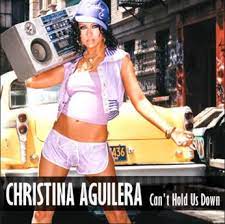
Feminist Mixtape: *Can’t Hold Us Down* by Christina Aguilera

Can’t Hold Us Down by Christina Aguilera

Christina Aguilera is a strong feminist icon. With countless songs regarding feminism and female empowerment, Christina Aguilera consistently emphasizes the importance of respecting women in society. The song Can’t Hold Us Down by Christina Aguilera was released in the year 2002 which was shortly after the third feminist wave that occurred during the 1990s. In the song, she focuses on the double standards pit against women in contrast to men as well as the restrictions women face due to their silencing authorized by men and society.  

In the beginning of the song, Aguilera sings “Should I keep quiet just because I am a woman”. This line presents the familiar idea of silencing women and the assumptions that a woman’s word has no value. This idea is not only seen between the exchange of men and women on a daily basis, but it was and is also seen within the cultures of third world families as was discussed in Uma Narayan’s Contesting Cultures. In Narayan’s piece, she mentions how she was taught that “good daughters hold their tongue”, and this phrase alone embodies the circulated idea of women’s silencing in all aspects of a woman’s life (Narayan 398). In regards to Aguilera questioning that she should keep quiet because she is a woman, she later sings “Take a deep breath and say it loud”. This phrase inspires woman that listen to the song to voice their thoughts and opinions because they simply have the right and should not have any fear.  

Later on in the song, Aguilera sings “The guy gets all the glory the more he can score, while the girl can do the same yet you call her a whore”. These two lines in the song are powerful because it exemplifies the double standard between men and women presented in our world. It raises the question of why should men be able to do one thing while women are shamed to do the same? Aguilera wants to declare how this idea is a problem and her call to action comes when she sings “All my ladies come together and make a change”. 

One main critique of Christina Aguilera’s song is her fail to include and mention the LGBTQ community. Her consistent usage of male and female relations makes the assumption that these acts of silencing and double standards only occur to heterosexual members of the community and exclude other prominent relationships between transmen/women.  

Overall, Can’t Hold Us Down presents circulated ideas and focuses regarding the feminist community and calls for female empowerment and confidence.  

Feminist Mixtape: “You Don’t Own Me” by Lesley Gore

During the height of second wave feminism in 1963, singer and composer Lesley Gore released her feminist anthem, “You Don’t Own Me”. As indicated by the title, Gore’s song is a call to men to stop trying to control women, as well as a sign of encouragement to women to live their lives the way they want to.

Gore sings, “I’m young and I love to be young/I’m free and I love to be free/To live my life the way I want”. She is claiming autonomy over her life, her body, and her choices as a young woman, as well as finding freedom from male control. This message is similarly echoed in Our Bodies, Ourselves (1973), which highlights the transformation of women being controlled by patriarchal and sexist societal roles to learning from one other and finding freedom in their shared experiences. Second wave feminism largely focused on women’s rights and equality, fighting against the expectation of women to follow the “rigid role of wife-and-motherhood from the moment [they are] born female” (Boston Women’s Health Book Collective 297). During the 1960s and 70s, many women felt freedom from this expectation as they learned other women did not desire pregnancy and had the power to “take control of [their] bodies and [their] bodies’ needs” (Boston Women’s Health Book Collective 296).

Gore advocates for this stance in “You Don’t Own Me” when she sings, “I’m not just one of your many toys” and “don’t tell me what to do/don’t tell me what to say”. She rejects the notion that men can treat their romantic partners as “toys,” signifying that she will not allow men to control her words and behaviors in her own life as they might control a toy in a game. Gore clearly refuses the traditional role of women as reproducing mothers and housewives when she says, “Don’t tie me down ‘cause I’d never stay”. Gore’s opposition to being tied down, perhaps to both one man and one role (being a housewife), is reflected in Betty Freidan’s The Feminine Mystique, also published in 1963. Friedan explains that housewives feel trapped due to the “chains in [their] own mind[s] and spirit[s]”, metaphorically tying them down to the incorrect belief that motherhood is all that life has to offer her (Friedan 277). Both Friedan and Gore encourage women to discover their needs, abilities, and passions, or as Gore sings, “just let me be myself” and “say and do whatever I please”.  

Furthermore, Gore instructs men: “And please, when I go out with you/Don’t put me on display”. Throughout history, women have been held to unrealistic standards of beauty. Gore does not want to be “displayed,” or boasted and shown off to other men based on her looks. She implies that this action not only ties her down but prevents her from being her most authentic self. Similarly, in Our Bodies, Ourselves, the authors assert that a woman cannot be her best self when “she drains her energy trying to change her face, her figure, her hair, her smells, to match some ideal norm set by magazines, movies, and TV” (Boston Women’s Health Book Collective 298).

It is important to consider how Gore frames several of her lines. Although she often uses commands, she does include “please” and “that’s all I ask of you” in her song. Her ask for permission from men to be herself slightly weakens this feminist message. “You Don’t Own Me” also focuses on heterosexual relationship, which Gore indicates when she sings, “Don’t say I can’t go with other boys”. Thus, her song may not appeal to the audience of women with diverse sexual orientations. This is quite interesting given that Lesley Gore was a lesbian herself (“Lesley Gore” Wikipedia). Regardless, Gore created a powerful, feminist song in the heat of second wave feminism that has remained popular to this day.

Feminist Mixtape: ‘Like a Girl’ by Lizzo

Like a Girl by Lizzo is absolutely one of my favorite songs of all time, and is a great representation of all that we have discussed within GSS-101.

To begin, this song (and many of Lizzo’s songs) is a complete rejection of gender norms that exist within our society. Lizzo owns her identity and makes it clear that she is in control of her life throughout the song. For example, at the beginning of the song, she talks about running for president, and adding “a little estrogen” into the Executive Branch of the US government. Unfortunately, our society has normalized male domination within the government, and so Lizzo’s intervention is a clear rejection of gender norms.

Thinking beyond gender norms, one might claim that this song is rejecting the social constructs of gender and sexuality as a whole. Moreover, throughout the song, Lizzo’s dominant and powerful energy combined with her description of how she likes to live her personality is so authentic and does not conform to many aspects of gender. While it is oxymoronic that the song is titled Like a Girl, and throughout the song, Lizzo says that she is “working [her] femininity,” I would argue that she is attempting to expose the flaws of the social construct of gender, and that she is her own person and others should follow in her suit.

On another note, this song is incredibly sex positive. At one point, Lizzo references masturbation and self-pleasure when she says, “buy my whip by myself.” This representation of self-pleasure and self-love is powerful because through this, Lizzo demonstrates the importance of individuality and respect for other people.

In conclusion, Like a Girl is an amazing demonstration of what it looks like to love and accept oneself while authentically sharing who one is with their society. Everyone go listen to it!

Feminist Mixtape *Scars to Your Beautiful*

Scars to Your Beautiful by Alessia Cara

Written by: Anna Newman

http://www.tuneintoenglish.com/?p=36074

In the song Scars to Your Beautiful by Alessia Cara, the dangers of female beauty standards are revealed through lyrics referencing eating disorders, superficial appearances, and the dangers body comparison. While the song promotes body positivity, the artist simultaneously brings attention to the unattainable and highly demoralizing expectations that are forced upon women with respect to their appearance. 

The phrase in the song “She just wants to be, beautiful/She goes, unnoticed she knows, no limits/She craves” (0.05-0.11) relates to the expectations of beauty that are placed on women, as well as the misogynistic realities within marriage. The phrase “unnoticed she knows” relates to the idea of coverture within marriage in which the man usurps all of the rights from the woman and makes decisions for her, thus making her “unnoticed”. The phrase in the song “no limits/She craves” demonstrates that women are seeking more rights and privileges that they do not have, which relates to the oppressions that Betty Friedan describes in The Feminine Mystique. Friedan describes women as being “taught to pity the neurotic, unfeminine, unhappy women who wanted or be poets or physicists or presidents” (Friedan 270). The descriptor “neurotic” is juxtaposed with the titles of “poet”, “physicist”, or “president”, illustrating that women are shamed for being independent, intelligent, and self-sufficient humans. In other words, women are taught to be submissive, invisible, and voiceless, demonstrating the dangers of misogynistic relationships and the limitations in which they create.  

Another form of womanism relates to fat studies and the physical expectations imposed on women. To obtain the model ideal, a woman must exhibit stereotypically feminine qualities of slenderness and submissiveness. Models, and cover girls specifically, “eat nothing/She says beauty is pain and there’s beauty in everything/ What’s a little bit of hunger?” (1:58-2:05), which demonstrates the dangers of modeling. Virgie Tovar, a body positivity activist with a focus on fat discrimination, mentioned in her TED talk that “you have the right to remain fat” (Tovar TED Talk) which means that it is part of your bodily autonomy to be the size you want to be, and no one else can control that. Furthermore, Cara mentions that “you don’t have to change a thing/The world could change its heart” (1:01-1:03) which relates to the concept of Health at Every Size or HAES. HAES is a lifestyle change that encourages practices of self-love and health living “regardless of weight and appearance” (Burgard). Additionally, the phrase “beauty is pain” demonstrates the oppressions that women feel they must face in order to attain the feminine ideal, further demonstrating that pursuing a certain weight and appearance leads to unhealthy practices like eating disorders.  

The song, however, has limitations in the way that transwomen are represented. Based on the lyrics, the song assumes that women are cisgender. The repetition of the pronoun “she” and the word “girl” assumes the audience’s pronouns are she/her/hers and does not consider the plethora of different pronouns that one could have, demonstrating the limitations of the song as applying only to cisgender women. This limitation in the song, I believe, is unintentional; nevertheless, Alessia Cara could have been more cognizant of the audience she was delivering to and the pronouns she chose to use. 

Works Cited:

Cara, Alessia. “Scars to Your Beautiful”. 2015.

Feminist Mixtape: “Woman” by Kesha

Rainbow by Kesha

Kesha is no doubt a cultural icon and one of the most notable artists of our generation. Kesha’s studio album Rainbow made the headlines for its themes on forgiveness, self-worth, and female empowerment. “Woman” by Kesha falls directly under this category of female empowerment by emphasizing the importance of women’s independence. “Woman” has become a feminist anthem with its emphasis on liberation from patronizing attitudes as well as economic freedom, two elements that liberal feminism encompasses. 

Kesha begins “Woman” by telling those around her to “be serious” and “shut up” (Kesha 0:00-0:04). The act of telling others to be serious or shut up may have been a controversial decision, as women are socialized to not be outspoken or direct. However, by starting “Woman” with the attitude that she’s in charge, Kesha already sets the tone for the rest of the song. 

Kesha then lists a series of items she’s bought with her own money: she pays her own bills, she’s bought “these diamond rings,” she owns “automobiles,” etc. (Kesha 0:07-0:13). Kesha then explains that she buys what she wants because she “work[s] real hard every day” (Kesha 0:27). This notion is commenting on traditional gender roles, especially situated in American history which places men as breadwinners and therefore the ones in power. However, women are as capable as working hard and generating wealth, Kesha’s main theme of the song. 

Kesha then moves into the chorus: “I’m a motherfucking woman, baby, alright / I don’t need a man to be holding me too tight” (Kesha 0:29-0:34). By tying womanhood around economic independence and, specifically, independence from men, “Woman” embodies liberal feminism. Liberal feminism focuses on the individual and empowerment within oppressive systems such as capitalism. Betty Friedan’s The Feminist Mystique highlights this concept by describing the typical suburban woman and her dissatisfaction with “the domestic routine of the housewife” (Friedan 277). Rather than dismantling the system, Friedan opts for women to “look for jobs equal to their actual capacities” and for the government to provide more education for women (Friedan 280). While this concept may seem outdated, it’s very similar to Kesha’s message that a working woman is a free woman. However, working women are still alienated from their labor, eliciting the question of if working women are truly free. Specifically related to Kesha, I’m sure much of her profits go to her recording studio, her manager, etc. rather than directly into her bank account. 

The bridge of “Woman” repeats a couple of notable phrases. First, she sings “don’t buy me a drink, I make my money,” continuing the theme of liberal feminism and the expectation that women don’t have their own capital (Kesha 1:45-1:48). This line also comments on the expectation that men should pay for women’s dinners or drinks, a gender norm rooted in stereotypes about who has the ability and power to pay. Then, she sings, “don’t touch my weave, don’t call me honey” (Kesha 1:48-1:50). This line touches on patronizing attitudes many women (and specifically women of color) face from men. Although people of all races wear weaves, black women most notably face discrimination and micro-aggressions regarding their textured and thick hair. 

My main criticism of “Woman” is that Kesha ties womanhood to capitalism despite capitalism being an oppressor to women as well. Not only do unjust laws such as the wage gap or unpaid maternity leave disproportionately affect women (and women of color), the system of capitalism was built for the subjugation of all people. Furthermore, Kesha centers womanhood around men, but I believe that womanhood should be situated around the narratives of and love between women. Nevertheless, you will still find me loudly belting “I’m a motherfucking woman” as I grapple with my own beliefs about womanhood and feminism.

Feminist Mix-tape: “Girls in the Hood”

Since gaining massive popularity and consistently increasing her fanbase over the last few years, Megan Thee Stallion is transforming the genre of rap through the incorporation of feminist ideology within her song lyrics while displaying how the racially charged controlling image of the Jezebel still persists today. Through her explicit lyrics in the majority of her songs, she confidently discusses her sexuality while empowering other women to do the same. Specifically, in her song “Girls in the Hood,” she refuses to appease the fragile male ego by voicing “You’ll never catch me callin’ these [guys] daddy (nope). I ain’t lyin’ ’bout my nut just to make a [guy] happy.” Megan encourages women to demand pleasure from sex while crushing the taboo surrounding the sexuality of women at large. However, her assertive compositions working against misogyny within the music industry is certainly not immune from controversy. Many people apply the controlling image of the Jezebel, a concept discussed by Patricia Hill Collins in her work Controlling Images and Black Women’s Oppression, to Megan Thee Stallion in response to her song lyrics and overall confidence. This controlling image of the Jezebel, stronger than just a stereotype, represents a “whore, or sexually aggressive woman [and] is central in the nexus of elite white male images of Black womanhood because efforts to control Black women’s sexuality lie at the heart of Black women’s oppression” (Collins 271). Labeling Megan as a Jezebel attempts to continue the music industry’s long history of misogyny and racism, as well as counter the massive influence she has over the public through her songs like “Girls in the Hood.” This example of the placement of racially charged controlling images on Black women is an issue womansim, essentially Black feminism, confronts that white feminism usually fails to acknowledge (Duke University). But despite this projection onto Megan and the overall pushback her work receives, she continues to encourage the empowerment of women, especially related to sexuality, and transform the general messages promoted by the music industry. 

Book Review: *Medical Bondage* and the Mothers of Gynecology

Now, more than ever, we are being called to trust in science. Modern discoveries have led to historic advances, and contemporary society is begging us all to “listen to the experts.” Whether in regard to the safety or efficacy of a vaccine, the analysis of big data, or even the impending doom of our planet, scientific experts, researchers, and doctors are constantly studying, informing, and warning us. In the end, it comes down to the public, to those who choose to believe or not, to those who trust or don’t, to those who heed the warning and to those who brush it off. However, this trust, this faith in scientific authority, is not one-size-fits-all. Our society is scattered with pillars of systemic discrimination and webs of complex realities, and science is no different. Many inequalities still exist today, especially in medicine, where POC have drastically different outcomes than their white counterparts. For example, in just 2015, the U.S. Department of Health and Human Services found that POC experienced lower life expectancy rates, lower vaccination rates, higher blood pressures, and increased strains on mental health (Rees). Moreover, this discrimination is longstanding and historic, with many well-documented atrocities against POC being disguised as medical advancement. In her monograph Medical Bondage, Dr. Deirdre Cooper Owens investigates this medical racism by uncovering the history of gynecology, highlighting the synergistic relationship between slavery, medicine, and science, all while humanizing and retrieving the lives of the enslaved women who propelled the rise of American gynecology.

Although Cooper Owens expertly delineates the synergistic relationship between slavery, medicine, and science, she explains that Medical Bondage is more about uncovering and crediting the lost “mothers” of American gynecology, the enslaved women essential the revolution of women’s medicine. She explains, “this book highlights the complicated relationship between slavery and medicine…but a common theme runs throughout it: the importance of enslaved women to the development of American gynecology” (Cooper Owens, 12). Specifically, Cooper Owens focuses on two expanding arguments. First, that reproductive medicine was “essential to the maintenance and success of southern slavery.” Second, that southern doctors knew that the labor of enslaved women assisted in the revolution of gynecology (Cooper Owens, 4). Together, these two arguments provide the foundation for the synergistic relationship that Cooper Owens emphasizes. With developed women’s medicine amplifying the success of slavery came an increase in the labor provided by enslaved women, producing a positive feedback loop. This relationship, alongside the expansion of scientific racism through false beliefs of difference and inferiority, contributed to the complex and cooperative web of racism, slavery, medicine, science, and capitalism, especially during the antebellum era.

Dr. Deirdre Cooper Owens is the Charles and Linda Wilson Professor in the History of Medicine and Director of the Humanities in Medicine Program at the University of Nebraska-Lincoln, one of two Black women in the U.S. running such a program. A popular speaker and award-winning historian, Dr. Cooper Owens is also the Director of the Program in African American History at the Library Company of Philadelphia, America’s oldest cultural institution with one of the most significant collections of printed material in the U.S.. After attending two HBCUs, Cooper Owens attainted her Ph.D. in history from UCLA, gathering a number of prestigious fellowships along the way. Described by Time Magazine as one of America’s most “acclaimed experts in U.S. history”, Cooper Owens is also a Distinguished Lecturer in the Organization of American Historians (OAH). Medical Bondage is the first book written by Cooper Owens, winning the 2018 Darlene Clark Hine Book Award from the OAH for the best book written in African American women’s and gender history. Currently working on a second book focusing on mental health during the era of slavery, Dr. Cooper Owens brings fresh and compelling analyses of historical inequalities in American medicine, especially in the context of the complex relationships between slavery and science in the United States.

Medical Bondage employs the use of multitudes of primary sources in an effort to best portray the perceptions, attitudes, and relationships between the contributors to American gynecology, each with their own advantages. For example, case narratives and written descriptions of patient histories display that “black women experienced both antebellum professional medical care and racism” (Cooper Owens, 8). Medical and slave management journals also make up a large portion of Cooper Owens’s sources, with strong archival evidence providing detailed information on the treatment by and of enslaved women laboring in maternal and women’s health. However, in line with the goal of reclaiming the lives of these women, Dr. Cooper Owens draws more on these direct accounts of life, citing the oral histories of several former slaves, medical case narratives, the personal papers of slave owners, and judicial cases (Cooper Owens, 73). On a similar note, Cooper Owens utilizes plantation records, ledgers, and interviews to disclose the objectifying attitude of doctors towards slaves and poor immigrants (Cooper Owens, 8), building on this objectification in her later identification of black women as “medical superbodies”, explicitly “inferior” to white counterparts yet capable of enormous feats of strength, providing medical assistance, and serving as both the experimental subjects and esteemed models for the development of American gynecology (Cooper Owens, 109). In addition to the focus on enslaved Black women, Dr. Cooper Owens also analyzes medical experiences of poor Irish immigrant women in the antebellum era, accentuating and condemning the use of vulnerable female populations for exploratory and experimental gynecological surgeries. While previous scholarly works identified enslaved women and Irish immigrants are subjects of interest, Medical Bondage sets itself apart by illuminating the effects of medicine and science on the lives of oppressed women, ultimately highlighting the synergistic relationship Cooper Owens emphasizes so adamantly (Cooper Owens, 3-4). By comparing the experiences of Black enslaved women, Irish women, and white men, specific attention is provided to “antebellum-era racial formation theories” about blackness and how this both complicated and contributed to the development of American gynecology. Through this comparison, Cooper Owens successfully “retrieves the lives” of owned women beyond the hospital bed, honoring them alongside the doctors that experimented on them.

When reading Medical Bondage, a clear strength is just how well Dr. Cooper Owens is able to humanize the lives of enslaved women. By clearly defining and explaining the “synergistic relationship” of science and racism, and with the logic behind the term “medical superbodies”, the reader quickly visualizes the situations described by Cooper Owens. Whether through the quoting of enslaved women like Marriah Hines or Mary Reynolds, the close readings of case narratives and surgical procedures, or through the analysis of archived records from slave hospitals, it is remarkable just how much Dr. Cooper Owens is able to paint the picture of historical and inescapable oppression. The sheer scale of information, especially in the form of genuine primary sources, is exceptional and a clear strength of Medical Bondage. Moreover, this information is provided in a very accessible way, explaining baseline truths before exploring more complex concepts such as the hypocritical and binary notion of sameness and difference intrinsic to the “medical superbodies” of enslaved Black women. On the other hand, amplified analysis into metanarratives of “medical superbodies” and the experiences of the enslaved women can lead to issues regarding interpretation. Cooper Owens herself acknowledges this, encouraging further examination of these metanarratives while cautioning that many sources cannot fully capture or exhibit these elusive racial and medical metanarratives, as they are authored solely by white men (Cooper Owens, 85). Nevertheless, with her meticulous examination of firsthand accounts of enslaved women, Dr. Cooper Owens is careful in her characterizations of the reproductive realities experienced by enslaved Black women.

All things considered, Deirdre Cooper Owens masterfully explores the intertwining nature of slavery, medicine, and science in the antebellum-era United States. Medical Bondage provides both harrowing, groundbreaking accounts of medical racism and abuse in the development of American gynecology. While this book sheds light on the nature of medical racism, and provides the framework for understanding aspects of systemic racism still present in our society today, Medical Bondage might hold a higher value for those pursuing further education in medicine. As mentioned, medical racism is still present in our society today, and the notions of “medical superbodies” and treatment of enslaved women described in Medical Bondage begin to decode the evolution of medical oppression of POC in the United States. For those pursuing healthcare, understanding this history and being aware of its impacts can often be overlooked. However, healthcare is about much more medicine and science. Without the understanding of historical realities and the courage to acknowledge history’s impact on contemporary situations, the distrust of science and medicine will continue.  Through Medical Bondage, one can begin to understand just how complex the relationship between science and self can be, and how important it is to interrogate it.

Works Cited

Cooper Owens, Deirdre. Medical Bondage: Race, Gender, and the Origins of American Gynecology. University of Georgia Press, 2017.

Dr. Deirdre Cooper Owens. “Bio.” Accessed November 7, 2021. https://www.deirdrecooperowens.com/bio

Rees, Mathieu. “Racism in Healthcare: Statistics and Examples,” September 17, 2020. https://www.medicalnewstoday.com/articles/racism-in-healthcare.

Book Review- *Fat Gay Men: Girth, Mirth, and The Politics of Stigma*.

The LGBTQ community is growing rapidy and gaining more support through the decades. However, many members within the community continue to experience discrimination because of their identity to other marginalized groups. Fat gay men have a hard time being accepted by the heteronormative society and the gay society. Members of this double marginalized group are often stigmatized and have a hard time feeling confident in who they are. Once the way fat bodies live and shape the world is understood, acceptance and celebration emerges. 

Jason Whitesel, professor of Women’s, Gender, and Sexuality Studies, enters the world of fat gay men in his book Fat Gay Men: Girth, Mirth, and the Politics of Stigma (2014). Whitesel discusses how members of a double marganilzed group (being fat and gay) have reconstructed their identities in the face of discrimination. Whitesel argues that fat gay men are stigmatized in the LGBTQ movement because of their size. He explains how gay big men are marginalized both for their sexual orientation in a heteronormative society and for their size in a gay society (2). Gay fat men want their dignity and respect in society. 

Whitesel’s use of ethnographic study allows people to better understand the stigmatized world of fat gay men. Whitesel does his research and observations by becoming a member of a fat gay men group called Girth & Mirth. Although his experiences and analysis is concentrated to that group, Whitesel does discuss the issues in a broader, open-ended lens. The Girth & Mirth is a group that provides fat gay men a safe-space and support. They like to refer to each other as a family rather than an organization. The Girth and Mirth family allows fat gay men to do activities like eating in public, socializing with others, and more “every day” activities they would not have otherwise been able to do on their own. People in this group discuss ways in which they found out about Girth & MIrth and how their life has changed since. Members have heard of this group through newspaper ads, friends, and more. Ultimately, Girth & Mirth saved the lives of many and provided fat gay men a place to come together and embrace their diffrences.

When trying to understand the everyday life of being a fat gay men, Whitesel becomes aware of his skinny privilage and ensures to not let it play a role when analyzing his research. In trying to understand the impact social events have on the fat gay community, Whitesel attends two. The first event is called the Super Weekend and the other is a national Convergence in Minnesota. Whitesel went into these events with only telling a few people he was doing research. Because Whitesel is a skinny gay man, he was known as a “chaser” (term given to skinny gay man who are attractive to bigger men) when he became a member of Girth & Mirth. By going in as a member and not letting it known he was doing research, Whitesel was able to get  more sincere and honest responses on how the fat gay men feel towards their status within the gay community. 

In Chapter 3, Performing the Fat Body we learn about The Super Weekend, an event where fat gay men gather at the Cabana Inn and “create an inverse world for themselves” (61). Big gay men are able to engage in reinventing themselves as objects of desire and reclaiming their right to self-definitions. People who attend the event are able to have a good time engaging in scatological humor and celebrating through food, dance, and sex. Whitesel attended this event as a member of the Girth and Mirth club, but also a coordinator of the event. Through his weekend and interaction there, Whitesel noticed that big gay men use campy humor to work through the stigma of being fat. It is important to note that The Super Weekend can be controversial as it can be over sexualized. For example, the doorknob award is given to the person who has had sex with the most people during the event. However, using this form of humor allows big men to “overcome their underdog status” (86).

Whitesel also participated in the annual Convergence of big men in Minnesota, which he describes in Chapter 4, Big Gay Men’s Struggle for Class Distinction. This event is much larger compared to the Super Weekend. Although Convergence is similar to Super Weekend, Convergence offers sightseeing, education seminars and theme dances. For example, the Convergence does a “prom”, “homecoming” type dance where fat gay men are able to dress up and participate in an event that they might have felt excluded when in high school. Although many members participate in such events years after their “normal” time, they still play a big role in their life and how they feel about their identity. In this event, Whitesel was advised to talk openly about his role as a researcher so more people can talk to him about how big gay men work through self-esteem issues (98). The Convergence allowed big gay man’s status in the society to be improved. 

By attending both The Super Weekend and The Convergence, Whitesel was able to understand how big gay men socially construct their culture differently (108). This allowed Whitesel to conclude that gay men reconfigure the shame of fat stigma by either turning themselves into sex objects, or by seeking class validation (137). Whitesel was able to fit in the Girth and Mirth group nicely due to his homosexual male staus, but made sure to be aware of his skinny privilege as he interacted with people during both events. By keeping an open mind, Whitesel was able to grasp a better understanding of the injuries and discrimination that big gay men face.

Although Whitesel described his observation in both events, there were areas that lacked information. For example, during the Super Weekend, he talks about the Chub-and-Chaser relationship but does not bring to attention the controversy and hierarchies that might exist. Events like this are spoken in a positive narrative, and lack explaining issues that might be present like the fetishization of fat bodies. 

Overall, Jason Whitesel does a good job giving a voice to fat gay men. Members of this double marginalized group are often silenced by the gay community and Whitesel brings attention to groups such as the Girth and Mirth Club and how they use their platform to create a safe and fun space for gay fat men to express themselves and participate in normal activities such as partying and eating in public places. In Fat Gay Men: Girth, Mirth, and the Politics of Stigma we learn of the injuries and discrimination fat gay men face and ways in which they embrace their figure and get rid of the shame they grew up with. 

In conclusion, Fat Gay Men: Girth, Mirth, and the Politics of Stigma by Jason Whitesel is an informative read for people who are interested in learning about the discrimination that occurs when you are part of a double marginalized group. This book enriches fat studies and highlights interesting ways in which social stigma, body size, and sexual identity intersect and impact the lives of people. However, it is important to note that having some knowledge of fat studies will be useful in understanding Whitesel’s conclusion on how the three social issues connect with one another.

Works Cited

Whitesel, J. (2014). Fat Gay Men: Girth, Mirth, and the Politics of Stigma. New York, NY: NYU Press.

Book Review: “Giving a Voice to the Voiceless”

Christianity has an image problem—the image of being judgmental, hypocritical, and anti-gay. Homosexuality is one of the most relevant and pressing theological issues in the Christian community, especially in Christian colleges and universities. However, this discussion of homosexuality as a theological issue has neglected the well-being of individuals who experience same-sex attractions. The lack of compassion in discourse increases the marginalization of Lesbian, Gay, Bisexual (LGB) and Same-Sex Attracted (SSA) individuals. Additionally, Christian denominations today divide by a progressive view of sexuality (PVS) or a traditional view of sexuality (TVS). A PVS postulates that “homosexual acts are not immoral or sinful…but like heterosexual acts, good or bad depending on context” (p. xix). A TVS postulates that “the Bible condemns same-sex sexual practice and romantic relationships…and blesses marriage between a husband and a wife” (p. xxi). Thus, Christopher Yuan wrote Giving a Voice to the Voiceless: A Qualitative Study of Reducing Marginalization of Lesbian, Gay, Bisexual and Same-Sex Attracted Students at Christian Colleges and Universities to establish a foundation to navigate through the tension between sexuality and faith and to affirm the possibility of holding a TVS while reducing marginalization (Yuan, 2016).

In Chapter 1, Yuan introduced the “what” for his research. First, Yuan described how college campuses have been criticized as epicenters for institutional oppression, including the oppression of LGB and SSA who report marginalization at Christian colleges and universities. This tension created two camps: one who believes that the only solution to reduce marginalization is for Christian colleges and universities to change institutional policies on homosexuality to a PVS, and another who believes that reducing marginalization does not require institutional policy change from a TVS. However, Yuan “decided to seek input [for solutions] from the very ones who feel marginalized, LGB and SSA students, thus giving a voice to the voiceless” (p. 3). In Yuan’s own words, “this study sought to discover other options for reducing marginalization of LGB and SSA students at Christian colleges and universities without changing policies that directly reflect the school’s biblical foundation and religious identity” (p. 3). Thus, Yuan entered into the research under three assumptions: (1) the Bible is the Word of God; (2) the Bible communicates a TVS; and (3) Christian colleges and universities need to reduce the marginalization of LGB and SSA students.

In Chapter 2, Yuan described the “why” for his research when he embarked on “biblical and theological study of issues related to compassion for the marginalized” (p. 10). First, he established that there are clear examples of marginalization in the Bible. He identified three individuals at a higher risk for marginalization in the Bible: the Sojourner, the Widow, and the Orphan. Sojourners were socially outcasted and perceived as threats, so they depended on the kindness and hospitality of native inhabitants because they possessed no tangible rights. Widows were unimportant and perceived as a liability to their husband’s family and society because their female status, dictated by societal customs and traditions, made them dependent on the support and protection of their husband or adult male. Orphans were powerless for the same reason as widows, and they were vulnerable to losing their birthrights. Second, Yuan highlighted passages from the Old and New Testaments to create the theology of compassion for the marginalized. He stated, “Memory of and gratitude for God’s grace are essential to a practical theology of compassion for the marginalized, even LGB and SSA people” (p. 23). Third, Yuan drew some parallels between the experiences of those marginalized in the Bible and LGB and SSA people today. LGB and SSA people are often social outcasts in a society that is predominately heterosexual, and they are more vulnerable to injustice and susceptible to oppression, such as verbal and physical attacks and homelessness. Thus, Yuan concluded that even in “unrepentant same-sex sexual practice,” LGB and SSA people deserve compassion and kindness (p. 29). 

In Chapter 3, Yuan provided an overview of the project description, research method, and data analysis methodology. There were two research questions Yuan wanted to answer for his thesis: “What are the experiences of Christian college or university LGB and SSA students? How can the campus climate at Christian colleges and universities be less marginalizing for LGB and SSA students?” (p. 31). As a result, Yuan reviewed prior literature and sociological and psychological research studies on sexuality to determine the best terminology and research methods to use for his field research. The research design was a fixed mixed methods research design that incorporated predetermined qualitative and quantitative aspects and emphasized qualitative findings. The research instrument was “an online [Qualtrics] questionnaire consisting of three sections: (1) demographic data; (2) LGB and SSA student experiences; and (3) recommendations” (p. 39). The first section contained 11 questions (10 quantitative, 1 qualitative). The second section contained 16 questions (7 quantitative, 9 qualitative) of which three questions were adapted from the UCLA Loneliness Scale. The third section contained four qualitative questions. Additionally, Yuan opted to use King and Horrocks’ three stages of thematic analysis: (1) descriptive coding; (2) interpretive coding; and (3) overarching themes, as his data analysis methodology for qualitative data. Descriptive coding involves identifying relevant material directly from the text, interpretive coding involves clustering descriptive codes into categories, and overarching themes involve generating theories to explain the relationship between the levels of coding. Finally, Yuan submitted his proposal and informed consent to the Institutional Review Board (IRB) at Bethel University. Upon approval, Yuan recruited a minimum of 30 LGB or SSA students and alumni who attended a Christian college or university that holds a TVS through an informal recommendation process. This process involved sending a Principal Contact Letter to administrators, staff, faculty, alumni, and students, who would forward the Potential Participant Letter containing the link to the study to qualified participants. 

In Chapter 4, Yuan “analyzed and evaluated the [quantitative and qualitative] data from the online questionnaire” (p. 40). The sample size was 80, of which 52 completed the full online questionnaire. However, the quantitative and qualitative data analysis included complete and partial data. When quantitative data were analyzed for demographics, all participants were young adults, students or alumni, who attended a Christian college or university that held a TVS, and the majority of participants were white males in the midwest. More importantly, Yuan identified three major findings: (1) a diversity among respondents who held a TVS and PVS and agreed with institutional policies; (2) a negative correlation between students who agreed with a PVS and agreed with institutional policies; and (3) a majority of respondents scoring high on loneliness. As mentioned earlier, qualitative data were analyzed as Yuan read over each response and applied King and Horrocks’ three stages of thematic analysis. From this process, Yuan developed three overarching themes, nine sub-themes, and twenty-seven interpretive codes. The first overarching theme was disclosure of sexuality, which contains two sub-themes—reason to hide and reasons to be open. The second overarching theme was experiences, which contain three sub-themes—classmates, employees, chapels and student programming. The third overarching theme was recommendations, which contains four sub-themes—institutional policies, campus climate, programming, and groups and mentoring.

In Chapter 5, Yuan drew from three primary sources: “(1) biblical-theological reflection; (2) related literature; and (3) data from [the] field research” to generate six conclusions and 34 action steps. The six conclusions about LGB and SSA students at Christian colleges and universities are: (1) they fall within a spectrum between what Mark Yarhouse, a clinical psychologist, called the “assertive advocates,” individuals who advocate for change to a PVS, and “sincere strugglers,” individuals who attempt to live faithfully according to a TVS (p. 98); (2) they generally feel lonely; (3) they hide their sexuality for the same reason as students attending secular institutions; (4) they experience a negative campus climate comparable to students attending secular institutions; (5) they expressed anger and frustration at Christian institutions; and (6) they expressed positive support. From these conclusions, Yuan stated that “marginalization of LGB and SSA students can be accomplished while holding to the traditional view of sexuality and without changing the institutional position on same-sex sexual practice” (p. 104). He described 34 actions steps within seven categories: “(1) clarity of institutional policies; (2) culture change campuswide; (3) culture change classrooms; (4) culture change dorms; (5) culture change programming; (6) community building; and (7) campus beyond” (pg. 104). Finally, Yuan conducted an exegesis of Mark 2:1-12, the story of Jesus forgiving and healing the paralyzed man who is assisted by his four friends from the roof. He urged individuals at Christian colleges and universities to be sacrificial friends and pallet bearers by implementing these action steps.

Overall, the greatest strength of Giving a Voice to the Voiceless is Yuan’s compassion because he is a culturally competent researcher. His compassion comes from his “firsthand experience as an SSA student, teacher [adjunct professor at a Bible college], and speaker at Christian colleges and universities” (p. 7). Yuan experienced marginalization for being Asian and effeminate, life as an openly gay man, challenges from distributing illicit drugs that cost him three years in federal prison, and restored humanity and hope through Christianity during and after prison. Thus, Yuan embraced his background and story, which enabled him to be culturally competent and empathize with LGB and SSA students in his research. 

A weakness in Giving a Voice to the Voiceless is the study design. Yuan compared results from previous studies of marginalization of LGB and SSA students at secular colleges and universities to his current field research. As a result, Yuan implemented a cross-sectional design during his analysis, but his conclusions may be compromised because he compared results from two different time points. 

Nevertheless, I enjoyed reading Giving a Voice to the Voiceless because I empathized with and gained a greater understanding of the marginalization experienced by LGB and SSA students. I appreciated how the book gave a platform for LGB and SSA students to be vulnerable with their experiences navigating through intersectional identities in sexuality and faith. While theological disagreements may be deep, something everyone, Christian or non-Christian, could agree upon is the need to reduce marginalization of and increase compassion for LGB and SSA. Therefore, this book is for anyone seeking to get educated and/or achieve those goals as the stories and specific action steps are inspired by the LGB and SSA students themselves. Additionally, this book is especially crucial for administrators, faculty, staff, alumni, and students at Christian colleges and universities, whose responses will have far-reaching consequences. As Yuan concluded in Chapter 5, I also hope that Christians would utilize these research findings to glorify God and create spaces that are “full of friends who are pallet bearers” to LGB and SSA individuals (p. 131). No longer should LGB and SSA individuals be paralyzed by fear and stigma. 

Bibliography

Yuan, C. (2016). Giving a Voice to the Voiceless: A Qualitative Study of Reducing Marginalization of Lesbian, Gay, Bisexual and Same-sex Attracted Students at Christian Colleges and Universities. Wipf and Stock Publishers.

Book Review: *Her Stories: Daytime Soap Opera and Television History*

Soap operas are entertaining, attention-grabbing daytime shows full of drama and emotion. They are shown in the middle of the day, originally meant for housewives completing housework, waiting for their husband to come home from work. Soap operas may seem like a corny, somewhat outdated genre of television show, but Her Stories: Daytime Soap Opera and US Television History by Elana Levine describes how their impact on the development of society has been essential. Since they no longer have the impact they once did, people may be surprised by the power they held for decades, but soap operas are a monumental phenomenon in television history, and have contributed so much to the advancement of not only broadcast television, but women’s culture as well. 

Levine’s central argument is that “the history of the US daytime TV soap opera is a history of a media form, but it is also a history of a prominent cultural construction of femininity and its imbrication within the institutional and artistic evolution of the primary mass medium in American society for nearly three-quarters of a century” (6-7). The power and influence soap operas have had on American broadcast television and women’s culture in general may be largely unknown by many, but is essential to understanding many aspects of the development of society.

Elana Levine is a soap opera enthusiast, enthralled by the unique daytime television they have provided since the 1940s. She earned an undergraduate degree in English and Telecommunications from Indiana University, and graduate degrees in Media and Cultural Studies from the University of Wisconsin-Madison. Levine is a professor of media, cinema, and digital studies at the University of Wisconsin-Milwaukee in the English department, with areas of teaching and research in television studies/history, gender, sexuality, and media, as well as cultural/production studies and feminized popular culture. She has several publications related mostly to television and media history, with a focus on women’s studies. 

Levine’s uses mainly qualitative methodology, but includes others as well. Much of her research includes archival research of countless scenes from different soap operas, interviews, articles, and other monographs to reference important examples of the impact on women’s culture. Though few, Levine also includes some quantitative research and visuals, such as a graph used to represent the cost per minute of network daytime television ad time (85). She also incorporates some text analysis and close reading from works by prominent feminist writers. For example, Levine analyzes Betty Freidan’s The Feminine Mystique, including critiques that “spaces included varied expressions of the dissatisfactions of the white, middle-class, patriarchal ideal, and did not simply parrot the dominant ideology” (45), and comparing this to the world of Hollywood and gender and femininity altogether. The use of many different methods of research give different and interesting sources of support that all work together to emphasize the impact soaps had on the development of network television and women’s culture.

Part 1 of 3 in Her Stories includes chapters 1 and 2 from early the early 1940s to late 1960s. It describes soaps’ transition from radio to television, specifically its economic and creative contributions to television. While transitioning to television, soaps were some of the first broadcasts to pay close attention to visuals and sound, focusing closely on the details of production and set design such as how to maximize emotion through “face-to-face cutting,” or creating minimalistic sets for more emphasis on “working out of emotional conflicts” (24). By 1954, sponsors, networks, creators, and audiences proclaimed that soaps were here to stay. Soaps became more and more popular, and were becoming so lucrative that CBS was encouraging other networks to invest in them. It also describes the “social construction of gendered identities… offering up understandings of the struggles of postwar American life, shaping notions of gender, marriage, and family desperately in need of therapeutic intervention” (43). In this chapter, Levine brings in examples from popular texts, such as Betty Friedan’s The Feminine Mystique. Though Friedan does not specifically mention television or soap operas, it explains that “the focus of soap opera on the very matters of femininity, masculinity, marriage, and family life so central to the feminine mystique make it a crucial space for considering popular culture as a site for constructions of gender identity” (45). This was important to understanding how soap operas became helpful for viewers, particularly women, after the war and served as a sort of escape and relaxation from stress postwar. Many elements were used to define women as housewives, such as advertisements for items like kitchen appliances, or even the time of day at which they run, reinforcing women’s role as such. 

Part 2 includes chapter 3, 4, and 5, focusing on the mid 1960s to late 1980s. Levine that the soap opera was the foundation of the network era business model. Sponsors, audience members, and many others were extremely invested in soaps, and the relatively low production costs allowed for a fair amount of profit. Overall, soap operas were becoming even bigger and influential in business and television, and the narrative later “turns to relevance” and focuses on the social changes made in soaps. There began to be more pushback on the “white, middle-class, reproductive femininity” that put women into a box (11). Levine argues that soaps implemented more liberal-leaning views on relevant issues at the time such as racism, abortion, sexuality, and expectations of gender. Culture changed as soaps changed, and with such a wide viewership, soaps had tons of influence on what it meant to be a woman at the time.

Part 3 includes chapter 6, 7, and 8, from the late 1980s to the 2010s, focusing primarily on soaps’ downfall. The feminine “housewife” viewership that was often the main audience no longer needed soaps to relate to or define themselves because the concept of femininity and what it meant to be a woman was much broader than what it once was. Femininity in soaps was expanding, but they were not able to maintain viewership because of how quickly and widely women’s culture was growing. This part highlights struggles not only to keep up culturally, but economically since the decline in viewership. In order to maintain their audience and keep people coming back for more, production tried switching things up, doing their best to be as inclusive as possible, or completely rejecting the formula of soaps in hopes of staying afloat. These attempts did more harm than good, and the demise of soaps seemed inevitable. 

One noticeable strength in this monograph is the immense detail Levine uses to describe the many different aspects that contributed to the culture and creation of soap operas and how it impacted viewers. Within every chapter, there are several subsections that highlight different aspects of the time and topic. For example, Chapter 4: “Turning to Relevance” focuses primarily on soaps beginning to include relevant politics and culture into their shows. Just a few subsections of this chapter include soaps’ “generational conflict” (110), “racial and ethnic difference” (115), and “stories of pregnancy and abortion” (120). Each of these subsections contribute to the overarching idea of soaps’ incorporation of relevant information at the time, but with specific focuses on different aspects that contributed to the shows and relevant culture outside of it. While they mainly focus on gender and femininity, they also include important elements that had a prominent impact on culture at the time, adding nuance to the chapters and the monograph as a whole.

Although there is plenty of detail and information on the many different topics and aspects of the history of soap opera, not until towards the end of the monograph do we see any sort of pushback or other-sided perspectives on the left-leaning stances soap operas often incorporated. Soaps often highlighted liberal views in their shows concerning abortion, rape, sexuality, even just giving women more freedom and breakaway from gender roles, and many more, but since these were newer views at the time portrayed on such a big scale, surely there must have been more pushback and implications than what is included in the monograph. Including all peoples’ perspectives at the time would create more depth to the already very nuanced history of soap operas, and would not only give readers a better view of America’s reaction to their favorite television shows, but also America’s social development as a country. 

Overall, Her Stories: Daytime Soap Opera and US Television History was an interesting and entertaining read. As someone who is a bit too young to have experienced soap operas’ peak, delving into the world of soaps provided an unexpected perspective into the progression of gender roles and norms, and other social issues. The format of the book made it concise and easier to read, working chronologically chapter by chapter through the history of soap operas while describing its influence on media and culture, as well its downfall and why that was. Throughout every section, there is a clear topic about how the phenomenon of soap operas influenced US broadcast network television or culture in general. Soap operas may not be what first come to mind when I think of the change in women’s culture and politics, but this was an eye-opening book on such a realization, and how it was a central part of the history of television and women’s culture.

Levine, Elana. Her Stories: Daytime Soap Opera & US Television History. Duke U.P., 2020.