Feminist Mixtape: “Exactly How I Feel (Feat. Gucci Mane)”

Lizzo’s Cuz I Love You album took pop culture by storm in 2019. Track 8, “Exactly How I Feel (feat. Gucci Mane),” is the perfect combo of upbeat chords, techno beats, and empowering messages of self-love. Lizzo evokes messages of second-wave feminist thought, specifically connecting to the book’s ideas that became a worldwide phenomenon entitled Our Bodies, Ourselves, originally published in 1973. The book discusses how “body education has been liberating for us and may be a starting point for the liberation of many other women” (Boston Women’s Health Book Collective, 296). Lizzo’s song coincides with these messages because she is promoting bodily autonomy; as she sings, “Love ’cause I want to,” not because society is telling her to do so, solely to procreate. Or even “Smile if I want to.” She is showing control over her body and that she is the person who gets to decide “exactly” how she feels each day when she wakes up. 

Lizzo’s song also connects to black feminist thought scholar Patricia Hill Collins. Collins argues how images of black women have been controlled by “elite white males” to put black women into boxes where they are either the “mammy,” “matriarch,” “welfare mother,” or “jezebel.” Collins articulates how these forms of control ultimately work as “justifications for racial oppression, the politics of gender subordination, and economic exploitations” (Patricia Hill Collins, 271). Lizzo’s lyrics and identity of being a black woman simultaneously work to break down these stereotypes. She sings, “Can’t hold back my tears/That would be a crime/‘Cause I look pretty cryin'” and “Cry ’cause I want to/Smile if I want to”/Get so mad I could scream.” Lizzo tells us exactly how she feels and all the versions of herself. Each holds power, whether she is crying or smiling, and all these actions happen on her own terms. Lizzo does all this impressively in two minutes; she can present herself as a fully actualized black woman, which employs black feminist thought. She asks the listener, “Ain’t I so amazing? And to that, I answer yes, yes you are Lizzo. 

However, some limitations make it hard to claim this to be “exactly” right on the mark with all feminist frames of thought in 2022. First off, the inclusion of Gucci Mane rapping on the track, on the one hand, displays bell hook’s idea that black women need support from black men in their fight for liberation. As hooks writes, “The formation of a liberatory feminist theory and praxis is a collective responsibility, one that must be shared” (bell hooks, 17). On the other hand, Gucci Mane’s lyricism feels at loggerheads with feminist intersectional thought. He raps, “My heart ain’t got no feelings,” which promotes ideas of toxic masculinity and shows no apparent solidarity for women. Additionally, searching the lyrics, there are no explicit references to intersectional feminism, and subsequently no mention of womanism, transfeminism, or queer feminism. Despite these limitations, “Exactly How I Feel” has a universal message that anyone can relate to, about validating all feelings that arise and crushing the binaries of “good” and “bad,” reminding us we are all humans at the end of the day. 

Feminine Mix-Tape of “Prom Queen” by Beach Bunny

The song “Prom Queen” was released on August 10th, 2018 by Lili Trifilio, who uses the name Beach Bunny, for her band. Trifilio began releasing music on her own in 2015, and began releasing music with her current band in 2017. None of Beach Bunny’s previous songs had reached 50 million streams on Spotify, but Prom Queen was a breakthrough. As of April 27th, 2022 the song has 218,116,371 streams, more than quadrupling her previous songs! 

The song addresses common teenage struggles of wanting to be thin, in general, and in this instance for the upcoming dance, prom. Trifilio sings about the social pressures of being thin, and placing too much weight on the actual weight of yourself. The song blew up on Tiktok, which is no coincidence considering Tiktok is a social media platform by majority used by the teenager/young adult community. The song resonated with many teenage users, who posted videos relating to the lyrics. The sound has been used 105,200 times as of April 27th, 2022.

Trifilio starts the song out with the line: “Shut up, count your calories” already alluding to her struggling with body images. As the song progresses, we get more detail, “Wish I was like you, blue-eyed blondie, perfect body” and “I was never cut out for prom queen” she explains how she isn’t stick thin so the public would never choose her to be prom queen. 

@harleysinthehouse

why can’t i be perfect like soooo many other people. it’s not fair. no matter how hard i try

♬ Prom Queen – Beach Bunny
This is just one example of the many Tiktoks, of teenagers relating to these body confidence issues.

She then starts talking about how she feels like she has to be thin for boys to like her. She expresses that through the lines “If I’m pretty, will you like me?” Following with “They say, “Beauty makes boys happy”. This is a common and such a sad societal norm that I think directly connects to the Fat studies we did towards the end of February. Specifically, the conversation we had in class relating to the Jezebel article about the history of deodorants and how it relates to diets. 

Just like advertisements made women feel like they had to wear deodorant to be attractive, and appeal to sexual partners, advertisements and media have done the same thing for body weight. The advertisers have invented a problem, not being stick-thin, in order to sell products, such as diet meal plans, or waist trainers, but in doing so, they’ve made a profitable income but also damaged our generation and so many to come. Teenagers are reached within the song prom queen, but people of all ages are so concerned with being thin in order to attract a partner, when in reality, by feeding into this, we are letting the advertisers win and profit.

Trifilio closes out the song talking about how she is starving herself and the final lines read “They say beauty is pain, you’ll only be happy if you look a certain way. I wanna be ok. I wanna be ok”. Trifilio wants to be comfortable in her own skin so badly, but because society tells her she must look a certain way, she is unsatisfied.

Lili, Trifilio. “Beach Bunny- Prom Queen (Official Video).” Youtube, Beach Bunny, December 31, 2018, https://www.youtube.com/watch?v=dc6SSu5pnHw.

Kot, Greg. “Meet Chicago’s Newest Rising Band Beach Bunny.” Chicago Tribune, 5 Feb. 2020, https://www.chicagotribune.com/entertainment/music/greg-kot/ct-ent-beach-bunny-0209-20200206-te2hfolpy5hxtaa3cei3st7gru-story.html.

No Product Day Challenge Reflection

I did the no product day not on the designated day of the challenge, but I did it Sunday (April 24th), and then actually again yesterday (April 27th) because I felt guilty. I am on the track team at Davidson, and I initially chose Sunday because that’s the day I take off each week from running, and I didn’t want to run without deodorant. Sunday went very smoothly, I woke up and went to the library pretty much the whole day, and other than the library I was inside, in air conditioning, so I really didn’t sweat, and there was no real effect to using no products. I don’t wear makeup on the regular, or put product in my hair routinely except for the shower so I honestly noticed no difference on Sunday. But when I was about to write this reflection, I was like that’s really not the point of the activity, the point of it, in my eyes respectfully, was to go about your typical day, not a day you edited so that the no products wouldn’t affect you. After thinking more about it, I decided to give it another shot (yesterday) and just not worry about smelling bad after the run, because we’re running! Why should we care? Sweat is a good natural thing, to cool ourselves down when we’re doing strenuous activities, such as running in the heat of the day. I went through my two classes yesterday, ran, rinsed off with water, and went to dinner, and I don’t think anyone even noticed. I really enjoyed the experience, it just made me step back and reflect, like why do I care so much about wearing deodorant on one run? It’s not a big deal! And it really wasn’t. I honestly want to start implementing this no product day challenge into my schedule a bit more, because I think it’s really important to take a step back and not get caught up in all of these materials advertisements have convinced us we need. Because at the end of the day, it really doesn’t matter.

“You Need to Calm Down” from Lover by Taylor Swift

Taylor Swift’s “You Need to Calm Down” is a blatant callout of the patriarchal institutions that have been implemented in society for centuries. First of all, the title alone reclaims the phrase so many women and gender minorities hear any time they advocate for themselves and their communities in terms of gender equality. The irony of it is that oftentimes when a man tells a woman or other gender minority group to “calm down,” he is really just communicating discomfort with their usually more progressive views. He is seeing the institution of patriarchy that inherently allows him to hold power as being threatened.

Swift also directly calls out men that have attempted to tear her down, with Donald Trump being the most notable. She sings “You say it in the street, that’s a knock-out / But you say it in a Tweet, that’s a cop-out,” which is obviously directed at Trump’s bullying messages on Twitter (before he was banned). Next, Swift asks a general question to these oppressive male listeners in the form of “Why you mad? / When you could be GLAAD?” Until reading these lyrics, I had not realized that what sounds like “glad” was actually “GLAAD,” an acronym for “Gay & Lesbian Alliance Against Defamation,” an organization founded in protest against defamatory coverage of members of the LGBTQ+ community. This lyric communicates Swift’s advocacy for the LGBTQ+ community, something that she is openly passionate about.

Furthermore, she asks her listeners to “not step on our gowns,” urging people to allow others to do as they please without unsolicited feedback or criticism. Swift even declares that some people need to “control [their] urges to scream about the people [they hate] / ‘Cause shade never made anybody less gay.” This communicates the same message of sexuality not being a choice as Lady Gaga’s “Born This Way, another LGBTQ+ anthem.

To continue, Swift also reverses the phrase “you’re being too loud” to reflect against those who tolerate members of the LBGTQ+ community but wish they weren’t so “loud.” This relates directly to Pat Parker’s “For Straight Folks Who Don’t Mind Gays But Wish They Weren’t So Blatant,” in which Parker acknowledges the hypocritical manner in which straight people speak openly about their own heterosexual relationships in detail but express discomfort when gay and lesbian folks do the same.

While “You Need to Calm Down” is a clear dig at the patriarchy and an anthem in support of oppressed communities, the singer/songwriter is a straight, white, cisgender woman. Her allyship is valuable, and she can relate first-hand to the struggles of women, but she cannot personally relate to those of the LGBTQ+ community. She features the cast of Queer Eye in the music video, putting a spotlight on LGBTQ+ popular culture icons, but Swift herself is not a member of the community.

Book Review- “Her Stories”

What comes to mind when you hear the words “soap opera”? Grey’s Anatomy? One Tree Hill? Jane the virgin? Whichever show you thought of, you probably thought of a modern example in the genre. But have you ever stepped back and wondered about the history behind the genre? Or what role does it play in society? If you’re anything like me, the answer is no! Even after binge-watching all eighteen seasons of Grey’s Anatomy. Yes, eighteen full seasons, never once did I stop and think about the impact a soap opera could have. Whether you answered yes or no, but especially if you answered yes, I recommend you read the book Her Stories, by Elana Levine! She spent twelve years researching and connecting pieces of soap opera history in order to grasp and explain the effect of how soaps influence the role of women, and how it affects society.

In a three-part book Levine gives a very informative, yet extremely interesting explanation of the impact of soaps. As the author herself puts it: “Her Stories is a history of the US daytime television soap opera as a gendered cultural form and a central force in the economic and social power of American broadcast network television from the late 1940s through the 2010s” (4). She believes that social identities and changes in television were heavily influenced by soap operas. She works to prove her points by exploring developments and trends in media and society depending on the time period and current events.

Elana Levine grew up in Chicago Illinois. She attended Indiana University and received her Bachelor’s in English and Telecommunications in 1992. She then moved on to the University of Wisconsin-Madison to earn her Masters in Communication Arts in 1997. Next, she remained at the University of Wisconsin-Madison to earn her Ph.D. in Communication Arts in 2002. With her Ph.D., She started out as an assistant professor in the department of journalism and mass communication at the University of Wisconsin-Milwaukee from 2002-to 2008. She continued to work her way up and from 2016 to the current day, she is a professor at the University of Wisconsin-Milwaukee in the department of Journalism, Advertising, and Media studies. Along the way she got married and gave birth to two sons. She currently lives with her family in Milwaukee Wisconsin. With her degrees alone, it is clear research in soap operas is her passion project, she examines how soap operas affect the past, present, and future, and reveals that soaps were her main focus of grad school, even were the focus of her thesis. Accompanying the teaching, she continues to research and write. 

The book’s introduction starts out with Levine thanking those that made her 12 years of researching and writing possible. She conducted many interviews with those currently in the daytime soap opera industry including Holly Cato, fans of the field, and past members of the industry. In addition to the interviews, the majority of her research utilized the qualitative methodology, by digging into and analyzing the archives of soap operas. In order to gain access, she connected with many universities including Northwestern and UCLA to view episodes, scripts, and summaries of soap operas. With that, she also utilized the quantitative methodology through graphs and images to further her points. After describing the early technique of superimpositions to show a character’s state of mind, Levine shows an image of an example in the show Search for Tomorrow (26). Additionally, she mentions every soap opera she cites an exact episode, she has seen it (as opposed to reading a script or summary). She watched many episodes, and seasons of shows and this book also contains interpretations of her own, along with those discussed with colleagues, in a more casual style than an interview.

Part one consists of chapters one and two and stretches through the time period of 1940-1960, known as the post-World War II era. Chapter one explains the transitions of soap operas being streamed on the radio onto the television, where we now enjoy them. She takes us through popular trends for the time period, as networks were learning how to film this type of a show. The progression was astounding. Beginning with actors featured in Big Sister “standing in front of a microphone reading a script”(22), and amounting to visual storytelling effects, such as reaction shots used to “mimic characters’ states of mind”(26). Chapter two zeros in on the role of soap operas, and how they began to make gender assumptions. When tv programs began to be used instead of radios, tv stations feared that divorces would increase because women wouldn’t be able to get their work done around the house. That being said, “white, middle class, suburban homemaker”(45) women were their targeted audience. They created soap operas to entertain this crowd and succeeded in offering a therapeutic element into these women’s lives, by having characters that related to the struggles of post-war life for women.

Part two consists of chapters three through five and takes us through the peak of soap opera economic and cultural power. The period covered spans from the mid-1960s to the 1980s. Chapter three goes into detail about how much popularity soaps had gained, because of this more and more networks started broadcasting and airing soaps. By the beginning of the 1960s, soaps had earned their permanent spot on television (vs. being a Radioshow). The audience still targeted the wealthy white woman housewife, but in chapter four we see heavy shifts. Chapter four demonstrates, how with the power soaps held they could now experiment with more than just housewife struggles. Starting out as a subtle, yet notable change, the Soap General Hospital in the 1960s goes into detail about the lives of Jessie and her husband Dr. Phil, with their marital problems both at home and in the hospital, their shared workplace. Female characters “no longer to be confined to the sphere of home and family” (107). As this show was successful, among others expanding women outside of the home, channels started incorporating more current social issues, such as reproductive drama, “stories about pregnancies wanted and unwanted, term and aborted” (120). Another big shift is in the 1960’s women’s sexual desire became much more explicit and shared through soap operas. All of these shifts had a huge impact on society, making women watching these networks feel heard, and their struggles normalized, soap operas now show women are more than just stay-at-home housewives. 

Finally, chapter five focuses on the peak of soap opera culture in the 1980’s and prefaces the downfall. With peak popularity, the audience had clearly broadened to more than housewives. “Male fans included shift workers home during the day, corporate types taking lunch at men’s club, college professors and professional athletes with flexible work schedules” (157). Eventually, soap operas began showing later at night too, so that the audience was not constrained to only those with schedules allowing them to watch during the day. Students in school, elder people, and working women were all added to the audience, bringing soap operas to their absolute peak of popularity. With that increased audience, additional sponsors came in as well, making the business more profitable. Characters of color also slowly integrated into the main characters of soap operas through the trend of supercouples. Supercouples was a story that followed two lovers that were not supposed to be together due to society’s normalities. Supercouples showed couples “triumphs over structural forces” (187) such as economic equality, “class, race, and external threats” (186).  Finally, the start to decline, although the supercouples storylines were popular, they failed to keep up with changing culture and for that became unsustainable and began losing popularity towards the very end of the 1980s. 

   That beginning of the end, brings us to part three of the book which captures chapters six through eight, during the time period of the late 1980s through 2010s. Chapter six explains the struggles and eventual failures within the networks of soap operas that led to the slow decline of the industry from it’s peak of popularity. Levine blames structural instability for the main three causes of the decline. Those three causes are: “conceptions of the audience and the problem of measuring the audience, the challenge of different ownership structures and their implications for creative control, and the limitations of existing distribution system” (201). Chapter seven expands upon the ways the industry of soap operas tried to save itself, and bring viewers back. They tried to incorporate new techniques hoping to expand their audience once again. Aesthetic experimentation such as the integration of music video style performances were thrown in as a final effort to appeal to younger audiences. Unfortunately, the soap operas only received temporary rise in viewership and then back to a steady decline. Despite producers’ best efforts, by the late 2000s “a wave of cancellations… had drastically shrunken the business” (234). Lastly, chapter eight explains more efforts to make the business as successful as it once was but failing. By 2012 the soap opera cancellations had come to a close and only four daytime soaps remained on air. To end the book, Levine brings us almost up to current day, 2020, and says that there is limited space for soaps nowadays when the traditional housewife was the long thought of natural viewer. Women are not all housewives that have open periods in the middle of the day to watch as they please. The industry of course isn’t dead! But nowhere near where it was 40 years ago.

One element Levine did to make this book more enjoyable was her descriptions of soap opera scenes. When I originally read the introduction of the book to get a glimpse as to what I was about to read, Levine went into depth about all the soaps she’s seen, read about, studied archives of, and the line: “Indeed my analysis is rooted in part in my own personal archive, episodes I haved saved to videotape, DVD, or digital format over decades” (14) made me uneasy. My knowledge on early soap operas was so limited, and I had sure not seen any myself. I feared this book was going to be using analogies, comparisons and examples from shows I’d never seen and I’d be lost and missing the main points of the research. This was not the case. Levine did a spectacular job of giving just the right amount of information/plot summary to the readers so that I was not overwhelmed, confused, or getting hung up on unnecessary details. I felt all her examples of past soap operas were well thought out and explained clearly to further her points and argument.

One element that I think Levine could have improved on is sentence structure. This is a nitpicky type of critique because I honestly loved the content of this book. I thought all of her points were well stated and all backed up with evidence easy to understand. That being said, when I am reading or writing I try to vary my sentence length. Sometimes, shorter sentences are needed. When there is continuous paragraphs of long, detailed, descriptive sentences it is really tiresome for the reader and easy to lose focus. My English teacher from this semester said: “Varying sentence length is how you distinguish between a good writer and a great writer”. That goes to say, I do think Levine is a great writer. She also packs in about 70 years of soap opera history, and 12 years of research into 298 pages of content, so it is understandable for it to be necessary to have long detailed sentences often. 

In conclusion, this book is relevant for anyone and everyone to read. Levine takes an everyday media, soap opera, something we are all familiar with and have an understanding of, and does a deep dive. That common understanding does an excellent job of enticing and making the material relevant in to all audiences. In addition to giving a summary of soap operas, she explains the unrealized takeaways weaved into the storylines. Recognizing and understanding when these biases are being pushed onto you is so important when forming opinions. Additionally, I could not summarize everything, there are far more fascinating trends and interesting details following the progression of soap operas (especially in chapter four) that had to be left out. That being said, Levine has an expansive vocabulary, that may be difficult to get through for younger audiences, I’d say it’s a great read for anyone 13+. In other words, go read this book!

Levine, Elana. Her Stories: Daytime Soap Opera & US Television History. Duke U.P., 2020. 

Feminist Mixtape: What’s Up by 4 Non Blondes

“What’s Up?” was a pop, smash hit released in 1992 by the band 4 Non Blondes ahead of their debut album Bigger, Better, Faster, More!. The alternative rock band, originating in San Francisco, California, immediately stood out amongst its peers due to being made up entirely of women. This was an incredibly rare thing in music at the time, especially in the rock genre. The band prided itself on being unique and non-conformative which is partly the reason for choosing the peculiar name 4 Non Blondes. This lack of conformity can further be seen within the lyrics of the song.

The lyrics for “What’s Up” were originally written by lead singer Linda Perry as she worked as a waitress years before joining the band. In its opening, Perry describes her feelings of being stagnant in life and expresses her infuriation towards the patriarchal institutions that contribute to the difficulties of trying to achieve your dreams as a woman. She says, “I realized quickly when I knew I should, that the world was made up of this brotherhood of man”.  This sentiment questions womanism and is incredibly similar to that which Betty Friedan spoke about in The Feminine Mystique. Friedan talks about the unhappiness created by the existing gender roles and women pondering “Is this all?” (Friedan 271). She further opens up by admitting that sometimes she cries in bed about and even screams out in exasperation, “What’s Going On?”. This phrase is echoed for almost all of the remainder of the song as Perry voices her disbelief that such institutions even exist and persist in the first place. It is important to note Perry’s position as a radical, as she calls out the patriarchy as well as calls for, in her own words, “a revolution”. I would argue that her position as one and her overall message, are relatable to those of famous Black radical Angela Davis. Davis was an incredibly powerful part of the Black empowerment movement, working within the Black Panther Party to push for the advancement of Black people. She is notable for also helping to strengthen the role of Black women within the party, which had originally been created with the express purpose of bettering Black men. Davis protested vehemently against existing, oppressive structures and was beaten, jailed and vilified for this work. Through her calls for revolution, Perry is carrying on this radical tradition.

Although she does not explicitly state it within the lyrics, I would argue that Perry is also speaking on the behalf of the LGBTQ community as she herself was a proud lesbian. During their rise to fame in San Francisco, the band performed at many lesbian bars and picked up a somewhat cult following with the local queer community. It wouldn’t be a longshot to say that Perry had them in mind when writing her lyrics. At the time, the climate surrounding the LGBTQ community may have been a daunting force that prevented her from speaking more explicitly on the subject within this song, which I see as a slight limitation. Regardless, the song speaks out against the established, oppressive patriarchal institutions thus making it radical and deserving of its spot in the history of music.

Brandon Reid Token: Campus Drag Show

On Saturday, April 9th, I attended the drag show at Rusk’s eating house in Patterson Court. This event was co-hosted by Queers and Allies and Rusk Eating House. During this event, there were many different drag performances. Some of the performances were done by professional drag performers, while others were performed by Davidson College students. The event was emceed by a member of Queers and Allies, who helped add context to the performances by introducing the performers and providing some narrative of what the performers would perform.

Before attending this event, I completed some personal reading on drag. Specifically, I sought to learn more about the history of drag. According to Wikipedia, the first known drag balls in the United States were in Harlem in the 1920s. The Wikipedia page also said that in this show and others that happened around that time, gays and lesbians impersonated members of the opposite sex and competed in fashion contests. Today, and then, drag shows are forms of entertainment, as they are skits that involve impersonating members of the opposite sex. These skits are filled with both serious stories and humorous ones.

This event was relevant to our class’s content, because it involved conversations and actions that push against heterosexual norms of our society. In class, we have become deeply aware of heterosexual norms and how they function in our society. As a student in GSS 101, I have become even more invested in working against homophobic norms, and supporting this event and engaging with the event’s content was a way of doing so. When it comes to course readings, this event most reminded me of our readings on intersectionality, as there were many intersecting identities in the performances.

Further reflecting on the event, I am glad that many students came to support the drag show. However, I still wish that there was more attendance from those on campus who are actively supporting homophobic trends.

Feminist Mixtape: “Just a Girl” by No Doubt

Most of us have probably heard the song “Just a Girl” before on a Best of the 90s playlist. The song became a hit when it was released in 1995 by Gwen Stefani’s band No Doubt. It was the first song Stefani had written by herself, capturing the attention of millions of young female fans. It became a feminist anthem in the 1990s though Stefani admits she didn’t intend it to be. She was just writing about her experience as a woman. In an ABC interview in 2019, Stefani remarked “And I just kind of wrote that song because I feel like I was getting in touch with that feeling of when you’re born, if you’re female, you don’t think about it — you’re just a human. And then through life you sort of start to realize you get this kind of power through your sexuality, but then you’re kind of vulnerable at the same time because all of a sudden you’re a victim. So you have all these awarenesses as you’re getting older, and I just wanted to write a song about that.” Thus, “Just a Girl” contains feminist undertones that relate to several of our readings including Betty Friedan’s The Feminist Mystique and the Stanford Encyclopedia of Philosophy’s Feminist Perspectives on Reproduction and the Family. 

The title of the song “Just a Girl” itself echoes a sarcastic jibe against the patriarchy. “Just a girl” is a phrase sometimes heard from men. They might use it to indicate a female’s inability to complete a masculine task. For example, “she’s just a girl, she can’t change the car tire.” “Girl” itself connotes an adolescent, incapable female, not a woman. In the Feminine Mystique, Frieden offers a similar feeling on the boundaries of a woman such as their confinement to the home (Friedan 276-277). Stefani further conveys her contempt at men for underestimating a woman’s abilities through feminine conventions. 

The lyrics “pink ribbon,” “little old me,” “typical prototype,” and “your rule of thumb” relate to the customs of women in the male gaze. Women are traditionally supposed to love pink. They are supposed to be petite. They are supposed to follow the “typical” norms of a woman, not express their individuality. They must adhere to the man’s “rule of thumb.” Stefani mocks these ridiculous patriarchal views of women by going so far as to call herself a “prototype” which conveys the idea of a mindless robot. Friedan writes about a feeling of emptiness among women perhaps because of the conventions about which Stefani sings (Friedan 274-275). 

 Stefani feels entrapped and angered by the traditions imposed by men and notes it in several instances such as “living in captivity,” “so don’t let me have any rights,” and “I’ve had it up to here.” These lyrics contain a very clear, frustrated tone. Most notably, she mentions “rights” which could relate to third wave feminist activism in the 90s that Stefani was experiencing when she wrote the song. Feminist Perspectives on Reproduction and the Family discusses the struggles for women’s rights in a similar period as it was initially published in 2004 (Satz). While Stefani does not directly address the specifics of women’s rights, she implies that she is thinking about them. 

While Stefani may have just been singing about her own feelings of being a woman, her words resonated with millions. Her message encourages me to reflect on my own experience as a woman in a similar, critical regard. The song is catchy with its mockery of the male patriarchy. However, the song can be exclusionary with its binary focus on cis-women and cis-men, forgetting the LGBTQ+ community. The song is clearly directed towards a female audience given the title “Just a Girl.” Furthermore, it may only be relatable for white females as the experiences of a white woman like Stefani and a woman of color can differ as a result of the privileges of whiteness. However, Stefani made this song with her own experience in mind so it is unlikely that it was intended to feel exclusionary. I would definitely recommend listening to “Just a Girl” if you haven’t before.

References

https://abcnews.go.com/Entertainment/gwen-stefani-feminist-anthem-girl-power-sexuality-vulnerability/story?id=65822695

https://genius.com/No-doubt-just-a-girl-lyrics

Friedan, Betty. The Feminine Mystique. Norton, 1963. 

Satz, Debra. “Feminist Perspectives on Reproduction and the Family.” Stanford Encyclopedia of Philosophy, Stanford University, 21 Oct. 2013, https://plato.stanford.edu/entries/feminism-family/.

Feminist Mixtape: “9 to 5” by Dolly Parton

Dolly Parton is a well-known force in the music industry and, in general, the world. She is a nine-time grammy winner, while also having written over three thousand songs for various film and television projects. On top of her musical success, she has also had many philanthropic efforts, which include supporting child literacy programs and funding a COVID-19 vaccine. As you can tell by the previously stated information, Parton is an inspirational figure to all. 

One of Parton’s most well-known songs is “9 to 5.” Parton wrote the song for a movie with the same title that dealt with an American 9 to 5 workday. The song won a Grammy for Best Female Country Vocal Performance and for Best Country Song, both at the 1982 Grammys. It has been streamed more than 3.5 million times on Spotify alone. 

Continue reading “Feminist Mixtape: “9 to 5” by Dolly Parton” →

Feminist Mixtape – “Video” by India Arie

Video by India Arie connects to the Womanist movement and body neutrality. It broadcasts ideologies found in the womanist movement by rejecting the ideals associated with whiteness and femininity. Black women are often ignored in the conversation about equality and representation. India Arie sings about not needing wealth or fancy things to be happy. Through this language, she is rejecting the idea of wealth in order to be feminine. This is part of what the womanist movement rejected from the first-wave feminists. First-wave feminism focused on white, upper-middle-class women instead of the intersectionality and marginalization of different women. India Arie also aims to spread body neutrality by accepting herself and not nourishing the unrealistic beauty standard. She makes references to not shaving her legs, not combing her hair, not getting plastic surgery, and not wearing pantyhose. This is deconstructing the ideals and standards set for women. In the class reading about body hair, it explains how in the late nineteenth century, body hair removal was normalized to show racial superiority and modernization. The Instagram book review writes, “Maintenance of white women’s ‘proper’ physical appearance became about maintaining ‘health’ of the white race in the face of migration and racial unrest” (@alokvmenon). This was an effort by men to control (white) women’s femininity and sexuality. The understanding of black women as inferior because they have body hair connects back to the womanist movement. The standards, acceptance, and discrimination between white and black women were very different. Black women had to deal not only with sexism but also racism. White men during this time aimed to control Black women while simultaneously interpreting them as racially inferior. The need for a movement that accepted all women regardless of race, socioeconomic status, and body size came from the rejection of Black women into the feminist movement. The chorus says, “I’m not the average girl from your video. And I ain’t built like a supermodel. But I learned to love myself unconditionally. Because I am a queen.” This song expresses modern feminist thought by inspiring women to take control of their lives and do what makes them happy. As a Black woman, India Arie tells the story of acceptance, self-love, and independence from the controlling society we live in. 

This song is personally inspiring to me as a Black woman because it rejects the beauty standard that is reinforced through all aspects of society. So often, young girls are told they are too fat, too skinny, not tall enough, too tall, etc. This song teaches young girls that they are beautiful just the way they are. Unlike many current artists, India aims to empower not degrade women. I grew up listening to her in my household which I believe positively impacted my self-esteem.

Beneath the Surface: A Transnational History of Skin Lighteners

Beauty standards control our perception of society. While these standards may be different throughout the world, there are common understandings of what makes a person beautiful. Beauty is a market that influences the economy and the way that people view themselves and each other. One example that has been widely debated is the billion-dollar skin lightening industry. Although this is a surface-level change to one’s body, there are deeply rooted implications to a society that perpetuates the idea that skin lightening is a necessary product for beauty. 

Skin lighteners are compounds that remove the top layer of skin to expose lighter layers underneath. Some contain extremely harsh chemicals, such as mercury. Skin lighteners are a huge industry around the globe, with products used by both wealthy and poor people. However, there is a movement to eliminate these lighteners, both because of health concerns due to the toxicity of many of the creams and because of anti-racist efforts. 

In order to understand the importance of this issue, it is necessary to have a consciousness of colorism. This prejudice is based on skin color, oftentimes among people of the same racial group. There is generally a preference for people with lighter skin tones, much to the detriment of those with darker skin tones. 

The author, Lynn M. Thomas, is a historian and professor at the University of Washington. Specifically, she studies politics and gender in Africa. She has written several other books, mainly centered around parts of Africa and society. 

In Beneath the Surface, Thomas focuses on skin lightening in South Africa and the complex history associated with it. She argues that the history of skin lightening is rooted not only in racism, but in the intersectionality of different labels– specifically gender, sexuality, and class. Thomas understands that complex issues are layered, and there are various historical understandings that are crucial to study.

Beneath the Surface: A Transnational History of Skin Lighteners

She is intentional about her methodology. Because she is a historian, Thomas is able to use archives and historical sources such as letters and volumes to sharpen her points. She has collected and studied historical writings and interviews. Also, as her argument moves toward culture and media references today, she uses various examples of these to explain her theories. For example, she mentions Lupita Nyong’o, a known Mexican-Kenyan actress, and how she gave a speech explaining how messages about her skin being too dark when she was growing up caused self-hatred. Now, by seeing other powerful darker-skinned women, she sees the beauty in her own skin.

A major strength of the author is that she chooses to write her book chronologically. She utilizes, as she calls it, the method of connective comparison, which “draws attention to how ‘things previously understood to be local come into being through complex global dynamics’ that are neither derivative nor linear” (Thomas 12). Thus, the historical implications of colonization and early instances of racism are explained and connected to the current politics of skin lighteners. She then explores Westernized cultural messages, and how cosmetic marketing was targeting women of color. 

The market for skin lightening was huge in South Africa, especially in connection with apartheid and racial discrimination. Lighter skin was connected with more opportunities, and consumers utilized these products to gain advantages, marriage potential, and economic privilege.

However, a major issue associated with skin lightening creams is the dangerous health effects. Overuse of hydroquinone, the ingredient developed to lighten skin, led to blemishes called chubabas which appear as discoloration on the skin. Because of this, guidelines were developed on how much hydroquinone could be in a product. 

For anti-racist activists, skin-lightening creams have another problem. When lighter skin is considered closer to the beauty standard, this sends a message that lighter skin is superior. When a multi-billion dollar industry is perpetuating these standards that are rooted in racism, that is concerning. Black activists worked to reframe these conceptions of beauty and light skin and created campaigns such as “Black is Beautiful.” 

South Africa now bans skin lighteners, but demand is high enough that they remain popular and accessible. Thomas concludes by reminding the reader that beauty practices are rooted in politics that can be traced back for decades and are ingrained in our culture. 

Professor Lynn Thomas

I recommend Thomas’ book because of how she approaches the topic through her writing. She articulates that, in order to avoid oversimplification of complicated historical issues, one needs to approach a subject with empathy and an appreciation of the layers of history. However, it is important to note that Thomas is a white woman who did not grow up learning about skin lighteners. It was later on in her academics that she became interested in this topic. I wonder how or if the book might have been different if it was written by a black author who has a history that is more intertwined with the subject matter. 

Overall, I enjoyed the book and learned a lot. I think that any scholar who is interested in learning about complicated topics should read it. Therefore, I would recommend this book to our class. Skin lighteners appear on the surface to be a narrow topic, but Thomas includes so many cultural examples and historical details that the reader is able to unfold the complexities and politics of the issue. In our class, we talked a bit about beauty and beauty standards in our culture. They are so ingrained in how we think and act toward others. It is important to recognize the ways that these standards make people feel inferior. A large reason for this classification is due to our upholding of whiteness as something that should be on a pedestal for everyone to strive for. Because Foucault teaches us that power is reinforced throughout all levels of society, it is important to analyze our own perceptions of beauty and how they contribute to this unattainable standard. 

Works Cited:

Thomas, Lynn M. Beneath the Surface: A Transnational History of Skin Lighteners. Duke University Press, 2020. 

Feminist MixTape: “enough for you” by Olivia Rodrigo

If you ever feel the need to go for a drive and cry about how much the patriarchy sucks, listen to “enough for you” by Olivia Rodrigo. Olivia Rodrigo is a singer, songwriter, and actress. She blessed the world with “enough for you” in 2021, as part of her album, Sour, which also presents several feminist perspectives. I particularly recommend listening to the final song, “hope ur ok,” as it reaches out to the LGBTQ+ community through its discussion of abuse, sexual orientation, and acceptance. 

The first way that Olivia Rodrigo instills feminist beliefs in “enough for you” is through the theme that she, as a woman, felt as though she did something wrong or was flawed and that is why she is experiencing a breakup. This feeling of self-hate is obvious in the lyrics, “You found someone more exciting The next second, you were gone And you left me there cryin’, wonderin’ what I did wrong…”. When listening to this song, it reminds me of the book I read for the book review, The Tragedy of Heterosexuality by Jane Ward. I sense a similarity between this song and that book because of its connections with the misogyny paradox. Essentially, the misogyny paradox asserts that boys’ and men’s desire for girls and women is expressed in a society that simultaneously encourages them to hate girls and women. This is evident in everyday life through men’s practices of abuse, mansplaining, and disrespect towards women (Ward 35-38). Olivia Rodrigo’s lyrics demonstrate the harmful effects that the misogyny paradox has on women. Specifically, it leads to negative thoughts in which women think that they are at fault for men’s poor treatment of them. In reality, women have done nothing wrong and this is a flaw of the patriarchy. 

Olivia Rodrigo also presents the societal expectation that women should be responsible to beautify and improve themselves to be “acceptable” to men. The artist sings, “I wore makeup when we dated ‘Cause I thought you’d like me more If I looked like the other prom queens I know that you loved before Tried so hard to be everything that you liked Just for you to say you’re not the compliment type…”. These lyrics remind me of the efforts by the diet and deodorant industries to exploit people’s insecurities so that they feel motivated to buy their products. A similar practice is at work in the heterosexual-repair industry, as I learned in The Tragedy of Heterosexuality by Jane Ward. Women are led to believe that they must keep their bodies “fresh” and “sexually appealing” to their male partners. Advertisers then put the strain on women to maintain their appearances to keep their partners happy (Ward 47). Olivia Rodrigo also falls victim to this harmful burden put on women. She sings about how she felt as though a romantic interest may have liked her more if she used more beauty products. 

While this song speaks to me as a straight, white woman, there may be some limitations in that the song is not inclusive of Black feminist theory and Olivia Rodrigo appears to be singing about a heterosexual relationship. While Olivia Rodrigo is unlabeled in her sexuality, she uses the term “boy,” to describe the person she is singing about. Therefore, a member of the LGBTQ+ community may feel ostracized from relating to the lyrics of “enough for you.” Furthermore, Olivia Rodrigo seems to be singing very generally about problems faced by women and does not acknowledge Black feminist theory and the increased inequity faced by Black women due to the intersectionality of their identities. 

To conclude, Olivia Rodrigo finally establishes at the end of “enough for you” that there is nothing wrong with her, she is a strong, beautiful, powerful woman. Instead, there is a problem with the patriarchy and the expectations put upon women. She demonstrates that in the following lyrics: “Yeah, you always say I’m never satisfied But I don’t think that’s true You say I’m never satisfied But that’s not me, it’s you…”. Overall, I find that this song has its most profound impact when I think about any relationships with men, whether that is professional, familial, or romantic relationships. It is in these relationships that I find myself questioning my self-worth the most and feeling as though I am never good enough. In response to that, Olivia Rodrigo reminds her audience to be kind to themselves despite patriarchal barriers. Listeners need to keep in mind that despite societal pressures and expectations, there is nothing wrong with them. 

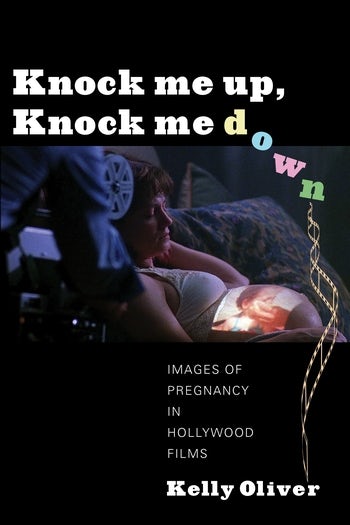
Book Review: Pregnancy and Its Negative Images in Hollywood

Referencing the movie Twilight in a room often draws a mixed reaction. Either people are incredibly interested and ready to contribute their fan experience to the conversation, or they immediately groan and drown out any further discussion. No matter its polarizing tendencies, it is undeniable that Twilight has had a major impact as a social phenomenon. In fact, many aspects within this saga perpetuate 1940s family ideals and traditions onto the pregnant body. Kelly Oliver analyzes this film, and the films before it, in her book Knock Me Up, Knock Me Down: Images of Pregnancy in Hollywood Films, which was published in 2012. Within her book, she emphasizes how, despite pregnancy being more openly seen on television over time, Hollywood has not embraced new feminist thought, but has, instead, kept conservative family values at the forefront of heterosexual movies that depict horror, comedy, and/or romantic plots. 

Knock Me Up, Knock Me Down | Columbia University Press

Born and raised in Spokane, WA, Kelly Oliver now teaches as a philosophy professor at Vanderbilt University and has published articles about the refugee crisis, the prominence of rape on college campuses, and about women in the media for newspapers such as The New York Times. Alongside these achievements, she founded philoSOPHIA, which is a feminist philosophy journal. Born in 1958, Oliver most likely watched the developments of pregnancy on-screen throughout her adolescent years. As a young child, she would not have seen much, as the word “pregnancy” was banned on television until 1959, and women were not allowed to look pregnant for several years later (21). But, as she grew up, there would have been increasing visualizations and normalization of pregnancy on-screen; yet, with these developments came a negative side effect that Oliver explores in the rest of her book. Covering the negative representations of pregnancy in film has helped further a specific aspect of the feminist movement: pro-choice and women’s reproductive rights. By exposing how Western media present all of their characters as pro-life, which feeds into anti-abortion conservative beliefs and force excessive social pressures onto moms to be perfect, Oliver’s scholarship works against this media of influence on younger generation girls.

Using the methods of textual analysis, Oliver focuses on symbolism in shows and cinemas to decipher Hollywood’s representations of pregnancy and and women’s reproductive rights, given the prevalence there of men directors and executives. She also takes the time to chronologize pregnancy in film for us within her monograph. Starting in the early 1600s and 1700s, midwifery was transferred to male control resulting in the medicalization of pregnancy (112). This change in labor ties in with Foucalt’s understanding of male experts taking over many lines of work, and that includes midwifery. During this time, women were advised against exercise and encouraged to complete bed rest in order to not disturb the baby (24). On top of the physical restriction women had, they were told their thoughts negatively impacted the child: that mothers “corrupted by forces outside herself, which cause her to have morbidly perverse fantasies and episodes during pregnancy” had moral insanity which caused horrific and monstrous children (115). Hollywood, in this manner, greatly aligned with First-Wave Feminists who perceived women to be the educators and standard for children’s moral upbringing. Regardless, with pregnancy being seen as a private and delicate matter, pregnancy was never mentioned or shown on film. Additionally, since sex and reproduction were linked in this era, viewers would have seen pregnant characters as less pure than ideal. It is not until the popularity of birth control and the Sexual Revolution in the 1960s that we even see sex on-screen without its former ties to reproduction (66). Nevertheless, the newfound acceptance of sex opened the door for a stronger pregnancy presence in the media; to note, we can also thank Demi Moore’s 1991 nude Vanity Fair illustration for pushing more pregnancy representation as well (37). Although these progressions can be seen as beneficial, it is not without their downsides.   

Oliver demonstrates that throughout the latter of the twentieth century and early twenty-first, Hollywood has increasingly promoted unhealthy and harmful practices via pregnant characters. In one regard, Hollywood’s portrayal of white mothers in comparison to black or Latina mothers is blatantly racist. For white moms that keep an accidental pregnancy instead of aborting the fetus, they are described as “good choice makers” (100) while their black counterparts are seen as having “‘bad’ babies to ‘put on welfare’” (96). Not only is this stereotypical of socioeconomic status, but it also plays into eugenics and the belief that “educated white women have a duty to have babies because they provide the ‘best’ gene pool” (95). Thus, when Hollywood continuously enforces the idea that middle-class white women have happy endings when they have kids, they exclude the notion that women of other races and social classes can as well. But, Hollywood only supports a specific type of middle-class white woman: the ones that push back their careers in favor of building a family first. Often, career-driven women are explained as “bossy” and “racing against their biological clocks” to have children (67;93). These women’s success is blamed for their “baby hunger,” (93) and the impressionable audience is encouraged to have kids younger, else they too will be “racing against their biological clocks” for kids when they are older. In these cases, the women who are ‘too late’ and resort to IVF, are described as less-satisfied than parents with “real” babies (150). Like in the movie The Backup Plan, Hollywood again displays its conservative values by promoting traditional heterosexual relationships over assisted reproductive technologies which do not depend on a heterosexual couple to reproduce. Moreover, Hollywood also makes pregnant women the butt of its jokes in its films. From comedies’ gross-out humor about women’s excessive cravings, ‘larger-than-life’ size, and constant need to pee, movies and television that partake in these tropes consistently do not take pregnant women seriously (79). With the culmination of all these attributes, it is safe to say that the increase in pregnancy in film has not been completely positive.  

Similarly, Twilight has not contributed positive images related to pregnancy. During Bella’s birth in Twilight: Breaking Dawn, we see “the most blood we ever see…associated with birth and women’s role in reproduction” despite previous movies in the series going over vampire wars, hunts, and beheadings (196). These portrayals also reflect the view of “women’s wombs as harboring evil” since Renesmee, Bella’s child, survives by drinking her mother’s blood and ends up temporarily killing her mother in the “nightmarish” labor scene (14,195). This Othering of pregnant women and acknowledging them to be a risk to society exposes how little Hollywood understands about pregnancy and how much they can vilify their pregnancy fears, producing controlling images that shape public ideas about pregnancy. Not only are these fetuses seen as a danger and life-threatening, but knowing that Bella refused to abort the baby continues to show how Hollywood “endorse[s] family values” and disregards abortion as a proper solution to a grave issue (197). END SENTENCE 

Oliver engages feminist scholarship on the general stigmatization of pregnancy, including Julia Kristeva, Iris Young, and Simone de Beauvoir. Julia Kristeva, a French Feminist philosopher of the 1970s and 1980s, “described pregnancy and the maternal body in positive body in positive terms” (4). She and her American follower, Iris Young, do not believe that women have a biological clock and that the urgency for early pregnancy is unnecessary (6). Not only does Oliver agree with these two and that regard, but she also agrees when these two assert that pregnant bodies are not abject or gross, but desirable (21). Where Oliver disagrees with Kristeva is on the topic of assisted reproductive technology: while Kristeva goes against the “automation” of reproduction (34), Oliver values its versatility and ability for people to have kids later without worry. Another stance of disagreement comes up with the value of motherhood. While individuals like Simone de Beauvoir, who never had kids or was married, say that pregnancy “renders women docile,” Kristeva and Young do not. In this instance, Oliver takes a more neutral stance and leaves the value of pregnancy up to each individual woman. Although Oliver agrees with de Beauvoir that biology “never completely defines human beings”, she is not as extreme to believe “that women’s reproductive function limits them and prevents their true participation in the social and political spheres” (23). Another circumstance where Oliver partially agrees is with Young’s hope to “resexualize” pregnant bodies (36). Over time, as the media defined pregnant bodies to be abject and horrific, they were not sexualized and Young acknowledges that “the desexualization of the pregnant body can open up a space for ‘self-love,’” yet insists that, since “Patriarchy is founded on the border between motherhood and sexuality,” mothers should be “resexualized” (36). In this sense, Young understands men as the cause of the initial aversion over pregnant bodies, which would be why motherhood and sexuality were not previously associated. Oliver does not agree that the solution to this border is to sexualize any woman; however, she relents that pregnant women can be desirable and that a “desiring body would be liberating for women” (36). To resist the de-sexualization of pregnant women is a way for expecting mothers to take back their independence and have more control over what people should/should not say about their bodies. 

Across the board, Oliver has made her stance clear on dispositions against and for pregnant women’s bodies, but that does not mean to say she wrote the perfect book. Though her writing covers the depiction of pregnancy as abhorrent in horror films, she never includes how this may apply to transgender or gay couples too. In this book, Oliver highlights how IVF and assisted reproductive technology help older women have children, but she forgets that these same procedures also help same-sex couples or transgender couples have children as well. The failure to mention the importance of non-heterosexual couples now being able to have kids, and how that may also impact Hollywood’s opinion on these procedures, is unfortunate. However, it is important to note that this book was published in 2012; as a result, some of the LGBTQ+ considerations we have now were not as common then. Still, Oliver was successful in other domains of intersectionality. By including examples of Latin and black moms in film, she put the attention away from the typical middle-class, white mom we usually see and recognizes how racism and classism are still prominent issues within Hollywood–and that includes their pregnancy movies. But, the focus solely on live-action films limits her piece. Mentioning other types of media, such as animation, could have also breached how the lack of pregnancy in these genres represents Hollywood’s unwillingness to have pregnant characters–who are impure in Hollywood’s conservative mindset–shown to the younger audiences that consume animated films. Nonetheless, Oliver has done an incredible job in defining and outlining the portrayal of pregnancy in the media across multiple decades. Her book and the scholarship it provides would be a strong resource for any film producers or avid movie-watchers who want to properly and accurately understand how what we see on screen about reproduction does not correlate to the realities of pregnancy today.

Brandon Reid: Nature’s Wild: Love, Sex, and Law in the Caribbean

In the book titled, Nature’s Wild: Love, Sex, and Law in the Caribbean, Andil Gosine takes an interesting approach to demonstrate a global issue of homophobia and general exclusionary attitudes that societies have adopted towards marginalized communities. In this piece Gosine describes these global issues in a way that incorporates experiential storytelling on their experiences, and broader data, laws, and systemic forms of oppression. Before even diving into the book, Gosine’s book cover greets students with an intriguing image of a person blending into a jungle, while holding a rooster. By starting with this image, Gosine invites readers to pause and contemplate the message that is being conveyed, as it pairs beautifully with what is represented in the actual book. In this book report, I will share my perception of the work’s content.

Continue reading “Brandon Reid: Nature’s Wild: Love, Sex, and Law in the Caribbean” →

Book Review: Archiving Mexican Masculinities in Diaspora

Gender roles have always been present in relationships. With any orientation, these masculine and feminine roles create expectations on how to act, dress, and conduct oneself in a relationship. Masculinity in relationships can be overpowering, especially in diaspora, the dispersion of peoples from their homeland. In Mexican culture, this can lead to Machismo, the concept of the ideal Mexican man. Having machismo can lead to being patriarchal and sexist. However, the role of a male figure amongst these Mexican diasporic relationships are not always like this. In Nichole Guidotti-Hernández’s most recent book, Archiving Mexican Masculinities in Diaspora, she collects the visual archives from Enrique Flores Magón and Leonard Nadel to document and interpret intimacy across relationships amongst Mexican men during the late 1800’s and early 1900’s.

The book is separated into two sections, each with their own conclusion. The first half of the book follows the gendered migrations and life of Enrique Flores Magón, a Mexican anarchist. Guidotti-Hernández focuses on Enrique’s virility amongst his relationships around the time he fled to El Paso, Texas. Guidotti-Hernández notes the masculine style of his word choice when writing letters throughout his life, drawing attention to his masculine virility. With Enrique’s first relationship, being with Paula Carmona, it is possible that his virility caused a breakup. Despite Paula having visual evidence of their relationship, Enrique did not, erasing the relationship from his side. The reason why this relationship was problematic in diaspora is because of Enrique’s masculinity – he was patriarchal and misogynistic. This shows how heteronormative gender roles can affect one’s intimate relationship in diaspora. The second half of the book looks at the homoerotic conflicts within the bracero program captured by photojournalist Leonard Nadel. Guidotti-Hernández says that Leonard traveled over five thousand miles with for his photojournalism, focusing on his bracero subjects from their homes in Central Mexico to processing centers in the United States and labor camps. In Leonard’s photographs Guidotti-Hernández traces the tensions between two sides of the braceros’ identity; one side represents braceros in a more mainstream image, being seen as the typical masculine character. However, the other side shows same-sex relationships between the Mexican laborers. Hernández exposes the unseen side of bracero life to show that feminine masculinity and homoeroticism livened bracero life and culture while avoiding the dominant influence of Mexican patriarchy and heterosexuality. The book is wrapped up with the conclusion of the relationship between Mexicans separated by the border. Despite a lack of solidarity, these Mexican communities developed political connections that were highly emotive and intimate through their agitation for labor rights. What we learn from the changes that occurred between anarchists of the 1910s and 1920s and braceros in the 1950s has to do with how emotional bonds and attachments were forged. Both the archives of Enrique Flores Magón and braceros required narration against machismo. This is because Mexican male migration patterns and narratives of sociality are interpreted through machismo.

The author of this book, Nichole M. Guidotti-Hernández, is currently a professor of English at Emory University. Her first book is Unspeakable Violence: Remapping U.S. and Mexican National Imaginaries, which is about the epistemic and physical violence that racialized and gendered peoples faced in the U.S. Mexico border from the mid 1800’s to the early 1900’s. Guidotti-Hernández has also written many articles for the feminist magazine Ms. and the feminist blog The Feminist Wire, discussing various topics from immigration to reproductive rights. Archiving Mexican Masculinities in Diaspora is her second and most recent book. This book can be applied to wider research or career trajectories involving Gender Studies and Latinx Culture and Literature Studies.

In Archiving Mexican Masculinities in Diaspora, there is an emphasis on visuals, hence why a lot of the research material used is photos and artwork. Most analyses are of the photos, as Guidotti-Hernández says that Photographs capture the best state of something. The archives of Enrique Flores Magón and of Leonard’s photography have been carefully selected to tell historical narratives. Guidotti-Hernández’s display of visual archives includes photos, artwork, police reports, newspaper reports, and personal letters. When analyzing, Guidotti-Hernández describes the background information of the image then ties its connection to the main topic at hand. For example, in the section of Enrique Flores Magón, there are two sketches by him of Paula Carmona, his first wife. Guidotti-Hernández gives us context about Enrique’s relationship with Paula, saying that they show an intimacy that counters Enrique’s narratives, yet he erases his relationship with Paula. He makes the false claim that he was married to his second partner, Teresa Arteaga, around the time he was in El Paso in 1908. Despite Enrique saying he married his second wife Teresa Arteaga by 1905, he still showed his love for Paula by creating art in 1908.

One strength of Archiving Mexican Masculinities in Diaspora is its in-depth analysis on every visual archive provided. By doing so, each archive reflects the effects of Mexican masculinity across time, relationships, and the location of the partners. As a result, Archiving Mexican Masculinities in Diaspora provides a look at gender dynamics of migrants from the mid-1800’s to the early 1900’s. These analyses also provide insight into the different types of relationships found in Mexican culture, such as father-son as well as partners and lovers, from homosocial and heteronormative. Another strength of this book is its connections to other cultures that had diasporic communities. In her section examining Leonard Nadel’s photography, Guidotti-Hernández brings attention to communities such as Japanese American sharecroppers and German prisoners of war. For example, she brings up how there were laborers imported from Japan to work with braceros during berry picking season. Guidotti-Hernández says that the history of multiethnic labor and racialized forms of capitalism were created by the homosocial labor conditions for Japanese and Mexican workers along with Japanese share cropping families. The connection between the two cultures emphasizes the effect of racialized capitalist systems that created these diasporic communities amongst laborers.

One potential weakness of Archiving Mexican Masculinities in Diaspora is that it feels drawn out at times. The book does sometimes feel longer than it should be, especially when analyzing its visual archives. While Guidotti-Hernández does a great job gathering and utilizing evidence to get a point across, sometimes it feels like there is too much being explained. This is a minor complaint for the book overall, as the number of visual archives presented to the reader does not shallow her overall message from the book. Depending on how you look at it, the plethora of archives presented only strengthens the claim.

Overall, I think that Archiving Mexican Masculinities in Diaspora does a great job explaining diasporic masculinity and how it reflects gender roles of Mexican culture. When looking at the intimacies of diasporic relationships, Guidotti-Hernández emphasizes the effects of virility and machismo within them. This is done by looking through the public and private aspects of Enrique Flores Magón’s relationships and looking at the two-sides of masculinity within bracero life captured by Leonard Nadel’s photography. This book was informative showing how Mexican masculinities formed by becoming outsiders through diaspora. I would recommend this American studies and ethnicity, gender studies, Latinx studies, and Latin American studies.