Feminist Mixtape: What’s Up by 4 Non Blondes

“What’s Up?” was a pop, smash hit released in 1992 by the band 4 Non Blondes ahead of their debut album Bigger, Better, Faster, More!. The alternative rock band, originating in San Francisco, California, immediately stood out amongst its peers due to being made up entirely of women. This was an incredibly rare thing in music at the time, especially in the rock genre. The band prided itself on being unique and non-conformative which is partly the reason for choosing the peculiar name 4 Non Blondes. This lack of conformity can further be seen within the lyrics of the song.

The lyrics for “What’s Up” were originally written by lead singer Linda Perry as she worked as a waitress years before joining the band. In its opening, Perry describes her feelings of being stagnant in life and expresses her infuriation towards the patriarchal institutions that contribute to the difficulties of trying to achieve your dreams as a woman. She says, “I realized quickly when I knew I should, that the world was made up of this brotherhood of man”.  This sentiment questions womanism and is incredibly similar to that which Betty Friedan spoke about in The Feminine Mystique. Friedan talks about the unhappiness created by the existing gender roles and women pondering “Is this all?” (Friedan 271). She further opens up by admitting that sometimes she cries in bed about and even screams out in exasperation, “What’s Going On?”. This phrase is echoed for almost all of the remainder of the song as Perry voices her disbelief that such institutions even exist and persist in the first place. It is important to note Perry’s position as a radical, as she calls out the patriarchy as well as calls for, in her own words, “a revolution”. I would argue that her position as one and her overall message, are relatable to those of famous Black radical Angela Davis. Davis was an incredibly powerful part of the Black empowerment movement, working within the Black Panther Party to push for the advancement of Black people. She is notable for also helping to strengthen the role of Black women within the party, which had originally been created with the express purpose of bettering Black men. Davis protested vehemently against existing, oppressive structures and was beaten, jailed and vilified for this work. Through her calls for revolution, Perry is carrying on this radical tradition.

Although she does not explicitly state it within the lyrics, I would argue that Perry is also speaking on the behalf of the LGBTQ community as she herself was a proud lesbian. During their rise to fame in San Francisco, the band performed at many lesbian bars and picked up a somewhat cult following with the local queer community. It wouldn’t be a longshot to say that Perry had them in mind when writing her lyrics. At the time, the climate surrounding the LGBTQ community may have been a daunting force that prevented her from speaking more explicitly on the subject within this song, which I see as a slight limitation. Regardless, the song speaks out against the established, oppressive patriarchal institutions thus making it radical and deserving of its spot in the history of music.
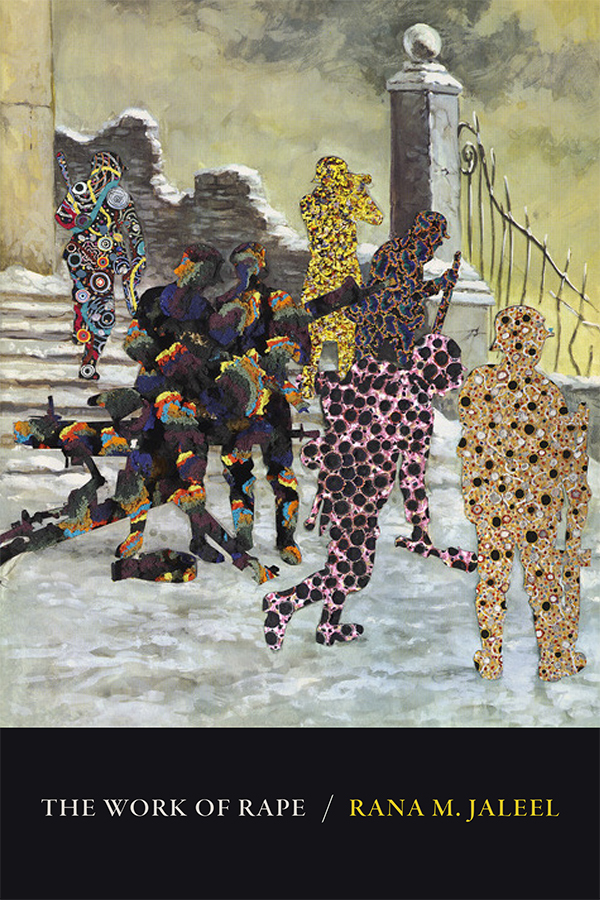
The Work of Rape: An Analysis of Rape and Its Redefinition

Book cover for The Work of Rape by Rana M. Jaleel

For as long as humankind has existed, so has the potential for humans to commit acts of unfathomable, immoral depravity upon one another. One need only take a glimpse into a historical text cataloging the past of any modern nation or region if they wish to be met with accounts of violence and conflict. Violence and conflict so atrocious, so steeped in cruelty, that one may doubt that they could have possibly even occurred at all, let alone at the hands of mere humans. Yet sadly, this is the truth of the matter. From our origin mankind has miraculously progressed and evolved to be able to create unbelievable innovations that better our quality of life and marvelous works of art that encapsulate the beauty of life itself. Yet, as a species, we have failed to outgrow our seemingly innate penchant for violence amongst one another. It is with this goal in mind that nations not only formulate laws to punish those who would commit violence against others but also join with one another to hold entire countries accountable for committing such acts of violence on a much larger scale. Committees such as the United Nation are well-reputed as to being strongly in vocal opposition to instances of mass murder and genocide which they define in-depth, yet it was not until the 1990s, a mere fifty years after the group’s conception, that the United Nations began to take steps towards prosecuting perpetrators of mass rape.  The belatedness of said decision is shocking as rape is widely regarded as being a disgusting, dehumanizing act akin to, if not worse than murder. It is this issue of mass occurrences of sexual violence and their treatment within national law that Dr. Rana Jaleel, Professor in the Department of Gender, Sexuality, and Women’s Studies at the University of California, explores in depth in her book titled The Work of Rape.

In her work, Jaleel creates a comprehensive analysis of the driving forces behind the United Nation’s decision to define mass rape as not only a crime, but a crime against humanity, and genocide. Jaleel also explores how that definition has existed in disagreement with various United States policymaking decisions. Jaleel posits that it is primarily due to global instances of mass rape such as that which occurred during the Bosnian and Rwandan Genocides, as well as the tireless efforts of feminist scholars, that rape was redefined on the global scale to not be seen as independent acts of individuals within larger conflicts, but as an internationally punishable crime against humanity and genocide. Jaleel finishes her argument by stating that said redefinition was not an isolated event and that as legislation continues to be passed by countries such as the United States, the act of rape will continue to be redefined and fleshed out.

Jaleel’s argument is strengthened by her own qualifications as a respected scholar in the field of Gender and Sexuality Studies. She has obtained her PhD in American Studies, her JD from the Yale Law School, and her MFA in Poetry. Currently, she is an assistant professor in the Department of Gender, Sexuality, and Women’s Studies at the University of California, but prior to this she worked as the Center for Reproductive Rights Fellow at Columbia Law School. Although this is her first published work, it reflects a deep knowledge of the subject and is indicative of just how much she has to offer the field of Gender and Sexuality Studies. This work seems to be a steppingstone in her goal of exploring how concepts like reproductive labor, sex/gender, race, property, and sexuality are sustained or redefined through the recognition and analysis of harm, and what a great start she is off to.

Continue reading “The Work of Rape: An Analysis of Rape and Its Redefinition” →

Washing Ourselves of Racism: Colorism in Media

International product advertisements are oftentimes the subjects of laughter for people around the world due to the presence of many cultural references or jokes that simply don’t translate well. Although these advertisements may not necessarily bring upon waves of international sales, they still usually manage to bring about fun conversation and good times. However, in the case of a viral advertisement for Qiaobi, a Chinese laundry detergent company, the only feelings being brought out of viewers are confusion and disgust. The advert, created to target Chinese audiences, was intended to be an outlandish, comedic take on just how effective Qiaobi detergent is at fighting dirt and grime to provide the most pristine clothes possible with every washing cycle. Ironically, all the advertisement has done is drug the company’s name through the mud. In a decision that can hopefully be defined as an ignorant, uninformed mistake instead of a prejudiced attack, the company decided that the best possible avenue for displaying the product’s cleaning power was to wash the melanin off of a black man. If this jumps out at you as being completely inappropriate and offensive, then congratulations; You’re at least not a blatant racist. Unfortunately, this advertisement is, in addition to some of its misogynistic elements.

The advertisement opens with an appearance of normalcy as it focuses on a young Chinese woman putting a load of laundry into a washer. However, the peaceful scene is immediately interrupted by the entrance of a black man covered in paint who stares at the woman provocatively before catcalling her. This scene is already triggering as it seems to paint catcalling, an offensive, misogynistic practice that many women, unfortunately, have to experience, as acceptable. Delving deeper into the scene, one can easily see how it upholds the racist idea that black people are sexually deviant, predatory creatures. These notions date all the way back to the Jim Crow era South where they were adopted by the white populace, still reeling from their defeat in the civil war, in order to accuse black men of rape and justify public lynchings.  This allowed the Southern community to put fear in the hearts of the local black populace while simultaneously supporting the power of the white authority in America. Unfortunately, these sentiments did not remain in America and have instead infected the cultures of countries across the globe. This can be seen in India where skin lightening creams are heavily marketed as the only way for women to be attractive or in countries such as Venezuela where the media is dominated by fair-skinned women. In addition to these issues, the scene itself is just unnecessarily triggering. Women experience harassment continuously in our problematic society, and this is only made worse by the trend in media to continuously use situations such as this just to add drama. Honestly, why does a commercial about laundry detergent need harassment to get its message across? Surprisingly, the woman beckons the man forward and seemingly reciprocates his attraction but instead shoves the man into the washer, before turning it on. I can honestly admit that I am a big fan of cartoonish violence in the right context, but I can’t help but feel uneasy about the image of a black man being roughly forced into a washing machine. The washing machine runs for a few seconds and then through some manner of tv commercial magic, the man exits the machine. However, when he exits the washing machine, he is now a fair-skinned Chinese man, much to the woman’s approval. We the viewer are then reminded that this is somehow supposed to be a commercial for laundry detergent when the company the logo appears on the screen as their signature jingle plays. This scene highlights the largest, most glaring issue within the ad, which is that it pushes the narrative that blackness is tied with impurity and filth while on the other hand whiteness is connected to purity and cleanliness. This sentiment is not a new one as it has been used to justify and further prejudice against all colored peoples.

The aftermath of the 1898 Wilmington Massacre where white citizens forcefully usurped the democratically elected interracial local government

Racism and colorism run so deeply in our society as humans that even our vocabulary reflects it. For evidence of this one only needs to delve into the pages of a dictionary of the English language. In the entry for the word “black”, we see definitions such as “dirty” and “characterized by hostility or angry discontent”. On the other hand, under the term “white” we see definitions such as “free from moral impurity” and “favorable”.  

Advertisements such as this one only serve the purpose of further ingrain these notions into our vocabulary and minds. It’s glaringly obvious why this advertisement went viral and rightfully received its badge of notoriety. One has to wonder; how did the advertisers think viewers with black skin (that doesn’t come off) would feel? Or did they simply not care?