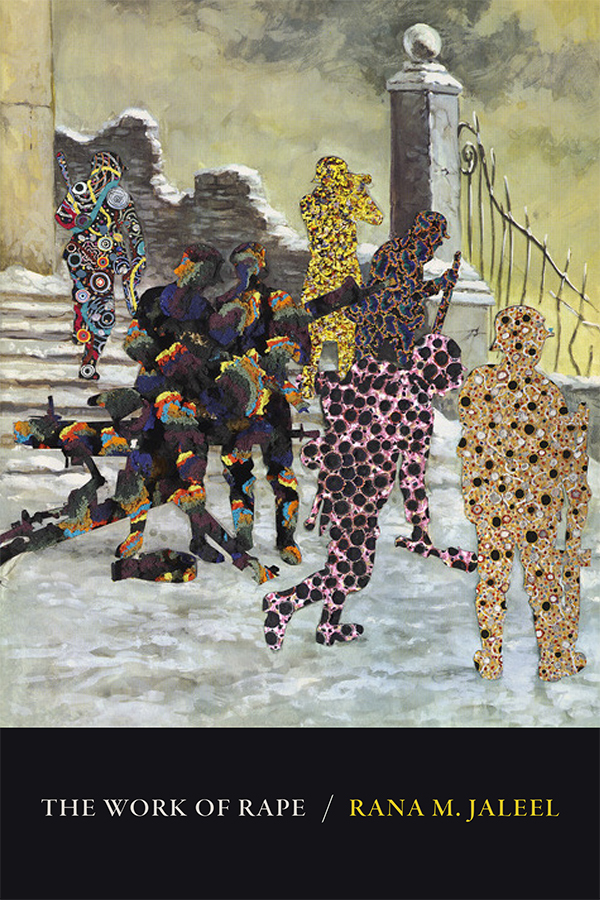

For as long as humankind has existed, so has the potential for humans to commit acts of unfathomable, immoral depravity upon one another. One need only take a glimpse into a historical text cataloging the past of any modern nation or region if they wish to be met with accounts of violence and conflict. Violence and conflict so atrocious, so steeped in cruelty, that one may doubt that they could have possibly even occurred at all, let alone at the hands of mere humans. Yet sadly, this is the truth of the matter. From our origin mankind has miraculously progressed and evolved to be able to create unbelievable innovations that better our quality of life and marvelous works of art that encapsulate the beauty of life itself. Yet, as a species, we have failed to outgrow our seemingly innate penchant for violence amongst one another. It is with this goal in mind that nations not only formulate laws to punish those who would commit violence against others but also join with one another to hold entire countries accountable for committing such acts of violence on a much larger scale. Committees such as the United Nation are well-reputed as to being strongly in vocal opposition to instances of mass murder and genocide which they define in-depth, yet it was not until the 1990s, a mere fifty years after the group’s conception, that the United Nations began to take steps towards prosecuting perpetrators of mass rape. The belatedness of said decision is shocking as rape is widely regarded as being a disgusting, dehumanizing act akin to, if not worse than murder. It is this issue of mass occurrences of sexual violence and their treatment within national law that Dr. Rana Jaleel, Professor in the Department of Gender, Sexuality, and Women’s Studies at the University of California, explores in depth in her book titled The Work of Rape.
In her work, Jaleel creates a comprehensive analysis of the driving forces behind the United Nation’s decision to define mass rape as not only a crime, but a crime against humanity, and genocide. Jaleel also explores how that definition has existed in disagreement with various United States policymaking decisions. Jaleel posits that it is primarily due to global instances of mass rape such as that which occurred during the Bosnian and Rwandan Genocides, as well as the tireless efforts of feminist scholars, that rape was redefined on the global scale to not be seen as independent acts of individuals within larger conflicts, but as an internationally punishable crime against humanity and genocide. Jaleel finishes her argument by stating that said redefinition was not an isolated event and that as legislation continues to be passed by countries such as the United States, the act of rape will continue to be redefined and fleshed out.
Jaleel’s argument is strengthened by her own qualifications as a respected scholar in the field of Gender and Sexuality Studies. She has obtained her PhD in American Studies, her JD from the Yale Law School, and her MFA in Poetry. Currently, she is an assistant professor in the Department of Gender, Sexuality, and Women’s Studies at the University of California, but prior to this she worked as the Center for Reproductive Rights Fellow at Columbia Law School. Although this is her first published work, it reflects a deep knowledge of the subject and is indicative of just how much she has to offer the field of Gender and Sexuality Studies. This work seems to be a steppingstone in her goal of exploring how concepts like reproductive labor, sex/gender, race, property, and sexuality are sustained or redefined through the recognition and analysis of harm, and what a great start she is off to.

Jaleel begins her book by describing the two most evident catalysts in the United Nation’s decision, the Bosnian and Rwandan genocides. She analyzes these events while both looking at the accounts of witnesses as well as the official information gathered by the United Nations Both events are best described as being organized, region-wide conflicts with the goal of wiping out an ostracized ethnic group. Mass rape was also heavily prevalent during these genocides which should come as no surprise as rape has always functioned as a tool of racial terror enabled by those in power. In the case of the Bosnian Genocide, the Serbians were the aggressor and aimed to eliminate local populations of Muslim Bosnians as well as Croatians. Not only did they attempt to achieve this goal by murdering Bosnian and Croatian men, but they also sought to genetically eliminate them through mass rape campaigns encouraged by military leaders. Unlike in cases of mass rape like those that occurred in the American South during the reign of slavery, babies produced as a product of the act were not seen as dirty, but as clean and pure Serbians. In Rwanda, conflict occurred due to property shortages and famine but was amplified due to the centralization of power to institutions led by the Tutsi clan. Tempers of the Hutu clan eventually erupted leading to a campaign to eliminate the local Tutsi population. Once again, mass rape was prevalent during this conflict. These instances of mass rape shocked world leaders, as up until this point rape during conflict was defined as, and considered to be sporadic, unplanned, and independent actions carried out on the individual level. Although these events were indeed a catalyst in the redefinition of rape, Jaleel takes great care to emphasize the role that radical feminist scholars had as well. Scholars such as Catharine MacKinnon studied movements such as that of Latin America during the 1970s, where feminists redefined cases of domestic abuse as torture, thus bringing them into the jurisdiction of international law. MacKinnon then used this strategy in her defense of several women’s groups where she linked wartime rape to genocide and saw great success. To finish her argument, Jaleel presents multiple instances of American Policymaking that redefine rape, the most significant being the passing of the Millennium Challenge Account by President Bush. The MCA as stated by President Bush “provides legal protections that ensure our military and intelligence personnel will not have to fear lawsuits filed by terrorists simply for doing their jobs”. The MCA does this by stripping personhood from any individuals that the United States chooses to deem a domestic threat. Jaleel ponders how the United States could globally take a stance against torture and rape, while still having widespread, unprosecutable instances of said offenses in their detention centers in Abu Ghraib and Guantanamo Bay.
I find Jaleel’s use of historical events and policies as evidence to be her biggest strength within this work. Throughout her work, she takes great care to go in depth in her analysis of trials against war criminals, mass genocides, and United States policy shifts so that the reader can fully understand and comprehend the sentiments of lawmakers on rape as time has progressed. Through her cataloging of rape’s history and redefinition, she provides the reader with an experience akin to that of watching an infant grow and develop into an adult right before our eyes. After reading her work, my only criticism, though minor, is that her text omits the present endemic of rape within American institutions of higher learning. It seems as if instances of rape and sexual assault have become more common, or at least more visible, yet consequences are rarely significant. It would have been incredibly informative and worthwhile for Jaleel to speak on these cases as she herself works at one of these institutions and most likely has more insight than the average person.
Ultimately, I enjoyed this work as much as one possibly can when exploring such a gloomy subject. I was thoroughly impressed by Jaleel’s overall knowledge of the subject and her ability to deftly explain it to the layman without omitting the key details of her argument. I would enthusiastically recommend this book to lawmakers considering policy surrounding the prosecution of rape as well any persons who hold positions in higher education whether they be title IX coordinators or guidance counselors.
I thought this was a very insightful review into mass rape. While this book seems rather sad, it seems as though it can serve a good purpose for educating the general public about some of the horrific cases of sexual violence. I recently saw that Russian soldiers were raping Ukrainian women in the news, which further proves that mass rape is a prevalent that must be addressed.
Those were exactly my thoughts. It is imperative that we define these acts so that we can prosecute those who would commit such crimes against humanity