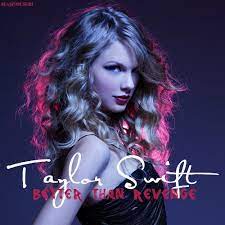
Taylor Swift is a feminist! That is, until another woman gets between her and her boyfriend. While Taylor Swift, singing and song-writing icon, is commonly known for writing songs that blatantly call out misogynist and sexist stereotypes, Better Than Revenge employs a narrative that engages in slut-shaming and the reinforcement of sexist ideas.
Better Than Revenge is Swift’s confrontation with a woman she blames for her messy breakup. In the song, Swift viciously attacks this woman’s character, dignity, and sense of self-respect, painting her as sex-obsessed and superficial. She accuses her of “stealing” her boyfriend from her and paints a narrative in which As a white, cis, heterosexual celebrity, Swift maintains a very strong sense of superiority. Although she speaks from an incredibly privileged perspective, she victimizes herself and continuously slut-shames the woman. She utilizes a sanctimonious tone, asserting that she is above the other woman, who she describes as malicious, disgraceful, and ugly for her actions. The tone and lyrics of Better Than Revenge make for an incredibly condescending and bitter outburst of blame and accusations against the other woman in the situation. Never during the song does Taylor attack her ex boyfriend, whose fault is not recognized.
Swift’s lyrics slut-shame and degrade the woman she believes stole her boyfriend. The song begins with a recording of Swift saying, “now go sit in the corner and think about what you did.” Swift refers to the other woman as a little girl, and that she views her as childish and immature for her actions. Other lyrics like “she came along got him alone and let’s hear the applause, she took him faster than you could say ‘sabotage’” reinforces the idea that women’s desire for men is so crazed and uncontrollable that women devote all of their energy toward attaining men, even by malicious means. Swift shifts to shaming the woman, claiming that “she’s not a saint, she’s not what you think, she’s an actress.” This insinuates that women should remain pure, as phallocentric mainstream ideas promote the desirable innocence of such purity. With her reference to being an “actress,” Swift includes the idea that many women feel pressure to act in ways that appeal to the male gaze, whether it be through sexualizing oneself or maintaining a “wholesome” image. Swift’s lowest blow comes next, as she claims that “she’s better known for the things that she does on the mattress.” By objectifying the woman, Swift reinforces the common idea that women are only good for sex. She also shames her for being very sexually active, reinforcing the stigma around sex.
Overall, Better Than Revenge strengthens mainstream ideas about women needing men to feel fulfilled, women needing to maintain innocence to be desirable, and women disgracing themselves and their image by engaging in sexual behaviors. Swift, who is rarely called out for her degrading lyrics, released this petty anthem probably unaware of the stereotypes this song reinforces.
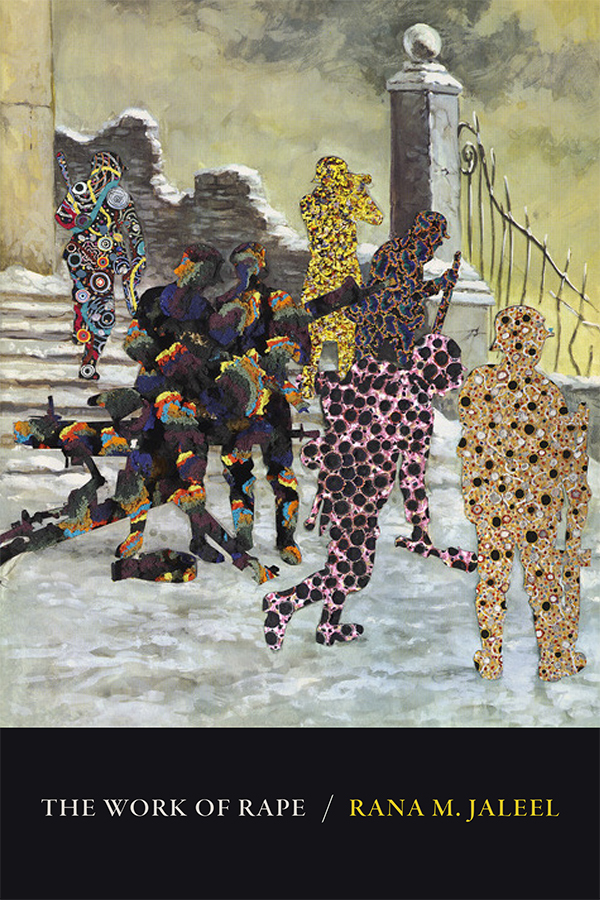
For as long as humankind has existed, so has the potential for humans to commit acts of unfathomable, immoral depravity upon one another. One need only take a glimpse into a historical text cataloging the past of any modern nation or region if they wish to be met with accounts of violence and conflict. Violence and conflict so atrocious, so steeped in cruelty, that one may doubt that they could have possibly even occurred at all, let alone at the hands of mere humans. Yet sadly, this is the truth of the matter. From our origin mankind has miraculously progressed and evolved to be able to create unbelievable innovations that better our quality of life and marvelous works of art that encapsulate the beauty of life itself. Yet, as a species, we have failed to outgrow our seemingly innate penchant for violence amongst one another. It is with this goal in mind that nations not only formulate laws to punish those who would commit violence against others but also join with one another to hold entire countries accountable for committing such acts of violence on a much larger scale. Committees such as the United Nation are well-reputed as to being strongly in vocal opposition to instances of mass murder and genocide which they define in-depth, yet it was not until the 1990s, a mere fifty years after the group’s conception, that the United Nations began to take steps towards prosecuting perpetrators of mass rape. The belatedness of said decision is shocking as rape is widely regarded as being a disgusting, dehumanizing act akin to, if not worse than murder. It is this issue of mass occurrences of sexual violence and their treatment within national law that Dr. Rana Jaleel, Professor in the Department of Gender, Sexuality, and Women’s Studies at the University of California, explores in depth in her book titled The Work of Rape.
In her work, Jaleel creates a comprehensive analysis of the driving forces behind the United Nation’s decision to define mass rape as not only a crime, but a crime against humanity, and genocide. Jaleel also explores how that definition has existed in disagreement with various United States policymaking decisions. Jaleel posits that it is primarily due to global instances of mass rape such as that which occurred during the Bosnian and Rwandan Genocides, as well as the tireless efforts of feminist scholars, that rape was redefined on the global scale to not be seen as independent acts of individuals within larger conflicts, but as an internationally punishable crime against humanity and genocide. Jaleel finishes her argument by stating that said redefinition was not an isolated event and that as legislation continues to be passed by countries such as the United States, the act of rape will continue to be redefined and fleshed out.
Jaleel’s argument is strengthened by her own qualifications as a respected scholar in the field of Gender and Sexuality Studies. She has obtained her PhD in American Studies, her JD from the Yale Law School, and her MFA in Poetry. Currently, she is an assistant professor in the Department of Gender, Sexuality, and Women’s Studies at the University of California, but prior to this she worked as the Center for Reproductive Rights Fellow at Columbia Law School. Although this is her first published work, it reflects a deep knowledge of the subject and is indicative of just how much she has to offer the field of Gender and Sexuality Studies. This work seems to be a steppingstone in her goal of exploring how concepts like reproductive labor, sex/gender, race, property, and sexuality are sustained or redefined through the recognition and analysis of harm, and what a great start she is off to.
War and social media have coexisted for the last two decades or so, however, the role social media is playing in the recent Russian invasion of Ukraine stands out from other ongoing conflicts, whether it be the current bombardment and mass starvation of Yemen, the ongoing civil war in Syria, or the practically invisible suppression of West Papuans in their prolonged struggle for independence. I contend that the distinction lies in the way the Western world is responding to the crisis in Ukraine. As a very active American consumer of social media, primarily on Instagram and Twitter, I have noticed an outpouring of support for Ukraine from my American peers previously averse to posting on matters of politics and current events as well as from American and European individuals and institutions with prominent social media followings, including corporations, celebrities and government officials (see images below). These individuals and institutions are what I am referring to when I say “the Western world.” Even my own college of Davidson in North Carolina is currently flying the Ukrainian flag beneath the American one in the center of campus.
I am pointing out this distinction that is the Western world’s response to the war in Ukraine because I think it can teach us an important lesson on a) the political construction of whiteness, b) how race and gender influence how the West perceives and responds to human suffering around the world, c) who is entitled to resistance to violent aggression in the eyes of the West, and d) who is given unequivocal support from the West in their respective fights against imperialist aggression.
I will perform my analysis using a TikTok I encountered on Twitter depicted below. First of all, for a TikTok to make it onto Twitter, especially the politics-focused Twitter spaces I am a part of, it needs to be one that is very prominent and being widely discussed and shared. In the case of this TikTok, it had over 750,000 likes, 16,000 comments and 15,000 shares and 14.2 million views alone at the time that I encountered it. The TikTok itself centered a horizontal video of a young girl confronting a taller and armed male soldier. The video follows the girl as she yells at the solider who responds by walking away and laughing. The environment in the background resembles a desert with a sandy road and hardly any trees. For a moment at the end, the video cuts to an old woman who is crying being interviewed by RT, a Russian media outlet. Above the video, there is text that reads: “LITTLE GIRL TRY TO STOP” followed by two broken heart emojis and a sad face emoji, which is then followed by: “PRAY FOR UKRAINE” [Ukrainian flag emoji] [broken heart emoji]. The caption for the TikTok read: “#ukraine #army #fyp #fyyyyyyyyyyyyyyy #RUSIA #emotional.” The TikTok was posted by @staystrongukrainee, which had 127,400 followers on the app, and now appears to have been removed (most likely for spreading misinformation).
As evidenced by the strange caption and the questionable editing of the video, this TikTok exhibits many standard “red flags” of misinformation. In fact, the TikTok is an example of misinformation as the video it references as depicting Ukraine is really a ten-year-old video depicting a Palestinian girl named Ahed Tamimi confronting an Israeli soldier in the Palestinian territory known as the West Bank. It is precisely the fake nature of this TikTok that interests me the most, as I believe its ability to exist as a piece of misinformation to illicit support, solidarity and sympathy for Ukraine in the current conflict reveals a lot about the political construction of whiteness, as well as the role of race and gender in shaping Western discourse around the Ukrainian conflict specifically, but also war and resistance in general.
First and foremost, I want to speak on this video’s ability to be used as a tool for misinformation and how that is related to whiteness. Ahed Tamimi, who has blonde hair and a fare skin tone, is white passing.
Before I delve into this, I want to touch on the history of this term. “Passing” was first used in runaway slave notices from 19th century America, which Andrea Guzman claims “brings us back to the tension between being white and being free. Are they really the same thing?” This history is significant as it reveals that the concept of “passing” for white is a political construction with implications of power and freedom. It also reveals the fact that whiteness has historically been a threshold demarcated by upper-class, property-owning white people. The runaway slaves could not decide themselves whether they were or were not white passing, but rather their whiteness was contingent on the whims of white people as revealed by the fact that poor white people were sometimes cast as “mulatto” by other whites and sold into slavery.
This is all related to the case for Ahed Tamimi in this example of misinformation as it was her white appearance that allowed this video of her to be repurposed for the Ukrainian conflict, which is situated in a country where the majority of the population has fare skin and, in some regards, is considered white. In fact, some journalists are noting how the skewed coverage of the Ukrainian conflict compared to others around the world (Syria, Yemen, Somalia and West Papua as some examples) is due to its nature as a nation of white people. Another source astutely classified the skewed nature of the coverage as “blatant racism.”
But while Tamimi’s white passing appearance has allowed an account like @staystrongukrainee to co-opt and frame her resistance against the Israeli soldier to be an assumed example of resistance from a Ukrainian girl against a Russian soldier, Tamimi’s identity as a Palestinian, and therefore a non-white, non-Western individual, did not afford her resistance to Israeli aggression the same level of support and sympathy from the Western world that has been afforded to cases of Ukrainian resistance against Russian aggression. Kuan-Yun Wang, in an analysis of American and Canadian media coverage of Tamimi notes that “the media frame Tamimi and the Palestinians as violent initiators.” Wang found that the media also decry her persona as “fake’ and ‘propaganda,'” all of which Wang claims to “achieve the purpose of legitimising the use of state violence on colonised bodies, which ultimately reflects settler-colonial history in North America.” In terms of Tamimi’s reception in Israel, one member of the Israeli government has called her a terrorist, while the current Prime Minister, and Education Minister at the time, Naftali Bennett stated Tamimi deserved to be incarcerated for life following another instance of her slapping a soldier in 2018, which she served time in prison for. I will also speak on popular gendered tropes used against Tamimi in Israel later on.
This is all in stark contrast to the women in Ukraine who have taken up armed resistance against the recent Russian aggression and have been hailed by Western media outlets (examples: France24, Vanity Fair,Slate) and labeled as “brave” and as “heroes,” as seen in the tweets below.
While Tamimi’s relation to whiteness (being non-white but white passing) has impacted the way her resistance is received and, in this case, commodified to illicit certain reactions, her gender has also been used to further delegitimize her resistance, unlike the case of the Ukrainian women. For example, Yasmeen Serhan in an article for The Atlantic noted that “a young girl known for her long, curly hair isn’t the image one might typically come to expect of a national freedom fighter.” While the validity of Tamimi’s status as a “hero” figure is questioned due to her age, appearance and gender, the Ukrainian women being heralded on Twitter and in the media are not subjected to such scrutiny, even when, in another case of misinformation used to illicit support for Ukrainian women fighters, the women are wearing neo-Nazi symbols on their bullet-proof vests. Additionally, I have yet to come across any source that labels the Ukrainian women fighters as “fiery,” which is the sexist term The Mirrorused to characterize Tamimi.
The fetishization of Tamimi’s hair is also very prevalent in media and individual accounts of her. The Washington Post described the appearance of her hair as “wild locks swept up in a hair band,” which is yet another example of the emphasis on Tamimi’s supposed feistiness and “wild” nature, which is notably not how men, or the Ukrainian women I’ve referenced, that participate in resistance are ever described. A popular nickname for Tamimi among Israelis and others is “Shirley Temper,” which both fetishizes her hair, in its reference to the hair of Shirley Temple, and weaponizes her gender as something that is associated with rage. The general focus on her hair above everything also points to a form of dehumanization that Tamimi, and not the Ukrainian women, experience.
Other accounts of Tamimi have described her as a “metoo heroic victim” and have classified her resistance as “provocative,” which is yet another sexist term commonly used to objectify and victim-blame women. One Twitter user, who notably has their profile picture set as the Ukrainian flag, objectifies Tamimi in referencing her “usefulness.” They wrote: “Shirley Temper’s arrest was the grand finale of her parents’ grooming. Now that she’s no longer a photogenic little girl, she’s no longer useful.”
Returning to the focus of this analysis, it is clear from these examples that resistance to violent aggression is not created equal according to the West. While Ukrainians are heralded for resisting the violent invasion of Russia, Palestinians like Tamimi who resist the violence of Israeli soldiers (unarmed, in the case of Tamimi) are put under intense scrutiny, delegitimized, objectified and ridiculed. Additionally, it is clear race and gender play key roles in how resistance to violence is negotiated and classified by the West. As evidenced by the TikTok I’ve been referencing, the political construction of whiteness, and its ability to be weaponized at the whims of those looking to achieve certain goals, also plays a key role. Tamimi’s white passing appearance was weaponized to create misinformation to illicit Western sympathy for Ukraine, while her identity as a non-white Palestinian girl (at the time of the 2012 video) complicated and invalidated her actual act of resistance in the eyes of the West.
Tamimi’s relationship to whiteness can be understood using the words of Bree Newsome Bass, an artist and organizer based in North Carolina, who writes that “The ongoing conflict in Eurasia again shows that whiteness is not an ethnicity but a fluid power construct, a product of colonialism, where inclusion/exclusion fluctuates largely according to the whims of the ruling white elite. Where is the dividing line between Europe & Asia? Between East & West? Between European & non-European? Between white & nonwhite? Anti-Black racism remains the only constant that holds this fragile construct together. There must be clarity on who is unequivocally excluded.”
Bass’ inclusion of anti-Black racism is also relevant to the Ukrainian conflict, as African international students, migrants and residents of Ukraine have experienced immense racism, as well as acts of violence, in their attempts to escape the fighting.
This case of misinformation from TikTok I have dissected is important in that it reveals the impact of whiteness as a “power construct,” to use Bass’ terminology, that factors into the negotiation of whether or not certain people are entitled to resistance, whether or not it is acceptable that certain people suffer, and whether or not certain people are given unequivocal support from the West, even in the extreme cases of displaying connections to Nazism, like some fighters in the Ukrainian army.
As the Ukrainian conflict continues to this day, alongside numerous other conflicts and cases of Western imperialism around the world that have been purposefully swept under the rug and overlooked, it is important that we do not perpetuate narratives or spread media that supports the racist Western double standard regarding resistance that is rooted in whiteness and its weaponization. All peoples are entitled to resistance against oppressive forces, and we must recognize that.
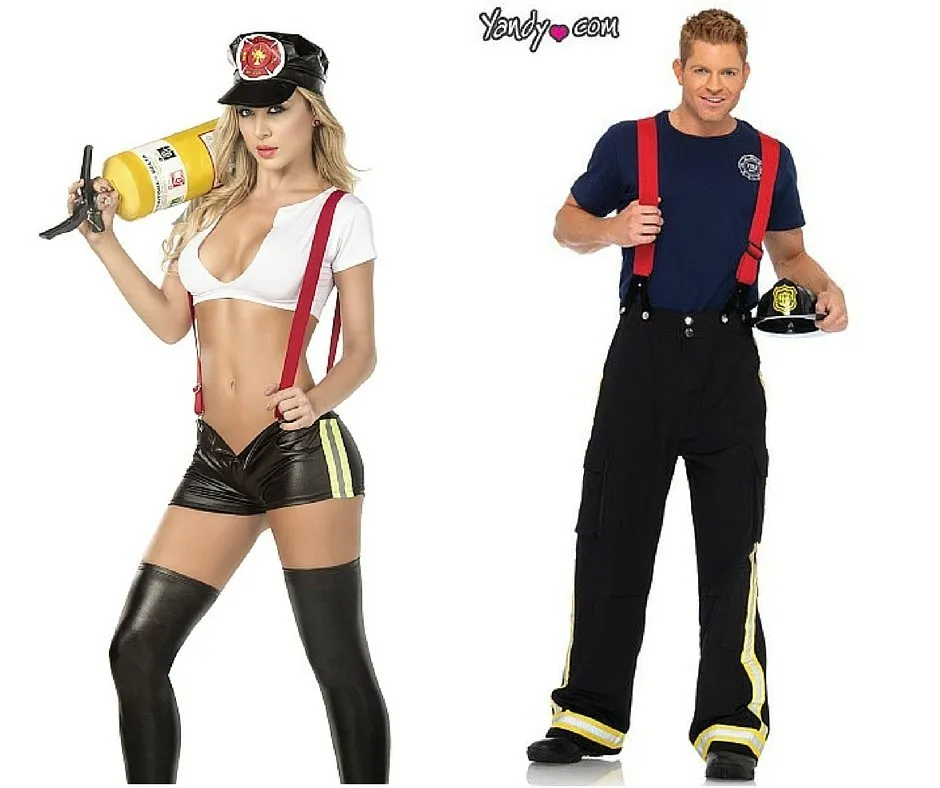
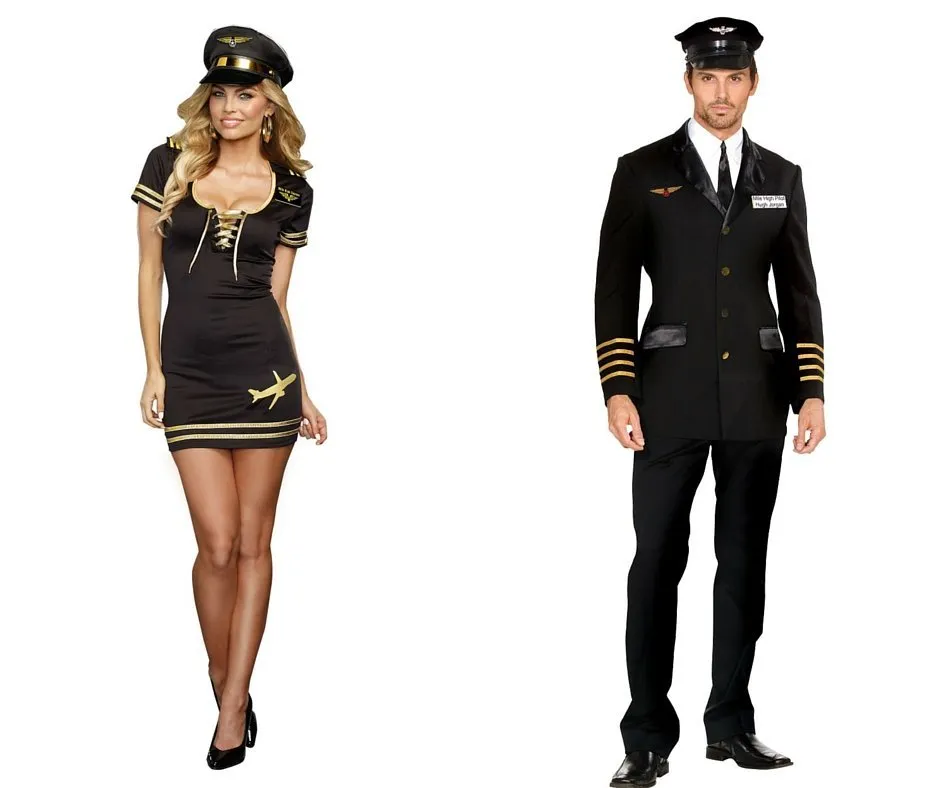
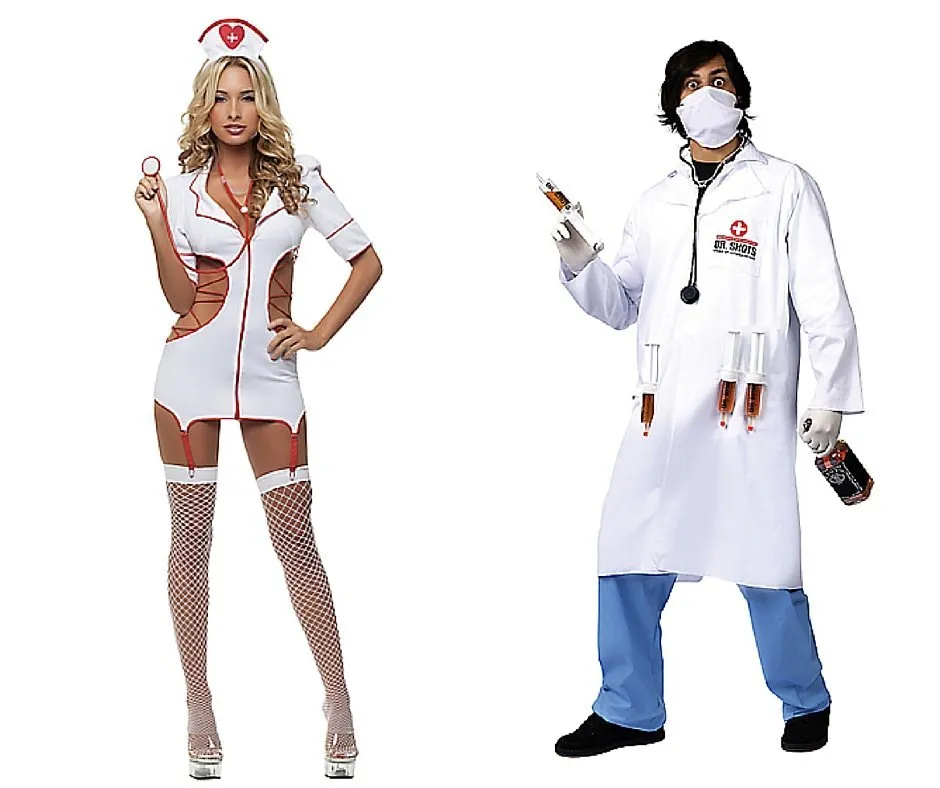
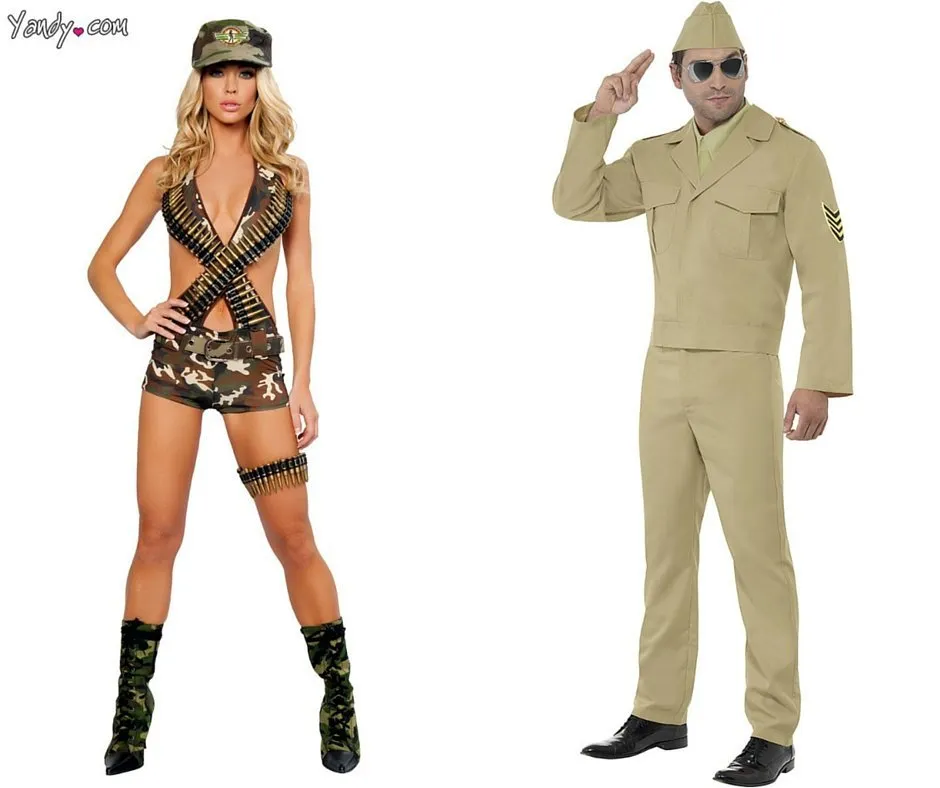
October after October, year after year, Americans across the country don costumes and temporarily adopt a new identity for the sake of one night: Halloween. Another thing to be counted on consistently? The over-sexualization of women through costume. While men often are allotted a full set of clothes, whether that be to look like a pilot, a firefighter, a doctor, or even military personnel, women are handed a tiny skirt, skimpy shirt, and expected to embrace the “sexiness” of it all. This disparity perpetuates existing sexism in the United States and objectifies women everywhere, creating a host of issues across the board.
These costumes (and others of the same nature) create an impossible standard for women, setting the expectation that they only exist to satisfy the male gaze. Working women have been sexualized merely to fit the narrative of phallocentric sexual fantasies for decades, as the patriarchy works to assign a woman’s worth based on her sex appeal. The paradox created by this situation is that if a woman is not considered traditionally attractive, she will likely face more trouble with establishing credibility in a male-dominated field, but if she is seen as too attractive, that credibility is lost as she begins to be viewed as only a sexual object. Women in the workforce are doing the same jobs as their male counterparts, meaning that their work is typically not inherently sexual, yet men in the professional world do not face nearly as much sexualization. These women are not asking to be sexualized purely for working, and many hold down jobs to maintain their livelihood.
Aside from promoting blatant misogyny, these costumes reinforce the gender binary. Halloween costumes are heavily gendered and therefore rely on intense stereotypes for advertising. With the nature of female-branded costumes being small and revealing and the male-branded costumes being full sets of clothing, the costume industry is assuming that everyone who identifies as a woman wants to dress femininely and adhere to these stereotypes and vice-versa for those who identify as men. Further, these assumptions overlook those who identify as non-binary or gender non-conforming, as it is incredibly rare to find a factory-made Halloween costume that does not promote sexiness as being connected to women and authority as being connected to men.
To expand, the costumes for men are often made to allow them to embody someone of authoritative, powerful status, such as a soldier or police officer. This feeds directly into the patriarchal view that men should be the people in power and women should exist to assist those men. In these gendered costumes, the masculine costume is often the figure of power, an example being how the masculine healthcare costume is a doctor with a surgical mask while the feminine costume is a “sexy nurse” in a small dress with cutouts and fishnet tights. The women in these advertisements are marketed as attractive, submissive sidekicks to the dominating male figures. This causes even more offense when it’s noted that in these real-life professions, there are few differences between uniforms for men and women. The point of a uniform is to have coherence among staff, and these costumes completely ignore the way that women actually exist in the workplace, which is in nearly the exact same uniforms as their male counterparts, especially in the professions represented in these advertisements.
These costumes also reinforce the idea that there is a “correct” body type, as the “sexy” women in the costume ads all have the same tiny waist and hourglass figure. Many women actually want to retaliate against societal expectations and reclaim their sexuality through costumes, and if these costumes are being marketed to a very slim demographic, literally and figuratively, the already small space for fat women to feel sexy is narrowed further. This issue of representation furthers the fatphobic societal view that fatness is “bad” or “gross,” and although unwanted hypersexualization of women is not something that should be condoned, it is not uncommon to find women to do want to embrace their sense of sexuality for one night when it’s “allowed.” These women should be able to explore their “sexy” side without worrying about constraints surrounding their size or opinions on their body from outsiders who expect all women to fit inside the same box when it comes to body type.
Within the Halloween costume industry, the sexualization of women through costumes has contributed to cultures of sexism and fatphobia. The industry designs with little regard to body type and plays into long-standing stereotypes of and expectations surrounding women, while also erasing non-binary people from the advertisements completely. While there are women who may have the desire to reclaim their sense of sexuality through these costumes, many view these costumes as objectifying and offensive. The costume industry should provide variety for women in terms of costume, with options that suit both the sexy side and that that is more true to the reality of what women wear in the professional world. Without options like these being widely advertised, women will continue to be sexualized and objectified by the producers, consumers, and advertisers of Halloween costumes.
References:
Bahadur, N. (2015, September 29). The Difference Between Men’s and Women’s Halloween Costumes Is Very Scary. HuffPost. https://www.huffpost.com/entry/the-difference-between-mens-and-womens-halloween-costumes-is-very-scary_n_560973ebe4b0dd8503086437
Historically, motor racing has been a male-dominated sport for many decades. It has been 46 years since a woman was entered in a Formula One race, and the demand for women competing in motorsport is ever growing. Motorsport has always been an elitist sport, sometimes favoring wealth over talent. Fortunately, for women aspiring a motorsport career, there is the W Series. On YouTube, W series uploaded a video called “W Series Explained: Our Mission.” The title is important because it leads the viewer to know that the video is intended to showcase the goals of W Series. The intended audience is presumably fans of motorsport, especially Formula One, and the purpose is to show that W Series gives women the opportunity to compete with men in higher level motor racing.
In the video “W Series Explained: Our Mission.”, it explains that W Series is a feeder series – a motorsport championship designed for drivers to graduate into bigger racing series, such as Formula Two and Formula One. However, unlike other feeder series like Formula 3, it is exclusively for women and has no entry fee for participation. The series is designed to favor most talented drivers rather than those with the most financial backing. Motorsport is reliant on money, making it extremely difficult for anyone lower and middle class to compete. Being accessible, W Series promotes diversity by allowing more people from different backgrounds to join the sport.
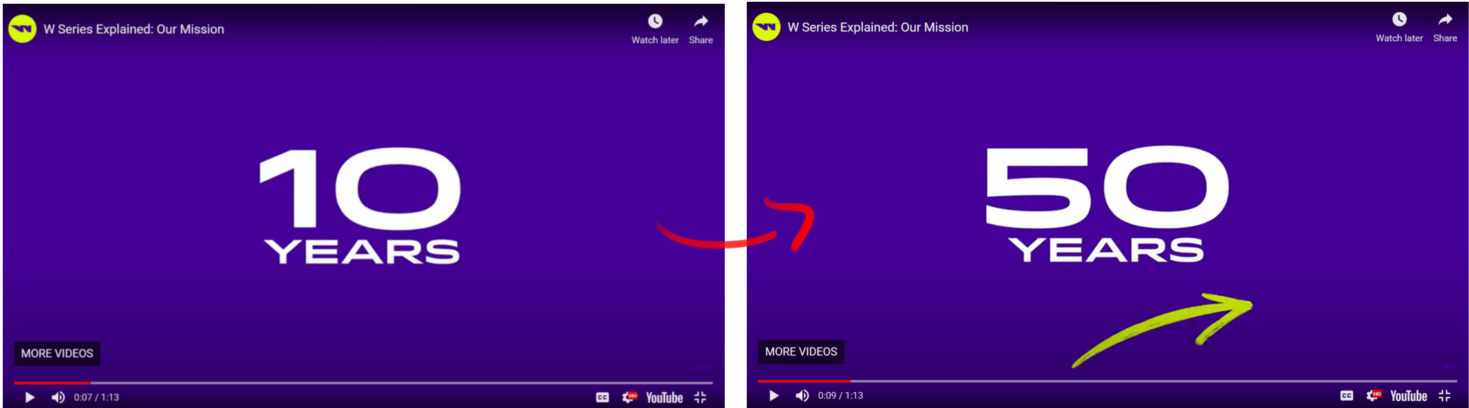
The video starts off displaying how it has been 50 years a female started a Formula One race, This statistic is emphasized by having to number of years gradually counting up to 50, showing that there has been a delay in female participation in motorsport.
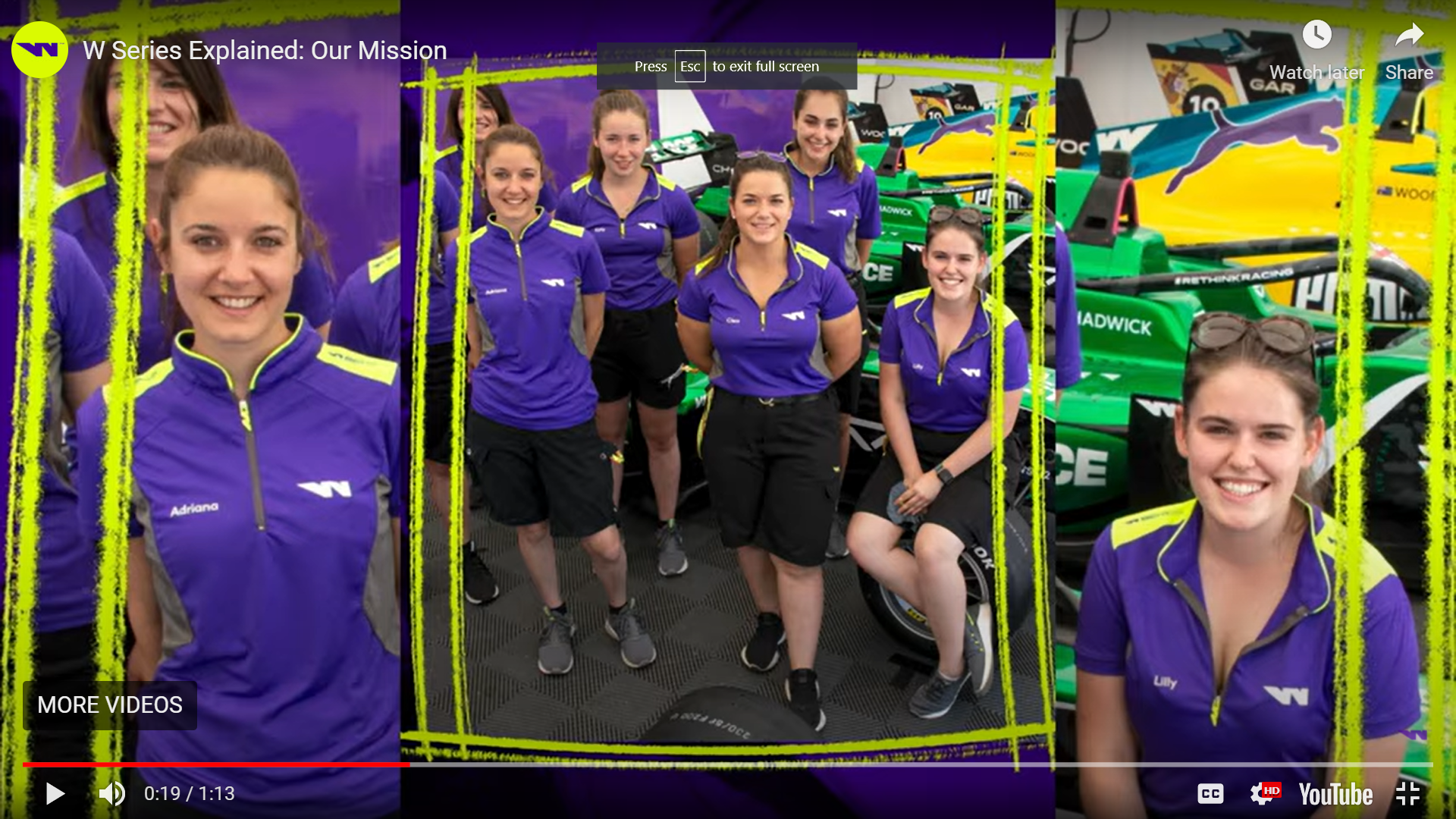
After showing this statistic it displays different pictures of the participants from W Series while saying “we believe that W Series can be an important cultural catalyst for female empowerment.” This section of the video functions to advertise why its mission is important not just for motorsport, but for women in sports as a whole.
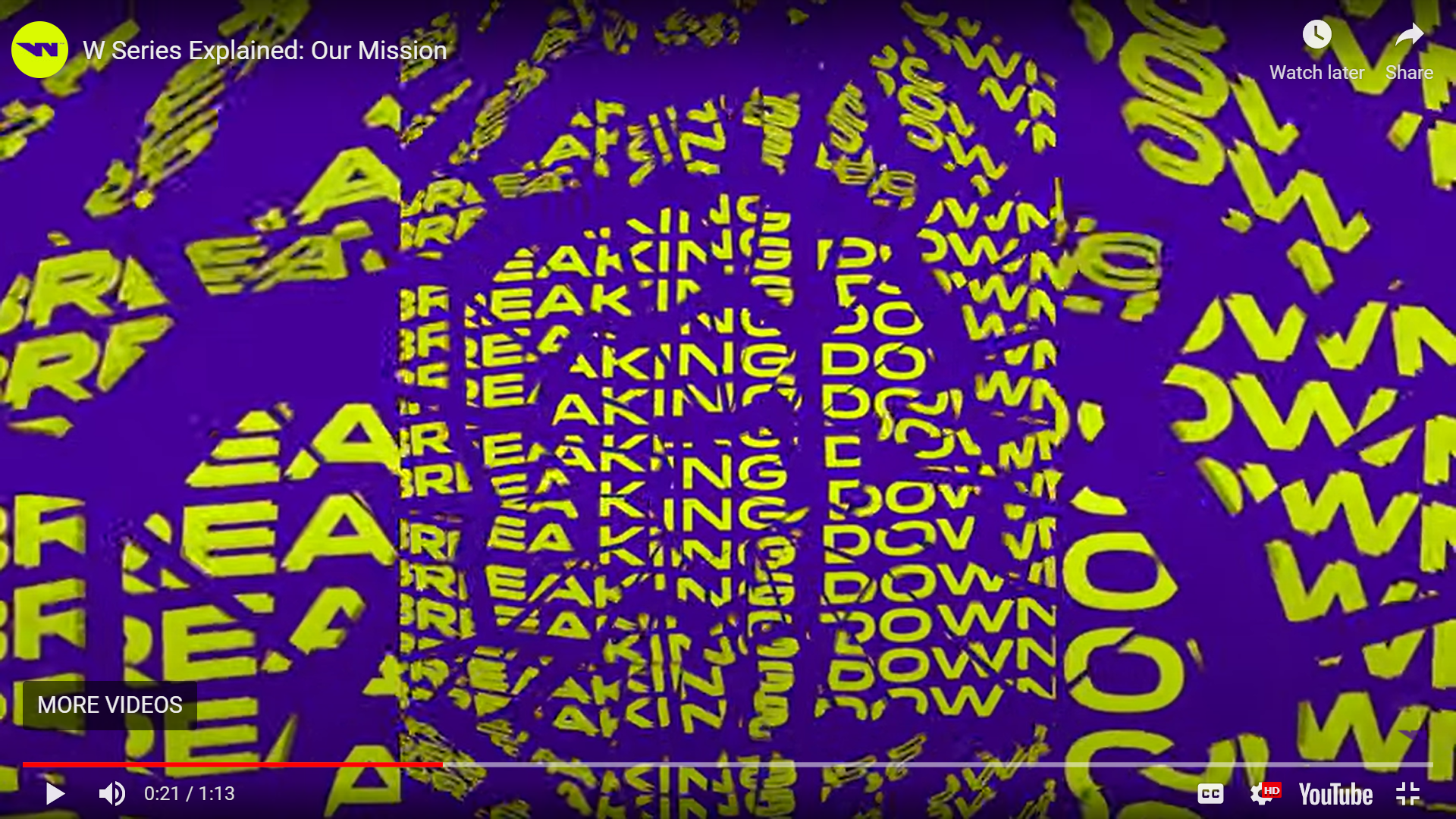
After that, a graphic of the word “breaking down” is shattered into pieces, showing that W Series aims to be unrestrictive for female participants to enter. The video says that W Series is a free-to-enter championship to give every entrant an equal chance.
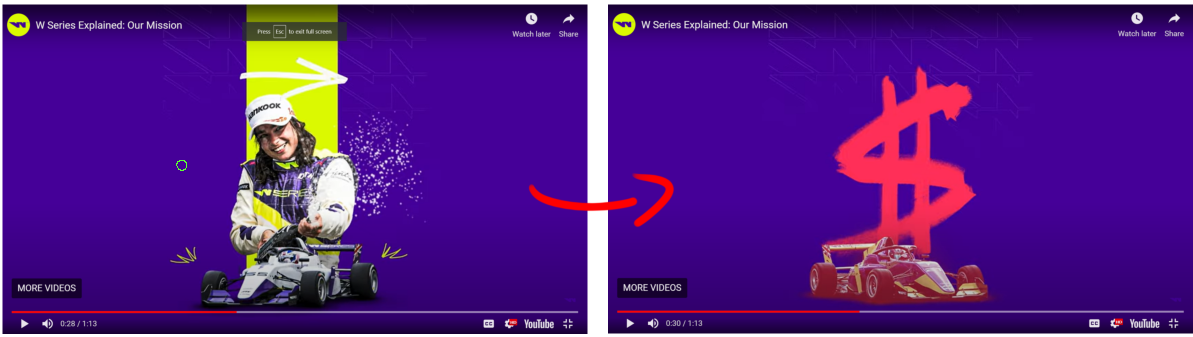
This is followed with an image of the reigning W Series champion, Jamie Chadwick, spraying champagne, followed by a dollar sign above a W-Series car, representing how the series is won by the driver with the most talent, and not those with the most financial backing.
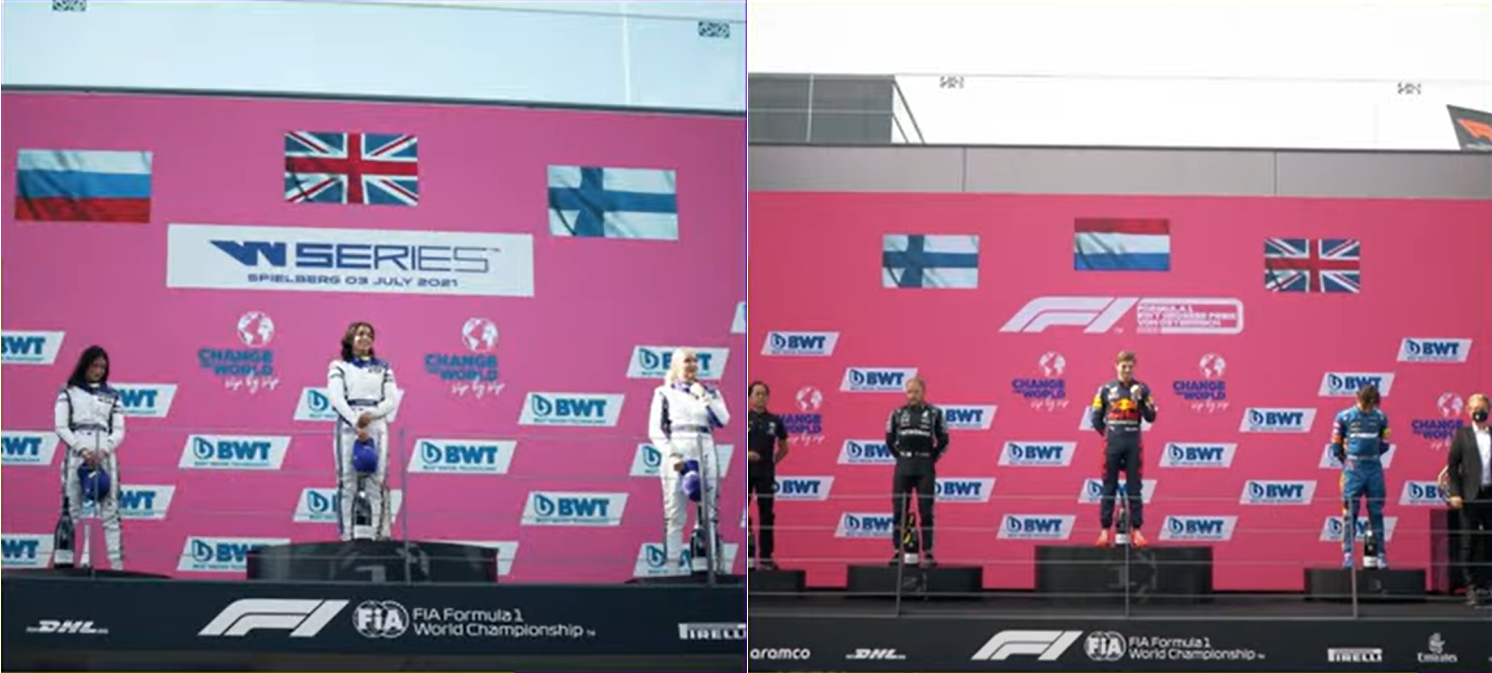
Another key point illustrated by the video is when it first shows an image of a podium ceremony from W Series, shortly followed by one from Formula One. Displaying these images, the video emphasizes how its goal is to have “female and male racing drivers compete on equal terms.” It is clear that one of the goals of W Series is to bring women in the top levels of motorsport along with men.
The final main point shown by this video is when it shows pictures of young girls driving go karts, saying “we want to inspire young girls at grassroots levels by highlighting today’s generation of talented female racing drivers.” With these images, the video is making it clear how there is a future generation of female racing drivers waiting for their big break in motorsport.
The video ends with the message “some say it’s a long road, but we’re in a hurry to get there” as a W Series-spec car drives off into the distance. This concluding message shows that W Series aims to achieve its goals as soon as possible, to ensure that Women have a place in motorsport.
This video overall has effectiveness telling its mission through its graphics and narration. The graphics displayed in the video match with messages being said by displaying easy-to-understand icons and images along with the commentary. To casual racing fans, this video does a great job delivering its message to argue that women can compete in motorsport. However, to more invested racing fans, including myself, W Series’ limitations for its goals can be easily recognized when examining other racing series that the sport intends to influence. W Series succeeds by allowing women from different backgrounds to compete in the series. However, W Series fails to solve the problem most women face when trying to compete outside of W Series. This is crucial since the ultimate argument of this video is that women have the chance to compete with men at top-level racing. While W Series itself may be inclusive, other racing series, particularly the ones it feeds into, are not. The main issue is that motorsport is very reliant on money, and in some cases, favors funding over talent. To enter in Formula 3, you need around €500,000. Even if you had financial backing from driver academies, it is very rare that they would completely cover the cost. In W Series, you are awarded €500,000 in prize money if you win the championship, which should just cover the cost to enter in Formula 3. For example, Jamie Chadwick had to return to W Series for a third season because she cannot secure funding for a seat in Formula Two or even Formula Three.
W Series aims to solve a problem that motor racing has faced for decades. It attempts to allow women from different backgrounds to be given the opportunity to enter in the highest level in motorsport. While W Series is taking a step in the right direction, it fails to achieve its goals due to external factors. Motorsport categories outside of W Series are still very much elitist, favoring mostly to male drivers with a decent amount of financial backing. If the ideas that W Series implements do not carry over to other motorsports, then inclusion of women in motorsport may still be hard to achieve.
One brand new theory I came across in GSS 101 this year is fat studies. It has never occurred to me that studying fat is included in the realm of gender and sexuality studies. Before this semester, I was convinced by the stigmatization of fat in media that it is related to health problems and never aware of my privileges and oprressions associated with fatness. Furthermore, our discussion on fat studies made me realize how being fat and body sizes act as a social identity, just like gender and race.
But what confused me at first was the introduction to fatphobia existed in American context, as my impression of the U.S. society is not fatphobic. What considered “overly fat” in China may not be surprising in America. Only last year, there was a major Tik Tok trend in China when girls tried to fit themselves in children’s clothes to prove how slim they are. I witnessed a lot of women internalizing ridiculous body shame as I grow up, and naturally, I assume America accepts fat people better. Nevertheless, I know that it is not the case after taking GSS. In addition, I start to compare different forms of fatphobia in American context (what I have read in class) and in Chinese context (what I experienced in the past)
Inspired by this, I would envision myself doing a research after coming back to China, in which I would draw a comparison between how fatphobia is expressed in two countries. There might be genetic factors as well as differences in diet cultures that determine factors like average weights as well as people’s common ideas about “normal body.” It would also be interesting, considering America and the entire western world control media and culture export, and their values influence the east. For example, fitness training and gyms are becoming common in China nowadays, and that could also impact on the forms of fatphobia in China. Most important of all, by studying how fatphobia is expressed in different ways, I would be better capable of combating it, after understanding how it convinces people in different cultures.
I have been searching to find an abroad experience that incorporates topics from GSS and my intended pre-med track at Davidson. One of the units we covered this semester in GSS was “Health and Reproductive Justice.” It was shocking and eye opening to dive deeper into bodily autonomy – especially when learning about the amount of pelvic exams done without the patient’s knowledge or consent. I think it is very important that people have the right to make decisions over one’s own life and future. In places where healthcare is not widely available, people’s bodily autonomy is not something always given to them. This caused me to search for opportunities relating to women’s health abroad. One that I found is a volunteer opportunity in Zambia to shadow a gynecologist in a health clinic. I would be assisting in low-income communities in Zambia that aim to make healthcare more accessible and affordable. A lot of resources are available through the program: accommodation, meals, and airport pickup. The reason I am applying for this grant is for funding to take part in this experience. Each week of the program is $370 and I would love to stay for 2 weeks, so I am asking for $740 to participate in the program. Following these two weeks of participating in the Medical Volunteer Program in Zambia – Livingstone, I plan to put together a presentation of my time working there and incorporate it into my senior thesis or capstone. I want to use this experience to be able to interact with patients and gain real world experience of topics we touched on in class.
A cancer diagnosis is daunting and life-altering. However, a diagnosis can also be a privilege that not everybody has access to. Many LGBTQIA+ people, especially those living in socio-economically disadvantaged areas, are less likely to have access to or choose to utilize routine screening services for common cancers, and are therefore less likely to be diagnosed with cancer and receive treatment that is essential for survival. Through my research project, I aim to better understand the similarities and differences in how individuals in four key populations access services surrounding cancer:
non-LGBTQIA+ identifying individuals residing in a socio-economically advantaged area
non-LGBTQIA+ identifying individuals residing in a socio-economically disadvantaged area
LGBTQIA+ identifying individuals residing in a socio-economically advantaged area
LGBTQIA+ identifying individuals residing in a socio-economically disadvantaged area
In the song Scars to Your Beautiful by Alessia Cara, the dangers of female beauty standards are revealed through lyrics referencing eating disorders, superficial appearances, and the dangers body comparison. While the song promotes body positivity, the artist simultaneously brings attention to the unattainable and highly demoralizing expectations that are forced upon women with respect to their appearance.
The phrase in the song “She just wants to be, beautiful/She goes, unnoticed she knows, no limits/She craves” (0.05-0.11) relates to the expectations of beauty that are placed on women, as well as the misogynistic realities within marriage. The phrase “unnoticed she knows” relates to the idea of coverture within marriage in which the man usurps all of the rights from the woman and makes decisions for her, thus making her “unnoticed”. The phrase in the song “no limits/She craves” demonstrates that women are seeking more rights and privileges that they do not have, which relates to the oppressions that Betty Friedan describes in The Feminine Mystique. Friedan describes women as being “taught to pity the neurotic, unfeminine, unhappy women who wanted or be poets or physicists or presidents” (Friedan 270). The descriptor “neurotic” is juxtaposed with the titles of “poet”, “physicist”, or “president”, illustrating that women are shamed for being independent, intelligent, and self-sufficient humans. In other words, women are taught to be submissive, invisible, and voiceless, demonstrating the dangers of misogynistic relationships and the limitations in which they create.
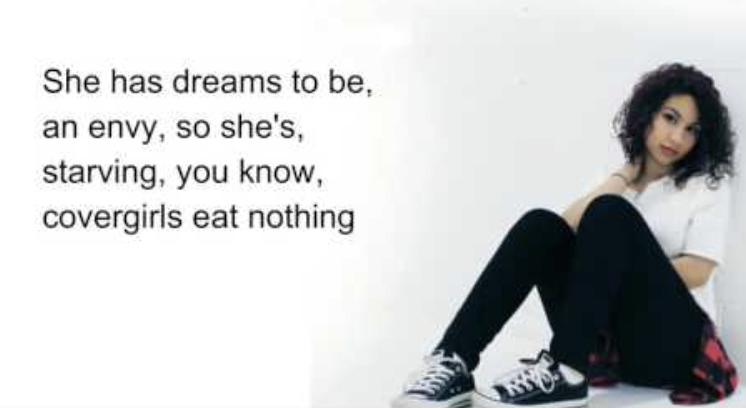
Another form of womanism relates to fat studies and the physical expectations imposed on women. To obtain the model ideal, a woman must exhibit stereotypically feminine qualities of slenderness and submissiveness. Models, and cover girls specifically, “eat nothing/She says beauty is pain and there’s beauty in everything/ What’s a little bit of hunger?” (1:58-2:05), which demonstrates the dangers of modeling. Virgie Tovar, a body positivity activist with a focus on fat discrimination, mentioned in her TED talk that “you have the right to remain fat” (Tovar TED Talk) which means that it is part of your bodily autonomy to be the size you want to be, and no one else can control that. Furthermore, Cara mentions that “you don’t have to change a thing/The world could change its heart” (1:01-1:03) which relates to the concept of Health at Every Size or HAES. HAES is a lifestyle change that encourages practices of self-love and health living “regardless of weight and appearance” (Burgard). Additionally, the phrase “beauty is pain” demonstrates the oppressions that women feel they must face in order to attain the feminine ideal, further demonstrating that pursuing a certain weight and appearance leads to unhealthy practices like eating disorders.
The song, however, has limitations in the way that transwomen are represented. Based on the lyrics, the song assumes that women are cisgender. The repetition of the pronoun “she” and the word “girl” assumes the audience’s pronouns are she/her/hers and does not consider the plethora of different pronouns that one could have, demonstrating the limitations of the song as applying only to cisgender women. This limitation in the song, I believe, is unintentional; nevertheless, Alessia Cara could have been more cognizant of the audience she was delivering to and the pronouns she chose to use.
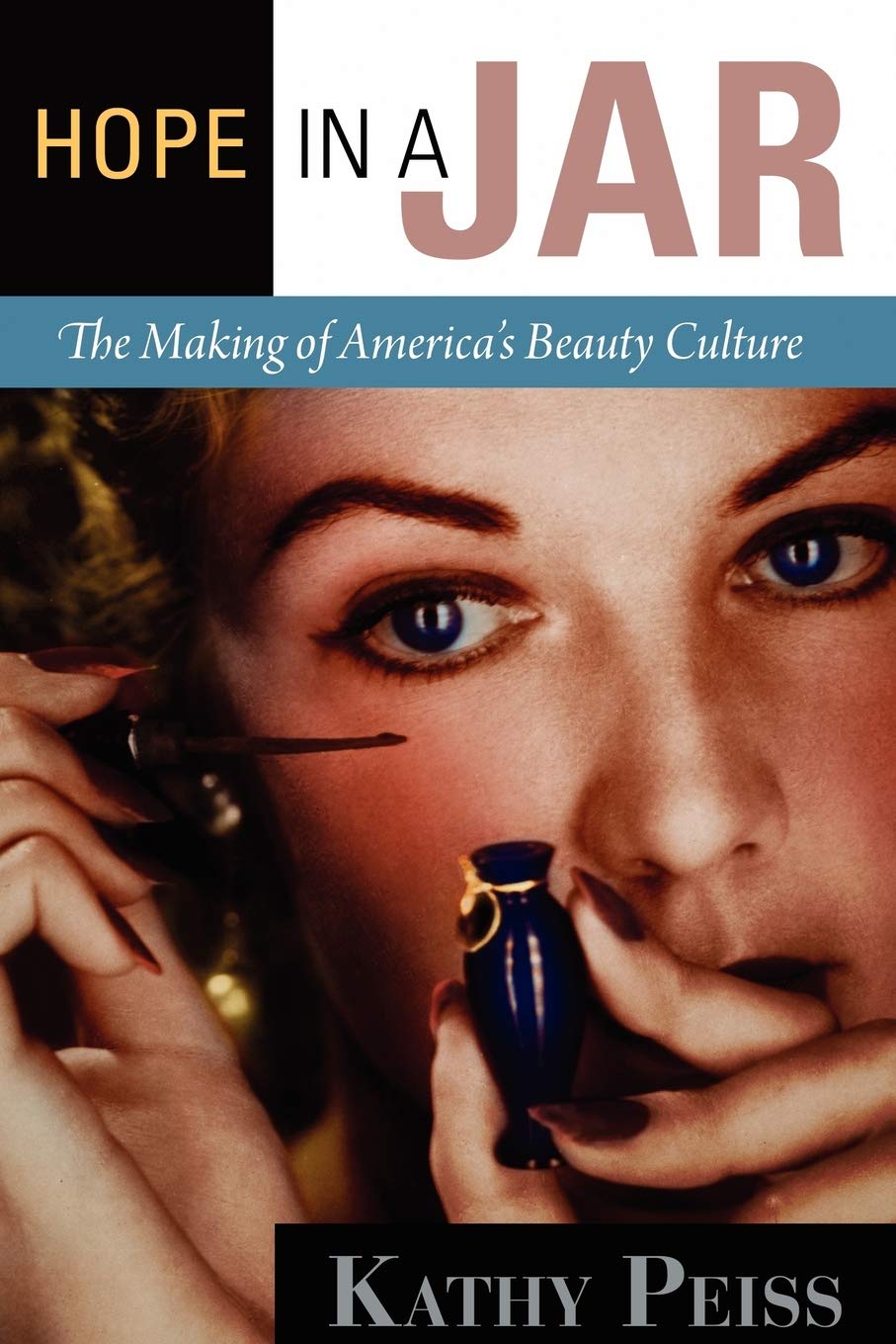
Beauty in American culture has been constructed around an accepted norm or a set-standard of what makes someone desirable and beautiful. Overtime, cosmetics have become deeply intertwined with this beauty culture in America and it is no small industry – a $43.6 billion industry to be exact(1). The vastness of this industry has caused a lot of examination of beauty culture and cosmetics during the nineteenth and twentieth century and picking apart common misconceptions associated with the beginning of cosmetics. It has been a long standing assumption that the beauty industry was pioneered and dominated by males in order to sway women into a singular, confined definition of beauty, however, in Kathy Lee Peiss’s book, Hope in a Jar: The Making of America’s Beauty Culture, she demonstrates that this is not the case. Within this book, Peiss illustrates a beauty industry powered by women in the late 1800s and early 1900s – one where women owned the companies producing the cosmetics and one where women sold the cosmetics. Hope in a Jar: The Making of America’s Beauty Culture elaborates on two things that cosmetics gave women: opportunity for expression through make-up and employment for women.
As someone born during the baby boom and coming of age in the 1960s(2), Peiss watched as the judgments surrounding manufactured beauty changed with great speed. The meaning of cosmetics in relation to beauty standards, ideals of femininity, profit making, and politics remained difficult to pin-point. However, Peiss argues that beauty culture should be understood not only as a type of commerce but as a system of meaning that helps women navigate the changing conditions of modern social experience. Women dipping their toe in “modernity,” often placed them into a public space that was not always welcoming. In the history of beauty culture, there lies a web of intimate rituals, social relationships, and female institutions. Over decades, women have passed down the teachings of cosmetics to their children and in these little jars of makeup, lies a detailed history of women’s ambition, pleasure, and community.
Kathy Lee Peiss, born in 1953, is a well-known author and American historian. She received her Bachelor at Carleton College and her Master of Arts and Doctorate of Philosophy at Brown University. During her lifetime, she was an instructor at Rutgers University and New Brunswick, Canada from 1980 to 1981. Additionally, from 1981 to 1986, Peiss worked as an assistant professor at the University of Maryland and as an associate professor at the University of Massachusetts from 1986 to 1992. Since this time, she has continued to teach as a professor. Peiss has also been listed as a noteworthy History educator by Marquis Who’s Who. In 2011, she chronicled the purpose of cosmetics over time and the impact they have in regards to economic, sociological, and psychological aspects(3).
Peiss uses a mix of both qualitative and quantitative methods by developing her argument with participants and observations; first hand accounts of people’s experiences; and consumer surveys. Peiss begins her novel towards the end of the 19th century. During this time, cosmetics often contained toxic substances (i.e. lead) and were associated with “hussies” or prostitutes. In the introduction, she brings this up in the example of two lipstick shades named Lady and Hussy. The Hussy shade outsold Lady 15:1. Additionally, cosmetics were condemned by society saying that they created false needs, manipulated fears of the consumer, and raised superficiality over true substance. All this being said, Peiss makes sure to bring it back to the beauty business being largely built by women – some of the most successful entrepreneurs being immigrants, working class, and black women. The focused attention on face and figure paved the way for the pursuit of beauty to be acceptable and respectable. Transitioning into the early 20th century, women began to embrace cosmetics a lot more. However, advertising and social pressure to be “attractive” lowered self-esteem. In the first chapter, Peiss talks about an incident involving a 24 year old housewife who applied a commercial skin lightener who was admitted to the hospital and became paralyzed from the elbow down. This led to a focus on cosmetic preparation. Women were expected to be able to gather roots, distill essences, identify different herbs, and compound remedies for the skin. Many household manuals during this time included information regarding waters, oils, powders, and ointments meant to aid in the beautification of women. In this chapter, Peiss also discusses the origin of different cosmetics and beauty techniques. For example, indigenous plants were used to treat skin problems and methods like using crushed berries to redden cheeks were brought from Native Americans and West Africa. Moving on to chapter 2, Peiss describes the ideal beauty image as pale and because of this, white powder and skin lighteners became a big part of daily life for both white and African Americans, thus further propelling the aesthetic dimension of racism. Additionally, the rise of photography changed how people perceived their appearances. Portraits gave many people an idealistic version of how they looked – therefore, when people began to be photographed, they were not pleased with how they appeared. This resulted in the retouching of photos with painting or simply just wearing more makeup during photography sessions. Similarly, as photographs became more widely available, a domino effect was instituted: celebrities becoming beauty icons; celebrities using more makeup; the acceptance and consumption of makeup continually growing; and the cosmetics industry evolving into a commercialized industry. And of course, with the growth of a new “trend,” many opinions followed. Some people stood firm in their belief that painting was morally corrupt. Others sat more towards the middle, feeling that it was alright only if it was worn in a conservative fashion. Then on the other end, makeup was viewed by some as helping out the women who had not been blessed with “beauty” at birth. The key takeaway from this chapter is that someone painting their face moved from a trait of prostitutes and hussies to that of the “average” woman. During a time where it had been prohibited, chapter three centers on the transition of women into the commercial beauty industry. The Achilles heel of the beauty industry at this time was that it was a quiet industry. Many who used these products did not speak about their use of them in addition to wanting no one to know about their purchasings of them. However, in contrast to the women who were ashamed, there were the women who saw their own potential within the beauty industry. They saw an industry focused mainly around women as a place where they could get their foot in the door. Peiss drops a few names of entrepreneurs within the industry: Florence Nightingale Graham, Helena Rubinstein, Annie Malone, and Madam C.J. Walker. All were successful within their respective careers, however, their approaches were not all the same. Rubinstein and Graham sold their products in a more primitive “boutique” style, while Malone and Walker tried to market to everyday women. Transitioning onto chapter four, The Rise of the Mass Market, Peiss expands on the growth of the market for cosmetics following World War I. Between the years 1909 and 1929, the number of cosmetic manufacturers nearly doubled and their value rose exponentially. With this came a large scale system of mass production, distribution, marketing, and advertising that later transformed the initial patterns of buying and selling. The cosmetics industry transitioned to producing goods for national sale. Then, in promoting the Made-Up Woman, during the 1920s, mass produced images of glamorous screen stars, flappers, and beautiful women began to influence the fashionable ideal and beauty rituals. However, within this were racial divisions.The mass market’s democratic vision of beauty denied African Americans entry due to the unfortunate fact that white women were the target audience for national advertising. In Peiss’s sixth chapter, she talks about the beauty industry’s success in convincing their consumers that in order to fulfill individuality and femininity, one would need to purchase cosmetics. However, where information is pulled from is skewed due to its sources being limited to white middle and working class women. The use of cosmetics boomed in larger cities like New York and Chicago and came into play a lot later in smaller towns. Then, wrapping up in Peiss’s final two chapters, she discussed the white-dominated ideal “appearance,” and the weight that these powder and porcelain jars had in the war of cultural visions. Many black reformers and educators spoke out about the political meaning of appearance. The beauty industry increased the discontent of African Americans, gay activists, and feminists in regards to commercial exploitation by the long-standing beauty ideals.
One area in Hope in a Jar: The Making of America’s Beauty Culture, that Peiss really excels at is disproving the wide-spread assumption that the cosmetic industry painted women as the victim in its narrative. The history of beauty in America is often looked back upon as one where the women experienced shame and they were looked at as being on the losing side. Peiss’s greatest strength within her novel is combatting this misconception but in chapter 3, Peiss does an exceptional job of illustrating that the cosmetic industry resulted in both social and economic empowerment for women. Beauty was the catalyst that allowed women to break from the confinements that labeled working as taboo unless their social class truly depended on it. It is depicted and regarded as women viewing it as a way to get their foot in the door – it was something for them – specific to them. Peiss even uses accounts of four entreprenuers to further her argument regarding the doors that the cosmetic industry opened for them.
Overall, Peiss does a great job in her documentation and elaboration of the cosmetic industry in her novel – however, that is the only thing she focuses on. I would have loved for her to dive deeper into related areas since she alludes throughout the book to discussing beauty as a whole. This is not necessarily a weakness, but I think her writing could have been further developed and well-rounded by drawing parallels between fashion, plastic surgery trends, diet culture, and “ideal beauty.” The title of Peiss’s book is Hope in a Jar: The Making of America’s Beauty Culture, with emphasis on that second part: the making of America’s beauty culture. By Peiss only focusing on the wearing and history of cosmetics – I feel that it shadows other very important fields that are within the umbrella of beauty culture. More specifically, she could’ve addressed those other fields and made connections with the dangerous and sometimes unhealthy lengths people would go to in order to fall within the parameters of America’s beauty culture.
After reading this book, it is safe to say that my initial view of the history of the cosmetic industry has been broadened. I feel that this could be a really good book for college students or anyone wanting to look deeper into the history of the oppression of women or even just women’s beginnings in the workplace. I now see the opportunities that the industry gave to many women. However, I believe after reading this book that women were victims at times, victorious at times, and sometimes even the ones being the oppressors. This is a read I would love to revisit and draw deeper connections with other viewpoints after my completion of the GSS 101 course. .
(1) Manager, Jonas Sickler SEO. “Beauty Industry: Cosmetics Market Share, Trends, and Statistics.” Terakeet, 22 Oct. 2021, https://terakeet.com/blog/beauty-industry/.
(2) Peiss, Kathy Lee. Hope in a Jar: The Making of America’s Beauty Culture. University of Pennsylvania Press, 2011.
(3) “Kathy Lee Peiss.” Prabook.com, https://prabook.com/web/kathy_lee.peiss/639345.
Calling all Swifties! Taylor Swift has done it once again in her banging new music video. Supporting queer rights through music, dancing, and a upbeat production, the song “You Need To Calm Down” is a queer anthem bashing the hate experienced by many LGBTQIA+ members. By incorporating a catchy beat, colorful props and many queer icons themselves, T-Swizzle shines a light on both the celebration of pride along with the hardships of many queer folk past and present. Billy Porter, Laverne Cox, Ellen DeGeneres, and Jonathan Van Ness are just a few of the incredible appearances throughout the music video. “You Need to Calm Down” challenges gender norms with references such as “can you just not step on his gown?” This lyric is breaking the assumptions that girls are meant to wear dresses and allows a space for self-expression through clothing.
Not only does Taylor stand up for queer rights through her artistic lense, but she also uses the music video as a educational experience for ways people can also help the queer movement. At the end of the music video she linked a petition for Senate Support of the Equality Act on Change.org along with the statement, “Let’s show our pride by demanding that, on a national level, our laws truly treat all of our citizens equally.” The music video served as an inclusive and welcoming place for queer people, allies, and anyone who likes a fire pop song. Taylor used her platform to put in the public eye queer artists, actors, and celebrities alike. The bopping tunes and gay flags are woven together through this video capturing how extraordinary queer culture and the queer community are. While this video served mostly as a queer anthem, it also supported women empowerment and feminism. Two scenes that really shouted those themes for me were when there was a stage filled with drag queens dressed as big pop stars lined up from left to right: Ariana Grande, Lady Gaga, Adele, Cardi B, Taylor Swift, Beyoncé, Katy Perry and Nicki Minaj. They all stood alongside each other on a stage. RuPaul walked towards the stage holding a crown on top of a pillow. Before crowning the winner, he walked to the center of the stage standing in front of all of them. Instead of crowning one winner, he smirked and then threw the crown into the air. As this scene was happening the lyric “We all know now, we all got crowns” began playing. This scene and lyric supports women backing other women. In today’s society, judgement and comparisons about bodies, especially among women, have created a negative space filled with doubt and unworthiness. However this moment in the video pushes against those norms and celebrates all individuals.
The next scene transitions into colorful cake and confetti flying left and right. The camera zooms in on Taylor Swift, who is wearing a french fries costume, looking around confused. It then focuses on Katy Perry, dressed as a hamburger swaying side to side with her head down. Taylor and Katy then make eye contact from across the set and after recognizing each other, awkwardly smile and begin approaching one another. Taylor shyly waves as they get closer and then they embrace in a big hug. Previous to this video, Taylor and Katy were rumored to have a long on-going beef with one another. But this video finally squashed what had happened in the past and ended on a cheerful and loving note.
One of the most recent items to surge in popularity with advocates for eco-friendly bathroom swaps is the menstrual cup. These cups are typically made of silicone and shaped like a cone or a bell and have cult followings because they minimize risk of toxic shock syndrome, can safely be used for more hours at a time, produce less waste, and are often cheaper than other hygiene products over the long term. For decades, the market was dominated by a single brand; however, in recent years there have been a handful of new brands, campaigns, and curious cup-users.
June is a menstrual cup brand that was founded in 2017, among a small handful of cup competitors. What sets them apart from many other menstrual hygiene product brands is their shift away from heavily gendered language for periods, such as “feminine hygiene”, or referring to their customers as women and girls. One of their Instagram posts during the summer of 2020 depicted a model with shorter hair and masculine features, smiling and holding a June cup. The caption of the image reads: “At JUNE, we strive to make sustainable menstrual care accessible and affordable to everyone. We’re excited to be a part of a community of inclusivity that’s always growing”. This was posted nonchalantly and without any fanfare, hashtag, or huge announcement of a related marketing campaign. The social media ad does not specify the gender of the model, and the caption only refers to “inclusivity”. Yet the post still stirred up many more likes and many more comments than is typical of their posts. Why? Because their model, Skylar, is a nonbinary trans man.
The fact is that some people who menstruate are women, some are not, and there are also some women who don’t menstruate at all. Yet having a period is often explicitly tied to womanhood and femininity, a narrative that is often initiated in health class and incessantly perpetuated through media depictions of girls “becoming women” and ads for period products. Menstruation in and of itself can cause significant dysphoria for many trans men and nonbinary folks, even without alienating advertising. For a while the primary menstrual cup on the market was called the Diva Cup- some other brands now have names like Femly, Blossom, Athena Cup, Duchess Cup, and Lily Cup. And of course, the cups come in pink and purple with cursive fonts, and the packaging is stamped with floral patterns. Doesn’t seem to welcoming and inclusive, right? The majority of the imagery and language associated with advertising menstruation products is hyperfeminine and does not present the product in a way that is inclusive of their potential customer base.
What’s interesting about June’s advertisement is that by casually introducing diverse menstruating bodies as the faces of their campaign, they are not only signaling that they are a brand that welcomes all genders, but they are encouraging people to challenge their assumptions about who menstruates and the language that they use to have these conversations. They acknowledge on their webpage that they used to use gendered language to advertise their products but have realized their error and corrected it. Of course, we have to keep in mind that June is a brand, and their number one mission as a company is to sell their product. Even if their goals and values are aligned with authentic diversity and inclusion of the LGBTQ+ community, it is difficult to consider that inclusion in isolation from their marketing strategy. Since June didn’t introduce Skylar as trans in their initial post, comments ranged to enthusiastic support, to angry bigotry, to confusion. Most of the comments were expressing support and excitement for both the model and the brand.
“Messaged yall a while back about more inclusive language and so happy to see youve done the work 🤗💜 appreciate ya!” – @ileak_balance
“thank you so much for recognizing that menstruating bodies exist outside of the false binaries we’ve been taught. Thank you thank you thank you” – @novadame
However, many commenters were expressing disgust or anger at the post. A few were initially confused as to why someone who is not a woman is representing period products but seemed to understand once the brand responded in the comments.
Screenshot of comments from June’s Instagram post. JUNE [@thejunecup]. Photo of Model Holding Menstrual Cup. Instagram, 29 June 2020, https://www.instagram.com/p/CCCdEtTF8f_/.
Since they don’t identify the Skylar’s gender, June is assuming that followers will draw their own conclusions from the image. An example of a menstrual cup brand that was not so subtle and took a much different tone was Ruby Cup, which posted an article discussing how they were going to change the language on their website to be more inclusive and started off with the words “Dear Transgender Community, Sorry for being narrow-minded and for discriminating against you”. Was June’s approach to inclusivity more powerful because of its subtlety, or was the bold acknowledgement and education that Ruby demonstrated taking more ownership?
Either way, the reality is that some menstrual health brands are shifting their brand away from ultra-feminine, binary-reinforcing language and imagery that isn’t inclusive of everyone who has a period. It is important to keep in mind that these are brands with marketing goals that are behind these changes, but the hopefully representation and inclusivity demonstrated by brands like June continues.
“Same Love” by Macklemore & Ryan Lewis featuring Mary Lambert was released in October 2012 on YouTube.¹ It “became the first song that explicitly promotes same-sex marriage to hit the Top 40 in the US.”² This song was primarily written to persuade voters of the State of Washington to approve Referendum 74, the legislation that would legalize same-sex marriage, as well as call out conservative Christians for their hypocrisy and intolerance on the matter. While the song served as a state (and later on as a national) anthem for gay marriage and equality, the song equally contains messages that ignore the social construction of sexuality and gender.
The opening scene lasts for approximately 40 seconds and depicts the scene of pregnancy and the birth of a biracial baby boy. This is intentional to emphasize the mainstream LGBTQ+ narrative that sexuality is innate — that “queer people are born that way” or are “eternal homosexual[s]”.³ The next few scenes depict the mixed-race boy riding bikes and playing outside with other boys, wearing attire associated with boys, and displaying assertiveness through romantic gestures, which all in contrast to girls running a lemonade stand, playing with dolls, wearing dresses, and displaying passiveness. These scenes perpetuate gender stereotypes and show gender being constructed by doing.⁴
Additionally, the lyrics at the beginning recounts Macklemore’s (Ben Haggerty) experience of questioning his sexuality. Within the lyrics, the idea of being gay was construed on the lines of gender stereotypes and that to be gay is to be good at drawing, to be good at organizing one’s room, and to be bad at sports.
The following scenes show the mixed-race boy growing up and becoming keenly aware of sexuality such that he felt excluded from the church, a game of spin the bottle, homecoming dances, and formals. The song also speaks of the “man-made rewiring of a predisposition” through some cure through treatment or religion. This emphasis reflects the historically negative discourse of homosexuality through medical science and the church.⁵ Furthermore, when the song mentions hip hop and drops the phrase “that’s so gay” and the word “f*gg*t,” this was directing attention at the hip hop community as being a toxic place for homosexual expression. Thus, these scenes and lyrics reveal how places that hold power determine the morality of homosexuality.
The chorus is sung by Mary Lambert, and repeats the sentiment that sexuality is biological and innate in the lyrics, “I can’t change.” Once again, this perpetuates the thinking that homosexuality is not socially constructed through history. From this point on, the biracial individual embraces his sexuality, gets married, and dies with his partner and lover by his side.
Overall, this song is an appeal to logos, ethos, and pathos. In logos, the song accuses some Christians of forgetting that “God loves all his children” and “paraphras[ing] a book written 3,500 hundred years ago”. While some Christians believe that even if the Bible is written 3,500 hundred years ago it is still relevant, there is no denying that Christians have historically spoken heavily against homosexuality by drawing upon seven verses associated with homosexuality, commonly referred to as the Clobber Passages.
In ethos, the song emphasizes God as love, and it concludes with a refrain from 1 Corinthians 13 that says “love is patient, love is kind.” Just as some Christians hold Biblical passages on homosexuality highly, the song draws on the ethos of the Bible. Additionally, the song makes comparisons between the LGBTQIA+ movement with the Civil Rights Movement, thereby drawing upon the same ethos that everyone has some inalienable rights.
Finally, the song is an appeal to pathos, where we, as the audience, practice empathy. The music video visually portrays the story of a biracial kid navigating through his sexuality from birth to childhood to marriage to death. The lyrics reveal Macklemore’s (Ben Haggerty’s) personal journey towards understanding sexuality, as well as his compassion for his gay uncles and other LGBTQIA+ individuals.
Overall, “Same Love,” as the title implies, suggests that love is the same, regardless of gender and sexuality. Despite reinforcing some gender stereotypes and myths about homosexuality, the song has a powerful message. In response to “till my uncles could be united by law,” the State of Washington passed Referendum 74 in 2012, and three years later, same-sex marriage was legalized nationwide through Obergefell v. Hodges. As the lyrics foresaw, a “certificate on paper isn’t going to solve it all,” but marriage equality is a “good place to start,” as is “Same Love” by Macklemore & Ryan Lewis featuring Mary Lambert to the liberation movement.
Works Cited
“Macklemore & Ryan Lewis – Same Love Feat. Mary Lambert (Official Video).” YouTube, October 2, 2012. https://youtu.be/hlVBg7_08n0.
Abelove, Henry, Barale Michèle Aina, and David M. Halperin. The Lesbian and Gay Studies Reader. New York: Routledge, 1993. This citation is specifically referencing Chapter 31: Capitalism and Gay Identity by John D’Emilio.
Bornstein, Kate. My New Gender Workbook a Step-by-Step Guide to Achieving World Peace through Gender Anarchy and Sex Positivy. New York, NY u.a: Routledge, 2013.
Foucault, Michel. The History of Sexuality: An Introduction. New York: Vintage Books, 1980.
The Barbie industry serves as an integral part of many young people’s childhoods and continues to be an influential brand. Up until these last two decades, the trademark has kept selling an item that lacks real representation- one that is appearingly not meant for everyone. One of the most notable red flags with this brand is the unrealistic model of body anatomy that is set before young generations. While recent strides to become a trademark that is known as more inclusive and empowering have been ongoing, there is still an entire history of wrongful messages and branding to be seen in order to account for its controversial narrative.
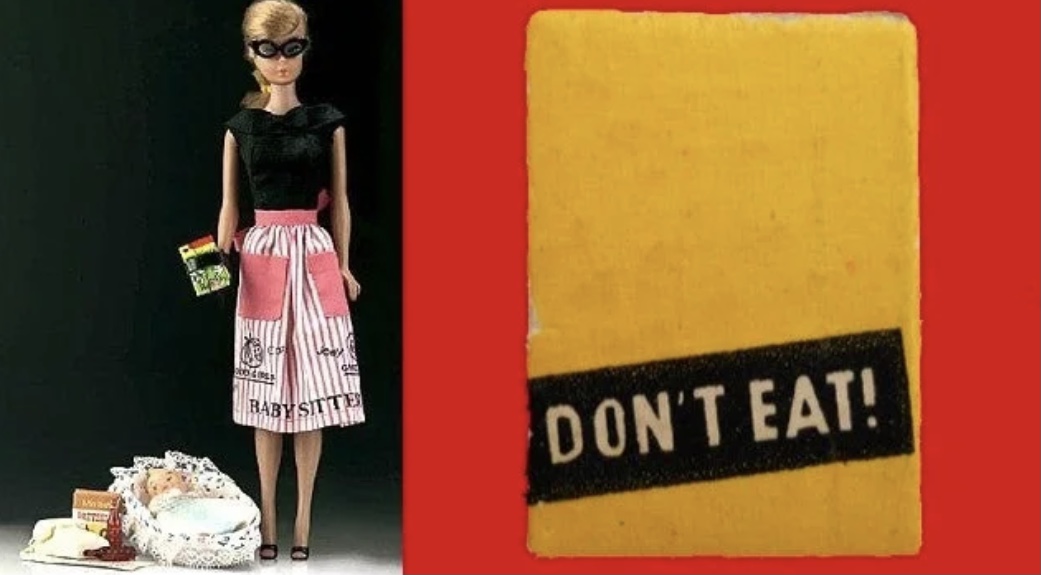
A prime example (and one of many) is none other than the “Babysitter Barbie” ad, which includes the words “DON’T EAT” and features Barbie holding a book entitled “How To Lose Weight.” Mattel, the company behind the entire franchise, promotes a harmful lesson to an incredibly impressionable audience. A young person who comes across this graphic becomes instilled with the need to already be regulating an area of their lives in order to be seen as valid from the golden standard Barbie places. This becomes a confusing take on what is supposed to be a franchise dedicated to lifting girls up.
Not only does this ad present a norm that should not be reiterated to a young group eager to view Barbie as a role model, but it reinforces poor beliefs regarding body image. Any advertisement that emphasizes a problem before one might even be aware can change someone’s entire perception of what is “socially acceptable” for them to look like. In this case, Barbie’s message can unknowingly kickstart unhealthy eating habits and overall insecurity, and young people may not be aware of the root of where it all began until much later.
The positive impacts the Barbie industry has had on its audience is not to be discredited; however, regarding topics of feminism, it can be noted that Barbie’s history of branding has not always been helpful to that cause. Luckily, Mattel has made strides in inclusivity and Barbies is much more aware today. It is essential that brands are conscious of the content they present to audiences, especially when it can negatively impact the confidence of young girls and their bodies. The Barbie franchise missed the mark on this one.
In Gender and Sexuality Studies 101, I learned a lot about the ways in which the way in which monolithic ideas and cultural hegemonies inform the ways in which people think and behave. I realized through this course the ways in which these ideas seep into every facet of human life, even through most supposedly unbiased and objective academic disciplines. As someone who has always valued the tangible and facts, the application of gender and sexuality studies critiques of what we take for granted, as “common knowledge” has really been eye-opening.
I’m planning to major in history and biology, two disciplines that, despite their different methodologies and focuses, both tend to focus on the demonstrable and “provable”. However, something about both disciplines that I’ve learned to critique from GSS 101 is the ways in which these facts are interpreted and applied. Both disciplines require logical continuity and frown upon intellectual leaps without grounding in data. Still, scientists and historians are still human, and still Foucaultian subjects not only influenced but created by the world around them.
Our discussion of feminist science studies is a great example of the ways in which my views had been challenged. I knew, of course, that science has often been misinterpreted or employed as a rhetorical tactic to reinforce societal inequality; just look at a movement like eugenics. However, I wasn’t really aware of the ways in which, down to the very textbooks we use to teach biology, the way we frame and explain biological concepts reinforces the ideologies of gender difference and heteronormativity.
Similarly, I had always heard about the phrase “history is told by the winners” and knew on some level the ways in which history has been interpreted to soften the historical oppressions of non-dominant groups and bolster the dominant groups in society. However, GSS 101 opened my eyes further on these topics. The ways in which we interpret history to impose our own hegemonic ideas was surprising. For example, I found it interesting to learn the ways in which the idea of a “traditional marriage” is a construction of our modern society. It was also interesting to learn the ways people have thought about homosexuality and heterosexuality in the past, since such terms and identities didn’t even exist in many societies and therefore, aren’t an accurate representation of the ways in which people in the past saw their lives.
I would like to pursue a project that looks at the history of science through the lens of feminist science studies, and looks at the ways in which scientific fields, especially biology and medicine, have served to reinforce ideologies of gender difference, especially around the time that “heterosexuality” and “homosexuality” as terms came into being.
Through GSS 101, I’ve learned to look at the subjects I’m passionate about with a more critical eye. This course has taught me to challenge the hegemonic ideas that underlie much of human productions of knowledge. While I myself am a product of society, and can never truly free myself from its effects, I can still learn to be aware in which the ways my understandings are shaped by the society around me. Overall, I want to take what I’ve learned from this course to more fully investigate and interrogate the ways in which I understand the fields I’m passionate about.