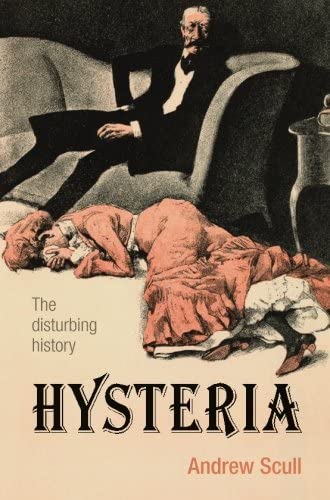
Is the Uterus Really to Blame: Review of Andrew Scull’s Hysteria: The Disturbing History

A recent Grey’s Anatomy episode opens with a commentary on the history of hysteria: “In the 1800s, one of the more common reasons women visited the doctor was hysteria—a now-defunct diagnosis. Hysteria was used to describe a wide array of symptoms: chest pain, anxiety, a swollen abdomen, mood swings. They tried a variety of treatments for hysteria ranging from rest to psychosomatic therapy. But true relief for these women didn’t exist until physicians tried using what they called ‘pelvic massage.’ The cure was called a hysterical paroxysm which today has come to be known as an orgasm” (“Let’s”). But what is hysteria? Why was it associated with women and cures associated with sex? What caused hysteria? Andrew Scull, a Distinguished Professor of Sociology at the University of California, San Diego, who has researched and written about the history of psychiatric illnesses for more than three decades, attempts to answer these questions. His scholarly monograph, Hysteria: The Disturbing History, highlights the shifting perspectives on the root cause of hysteria while simultaneously revealing shocking elements of history. 

While female hysteria is no longer recognized in The Diagnostic and Statistical Manual of Mental Disorder, Fifth Edition, manifestations of hysteria are recognized in diagnoses of illnesses such as Schizophrenia, Post-traumatic Stress Disorder, Panic Disorder, Borderline Personality Disorder, and Premenstrual Dysphoric Disorder, among other mental illnesses. That said, understanding the history of hysteria is pertinent when forming perceptions and educating oneself about mental health and mental illnesses. Scull recognizes this in his “biography of what contemporaries saw and interpreted as hysteria” as he discusses hysteria’s “fascinating and tortuous medical and cultural history” (6, 8). Scull’s work propelled him to receive the Roy Porter Medal for his lifetime contributions to the history of medicine and the Eric. T. Carlson Award for lifetime contributions to the history of psychiatry (“Andrew”). His research for Hysteria: The Disturbing History serves as an essential base for developing a comprehensive understanding of psychiatry today.

Continue reading “Is the Uterus Really to Blame: Review of Andrew Scull’s Hysteria: The Disturbing History” →

Review of “Medical Bondage” by Dr. Deirdre Cooper Owens

Gynecology was not always the well known field of medicine that is present in the United States today. In fact, gynecology is a relatively new development in medicine that came to fruition in the United States in the 19th century. START HERE Before modern gynecology arose in the 19th century, women’s health was the job of women. Midwives were the heads of women’s health and pregnancies. These midwives were almost always women. It was not until the practice of gynecology took root that men became involved in women’s health. In her monograph, Medical Bondage: Race, Gender, and the Origins of American Gynecology, Deirdre Cooper Owens explores the impact that enslaved and working class women had on the development of gynecology and in return, the impact that gynecology had on them.

Continue reading “Review of “Medical Bondage” by Dr. Deirdre Cooper Owens” →

Book Review-The Tragedy of Heterosexuality

How many of you consider heterosexuality to be the normal, and homosexuality to be the exception? How many of you live under the assumption that people who are homosexual wish to be heterosexual, and stick to societal norms? How many of you think that it must be easier to be heterosexual than homosexual, due to the innate biases of our world? Jane Ward, in The Tragedy of Heterosexuality addresses all of these questions and more, making the argument that the idea that heterosexuality is easier than queerness needs to be revisited. Ward explores exactly what is wrong with heterosexuality culture in the 21st century, and offers solutions for straight people and how they can fix their culture for good. She eventually lands on the conclusion that straight people could learn a lot more from the queer community, and engage in romantic and sexual relationships with more respect.

Read more: Book Review-The Tragedy of Heterosexuality

The main goal of The Tragedy of Heterosexuality is two-fold: first, to explain and explore the suffering that straight people, and particularly straight women endure in heterosexuality culture and two, to offer solutions to all of those concerns and pain points. Ward’s main solution finds her redefining heterosexuality in its entirety, in order to address the needs of both straight men and women in a healthy, respectful manner. The main thesis can be found early in the book on page 2, to set the foundation for the rest of Ward’s ideas, “this book argues that the basic premise of this question-that heterosexuality is easier than queerness-requires renewed investigation” (Ward, 2). Ward is not necessarily arguing that heterosexuality is always harder than queerness, but that there are situations in which heterosexuality definitely stands out as being especially cruel. 

Jane Ward is a self proclaimed “white feminist dyke” (Ward, 2016 69). She is a professor of gender and sexuality studies at the University of California, Riverside. She is a sociologist by training, and teaches courses in feminism, heterosexuality, and queer studies. The Tragedy of Heterosexuality is Ward’s third and most recent book, which was published in 2020. Before The Tragedy of Heterosexuality, Ward published Respectably Queer and Not Gay. Respectably Queer is based on her observations of three different queer organizations: the Los Angeles Gay and Lesbian Center, Bienestar, and Los Angeles-Christopher Street West. Not Gay explores same sex encounters between men who identify as heterosexual. It overall explores the history of queerness and straightness in men, looking to answer the question of if sexual encounters is the only thing that can make a man gay or straight. The Tragedy of Heterosexuality is the most well-known work of Ward, and even received the 2021 PROSE Award in Cultural Anthropology and Sociology. NY Times Reviewer explains that “The Tragedy of Heterosexuality wastes absolutely no time getting to the point, but while many of the sentences (including the title) made me laugh out loud, it is at heart a somber, urgent academic examination of the many ways in which opposite-sex coupling can hurt the very individuals who cling to it most.” It has received high praise, and has been deemed the most successful publication in the course of her career. 

The book is made up of 5 chapters: Let’s Call it What It Is: The Tragedy of Heterosexuality, He’s Just Not That into You: The Misogny Paradox, Pickup Artists: Inside the Seduction Industry, A Sick and Boring Life: Queer People Diagnose the Tragedy, and Deep Heretosexuality: Toward a Future in Which Straight Men Like Women So Much That they Actually Like Women. The book lacks a formal introduction, and rather just gets right into the heart of the point and the main argument. The first chapter lays out the goals of Ward, to give heterosexuality a diagnosis in the eyes of a lesbian feminist, and to display the evidence as to why her diagnosis makes sense, including evidence like “Disney/Pixar [who] are still using the big screen to communicate to little girls that finding a prince makes magic happen, changes the world, wins wars, beautifies everything, and brings girls closer to the divine” (Ward, 13) and “that blatant expressions of misogyny have become the commonplace language of heterosexual sex itself (“fuck that bitch”, “murder that pussy”, “beat that pussy up”, “choke her out”, “dig her out”, “nail her”, “pound her”, and so forth)) (Ward, 13). Ward clearly makes her argument, that heterosexual culture is harmful, and uses real world examples to explain how that harmful culture is used in our everyday lives. 

The second chapter, He’s Just Not That into You: The Misogyny Paradox, Ward defines what the Misogyny Paradox is: “men’s simultaneous desire for and hatred of women” (Ward, 33). Ward looks back into history, and specifically the early twentieth century. She uses case studies such as marriage manuals, where marriage experts “recognized men’s disinterest and violence toward women, and women’s resentment and fear of men, as fundamental obstacles for straight relationships” (Ward 38). Ward notices a pattern-that there is a tremendous amount of labor involved to make the man, or the husband, like the woman or the wife. In the twentieth century, an industry was designed to “train men and women to like each other” (Ward 38). This lays the foundation for how heterosexual relationships are meant to be understood, and includes the inherent basis that it takes time and training for men and women to enjoy each other’s presence, and that many times it does not occur naturally on its own terms. 

The third chapter, Pickup Artists: Inside the Seduction Industry, Ward takes a look at the contemporary seduction industry. Ward inserts herself into her research, and takes it upon herself to interview “seduction coaches”, and even attend two weekend-long seduction workshops. The self-help seduction industry that once was targeted towards women, now includes straight men as well. According to the text, this is because women now control the terms of sex and seduction, which can be traced back to the popularity of the #metoo movement. Instead of men wanting to be branded as “pickup artists”, they are now taught and expected to have a more holistic and “feminist friendly” approach in flirting and dating (Ward, 76). Although this is a good transition, the basis on which the seduction industry was created is, for lack of better words, foul. The seduction industry was built upon masculine sexual leadership, and toxic masculinity. Men would pick up women in a way that was demeaning and disrespectful, and yet a majority of women would still accept that behavior (ultimately knowing nothing different). Although we as a society have made a change in the positive direction of the seduction industry, Ward comments that “the most effective strategies for getting straight men on board with profeminist, antirape messages is giving them space to celebrate their masculinity in the same breath” (Ward, 106). Therefore, the transition that men have made is not truly “feminist”, but rather another space where they feel they can explore and express their masculinity. 

In chapter four, A Sick and Boring Life: Queer People Diagnose the Tragedy, Ward offers insight into how “radical queers” view heterosexual relationships. Ward offers an example at the beginning of the chapter about how in all of her lectures, all of the queer students sit together in a group, almost always. She explains how this is frequently dismissed as self-segregation and a coping mechanism, but how it can also be explained by members of the queer community not wanting to witness the sadness that happens in heterosexual communities. Ward explains that for queer people, heterosexuality can be “too sad or enraging to witness, too boring or traumatic to endure” (Ward, 114). She acknowledges how this may not be the case for all queer people, but also asserts her intention in explaining that this chapter is for the queer people who do feel that way. Ward designs a short survey that she posts to her social media profiles (specifically Twitter and Facebook) that is directed to queer identified people. She asked two questions: “do you prefer the company of straight-identified people over queer-identified people and why or why not?”, and “is there anything about straight people, or straight culture, that you find off-putting? Uncomfortable? Sad? Strange” (Ward, 120). Fifty three out of fifty eight respondents described heterosexual relationships as “boring” (Ward, 125), “sad” ( Ward, 127), “small,” and “scripted” (Ward, 140). Straight “rituals” such as baby showers and gender reveal parties are perceived as “bizarre,” “off-putting,” “not creative” (Ward, 143-144). Chapter four clearly shows the perception of heterosexuality by queer people, and how it is often seen in a negative light. Ward ends chapter four with a question, and potential for change, “is it possible that heterosexuality…can rescue itself from its own tragic condition?” (Ward, 154). 

In chapter five, Deep Heretosexuality: Toward a Future in Which Straight Men Like Women So Much That They Actually Like Women, Ward poses an answer for this question. She reasserts her intention in writing the book, that it is not to just be negative towards heterosexuality, but rather helps straight people find a solution for the way in which they experience sexual and romantic relationships. The last chapter has an inherent focus on straight men, and Ward explains that in order to be authentically straight, straight men “need to learn to like women” (Ward, 158). That means not just like women for what they offer you, but like women for truly what they are, what they accomplish, and what they pursue. Attraction can not just come from what is seen on the outside to have a healthy version of heterosexuality, but rather come from attraction of a women’s personality and lived experiences. 

Overall, I think Ward does a really strong job in inserting herself in her research. Instead of speaking from speculation, she makes a true effort to become a part of the communities and conversations that she is studying. For example, instead of just reading about or researching seduction workshops, Ward attends two and listens attentively and interacts with attendees. Another strength of the book is the casual language and the humor that is integrated throughout the novel. The concept of this novel is heavy, but Ward strikes a balance of recognizing the serious nature of this issue, while also keeping it lighthearted enough for all audiences to understand and absorb the information. 

One weakness of the novel is the perspectives of opinions. A lot of times throughout the novel, queer people were cited. She used information from a survey for queer people, and because of Ward’s identity, the entire novel is written from the perspective of a queer feminist. Although this may be the intention of Ward, I do think the research could have been strengthened by integrating different perspectives and specifically perspectives of the heterosexual community. 

The Tragedy of Heterosexuality, at its’ core, is a masterpiece. As a straight female, I resonated with so many of Ward’s points that I have not been able to put into words. It made me feel afraid, but also comforted, to know that I am not alone in feeling the way that I feel. I think every straight person should read this book to be aware of the culture that they are a part of, and where that culture comes from. Without even knowing it, I participate in a large heterosexual culture every single day. Because heterosexuality has been deemed as the “norm” by society, it is easy to forget that you are apart of something. By familiarizing myself with the culture and community of my sexuality, I now have the right knowledge to change the culture in a more positive and respectful manner that uplifts all women and men. 

Sources

Jane Ward: Department of Sociology: Michigan State University. Jane Ward | Department of Sociology | Michigan State University. (n.d.). Retrieved November 10, 2022, from https://sociology.msu.edu/events/archives/2022/dei-ward.html 

Ward, J. (2022). Tragedy of heterosexuality. New York University Press. 

Wikimedia Foundation. (2022, November 1). Jane Ward. Wikipedia. Retrieved November 10, 2022, from https://en.wikipedia.org/wiki/Jane_Ward 
Big Hero 6 Spin Off Takes a Big Step 

I am a disney fan, as a lot of people I know are. I love the kid friendly content that also sometimes has adult humor mixed in; the cute sidekicks and comic relief; and so many heartwarming stories about love, friendship, and finding yourself. However, there is one thing Disney has always lacked. Take a look at some of their most beloved characters and couples, and see if anything stands out to you. 

Rapunzel and Flynn Rider from Disney’s Tangled
Ariel and Eric from Disney’s The Little Mermaid
Cinderella and Prince Charming from Disney’s Cinderella
Anna and Elsa from Disney’s Frozen
Belle from Disney’s Beauty and the Beast

All white, cis gender, unrealistically skinny, and straight. Granted, the company as a whole has come a very long way but they have long struggled with diversity and inclusion. The majority of notable and big role human characters, specifically princesses, are still predominantly white, all have the same (very skinny and oddly proportioned) body type, and there still has not been a big film that features a non straight romance. 

As I was pursuing Disney Plus, I came across a show that I had seen mentioned on tik tok, being either applauded or berated for a few scenes it included. The show is called “Baymax!”, created by writer Don Hall, and it features six short episodes around ten minutes each of the adorable healthcare robot Baymax, famously from the movie “Big Hero Six ”, helping different people in their respective predicaments. As I was watching the third episode, I was shocked. The third episode follows a 12 year old girl named Sofia through her day at school, when suddenly, she gets her first period. Baymax the robot comes into the bathroom to help her and explains that what she is experiencing is completely normal, and then he offers to go to the store to get her some menstrual products. First of all, it is completely unheard of for Disney to be openly talking about periods, which have historically been a taboo topic. For them to base a whole episode on the subject of menstruation shows big progress. When Baymax is talking to the frazzled Sofia, he says, “It is common for people to feel embarrassed, fearful, or uncomfortable, with the subject of menstruation. But it is just biology. It is nothing to be ashamed of.” This quote is so refreshing, because talking about periods has become a thing to avoid doing. It has often become something used to shame or embarrass women, instead of something that should be normalized and even empowering. Having even just a short spin off episode on this subject is a huge step in the right direction for Disney. 

 Even more huge progress is shown in Disney’s diversity and inclusion in the scene when Baymax is at the store in the pad and tampon aisle. Baymax is confused on what product to buy so he asks a woman near him for help. Once she offers her suggestion, lots of different people start chiming in letting the robot know which products they recommend. One of the people to chime in is a man wearing a shirt that is striped with the colors of the transgender flag, and he lets Baymax know that he prefers the pads with wings. 

Image from the scene

While the scene is only about 20 seconds long. It is the first time Disney has had a trans person in their content. The casualness of the scene shows the progress even more, because it simply shows a trans man doing a mundane task, the attention is never directly surrounding his trans-ness, and it shouldn’t be, because it should be accepted that men can have periods too. For those of you that don’t have Disney +, here is a link to the short scene:Baymax goes Shopping for Tampons. 

This episode, but especially this scene, caused immense outrage among some viewers, being labeled as “woke nonsense” by our very own Republican North Carolina Congressman Dan Bishop. Many parents also expressed their anger by tweeting about how this scene would make their kids uncomfortable and asking what the reason for this scene was:

The truth is, the audience for this show is kids. It is a PG rated show, meaning that kids probably as young as toddler age are watching this. Toddlers are not going to watch this scene and shout about how disturbed they are that a man is buying pads. Toddlers are going to watch this show and laugh at the adorably hilarious robot, and wish that he was there to help them with their medical needs. If a child is uncomfortable watching this scene, it is because they have been taught that it is wrong to speak about your body, and that it is right to judge what other people are doing with theirs. 

While Disney obviously still has a long way to go, this small mini series is a big step in the right direction in terms of recreating and redirecting the conversation around gender, sexuality, bodily autonomy, and inclusion, especially for young kids. 

(This is a post text side note: I highly recommend watching the rest of the series of “Baymax!”. It is adorable and heart warming and also includes an episode (episode 4) featuring an absolutely precious gay love story that made me tear up with happiness because it is just so adorable. )

No Product Day (Post Challenge Reflection)

Hale Robinson

September 29, 2022

My initial reaction to the no product day challenge was that it was a unique opportunity for me to determine how my confidence, peer interactions, and mindset would change if I was to avoid using everyday products for a whole day. I am someone who typically likes to partake in challenges like these where I can truly understand the effects through my own personal experiences.

I understand that this challenge would be slightly easier for myself than others as I am not someone who typically wears makeup, hair products, or other similar items. I do, however, use deodorant on a regular basis, sometimes reapplying multiple times per day. Additionally, while it is not explicitly stated in the challenge instructions, I decided against wearing a hat.

I wear deodorant because often times I am in a rush to class from morning workouts and a rush to dinner following afternoon workouts. As a result, my showers in the morning are very short and I feel that deodorant provides an extra layer of “protection” against my post workout odors. I often have the fear of people around me smelling my sweat following workouts and for the purpose of making other people and myself feel more comfortable, I often use a lot of deodorant. While many people would not consider a hat to be a product or item, I find myself often using a hat as a substitute for hair products. Rather than using hats to block the sun or as a fashion item, I often wear hats on bad hair days or days where I am feeling less confident in myself.

In the end, I was able to ultimately complete the challenge. I felt slightly uncomfortable as although I feel I did not smell that bad, in the back of my mind I wondered if other people could smell my post workout odor. Furthermore, I found myself to constantly be adjusting my hair, especially when I knew people were looking at me as I lacked the confidence that wearing a hat provided me with.

The hardest thing to go without was deodorant. I have gotten in such a habit of applying deodorant when I wake up and after I work out that I found myself almost reaching for it on several occasions. I am someone who keeps deodorant in my bag in case of emergencies so having to go without it for a whole day was slightly uncomfortable for me. The easiest product to go without was makeup as I have never worn makeup nor felt the need to ever in my life.

Even before my morning workouts, I often apply deodorant to prevent my teammates from smelling me during the lifts. When I returned from the morning workout, I was thinking about how I would dress lightly as to prevent my body from getting too hot and hopefully prevent sweating.  Also, I did not tell anyone I was doing the challenge (outside of the class) and found that nobody noticed or approached me. This was not too surprising to me as most people tend to be polite. Prior to going into class, I did not have many expectations as I do not typically wear makeup and I doubt anyone picked up on the fact that I normally wear a hat.

What I learned from this challenge is how dependent I am on a product that really does not change the way people view me as a person. Nobody seemed to notice the fact that I was not wearing deodorant, nor did they care that I was not wearing a hat. In the future, I will be wearing less deodorant and will feel more confident in the appearance of my hair in the mornings.

No Product Day Challenge Reflection

When I heard about the No Product Day Challenge, I thought to myself, “This is going to be so easy” as I already unintentionally do the challenge multiple times a week. Not only do I often forget my deodorant (which my mom would not be so happy to hear), I also only wear makeup a few times a week. On Tuesdays and Thursdays this semester, I don’t have any class, so in the morning I don’t bother putting in my contacts or applying makeup. However, my experience with the No Product Day Challenge was very different than my typical “low effort” days.

When I woke up in the morning, I already felt like I was cheating the process: I applied lip balm. I know lip balm isn’t the end of the world, but I was disheartened that at 10 in the morning, I already needed to abbreviated the process due to my own insecurities. In my mind, I was off to a bad start. The rest of the day, I felt like I was putting very little effort in: I kept my glasses on, threw my hair in a messy bun and didn’t wear an outfit I particularly liked. Without my typical morning routine to boost my confidence, I didn’t feel particularly motivated. For me, if I’m going for the “low effort” look, it’s because I want to work out or do something productive in comfortable clothes, but when I didn’t do that and just had a “normal” day, I felt lazy. However, when I wear makeup and get dressed in a nice outfit, I feel productive even if I don’t necessarily do anything.

It’s important to mention that I also ended the challenge an hour early. That night I was going to a concert with some friends and wanted to look my best. So I put on deodorant, applied makeup, did my hair and put on a nice outfit. I felt guilty about quitting the challenge before it was fully completed, but I wanted to go out feeling good. That getting ready routine is almost essential for me to feel good about myself and the day ahead. While I’d be interested to try the challenge again with taking extra non-makeup related steps to boost my confidence, I don’t think there is anything wrong with what I currently do. It’s important to have a routine to feel ready for the day, and this challenge made me realize that even more.

Sex Education’s New Show in Season 3

Season 3 | Sex Education Wiki | Fandom
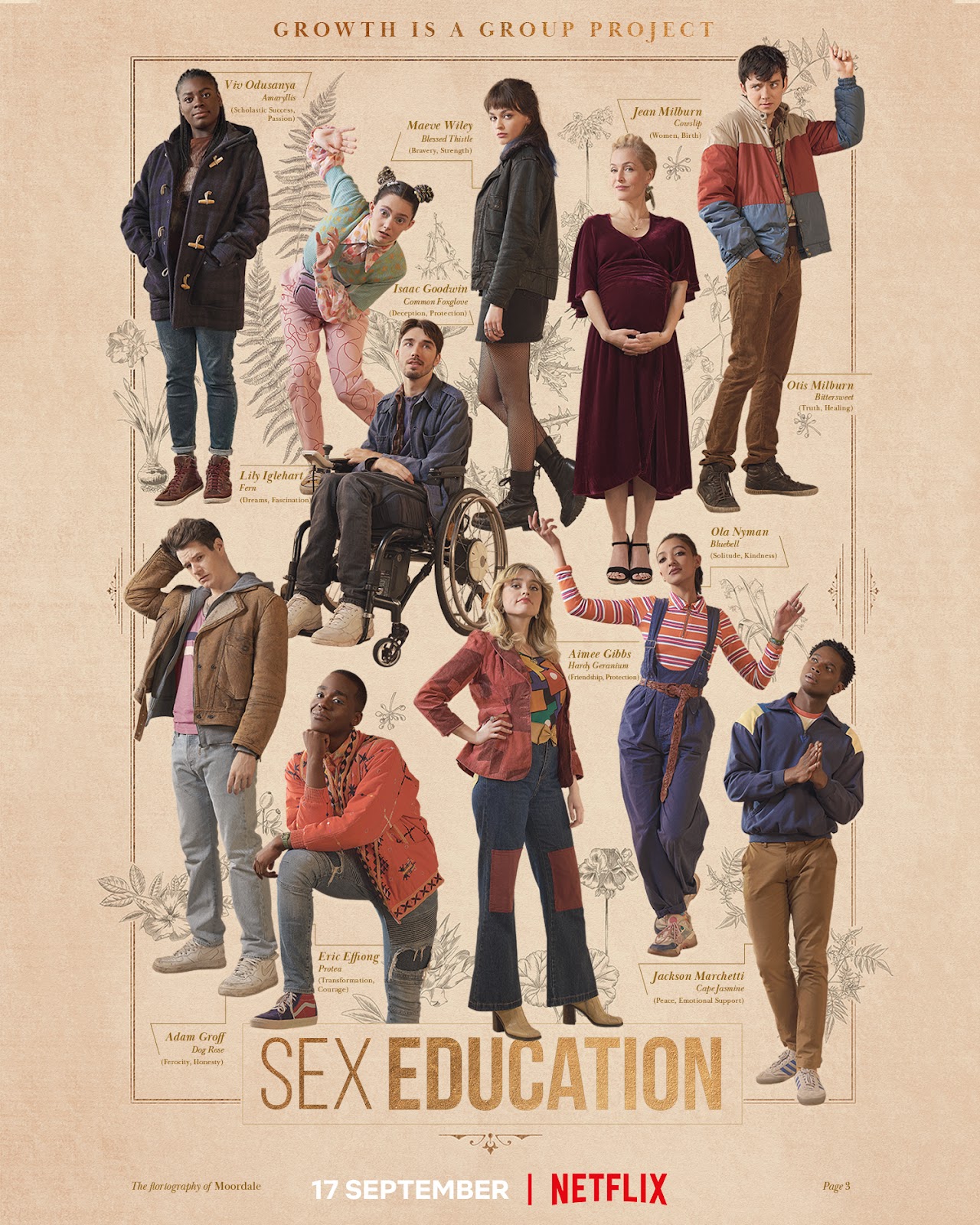
Sex Education’s Season 3 Promotional Poster

I remember waiting for the third season of Sex Education to come out – I was reposting the promotional posters on my story on Instagram and sending it to my friends. When Sex Education finally came out, I was surprised at how different this season was from its previous seasons. Sex Education started as a show navigating the life of Otis, whose mother is a sex therapist. Because of this, Otis has learned the techniques of how to talk to someone. He then tries this at school with an unexpected friend at the time called Maeve. As a result, they both start making this a regular thing after success. Moving on from this, in season 3, the sex therapist students are not quite as much in this picture but are rather dealing with Moordale’s new principal Headmistress Hope who moves Moordale in a backward way, removing self-expression and promoting heterosexuality, while shaming anything different. Cal and Headmistress Hope are two of the new characters this season, and they are complete opposites, to say the least. Hope’s backward idea of how to run a school is a great reason to show why such classes like GSS exist.

One episode in particular that struck me was a scene from this seasons Ep. 4:

(Video won’t seem to load so here’s the link: https://youtu.be/VGID85R1LTA)

Firstly, this scene I want to talk about in particular. Prior to this scene, Headmistress Hope tells Viv, her student assistant, to tell the people of Moordale to separate themselves into two lines based on their gender. However, because Cal is non-binary, they don’t separate themselves into a line and have an argument with Hope. Cal then goes on to say “So we go to the vagina or penis line? Is that what you’re saying?” This itself shows how bent Hope’s thinking is: there are only two genders and that it depends on your genitalia. For centuries, we have always decided to look at someone’s genitalia and say “They are a boy” or “they are a girl,” and it’s time we step away from this disgusting perspective. 

Sex Education Season 3, Ep. 4. Screenshot from video stated

Focusing more on this scene, the boys get a talk about homophobia and stating that homosexuals have a higher chance of getting an STD. Meanwhile, the girls are getting a talk about how sex is scary and can ruin your life. Maeve, one of the earliest main characters, however, tells the group speaker of the girls group that sex isn’t and shouldn’t be scary. Maeve gives a progressive speech suggesting that students should instead see that sex gives them insight into their body, like what they like, and that girls shouldn’t be the only one getting the talk of “sex is a mistake because it leads to unwanted pregnancy.” This ties into the idea of Foucault where the idea of sex shouldn’t be talked about and that people should be shamed for having these ideas and thoughts. And, further in this episode, the students of Moordale are scared because they’ve been involved in sexual activities prior to this meeting and that their lives could be in danger just because of what they’ve been told. Society makes sex seem as a bad thing and that only bad things will happen if you engage in the act of sex, but nothing will happen if you go about it in a safe direction.

Sex Education" Episode #3.6 (TV Episode 2021) - IMDb
Sex Education Season 3, Ep. 6

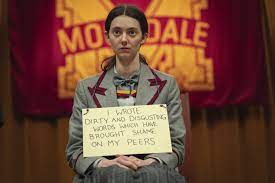
Another interesting part of season 3 lies within episode 6. Hope decides to publicly shame students who caused a bad reputation for Moordale. While she shames 3 students, Lily, a student who writes sexual stories about aliens and such things, and Cal in particular are shamed for being themselves. To explain, Cal is told that they are a messy troublemaker when all they have done to “disrespect” Moordale is ask for equity. Cal is constantly reminded by Hope to fit in a certain category by her forcefully putting labels on their gender when they are non-binary, but never lashes out against Hope. For Lily, she is told that she has brought shame to her peers with “dirty and disgusting words,” which comes from Lily’s sexual fantasy stories. Again, especially for teenagers in high school going through puberty, students should not be shamed for having sexual desires. Additionally, the idea of fantasies and fetishes shouldn’t be shamed either. Lily is a great character at showcasing these fantasies and, earlier in the season, Lily used to wear makeup and style her hair to indicate this love for her fantasies. 

Season 3 was something entirely different, but I did enjoy it. It helps show how different people are from one another, and that we shouldn’t be putting others down for having differences or looking different. We should be encouraging these differences and seeing how much more a society could be if individuality was promoted. Sex Education does a great job in this season to showcase this.

Justice to the Closeted Homophobe

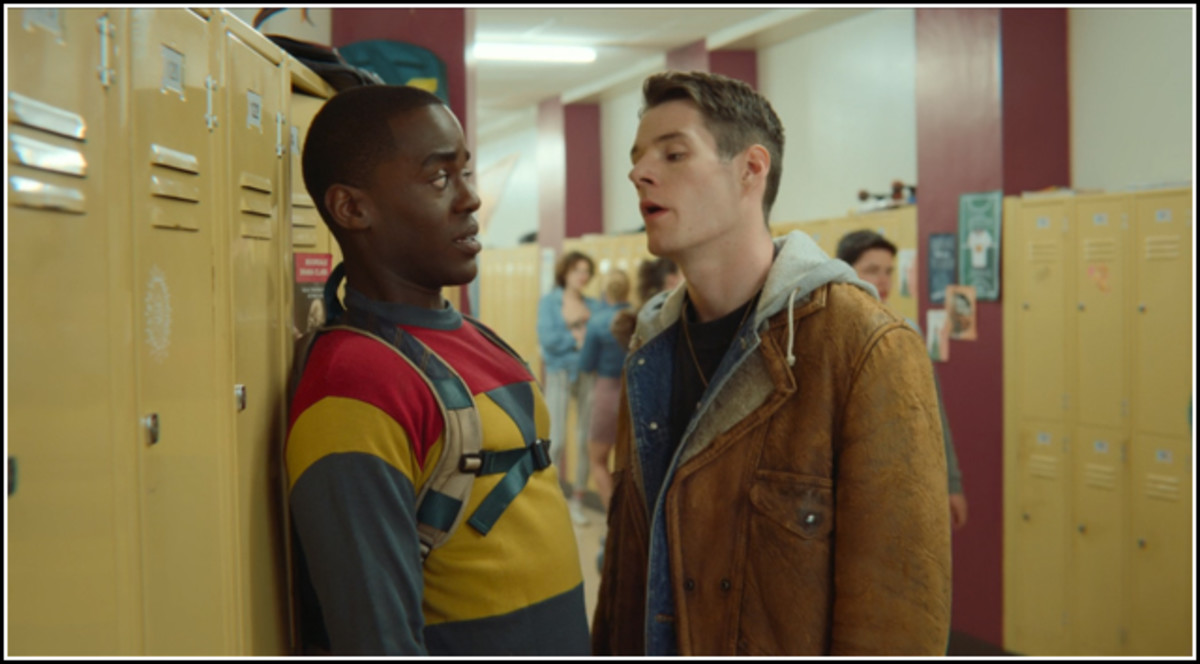
Netflix’s hit series Sex Education is one that attempts to address many of the multifaceted aspects of not only sex but the emotions, relationships, and trauma of both teenagers and adults alike. Instead of turning to adults about the multitude of issues regarding going through adolescence, the students of Moorsdale Secondary School seek the unprofessional but shrewd advice of fellow classmate Otis Milburn, son of sex therapist Jean Milburn. In the show, the character of Adam Groff stands out for me particularly. Adam is the son of the principal and a clear embodiment of the jerk jock trope. He is often seen tormenting Eric Effiong, an openly gay black character multiple times throughout the first season. Since the very beginning, it is obvious that Adam has trouble coming to terms with his own sexual orientation as he fails to sense arousal when engaging in intercourse with his then girlfriend Aimee. As the show slowly progresses, we can see Adam’s evolution from the jerk jock to the closeted homophobe trope. Although Hollywood often demonizes these characters from the start to the end, I would like to explore how Sex Education does Adam justice. 

Eric Effiong, being the best friend of Otis Milburn, quickly establishes that he isn’t one of the popular kids at school. Being both black and gay, and not to mention his affinity with drag, his minority status makes him an easy target for any bully. For emotionally and sexually repressed Adam, Eric couldn’t have been a better prey. As the son of the school’s strict principal, Adam fails to meet his father’s expectations in any way except for being a toxic masculine jock. Unable to recognize nor express his own attraction to Eric, he takes it out on Eric physically as a form of frustration relief and sexual expression. 

The closeted homophobe trope isn’t a stranger in Hollywood. While it does give a (most typically) gay man more complexity, it’s morally dubious to portray a large number of gay men as bitter and resentful when reality doesn’t necessarily reflect that situation. Netflix’s show does Adam more justice. Sex Education gives him more complexity. Contrary to many characters whose development reaches a climax without further exploration, Adam’s journey has just started after engaging in oral sex with Eric during detention. He begins to explore his overall identity and passion even more. Contrary to what the typical jock does, Adam begins to pick up dog racing and trains his dogs to do different tricks and stunts. As opposed to his bitter and resentful self in the first season, Adam finds a new passion and begins to smile more as he treads through this journey. It is truly a redemption arc.

It’s worth noting that the series not only does the closeted homophobe justice by giving him further development, but there’s also a lot of backstories given on why he potentially turned out this way. One primary source of influence is his father, Mr. Groff. Originally, I believed that Adam’s constant bullying is an outlet to express his frustrations of never living up to his father’s expectations or not receiving any fatherly love. Headmaster Groff has difficulty loving his family, repressing his emotions so much that he simply doesn’t feel them anymore. It’s not difficult to see who Adam takes after. 

After I talked so much about how the closeted homophobe is given justice in Sex Education, I would still refrain from fully endorsing this trope from appearing in future movies and series. Not only does it misrepresent a large portion of the LGBTQ+ community, an abundance of such character may influence the audience to think that many gay men portray themselves as such. Even when Sex Education gives Adam Groff more complexity, he isn’t yet a fully round character. This may be attributed to the way the directors would like to portray this character, but from my perspective, it is indeed morally questionable. 

It’s also worth speaking about the fact that the actor portraying Adam Groff isn’t gay in real life. Knowing this fact after research, I wonder if the show is taking opportunities away for LGBTQ+ actors. Although the show isn’t intentionally trying to mislead its viewers, having a straight man act as a gay man may destroy some of the authenticity of the experience depicted in the series. This simply reinforces the fact that Hollywood and popular media still has a long way to go in terms of fully representing the world’s people. But then again, an issue with representation that people are fighting for is always good, for if there are no issues, the whole business is one.

Take me to church music music video analysis

I was always aware as a child that I was bisexual. I was aware of homosexuality, which my mother, due to her religious beliefs, would never accept. As a fourth grader, I was aware of how strongly my mother pushed religion on me. Going to church was the most difficult part of my Sundays. “The music isn’t even that good,” I’d complain every time I went. One day while driving, Hozier’s “Take Me to Church” comes on the radio. It was fantastic, in my opinion. I’d sing it everywhere to please my mother, who was overjoyed that I was finally becoming religious. However, one day she tells me to stop singing this song, and when I ask why, she says it has nothing to do with religion, according to the pastor’s daughter, and it contains a horrifying hidden message. 

So, what is the message?

The music video for “Take Me to Church” begins with a bonfire, and the film is presented in black and white. “Fire becomes a signifier connoting danger and aggression, though potentially passion and power” in this opening scene (Caty). The bonfire foreshadows a negative action featured later in the music video. The following frame depicts two men (the main characters) in distress.

As this is happening, the lyrics contend:

[Verse 1]

“My lover’s got humor

She’s the giggle at a funeral

Knows everybody’s disapproval

I should’ve worshiped her sooner

If the Heavens ever did speak.”

In some traditions, humor at a funeral is considered blasphemous. Hozier describes how he “always saw the catholic church’s hypocrisy”(Hozier). The song expresses a desire to worship someone; however, in the Catholic church, worshiping a person is frowned upon because God is believed to be the only entity praised. We can see the rebellious ideologies against the Catholic Church in these lyrics. 

“I was born sick, but I love it

Command me to be well

A-, Amen, Amen, Amen”

Hozier continues his song by demonstrating how homosexuality is considered sinful by many religions: he mentions being born sick but loving it, implying his forbidden homosexual love. He is bringing awareness to millions of people who have concealed their identity and sexuality, leading many to live a double life or even commit suicide, through these lyrics.

[Chorus]

Take me to church

I’ll worship like a dog at the shrine of your lies

I’ll tell you my sins so you can sharpen your knife

Offer me my deathless death

Good God, let me give you my life

Take me to church

I’ll worship like a dog at the shrine of your lies

I’ll tell you my sins so you can sharpen your knife

Offer me my deathless death

Good God, let me give you my life

The chorus conveys a variety of messages, clarifies his admissions of wrongdoing, and reiterates his homosexuality. Despite knowing that he is wrong, Hozier wants to continue worshiping and is willing to accept the church’s penalty when he sings, “I’ll worship like a dog at the altar of your falsehoods.” The chorus symbolizes his loathing for his own faults.

  Throughout the music video, close-ups of a chained box held by one of the main actors are shown; he grabs onto this box almost as if it were a part of him. Later in the video, the main character is chased by a group of men dressed in black sweaters. He rushes to hide the chained box, but he is apprehended by this group of men. His partner rushes to find him, but his expression indicates that he is too late. The music video concludes with the chained box being burned. 

Through the frames, the chained box can be seen as a metaphor for the main characters’ hidden love due to their sexuality. The main character tries to conceal the chained box. However, he is stopped by a group of men, indicating that their sexuality is not permitted. In the final scene, a group of men can be seen beating on this box, which represents their hatred of homosexuality.

 Hozier ends his song with: 

That’s a fine-looking high horse

What you got in the stable?

We’ve a lot of starving faithful

That looks tasty

That looks plenty

This is hungry work

Here Hozier interprets “high horse” as describing the appearance if a muscular man. He’s saying that “the church’s high horse looks like an excellent sacrifice”. In other words, Hozier refers high horse to a state of mind of misogynist. This state of mind is followed by many people who are hungry or are in desire of being a part of the church. 

Homosexuality is considered sinful in many religions, including Christianity, where being part of the LGBTQ+ community is frowned upon. The music video for “Take me to Church” by Hozier emphasizes the Catholic church’s discrimination against homosexuality. The active oppression against homosexuality has caused millions of people to conceal their identity and sexuality, leading some to commit suicide or live double lives.  

“Take me to church” was released on September 13, 2013, by Hozier, an Irish musician, singer, and songwriter. “Take me to church” was a big hit that had streamed 82 million times in one year. Although many people assume that he is gay due to the song’s music video, Hozier has never stated his sexuality. Hozier makes a statement saying that many people think that he is gay, “which is fine” to him; however, he doesn’t believe that’s a factor whenever it comes to relationships and love. Hozier centered the idea around homosexuality to “reference something that was going on in Russia.” Hozier states that there was much anti-gay propaganda “passed in parliament” that “prohibited the LGBT community from advocating for their rights in public places”(Canty). There were a series of attacks in Russia as homosexuality was compared to pedophilia and bestiality that led to “an increase of attacks by far-right gangs.”(Canty)

To this day, “Take me to Church” is one of Hozier’s biggest hits. However, this brought much negative attention from both the media and the people. Hozier received “a few delightful letters from pastors who have some choice words to say,”; implying the oppositions pastors had with his music. Although many people disagree, Hozier also has a solid support of fans. He explains how he was “jarred by people’s excitement at seeing” he talks and how “most of the phone calls were very sweet”(Kenney). 

The “Take me to church” music video is an excellent example of different oppressions currently happening to people of the LGBTQ+ community. To summarize the video, Hozier uses various lenses to indicate the darkness seen with homosexuality. He uses a black-and-white frame structure that is seen not only in the background but in the character’s clothing. “Take me to church also” addresses discrimination against sexuality by building an emotional connection with the two main characters, stripped back by the lack of names, speech, and color, creating a clear, simplified message. Hozier brings awareness towards sexuality, specifically homosexuality, so we can see oppression happening to these characters. Hozier used the power of his race and fame to bring awareness towards past and present marginalization in the LGBTQ+ community.


Work Cited 

Canty, Brendan, director. Take Me to Church. YouTube, YouTube, 25 Mar. 2014, https://www.youtube.com/watch?v=PVjiKRfKpPI. Accessed 7 Oct. 2022. 

Kenney, Els. “The Meaning behind ‘Take Me to Church’.” Medium, Late Space, 4 Aug. 2020, https://medium.com/thelatespace/hoziers-take-me-to-church-b27663bc516f. 

“Take Me to Church by Hozier.” Genius, https://genius.com/albums/Hozier/Take-me-to-church. 

Insatiable: The Complex Commentary on Body Image for Young Women

Poster for Insatiable

Growing up, we are often told what to do with our bodies – women especially. We are told how to dress, act, speak, and eat. This message comes from many sources, including our parents, social media, and movies/TV shows. One TV show that communicates these social norms to teen girls is Insatiable. It shows women in a negative light in a variety of ways. Fat women are unhappy, inhuman and undesirable; skinny women are manipulative and willing to do anything for a man. Another message communicated by Insatiable is that, for women, romantic relationships with men are more valuable than female friendships.

Insatiable follows a high school student named Patty Bladell, played by Debby Ryan – a former Disney channel star, who already has a large following of pre-teen girls. Patty spends much of her life struggling with her weight until she breaks her jaw and is forced to go onto a liquid diet that causes her to lose 70 lbs. Once she becomes skinny everyone starts paying attention to her, including Bob Armstrong, a local lawyer and beauty pageant coach. 

Debby Ryan as “Fatty Patty” vs. “Sexy Patty”

Insatiable reinforces the idea that there is a wrong way for women’s bodies to be—fat and unhealthy—and a right way for women’s bodies to be—skinny, pretty, young, and sexy. Regardless of their weight, all women’s bodies are objectified, showing their power and agency coming from external factors such as appearance. Fat women are portrayed as unhealthy and undesirable; skinny women are portrayed as selfish and boy obsessed. 

These messages are communicated through scenes involving “Fatty Patty” and “Sexy Patty.” The scenes involving Fatty Patty alway portray fatness in a negative light. She is seen binge eating at home on a Friday night with her best friend instead of going to a football game. She says, “So, while my classmates were out losing their virginity, I was at home, stuffing another hole…” (“Pilot” 1:002 ). That links being sexually desirable and active to being skinny. It also denigrates a strong female friendship and places more value on heterosexual relations. There are also several instances when Patty is compared to a pig. Someone pasted a photo of her face taped to a pig on her locker, and she received the comment, “Smells like bacon,” (“Pilot” 2:34) from skinny girls. This is comparing Patty to an animal and dehumanizing her. Pigs are known for being dirty animals so comparing her to one conveys the message that being fat is “dirty.” Being fat is also associated with being unhealthy. When Patty starts her laps in gym class, she passes out after 15 seconds. Throughout the episode, flashbacks of Debby Ryan in a fat suit reminds the audience how bad Patty’s life was when she was fat. It instills the idea that being fat is undesirable, dirty and unhealthy within younger and teenage girls.

Just as Fatty Patty is used here as a cautionary tale, Sexy Patty is used to show how women use their sexuality to attain their end goal: men. Patty’s main goal is to get with Bob Armstrong, who is an older, married man and an accused child molester. Rather than being cautious, she makes light of this by saying, “Which means I might actually have a shot [at being with him]” (“Pilot” 12:35). Patty goes to great lengths to achieve her goal. Now that she is skinny she understands that she can use her sexuality as a tool to achieve this. Patty seduces a clerk at a convenience store to get him to commit a felony on her and Bob’s behalf. Patty also harms other women to achieve her goal. When Patty and Bob’s wife, Coralee, first meet, Patty calls Coralee “A shrew” (“Pilot” 20:45). Then, Patty says, “I was already driving a wedge between them. Long Island Lolita would have been proud” (“Pilot” 20:50). This is an allusion to Amy Fisher who had an affair with Joey Buttafuco when she was 16 and he was 38. Fisher shot Buttafuco’s wife in the hope she would be able to be with Joey. Coralee also objectifies Patty, based on her appearance. She tells Bob, “She looks like an underage hooker” (“Pilot” 20:15) immediately focusing on Patty’s sexual appearance. 

The title of this show, Insatiable, has multiple meanings. Patty is always hungry and wants to eat, but cannot eat everything she wants due to the fear she will get fat again  (which apparently is the worst thing imaginable). Insatiable also refers to women being hungry for power, often with the ultimate goal of being with men.

While Insatiable can be seen as a parody, the images and messages about women, their bodies, and how they achieve agency (or not) are pervasive. Even though these messages are ostensibly being ridiculed, the intended audience of pre-teen girls may not realize that much of it is satire. Insatiable is “funny” but its humor is based on negative ideas and stereotypes that are harmful to women, especially young viewers who don’t have a well-developed lens of media literacy and who will not understand that this is a parody not a guidebook on how women should behave.

Citations: “Pilot.” Insatiable, created by Lauren Gussis, season 1, episode 1, Netflix, 2018.

University of Alabama Rush TikTok and the Perpetuation of the Perfect Southern Girl

Every August over two thousand college freshman flock to the University of Alabama two weeks before the start of the academic semester to begin the infamous and demanding Greek life rush process. These two weeks involve primarily female-presenting individuals who participate in a variety of daily social mixers and events designed to introduce potential new members (P.N.M.s) to life as a member of a sorority at the University of Alabama. Throughout the two weeks the P.N.Ms make judgements regarding their desired sororities and the current sorority members make judgements on which P.N.Ms they would like to allow into the sorority. This exclusionary process results in only a specific section of girls getting the house they desire with many P.N.M left disappointed with the selection they received or dropped from the process entirely.

This sorority rush tradition has existed for decades, but the process came directly into the spotlight last year when P.N.M.s began to post TikTok videos highlighting their experiences with the rush process. Millions of people both in the United States and other countries began to obsessively follow these P.N.M.s throughout their recruitment process. Much of the attention directed towards this recruitment process comes from viewer’s fascination with the outward perception demonstrated by the participants of this cultural phenomenon. Despite the participation of over two thousand new members in the sorority recruitment process, there is a uniformity to this process that allows for only a small amount of individual expression among participants. In order to, be recognized by the sorority a P.N.M must meet this standard. A standard P.N.M could be described as the stereotypical “perfect southern girl”; often pictured in a pink feminine outfit, with perfectly curled blond hair, and tanned skin. To be successful in this process and gain internet fame it is often necessary to be from a higher economic class, be of a lower body weight, societally judged as attractive, and have meticulously selected clothes and hair.

These ideals are demonstrated by the viral TikTok videos that can be found under the hashtag #BamaRush. The screenshot below depicts an Outfit of the Day video (OOTD) which is popular way for a P.N.M. to show off the intricately chosen outfits they have selected for that day’s activities. The clothes shown often come from high fashion brands. In this OOTD, which has 5.9 million views and over 300 thousand likes, the designer brands mentioned include: Gucci, Cartier and Louis Vuitton.

The creator of the video is a girl named Kylan Darnell who became one of the faces of Alabama Rush 2022. She now has over 500 thousand followers on TikTok and numerous brand deals with popular clothing and jewelry brands. Kylan is just one example of someone who rose to fame due to her documentation of her experience with the recruitment process. Her videos demonstrate a level of financial inaccessibility that is manifested throughout the sorority culture. In addition to the hundreds of dollars spent on the clothing for the recruitment process, the sorority dues per semester average $4100, which can be a financial burden for many participants and their families.

The media craze surrounding these sororities has become so large that current members have whole days of preparation designated as “media days.” On these days, each member focuses on producing content that can be posted on social media to capture the attention of P.N.Ms as well as other viewers. The content produced by these members portray a very specific type of member.

The screenshot above comes from a TikTok dance video created by the Phi Mu chapter. The video was designed to attract new members and portray the current image of the sorority. The people in the video are all dressed in pastels with short skirts and tight feminine tops. Additionally, the dance is performed in front the sorority house, which could be more properly described as a mansion. This videos presents the image of the perfect life, complete with beautiful hair, clothes, and an extravagent house.

The exclusionary methods of rush extended beyond socioeconomic class and appearance, YourTango reports that of the twenty-six national sororities only three of them have made formal policies that include trans women. The exclusion of non-cisgender individuals is demonstrated within the Alabama Rush process. The image below shows Grant Sikes a nonbinary person who participated in the rush process this past year. Grant was not met with enthusiasm throughout the rush process. In an Instagram post Grant states “out of the almost 20 chapters- I was dropped by every single one except 2 before day 1.” Grant was not selected by any sororities at the end of recruitment.

These TikTok videos represent only a small selection of sorority life available at the University of Alabama and might not be representative of all Greek life. However, the intense public focus on these specific sororities and P.N.Ms demonstrate the hyper-feminization perpetuated by these sororities and consumed by the wider public. The mass amounts of media attention placed on the participants of the rush process endorses the negative ideals held up by the Greek life system.

Pharrell Williams: Blurred Misogyny 

Pharrell Williams: Blurred Misogyny 

In 2013 superstar Pharrell Williams teamed up with artists Robin Thicke and T.I to bring us “Blurred Lines.” The Times’ 2013 song of the summer, 640 million streams, 14 million copies sold – The song enjoyed instant and lasting success. But the song’s undeniable catchy beat, ironically, blurred its appalling lyrical and visual message. This piece will uncover what so many of us missed: 

The song’s lyrics promote three very troubling concepts:

While one of the most catchy, the line “I know you want it, I know you want it” is equally – if not more – problematic. These lyrics, sung by Pharrell, are a direct challenge to a woman’s consent. They imply that what comes from a woman’s mouth is not truly what she wants. Smiling, laughing, pushing – the video encourages a man to reject a woman’s word and insinuates he can do so in a joking and fun manner. This line reflects a more significant cultural issue; men have historically – purposely and not – misinterpreted a woman’s consent. This lyric suggests the line between consent and refusal is cloudy (blurred) when in reality, a woman is always firm in her decision.

Additionally, Pharrell sings about the “good girl,” the perfectly manufactured woman in the eyes of the patriarchy. “good girls”, as defined by Pharrell, are women who are sexually passive, almost timid about their desires, and are in need a man to direct, if not force them. The concept of “good girls” exists to build frequently unachievable standards for women. These lyrics normalize a concept we see so often in other forms of media today: women are sexually drawn to men who are aggressive and forceful about their desires. This enables men to feel as if forms of sexual harassment and sexual assault are just another kind of “advanced” flirtation. 

Lastly, Pharrell sings, “Tried to domesticate you, but you’re an animal, baby it’s in your nature” – In the music video, Robert Thicke mouths Pharrell’s words into the ear of a black model. An insensitive shot in which the lyrics can be perceived in a racial context. Black women being considered anything but human has enabled centuries of medical malpractice in which Black women were used as test subjects to advance scientific understanding. The racial implications of this shot are undeniable; forceful power dynamics and dehumanization have assisted and continue to assist in the oppression of black women.

How Blurred Lines directs masculine objectives: 

Along with the lyrics, It’s important to analyze who Pharrell’s intended audience is. While an artist will generally cater to the reasonably widest audience, it is clear that the message he pushes is meant for young men. This becomes apparent as he displays the social and sexual success of men who employ the technique of using and forcing themselves onto women. 

On the top: T.I, a rapper most popular with young male audiences, flirts and dances with three separate women while the lyrics “I know you want it, I know you want it” play. The positioning of the shot is essential; T.I dances in front of the women, who appear to serve as his backup, dancing behind him. This shot reinforces the idea that women should be treated as props and helpers in a man’s life. The inappropriately flirtatious T.I also underlines that men who subscribe to aggression and assertion with women will be sexually hyper-successful. 

On the Bottom: T.I, Pharrell and Robert Thicke are pictured together. All three of the men are in classy attire. The scene endorses the idea that forcing yourself onto women will not only bring you success with women, but will additionally give you status and respect among your friends. In contrasting their clothing, we see that the men, who are fully dressed, exude a message of strength and control, while women, dressed in only revealing clothing, are judged solely based on their body image and are a supporting entity to the man’s status. 

Years later, Pharrell and Robert Thicke have admitted their embarrassment for their part in writing the song. Remorse is a step in the right direction, but the damage this song has caused and will continue to cause is evident. Younger generations that are broadly refused access to sex education in schooling often turn to forms of media for guidance. Messages like that of Blurred Lines subconsciously encourage the persistence of misogyny and rape culture in our society. The importance of the lesson we can learn from this is anything but blurry: the media we consume matters, our consumption has the possibility of enabling good and bad. 

My Skin: An Anthem of Self-Love

As Lizzo’s presence in mainstream media has rapidly increased in recent years, so has the impact of her iconic messages of body positivity and self-love. Though many people know her for her 2019 album “Cuz I Love You” and her recent 2022 album “Special,” Lizzo has always been calling for reform in the way that society views women’s bodies. Her 2015 song “My Skin” and accompanying music video serves as a call to people everywhere to love and appreciate their bodies and skin.

Lizzo opens the music video with a brief monologue in which she states that learning to love yourself and your body is a journey that every person experiences—especially women. Her first verse paints a picture of why this is the case: society has created an impossible beauty standard that women feel that they must strive towards. Women are taught from birth to compare their bodies to what they see in media and to each others’, creating insecurity and self-hatred toward their own. This is an unspoken yet universal experience—one that Lizzo calls “the darkest, best kept secret.” As women compare their bodies to each others’, they are pitted against each other in competition for all the promises—love, respect, happiness—that society has convinced us we will receive if our bodies meet its standards. Lizzo articulates this in her lyrics “Let it bring us together, or it could tear us apart.” This comparison of bodies is currently tearing women apart. Lizzo is calling for women instead to unite against this harmful societal norm and revel in our universal beauty. She asserts that “the most beautiful thing that you have ever seen is even bigger than we think it means,” suggesting that the beauty of bodies and skin as well as self-love is much more significant and important than we give it credit for. She accompanies these lyrics with close-up images of diverse, seemingly unfiltered bodies painted in a beautiful light. These bodies are not perfect: they have fat, blemishes, stretch marks, hair, and other qualities that our societal standard would label as flaws. This representation of imperfect, diverse bodies in a popular music video tells women that their bodies are normal—and that their bodies are also beautiful, desirable, and worthy to be looked at.

Lizzo also applies this specifically to women of color. Societal beauty standards have created a very specific picture of what true beauty looks like: the “ideal body” is often portrayed as white and thin. Due to this association between whiteness and beauty, people of color are made to feel as if their skin inherently lacks beauty. The internalization of this belief takes away people’s ability to love and be proud of their skin, leaving shame in its wake. This can also be applied to fat women. Because thinness is seen as a requirement for beauty, fat women are made to feel as if they can’t be beautiful. In the chorus, Lizzo sings, “I woke up in this—in my skin. I can’t wash it away, so you can’t take it from me—my brown skin.” It is a call for women to reclaim the definition of beauty in their own skin. As Lizzo sings this in the music video, she runs her hands over her body with love and compassion and shows close-up images of her skin and hair, appreciating her body for its beauty.

As the music video nears its end, Lizzo, along with the other women in the music video, begin to pop the balloons that have been around them, sending glitter flying everywhere.

Throughout the video, it was not apparent that the balloons were filled with glitter—they seemed like regular balloons. As long as we believe the misconceptions that society has imposed on us, we cannot see the possibilities for ourselves that it hides. They initially appear unassuming, but when societal norms and standards of beauty are rejected, the result is magical. We can have full compassion for ourselves and unconditional love for our bodies and skin. Lizzo then runs her hands through the gold glitter and spreads it over her body, symbolizing an external layer of self-love and compassion.

This song and music video does a phenomenal job of encouraging women to reject societal standards of beauty and love their bodies as they are. Its inclusion of imperfect and diverse bodies adds representation to a historically image-conscious industry that has been plagued by photoshop, telling women everywhere that their bodies are normal and beautiful. Lizzo is an incredible role model for young women who face these standards—her unapologetic love for her body encourages others to do the same. Her popularity and presence in mainstream media gives hope that one day we can break free from societal standards and have universal unconditional love and respect for all bodies.

#Sharetheload

I’ve grown up watching my father do all the household chores. To many, this may be the ‘bare minimum,’ as it rightly is. However, patriarchy is so deep-rooted in Indian culture that such behavior is considered abnormal. Family members visiting our home would become physically uncomfortable watching my father cook, wash dishes, clean, and do the laundry, because that wasn’t ‘his job.’ In Indian society, men partaking in domestic chores is an alien concept.

This gender stereotype was challenged by an award-winning #ShareTheLoad initiative by an Indian laundry detergent company, Ariel, in 2015. The company launched this campaign through impactful advertisements, spotlighting the everyday, normalized gender inequality experienced in Indian households. They aimed to create “happier households where men and women Share The Load equally.”

https://youtu.be/QAxm23SjHDo

In the advertisement, we see how a young child observes the polar opposite realities experienced by her parents. The daughter notices how her mother is never asleep next to her at night and is up late doing household chores. In the morning, her mother wakes up unrested, hastily tossing breakfast for her family. She returns home after a long day of work only to face the endless to-do list on her phone. Yet, her mother never lets her professional commitments come in the way of looking after her family. She’s seen tucking her daughter into bed, reading to her, and preparing materials for the next school day.
In contrast, the daughter watches her dad get a good night’s sleep. He enjoys a relaxed morning, spending quality time with his daughter before heading to work. He seems carefree and unburdened. He is also oblivious to the amount of work his wife completes ‘behind the scenes’ at night to provide him with a comfortable lifestyle.

We can see the woman working- what Marxist feminist sociologists call- the triple shift. This refers to the idea that women in capitalist societies are expected to do paid and unpaid work and cater to their families’ emotional needs. Women are expected to juggle professional and familial responsibilities mechanically. Hence, the rise in the percentage of women employment in India is progressive only at face value. The reality is that there has been no change in the social expectations put on women. Women must work, be the best wives and mothers and conform to all social norms. Multi-tasking is glorified and regarded as a skill that ‘successful’ women have, prompting others to achieve this unrealistic standard.

In the advertisement, the daughter is the change initiator. When she notices her overworked mother, she wakes her father up and ushers him to the laundry room. The girl symbolizes the literal wake-up call that Ariel wanted to give India. The father is shocked to find his wife, completely exhausted, dozing off near the laundry machine in the middle of the night. He realizes how his lack of contribution affects his wife and makes an immediate change by taking over the laundry. The advertisement ends with a display of empirical evidence to support its argument. It draws a connection between the unequal division of household chores and women’s health, stating that 71% of women sleep less than men.

Apart from highlighting the unequal distribution of domestic work between men and women, the advertisement also emphasizes how children unconsciously pick up gender norms and roles. Children internalize gendered behaviors, roles, and activities by watching their parents. This advertisement was applauded for its ability to convey a meaningful message in a minimalistic way. It illustrated a scene that most Indians were familiar with and could relate to. It showed the Indian population that making a change doesn’t always entail grand gestures. One can change the status quo by something as simple as sharing the laundry with their partner.

However, the advertisement is far from perfect. In my opinion, the ads create a one-step forward, two-step back situation. The campaign fails to address the issue’s root- that household chores are not a woman’s job. The phrase ‘ShareTheLoad’ implies that household work is a woman’s job or ‘load’ to begin with and that men should ‘help’ them by ‘sharing’ the burden. It encourages the depiction of men as saviors who go out of their way to help the women in their families. Household work continues to be portrayed as a gender-specific role. The idea that domestic work is a life skill everyone should have regardless of gender is not translated through the screen.

Moreover, the campaign is very heteronormative. It does not do an excellent job of representing queer individuals and families. While the ad does a great job of exposing the inequalities faced by women in households, it continues to reinforce the idea that families can only consist of heterosexual couples. 2018 was a monumental year for LGBTQ+ rights in India. Article 377 of the Indian Penal code (which criminalized any form of queer sex) was struck down and deemed unconstitutional. However, removing the law did not manage to remove the social stigma around the LGBTQ community in India. The fear of representing queer relationships in mainstream media remains evident through the continuous display of heteronormativity.

Nevertheless, the campaign marked a significant first step towards encouraging companies to use their mainstream platforms to advocate for gender equality. I hope to see a more mainstream representation of the Queer community in India in the future!

Is All Representation Good Representation?: an Analysis of Power Imbalances in Call Me By Your Name

1983. Northern Italy. As soon as the opening credits roll, audiences are swept into the entirely different world of Call Me By Your Name. It’s a world of soft hues and cool breezes in the leisurely Italian countryside. A world of endless time and music and exploration. A world of romance and self-discovery. 

Yet this 2017 coming-of-age film is more than just the captivating cinematography and aesthetic landscape. Based on a 2007 fiction book written by Andre Aciman, Call Me By Your Name depicts the story of Elio, the 17-year-old son of a professor, whose father spends the summers doing archaeological research in Northern Italy. While his father works, Elio takes a break from his Parisian life and occupies his time by reading, transcribing music, riding his bike around the countryside, and spending time with his childhood friends. Except the summer of 1983 is different. Elio’s father hosts a graduate student as a summer research assistant, who stays with the family and does archaeological work for a number of weeks. As soon as Elio lays eyes on Oliver, the tall, confident, 24-year-old American who is to stay with the family, he is captivated. Soon enough, Elio and Oliver begin a whirlwind summer romance that leaves Elio confused, heartbroken, and hopeful. 

Though Call Me By Your Name may be a love story with a captivating ambiance, a leisurely pace, and just enough suspense to keep the viewer engaged, it is more than its beautiful storytelling. As a popular coming-of-age queer film, Call Me By Your Name had a large impact on the LGBTQ+ community and its representation. While Elio and Oliver may have had a beautiful love story, the film completely ignores a glaring red flag in their relationship: their large age gap. While their relationship is legal and consensual in the film, is it ethical? The difference between a young, inexperienced 17-year-old and a 24-year-old adult creates serious power imbalances in their relationship. Oliver is not only 7 years older, but also works for Elio’s father, and is much more experienced, both in sex and romance, than Elio is. On the other hand, Elio is a mere 17-year-old, who is just discovering his sexuality for the first time. In fact, Elio shares his lack of experience with Oliver before they ever begin their romance. In the scene at the monument to the Battle of Piave, Elio says to Oliver “If you only knew how little I know about the things that matter.”  Oliver bluntly asks, “What things that matter?,” and Elio responds quietly, “you know what things,” clearly referring to his lack of knowledge about matters of love, sex, and romance, as well as his lack of experience in homosexual relationships. Oliver bluntly tells Elio that they can not talk about such things, yet soon after, they begin their romance. This situation presents a very concerning power imbalance in their relationship, where Elio is not only 7 years younger, but also much less experienced than Oliver, yet the film never fully addresses it. Instead, it is glossed over, as the viewer is meant to focus on the beautiful landscape and the sweet, romantic aspects of the film.

Yet, by not addressing the concerning aspects of Elio and Oliver’s relationship, Call Me By Your Name is not only perpetuating unhealthy relationships, but also suggesting that an age gap is standard and normal for gay male relationships. This perpetuates harmful stereotypes about gay men, including that they are predatory towards younger people. 

Call Me By Your Name could have very easily been a beautiful coming-of-age film about discovering one’s sexuality and having new experiences, but it is ruined by the inappropriate, and largely unaddressed, age gap relationship. This negative representation actively harms the LGBTQ+ community and perpetuates negative stereotypes about gay men. Despite the beautiful and innovative cinematography, Call Me By Your Name simply missed the mark as a queer film.