Book Review: *Latinas in the Criminal Justice System*

Criminal justice systems are the systems in our government that enforce the law, protect the public, prevent crimes, and arrect people accused of crimes. However, criminal justice systems pick and choose who to protect; Latinas often suffer from the criminal justice systems rather than receiving help and support. In Vera Lopez and Lisa Pasko’s Latinas in the Criminal Justice System: Victims, Targets, and Offenders, readers are shown countless testimonies and interviews about system-impacted Latinas and their negative experiences with criminal justice systems. Lopez and Pasko use data and information from academic scholars and practitioners that work closely with system-impacted Latinas. Latinas in the Criminal Justice System explores Latinas’ negative involvement in the criminal justice systems through four distinct parts: the victimization of Latinas, how Latinas become ‘offenders’ and are forced into the systems, immigration and discrimination, and community programming for system-impacted Latinas (Lopez and Pasko).

Overall, Lopez and Pasko’s main argument focuses on the system-impacted Latinas and how the criminal justice systems have negatively affected their lives, especially the police. Lopez and Pasko explain how Latina women’s involvement in the systems is due to several factors: an increase in women immigrating to the United States than in previous decades, an increase in women advocating about domestic violence, and so on. This negative impact occurs because Latinas struggle fighting for their freedom since the systems do not support or help them. Latinas in the Criminal Justice System focuses specifically on Latinas because, according to Lopez and Pasko, there is not enough literature that explains and details the experiences of Latinas when facing the criminal justice systems. Whenever Latinas face the criminal justice systems, there are many of her aspects that are judged: her documentation status, her sexuality, her race makeup, and her ability to speak English (Lopez and Pasko). Lopez and Pasko go in-depth in the subject of system-impacted Latinas and describe the hardships and obstacles Latinas face when they are confronted with problems that require the involvement of the criminal justice systems.  

The authors bring substantial knowledge about feminist criminology in Latinas in the Criminal Justice System. Firstly, Vera Lopez, Ph.D. is a Professor of Justice and Social Inquiry in the School of Social Transformation at Arizona State University (NYU Press). She has studied feminist criminology and has researched girls’ and women’s involvement in the criminal justice systems. Her most famous book is titled Complicated Lives: Girls, Parents, Drugs, and Juvenile Justice.

Secondly, Lisa Pasko, Ph. D. is currently an Associate Professor of Sociology and Criminology at the University of Denver (NYU Press). She is also affiliated faculty in the Gender and Women’s Studies Program. Pasko is co-author of The Female Offender: Girls, Women, and Crime and Girls, Women, and Crime: Selected Readings. Pasko has primarily studied female offenders, violence in youths, adolescent behavior, delinquency, and the juvenile justice systems as well as sexualities for more than fifteen years.

As previously mentioned, in Latinas in the Criminal Justice System, Lopez and Pasko discuss system-impacted Latinas and how they are negatively impacted by criminal justice systems. In the introduction, the reader is introduced to the four parts that make up the book. Each part delves into a distinct aspect of Latinas’ involvement with criminal justice systems. Lopez and Pasko’s methodology consist of surveys, questionnaires, interviews, and information gathered from government offices.

In the first part, Lopez and Pasko describe the victimization of Latinas and how intersectionality plays a crucial role when it comes to the bullying of Latina girls. Many Latinas experience domestic violence; Lopez and Pasko discuss the tactics abusers use to control their victims, specifically isolation and fear. Abusers separate their victims from family members and friends to instill fear into them and prevent them from finding resources to receive help and support. Latinas who suffer from domestic violence struggle with escaping because of the lack of resources available to them. Regardless of their documentation status, Latinas who are isolated do not have connections that support them and aid them in searching for resources, leading to depression and feeling stuck in an abusive situation (Lopez and Pasko 30). Lopez and Pasko also discuss how Latine culture induces fear in Latinas. Latinas do not want to become the family ‘chisme’, so they fear reporting domestic violence to avoid facing judgment from their families. Also, undocumented Latinas feel like they do not have a choice but to endure their abusive situations because of fear towards the police and their immigration status. They know that the authorities will judge them rather than support them, worsening their situation. Through interviews, surveys, and testimonies, Lopez and Pasko gathered these details and factors that made Latinas afraid of criminal justice systems during their abusive situations. However, Latina women are not the only ones who are victims of violence; Latina girls, especially LGBTQ+ Latinas, face bullying in school settings. According to surveys given to high-school aged students, LGBTQ+ Latinas are more likely to face bullying than heterosexual Latinas. This study and results show the importance of taking intersectionality into consideration; Latinas face many obstacles and struggles, but those obstacles and struggles increase when identities intersect (i.e., being LGBTQ+ and Latina).

In the second part, Lopez and Pasko describe how Latinas become ‘offenders’ and how distinct settings induce Latinas to become ‘offenders’. Lopez and Pasko report research that shows that Latinas who have been in trouble with the law have experienced a variety of difficulties in their lives, such as childhood trauma, abuse, and self-image struggles, and Lopez and Pasko also mention that there has been in increase in girls who are juvenile offenders. After collecting some information from a juvenile diversion program, Lopez and Pasko found that Latinas were more likely to be charged with misdemeanor charges, disorderly conducts, and person offenses than their white counterparts. Moreover, Lopez and Pasko addressed how certain settings and situations cause Latinas to become ‘offenders’. The results from surveys and interviews showed that Latina girls witnessed violence in their homes or communities, a family member involved in a gang, a parent with substance abuse problems, and an important figure in their life jailed more than white girls reported. Lopez and Pasko also address how school settings and authorities promote violence in Latinas by not aiding them when needed; they just wait until Latinas show any sign of violence so that they can expulse them from school and detain them. Latinas are viewed by authorities, judges, and administrators as lazy and untrustworthy, preventing Latinas from willingly reaching for help and support. In this part of the monograph, the authors discuss how Latina girls move in and out of the system and are forced to be on the run. Several girls battle substance abuse, gang affiliation, and homelessness. Latina girls who have a warrant against them must stay with friends and/or partners to have a place to live in, but there are problems that can arise with that: some friends and/or partners could introduce Latina girls to drugs or abuse, forcing Latina girls to leave or feel stuck to avoid further issues with authorities (Lopez and Pasko 112). Rehabilitation is hard for Latina girls, especially if they are connected to gangs; they cannot leave gangs easily, which can lead to further rehabilitation and trauma for Latinas.

In the third part, Lopez and Pasko talk about immigration and discrimination. The opening chapter mentions the several reasons many Latinas immigrate from their home countries to the United States. Most Latinas immigrate from Central America, Mexico, and the Caribbean, and their reasons include poverty, inequality, and state repression. However, Latinas also immigrate for gendered reasons, such as domestic violence and sexual abuse. Lopez and Pasko discuss how the ‘border’ between the United States and Latin America is not only physical; there are language and culture barriers that become obstacles in immigrants’ lives, and systems take advantage of these barriers to criminalize Latines, especially Latinas due to their intersectionality of being a woman and a Latina. Lopez and Pasko explore the case of Adriana and Esther, two Latinas who were sentenced to prison and later deported to Mexico. Language was a huge barrier that affected them in different settings: during their sentencing, in prison, and when receiving medical attention. Language also impacted Adriana and Esther’s reintegration into Mexican society. Esther talks about how she was discriminated during her deportation; she received looks filled with judgment. Esther also mentions how she had to conform to gender norms in Mexico to not be perceived as a criminal and have the ability to start anew. The authors also discuss how immigration separates families (Lopez and Pasko 201). Mothers and children are split from each other, causing emotional trauma and distress in both the mother and the child.

In the fourth part, Lopez and Pasko discuss about the limited resources available to undocumented Latina girls, how Latinas cope with discrimination, and intervention programs installed for system-impacted Latinas. In one case study, Lopez and Pasko discuss Lupe’s experiences growing up as a Latina who was affiliated with a gang (Lopez and Pasko 264). Lupe mentions growing up being a star student and excelling in class. However, when she entered a private middle school, she lost confidence, and her grades reflected her feelings of unworthiness, leading her to join a gang through her cousins. After leaving the gang due to a cousin getting killed during gang violence, Lupe reflected on her past actions, decided to change, and pursued higher education after high school. Due to her undocumented status, she had a lot of hurdles to overcome, especially financial problems. However, the Colorado ASSET law helped Lupe cut her tuition in half. The ASSET law allows undocumented students to receive in-state tuition, making college more affordable for Lupe. Lopez and Pasko also mention how Latina girls react to discrimination based on their mother’s teachings. The results from questionnaires showed that Latina girls exhibit proud feelings of their culture, especially when motivated by their mothers. Latina girls who received positive teachings about their culture from their parents were more likely to dismiss discrimination and feel less impacted by others’ views. Finally, the fourth part is wrapped up with intervention programs and how they should be customized to fit Latinas’ perspectives, cultures, and intersectionality. According to surveys, Latinas believed that intervention programs should focus on how culture is impactful to their behaviors and how respect should be a mutual feeling between patients and staff. An example of a great intervention program is Xinachtli. This intervention program focuses on both gender and culture when it comes to Latinas’ perspectives and experiences. Xinachtli focuses on removing existing stereotypes on identities so that patients can define their own identities.

Overall, the strongest aspect of Lopez and Pasko’s book is the combination of perspectives of system-impacted Latinas. The variety of views and studies shows a collaborative input from academic scholars and practitioners that work closely with system-impacted Latinas. This combination also allows a conversation to occur regarding system-impacted Latinas and bring this topic to the forefront of criminology, more specifically feminist criminology. Many perspectives are brought together to discuss the issue of system-impacted Latinas, and it sets literature focused on Latinas, allowing further research to develop on this topic.

Alternatively, a weakness in Latinas in the Criminal Justice System is that some studies used surveys and questionnaires to gather their data, and self-reported data can have bias and could affect the accuracy of studies. Also, certain questionnaires that require rating an event could be rated differently depending on the individual. For example, some situations may be rated as stressful for one person while another could rate it as calm. Self-reported data can affect the accuracy of results due to how individuals answer questions.

In conclusion, Latinas in the Criminal Justice System discussed the issue and lack of literature around system-impacted Latinas. Vera Lopez and Lisa Pasko united distinct perspectives and brought up different aspects that Latinas face while facing criminal justice systems. This monograph also brings intersectionality into the book, allowing Latinas to think about their identities and see how they impact each other. Furthermore, this allows for more research to be addressed towards system-impacted Latinas, and it could lead to the creation of better, more effective intervention programs to support system-impacted Latinas. Ultimately, Latinas in the Criminal Justice System adds important information towards feminist criminology, and it combines distinct aspects of criminal justice systems that Latinas face.

Works Cited

Lopez, Vera and Pasko, Lisa. Latinas in the Criminal Justice System: Victims, Targets, and Offenders, New

York, USA: New York University Press, 2021. https://doi.org/10.18574/nyu/9781479804641

NYU Press. “Vera Lopez.” NYU Press, NYU Press, 21 Feb. 2019. https://nyupress.org/author/vera-lopez/.

NYU Press. “Lisa Pasko.” NYU Press, NYU Press, 21 Feb. 2019. https://nyupress.org/author/lisa-pasko/.

West Virginia University. “Lisa Pasko, Ph.D..” Research Center on Violence, West Virginia University,

https://violenceresearch.wvu.edu/executive-board/research-associates/lisa-pasko
*Fearing the Black Body: The Racial Origins of Fat Phobia* Review

Unlike existing historical scholarship, Fearing the Black Body: The Racial Origins of Fat Phobia by Sabrina Strings is one of the first historical studies that emphasizes the interconnectedness of race, gender, and morality in the development of thin fetishism and fat phobia. Strings argues that anti-fat bias is not recent discourse, instead claiming that fat phobia has been circulating since the Renaissance. The transatlantic slave trade and spread of Protestantism were key historical events that contributed to the bias toward slenderness and fear of fatness. Another important point Strings makes is that fat phobia did not originate from  health issues but was instead implemented  to justify the race and class hierarchy. 

Continue reading “*Fearing the Black Body: The Racial Origins of Fat Phobia* Review” →

Book Review: *The Tragedy of Heterosexuality* by Jane Ward

For the dominant form of sexual orientation, heterosexuality sure looks disappointing. Consider the oft-referenced statistic that fifty percent of marriages end in divorce. Another statistic, that one in six women in the U.S. experience rape, shows a troubling rate of violence within heterosexuality. Such troubling information indicates that received ideas that queerness is harder than straightness may be quite misguided (4). In The Tragedy of Heterosexuality, Jane Ward describes the contradictions inherent in straight culture, and provides a lesbian feminist perspective on how heterosexuality might become less problematic and more fulfilling for both women and men (4). Her book is a salient and strong argument for a reformation of straight culture to be more feminist.

Continue reading “Book Review: *The Tragedy of Heterosexuality* by Jane Ward” →

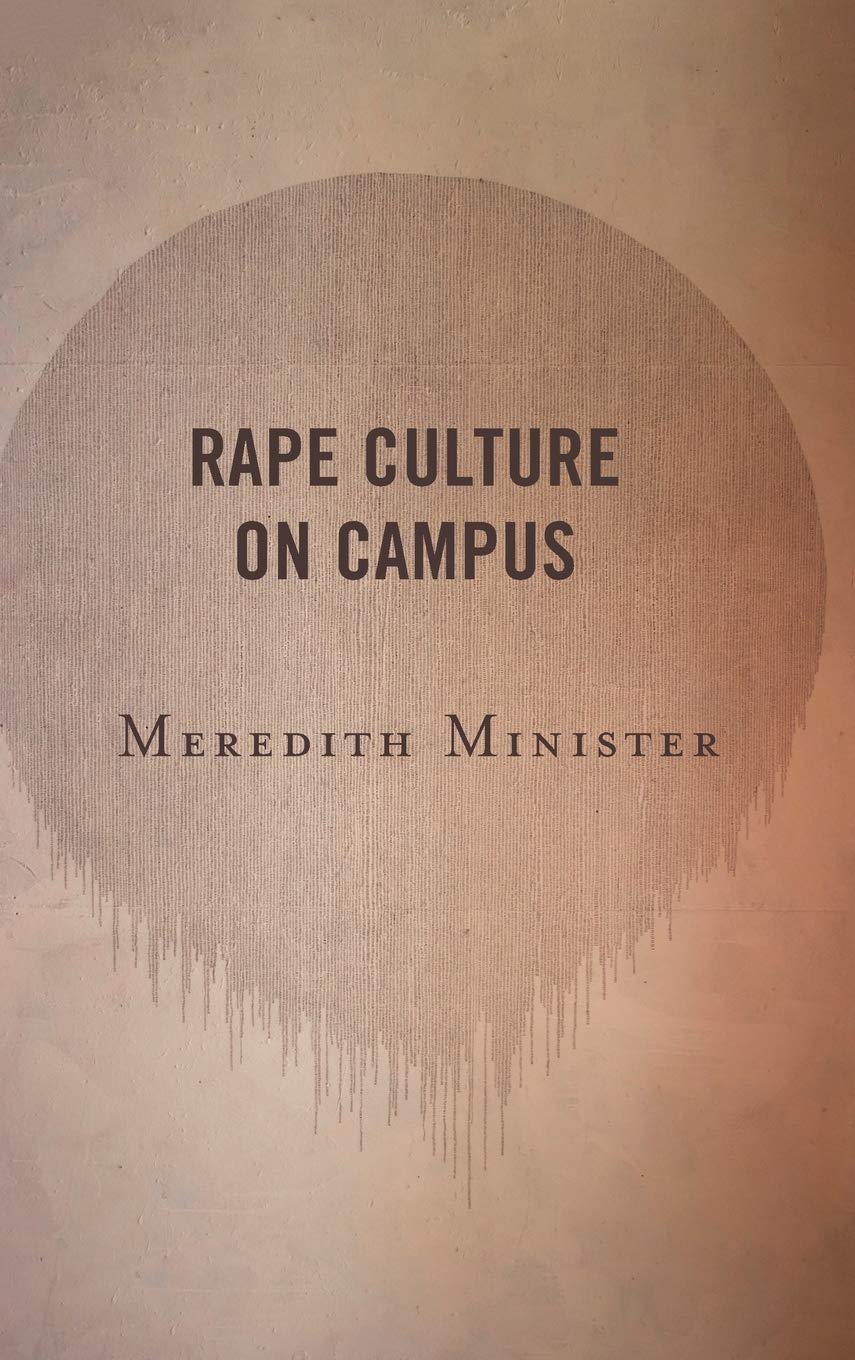
Book Review: *Rape Culture on Campus*

Meredith Minister’s Rape Culture on Campus Book Cover

Within college campuses, rape culture is a prominent issue that is often addressed on a surface level, leading to little or no change in the occurrence of sexual assualt and sexual violence. Meredith Minister breaks down how rape culture is continually perpetuated on college campuses and offers solutions to reducing the prominence of sexual assualt on campus in her book, Rape Culture on Campus. Minister emphasizes that not only is rape culture an issue that requires a change in ideolgies and how we approach sexual assault prevention, but also that rape culture is partially a result of binaries that often exclude gender, sexual, racial, and ethnic minorities. 

Minster begins her book by introducing how she defines rape culture, specifically saying that rape culture is “a socially accepted pattern that legitimates violence to police socially nonconforming activities, including expressions of sexuality and gender” (1). She equates the issue of rape culture existing in the first place to the way we view society and the people within that society. Colonial ways of thinking about gender and sexuality exacerbate the occurence of rape culture in society. She expands on her definition of rape culture by breaking the causes and continuation of rape culture down into pieces. Minister’s writing provides an up close look at how rape culture has defined college campuses and how colleges can do better to break the cycle of continuing the voilent pattern. Mininter draws on her educational expertise to include how purity culture, religion, and autonomy, in addition to policing and trigger warnings, do not assist in interrupting the rape culture pattern on college campuses. 

Book review on Daring to Be Bad: Radical Feminism in America 1967-1975

Daring to Be Bad: Radical Feminism in America 1967-1975 is an academic monograph by Alice Echols, published in 1989. As the title suggests, the book offers a detailed account of the rise and fall of radical feminism in America from late ‘60s to ‘70s. Echols vividly depicts the achievements, struggles and conflicts within radical feminism, identifies and categorizes different theories and activists’ groups emerged from the movement, and attempts to explain how radical feminism eventually came to its doom. The book organizes a complex half-decade of political history into an easily comprehensible timeline, while summarizing many scholar ideologies towards radical feminism. It serves as an accessible scholarly introduction to readers who lack significant knowledges about this topic.

Echols contends that radical feminism, several years after its establishment, was eclipsed by cultural feminism, which was a “tendency that grew out of radical feminism” (5) Whereas radical feminists called for a political confrontation with the government and a subversion of the male supremacy society, cultural feminists were keen on creating an alternate counter-culture with only women. These are not the only two tendencies shared by women of the radical movements. Echols also introduces other categories of feminist ideologies, such as politicos, liberal feminists, new left women, socialist-feminists. She focuses on how, in the movement, radical feminism gradually dissipated, along with fatal flaws within the movement that prefigure its end. In her opinion, if one successfully articulates the reason for the popularity of radical feminist movements in ‘60s as well as their lethal flaws, it might be possible for she and her contemporaries to revitalize the movements.

As Echols concludes herself, her work is “not simply an intellectual history, a social history, or a collective biography” but “the combination of three”. (19) Her academic approach in this book is primarily historiographical. Employing a large number of direct quotes from speeches, interviews and writings, Echols presents a wide range of narratives from scholar’s and activists’ views from 1967-1975. Her sources of evidence consist of multiple types of texts, since her emphasis is not solely on the feminism theories, but also their practice, the interpersonal relationships between feminists, the engagement with other ongoing movements black movements, as well as media response. As the radical feminist movement was, in her own words, “factious”, she often introduces each sub-group and its theories in separate sections of a chapter, accompanied by a micro biography of their founders and leaders. However, her work is not uncritical. Though the historical narratives are kept objective and impartial, she presents her analysis on the feminists’ theories and approaches as conclusions.

The book is divided into 6 chapters, ordered chronologically. Each chapter marks a certain time period with distinct features attributed to it, such as 1973-1975 and the flourishment of cultural feminism. Generally, the radical feminism history in the book can be divided into three parts: the early days radical feminism as an affiliate to other radical movements, the rise of many radical feminism theories and organizations, and radical feminism’s decline that started the development of lesbian feminism and cultural feminism.

Beginning from 1965, the prototype of the actual radical feminism that appeared after 1967 emerged. As early as 1965, women activists still worked inside male-dominating movements, such as the new left and civil rights movement. Women’s issues were not taken seriously, as ““Male chauvinism” was a phrase that one did not utter unless one was ready to be laughed at.” (26) At the same time, the growing gender tensions on sex roles forced (SDS) to start holding workshops on women’s roles. Later on, women activists like Jo Freeman and Shulamith Firestone from the Chicago’s group embarked on the earliest women liberation movements by forming small independent women groups and issuing a manifesto about “defining their own struggles” (49) Echols argues that the black power before 1967 ultimately inspired the statement that “it was only valid form women the organize their own oppression and to define the terms of their struggle.” The radical feminists’ struggle begins with a fundamental “politico-feminist schism.” (52) “Politicos” and “Feminists” occupied opposing theoretical positions inside the women liberation groups by 1969. Politicos viewed capitalism as the main enemy of women’s liberation and claimed women’s movements as an important sector of the leftist movements at the time. By contrast, feminists believed male supremacy to be the biggest problem faced by women and refused to be in only a subordinate position under male-dominating movements. The earliest women liberation groups included D.C. Women Liberation, The Westside Group of Chicago, and New York Radical Women. Together, they articulated the early radical feminist theories and organized events and protests, such as consciousness-raising meetings. In chapter two, Echols demonstrates in detail how problems arose within women liberation groups. Besides the clashes between politicos and feminists, the theories divided on questions like whether men should be challenged or rejected, and whether consciousness-raising groups should demand for actions. In addition, Echols argues that the premise of consciousness-raising, as well as the largely embraced theories at the time, was dismissive of class and sexuality differences, as they contended that “differences still had the same root.” As the white upper- and middle-class women of liberation groups based their theories on assumptions that all women shared universal experiences which united them, bringing up differences was discouraged. The inner conflicts, the unorganized groups, as well as the growing sizes, all contributed to the early failures of radical feminism such as the dissolution of a large group like NYRW.

However, the tendency of the whole movement became much less politico and much more feminist towards 1969, when feminists faced increasing hostility from the larger movements. The sexism within the leftist movements at the time forced women to organize their movements outside of the left. Starting from 1969, radical feminism grew continuously into even more strains and more radical of theoretical positions. Echols contends that “In the early ‘70s radical feminism seemed to be flourishing” as “there was an explosion of radical feminism literature.” (197) Moreover, she also illustrates several flaws within these groups. For example, Redstockings continued on the previous generalized assumptions of all women by upper class, white women. It failed again, to see the need of specifying class and race differences in consciousness-raising. The in-movement schism still existed, and was expressed in opposition between pro-woman line and gender conditioning theory. The former, represented by Redstockings, believed women were forced by the material reality of the male-dominating society to take oppressed roles, while the latter, represented by Cell 16, maintained that women were “brainwashed.” (161) Accusations of elitism, especially against the most educated member, who were also main theorists and writers, were growing. Organizations like The Feminists and New York Radical Feminists were so obsessed with an egalitarian approach to achieve leader-less structure and a true sisterhood that they became greatly unorganized. In addition, prefiguration of cultural feminism started to appear when arguments from Cell 16 transformed into a more gender essentialism theory. Besides, they also proposed that “women withdraw from men personally as well as politically.” (164) It was also true that in 1970, “the newcomers often lacked the founders’ radical perspective” as they “seemed more interested in self-improvement than in the radical restructuring of society.” Radical feminism, in reality, started to decline.

The start of chapter five, titled “the Eruption of Differences,” marks the turning point of radical feminism. In the winter of 1970, Barbara Mehrhof and Pam Kearon organized the Class Workshop for women activists to discuss class. However, Echols maintains that class workshops were “response to the media’s growing fascination with the women’s liberation movement.” Class and elitism were assessed as a result of the resentment created when only few people(leaders) had attention of the press. The discussion about class equality did not have noticeable positive results; instead, it “had become a tyranny of personal conformity. Imagination, inspiration, and efficient political organization are suspected and throttled.” (210)

Meanwhile, Lesbianism emerged as more and more lesbian-feminists entered the movement and demanded for more inclusiveness within radical feminism. Lesbians faced mostly hostility among the heterosexual women liberationists, for lesbian sexuality was regarded as sexual rather than political. As evidenced by quotes from Roxanne Dunbar, “feminism…to get women out of bed rather than change the gender of their partners,” Most radical feminists were anti-sex. To convince the heterosexual women in the movement, lesbian-feminists like Rita Mae Brown promoted lesbianism with the term “women-identified women.” They legitimized lesbian as a political term and contradicted the stigmatization that lesbians were “male-identified bogeywomen.” (216) To them, their sexuality “involved sensuality rather than sexuality, communication rather than conquest.” Echols comments on the de-sexualization of lesbianism that “the movement’s acceptance of lesbianism was always conditional – contingent upon lesbians’ wiliness to de-emphasize sexuality…Lesbianism was never really legitimated on sexual grounds.” While the eruption of differences was not directly correlated to cultural feminism, she contends that “cultural feminism’s ascendence is in large measure attributable to the turmoil created by lesbianism and class.” From 1969, cultural feminists proposed arguments in “The Fourth World Manifesto” and “Mother Right.” The manifesto declared that the female culture formed a fourth world, since women were essentially a colonized group. In addition, Jane Alpert articulated in “Mother Right” that women exhibited a super power due to female biology, as she explained, “biology is hence the source and not the enemy of feminist revolution.” (250) A vision of women united by their shared “motherhood” (251) was described, and Echols concludes that the reason why cultural feminism was constructed and embraced was a “desire to put an end to the painful and often immobilizing discussions about women’s differences.” Cultural feminism was, inevitably, a logical solution which feminists sought for after a long time of turmoil and an intensifying tendency to essentialism.

Over 30 years after its first publication, Echols’ book is still not outdated and serves as a valuable text for those who are curious about radical feminist movements in 60s and 70s. While the book is relatively accessible so that people without fundamental knowledge in social movements or feminism can understand Echols’ ideas, the ways she structures her material are sometimes misleading. For example, the contradicting theories of pro-woman line and gender conditioning are firstly mentioned in conclusion of chapter 2. Without further explanation in chapter 2, this material is revisited in chapter 4 and finally addressed in detail. As the chapters describe mostly simultaneous events, similar situation happens multiple times and render one particular piece of content quite confusing. Other than that, the book is based on a cis-gender assumption. Mostly limited by ‘80s gender concepts(it was written in 1987), the book fails to address struggle of non-cis-gender women, as well as other non-binary communities. Though Echols provides ample insights into the race and class perspective of radical feminism, gender minorities other than gays and lesbians are ignored.

Work Cited:

Echols, Alice, “Daring to Be Bad”: Radical Feminism in America 1967-1975, University of Minnesota Press, 1989

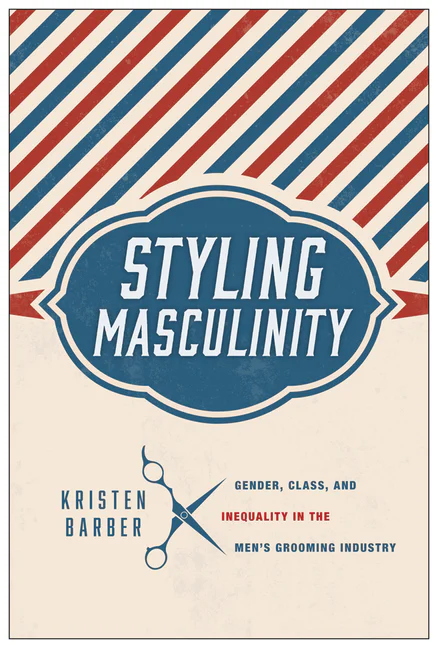
More Than Just a Haircut: Examining Gender Roles and Male Grooming in Kristen Barber’s *Styling Masculinity*

By Alice Berndt

Image Credits: Rutgers University Press

Since the inception of the metrosexual in the mid-1990s, the United States has seen a rise in male participation in the beauty and grooming industry, an industry that was founded by women and has typically been associated with a more feminine lifestyle. For white middle to upper class American men, there is a tension between the expectation to look clean and professional and the fear of appearing to try too hard to look this way. To balance these conflicting desires, modern men’s hair salons create carefully cultivated male aesthetics in their shops, from the decor and products to their employees’ mannerisms and dress codes. Kristen Barber explores this phenomenon in her monograph Styling Masculinity: Gender, Class, and Inequality in the Men’s Grooming Industry, published by Rutgers University Press in 2016. Barber begins with an initial research question: “What makes a men’s salon a men’s salon?” (Barber 162) To answer this question, she spends nine months in 2009 investigating the painstakingly masculinized spaces of two upscale men’s salons in Southern California, The Executive and Adonis, where she uncovers the aesthetics and gender politics of male participation in the beauty industry and the complex role female employees play in this space.

Kristen Barber is a sociologist, professor, and researcher with a focus on masculinities, culture, and work. She has a PhD in sociology from the University of Southern California, and her research centers on examining what “everyday boundary-crossing behavior can teach us about complex systems of inequality” (“Kristen Barber”). Besides Styling Masculinity, Barber co-authored the textbook Gendered Worlds 4th Edition and is the co-editor of a journal called Men and Masculinities. She currently works at Southern Illinois University as an associate professor of sociology and the director of the Women, Gender, and Sexuality Studies program.

To get to the bottom of her question about what exactly constitutes a “men’s salon,” Barber performs an ethnographic study of two such salons in Southern California, Adonis and The Executive. She chooses Southern California as the site of her study because it is “a mecca for commercial aestheticizing” (Barber 12). She states that the phenomenon exemplified by these salons is not exclusive to California alone but rather extends to the rest of the country as well, though how it manifests in different settings may vary. Barber spends nearly a year frequenting The Executive and Adonis, interviewing the owners, employees, and clientele, and observing the interactions between the male clients and the female workers as well as between the male clients and the space itself. She writes, “I am interested in meanings as they are constructed through people’s face-to-face exchanges and how the organization in which these exchanges are embedded shape relationships between groups of people, identity building processes, and the reproduction and reimagining of cultural norms” (13).

Continue reading “More Than Just a Haircut: Examining Gender Roles and Male Grooming in Kristen Barber’s *Styling Masculinity*” →

Book Review: *Interrogating Motherhood*

Motherhood can be a controversial topic yet is also held as a gold standard of womanhood. This is not only complicated by diversity of individuals and life goals, but the pressure that is put on mothers and the shame associated with mothering in a particular way or rejecting motherhood entirely. Discussion of motherhood is much more prevalent than fatherhood, with discourse more strongly focused on the different aspects of what it means to be a mother. This is the case because of the widely accepted notion that women hold more responsibility as a parent while men are more or less excused. Critical discussions of motherhood can be controversial because of these norms and expectations of gendered parental roles and childcare that are entrenched in policy, history, and day to day life. Nevertheless, it is important to engage with this topic as individuals and a collective to shed light on the private and public role that motherhood plays on mothers themselves, as well as shaping motherhood down the line. 

Lynda Ross is an associate professor at Athabasca University, in Athabasca, Canada. She is a professor in the Women’s and Gender Studies department and teaches courses about violence against women, and women and psychology (“Lynda R. Ross”). A primary interest of hers is the social construction of motherhood (“Lynda Ross and Shauna Wilton”). In her monograph, Interrogating Motherhood, Ross sets out to explore and explain the context in which motherhood in Western society rests, particularly in the United States.

            Interrogating Motherhood’s central argument is that women’s lives are made more complex and challenging by motherhood, because they receive little support considering the immense physical and emotional toll they go through. Ross states that “although childbirth is a universal biological event, it is obviously not independent of the economic, social, and cultural context in which it occurs” (Ross 70), and the result is that the experience of mothering is a very isolating one (127). In her book, Ross outlines the societal structures that emphasize the values place on mothering, but not mothers themselves. Her book’s eight chapters that walk through this argument are titled “The Study of Motherhood,” “Reflections on Motherhood: Theory and Popular Culture,” “Paid Employment and the Practice of Motherhood,” “Enabling Policies: In Theory and in Practice” (guest authored by Shauna Wilton), “Mothering and Poverty,” “Mothers, Mothering, and Mental Health,” “’Other’ Mothers, ‘Other’ Mothering,” and “The Future of Motherhood.” In these chapters she outlines how attachment theory, employment of women, policies surrounding maternity leave and paternity leave, mothers who struggle with parenting because of poverty or mental health, and mothers that face additional obstacles because they fall outside of the cookie cutter “good mother.”

Ross does not employ her own methodology in this book, but rather draws information from a plethora of relevant research and literature. She weaves this collection of facts and statistics from a variety of sources together to create view of motherhood in America that has more breadth than any of the individual works could reasonably provide. Alongside other authors, she draws from four of her own papers on attachment theory and postpartum depression to contribute her own expertise to the narrative. The second chapter of Interrogating Motherhood offers a history on the theory surrounding motherhood, and in it, Ross unpacks how attachment theory has contributed to the norm that maternal selflessness and ever presence is required for the successful raising of well cared-for children (18), partially because of the way theory and the media are influenced by external societal pressures (29). She illuminates that the accepted notion of what a “good mother” is does not assist mothers but instead leaves them without support (83). At the same time, this demonizes parents who do not fit into the narrow white, middle-class, heterosexual, and married mold (104), and further perpetuating the stereotype and expectation that mothers should be the primary caregivers for their children.

Although scholarly and offering a historical survey on motherhood theory, this book is extremely accessible to readers. In addition to being available online as a free PDF, this text is well organized and covers many diverse but not mutually exclusive topics related to motherhood, parenthood, and the historical and social forces that have shaped raising a child as a highly complex and gendered process. Ross also carefully balances her evidence within larger context and narratives within each chapter to paint a holistic picture of the dynamics impacting women. For example, in the chapter “Paid Employment and the Practice of Motherhood,” Ross contrasts the United States’ minimal maternity leave with that of Norway’s (45) to highlight how the difference in policy reflects how mothers are valued. Viewing this topic through a wide lens is essential due to the interrelated nature of its content, in which Ross executes by organizing the text’s content into well-defined categories.             

However, Interrogating Motherhood is somewhat held back by its breadth; since almost all of the information brought to readers’ attention is from outside of Ross’s personal research, there are a staggering amount of topics introduced that are not given equal depth and significance in the greater context of the book. For example, her commentary on how attachment theory supports norms of gender roles in parenting involves discussion of how constructions of Western society have influenced attachment style theory (125), and how this scholarly support has helped perpetuate these norms through media (29). On the other hand, when she attempts to summarize the impacts of the “anxiety, isolation, and sense of overwhelmed” that mothers may face in general, her conclusion is simply that these feelings “are not good for women” (127). Because of this, Interrogating Motherhood is essentially a literature review on policies and norms surrounding motherhood in the United States. Compared to the depth of analysis outlined in the introduction to the book, the text fails to interrogate motherhood beyond basic facts and their immediate outcomes.

Something that could have contributed to the strength of the book is the consideration of women who feel isolated from motherhood. Ross pinpoints the forced obligation of women’s responsibility to their children that some mothers must grapple with (114), but this leaves room for discussion of women who choose not to become mothers or regret becoming mothers. In addition, this book only focuses on Western society’s motherhood norms and expectations (1). The author acknowledges this, but the book could benefit from more cultural context, particulary in the discussions of family and gender roles.

            Ross’s Interrogating Motherhood sets out to unpack the nuanced, personal, and often controversial topic of what it means to be a mother, and how the idea of a “good mother” cannot be enacted in today’s society in a way that is supportive of a mother as well as her children. She covers a lot of ground in her discussion throughout the text and provides a well-supported argument. However, her lack of personal contribution to the research discussed reveals herself in her hesitance to jump into describing a more holistic perspective on the challenges mothers face beyond her two main areas of expertise: attachment theory, and mental health in pregnancy and motherhood (in chapters 2 and 6, respectively, as well as the introductory and concluding chapters). However, her call to action at the conclusion of the book is compelling; “a paradigm shift in how we understand mothering and motherhood is needed” (124) beyond essential policy shifts that need to occur, so that mothers are able to receive support, care, and attention alongside their children.

Works Cited:

“Lynda R. Ross.” CSPI, 1 Apr. 2010, https://www.canadianscholars.ca/authors/lynda-r-ross.

“Lynda Ross & Shauna Wilton.” JourMS, 11 Aug. 2016, https://jourms.org/lynda-ross-shauna-wilton/).

Ross, Lynda R. Interrogating Motherhood. Athabasca University Press, 2016.

Book Review: *The Tragedy of Heterosexuality*

Cover of Jane Ward’s The Tragedy of Heterosexuality.

The Tragedy of Heterosexuality, winner of the 2021 PROSE Award in Cultural Anthropology and Sociology, is Jane Ward’s third book. In it, she explores what is wrong with heterosexuality in the 21st century and what straight people can do to fix it. She compares straight to queer relationships, pointing out where straight couple could learn from queer culture, takes a look at the self-help industry (and how it’s not helping at all) and ultimately wonders how straight women (and to a lesser extent men) have survived the tragedy of heterosexuality. Ward offers us a map of the complex and shifting landscape of heterosexual desire in the era of #MeToo, sexual harassment, and Title IX.

Continue reading “Book Review: *The Tragedy of Heterosexuality*” →

Book Review: ‘Disrupting Dignity: Rethinking Power and Progress in LGBTQ Lives’

Dignity is almost universally viewed as something to aspire to. However, dignity can often be an isolating concept that drives people apart, negatively affecting societies as a whole. Stephen M. Engel and Timothy S. Lyle’s Disrupting Dignity: Rethinking Power and Progress in LGBTQ Lives offers readers a better and more nuanced understanding of the concept of dignity and the role that it plays in the day-to-day life of our world’s LGBTQ+ citizens. This book is centered around the concept of dignity and how it is not always a good thing. Moreover, the book demonstrates that, in many cases, dignity is a tool of the state that is used to shame and disempower members of the LGBTQIA+ community. Disrupting Dignity is divided into two parts: part one focuses on the power of dignity to affect the lives of people living in the United States from the perspective of public health, while part two focuses on the promotion of sameness and also the embracing of difference in popular culture representations. This work gives ample examples of politicians, policymakers, media leaders, and people within the LGBTQ community who invoke the concept of dignity in a harmful manner.

Continue reading “Book Review: ‘Disrupting Dignity: Rethinking Power and Progress in LGBTQ Lives’” →

Book Review: *Against White Feminism: Notes on Disruption*

White feminism is a type of feminism that concentrates primarily on the hardships of white women without acknowledging oppression felt by non-white women or the layering intersectionalities of identity. While most modern-day feminists associate white feminism with the first wave of feminism, white feminism still very much endures within patriarchy and permeates into the rhetoric of many feminists. White feminism is not merely the image of white women holding a Daughters of the American Revolution flag and walking along the streets of Washington DC. It’s more than suffragettes and VOTES FOR WOMEN sashes. Rather, white feminism is a system of oppression that has stemmed from white supremacy and racism. 

Rafia Zakaria’s Against White Feminism: Notes on Disruption is a historical analysis of white feminism and an “argument for feminism to pitch itself against a very specific frontier, that of whiteness, where whiteness is not constructed as a biological category but as a set of practices and ideas that have emerged from the bedrock of white supremacy, itself the legacy of empire and slavery” (Zakaria 208). Against White Feminism is an attempt to excise whiteness and its assumptions of privilege in order to foster the liberation of all women. Zakaria splits up the book into eight different chapters regarding different areas of feminism, including the suffragette movement, the white savior complex, the insertion of white feminists into international wars, and sexual liberation. 

Rafia Zakaria is an attorney, political philosopher, and a Ph. D. candidate in Political Science at Indiana University. Furthermore, she serves on the board of directors of Amnesty International USA and has experience being a feminist of color within academic and professional spaces. Zakaria has written a few other works, including The Upstairs Wife: An Intimate History of Pakistan and Veil (Object Lessons). Zakaria is also the only Pakistani American woman recognized by the Indiana House and Senate for her effort towards women’s rights, a significant feat as few brown women are granted access to politics. Her personal experiences in academia and human rights are notable concerning Zakaria’s qualification because she has had first-hand experience with and discrimination from white feminism. 

Zakaria’s primary methodology is content and text analysis from well-known feminists such as Audre Lorde, Kimberlé Crenshaw, and Gayatri Chakravorty Spivak. By using the method of close readings from influential feminists of color that came from before her, she pieces together an argument for the deconstruction of white feminism that began long before the writing of this book. Additionally, Zakaria provides analyses of white feminist texts such as Simone de Beauvoir’s The Second Sex to contextualize white feminism. Alongside the close readings of critical feminist theories, Zakaria also provides information from historical events that western historians essentially recognize with little space for or mentions of women of color. By presenting these accounts, she restructures the narrative to uplift the voices and actions of black and brown women, using the book itself to accomplish her mission of liberation for all women. 

Zakaria begins her discussion with chapter 1, “In the Beginning, There Were White Women,” where she depicts the history of the feminism movement and the racism within, particularly in America and Europe. Zakaria dives into the history of colonialism and how the white feminism movement was able to progress due to being supported by colonial powers and white supremacy. For one, white British suffragettes during the early 20th century would defend voting rights for women in India (a colony of the British empire) but “refused to support the fight against colonial domination abroad” (29) because they profited off of colonial domination. Throughout the book, Zakaria notes these historical instances of hypocrisy within feminism movements that reinforced the subjugation of some, particularly women from Africa or the Global South. Similarly, Zakaria uses chapter 2, “Is Solidarity a Lie?,” to question the lack of intersectionality in contemporary feminist movements. Zakaria critiques Simone De Beauvior’s The Second Sex as universalizing “women” as “white women” and the “ultimate other,” disregarding the systems of oppression that overlap one another (43, 44). In response to this trend, Zakaria proposes a solution by combining two notable feminists, Kate Millett and Kimberlé Crenshaw. She asks, “by bringing together the intellectual tools of Millett’s epistemological skepticism and Crenshaw’s understanding of intersectionality, can a true feminist solidarity finally be born?” (55). Zakaria explores this idea through the rest of her book as she considers possible solutions.

Chapters 3 (“The White Savior Industrial Complex”), 4 (“Feminists and Feminist Wars”), and 6 (“Honor Killings, FGC, and White Feminist Supremacy”) all touch on the cultural differences between white feminists and women of color in the international realm. Specifically, Zakaria describes white female journalists and activists who attempt to “save” black and brown women via awareness or humanitarian aid. This notion is historically rooted in colonialism and white supremacy where Western (and almost always white) nations or cultures would attempt to enlighten black and brown people in Africa and the Global South based on the premise that western ideals were inherently correct. This ideology is exemplified by Gayatri Chakravorty Spivak’s famous declaration of “white men saving brown women from brown men” (11). Zakaria introduces white women into the equation, as they also participate in the white savior complex alongside white men. 

In Chapter 5, “Sexual Liberation is Women’s Empowerment,” Zakaria discusses sex-positive feminism and choice feminism as theories that “sideline the concerns of women of color and poor women who need the status quo to change” (138). This is because the liberation of women of color is reliant on structural change where sex-positive and choice feminists can comfortably exist within the oppressive status quo that fronts white women’s voices. Zakaria uses this notion to argue for a more collective movement to liberate all women. Chapter 7, “I Built a White Feminist Temple,” continues this discussion by asserting that a lack of parity between feminists results in a lack of equality between gender as a whole. Zakaria ends the book with chapter 8, “From Deconstruction to Reconstruction,” which provides a glimpse of “reconstructed feminism” (204). This form of feminism is meant to transform the discourses surrounding feminism and challenge neoliberalism. Contemporary feminism is without a “clear political frontier toward which to unite,” but Zakaria asserts that the most crucial frontier to unite against is capitalism since it is “bad for all women, even white women” (202). Zakaria’s conversation of the individual vs. the collective culminates in the last chapter as she calls for a collective understanding and engagement to deconstruct both capitalism and patriarchy, which aim to dominate all women and all people. While a wholly unified “we” is impossible within contemporary feminism movements, a reconstruction of feminism is possible. Zakaria argues that it will require the “great challenge of transformation” and white feminists to cede spaces to women of color (209). Zakaria concludes the book with a quote from Audre Lorde regarding the necessity of community: “without community, there is no liberation, only the most vulnerable and temporary armistice between an individual and her oppression. But community must not mean a shedding of our differences, nor the pathetic pretense that these differences do not exist” (209). This quote exemplifies both the historical continuity of whiteness within feminism and inspiration for a way forward. 

Zakaria’s greatest strength is that she provides anecdotes from her life and connects them to feminist theories or historical events. This allows the reader to have a direct connection with the book. Furthermore, feminist theory is often very arbitrary and abstract, so providing concrete stories from Zakaria’s life helps the reader understand the theory and issues in today’s world. For example, Zakaria wrote an article called “Women and Islamic Militancy” in 2015 for Dissent, a traditionally leftist magazine. Her article highlighted how “some Muslim militant organizations used ‘empowerment-like rhetoric” to entice women (111). Zakaria claimed that a cause of this development was the expulsion of Muslim women from the central narrative of Western feminism. Ultimately, the article was rendered so controversial that the editors included a response from a “real feminist” alongside Zakaria’s piece (111). One of the editors of Dissent also stated in an interview that Zakaria was “fascinated and even excited by the idea of a Muslim woman warrior and terrorist killing” (111). Alongside this anecdote, Zakaria provided an analysis of liberal Islamaphobia and how intersecting identities of gender, race, and religion can create oppression. By contextualizing the theory with her own personal experiences of discrimination, the reader has a much firmer grasp of the philosophy.  

One of Zakaria’s weaknesses is that some of her claims are very generalized. For example, Zakaria describes how white feminism often permeates into international relations, specifically when western nations claim commitment to a feminist framework, but their actions convey otherwise. Two examples Zakaria provides are Sweden and Canada, both countries with “feminist foreign policies” that engage in arms trade with Saudi Arabia “whose use of arms and intimidation to harass Saudi women’s rights activists was well known” (92). I took issue with this argument because it oversimplified the international process and politics behind arms dealing. For one, Zakaria makes a direct link that military arms are used to pressure women’s rights activists despite most women’s activists in Saudi Arabia being jailed rather than threatened via tanks or machine guns. Furthermore, Zakaria makes this claim but provides no evidence or source regarding the direct impact of military arms on women or feminists. While I agree that western nations contribute to the oppression of women of color via military arms sales, I do not believe that this was the best example or argumentation. 

Ultimately, I thoroughly enjoyed reading Against White Feminism and would recommend it to all individuals who identified as feminists. Zakaria opened my eyes to many historical events and processes that I had not thought of as perpetuating whiteness, but her argument was coherent and compelling. I also personally appreciated the inclusion of brown women’s works and historical oppression from white feminism because much of intersectional feminism in America focuses on the oppression of black women rather than black and brown women. Furthermore, I believe that feminists who are white (not necessarily white feminists) should read this work in order to deconstruct the biases that they may not be aware of. Taking inventory of one’s privileges and the historical context surrounding their identity, especially those who want to create structural change, is vital to the feminist movement. Reading Against White Feminism is one step towards this direction and the collective feminist movement to come.

Work Cited

Zakaria, Rafia. Against White Feminism: Notes on Disruption. 1 ed., New York, W. W. Norton & Company, 2021.

A Review of *Plucked: A History of Hair Removal*

          Rebecca Herzig’s Plucked of 2015 sheds light on the tumultuous history and divisive nature of hair. Although it was not always the case in the past, today more than 99% of women in America voluntarily remove their hair by shaving, waxing, or lasering (Herzig 9). This leads to the questions, was hair removal always voluntary? Is it really voluntary in the present? Herzig delves into questions such as these taking a scientific approach to the history of technology of hair removal in the United States. She chronologically highlights the progression of American attitudes on body hair and hair removal from the 1700s to 2015, culturally critiquing the way that American society has used hair or lack thereof to divide and categorize people since colonial times. The concept of hair makes the constructs supporting such societal divisions more visible. In the early 18th century, American colonists looked down upon Native peoples who removed their facial hair, calling them lazy and unmanly (25). However, by the 21st century, American scientists developed advanced depilatory technologies, and society uses body hair as a means of social control over women. Although today’s society uses these technological methods of hair removal to promote the idea of choice and self-determination over depilation, the fact that over 99% of women regularly remove body hair brings Herzig to push the reader to reflect whether hair removal is truly voluntary, necessary, and can prevent suffering.

            Rebecca M. Herzig is a Gender and Sexuality Studies professor at Bates College and a historian of science. She received her doctorate in history and the social study of science and technology from MIT. Her other works include Suffering for Science: Reason and Sacrifice in Modern America and The Nature of Difference: Science of Race in the United Sates from Jefferson Genomics. Before publication of Plucked in 2015, several mentors and colleagues told Herzig to give up on the topic of hair removal and that it was not worth the extensive research and work that went into this monograph (194). However, Herzig continued to delve into this topic while being conscious of her own privilege as a “white, straight, able-bodied, middle-class American woman” (195).

            Herzig completed extensive research on the history of technology of hair removal to develop her monograph, with an emphasis on the changing political, social, and scientific attitudes towards hair removal. She analyzed advertisements in magazines and newspapers such as Ms. And Science News Letter, as well as scientific studies regarding hair. For instance, an 1892 study on “insanity” in women found that “insane women [presented] excessive facial hair more frequently than the sane” (73). She also investigated books on evolution, including Darwin’s Descent of Man. Her thorough research on the beliefs and stances of popular historians over the generations provides a reflection of the dominant perspectives on hair and hair removal since the 1700s. Herzig received a grant from the National Science Foundation in 2008 to conduct research on RNA-interference, the most advanced, and potentially effective, means of hair removal to date. Chapter One, “The Hairless Indian: Savagery and Civility before the Civil War”, reveals how hyper-fixation on hair led to distinctions between races and similarities between minoritized races and animals. These classifications were used to “support the continuing enslavement of men, women, and children of African descent” (30). Chapter Two, “‘Chemicals of the Toilette’: From Homemade Remedies to a New Industrial Order”, emphasizes how smooth, white, hairless faces were ideal in the early 1800s, making hairlessness a symbol of purity, status, and wealth for white people. Hair removal powders and creams appeared in advertisements during this time as well. Chapter Three, “Bearded Women and Dog-Faced Men: Darwin’s Great Denudation”, marks the first medical pathologizing of hair in the early 20th century with hypertrichosis, the condition of excessive hair. In 1871, Darwin’s Descent of Man explained man’s hair loss as a result of sexual selection, which subsequently led to excessive hair being viewed as a sign of sexual and mental deviance.

            Chapter Four, “‘Smooth, White, Velvety Skin’: X-Ray Salons and Social Mobility”, introduces new hair removal technologies: electrolysis and X-ray radiation. Throughout the mid-1900s, hairiness was associated with lesbianism and feminism, while hair removal became a way for middle-class women to dissociate themselves from “cruder people, lower class and immigrants” (79). X-ray salon marketing targeted these people to give them the perception that hair removal led to upward class mobility. Chapter 5, “Glandular Trouble: Sex Hormones and Deviant Hair Growth”, explains how endocrinology linked hairiness to internal hormones of the glands, leading glandular remedies and hormonal drug therapies to become popular hair removal treatments within a culture of self-improvement in the 20th century. Hirsutism, the disorder of abnormal hairiness due to glandular trouble in women was first diagnosed in 1922 (107). Although there was no official classification for what constituted abnormal hairiness, the Journal of the American Medical Association reflected that “the level of patient distress drove medical diagnosis – distress that was itself dependent on mutable social norms” in the mid-1900s (109). Chapter 6, “Unshaven: ‘Arm-Pit Feminists’ and Women’s Liberation”, highlights the role of visible body hair as a symbol of political activism in second wave feminism. On the other hand, the innovation of private bathrooms further mobilized middle-class women’s obsession with hygiene and depilation with Gillette’s new safety razors (124). World War I soldiers were required to shave, making facial shaves a new daily routine for men. Meanwhile, Black Power groups rejected white norms of straight hair during this time, challenging society’s implicit association between Black people, hairiness, and lower status.

            Brazilian waxing is introduced in Chapter 7, “Cleaning the Basement’: Labor, Pornography, and Brazilian Waxing”, as a means for self-enhancement, hygiene, and sexual desirability. Around 1977, the economy saw a shift towards producer and consumer services with a growth of personal care services. Service workers, mainly lower-class female immigrants, were “tied to their client’s bodily location” and received very minimal protections from the government (147). Chapter 8, “Magic Bullets: Laser Regulation and Elective Medicine”, presents the invention of laser hair removal in the 1990s and its popularization in the early 2000s. This technology initially did not work on dark pigmentation, limiting people of color’s access to advanced hair removal technology. However, medical professionals considered hair removal as cosmetic and not a legitimate medical need, and thus were hesitant to provide laser hair treatment at all, putting hair removal “on the edges of professional medicine” (162). The final chapter, “The Next Frontier: Genetic Enhancement and the End of Hair”, delves into RNA-interference (RNAi), genetic technology that could be used to stop growth of unwanted hair. Despite great financial investment in research for this type of hair removal, scientists have not focused resources on this technology. Interviews with pharmaceutical employees revealed that RNAi for hair removal is considered low-prestige work and the potential harm may be greater than the potential benefits. Scientists prefer to work on “life-saving” drugs, whereas hair removal therapies tend to be called “lifestyle drugs” (176). Herzig notes that the “line between lifestyle indication and serious medical need was flexible, shaped by ‘general cultural shift[s]’” (177). The stigma against cosmetic drug development suggests that suffering from ‘excessive’ hair is deemed less important than other forms of suffering.

            The distinction between “the superfluous and the truly necessary” in terms of bodily hair has evolved over time, yet Herzig concludes it will never be clearly defined (191). Medical professionals’ resistance to providing hair removal treatments and developing drugs to inhibit hair growth is reflective of how today’s society sees hair removal as a trivial cosmetic treatment, because many people do not believe that body hair causes suffering. However, hair has been used to mark racial, class, and gender differences and socially categorize people throughout history. Access to ever modernizing technology allows those with privilege – wealthy, white people – to become “enhanced”, whereas those who cannot afford these expensive treatments, the “unenhanced”, are discriminated against (189). Thus, who is to say whether hair causes suffering and who is truly suffering? Herzig asserts that the changing methods of hair removal and self-enhancement inherently necessitate the reliance of those with privilege to access expensive treatments on those socially ranked below them. In Herzig’s words, Plucked is a “call to remember those excluded others: the staggering volumes of sweat and blood and imagination and fear expended to produce a single hairless chin” (190). Participation in the trends of hair removal is to unconsciously separate yourself from others, creating a divide between those who remove hair and those who do not. Herzig argues that no matter what we decide to do with our body hair, we are “unconsciously pressed by society” and the “enthrallment to consumerism” to perceive body hair as dirty, wrong (137). In other words, each person’s perception of body hair and other people’s choices about their body hair in modern society is influenced by this division.

            One of Herzig’s strengths in writing Plucked is her thorough descriptions of each type of hair removal technology, including their development, use, and psychological, physiological, and social impact on users. From the homemade hair removal concoctions containing arsenic – causing skin damage, convulsions, and even death to women in the mid-1880s, to the laser hair removal devices created over one hundred years later with the potential to cause blistering and hyperpigmentation of the skin, Herzig guides the reader through the history of each new technology through a scientific lens. She facilitates an understanding of the differences in access to each type of hair remover, as well as of the reliance of those with privilege on those socially ranked below them for development and treatment services of hair removal. For example, Brazilian waxing in the early 2000s, which targeted new audiences and hard-to-reach body parts, relied heavily upon skilled service workers. Herzig compares waxers to housekeepers and child or elderly caretakers, highlighting how essential waxers became to the daily lives of middle-class women. Many of these workers are female immigrants whom society views as “shunned, ‘wasted,’ disposable workers in the contemporary global economy” with little chance to climb the socioeconomic ladder (150). These detailed analyses of each piece of hair removal technology enhance her argument that no one individual can determine the collective’s suffering and are indicative of society’s, mainly women’s, apparent desperation for improving hair removal methods. This desperation stems, of course, from the implicit and explicit societal expectation for women to be hairless in order to be sexually desirable and feminine that has been developing in the Unites States since the 18th century.

             One of Plucked’s weaknesses is its specificity of exploration of white, Eurocentric, post-colonial examples regarding body hair. Herzig provides far fewer specific examples of the body hair removal trends and issues for the many racial groups in the United States, including Black, Asian, Hispanic, and Indian. Rather, she focuses more heavily on white, gender, and socioeconomic issues and provides many concrete examples. Herzig’s arguments on suffering and the lack of acknowledgement of excluded, oppressed groups would be stronger if she included transnational observations and specific examples of the use and impacts of body hair removal technologies for other racial groups in Plucked.

             Herzig effectively guides the reader through the history of hair removal in the United States while continually evoking the difficult issues of what constitutes suffering and who gets to decide this. Her journey through the development of hair removal technology articulates the privilege dynamics between those removing hair and those getting their hair removed, as well as those with access to modern society’s advanced, expensive technology. Thus, I believe white people would benefit from reading Plucked to further understand their privilege and how it has evolved since the 1700s, even in a seemingly “trivial” context. Herzig makes clear that body hair and hair removal is far from trivial and is implicated with gendered, racist, and classist roots.

Works Cited

Herzig, Rebecca M. Plucked: A History of Hair Removal. New York University Press, 2016.

*What It Feels Like*: Book Review

Rape culture is so pervasive in almost every aspect of today’s society, sometimes seemingly impossible to combat, however, in her book What It Feels Like, Stephanie R. Larson examines rape culture from a rhetorical perspective and gives insight on the possible resolutions for its abolishment. As part of this solution, Larson introduces the concept of “visceral rhetorics,” which describes the felt communication that takes place within one’s self as well as the erasure of this perspective, and explains why this conceptual framework is often overlooked when it has the power to uproot rape culture altogether. She deeply analyses how we communicate about rape culture by examining a multitude of different case studies, revealing how much the embodied experience is undermined within this discourse, along with certain types of evidence like personal testimonials and voices such as non-white women. 

In the first chapter, Larson examines pornography and the movements against it in the 1980’s, uncovering how these create a notion of sexual citizenship and risk connected to it, resulting in panic surrounding individuals accused of sexual violence while simultaneously ignoring actual victims. Rape prevention campaigns build off this notion in Chapter 2 to include the bystander, but ultimately highlight how the issues and solutions related to rape currently center around the male perspective. While Chapter 1 and 2 discuss the consequence of women’s bodies being deemed unfit for body politics because of the centralization of men in rape culture, Chapter 3 and 4 take a turn focusing on how women’s bodies are leveraged politically in the response of rape. These two chapters explore how the embodied experience of sexual violence victims is often seen as inferior to other kinds of evidence, particularly though technological tools like rape kits, even though this visceral framework is essential to shape the public’s perception of rape. Lastly in Chapter 5, Larson argues how powerful the feminist implementation of megethos, a central aspect of Aristotle’s epideictic forms of rhetoric, also meaning magnitude, within the #MeToo movement is in order to show the magnitude of rape culture in our society today. Not only did the sheer number of responses reveal the reality of rape culture, it also created collective believability surrounding it. The analysis of these case studies ultimately display Larson’s main point that “discourses about rape culture rely on strategies of containment to assert control over a presumed affective excess of femininity but also that those discourses can be challenged by mobilizing forms of embodiment that stress what it feels like to be raped” (4). 

Stephanie R. Larson, the author of What It Feels Like, is an Assistant Professor at Carnegie Melon University in the department of English. Although this is Larson’s first book, she is already very involved in the rhetorical community through presenting at many conferences, her CV demonstrates her engaging in interviews, and continuously publishing new written work pertaining to rape culture, mostly in the form of scholarly articles. Larson predominantly focuses on the topic of rape in all of her work because she views it as a necessity at this point and shares “I do not want to live in a society where people experience violence and then have no way to talk about it or are met with skepticism when they try. I study rape culture because I know it to be a true and pervasive reality” (xiv). This book builds off of past scholar’s work by in feminist rhetoric by not only addressing how women’s voices are being silenced by rape culture, but how rape culture suppresses their bodies as well. 

To come to this conclusion, Larson analyses anti-pornography debates from the 1980s, Violence Against Women Act (VAWA) advocacy materials, sexual assault forensic kits, public performances by survivors, and online social movements (5). By using the methodology of rhetorical analysis, as well as using information from historical archives, she examines this history of rape culture, how rape culture is still present today, the rhetorical strategies used to uphold it, as well as what rhetorical strategies could be useful to abolishing it (7). Each of these sources provide a different angle, strengthening Larson’s overall point of the importance of embodiment and its potential to uproot rape culture when shared and believed. 

In Chapter 1, Larson begins by addressing the case study of the Meese Commission, a commission ordered by Ronald Regan investigating the impacts of pornography, focusing on the historical legacy of the construction of a victim’s subjectivity in contemporary public discourse. Connected to pornography, the distinction of a “proper citizen” through sensation experience was a large aspect intertwined in this inspection and shaped the meaning of what constituted as victimhood (35). This ultimately resulted in victims not fitting into this conceptualization of the “ideal citizen.” Through the main arguments of the letters written to the commission, blame shifted away from the men viewing pornography to the sexuality happening within it, serving as a basis in the decision of what bodies are valuable (41). This eventually led to the definition of rape during the 1980s to stray away from inherently sexually violent behavior to a consequence of male contamination, bringing the focus to the rehabilitation of straight white males and away from the actual experiences of victims (41). The declaration of women’s sexuality as the real threat in rape cases and failure to truly listen to the experiences of victims allowed the histories of misogyny, white supremacy, and violent masculinity to go unrecognized within the overall discussion of rape. 

Larson then brings attention to bystander discourses in Chapter 2 by analyzing the two contemporary rape prevention campaigns “It’s On Us” and “1 is 2 Many”. She heavily critiques “It’s On Us” regarding their history centered around protecting white womanhood and how this is still seen in their discussion of the bystander, along with the promotion of other problematic misconceptions like feeding into the racial stereotype of Black men as the majority of rapists (71). In a similar way, “1 is 2 Many” offers men as the answer to fixing the horrors of rape culture, without considering how “masculinity remains unquestioned while it is leveraged as the solution” (78). By presenting these two examples in regard to the role of the bystander, Larson acknowledges that in attempting to change the logics of rape culture by shifting the responsibility away from women, men are often viewed as the ideal mitigators of rape culture. In turn, this completely disregards the fact that men’s actions created this issue and continue to fuel it today. 

Chapter 3 and 4 shift the focus of this book by looking at how bodies interact with the public and overall discourse of rape in personal, and usually responsive, ways. To begin this transfer in discussion, Larson analyses how rape kits, while beneficial in supplementing testimonials, overshadow the voices and embodied accounts of victims, deeming them less credible (87). Larson identifies three of the largest problems surrounding them, being: situating rape as a problem with violent criminals with no cultural aspect involved, placing far too much emphasis on scientific tools like rape kits which leads the public further away from believing victims, and the control of a rape experience by medical, legislative, and testimonial accounts, going against the value of visceral rhetorics (99, 103, 111). Rape kits ultimately turn the prevalence of rape into a scientific matter with scientific answers, ignoring underlying historical, cultural, and ideological factors, while simultaneously furthering the notion that the body and its boundaries are inferior in regard to rape cases (95).

 However, Emma Sulkowicz and Chanel Miller, both victims of high-profile rape cases, push against this effacing by publicly centering their bodies in a form of protest, highlighted in Chapter 4 (113). In 2016, Miller read a letter she wrote aloud in court that many news outlets published shortly after in which she asks her audience not to just see her perspective, but “to feel her perspective, to feel what her body felt in the aftermath of rape” after describing her embodied experience (122). Sulkowicz released her performance, Ceci N’est Pas Un Viol, online in 2015, a staged violent raping that forces viewers to see and feel rape, evoking a visceral response from them and giving her audience a better understanding of the embodied responses to situations of rape (128). Not only do these performances help alter the public’s opinion by assessing rape outside of the male perspective, it also brings attention to non-white women and gender nonbinary people who usually get left out of the wider public discourses of rape (114). While Miller’s form of visceral counterpublicity internalizes the use of the body and Solowitz’s externalizes it, they both expose public audiences to this embodied violence and better shape their understanding of how the body should be centralized in the instance of rape.

Following these instances that sparking embodied reactions among the public came the #MeToo movement, ultimately shifting how the world views sexual violence and the discussion surrounding it. In April 2017, Alyssa Milano sent out a tweet encouraging those who have been sexually harassed or assaulted to unite themselves by using #MeToo hashtag (136). The sheer number of responses to this tweet led to the rhetorical form of megethos, or magnitude, that transformed the discussion of rape culture (138). This extensive list of experiences not only engaged viewers, but it overwhelmed them, bringing to light just how common these instances occur. This list employs feminist megethos as a strategy that helps undo problematic, yet normalized, attitudes towards rape, expose the reality of rape culture, and offers another tactic of visceral rhetoric to change the discourse surrounding rape and rape culture at large. 

One of Larson’s greatest strengths throughout her book was her the variation in case studies she used to justify her points. Including sources like anti-pornography debates from the 1980s, Violence Against Women Act (VAWA) advocacy materials, sexual assault forensic kits, public performances by survivors, and online social movements allows for a more holistic understanding of the importance of embodied experiences and the power they have to abolish rape culture. In addition to this, something very commendable throughout Larson’s writing is the alternate wording of complicated concepts and arguments she offers. Continuously, she would make a statement then follow it with phrases like “in other words,” making her arguments very clear and easier to grapple by hearing them in different ways. 

Centering discourse around the male perspective is one of the main issues of rape culture presented throughout the entire book, but one of Larson’s weaknesses is not addressing male victims. By no means should the focus on male victims be prevalent throughout the book since only 9% of rape victims are male, but discussing one example of how the experiences of male victims shape the visceral response of their audience would be useful. Analyzing the contrast between male and female victims would offer another layer into the gendered differences embedded in rape culture.

Larson does an excellent job giving readers a better understanding of the different aspects that contribute to and reinforce rape culture by providing analysis of many distinct case studies. I think her work is an extremely useful and an important addition to feminist rhetoric, especially with this issue being so pervasive in today’s society. The grim and sometimes even disturbing reality of the impacts of rape culture in the sources used by Larson made this work difficult to read at some points, but the main argument providing a solution to help uproot rape culture provided a silver lining throughout the entire book. Although I believe everyone would benefit from reading this book, especially those involved in law, I think it would assist women who have experienced sexual violence the most. Listening to Larson explain the importance of women sharing their stories, feelings, and most importantly embodied experiences after undergoing something so traumatic in a world that constantly invalidates women would be very comforting. Everyone deserves the affirmation that their words are powerful and their feelings are valid, and through What It Feels Like, Larson does just that.  

Larson, Stephanie L. What It Feels Like: Visceral Rhetoric and the Politics of Rape Culture. Pennsylvania State University Press, 2021. 

Review of Fat Gay Men by Jason Whitesel

While we expect marginalized peoples to band together towards a common fight for universal liberties as a result of their shared stigmatizations, minorities are often splintered further as people embody multiple “deviant” identities. In this way, those who are both African American and asexual, lower class and lesbian, or Muslim and paraplegic confront ostracism not only from their race, class, and religion, but also from their sexual and disabled peers. As Jason Whitesel exposes in Fat Gay Men, the same can be said for homosexual men, facing heteronormative isolation, who are fat, confronting more stigma still within the gay community

In fact, America’s preoccupation with weight as a measure of worth, sexuality, and capability is so pervasive that overweight, gay men created a niche community separate from their skinny gay counterparts in pursuit of much-desired comfort, sexual freedom, resignification, and normalcy. Jason Whitesel analyzes, through his own personal research, discussed in Fat Gay Men, how society injures big, gay men and, in turn, how they respond to their isolation. More importantly, however, Whitesel observes and comments on how the “Girth and Mirthers”, members of the fat gay society he studies, redefine what it means to be chubby and homosexual to reflect value as opposed to worthlessness.

Whitesel, who also identifies as gay (but thin), is a sociologist who earned his Ph.D. from Ohio State University in 2009. Now, while writing to incite intersectional interventions that expose the multiple layers of stigma existent in American society, he works as an Assistant Professor at Pace University. His work as an LGBTQ educator has earned him status as 2016’s LGBTQA Educator of the Year, for his tireless devotion to guiding students’ introspective analyses of their own privileges and powers relative to others has sparked change in the minds of our youth. Through Fat Gay Men, Whitesel extends his instruction to the general public, working to undermine the conventional wisdoms equating fat with disease and homosexuality with deviancy.

Before delving into the research Whitesel conducted, he finds it essential to discuss his methodology. Unlike a controlled scientific experiment, in which a researcher manipulates an independent variable and controls for all others in an effort to draw conclusions about the effects of a treatment on a test subject, Whitesel conducts an observational, ethnographic analysis of a society he becomes a part of. Not only does he study the Girth and Mirthers, as they are so affectionately and proudly named, he becomes a “dues-paying member” serving “functional roles” for the group, all the while divulging his researcher status to fellow members (Whitesel 4). As a result, his dual role as participator and investigator allowed him entry into many private lives, earned him companionship and friendship, and thus shaped the nature of his findings; he listened and empathized with honest confessions of hardship and shame, donning both his researcher and friend caps simultaneously.

Once Whitesel commits himself to his readers as both an objective observer and loyal confidante to the Girth and Mirther community, he sets the stage for the direction of the rest of the study. With conviction and transparency, Whitesel promises to “lend legitimacy” to the Girth and Mirth culture placing fat studies in direct communication with disability and sexuality studies over the course of his analysis (5). For, it is the intersectional nature of the various stigmas attributed to fat gay men that drove his study in the first place. Then he sections the feast of knowledge accumulated over the course of his three-year immersion into the fat gay community into five, bite-sized chunks and delves into each chapter in turn.

First, Whitesel defines the term Girth and Mirth, which will be discussed at great length throughout the study. The name in and of itself attempts to reconfigure the shame productive power dynamics produce within fat gay subjects; in laymen’s terms, the phrase means fat and happy–two ideas heteronormative persons rarely join hand in hand. Thus, the fat gay men who join together under the Girth and Mirth umbrella seek or already identify with the sentiment of happiness not always in spite of, but often as a result of, their weights. Why? The Girth and Mirth society provides large homosexual men with a make-shift kin, complete with coffee-groups, pot-luck dinners, and life-long friendships that help these doubly marginalized men confront and alleviate shame. Moreover, the group “draws big gay men out of social isolation” through multiple community-based activities, offering the men a sense of membership and inclusion they never experienced before (Whitesel, 10). Through testimonials, Whitesel supports the above claims with evidence that, indeed, the Girth and Mirth community provides members with sanctuary, society, and family—three facets of social interaction essential to human survival and prosperity.

Next Whitesel backtracks, discussing the various injustices dealt to the big gay men who ultimately seek the Girth and Mirth membership discussed in the previous chapter, ranging from desexualization and dehumanization to “marginalization and shame” (29). In the same ethnographic style as before, Whitesel employs testimonials to provide evidence for the institutionalized discrimination against fat gay men. Some of the systemic wrong-doings include denying health care to overweight, gay patients and, in a Pretty Woman-esque scenario, denying service to overweight, gay customers. For example, one man describes walking into a retail store and failing to flag down a sale’s rep. Despite his efforts, he appeared “invisible” to the salesmen, for fat is often equated with sloppy and poor; how could a man with such disregard for his appearance afford much less desire a crisp, clean suit (Whitesel, 30). Only when dressed in business attire did this large man receive the service he deserved. In this way, Whitesel not only frames the plight of fat gay men, but he illustrates it in such visceral detail his readers are left cringing with embarrassment as they empathize with the overweight customer.

Nonethelesss, Whitesel notes how this sort of fat-profiling often causes more pain when the source is a member of the gay community. For, when gay, fat men seek refuge from the discrimination they face from heteronormative society on the basis of their sexuality, the majority of gay men turn them away, only seeing “‘a bunch of big guys’” (Whitesel, 35). This experience of feeling fat and simultaneously unattractive is one heterosexual women have grappled with for decades. However, Whitesel notes once more how fat, gay men cannot commiserate and work through their shame with heterosexual female counterparts on account of their sexual deviancies. Thus, Whitesel structures the true plight of two-fold marginalization that inevitably relegates fat, gay men to the furthest outskirts of society, and forces readers to understand how and why the Girth and Mirth community came to be.

Over the course of the next two chapters, Whitesel compares and contrasts two national Girth and Mirth events not only in their structure, but in their methods of resignifying fat, gay shame. Every year, fellow Girth and Mirthers look forward to two fat, gay holidays: the Super Weekend and Convergence, with the former occurring in July and the latter over Labor Day weekend. While the Super Weekend is known for its “campy queer” events, which depend on sexual absurdity and perversion to re-establish fat, homosexual men as attractive, Convergence relies on organized programming dedicated to the imitation of “high class” so as to “raise their own status” (Whitesel, 93). In this manner, both events share the same goal: to redefine what it means to be fat and gay. However, the events tend to attract slightly different demographics due to the different methods they employ to achieve a higher social status. While Super Weekend guests partake in casual sexual encounters and perverse sexual performances, Convergence attendees work within the framework of heteronormative society, visiting museums and sculpture gardens in order to emulate skinny, straight peers. Thus, Whitesel’s experiences at both conventions were quite different, but the sentiment he observed and reported upon was the same: an overall desire for inclusion, value, and sexual validity.

Finally, Whitesel discusses alternative methods for coping with shame. Thus far, he discussed how many choose to perform their bodies while others seek status through emulation of the elite, but still others manage their personal shame discourses simply by “weathering” the storm (Whitesel, 111). As Whitesel notes, many fat, gay men meet with their local Girth and Mirth chapters and engage in family-style dinners to escape the ostracism they would otherwise face alone in public. Others choose to confront their shame, with one man submitting nude photos of himself to a magazine in order to deconstruct his body discomfort and replace it with body appreciation (Whitesel, 112). This narrative is important as it acknowledges the tendency of many fat gay men to have a second “coming out”—as fat (Whitesel, 111) .

Those who read Fat, Gay Men will note how Whitesel adequately places his own findings in conversation with other established authors and academics in fat studies, sexuality studies, and disability studies. For example, in Chapter 1, Whitesel not only puts Erving Goffman, an academic expert in stigma, and Eriche Goode, a sociologist specializing in social deviance, in conversation with himself, but in conversation with each other. He demonstrates how Goode’s comment on the tendency of “normals” to “focus on a negative trait” directly plays into Goffman’s concept of “nonperson treatment”, which describes the tendency for heteronormative folk to treat stigmatized people as though they do not exist (Whitesel, 31). Then, he relates both concepts to the experience of the Girth and Mirther who is refused service at a retail store as a direct consequence of his size and appearance, connecting key concepts of disability studies, as obese folk are deemed incapable and undesirable, with fat studies.

Nonetheless, Whitesel’s study design carries a key flaw: his role as an honest researcher and disguised participant switched throughout the three-year investigation. While Whitesel was open with his local Girth and Mirth chapter and attendants at Convergence of his status as a researcher, he concealed that valuable information from participants at the Super Weekend, which may have changed the nature of his conversations with various fat, gay men. For example, while Super Weekenders might have felt comfortable engaging in sexual play with Whitesel, assuming he was one of their own, Convergence attendees might have engaged in more reserved interactions with Whitesel for fear of judgement and perpetuation of the shame discourse that propelled them towards the Girth and Mirthers in the first place. The nature of power dynamics is such that we inherently act differently towards members of authority than others within our own class. Thus, it is entirely possible Whitesel’s encounters with fat, gay men at Convergence were skewed, such that he only saw their efforts to achieve sophisticated class while casual, campy interactions were occurring behind the scenes. Standardization of Whitesel’s behavior may be deemed necessary in order for his findings to merit validity.

Despite his design flaws, Whitesel’s commitment to the Girth and Mirth community over the course of three years merits his findings, in Fat Gay Men, praise, for he engaged with these men for an extended period of time, developing relationships with a few and interacting on a personal level with many. The use of Girth and Mirther testimonials to engage fat studies with sexuality and disability studies was a powerful choice that inherently evokes empathy in Whitesel’s readers, despite their background; while some readers may not be gay, they might identify with weight struggles and the pursuit of an unrealistic skinny goal perpetuated by American media. In this way, Whitesel’s book serves beginners in the fat studies and sexuality studies realms, for his clear, conversational speak welcomes all readers, effectively opening the door to changing dominant heteronormative ideologies. Thus, Whitesel’s piece inherently promotes change, if not in one’s treatment towards marginalized peoples, at least in their understanding of intersectional stigmatization. This newfound understanding serves many as an ideological stepping stone towards altering the productive discourses of shame that have ruled American society into the present, deconstructing the monolith regarding homosexuality as deviant and fat as worthless.

Works Cited

Whitesel, Jason. Fat Gay Men: Girth, Mirth, and the Politics of Stigma. New York:        NYU Press, 2014. Print.

The Color of Wealth

In December 2013, Barack Obama declared that inequality is “the defining issue of our time” (Sargent 1). President Obama condemned national decline in economic mobility as a direct consequence of inequality, rather than lack of mobility itself.

In April 2014, Thomas Piketty released Capital in the 21st Century, a six-hundred-page tome offering a general theory of capitalism. His theory proffered that capitalism will inevitably lead to ever-widening income inequality in the 21st century as it did in 19th century Europe. This rising inequality, Piketty argued, can only be addressed by immediate, heavy taxes on accumulated wealth.

Two months later, as Hillary Clinton traveled Europe promoting her memoir, Hard Choices, she agreed with Piketty, stating that “we have unbalanced our economy too much towards favoring capital and away from labor” (Haberman 1).

Even Pope Francis gave his input, adding a religious facet to inequality in a tweet in April 2014, “Inequality is the root of social evil” (Green 1). We must reject “the absolute autonomy of markets and financial speculation” or we will never find “a solution for the world’s problems, or for that matter, to any problems” (1).

Before I begin, I must admit that this particular book review pushed me to challenge my personal biases with pure, tangible, economic reasoning, and to engage in active introspection, to identify why I resist arguments against my racial privilege. I am white, male, and what economists term ‘economically disadvantaged.’ I grew up watching my mother forego haircuts or lunch for months at a time to provide my sisters and I with certain opportunities or a better meal. We had little money to spend on tutors or trainers or club fees, and each academic, athletic, and social progressive step we took was hard won. Thus, I grew up hard and proud in my labor, and in the power of discipline and focus and determination. I don’t feel privileged or lucky. Yet the undisputable reality is that despite my social class, my discipline, focus, and determination had such potential because of the color of my skin.

The Color of Wealth lays bare a dirty secret in terms the layman can understand: for the last two centuries, Americans of color have been barred by laws and discrimination from government wealth-building programs that benefit white Americans. Government policy and practice have been the driving force for racial wealth disparity in the United States since the country’s birth. Leveraging the collective histories of Native Americans, African Americans, Latino Americans, Asian Americans, and White Americans with pure economic diction and calculation, the book shows how exploitation of people of color and programs providing resources to whites systematically established a United States in which wealth is controlled by the white majority.

The Color of Wealth is a collaboration among five women, all members of United for a Fair Economy (UFE), a non-partisan organization dedicated to challenging the concentration of wealth and power that corrupts democracy, deepens the racial divide and tears communities apart. Meizhu Lui is the executive director for UFE and has focused much of her work towards equality in Boston. Rose Brewer is a professor of African-American and African Studies at the University of Minnesota, with a Ph.D. from Indiana University. Barbara Robles received her Ph.D. in Economics from the University of Maryland, and writes frequently about Latino/a entrepreneurship, educational attainment, and consumer patterns. Betsey Leondar-Wright is UFE’s communications director and a long-time economic justice organizer and researcher. Lastly, Rebecca Adamson is founder and president of First Nation’s Development Institute and founder of First People’s Worldwide, lending her voice and experiences as a Cherokee.

Our authors tactfully broach the mammoth topic of the racial divide of held wealth with some simple economics. Government policies aimed to improve the end-distribution outcome for dis-enfranchised individuals do little to provide equal opportunity or even open the door to access a different mode of life. The key term is wealth, specifically financial wealth. Wealth is defined as economic assets, including real estate, cars, cash, stocks, pension, businesses, and anything else that can be readily converted to cash. “Income feeds your stomachs, but assets changes your head” (8). That is, individuals act differently when they have a cushion of assets to strategize around important opportunities in life. When an individual must live from paycheck-to-paycheck, they are forced to think about how they’ll make the next day. But when an individual has a set of resources that allows them to think about their future in a positive way, they can strategize about the future, create and take advantage of opportunity. From the outset, the inductive reasoning is simple and relatable, yet with powerful implications.

The Color of Wealth then offers a brief lay-man’s history of household, American historical events and policies that contributed to enormous racial divide. Ranging from government regulations ranging from the 1849 California Gold Rush to Operation Bootstrap and American-Japanese treatment in the 1950’s. In addition, over the last fifty years, the American economy has trended towards providing huge returns on held wealth– disproportionate to returns on income. Thus, the rich get richer at a far greater rate than the poor gain wealth. Our authors argue that government policies, rather than systemized racism among the populace, played the largest role in the intense racial divide. The economy is not Adam Smith’s invisible hand that operates by its own natural laws. It’s a human creation that embodies racial power differences, both caused by and causing discriminatory government policies and individual interactions. By making full restitution to marginalized groups, both whites and people of color will benefit. They argue: “By making a distinction between modest transformative assets and huge fortunes swollen by exploitation even the firmest critics of capitalism can get behind the goal of asset building for all” (29). This formulate listing of government policies designed to repress people of color offers a powerful and humbling series for one like myself, who has studied each of these events in a white classroom, rather than one that considers the marginalization. Their breadth and applicability of their argumentation positions them in the end-distribution arguments of John Rawls and Robert Nozick, contending that a balance of end-distribution (income affecting) policies with policies that offer opportunity can only change the United States’ racial divide—not just one or the other.

Our authors then launch into an analysis of the history of government obstacles to asset building for Native-American, African-American, Latino, and Asian-American people, and then of government boosts to asset building for white people. One of their most powerful examples considers the enslavement of African-Americans, and the enormous benefits of African-American dis-enfranchisement to the rise of America as a super power. Without slave labor, our authors argue, it is unlikely there would have been a successful textile industry. The business profits made off of enslavement were thereby transmitted across generations. Building those great industries on the back of slave labor certainly opened up a space for the incorporation of the white working class, and ultimately the building of the white middle class, followed by a white elite. So whether you were an owner of slaves or not, the process of building this country under conditions of racism and white supremacy opened up a space for all whites—a space ultimately denied to people of color.

So what can we do to close the racial gap? Our authors tell us. The immediate focus ought to be on education. Education has been an important tool in creating white advantage. “It was a crime to teach African slaves to read and write; Latinos have been disadvantaged by English-only classrooms; Native Americans were forced to assimilationist school settings and Asians had to sue to go to school with the whites” (293). [Truly] free public universities will result in a well-educated populace—the very cornerstone of democracy. Subsidized and readily available English classes will allow non-English immigrants enormous upward mobility.

The federal government, too, ought to use public resources to create “wealth-builder starter kits” for marginalized groups (300). These policies fall under four strategies: asset accumulation, asset leveraging policies, asset creation, and asset preservation. Universal will healthcare protects income and assets, as even just one uninsured health issue can wipe out several years of saving.

The Color of Wealth proposes small “trust funds” or “baby bonds” for each new born, where taxes from the wealthy match yearly contributions made by parents, to be available for withdrawal when the child reaches age eighteen. These funds will provide social and financial opportunities for young adults, eager to advance realize their life’s goals. However, social and fiscal capital will not facilitate this realization. The United States needs an “activist government” that invests in people and communities from the bottom up” (306). Trickle-down economics does not work. For example, at the rate of improvement in black income compared to white income, it would take 581 years to reach parity (308). Each of these structures and mechanisms should be paid for via progressive taxation, where those with greater income are taxed at higher rates than those with less financial means. Yet, they write, each of these efforts is ultimately futile unless America takes a step forward in changing public consciousness and recognize that “the rich get richer and the poor get poorer” is not a law of nature, but a man-made choice (312).

The weakest facet of the unifying argument The Color of Wealth’s authors provide is contained in the last chapter, as they present a paradigm on which rests their proposed policy changes. The paradigm is explained via a quote by W.E.B. Dubois, “To be a poor man is hard. But to be a poor race in a land of dollars is the very bottom of hardship” (288). Our authors boldly claim that the “economic and social problems in our society today are not caused by poverty per se” but by the “growing inequality between the have-too-muches and the do-not-haves” (300). Thus, their preference would be to systematize poverty rather than increase mobility through the presence of inequality.

Our authors provide an example: “But if your little dinghy is stuck in the mud and Queen Elizabeth comes sailing by and will not stop to give you a lift, then your situation becomes unbearable” (288). Yet this logic seems flawed. The mere fact that ‘Queen Elizabeth’ chooses not to help us is not inherently unjust—in fact, we benefit from her tech companies’ research and advances and her medical research and new cures. Our situation becomes unjust if Queen Elizabeth uses her capital to keep us stuck in the mud, and manipulates the macro-weapons of American politics and the American media to her own advantage.

Thomas Piketty’s theory follows identical reasoning, with a proposed progressive tax on wealth of five to ten percent for billionaires, two percent for people worth five million Euros or more, and one percent for millionaires; on top of a marginal, confiscatory tax rate of 80%. “If one follows Piketty in assuming a normal return on capital of 4% for the 21st century, a 10% tax on wealth is equivalent to a 250% tax on the resulting capital income. Combined with the 80% income tax, taxpayers would face effective tax rates of up to 330%” (Homburg 1401). This is not surprising, since Piketty, like Lui, Robles, Brewer, Leondar-Wright, and Adamson, argue that the high return on capital in the United States “inextricably intertwines” with “outright theft” (Piketty 446). If we assume criminals face one hundred percent taxation of ill-gotten gains, his favored tax rates are not far off. Unfortunately, this would be next to impossible to uphold at a national level as the rich will inevitably switch to income in untaxable forms.

In addition, The Color of Wealth does not seem to account for the moral dilemma of behavioral economics, namely free-loading or human vice. For example, among the asset leveraging policies our authors advocate for, rotating savings and credit associations (ROCSA) play a vital role. ROCSAs provide funds to be utilized by immigrant households in order to start a small business, purchase a home, or pay for a child’s education. A ROCSA requires participants to pay in a monthly sum agreed upon by the group, to be available to participants to make a request to borrow of the month’s pool of money at any time, withdrawal-tax-and interest-free. This continues until all members have had access to the funds. “The system is based on trust and social pressure. Thus, if members do not return the money at some point, their reputation in the community is tainted, something they are not usually willing to risk” (301). A system based on trust and social pressure seems far too utopian. Immigrants from different religions and ethnicities inevitably stem from different cultures and customs with widely differing mores and social values. A central tenant of modern economics is that individuals will act in self-interest. Utilitarian judgements in sacrificial moral dilemmas do not reflect impartial concern for the greater good. Thomas Murray, in his 2012 Coming Apart, notes the rapid rise of consumer bankruptcies declared within the U.S. as a sign of changing stigmas—where the shame of being unable to repay debts, living outside of your means, or living off welfare no longer exists. Consumer bankruptcies now account for fully 97% of bankruptcies filed in the United States.

Closing the racial economic gap in the United States is not just about dividing the pie into fair shares. The Color of Wealth presents it well: American economy is not a zero-sum game, in which some must lose so that others win and society advances. True progress can only be achieved if we tap the innovative spirit and cultural contributions of people of color, as well as those with white skin. In his 1964 Nobel Peace Prize address, Dr. Martin Luther King noted, “There is nothing new about poverty. What is new is that now we have the techniques and resources to get rid of poverty. The real question is whether we have the will” (312). As the twenty-first century progresses, America can choose to increase her consciousness or stiffen her will. We must develop a shared understanding of the roots of the divisions, before we can understand how to overcome them. For me, that means putting aside bias and opening my mind to consider and join the fight for worlds outside my own.


Works Cited


Green, Emma. The Atlantic: “The Pope Tweeted That ‘Inequality is the Root of Social Evil’: Big

Deal?” 2014 April 29. Web. Accessed November 2016.

Haberman, Maggie. Politico: “Clinton: Piketty Right on Labor.” 2014 July 8. Web. Accessed

November 2016 2016.

Homburg, Stefan. Applied Economics: “Critical Remarks on Piketty’s Capital in the Twenty-

            First Century.” Accessed November 2016.

Lui, Mezhui. The Color of Wealth. New York Press: New York, 2006. Print. Accessed

November 2016.

Krulick, Al. “Bankruptcy Statistics.” Debt.org. Web. Accessed November 2016.

Piketty, Thomas. Capital in the 21st Century. Cambridge: Belknap Press, 2014. Print. Accessed

November 2016.

Sargent, Greg. The Washington Post: “Inequality is ‘the defining issue of our time.’” 2013

December 4. Accessed November 2016.

Foucault and the Ottomans: A Review of Khaled El-Rouayheb’s book, Before Homosexuality in the Arab Islamic World, 1500-1800

Khaled El-Rouayheb’s book, Before Homosexuality in the Arab Islamic World 1500-1800, as a historical text, helps show how Foucauldian ideas about the construction of the subject, as it relates to sexuality and gender, existed within non-Western frameworks. As El-Rouayheb points out, Foucault argued that El-Rouayheb’s thesis is based on social constructivist ideas, in that he argues that “homosexuality”, as our modern, Western context constructs it, did not exist during the period studied in the book. Rather, many of the distinctions the current idea of “homosexuality” upholds as critical ran together, and, more importantly and saliently, the idea of “homosexuality” does not recognize or does not place the same amount of emphasis on many distinctions that existed in the Arab-Islamic world from 1500-1800.

As presented in the introduction, El-Rouayheb’s methodology is that of a historian. He engages with other historians at times in the book, but the bulk of his evidence comes from his presentation and analysis of primary source texts from the time, most of which are from the culture itself, and which include poetry, legal sources and other writings of the time. El-Rouayheb acknowledges the limitations of his work; by focusing on analysis of written texts, his survey of Arab-Islamic “homosexuality” tends to focus on urban, male members of the educated elite in the Ottoman empire, a group that doesn’t cover all of the Arab-Islamic world of the time as El-Rouayheb notes. Still, his use of primary sources seems to counter many of the misperceptions about what is and was labeled homosexuality in the Arab-Islamic world from Western sources, both contemporary to the period and later.

However, El-Rouayheb seeks to employ the work of other historians, like Foucault, in order to produce a thesis and a lens through which to view his primary sources. In addition to referencing Foucault as a source for the intellectual framework upon which he constructs his thesis, El-Rouayheb also looks at the work of other historians of the Middle East, such as Bernard Lewis and Marshall Hodgson who write about the societal “acceptance” of “what Islamic law prohibits”, but draws distinctions between their conclusions and his own, highlighting the difference between sodomy (liwat) and love (El Rouayheb, 3). He also warns about trying to make broad conclusions about the state of a large region of the world with many varying opinions based on a handful of resources (8- Note: Unless otherwise specified, all citations come from El-Rouayheb). His exploration of the current field is not entirely dismissive; El-Rouayheb cites other authors, such as Arno Schmitt, Everett Rowson and Thomas Bauer, as finding similar conclusion as he himself draws (7-8).

His first chapter, entitled “Pederasts and Pathics”, is an overview of what kinds of relationships or sexual encounters occurred between men and boys at the time. While he does spend some time in the beginning of the chapter discussing penetration as an act of aggression and violence, the center of this chapter are relationships between adult men and boys.

His second chapter, called “Aesthetes”, addresses the phenomenon of love poetry directed towards youths by adult men, in order to highlight the important distinctions and nuances that seem to refute the idea that “homosexuality”, as we conceive of it, existed in Arab-Islamic world of the time. Key to El-Rouayheb’s argument in this chapter are the divisions this culture placed between an aesthetic appreciation of beauty, pining and chaste romantic love and the sin of liwat. Additionally, such divisions sometimes, though not always, lacked the gendered dimensions that a concept like “homosexuality” would necessitate. For example, El-Rouayheb notes that the beauty of women and boys was considered comparable, and expressed through the same sort of language (67). More broadly, love poetry, in El-Rouayheb’s analysis highlights the ways in which romantic and sexual attraction between men and boys not only existed, but was celebrated through praise of boys’ bodies and expressions of the man’s romantic longing for the beloved in this poetry.

Finally, the last chapter of El-Roauayheb’s book, called “Sodomites” focuses on the legal codes that existed at the time, and examines the varying opinions about sodomy across different legal schools of thought.

According to El-Rouayheb, while there were certainly sexual and romantic relationships between men and boys in the pre-modern period within the urban elite of the Arab-Islamic world, to call such behavior “homosexuality” is an oversimplification. The modern, Western concept of the “homosexual” as we understand it today did not exist. Distinctions existed within what we would call “homosexual” behavior existed in the Arab-Islamic world of 1500-1800 that do not exist in the modern West today, or were emphasized much more saliently in this time and place than they are in our modern, Western context. Most important of these was the difference between the penetrator and the penetrated, a distinction that is not as emphasized in a modern Western context.

The distinction between penetrator and penetrated is not a simple one. While the penetrated does seem closer to the modern, Western idea of the “homosexual”, both the penetrator and the penetrated seemed to have different places in society, which in some ways seem to exist as an undercurrent in our own modern society. In many ways, penetrating another person was a sign of everything masculine: dominance, manhood and victory. The rhetoric of penetrating another man was sometimes employed by authors as a way to assert their dominance in quarrels over one another, as El-Rouayheb points out in his first chapter. This is not to say, however, that acting as a penetrator with another man acquitted one of any social stigma tied with sex with another man.

The penetrated was, in many ways, closer to the social idea of the “homosexual” developed in the late 1800s in Europe and persisting into the twentieth century. Like “homosexuality”, the desire to be anally penetrated in the Arab-Islamic world was sometimes treated as an illness (ubnah) and conceptualized as such (19). While a term for “sodomy” does seem to exist in the Shari’a (or legal guidelines based on the Qu’ran and hadith) and is prohibited, this term seems to imply that the burden of sin of this practice is placed on the penetrated. It is also important in this context to emphasize another important feature of Arab-Islamic “pre-homosexuality’: the relationship between man and boy. El-Rouayheb points out that much of the behavior that we would deem nowadays as “homosexual” occurred between grown men, assumed to be acting as penetrator, and boys, assumed to be the penetrated. El-Rouayheb complicates this simplistic notion, noting that there’s no way to predict what kind of sexual behavior occurred between men and boys behind closed doors, but does emphasized that the underlying assumption of the society was, should sex occur between the two, the boy would act as the more “passive” partner, and that the rhetoric of romantic poetry written for boys by adult men in this context does place the “beloved” in a feminized and more submissive role than the adult man pursuing him.

However, penetrator and penetrated was not the only distinction that is key to an understanding of the ways in which relations between males in this context can’t simply be boiled down into a homosexual/heterosexual dichotomy. For example, he notes the importance of the difference of the chaste desire of most love poetry in contrast to sodomy, in the second chapter (89). Even beyond the important distinction of chaste romantic love vs. the perceived lust of sodomy, some of the sources of the time suggest that some men chose to write romantic love poetry for fictional beloveds, reinforcing the difference between thoughts and actions that make “homosexuality” a problematic term in this case (110-111).

Certain distinctions that we hold as clear, too, may be different in the differing cultural contexts. For example, in El-Rouayheb’s last chapter, he discusses how many legal schools considered sodomy between both unmarried men and women and between men and boys equal under law, and many lesser sexual acts between men and boys (such as intercrural sex or fondling) weren’t even near the same level of punishment as unmarried fornication between men and women (138).

Overall, El-Rouayheb’s book is thorough and is well-supported. He effectively applies the idea that sexuality, like gender, is constructed, and supports this claim using a wealth of primary source documents and fellow historians’ work. He notes the limitations of his work, and seeks to avoid making broad generalizations based on limited sources. Despite the limitations he notes in his work, he is able to make a good, well-rounded argument by using a diverse set of sources such as poetry, first-person accounts and legal documents in a way that notes the nuances across the Arab-Islamic world but also is able to extract key conclusions.  El-Rouayheb’s book is not perfect, however. El-Rouayheb argues that many of the distinctions, like penetrator/penetrated and romantic love/sodomy, were indicative of a lack of the concept of homosexuality in this concept, because these distinctions do not exist in our modern, Western context. I would argue, instead, that some of them do exist, but have served to more clearly define gender categories do exist in the modern, Western world. For example, in the film “Three to Infinity: Beyond Two Genders”, the idea of penetrator vs. penetrated is broached in relation to gay men in the West. Almost all of the men asked identified themselves as “tops” as opposed to “bottoms”, not because they thought it made them any less gay men, but because it solidified their more masculine role in the relationship. Similarly, modern Western society does seem to recognize a difference between romantic love and sexual desire, but tends to ascribe romantic love as a “feminine quality” rather than the more “masculine” desire to have sex. While drawing parallels between the Arab-Islamic pre-modern world and our modern Western context, El-Rouayheb does help situate the topic in relation to a modern, Western reader. While this comparison is not always perfect and can ignore nuance, it does help remind us of the cultural relativity of our own context, even when El-Rouayheb’s conclusions about the modern world are not always completely crystallized. Despite this caveat I would place on El-Rouayheb’s work, his work is an insightful addition in the academic area of gender and sexuality studies.