Prompt from DRI Application Directions
Introduction:
The purpose of this project is to study the types of feminism and their intersectionality that Davidson students identity with, as well as how a structured workshop impacts students’ feminisms. For the project, we would create an intersectional feminism workshop and survey students before and after they participate to gauge how their identification with and knowledge of intersectional feminism changed. There are two main objectives. The first is to have a greater understanding of the student body’s feminist views. The second is to create more space for inclusive feminist frameworks on our predominantly white campus.
Justification:
As a first-year student of color, I’ve already noticed that most of the feminisms from students are white and centered around issues of the west. They are also not all-encompassing of queer/trans feminists or feminists of color. A 2019 Davidsonian perspective article discusses the need for intersectional feminism, especially for women in STEM, and raises the question: is Davidson the most welcoming, inclusive place it can be for all women on campus? The author of the piece acknowledges that she doesn’t see the inequalities that others see on campus because she is a white cis woman, but even posing this question requires a look into how the campus’ environment fuels inequalities.
This research project is also essential because it studies all students on campus, not just marginalized communities (students of color, queer/trans students, etc.). The campus places the burden on marginalized students to grapple with their own trauma or uncomfort through group therapy sessions, communal dinners, etc., rather than addressing attitudes that may be coming from the dominant culture. This workshop is one way to strike that notion.
Furthermore, there is a handful of literature on the importance of dismantling privilege on PWIs and creating supportive spaces for students of color. Intersectionality and Dismantling Institutional Privilege: The case of the NSF ADVANCE Program suggests frameworks for dismantling race and gender-based institutional privileges. While the academy relies on eliteness, intersectional frameworks can minimize the effects of its violence.
Implementation:
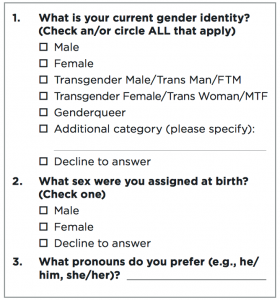
First, I would create a survey that assesses the types of feminisms with which students identify. Questions would include how students feel about different social, political, and economic issues. The survey would also address how they see feminism on Davidson’s campus. I would create a second survey for after the workshop that is similar to the first. This gauges how an interactive educational workshop can impact one’s feminism.
Second, I would work with GSS professors to plan an intersectional feminism workshop that addresses different types of feminism, creating inclusive spaces as an individual, and why intersectionality is necessary at a PWI.
I would advertise this workshop through flyers, GSS classes, and Sociology classes, as many students need to participate in research for their major requirements.
Preparation:
I am prepared to execute this research project for three reasons.
First, although I’ve only taken GSS-101, I feel equipped to begin or expand conversations about types of feminism and the need for intersectionality. In GSS-101, we read works from many feminists, including Kimberlé Crenshaw who coined the term intersectionality.
Second, in high school, I led an annual feminism workshop for my school. This is because I read a lot of feminist and queer theory including authors like bell hooks, Sara Ahmed, and Judith Butler.
Third, during my senior year of high school, I executed a research project that was structured similar to this project. I surveyed local middle and high schoolers about their experience with menstrual stigma before and after presenting about menstrual stigma and global menstrual oppression.
Dissemination:
I’ll detail the findings of the research project in a report that is presented to the general Davidson community. This will provide faculty and students with an understanding of how inclusive the feminisms that Davidson students identity with, as well as if workshops are a practical means of making students’ feminisms more inclusive and intersectional.
I would also present these findings to the Freshman Orientation Team to propose a similar workshop for incoming first-year students. This would help incoming freshmen begin to grapple with their privileges before beginning classes, contributing to a supportive environment on campus.
I’d also share this report with other student groups at PWIs that may have similar questions about how supportive and inclusive their campuses are for marginalized communities.
Example Survey Questions:
- Do you identify as a feminist?
- If so, how do you describe your feminism?
- If not, why not?
- Do you consider yourself an intersectional feminist?
- If so, how do you define intersectionality?
- If not, why not?
- In your experience, is the Davidson community inclusive?
- If so, please provide examples.
- If not, why not?
- In your experience, do you see intersectionality on Davidson’s campus?
- If so, please provide examples.
- In your experience, do you see feminism on Davidson’s campus?
- If so, please provide examples.
Works Cited:
Arday, Jason, and Heidi Safia Mirza, editors. Dismantling Race in Higher Education: Racism, Whiteness and Decolonising the Academy. 1 ed., Palgrave Macmillan, Cham, 2018. Link Springer, https://doi.org/10.1007/978-3-319-60261-5.
Crenshaw, Kimberlé. “Why intersectionality can’t wait.” The Washington Post, 24 September 2015, https://www.washingtonpost.com/news/in-theory/wp/2015/09/24/why-intersectionality-cant-wait/.
Helena. “Teaching Intersectionality: Activities and Resources.” DISORIENT, 2020, https://disorient.co/teaching-intersectionality-activity/. Accessed 22 November 2021.
Hickman, Ross. “Exclusion, Harm, and Disillusionment at Davidson.” Davidsonian, 10 November 2021, https://www.davidsonian.com/editorial-exclusion-harm-and-disillusionment-at-davidson/.
Hunt, Valerie H., et al. “Intersectionality and Dismantling Institutional Privilege: The Case of the NSF ADVANCE Program.” Race, Gender, & Class, vol. 19, no. 1/2, 2012, pp. 266-290. JSTOR, https://www.jstor.org/stable/43496873.
Stanton, Domna C., and Abigail J. Stewart, editors. Feminisms in the Academy. University of Michigan Press, 1995, https://www.press.umich.edu/10669/feminisms_in_the_academy.
Winters-Mccabe, Annabel. “Let’s Talk About Feminism On Our Campus Now.” Davidsonian, 3 October 2019, https://www.davidsonian.com/lets-talk-about-feminism-on-our-campus-now/.

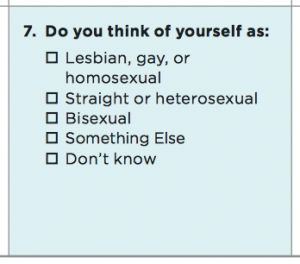 orientation (ensure that there are a wide range of options on the questionnaire).