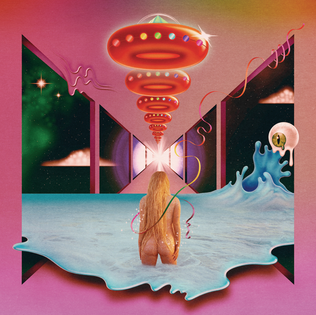
Kesha is no doubt a cultural icon and one of the most notable artists of our generation. Kesha’s studio album Rainbow made the headlines for its themes on forgiveness, self-worth, and female empowerment. “Woman” by Kesha falls directly under this category of female empowerment by emphasizing the importance of women’s independence. “Woman” has become a feminist anthem with its emphasis on liberation from patronizing attitudes as well as economic freedom, two elements that liberal feminism encompasses.
Kesha begins “Woman” by telling those around her to “be serious” and “shut up” (Kesha 0:00-0:04). The act of telling others to be serious or shut up may have been a controversial decision, as women are socialized to not be outspoken or direct. However, by starting “Woman” with the attitude that she’s in charge, Kesha already sets the tone for the rest of the song.
Kesha then lists a series of items she’s bought with her own money: she pays her own bills, she’s bought “these diamond rings,” she owns “automobiles,” etc. (Kesha 0:07-0:13). Kesha then explains that she buys what she wants because she “work[s] real hard every day” (Kesha 0:27). This notion is commenting on traditional gender roles, especially situated in American history which places men as breadwinners and therefore the ones in power. However, women are as capable as working hard and generating wealth, Kesha’s main theme of the song.
Kesha then moves into the chorus: “I’m a motherfucking woman, baby, alright / I don’t need a man to be holding me too tight” (Kesha 0:29-0:34). By tying womanhood around economic independence and, specifically, independence from men, “Woman” embodies liberal feminism. Liberal feminism focuses on the individual and empowerment within oppressive systems such as capitalism. Betty Friedan’s The Feminist Mystique highlights this concept by describing the typical suburban woman and her dissatisfaction with “the domestic routine of the housewife” (Friedan 277). Rather than dismantling the system, Friedan opts for women to “look for jobs equal to their actual capacities” and for the government to provide more education for women (Friedan 280). While this concept may seem outdated, it’s very similar to Kesha’s message that a working woman is a free woman. However, working women are still alienated from their labor, eliciting the question of if working women are truly free. Specifically related to Kesha, I’m sure much of her profits go to her recording studio, her manager, etc. rather than directly into her bank account.
The bridge of “Woman” repeats a couple of notable phrases. First, she sings “don’t buy me a drink, I make my money,” continuing the theme of liberal feminism and the expectation that women don’t have their own capital (Kesha 1:45-1:48). This line also comments on the expectation that men should pay for women’s dinners or drinks, a gender norm rooted in stereotypes about who has the ability and power to pay. Then, she sings, “don’t touch my weave, don’t call me honey” (Kesha 1:48-1:50). This line touches on patronizing attitudes many women (and specifically women of color) face from men. Although people of all races wear weaves, black women most notably face discrimination and micro-aggressions regarding their textured and thick hair.
My main criticism of “Woman” is that Kesha ties womanhood to capitalism despite capitalism being an oppressor to women as well. Not only do unjust laws such as the wage gap or unpaid maternity leave disproportionately affect women (and women of color), the system of capitalism was built for the subjugation of all people. Furthermore, Kesha centers womanhood around men, but I believe that womanhood should be situated around the narratives of and love between women. Nevertheless, you will still find me loudly belting “I’m a motherfucking woman” as I grapple with my own beliefs about womanhood and feminism.
I really liked your analysis on Kesha’s “Woman.” Going lyric by lyric definitely brings an even deeper meaning to the song’s overall message. I also liked how you critiqued Kesha’s definition of womanhood and this shows how sexism is greatly imbedded in our society that it is hard to deviate from the normalized associations.
Ahhhhh. Omg I love this song by Kesha so much. Such a great song choice for this assignment, but honestly most songs by her I think would be! I agree, I really liked how you included multiple lines from the song and from different points in the song to really analyze the song overall. I also appreciate that you cited form where in the song the lyrics came from. I think using Friedan in association with this song worked really well and was a great choice.
I agree, so many songs would work! Kesha is such a hub for female empowerment and womanhood
This is such an empowering song! I love the way how you employ a mix of quotes from the song and our class readings in your analysis. I agree with your comments on her limitations, but I think that a conformity to capitalism is unavoidable at first because women need to take back economical power, which is one of the most important factors of today’s male-dominating capitalist society to earn more equal rights.
I absolutely LOVE that you chose this song! I was considering it for a little bit before I settled on my final choice. I think the choice to go lyric by lyric helps a lot with your explanation of the song and each little example is super important to the overall message, even just the “ok shut up” at the beginning of the song. Your remark about how her profits go to others instead of herself reminds me of Taylor Swift’s new mission to take back the power and re-record all of her old albums that she produced externally. I think it would be very interesting to see how Kesha could free herself from those confines since so much of her music preaches feminine empowerment.