*Pending office hours visit*
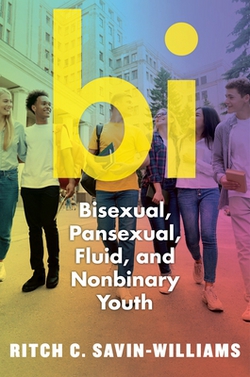
Bisexuality, to me, has always felt like squeezing into the bottom bunk of a bunk bed. I try to sandwich myself somewhere in the middle of the spectrum, while society tries to bang my head against the top bunk of complete hetereosexuality or homosexuality. Reading ‘bi’ by Ritch C. Savin-Williams made me realize that I’m not alone. Through his in-depth research into bisexuality through the lenses of behavior, attraction and identity, the author aims to express that sexuality is seldom static. Through a series of anecdotes collected from bisexual-identifying individuals, Savin-Williams analyses love, fantasies, sex and romance and claims that these factors are found in different combinations for different people, and that there is no singular formula for bisexuality. He also examines stereotypes that hinder individuals from identifying as bisexual and counters traditionally masculine views towards romance and sexuality. The author ultimately aims to recognize the multitude of ways in which bisexuals present themselves and are perceived in today’s society.
Professor emeritus of developmental psychology at Cornell University, Ritch C. Savin-Williams specializes in gay, lesbian and bisexual research. He received his Ph.D. from the University of Chicago and has written nine books on adolescent development. The dedication at the book’s outset, “To the love of my life, Kenneth Miles Cohen,” suggests that Savin-Williams identifies somewhere in the LGBTQ+ spectrum, though it is not specified anywhere in the book. Though it is definitely not necessary that one should have to disclose their sexual orientation in their witten work, reading this monograph from the perspective of a bisexual man versus a gay or straight man would definitely impact the way I’d analyse the contents. Despite the inclusion of anecdotes from bisexual adolescents, this monograph is primarily written from the author’s perspective, and it would be helpful to know the intersections of the author’s identity that influence his perspective.

‘Bi’ is structured in four parts, with the first laying an emphasis on understanding bisexuality as a concept, and the differences in experiences between men and women. The author deconstructs the reasons why women are less likely to be doubted than men if they came out as bisexual, and explores the idea of women having greater freedom than men to explore multiple facets of their sexuality. He claims that girls are encouraged to experience their romantic orientation but not their sexual orientation, and boys, their sexual but not romantic orientation. As evidence for his claims, he draws on personal anecdotes from men and women across the bisexual spectrum to compare and contrast their experiences.
In the first part of the monograph, the author for the most part lets the anecdotes themselves do the explaining; he doesn’t evaluate the experiences too much. On one hand, this approach seems authentic and raw because the anecdotes are coming straight from the individuals, and their opinions and perspectives are not overridden by data and facts. On the other hand, I would have appreciated it if the author provided his own views on certain topics, especially when the perspectives of the interviewees wasn’t the most progressive. For instance, the author makes no attempt to correct his interviewees when they conform to gender and sexuality stereotypes. In one of the earlier chapters of the book, the author includes an anecdote from a 23-year-old cis man named Casey, who believes that he had a “feminine side” because he’s a vegetarian, doesn’t fight, and allows people to walk all over him. It astounds me that the author said nothing to correct this statement or explain why it is harmful to attach these connotations to femininity. Other readers of this book may internalize these ideas and believe that female-identifying individuals are pushovers and can easily be walked over. Similarly, in a later anecdote, a woman named Elizabeth postulates that her brother might be gay because “he’s so sweet, creative and artistic.” Stereotypes put individuals in boxes and limit their scope to become multifaceted human beings with complex personalities and identities. Being artistic does not mean that one is gay, and vice versa. I believe it is Savin-Williams’ duty, as the author and as a prominent figure in the field of Gender and Sexuality Studies, to put this point across in the form of even a singular line, like, “It should be noted that Elizabeth’s assumption is not a fair one, as not all LGBTQ+ people are sweet, creative and artistic. Though this is a common stereotype that her brother happened to have related to, it should not be generalized to all members of the queer community.” Leaving these statements unaddressed seemed like the author was in agreement, which can be problematic.
In the second part of the monograph, the author defines the terms ‘pansexual,’ ‘non-binary,’ and ‘genderqueer’ and explains how they fit under the umbrellaof bisexuality. He claims that gender and sexuality are inherently fluid, and attributes changes in romantic and sexual preferences in our lifetimes to fluidity. He also explains the viewpoints of gender traditionalists, who believe that we have strayed too far from the norms, and gender progressives who want to eradicate the gender binary. Though he integrates a fair amount of anecdotes in this section as well, it is largely based on his own theories and perspectives. The information provided in this section is informative and well-written, but I find fault with the structure of the book because with the way it is presented in the table of contents, it seems like non-binary and genderqueer individuals are not real bisexuals because they do not identify as men and women. There is also no mention of transgender experiences in the book. Though this book claims to tackle the gender binary, it appears to be conforming to it.
The third part of ‘bi’ aims at representing intersectionality by talking about bisexuality through the lens of different races and ethnicities. Savin-Williams addresses the fact that bisexual youth of color are “denied both white privilege and straight privilege by their ethnic/ racial communities,” (181). He claims that the specific issue with bisexuals, as opposed to gay people or lesbians, is that they can attempt to hide their same-sex attractions and only give in to their hetereosexual attractions in order to fight oppression and not be discriminated against even more than they already are due to their race. The author also writes about the Back church, which is “one of the most threatening and consequential elements in the lives of African American youths,” as it “holds specific power to destabilize, complicate and prolong their sexual identity development,” (182). He also explains the reasons why bisexuality is so uncommon among colored folk, and attributes it to three main reasons: the invisibility of bisexuality in their culture, the black and whiteness of being either straight or gay and not stuck in the middle, and the stigmatization of being anywhere on the homosexual spectrum. Even this section is divided into “African-American Men,” and “African-American Women.” What happened to non-binary, genderqueer or trans African Americans? Why didn’t the author make an attempt to represent their perspectives? However, he does attempt to provide culturally diverse perspectives by including African-American, Latinx and Asian-American experiences.
Narrowing down on the author’s sample, Savin-Williams interviewed over 300 young men and women who identified as being a part of the bisexuality spectrum, and in his book focused specifically on the anecdotes of 69 young adults, most of whom were white, in college, and from middle and upper middle class households. From the onset, one can see that Savin-Williams’ research is biased owing to his unrepresentative sample.
By choosing to interview only individuals in their late teens and early twenties, the author does not represent the views of bisexuals of different age groups. Moreover, being Gen Z-ers, the interviewees will have had similar generational experiences that may be influenced by technology, pop culture and legislation that is not as relevant to other age groups. The fact that ¾ of them were white and from similar economic backgrounds further narrows the range of experiences.
Generally speaking, focused research is not necessarily a weakness. If Savin-Williams’ aim was to represent the experiences of white, middle and upper middle class Gen-Z bisexuals, this book would check all the boxes. Instead, ‘bi’ is presented as a monograph that represents bisexuality as a whole, without the preface that it is representive of a restricted sample influenced by specific socio-economic factors. By not including this disclaimer, the author writes about experiences that may not be relevant or relatable to other categories of the population, and presents bisexuality from a narrow, biased perspective. Additionally, the author goes so far as to write an entire chapter called ‘Race and Ethnicity Matter.’ Ironically, race and ethnicity didn’t matter enough for the author to interview people from diverse backgrounds, apparently. By not including anecdotes from a range of sources, the author is aiding the perpetuation of harmful cultural and racial stereotypes and projects the idea that all experiences for queer people of color are the same, despite this being far from the truth. However, it is not entirely the author’s fault for not including too much about intersectionality in this book, since, “few scientists have investigated possible intersections,” (179) and he does say, “I only wish we knew more than what is presented in this chapter,” (179). That being said, I still believe that finding a more diverse sample for the interview section was entirely under the author’s control and wouldn’t have been too difficult to recruit.
The final part of ‘bi’ talks about what needs to change about society’s opinions on bisexuality. He claims that bisexuality should be viewed, “not merely as a combination of heterosexuality and homosexuality, but as a form of sexuality that offers the possibility for greater understanding of sexuality in general,” (225). He provides an expansive list of the various types of bisexualities, but makes sure to include that there is no strict formula to bisexuality and it is highly possible that individuals can be a combination of the types, or a whole new type of their own. He tackles the stereotype that bisexuals are “promiscuous, lying or in denial,” (229) and expounds on why these tropes are harmful. He validates the existence of bisexuals by explaining that bisexuality is not a stepping stone to coming out as gay, and that it is its own separate identity.
Climbing into the bottom bunk is no simple feat, but Savin-Williams’ book makes the journey easier by showing us we’re not alone. His interviewees thanked him for his interest in their sexual and romantic experiences, and mentioned that they’d repressed their feelings for years. It’s reaffirming to know that people all over the world have climbed up and down the ladder, hit their head on the top bunk, or disregarded the bunk bed altogether. Despite these challenges, it’s important to remember that all options are valid and nothing is set in stone. Though his research is only representative of a small target population, ‘bi’ is a good first step towards providing a voice, a platform and a guide to bisexual adoloscents.
Works Cited
Savin-Williams, Ritch C. bi. New York, New York University Press, 2021.